
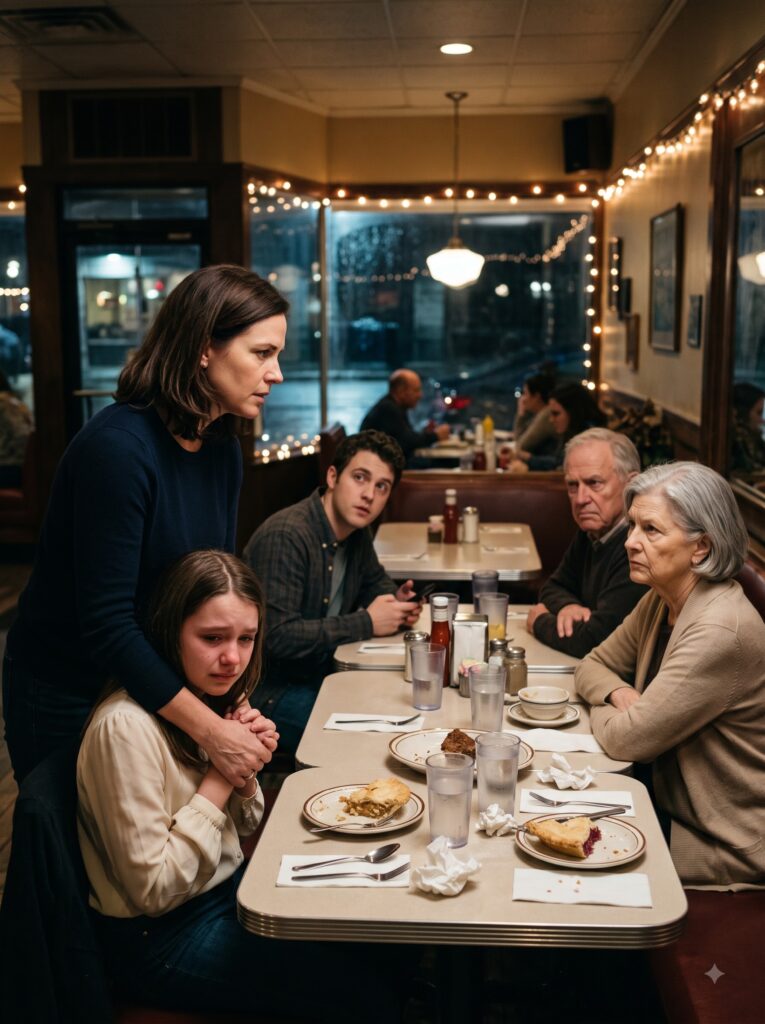
The next message appeared beneath a photograph my mother had sent several weeks earlier.
“Do you ever worry your mom regrets taking on so much?”
I read it twice.
Then I looked at Sole.
She was curled into the corner of the couch, one blanket tucked beneath her chin.
“Sweetheart, did Grandma ask you this?”
She nodded.
“What did you say?”
“Nothing.”
I swallowed.
“Did she send anything else?”
Sole pointed at the phone.
I scrolled.
“Do kids at school ever make you feel different?”
Then:
“Do you ever wonder where you really belong?”
Three messages.
Each phrased like concern.
Each aimed at the same wound.
The fear that an adopted child might secretly be unwanted.
My mother knew Sole’s history.
She knew that before the adoption, Sole had experienced uncertainty about where she would live.
She knew it had taken time for her to feel safe enough to call my house home.
And she knew exactly how fiercely I’d worked to show Sole that she belonged.
Yet she had written those questions directly to my daughter.
I looked at Sole.
“Why didn’t you tell me?”
She rubbed the edge of the blanket between her fingers.
“I didn’t want you to fight with Grandma.”
I felt my throat tighten.
“That’s not your job, sweetheart.”
“I know.”
“Did her messages upset you?”
She hesitated.
Then nodded.
“Sometimes.”
I set the phone down.
“I’m sorry.”
She looked confused.
“For what?”
“For not realizing this was happening.”
She shook her head.
“It’s okay.”
But it wasn’t.
And I knew that.
For years, I’d told myself my parents were old-fashioned.
Uncomfortable with adoption.
Too attached to the idea of biological grandchildren.
I’d treated their behavior as something that might improve if I explained enough, visited enough, or gave them enough chances.
But these messages were different.
My mother hadn’t merely failed to welcome Sole.
She had contacted a thirteen-year-old privately and repeatedly introduced the possibility that her own mother regretted adopting her.
She could call those questions harmless.
I knew what they had done.
Sole had carried them silently because she feared causing conflict.
I reached for her hand.
“Listen to me. You never have to protect me from someone else’s bad behavior.”
She looked at me.
“Even Grandma?”
“Especially when it’s someone I need to know about.”
Her eyes filled again.
“Will she be mad?”
“Probably.”
“Because I showed you?”
“No. If she’s angry, that’s because she doesn’t like being held responsible for what she said.”
Sole leaned against me.
I wrapped my arm around her shoulders.
“We’re not going back there.”
She was quiet.
“Ever?”
I thought about the warning I’d given my mother a month earlier.
One more cruel thing.
I’d meant it.
“No, sweetheart. We don’t have to go back.”
Her whole body seemed to loosen.
That hurt too.
Because relief shouldn’t have been the first thing my daughter felt when I told her she no longer had to see her grandparents.
I should have understood much sooner.
After Sole went back to sleep, I returned to the kitchen.
I saved screenshots of the conversation.
I forwarded copies to my email.
I didn’t alter the messages or delete the thread.
Then I put her phone on the counter and opened my own.
There were no apologies.
Only the text Dad had sent about the car payment.
I sat at the kitchen table remembering all the times I’d quietly sent money because someone in my family needed help.
I had never thought of those payments as leverage.
My parents had worked hard for much of their lives.
When their finances became tight, helping them felt natural.
Chris had struggled with expenses, and I covered his phone bill because it was one manageable thing I could do.
Mom’s pharmacy costs had repeatedly exceeded what she’d planned.
Dad’s car payment became difficult.
I had the means to help.
So I helped.
But there had been a terrible imbalance.
They accepted my support while treating the person I loved most as less than family.
And when I objected, they acted as though my generosity required me to stay quiet.
I looked toward the living room.
Sole was asleep beneath her blankets.
A half-finished mug of hot chocolate sat on the coffee table.
I thought of her at seven.
Of the stuffed rabbit with one missing eye.
Of the first time she’d come downstairs during a thunderstorm and stood outside my bedroom because she wasn’t sure she was allowed to wake me.
I had opened the door.
“You never have to stand out here alone,” I’d told her.
She’d remembered that.
At least, I hoped she had.
Now I needed her to know something else.
No one was allowed to make her feel unwanted in the home we’d built together.
Not even the people who had raised me.
At midnight, I blocked my mother.
Seven minutes later, I blocked Dad.
Four minutes after that, Chris.
I didn’t send a dramatic explanation.
They already knew what happened at the restaurant.
I’d told my mother exactly what she’d done.
And I’d given her a final warning weeks before.
There was nothing left to negotiate that night.
The next morning, I checked my phone’s blocked-call log.
Attempts from all three of them had accumulated.
Voicemails appeared through the service.
Dad demanded to know why the car payment hadn’t gone through.
Mom accused me of abandoning the family.
Chris complained that his phone service shouldn’t suffer because I was angry at our parents.
I listened to the messages.
Every single one.
I wasn’t looking for an apology to change my mind.
I wanted to hear whether anyone recognized why I’d walked out.
Dad spoke about money.
Mom spoke about betrayal.
Chris spoke about how unreasonable I was being.
Not one of them asked whether Sole was okay.
Not one said her name.
I sat at the counter listening to the last voicemail.
Chris sounded furious.
“You’re seriously going to blow up the whole family over one comment?”
One comment.
I thought about six years of forgotten birthdays, exclusion, and quiet humiliation.
I thought about the private messages.
And I thought about Sole asking me whether she was a mistake.
I deleted the voicemails after preserving the information I needed about the contact attempts.
Then Sole came into the kitchen.
She was wearing her oversized pajamas.
Her hair stood up on one side.
“Morning, Mom.”
“Morning, sweetheart.”
She sat at the counter.
“Are we going to Grandma’s next Sunday?”
“No.”
“Did you tell her?”
“I told her at the restaurant that we were leaving. And I’ve decided we’re taking ourselves out of that situation.”
Sole studied my face.
“Is that because of me?”
I put down my coffee.
“No. It’s because of how they treated you.”
“But if I wasn’t here—”
“Stop.”
She went still.
I softened my voice.
“Don’t ever finish that sentence by imagining I would be happier without you.”
Her eyes filled.
“Sole, you’re not the problem. You’re the person I’m supposed to protect.”
She looked down.
I moved beside her.
“I should have done a better job sooner.”
She whispered, “I didn’t want you to lose your family.”
I knelt so we were looking directly at each other.
“You are my family.”
She began to cry.
This time, she didn’t try to hide it.
I held her until the toast popped up from the toaster and startled us both.
She laughed through her tears.
It was a tiny sound.
But it was hers.
And for the first time since dinner, I felt as though we had found our way back into our own home.
Later that morning, I called the providers connected to the accounts I’d been funding.
I wanted to make sure my voluntary payment arrangements had been discontinued correctly.
I confirmed the future car payment would no longer come from my account.
The utility transfers were removed.
Chris’s phone autopay was gone.
The recurring pharmacy payments had stopped.
I hadn’t taken anything that belonged to them.
I hadn’t interfered with their own account access.
I had simply withdrawn permission for my money to keep funding their expenses.
The distinction mattered to me.
I didn’t want revenge.
I wanted separation.
Then I contacted a family attorney.
I explained that I’d been helping relatives financially for several years and had recently ended those voluntary payments after a serious family conflict.
I asked whether there were any agreements or obligations I needed to consider.
The attorney reviewed what I described and the available payment arrangements.
Based on the information I provided, there were no contracts requiring me to continue those expenses.
She advised me to retain documentation and remain careful about any accounts that might involve shared obligations.
“From what you’ve shown me,” she said, “these were voluntary contributions.”
I felt my shoulders relax.
“Then I can stop?”
“Yes. You can decline to continue making voluntary payments.”
I hadn’t expected those words to affect me so deeply.
For three years, the next payment had always been coming.
Every month, someone had an expense.
Every month, I handled it.
And every month, my family continued treating my daughter’s place among them as conditional.
Now, for the first time, those two things were no longer connected.
I hung up.
I looked at the kitchen calendar.
The dates were still marked.
Car payment.
Utilities.
Phone.
Pharmacy.
I took the calendar down and placed it in a drawer.
I didn’t need it hanging on my wall anymore.
Two weeks passed.
Dad contacted a cousin and asked her to tell me I was being unreasonable.
The cousin called.
“Marlo, your father says you’re refusing to help with the car.”
“That’s correct.”
“He says he doesn’t understand why.”
“He was at dinner. He heard what my mother said to Sole.”
There was a pause.
“He thinks you’re overreacting.”
“I’m not discussing my daughter with people who want me to excuse how she was treated.”
The cousin sighed.
“Would you at least talk to him?”
“No.”
I kept my voice even.
“Please don’t carry messages between us again.”
She agreed.
A few days later, a woman from my church called.
She knew my mother.
Mom had apparently contacted her, hoping she could persuade me to reconsider.
The woman sounded uncomfortable.
“Marlo, I hope I’m not intruding.”
I told her what happened.
Not every old grievance.
Not every forgotten gift.
Just the restaurant and the messages my mother sent Sole.
The woman grew quiet.
Then she said:
“I had no idea.”
I waited.
“I’m sorry,” she continued. “Your daughter shouldn’t have been spoken to that way.”
I thanked her.
She didn’t tell me to forgive my mother.
She didn’t remind me that family was important.
She didn’t ask what would happen to Dad’s car.
She asked about Sole.
That simple kindness stayed with me.
Chris tried one final time.
His message came from a number I didn’t recognize.
“You think you’re better than us. You always have. Enjoy your perfect little life.”
I read it.
Then blocked the number.
I didn’t feel the old pressure to explain myself.
Some arguments continue only because one person keeps answering.
I was done.
But the hardest part wasn’t the blocked calls.
It wasn’t the money.
It wasn’t the relatives asking questions.
It was Sole.
Sometimes she seemed lighter.
She stopped asking whether we had to attend family dinners.
She didn’t worry about choosing a perfect outfit before visiting Grandma.
She no longer carefully rehearsed how she would greet Grandpa.
But other times, she’d become quiet.
At dinner, she’d stare at her plate.
During homework, she’d stop writing and look toward me.
I could see she was still trying to understand what had happened.
One evening, while we were putting away dishes, she asked:
“Mom, are you sad?”
I stopped.
“About Grandma and Grandpa?”
She nodded.
I thought carefully.
“I’m sad about what I hoped our relationship could be.”
She waited.
“But I’m not sorry I protected you.”
Her shoulders lowered.
“I’m not sorry either.”
I looked at her.
She continued:
“I used to get nervous before we went there.”
I knew.
I’d seen it.
But hearing her say it made the truth unavoidable.
“Why?”
She shrugged.
“I didn’t want to do anything wrong.”
I swallowed.
“You didn’t do anything wrong.”
“I know that now.”
Those last three words stayed with me.
I know that now.
My daughter had spent years trying to be perfect for people who never intended to make belonging easy.
She wasn’t relieved because she’d lost her grandparents.
She was relieved because she no longer had to audition for their affection.
I wished I had understood sooner.
A few months after the dinner, Dad sent a handwritten letter.
I recognized his writing before I opened it.
He said the loss of my financial help had created difficulties.
He said Mom had been stressed.
He reminded me that nobody was perfect.
He hoped I would remember that family was family.
I read the letter once.
Then again.
He never mentioned what Mom had said at dinner.
He never mentioned the messages.
He never mentioned Sole.
I folded the letter.
Placed it in my documentation folder.
And returned to the kitchen.
Sole was sitting at the table, drawing.
She looked up.
“Who was that from?”
“Grandpa.”
Her expression changed.
“Are we going back?”
“No.”
She watched me carefully.
“Are you sure?”
I pulled out the chair beside her.
“Yes.”
Then I asked something I’d waited too long to ask.
“Sole, what would help this house feel more like yours?”
She looked around.
“Our house?”
“Yes.”
She thought for a moment.
“Could we paint my room?”
I smiled.
“What color?”
She grinned.
And for the first time in months, she began talking about the future without looking over her shoulder at the past.
“Maybe a soft green,” Sole said.
Then she hesitated.
“Or blue. Not bright blue. The kind that looks gray when it’s cloudy.”
I smiled.
“We can get samples.”
She leaned over her sketchbook.
“And maybe shelves for my books?”
“Absolutely.”
She paused.
“Even the messy ones?”
I laughed.
“Especially the messy ones.”
Her grin widened.
For months, I’d been thinking about our family in terms of what had ended.
The calls I no longer answered.
The dinners we no longer attended.
The money I no longer sent.
But sitting beside my daughter while she planned the color of her bedroom walls, I realized something.
Our lives weren’t only about what we were leaving.
They were also about what we could finally make room for.
That weekend, we went to the hardware store.
Sole took the paint samples very seriously.
She held them beneath different lights.
She compared them to photographs on her phone.
She asked whether a certain shade would look too dark at night.
I let her decide.
Her room had always been hers.
But I wanted her to feel that ownership in ways nobody could question.
Eventually, she chose the color.
We bought paint, brushes, and supplies.
At home, we moved the furniture away from the walls.
Sole wore an old T-shirt and tied her hair back.
She got paint on her elbow within ten minutes.
Then on her cheek.
By the time we finished the first wall, she was laughing so hard she could barely hold the roller straight.
I looked at her and felt an unexpected ache.
This was the child my parents had called a mistake.
This bright, thoughtful girl who could turn an afternoon of painting into something joyful.
The girl who loved mystery books, animals, and drawing.
The girl who thanked people for gifts even when those gifts made it painfully obvious she had been an afterthought.
I had spent six years trying to convince my parents to recognize what was directly in front of them.
Now I was beginning to understand that my time would be better spent making sure Sole never questioned it herself.
We finished painting over the next couple of days.
Then we installed shelves.
She arranged her books by a system she refused to explain.
I bought her the lamp she’d chosen, one that filled the room with soft golden light.
On the first evening after everything was finished, she stood in the doorway.
“It’s perfect.”
I looked at the shelves.
One was already crowded.
Her desk was covered with colored pencils.
A mystery novel lay open on the bed.
“It looks like you,” I said.
She turned toward me.
“That’s why I like it.”
I hugged her.
For once, there wasn’t anything painful to explain.
***
The financial consequences of cutting off my relatives continued outside our home.
I learned bits and pieces indirectly.
Dad had to make other arrangements for the car.
The family bills I had covered were no longer automatically handled.
Chris had to take responsibility for his phone payments.
Mom had to budget for the pharmacy expenses I’d been paying.
I didn’t celebrate their difficulties.
I knew money could be stressful.
I had helped them precisely because I understood that.
But I also knew something else.
Their financial problems had never given them permission to mistreat Sole.
And my ability to help didn’t create a lifelong obligation to continue.
For years, the money had kept me connected to people who treated my daughter as an outsider.
I’d mistaken being needed for being respected.
Now I could see the difference.
One afternoon, while sorting old papers, I found a copy of the adoption documents.
I sat at my desk and opened the folder.
Sole had been seven when everything became official.
I remembered the day vividly.
She wore a little jacket and held her stuffed rabbit under one arm.
She’d asked me whether anything was going to change.
I told her that some things would.
Her name on the school records.
The legal paperwork.
The way certain forms would identify our relationship.
Then she asked:
“Will I still get to stay with you?”
I crouched beside her.
“Yes.”
“For how long?”
I smiled.
“Forever.”
She had studied my face as though she were searching for something hidden.
Then she’d wrapped her arms around my neck.
I remembered how tightly she’d held on.
Not because she understood every legal detail.
But because she understood what it meant to have a place where someone wanted her.
I closed the folder.
For years, my parents had treated her adoption as though it were some unusual arrangement they were being asked to tolerate.
But nothing about our relationship was incomplete.
The incompleteness was in their willingness to recognize it.
I put the documents back where they belonged.
Then I went to find Sole.
She was sprawled across the couch, reading.
Her socks were mismatched.
One shoe was in the hallway.
The other was beneath the coffee table.
I nearly reminded her to put them away.
Then I saw how relaxed she looked.
At my parents’ house, she never left anything out of place.
She sat straight.
Kept her hands folded.
Spoke only when spoken to.
She had been trying to make herself impossible to criticize.
Here, she was simply a child.
I sat at the other end of the couch.
“What are you reading?”
She held up the cover.
“A mystery.”
“Any good?”
“Very.”
“Can I borrow it when you’re done?”
She considered that.
“You’ll have to wait. There are two more books in the series.”
I laughed.
“Fair enough.”
She smiled and returned to reading.
For the first time, I wasn’t looking at her happiness while worrying about how my family might respond to it.
I could just enjoy it.
***
The next major change came through a conversation we’d been postponing.
For two years, Sole had wanted to visit a museum a few hours away.
Every time she mentioned it, something else came first.
A family gathering.
An errand for my parents.
An expense someone needed help with.
The trip never seemed urgent.
One Saturday morning, I brought it up while she was eating cereal.
“Do you still want to go to that museum?”
She stared at me.
“Really?”
“Yes.”
“When?”
“Next weekend, if the tickets are available.”
She nearly dropped her spoon.
“You’re serious?”
“Completely.”
She ran for her phone.
Within minutes, she was showing me exhibits she wanted to see.
I watched her excitement grow.
And I wondered how many things we’d postponed because I’d treated other people’s needs as more important than our own ordinary happiness.
The museum trip wasn’t expensive compared with the money I’d been sending my family.
But it meant something different.
It was a day organized around my daughter.
Not around my mother’s preferences.
Not around Dad’s schedule.
Not around Chris’s needs.
Around Sole.
We spent hours exploring the exhibits.
She asked questions.
Read nearly every description.
Stopped in front of artwork that caught her attention.
At one point, she stood before a painting for so long that I thought she might have forgotten I was there.
“What do you like about it?” I asked.
She pointed toward the colors.
“It looks sad from far away.”
I studied it.
“And up close?”
“Like somebody was trying to make something beautiful out of the sad part.”
I looked at her.
She didn’t notice.
She was still studying the painting.
I wished I could preserve that moment exactly.
Not because she had said something profound.
But because she was free to look at something and decide what it meant to her.
Nobody was making her feel less intelligent.
Nobody was reminding her that she wasn’t biologically related to me.
Nobody was checking whether she deserved to be there.
We were simply a mother and daughter spending the day together.
On the drive home, she talked until she fell asleep.
I glanced at her in the passenger seat.
Her head rested against the window.
Her sketchbook lay in her lap.
I remembered the restaurant.
The way she’d folded inward.
The question she’d whispered in the car.
“Am I a mistake?”
I looked back at the road.
No child should have to ask that question because of someone else’s cruelty.
Especially not of the people who are supposed to call her family.
***
A few weeks later, I enrolled Sole in an art class.
She had always loved drawing.
Her notebooks were filled with little sketches.
Animals.
People.
Imaginary landscapes.
Rooms she wanted to design.
She drew when she was happy.
She drew when she was worried.
Sometimes she drew instead of explaining what she was feeling.
I wanted her to have a place where that part of her could grow.
The first day, she was nervous.
“Everyone else is probably better.”
“Maybe some are,” I said. “That’s okay.”
She frowned.
“That’s not encouraging.”
I laughed.
“You don’t have to be the best to belong in a room where people are learning.”
She looked at me.
“Really?”
“Really.”
I watched her walk inside carrying her art supplies.
For a moment, I saw the seven-year-old who once stood outside my bedroom during thunderstorms.
Then she turned around and waved.
I waved back.
Six weeks later, her teacher asked to speak with me.
Sole stood nearby, trying to look uninterested.
Her teacher smiled.
“She has a real eye for composition.”
I glanced at Sole.
Her cheeks turned pink.
“She’s thoughtful,” the teacher continued. “And she works hard. I want you to know she has something worth encouraging.”
I smiled.
“I know.”
But I was grateful that someone else saw it.
When we got into the car, Sole stared at her sketchbook.
“Do you think she meant it?”
“Of course.”
“Teachers are supposed to encourage people.”
“Yes.”
“So maybe she says that to everyone.”
I started the engine.
“Sole, why is it easier for you to believe someone is criticizing you than to believe someone is praising you?”
She went quiet.
I hadn’t planned the question.
But once it was there, I couldn’t take it back.
She looked down.
“I don’t know.”
I thought about the years she’d spent around my parents.
At every gathering, she had been careful.
At every holiday, she’d watched my nephews receive thoughtful gifts while she was handed something that seemed chosen without knowing her.
She had learned that being good didn’t necessarily mean being included.
Maybe praise felt suspicious because she had spent so long waiting for the condition hidden inside it.
I softened my voice.
“You don’t have to earn every kind word by being perfect.”
She studied her hands.
“Okay.”
“And you don’t have to be better than everyone in art class. You can just enjoy drawing.”
She smiled faintly.
“I do.”
“Then keep doing it.”
On the drive home, she began telling me about a project she wanted to make.
By the time we pulled into the driveway, she was talking excitedly again.
I listened to every word.
***
One evening, months after the restaurant dinner, Sole asked whether I missed my parents.
We were folding laundry in the living room.
She was matching socks.
I was putting away towels.
“Mom?”
“Hmm?”
“Do you miss Grandma and Grandpa?”
I stopped folding.
I could have given her a simple answer.
No.
And in many ways, that would have been true.
But I wanted to answer carefully.
“I miss the relationship I hoped we could have.”
She nodded.
“Not the way they acted?”
“No.”
She turned a sock inside out.
“Sometimes I feel bad that you don’t talk to them.”
I put down a towel.
“Why?”
“Because they’re your parents.”
“Yes.”
“And you’re mine.”
I waited.
“So I guess I know how much it would hurt if we stopped talking.”
I moved closer.
“Sole, the difference is that I have a responsibility to protect you. My parents had a responsibility to treat us with basic kindness. They repeatedly chose not to.”
She looked down.
“But you still love them?”
I considered it.
“People can have complicated feelings about their parents. What matters is that love doesn’t mean I have to let them hurt you.”
She seemed to think about that.
Then she asked:
“Are you ever going to make me see them again?”
“No.”
The answer came easily.
“I won’t make you return to people who keep treating you as less than family.”
She exhaled.
I touched her shoulder.
“And you don’t need to feel guilty about my choices. I made them because I am your mother.”
She leaned against me.
For a while, we sat that way with the unfolded laundry between us.
Then she said:
“I like our house better now.”
I looked around.
Nothing dramatic had changed downstairs.
The same couch.
The same coffee table.
The same books.
The same kitchen.
Yet I understood her.
Our home felt different because she no longer had to prepare herself for the next family gathering.
There was no upcoming holiday where she would be compared with Chris’s sons.
No dinner where she would practice polite answers before arriving.
No grandmother asking whether her mother regretted adopting her.
The threat of those questions had left our daily lives.
Sole wasn’t suddenly free of every insecurity.
She was still thirteen.
She still worried about friends, school, and whether her artwork was good enough.
But the home she returned to no longer asked her to defend her right to be loved.
***
As the months passed, the contrast became clearer.
Sole laughed more.
Sometimes she left a trail of shoes and books from the front door to the living room.
She sang badly while making sandwiches.
She asked me strange questions while I worked.
She fell asleep on the couch with novels open across her face.
One Friday evening, she announced that she wanted to cook dinner.
I raised an eyebrow.
“All of it?”
“Yes.”
“Should I be worried?”
“Probably.”
I laughed.
She made a simple meal, asked for help twice, and left the kitchen looking as though a small storm had passed through.
We ate together.
Halfway through dinner, she suddenly grew thoughtful.
“Mom?”
“Yes?”
“Do you remember that restaurant?”
I set down my fork.
“Yes.”
She looked at her plate.
“I used to think if I was really good, Grandma might like me.”
My chest tightened.
“I know.”
“I thought maybe I just wasn’t trying hard enough.”
I reached for her hand.
“You were never supposed to have to try for that.”
She looked up.
“I know now.”
I squeezed her fingers.
She smiled.
Then returned to her dinner.
I watched her eat.
It wasn’t a dramatic victory.
Nobody apologized at our table.
Nobody arrived to explain the past.
But my daughter was telling me, in her own words, that she’d begun to understand something crucial.
The rejection had never been evidence that something was wrong with her.
That was the change I cared about most.
And as her fourteenth birthday approached, I decided our next celebration would be exactly what a birthday should have been for her all along.
A day when nobody had to be reminded that she mattered.
Sole chose a small birthday celebration.
She didn’t ask for anything elaborate.
A few friends.
Her favorite cake.
An afternoon doing something creative.
And dinner at home.
When I asked whether she wanted a bigger party, she shook her head.
“Small is good.”
I smiled.
“Small can be wonderful.”
The morning of her fourteenth birthday, I woke before her.
I decorated the kitchen and set her presents on the table.
Not expensive things chosen to impress other people.
Things I’d paid attention to.
Art supplies she’d mentioned.
A mystery novel she’d been waiting for.
A few items for her newly painted bedroom.
Everything was wrapped with her name clearly written on it.
When she came downstairs, she stopped in the doorway.
“Mom.”
I looked up from the counter.
“Happy birthday, sweetheart.”
She stared at the gifts.
Then at the decorations.
“You did all this?”
“Of course.”
She came straight toward me and wrapped her arms around my waist.
I held her tightly.
For years, I’d watched her thank my parents for impersonal gifts while her cousins opened presents that showed careful thought.
Sole never complained.
She wrote thank-you notes.
She smiled.
She tried harder.
Now I wondered why I’d allowed myself to believe gratitude could make up for repeated exclusion.
A child shouldn’t need to be extraordinarily gracious to receive ordinary kindness.
Sole pulled away and wiped her eyes.
“Can I open them?”
I laughed.
“They’re yours.”
She sat at the table.
For the next twenty minutes, she opened her gifts slowly, examining everything.
When she found the art supplies, she looked at me.
“You remembered.”
“Of course I remembered.”
She smiled.
That small exchange meant more to me than any expensive present could have.
Her birthday wasn’t about proving something to my parents.
It was about celebrating my daughter.
And this time, nobody was missing the point.
***
The months after the restaurant dinner had taught me how quiet a boundary could be.
I hadn’t made a public announcement.
I hadn’t posted the messages online.
I hadn’t called relatives demanding they choose sides.
I had simply stopped participating.
The financial support ended.
The family visits stopped.
The calls stopped.
The attempts to pull me back into the same arguments gradually faded.
My parents were left to manage their expenses without my automatic assistance.
Chris had to cover his own phone bill.
I didn’t know every detail of how they adjusted.
I didn’t need to.
Their circumstances had been the reason I helped.
They were not a reason I had to keep exposing Sole to rejection.
That distinction changed how I viewed the last several years.
I had been raised to believe good daughters helped their parents.
And I still believed helping family could be a beautiful thing.
But generosity didn’t mean unlimited access.
It didn’t require me to fund people who repeatedly undermined my daughter.
And it certainly didn’t give them the right to decide whether my child deserved a seat at their table.
I had confused obligation with love.
Once I stopped, the difference became impossible to ignore.
***
Four months after dinner, Dad’s handwritten letter arrived.
I remembered exactly how it felt in my hands.
He wrote about financial difficulties.
About Mom being under stress.
About the importance of family.
He said nobody was perfect.
He wanted me to reconsider.
I read the letter more than once.
A part of me recognized the language.
It was the same language I’d heard whenever I objected to something my parents said about Sole.
Nobody’s perfect.
You’re being sensitive.
Your mother means well.
We’re family.
But there was no sentence acknowledging that Mom had called my daughter a mistake.
No mention of the private messages.
No acknowledgment that Sole had spent years trying to earn affection from people who had already decided she wasn’t truly one of them.
And not once did Dad write her name.
I folded the letter and placed it in a folder with the other records I’d kept.
I didn’t reply.
That decision didn’t make me feel powerful.
It simply felt settled.
For years, I had believed every family disagreement needed one more conversation.
One more explanation.
One more opportunity for people to understand.
Now I knew that understanding wasn’t always the missing ingredient.
Sometimes people understood enough.
They simply preferred the arrangement as it was.
My father understood that I’d stopped paying his car bill.
He understood that I had blocked his calls.
He understood that I was no longer coming to dinner.
What he still wouldn’t acknowledge was why.
I couldn’t force him.
And I wasn’t going to spend another six years trying.
***
Sole’s art class became one of the happiest parts of her week.
She came home with paint on her sleeves and new ideas filling her sketchbook.
Sometimes she showed me everything she’d made.
Other times, she kept her work private until she was ready.
I respected that.
One evening, she brought a drawing into the kitchen.
It showed a house.
Not an elaborate house.
Just an ordinary one, with warm light in the windows and a little path leading toward the front door.
I studied it.
“That’s beautiful.”
She smiled.
“It’s ours.”
I looked again.
She’d drawn the porch.
The front window.
The tree beside the driveway.
Even the slightly crooked flowerpot near the steps.
“You remembered all the details.”
She nodded.
Then she pointed toward the door in the drawing.
“I wanted it to look open.”
I looked at her.
“Why?”
She shrugged.
“Because it feels that way.”
I didn’t answer immediately.
I remembered how carefully she’d climbed into the car after the restaurant dinner.
How she’d tried not to take up space.
How she’d asked whether she was a mistake.
And now she was drawing our home as a place with an open door.
I put my arm around her.
“That’s exactly how I want it to feel.”
She leaned against me.
Then she went back to her room to finish the drawing.
I stood in the kitchen for a while after she left.
I thought about the first day she came to live with me.
Her bag.
Her stuffed rabbit.
The careful way she asked permission before touching things.
I had spent those first eleven months showing her where everything belonged.
Her shoes.
Her books.
Her breakfast bowl.
Her favorite blanket.
Then the adoption became official, and I believed the question of belonging was settled.
Legally, it was.
Emotionally, Sole and I knew she was my daughter.
But my parents kept treating her as an exception to the family they recognized.
And every time I returned to their table, I exposed her to that exception again.
I couldn’t change the past.
I couldn’t erase what she’d heard.
But I could make sure the future looked different.
The drawing stayed on our refrigerator for weeks.
Not because I needed a reminder that our house was open.
Because I loved seeing how Sole pictured the place where she felt safe.
***
There were still difficult moments.
I don’t want to pretend that one boundary erased every hurt my daughter had experienced.
Occasionally, Sole would ask whether people could change their minds about adopted children.
Sometimes she wondered why her cousins received different treatment.
Once, she asked whether I thought Grandma had ever loved her.
I answered carefully.
“I can’t tell you everything Grandma felt.”
Sole looked at me.
“But I can tell you that the way she treated you was wrong.”
She nodded.
“Even if she thought she was helping?”
“Yes.”
I sat beside her.
“People sometimes call something concern when what they’re doing is hurtful. We still have to pay attention to the effect of their words.”
Sole considered that.
Then she said:
“I think I kept trying to make her like me because I thought I could fix it.”
I felt my heart ache.
“You were a child. It was never yours to fix.”
She leaned against my shoulder.
For a while, we stayed quiet.
Then she asked whether we could make hot chocolate.
I smiled.
“Of course.”
She still rarely finished hers.
I made it anyway.
Some rituals don’t need to change.
They simply become safer when the people sharing them stop worrying about whether kindness will be withdrawn.
***
The first holiday season without my parents was quieter than I’d expected.
We didn’t drive to their house.
We didn’t prepare ourselves for awkward comments.
I didn’t search for gifts that might persuade them to show Sole more warmth.
I didn’t sit at a table watching my brother’s sons receive thoughtful presents while my daughter pretended not to notice the difference.
Instead, Sole and I made our own plans.
We cooked.
Watched movies.
Decorated the house.
She picked music that made me laugh.
One afternoon, while we were putting ornaments away, she asked:
“Do you think Christmas will always be like this now?”
I looked around the room.
“Do you like it?”
She nodded.
“A lot.”
“Then we can keep the parts we love.”
She smiled.
“Even if they’re different from everybody else’s?”
“Especially then.”
She went back to wrapping ornaments.
There was no dramatic moment of triumph.
Just a girl enjoying her home without measuring herself against anyone.
That was enough.
***
One night, after Sole had gone to bed, I sat alone at the kitchen table.
The same table where I’d canceled the payments months earlier.
I remembered that night clearly.
Dad’s message at 10:14.
The banking app.
The linked accounts.
The passwords.
Then the messages on Sole’s phone.
At the time, I’d believed the financial boundary was the most decisive action I could take.
It mattered.
Ending the payments severed a dependency my family had taken for granted.
But it wasn’t the deepest change.
The deepest change was understanding that my daughter had been carrying questions I should never have allowed my relatives to place in her mind.
“Do you ever worry your mom regrets taking on so much?”
I could still remember the sentence.
I wished I couldn’t.
But forgetting wasn’t the answer.
The answer was everything I’d done afterward.
Leaving the restaurant.
Telling Sole the truth.
Believing her discomfort.
Ending contact.
Building a home where she didn’t have to earn her place.
I thought about the eleven months before I adopted her.
I had been nervous then.
Not about whether she deserved a home.
About whether I could become the mother she needed.
I had read books.
Asked questions.
Learned about her fears and routines.
I thought I needed to get everything right.
But motherhood hadn’t required perfection.
It had required showing up.
Listening.
Correcting myself when I failed.
And protecting her when other people refused to.
I hadn’t protected her soon enough.
That truth would always matter to me.
But I had finally acted.
And I intended to keep acting.
***
Sole was fourteen now.
She still loved mystery books.
Still drew animals in the margins of her notebooks.
Still sang off-key around the house.
Still left her shoes wherever she happened to remove them.
Her laughter had changed.
Not because it was louder.
Because it arrived without that careful pause I’d once noticed whenever we visited my parents.
She didn’t look around to see whether someone disapproved.
She simply laughed.
One afternoon, I found her asleep on the couch with an open book resting across her face.
Her shoes were in the hallway.
Her sketchbook lay beside her.
A half-finished mug of hot chocolate sat on the coffee table.
I could have seen a messy room.
Instead, I saw the kind of peace she’d been missing.
The freedom to take up space.
I took the book gently from her face.
She stirred.
“Mom?”
“Just saving your place.”
She smiled sleepily.
“Thanks.”
I set the book on the table and pulled a blanket over her.
For a moment, I looked at her.
The seven-year-old who had arrived at my house with one bag was now a teenager who filled our rooms with drawings, music, and forgotten shoes.
She had grown into herself despite everything my parents had said.
And she was still growing.
I didn’t need her to become extraordinary to justify my decision to adopt her.
She didn’t need perfect grades.
Or exceptional talent.
Or endless politeness.
She didn’t need to prove she was worthy of a family.
She already had one.
I had chosen her.
And every morning afterward, I kept choosing her.
That was the promise.
***
Sometimes I think about the restaurant.
The warm string lights.
The dessert menus.
My father’s expression when I stood.
Chris putting down his phone.
My mother insisting I was being dramatic.
Most of all, I remember Sole’s hand in mine.
It was trembling.
She was afraid.
And I finally understood that protecting her mattered more than maintaining the appearance of a peaceful family dinner.
I didn’t make a speech.
I didn’t humiliate my mother in front of the restaurant.
I didn’t ask the other diners to take my side.
I stood up.
Took my daughter’s hand.
And walked her to the door.
For years, I had believed keeping a family together was always worth another compromise.
I don’t believe that anymore.
Some relationships deserve patience.
Some misunderstandings deserve conversation.
Some mistakes deserve repair.
But repeated cruelty toward a child isn’t something a parent should ask that child to tolerate while waiting for adults to improve.
I gave my parents years of chances.
I gave them explanations.
I gave them warnings.
I gave them money.
What I couldn’t keep giving them was access to Sole’s sense of worth.
That was where the line had to be.
I wish I’d drawn it earlier.
But I know why I finally drew it.
One evening, Sole and I were setting the table for dinner.
She carried the plates.
I brought the glasses.
She sat down, looked around, and smiled.
“What?” I asked.
“Nothing.”
I put down the last glass.
“Tell me.”
She shrugged.
“I just like it here.”
I pulled out my chair.
“Me too.”
We ate together.
She told me about school.
About a drawing she wanted to finish.
About a friend who’d recommended another mystery book.
I listened.
Halfway through dinner, she laughed so hard she nearly spilled her water.
I laughed with her.
And as I looked across the table, I understood the difference between the family I’d spent years trying to preserve and the one sitting directly in front of me.
At my parents’ table, Sole had tried to become invisible.
At ours, she could be entirely herself.
There was no empty chair waiting for someone’s approval.
No test of bloodline.
No suggestion that she had to earn her place.
Just my daughter.
And me.
I reached across the table and squeezed her hand.
She squeezed back.
The same hand I’d held as we walked out of that restaurant.
But this time, it wasn’t trembling.
I looked at her face.
Happy.
Relaxed.
Unafraid to be seen.
My mother had whispered that we didn’t sit with mistakes.
She was wrong.
My daughter was never a mistake.
And the greatest change I made wasn’t canceling a car payment or blocking a phone number.
It was finally refusing to let anyone make Sole feel that she needed permission to belong.
I didn’t save my parents’ version of our family.
I stopped sacrificing my daughter to preserve it.
And when I think about that night now, I don’t remember the money first.
I remember standing up.
Taking her hand.
And choosing the direction that led us home.
A home where her name was known.
Where her place was certain.
And where no one would ever have to earn the right to sit at our table.


