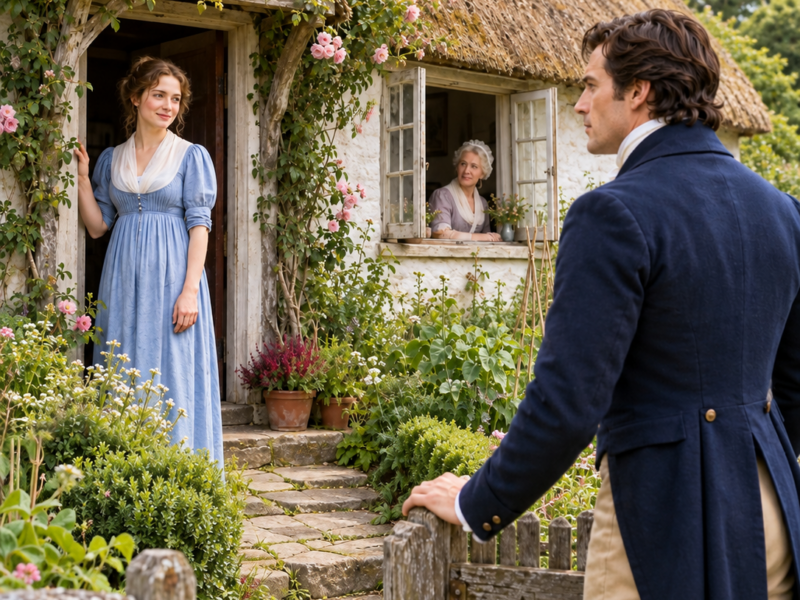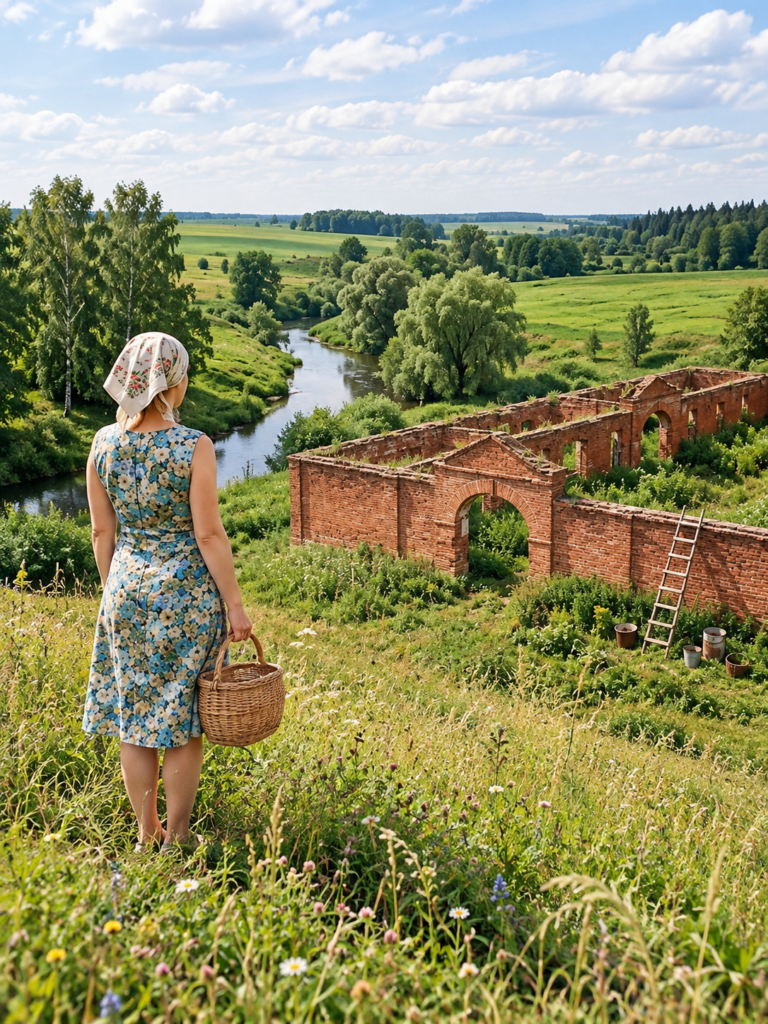
Part 1
The morning Antonia Mercer lost her home, her mother-in-law carried eleven flowerpots out to the road and left them in the dust.
She didn’t throw them. She didn’t break them. She carried them carefully, one at a time, as though she were setting out things for a yard sale.
And after each pot was gone, she placed its little clay saucer back on the windowsill.
Antonia stood beside the well with a bucket of water in her hand, watching.
It was a warm July morning in Virginia’s Shenandoah Valley. The sun had barely climbed over the Blue Ridge Mountains, and the air smelled of honeysuckle, damp grass, and blackberries ripening along the fences.
For thirty-one years, Antonia had lived in that white farmhouse with its green shutters and sagging front porch.
She had planted the garden, preserved the vegetables, mended the curtains, washed the floors, and cared for the woman now putting her belongings beside the road.
But her husband, Nicholas, had died three months earlier.
And apparently, when they buried him, they had buried Antonia’s right to call that house home.
“Mother, what are you doing?” she finally asked.
Zina Mercer turned around, holding a pink geranium.
“What does it look like?”
“Those are my flowers.”
“Then you can take them with you.”
Antonia tightened her fingers around the bucket handle.
“Take them where?”
Zina set the geranium beside the others and brushed the soil from her hands.
“That’s not my concern. Nicholas is dead. This house belongs to me. You’ve been living here long enough.”
The words were spoken without anger.
That made them worse.
Antonia had expected grief to change her mother-in-law. Since Nicholas’s funeral, Zina had grown quiet and distant. She ate alone, kept her bedroom locked, and stopped asking Antonia to sit with her in the evenings.
Antonia had assumed the older woman needed space to mourn.
Now she understood.
Zina had been waiting until she could make Antonia leave.
Across the fence, their neighbor Gail Patterson appeared with a basket of laundry.
She stopped when she saw the flowers.
A moment later, her husband joined her.
Antonia knew they were listening.
“Surely we can talk about this,” she said.
“We’ve talked enough.”
“But I have nowhere to go.”
Zina shrugged.
“You’ve got two hands. You’ve always been such a hard worker. Put them to use.”
Antonia looked toward the porch steps Nicholas had repaired the previous autumn.
She remembered him kneeling there with his toolbox, complaining that the old boards would outlive both of them once he finished.
He hadn’t lived long enough to see another winter.
His heart had stopped in his sleep on an ordinary April night.
Antonia had awakened beside him, reached for his shoulder, and found the world she understood had ended.
Now, three months later, she was losing the last place that still smelled of his coffee and shaving soap.
Zina walked back inside.
When she returned, she was carrying Antonia’s old wooden dresser.
She couldn’t manage it alone, so she called over Peter Watkins, a young man passing with a weed trimmer.
Peter looked uncomfortable.
“Mrs. Mercer, maybe we should—”
“Just help me with the thing,” Zina snapped.
Together they carried the dresser into the yard.
One drawer slid open, exposing neatly folded handkerchiefs, towels, and the faded blue scarf Antonia’s mother had given her before she married.
Then came a cardboard box of photographs.
A sewing basket.
Two pairs of winter boots.
And finally, Nicholas’s fishing rods.
Zina leaned the rods against the fence.
“Take those, too. They’re nothing but clutter.”
Antonia set down her bucket.
She crossed the yard, picked up the three rods, and held them against her chest.
Nicholas had used them every Saturday from May through October, fishing along the South Fork of the Shenandoah River. He often came home with only a few sunfish and an apology.
He always said the fish weren’t the reason he went.
Now their cork handles were worn smooth in the places his hands had gripped them.
Antonia did not cry.
Not while Zina watched.
Not while Gail whispered to her husband.
Not even when Peter quietly offered to carry the dresser somewhere safe and she had to admit she didn’t know where that would be.
She went inside and packed one brown suitcase.
Two dresses. A sweater. Thick socks. Her identification papers. Nicholas’s photograph. A small Bible with loose pages.
And the fishing rods.
She opened her worn leather wallet.
One hundred and forty dollars.
That was everything.
She was fifty-five, too young for Social Security retirement benefits, with no savings of her own. Nicholas had earned what little money the household had, and Zina had always controlled the checking account. Antonia had spent her adult life working in the house, tending vegetables, looking after Nicholas’s father during his final illness, and caring for Zina after her hip surgery.
She had never thought to ask what any of that work was worth.
Now she knew what it was worth to her mother-in-law.
Nothing.
By nine o’clock, Antonia was sitting on her suitcase outside the green front gate.
Eleven flowerpots stood in a crooked line beside her.
Gail leaned over the fence.
“Well, Toni, what will you do now?”
“I haven’t decided.”
Gail exchanged a glance with her husband.
“You know, the county’s been trying to get rid of that old brick stable beyond Miller’s Lane. Maybe you could buy yourself a mansion.”
Her husband laughed.
“The one with no roof?”
“That’s the one.”
Gail grinned.
“Plenty of fresh air.”
Zina came onto the porch.
“There’s an idea! Go live in that old ruin. You’ll freeze when winter comes, but at least you’ll be queen of your own castle.”
They all laughed.
Antonia looked down at the flowers.
She couldn’t carry eleven heavy pots.
So she returned to the shed, fetched her old wicker berry basket, and carefully broke a healthy cutting from each geranium. She took leaves from the violets and a small offshoot from the aloe plant.
She wrapped everything in damp newspaper.
Then she fastened Nicholas’s fishing rods to her suitcase and walked away.
Behind her, Zina called, “You’ll be back begging before the first frost!”
Antonia kept walking.
She spent that afternoon on a bench beside a public water pump at the edge of town.
People passed. Some nodded. Some pretended not to recognize her.
Mrs. Shirley Dawson, an elderly widow who lived with her daughter and three grandchildren, brought her a slice of cabbage pie and a jar of iced tea.
“Come sit on my porch tonight,” Shirley said quietly. “I haven’t got a spare bedroom, but it’s better than sleeping out here.”
Antonia thanked her.
That evening, beneath a thin summer blanket on Shirley’s screened porch, she thought about the joke Gail had made.
The old stable.
She remembered it from her younger days.
A long red-brick building at the end of a tree-lined lane, left over from an estate that had disappeared generations ago. The roof had collapsed. Its doors had rotted. Nettles and saplings filled the interior.
Nobody had used it for decades.
Children used to dare each other to go inside until a beam fell and the county posted warning signs.
It was hardly a home.
But it had walls.
And walls, Antonia thought, were more than she owned.
The next morning, she went to the county administration office.
Victor Palmer, a broad-shouldered man in his sixties who managed the county’s surplus properties, looked up from his desk.
“Toni Mercer? I heard about what happened. I’m sorry about Nick.”
“Thank you, Victor.”
“Sit down. Can I get you some coffee?”
She accepted a cup, then asked about the stable.
Victor stared at her.
“The old Ellsworth stable?”
“Yes.”
“Out past the cemetery?”
“That’s right.”
“Toni, there’s no roof on that building.”
“I know.”
“The doors are falling off.”
“I know.”
“There’s nothing inside but weeds and broken brick.”
Antonia put down her coffee.
“Are the walls still standing?”
Victor leaned back.
“Well, yes. Those walls are something else. Built in the eighteen-eighties. Brickwork you couldn’t afford to reproduce today.”
“Then how much does the county want?”
He gave a short, disbelieving laugh.
“We’ve tried to sell it for years. Nobody wants the liability. At the last surplus-property auction, the minimum bid was reduced to four dollars. Four dollars for the whole condemned building, provided the buyer takes responsibility for making it safe.”
“Four dollars?”
“Four.”
Antonia opened her wallet and placed a twenty-dollar bill on his desk.
Victor stopped laughing.
“You aren’t serious.”
“I am.”
“Toni, listen. You can’t live there as it stands. You’ll need inspections, permits, repairs. It could cost more than the building is ever worth.”
She glanced at the wedding ring still on her finger.
“Victor, I spent thirty-one years taking care of a house that belonged to somebody else. I don’t have much money, but I’d like to own something before I die.”
He looked at her for a long moment.
Then he opened a drawer and pulled out the property file.
The sale took several days. Victor explained every restriction, showed her the survey, and warned her again about the structural hazards. He insisted that she have the surviving masonry inspected before entering.
Antonia returned to the office each morning, carrying her battered suitcase.
By Friday, the deed was ready.
Victor laid it in front of her.
Under the line marked Grantee was her full name.
Antonia Rose Mercer.
Not Nicholas Mercer.
Not Zina Mercer.
Hers.
She paid the four dollars with coins she found in the little buttoned pocket of her wallet, where Nicholas used to keep change for fishing bait.
Victor watched her place them on his desk.
“Well, Toni,” he said softly, “I suppose you’re a landowner now.”
Antonia folded the deed carefully and slipped it into the plastic envelope holding her documents.
Outside, someone in the hallway chuckled.
“Look out. The queen just bought her castle.”
Antonia heard it.
She said nothing.
That afternoon, carrying her suitcase, her basket of flower cuttings, and Nicholas’s fishing rods, she started down the long road toward the roofless stable.
She had no idea whether she’d made the bravest decision of her life or the worst.
She only knew that, for the first time in thirty-one years, nobody could order her out of what belonged to her.
Part 2
The road to the old Ellsworth stable wound past a neglected cemetery and through a lane lined with enormous linden trees.
In summer, their blossoms filled the air with a sweet smell like honey.
Antonia stopped halfway down the lane to rest.
Her suitcase had one broken wheel that squeaked whenever she pulled it over the gravel. Nicholas’s fishing rods caught on the branches. The wicker basket dug into her wrist.
From the hill, she could see the rooftops of town.
And beyond them, Zina’s white farmhouse.
For a moment, Antonia wondered whether the older woman had already cleared her belongings from the yard.
Then she turned away.
The stable stood at the end of the lane like the ruins of a forgotten fortress.
Its red bricks had darkened almost to brown. Tall arched windows punctuated the walls, many blocked with old boards. What remained of the roof beams jutted upward like broken bones.
The main gates hung crookedly from a single enormous hinge.
Antonia pushed against one.
It groaned but didn’t move.
She tried again, putting her shoulder into the wood.
The hinge screeched.
The gate opened just far enough for her to squeeze through.
Inside, weeds reached her waist.
Young trees had taken root among the old stalls. Nettles covered the brick floor. Rusted metal rings still protruded from the walls where horses had once been tied.
Above everything was the open sky.
Swallows swooped through the building, darting in and out of empty window arches.
Antonia stood still.
The place was worse than she remembered.
The county inspector had pointed out the stable’s unsafe sections on the survey and warned her not to approach them until the masonry was secured. A local mason had confirmed that the far end of the structure was dangerously unstable, but one corner beneath a surviving brick vault remained sound enough to restore.
She went toward that corner.
It took almost an hour to clear a narrow path through the nettles, using a broken wooden board to push them away.
Near the rear wall, she discovered a mound of old hay packed behind a low brick partition.
She pulled at it.
Dust rose around her face.
Under the first layer was more hay, blackened and dry.
She kept pulling until her shoulders ached.
Then she saw something unexpected.
An archway.
It was small, barely tall enough to walk through without bending.
Beyond it lay darkness.
Antonia fetched the flashlight from her suitcase and aimed its weak beam inside.
A little room appeared.
Five or six paces wide, with brick walls, a herringbone-patterned floor, and a beautifully curved brick ceiling.
Unlike the rest of the stable, it was completely enclosed.
No daylight shone through the ceiling.
No weeds grew between the floor bricks.
And when she stepped inside, she realized something even more remarkable.
The room was dry.
She lifted the flashlight.
The vaulted ceiling was intact, supported by the thick masonry walls. A blackened opening in one corner suggested an old fireplace or stove flue.
“This must have been where the stableman slept,” she whispered.
Nicholas would have loved it.
He had always admired old construction and liked to say that people once built things expecting their grandchildren to use them.
Antonia sat on the floor.
Her arms stung from the nettles. Her back hurt. She hadn’t eaten since morning.
Yet for the first time since her husband’s funeral, she felt something other than grief.
Possibility.
That night she slept in the little vaulted room, on a blanket borrowed from Shirley, with her suitcase beside her and her flower cuttings standing in a rusty bucket of creek water.
Rain began after sunset.
She listened to it patter against the weeds outside.
Not a drop fell on her.
She lay awake, staring into the darkness.
The next day, she would have to find food.
The day after that, work.
Then wood, glass, nails, and enough roofing material to survive winter.
She had no idea how.
But she had shelter for the night.
And that was a beginning.
At dawn, Antonia woke hungry.
She washed at the creek, tied her hair back, and counted what remained of her money.
One hundred and eight dollars.
She could make it last a few days if she was careful.
A few days wasn’t enough.
So she took her wicker basket into the woods.
Antonia knew those woods as well as she knew the rooms of Zina’s farmhouse.
She and Nicholas had walked there every summer, gathering blackberries and wild blueberries along the sunny clearings.
She picked until noon.
Her hands were scratched, her knees stiff, and her fingers stained purple, but the basket was full.
Then she carried the berries to a roadside farm stand near the highway where tourists stopped on their way to Skyline Drive.
An older woman named Ruth took one look at her basket.
“Where’d you pick those?”
“Beyond Miller’s Creek.”
“Good berries. Clean, too.”
“I was hoping to sell some.”
Ruth handed her a spare measuring container.
“Set up there beside me. Folks from the city pay well for fresh fruit.”
By late afternoon, Antonia had sold nearly everything.
She stood behind the stand counting the money twice.
Enough for groceries and a little savings.
Not enough for a roof.
But it was more money than she had earned for herself in years.
On the way home, she passed a wooden sign advertising rooms at a bed-and-breakfast outside Luray.
She stopped.
Then, instead of turning toward her stable, she followed the road to the guesthouse.
A woman in her forties was hanging sheets on a clothesline beneath an apple tree.
She was working quickly, angrily shaking each sheet before pinning it up.
“Sorry,” the woman said without turning. “We’re full.”
“I’m not looking for a room.”
The woman faced her.
“I’m looking for work. Cleaning, laundry, cooking. Whatever you need.”
The woman’s name was Laura Bennett.
She ran a busy eight-room guesthouse and had lost her housekeeper two days earlier.
She studied Antonia’s tired face, stained hands, and shabby suitcase.
“You know how to clean?”
“I’ve been doing it all my life.”
“Can you be here at seven tomorrow?”
“Yes, ma’am.”
Laura frowned slightly.
“Don’t call me ma’am. Makes me feel ninety.”
For the first time in weeks, Antonia laughed.
Laura paid her by the room, included lunch, and sometimes sent her home with leftover bread or vegetables.
Antonia walked three miles each morning, worked until early afternoon, gathered berries in the woods, and returned to the stable before dark.
At night, she cleared weeds.
Every evening, a little more of the brick floor appeared.
She discovered an old wheelbarrow behind the stable. One wheel was bent, but after hammering it straight with a stone, she could move broken boards and rubble without carrying everything by hand.
She saved the dark composted manure from the abandoned stalls.
That would make good garden soil someday.
Someday.
It was a word she was learning to use again.
Laura’s guesthouse taught her things she’d never considered.
Guests liked fresh flowers beside their beds. They noticed clean windows, soft towels, and breakfast served on time.
They paid for quiet mornings, views of the mountains, and evenings when nobody demanded anything of them.
One afternoon, while folding towels, Antonia overheard a guest say, “I’d give anything to spend a whole week somewhere peaceful, without television or traffic.”
She thought of the brick stable.
The old linden trees.
The creek.
The mountain view.
That evening, sitting in the arched doorway of her little room, Antonia studied the long, roofless building.
She didn’t need to repair all of it.
Perhaps she could roof the vaulted room and the three stalls nearest it.
The rest could become an open courtyard.
A garden.
A long porch with tables beneath a simple awning.
Maybe two little guest rooms.
It was an absurd dream.
She had barely enough money for groceries.
Still, she took Nicholas’s pencil from her suitcase and drew a rough plan on the back of an old envelope.
Three rooms.
One kitchen.
A porch.
Flowers along the railing.
She was still staring at the drawing when a voice spoke behind her.
“That’s some good brickwork.”
Antonia turned.
An elderly man stood by the gate, leaning on a walking stick.
He was tall and thin, wearing a faded cap.
“My name’s Fred Ellis,” he said. “I live down by the creek. Heard you bought this place.”
“Antonia Mercer.”
“I know who you are. Everybody does.”
She braced herself for another joke.
But Fred was studying the walls.
“I spent forty years repairing roofs,” he said. “Churches, barns, old houses. Never worked on this one.”
He stepped carefully into the cleared section, inspected the brick vault, and examined the upper walls.
Then he stood in the open courtyard and looked toward the sky.
“You’ll never afford to roof the whole thing.”
“I know.”
“That would cost a fortune.”
“I don’t want the whole thing.”
She showed him her drawing.
Fred studied it.
He didn’t laugh.
Instead, he walked along the western wall, counting his steps.
Then he stopped beside the third stall.
“To here,” he said. “You could make it to here. The masonry’s sound enough to work with, once the engineer signs off on the repairs. Simple sloping roof. Keep the other end open.”
Antonia followed him.
“How much?”
Fred gave her a number.
She swallowed.
It was more than ten times what she had saved.
“I can’t afford that.”
“No,” Fred agreed. “Not yet.”
He looked at the envelope in her hand.
“But you could start with the rafters.”
A week later, Fred found a farmer dismantling an old grain shed.
Some of the beams were still straight and solid.
The farmer was willing to sell them cheaply if someone hauled them away.
Antonia emptied nearly her entire savings tin.
Peter Watkins, the young man who had helped carry her dresser out of Zina’s house, brought the lumber on his tractor.
He avoided her eyes while unloading.
Finally, he cleared his throat.
“Mrs. Mercer?”
“Yes, Peter?”
“I’m sorry about what happened that morning.”
Antonia looked at him.
He was barely twenty-two.
He had done what an older woman ordered him to do because he hadn’t known how to refuse.
“Thank you, Peter.”
He nodded.
Then he lifted another beam.
By the end of August, the first timber supports were in place.
The abandoned stable no longer looked entirely abandoned.
And Antonia, who had been told she would come crawling back before winter, began to imagine that she might never need to return at all.
Part 3
September brought the first real trouble.
It began with the weather.
The mornings turned cold. Heavy rain washed down from the mountains and filled the open courtyard. The newly installed roof supports stood above the old stalls like the ribs of an unfinished ship.
Antonia spent one miserable afternoon digging channels through the mud, trying to divert water away from the little room where she slept.
Her shovel struck something solid beneath the dirt.
At first, she thought it was another fallen brick.
Then she uncovered a narrow trough running along the stable floor.
She followed it with her shovel.
It continued past the stalls, curved toward the rear wall, and disappeared beneath an opening blocked by roots.
Antonia knelt in the mud and pulled the roots loose.
A rush of brown water escaped.
She jumped back as it gurgled through the opening and down the slope behind the building.
The stable had an old drainage system.
Someone had designed it more than a hundred years earlier to keep the horses’ stalls dry.
When Fred visited that evening, he inspected the channel with his flashlight.
“Well, I’ll be,” he said.
“What?”
“That old fellow who built this place knew exactly what he was doing.”
Fred followed the drainage trough to the wall.
“Clear this all the way out. Keep the opening free, and when we get your roof on, we’ll direct the rainwater into it.”
Antonia wiped mud from her cheek.
“If we get the roof on.”
Fred looked at her.
“When,” he corrected.
For a few weeks, she believed him.
Then everything began going wrong.
Laura’s summer guests returned to their jobs and schools. By the middle of September, the guesthouse was nearly empty.
“I can only give you two days a week,” Laura told her. “Maybe three when we have a good weekend.”
Antonia understood.
She thanked Laura and went back to gathering berries.
But the berries were almost gone.
She sold apples from an abandoned orchard with the owner’s permission, gathered walnuts, and took on laundry for a family in town.
Every dollar was saved.
Then Fred hurt his back.
He arrived one evening walking so slowly that Antonia knew something was wrong before he spoke.
“Can’t climb anymore, Toni. Not for a while.”
“How long?”
He shook his head.
“Could be a week. Could be a month.”
She helped him sit on an overturned bucket.
Without him, there would be no roof.
And without a roof, winter would trap her in one little brick room.
A few days later, Antonia discovered the wooden boards she had bought for the roof’s decking had begun to warp.
Fred had helped select the main beams, but she had chosen the cheaper boards herself.
They had been stored on wet ground.
As they dried, they twisted.
Now they curved upward so badly that roofing couldn’t be attached properly.
Half of them had to come down.
Antonia spent two days removing them, prying out nails, sorting the usable lengths, and stacking what remained beneath a tarpaulin.
When she finished, she sat on the ruined boards and opened her money tin.
Three hundred and twelve dollars.
That was all.
October arrived with cold rain.
Some nights, Antonia woke shivering and moved her blankets closer to the small woodstove Fred had helped install after a chimney specialist verified that the old flue could be restored safely.
The stove worked.
But firewood cost money.
She collected fallen branches, split scraps of old lumber that hadn’t been painted or treated, and rationed every piece.
Her evening meals became smaller.
Sometimes she ate potatoes and cabbage for three days straight.
One night, she found an old photograph tucked inside Nicholas’s Bible.
It showed him standing by the river with a fishing rod in one hand and a ridiculous sunburned grin on his face.
Antonia held the picture beside the stove.
“You would have known what to do,” she whispered.
The room was silent.
“No,” she said after a moment. “You’d have told me to stop worrying. Then you’d have gone fishing.”
She gave a little laugh.
And then she cried.
She cried because she missed him, because her hands hurt, because she was hungry, and because she’d spent her life believing that if she worked hard enough and treated people kindly, she’d never be left with nothing.
When the tears stopped, she dried her face with the corner of her blanket.
Then she put another small piece of wood into the stove.
On the third Sunday in October, snow fell.
Not much.
Just a thin, wet layer that whitened the rafters and melted before afternoon.
Antonia stood in the doorway of her vaulted room, looking at the snow on the unfinished roof.
For the first time, she thought seriously about giving up.
That was when Zina Mercer came to visit.
She arrived with Gail Patterson.
Both women wore warm coats and rubber boots, and neither had bothered to announce her visit.
“Well, look at this,” Zina called from the gate. “If it isn’t the queen in her palace.”
Gail giggled.
Antonia had been splitting firewood.
She laid down her hatchet.
“Good afternoon.”
Zina walked through the open courtyard, inspecting everything.
She studied the unfinished rafters.
The muddy floor.
The warped boards.
Then she peered into Antonia’s little room.
There was a narrow wooden bed, a woodstove, a battered table, and eleven little containers of flowers lined up along the windowsill.
Zina stopped.
She recognized the geraniums.
For a moment, her face changed.
Then she folded her arms.
“This is how you’ve been living?”
“It’s getting better.”
“Better? Toni, you’re sleeping in a horse stall.”
“It’s the stableman’s room.”
“Don’t correct me.”
Gail examined the ceiling.
“You’ll freeze to death when the real snow comes.”
Zina nodded.
“I’ve been thinking. People are starting to talk, saying I turned my son’s widow out to die.”
Antonia said nothing.
“So here’s what I’ll do. You can come back and stay in the summer kitchen. There’s a stove, and you can work in the garden the way you used to.”
The summer kitchen.
Antonia knew it well.
For thirty years, she had stood beside its hot stove preserving peaches, making jam, and boiling vegetables.
In summer, the small building became unbearably hot.
In winter, the floor felt like ice.
Still, it was a roof.
A familiar roof.
“You’re offering me a place to live?” Antonia asked.
“I’m offering you a chance to come to your senses.”
“And what would you expect in return?”
Zina looked irritated.
“Well, somebody has to look after the place. The garden won’t tend itself. I’m getting older.”
Antonia stared at her.
There it was.
Not an apology.
Not regret.
A job without wages, disguised as charity.
Zina turned toward the door.
“And bring Nicholas’s fishing rods back. They belonged to my son.”
Antonia glanced at the rods leaning in the corner.
They were dry and carefully wrapped.
“I’ll think about your offer,” she said.
Zina smiled triumphantly.
“Do that. I’ll leave the gate unlocked until the first hard frost.”
After they left, Antonia sat beside her stove and thought about the summer kitchen.
The warmth.
The familiar rooms.
The certainty of having food and a bed.
For one long evening, the temptation was almost unbearable.
But then she imagined herself standing in Zina’s garden again, listening to orders, asking permission to use the washing machine, wondering how many more years she would have to earn the right to exist.
She looked at her eleven geranium cuttings.
They had grown roots.
Small green leaves now reached toward the window.
And something inside her settled.
She would not go back.
The next morning, she walked to Laura’s guesthouse even though she wasn’t scheduled to work.
Laura was standing in the yard, watching two roofers examine the old metal roof.
“What brings you out here?” she asked.
Antonia looked upward.
“You said you were replacing your roof this fall.”
“Next week, if these men can fit me in.”
“What will happen to the old metal?”
Laura shrugged.
“Scrap, I suppose. It’s leaking in several places.”
“Not everywhere.”
Laura studied her.
“Toni?”
“I know it’s an unusual thing to ask. But if the roofers can salvage the sound sheets when they remove it, could I have them?”
Laura looked toward the barn.
“You want my old roof?”
“Only the pieces that are still good. I’d need Fred to inspect them. He knows what he’s doing.”
“How would you pay me?”
Antonia swallowed.
“I’ll work for you for a month. Every day you need me. No wages.”
Laura stared at her.
“You’re serious.”
“Yes.”
“You need money, Toni.”
“I need a roof more.”
Laura was silent.
Then she shook her head slowly.
“One month. But we’re having the professionals take those sheets down. You’re not climbing around on my roof.”
Antonia nodded quickly.
“And you eat here while you’re working,” Laura added. “I’m not having you faint in my laundry room.”
The deal was made.
When Fred heard about it, he muttered something unrepeatable, then demanded to see the roofing material.
He inspected each salvaged sheet on the ground, rejecting any that had rusted through or bent too badly.
There were enough good sheets to cover the planned section.
The roofing crew agreed to deliver them to the stable on its way back toward town.
The men stopped in front of Antonia’s gates and stared at the building.
One of them, a thickset fellow with a gray mustache, said, “This is the four-dollar place?”
“That’s right.”
He studied the brick walls.
“Well, I’ll be damned.”
Fred came out leaning on his walking stick.
The two men immediately began discussing flashing, roof pitch, fastening, and the proper way to protect the old brickwork.
Antonia stood beside them, listening carefully.
By the next week, the rebuilt roof supports had been checked and approved, with the warped boards replaced or shortened for suitable use.
Work began on the roof.
Antonia carried tools, sorted screws, held ropes from the ground, and kept materials organized while Fred directed the work and younger men handled the climbing.
The first sheets went on crooked.
Fred made them come off again.
“If we’re going to do this,” he said, “we’ll do it right.”
They worked through cold mornings and early sunsets.
Some nights, Antonia returned from Laura’s guesthouse too tired to eat.
Still, she swept the floor, checked the firewood, and made plans for the following day.
On November seventh, shortly after sunset, the final roofing sheet was secured.
The roof wasn’t beautiful.
The metal was mismatched and faded, some of it dark red, some weathered brown.
But it covered the vaulted room and three adjoining stalls.
Rain would no longer fall directly into that section.
Fred stood below it, hands on his hips.
“There,” he said. “Not bad for a four-dollar building.”
Antonia walked beneath the new roof.
She touched one of the rafters.
Then she sat down on her little bed and covered her face with her hands.
Fred pretended not to notice.
Real snow came the following week.
It covered the road, buried the weeds, and settled along the top of the old brick walls.
But inside Antonia’s room, the stove burned.
The new roof held.
And for the first time since July, she went to sleep without worrying about the sky falling on her.
Winter was long.
Antonia worked off her debt to Laura, then returned to paid work several days a week.
She carried firewood, patched drafts, and learned to live on what she could afford.
In December, Victor Palmer visited the stable.
He arrived in heavy boots, following a path Antonia had shoveled through the snow.
When he saw the roof, he stopped.
“Well, I’ll be.”
She invited him inside for coffee.
He sat beside the stove, looked around the little room, and shook his head.
“I didn’t think you’d make it through fall.”
“Neither did I, sometimes.”
Victor sipped his coffee.
“You know, the old elementary school is being renovated. They’re replacing a dozen wooden windows.”
Antonia looked at him.
“Are they still sound?”
“Solid oak. Old as the hills.”
“What are they doing with them?”
“Throwing them out.”
She set down her cup.
Victor smiled.
“I thought you’d ask.”
Two weeks later, twelve salvaged oak window frames arrived at the stable.
They were heavy, scarred, and covered with layers of old paint.
Several panes were broken.
But the wood was strong.
All winter, Antonia cleaned and repaired them, replacing glass one piece at a time.
Her hands grew rougher.
Her shoulders ached.
She often fell asleep with a book borrowed from Laura open on her lap.
And sometimes, late at night, she wondered whether anyone would ever want to pay to stay in her strange brick building.
Then she remembered the quiet voices on Laura’s porch.
The tourists who loved the mountains.
The families who longed for somewhere peaceful.
And she kept working.
One February night, a blizzard swept through the valley.
The wind roared above the stable.
Antonia lay awake listening to the metal roof rattle.
She imagined the screws pulling loose.
She imagined the rafters collapsing.
She imagined finding herself back beneath the open sky.
Near dawn, the wind finally stopped.
She stepped outside.
Snow filled the courtyard to her knees.
The linden trees stood white and silent.
But the roof had not moved.
Not one sheet.
Antonia smiled.
“Well, Nick,” she whispered, “I guess we built something after all.”
And when the first warm rain of March began dripping from the eaves into the old drainage channel, she knew she had survived the hardest winter of her life.
She also knew survival alone was no longer enough.
She wanted to live.
And now she was going to build a place worth living in.
Part 4
Spring came late to the Shenandoah Valley.
In early April, snow still lingered along the northern walls of the stable. A week later, sunlight warmed the bricks, the creek rose with melted snow, and small green nettles pushed through the soil.
Antonia pulled them into her basket.
The tender leaves made good soup, especially with potatoes and onions.
Fred liked it so much that he began appearing around lunchtime.
“You’re feeding me better than my own kitchen,” he declared.
“Then you can earn your lunch.”
He grinned.
“What’s broken today?”
“Everything.”
And there was still plenty to do.
The twelve rescued windows needed fitting into the old arched openings. Fred built wooden extensions to fill the curved spaces above the rectangular frames.
Antonia painted them white.
When they were installed, sunlight poured into the former horse stalls for the first time in decades.
She stood in the middle of the building watching bright rectangles spread across the old brick floor.
Fred noticed her wiping her eyes.
“Something wrong?”
“Dust,” she said.
He looked around at the freshly swept room.
“Must be.”
They spent the rest of April dividing the three covered stalls.
The first became a kitchen and dining room, connected to Antonia’s vaulted quarters.
The other two became guest bedrooms.
Fred repaired the brick partitions, and a local carpenter helped build safe interior walls and install floors above the original masonry.
Antonia whitewashed the brick, hung curtains she had sewn herself, and polished the old wooden bed frames Laura sold her cheaply.
There was nothing luxurious about the rooms.
But each had a comfortable bed, a window overlooking the mountains, and enough space for a little table with fresh flowers.
She saved for the work that couldn’t be done with secondhand materials.
A licensed electrician installed the wiring.
A plumber and local contractor brought the water and wastewater systems up to county requirements.
The county inspector checked the structural repairs, fire safety, ventilation, and guest accommodations.
The bills frightened Antonia.
She worked extra cleaning shifts, arranged payment installments with the contractors, and accepted a small community preservation loan after Victor helped her prepare the paperwork.
A few nights, she lay awake calculating what she owed.
But this time the money was being spent on something bearing her name.
In May, the electricity was connected.
When the electrician flipped the switch, a plain lightbulb came on beneath the little vaulted ceiling.
Antonia stared.
“Everything all right?” the man asked.
“Yes,” she said.
She looked up again.
“It’s just been a long time coming.”
That evening, she left the light on while she cooked supper.
Not because she needed it.
Because she could.
Behind the stable, Fred helped her restore an old stone-lined well that had been buried beneath branches and rubbish. Professionals inspected and secured it, and while its water wasn’t used for drinking until testing and treatment were complete, Antonia loved seeing the little structure standing again.
Then came the courtyard.
She cleared the final section of nettles and removed small trees from the abandoned stalls.
One young birch stood against the southern wall.
She decided to leave it.
“It fought to grow here,” she told Fred. “Seems a shame to punish it for succeeding.”
They filled the low brick stall partitions with the rich compost Antonia had been saving.
She planted tomatoes, cucumbers, beans, herbs, and flowers.
Along the walls, she trained climbing vines.
Then she and Fred built a long wooden veranda beneath a simple awning made from the remaining salvaged roofing sheets.
Fred constructed a heavy table large enough for six people.
Laura contributed two old dining chairs.
Shirley brought an embroidered tablecloth.
Peter Watkins delivered a load of gravel for the pathway and refused to charge for the trip.
Antonia wanted to pay him something.
Peter shook his head.
“Please, Mrs. Mercer. Let me do one decent thing.”
She touched his arm.
“You already have.”
By the end of May, the old stable had changed beyond recognition.
Only part of the building was roofed.
The rest remained open to the sky, just as Antonia had planned.
But those open walls now surrounded a beautiful courtyard.
The low brick partitions had become flowerbeds.
The windows gleamed white.
The green gates had been rebuilt.
And from the veranda, visitors could see the mountains rising beyond the linden trees.
On a warm Saturday morning, Antonia carried her geraniums outside.
The cuttings she had rescued from Zina’s roadside were now strong, healthy plants.
She had bought eleven inexpensive clay pots, one at a time.
Fred had built a long shelf along the veranda railing to hold them.
Antonia arranged the plants carefully.
Red geraniums.
Pink geraniums.
White blooms.
Two violets beneath the shade.
An aloe plant on the table.
Eleven pots.
Exactly as before.
But this time, they stood in a place where nobody could throw them out.
Laura visited that afternoon.
She parked outside the green gates and walked into the courtyard.
For a long moment, she didn’t speak.
Then she slowly turned in a circle.
“Toni.”
Antonia clasped her hands together.
“Is something wrong?”
Laura laughed.
“Wrong? Woman, this is wonderful.”
She inspected the guest rooms, the fresh linens, the whitewashed walls, and the arched windows.
Then she sat at Fred’s table and looked across the garden.
“I have twelve families on my waiting list for June,” she said.
Antonia stared.
“Twelve?”
“Would you like me to send some of them here?”
Antonia sat down opposite her.
“I don’t know what to say.”
“Say yes.”
“Yes.”
Laura smiled.
“And don’t undercharge. You’ve made something special here.”
The first guests arrived on June tenth.
They were a family of four from Richmond.
A father, a mother, an eight-year-old boy, and a little girl with yellow ribbons in her hair.
Their vehicle stopped outside the green gates.
They remained inside for several minutes.
Antonia went out to greet them.
“Can I help you?”
The father lowered his window.
“We’re looking for the old stable guesthouse.”
“You’ve found it.”
He looked past her at the brick arches.
“We thought this was a historic museum.”
Antonia smiled.
“It used to be a stable. Now it’s a place to rest.”
Within an hour, the children had explored every safe corner of the courtyard.
They counted swallow nests beneath the veranda roof.
They examined the old drainage channel through the little inspection hatch Fred had built.
They asked whether horses had really slept where their beds now stood.
Antonia showed them an old iron horseshoe she’d found beneath the dirt.
That evening, the family ate pancakes with fresh blueberries at the long wooden table.
The setting sun turned the brick walls deep orange.
Nobody had switched on a television.
Nobody was looking at a phone.
The little girl leaned against her mother’s shoulder.
“Can we stay here forever?”
Her mother laughed.
“Maybe not forever, sweetheart.”
Then she looked at Antonia.
“But could we stay three more nights?”
Antonia had to explain that the next guests were already booked.
Within two weeks, both rooms were occupied almost every night.
A retired teacher came from North Carolina.
A couple celebrating their fortieth anniversary stayed for five nights.
An older painter named Margaret arrived to sketch the mountains and remained for nearly three weeks, filling her notebook with drawings of the courtyard, the linden trees, and Antonia carrying water to her flowers.
Before leaving, Margaret gave her a small painting.
It showed the veranda at sunset, with the geraniums glowing red against the old brick.
“Hang it somewhere you’ll see it every morning,” she said.
Antonia hung it beneath the vaulted ceiling.
Soon people from town began coming down the lane.
At first, they only peered through the gates.
Then they stopped to ask questions.
One afternoon, a ninety-year-old woman named Mrs. Hensley arrived with her granddaughter.
She had worked around the stable when she was a girl, back when the county used it to house working horses.
She stood in the courtyard gripping her cane.
“My goodness,” she whispered. “I remember this place.”
Antonia led her to the little vaulted room.
Mrs. Hensley touched the wall.
“The old stableman used to sleep here. His name was Calvin. He roasted potatoes on the stove and gave them to us children.”
Tears filled her eyes.
“I never thought I’d see it standing like this again.”
Antonia made tea, and the two women sat together talking about the horses, the old farm roads, and people who had been gone for half a century.
The next week, a teacher brought a small group of local students to learn about the building’s history.
Victor Palmer asked permission to include the restoration in a county tourism brochure.
And people who had laughed at Antonia’s four-dollar purchase began referring to it as one of the prettiest places in the valley.
Word traveled quickly.
It also reached Zina Mercer.
At first, Zina refused to believe what she heard.
Then Gail told her that Antonia had paying guests.
That the rooms were booked.
That Victor was bringing someone from the county office to take photographs.
Zina became very quiet.
She asked Gail how much Antonia charged per night.
Then she asked who owned the land.
Gail told her what everyone believed.
Antonia did.
Zina’s expression hardened.
“Well,” she said, “she was married to my son. Whatever she owns must still be family property.”
The following Sunday, Zina put on her best blouse and a freshly pressed skirt.
She asked Gail and two other neighbors to accompany her.
And together, they walked down the linden lane toward the green gates of the old stable.
This time, nobody was laughing.
Part 5
The Sunday Zina Mercer returned to the stable, Antonia was serving iced tea beneath the veranda awning.
It was a beautiful July evening, almost exactly one year since she’d been turned out of the farmhouse.
A family from North Carolina sat at the long wooden table.
Shirley Dawson had brought a blackberry pie.
Fred was repairing the handle of the old well.
And Victor Palmer was talking with a young woman from the county tourism office, who was taking notes about the restoration.
Antonia wore a clean blue dress beneath her apron.
Her silver-streaked hair was pinned neatly behind her head.
She was setting another glass on the table when she heard footsteps on the gravel.
Zina entered through the green gates.
Gail followed closely behind, accompanied by two women from town.
They stopped in the courtyard.
For a few seconds, none of them said anything.
Zina looked at the flowerbeds planted inside the old horse stalls.
She looked at the white windows and the brick walls.
She looked at the long veranda, the climbing vines, and the guests drinking tea.
Then her eyes found the row of geraniums.
Eleven pots.
Her mouth tightened.
Antonia set down the pitcher.
“Good afternoon, Mother.”
Zina raised her chin.
“Well, Toni. You’ve been busy.”
“Yes, ma’am.”
“I’ve heard quite a lot about this place.”
Antonia waited.
Zina climbed the steps to the veranda.
The guests fell silent.
“Now, I came here because I think it’s time we settled this foolishness.”
“Which foolishness?”
“This business of you living out here instead of coming home.”
Antonia glanced at the little courtyard that had taken nearly a year of her life to restore.
“I’m already home.”
Zina ignored the remark.
“I’ve decided you can have Nicholas’s old bedroom. Not the summer kitchen. The proper bedroom in the house.”
Gail nodded approvingly.
“That’s generous, Zina.”
Antonia looked from one woman to the other.
The same women who had laughed while she sat on her suitcase beside the road.
The same women who had predicted she would starve.
Now they stood on her veranda, speaking as though they were offering her a wonderful gift.
“Thank you for the offer,” Antonia said. “But I won’t be coming back.”
Zina’s face darkened.
“Toni, don’t be stubborn.”
“I’m not being stubborn.”
“Well, what are you going to do with this whole place by yourself?”
“Run it.”
Zina glanced toward the occupied guest rooms.
“And make money from it?”
“That’s the idea.”
“Exactly.”
Zina folded her arms.
“Which brings me to the other thing. You’re still Nicholas’s widow. That makes you part of my family.”
Antonia felt something cold settle in her stomach.
Zina continued.
“And seeing as this property was bought after my son’s death, when you were still his wife, I think we ought to discuss what belongs to the family.”
Fred stopped working near the well.
Shirley slowly put down her cup.
The young woman from the tourism office looked up from her notebook.
Antonia stared at Zina.
“What do you mean?”
Zina glanced around at the witnesses.
“I’m not trying to take anything from you, Toni. But we should be fair. You wouldn’t have been in this town if it weren’t for Nicholas. You married into our family. I think that ought to count for something.”
Antonia remembered the cold October night when Zina had offered her the summer kitchen in exchange for returning to unpaid work.
Now the offer was a bedroom.
But the expectation was the same.
Give up what was hers.
And be grateful.
Before Antonia could answer, Victor Palmer rose from his chair.
“Zina,” he said, “I think there’s something you should understand.”
Zina turned.
“Oh, Victor. I didn’t see you there.”
“I was here the day Toni bought this property.”
“Yes, well, of course—”
“I prepared the documents myself.”
He walked toward the edge of the veranda.
“The county sold that building to Antonia Rose Mercer. The deed is in her name, and hers alone. Nicholas never owned it. You never owned it. It wasn’t part of his estate.”
Zina’s cheeks flushed.
“But she was married to my son.”
“That doesn’t give you an ownership interest in property she bought afterward.”
Victor paused.
“She paid four dollars for it. Four dollars of her own money, in coins, right in front of me.”
Gail shifted uncomfortably.
Victor continued.
“I remember laughing about it. Half the office laughed. We thought she was making the biggest mistake of her life.”
He looked around the courtyard.
“Turns out we were wrong.”
Nobody spoke.
“The county sold her old brick walls that nobody else wanted,” Victor said. “Everything you see here—the roof, the rooms, the windows, the gardens—she worked for. People helped her, sure. But she was the one who showed up every morning and kept going.”
Zina’s hands trembled slightly.
She turned back to Antonia.
“Toni, are you just going to stand there?”
Antonia wiped her hands on her apron.
For a moment, she saw herself as she’d been one year earlier.
Sitting on her suitcase.
Watching her flowers bake in the road.
Wondering where she would sleep.
She remembered the laughter.
The empty dresser.
Nicholas’s fishing rods.
And the fear that had followed her through her first winter.
Then she looked at Zina.
“Thank you for inviting me back,” she said quietly.
Zina’s expression softened with expectation.
“But I’m not coming.”
“Toni—”
“I’m home.”
She said it without anger.
Without raising her voice.
There was nothing left to argue.
The family from North Carolina looked away politely.
Shirley reached across the table and squeezed Antonia’s hand.
Zina stood motionless for several seconds.
Then she turned and descended the veranda steps.
Gail hurried after her.
At the gate, Zina stopped.
She looked back at the roof, the windows, the thriving courtyard, and the geraniums lined neatly along the railing.
Something moved across her face.
It might have been shame.
It might have been regret.
Antonia couldn’t tell.
Then Zina walked away.
Nobody laughed.
Afterward, Victor cleared his throat.
“Well, Toni, the tourism office would like to put a little historical marker at the entrance. Something about the old Ellsworth stable being restored.”
Antonia shook her head.
“No fancy marker, Victor.”
“Why not?”
“People can enjoy the building without knowing my name.”
The young woman from the county office smiled.
“Could we at least include your story in the brochure?”
Antonia thought about it.
“Yes,” she said. “But make sure you tell them what I paid.”
Victor laughed softly.
“Four dollars.”
“And don’t leave out the part where everybody thought I was crazy.”
That evening, when the guests had retired and Fred had gone home, Antonia stood alone beside her geraniums.
The red one had grown especially large.
It was the first cutting she had taken from Zina’s roadside that terrible morning.
She lifted the pot from the shelf and placed it in her wicker basket.
Then she walked down the linden lane toward the farmhouse.
The air smelled of summer flowers.
Crickets sang beneath the trees.
The sun was nearly gone when she reached the green fence.
Antonia opened the gate.
She passed the old well and the empty doghouse.
She climbed the same porch steps where Nicholas had once sat repairing a loose board.
Then she knocked.
Zina opened the door wearing an old housecoat.
Her eyes went immediately to the basket.
“What are you doing here?”
Antonia held out the flowerpot.
“This is for you.”
Zina stared at it.
“Why?”
“Because it came from one of your geraniums. I took a cutting the morning I left.”
Zina said nothing.
“It grew well.”
For a long moment, the two women stood facing each other.
Then Zina stepped aside.
Antonia entered the living room.
The furniture was unchanged.
The curtains were the same.
And on the windowsills sat eleven empty clay saucers.
Antonia recognized them immediately.
Zina had never moved them.
The sight hurt more than Antonia expected.
She wondered whether the older woman had left them there out of stubbornness, grief, or simple habit.
Perhaps even Zina didn’t know.
Antonia took the red geranium from her basket and placed it on the first saucer.
Exactly where it had stood a year earlier.
Zina stared at the flowers.
Her lips trembled.
“I didn’t think you’d last the winter,” she whispered.
Antonia looked at her.
“Neither did I.”
A long silence followed.
Zina lowered herself into a chair.
“The house has been very quiet since you left.”
Antonia felt a familiar pull of sympathy.
For thirty-one years, she had answered that loneliness by making herself useful.
But she had learned something in the old stable.
Compassion did not require surrender.
“You can visit me sometimes,” she said. “You’re welcome to come for tea.”
Zina looked up.
“At the stable?”
“At my home.”
Zina lowered her eyes.
“I suppose I could.”
Antonia picked up her empty basket.
“Good night, Mother.”
Zina didn’t answer.
But she didn’t look away from the geranium.
Antonia walked home beneath the darkening trees.
Her bedroom light glowed through the arched window.
The green gates stood open.
And when she crossed the courtyard, she felt no desire to look back.
The next morning, she gave Nicholas’s fishing rods to Fred.
He held them carefully, examining the bamboo and the worn cork grips.
“Are you sure, Toni?”
She nodded.
“Nick would hate knowing they’ve spent a year standing in a corner.”
Fred ran his thumb along one of the handles.
“Good rods.”
“He loved them.”
“Then I’ll make sure they get used.”
The following Saturday, Fred took them to the river.
He returned with three fat sunfish and a grin that reminded Antonia so much of Nicholas that she had to turn away for a moment.
Then she laughed and began heating the skillet.
Summer eventually gave way to autumn.
The tourists went home.
The leaves along the linden lane turned gold.
Antonia paid down her debts and began planning improvements for the next season.
One November afternoon, Victor appeared at the gates with a troubled expression.
“Toni, there’s an old fellow from the next county. Stephen Harris. His farmhouse isn’t safe for winter. His son wants him to move to the city, but the daughter-in-law doesn’t want him there, and the old man refuses to leave his home permanently.”
Antonia listened.
“How old?”
“Seventy-eight.”
“Has he got somewhere to stay?”
Victor shook his head.
“I’ve been asking around. The emergency housing arrangements are all full.”
Antonia looked toward her two empty guest rooms.
“Well, bring him here.”
Victor blinked.
“Toni, I wasn’t asking you to take him in.”
“I know.”
“Can you manage another person?”
She smiled.
“I have a kitchen, two spare rooms, and more firewood than I had last year. We’ll work out the rest with the county.”
Stephen Harris arrived the next morning with a suitcase tied shut by a length of rope.
He carried a bag containing bread, canned food, and his old reading glasses.
He stood outside the green gates, looking up at the brick walls.
“This is where I’m staying?”
“If you’d like,” Antonia said.
He studied the building.
“Used to be a barn?”
“A stable.”
“Well, I’ve slept in worse.”
She led him through the courtyard into a warm guest room.
Clean sheets covered the bed.
A folded towel rested on the pillow.
On the bedside table, Antonia had placed a jar containing a branch of red autumn berries.
Stephen sat on the edge of the mattress.
He looked around slowly.
“Seems too nice for somebody like me.”
Antonia remembered standing in Zina’s doorway with nowhere to go.
She remembered the nettles, the broken gate, and the little vaulted room buried beneath old hay.
“Mr. Harris,” she said gently, “it’s exactly the sort of place somebody like you deserves.”
He looked down at his hands.
Then he nodded.
That winter was different.
Stephen carried firewood, repaired loose furniture, and helped keep the courtyard paths clear.
Fred visited often.
The two older men discovered they had once worked on the same school renovation many years earlier.
They argued about roof shingles, fishing, and whether coffee tasted better from a tin pot.
Antonia listened to them from the kitchen, smiling as she stirred soup.
On stormy nights, she could hear Stephen breathing in the next room.
There was another person in the building.
Another cup at the breakfast table.
Another pair of boots beside the stove.
The stable no longer felt like a place where a lonely widow had gone to hide.
It had become a place where people could find shelter.
One afternoon, Stephen noticed Antonia’s old suitcase sitting beneath the veranda awning.
The broken wheel still squeaked whenever she moved it.
“Mind if I take a look at that?”
“Go ahead.”
He spent the afternoon working on it.
By supper, he’d repaired the axle and lubricated the wheel.
He rolled the suitcase across the floor.
Silent.
“Good as new,” he said proudly.
Antonia laughed.
Then, unexpectedly, her eyes filled with tears.
“What’s wrong?”
“Nothing.”
She wiped her face.
“I guess I got used to that awful noise.”
Stephen regarded her kindly.
“Funny what we learn to miss.”
She nodded.
“Yes. It is.”
By spring, Stephen had arranged repairs to his own farmhouse and was preparing to return home.
Before leaving, he carved Antonia a wooden spoon from a piece of linden wood.
“For the best soup I’ve had in years,” he told her.
She hugged him.
And for the first time in a long while, she didn’t feel frightened by someone leaving.
She knew he’d come back to visit.
On the morning of his departure, Antonia took a cutting from the largest red geranium beside her kitchen window.
She placed it in a jar of water.
Stephen watched her.
“Starting another one?”
“Yes.”
“Thought you already had plenty.”
Antonia smiled.
“One spot on my veranda has been empty since last summer.”
“Why’s that?”
“I gave one away.”
Stephen studied the little green cutting.
“Well, I reckon it’ll grow.”
“It will,” she said.
A few weeks later, white roots appeared in the water.
Antonia planted the cutting in a clay pot and carried it outside.
The spring sunlight warmed the old brick courtyard.
Swallows returned to their nests beneath the roof.
The flowerbeds were green again.
She placed the pot in the empty space on the veranda railing.
Eleven geraniums.
Then she sat down on her old brown suitcase.
The same suitcase she’d sat on beside Zina’s gate with one hundred and forty dollars in her pocket and nowhere to sleep.
It no longer squeaked.
Antonia rested her hands on her knees and looked around.
The old brick stable stood strong beneath its patched metal roof.
Sunlight shone through the white windows.
Fred’s wooden table waited beneath the veranda awning.
The first guests of the new season would arrive in a few weeks.
And in the small vaulted room, above her bed, hung Margaret’s painting of the veranda at sunset.
Once, people had called this place a ruin.
Once, they had laughed because she’d paid four dollars for something nobody wanted.
But what Antonia had really bought wasn’t a stable.
It was the chance to discover that her life had value beyond the work she did for other people.
She had lost her husband.
She had lost the house she’d spent thirty-one years caring for.
She had endured hunger, cold, humiliation, and months of uncertainty.
Yet somewhere between the ruined bricks and the first spring flowers, she had recovered something she hadn’t realized was missing.
Her own voice.
Her own choices.
Her own place in the world.
Antonia looked toward the open green gates.
Beyond them, the linden lane stretched toward the little town where people once believed she would come crawling back.
She smiled, stood up, and went inside to put the kettle on.
There was work to do.
There always would be.
But this time, it was work for a home that was hers.
And this time, she could leave the door open for anyone who needed a place to begin again.