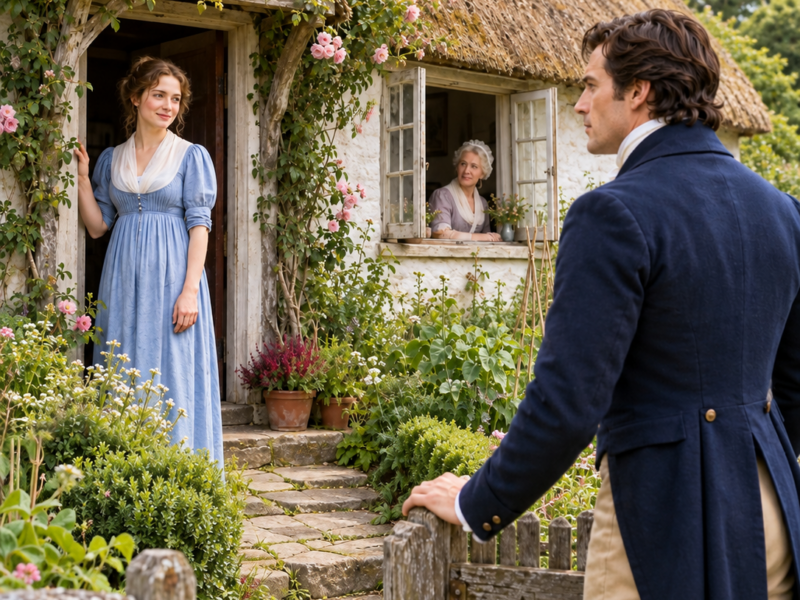
Part 1
The first thing seventy-two-year-old Antonia Bennett noticed was the silence.
For forty-three years, the old refrigerator in her kitchen had hummed like a tired tractor. Sometimes it rattled so loudly that her husband, Peter, would get up in the middle of the night and give its side a gentle smack.
Now there was nothing.
Just an empty rectangle on the faded linoleum and a faint mark on the wall where the refrigerator had stood.
Their oldest son, Andrew, had taken it two weeks earlier.
“It’s getting old, Mom,” he’d said, loading it into his expensive pickup. “I’ve got a guest cottage out back that could use one. I’ll buy you something smaller. Something nice.”
He hadn’t bought anything.
The milk sat in a cooler on the back porch. Their butter was wrapped in a towel against the autumn chill. Every morning, Antonia stepped around that empty space as though the refrigerator might somehow return.
But that wasn’t the worst thing Andrew had taken.
The worst thing was something Antonia hadn’t even realized she was losing.
It happened on a cold Saturday afternoon in October, when the mountains beyond Winchester, Virginia, were turning gold and rust-red.
Andrew arrived with his wife, Elaine, in a silver SUV that looked expensive enough to pay off every bill in the Bennett household.
He kissed his mother on the cheek, glanced at his father’s walking cane, and headed straight toward the living room.
“Hey, Dad. I’m taking that television today.”
Peter looked up from his recliner.
The television was on. A college football game played softly across the screen.
“Taking it where?”
“The guest cottage. I told you.”
“You told me you might need one.”
Andrew was already unplugging the cord.
“Dad, you and Mom barely watch anything. I’ve got a perfectly good radio you can use.”
Peter stared at him.
“I was watching something right now.”
Andrew gave the small, impatient laugh he’d developed sometime after becoming a regional operations director.
“Come on, Dad. Don’t make this complicated.”
He lifted the television.
Peter didn’t argue again.
At seventy-four, with a bad knee from forty years of factory work, he had learned that sometimes silence saved more strength than fighting.
Antonia went into the kitchen and began slicing bread.
She’d made a pot of vegetable soup that morning, using the last tomatoes from their garden and cabbage from the little patch behind the house. She still cooked enough for six whenever one of the children visited.
It was a habit she couldn’t break.
Andrew hadn’t sat down for one of her meals in nearly three years.
While she worked, she heard Elaine speaking quietly in the hallway.
“Did you talk to your father about the farm?”
“Not yet.”
“Andrew, we can’t keep putting it off.”
“I’ll handle it before Christmas.”
There was a pause.
Then her son said something that made the knife stop in Antonia’s hand.
“We sell the place in the spring. That land is worth real money now. And then we get them into assisted living.”
Antonia stared at the loaf of bread.
Elaine lowered her voice.
“What about this house?”
“Eventually that too. One thing at a time.”
“And Sarah?”
“Don’t tell Sarah until it’s settled. She’ll want her share.”
Antonia pressed one hand against the counter.
The farm.
Their little property west of town.
Six acres of orchard, an old wooden farmhouse, a tool shed, a chicken coop, and a narrow creek that ran behind the pasture.
Peter had bought it in 1978, when he was still working double shifts. For years, he spent every spare weekend rebuilding the old house, repairing fences, and clearing stones from the garden.
Antonia remembered carrying coffee to him while their three children played in the grass.
Andrew had learned to ride a bicycle there.
Sarah had picked her first apple there.
And little Nicholas had followed Peter through the orchard dragging a red toy truck on a string.
They hadn’t been wealthy.
But that land had belonged to them.
Every board. Every fence post. Every fruit tree.
Now Andrew was discussing selling it as though his parents were already dead.
“He can’t even handle that old garden tiller anymore,” Andrew continued. “I brought it home last month. Hasn’t made a difference to him.”
Antonia remembered watching Peter stand by the tool shed when Andrew loaded the tiller onto a trailer.
Her husband had saved for two winters to buy that machine.
“Mom?”
Andrew’s voice came from the kitchen doorway.
“We’re leaving. Don’t worry about lunch.”
She looked at him.
Her tall, handsome firstborn, with his clean hands, expensive watch, and carefully combed hair.
There had been a time when those hands were small enough to fit inside hers.
“All right, sweetheart,” she said.
He kissed the air near her forehead.
Then he was gone.
From the living room window, Peter watched Andrew load the television into the SUV beside Elaine.
The vehicle rolled down the driveway without either of them looking back.
That evening, Peter and Antonia ate their soup in silence.
The corner where the television had stood looked strangely naked.
After supper, Antonia bent to sweep beneath the kitchen cabinet and saw something red near the baseboard.
She reached down.
It was a little metal toy truck, missing one wheel.
She recognized it immediately.
“Peter.”
He turned.
“Look what I found.”
He took the truck and smiled.
“Nicky’s old pickup.”
Nicholas had cried for two days when that truck disappeared.
Antonia remembered telling him that careless little boys had to learn to look after their belongings.
She remembered Andrew laughing at his younger brother.
She remembered Nicholas eventually giving up searching.
The toy had been trapped behind the refrigerator for more than thirty years.
Peter turned it over in his broad, scarred hands.
“Funny what gets left behind,” he said.
That was when Antonia told him what she’d overheard.
Every word.
The farm.
The assisted-living facility.
The plan to keep Sarah from finding out.
Peter didn’t interrupt.
When she finished, he stood, put on his old canvas jacket, and walked outside.
Antonia watched through the window as he crossed the yard to the shed. He stood beside the empty place where the garden tiller had once been.
For nearly twenty minutes, he didn’t move.
That night, they lay awake listening to the wind scrape bare branches against the bedroom window.
“Do you remember our fiftieth anniversary?” Antonia finally asked.
Peter sighed.
“Sure do.”
Three years earlier, neither Andrew nor Sarah had come.
Andrew sent flowers.
Sarah said she had a deadline at work.
Nicholas called from a gas pipeline job somewhere in Pennsylvania, where the reception was so poor that they heard little more than his voice saying, “Love you, Mom. Tell Dad I love him.”
They’d celebrated alone at a diner where Peter had taken Antonia when they were dating.
The waitress brought them a free slice of pie after learning it was their anniversary.
That kindness from a stranger had been the sweetest part of the evening.
Sometime after three in the morning, Peter spoke.
“Toni, I’ve been thinking.”
“About what?”
“Let’s find out.”
“Find out what?”
“Which of our children would take us in if we had nothing.”
She turned toward him.
“Peter, don’t talk foolishness.”
“I’m serious.”
He stared at the ceiling.
“We tell them the house is gone. That I guaranteed a loan for somebody years ago and it finally caught up with us. We say we’re being foreclosed on.”
“That’s a terrible lie.”
“So is telling your mother you’re buying her a refrigerator and never bringing one.”
“That’s not the same.”
“No,” Peter said quietly. “It isn’t.”
He turned to face her.
“Andrew’s already making plans for our property. Sarah hardly answers the telephone. And I want to know what they’ll do when there’s nothing left to inherit.”
Antonia felt something cold settle in her chest.
“And Nicholas?”
“We’ll ask him too.”
“He’s away working.”
“Then Marina will be home.”
Antonia frowned.
Marina.
Their youngest son’s wife.
The woman Antonia had never considered good enough for her boy.
Marina worked in an elementary school cafeteria in Cumberland, Maryland. She was broad-shouldered, round-faced, and spoke with the cheerful volume of someone who’d spent years trying to be heard over a room full of children.
At the wedding sixteen years earlier, she’d danced barefoot after her shoes began hurting and laughed so loudly that half the guests turned to look.
Antonia had leaned toward Peter and whispered, loud enough for Marina to hear, “That girl doesn’t belong in our family.”
Marina had heard.
Antonia knew she had.
She’d seen the young bride’s smile disappear for one heartbreaking second.
But she’d never apologized.
“Marina won’t want us there,” she said.
Peter looked at her.
“Maybe. But we’re going to give her the same chance.”
Two days later, Peter called Andrew.
He explained that an old business obligation had surfaced, the bank had a judgment, and they had only a short time before losing their home.
Andrew listened.
Then he asked, “What about the farm?”
Not Where will you sleep?
Not Are you all right?
Just the farm.
“Still ours, far as I know,” Peter answered.
Andrew exhaled.
“Well, that’s something. Let me think about it, Dad.”
He promised to call back.
He didn’t.
Sarah sounded horrified when Antonia told her.
“Oh, Mom, that’s awful. Listen, I’m walking into a meeting. I’ll call tonight.”
She didn’t.
They tried Nicholas, but his phone went directly to voicemail. That wasn’t unusual. His crew worked in remote mountain country, and sometimes he went days without reception.
So Antonia packed one suitcase.
Two sweaters each. Peter’s heart medication. A framed photograph of the three children on the farmhouse porch. A spare pair of shoes.
Peter carried an old mesh grocery bag holding three jars of homemade apple butter, a loaf of bread, and a blue plastic folder.
Inside the folder were the deed to their house, the property papers for the farm, and the latest paid utility bill.
“Why bring all that?” Antonia asked.
Peter tied the bag handles together with twine.
“Because I don’t leave important things behind.”
Before dawn, they locked the house and left a spare key with their neighbor, Mrs. Dawson.
She stood on her porch in slippers and a wool cardigan.
“Where are you two headed with a suitcase?”
“Visiting family,” Peter said.
The neighbor studied their faces.
Then she reached over and squeezed Antonia’s hand.
“Well, you make sure you come home.”
Antonia nearly cried.
She hadn’t expected those four ordinary words to hurt so much.
Part 2
Andrew lived outside Leesburg, in one of those gated communities where every lawn looked like it had been trimmed with a ruler.
His house had two stories, a stone driveway, three garages, and windows so tall Antonia wondered how anyone washed them.
It was nearly noon when the taxi dropped them off.
Peter carried the suitcase.
Antonia held the mesh bag, afraid the glass jars would break.
They stood outside the wrought-iron gate while Peter pressed the intercom.
Andrew eventually came out wearing a designer sweater and house slippers.
For a moment, Antonia thought he was hurrying to embrace them.
Instead, he stopped in the gate opening.
“Mom? Dad? What are you doing here?”
Peter shifted the suitcase.
“We told you what happened.”
“I know, but you should’ve called.”
“We did,” Antonia said.
Andrew looked over his shoulder toward the house.
“Look, this is really bad timing.”
“Why, son?” Peter asked.
“Renovations. We’re having the entire upstairs redone. Dust everywhere. Workers coming and going.”
Antonia looked beyond him.
The driveway was immaculate.
No trucks.
No construction equipment.
No workers.
She could see a large television playing through the living room window.
It was theirs.
The little football trophy Peter had kept beside it for twenty years stood on the same table.
Andrew followed her gaze and stepped sideways.
“We’re basically sleeping on folding beds downstairs.”
Peter looked toward the detached garage.
Under an awning sat his green garden tiller, covered with a tarp.
“You ever get that machine running?” he asked.
“What?”
“The tiller.”
“Oh. Not yet.”
“Needs an oil change before winter.”
“Sure, Dad.”
There was an uncomfortable silence.
Finally Peter said, “We don’t need much, Andrew. Just somewhere warm until we figure things out.”
Andrew rubbed the back of his neck.
“Look, I can’t have you staying here right now.”
Antonia lowered her eyes.
“We could sleep on the floor.”
“No, Mom. It’s not safe with the construction.”
He pulled out his wallet.
“I’ll pay for a motel. There’s a decent one near the highway.”
He placed several hundred-dollar bills in Peter’s palm.
“Stay there a couple of nights. I’ll see what I can arrange.”
Peter looked at the money.
“All right.”
Andrew called them a taxi.
While they waited, he talked about the weather, rising property taxes, and how difficult it was to find good contractors.
He never asked whether they’d eaten.
When the car arrived, he loaded their suitcase, shut the trunk, and went inside before the taxi left the driveway.
Peter asked the driver to take them to the bus terminal instead of the motel.
In the back seat, he counted the money.
Five hundred dollars.
He folded it carefully and put it in a separate pocket.
“We won’t spend his money,” he said.
Antonia nodded.
She wanted to cry, but the tears wouldn’t come.
That evening, they sat under fluorescent lights at a crowded station, waiting for transportation toward Baltimore.
Peter bought two coffees and one ham sandwich.
He cut the sandwich in half with a plastic knife.
Antonia stared at her portion.
“He was such a sweet little boy,” she murmured.
Peter didn’t ask whom she meant.
They both knew.
She remembered Andrew at eight years old, running barefoot through the farm orchard, bringing her wildflowers and promising he’d buy her a beautiful house when he grew up.
He had bought a beautiful house.
But there was no room for his mother inside it.
By the time they reached Baltimore the next day, rain was sweeping across the harbor.
Sarah lived on the ninth floor of a modern apartment building with glass doors, a security desk, and a view of the water.
Antonia had never visited.
Sarah always said she was too busy to host anyone, and Antonia had never wanted to impose.
They entered the lobby, found her apartment number, and called through the intercom.
No answer.
Peter tried her cell phone.
It rang until voicemail.
He tried again.
Nothing.
“She’s probably working,” Antonia said.
“It’s Sunday, Toni.”
“People work Sundays.”
They stepped outside where they could see the upper floors.
The wind pushed cold rain beneath Antonia’s coat.
Then Peter pointed.
“There.”
A light shone through the third window from the corner on the ninth floor.
A woman in a cream-colored sweater stood beside the glass.
Sarah.
She had her phone in her hand.
Peter called again.
They watched her look down at the screen.
She stood perfectly still until the ringing stopped.
Then she placed the phone face down on a table and moved away from the window.
Antonia felt her knees weaken.
Peter put his arm around her.
Neither spoke.
They had traveled all that way with one suitcase and one old shopping bag.
Their daughter had seen them.
And she had chosen not to answer.
After twenty minutes, the building’s security guard came outside.
He was an older man with gray hair and tired eyes.
“Can I help you folks?”
Peter told him whom they were visiting.
The guard recognized the name immediately.
“Miss Bennett? She’s upstairs.”
“We’re her parents,” Antonia said.
The man’s face changed.
He looked at the suitcase, then back toward the building.
“Come on inside. You’ll freeze out here.”
He led them into the warm lobby and offered them seats beneath a large potted palm.
Then he brought them water.
Peter sent Sarah a message.
Honey, we’re downstairs. Your mother is cold. Could you come down for just a minute?
The message showed as read.
They waited.
Twenty minutes.
Forty minutes.
Nearly an hour and a half.
Finally a reply came.
Dad, I’m in the middle of something important. You really should’ve called before coming. I can’t deal with this today. Let’s talk later. Love you.
Peter read it once.
He handed the phone to Antonia.
She read it three times.
What hurt wasn’t the refusal.
It was those last two words.
Love you.
How easy they were to type.
How little warmth they offered.
Peter thanked the security guard and picked up the suitcase.
At the door, the man stopped them.
“Folks, there are shelters nearby if you need somewhere to stay.”
Peter looked at him.
For the first time, his steady voice faltered.
“Thank you. We’ve got one more place to try.”
They traveled west through Maryland the next morning.
The bus carried them past shopping centers, interstate exits, and eventually into the wooded mountains where the houses were smaller and farther apart.
Antonia watched the hills go by.
Nicholas had always been the quiet one.
Andrew earned prizes at school. Sarah got perfect grades. Nicholas got dirty, broke toys, and struggled with mathematics.
When he was twelve, he’d brought home a failing test.
Antonia had scolded him harshly.
“Why can’t you be more like your brother?”
She remembered his face.
Not angry.
Just ashamed.
At the time, she hadn’t understood that there were words a child could carry for the rest of his life.
Nicholas eventually became a pipeline mechanic, traveling wherever contractors needed him. He worked long shifts in miserable weather, sometimes spending weeks away from Marina and their daughter, Daisy.
Antonia knew little about his daily life.
She knew that he drove an old pickup, that he never had much money, and that he was often too far from home for family gatherings.
What she didn’t know was whether he would want his parents under his roof.
By late afternoon, they reached Cumberland.
Nicholas and Marina lived in an aging brick apartment building near the edge of town, where the old factories stood dark beyond the railroad tracks.
The hallway smelled of fried onions and laundry detergent.
The elevator had been out of service for months.
Peter climbed the stairs slowly, resting at each landing while Antonia carried the grocery bag.
On the third floor, they stopped before a brown door with peeling paint.
A child’s drawing was taped to it.
There was a yellow sun, a crooked blue house, and five stick figures standing beneath a rainbow.
Antonia counted them.
Five.
Marina, Nicholas, Daisy, and two people with gray hair.
Grandma and Grandpa.
Her throat tightened.
“Peter,” she whispered, “what if she doesn’t let us in?”
He looked at the drawing.
“Then we’ll go home.”
“But what if—”
“Then we’ll go home, Toni.”
He pressed the doorbell.
There were footsteps.
A lock clicked.
Then another.
The door swung open.
Marina stood in the doorway wearing a flowered apron, with flour on her forearms and a loose strand of brown hair stuck against her forehead.
Warm air rolled into the hallway.
It smelled of fresh bread, cabbage, and something baking in the oven.
Marina looked at them.
First at Antonia.
Then Peter.
Then the suitcase.
And finally the worn grocery bag hanging from Antonia’s arm.
For one second, her expression changed.
Not disgust.
Not irritation.
Something closer to immediate concern.
“Oh, my goodness.”
Antonia opened her mouth.
“Marina, I’m sorry to come without—”
“Get in here, both of you.”
Marina stepped aside and opened the door as wide as it would go.
“You’re standing out in that cold hallway. Peter, give me that bag. Come on now.”
“Marina, we don’t want to be a burden.”
“Well, you can worry about being a burden after you’ve had supper.”
She took the bag gently.
Then called toward the bedroom.
“Daisy! Honey, come here! Grandma Toni and Grandpa Peter are here!”
A small girl appeared in rabbit-print pajamas.
She had Nicholas’s gray eyes and two crooked ponytails.
She looked at the strangers.
“Are you really my grandparents?”
Peter crouched, wincing at his knee.
“Last time I checked.”
Daisy considered that.
Then smiled.
“Mom has pictures of you.”
She ran back into the bedroom and returned carrying two pairs of slippers.
One pair belonged to Marina.
The other was Nicholas’s enormous work slippers.
“You can borrow these,” she told Peter seriously.
Marina led them into the tiny kitchen.
There was an old white refrigerator covered in school drawings.
Its motor made a low, rattling hum.
Antonia recognized that sound.
The refrigerator was older than the one Andrew had taken.
Yet Marina hadn’t considered replacing it.
She’d simply kept it running.
Within minutes, the table held bowls of steaming soup, warm cornbread, roasted potatoes, and a plate of pickles.
“Eat first,” Marina said. “Talk afterward.”
Peter tried to speak.
“The bank—”
“After supper.”
“We’ve lost the house.”
Marina stopped pouring tea.
For a moment, she looked directly at him.
Then she pulled out a chair.
“Well,” she said, “you haven’t lost your family.”
Antonia stared at her.
Marina went on as though she’d said nothing extraordinary.
“Daisy can sleep with me. You two can take her room. Nick won’t be home until December, so there’s plenty of space.”
“But it’s your daughter’s bedroom,” Antonia whispered.
Marina shrugged.
“We can make more room. We can’t make another set of grandparents.”
For the first time since they’d left Virginia, Antonia began to cry.
She turned away, ashamed.
Marina placed a clean dish towel beside her.
She didn’t ask why.
She didn’t ask for an explanation.
And she didn’t demand proof that the house was really gone.
She just put another piece of warm cornbread on Antonia’s plate.
That night, while Peter slept on a spare mattress beside Daisy’s bed, Antonia lay awake beneath a quilt covered in little yellow flowers.
From the living room came the sound of Marina telling Daisy a bedtime story.
Then running water.
Dishes being washed.
A cupboard opening.
The soft clink of glass jars.
Marina was unpacking the old grocery bag.
Antonia heard paper rustle.
Then there was silence.
A long silence.
She closed her eyes.
She didn’t know that Marina had just discovered something in the bottom of that bag that would change everything.
Part 3
The next morning, Antonia woke to the smell of frying potatoes.
For a moment, she didn’t know where she was.
The ceiling was unfamiliar. A stuffed bear sat on the dresser, and a paper butterfly hung from the curtain rod.
Then she remembered.
Andrew’s gate.
Sarah’s window.
Marina’s open door.
She lay still, listening to the sounds of a family beginning its day.
In the kitchen, Daisy was talking.
“Mom has to leave before six because she feeds the whole school.”
Peter laughed.
“The whole school?”
“Six hundred kids. And some teachers. Sometimes the teachers eat more.”
Antonia smiled despite herself.
On the kitchen table sat a plate of scrambled eggs and toast beneath a clean towel.
Beside it was a note written in large, rounded handwriting.
I’m at the school until three. Help yourselves to anything. Daisy needs to be at school by eight. The spare key is beside the coffee pot. Make yourselves at home. Love, Marina.
Antonia read it twice.
Love, Marina.
Such an ordinary way to sign a note.
Yet it unsettled her.
She couldn’t remember ever saying those words to her daughter-in-law.
After breakfast, she and Peter walked Daisy to school.
The November wind blew down the narrow street, carrying the smell of wood smoke from nearby houses.
Daisy insisted on walking between them, holding both their hands.
At the school gate, she stopped.
“Grandma?”
“Yes, sweetheart?”
“Will you come get me this afternoon?”
Antonia felt the question deep inside her chest.
“Of course.”
Daisy grinned.
“Good. Because everybody else’s grandparents come sometimes, but mine never did.”
She ran toward the entrance before Antonia could answer.
Peter squeezed his wife’s hand.
They walked home without speaking.
Over the following days, life settled into an unexpected routine.
Marina left for work before sunrise. Nicholas remained away on the pipeline. Daisy went to school.
And Peter and Antonia, who had arrived believing themselves unwanted, slowly found places in the little apartment.
Peter noticed the kitchen faucet dripping.
He repaired it with a washer from the hardware store.
Then he fixed the loose leg on the living room table.
Next came the bedroom closet door, which had been sticking for years.
He tightened its hinges, sanded the swollen wood, and made it close smoothly again.
Marina came home one afternoon and found him kneeling beside the bathroom sink.
“Peter Bennett, what are you doing down there?”
“Fixing your drain.”
“You’re supposed to be resting.”
“I’ve rested enough.”
She put her grocery bags down.
“Nick’s been promising to do that for two years.”
“Well, now it’s done.”
Marina laughed.
“Then I guess I ought to keep you.”
Peter smiled.
For most of his life, he’d measured his usefulness by what his hands could accomplish.
At Andrew’s mansion, those hands had apparently become something to hide.
Here, in a small apartment with worn flooring and drafty windows, they were needed.
Daisy followed him everywhere.
She handed him screwdrivers, watched him tighten bolts, and asked questions without stopping.
One afternoon, she discovered him making a bird feeder from scrap wood he’d found behind the building.
“What’s that for?”
“Birds.”
“Why do birds need a house?”
“They don’t need a house. They need somewhere to eat when the ground freezes.”
She considered that.
“Then we should make a big one.”
So they did.
They hung it outside the kitchen window and filled it with sunflower seeds.
The next morning, three chickadees arrived.
Daisy sat beside the window in her pajamas, barely breathing.
“Grandpa! They’re eating our food!”
Peter sat beside her.
“That’s what we put it there for.”
“I know. But they actually came!”
He laughed so hard that Antonia came from the kitchen to see what was happening.
She stood in the doorway looking at them.
A gray-haired man and a small girl pressed close to a cold window, watching birds share a handful of seeds.
It reminded her of Nicholas when he was little.
He’d followed Peter through the orchard, asking about everything.
Why the leaves changed color.
Why chickens scratched the dirt.
Why rainwater collected in the old stone trough.
Antonia realized that she’d spent much of his childhood telling him to be quiet.
She wished she could go back.
She couldn’t.
But she could sit beside Daisy.
So she pulled up a chair.
At first, Antonia struggled to help Marina in the kitchen.
She’d cooked for Peter for more than fifty years and had strong opinions about how things ought to be done.
One evening, she watched Marina season a pot of vegetable soup.
“You’re putting the salt in too early.”
Marina looked over her shoulder.
“Am I?”
“It makes the cabbage tough.”
“Well, no wonder Nick says your soup is better than mine.”
There was no resentment in her voice.
Only amusement.
“Show me how you make it.”
Antonia hesitated.
Then she stood beside Marina and began explaining.
They cooked together that evening.
The next day, Marina brought home a cheap spiral notebook.
Across its cover, she wrote:
grandma toni’s recipes.
Antonia looked at it for a long moment.
“Why my name?”
“Because Daisy ought to know how her grandmother cooked.”
And so Antonia began filling the pages.
Her mother’s cornbread.
Apple butter made from the farm’s late harvest.
Chicken and dumplings.
The vegetable soup Peter had loved since their first winter together.
Soon Daisy joined them, standing on a stool and stirring batter.
Sometimes the flour ended up on the floor.
Sometimes the biscuits burned.
Marina never seemed troubled by either.
“Food tastes better when people make it together,” she liked to say.
One evening, Antonia found a ball of blue yarn in the closet.
She showed Daisy how to knit.
The girl struggled, dropped stitches, and complained that her fingers wouldn’t cooperate.
But by the end of the second week, she’d made a crooked strip of fabric nearly eight inches long.
“It’s for Daddy,” Daisy announced.
“He gets cold on the pipeline.”
Antonia examined the uneven stitches.
“Your father will love it.”
“Even if it’s ugly?”
“Especially if it’s made by you.”
Daisy smiled and kept knitting.
Nicholas called on a Thursday evening.
His face appeared on Marina’s phone, half-hidden beneath a hard hat. Snow blew behind him, and the image froze every few seconds.
“Mom? Dad? You’re really at our place?”
Peter leaned toward the screen.
“Looks that way.”
“I just got the message. What happened to the house?”
Peter began explaining.
The connection crackled.
Nicholas listened as best he could.
Finally he shook his head.
“Never mind all that. We’ll sort it out when I get home.”
“Nicky, we don’t want to take over your house,” Antonia said.
He looked directly into the camera.
“Mom, listen to me.”
She went quiet.
“You and Dad stay as long as you need. A week, a year, I don’t care. Marina and me, we’ll figure it out.”
“But you don’t have much room.”
“We’ve got a roof, haven’t we?”
“Yes.”
“Then there’s room.”
He grinned.
“And don’t let Marina work you too hard, Dad.”
“I’ve already fixed half your apartment.”
Nicholas laughed.
“That’s my old man.”
Then he looked at his wife.
“Marina, you taking care of them?”
“Better than you take care of that truck of yours.”
“She’s a good woman, Mom,” Nicholas said.
His voice softened.
“Best thing that ever happened to me.”
The signal disappeared.
Antonia sat staring at the blank screen.
For years, she’d believed Andrew was her most successful child.
Andrew had the largest house, the highest salary, the newest vehicles.
Nicholas had a little apartment, a rusty pickup, and a wife who worked before dawn feeding schoolchildren.
Yet Nicholas hadn’t asked about the farm.
He hadn’t mentioned inheritance.
He hadn’t demanded to know whether his parents could contribute toward the rent.
He’d simply said there was room.
That night, Antonia dreamed of the family farm.
She saw Andrew and Sarah as children, standing beneath the apple trees in their Sunday clothes.
Nicholas was farther away, kneeling in the dirt.
He was looking for something.
She called to him.
He didn’t answer.
When she walked toward him, she saw the little red truck buried beneath the leaves.
She woke with tears on her cheeks.
By Thanksgiving, the mountains were dusted with snow.
Marina invited two neighbors from downstairs, an elderly widower and a young mother whose husband was serving overseas.
The apartment was crowded.
People sat on folding chairs and the arm of the couch.
Peter carved the turkey.
Daisy proudly showed everyone the bird feeder.
And Antonia made her mother’s sweet potato casserole.
After dinner, she stood at the sink washing dishes while laughter filled the living room.
It struck her then that nobody in this room had much money.
Nobody wore expensive jewelry.
Nobody was discussing property values or retirement accounts.
Yet the little apartment felt richer than Andrew’s mansion had ever felt.
The discovery came a few days later.
Marina was at work.
Peter and Daisy had gone to the store for more birdseed.
Antonia was searching for scissors when she opened the second kitchen drawer.
Inside was a blue metal cookie tin decorated with a picture of a sleigh.
A folded receipt protruded beneath the lid.
As she pushed the drawer closed, the receipt slipped out.
She bent to retrieve it.
Then stopped.
The paper was from a pharmacy.
The medication name was familiar.
Very familiar.
It was Peter’s heart medicine.
An expensive prescription he’d been taking for years.
At the bottom of the receipt was a delivery address.
Their address in Winchester.
Antonia slowly sat down.
She opened the tin.
Inside were dozens of receipts, bundled together with rubber bands.
Month after month.
Year after year.
The same medicine.
The same address.
The earliest receipt was nearly four years old.
Every payment had been made with a card belonging to Marina Bennett.
Antonia’s hands began to shake.
For four years, a box of heart medicine had arrived at their home every month.
She’d always assumed Andrew was sending it.
In fact, she’d called him after the very first delivery.
“Andrew, sweetheart, was that medicine from you?”
He’d paused.
Then laughed.
“Aw, Mom. Don’t mention it.”
She’d thanked him every Christmas.
Every birthday.
Every time the pharmacy box arrived.
She’d told neighbors what a thoughtful son she had.
And now, sitting in Marina’s tiny kitchen, Antonia understood.
The woman she’d rejected for sixteen years had been quietly paying for the medicine that helped keep Peter alive.
And she’d never said a word.
Antonia put the receipts back in the tin.
Then she sat alone beside the humming refrigerator until the winter light faded from the window.
Part 4
When Marina came home that evening, she carried a small paper bag of oranges.
“School got an extra shipment,” she explained. “The kitchen manager let us take some home.”
She poured the oranges into a bowl.
Daisy immediately grabbed two.
Peter was sitting by the window repairing an old table lamp.
Antonia watched Marina remove her coat.
Her hands were red and rough from years of hot water, dish soap, and cold mornings.
The sleeves of her sweater had been mended at both elbows.
Antonia thought about the receipts in the drawer.
Four years.
Forty-eight months of medicine.
Money that could have bought Marina new clothes.
A better car.
A vacation with her family.
Instead, she’d sent it to two people who barely acknowledged her existence.
“Marina?” Antonia said.
“Yes, ma’am?”
“Do you ever get tired?”
Marina laughed.
“Every day.”
“Why do you keep doing so much?”
Marina looked puzzled.
“Doing what?”
“Everything.”
Marina shrugged.
“Because it needs doing.”
Then she peeled an orange and handed half to Antonia.
That night, Antonia told Peter about the pharmacy receipts.
They lay in Daisy’s room, speaking softly so nobody would hear.
“Four years,” Peter whispered.
“Four years.”
“And we thought Andrew…”
“I know.”
Peter sat up slowly.
His knee had been hurting badly since the trip.
“Did she ever tell us?”
“No.”
“Did Nicholas know?”
“I don’t think so.”
He was quiet for a long time.
Then he said, “Andrew let us thank him.”
Antonia pressed her face into the pillow.
That hurt almost as much as the betrayal itself.
Their oldest son hadn’t merely failed to help.
He’d accepted praise for a kindness someone else had paid for.
A few days later, Andrew called.
His voice was cheerful.
“Dad, I’ve got good news.”
Peter put the phone on speaker.
Antonia sat beside him.
Marina was making dinner.
Daisy was doing homework at the table.
“Remember that developer who was interested in the farm?” Andrew asked. “He’s ready to make an offer.”
Peter’s expression hardened.
“What offer?”
“Enough to get you and Mom settled somewhere comfortable. I’ve been looking at assisted-living communities near Winchester. There’s one with meals, transportation, medical care—the whole deal.”
Antonia felt the old coldness return.
“You’ve been looking at homes for us?” Peter asked.
“Well, somebody has to plan ahead.”
“And you plan to sell my land to pay for it?”
“Dad, you’re seventy-four. You can’t keep working that place forever.”
“I can decide what happens to it.”
“Of course you can. But be realistic.”
Andrew paused.
“Look, I can bring the paperwork next month. We get your signature, close the sale, and take the pressure off everybody.”
Peter looked at Marina.
She stood perfectly still, holding a wooden spoon.
“And what if I don’t sign?” he asked.
Andrew sighed.
“Then I don’t know what we’re supposed to do, Dad. I can’t support you indefinitely.”
The words hung in the kitchen.
Peter said only, “I’ll think about it.”
Then he ended the call.
Daisy looked up from her homework.
“Grandpa, is somebody trying to take your farm?”
Peter swallowed.
“No, sweetheart.”
Marina quietly sent Daisy into the bedroom.
Then she turned off the stove.
“All right,” she said. “What’s really going on?”
Antonia looked at her.
There was something in Marina’s voice that made further deception impossible.
Peter lowered his head.
“Toni?”
She nodded.
He reached for her hand.
And together they told the truth.
The house hadn’t been foreclosed on.
There had never been a judgment.
No bank was taking anything.
They had invented the story because they wanted to know which of their children would give them shelter.
Marina listened without interrupting.
When Peter finished, Antonia waited for the anger.
The accusations.
The disappointment.
Instead, Marina nodded slowly.
“I know.”
Antonia stared at her.
“What?”
“I’ve known since your first night here.”
“How?”
“The blue folder in your grocery bag.”
Peter looked up.
Marina continued.
“I was putting your apple butter in the refrigerator. The folder opened, and one of the papers slipped out.”
She folded her hands.
“It was a paid property tax receipt. Recent. And the deed was right there. I knew you still owned your house.”
Antonia felt her cheeks burning.
“Why didn’t you say anything?”
Marina looked at her for a long moment.
“Because you came here with one suitcase, looking like the world had knocked you down.”
She paused.
“I figured whatever made you tell that story must’ve hurt worse than anything you were afraid of hearing from me.”
Peter closed his eyes.
Marina went on.
“I didn’t know you were testing us at first. But after Andrew called and you both got so quiet, I started putting things together.”
Antonia could barely breathe.
“Then you knew we were lying to you.”
“Yes.”
“And you still let us stay.”
Marina’s expression didn’t change.
“You’re Nick’s parents.”
She said it simply.
As though that explained everything.
Antonia began to cry.
“Marina, I don’t deserve—”
“Please don’t,” Marina interrupted gently.
“There’s something I need to say first.”
For the first time since they’d arrived, her voice trembled.
“Do you remember our wedding?”
Antonia nodded.
“I remember.”
“You said I wasn’t good enough for Nick.”
Antonia covered her mouth.
“I heard you,” Marina continued. “I heard every word.”
Her eyes filled, but she didn’t look away.
“I finished the dance. I smiled for the photographs. Then I went into the bathroom and cried for nearly half an hour.”
She gave a small, unhappy laugh.
“Nick found me sitting on the floor in my wedding dress.”
Antonia bowed her head.
“That was cruel,” Marina said. “And I spent years trying to prove you wrong.”
She glanced toward Daisy’s bedroom.
“When Daisy was born, we invited you to come stay. You came for one afternoon.”
Antonia remembered.
Andrew had been hosting a birthday dinner that evening.
She’d insisted they needed to leave early.
“When Daisy started school,” Marina continued, “she made you an invitation herself. She practiced writing the word Grandma for three nights.”
Antonia felt sick.
“She waited for you at the school gate.”
“I told you I wasn’t feeling well.”
“I know what you told me.”
Marina wiped her eyes.
“Five years went by without you calling me once. Not on my birthday. Not at Christmas. Nothing.”
Silence settled over the kitchen.
Then Marina said something Antonia would never forget.
“I didn’t need you to love me like a daughter. But I would’ve liked you to see that I was a person.”
Peter stood.
His knee nearly buckled, but he caught the edge of the table.
He came around to Marina’s chair.
“Marina,” he said, “I owe you an apology too.”
She looked up.
“That day at the wedding, I heard what Toni said. I should’ve stood up for you. I should’ve told her she was wrong.”
His voice broke.
“But I didn’t.”
He reached for Marina’s hand.
“I was a coward. And I’m sorry.”
Marina held his hand.
Then Antonia whispered, “I found the receipts.”
Marina became very still.
“The medicine,” Antonia said. “Peter’s medicine.”
Marina looked away.
“Oh.”
“Why, Marina?”
She took a breath.
“Nick came home from visiting you four years ago. He was worried about his dad. Said the doctor had prescribed something better for his heart, but it cost too much.”
Peter stared at her.
“That was true,” he said.
Marina nodded.
“Nick wanted to pay for it. But we were behind on a few bills then, and I knew he’d argue with me if I used my paycheck.”
“So you did it without telling him?” Antonia asked.
“Yes.”
“Every month?”
Marina shrugged.
“Once I got the delivery set up, it wasn’t hard.”
“That medicine costs more than a week’s worth of groceries!”
“We managed.”
“How?”
Marina smiled faintly.
“We ate a lot of school cafeteria leftovers.”
Antonia began sobbing.
All the years she’d praised Andrew.
All the years she’d looked down on Marina.
The terrible unfairness of it seemed more than she could bear.
“I was so wrong,” she whispered.
Marina pushed a glass of water toward her.
“Well, we all get things wrong.”
“No. This wasn’t a mistake. I chose not to see you.”
She looked up through tears.
“I judged you by your job, your clothes, the way you talked. I thought because Andrew had money, he was better. I thought because Sarah had a career, she was better.”
She reached across the table.
“And the best person in this family was standing right in front of me all along.”
Marina’s face crumpled.
For a moment, she looked as young as she must have looked on her wedding day.
Then Antonia rose from her chair.
She walked around the table and embraced her daughter-in-law.
Marina hesitated.
Then she wrapped both arms around the older woman.
They stood together for a long time.
No speeches.
No promises.
Just two women holding each other while sixteen years of hurt finally began to loosen.
Nicholas came home on December twentieth.
He arrived after dark, carrying a battered duffel bag and smelling of diesel fuel and freezing weather.
Daisy launched herself into his arms.
He lifted her off the floor, laughing.
Then he saw his parents.
“Well, look at you two.”
Peter stood and embraced his youngest son.
Nicholas held him tightly.
Then he turned toward Antonia.
For a moment, she saw the little boy who had always wanted her approval.
“Nicky,” she whispered.
He hugged her.
That evening, they told him everything.
About the false foreclosure.
Andrew.
Sarah.
Marina’s discovery.
The medicine.
Nicholas listened without speaking.
When he learned what Marina had been doing for four years, he put down his fork.
“Marina?”
She looked at him.
“You’ve been paying for Dad’s medicine all this time?”
“You would’ve argued.”
“You’re right.”
He reached across the table and took her hand.
“I would’ve.”
Then he looked at his parents.
“Mom, Dad, you never needed to test this house.”
Antonia nodded.
“I know that now.”
Later that night, she found Nicholas standing in the hallway.
She took something from her coat pocket.
The little red truck.
She’d slipped it into her pocket on the morning they left Virginia.
She held it out.
“I found this behind the old refrigerator.”
Nicholas stared.
“No way.”
He took it carefully.
“Is this my truck?”
“Yes.”
He turned it over.
“Still missing that wheel.”
Antonia smiled through tears.
“You searched for it for days.”
“I remember.”
She swallowed.
“I told you it was your own fault.”
Nicholas looked up.
“I remember that too.”
There was no anger in his voice.
Only the quiet certainty of a memory that had never disappeared.
Antonia placed her hand on his cheek.
“I should’ve helped you look.”
Nicholas’s eyes filled.
He nodded.
“Yeah, Mom.”
Then he embraced her.
The next morning, they all traveled back to Winchester.
Peter had made the arrangements.
Andrew believed his father was finally ready to sign over the farm.
Sarah had been told that the family was meeting to discuss the property.
Both had agreed to come.
They were scheduled to arrive at two o’clock.
Marina packed a large pot of homemade soup, carefully wrapping it in towels.
“People ought to eat before a difficult conversation,” she said.
Antonia looked at her.
“And after?”
Marina smiled.
“Especially after.”
But as they approached the Bennett house, Antonia felt a new fear.
The truth was about to come out.
And she knew that after this day, her family would never be the same.
Part 5
The old house smelled of dust, dried apples, and the faint sweetness of the geraniums Mrs. Dawson had kept alive.
Antonia stood in the kitchen looking at the empty rectangle where her refrigerator used to be.
Peter set down the suitcase.
Nicholas opened the curtains.
Marina carried the soup into the kitchen.
And Daisy wandered through the rooms, examining old photographs and touching furniture as though she were inside a museum.
“Grandma, is this where Daddy grew up?”
“Yes, sweetheart.”
Daisy pointed to a framed photograph hanging beside the kitchen door.
Three children sat on the porch of the farm.
Andrew was smiling proudly.
Sarah held a basket of apples.
Nicholas was sitting at the edge of the steps, clutching a little red truck.
“That’s Daddy!” Daisy exclaimed.
Antonia nodded.
“And those are your aunt Sarah and uncle Andrew.”
Daisy studied them.
“They look happy.”
Antonia looked at the picture.
“They were.”
Then she glanced toward the kitchen.
Marina was warming soup while Nicholas helped Peter carry chairs from the garage.
For years, Antonia had thought her children had simply grown apart.
Now she understood that growing apart and turning away were not the same thing.
Andrew arrived first.
His silver SUV pulled into the driveway just before two.
Elaine climbed out beside him.
They both looked surprised to see Nicholas’s battered pickup parked outside.
Andrew entered without knocking.
“Mom? Dad?”
He stopped when he saw everyone gathered in the living room.
Nicholas stood beside the window.
Daisy sat cross-legged on the floor.
Marina was carrying a tray of bowls from the kitchen.
“What is everybody doing here?”
Peter sat in his old recliner.
“Waiting for Sarah.”
Andrew frowned.
“Dad, I’ve got the developer meeting us later. We need to get those papers signed.”
“Sit down, son.”
Something in Peter’s voice stopped him.
Andrew sat.
Elaine remained near the doorway, still wearing her coat.
Sarah arrived twenty minutes later.
She came directly from Baltimore, carrying a small leather bag and looking exhausted.
“Sorry I’m late. Traffic was terrible.”
She kissed Antonia quickly.
Then she noticed Nicholas and Marina.
“Oh. Everybody’s here.”
She looked around.
“Wait. How are you back in this house?”
Peter motioned toward the couch.
“Sit down, Sarah.”
Marina placed bowls of soup before them.
Andrew barely glanced at his.
“Can we get on with this?”
Peter nodded.
“Yes. We can.”
He reached beside his chair and lifted the blue plastic folder.
The same folder he’d carried beneath the jars of apple butter.
He opened it and began laying documents across the coffee table.
First, the deed to the house.
Then the property tax records.
Then the farm’s title documents.
Finally, the paid utility bill.
Andrew leaned forward.
“What is this?”
Peter looked at him.
“Proof that your mother and I still own our home.”
Sarah stared.
“What?”
“There was no foreclosure,” Peter said. “No judgment. No unpaid loan.”
He looked from one child to the other.
“We never lost this house.”
The room became completely silent.
Even Daisy stopped moving.
Peter continued.
“We told you that story because we wanted to know what would happen if we had nothing left.”
Sarah lowered her eyes.
Andrew stared at his father.
Then his face reddened.
“You tested us?”
“Yes.”
“You lied to your own children?”
“Yes.”
Andrew stood.
“Dad, that’s insane!”
Peter didn’t raise his voice.
“Sit down.”
Andrew hesitated.
Then he sat.
“I know we were wrong to lie,” Peter continued. “But your mother overheard you talking about selling our farm and putting us in a home.”
Andrew opened his mouth.
Peter raised one hand.
“I’m not finished.”
He took five hundred dollars from his shirt pocket and laid the bills on the table.
“Remember these?”
Andrew stared.
“You gave them to me outside your gate. Told us you couldn’t let us inside because the house was being renovated.”
“We were renovating.”
Peter nodded toward Antonia.
“Your mother saw our television playing in your living room. I saw my garden tiller under your garage awning. And I didn’t see a single construction worker.”
Andrew looked away.
“You could’ve stayed at a motel.”
“We could’ve,” Peter said. “But we came to our son.”
Antonia spoke then.
“Andrew, I heard what you told Elaine that Saturday.”
He looked up.
“What?”
“About selling the farm. About putting us in assisted living.”
Elaine’s face went pale.
Antonia continued.
“You said I wouldn’t understand. You said your father couldn’t manage the land anymore.”
Andrew rubbed his forehead.
“Mom, we were trying to plan for your future.”
“Without asking us?”
“Somebody has to be practical!”
Peter looked at him.
“Practical would have been bringing your mother the refrigerator you promised.”
Andrew went silent.
Then Antonia turned toward Sarah.
Her daughter was sitting very straight, both hands gripping her bag.
“Sarah, your father and I came to your apartment.”
Sarah whispered, “I know.”
“We stood outside in the rain.”
“I know.”
“We called.”
Sarah began crying.
“I know, Mom.”
Peter held out his phone.
“I kept the call history.”
She looked at the screen.
Nine unanswered calls.
Then the message telling them she was busy.
Peter spoke quietly.
“We saw you at the window, honey.”
Sarah covered her face.
“I was scared.”
Nobody moved.
She began speaking through her tears.
“I thought you were coming to stay permanently. My mortgage is enormous. I’m working two jobs. I’m barely managing everything.”
She swallowed.
“I thought if I opened the door, I’d never be able to say no. And I didn’t know how to tell you that.”
Antonia listened.
Sarah wiped her eyes.
“I kept telling myself I’d call you the next day. Then I felt ashamed, and the longer I waited, the worse it got.”
She looked at her mother.
“I’m sorry.”
Antonia’s heart ached.
She could see that Sarah was frightened and exhausted.
Her daughter hadn’t turned away because she was wealthy and comfortable.
She’d turned away because she believed caring for her parents would destroy the fragile life she’d built.
That didn’t excuse it.
But it made the failure human.
“I wouldn’t have asked you to give up your life,” Antonia said softly.
Sarah shook her head.
“I know that now.”
Then Peter reached for another document.
“There’s something else.”
He looked at Andrew.
“For four years, heart medicine has been delivered to this house every month.”
Andrew shifted in his seat.
Antonia continued.
“I called you after the first delivery, remember?”
Andrew shrugged.
“Not really.”
“I asked if you’d sent it.”
“Mom, I get a hundred calls a day.”
“You said, ‘Don’t mention it.'”
Andrew looked toward Elaine.
Antonia’s voice grew firmer.
“For four years, I thanked you. I told people what a wonderful son I had.”
Her eyes moved toward the kitchen.
“And all that time, Marina was paying for the medicine from her own wages.”
Andrew turned.
Marina stood beside the doorway, holding a dish towel.
She looked uncomfortable under everyone’s gaze.
“I didn’t do it for attention,” she said quietly.
Peter looked at her.
“We know.”
Andrew shook his head.
“Well, I never actually said I paid for it.”
Antonia stared at him.
“No,” she said. “You just let me believe you did.”
There was nothing Andrew could say to that.
Nicholas stood by the window with his arms folded.
Peter turned toward him.
“Nick, you haven’t said much.”
Nicholas shrugged.
“I wasn’t there when they came. Marina was.”
He looked at his wife.
“She’s the one who opened the door.”
Marina shook her head.
“Any of us should’ve.”
Nicholas smiled sadly.
“Maybe. But you did.”
Peter leaned back in his chair.
For several moments, he seemed to gather his strength.
Then he spoke.
“Now, here’s what’s going to happen.”
Andrew looked up.
“The farm isn’t for sale.”
“Dad—”
“No.”
Peter’s voice was steady.
“I built that farmhouse with my own hands. I planted those apple trees with your mother. I fixed the fence every spring and kept that creek clear when the water rose.”
He looked toward the window, where the winter trees stood bare against a pale sky.
“That land has held every good memory this family’s ever had.”
Andrew lowered his gaze.
“And as long as your mother and I are alive, we’ll decide what happens to it.”
Peter paused.
“We’ve also made a decision about what happens after we’re gone.”
Elaine sat forward.
Peter looked at Nicholas and Marina.
“We’re leaving the house and farm to Nicholas and Marina, with arrangements to protect Daisy’s future.”
Andrew’s head snapped up.
“What?”
Sarah remained silent.
Peter continued.
“The documents will be drawn up properly by our attorney. Nothing changes while we’re alive. Your mother and I will stay in our own home as long as we’re able.”
Elaine’s voice was sharp.
“That’s hardly fair.”
Antonia turned toward her.
“Fair?”
Elaine stiffened.
“We’ve helped you plenty over the years.”
Antonia studied her.
“How?”
Elaine opened her mouth.
Then closed it.
There was a long silence.
Peter reached for his cane.
“Andrew, I’m asking one more thing.”
Andrew looked exhausted.
“What now?”
“Bring back what you took.”
“The television?”
“The television. The refrigerator. And my tiller.”
He paused.
“Your mother has been keeping milk on the porch. She shouldn’t have to.”
Andrew sat completely still.
For the first time, he looked less like a successful businessman and more like a tired little boy who’d been caught doing something he knew was wrong.
Finally, he stood.
“I understand.”
But his voice suggested that he understood only part of it.
He picked up his coat and walked toward the door.
Elaine followed him.
Before leaving, she stopped beside Antonia.
“I really did think assisted living might be better for you,” she whispered.
Antonia looked at her.
“Maybe someday it will be.”
She glanced toward Peter.
“But someday should be our decision, not yours.”
Elaine nodded and left.
Sarah remained on the couch.
She cried quietly for several minutes.
Then she stood and picked up her bag.
“I should go.”
Antonia followed her into the hallway.
Sarah stopped beside the old coat rack.
“Mom, I don’t know how to fix this.”
Antonia reached up and smoothed her daughter’s hair.
The gesture came naturally.
Just as it had when Sarah was a little girl.
“You start by answering the telephone,” she said.
Sarah gave a broken laugh.
“I can do that.”
“And when you’re afraid, you tell me you’re afraid.”
Sarah nodded.
Then she whispered, “Could I come for Christmas?”
Antonia looked toward the kitchen, where Marina was washing bowls.
“We’re spending Christmas with Nicholas and Marina.”
Sarah hesitated.
“Would they want me?”
“Why don’t you ask?”
Sarah looked toward Marina.
It took her several seconds to speak.
“Marina?”
Marina turned.
“Yes?”
“Would it be all right if I came for Christmas?”
Marina dried her hands.
“Of course.”
Sarah began crying again.
“But you’ll have to help with the dishes,” Marina added.
For the first time that afternoon, everyone laughed.
Christmas in Cumberland was crowded, noisy, and warmer than any holiday Antonia could remember.
Sarah arrived carrying presents, homemade cookies that had gone slightly wrong, and a store-bought cake.
She gave Daisy a doll.
Nicholas a pair of heavy work gloves.
Marina a new apron embroidered with flowers.
For Antonia, she brought no wrapped gift.
Instead, after dinner, she sat on the stool in the hallway and handed her mother a hairbrush.
“Mom?”
Antonia looked at her.
“Yes?”
“Would you braid my hair? Like when I was little?”
Antonia felt a sudden tightness in her throat.
Sarah was forty-five years old.
Her hair was professionally cut, her clothes expensive, and her face marked by years of worry.
But sitting on that stool, she looked like the little girl who used to beg her mother for one more bedtime story.
Antonia stood behind her.
She brushed slowly.
Then parted the hair and began weaving it into a French braid.
Daisy watched in fascination.
“Grandma, can you do mine next?”
“Of course, sweetheart.”
Sarah looked at her niece and smiled.
“You know, Grandma used to do this every morning before school.”
Daisy leaned closer.
“Was she good at it?”
Sarah laughed.
“The best.”
For Antonia, it felt like receiving a gift she’d thought was lost forever.
Andrew didn’t come for Christmas.
He didn’t call.
But a few days before New Year’s, Mrs. Dawson phoned.
“Antonia, a delivery truck just came to your house.”
Antonia’s heart skipped.
“What kind of delivery?”
“Two men brought a refrigerator inside. Brand-new. Small, white, with a freezer on top.”
Mrs. Dawson paused.
“And they brought back your television.”
Antonia sat down.
“Did they leave a note?”
“No, honey.”
“Was the tiller there?”
“No.”
Antonia closed her eyes.
“Thank you for telling me.”
After the holidays, she and Peter returned to Winchester.
They visited their attorney.
They made arrangements for the property, discussed how it would pass to Nicholas and Marina, and ensured that their wishes were properly recorded.
They also made arrangements so that neither child could force decisions about their care or property simply because they were getting older.
They were still capable of running their own lives.
And they intended to do so.
Marina began calling every Sunday.
Then every Thursday too.
Sometimes there was a reason.
A recipe.
A question about Daisy’s school project.
A loose hinge Nicholas couldn’t fix.
Other times, Marina called simply to ask how they were.
Soon Antonia started calling her every day.
She learned that Marina liked her coffee strong, that her knees hurt after long cafeteria shifts, and that she’d always dreamed of having a little vegetable garden.
She discovered that Marina loved old country songs and knew how to sew curtains from inexpensive fabric.
And slowly, Antonia began to feel as though she had gained a daughter she should have welcomed sixteen years earlier.
Sarah visited in February.
She stayed for three days.
They cooked, went through old photographs, and talked about things they’d avoided discussing for years.
Her visits didn’t erase the hurt of that rainy afternoon in Baltimore.
But they began building something new.
Andrew remained distant.
Occasionally, he sent a short message asking about Peter’s health.
Peter answered.
Neither pushed for more.
Some wounds healed slowly.
Others needed time before anyone could even begin cleaning them.
By late April, the snow had disappeared from the mountain roads.
The grass around the farm was growing green.
Peter announced that he wanted to spend a weekend there.
“I’ve got things to do.”
Antonia raised an eyebrow.
“With that knee?”
“I’ve still got two hands.”
Nicholas and Marina came with Daisy.
They arrived Friday evening, carrying groceries, blankets, tools, and a small bag of seed potatoes.
The old farmhouse smelled of wood smoke and dried leaves.
The floors creaked beneath their feet.
A mouse had made a nest inside the pantry.
One window needed caulking.
The back gate sagged on its hinges.
But the orchard was still there.
The creek still ran behind the pasture.
And the apple trees, though old and twisted, were covered in pale blossoms.
On Saturday morning, Antonia woke before sunrise.
She wrapped herself in Peter’s old work jacket and stepped onto the porch.
A white mist hung over the garden.
Birds were calling from the fence posts.
The air smelled of wet earth and wood smoke.
Peter was already outside with a shovel.
He was turning soil slowly, stopping now and then to rest his knee.
Nicholas was asleep on the porch swing.
Daisy was curled beneath a blanket inside.
And Marina stood in the kitchen making coffee.
Antonia looked across the farm.
For so many years, she’d thought this place was valuable because of what it might someday sell for.
Now she understood its value in a different way.
It held the lives they’d built.
The labor they’d shared.
The children who’d grown beneath its trees.
And the possibility that something broken might still be repaired.
Then she heard an engine.
A vehicle was coming slowly down the gravel road.
Antonia looked up.
A silver SUV stopped outside the farm gate.
Behind it was a small trailer.
On the trailer sat Peter’s green garden tiller.
Andrew climbed out.
He was alone.
No Elaine.
No expensive coat.
Just jeans, work boots, and an old canvas jacket.
He stood beside the closed gate.
For several moments, he didn’t move.
He looked toward the farmhouse.
Then toward his father working in the garden.
Antonia recognized the expression on his face.
It was the same helpless uncertainty she’d felt standing outside his mansion months earlier.
She slowly walked down the porch steps.
The morning grass was wet beneath her shoes.
Andrew watched her approach.
“Morning, Mom.”
“Morning, sweetheart.”
He looked at the trailer.
“I brought Dad’s tiller back.”
“I see that.”
“I changed the oil. Replaced the spark plug. Cleaned the carburetor.”
He swallowed.
“Starts now.”
Antonia nodded.
For a moment, neither spoke.
Then Andrew looked down.
“I should’ve brought it sooner.”
“Yes,” she said gently. “You should have.”
He rubbed his hands together.
“I don’t know what to say, Mom.”
Antonia studied her oldest son.
She could have reminded him of the gate he’d refused to open.
The motel money.
The empty refrigerator space.
The years of taking credit for someone else’s kindness.
She could have made him stand there and feel every moment of humiliation she’d endured.
But she remembered Marina.
The woman who had welcomed her without asking whether she deserved it.
And Antonia understood something important.
Forgiveness didn’t require pretending the past hadn’t happened.
But refusing to become cruel was a choice she could still make.
She reached for the latch.
Then opened the gate.
Wide.
All the way to the fence.
“Come inside, Andrew.”
His eyes filled.
“Mom…”
“Marina’s making coffee.”
Andrew looked toward the farmhouse.
“Is she here?”
“Yes.”
He hesitated.
“She probably doesn’t want to see me.”
Antonia glanced back.
Marina was standing on the porch.
She watched them quietly.
Then she lifted one hand in greeting.
“Coffee’s almost ready!” she called.
Andrew let out a shaky breath.
He began unfastening the straps that held the tiller in place.
Peter saw him and came slowly across the garden.
He stopped beside the trailer.
Looked at the machine.
Then at his son.
“You change the oil?”
Andrew nodded.
“Yes, sir.”
“Spark plug?”
“Brand-new.”
Peter examined the tiller.
“Let’s see if she starts.”
Andrew smiled faintly.
Together, father and son rolled the machine off the trailer.
Peter adjusted the choke.
Andrew pulled the starter cord.
The engine coughed.
He pulled again.
Nothing.
On the third try, it roared to life.
Peter’s face changed.
He placed one hand on the tiller’s handle.
“Sounds good.”
Andrew wiped his eyes quickly with the back of his hand.
“Thanks, Dad.”
Peter nodded toward the garden.
“Got plenty of ground to work.”
Andrew looked at him.
“You want me to help?”
Peter’s expression softened.
“Reckon you could.”
From the porch, Daisy appeared in her pajamas, clutching the crooked blue scarf she’d finally finished for her father.
She stared at the stranger beside the machine.
“Mom, who’s that?”
Marina put an arm around her.
“That’s your uncle Andrew.”
Daisy considered him.
“He’s Daddy’s brother?”
“Yes.”
She walked down the steps.
Stopped beside Andrew.
And looked up.
“Do you know how to fix things like Grandpa?”
Andrew laughed.
“A few things.”
Daisy pointed toward the tiller.
“Can you teach me?”
Andrew knelt beside her.
“Sure can.”
Peter stood beside them.
For a moment, three generations of the Bennett family gathered around an old green machine on a bright spring morning.
Nobody spoke about money.
Nobody mentioned inheritance.
Nobody asked what the land was worth.
They just talked about oil, engines, and planting potatoes.
Antonia watched from the path.
Then she turned and walked back toward the farmhouse.
Inside, Marina was pouring coffee into mismatched mugs.
“How’s it going out there?” she asked.
Antonia smiled.
“Better than I expected.”
Marina glanced through the window.
She saw Peter standing beside Andrew, pointing toward the garden.
“Well,” she said, “that’s a start.”
Antonia reached for an extra cup.
Then she noticed the old mesh grocery bag hanging from a hook beside the pantry.
The same bag they’d carried from one child’s doorstep to another.
Marina had brought it along with the groceries.
Antonia took it down.
Inside were two jars of apple butter left from the previous autumn.
She placed one jar on the kitchen table.
“For Andrew,” she said.
“And the other?”
“For Sarah when she visits next month.”
Marina smiled.
“Sounds like a plan.”
Outside, the mist began to lift from the orchard.
The sun warmed the old wooden porch.
Daisy ran up the steps, laughing.
“Grandma! Grandpa says we’re planting potatoes!”
“Then you’d better get your boots on.”
Daisy darted inside.
As she passed, something fell from her pocket.
A little red metal truck.
It landed on the porch with a faint clatter.
Antonia bent down and picked it up.
The paint was chipped.
One wheel was missing.
She turned it over in her hand.
She could still see Nicholas at four years old, searching beneath the furniture and crying because he’d lost his favorite toy.
She could hear her own impatient voice telling him to stop making such a fuss.
For so long, she’d thought children forgot those small moments.
Now she knew they didn’t.
Sometimes love was remembered through the things people had done.
Sometimes through the things they had failed to do.
But there was still time to make new memories.
She placed the truck on the top step.
Right where anyone coming to the house would see it.
Then she looked toward the gate.
It stood wide open.
Andrew was helping Peter guide the tiller between the garden rows.
Nicholas had come outside and was carrying a bucket of tools.
Marina was calling everyone in for breakfast.
And Daisy was running through the orchard beneath the apple blossoms.
Antonia stood on the porch of the home she and Peter had built with their own hands.
Her family was not perfect.
There were years they could never reclaim, apologies that still needed to be lived out, and old wounds that would take more than one spring to heal.
But the house was warm.
The table had enough chairs.
And this time, when someone arrived at the gate, nobody was left standing outside.
Antonia smiled through her tears.
Then she went inside to put another place at the table.