Part 1
“Your husband is gone, and this is no longer your home. Take those boys and find somewhere else to live.”
Olivia Bennett stood in the kitchen doorway with her youngest son on her hip and her oldest clutching the hem of her dress.
For a moment, she couldn’t speak.
Her mother-in-law, Margaret Bennett, sat at the kitchen table in the house where Olivia had spent seven years cooking, cleaning, washing clothes, and raising children. A cup of black coffee steamed beside Margaret’s elbow. She hadn’t even bothered to look up from the bills spread before her.
“Margaret,” Olivia said quietly, “where exactly do you expect us to go?”
“That isn’t my concern anymore.”
“Ethan hasn’t sent anything in two months. I’ve got seventeen dollars to my name.”
Margaret finally raised her eyes.
“Then perhaps you should have married a better man.”
The words struck harder than a slap.
Eight-year-old Noah looked up at his mother. His little brother, five-year-old Caleb, pressed his face against her shoulder.
Olivia felt Noah’s fingers tighten around her dress.
She wanted to tell Margaret that Ethan was her son. That Olivia hadn’t made him drink away his wages, hadn’t made him borrow money from men he couldn’t repay, and certainly hadn’t made him disappear one Monday morning without even kissing his children goodbye.
But she had learned long ago that arguing with Margaret Bennett was like shouting into a locked barn. You could make all the noise you wanted. Nothing inside would change.
“How long do we have?” Olivia asked.
“Until the end of the month.”
“That gives us twelve days.”
“Then I suggest you use them wisely.”
Margaret turned back to her bills.
And just like that, seven years of Olivia’s life were reduced to twelve days.
Outside, a cold October wind rattled the loose screen door. Somewhere beyond the kitchen window, the hens scratched beneath a bare maple tree, completely indifferent to the fact that three people had just lost their home.
Olivia carried Caleb into the little bedroom she shared with the boys.
The room contained one narrow bed, a wooden dresser with a broken handle, and a faded photograph of her mother standing beside a tall, broad-shouldered man in front of an old farmhouse.
Her grandfather.
Samuel Whitaker.
She had not seen him in nearly four years.
Olivia sat on the edge of the bed, and Caleb climbed into her lap.
“Mommy,” he whispered, “did Grandma say we have to leave?”
Olivia brushed the blond hair from his forehead.
“We’re going to find a place of our own.”
“Will Daddy come there?”
She couldn’t answer immediately.
Noah stood near the door, watching her with eyes far too serious for a boy his age.
“Dad isn’t coming back,” he said.
Olivia looked at him.
“Noah—”
“He took the money from under the floor.”
Her breath caught.
“How do you know that?”
“I saw him that morning. He thought I was asleep.”
Noah lowered his head.
“He told me not to say anything.”
The room became painfully quiet.
Olivia reached for him, but he stepped backward.
“I should’ve told you.”
“No, sweetheart.”
She crossed the room and knelt before him.
“Your father’s choices are not your responsibility. Not one of them.”
“But if I’d told you—”
“You were seven years old.”
She pulled him close.
“You were supposed to be worrying about baseball and school. Not whether your father was stealing grocery money.”
Noah buried his face in her shoulder.
And Olivia held both boys until the afternoon light faded.
That night, after the children were asleep, she opened the little tin box where she kept everything she couldn’t bear to lose.
Inside were her mother’s wedding ring, three yellowed letters, a photograph of Samuel holding her when she was a baby, and forty-three cents in old coins that Caleb believed were treasure.
Her grandfather had raised her during the happiest years of her childhood.
His farm sat nearly thirty miles outside the small town of Ash Creek, Missouri, where the Ozark foothills began to rise from the rolling pastures.
She remembered the apple trees, the smell of woodsmoke, and the creak of his rocking chair.
She remembered him lifting her onto the back of his old mule.
Most of all, she remembered his voice.
Land doesn’t care whether you’re rich or poor, sweetheart. But it’ll tell you the truth about how hard you’re willing to work.
When Olivia’s mother died from a sudden illness, Olivia was thirteen.
Samuel had been devastated. He sent her to live with an aunt in town, believing a growing girl needed things an aging farmer couldn’t provide.
He had promised she could always come back.
But marriages happened, children arrived, money ran short, and the years slipped away.
She had always intended to visit.
There was always another spring, another Christmas, another Sunday afternoon.
Until the next morning, when a stranger arrived carrying a brown envelope.
He introduced himself as Thomas Reed, a clerk from the county attorney’s office.
“Mrs. Olivia Bennett?”
“Yes?”
“I’m sorry to be the one bringing this news. Your grandfather, Samuel Whitaker, passed away two weeks ago.”
Olivia gripped the doorframe.
For a moment, the world seemed to tilt.
“He was alone?” she whispered.
The man hesitated.
“Yes, ma’am.”
She shut her eyes.
The news reopened an old wound she hadn’t known was still bleeding.
Thomas handed her the envelope.
“Your grandfather left instructions concerning his property. You’re listed as his sole heir.”
Olivia stared at him.
“His farm?”
“Yes, ma’am.”
“Is there anything left of it?”
Thomas gave her a look she would remember for years.
“There’s land. There’s a house. But I ought to warn you, Mrs. Bennett, it hasn’t been properly maintained in quite some time.”
After he left, Olivia sat at Margaret’s kitchen table and unfolded the papers.
Forty-one acres.
A farmhouse.
Several outbuildings.
An old orchard.
And whatever livestock might remain.
The property was hers, pending the final estate transfer.
Margaret read the letter over Olivia’s shoulder.
“Well,” she said, “looks like your grandfather has solved your problem.”
Olivia looked at the woman who had just ordered her grandchildren out of the house.
“Yes,” she answered. “Perhaps he has.”
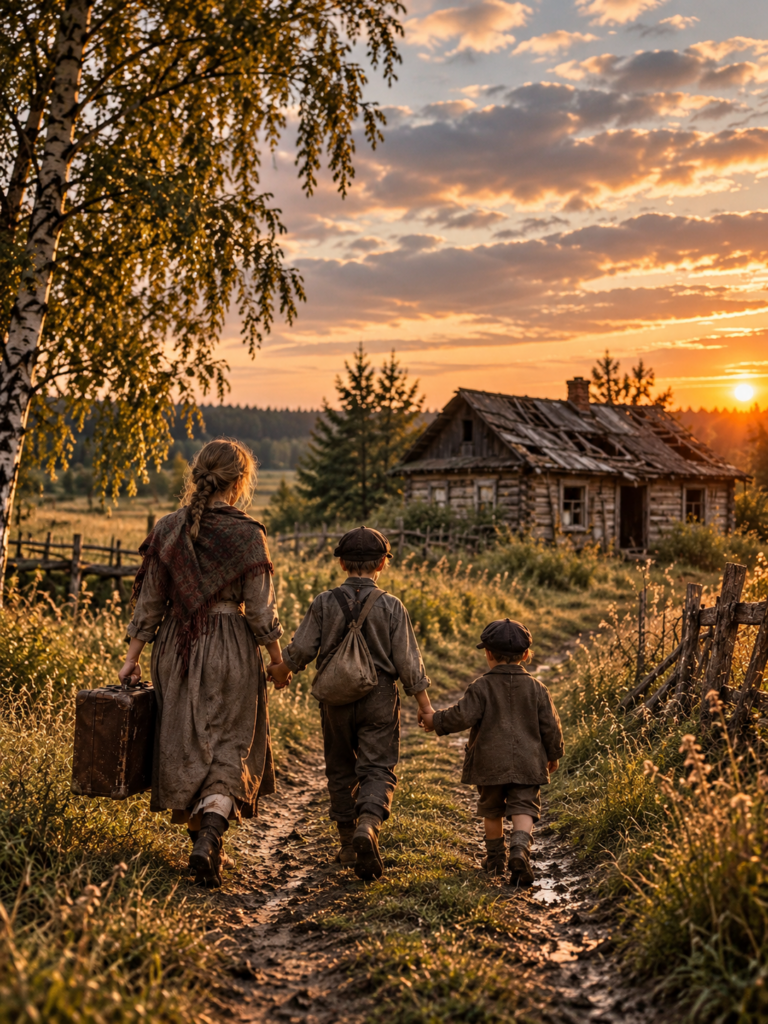
Two mornings later, before sunrise, Olivia packed everything she and the boys owned into one battered suitcase.
She took their clothes, a quilt her mother had sewn, the tin box of keepsakes, and the old photograph.
Nothing else.
Margaret sat at the table as they prepared to leave.
She did not stand.
She did not kiss the boys goodbye.
Noah held Caleb’s hand while Olivia lifted the suitcase.
At the door, Margaret spoke.
“Don’t come crawling back when you find out that farm isn’t worth anything.”
Olivia stopped.
For years, she had swallowed every insult in that house because she thought keeping peace was the same as protecting her children.
Now she understood the difference.
She turned around.
“I never asked you to love me, Margaret. But those boys are your grandchildren.”
Margaret’s expression tightened.
Olivia waited.
No apology came.
So she opened the door and walked away.
They traveled part of the distance in the back of a neighbor’s pickup truck and walked the last several miles along a narrow gravel road.
The October sun sat low over the Ozark hills when Olivia finally recognized the old stone entrance.
Two fence posts leaned toward each other like tired men.
Beyond them, weeds swallowed the driveway.
The once-white farmhouse stood beneath a grove of oak trees, its porch sagging and its roof missing shingles along the southern corner.
The barn door hung crooked.
The chicken coop was nearly collapsed.
And the yard where Olivia had once chased butterflies was buried beneath waist-high grass.
Caleb stared.
“Mommy, is that our house?”
Olivia swallowed.
“Yes, baby.”
Noah examined the broken porch.
“Does it have electricity?”
“I don’t know.”
“Running water?”
“I don’t know that either.”
Caleb tugged her sleeve.
“Is there food?”
Olivia looked at the dark windows.
For the first time since leaving Margaret’s house, fear rose so sharply that she could hardly breathe.
She had brought her boys thirty miles into the countryside to a house that might not even be safe.
She had no vehicle, no reliable income, and almost no food.
But then Noah slipped his small hand into hers.
“We can fix it,” he said.
Olivia looked down at him.
He was eight years old.
He had no idea what fixing a farm required.
Neither did she.
Still, she squeezed his hand.
“We’ll try, sweetheart.”
She carried the suitcase up the porch steps.
The front door opened with a long, weary groan.
And inside, beneath the dust and darkness, Olivia smelled something she hadn’t smelled in fifteen years.
Old wood.
Cold ashes.
And the faintest trace of chicory coffee.
Her grandfather’s house.
She stood in the doorway until tears blurred her vision.
Then she stepped inside.
Part 2
The first night was colder than Olivia expected.
Wind slipped through the gaps around the windows, and a loose shutter knocked against the outside wall.
The kitchen contained a wood-burning stove, a stone sink with a hand pump, a heavy oak table, and two mismatched chairs.
Dust covered everything.
A cupboard near the stove held three chipped plates, several tin cups, a sack of hardened flour, and an empty jar that once contained molasses.
There was no electricity.
When Olivia tried the sink pump, it rattled but produced nothing.
She found a hand lantern in the pantry, along with enough kerosene to light it for the evening.
At least the chimney appeared clear, and the stove still worked.
She gathered dry wood from a covered stack behind the house and managed to start a fire after several frustrating attempts.
Caleb sat wrapped in the quilt while Noah examined the kitchen cabinets.
“Mom,” he said, “there’s a box over here.”
Olivia turned.
In the corner beside the stove stood a small chest made of dark walnut.
A heavy brass padlock secured its lid.
She recognized it immediately.
Grandpa Samuel’s chest.
As a little girl, Olivia had asked him what he kept inside.
He would always smile and say, “Things worth saving.”
Once, when she was nine, she had tried to lift it.
He had laughed and told her some things were too important to carry before you understood their value.
Now the chest sat in the corner like a question waiting to be answered.
Olivia knelt beside it.
The lock was rusty, and no key was visible.
She pulled the handle.
Nothing moved.
“Maybe there’s money inside,” Noah suggested.
Olivia nearly laughed.
“Wouldn’t that be something?”
But she didn’t really believe it.
Samuel had spent his life farming stubborn Missouri soil. He had never been wealthy.
Whatever he had left in that chest was probably paperwork, old photographs, or keepsakes.
Still, she couldn’t shake the feeling that he had placed it there deliberately.
She left it alone.
There were more urgent problems.
Before dark, she took the boys outside to inspect the property.
Near the house stood an old apple tree with several late apples still hanging from its branches.
Behind the barn, she found a stone-lined cistern covered by a wooden lid. It held water, though she knew it would need to be boiled or otherwise made safe before drinking.
Farther back, a weary-looking Jersey cow stood near a broken fence.
Olivia stopped.
The animal was thin, its coat dull and dusty.
A faded rope halter hung from one ear.
“Well, hello there,” Olivia murmured.
The cow raised its head.
Olivia remembered that Samuel had always kept a milk cow.
She had watched him care for one as a child, but she had never milked an animal herself.
The cow gave a low, unhappy sound.
Noah came to stand beside her.
“Can we keep her?”
Olivia rested a hand against the fence.
“I believe she belongs to us already.”
“What’s her name?”
“I don’t know.”
Caleb appeared beside them.
“Let’s call her Daisy.”
Olivia smiled faintly.
“All right. Daisy it is.”
Nearby, five scrawny chickens wandered through the weeds.
The boys were delighted.
Olivia was less certain.
Animals needed feed, water, shelter, and constant attention.
She had inherited living creatures that depended on her, just as surely as her children did.
That evening, she fed the boys slices of apple and the last two biscuits she’d brought from Margaret’s house.
She told herself they would find something better in the morning.
When the children were asleep on an old straw mattress, Olivia sat alone beside the stove.
Her hands were scratched from opening windows and moving broken furniture.
Her back ached.
The wind whistled beneath the front door.
She looked around the kitchen and suddenly felt the full weight of what she had done.
No grocery store within walking distance.
No paycheck coming.
No one to call if the roof collapsed.
She thought about Margaret’s clean kitchen and its cupboards filled with food.
Then she remembered the look on Noah’s face when he’d admitted seeing his father steal their savings.
And she understood that returning would cost her boys something no amount of shelter could replace.
She crossed to the mattress, lay between them, and pulled the quilt over their shoulders.
“We’re going to make it,” she whispered.
She wasn’t sure whether she was promising them or begging herself to believe it.
The following morning, hunger woke her before sunrise.
She built a fire, boiled water, and collected apples from the tree.
In the weeds behind the smokehouse, she found two small pumpkins.
Breakfast was apples and roasted pumpkin.
Caleb asked for bread.
Olivia told him they’d have some soon.
She had no idea when.
After breakfast, they began clearing the yard.
Samuel’s old tools hung along the back wall of the shed.
There was a hoe, a shovel, a rusty scythe, a rake missing several teeth, and a toolbox with a bent lid.
Olivia chose the hoe.
By noon, blisters had formed across both palms.
Noah pulled weeds and collected stones.
Caleb gathered twigs and stacked them beside the porch.
They worked until the sun began slipping behind the trees.
On the third day, Olivia found two eggs beneath the collapsed chicken coop.
She held them in her palm like precious coins.
“Look,” she called.
The boys came running.
Caleb’s face lit up.
“Breakfast!”
Olivia laughed.
It was the first genuine laugh she’d managed since Ethan left.
They boiled the eggs and split them among the three of them.
Noah insisted he wasn’t very hungry.
Olivia saw through him immediately.
“You eat your share.”
“But Mom—”
“No arguments.”
He obeyed, though he still tried to leave the last bite for Caleb.
That evening, Olivia discovered how much worse the barn was than it appeared.
Rainwater had damaged several boards, and one corner of the roof was sagging.
More troubling was the cow.
Daisy’s udder was swollen, and she seemed uncomfortable.
Olivia had no idea how to help.
She stood beside the animal, feeling helpless.
“I’m sorry,” she whispered. “I wish I knew what to do.”
A voice sounded behind her.
“First thing you ought to do is get that poor cow looked at.”
Olivia spun around.
An elderly woman stood by the fence.
She was short and wiry, with silver hair tucked beneath a faded blue scarf. Her face was lined from decades of sun and wind, and she carried a canvas bag over one shoulder.
“Didn’t mean to startle you,” the woman said.
Olivia straightened.
“Can I help you?”
“Depends. Are you Samuel Whitaker’s granddaughter?”
“Yes.”
The woman nodded.
“Thought so. You’ve got your mother’s eyes.”
She approached the fence.
“Name’s Ruth Miller. I live about two miles east, beyond the creek.”
Olivia remembered the name.
Samuel had spoken of Ruth often.
“You knew my grandfather?”
“Knew that stubborn old mule of a man for forty years.”
Ruth looked toward the house.
“Saw smoke coming from the chimney. Figured either somebody had moved in or Samuel had finally found a way to haunt the place.”
Olivia smiled despite herself.
Ruth studied her.
“Where’s your husband?”
Olivia hesitated.
“Gone.”
“Dead?”
“No.”
Ruth waited.
“He left us.”
The older woman glanced toward the boys working near the porch.
Her expression softened, but only slightly.
“Well,” she said, “then I reckon he wasn’t worth much.”
Olivia felt tears gathering unexpectedly.
Ruth did not ask another question.
Instead, she pointed toward the barn.
“Your grandfather kept a proper set of pliers on the third nail inside the tool shed. You’ll tear your fingers apart trying to fix that fence without them.”
Then she looked at Daisy.
“And we’re going to find somebody who knows cattle. That cow needs attention.”
Before Olivia could object, Ruth set her canvas bag on the kitchen table.
Inside were cornmeal, dried beans, a small jar of honey, several potatoes, and a loaf of homemade bread.
Olivia stared.
“I can’t pay you for these.”
“Didn’t ask you to.”
“But—”
“Your grandfather carried firewood to my house the winter my husband died. Didn’t charge me then.”
Ruth rested one weathered hand on the table.
“Folks around here remember who showed up when things got hard.”
Olivia looked away.
She had spent so long being told she was a burden that kindness felt almost unbearable.
Ruth pretended not to notice her tears.
The next morning, Ruth returned with a neighbor who had experience caring for dairy cattle.
He examined Daisy, treated the problem, and explained how Olivia should manage her milking and feeding while the cow recovered.
For several days, they worked carefully.
Ruth showed Olivia the proper milking technique when Daisy was well enough.
“Don’t yank,” she instructed. “Steady pressure. Like this.”
Olivia’s first attempts were clumsy.
Daisy shifted irritably.
Ruth corrected her hands.
“Again.”
By the third morning, Olivia managed to collect milk without help.
Noah watched with open admiration.
“Can I learn too?”
Ruth considered him.
“You can watch, and you can help your mother with the clean buckets. Your hands will have their turn.”
Noah nodded solemnly.
The household slowly began to find a rhythm.
Olivia rose before dawn, tended the stove, checked Daisy, gathered eggs, and worked on the yard.
The boys helped with simple chores, though Olivia insisted they also spend time reading and practicing arithmetic from their old schoolbooks.
Every evening, after supper, she searched another corner of the house for the chest’s missing key.
It wasn’t merely curiosity anymore.
She remembered Samuel’s habit of saving important things.
And she needed something important desperately.
One afternoon, while cleaning ashes from the stove, her fingers brushed a small length of wire tucked between two loose bricks.
She pulled.
A blackened key slid out.
Olivia stared at it.
Then she turned toward the walnut chest.
Her heart began to pound.
She knelt on the kitchen floor, inserted the key, and twisted.
For a moment, nothing happened.
Then the rusty mechanism gave way.
The lock opened.
Inside lay three small cloth bags, an envelope tied with string, and a folded piece of paper covered in her grandfather’s handwriting.
Olivia lifted the first bag.
It contained dried beans.
She opened the second.
More beans.
The third held another variety, carefully separated and labeled.
Noah knelt beside her.
“That’s it?”
Olivia said nothing.
She opened the folded paper.
Across the top, Samuel had written:
For my Olivia, if she ever comes home.
Her hands began to tremble.
Part 3
Olivia sat on the kitchen floor for a long time, holding the letter.
Samuel’s handwriting was large and uneven, the letters slanting as though his hand had grown tired.
My dear girl,
If you are reading this, then I have gone ahead of you.
I wish I could tell you I did everything right. I didn’t. When your mother died, I let grief convince me I was too old and too broken to raise you. Sending you away was the worst mistake I ever made.
Olivia pressed a hand against her mouth.
This land belonged to my father before it belonged to me. It has carried our family through drought, sickness, hard winters, and years when there wasn’t enough money to buy a proper pair of shoes.
I don’t have a fortune to leave you.
But I have left you something that has kept this place alive for generations.
In these bags are the beans I’ve saved from the best harvests. The north field is ready for planting. I worked it as long as my legs would hold me.
There are papers in the envelope. Keep them safe.
And remember what I told you when you were little. A seed doesn’t look like much until somebody has the courage to put it in the ground.
Come home whenever you need to, sweetheart.
You were always wanted here.
Love, Grandpa.
Olivia read the last line three times.
Then she bent over the letter and cried.
Not quietly.
Not politely.
She cried for her mother, for the grandfather who had died alone, for the husband who had abandoned his sons, and for every morning she’d spent believing she had nowhere to go.
Noah wrapped his arms around her shoulders.
“Mom?”
She pulled him close.
“Grandpa loved us,” she whispered.
Noah looked at the bags.
“Are those seeds?”
“Yes.”
“Can we grow food with them?”
Olivia wiped her face.
“I think that’s exactly what he wanted.”
Inside the envelope were Samuel’s property records, tax receipts, and an older survey map.
The papers appeared carefully preserved, though Olivia didn’t understand all of them.
She took them to Ruth the following morning.
The older woman studied the documents at her kitchen table.
“Samuel always was particular about his paperwork.”
“Do you think they’re important?”
“Very.”
Ruth unfolded the survey.
“See this north field? Samuel had a man turn the soil there the spring before he took sick. After that, he kept working it himself when he could.”
“He knew he wouldn’t be planting again?”
Ruth glanced at her.
“I suspect he knew his time was getting short.”
Olivia looked down at the bags of seeds.
“He prepared it for me.”
Ruth nodded.
“Seems that way.”
They walked out to the north field that afternoon.
It lay beyond Daisy’s pasture, partly hidden behind a stand of cedars.
A short line of weathered stakes marked the old garden boundary.
The soil was overgrown, but beneath the surface it was dark and loose.
Ruth dug a handful with her fingers.
“Not bad.”
Olivia surveyed the ground.
“How much can we grow?”
“Depends on the weather, how much of it is still fit to plant, and how willing you are to work.”
Olivia looked at the field.
“I’m willing.”
Ruth gave her a sharp glance.
“I believe you are.”
Over the next several days, they prepared the ground.
Ruth taught Olivia how to rake the soil, clear competing roots, make rows, and plant the seeds at the right depth and spacing.
The work was slow.
The nights were growing colder, and Ruth warned her that October was no season for expecting a full crop of beans in Missouri.
“If we get a hard freeze, these won’t make it,” she said.
Olivia looked at the small bags.
“Then should we wait?”
“Save most of them for spring. We can try a little under cover, but don’t gamble your grandfather’s whole collection on a warm week in October.”
For a moment, Olivia was disappointed.
She had imagined planting the seeds and watching food rise from the earth almost immediately.
But Ruth’s advice made sense.
They stored the largest portion in a dry cupboard, and planted a small trial bed inside the old greenhouse frame Samuel had built beside the barn.
The remaining ground they prepared for the following spring.
Meanwhile, Ruth helped Olivia plant cool-season greens, and a neighboring farmer offered several sacks of potatoes in exchange for work repairing his fence.
Olivia accepted.
For two afternoons, she carried posts and hauled wire while Noah and Caleb stayed with Ruth.
Her shoulders burned when she returned home.
But on the second evening, she carried back the potatoes and a small amount of cash.
For the first time in months, she’d earned something that belonged entirely to her.
That night, she made potato soup with milk from Daisy and onions Ruth had given them.
The boys ate until their bowls were empty.
Caleb looked up.
“Mommy, this is the best supper ever.”
Olivia laughed.
“It’s only potato soup.”
“I know. But it’s good.”
Noah asked for seconds.
She gave him the last ladleful.
Later, when the boys were asleep, she sat beside the stove and examined Samuel’s letter again.
You were always wanted here.
She traced the words with one finger.
Outside, rain began falling against the roof.
For once, the sound did not make her feel entirely alone.
Weeks passed.
The yard slowly emerged from beneath the weeds.
Olivia repaired the chicken coop with scrap boards.
Ruth helped her replace rotten posts around Daisy’s pasture.
A neighbor brought two bales of hay at a reduced price, and another showed her how to patch the leaking section of the barn.
Olivia learned to sharpen tools, tighten fence wire, clean the stove flue, and check the cistern’s cover.
None of it came easily.
She cut her fingers.
She bruised her knees.
Once, while hauling water, she slipped in the mud and landed so hard that she sat there for several minutes, wondering whether she could stand.
Noah found her beside the path.
“Mom!”
“I’m all right.”
He reached for the bucket.
“I can get it.”
Olivia wanted to tell him to go play.
Instead, she looked at his worried face.
“You can carry the small one,” she said. “But then you’re going inside to finish your reading.”
He smiled.
“Deal.”
She understood that her boys wanted to help.
But she also understood that survival should not steal their entire childhood.
Every evening, after chores, she made sure there was time for stories by the stove.
Sometimes she read from an old collection of adventure books that had belonged to Samuel.
Sometimes Noah read aloud to Caleb.
And sometimes they simply sat together while Olivia told them about their great-grandfather.
She told them how he could predict rain by watching the swallows.
How he always saved the last slice of pie for whoever came late to supper.
How he once spent three days looking for a missing calf and found it sleeping beneath an abandoned wagon.
The boys listened as though Samuel were still alive.
Slowly, the house began to feel less like a shelter and more like a home.
Then, one cold November afternoon, Ruth arrived with troubling news.
She did not remove her coat.
“Olivia, have you heard of Walter Harlan?”
Olivia shook her head.
“Should I have?”
“He owns most of the pastureland between here and the county road. Been buying up little farms for fifteen years.”
“What about him?”
Ruth hesitated.
“He’s been asking questions about Samuel’s place.”
Olivia set down the bucket she was carrying.
“What sort of questions?”
“Whether the taxes are paid. Whether the title’s been transferred. Whether you can afford to maintain the property.”
Olivia felt her stomach tighten.
“Why?”
Ruth looked toward the north field.
“Because Walter tried to buy this farm from your grandfather more than once.”
“And Grandpa refused?”
“Every time.”
Olivia glanced at the house.
“It’s mine now.”
“It should be, once the estate’s properly settled.”
Ruth’s expression hardened.
“But a man like Walter can make things unpleasant for somebody who doesn’t have money for lawyers.”
That evening, Olivia took Samuel’s papers from the chest.
She spread them across the table and read them one by one.
Most appeared to be routine property records.
But one tax receipt was several years old, and the newest county assessment had a handwritten notation she couldn’t decipher.
She set it aside.
Outside, the wind had turned bitter.
Then, just after sunset, a truck came slowly up the driveway.
A polished black pickup stopped near the porch.
A broad man in his fifties stepped out wearing an expensive coat and a felt hat.
He surveyed the house, the repaired chicken coop, and the newly cleared yard.
Then he smiled.
“Mrs. Bennett?”
Olivia stood in the doorway.
“Yes?”
“Walter Harlan. I believe we ought to have a little conversation.”
Part 4
Walter Harlan removed his hat but did not offer his hand.
“I knew your grandfather,” he said.
Olivia waited.
“He was a stubborn man.”
“He loved this farm.”
Walter smiled thinly.
“Yes. Sometimes a man can love a thing so much he stops seeing what it’s worth.”
He glanced toward the barn.
“I understand you’ve had a difficult year.”
Olivia felt something cold settle in her chest.
“My family is doing fine.”
“Now, there’s no need to be proud.”
He took a folded paper from his coat pocket.
“I came to make you an offer.”
Olivia did not invite him inside.
Walter continued anyway.
“This property is a lot of work for a woman alone. Roof needs replacing. Fences need repairing. Taxes don’t stop just because times get hard.”
“I know that.”
“Do you?”
His gaze drifted toward Noah, who had stepped onto the porch behind her.
Walter lowered his voice.
“I’d hate to see those children suffer because their mother was too stubborn to accept help.”
Olivia straightened.
“State your business, Mr. Harlan.”
He held out the paper.
A purchase offer.
The amount was so low that Olivia initially thought she’d misread it.
She looked at him.
“You can’t be serious.”
“Cash. No delays. No lawyers fighting over probate. You could move into town, rent a decent place, and give those boys a proper life.”
“They already have a proper life.”
Walter’s smile disappeared.
“Mrs. Bennett, this place was falling apart before you got here.”
“Then it’s fortunate I arrived.”
For several seconds, he studied her.
Then he folded the paper and slipped it back into his coat.
“Your grandfather had some old obligations. County records can get complicated.”
Olivia thought of the unexplained note on the tax assessment.
“What obligations?”
Walter shrugged.
“I’d have to check.”
“Then perhaps you should do that before coming to my house and telling me I ought to sell it.”
His eyes narrowed.
“I’m trying to do you a favor.”
“No, sir. You’re trying to buy my grandfather’s land for less than it’s worth.”
Walter’s jaw tightened.
“You ought to think carefully about what you’re refusing.”
Olivia placed a hand on the doorframe.
“I have.”
He put his hat back on.
“Have a good evening, Mrs. Bennett.”
She watched him drive away.
Only when his truck disappeared beyond the trees did she realize her hands were shaking.
Noah looked up at her.
“Was that a bad man?”
Olivia considered the question.
“I don’t know everything about him,” she answered. “But I don’t trust what he wants.”
“Can he take our farm?”
She turned toward the yard Samuel had once kept so carefully.
“I’m going to make sure he can’t.”
That night, she lay awake listening to the wind.
At midnight, Daisy began bawling in the pasture.
Olivia sat upright.
A sharp crack sounded near the barn.
Then another.
She grabbed the lantern and stepped into the cold.
The gate to Daisy’s pasture hung open.
Two fence rails lay broken on the ground.
Daisy had wandered halfway toward the creek.
Olivia set the lantern on a fence post and hurried after her.
The ground was slick with rain.
The cow moved slowly but kept turning away whenever Olivia approached.
By the time she managed to guide Daisy back into the enclosure, her dress was soaked, her shoes were full of mud, and her fingers were nearly numb.
She examined the broken fence.
The rails had not rotted.
Fresh wood showed where they had been struck.
Footprints marked the damp earth beside the gate.
Someone had come here deliberately.
Olivia felt a surge of anger so powerful it frightened her.
She had done nothing to Walter Harlan.
She had taken nothing from him.
She had only refused to sell.
And now someone had come in the darkness to damage the little security she’d managed to build.
She repaired the gate temporarily with rope, checked the animals, and returned to the house just before dawn.
Noah stood in the kitchen.
“Mom, where were you?”
“Taking care of Daisy.”
He looked at her muddy clothes.
“Did somebody hurt her?”
“No.”
“Did somebody come here?”
Olivia hesitated.
“I think somebody did.”
Noah’s face hardened.
“I’ll stay awake tonight.”
She knelt before him.
“No, you won’t.”
“But—”
“Listen carefully. Keeping this family safe is my job. Your job is to be a boy.”
His eyes filled.
“What if they take our house?”
Olivia held his shoulders.
“Then we will fight for it the right way. With papers, witnesses, and people who know the law. Not by losing sleep and trying to be grown before your time.”
The next morning, Ruth arrived and listened to everything.
She inspected the fence, the footprints, and the broken rails.
“Don’t touch those pieces,” she said. “We’ll have somebody from the sheriff’s office come look.”
Olivia nodded.
Ruth’s face was grim.
“Walter’s been accustomed to getting his way for too long.”
“Can you prove it was him?”
“No.”
“Then we shouldn’t accuse him.”
Ruth glanced at her.
Even now, exhausted and frightened, Olivia refused to claim certainty she didn’t have.
“Samuel raised you right,” Ruth said quietly.
A deputy came that afternoon, documented the damage, and advised Olivia to report any further incidents.
He could not identify who had broken the fence.
That frustrated her.
But having the incident on record made her feel slightly less defenseless.
Two days later, Ruth returned with a man named Henry Collins.
Henry was a traveling livestock dealer who made regular trips between the farms and the county seat.
He was lean and weathered, with gray beginning to show at his temples and a habit of speaking only when he had something useful to say.
Ruth introduced him.
“Henry knew your grandfather. He can help you get those papers to the courthouse.”
Henry examined the property records at the kitchen table.
“These ought to establish the chain of ownership,” he said. “But you’ll need the estate transfer completed and recorded.”
Olivia nodded.
“What will it cost?”
“Filing fees, mostly. Maybe more if something’s disputed.”
She swallowed.
“I haven’t got much.”
Henry looked around the kitchen.
The clean table.
The repaired curtains.
The boys’ schoolbooks neatly stacked beside the stove.
Then he noticed Samuel’s photograph.
“Your grandfather let me sleep in his barn when I was seventeen,” he said.
Olivia looked up.
“I was working my way west, and a storm caught me on the highway. He fed me breakfast the next morning and wouldn’t take a penny.”
Henry folded the papers.
“I can drive these down to the county seat and find out what needs doing.”
Olivia opened her mouth to protest.
He raised one hand.
“Don’t misunderstand. I’m not offering charity. I’m paying back an old debt.”
For the first time in weeks, she felt the possibility of solid ground beneath her feet.
Over the next several days, she gathered identification, the estate papers, tax records, and every document Samuel had preserved.
Ruth agreed to provide information about Samuel’s occupancy and his wishes if needed.
Henry arranged for the papers to be reviewed at the courthouse.
Meanwhile, November turned colder.
The first frost silvered the fields.
Olivia covered the tender plants in the greenhouse, but a particularly bitter night damaged several of them.
She stood in the doorway the next morning, looking at wilted leaves.
It was a small loss compared with everything else.
Still, she cried.
Then she trimmed away the damaged plants, checked what could be saved, and went back to work.
She found winter employment mending clothes for two neighboring households.
The pay was modest, but it bought flour, kerosene, and feed.
The boys began receiving school lessons from Ruth, who had once worked as a classroom aide.
Each morning, Noah practiced his handwriting while Caleb learned his letters.
In the evenings, Olivia sewed beside the stove.
Her fingers grew sore from the needle.
Sometimes she worked until her eyes blurred.
But she kept going.
Then Henry returned from the county seat carrying an envelope.
His expression told her immediately that something was wrong.
“Olivia,” he said, “we need to talk.”
She set aside the shirt she was mending.
“What happened?”
“The clerk found an old filing connected to the south parcel.”
“What sort of filing?”
“A claim. Walter Harlan’s name is on it.”
Olivia stared.
Henry unfolded a copy.
“Years ago, he apparently tried to assert an interest in part of Samuel’s land. Samuel challenged it. The matter wasn’t fully resolved in the old records.”
“What does that mean?”
“It means the estate transfer may require clarification before the county will record everything cleanly.”
Olivia looked toward the window.
Beyond the glass, her boys were carrying firewood into the shed.
She had imagined that a stamped document would settle everything.
Now even that certainty seemed to be slipping away.
“Can Walter take it?”
Henry answered carefully.
“Not just because he says it’s his. But disputes can take time and money.”
Olivia felt a chill deeper than the November air.
“How much time?”
“I don’t know yet.”
She looked down at Samuel’s envelope.
For a moment, she considered what Walter’s purchase offer could mean.
A small rented house.
A grocery store nearby.
A school bus.
No midnight visitors.
No leaking roof.
No constant struggle to keep animals fed.
Then she remembered the letter.
You were always wanted here.
Olivia folded the papers slowly.
“What do we need to do?”
Henry looked at her.
“You’re not selling?”
“No.”
“Even knowing this may turn into a fight?”
Olivia glanced at the kitchen where her children had finally begun to laugh again.
“I didn’t come here to become wealthy, Henry. I came here because there was nowhere else my boys were welcome.”
Her voice steadied.
“This land was my grandfather’s home. It’s ours now. And I won’t give it away because somebody thinks we’re too poor to defend it.”
Henry gave a small nod.
“Then we’ll find out exactly what that old claim says.”
That night, after everyone had gone to bed, Olivia opened the walnut chest once more.
She removed the remaining seed bags and examined the bottom.
There, beneath a loose wooden panel, she discovered another folded document.
It was older than the others, its edges yellowed and brittle.
At the top were the words:
Agreement concerning the south pasture and adjoining creek access.
Below were two signatures.
One belonged to Samuel Whitaker.
The other belonged to Walter Harlan’s father.
Olivia read the first paragraph.
Then the second.
By the time she reached the final line, she understood that her grandfather had been guarding more than a field.
And the next morning, she sent word for Henry to come immediately.
Part 5
Henry arrived shortly after sunrise.
Olivia had already lit the stove and spread the old agreement across the kitchen table.
Ruth stood beside her, spectacles perched low on her nose.
Henry removed his coat.
“What have you found?”
Olivia pointed to the document.
“This was hidden beneath the bottom of Grandpa’s chest.”
Henry leaned over the paper.
He read silently for several minutes.
Then he sat down.
“Well,” he said, “that explains a great deal.”
Olivia gripped the back of a chair.
“Does it mean what I think it means?”
Henry looked up.
“It certainly looks that way. But we need the county records checked before assuming it’s enforceable.”
The agreement described an old arrangement between Samuel Whitaker and Walter Harlan’s father.
Years earlier, the Harlan family had been permitted to use a narrow track across Samuel’s south pasture to reach a creek watering point.
The agreement granted limited access for livestock.
It did not transfer ownership of the pasture.
And it specifically stated that the permission could not be interpreted as a sale of the land.
The final paragraph required any dispute to be settled according to the recorded property boundaries.
Ruth read it again.
“Walter’s been acting like that strip belongs to him.”
Henry nodded.
“If this document is authentic and the survey matches, he hasn’t got a legal basis to claim ownership just from that access.”
Olivia looked at the signatures.
Samuel had preserved the agreement because he knew someone might need it.
Perhaps he had even hidden it knowing Walter would eventually come back.
Two days later, Henry took Olivia and Ruth to the county seat.
It was Olivia’s first trip away from the farm since arriving.
She wore the cleanest dress she owned and carried Samuel’s papers inside a cloth satchel.
Noah and Caleb stayed with a neighboring family.
Before she left, Noah hugged her tightly.
“Are you going to save our house?”
Olivia knelt before him.
“I’m going to do everything I can.”
He considered that.
Then he slipped a small smooth stone into her hand.
He had found it beside the creek weeks earlier.
“For luck,” he said.
Olivia closed her fingers around it.
“Thank you, sweetheart.”
At the courthouse, a records clerk examined the agreement, the historic survey, and the estate documents.
The clerk found the corresponding property descriptions and directed them to the county’s legal process for clearing the disputed claim.
A local attorney named Daniel Price agreed to review the matter for a reduced fee after hearing the circumstances.
The process was not as simple as Olivia hoped.
There were additional documents to locate, notices to deliver, and title questions to resolve.
Walter Harlan challenged the interpretation of the old agreement.
He insisted the Harlan family had treated the pasture as their own for decades.
But the historic survey supported Samuel’s recorded boundary.
And the old agreement showed that the use of the path had been permitted rather than granted as ownership.
During the proceedings, Walter appeared in a dark suit, his face expressionless.
Olivia sat across the room holding her grandfather’s papers.
She did not stare at him.
She did not whisper threats.
She simply waited for the facts to be heard.
When she was asked whether she intended to continue allowing access to the creek, she took a moment before answering.
“I don’t want to punish anyone for what their father or grandfather did,” she said. “But I won’t surrender land that belongs to my family.”
The attorney asked whether she would consider an agreement preserving reasonable access while protecting ownership.
Olivia thought of Samuel.
He had always believed a good neighbor ought to help when he could.
She also thought of the broken fence.
“I would consider it,” she answered, “provided our property rights are respected and nobody interferes with our animals or our home.”
Walter looked away.
Weeks later, the title dispute was resolved in Olivia’s favor.
The county records confirmed the Whitaker property boundary, and the estate transfer was completed in her name.
The old access question was addressed separately in writing, with the limits clearly defined.
There would be no sale.
No forced departure.
No loss of the south pasture.
Olivia walked out of the courthouse carrying a certified copy of the recorded deed.
Her name appeared where Samuel’s had once stood.
Olivia Bennett.
Owner.
Forty-one acres.
She held the paper with both hands.
Henry opened the truck door for her.
“Congratulations,” he said.
Olivia looked at him.
“It’s really finished?”
“The title question is.”
She let out a long breath.
Then, unexpectedly, she laughed.
It wasn’t loud.
It wasn’t triumphant.
It was the exhausted, relieved laugh of a woman who had been carrying something enormous and had finally been allowed to put it down.
On the drive home, she watched the hills pass through the window.
Gray trees.
Winter pastures.
Fence lines stretching across the rolling countryside.
The land looked different now.
Not because the hills had changed.
Because she no longer felt like someone borrowing a place in the world.
She belonged somewhere.
When Henry’s truck turned into the driveway, Noah and Caleb were waiting on the porch.
Olivia stepped out.
Noah ran toward her.
“Well?”
She knelt and held out the deed.
“It’s ours.”
His face changed.
“Forever?”
“As long as we take care of it.”
Caleb threw his arms around her neck.
“We get to stay?”
Olivia hugged them both.
“Yes, baby. We get to stay.”
That evening, Ruth came over carrying a chicken pie.
Henry brought a sack of feed and a bundle of replacement fence boards.
They ate around Samuel’s old kitchen table while the stove crackled and wind brushed against the windows.
For the first time, Olivia had enough food to invite someone else to supper without wondering what her children would eat the following morning.
She made coffee.
She cut generous slices of pie.
And when Ruth asked whether she wanted to say a few words, Olivia looked around the table.
“I don’t think I could’ve done this without you.”
Ruth shook her head.
“You did the hardest part yourself.”
Olivia glanced at Henry.
He nodded.
“You showed up every morning. That’s what counts.”
Later, when the guests had gone, Olivia tucked the recorded deed into the walnut chest beside Samuel’s letter.
She no longer needed to hide it.
But she wanted it kept with the things worth saving.
Winter settled over the farm.
Some mornings, frost covered the pasture so thickly it looked like powdered sugar.
Olivia continued sewing for neighbors.
Daisy recovered her strength, and the chickens produced enough eggs to trade occasionally.
The old house still needed repairs.
There were days when money ran short.
There were nights when rain found a new place to leak through the roof.
And there were mornings when Olivia awoke so tired she wondered how she would manage another day.
But now there was a plan.
She knew which fences needed replacing first.
She knew how much hay Daisy needed.
She knew where to buy seed potatoes and how to keep them stored through cold weather.
She knew how to sharpen a hoe, patch a chicken coop, and ask for help before a problem became a disaster.
More importantly, she no longer confused needing help with being helpless.
By March, the north field was ready.
The boys helped her carry Samuel’s seed bags from the house.
Ruth arrived with a garden rake and a thermos of coffee.
Henry brought a small cultivator that could be pulled behind his tractor, saving Olivia days of hand labor.
Together, they prepared the soil.
Olivia knelt at the edge of the first row with a handful of beans.
She looked at the dark seeds resting in her palm.
The same seeds Samuel had spent years saving.
He had selected them from good harvests.
Dried them.
Labeled them.
Stored them.
Then, when his strength began to fail, he had prepared the land for a crop he would never see.
Olivia pressed the first seed into the soil.
Noah planted the next.
Caleb followed, carefully placing each seed where Ruth showed him.
They worked through the morning.
When the last row was finished, Olivia stood and brushed the dirt from her knees.
The field appeared almost empty.
Only neat lines of disturbed earth marked their labor.
Caleb looked disappointed.
“Where are the beans?”
Olivia smiled.
“Underneath.”
“When will we see them?”
“Soon, if the weather’s kind.”
He looked at the field again.
“So they’re hiding?”
“For now.”
Three weeks later, green shoots began breaking through the soil.
Caleb raced into the kitchen shouting.
“Mommy! Grandpa’s beans woke up!”
Olivia followed him outside.
Tiny green stems stood in the rows.
Not all had sprouted.
Some had failed.
A few had been damaged by insects.
But enough had survived.
Enough to turn a small collection of dry seeds into the beginning of a real crop.
Olivia knelt beside the plants.
Noah stood at her shoulder.
“Grandpa knew they’d grow,” he said.
“He hoped they would.”
Noah was quiet for a moment.
“Do you think he knew we’d come here?”
Olivia considered the question.
“I don’t think he knew when.”
She touched a leaf gently.
“But I think he wanted us to have somewhere to come if we ever needed it.”
Spring moved into summer.
The garden flourished.
The family grew beans, potatoes, squash, and other vegetables in the ground Samuel had spent decades tending.
Ruth helped Olivia learn which crops could be stored, which needed to be sold quickly, and how to save the best seeds for the following year.
Noah became especially interested in the garden.
He kept a notebook with planting dates, rainfall, and notes about which rows grew strongest.
Caleb preferred the animals.
He knew every chicken by its markings and gave each one a name.
Daisy, meanwhile, grew accustomed to the boys and often wandered to the fence when she heard them coming.
There were disappointments.
A July storm flattened several rows of beans.
A fox took one of the hens.
The hand pump failed, forcing Olivia to pay for repairs she hadn’t expected.
But there were also small victories.
The first basket of potatoes.
The first jars of preserved vegetables.
The first morning Noah returned from the mailbox carrying a letter from a nearby farm cooperative offering Olivia a chance to sell produce at a weekly market.
By late summer, the harvest was better than she’d dared to hope.
Not enough to make them wealthy.
But enough to feed them through the winter, save seed, and sell a portion.
At the market, Olivia earned money that did not have to be surrendered to Margaret or hidden from Ethan.
She bought flour, sugar, school supplies, and a pair of sturdy boots for Noah.
The boy put them on beside the market stall.
He took several steps, examining his feet.
Then he looked up.
“Mom, these actually fit.”
Olivia felt her throat tighten.
She smiled.
“That’s usually the idea.”
He laughed.
But she knew what the boots meant.
For so long, he had worn whatever was available.
Whatever could be patched.
Whatever someone else had outgrown.
Now he had something new.
Something chosen for him.
That autumn, Olivia repaired the farmhouse roof with help from Henry and two neighbors.
She painted the porch railing white.
She sewed curtains from blue gingham fabric.
And she planted daffodil bulbs near the front steps because her mother had once loved them.
One Sunday afternoon, almost exactly a year after Margaret ordered them out of her house, Olivia stood on the porch watching her boys play near the apple tree.
Noah was chasing Caleb through the fallen leaves.
Daisy grazed beyond the fence.
The kitchen windows glowed warmly behind her.
Then she noticed a figure coming slowly up the driveway.
An elderly woman.
Walking alone.
Carrying a worn traveling bag.
Olivia stepped down from the porch.
As the figure approached, recognition struck her.
Margaret Bennett.
Her former mother-in-law looked smaller than Olivia remembered.
Her coat hung loosely from her shoulders.
Her gray hair had come undone beneath her hat.
She stopped at the gate and stared at the farmhouse.
The repaired porch.
The clean yard.
The garden.
The boys.
For several seconds, neither woman spoke.
Then Margaret looked at Olivia.
“I heard you were doing well.”
Olivia rested a hand on the gate.
“We’re managing.”
Margaret swallowed.
“Ethan came back.”
The name landed heavily between them.
Olivia said nothing.
“He stayed three days. Took what money he could find. Then he disappeared again.”
Margaret looked down.
“I’ve been ill. The house became too much for me. I couldn’t keep up with the bills.”
Her voice shook.
“I didn’t know where else to go.”
Olivia studied the woman who had once told her to leave with seventeen dollars and two hungry children.
She remembered the humiliation.
The coldness.
The way Margaret had watched her grandchildren walk out without saying goodbye.
For a moment, anger returned.
She could have closed the gate.
She could have repeated Margaret’s own words.
That isn’t my concern anymore.
The temptation was there.
And Olivia would have been justified in protecting the peace she’d fought so hard to build.
But she looked at Margaret’s trembling hands.
Then she looked toward the house where Samuel had once welcomed travelers in from the cold.
Olivia opened the gate.
“You can come inside and get warm.”
Margaret looked up, startled.
“I don’t deserve that.”
Olivia’s voice remained calm.
“This doesn’t mean I’ve forgotten what happened.”
“I know.”
“And we will need to talk about what comes next.”
Margaret nodded, her eyes filling.
“Of course.”
Olivia stepped aside.
“But you don’t have to stand out here in the cold.”
That evening, Margaret sat beside the stove with a blanket over her knees and a bowl of warm soup in her hands.
Noah was polite but cautious.
Caleb watched the unfamiliar older woman with curiosity.
There was no sudden embrace.
No magical forgiveness.
The past had not vanished merely because Margaret was now the one in need.
But Olivia had chosen not to let the cruelty she’d suffered become the measure of her own character.
Later, after helping Margaret settle into the spare room for the night, Olivia went outside.
The sky was clear.
Stars stretched across the Missouri hills.
The farmhouse stood warm and steady behind her.
Noah came onto the porch.
“Mom?”
“Yes, sweetheart?”
“Are we rich now?”
Olivia laughed softly.
“Not even close.”
He considered the barn, the orchard, and the fields.
“But we have all this.”
“Yes.”
“And food.”
“Yes.”
“And nobody can tell us to leave.”
Olivia looked down at him.
“No one gets to throw us out just because they decide we don’t belong.”
Noah smiled.
“Then I think we’re rich.”
She rested her hand on his shoulder.
For a long moment, they stood together listening to the night sounds.
The low call of Daisy from the pasture.
The rustling of leaves.
The distant whisper of water moving through the creek.
Olivia thought about Samuel.
She wished he could see the house now.
The repaired barn.
The garden.
The boys.
She wished she could sit beside him one more time and tell him that the old farm had saved them.
But perhaps, she thought, he had known it might.
Not through money hidden in the walls or gold buried beneath the floorboards.
Through forty-one acres of stubborn earth.
Through seeds saved in cloth bags.
Through property papers protected from time.
Through neighbors whose kindness he had earned decades earlier.
And through a letter written by a lonely old man who wanted his granddaughter to understand that she had never truly been without a home.
Olivia slipped her arm around Noah.
“Come on,” she said. “Your brother will be wondering where we are.”
They turned toward the house.
Warm light spilled through the windows.
Inside, Caleb was waiting with a book, asking for one more story before bed.
And Olivia Bennett, who had once arrived carrying everything she owned in a single suitcase, walked through her own front door.
She no longer had to ask permission to stay.
That was the real inheritance Samuel Whitaker had left behind.
Not simply land.
Not merely a house.
But a place where a broken family could begin again, where two little boys could grow without shame, and where a woman abandoned by the people who should have loved her could finally understand her own worth.
And every spring, when Olivia opened the walnut chest and took out the seeds her grandfather had saved, she remembered the words he’d written with his failing hand.
A seed doesn’t look like much until somebody has the courage to put it in the ground.
She had arrived with almost nothing.
She had planted what she was given.
And, with time, patience, and more strength than she ever knew she possessed, she had grown a life worth keeping.