Part 1
The morning Odessa Klein received her grandfather’s inheritance, she had thirty-one dollars, a nearly empty duffel bag, and nowhere to sleep after Friday.
She was nineteen years old.
She had spent sixteen of those years in foster care, moving between homes where her belongings never quite belonged and adults who usually remembered her paperwork better than her birthday.
Now the state considered her an adult.
And being an adult, she had discovered, meant people could stop helping you without feeling guilty.
The transitional residence where she slept had four beds to a room, a metal locker, and a rule requiring everyone to leave by seven each morning.
Odessa spent most days at the public library, pretending to read while she waited for the evening meal at a church two blocks away.
She had once worked at a pancake restaurant near the bus station.
First her hours were reduced.
Then her name disappeared from the schedule.
When she asked the manager whether she had done something wrong, he wouldn’t meet her eyes.
“Business is slow, honey. Nothing personal.”
She had heard that phrase before.
Nothing personal.
The foster mother who returned her after six months said it.
The couple who decided they wanted a younger child said it.
The caseworker who informed her that her final placement had ended said almost the same thing.
For Odessa, nearly everything painful in life had apparently been nothing personal.
Then, on a cold Tuesday morning, a letter arrived.
The receptionist pushed it across the counter.
“Something official for you.”
Odessa recognized the heavy paper and typed address immediately.
Official mail usually meant trouble.
She opened it beside the vending machine.
The first sentence made no sense.
It stated that Emmett Rourke, recently deceased in Renfrew County, had named Odessa Klein his sole heir.
She read it twice.
Then a third time.
At the bottom was the name of a law office and a telephone number.
There was also a word Odessa had never expected to see attached to herself.
Grandfather.
She had never known her grandfather.
She had barely known her mother.
Nell Klein had died when Odessa was three years old, and the state records contained little more than her name, a date of death, and a few incomplete addresses.
Nobody had ever mentioned a man named Emmett Rourke.
Odessa borrowed the library telephone that afternoon.
A tired-sounding lawyer answered.
“Mr. Larkin’s office.”
“My name is Odessa Klein. I received a letter about an inheritance.”
There was a pause.
“Ah. Miss Klein. We’ve been attempting to contact you.”
“Was Emmett Rourke really my grandfather?”
“According to the information he provided and the records we obtained, yes.”
She gripped the receiver.
“Why didn’t anybody tell me?”
“I’m afraid I can’t answer that.”
“What did he leave me?”
The lawyer sighed.
“Miss Klein, I’d prefer to be candid. Your grandfather owned an old flour mill outside Renfrew. It hasn’t operated commercially in years. The building is deteriorating, and the property has approximately nine thousand four hundred dollars in delinquent taxes.”
Odessa swallowed.
“Nine thousand?”
“Four hundred, approximately. The county intends to sell the property this fall if the debt isn’t resolved.”
“But he left it to me.”
“Yes.”
“Then it’s mine?”
“Subject to the estate proceedings and existing obligations.”
She leaned against the library wall.
“Is there anything else?”
“Not much of financial value.”
The lawyer hesitated.
“If I were advising my own daughter, I’d tell her to decline the inheritance. You could spend money trying to save property that’s worth less than its liabilities.”
Odessa looked through the glass door at the reading room.
An older man slept over a newspaper.
A woman charged her phone near an outlet.
Two teenagers whispered over a homework assignment.
She had spent her entire life believing she came from nobody.
Now somebody had died leaving her something.
Even if that something was a ruin.
“I want to see it.”
“Are you certain?”
“Yes.”
He explained how to reach Renfrew.
When Odessa hung up, she sat quietly for a long time.
Then she went to the bus station and bought a ticket north.
It cost eleven dollars.
That left twenty.
She packed everything she owned into her duffel bag.
Two pairs of jeans.
Three shirts.
A winter coat with a broken zipper.
A photograph of herself at seven, taken by a foster mother who had later returned her.
And a library card.
The following morning, she boarded the bus.
As the city disappeared behind her, the view changed from warehouses and parking lots to farmland, wooded hills, and narrow country roads.
There were cattle standing beside weathered barns.
Stone fences covered with moss.
Old farmhouses with smoke rising from chimneys.
Odessa watched all of it through the window.
She had never belonged to a place like this.
She wondered whether her mother had.
The bus reached Renfrew just before sunset.
It stopped beside a brick bank on a short Main Street.
The town had one grocery store, a hardware shop, a church with a white steeple, and a bakery whose windows glowed warm against the evening cold.
The lawyer’s office was already closed.
A note taped to the glass door instructed Odessa to return in the morning.
She stood on the sidewalk with her bag.
The temperature was dropping.
She had twenty dollars and no room for the night.
For a moment, she considered returning to the bus station and sleeping on a bench.
Then she smelled bread.
The bakery across the street was nearly closed.
Odessa stepped inside.
A bell rang above the door.
An older woman with silver hair and flour-dusted hands looked up from behind the counter.
“We’re almost shut, sweetheart.”
“I’m sorry. I just wanted something cheap.”
The woman studied her.
Her worn coat.
Her bag.
The exhaustion she couldn’t hide.
“Coffee’s still hot,” the woman said. “And those rolls are yesterday’s. Sit yourself down.”
Odessa took a seat near the window.
The woman brought a mug and a large cinnamon roll.
“How much?”
“On the house.”
“I can pay.”
“Then pay me by eating it while it’s warm.”
Odessa gave a small, uncertain smile.
“My name’s Faye,” the woman said. “What’s yours?”
“Odessa.”
“Pretty name. You passing through?”
“I don’t know.”
Faye waited.
Odessa lowered her eyes to the coffee.
“I came about an inheritance. A mill outside town.”
Faye stopped wiping the counter.
“What mill?”
“Rourke’s Mill.”
The cloth fell from her hand.
For a moment, she stared at Odessa as though the girl had spoken a name from a grave.
“Whose mill?”
“Emmett Rourke’s. He was my grandfather.”
Faye slowly sat opposite her.
“Merciful heavens.”
Odessa tightened her grip on the mug.
“Did you know him?”
“Know him? Honey, I bought flour from that man for forty years.”
Her voice softened.
“He fed half this valley when the crops failed.”
Odessa stared.
“The lawyer said the mill was worthless.”
Faye looked almost offended.
“Worthless? That man ground flour for families who couldn’t afford the price of a loaf. His mill was the reason children in this county ate through some mighty hard winters.”
Then she looked more closely at Odessa.
“Who was your mother?”
“Nell Klein.”
Faye pressed a hand to her chest.
“Nell Rourke.”
Odessa barely breathed.
“You knew her?”
“Since she was a little girl.”
Faye’s eyes filled.
“Good Lord, honey. You’ve got her chin.”
It was the first time anyone had ever looked at Odessa and recognized somebody she belonged to.
Faye reached across the table.
“Your grandfather spent years looking for you.”
Odessa stared at her.
“What?”
“That man believed he had a granddaughter somewhere. Folks thought grief had gotten the better of him.”
“Then why didn’t he find me?”
Faye’s expression changed.
“I don’t know all of it, sweetheart.”
She squeezed Odessa’s hand.
“But I know one thing. That old man never stopped wanting his family back.”
Odessa looked down at their joined hands.
For nineteen years, she had believed nobody had ever searched for her.
Now a stranger was telling her that somewhere in these hills, an old man had been waiting.
Faye refused to let her sleep outside.
She made a bed on the couch behind the bakery and brought another quilt from upstairs.
That night, Odessa lay awake listening to the ovens cooling.
The building smelled of cinnamon, yeast, and warm flour.
And for the first time in years, she fell asleep wondering not where she would go next, but where she had come from.
The next morning, she collected the brass key from the lawyer.
Faye offered to drive her to the mill.
They followed a narrow gravel road along Kettle Creek.
The farms grew farther apart.
Trees crowded the banks.
Then the road dropped into a hollow.
And Odessa saw it.
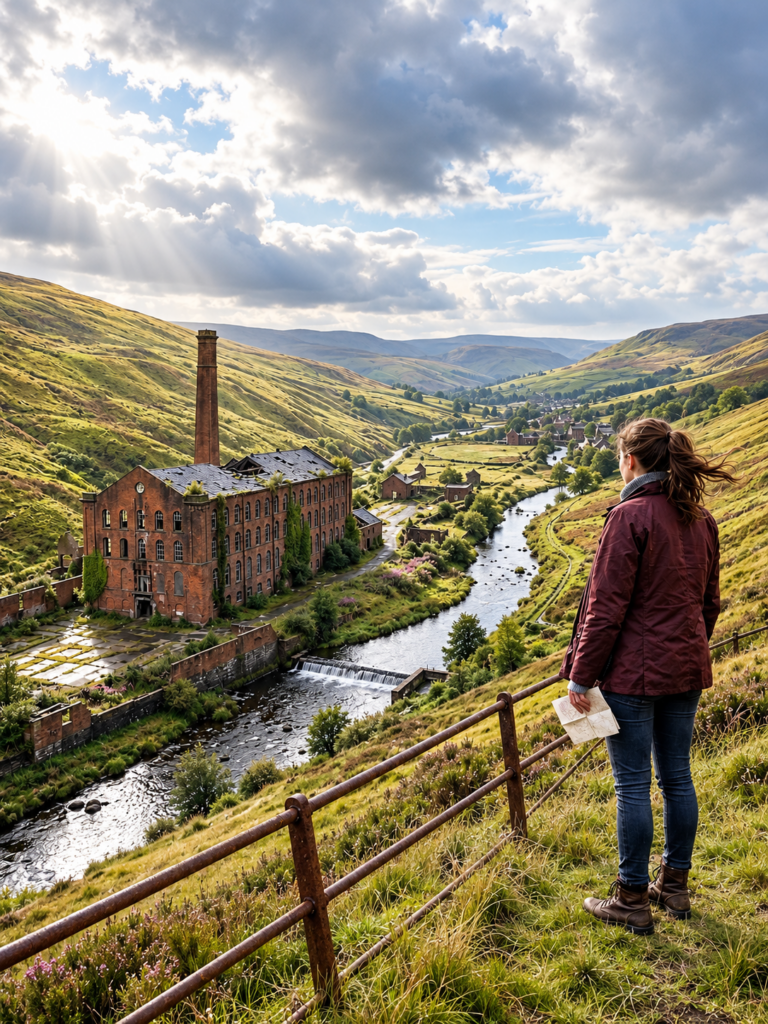
A three-story building of dark timber and gray stone stood beside the creek.
A massive wooden waterwheel leaned against its outer wall.
The millrace was clogged with leaves and mud.
Most of the windows were dark.
Above the entrance hung an old wooden sign.
The paint was peeling, but two words remained visible.
Rourke’s Mill.
Odessa stepped out of the truck.
Her family name had been hanging above that door longer than she had been alive.
Faye touched her shoulder.
“I’ll be right here.”
Odessa walked toward the building alone.
She slipped the key into the lock.
It resisted.
She turned harder.
The lock clicked.
The heavy door opened.
And Odessa entered the only place anyone in her family had ever left for her.
She had no idea that upstairs, behind a closed bedroom door, her grandfather had prepared something that would break her heart.
Part 2
The mill smelled of cold stone, old wood, and flour.
Odessa stood inside the doorway until her eyes adjusted.
Dusty sunlight entered through tall windows, illuminating machinery she had never seen outside books.
Two enormous millstones occupied the center of the floor.
Wooden gears rose around them.
Leather belts hung slack.
A long workbench stood beneath the western windows.
On it lay a pencil, a notebook, and a pair of reading glasses.
A tin coffee cup sat beside them.
An old wool coat hung from a peg.
Odessa approached it.
The coat was heavy, with patched elbows and a pocket worn thin.
She touched the sleeve.
This had belonged to her grandfather.
She had never heard his voice.
Never touched his hand.
Never received a birthday card from him.
Yet here was his coat, hanging where he had left it.
She whispered, “Hello, Grandpa.”
The empty building gave no answer.
A staircase led to the second floor.
Odessa climbed carefully, testing each step.
At the top, she found a small apartment built into the mill.
There was a kitchen with a woodstove, a narrow bedroom, shelves of books, and a sitting room overlooking the great waterwheel.
Everything was plain.
Everything was orderly.
A chair stood beside the window, its arms polished smooth from years of use.
She imagined an old man sitting there each evening, looking out at the creek.
Then she noticed another door.
It was closed.
Odessa opened it.
And stopped.
The room beyond was prepared for a guest.
A neatly made bed stood against the wall.
A quilt had been folded carefully across its foot.
There was a clean towel, a bedside lamp, a small radio, and a hairbrush still inside its packaging.
A dead potted plant sat on the windowsill.
Someone had watered it for a long time.
On the pillow lay a folded flour sack.
Two words had been written across it in pencil.
For Odessa.
She picked it up.
Her name.
Not a number on a placement file.
Not a name on a bed assignment.
Her name, written by a man who had never met her.
She sat on the mattress.
The springs creaked.
Her grandfather had prepared a room for her.
He had bought things he thought a young woman might need.
He had made the bed.
And then he had died waiting.
Odessa pressed the flour sack to her chest.
“Why didn’t you come get me?”
The question escaped before she could stop it.
She sat there until Faye came upstairs.
The older woman paused in the doorway.
When she saw the sack, her face crumpled.
“He made that room ready two years ago,” she said softly.
“Two years?”
“He told me he was expecting family.”
Faye sat beside her.
“I thought he was just hoping. I didn’t know he’d actually found your name.”
Odessa stared at the little hairbrush.
“Nobody ever made a room for me before.”
Faye placed an arm around her shoulders.
“Well, somebody did.”
Odessa stayed at the mill that night.
Faye brought groceries, blankets, matches, and a lantern.
She showed Odessa how to light the stove and warned her not to trust the old machinery until somebody knowledgeable inspected it.
Before leaving, Faye stood in the doorway.
“You come to town when you need something.”
Odessa nodded.
“I mean it.”
“I know.”
But Odessa didn’t know.
Not yet.
Her experience told her that kindness usually lasted until it became inconvenient.
The following morning, she began searching the mill.
She opened drawers, examined cabinets, and looked through the workbench.
The notebook beneath the reading glasses turned out to be a ledger.
Each page contained dates, names, quantities of flour, and payments.
Many entries carried the same notation.
No charge.
Odessa turned page after page.
There were hundreds of names.
Some appeared during winters when crops had failed.
Others belonged to families with several children.
In the margins, Emmett had written brief notes.
A farmer had broken his leg.
A widow’s husband had died.
Children needed flour before Christmas.
Payment had been refused.
Odessa read until her eyes hurt.
She had known hunger.
She had known what it meant to count crackers in a cupboard and pretend she wasn’t hungry when another child asked for more.
Her grandfather had apparently spent his life making sure other families didn’t experience that.
She traced his handwriting with one finger.
“Why did you keep all their names?”
A voice answered from the doorway.
“So he wouldn’t forget who needed looking after.”
Odessa turned.
An elderly Black man stood at the entrance, leaning heavily on a wooden cane.
He wore a wool cap and a faded work coat.
His beard was white.
His eyes fixed on her face.
For a moment, he didn’t move.
Then his mouth trembled.
“Nell?”
Odessa stepped forward.
“No, sir.”
The man’s shoulders sagged.
“I’m Odessa.”
He closed his eyes.
“Lord have mercy.”
He took a slow breath.
“You’re Nell’s girl.”
“Yes.”
He wiped his cheek with his sleeve.
“My name’s Amos Carter. I worked beside your grandfather near fifty years.”
Odessa hurried to bring him a chair.
He lowered himself slowly, resting the cane between his knees.
“Emmett talked about you,” he said.
“Really?”
“Every year.”
“Then why didn’t he find me?”
Amos looked toward the still waterwheel.
“That story takes some telling.”
“Please.”
He studied her.
“First, you need to understand your grandfather wasn’t an easy man.”
Odessa sat opposite him.
“He could be stubborn enough to argue with thunder. But he was honest. Worked hard. Helped folks without asking for thanks.”
Amos smiled faintly.
“He used to say flour wasn’t worth much if it stayed in a sack while somebody went hungry.”
Odessa looked at the ledger.
“He wrote down everybody he helped.”
“He did.”
“Why?”
“Because he believed taking care of people was part of running the mill. Wanted to know when somebody needed another sack.”
Amos shifted painfully in the chair.
“Your mother loved this place. Ran through these rooms barefoot when she was little.”
“What happened to her?”
His expression grew troubled.
“Something between her and Emmett that should’ve been settled before supper.”
Odessa waited.
Amos sighed.
“But neither one would give an inch.”
Before he could continue, a diesel engine rumbled into the yard.
A truck stopped outside.
Then another.
A man’s voice called, “Anybody home?”
Amos turned his head.
“Well,” he muttered. “Trouble never did need directions.”
Odessa went downstairs.
A man in his fifties stood outside with a clipboard.
He wore a clean canvas jacket and expensive work boots.
Behind him was a truck marked Vane Building Supply.
“I’m Garrett Vane,” he announced. “I own the supply yard in town.”
“I’m Odessa Klein.”
He examined her.
“Emmett’s granddaughter?”
“Yes.”
Vane glanced toward the mill.
“Then I suppose we ought to talk.”
He explained that the county intended to auction the property because of the unpaid taxes.
Nine thousand four hundred dollars.
The amount sounded even worse standing in front of the building.
“I’ve been interested in this parcel for some time,” he said.
“Why?”
“Storage units. The road’s accessible, and the land is level enough once the old building comes down.”
Odessa stared at him.
“Come down?”
“It’s beyond economical repair.”
He pointed toward the wheel.
“Look at that thing. Hasn’t turned properly in years.”
“My grandfather lived here.”
“I knew Emmett. But he wasn’t thinking clearly toward the end.”
Vane opened his clipboard.
“I’ll offer you four thousand dollars for the property, subject to a sale arrangement that clears the tax problem. You walk away with something instead of losing it all.”
Four thousand dollars.
Odessa could barely imagine possessing that much money.
It meant rent.
Food.
A winter coat that zipped.
A bed no one could take away at the end of a placement.
Vane watched her.
“You’re young. You have your life ahead of you. Don’t waste it trying to save a rotten old building.”
She looked at the sign above the door.
“I need time.”
“The auction’s in October.”
“I understand.”
He handed her a business card.
“Don’t wait too long.”
When the trucks disappeared, Odessa returned upstairs.
Amos sat beside the stove.
“What did he want?”
“The mill.”
Amos nodded.
“Figured.”
“He offered four thousand dollars.”
The old man studied her.
“What’d you tell him?”
“That I’d think about it.”
Amos looked toward the window.
“Wouldn’t blame you if you took it.”
Odessa stared at him.
“Really?”
“Girl, you’ve had a hard enough life. Nobody has the right to demand you suffer for a building.”
She looked at her grandfather’s room.
The worn chair.
The books.
The little bedroom prepared for her arrival.
“But he left it to me.”
“He did.”
“Then I want to know why.”
Amos picked up his cane.
“Come to my place tomorrow. I have some things of his you ought to see.”
He stood slowly.
At the door, he stopped.
“Your grandfather set an extra place at his table most evenings.”
Odessa frowned.
“For who?”
Amos’s voice cracked.
“For somebody he kept hoping would come home.”
That night, Odessa returned to the prepared bedroom.
She opened the wardrobe.
There were spare blankets, old newspapers, and a hatbox on the upper shelf.
Inside the hatbox lay bundles of letters.
Dozens.
Perhaps hundreds.
Each was tied with kitchen twine.
Many envelopes bore red postal markings.
Return to sender.
Odessa sat on the floor and opened the first bundle.
The earliest letters were addressed to Nell Rourke.
Then Nell Klein.
Different towns.
Different apartments.
Different cities.
Her grandfather had been searching for her mother.
For years.
The letters grew increasingly desperate.
Then came one with an official notice attached.
Nell Klein was deceased.
The letter could not be delivered.
Odessa stared at it.
Her grandfather had learned his daughter was dead through returned mail.
She opened another bundle.
These letters carried no address.
Only a greeting.
To my granddaughter, wherever you are.
Odessa unfolded one.
Emmett wrote about the mill.
About the first snow.
About Amos fixing the wheel.
About a calf born at the neighboring farm.
He wondered whether his granddaughter liked books.
Whether she was safe.
Whether she had someone who remembered her birthday.
Another letter began with an apology for not knowing her name.
Odessa cried silently as she read.
Then she reached the newest bundle.
The handwriting had become shaky.
The envelopes now carried her full name.
Odessa Klein.
Her grandfather had finally found her.
The final envelope had a stamp.
It was sealed.
It had never been mailed.
The date was three weeks before Emmett’s death.
Odessa held it against her chest.
He had been so close.
And she had never known.
Part 3
The next morning, Odessa walked to Amos Carter’s farmhouse.
It stood at the bottom of the creek road, with a sagging porch and a wooden ramp over the front steps.
Amos was waiting in a rocking chair.
Two mugs of coffee sat on a small table.
“Thought you’d be here early.”
Odessa sat beside him.
“I found the letters.”
Amos closed his eyes.
“All of them?”
“Enough.”
They sat in silence while the creek moved over the rocks below.
Finally, Odessa asked, “Why did my mother leave?”
Amos leaned back.
“Your grandmother died when Nell was nine.”
Odessa listened.
“Emmett never recovered properly. Loved his wife something fierce. After she passed, he poured everything into the mill and his daughter.”
He rubbed his hands together.
“Nell grew up proud. Smart. Could make that old man laugh when nobody else could.”
“What happened?”
“When she was eighteen, she got pregnant.”
Odessa’s stomach tightened.
“With me.”
“Yes.”
“Where was my father?”
“Gone before you were born.”
Amos looked away.
“Emmett was frightened. Thought Nell would struggle alone. Thought some foolish boy had ruined her future.”
“So he threw her out?”
“No.”
Amos shook his head firmly.
“He said hard things. Things he regretted until he died. But he didn’t order her to leave.”
“What did he say?”
“He told her she was throwing her life away. That she ought to have known better. That she couldn’t expect everything to be fixed just because she wanted it.”
Odessa looked at the ground.
“He made her feel ashamed.”
“Yes.”
“And she left.”
“That same night.”
“Why didn’t he go after her?”
Amos was quiet.
“Because he was a proud fool.”
The words held no cruelty.
Only sorrow.
“He expected her to come back when she cooled down. Nell expected him to come find her.”
He looked at Odessa.
“And both of them waited.”
“How long?”
“Too long.”
Odessa stared toward the creek.
“She never returned?”
“No.”
Amos reached for a small wooden crate beside his chair.
“Emmett tried looking for her afterward. But she changed towns. Changed her last name. By the time he understood how badly he’d failed her, he didn’t know where she was.”
He lifted a stack of notebooks.
“These were your grandfather’s.”
Odessa accepted them.
Amos continued.
“Last year, he hired somebody who specialized in finding missing relatives. A proper investigator.”
“And?”
“He found records of Nell’s death. Then he found yours.”
Odessa held her breath.
“Emmett knew you were alive before he passed.”
Amos wiped his eyes.
“He was already too sick to travel. Could barely walk from his bed to the stove.”
“He could have written.”
“He tried.”
Odessa thought of the sealed envelope.
“He did write.”
Amos nodded.
“He spent his last weeks preparing that room for you.”
“Why didn’t anybody call me?”
“He died before the arrangements were finished. His lawyer found the information afterward.”
Odessa looked down at the notebooks.
For so long, she had imagined abandonment as a simple thing.
Someone didn’t want you.
So they left.
But here were people who loved one another and had still somehow failed to find their way home.
Amos reached into his coat.
“I have something else.”
He removed a small photograph.
The paper was faded and worn thin at the folds.
It showed a newborn baby wrapped in a hospital blanket.
On the back was a date.
And one word.
Odessa.
“Your mother sent him that picture,” Amos said.
Odessa stared.
“He carried it in his shirt pocket for years.”
She touched the worn paper.
“That’s me?”
“Three days old.”
Her grandfather had held her photograph against his heart.
She had existed in his life even when he was absent from hers.
Odessa pressed the picture to her chest.
For the first time, she had proof that somebody in her family had known her face.
Amos looked toward the hills.
“Now you know why the mill matters.”
Odessa nodded.
But the bills remained.
The auction remained.
And knowledge couldn’t repair broken machinery.
When she returned to the mill, she began reading Emmett’s notebooks.
They contained detailed instructions.
How to clear the millrace.
How to inspect the wheel.
How to repair wooden gears.
How to lift and dress the grinding stones.
There were drawings, measurements, and notes in the margins.
Her grandfather had documented nearly every repair he’d ever made.
Odessa had always liked working with her hands.
During foster care, she’d once attended a vocational program where students learned carpentry.
She remembered the comfort of measuring a board, making a cut, and seeing two pieces fit correctly.
Wood didn’t judge you.
It either fit or it didn’t.
She opened the notebook to a drawing of the waterwheel.
Then she walked outside.
The race was clogged with years of mud and leaves.
She grabbed a shovel.
By evening, her back ached and she had cleared barely ten feet.
Faye arrived with soup.
She found Odessa standing knee-deep in muddy water.
“Girl, what in heaven’s name are you doing?”
“Cleaning the race.”
“With one shovel?”
“It’s the only one I have.”
Faye looked at the long channel.
Then at Odessa.
“You’re going to need help.”
“I can’t pay anybody.”
“Didn’t ask whether you could.”
The next morning, Faye returned with two farmers.
One brought a small excavator.
The other brought tools.
They worked all day.
By sunset, water was flowing through the cleared channel.
Odessa stood beside it, astonished.
“What do I owe you?”
The farmer laughed.
“Your granddaddy helped my father through two bad harvests.”
“That doesn’t mean—”
“It means we’re square for today.”
Over the following week, more people appeared.
Some brought tools.
Some brought food.
A retired millwright inspected the gear assemblies.
A farmer helped replace rotten timbers near the head gate.
Faye cleaned the old flour bins.
Amos came whenever his health permitted.
He sat beside the machinery, pointing with his cane.
“That bearing needs grease.”
Odessa obeyed.
“Not that much, girl. You’ll have the whole place slippery.”
She wiped away the excess.
He chuckled.
“Emmett used to make the same mistake.”
Odessa smiled.
The work was exhausting.
Her hands blistered.
She slept heavily each night and woke stiff.
Money remained scarce.
But the mill slowly changed.
The windows became clear.
The floors were swept.
The race carried running water again.
The great wheel was repaired bucket by bucket.
And the machinery that had seemed hopelessly ruined began looking like something that might someday work.
One afternoon, Odessa discovered a broken tooth in a large wooden gear.
The millwright examined it.
“Could order a replacement.”
“How much?”
He named a price she couldn’t afford.
Odessa returned to Emmett’s notebook.
Beside a drawing of the gear, he had listed the kind of hardwood required and the dimensions of each tooth.
She searched the workshop.
Behind a cabinet, she found a piece of seasoned wood matching the description.
For two days, she shaped it by hand.
She measured.
Cut.
Filed.
Tested.
Then repeated the process.
At last, the replacement fitted neatly into the gear.
Amos watched her finish.
He rested both hands on his cane.
“Well, I’ll be.”
Odessa looked up.
“What?”
“You did that just like him.”
She smiled.
“Maybe he taught me.”
“He never got the chance.”
She touched the wooden gear.
“Maybe he did.”
Weeks passed.
The mill slowly came back together.
But the county auction moved closer.
One evening, Odessa sat at the workbench studying her remaining money.
She had earned a little by repairing fences and helping Faye at the bakery.
Neighbors had paid small amounts toward future milling work.
Yet she remained thousands of dollars short.
She opened another notebook.
Near the back, Emmett had written a sentence beneath a sketch of the wheel.
A mill teaches patience, or it teaches nothing.
Odessa traced the words.
Then she looked out at the creek.
She had learned patience in places where she possessed no power.
Now she needed something harder.
She needed to believe her work could change the outcome.
The following afternoon, she raised the head gate a few inches.
Water rushed into the repaired race.
The enormous wheel stirred.
For a moment, Odessa could hardly breathe.
Then the wheel began turning.
Slowly.
Heavily.
The gears inside the mill moved.
Odessa smiled.
And then a sharp metallic scream split the air.
A bearing seized.
The drive assembly lurched.
A heavy gear slammed against its housing.
Smoke curled from the machinery.
Odessa threw the gate closed.
The wheel shuddered to a stop.
Inside, the smell of burned grease filled the air.
She stood staring at the damage.
Amos hurried toward her as quickly as his cane allowed.
“Shut it down?”
“Yes.”
“Anybody hurt?”
“No.”
He examined the bearing.
Odessa’s voice broke.
“I ruined it.”
“No.”
“I did. We worked for weeks, and I ruined it.”
Amos leaned against the bench.
“Emmett burned that same bearing thirty years ago.”
Odessa looked at him.
“What?”
“Go find page forty in his repair book.”
She found it.
There was a drawing.
A description of the failure.
And an entry written in heavier pencil.
Felt like quitting today. Didn’t.
Odessa stared at the words.
Amos smiled.
“Runs in the family, I reckon.”
The repair took two more days.
Odessa worked beside the retired millwright, replacing the damaged bearing and checking the alignment.
Then she returned to the notebook.
A later entry caught her attention.
Her grandfather had written:
A mill doesn’t grind for the miller. It grinds for whoever is hungry.
Odessa read it twice.
She copied the sentence onto a small piece of cardboard and placed it above the workbench.
The building had begun to look alive again.
But the tax deadline was now eight days away.
And Odessa still didn’t have the money to save it.
Part 4
The county tax notice arrived on a Monday.
Nine thousand four hundred dollars.
Payment required before the scheduled sale.
Odessa placed the notice on the kitchen table.
Beside it sat a coffee can she had discovered behind the old stove.
Inside was a little over three thousand dollars in worn bills.
Her grandfather’s remaining savings.
She had nearly cried when she found it.
Now she counted everything again.
The money.
The small deposits from local farmers.
The cash she’d saved from working.
She was still dangerously short.
That evening, Garrett Vane drove down the mill road.
His truck stopped beside the newly cleared race.
He examined the wheel.
Then the fresh paint.
Then the neatly stacked timber.
“Well,” he said. “You’ve certainly made a project of it.”
Odessa stood beside the door.
“We’ve made progress.”
“So I see.”
He looked at the repaired machinery.
“Does it run?”
“Almost.”
“Almost doesn’t pay taxes.”
“I know.”
Vane folded his arms.
“My offer’s still open. Five thousand dollars now.”
Odessa said nothing.
“You can leave here with money, Miss Klein. Or you can wait until the county sells it and walk away empty-handed.”
She looked at the building.
For the first time in her life, she had a room of her own.
A room someone had prepared because he wanted her there.
She had a photograph of her mother.
Her grandfather’s notebooks.
And people who came to help without asking what they’d receive in return.
Vane followed her gaze.
“I know there’s sentimental value.”
Odessa turned back to him.
“It’s not just sentimental.”
“Then what is it?”
“It’s mine.”
He sighed.
“Ownership comes with responsibility.”
“I understand that.”
“Then make a responsible choice.”
Odessa felt anger rise.
She thought of the foster homes where adults discussed her future over her head.
Of caseworkers who moved her without asking what she wanted.
Of people who told her what was best while never staying long enough to see whether they were right.
She stepped forward.
“Mr. Vane, I’ve had exactly one thing in nineteen years that nobody can say I was only borrowing.”
He stared.
“It’s standing behind me.”
The man’s expression hardened.
“I’m offering you a way out.”
“I know.”
“You won’t get another.”
Odessa straightened.
“Then I guess I’ll have to find my own.”
Vane looked at her for several seconds.
Then he returned to his truck.
Odessa watched him drive away.
She remained standing until the dust settled.
Then her knees began trembling.
She sat on the front steps.
For a terrible moment, she wondered whether she’d made the biggest mistake of her life.
Five thousand dollars could have given her a fresh start.
Instead, she had chosen a broken mill, a mountain of debt, and a deadline she didn’t know how to meet.
That night, she visited Amos.
He sat by the fire with a blanket over his legs.
His breathing had become more difficult.
Odessa carried in a basket of food from Faye.
“You’re fussing over me again,” he complained.
“Somebody has to.”
“I’m perfectly capable of cooking.”
“Then why is there nothing in your cupboard except crackers?”
Amos frowned.
“Crackers are food.”
“Not dinner.”
She heated soup while he watched.
When they sat together, she told him about Vane’s offer.
Amos listened without interrupting.
Finally, he asked, “You regret turning him down?”
“Sometimes.”
“Then why’d you do it?”
Odessa looked into her bowl.
“Because for once I wanted to decide what happens to me.”
Amos nodded.
“Good reason.”
“Not a profitable one.”
“No. Not always.”
He took a spoonful of soup.
“Your grandfather wasn’t a rich man, either.”
Odessa smiled faintly.
“So I’ve noticed.”
Amos pointed toward the window.
“But he left behind more than most wealthy men I ever knew.”
When she returned to the mill, she reopened the old ledger.
Page after page contained names and quantities.
She recognized some of them now.
Faye’s family.
The farmers helping with the repairs.
People who had visited to tell stories about Emmett.
Then she turned to a page dated many years earlier.
A name caught her attention.
Vane.
She read the entry.
A winter when quarry workers had been laid off.
A family with four children.
Two sacks of flour each week.
No charge.
In the margin, Emmett had written a note explaining that the father was too proud to accept charity openly.
The flour was to be delivered before sunrise.
Odessa stared at the page.
Garrett Vane.
The man who wanted to demolish the mill had been fed by it as a child.
She sat quietly for a long time.
Then she closed the book.
The following morning, she borrowed Faye’s truck.
She drove to the building supply yard.
Vane stood behind a counter reviewing invoices.
He looked surprised when she entered.
“Changed your mind?”
“No.”
She placed the ledger before him.
“I found something.”
He frowned.
Odessa opened the book.
“Is this your family?”
Vane looked down.
His expression changed.
“Where did you get that?”
“It was my grandfather’s.”
She pointed to the entry.
“Two sacks a week. All winter.”
Vane stared at the handwriting.
Odessa waited.
At last, he pulled out a chair.
“My father lost his job that winter.”
His voice had changed.
“I was six.”
Odessa remained silent.
“I remember flour appearing on our porch. My mother made bread every morning.”
He touched the edge of the page.
“Nobody ever told us where it came from.”
Odessa looked at the old notation.
“My grandfather didn’t charge.”
Vane swallowed.
“My father hated taking help.”
“He knew.”
Vane read the margin.
Then he removed his glasses.
He sat with the ledger open for several minutes.
“I remember my father crying at the kitchen table,” he said quietly. “He thought we’d lose the house.”
Odessa pulled out another chair.
She didn’t know what to say.
Vane looked up.
“I knew Emmett for forty years after that.”
His voice shook.
“Did business with him. Sold him lumber. Bought his flour.”
He looked back at the ledger.
“He never mentioned it.”
Odessa nodded.
“No.”
The warehouse beyond the office echoed with forklifts and workers calling to one another.
But the little office had grown still.
Finally, Vane asked, “How much do you need?”
Odessa hesitated.
“I’m not asking you for money.”
“I didn’t say you were.”
“I came because I thought you ought to know what the mill meant to your family.”
He wiped his eyes.
“Well, now I do.”
He closed the ledger carefully.
“How much are you short?”
Odessa told him.
Vane sat back.
Then he looked at the calendar hanging beside the counter.
“The auction’s next week.”
“I know.”
He took a deep breath.
“Here’s what I can do. You raise what you can. I’ll cover the remaining tax balance if you come up short.”
Odessa stared.
“Why?”
“Because that old man fed my family when nobody else would.”
She shook her head.
“I can’t accept charity.”
Vane looked almost angry.
“Neither could my father.”
He pointed at the ledger.
“Didn’t stop Emmett from helping us.”
Odessa looked down.
Vane continued.
“I’m not buying the mill. I’m not asking for ownership. This is an old account that should’ve been settled a long time ago.”
She swallowed.
“Are you sure?”
“Miss Klein, I’ve spent months trying to put a gravel lot over the place that kept my brothers and sisters from going hungry.”
He rubbed his face.
“I’d like a chance to do something better.”
Odessa could barely speak.
“Thank you.”
Vane shook his head.
“Thank your grandfather.”
When she returned to the mill, Faye was waiting.
Odessa told her what had happened.
The older woman listened.
Then she smiled.
“Well, isn’t that something.”
Odessa looked at the waterwheel.
“We still have work to do.”
Faye nodded.
“Then we’d better get busy.”
They organized a Saturday gathering at the mill.
Farmers were invited to bring grain.
The first milling customers could pay toward future work.
Faye arranged to sell bread.
Neighbors brought tables, chairs, and supplies.
The plan was simple.
They would demonstrate that Rourke’s Mill could operate again and gather as much of the remaining tax money as possible.
Garrett Vane agreed to provide the balance if necessary.
But there was one problem.
The rebuilt wheel had not yet completed a successful run.
And if it failed, the mill might lose the confidence of everyone who had come to help.
The night before the gathering, Odessa walked through the empty building.
She checked the gears.
The bearings.
The belts.
The stones.
Everything appeared ready.
She climbed upstairs and entered the bedroom her grandfather had prepared.
The flour sack still lay folded on the pillow.
For Odessa.
She sat beside it.
“I wish you were here,” she whispered.
Outside, the creek continued running.
She opened the sealed letter from Emmett but stopped before removing the pages.
She wanted to read his final words after the mill turned again.
If it turned again.
Odessa placed the letter beneath her pillow.
Then she lay awake listening to the water.
Tomorrow would decide whether the mill had a future.
And whether the lonely granddaughter who had arrived with twenty dollars could finally stop living as though every home came with an expiration date.
Part 5
By nine o’clock Saturday morning, the road to Rourke’s Mill was lined with trucks.
Farmers arrived carrying sacks of wheat.
Families brought food.
Children wandered along the creek while their parents gathered near the enormous waterwheel.
Faye set up tables beside the entrance.
Amos arrived in his nephew’s truck, wrapped in a thick blanket.
Garrett Vane stood quietly near the back of the crowd.
Odessa watched from the upper landing.
She had never seen so many people gather for something that belonged to her.
For a moment, fear nearly overwhelmed her.
What if the machinery failed?
What if the stones cracked?
What if she disappointed everyone who had trusted her?
Amos called from below.
“Come on, girl. Your grandfather didn’t build that wheel for looking at.”
Odessa took a breath.
Then she descended the stairs.
The first farmer approached with a sack of wheat.
He placed it near the hopper.
“Paid six months in advance,” he said, handing her an envelope.
Odessa stared.
“I haven’t ground anything yet.”
“Then you’d better get started.”
He smiled.
Others followed.
Some paid for future milling.
Some handed Faye cash with instructions to put it toward the tax bill.
A widow brought twenty dollars she’d saved from selling eggs.
A farmer whose father had received free flour from Emmett left fifty.
A young mother pressed a small envelope into Odessa’s hand.
“My grandmother said your grandfather kept her children alive one winter.”
Odessa tried to thank her.
The woman shook her head.
“Just keep the mill running.”
By late morning, Faye had filled a cigar box with contributions and advance payments.
The mill was crowded with neighbors.
Some had never met Odessa.
Others remembered her mother as a child.
An elderly woman approached carrying a faded photograph.
It showed a young girl standing beside the old mill wheel.
Her hair was braided.
Her face was turned toward someone outside the picture.
“That’s Nell,” the woman said.
Odessa took the photograph.
“My mother?”
The woman nodded.
“Your mother was always climbing where she wasn’t supposed to. Scared your grandfather half to death.”
Odessa laughed through sudden tears.
“That sounds familiar.”
The woman squeezed her hand.
“You’ve got her smile.”
Odessa placed the photograph inside the mill.
Then it was time.
Amos sat beside the head gate.
He motioned for Odessa.
“Give me your hand.”
She knelt beside him.
He held her fingers between his weathered palms.
“Your grandfather raised this gate thousands of times.”
Odessa nodded.
“He’d stand right here,” Amos continued. “Sometimes he’d complain about his knees. Sometimes he’d curse the weather. But he’d always raise it.”
He looked toward the crowd.
“And today, you do.”
Odessa stood.
She grasped the iron wheel controlling the gate.
It was stiff beneath her hands.
She leaned into it.
The mechanism moved.
Slowly, the gate lifted.
Water rushed through the cleared race.
It struck the buckets of the massive wooden wheel.
For one breathless moment, nothing happened.
Then the wheel shifted.
A deep groan rose from the old timber.
The wheel turned.
One bucket dipped.
Another rose.
Water spilled in glittering sheets.
The motion strengthened.
Inside the mill, wooden gears began revolving.
The drive shaft moved.
The repaired gear tooth held.
The runner stone turned above its bed.
Odessa stared as the machinery came alive.
Amos began to cry.
Faye covered her mouth.
The crowd stood silent.
The wheel completed another revolution.
Then another.
Odessa ran inside.
She checked the bearing temperature.
Watched the gears.
Listened for unusual sounds.
Everything held.
The machinery was working.
She approached the hopper with the first sack of grain.
Her hands trembled as she poured wheat into it.
The kernels rattled through the wooden chute.
The stones began grinding.
A low, steady rumble filled the building.
Odessa waited.
Then something pale appeared at the flour outlet.
A small stream.
Fine.
Warm.
White.
Flour.
Fresh flour spilled into the waiting sack.
Odessa cupped her hands beneath it.
She lifted a little.
The powder drifted between her fingers.
For the first time in years, Rourke’s Mill was producing flour.
The crowd erupted.
People applauded.
Some laughed.
Some cried.
Amos sat beside the gate with tears running into his beard.
Garrett Vane removed his cap.
Faye hurried inside and took a handful of the fresh flour.
“Your granddaddy would be proud,” she whispered.
Odessa looked around.
At the machinery.
The walls.
The people.
She imagined Emmett Rourke standing at that same workbench, wiping flour from his hands.
She imagined him looking at the granddaughter he’d never met.
And she wished, more fiercely than she had wished for anything, that he could see her now.
By late afternoon, the money had been counted.
Between Emmett’s savings, Odessa’s earnings, advance milling payments, and the community’s contributions, they had gathered nearly the entire tax balance.
Garrett Vane wrote a check for the remainder.
It was not as large as anyone had feared.
But to Odessa, it meant everything.
A few days later, she walked into the county office with the full amount.
The clerk counted the payment.
Checked the account.
Stamped the paperwork.
Then handed her a receipt.
The delinquent taxes were satisfied.
The scheduled tax sale would not proceed.
Odessa stood at the counter holding the paper.
For years, official documents had meant another loss.
Another placement ending.
Another door closing.
This one meant she could stay.
She returned to Renfrew and found Faye waiting outside the bakery.
“Well?”
Odessa held up the receipt.
Faye opened her arms.
Odessa stepped into them.
And for the first time in her adult life, she cried against someone’s shoulder without fearing that being needy would cost her a home.
Winter came early that year.
Snow settled on the hills surrounding Kettle Creek.
The mill continued operating whenever the weather and water conditions permitted.
Farmers brought grain.
Odessa learned to inspect the stones, adjust the machinery, and keep proper accounts.
She developed calluses where her grandfather’s hands had once been rough.
Faye visited every Wednesday for fresh baking flour.
Amos came whenever he felt strong enough.
He claimed the chair beside the head gate as his personal property.
Nobody argued.
Garrett Vane became an unexpected friend.
He supplied replacement timber at reduced prices and helped Odessa arrange the repairs that still needed doing.
He never mentioned buying the mill again.
One afternoon, Odessa visited the county office for another reason.
She filled out a name-change petition.
Weeks later, after completing the required process, she emerged with a new legal name.
Odessa Rourke.
She stood outside the courthouse and said it aloud.
It sounded strange.
Then it sounded right.
Her mother had carried the name once.
Her grandfather had kept it above the mill door.
Now Odessa carried it too.
When she told Amos, the old man held her hand for a long time.
“You’ve come home, child.”
Odessa smiled.
“I think I have.”
That spring, she removed the old sign above the mill.
She sanded away the peeling paint.
Repaired the cracked wood.
Then painted the letters by hand.
Rourke’s Mill.
When she hung it above the entrance, half the valley came to watch.
There were no speeches.
No ceremony.
Just neighbors standing quietly beneath the sign while the waterwheel turned behind them.
That night, Odessa entered the room her grandfather had prepared.
She sat on the edge of the bed.
Then she opened his final letter.
The handwriting was weak.
Some words required careful study.
He told her he had failed her mother.
That fear had made him speak cruelly when he meant to protect her.
That pride had prevented him from crossing the distance between them.
And that every year he had promised himself he would repair the damage tomorrow.
Tomorrow had become years.
Years had become a lifetime.
He told Odessa he had searched for her.
He wanted her to know that his failure to find her had never meant she was unwanted.
He had spent his final days hoping she would come to the mill.
He had prepared a room.
Written her name.
And left her the only thing he knew how to give.
A way to work.
A way to belong.
A way to make sure other hungry people wouldn’t be forgotten.
Near the end, he urged her not to repeat his mistakes.
To speak love while there was still time.
To forgive when she could.
And to leave the wheel turning after she was gone.
Odessa lowered the letter.
For a long time, she sat without moving.
She thought about her mother.
A frightened eighteen-year-old girl who had left home carrying a baby and too much pride.
She thought about her grandfather.
An old man who had spent years searching for a daughter who had already died and a granddaughter who did not know he existed.
They had loved one another.
Yet neither had found the courage to cross the silence between them before time ran out.
Odessa carefully folded the letter.
Then she placed it beside the photograph Amos had given her.
Her mother at sixteen.
Odessa as a newborn.
And the letter from the grandfather who had searched for them both.
It was the closest the three of them would ever come to sitting together.
She looked around the little bedroom.
The lamp.
The quilt.
The old flour sack.
For the first time, she understood that her grandfather had not prepared this room because he expected a perfect reunion.
He had prepared it because he wanted her to know she had somewhere to go.
And that was enough.
Over the following months, Odessa’s life settled into a rhythm.
She rose early to inspect the race and open the head gate.
She ground wheat when orders came in.
She repaired equipment in the afternoons.
At night, she read her grandfather’s notebooks.
People began calling her the miller.
Not the foster girl.
Not the homeless girl.
Not the poor girl from the city.
The miller.
The title carried responsibility.
It also carried respect.
Amos’s health remained fragile.
Odessa brought him meals, filled his wood box, and made sure he had company.
He grumbled about the attention.
She ignored him.
One evening, he sat beside the stove while she prepared supper.
“You know,” he said, “I was about ready to give up last winter.”
Odessa turned.
“Don’t say that.”
“Truth’s truth.”
He watched her work.
“Then you came walking up this creek with Nell’s eyes and Emmett’s stubborn head.”
She smiled.
“And now I can’t get any peace.”
“You’re welcome.”
Amos chuckled.
“You gave this old man something to get up for.”
Odessa brought his plate to the table.
“You gave me a family.”
He took her hand.
“Then I reckon we’re more than even.”
In early summer, Faye brought someone new to the mill.
A boy of seventeen stood beside her truck.
He carried a black garbage bag containing his belongings.
His shoulders were hunched.
His eyes avoided everyone.
Faye explained that he was approaching the end of his foster placement and had nowhere dependable to go.
His name was Caleb.
Odessa watched him standing in the yard.
She recognized everything about him.
The way he held his bag.
The way he kept his distance.
The way he seemed prepared to leave before anyone asked him to.
She remembered being nineteen, standing outside a closed lawyer’s office with twenty dollars and no place to sleep.
She approached him.
“Ever worked with tools?”
Caleb shrugged.
“A little.”
“Like machinery?”
“Never tried.”
Odessa nodded.
“Well, there’s plenty here that needs fixing.”
He looked at the mill.
“Are you hiring?”
“I need help.”
He stared at the ground.
“I don’t have much experience.”
“Neither did I.”
Odessa glanced toward the second-floor window.
“There’s a room upstairs. Bed, lamp, door that locks.”
Caleb looked up.
“How much?”
“We can arrange room and board as part of the work, and proper wages for the hours you put in.”
He looked suspicious.
“What’s the catch?”
Odessa smiled sadly.
“There isn’t one.”
He didn’t seem convinced.
She held out an old milling tool.
“My grandfather used this. Amos taught me how to use it. Now I can teach you.”
Caleb touched the worn handle.
“You sure?”
“Yes.”
His voice became quiet.
“Okay.”
She led him upstairs.
The room was the one Emmett had prepared for her.
Odessa had moved into her grandfather’s old bedroom months earlier.
She opened the door.
The bed was freshly made.
A lamp stood beside it.
Clean towels lay on a shelf.
Caleb stopped in the doorway.
“That’s mine?”
“If you want it.”
He entered slowly.
Set his garbage bag beside the bed.
Then sat on the mattress.
He looked like a person waiting to be told there had been a mistake.
Odessa remained by the door.
“My grandfather made this room ready before he ever met me,” she said.
Caleb looked at her.
“He never got to see me use it. But he wanted somebody to know there was a place for them.”
She smiled gently.
“I think he’d be glad you’re here.”
Caleb stared at the floor.
Then he wiped his cheek with the sleeve of his jacket.
Odessa pretended not to notice.
That evening, after Caleb had eaten and gone upstairs, Odessa opened her grandfather’s ledger.
She turned past the old entries.
Past the years of flour sacks delivered without payment.
Past the names of families he had helped.
She reached the first blank page.
At the top, she wrote the date.
Then Caleb’s name.
Beside it, she wrote the same two words her grandfather had written so many times.
No charge.
She closed the book.
Outside, the wheel continued turning.
The creek carried water toward the millrace.
The wooden gears moved steadily through the building.
Odessa stood by the window.
She thought about the girl who had once possessed nothing except a duffel bag, a library card, and thirty-one dollars.
She thought about the old man who had searched for her until his final days.
And she understood that her inheritance had never truly been the building.
It wasn’t the machinery.
Or the land.
Or even the money that had saved the property.
It was the knowledge that she came from people who had loved deeply, made terrible mistakes, and still tried to leave something good behind.
A grandfather who couldn’t find his granddaughter had left a place where she could finally be found.
A mill that once fed a valley had become a home for someone who knew what hunger felt like.
And a girl who had spent her childhood waiting for somebody to choose her was now old enough to choose somebody else.
Years would pass.
The wheel would need repairs.
There would be hard winters, lean harvests, and bills that arrived at the worst possible times.
But Rourke’s Mill would continue grinding.
Farmers would bring wheat.
Faye would bake bread.
Amos’s chair would remain beside the head gate.
And whenever someone arrived hungry, lonely, or convinced there was no place left in the world for them, Odessa would remember her grandfather’s words.
A mill doesn’t grind for the miller.
It grinds for whoever is hungry.
She turned down the kitchen lamp and climbed upstairs.
At the end of the hallway, light shone beneath Caleb’s door.
Odessa stopped for a moment.
Then she smiled.
For nineteen years, she had believed nobody was waiting for her.
Now she knew how much difference it could make when somebody was.
And in a quiet hollow beside Kettle Creek, the old mill kept turning, carrying one man’s love forward long after his hands had stopped working.
The building that everyone had called worthless had become the most valuable thing in the valley.
Not because of what it could be sold for.
But because of all the people who could finally call it home.