
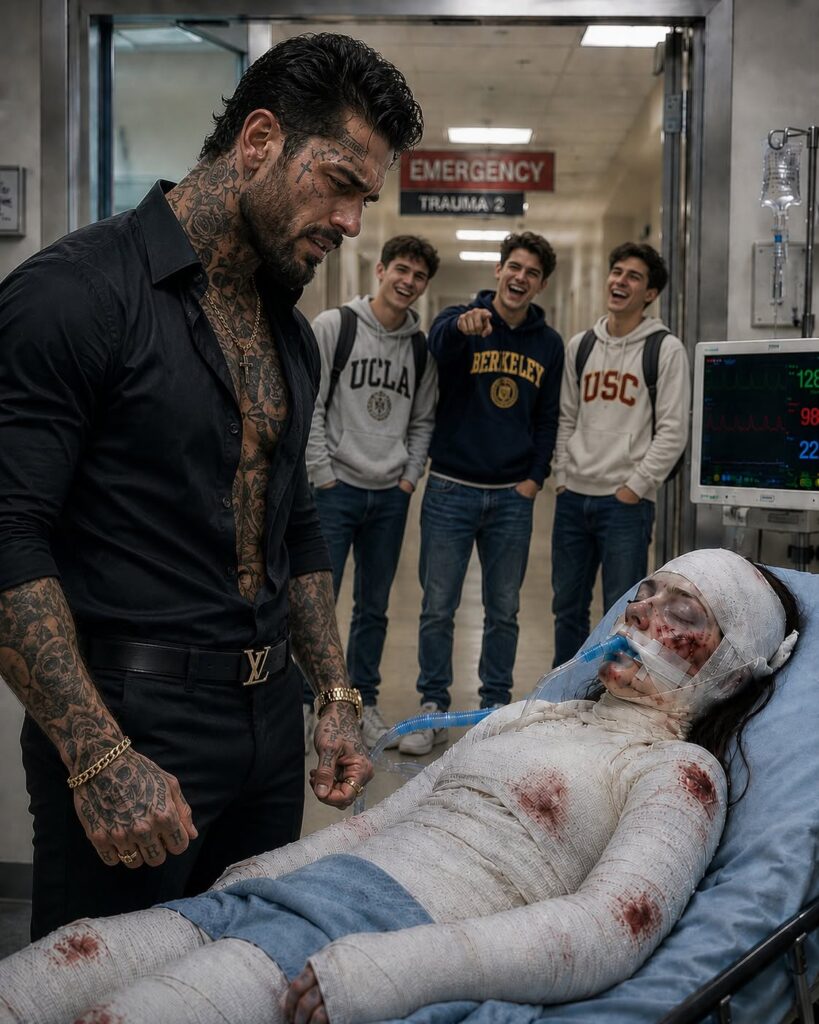
The man on the other end of the phone was named Samuel Russo.
Nineteen years ago, he had been the only person in my organization who knew why I disappeared.
He had driven me to the hospital the night Lily was born. He had waited downstairs while I stood behind a glass partition and stared at a six-pound baby with dark hair and furious little fists.
Three days later, I had told him I was finished.
No farewell dinner.
No transfer of power.
No dramatic final order.
I simply gave Samuel access to accounts that would keep our people paid long enough to walk away, handed legitimate businesses to the men who had helped build them, and burned every bridge that led back to me.
Samuel understood.
Or I thought he had.
Now his voice came through my phone exactly as I remembered it—low, patient, impossible to hurry.
“I’ll call you when I know something.”
“Information only,” I said.
There was a pause.
“I heard you.”
“I mean it, Sam.”
Another pause.
Then softer, “You have a daughter watching you now.”
I looked through the hospital-room window.
Lily was asleep beneath a pale blue blanket, one hand curled beside her cheek.
“Yes.”
“So do this differently.”
The line went dead.
For several seconds, I remained in the empty hallway.
Nineteen years ago, Samuel Russo had been the man people sent for when a problem required patience instead of force.
Apparently retirement had made him philosophical.
Or perhaps fatherhood had changed both of us.
I slipped the phone into my pocket and returned to Lily’s room.
She opened her eyes when I sat down.
“Sorry,” I whispered. “Did I wake you?”
She shook her head.
Talking was impossible with her jaw wired, so a nurse had given her a small whiteboard and marker.
Lily reached for it.
Her hand trembled slightly.
I watched her write.
Who were you calling?
I had lied to my daughter thousands of times without ever telling her an actual lie.
That was the trick.
I owned an import company.
True.
I had lived in New York before she was born.
True.
Her mother and I had wanted a quieter life.
True.
I disliked discussing my twenties and thirties.
Very true.
The deception lived in everything I omitted.
Standing beside her hospital bed, I suddenly understood that omission could become its own kind of betrayal.
Still, this wasn’t the moment.
She had been awake less than twelve hours after surgery.
She needed rest, not the confession of a father she thought she knew.
“An old friend,” I said.
Lily studied my face.
Then she wrote:
You don’t have old friends.
Despite everything, I almost smiled.
“That sounds terrible when you put it that way.”
Her eyebrows lifted.
You always say people from your past are boring.
“They are.”
She stared.
I corrected myself.
“Mostly.”
She wrote another question.
Is this about Ethan?
My expression betrayed me.
Lily lowered the board.
For the first time since I arrived, something stronger than pain entered her eyes.
Fear.
Not fear of Ethan.
Fear of me knowing.
I leaned forward.
“Lily.”
She turned her face toward the window.
“I found the paper.”
Her eyes closed.
“The three names.”
She gripped the marker.
“I’m not angry with you.”
That made her look back.
I chose my next words carefully.
“I don’t know what happened. I know what the doctors told me. I know where campus security says they found you. I know three names were in your sweatshirt. That’s all.”
She wrote slowly.
Promise?
“Promise what?”
You won’t do anything stupid.
A strange ache moved through me.
There were entire police departments that once considered Daniel Walker’s predecessor incapable of being frightened.
Yet my nineteen-year-old daughter had reduced me to obedience with six words on a plastic board.
“I won’t do anything that makes your life harder.”
She kept staring.
It was not enough.
I knew it.
So did she.
I sighed.
“I promise I won’t hurt anyone.”
Her shoulders loosened.
There it was.
A line I had never imagined my daughter would need me to say.
I hated that.
Not because she doubted me.
Because some instinct told her she should ask.
Detective Elena Morales arrived shortly after nine the next morning.
She wore a charcoal jacket over a cream blouse and carried no visible impatience with her.
That alone distinguished her from the campus security officer who had visited before sunrise, taken three notes, and spent most of his time explaining why the university’s camera system had been unreliable that night.
Morales pulled a chair beside Lily.
“My name is Elena,” she said. “I know you’ve already answered questions, and I know you’re exhausted. We can stop whenever you want.”
Lily glanced at me.
Morales noticed.
“Your father can stay.”
Lily nodded.
The detective placed a yellow legal pad on her knee.
“I’m not going to ask you to relive every detail. Right now I’m interested in what happened before you were found. Anything that felt strange. A message. An argument. Something someone said.”
Lily picked up the whiteboard.
She wrote for almost a minute.
I was working late in the biomedical lab. Ethan came by around nine. He wanted to talk about something that happened at a party last month. I told him no.
Morales read it twice.
“What happened at the party?”
Lily’s eyes shifted toward me.
I kept my face still.
After a moment, she wrote:
A girl got sick. Really sick. Ethan and Brandon wanted everyone to leave. Tyler kept saying his father would handle it. I called an ambulance.
Morales’s pen stopped.
“When was this?”
Lily wrote the date.
Three weeks earlier.
“Was the girl a student?”
A nod.
“Do you know her name?”
Another hesitation.
Then:
Maya Chen.
Morales wrote it down.
“Did Maya recover?”
Lily nodded quickly.
That was the first relief I had felt all morning.
Morales continued.
“Why did Ethan want to talk to you last night?”
He said I misunderstood what happened. He wanted me to sign something saying I never saw him give Maya anything.
My fingers tightened around the armrest.
Morales noticed.
She said nothing.
“Did you sign?”
Lily gave her a look so unmistakably Lily that I nearly laughed again.
Morales smiled faintly.
“I’ll take that as no.”
Lily wrote:
I told him I wasn’t signing anything that somebody’s lawyer wrote.
“Good.”
The word slipped from me.
Morales turned.
I lifted a hand.
“Sorry.”
She returned her attention to Lily.
“Then what happened?”
Lily’s marker stopped above the board.
She closed her eyes.
For ten seconds, perhaps twenty, nobody spoke.
Finally she wrote:
I left through the east hallway. They followed me outside. They kept trying to convince me to wait and talk. I remember arguing. After that, pieces.
Her breathing changed.
I stood automatically.
Morales put down her pen.
“We’re done.”
Lily shook her head.
“Lily,” I said.
She pointed firmly at the chair.
Sit.
Even injured, she remained remarkably bossy.
I sat.
She wrote:
There was someone else.
Morales leaned forward slightly.
“Who?”
I don’t know.
Then, underneath:
A woman.
Morales and I exchanged a glance.
“Student?”
Lily shook her head.
Older. Maybe 40s. She was in the parking lot before Ethan came. She watched me through the lab window.
“Did you recognize her?”
Lily hesitated.
Then wrote:
I thought I did.
My skin went cold.
Morales waited.
Lily’s marker squeaked against the board.
She looked like Mom.
The room became very quiet.
My wife, Rachel, had been dead for eighteen years.
After Detective Morales left, Lily slept.
I did not.
I went downstairs to the hospital cafeteria and sat in the furthest corner with coffee I never drank.
For eighteen years, the official story of Rachel Walker’s death had fit into three sentences.
She had been driving home from visiting her sister.
Rain had made the highway slick.
Her car crossed the median.
The funeral had been small.
Lily was thirteen months old.
I had stood beside the grave holding a baby who kept reaching toward the flowers.
That image never left me.
Neither had the guilt.
Rachel had known pieces of my past.
Not everything.
Never everything.
She knew I had done work for dangerous people. She knew our money came from businesses that had not always been clean. She knew I had enemies.
I had promised her it was over.
For the final year of her life, it had been.
Then she died anyway.
I spent years wondering whether fate had simply been cruel enough to resemble punishment.
My phone vibrated.
Samuel.
I answered immediately.
“Tell me.”
“I found your three families.”
“And?”
“And nothing is as simple as it looks.”
I looked around the cafeteria.
A father was cutting pancakes for a little boy at the next table.
A nurse was laughing quietly with a colleague.
Normal life continued with almost insulting determination.
“Start with Ethan Cole.”
“Father is Raymond Cole. Construction. Municipal contracts. You knew that. What you probably don’t know is that his company has been losing money for almost two years.”
“How much?”
“Enough that the wealthy-family act is mostly theater.”
“And Ethan?”
“Good grades. One disciplinary complaint freshman year, dismissed. No criminal record.”
“Brandon Hale.”
“His mother, Senator Evelyn Hale, built her career on public integrity. She and her son are not especially close. He was mostly raised by his grandfather.”
“Tyler Whitmore?”
Samuel hesitated.
“That’s the interesting one.”
“Why?”
“Because Tyler doesn’t belong at the university for the reason everyone assumes.”
“His family owns half of it.”
“His grandfather donated the Whitmore Science Center. His father sits on the board. But Tyler’s financial records show almost no direct family support.”
“That doesn’t make sense.”
“I know.”
He continued.
“There’s something else. The campus cameras didn’t fail.”
I closed my eyes.
“Of course they didn’t.”
“They were manually taken offline for twenty-eight minutes. Access credentials belonged to a university administrator named Philip Granger.”
“Who is he?”
“Associate vice president for institutional affairs. Which means he gets paid very well to make unpleasant things disappear quietly.”
“Connection to the families?”
“All three.”
There it was.
The shape I expected.
Money.
Influence.
Protection.
Then Samuel ruined the simplicity.
“But Granger didn’t disable the cameras.”
“You just said his credentials were used.”
“His credentials, yes. His computer, no. The login came from a terminal inside the biomedical building.”
I stared at the table.
“Can you tell which terminal?”
“Working on it.”
“Sam.”
“Daniel.”
Only three people alive still called me Daniel in that particular tone.
Rachel had been one.
Samuel was another.
“What aren’t you telling me?”
Silence.
Then:
“I found Maya Chen.”
The name tightened every muscle in my body.
“She okay?”
“She’s alive, healthy, back home with her parents. She took a leave from school.”
“Why?”
“Officially? Exhaustion.”
“And unofficially?”
“She received a settlement from an educational foundation eleven days after the party.”
“How much?”
“Two hundred thousand.”
I stared out at the rainy parking lot.
“Whitmore?”
“No.”
“Cole?”
“No.”
“Hale?”
“No.”
“Then who?”
Samuel breathed out.
“The foundation is called the Rachel Initiative.”
I forgot how to speak.
I left the cafeteria and found a stairwell.
“Repeat that.”
“The Rachel Initiative. Founded sixteen years ago. Educational grants, emergency student aid, women returning to college after family hardship. Very respectable. Very quiet.”
“Who runs it?”
“That’s where things get strange.”
“Sam.”
“Public director is a lawyer named Miriam Vale.”
I knew the name.
Not well.
But enough.
Miriam Vale had been Rachel’s college roommate.
She had attended our wedding.
She had stood ten feet away from me at Rachel’s funeral.
And then, six months later, vanished from our lives.
I had always assumed grief had done what grief often did: scattered people who once believed they would remain connected forever.
“Where is she?”
“Same city as you.”
For the first time, Samuel sounded uncomfortable.
“She has been for twelve years.”
I pressed my forehead against the cool wall.
“Twelve?”
“Yes.”
“And you never knew?”
“I wasn’t watching you, Daniel.”
The answer carried quiet offense.
“I promised I wouldn’t.”
I remembered that promise.
When I retired, I had instructed Samuel never to monitor Lily, never to station men near our house, never to create an invisible cage around my daughter.
I wanted a normal childhood for her.
Samuel had honored that more faithfully than I had perhaps deserved.
“Send me Miriam’s address.”
“I already did.”
My phone buzzed.
“And Daniel?”
“Yes?”
“Don’t decide what this means before you speak to her.”
“I don’t do that.”
Samuel laughed once.
“You built an empire doing exactly that.”
Then he hung up.
I did not go to Miriam’s house.
Not immediately.
I returned to Lily.
She woke around noon.
Her eyes searched for me before she was fully conscious.
I hated how much that comforted me.
Parents like to imagine their children eventually stop needing them because independence is proof that we did something right.
The truth is less noble.
Some small part of us remains selfish enough to be grateful when they reach for our hand.
Lily wrote:
You look terrible.
“So do you.”
Her eyes widened.
“I mean—”
She began laughing silently, then winced.
“Oh, no. Don’t laugh. The doctor specifically said you’re not allowed to find me amusing for six weeks.”
She rolled her eyes.
For a moment, we were simply us.
Then she wrote:
The woman.
I nodded.
You believe me?
“Yes.”
That surprised her.
“Why wouldn’t I?”
She stared at the board.
Because Mom is dead.
I swallowed.
“Yes.”
A few seconds passed.
Lily wrote another sentence.
I barely remember her. Sometimes I think the memories I have are just photos.
That hurt in an entirely different place.
I took my phone from my pocket and opened an old folder.
There were photographs I rarely looked at.
Rachel laughing on a beach with her hair across her face.
Rachel painting the nursery and pretending not to notice the yellow streak on her nose.
Rachel asleep on the sofa with newborn Lily against her chest.
I handed Lily the phone.
She scrolled.
Her eyes softened.
Then stopped.
She enlarged one picture.
It had been taken at our wedding.
Rachel stood beneath a white arch.
Beside her was Miriam Vale.
Lily pointed.
My heartbeat changed.
“That’s Miriam.”
She nodded urgently.
“The woman you saw?”
Another nod.
Not Rachel.
Miriam.
Relief came first.
So profound it almost embarrassed me.
Then questions followed.
Why had Rachel’s former best friend been outside Lily’s laboratory?
Why had her foundation paid Maya Chen?
And why had she been hiding in the same city for twelve years?
I took the phone.
“Lily, I need to tell you something.”
Her gaze sharpened.
I could have delayed again.
Made another excuse.
Protected her for another afternoon.
But perhaps protection had become too close to control.
“I haven’t told you everything about my life before you were born.”
She waited.
“I was involved with people who broke laws.”
Her brow furrowed.
“I made money in ways I’m not proud of.”
She reached for the marker.
How illegal?
Despite myself, I smiled.
“That’s a complicated scale.”
Her expression did not change.
“Very.”
She stared at me.
I continued.
“I never wanted that world anywhere near you. When you were born, I left.”
Mom knew?
“Some.”
That answer felt cowardly.
“Enough to know leaving wasn’t easy.”
Lily placed the board against her knees.
Her eyes glistened.
Not with fear.
With disappointment.
Much worse.
Why didn’t you tell me?
“Because every year I waited, telling you became harder.”
That’s not a reason.
“No.”
I looked down.
“It’s an excuse.”
She turned toward the window.
I let her.
Apologies were not coins you inserted into people to purchase immediate forgiveness.
After a minute, she wrote without looking at me.
Are people after you?
“No.”
Are they after me because of you?
“I don’t believe so.”
That was true.
“I think what’s happening is connected to the university, the party, and something your mother left behind.”
Now she looked at me.
I showed her the Rachel Initiative website.
Her eyes moved across the screen.
Then to Miriam’s photograph.
“I’m going to speak with her,” I said.
Lily wrote immediately.
I’m coming.
“No.”
Her eyebrows rose.
“No,” I repeated. “You had surgery yesterday.”
She tapped the board.
You just said no more hiding things.
“I said I would tell you the truth. I did not say you get to leave a hospital against medical advice.”
She considered that.
Then wrote:
Video call.
I sighed.
She smiled with her eyes.
Negotiating with Lily had always felt suspiciously like negotiating with myself.
“Fine.”
Miriam Vale lived in a modest brick house on Hawthorne Street, twelve minutes from the hospital.
No gates.
No security.
No luxury car.
Only a blue bicycle leaning against the porch and a row of rosemary plants beneath the kitchen window.
I parked across the street and called Lily.
She answered the video call from her hospital bed.
A nurse had apparently helped prop her upright.
“You comfortable?”
She gave me a thumbs-up.
I walked to Miriam’s door.
Before I knocked, it opened.
Miriam stood there.
She had aged.
Of course she had.
Gray threaded through her dark hair. Fine lines surrounded her eyes.
But I recognized her instantly.
She looked at the phone in my hand.
Then at me.
“Daniel.”
“Hello, Miriam.”
Her shoulders fell.
“I wondered how long it would take.”
That was not the greeting I wanted.
“Lily says she saw you last night.”
Miriam’s eyes went immediately to the screen.
“Is she there?”
I turned the phone.
Lily stared back at her.
Miriam covered her mouth.
“Oh, sweetheart.”
Lily remained cautious.
I said, “Why were you at the university?”
Miriam stepped aside.
“Come in.”
Her living room was full of books.
Not decorative books arranged by color, but worn books with folded corners and notes protruding from pages.
On the mantel stood one framed photograph.
Rachel.
I stopped.
It was a picture I had never seen.
She was perhaps twenty-one, sitting on the hood of a battered car, grinning at whoever held the camera.
Miriam followed my gaze.
“I took that the week we graduated.”
“Why didn’t you ever contact us?”
She looked at Lily on the phone.
“Because Rachel asked me not to.”
The answer landed softly.
Sometimes the quietest revelations were the hardest to absorb.
“What?”
Miriam sat.
“Before Lily was born, Rachel came to me.”
She folded her hands.
“She was afraid.”
“Of me?”
“No.”
The answer was immediate.
“She loved you. That was part of the problem.”
I said nothing.
Miriam continued.
“Rachel knew more about your past than you believed she did.”
My stomach tightened.
“She found records. Names. Payments. Evidence of people you had protected and people who owed you favors.”
“Why?”
“Because she wanted to know whether you had really left.”
“I had.”
“I know.”
Her voice softened.
“So did she.”
Lily was watching us intently from the phone.
Miriam continued.
“Rachel didn’t want to expose you. She wanted to make certain the influence you had built couldn’t someday be inherited by someone else and used in your name.”
I sat opposite her.
“I dismantled everything.”
“You dismantled the organization. Not the relationships. People remembered favors. Secrets survived. Money survived.”
“What does this have to do with your foundation?”
Miriam glanced at Lily.
“Rachel set it up.”
My breathing stopped.
“No.”
“She created the original trust before she died.”
“She had no money of her own.”
Miriam gave me a sad look.
“She had yours.”
I almost objected.
Then remembered the accounts I had placed in Rachel’s name.
Emergency funds.
Legitimate investments.
Property.
Enough to ensure she and Lily would never need anything if I disappeared.
“She moved part of it?”
“Quietly. Legally.”
“Why?”
“To help people who were trapped by powerful families and institutions.”
Lily’s eyes widened.
Miriam looked directly into the phone.
“Your mother believed the best way to undo some of Daniel’s past was not punishment. It was giving people enough support to say no when powerful people expected silence.”
For once, I had no answer.
Miriam turned back to me.
“I administered it after she died. I stayed away because that was her instruction.”
“Then why follow Lily?”
“I wasn’t following her.”
“What were you doing at the lab?”
“Maya Chen contacted me after the party.”
I leaned forward.
“You paid her.”
“We paid for her medical expenses, tuition transfer, and temporary living costs. There was no settlement. No silence agreement.”
Samuel had seen money move and assumed the rest.
Miriam continued.
“Maya was frightened that the university would make her situation public if she refused to cooperate with their internal investigation. She wanted to leave quietly.”
“And the three boys?”
“Maya never accused them of hurting her.”
That surprised me.
“She said she’d taken medication that reacted badly with something she drank. Ethan panicked. Brandon wanted an ambulance but was afraid of the scandal. Tyler kept calling his father. Lily was the only person who simply acted.”
I looked at the phone.
My daughter lowered her eyes.
“What happened last night?”
Miriam’s expression changed.
“I went to campus because Maya told me someone from the university had contacted her again. They wanted her to sign a revised statement saying Lily had exaggerated what happened at the party.”
“Why?”
“I didn’t know. I still don’t.”
“You saw Lily.”
“Yes. Through the lab window.”
“Why didn’t you speak to her?”
Miriam smiled sadly.
“Because I have spent eighteen years obeying her mother’s last request.”
“And then?”
“I saw Ethan arrive. Later Brandon and Tyler. I thought they were there to persuade her about the statement.”
“You left?”
“For five minutes.”
Her face tightened with regret.
“I went to my car to call Maya. When I came back, Lily was on the ground and the boys were gone.”
I stared at her.
“You found her?”
“Yes.”
“Why isn’t that in the police report?”
“Because I called campus emergency services from an office phone and left before security arrived.”
“Why?”
Miriam looked ashamed.
“I was afraid my connection to Rachel’s foundation would expose everything Rachel tried to keep from Lily.”
The old Daniel inside me wanted to demand how anyone could prioritize a secret while my daughter lay injured.
But I had done variations of the same thing for nineteen years.
So I remained silent.
Miriam stood.
“There is something else.”
She crossed to a desk.
From the bottom drawer, she removed a large cream envelope.
My name was written across the front.
Rachel’s handwriting.
I knew it immediately.
The room seemed to tilt.
Miriam placed it in my hands.
“She told me to give this to you if two things ever happened.”
My fingers trembled.
“What things?”
“If Lily became caught in the consequences of someone’s influence.”
She paused.
“And if you chose to tell Lily who you really were without being forced.”
I stared at the envelope.
Eighteen years.
My wife had somehow anticipated the crossroads I had spent my entire second life trying to avoid.
Lily tapped the phone screen to get my attention.
Then held up her whiteboard.
Open it.
So I did.
Inside were three pages.
The first began:
Daniel, if you’re reading this, then our daughter is old enough to discover that the safest life is not always the most truthful one.
I stopped.
Miriam turned away, giving me privacy.
I kept reading.
Rachel wrote about the man I had been.
Not with disgust.
Not with excuses.
She wrote about the first time she saw me stop pretending power made me happy.
She wrote about Lily’s birth.
About watching me hold our daughter and realizing I was terrified because, for the first time, I possessed something I could not control.
Then came the sentence that broke me.
You will want to protect Lily from every mistake you ever made. Please don’t protect her from knowing you.
I covered my eyes.
On the phone, Lily was crying silently.
I forced myself onward.
The final paragraph changed everything.
There is one more truth Miriam does not know. I discovered that someone inside your legitimate businesses was preserving pieces of your old network after you left. I did not tell you because I had no proof, only a set of payments routed through the Whitmore Educational Trust. If that name ever reaches Lily’s life, do not assume an old enemy has returned. Find out who believed your influence belonged to them after you were gone.
Below it was an account number.
And one name.
Philip Granger.
The university administrator whose credentials had disabled the cameras.
I looked at Miriam.
“You never read this?”
“Rachel sealed it in front of me.”
My phone buzzed with an incoming message from Samuel.
I opened it.
Found the terminal used to disable campus cameras. It wasn’t Granger’s office.
A second message appeared.
Daniel, the login came from Lily’s lab.
Then a third.
And according to the door-access records, the person who entered that lab seventeen minutes before the cameras went down was Tyler Whitmore.
I looked at Lily.
She was already reading my face.
I turned the phone back toward myself.
Everything I had assumed was shifting.
Perhaps the three boys had not arrived together.
Perhaps wealth was not the same thing as loyalty.
Perhaps one of them had entered Lily’s lab for a reason nobody had yet understood.
And perhaps Rachel had left me not a weapon from my former life, but a map toward a truth she had been waiting eighteen years for me to become ready to face.
I spent the drive back to the hospital thinking about inheritance.
Not money.
Not property.
Not even names.
The things children truly inherit are harder to measure.
Our silences.
Our fears.
The ways we solve problems.
The things we believe power is for.
For nineteen years, I had congratulated myself for refusing to leave Lily my empire.
It had never occurred to me that I might still leave her its habits.
Suspicion.
Secrecy.
The belief that knowledge belonged to whoever could obtain it first.
By the time I stepped into her hospital room, Lily had erased her whiteboard.
She had written only one question.
Did you read all of Mom’s letter?
“Yes.”
Can I?
I hesitated.
Then handed it over.
Another old instinct died quietly.
There had been a time when information was something I rationed.
Knowing more than everyone else kept me alive.
Fatherhood required a different kind of courage.
Lily read slowly.
Rachel’s handwriting traveled beneath her eyes.
When she reached the line about not protecting her from knowing me, she stopped.
Then she looked up.
I sat beside her.
“I’m sorry.”
She looked back at the letter.
“I don’t expect you to forgive nineteen years of omissions because I apologized once.”
Her marker moved.
I’m not mad you had a past.
A second line:
I’m mad you decided I couldn’t handle knowing you.
I nodded.
“That’s fair.”
She stared at me for several seconds.
Then wrote:
Were you bad?
There are questions for which parents desperately want to invent better answers.
I did not.
“I did bad things.”
Her eyes stayed on mine.
“I also convinced myself they were necessary because that made living with them easier.”
She wrote:
Did you kill people?
The room seemed to contract.
I could have softened it.
Instead I said, “I was responsible for decisions that cost people their lives.”
Lily looked down.
I waited.
Eventually she wrote:
Do you regret it?
“Yes.”
That answer came easier.
“Not because I’m afraid of punishment. Because after you were born, I finally understood what every person belonged to. A family. A history. Someone who would notice an empty chair.”
Tears filled her eyes.
I thought she might turn away.
Instead she reached for my hand.
Not forgiveness.
Not yet.
Something better.
A decision not to stop knowing me.
Detective Morales returned that afternoon.
This time she brought Assistant District Attorney Priya Shah.
Shah was in her early forties, with a thoughtful expression and the slightly exhausted air of someone who had spent years listening to people explain why rules should apply differently to them.
“I understand you may have information relevant to the investigation,” she said to me.
I looked at Lily.
Then at Rachel’s letter on the bedside table.
“Yes.”
“How did you obtain it?”
“That answer is complicated.”
Morales leaned against the wall.
“Complicated isn’t necessarily illegal.”
“In my experience,” I said, “it frequently is.”
Priya almost smiled.
I told them enough.
Not everything about Samuel.
Not yet.
But I gave them Rachel’s letter, the foundation connection, Miriam’s account, and the historical reference to payments through the Whitmore Educational Trust.
Then I gave them the most important thing.
The opportunity to do their jobs without me doing them for them.
Priya read Rachel’s letter twice.
“The account number is nearly twenty years old.”
“Yes.”
“We’ll need subpoenas.”
“Yes.”
“That takes time.”
“I know.”
Her eyes narrowed slightly.
“You said that remarkably calmly.”
“Nineteen years ago, I had difficulty with waiting.”
“And now?”
I looked at Lily.
“Now I have a very persuasive reason to learn.”
Morales sat beside Lily.
“We also spoke with Ethan Cole this morning.”
Lily became still.
“He has an attorney,” Morales continued. “Which is normal in a serious investigation. But he gave us something unexpected.”
She removed a sealed evidence sleeve.
Inside was a flash drive.
“He says Tyler gave it to him two nights before your attack.”
Lily’s brow furrowed.
“What’s on it?” I asked.
“University financial records. Internal correspondence. Complaints that were closed without review. Nothing directly explaining what happened to Lily yet.”
“Why did Tyler have them?”
“We’re hoping Tyler will tell us.”
“Have you spoken to him?”
Morales hesitated.
“He disappeared from his family’s house early this morning.”
Every old reflex in me returned at once.
Find him.
Control the exits.
Know before anyone else.
I said only, “Do you believe he’s in danger?”
“We have no evidence of that.”
Priya watched me closely.
“He may simply be afraid.”
Lily grabbed her whiteboard.
Tyler was afraid BEFORE.
Morales leaned closer.
“Before what?”
Lily wrote:
At the party. Everyone thought he was arrogant because he kept saying, ‘My father will handle it.’
She paused.
Then added:
But I think I remembered it wrong.
We waited.
He said, ‘My father handles everything.’
One word.
A different meaning entirely.
Not confidence.
Resignation.
That evening, Samuel called.
“I found Tyler.”
I walked into the hallway.
“Where?”
“Don’t get excited. He isn’t hiding in a warehouse or fleeing the country.”
“Samuel.”
“He’s at St. Catherine’s Retreat.”
I knew the place.
A quiet residential center twenty miles north of the city. Counseling, family mediation, addiction recovery, grief support.
“What is he doing there?”
“His older sister works there.”
“I didn’t know he had a sister.”
“Most people don’t. Claire Whitmore. Thirty-one. Social worker. Apparently departed from the family script years ago.”
“Have you contacted her?”
“No.”
“Why?”
“Because I’m beginning to think the point of this strange new version of us is that we stop breaking into people’s lives simply because we can.”
“You’re enjoying this.”
“More than I expected.”
I leaned against the wall.
“Send the information to Morales.”
Samuel fell silent.
“What?”
“That might be the first legal sentence you’ve ever said to me.”
“Don’t become sentimental.”
“Too late.”
Before disconnecting, he added, “There’s one more thing. Philip Granger worked for your import company.”
I straightened.
“When?”
“Twenty-one years ago. Junior compliance officer.”
I searched my memory.
Nothing.
The old company had employed hundreds of people.
“What happened?”
“He was fired.”
“By whom?”
“Rachel.”
That surprised me.
“Rachel had no operational authority.”
“Apparently nobody told Rachel.”
Despite the circumstances, a smile touched my mouth.
That sounded exactly like her.
“Reason?”
“Financial irregularities.”
“Whitmore payments?”
“Looks that way.”
The puzzle was becoming less dramatic and more human.
Which made it more believable.
Philip Granger had not emerged from some buried criminal conspiracy.
He had once occupied a small desk inside my legitimate company, discovered how influence moved around powerful people, and perhaps learned the wrong lesson.
I had spent decades thinking my most dangerous legacy would be enemies.
Rachel had understood better.
Sometimes the people watching power learn to imitate it.
Tyler Whitmore voluntarily came to the police station the next morning.
His sister brought him.
Morales later explained what happened only because Tyler authorized her to share the portions relevant to Lily.
He had not disabled the cameras to hide an attack.
He had entered Lily’s laboratory to copy files from a computer used by Professor Adrian Bell, the faculty adviser overseeing several university-funded research grants.
For nearly a year, Tyler had suspected his father, university trustee Jonathan Whitmore, of using Philip Granger to suppress complaints that might embarrass donors.
Not criminal conspiracies.
Not secret societies.
Ordinary institutional cowardice.
A professor accused of misusing grant funds.
A prominent alumnus involved in a drunk-driving incident.
A donor’s son caught cheating.
A student organization whose finances had quietly disappeared.
Each problem handled discreetly.
Each explanation reasonable when viewed alone.
Together, they formed a culture.
Tyler had grown up inside it.
He hated it.
He also benefited from it.
That contradiction had paralyzed him for years.
After Maya became ill at the party, Tyler saw his father make a single phone call.
Within hours, university administrators were discussing “reputational exposure” before anyone asked whether Maya was all right.
Tyler began copying records.
He gave the flash drive to Ethan because he did not trust himself to keep it.
Ethan, terrified of his own father’s financial dependence on Whitmore contracts, hid it.
Brandon learned enough to realize his mother’s political career could become collateral damage if the university scandal widened.
Three privileged boys.
Three frightened young men.
None innocent of cowardice.
But reality had refused to arrange itself into the clean villainy I wanted.
The hardest fact remained Lily.
“What happened outside the science building?” I asked Morales.
We were standing near the hospital window while Lily slept.
“Tyler says the three of them followed her because Ethan wanted the statement signed. Brandon wanted everyone to stop talking. Tyler wanted to tell Lily about the records.”
“And then?”
“Granger arrived.”
My jaw tightened.
Morales continued before I could speak.
“According to all three boys, the argument became confused. Lily backed away from them near the service ramp, lost her footing, and fell against a concrete divider.”
I stared at her.
The doctor had said someone wanted to destroy her.
But doctors interpret injuries, not intentions.
“An accident?”
“Possibly.”
“Then why did they leave?”
Morales’s face hardened—not with anger, but disappointment.
“Panic. Ethan called his father’s attorney instead of emergency services. Brandon called his grandfather. Tyler says Granger told them campus security would take care of everything.”
I closed my eyes.
Not monsters.
Cowards.
Sometimes cowardice did nearly as much damage.
“Did anyone strike her?”
“We found no evidence that they did. Lily’s injuries are consistent with the fall described by the witnesses and the physical scene.”
“And the paper with their names?”
“Lily wrote it earlier that evening.”
I remembered finding the bloodstained scrap and building an entire story around it.
Three names.
Three wealthy families.
A wounded daughter.
My past supplied the rest.
Morales studied me.
“You assumed the worst.”
“I had practice.”
“Understandable.”
“No,” I said. “Predictable.”
There was a difference.
When Lily woke, I told her.
All of it.
The accident.
The boys leaving.
Granger’s involvement.
Tyler’s files.
She listened without interrupting.
Then she wrote:
I remember the fall.
I leaned closer.
“You do?”
She nodded.
Her marker moved.
Ethan grabbed for my sleeve. I thought he was trying to stop me. Maybe he was trying to catch me. I pulled away.
She stared at the sentence.
Then added:
I was so angry.
“Being angry didn’t make you fall.”
She looked at me.
“You didn’t cause what happened because you refused to sign something.”
Her eyes filled.
She wrote:
They left me.
“Yes.”
No explanation could erase that.
“They did.”
Why?
“Because they were scared.”
She looked almost offended.
I understood.
Fear sounded too small.
“Being afraid doesn’t excuse abandoning someone who needs help.”
Her shoulders relaxed slightly.
“But it may matter if you’re trying to understand them.”
She stared toward the window.
A few minutes later she wrote:
I don’t want to see them.
“You don’t have to.”
Another sentence followed.
Maybe later.
“That gets to be your decision too.”
The case against Philip Granger unfolded quietly.
There were no dramatic arrests beneath flashing cameras.
No crowded courtroom reveal.
The truth arrived through documents.
Emails.
Audit trails.
Meeting notes.
Deleted files recovered from university servers.
For years, Granger had cultivated the reputation of a man who could make complications disappear.
He convinced powerful families that discretion protected them.
He convinced administrators that silence protected the university.
He convinced frightened students that cooperation protected their futures.
Most of what he did was not cinematic.
That was precisely why it lasted.
The historical records Rachel discovered showed how he learned.
While working at my company, he had noticed unexplained payments involving the Whitmore Educational Trust.
Those payments had originated with one of my former financial managers, a man who believed maintaining quiet relationships with judges, union officers, and local officials would preserve my influence even after I retired.
Rachel discovered it.
She fired Granger because he had attempted to redirect part of that network toward himself.
Then she created the foundation.
She had spent the final year of her life dismantling a shadow I didn’t know still existed.
I had believed I saved my family by leaving.
Rachel had finished the job.
Without telling me.
When I learned that, my first emotion was hurt.
Then I laughed.
Because apparently secrecy had been our favorite marital flaw.
Lily came home nine days after the attack.
Our house looked different when she entered.
Nothing had changed.
The same framed photographs lined the hallway.
The same blue blanket covered the sofa.
The same ridiculous ceramic rooster she bought me when she was twelve remained above the refrigerator because she claimed every kitchen needed “an authority figure.”
But truth altered rooms.
She walked slowly through the living room, taking everything in.
Then she pointed toward my study.
I understood.
There were still things I had not shown her.
“Tomorrow?”
She shook her head.
Now.
So I opened the door.
My study contained no secret wall of weapons.
No hidden map marked with criminal territories.
The remnants of my former life were much less impressive.
A locked filing cabinet.
An old address book.
Several photographs.
A silver cigarette case despite the fact I had never smoked.
A newspaper clipping reporting the disappearance of a suspected organized-crime figure known only as “The Ghost.”
Lily picked up the clipping.
Her eyebrows rose.
“Yes,” I said.
She looked at me.
“Yes.”
She pointed at the terrible artist’s rendering.
“No, I did not look like that.”
Her shoulders shook with silent laughter.
“Be careful.”
She laughed harder.
I found myself laughing too.
It was absurd.
Healing frequently was.
Not a straight line.
Not solemn.
Sometimes it was your injured daughter making fun of an FBI sketch of your former criminal identity.
Then she found a photograph of Samuel.
He was standing beside me outside a restaurant in 2004.
Old friend?
she typed on her phone.
“Yes.”
The one you called?
“Yes.”
She studied me.
Can I meet him?
That question frightened me more than I expected.
Samuel belonged to the bridge between my two lives.
For nineteen years I had kept those worlds apart because separation felt safe.
But Rachel’s letter had changed my definition of safety.
“Sure.”
Samuel came for dinner the following Sunday.
He arrived carrying flowers for Lily and a pie from a bakery forty minutes away because, according to him, “hospital food creates a spiritual emergency.”
Lily could only eat soft foods, so I stared at the pie.
Samuel shrugged.
“It’s for us.”
She immediately liked him.
I considered that a betrayal.
Samuel told carefully selected stories.
How I once spent two hours outside a pharmacy at midnight because infant Lily had a fever and I refused to accept that the pharmacist was closed.
How I carried six different kinds of baby formula in the trunk because Rachel once complained that the store was out of her preferred brand.
How the terrifying Ghost became incapable of discussing anything except sleeping schedules for approximately three months after Lily’s birth.
I pointed a fork at him.
“You’re leaving.”
Lily typed:
He’s staying.
Samuel grinned.
“New boss.”
After dinner, his expression became thoughtful.
“There is something I want to give you.”
He placed a small envelope in front of Lily.
Inside was a photograph.
Rachel stood in front of a harbor at sunset, heavily pregnant, one hand on her stomach.
Beside her stood Samuel.
On the back, Rachel had written:
For Lily someday. Your father thinks leaving his old life was his great sacrifice. Don’t tell him the truth: you made it easy.
Lily read it.
Then handed it to me.
I had to look away.
Samuel did too.
For all the secrets and money and old power, grief remained remarkably democratic.
It reduced us all to people missing someone at a dinner table.
Ethan Cole wrote Lily a letter.
So did Brandon.
Tyler wrote one as well.
She left all three unopened for nearly two weeks.
I never asked.
Then one rainy Thursday afternoon, she brought them into the kitchen.
Her jaw wires had been removed. Speaking still hurt, and her words came slowly, but hearing her voice again felt miraculous.
“Will you sit with me?”
“Of course.”
She opened Ethan’s first.
He apologized for pressuring her to sign the statement.
He admitted that when she fell, he froze.
He had spent his entire life watching his father solve problems by calling someone more powerful.
So that was what he did.
He wrote that it was the worst choice he had ever made.
Brandon’s letter was shorter.
He admitted he had been more afraid of his mother’s career than concerned about doing what was right.
He did not ask Lily to forgive him.
He simply told her he had given investigators every message and email he possessed.
Tyler’s letter was different.
It began:
I kept thinking exposing the truth would make me brave. Then the moment came when someone actually needed courage from me, and I left.
Lily stopped reading.
Her eyes became wet.
I reached for her hand.
She continued.
Tyler described growing up in a family where difficult situations vanished behind conference-room doors.
He had mistaken recognizing the problem for resisting it.
He told Lily that her decision to call an ambulance for Maya had embarrassed him because it revealed how simple the right first step could be.
Help the person in front of you.
Everything else afterward.
When Lily finished, she folded the letter carefully.
“What do you think?” I asked.
She was silent for a long time.
“I think they’re sorry.”
“That doesn’t require you to forgive them.”
“I know.”
She looked at the three envelopes.
“Do you forgive people?”
The question caught me unprepared.
“I’m probably the wrong person to ask.”
“That’s why I’m asking.”
I considered it.
“I used to think forgiveness meant pretending a debt never existed.”
“And now?”
“Now I think maybe it means refusing to build your future around collecting it.”
Lily looked at me.
I realized the answer applied to more than three college boys.
“I’m still mad at you,” she said.
“I know.”
“For lying.”
“I know.”
“That’s going to take a while.”
“I have time.”
She smiled slightly.
“Good.”
Six weeks later, Lily asked to meet Tyler.
Not Ethan.
Not Brandon.
Tyler.
They met in a quiet conference room at the district attorney’s office.
I waited outside.
That was harder than almost anything else I had done.
Every instinct told me to be in the room.
To monitor.
To protect.
To decide.
Lily asked me not to.
So I sat in a hallway beside Claire Whitmore, Tyler’s older sister.
She wore jeans and a green sweater and looked nothing like the society photographs I had seen of the Whitmore family.
“You’re Daniel,” she said.
“Yes.”
“Tyler told me Lily’s father is intimidating.”
“I sell imported kitchen goods.”
Claire smiled.
“Of course you do.”
I looked at her.
She lifted both hands.
“I don’t want to know.”
We sat quietly.
After a while she said, “My brother isn’t a bad person.”
“I know.”
She seemed surprised.
“A few weeks ago, I wasn’t interested in knowing.”
“What changed?”
“My daughter.”
Claire nodded as though that explained everything.
Maybe it did.
“Tyler spent years trying to become the opposite of our father,” she said. “He didn’t understand that defining yourself against someone still lets them define you.”
That sentence stayed with me.
I had spent nineteen years defining Daniel Walker as everything The Ghost was not.
Maybe that was why the past retained so much power.
Eventually the conference-room door opened.
Tyler stepped out first.
He looked younger than nineteen.
He nodded politely to me.
“Mr. Walker.”
“Tyler.”
There were a thousand things I could have said.
Only one mattered.
“How is she?”
He looked back.
“She’s okay.”
Then, after a pause, “I think.”
Lily appeared.
She looked tired but peaceful.
On the drive home, I waited until she spoke first.
“I didn’t forgive him.”
“Okay.”
“I think I might someday.”
“Okay.”
She glanced at me.
“You could say something besides okay.”
“I’m learning.”
That made her smile.
She watched the road.
“He told me he’s transferring schools.”
“Do you think that’s good?”
“He says he needs to find out who he is somewhere his last name doesn’t introduce him first.”
I understood that more than Tyler would ever know.
The university commissioned an independent review.
Senator Hale publicly recused herself from every related inquiry and privately encouraged Brandon to cooperate.
Raymond Cole sold part of his company and entered restructuring rather than asking old political contacts to shield Ethan.
Jonathan Whitmore resigned from the university board.
None of those choices erased what happened.
But change rarely erased anything.
It simply created a different next page.
The Rachel Initiative became public for the first time.
Miriam asked Lily whether she wanted to be involved.
Lily surprised both of us.
“Not yet.”
Miriam nodded.
“No hurry.”
“I want Mom to be my mom first,” Lily said. “Not a foundation. Not a mystery.”
Miriam’s eyes filled with tears.
“I think she would have liked that answer.”
Lily turned toward me.
“And I want Dad to be Dad.”
“That’s encouraging.”
She narrowed her eyes.
“Mostly.”
Three months after the hospital, Lily returned to campus.
I drove her.
She could have driven herself.
We both pretended not to notice.
Autumn had begun turning the trees along the central walkway gold.
Students crossed the lawn carrying coffee and backpacks, worried about exams, roommates, relationships, and all the ordinary catastrophes of being nineteen.
I parked beside the science building.
Lily remained in the passenger seat.
“You don’t have to go in today,” I said.
“I know.”
“We can get breakfast.”
“I know.”
“Or drive to Canada.”
She looked at me.
“I have a ten o’clock chemistry lab.”
“Canada has chemistry.”
She laughed.
Then became quiet.
“Dad?”
“Yes?”
“Are you ever going to tell everyone?”
“About the Ghost?”
She nodded.
I looked through the windshield.
“I don’t know.”
“Does that mean you’re hiding again?”
Fair question.
“No. It means truth and publicity aren’t the same thing.”
She considered that.
“The people who matter deserve honesty. The rest of the world isn’t automatically entitled to every part of us.”
She nodded slowly.
Then opened the door.
I thought the conversation was over.
Instead she leaned back inside.
“Samuel says you should close the import company.”
“Samuel talks too much.”
“He says you hate importing.”
“I do not.”
“He says you once spent forty minutes complaining about customs forms.”
“Everyone hates customs forms.”
She smiled.
“What would you do instead?”
I started to answer.
Nothing came.
For nineteen years, my life had been designed around what I would not be.
Not The Ghost.
Not dangerous.
Not visible.
Not caught.
Not known.
Lily waited.
“I don’t know,” I admitted.
Her smile widened.
“That’s probably healthy.”
“Don’t become Samuel.”
“Too late.”
She closed the door and walked toward the science building.
Halfway there, she stopped.
For one terrible second, I thought fear had caught her.
Then she turned.
She waved.
I waved back.
And she continued.
I closed the import company the following spring.
Samuel was unbearable about being right.
Miriam offered me a position with the Rachel Initiative.
I refused.
Then accepted three weeks later.
Not as director.
Not as strategist.
Certainly not as anyone responsible for “handling problems.”
My official title was operations adviser.
My unofficial responsibility was making certain people who asked for help never confused support with ownership.
Rachel would have appreciated the irony.
Sometimes students came to us because they were frightened of wealthy families.
Sometimes because universities had failed them.
Sometimes the problem was simply a medical bill, a broken lease, or a parent who had withdrawn tuition after an argument.
Most situations were not dramatic.
That became my favorite part.
For decades, I had lived in a world where everything important happened in shadows.
Now I learned that changing one person’s life could look like paying for a train ticket home.
Or finding a lawyer willing to explain a contract.
Or buying six weeks of groceries.
Power did not have to make people afraid.
Sometimes it could simply give them room to choose.
On Lily’s twentieth birthday, she asked me to visit her mother’s grave.
We brought no entourage.
No secrets.
Just flowers.
Miriam came.
Samuel came.
Lily stood between us beneath a clear spring sky.
She placed Rachel’s photograph against the headstone.
The one by the harbor.
Then she read the inscription.
“Beloved wife. Beloved mother.”
She looked at me.
“You picked that?”
“Yes.”
“No mysterious quote?”
“I was grieving.”
“You’re usually dramatic.”
Samuel coughed suspiciously.
I ignored him.
Lily crouched beside the grave.
“Mom,” she said softly, “Dad finally told me everything.”
I cleared my throat.
“Most things.”
She looked back.
“Everything important.”
“Yes.”
She turned toward the stone again.
“He’s still annoying.”
“Lily.”
Miriam laughed.
So did Samuel.
The sound drifted through the quiet cemetery.
For years I had thought visiting Rachel required solemnity.
Perhaps grief had changed too.
Or perhaps love was always supposed to make room for laughter.
Before we left, Lily slipped her hand through my arm.
“Do you miss being him?”
I knew who she meant.
The Ghost.
I thought carefully.
“I miss certainty.”
“What does that mean?”
“I used to walk into a room believing I understood everyone. What they wanted. What they feared. What they’d do next.”
“And you don’t anymore?”
“No.”
“Is that bad?”
I looked at my daughter.
At Miriam ahead of us.
At Samuel pretending not to listen.
At the sunlight stretching across Rachel’s grave.
“No.”
For the first time, I understood that certainty had always been another form of armor.
Fatherhood had taken years to remove it.
Lily squeezed my arm.
“I like Daniel better.”
“So do I.”
“Even if it’s fake?”
I stopped walking.
Daniel Walker was a borrowed name.
That much was true.
But I had used it while teaching Lily to ride a bicycle.
I had answered to it in emergency rooms and school auditoriums.
Rachel had whispered it when she was half asleep.
Lily had shouted it once from the audience when I nearly missed her high-school graduation entrance because I was looking at the wrong side of the stage.
Names could begin as disguises.
That did not mean they remained lies.
“It was fake when I chose it,” I said.
“And now?”
“Now it’s mine.”
Lily smiled.
“Good.”
We continued toward the car.
My phone buzzed.
Samuel glanced at me.
“Problem?”
Once, that word would have transformed me.
Every possibility.
Every threat.
Every calculation.
I checked the screen.
It was a message from a student the foundation had helped six months earlier.
She had been accepted into nursing school.
Attached was a photograph of an acceptance letter.
I showed Samuel.
He smiled.
“Problem?”
“No.”
I put the phone away.
Ahead of us, Lily and Miriam were discussing where to have lunch.
Lily wanted Italian.
Miriam wanted Thai.
Samuel had already announced that he would object to either choice until someone bribed him with dessert.
I listened to them bicker.
For most of my life, I had believed power meant ensuring nobody could take anything from you.
Rachel understood something I had not.
The most meaningful things could not be secured through fear.
A daughter’s trust.
A friend’s loyalty.
A second chance.
A name you finally deserved.
Those had to be given freely.
And once they were, the only way to keep them was to become someone worthy of receiving them again tomorrow.
Lily looked back from beside the car.
“You coming, Dad?”
Nineteen years earlier, I had walked away from an empire because a newborn girl wrapped her fingers around mine.
I had thought that was the bravest thing I would ever do.
I was wrong.
Leaving had been simple.
The harder task was everything afterward.
Telling the truth.
Allowing people to choose what they thought of it.
Accepting that love could survive disappointment without pretending disappointment had never happened.
Learning that protecting someone sometimes meant standing beside them rather than standing in front of them.
And understanding that the life we leave behind matters far less than the one we choose when nobody is forcing us to change.
I walked toward my daughter.
“Yeah,” I said.
“I’m coming.”


