
Part 1
The first thing the Duke of Ashbourne noticed was that someone had painted his family crest upside down.
The second was the little girl standing on a chair beneath it, holding a dripping paintbrush with the solemn authority of a magistrate.
“You mustn’t come any closer,” she announced.
Sebastian Vale, Duke of Ashbourne, stopped in the doorway of the village school.
“Mustn’t I?”
“No. The floor is wet.”
He looked down. A broad puddle of whitewash covered the boards between him and the child.
“An unfortunate obstacle.”
“It is not unfortunate. It is a trap.”
Sebastian glanced at the painted crest.
“A trap for whom?”
The girl considered him carefully.
“For people who enter without knocking.”
Sebastian had negotiated with creditors, dismissed incompetent stewards, and endured three parliamentary inquiries without surrendering his composure.
He found himself strangely defeated by a child of perhaps five.
“I knocked.”
“Not loudly enough.”
“I shall improve.”
“You should.”
A second little girl appeared from behind a stack of schoolbooks.
She had the same dark curls, the same narrow shoulders, and the same serious expression. But where the first child stood like a general defending a fortress, the second remained cautiously beside the desk.
“You have painted the lion backward, Clara,” she observed.
The girl with the brush looked offended.
“He is looking behind him.”
“Lions on coats of arms don’t do that.”
“This one does.”
Sebastian almost smiled.
Then the quieter child raised her face toward him.
And the smile died.
Her eyes were gray.
Not merely gray, but a particular shade, almost silver around the pupils, with a thin ring of blue near the edges.
His mother’s eyes.
He had seen their exact likeness in the portrait above the fireplace at Ashbourne Hall.
For one irrational moment he forgot why he had come to the school.
The little girl tilted her head.
“Are you unwell, sir?”
“No.”
“You look unwell.”
“I have been told I look severe.”
“That is different.”
A woman’s voice came from the adjoining room.
“Clara, if you have persuaded your sister to help you paint the ceiling, I shall be extremely disappointed.”
Sebastian’s breath stopped.
He knew that voice.
He had heard it in crowded rooms, beneath winter trees, across candlelit tables.
He had heard it in dreams for six years.
A woman emerged carrying a basket of freshly washed cloths.
Her dress was plain brown wool. Her hair was pinned beneath a modest cap, and a faint streak of flour marked one sleeve. She looked tired in the manner of someone who had learned to finish her work regardless of exhaustion.
Then she saw him.
The basket fell.
White cloth spilled across the floor.
“Sebastian.”
His name escaped her before she could stop it.
He stared at her.
“Eleanor.”
Six years.
For six years he had believed Eleanor Hartwell had deliberately destroyed the happiest night of his life.
He had imagined finding her in London, perhaps married to someone wealthier, perhaps living comfortably abroad, perhaps laughing at the foolish duke who had once offered her everything.
He had not imagined a crumbling schoolhouse in a Northumberland village.
He had not imagined poverty.
And he certainly had not imagined two little girls.
The bolder child climbed down from the chair.
“Mama, do you know him?”
Eleanor’s face changed.
Not with surprise now.
With fear.
Sebastian looked from the child to her mother.
Then to the second girl, who had retreated beside Eleanor’s skirts.
“How old are they?”
Eleanor remained silent.
“Eleanor.”
“Five.”
Something cold settled in his chest.
“When were they born?”
“Please don’t.”
His gaze moved to the silver-eyed girl.
She looked back at him without blinking.
Sebastian heard himself ask a question that seemed to come from another man’s mouth.
“Are they mine?”
Eleanor gripped the edge of the desk.
The room became very quiet.
Clara looked delighted.
“Mama, is he asking whether we belong to him?”
“No,” Eleanor whispered.
Sebastian’s face hardened.
“No?”
Eleanor closed her eyes.
“No, Clara. That is not what he means.”
Then she looked directly at the duke.
“Yes, Sebastian.”
One word.
And an entire life rearranged itself.
“They are your daughters.”
Outside, the church bell began striking eleven.
Sebastian did not move until the final note faded.
He had come to Little Bracken to inspect a failing village school that his estate had supposedly supported for twenty years.
Instead, he had discovered that he was a father.
And that the woman he had once loved had been raising his children without him.
He took one step toward Eleanor.
“Why?”
Her expression tightened.
“Not here.”
“Six years, Eleanor.”
“I know precisely how long it has been.”
“Then explain it.”
Clara looked between them.
“Are you arguing?”
The quieter twin answered before anyone else could speak.
“Yes.”
Sebastian looked at her.
“What is your name?”
“Beatrice.”
“And your sister?”
“Clara.”
“Do you have a name?” Clara demanded.
He swallowed.
“Sebastian.”
“That is a grown-up name.”
“I have been grown-up for some time.”
“Then why is Mama frightened of you?”
There were questions Sebastian could answer with a signature, an order, or a payment.
This was not one of them.
Eleanor knelt before the twins.
“Girls, please take the paintbrushes to Mrs. Finch. She will give you your luncheon.”
Clara frowned.
“But—”
“Now, darling.”
Beatrice took her sister’s hand.
“We should go.”
Clara allowed herself to be led away, though she looked over her shoulder twice.
Sebastian waited until the adjoining door closed.
Then he turned toward Eleanor.
“You should have told me.”
She stared at him.
For a moment he thought she might cry.
Instead, she laughed.
It was a terrible sound.
“I did.”
His anger faltered.
“What?”
“I wrote to you when I discovered I was expecting a child. I wrote again when the physician told me there were two. I wrote after they were born.”
“I received nothing.”
“I know.”
“No. You don’t understand. I would have come.”
Eleanor’s face went pale.
“Would you?”
The question struck him harder than an accusation.
“Yes.”
She walked to a narrow cabinet beneath the window, unlocked it, and removed a packet tied with faded green ribbon.
From inside, she withdrew a letter.
“Then perhaps you can explain this.”
Sebastian recognized the paper.
Cream-colored, heavy, bearing the embossed crest of Ashbourne.
He recognized the signature.
His own name.
He read.
Miss Hartwell,
Our attachment was an unfortunate lapse in judgment. Your family’s circumstances make any future association impossible. I expect you to leave Northumberland and refrain from contacting me again.
Whatever affection existed between us must now be considered finished.
Ashbourne.
Sebastian read it once.
Then again.
“I never wrote this.”
Eleanor’s expression became very still.
“You expect me to believe that?”
“I never wrote it.”
She folded her arms.
“It arrived the morning after you asked me to marry you.”
His blood turned cold.
“Who delivered it?”
“Your father’s secretary. Mr. Fenwick.”
Sebastian looked up.
“Edmund Fenwick?”
“Yes.”
For the first time since entering the school, Sebastian felt something more frightening than anger.
Recognition.
Because Edmund Fenwick had also been the man who brought Sebastian a letter six years earlier.
A letter apparently written by Eleanor.
A letter declaring that she could not bear the disgrace of marrying beneath the expectations of high society, that she had reconsidered his proposal, and that he must never attempt to find her.
Sebastian had spent six years believing it.
And now, standing in a village schoolroom, he began to understand that two people might have been made to believe the same lie from opposite sides.
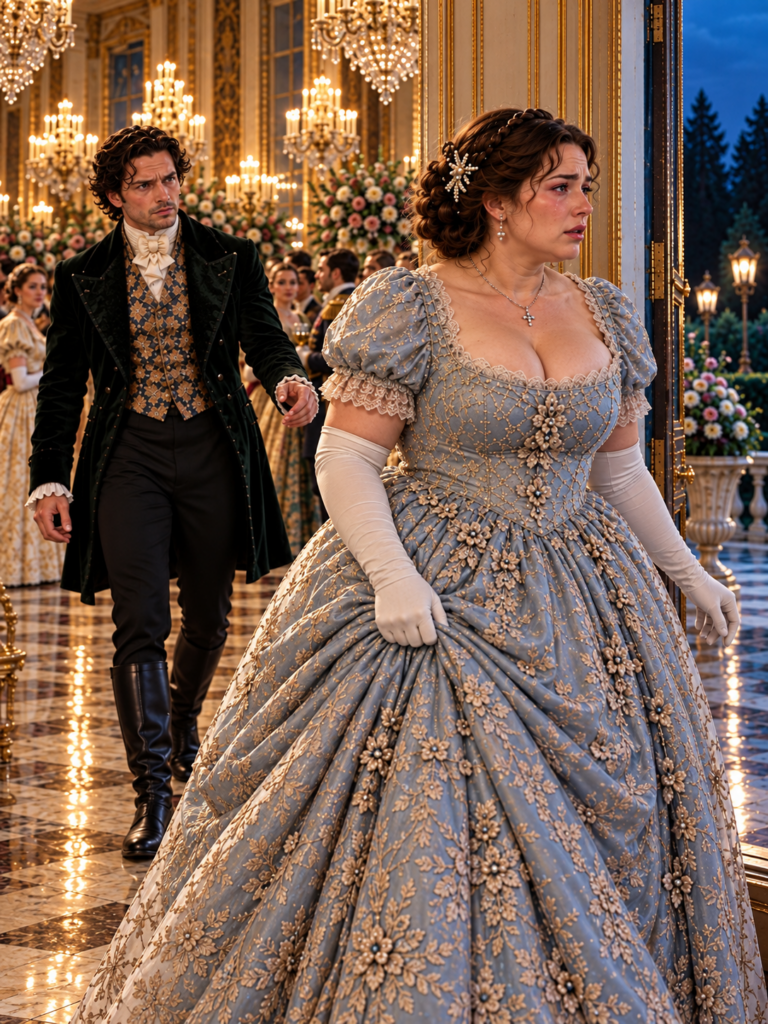
In December 1819, Eleanor Hartwell had entered Ashbourne Hall beneath a ceiling of carved oak and glittering chandeliers.
She was twenty-three.
Her father was a solicitor whose business had declined after an illness that left his hands trembling and his accounts in disorder.
Eleanor had become companion to Lady Adelaide Mercer, an elderly widow with strong opinions and an alarming habit of speaking those opinions aloud.
“You look as though you are attending your own execution,” Lady Adelaide informed her in the carriage.
“I dislike grand houses.”
“You have spent six months accompanying me to grand houses.”
“And improved my dislike considerably.”
Lady Adelaide smiled.
“You dislike one particular gentleman’s ability to make you forget your objections.”
Eleanor looked away.
The older woman’s smile widened.
“Ah. So I am correct.”
Sebastian Vale was then thirty-two, already the Duke of Ashbourne, and already weary of being treated as though his title were his only distinguishing quality.
He had met Eleanor at a charity concert that spring.
She had corrected his quotation of Shakespeare.
He had protested.
She had found the passage in a book the following morning and sent it to him with the offending words underlined.
He had sent flowers.
She had returned them because Lady Adelaide suffered from headaches brought on by lilies.
He had sent a book instead.
She had kept it.
Their attachment grew in rooms where they were never truly alone.
A conversation beside a fireplace. A glance across a dining table. A walk through a crowded garden.
Eleanor understood the danger long before Sebastian admitted it.
He was a duke.
She was a solicitor’s daughter employed as a companion.
The distance between them was not measured in miles.
It was measured in centuries of expectations.
Yet Sebastian had never treated her as a lesser person.
He listened when she spoke.
He remembered what she said.
And on the night of the winter ball, he asked her to meet him in the orangery after the final supper.
He stood among bitter-orange trees with the expression of a man preparing to argue before Parliament.
“I have rehearsed this speech,” he confessed.
Eleanor smiled nervously.
“That sounds ominous.”
“It was excellent in rehearsal.”
“And now?”
“I have forgotten most of it.”
He took her hand.
“Marry me.”
She stared.
“Sebastian.”
“I know what people will say.”
“Your aunt will be furious.”
“My aunt was furious when I planted roses where she preferred hydrangeas.”
“This is not a garden dispute.”
“No.”
He stepped closer.
“This is my life. And yours, if you want it.”
Eleanor looked toward the glass roof, where winter rain ran in thin silver streams.
“I have no fortune.”
“I know.”
“My father has debts.”
“We shall address them.”
“Society will never forgive you.”
“Society has survived worse disappointments.”
“Sebastian.”
His expression changed.
“Eleanor, I am not offering charity. I am asking you to make a life with me.”
Her eyes filled.
She whispered yes.
He kissed her hand.
For a few precious minutes, the future seemed uncomplicated.
Then Edmund Fenwick appeared.
The duke’s secretary was a precise man of forty-five, with immaculate cuffs and a manner that suggested he had never misplaced anything in his life.
“Forgive the interruption, Your Grace.”
Sebastian sighed.
“What is it?”
“Miss Hartwell’s father has arrived. He requests her presence immediately.”
Eleanor stiffened.
“My father?”
“He appears distressed.”
Sebastian offered to accompany her.
Fenwick intervened smoothly.
“Mr. Hartwell requested a private conversation.”
Eleanor touched Sebastian’s arm.
“I shall return.”
He smiled.
“I shall be here.”
She never returned.
Her father waited in a small sitting room, pale and shaking.
“Eleanor, we must leave.”
“What has happened?”
“I found something in the Ashbourne accounts.”
She frowned.
Her father had occasionally reviewed legal documents for the estate.
“What sort of thing?”
“Money that should have gone to tenants. Repairs, compensation, emergency provisions. It was redirected.”
“Then tell Sebastian.”
Her father seized her hands.
“I tried.”
The door opened.
Fenwick entered carrying a slim leather folder.
Within minutes he had shown Eleanor documents bearing her father’s signature, apparently authorizing fraudulent transfers.
Her father denied signing them.
Fenwick expressed regret.
Then he offered a choice.
Her father could leave quietly, taking Eleanor with him.
Or the documents could be placed before a magistrate.
Eleanor insisted that Sebastian would protect them.
Fenwick handed her the forged letter.
She read it beneath the yellow light of a wall sconce.
By the time she reached the signature, her hands were trembling.
Her father begged her not to challenge a man whose power could destroy them.
She left before midnight.
Sebastian waited.
Fenwick eventually appeared with another letter.
This one bore Eleanor’s handwriting.
Or something remarkably like it.
It said she could not marry him.
That affection had overtaken judgment.
That she wished never to see him again.
Sebastian searched for her.
At first with desperation.
Then with anger.
Eventually with pride masquerading as indifference.
His letters went unanswered.
He did not know that Fenwick controlled much of his correspondence.
Eleanor, meanwhile, found refuge under her mother’s maiden name in the northern counties.
She discovered she was pregnant.
Her father died the following autumn, before seeing his granddaughters.
She took employment teaching children in a village where nobody cared much about London’s drawing rooms.
Clara and Beatrice were born.
Years passed.
And on a cold October morning in 1825, the duke walked into their schoolhouse.
Sebastian returned to Ashbourne Hall before sunset.
He carried Eleanor’s letter inside his coat.
At his desk, he unlocked a drawer he had not opened in years.
There lay the letter supposedly written by her.
He placed the two papers beside one another.
Different hands.
Different messages.
The same elegant deception.
His estate steward, Thomas Reed, entered after a discreet knock.
“Your Grace?”
Sebastian did not look up.
“Where is Fenwick?”
“In the western office.”
“Has he left the house today?”
“No, Your Grace.”
“Good.”
Reed hesitated.
“Is something wrong?”
Sebastian touched the edge of the forged letter.
“I believe someone has stolen six years of my life.”
Before Reed could answer, Sebastian opened another drawer.
Inside was a small ledger discovered that morning among the school accounts.
Its entries recorded charitable payments supposedly sent from Ashbourne Hall to Little Bracken.
Large payments.
Regular payments.
Payments the schoolmistress had never received.
Sebastian stared at the figures.
The same secretary who had delivered the letters had approved every transfer.
And beside one entry, in cramped handwriting, stood a name he recognized.
Edward Hartwell.
Eleanor’s dead father.
The past had not merely returned.
It had begun demanding an accounting.
Part 2
Eleanor did not sleep that night.
She sat at the narrow kitchen table above the schoolroom while her daughters dreamed beneath a patchwork quilt in the adjoining chamber.
Between her hands lay a letter she had spent six years hating.
If Sebastian had not written it, then the years she had built her life upon were founded on a lie.
She wanted to believe him.
That frightened her.
Believing him would mean accepting that Clara and Beatrice had been deprived of their father for reasons neither parent had chosen.
It would mean that her own father had fled an accusation manufactured to silence him.
And it would mean remembering how happy she had been the night Sebastian proposed, before she had taught herself to despise the memory.
She heard a small sound behind her.
Beatrice stood in the doorway, holding a worn cloth rabbit.
“Mama?”
Eleanor opened her arms.
The child climbed into her lap.
“Why did that gentleman look at us so strangely?”
Eleanor brushed dark curls from her daughter’s forehead.
“He was surprised.”
“By what?”
“By finding something he thought he had lost.”
Beatrice considered that.
“Was it us?”
Eleanor closed her eyes.
“Yes, darling.”
The girl leaned against her.
“Then he must be very sad.”
Eleanor kissed her hair.
“Yes.”
She sat there long after Beatrice returned to bed.
For the first time, she allowed herself to imagine that Sebastian’s suffering had been real.
The duke arrived two mornings later.
He did not bring a carriage filled with servants.
He came on horseback, tied his horse beside the school gate, and waited until the children had finished their morning lessons.
Eleanor found him repairing a loose hinge.
“You are making that worse,” she observed.
Sebastian straightened.
“I was attempting to improve it.”
“The gate opened perfectly well yesterday.”
“It also fell against my horse.”
“The horse should not have leaned on it.”
“An interesting legal argument.”
She almost smiled.
Then she noticed the exhaustion in his face.
“You have not slept.”
“Very little.”
He removed two letters from his coat.
“I kept yours.”
Eleanor stared.
He handed her the paper.
She recognized the slanting handwriting immediately.
Or thought she did.
The note was brief, cold, and painfully convincing.
But there were details she noticed now.
The formation of certain letters was almost too careful.
The signature began with a flourish she had abandoned years earlier.
She looked up.
“I never wrote this.”
“I believe you.”
The simplicity of his answer nearly undid her.
He continued.
“I should have believed you six years ago.”
“You never had the opportunity to ask me.”
“I might have searched harder.”
“I used another name.”
“Because you believed I wanted you gone.”
“Yes.”
He looked toward the schoolhouse.
Through the window they could see Clara arranging books into crooked towers while Beatrice attempted to restore them to proper order.
Sebastian’s expression softened.
“Tell me about them.”
Eleanor looked at him.
It was the first request he had made that did not demand an explanation.
“Clara was born first,” she said.
“How much earlier?”
“Seven minutes.”
“Does she consider that important?”
“Enormously.”
He smiled faintly.
“And Beatrice?”
“She remembers everything. Especially promises.”
Sebastian looked down.
“Then I shall be careful with mine.”
Eleanor told him about the winter Clara nearly died of fever, when Beatrice refused to leave her bedside.
She told him of their first words.
Clara’s had been again.
Beatrice’s had been book.
She told him how Clara feared nothing except being forgotten, while Beatrice feared thunder but would never admit it.
Sebastian listened.
Every small detail was another piece of a life he had missed.
When Eleanor finished, he remained silent.
At length he said, “I should like to know them.”
She watched him carefully.
“You cannot simply arrive and take them into your world.”
“I know.”
“They have never had a father.”
His jaw tightened.
“I know that too.”
“And if you acknowledge them publicly, there will be consequences.”
“For me?”
“For them.”
He understood her meaning.
The law and custom of their society would not treat children born outside marriage as if that circumstance were invisible.
His title could not alter the conditions of their birth.
A duke might be forgiven an indiscretion.
A schoolmistress and her daughters would not be so fortunate.
Sebastian said quietly, “I will not allow anyone to use them to punish you.”
Eleanor looked at him with unexpected sadness.
“You cannot command the world to be kind.”
“No.”
He paused.
“But I can begin by refusing to be cruel.”
At Ashbourne Hall, Sebastian summoned Henry Wycliffe, an accountant from Newcastle known for his devotion to figures and his complete lack of interest in aristocratic approval.
Wycliffe examined the village school ledger.
Then the estate’s official account books.
Then the old emergency-relief records.
He worked for three days.
On the fourth, he requested a private meeting.
“Your Grace, these accounts do not reconcile.”
“Explain.”
Wycliffe placed two ledgers on the table.
“The estate recorded payments to Little Bracken School, the northern bridge repairs, and several tenant families displaced by the floods of 1818.”
“Yes.”
“The money left the accounts.”
“And?”
“The named recipients received only a portion.”
Sebastian leaned forward.
“Where did the remainder go?”
“Through temporary holding accounts controlled by your late father’s private office.”
“Fenwick’s office.”
“Yes.”
Wycliffe hesitated.
“There is something else.”
He opened an older ledger.
“These transfers began during your father’s lifetime.”
Sebastian looked at the dates.
His father had died seven years earlier.
Some entries preceded that death.
Others followed it.
“Why would my father divert relief payments?”
Wycliffe chose his words carefully.
“The previous duke appears to have suffered substantial investment losses. Private debts were settled through movements of estate funds.”
Sebastian stared at him.
“My father would never have stolen from his tenants.”
Wycliffe said nothing.
The silence was worse than contradiction.
Sebastian rose and walked to the window.
Beyond it stretched the lawns his father had spent a lifetime maintaining.
The marble steps.
The formal gardens.
The long approach that made every visitor conscious of entering the home of an ancient family.
As a child, Sebastian had believed those things meant stability.
Now he wondered how many unpaid roofs and broken bridges had helped preserve the illusion.
He turned back.
“Continue the investigation.”
“Even if the records implicate your father?”
“Especially then.”
Wycliffe studied him for a moment.
“Very well, Your Grace.”
The first clue outside the ledgers came from an elderly former bookkeeper named Peter Hales.
Hales lived beside the old coaching road, where he cultivated cabbages and distrusted visitors.
He remembered Edward Hartwell.
“A decent man,” he said when Sebastian called. “Too decent for his own good.”
“You worked with him?”
“Occasionally.”
“Did he discover irregularities in the estate accounts?”
Hales gave a long sigh.
“He found money passing through accounts it had no business entering.”
“Did he accuse Fenwick?”
“Not at first.”
“Whom did he accuse?”
Hales looked toward the garden.
“Nobody. He thought the records were mistaken.”
Sebastian waited.
“Then he found that some transfers had been authorized by your father.”
The duke’s face tightened.
Hales continued.
“Mr. Hartwell intended to bring the matter before you. He believed you had inherited a problem you did not understand.”
“What happened?”
“He disappeared.”
“Fenwick threatened him.”
“So I suspected.”
Hales went inside and returned with a small bundle wrapped in oilcloth.
“Your lady’s father left this with me.”
Sebastian unfolded the covering.
Inside lay several receipts.
Each bore Edward Hartwell’s handwriting.
Each recorded money delivered to a tenant family after the estate had claimed no relief funds remained.
At the bottom of one receipt was a note.
If the accounts are ever examined, these payments must be understood as restitution, not personal gifts.
Sebastian read it again.
“Restitution,” he murmured.
Hales nodded.
“He was trying to return what had been taken.”
“With whose money?”
“That is what you ought to discover.”
Sebastian carried the receipts back to Eleanor.
She read them in silence.
Then she sat down.
“My father told me he had done something foolish.”
Sebastian remained beside the window.
“He may have meant that he trusted the wrong person.”
“No.”
Eleanor shook her head.
“He said he had permitted a wrong to continue because he was afraid of the consequences of exposing it.”
She looked down at the papers.
“I thought he meant his own disgrace.”
A tear fell onto the table.
“He died believing I might one day be ashamed of him.”
Sebastian moved closer.
“I intend to clear his name.”
“Do not promise what you cannot guarantee.”
“I can guarantee that I will not conceal the truth.”
She looked at him.
For the first time since his return, she reached for his hand.
He held it gently.
Nothing more.
It was not forgiveness.
But it was the beginning of trust.
The twins began making Sebastian’s acquaintance in a fashion no aristocratic household could have arranged.
Clara demanded to know whether dukes were permitted to climb trees.
Beatrice wanted to inspect his watch.
Sebastian answered both questions with grave attention.
One afternoon Clara challenged him to a footrace across the schoolyard.
He lost.
“You are very slow,” she informed him.
“I was wearing boots.”
“Mama wears boots.”
“Your mother has considerable advantages over me.”
Beatrice looked up from her book.
“Clara cheated.”
“I took a shorter way.”
“That is cheating.”
“That is intelligence.”
Sebastian turned toward Eleanor.
“They are both yours.”
“Apparently not entirely.”
He smiled.
The smile was so familiar that Eleanor felt the old world threaten to open beneath her feet.
She looked away.
But later, while Sebastian helped Beatrice sound out a difficult passage, Eleanor watched from the doorway.
He did not hurry the girl.
When she stumbled, he waited.
When she succeeded, he did not praise her extravagantly.
He simply asked whether she wished to read the next sentence.
Beatrice did.
Clara eventually abandoned her game and climbed onto the bench beside them.
For the first time, Eleanor saw what six years had stolen.
Not only dances, promises, and a wedding.
Ordinary afternoons.
A father beside his daughters.
A family that might have existed without fear.
The trouble began with a newspaper paragraph.
A London society publication reported that the Duke of Ashbourne had developed an unusual interest in a northern schoolmistress and her two young daughters.
A week later, another paper supplied Eleanor’s name.
Then someone revived the old accusations against Edward Hartwell.
Within days, parents began withdrawing children from the school.
One mother refused to enter the classroom.
Another whispered that no respectable woman would have concealed the father of her children.
Clara heard enough to understand that people were speaking unkindly of Eleanor.
She struck a boy who repeated the word bastard.
Eleanor found her daughter standing outside the classroom with clenched fists and wet cheeks.
“He said we don’t belong to anybody.”
Eleanor knelt.
“You belong to yourselves, darling. And you belong with me.”
“Why would he say that?”
“Because some people believe they understand a person’s worth from the circumstances of their birth.”
Clara looked furious.
“That is foolish.”
“Yes.”
“Then why do grown-ups do it?”
Eleanor had no answer.
Sebastian arrived that evening.
He had already seen the newspapers.
“Come to Ashbourne Hall.”
“No.”
“Eleanor—”
“I will not hide in your house.”
“The girls are being hurt.”
“I know.”
“Then let me protect them.”
She turned on him.
“You cannot repair six years by making every decision for us.”
He stopped.
Eleanor was trembling.
“I have spent six years building a place where they were safe. I have worked through winters when there was scarcely enough coal. I have taught children whose parents could pay only in potatoes or firewood. I have buried my father. I have been afraid every single day that someone would discover the truth.”
Her voice broke.
“And now everyone looks at me as though those years count for nothing.”
Sebastian did not interrupt.
She looked toward the sleeping girls.
“I cannot bear to lose the little life I made.”
He answered quietly.
“Then you must not lose it.”
She stared at him.
“I am not asking you to surrender the school,” he continued. “I am asking you to let me help keep our daughters safe while the accusations are investigated.”
“Your aunt will object.”
“My aunt objects to nearly everything.”
“The servants will gossip.”
“Some will.”
“And society?”
“Society may go on gossiping.”
Eleanor almost smiled.
Then she looked exhausted.
“Only until the matter is settled.”
“Only as long as you choose.”
She held his gaze.
“Do you mean that?”
“Yes.”
“Then I shall come.”
Ashbourne Hall had not heard the footsteps of children for many years.
Within an hour of their arrival, Clara had asked how many fireplaces the house contained, whether the marble statues were real people turned to stone, and why anyone would need a dining table large enough for twenty guests.
Beatrice went directly to the library.
She stood in the doorway with her mouth slightly open.
Sebastian watched her.
“Do you like books?”
She looked at him as though he had asked whether she liked breathing.
“Yes.”
“You may choose one.”
“Any?”
“Any suitable one.”
“What makes a book unsuitable?”
He considered.
“An excellent question.”
She reached for a large volume of Roman history.
Sebastian laughed.
“My mother loved that book.”
Beatrice looked up.
“Was she kind?”
“Very.”
“Did she have eyes like mine?”
He fell silent.
“Yes.”
The child touched her cheek.
“Then perhaps she would have liked me.”
Sebastian knelt.
“I believe she would have loved you.”
Beatrice considered this with extraordinary seriousness.
Then she put one small hand against his face.
Sebastian closed his eyes.
Eleanor, watching unseen from the corridor, turned away before either of them noticed her tears.
Lady Honoria Vale arrived three days later.
Sebastian’s aunt was seventy, formidable, and dressed in mourning black despite having buried her husband fifteen years earlier.
She examined the twins at breakfast.
Clara examined her in return.
“You look very stern,” Clara said.
Honoria raised one eyebrow.
“So do you.”
“I am thinking.”
“As am I.”
Beatrice remained silent until Honoria noticed her eyes.
The older woman’s expression changed.
“Good heavens.”
Sebastian set down his teacup.
“Aunt Honoria.”
She ignored him.
“Come closer, child.”
Beatrice approached.
Honoria studied her face, then looked at Sebastian.
“Those are your mother’s eyes.”
“Yes.”
“And the other one has your grandfather’s chin.”
Clara touched her chin.
“Is that good?”
“Not particularly. He was an obstinate man.”
Clara considered this.
“I think I shall keep it.”
Honoria made a strange sound.
Eleanor realized, with astonishment, that the old lady was laughing.
Later, however, Honoria spoke privately with Sebastian.
“You must understand what society will make of this.”
“I do.”
“Marriage may secure Eleanor’s future and improve the girls’ position socially, but it cannot rewrite the circumstances of their birth.”
“I know.”
“Then do not offer marriage merely because you wish to silence scandal.”
Sebastian looked sharply at her.
Honoria continued.
“I remember how you loved that woman. I also remember how your father taught you that the family name mattered more than almost anything else.”
Her expression softened.
“Do not make the mistake of believing that restoring your own happiness is the same as restoring hers.”
Sebastian remained silent.
“You have much to prove.”
“I know.”
“Then prove it before you ask anything of her.”
Meanwhile, the investigation worsened.
Wycliffe discovered that several payments had passed through Edward Hartwell’s personal account.
The signatures were genuine.
The dates were genuine.
The money had been received.
Sebastian brought the records to Eleanor.
She stared at them.
“My father accepted these payments?”
“It appears so.”
“Why?”
“We don’t know yet.”
She moved away from the table.
“Fenwick said he stole.”
“Fenwick has lied before.”
“But these are real signatures.”
“Yes.”
Eleanor wrapped her arms around herself.
For six years she had defended her father against an accusation she could never entirely disprove.
Now evidence existed that appeared to support it.
She looked at Sebastian.
“What if I never knew him as well as I believed?”
He wanted to reassure her.
Instead, he remembered the forged letters.
How confidently he had believed one piece of paper.
How completely it had ruined them.
So he said, “We shall follow the money.”
They traveled together to three tenant cottages named in the records.
At the first, an elderly farmer remembered receiving funds after a flood destroyed his barn.
At the second, a widow produced a receipt for repairs to her roof.
At the third, a family remembered Edward Hartwell arriving personally during a winter storm.
“He said the estate owed us the money,” the tenant’s wife recalled.
“Did he tell you where it came from?” Eleanor asked.
“No, miss. Only that it belonged to us by right.”
The amounts matched the transfers into Edward’s account.
Every penny had been passed on.
Eleanor sat on a narrow bench beside the cottage fireplace, holding the receipts.
“He wasn’t taking the money.”
Sebastian shook his head.
“He was returning it.”
“He let it pass through his account so the tenants could be paid.”
“Yes.”
“Then why didn’t he tell someone?”
“Because he feared the records would be used against him.”
Eleanor looked down.
“And they were.”
She pressed the papers against her chest.
For a long time she said nothing.
Then her shoulders began to shake.
Sebastian sat beside her.
She leaned into him without asking permission.
He put one arm around her and held her while six years of grief came quietly to the surface.
“My father died thinking he had failed me.”
Sebastian answered, “He was trying to do what was right.”
“And I doubted him.”
“He was frightened. You were frightened.”
She shook her head.
“I should have known.”
“Perhaps.”
She looked up, surprised.
Sebastian’s expression was grave.
“But perhaps none of us knew enough. That is why we must not stop asking questions.”
Fenwick soon understood that the investigation had become dangerous.
He had served the Ashbourne family for nearly twenty years.
He knew which bankers preferred discretion, which solicitors feared embarrassment, which servants could be trusted with secrets, and which secrets were worth keeping.
For years he had preserved his position by making difficulties disappear.
The late duke’s financial losses had first given him that power.
Then Sebastian’s ignorance had allowed him to retain it.
And somewhere between necessity and opportunity, Fenwick had begun taking money for himself.
He could survive a routine audit.
He could explain temporary transfers.
He could produce old authorizations.
What he could not survive was a full examination of private correspondence.
Sebastian began to suspect as much when Wycliffe discovered missing pages in the outgoing-letter register.
Several entries had been cut away.
The surviving dates corresponded with Eleanor’s pregnancy.
And the missing pages had all passed through Fenwick’s office.
Sebastian summoned the secretary.
Fenwick entered with his usual composure.
“Your Grace.”
“Sit down.”
“Thank you.”
Sebastian placed the ledger before him.
“Do you recognize these accounts?”
Fenwick glanced at them.
“Certainly.”
“Why were charitable funds diverted?”
“Your father’s investments created temporary difficulties.”
“Temporary?”
“Initially.”
“And after his death?”
Fenwick folded his hands.
“The financial arrangements had become complicated.”
“Complicated enough to justify theft?”
The secretary’s face tightened.
“I resent the accusation.”
“Then explain the payments.”
Fenwick began speaking in careful phrases.
Interim obligations.
Banking discretion.
Estate preservation.
Exceptional circumstances.
Sebastian listened.
Then he placed Eleanor’s forged letter on the desk.
Fenwick stopped speaking.
“Do you recognize this?”
A pause.
“I believe I delivered it.”
“Who wrote it?”
“I cannot say.”
Sebastian placed the second letter beside it.
“Who wrote this one?”
Fenwick stared.
Sebastian leaned forward.
“You knew Eleanor was carrying my children.”
Fenwick said nothing.
“You intercepted her letters.”
“I handled correspondence according to my instructions.”
“Whose instructions?”
The secretary’s composure began to crack.
“Your father placed great importance on protecting this family.”
“My father was dead when those letters arrived.”
Silence.
Sebastian stood.
“You are suspended from your duties. You will surrender every key and every register connected to the private office.”
Fenwick rose slowly.
“You are making a grave mistake.”
“Possibly.”
“The documents you seek will not flatter your father’s memory.”
Sebastian met his eyes.
“His memory is not the matter before us.”
Fenwick’s expression hardened.
“You have no idea what was required to preserve this house.”
Sebastian answered, “Then perhaps it is time I learned.”
That evening, Sebastian received a sealed letter from an unnamed source.
Inside was a single sheet bearing a list of private loans made to the previous duke.
Below them stood a warning.
Some debts are better buried with the dead.
Sebastian recognized the handwriting.
Not Fenwick’s.
His father’s.
For several minutes he sat alone.
Then he opened the old family account books.
He found the first unauthorized transfer dated years before his inheritance.
His father’s signature appeared beneath it.
Genuine.
Unmistakable.
The man Sebastian had spent his life trying to honor had begun the deception.
Fenwick had merely perfected it.
When Eleanor entered the study, she found Sebastian sitting beneath his father’s portrait.
He looked older.
“Sebastian?”
He held out the page.
“My father knew.”
She read it.
Then she looked at the portrait.
“I am sorry.”
“So am I.”
He laughed without amusement.
“I have defended his reputation all my life.”
“Perhaps he gave you reasons to.”
“He also gave me reasons not to.”
Eleanor approached.
“You are not responsible for everything he did.”
“No.”
Sebastian stood.
“But I am responsible for what I choose to conceal now.”
He looked at the family crest above the fireplace.
For the first time, its gold and silver seemed less like an inheritance than a challenge.
“I will bring the entire matter before the magistrate.”
Eleanor studied him.
“Even if Ashbourne suffers?”
“Even then.”
“Fenwick may destroy the evidence.”
Sebastian’s expression changed.
“I believe he has already hidden it.”
“How will you find it?”
The duke looked toward the western offices.
For a long moment he said nothing.
Then he answered.
“By giving him something to fear losing.”
Part 3
The rumor began on a Wednesday.
Henry Wycliffe had supposedly discovered a sealed memorandum left by Edward Hartwell, containing the original instructions that exposed the misuse of Ashbourne funds.
It was said to include the signatures of everyone involved.
Sebastian made no public announcement.
Instead, he allowed information to travel through the channels Fenwick knew best.
A conversation with a banker.
A letter carried by a trusted solicitor.
A newly purchased dispatch box brought into Ashbourne Hall by two footmen.
The box was placed in the records room.
Sebastian instructed Reed to ensure that Fenwick heard about it.
Then he waited.
Inside the box were blank sheets and a handwritten recipe for lemon biscuits contributed by Lady Honoria.
She had insisted.
“If your villain steals it,” she explained, “he may at least learn something useful.”
Sebastian looked at her.
“This is a serious investigation.”
“I am serious. The cook has been ruining those biscuits for a decade.”
Nothing happened the first night.
Nor the second.
On the third evening, Fenwick asked Wycliffe whether the supposed Hartwell memorandum had been examined.
Wycliffe said it had not.
Fenwick asked no further questions.
Sebastian understood then that the secretary was not merely worried about the box.
He was worried about what might be compared against it.
The following evening, Sebastian made an elaborate show of leaving the estate.
His carriage departed the main drive shortly after nine.
He returned on foot through the kitchen entrance twenty minutes later.
Reed took his position beside the western staircase.
Wycliffe waited near the records room.
Sebastian concealed himself in an adjoining passage overlooking Fenwick’s office.
At eleven forty, a door opened.
Fenwick entered the western office without a lamp.
He went behind his desk.
For several minutes, nothing happened.
Then Sebastian heard the scrape of wood.
Fenwick removed the lower desk drawer.
He reached into the cavity behind it.
A hidden panel shifted.
From the compartment he withdrew a packet wrapped in dark cloth.
Sebastian felt his pulse quicken.
Fenwick untied the covering and examined the documents.
One by one.
He was not looking for information.
He was making certain something remained concealed.
At last he replaced the packet.
Then he left for the records room.
Sebastian waited until the secretary disappeared along the corridor.
He motioned to Wycliffe.
The accountant entered the office, removed the packet, and carried it to the adjoining passage.
Sebastian followed Fenwick.
The secretary opened the dispatch box with a key he had supposedly surrendered.
He lifted the lid.
Blank paper.
Then Lady Honoria’s recipe.
Fenwick stood motionless.
A quiet voice came from behind him.
“Disappointed?”
Fenwick turned.
Sebastian stood in the doorway.
Reed appeared at his shoulder.
The secretary looked once at the box.
Then at the duke.
“You planned this.”
“Yes.”
“There is no memorandum.”
“Not in that box.”
Wycliffe entered carrying the dark packet.
For the first time in nearly twenty years, Edmund Fenwick lost control of his expression.
Sebastian placed the packet on the table.
“Shall we examine what you thought worth hiding?”
The first documents concerned the late Duke of Ashbourne.
Private loans.
Failed investments.
Written instructions authorizing temporary transfers from estate funds.
Sebastian recognized his father’s signature on every page.
He did not look away.
The next documents were dated after his father’s death.
Fenwick’s instructions.
Fenwick’s private accounts.
Payments redirected toward businesses in which he held hidden interests.
Then came the letters.
Sebastian found copies of correspondence sent by Eleanor during her pregnancy.
A carefully preserved instruction ordered that any letter arriving from Eleanor Hartwell, or from a woman using the surname Bellamy, should be delivered directly to Fenwick without being entered in the general register.
Sebastian read it twice.
“You knew.”
Fenwick remained silent.
“You knew she was carrying my child.”
Still nothing.
“You knew she was carrying twins.”
The secretary’s jaw tightened.
“I knew she had written to you.”
“And you destroyed the letters.”
“I intercepted them.”
“Why?”
Fenwick finally looked at him.
“Because her father had become dangerous.”
Sebastian placed both hands on the table.
“Dangerous to whom?”
“To everything your father built.”
“My father built a debt-ridden illusion.”
Fenwick flinched.
Then anger came into his face.
“You speak very confidently now, Your Grace. You never saw the bankers gathering outside this house. You never heard your father begging men of business for another month. You never watched creditors threaten to expose the family before half of London.”
“So you stole from our tenants?”
“I moved funds.”
“At first.”
Fenwick said nothing.
“And afterward?”
The secretary looked toward the papers.
After a long moment, he answered.
“I had spent years saving the estate from its own master.”
“And decided the estate owed you.”
“Yes.”
The word was almost inaudible.
Sebastian felt no triumph.
Only disgust.
He picked up another document.
It contained instructions to prepare letters in handwriting copied from earlier correspondence.
One in Eleanor’s name.
One in his own.
Sebastian stared at the page.
“Why separate us?”
Fenwick’s expression hardened.
“Because Miss Hartwell was not easily managed.”
Sebastian said nothing.
“She noticed discrepancies. She asked questions. She listened to her father. And you listened to her.”
The secretary gave a bitter laugh.
“A woman with no fortune and no position had acquired the one influence I could not control.”
Sebastian understood.
Eleanor had never threatened Fenwick with power.
She threatened him with honesty.
He loved her.
And a man in love might listen when she pointed to a missing sum or an altered ledger.
Fenwick had therefore removed her from the duke’s life.
He had ruined her father to keep them both silent.
Sebastian’s voice lowered.
“You made me believe she had abandoned me.”
“I protected you from a disastrous marriage.”
“You deprived my daughters of their father.”
Fenwick looked away.
“You would have survived without knowing.”
Sebastian stared at him.
For a moment he was no longer a duke standing in his ancestral house.
He was a man who had missed the births of his children.
Their first steps.
Their illnesses.
Their birthdays.
All because another man believed his own interests mattered more.
He spoke very quietly.
“No. I survived in ignorance. That is not the same thing.”
Fenwick suddenly reached for the documents.
Wycliffe moved to stop him.
The packet tore.
Papers scattered across the floor.
Fenwick seized a handful and rushed toward the fireplace.
Sebastian caught him before he reached the flames.
The two men struggled beside the hearth.
A page slipped free and touched the fire.
The edge began to blacken.
Reed dragged Fenwick backward.
Sebastian stamped out the burning paper.
Wycliffe gathered the others.
For several seconds nobody spoke.
Then Sebastian examined the scorched document.
Enough remained to identify the date, the payment, and Fenwick’s authorization.
He turned toward the secretary.
“You will answer for this.”
Fenwick stood between Reed and Wycliffe, breathing hard.
“If you reveal those papers, your father’s name will be disgraced.”
“I know.”
“The newspapers will make Ashbourne a laughingstock.”
“Perhaps.”
“Your ancestors—”
“Are dead.”
Fenwick fell silent.
Sebastian continued.
“Edward Hartwell died believing himself disgraced. Eleanor lived in fear. My daughters grew up without knowing I existed.”
He looked toward his father’s portrait visible through the open doorway.
“You have spent twenty years protecting a name at the expense of living people.”
Fenwick’s face twisted.
“Your father would never have allowed this.”
Sebastian looked back.
“No.”
He paused.
“And that is why I must.”
He turned to Reed.
“Send for the magistrate.”
The investigation that followed lasted months.
Fenwick denied some accusations, justified others, and sought repeatedly to shift responsibility onto the late duke.
Yet the surviving ledgers, correspondence, witness statements, and hidden instructions formed a pattern too substantial to dismiss.
Sebastian made the records available to the proper authorities.
He acknowledged publicly that his father had authorized improper use of estate money to conceal private losses.
He also identified the later transfers Fenwick had arranged for personal gain.
The truth embarrassed Ashbourne.
Old friends became cautious.
Several acquaintances stopped writing.
Society newspapers delighted in discovering that one of the kingdom’s respected families had maintained its reputation through questionable accounts and convenient silence.
Lady Honoria read one such article at breakfast.
“They have compared your father to a highwayman.”
Sebastian looked up.
“Have they?”
“Without the horse. A rather unimaginative comparison.”
Eleanor nearly smiled.
Honoria folded the paper.
“They will grow bored.”
“Eventually,” Sebastian said.
“And if they do not, we shall simply have to become more interesting.”
She took another sip of tea.
Sebastian suspected this was the closest his aunt would ever come to expressing approval.
Edward Hartwell’s name was publicly cleared of the accusation that he had stolen estate funds.
The money that passed through his accounts was traced to relief payments made directly to families who had previously been denied assistance.
His receipts established both the amounts and their intended purposes.
Sebastian arranged for the remaining unpaid funds to be returned.
Not as gifts.
Not as charity.
As money that should have reached the tenants in the first place.
He visited each affected household personally.
Some people thanked him.
Others asked why he had not discovered the fraud earlier.
That question hurt.
He answered it anyway.
“Because I trusted the wrong people and failed to examine the accounts closely enough.”
He discovered that acknowledgment did not make him weak.
It made him accountable.
At the school, Eleanor watched the scandal pass through its ugliest stages.
Some families returned.
Others did not.
She reopened the classroom after the children had spent several weeks at Ashbourne Hall.
Sebastian offered to rebuild the leaking roof.
She accepted.
He offered new desks.
She accepted those too.
He proposed a larger schoolhouse closer to the village green.
She studied the plans.
Then she crossed out half the proposed decorative stonework and requested a second classroom instead.
Sebastian examined the alterations.
“You have removed the impressive entrance.”
“Children require warmth and books more than impressive entrances.”
“Ashbourne architects will be devastated.”
“They shall recover.”
He smiled.
Eleanor smiled back.
The exchange felt strangely ordinary.
That was what frightened her.
She had once believed love existed in extraordinary moments.
A winter ball.
A proposal beneath glass.
A kiss stolen from the judgment of society.
Now she began to understand that love might also exist in measurements for school windows and arguments about heating bills.
When the investigation concluded, Sebastian asked Eleanor to marry him.
He chose the library at Ashbourne Hall.
The girls were upstairs.
Rain tapped against the tall windows.
Eleanor stood beside a table of school plans when he entered.
“I have something to ask you.”
She looked at his expression.
“Oh, Sebastian.”
He stopped.
“You know?”
“You look exactly as you did in the orangery.”
“That is unfortunate. I had hoped six years might have improved my composure.”
He approached.
“Eleanor, will you marry me?”
For a moment she could not speak.
Then she whispered, “No.”
He stared.
“No?”
She looked close to tears.
“I love you.”
His expression changed.
“But I cannot do this yet.”
“Why?”
“Because everyone is waiting for us to marry as though the wedding will erase what happened.”
He opened his mouth.
She continued.
“I cannot become your duchess merely to reassure the world that the story has ended properly.”
“That is not why I am asking.”
“I know.”
She took his hand.
“But I need to know we can build something that belongs to us now. Not something rescued from six years ago.”
Sebastian studied her face.
Then, slowly, he nodded.
“You are right.”
She looked startled.
“I am?”
“Yes.”
“I thought you might argue.”
“I considered it.”
“And?”
“I have learned that winning an argument does not always mean understanding the person across from me.”
Eleanor laughed softly.
He raised her hand to his lips.
“I shall not ask again until you are ready.”
She touched his cheek.
“Thank you.”
He remained near her for a moment.
Then he smiled.
“May I continue visiting the school?”
“You may.”
“And the girls?”
“Of course.”
“And repairing the gate?”
“No.”
He looked wounded.
“That seems unnecessarily severe.”
“You nearly removed the entire gatepost.”
“It was structurally unsound.”
“It was structurally sound before you touched it.”
Sebastian sighed.
“Marriage or no marriage, I foresee a lifetime of criticism.”
Eleanor smiled.
“Only where necessary.”
Winter passed.
Sebastian kept his word.
He came to Little Bracken without demanding anything.
Some days he brought books.
Other days he helped the older boys repair the school fencing under the stern supervision of the village carpenter.
Clara appointed herself inspector.
Beatrice appointed herself record keeper.
Neither position appeared to trouble their father.
By spring, the villagers had grown accustomed to the sight of the Duke of Ashbourne carrying schoolbooks through the lane.
Children who once stared at his carriage now ran to meet him.
He learned which households struggled through bad harvests.
He learned that a roof repaired before winter was worth more than a generous speech delivered afterward.
He learned that Clara’s confidence hid a terror of abandonment.
And that Beatrice, quiet though she was, had an extraordinary determination to understand everything.
Most importantly, he learned that fatherhood could not be recovered through declarations.
It required presence.
One evening Beatrice asked him why he had not come when they were babies.
They were sitting beside the schoolroom fire.
Clara had fallen asleep on the rug.
Eleanor stood near the doorway.
Sebastian looked at his daughter.
“Because I did not know you had been born.”
“Why not?”
“Someone kept your mother’s letters from me.”
Beatrice frowned.
“Did you ask her?”
“Not when I should have.”
“Why?”
He considered the question.
“Because I was hurt, and angry, and too proud to keep searching.”
The child studied him carefully.
“That was foolish.”
“Yes.”
“Mama says everybody makes mistakes.”
“She is right.”
“But she also says we must correct them.”
Sebastian smiled sadly.
“I am trying.”
Beatrice leaned against him.
“Good.”
It was a smaller forgiveness than he had imagined receiving.
It meant more.
By early summer, the new schoolroom stood completed.
Its roof was sound.
Its windows admitted generous light.
Its shelves held books chosen by Eleanor rather than by distant estate officials.
The village gathered for the opening.
There was a modest luncheon, several speeches, and a performance by the older children that involved a historical king losing his crown behind a curtain.
Clara declared the performance a success.
Beatrice said the king had missed three important lines.
Sebastian sat beside Eleanor beneath the shade of a chestnut tree.
For a time neither spoke.
Then Eleanor said, “I have been thinking.”
He turned toward her.
“Always a dangerous beginning.”
She smiled.
“About the orangery.”
His expression softened.
“Have you?”
“I spent years believing that night was the great tragedy of my life.”
“And now?”
“I think the tragedy was that we allowed other people to tell us what the other had chosen.”
Sebastian nodded.
“I know.”
She watched the twins running across the grass.
“Clara has your stubbornness.”
“She has yours.”
“Beatrice has your mother’s eyes.”
“Yes.”
“And both of them have your habit of asking questions until people surrender.”
“A valuable family trait.”
Eleanor laughed.
Then she became serious.
“They love you.”
Sebastian looked toward his daughters.
“I love them.”
“They know.”
He was silent.
Eleanor reached into the pocket of her dress.
She withdrew a small object wrapped in a handkerchief.
Sebastian unfolded it.
Inside lay a plain gold ring.
Not an heirloom.
Not a magnificent jewel.
A simple band that had belonged to Eleanor’s mother.
“My father kept it after she died,” Eleanor said. “He gave it to me before we left Ashbourne.”
Sebastian looked at her.
“He told me never to marry someone merely because I feared standing alone.”
She took a breath.
“I am not afraid of standing alone anymore.”
His fingers tightened around the ring.
“Eleanor.”
She smiled through gathering tears.
“I think I would like to marry you.”
For once, the Duke of Ashbourne could find nothing to say.
She laughed.
“Have I shocked you?”
“Completely.”
“I had hoped to.”
He stood.
For a moment he simply looked at her.
Then he asked, quietly and without ceremony, “Are you certain?”
“Yes.”
“Not because of the girls?”
“They have a father whether we marry or not.”
“Not because of society?”
“Society has exhausted its usefulness in deciding my future.”
He smiled.
“Then why?”
She stepped closer.
“Because I have seen the man you are when no one is applauding. Because you listened when I said no. Because you stayed.”
His eyes filled.
“And because,” she whispered, “I love you.”
He kissed her.
From behind the chestnut tree came a gasp.
Clara emerged at once.
“I knew it!”
Beatrice followed.
“You said we were not supposed to interrupt.”
“I didn’t interrupt. They finished.”
Sebastian looked at the girls.
“How long have you been there?”
Clara considered.
“Long enough.”
Eleanor covered her face.
Beatrice pointed to the ring.
“Does this mean Mama is marrying you?”
Sebastian looked at Eleanor.
She nodded.
“Yes.”
Clara threw both arms into the air.
“Then there must be cake!”
Sebastian laughed.
“An excellent suggestion.”
“How large?”
“We shall discuss it.”
“Not a small one.”
“Certainly not.”
Beatrice folded her arms.
“Clara will try to choose the largest.”
“Because we are four people,” Clara protested.
“And cakes are divided equally.”
Eleanor laughed.
“Perhaps my lessons are finally having some effect.”
They married in late August.
There was no London ballroom.
No gathering of ambitious strangers eager to measure the bride’s fortune.
The ceremony took place in the small chapel near Little Bracken, with the doors opened to the summer breeze.
Lady Adelaide Mercer attended in a pale lavender dress and informed everyone that she had predicted the marriage seven years earlier.
Lady Honoria organized the wedding breakfast with the fierce efficiency of a military commander.
Clara carried a basket of flowers.
Beatrice carried the rings.
At the chapel entrance Eleanor paused.
She wore ivory silk, simply cut, with her mother’s ring resting against her chest on a narrow ribbon.
Sebastian waited near the altar.
For an instant she saw the man from the orangery.
Young.
Nervous.
Certain that love alone could overcome the world.
But the man before her was different.
He had learned the cost of pride.
He had stood before magistrates and newspapers to expose his own family’s wrongdoing.
He had listened when she refused him.
He had loved his daughters without demanding that they return his affection at once.
And he had discovered that a great house was worth preserving only if those who lived beneath its protection mattered more than its reputation.
Eleanor walked toward him.
When she reached his side, he whispered, “You are late.”
Her lips curved.
“By six years.”
“I had noticed.”
“Will you hold it against me?”
“Only if you promise never to leave me waiting quite so long again.”
She looked into his eyes.
“Never willingly.”
He took her hand.
They made their vows.
And for the first time, neither needed to imagine what the words might cost.
They had already lived through the cost of losing them.
The wedding breakfast was interrupted by Clara, who climbed onto a chair and announced that she had prepared a speech.
Eleanor closed her eyes.
Sebastian looked delighted.
Lady Honoria lifted her glass.
“This should be instructive.”
Clara cleared her throat.
“Mama says you mustn’t marry someone just because he is rich.”
The guests laughed.
Sebastian nodded gravely.
“Sound advice.”
“And you mustn’t marry someone just because he lives in a big house.”
“Even better.”
“And Mama says being important doesn’t always mean being good.”
Lady Honoria made a noise that sounded suspiciously like approval.
Clara looked at Sebastian.
“But Papa is good now.”
The room became quieter.
Sebastian smiled gently.
“Thank you, darling.”
“Mostly.”
Laughter returned.
“He still cannot fix the school gate.”
Eleanor laughed so hard that she had to put down her glass.
Beatrice rose beside her sister.
“I have something to say too.”
Clara looked offended.
“This is my speech.”
“I know.”
“Then you must make your own.”
“I am.”
Beatrice faced the guests.
“When Papa first came to the school, I thought he was frightening.”
Sebastian winced.
“An unfortunate beginning.”
“But Mama says sometimes people look frightening because they are sad.”
The guests grew still.
Beatrice looked toward her parents.
“Papa isn’t as sad now.”
Sebastian’s expression changed.
“No,” he said quietly. “I’m not.”
“And Mama laughs more.”
Eleanor pressed one hand to her lips.
Beatrice thought for a moment.
“So I think this marriage is a good idea.”
Lady Honoria raised her glass.
“An excellent judgment.”
Clara immediately added, “And there is cake.”
Years passed.
Ashbourne Hall became a different house.
Its corridors filled with children’s voices.
The library acquired crooked towers of books, forgotten ribbons, broken toys, and occasional arguments about Roman history.
The village school continued under Eleanor’s guidance.
She did not surrender her work when she became Duchess of Ashbourne.
Instead, she expanded it.
Other villages received classrooms of their own, funded through accounts that Sebastian required to be examined independently.
He learned to treat a steward’s assurance as the beginning of a question, not the end of one.
The estate prospered more slowly than his father might have preferred.
But its tenants received the money owed to them.
Its bridges were repaired.
Its accounts were honest.
And when people spoke of the Duke of Ashbourne, they gradually came to remember something other than the scandal.
They remembered that he had admitted a wrong he could have concealed.
Eleanor kept her father’s receipts in a small walnut box.
Beside them she placed the two forged letters.
She never destroyed them.
They were not treasures.
They were reminders.
When Clara and Beatrice were old enough to understand, their parents told them the truth.
Not all at once.
Not with every detail.
But honestly.
One winter evening, Beatrice examined the letters beneath the library lamp.
“Why did you both believe them?”
Sebastian looked across the room at Eleanor.
She closed her book.
For a moment neither answered.
Then Sebastian said, “Because we believed the worst thing we feared might be true.”
Clara frowned.
“But you loved each other.”
“Yes.”
“Then why didn’t you ask?”
Eleanor smiled sadly.
“Because love does not always make people brave.”
Beatrice studied the letters.
“Or wise.”
“No,” Sebastian agreed.
Clara folded her arms.
“Well, I would have asked.”
Sebastian smiled.
“I hope you would.”
“And if someone tried to keep me from the person I loved, I would go straight to them.”
Eleanor reached for her daughter’s hand.
“Then perhaps you have learned something from our mistakes.”
Beatrice placed the letters back in the box.
“Grandfather Hartwell was brave, wasn’t he?”
Eleanor’s eyes softened.
“Yes, darling.”
“He was afraid, but he tried to help people anyway.”
“Yes.”
Beatrice looked toward Sebastian.
“And you told the truth even though it made people angry.”
“I did.”
“Then perhaps being brave means doing what is right after being frightened.”
Sebastian considered her words.
“I think that is very well put.”
Clara sighed.
“Beatrice always makes everything sound like a lesson.”
“That is because you never listen to them,” Beatrice replied.
“I listen when they are interesting.”
The girls began to argue.
Sebastian looked at Eleanor.
She smiled.
Six years had once seemed like an empty space neither of them could cross.
But time had given them something unexpected.
Not the life they had imagined when they were young.
Something harder won.
Something more honest.
On the wall above the library fireplace hung a new portrait.
It showed Eleanor seated beneath a chestnut tree, with Clara standing beside her and Beatrice leaning against her shoulder.
Sebastian stood behind them.
There was no elaborate display of rank.
No ceremonial robes.
Only four people together.
The painter had insisted upon including the schoolhouse in the distance.
Sebastian had agreed.
One afternoon, many years later, Clara stood before the portrait and laughed.
“Papa, you look terribly serious.”
“I was instructed not to move.”
“You always look like that when someone asks you to be important.”
Beatrice approached.
“The painter captured Mama better.”
Sebastian turned toward Eleanor, who sat by the window reading a letter from the school.
“Do you hear how our daughters speak to me?”
Eleanor did not look up.
“They have had excellent teachers.”
“I am surrounded by insubordination.”
“Then perhaps you should stop demanding obedience.”
Clara laughed.
Beatrice returned to her book.
Sebastian crossed the room and sat beside his wife.
Outside, summer sunlight lay across the fields that had once been managed through hidden accounts and frightened silence.
Now children ran along the repaired roads.
The village school bell rang.
Eleanor laid her letter aside.
Sebastian took her hand.
After all those years, he still remembered the first night he had asked her to marry him.
The rain upon the orangery glass.
The nervousness in his throat.
The extraordinary happiness of hearing her say yes.
But he remembered another moment more clearly now.
A cold morning.
A schoolroom smelling of wet paint.
Two little girls.
And a woman who had looked at him as though he were both the last person she wished to see and the one person she had never truly stopped waiting for.
He had believed that discovering them was the miracle.
It was not.
The miracle was what came afterward.
The questions he finally learned to ask.
The truth they were willing to face.
The courage to choose one another without pretending the lost years had never existed.
Eleanor felt him looking at her.
“What is it?”
He smiled.
“Nothing.”
She raised one eyebrow.
“Sebastian.”
“I was thinking how fortunate I am.”
Her expression softened.
“That sounds suspiciously sentimental.”
“I have grown worse with age.”
“Considerably.”
He lifted her hand and kissed it.
From the garden came Clara’s indignant shout.
“Beatrice! You cannot change the rules halfway through!”
Beatrice answered, “I have not changed them. I have explained them.”
Eleanor laughed.
Sebastian looked toward the open window.
For a moment he listened to the familiar argument, the summer breeze stirring the curtains, and the quiet breathing of the house around him.
Once, he had inherited an estate whose greatness depended upon what people were persuaded not to see.
Now he lived in a home where the truth could be spoken aloud.
And the happiest sound in Ashbourne Hall was not applause, nor admiration, nor the respectful announcement of his title.
It was the voices of his daughters calling for their father.
The End.


