Part 1
On the morning the Duke of Ravenshire left his new bride, the east tower of his ancestral abbey lost another stone.
It fell during breakfast.
The impact sounded through the house like a cannon shot, shaking dust from the ceiling and sending an elderly footman hurrying toward the windows. Lady Eleanor Ashford, Duchess of Ravenshire for scarcely twenty-four hours, lowered the cup she had been lifting to her lips.
Across the small breakfast table, her husband did not look up from his correspondence.
“Another piece of masonry,” he said. “The place has been doing that for years.”
“Someone might have been hurt.”
“No one uses the east courtyard.”
“Then perhaps someone ought to repair it before they do.”
That made him raise his eyes.
Adrian Ashford, seventh Duke of Ravenshire, possessed the handsome severity of a man who had been taught that duty was more important than happiness. At thirty-four, he had already earned a formidable reputation in Parliament. Ministers sought his judgment. Noble families cultivated his friendship. His influence reached farther than the boundaries of his considerable lands.
Yet he seemed incapable of offering his wife anything more personal than courtesy.
“The abbey is not worth the expense,” he replied. “That is precisely why the family ceased living here.”
Eleanor looked toward the rain-streaked window.
Beyond it lay a courtyard overtaken by weeds, an ancient fountain without water, and the remains of a garden that must once have been beautiful.
“Then why bring me here?”
Adrian folded his letter.
For the first time since their wedding, he appeared uncomfortable.
“Our marriage satisfies an obligation between our families. You will have your establishment. I shall continue my responsibilities in London. There is no reason the arrangement cannot be satisfactory.”
Eleanor had not expected a declaration of love.
She was the daughter of an impoverished earl whose creditors had stripped nearly everything from his house. Marriage to Ravenshire had secured her father’s remaining dignity and discharged debts that would otherwise have ruined her younger sister.
She understood bargains.
But she had hoped marriage might provide something beyond the settlement written on paper.
“And when shall you return?”
Adrian glanced toward the clock.
“I cannot say.”
Outside, carriage wheels rattled over the cobblestones.
His luggage had already been loaded.
He rose, straightened his cuffs, and offered a small bow.
“My solicitor will make certain you have what you require.”
Then he departed.
Eleanor followed him as far as the entrance steps.
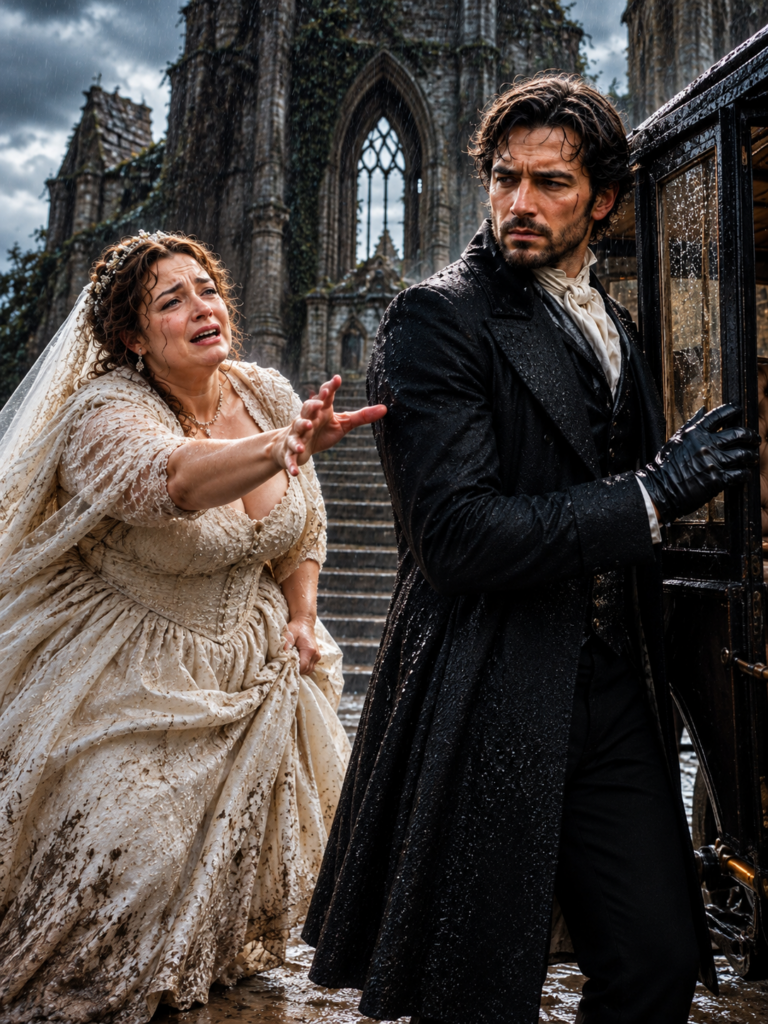
Mist covered the distant hills. The enormous iron gates stood open, and the duke’s carriage waited between two weathered stone pillars bearing his family crest.
For one brief moment, Adrian looked back.
Eleanor thought he might say something kind.
Instead, he lifted two fingers in farewell.
The carriage passed through the gates and disappeared.
Behind her, the old housekeeper, Mrs. Margaret Aldridge, stood with her hands folded tightly before her apron.
“Shall I have your trunks carried upstairs, Your Grace?”
Eleanor continued looking down the road.
“Yes, Mrs. Aldridge.”
The older woman hesitated.
“And shall I prepare the morning room for you?”
Eleanor turned toward the abbey.
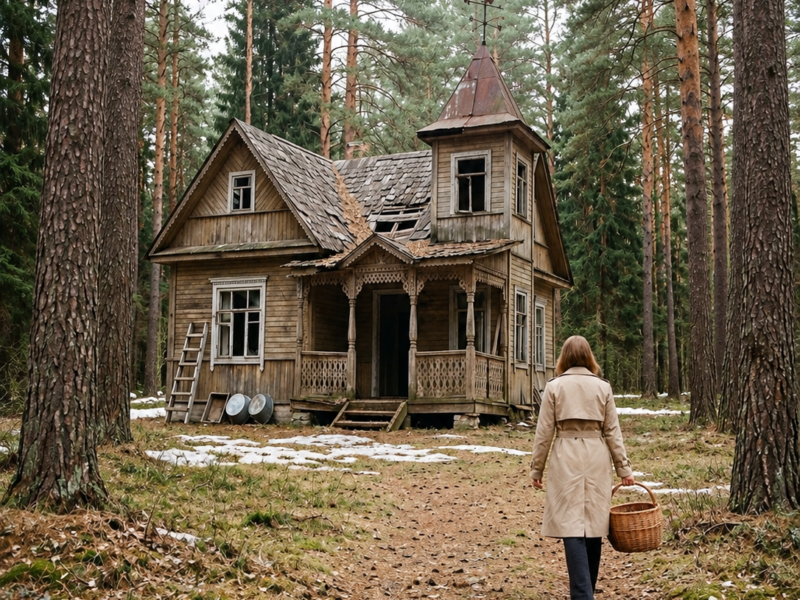
A black stain spread beneath a broken gutter. Several upper windows had been boarded. The climbing roses beside the entrance had long since become a wilderness of thorns.
“How many rooms are safe to use?”
Mrs. Aldridge swallowed.
“Eleven, Your Grace.”
“Out of how many?”
“Seventy-three.”
For a moment, Eleanor said nothing.
Then she removed her gloves.
“Would you show me the other sixty-two?”
Mrs. Aldridge stared at her.
“Your Grace?”
“I should like to know what has happened to my home.”
The housekeeper would remember those words for the rest of her life.
The inspection occupied nearly three days.
Eleanor walked through dark galleries where rainwater gathered beneath cracked plaster. She entered bedrooms whose furniture had been covered for generations. In the abandoned ballroom, she discovered young birch saplings growing through a gap in the floor.
The old library smelled of mildew. The conservatory had lost almost every pane of glass. Behind the kitchens, a collapsing wall threatened the servants’ quarters.
But the buildings were only part of the disaster.
The estate itself was failing.
The tenant farms had suffered five poor harvests in seven years. Drainage ditches lay blocked, several bridges were unsafe, and the vineyard on the western slope had yielded nothing worth selling for almost a decade.
Eleanor learned these things not from the steward, who delivered his reports with a polished confidence she found increasingly suspicious, but from the people who actually lived on the land.
Thomas Bell, the head gardener, had served Ravenshire for forty-one years.
His back had bent and his hair had turned white, but his memory remained sharp.
“The soil’s good, Your Grace,” he told her one morning beside an abandoned orchard. “It always was. But good soil won’t save a tree if no one prunes it.”
“Why was it neglected?”
He studied his boots.
“The money stopped.”
“And the work?”
“The work stopped when the men were dismissed.”
Eleanor looked along the rows of twisted apple trees.
“Could they bear fruit again?”
“Aye. Some of them.”
“How many?”
Thomas scratched his beard.
“If we started before the frost, perhaps two dozen.”
“Then we shall start before the frost.”
He gave her a startled look.
“We, Your Grace?”
Eleanor picked up a fallen branch.
“I have two perfectly serviceable hands, Mr. Bell.”
The gardener began to smile.
It was the first genuine smile she had seen since arriving at Ravenshire.
Her next discovery was less encouraging.
In the estate office, Eleanor requested the household accounts. The steward, Mr. Pritchard, produced several elegant volumes bound in red leather.
According to his figures, Ravenshire was impoverished but stable.
According to the servants, wages had not been paid in full for six months.
According to the tenants, rents had increased twice.
And according to the miller, the abbey’s grain stores were nearly empty.
Eleanor spent four evenings comparing entries by candlelight.
On the fifth, she summoned Pritchard.
“These figures do not agree.”
The steward straightened.
“Estate accounting is a complicated business, Your Grace.”
“I had gathered that.”
“Perhaps His Grace would prefer that such matters remain under professional supervision.”
Eleanor turned a ledger toward him.
“This entry records eighteen pounds for repairs to the north bridge.”
“Yes, Your Grace.”
“The bridge is broken.”
“Unfortunately, the work proved inadequate.”
“And this payment for new mill machinery?”
“The machinery was purchased.”
“The miller tells me it was never delivered.”
Pritchard’s expression changed.
Only slightly.
But Eleanor saw it.
“You have been entrusted with an estate whose people can scarcely afford bread,” she said. “I should like an explanation by tomorrow morning.”
The explanation never came.
Before dawn, Pritchard fled, leaving behind an empty office, two missing account books, and debts considerably larger than those he had reported.
For the first time, Eleanor understood the true extent of her position.
Her husband had abandoned her.
The estate was close to insolvency.
The man appointed to protect its interests had been stealing from it.
And winter was approaching.
That evening, Mrs. Aldridge found Eleanor sitting alone beside the library fireplace.
The Duchess had removed her shoes. Ink stained two of her fingers, and several sheets of figures lay across her lap.
“You ought to rest, Your Grace.”
“I shall.”
But she did not move.
Mrs. Aldridge approached the hearth.
“Perhaps you should write to His Grace.”
“I already have.”
“Will he come?”
Eleanor gazed at the flames.
“I asked him to send someone trustworthy to investigate the accounts.”
“And did you ask him to return?”
“No.”
The housekeeper lowered her eyes.
Eleanor gave a faint, weary smile.
“I cannot make a man wish to be here, Mrs. Aldridge.”
There was nothing the older woman could say to that.
After a long silence, Eleanor asked, “How many families depend upon Ravenshire?”
“On the estate itself?”
“And in the villages.”
“Perhaps eighty families directly. More if you count the tradesmen.”
“Children?”
“Nearly a hundred.”
Eleanor looked down at the pages in her lap.
The numbers had become faces.
A mother she had met beside a leaking cottage roof.
A blacksmith whose youngest son was recovering from fever.
An elderly farmer who had sold his last breeding ewe to pay an overdue rent.
She could abandon the abbey and return to London. Her father’s relatives would receive her, though not without whispers. No one could reasonably expect a young duchess to rescue a property that generations of wealthy men had allowed to collapse.
Yet she could not forget the fear in the tenants’ eyes.
“Please ask everyone employed here to gather in the old dining room tomorrow.”
Mrs. Aldridge stiffened.
“Everyone?”
“Everyone.”
“Will there be dismissals?”
Eleanor shook her head.
“No, Margaret. There will be decisions.”
The following afternoon, twenty-three servants stood beneath a ceiling darkened by decades of fireplace smoke.
Most expected to lose their positions.
Eleanor recognized that fear immediately.
She had seen it before, in her father’s household, when the creditors arrived.
“I shall not pretend that Ravenshire is prosperous,” she began. “It is not. Nor shall I promise that matters will improve quickly.”
No one spoke.
“But I believe this estate can survive. And I believe the people who have kept it alive deserve the opportunity to help save it.”
She unfolded a paper.
“There will be changes. Repairs to dangerous buildings will come before improvements meant only for appearances. Wages owed shall be recorded and paid as funds become available. No family will be put from its home without a personal hearing.”
A murmur traveled through the room.
Samuel Price, the stablemaster, raised a cautious hand.
“Your Grace, the western bridge needs timber. We’ve asked for it three years running.”
“Then tell me precisely what timber is required.”
“The blacksmith would know better than I.”
“Invite him here.”
Clara, the youngest maid, spoke from the back.
“There’s flour going bad in the old storeroom, Your Grace. The sacks are damp.”
“Then tomorrow we shall examine it before any more is lost.”
Mrs. Brooks, the cook, cleared her throat.
“The kitchen gardens could feed twice as many, if we had help.”
Eleanor wrote it down.
One by one, the others began speaking.
Their requests were modest.
Roof slates. Drainage pipes. Seeds. A wagon wheel. Dry storage. Permission to purchase nails without waiting six weeks for approval.
Eleanor listened until the room grew dark.
Then she said something none of them expected.
“I cannot repair Ravenshire alone. I shall need your knowledge more than your obedience.”
Thomas Bell slowly removed his cap.
“You’ll have it, Your Grace.”
He glanced toward the others.
“And mine,” Samuel said.
Mrs. Brooks nodded.
Clara smiled.
For the first time in years, the people of Ravenshire left a meeting with hope instead of dread.
The work began in earnest that winter.
Eleanor sold two pieces of jewelry from her wedding settlement, careful to retain the possessions that legally formed part of her marriage property. With the proceeds she purchased timber, roofing supplies, and seed grain.
She secured modest credit from a merchant in York after showing him accounts she had reconstructed herself.
She learned to read the soil reports, to calculate the cost of transporting grain, and to distinguish an honest contractor from a charming thief.
She also learned that kindness was not the same as indulgence.
When one tenant refused to repair a drainage trench despite accepting payment for the work, Eleanor confronted him herself.
When a merchant offered to purchase the estate’s future wine harvest at an insulting price, she refused.
And when an elderly widow confessed that she had concealed two years of rent arrears, Eleanor visited her cottage and discovered that the woman had been feeding three orphaned grandchildren.
The rent was postponed.
The children received shoes.
The widow’s eldest grandson was offered work at the mill when he reached a suitable age.
Such decisions did not make Eleanor universally popular.
Some landowners considered her foolish. Several merchants attempted to exploit her youth. The neighboring Marquis of Blackwood publicly remarked that Ravenshire was being governed by sentiment rather than sound judgment.
Eleanor ignored him.
By spring, the first gardens had been cleared.
By summer, the mill was turning again.
And by autumn, the western orchard produced enough fruit to sell in two neighboring market towns.
The profits were small.
But for the first time in years, they were profits.
Eleanor stood beside the wagon as the first crates were loaded.
Thomas Bell watched her face.
“Not much of a triumph, I suppose, to someone accustomed to London.”
Eleanor lifted a bright red apple from one of the crates.
“My father lost his estate because no one was willing to admit it was failing until it was too late.”
She turned the apple in her palm.
“I should call this a very considerable triumph, Thomas.”
He laughed.
And the sound traveled across a courtyard that had once known only silence.
In London, Adrian Ashford received occasional reports concerning Ravenshire.
At first, he read them carelessly.
The roof repairs had been completed.
The orchard had produced fruit.
Several overdue rents had been recovered.
He regarded these developments with detached satisfaction.
His wife, it seemed, had found a useful occupation.
During his second year away, the reports became more remarkable.
The vineyard was recovering. Merchants had renewed contracts. Tenant departures had ceased, and portions of the abbey were being reopened.
A letter from his solicitor advised that the Duchess possessed an unusual aptitude for administration.
Adrian smiled faintly.
He meant to write to her.
He truly did.
But there was a crisis involving a parliamentary committee, followed by delicate negotiations with the Treasury. A political ally became an enemy. His influence expanded even as his friendships diminished.
Months passed.
Then another year.
By the time Adrian finally looked up from the endless demands of government, nearly three years had elapsed since his wedding.
And the most extraordinary change in his life had occurred in the one place he had never thought worth visiting.
It began with a dinner conversation.
An elderly nobleman asked him whether the reports about Ravenshire Abbey were true.
“What reports?”
“That your wife has restored the vineyards and turned half the county into her admirers.”
Adrian frowned.
“I receive favorable accounts.”
“Favorable?” The old gentleman chuckled. “My nephew purchased wine from Ravenshire last month. He says the merchants are competing for the next vintage.”
Another guest leaned forward.
“And that Blackwood is furious.”
“Blackwood?”
“The Marquis. He has lands adjoining yours. Apparently, your duchess has accomplished in three years what his stewards have failed to do in twenty.”
Laughter moved around the table.
Adrian did not join it.
For the first time, he wondered what his wife had endured while he pursued glory elsewhere.
Two weeks later, he departed London without announcing his intention.
He traveled north alone.
As his carriage approached Ravenshire, he began to recognize landmarks.
The stone bridge where he remembered broken parapets now stood solid and newly pointed.
Fields that had once lain abandoned were planted in orderly strips.
A row of cottages wore fresh thatch.
Children waved from beside a newly repaired schoolhouse.
Adrian leaned toward the window.
Something unfamiliar tightened in his chest.
At the top of the hill, the abbey emerged between tall oaks.
He had prepared himself for the sight of ruin.
Instead, he found beauty.
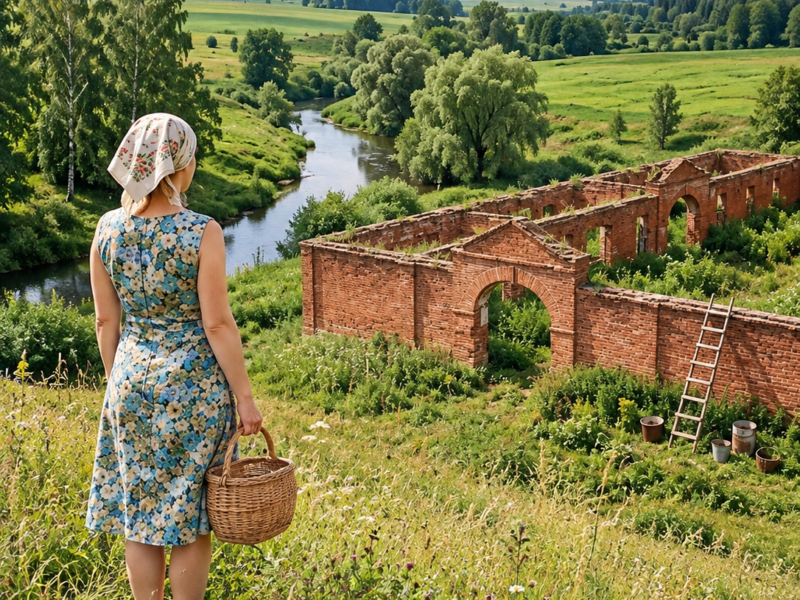
The old walls stood clean and sound. Roses climbed the entrance arches. The shattered eastern roof had been repaired, and sunlight shone across windows that had once been dark.
Smoke rose from every inhabited chimney.
Wagons filled the courtyard.
People were laughing.
Adrian stepped from his carriage slowly.
A stable boy hurried forward.
“Good afternoon, sir. Are you here to see Her Grace?”
Adrian studied him.
“I am the Duke of Ravenshire.”
The boy went pale.
A few moments later, Mrs. Aldridge appeared.
She curtsied.
“Your Grace.”
Adrian glanced toward the busy courtyard.
“Where is my wife?”
“In the estate office, Your Grace. She is meeting with the millers.”
“Then inform her I have arrived.”
Mrs. Aldridge hesitated.
“Her Grace asked not to be interrupted until the accounts are settled.”
Adrian stared at her.
It was not defiance. The housekeeper was perfectly respectful.
But she did not move.
Not until the meeting ended.
And in that strange, painful moment, the Duke understood something that no parliamentary victory had ever taught him.
He had returned to his own estate.
But he was no longer the person around whom its world revolved.
At last, the office door opened.
Eleanor stepped into the courtyard carrying a ledger beneath her arm.
Her gown was plain blue wool. Her hair was pinned simply, and an ink stain marked the side of her hand.
She looked older.
Not in years, but in certainty.
When she saw Adrian, she stopped.
For several seconds, neither spoke.
Then she curtsied with the same faultless composure she had shown on their wedding day.
“Your Grace.”
He had imagined surprise.
Perhaps tears.
Perhaps even gratitude.
Instead, she offered a polite smile.
“I hope you had a comfortable journey.”
Adrian felt the full weight of three wasted years descend upon him.
“Eleanor.”
“Yes?”
He searched for words.
He could address Parliament before hundreds of men without hesitation.
Yet before his wife, standing in a courtyard she had rescued from ruin, he found himself utterly speechless.
Behind her, Samuel approached with another ledger.
“Your Grace, the mill accounts require your signature.”
Eleanor turned.
“I shall be there directly.”
The stablemaster bowed and departed.
Adrian watched him go.
“Everyone comes to you.”
Eleanor looked back at her husband.
“They have grown accustomed to finding me here.”
The quiet statement carried no accusation.
That made it hurt far more.
Part 2
The first thing Adrian discovered about his transformed estate was that it possessed a rhythm he did not understand.
At six each morning, the bakers fired the ovens.
At seven, the head gardener received the day’s labor assignments. By eight, wagons departed for market, and the estate clerk began collecting orders from the surrounding villages.
On Mondays, Eleanor met with the tenant representatives.
On Wednesdays, she reviewed repairs and wages.
Every Saturday, she opened the estate office to anyone who wished to bring a complaint, offer a suggestion, or request assistance.
Nothing in this arrangement required the Duke.
That knowledge troubled him more than he wished to admit.
On his second morning home, he entered the estate office and found Eleanor surrounded by account books.
“I should like to review the finances.”
She looked up.
“Certainly.”
She gestured toward a chair.
“The accounts are available for your inspection.”
Adrian sat.
He examined the figures for nearly an hour.
The estate was not merely surviving.
Its income had improved considerably. Debts had been reduced. The restored mill and vineyard were generating reliable revenue, and a reserve had been established for repairs and poor harvests.
He lifted one ledger.
“You have accomplished this without increasing rents?”
“Several rents were reduced.”
He frowned.
“How?”
“We stopped losing grain through poor storage. We repaired the mill instead of paying neighboring mills to process our harvests. We began selling directly to merchants willing to offer reasonable prices.”
“And the vineyard?”
“Thomas remembered how the vines were cultivated before your grandfather dismissed half the workers.”
Adrian glanced through another page.
“You’ve kept extraordinarily careful records.”
“I had good reason to.”
She explained the steward’s theft, the missing books, and the years of neglected wages.
As she spoke, Adrian felt his embarrassment deepen.
He had appointed Pritchard personally.
He had accepted the man’s polished reports without questioning them.
And when Eleanor had written asking for assistance, he had sent another solicitor rather than coming himself.
“I should have known,” he said.
“Yes,” Eleanor replied.
There was no cruelty in her answer.
Only truth.
Adrian closed the ledger.
“Why did you never ask me to return?”
She studied him for a moment.
“I did.”
He looked up sharply.
“In my first letter. I wrote that the estate was in danger, that I needed your judgment, and that I hoped you might come before winter.”
Adrian remembered the letter.
He had read it while preparing for an important parliamentary debate.
His secretary had drafted the reply.
“I thought—”
“You thought sending a solicitor would be sufficient.”
He could not deny it.
Eleanor gathered her papers.
“I learned not to ask again.”
Those words followed him long after she left the room.
Adrian made no grand announcement about his intentions.
The next morning, he appeared beside the stables wearing old riding clothes.
Samuel and two laborers were attempting to replace a damaged wagon axle.
Adrian examined the broken fastening.
“You’ll need a longer iron pin.”
Samuel straightened immediately.
“Your Grace, we can manage.”
“I am sure you can.”
Adrian removed his coat.
“But I believe I can help.”
He worked beside them for two hours.
The men were awkward at first. They addressed him by his title whenever he lifted a hammer. Samuel apologized every time he offered a correction.
By the afternoon, that had begun to change.
When Adrian fitted a brace incorrectly, Samuel said, “That won’t hold through the first muddy road.”
The Duke considered the joint.
“You’re right.”
Samuel blinked.
No Duke of Ravenshire had ever said those words to him before.
Over the following days, Adrian visited the mill, walked the drainage fields, inspected the bridges, and listened to conversations he would once have considered beneath his notice.
He discovered that farming demanded knowledge of weather, soil, labor, and commerce every bit as intricate as the negotiations conducted in Parliament.
He learned that a missed payment could mean a family’s winter fuel.
He watched a blacksmith repair a broken plow with the concentrated skill of a master craftsman.
And he began, with increasing shame, to understand how much his wife had learned simply because she had been willing to ask.
Eleanor observed the change cautiously.
She had prepared herself for interference.
Instead, Adrian sought permission before altering anything.
Once, when he proposed expanding the west pasture, Eleanor explained that the adjoining field was needed for winter grain.
He listened.
Then he withdrew the proposal.
She looked at him with surprise.
“Does that disappoint you?”
“No.”
“Three years ago, you would not have asked.”
“Three years ago,” Adrian replied, “I knew considerably less than I believed.”
For the first time, she nearly smiled.
Their first honest conversation took place beside the old fountain.
It was late October, and the courtyard was quiet.
Eleanor sat on the stone rim, sorting letters from local merchants. Adrian approached carrying two cups of tea.
“I thought you might be cold.”
She accepted one.
“Thank you.”
He remained standing until she gestured toward the space beside her.
They sat in silence.
Finally, Adrian said, “I owe you an apology.”
Eleanor gazed at the dark water.
“For the estate?”
“For the marriage.”
She slowly turned toward him.
“I married you because our families required it,” he continued. “I told myself that providing you with security fulfilled my obligations.”
“You provided a title.”
“I know.”
“And a house everyone believed was beyond saving.”
“Yes.”
“Did you ever consider what that would mean for me?”
Adrian looked down at his hands.
“No. Not sufficiently.”
Eleanor drew a breath.
“For months after you left, every carriage that approached the gates made me wonder whether you had returned. I would pretend I was waiting for a merchant or the post, because I was ashamed of hoping.”
His face tightened.
“Eleanor—”
“Then one morning I realized that I had not looked toward the road for nearly a week.”
She spoke calmly, but there was an old sadness beneath her composure.
“That was when I understood I had begun living again.”
Adrian said nothing.
“I do not hate you,” she continued. “But the woman who waited for your carriage is no longer here.”
He stared at the fountain.
“What would you have me do?”
“I do not know.”
He nodded.
After a moment, she added, “You may stay, if you wish. But I will not surrender the life I have built simply because you have remembered it exists.”
Adrian turned toward her.
“I would never ask that.”
“Three years ago, I would have believed you if you had said anything with sufficient confidence.”
“And now?”
“Now I shall believe what you do.”
Across the valley, Marquis Victor Blackwood was becoming increasingly alarmed.
Blackwood’s estate had enjoyed considerable influence in the county for generations. His tenants relied upon his merchants. His word carried weight with local magistrates, and few neighboring landowners challenged his judgment.
Ravenshire’s revival threatened that comfortable arrangement.
Merchants were beginning to favor Eleanor’s carefully maintained roads and reliable contracts.
Tenant families spoke openly of moving from Blackwood land to farms near Ravenshire.
More troubling still, the Duchess had demonstrated that prosperity did not require harsh rents and perpetual fear.
Victor considered this a dangerous example.
One evening, he met with his solicitor, Mr. Harcourt, in the library of Blackwood Manor.
A large survey map lay across the desk between them.
“These western fields,” Victor said, tapping the parchment. “How much are they worth?”
Harcourt examined the markings.
“More than they were three years ago, my lord.”
“The vineyard alone?”
“A substantial sum, provided the next harvest matches the last.”
Victor leaned back.
“And their title?”
The solicitor hesitated.
“Ravenshire’s family has held those lands for generations.”
“That was not my question.”
Harcourt adjusted his spectacles.
“There was a boundary dispute many years ago. Your grandfather believed that certain fields had been wrongly included in the Ravenshire survey.”
“Was the dispute settled?”
“I believe so.”
“You believe?”
“The old papers are incomplete.”
Victor smiled slowly.
“Then perhaps the matter deserves to be examined again.”
Harcourt looked troubled.
“My lord, I would advise caution.”
Victor folded the map.
“I am merely protecting the rights of my family.”
But the gleam in his eyes suggested that justice was the last thing on his mind.
The petition arrived at Ravenshire on a bitter November morning.
It claimed that nearly three hundred acres of the estate’s most productive land, including the western vineyard and lower orchards, legally belonged to Blackwood.
Unless Ravenshire surrendered possession, Victor would petition the county court for judgment.
Eleanor read the notice twice.
Adrian stood beside the desk.
“This is absurd.”
“Is it?”
“The land has belonged to Ravenshire since my great-grandfather’s day.”
“Then we shall need to prove it.”
Adrian took the paper.
“Blackwood has influence among the magistrates.”
“And we have records.”
He glanced toward her.
“Do we?”
Eleanor’s expression remained steady.
“We shall find out.”
Within hours, the consequences had begun.
Two merchants postponed contracts.
Several tenants arrived at the abbey in fear that their farms might be taken.
Thomas Bell stood in Eleanor’s office with his cap twisting between his hands.
“My father’s buried beside the old vineyard, Your Grace. His father worked those fields before him.”
Eleanor rose.
“No one has lost anything yet, Thomas.”
“But if Blackwood wins—”
“Then we shall know that we did everything possible to prevent it.”
The gardener looked toward Adrian.
The Duke stepped forward.
“My wife is right. We will not surrender the fields merely because someone powerful demands them.”
Thomas nodded.
Yet Eleanor saw the fear in his eyes.
This was no ordinary dispute.
The land represented years of work, hundreds of livelihoods, and the first security many families had ever known.
She could not allow a man like Blackwood to seize it through intimidation.
For twelve days, the Duke and Duchess searched the abbey archives.
They examined faded leases, estate maps, crop records, correspondence, and tax assessments.
The room became their world.
They ate hurried meals among stacks of parchment. They argued over dates and compared signatures. Adrian used his knowledge of parliamentary procedure to identify the documents most likely to carry legal authority, while Eleanor relied upon the meticulous records she had maintained since arriving.
The work brought them together in ways their marriage never had.
For the first time, Adrian saw the full extent of her intelligence.
She noticed small inconsistencies that escaped his attention.
A change in ink.
A field measured in an older system.
A tenant’s surname recorded differently after a marriage.
Once, when Adrian grew frustrated with a nearly illegible register, Eleanor gently turned it toward the light.
“The answer is not always hidden,” she said. “Sometimes we’re simply reading the wrong question.”
He looked at her.
“Did anyone ever tell you that you ought to have been a solicitor?”
“My father said I ought to have been born a son.”
Adrian’s expression darkened.
“He was wrong.”
She met his eyes.
This time, neither looked away quickly.
Late one night, Eleanor found a letter tucked inside a book of estate correspondence.
It had been written by Adrian’s grandfather.
The letter referred to a boundary settlement completed nearly sixty years earlier and mentioned a royal survey deposited among the abbey’s oldest records.
But the survey itself was missing.
Adrian studied the letter.
“If we find it, the matter may be settled.”
“And if Blackwood has destroyed his family’s copy?”
“Then ours becomes even more important.”
Eleanor read the final line aloud.
“‘The agreement is to remain with the foundation papers, beneath the seal of the western chapel.’”
She frowned.
“The western chapel?”
Adrian looked toward the window.
“It was closed before my father was born.”
Eleanor rose.
“Then perhaps we have been searching in the wrong building.”
The chapel stood beyond the abbey’s western gardens, its stone walls nearly swallowed by ivy.
Years earlier, Eleanor had ordered the roof repaired to prevent further collapse, but she had never found the funds to restore the interior.
The next morning, she and Adrian entered carrying lanterns.
Their footsteps echoed across the worn flagstones.
Behind the altar, a narrow wooden door led into the old vestry.
Most of its shelves were empty.
But beneath the floor stood a stone chest secured by an ancient iron lock.
Adrian knelt beside it.
The lock had rusted through.
With Samuel’s help, they lifted the lid.
Inside lay several bundles wrapped in oilcloth.
Eleanor carefully opened the largest.
A faded blue ribbon bound a collection of legal papers bearing the seals of earlier generations.
At the bottom was a folded map.
Adrian spread it across a table.
The original boundaries of Ravenshire appeared in thin brown ink.
The vineyard.
The lower orchards.
The disputed farms.
Every acre lay within Ravenshire’s recorded holdings.
Then Eleanor discovered a second document.
It carried two signatures.
One belonged to Adrian’s grandfather.
The other belonged to Victor Blackwood’s grandfather.
The agreement explicitly recognized the boundary after an earlier dispute.
Adrian let out a long breath.
“We have him.”
Eleanor continued studying the document.
“There is something else.”
She pointed toward a narrow strip of land marked beside the river.
Adrian leaned closer.
“What is that?”
“A right of passage.”
He read the notation.
The document granted the people of Ravenshire permanent access to the river crossing, including a road that passed through Blackwood’s property.
A right that Blackwood’s family had repeatedly attempted to restrict.
Adrian looked up.
“He knows.”
Eleanor nodded.
“If his solicitor has examined the old dispute, he must know.”
She folded the papers carefully.
“Then the claim is not merely mistaken.”
“No.”
Her eyes hardened.
“It is deliberate.”
The hearing took place the following week.
The county assembly hall was crowded with landowners, merchants, tenant representatives, and curious townspeople.
Victor Blackwood entered with the easy confidence of a man accustomed to receiving favorable judgments.
His solicitor presented elaborate maps and carefully prepared arguments.
According to Blackwood, a historical clerical error had wrongly transferred valuable farmland from his family to Ravenshire.
He spoke with great sympathy for the tenants who might be inconvenienced.
Eleanor listened without expression.
When the magistrate invited Ravenshire to respond, Adrian stood.
Victor smiled.
“His Grace has finally taken an interest in his own affairs.”
A few people laughed.
Adrian did not.
“My wife will present our evidence.”
The laughter stopped.
Eleanor stepped forward carrying the leather portfolio.
She unfolded the royal survey and placed it before the magistrates.
The oldest judge leaned forward.
“Where did you obtain this?”
“From the original foundation records of Ravenshire Abbey.”
He examined the seal.
“And this second document?”
“A boundary agreement signed by the representatives of both families.”
The judge read the signatures.
His eyebrows rose.
Victor’s smile faded.
Eleanor turned toward the gathered court.
“The disputed land has been cultivated by Ravenshire tenants for generations. Their rents, leases, and obligations have always been recorded under our estate. These documents confirm that the boundaries were examined and settled long before any of us were born.”
Victor rose sharply.
“I question the authenticity—”
“Then perhaps,” Eleanor replied, “you will explain why the agreement bears your grandfather’s signature.”
Silence filled the chamber.
The magistrate lifted a hand.
“Lord Blackwood, you will sit.”
Victor obeyed.
The judges examined the papers for nearly an hour.
At last, the chief magistrate rose.
“The court finds no sufficient basis for the claimant’s petition. The established boundary remains in force.”
He struck the table.
“The claim is dismissed.”
For a moment, no one moved.
Then cheering erupted from the Ravenshire tenants gathered at the back.
Thomas Bell pressed his cap against his chest.
Samuel embraced the miller.
And Adrian looked at his wife with something he had never felt for any political ally or social equal.
Pride, untainted by possession.
She had defended the estate with patience, knowledge, and courage.
When they stepped outside, Victor Blackwood approached.
His face remained composed, but his voice was cold.
“A fortunate discovery, Your Grace.”
Eleanor met his gaze.
“Fortunate for everyone who depends upon those fields.”
Victor leaned closer.
“I hope you understand that victory in one courtroom does not guarantee safety elsewhere.”
Adrian moved to her side.
“Are you threatening my wife?”
Victor offered a thin smile.
“Certainly not. I am merely reminding her that reputation can be more fragile than land.”
He bowed and departed.
Eleanor watched his carriage disappear.
She had expected anger.
Perhaps another lawsuit.
But now she understood what he intended.
If Victor could not take Ravenshire from her through its boundaries, he would challenge the right by which she had governed it.
And in the rigid world of the English aristocracy, an abandoned wife who had become more powerful than her husband offered a tempting target.
Part 3
The invitation arrived beneath Blackwood’s black-and-gold seal.
The Marquis would host the county’s annual winter assembly, a gathering of the region’s most influential landowners.
His letter expressed his desire that the Duke and Duchess of Ravenshire should honor the occasion with their presence.
Mrs. Aldridge read the invitation and frowned.
“Nothing good will come of that house.”
Eleanor laid the card on her desk.
“Perhaps not.”
“Then you mustn’t go.”
Eleanor looked toward the window, where snow had begun settling upon the courtyard.
“If we remain away, Blackwood will say we are afraid.”
“And if you attend?”
“He will say whatever he has prepared to say.”
Mrs. Aldridge’s mouth tightened.
“You know he means to humiliate you.”
“Yes.”
The Duchess folded the invitation.
“That is why I must be there.”
Blackwood Manor glittered with candlelight.
Its grand staircase had been decorated with evergreen branches, and musicians performed beneath a painted ceiling supported by marble columns.
The guests represented the wealthiest families in the county.
Eleanor recognized several women who had once attended the same London gatherings as her mother. They greeted her politely, though their curiosity was unmistakable.
She heard whispered references to the abbey.
The vineyards.
The lawsuit.
The Duke’s long absence.
And the peculiar fact that a duchess had spent years handling matters usually entrusted to male stewards.
Adrian stood beside her throughout the evening.
He did not attempt to answer for her.
Nor did he move away when old acquaintances questioned the wisdom of allowing his wife such independence.
After dinner, the company gathered in Blackwood’s drawing room for a discussion of estate management.
Victor waited until the conversation had turned toward Ravenshire.
Then he rose.
“There is one matter,” he said pleasantly, “which I believe deserves our attention.”
The room quieted.
“Her Grace of Ravenshire has accomplished a remarkable transformation. We have all heard of the improved farms, the restored vineyard, and the profitable contracts.”
Several guests nodded.
Victor smiled toward Eleanor.
“Such achievements are extraordinary. Particularly when undertaken by a lady whose husband has spent so much time occupied with affairs of state.”
Adrian’s jaw tightened.
Eleanor placed a hand lightly upon his sleeve.
Victor continued.
“Yet good intentions, however admirable, cannot replace legal authority.”
A few guests exchanged glances.
“For instance, the contracts executed during His Grace’s absence. Were they signed with proper authorization? Were tenants’ rents altered lawfully? Were funds spent under the supervision of those entitled to control them?”
His eyes settled upon Eleanor.
“Or has sentiment persuaded us to overlook a rather serious breach of established order?”
The silence deepened.
One elderly baron cleared his throat.
“An interesting question.”
Victor looked almost regretful.
“I raise it only because uncertainty damages confidence. Merchants must know with whom they are dealing. Landowners must know whose decisions are binding.”
He turned toward Adrian.
“Tell us, Ravenshire. Did you personally authorize every agreement made during your absence?”
Adrian started to rise.
But Eleanor stood first.
“If you permit me, my lord, I should be pleased to answer.”
Victor inclined his head.
“By all means.”
Eleanor moved into the center of the room.
She wore deep green silk, the only jewel at her throat a small pearl that had belonged to her mother.
She looked neither frightened nor angry.
“When I arrived at Ravenshire Abbey,” she began, “the house was failing. Wages were overdue. Fields lay abandoned, and several tenant families were preparing to leave.”
Victor smiled faintly.
“A moving account.”
“It is not intended to move you, my lord. It is intended to establish what required attention.”
A restrained murmur passed through the room.
“An estate cannot be preserved by a family crest alone. Its roads must be maintained. Its workers must be paid. Its tenants must have reason to remain.”
She paused.
“For three years, those duties were undertaken by people who might otherwise have been dismissed as unimportant.”
Victor spread his hands.
“All very commendable. But you still have not answered the question of authority.”
Eleanor nodded.
“You are correct.”
She opened the leather portfolio she had carried into the room.
“Fortunately, I anticipated your concern.”
From the portfolio she withdrew two documents.
The first bore the Ravenshire family seal.
The second carried official confirmation from the Crown’s legal officers.
She handed them to the senior magistrate, who had attended the dinner.
“Would you be kind enough to read the relevant passage?”
The gentleman adjusted his spectacles.
He examined the first document.
Then his expression changed.
“This is an appointment of estate administration,” he announced.
Victor’s face stiffened.
The magistrate continued.
“Executed under the authority of His Grace the Duke of Ravenshire, appointing his lawful wife, Eleanor Ashford, Duchess of Ravenshire, to oversee and administer the affairs of the estate during his absence.”
He turned the page.
“The appointment includes authority over rents, repairs, contracts, tenant matters, and the protection of the estate’s property.”
A wave of whispers passed through the room.
Eleanor stood quietly while the magistrate examined the second paper.
“The accompanying instrument confirms the appointment’s registration with the appropriate authorities.”
Victor stared.
“That cannot be.”
Adrian rose.
“It is my signature.”
Every eye turned toward him.
“I executed the appointment before departing for London.”
Victor’s expression became strained.
“Surely you did not intend—”
“I intended my wife to possess sufficient authority to manage the estate while I was away.”
Adrian paused.
“I simply failed to imagine that she would prove more capable of that responsibility than I had ever been.”
The room fell silent.
Eleanor looked at him in surprise.
He continued.
“Everything Ravenshire has accomplished was done under the direction of my wife. The records are complete, the contracts honored, and the estate prosperous.”
He turned toward Victor.
“If there has been a failure of duty, Blackwood, it was mine. Not hers.”
The Marquis’s face flushed.
“You are making a spectacle of yourself.”
“No,” Adrian replied. “I am correcting an injustice.”
Eleanor stepped forward.
“My lord Marquis, you have asked by what authority I acted. You now have your answer. But perhaps there is a more important question.”
Victor remained silent.
“Why did no one question the neglect of Ravenshire when its people were suffering? Why did no neighboring lord object when the cottages collapsed, when families went hungry, or when the vineyard ceased producing?”
She looked around the drawing room.
“Only when the estate prospered did my authority become a matter of concern.”
Several guests lowered their eyes.
Eleanor’s voice remained even.
“I did not restore Ravenshire because I wished to exercise power. I restored it because people needed homes, work, and the dignity of being heard.”
She paused.
“And I should do the same again.”
For several seconds, no one spoke.
Then an elderly duchess, seated beside the fireplace, began to applaud.
One gentleman joined her.
Then another.
Within moments, the room filled with sustained applause.
Victor Blackwood stood rigidly beside his chair.
Every word he had prepared to disgrace Eleanor had instead exposed the poverty of his own motives.
He left before the gathering ended.
And as he crossed the snowy courtyard toward his carriage, he understood that the Duchess had become something far more dangerous to his pride than a successful neighbor.
She had become a woman whose authority no longer depended upon his approval.
The journey home was quiet.
Snow covered the roads, and the carriage lamps cast wavering pools of gold across the countryside.
Adrian sat opposite Eleanor, watching her hands folded in her lap.
At last, he spoke.
“You were extraordinary tonight.”
She smiled faintly.
“I was prepared.”
“You are always prepared.”
“Not always.”
She looked toward the window.
“I was not prepared for you to leave me.”
The words settled between them.
Adrian lowered his eyes.
“No.”
“Nor was I prepared for what this place would become.”
He studied her face.
“Do you regret marrying me?”
She considered the question carefully.
“I regret the loneliness.”
He nodded.
“I regret the years you lost.”
Eleanor turned toward him.
“I did not lose them.”
Adrian looked up.
“I was lonely,” she continued. “And frightened. But I learned things I might never otherwise have discovered about myself.”
She glanced toward the snow-covered fields.
“I found people who needed me. I made friends. I built a life.”
Her voice softened.
“I only wish we had not been strangers while it happened.”
Adrian leaned forward.
“Then let us not remain strangers.”
Eleanor studied him.
“Is it so simple?”
“No.”
He shook his head.
“I have no right to ask you to forget what I did. Nor can I promise that I shall never disappoint you again.”
He held her gaze.
“But I can promise to stop treating my responsibilities as an excuse for neglecting the people entrusted to my care.”
Eleanor was silent.
Then she extended her hand.
Adrian took it gently.
There was no sudden declaration.
No easy forgiveness.
Only two people who had finally begun to speak truthfully.
For the first time since their wedding, the silence between them felt companionable.
The following morning, their carriage passed through Ravenshire’s iron gates.
The courtyard was crowded.
Servants stood beside tenant families. Merchants had brought their wagons to a halt. Children clustered near the fountain, whispering excitedly.
Eleanor stepped down in surprise.
“What has happened?”
Mrs. Aldridge approached, her eyes bright.
“We heard about Blackwood Manor, Your Grace.”
Thomas Bell removed his cap.
“Samuel’s cousin rode over from the assembly before midnight.”
Samuel grinned.
“Whole county knows how you answered the Marquis.”
Eleanor laughed softly.
“Then the county will soon find something else to discuss.”
Mrs. Aldridge shook her head.
“Not before we show you something.”
The crowd parted.
At the center of the courtyard stood the fountain Eleanor had helped restore during her first spring at Ravenshire.
Above its basin, a small bronze plaque had been fixed into the stone.
Eleanor approached.
The inscription was simple.
For Eleanor, Duchess of Ravenshire, who found a home where others saw a ruin, and gave its people the courage to build again.
Beneath it were the names of the families, craftsmen, and servants who had contributed to the restoration.
Eleanor touched the edge of the plaque.
“You did this?”
Thomas nodded.
“We all wished to.”
“It is too much.”
“No, Your Grace,” Mrs. Aldridge replied. “It is scarcely enough.”
Eleanor turned toward the gathered people.
Some she had known since her arrival.
Others had been children then.
She recognized the miller, the blacksmith, the widowed farmer whose roof had once leaked, and the young couple who had nearly abandoned their cottage during her first winter.
She saw Clara standing beside her husband, their infant wrapped warmly against his chest.
And she saw Samuel, whose younger apprentices now cared for the estate’s expanding stables.
Everywhere she looked, she found evidence of lives that had changed.
Her eyes filled with tears.
“I did not build this alone.”
“No,” Thomas agreed. “But you were the first to believe we could.”
Adrian stood a few steps behind her.
He watched the people gathering around his wife, speaking to her without fear, smiling with affection no title could command.
For years, he had measured success by the honors other powerful men were willing to bestow.
Now he understood the difference between admiration and love.
One could be purchased with influence.
The other had to be earned.
Winter passed.
Then spring came to Ravenshire.
Adrian remained at the abbey.
At first, people waited for him to depart again.
Whenever a carriage arrived from London, Mrs. Aldridge glanced uneasily toward the entrance hall.
Whenever Adrian received a sealed letter, Eleanor felt an old apprehension stir.
But the days continued, and he remained.
He began meeting tenants with his wife. He learned the names of their children, visited their farms, and listened when they disagreed with his suggestions.
On one rainy afternoon, he accompanied Eleanor to a cottage where an elderly shepherd had fallen ill.
Adrian stood beside the fireplace while Eleanor arranged for medicine and additional fuel.
As they prepared to leave, the shepherd caught his sleeve.
“Begging your pardon, Your Grace.”
Adrian turned.
“Yes?”
“We weren’t certain you’d come back.”
The old man spoke without accusation.
Adrian looked toward Eleanor.
“Neither was I.”
The shepherd released his sleeve.
“Well, we’re glad you did.”
Those few words affected him more deeply than any political compliment he had received.
He began to understand that forgiveness was not a prize awarded after a single grand gesture.
It was built slowly.
Through promises kept.
Through work completed.
Through the ordinary decision to remain when leaving would be easier.
In early summer, a royal courier arrived bearing a letter from London.
The government wished Adrian to resume a senior position in Parliament.
The appointment was prestigious.
Years earlier, he would have accepted immediately.
He read the letter beside the study window.
Eleanor entered carrying fresh estate accounts.
“Is something wrong?”
“No.”
He handed her the message.
She read it carefully.
“This is an extraordinary honor.”
“It is.”
“Will you accept?”
Adrian watched her face.
“Would you wish me to?”
Eleanor folded the letter.
“I will not ask you to abandon your obligations.”
“That was not my question.”
She looked toward the gardens.
For a moment, the old fear returned.
She remembered standing beneath the archway while his carriage disappeared.
She remembered listening for letters that never came.
At last, she answered.
“I should wish you to choose a life you can honor without resenting it.”
Adrian considered her words.
Then he sat at his desk.
He did not burn the letter.
He wrote a respectful reply explaining that he could not accept a position requiring prolonged residence away from Ravenshire, though he remained willing to offer counsel on matters within his experience.
When he had sealed it, he looked toward Eleanor.
“My duty to the country has not vanished,” he said. “But neither has my duty here.”
She glanced at the letter.
“And if the Crown disapproves?”
“Then I shall have to bear its disappointment.”
He smiled faintly.
“I have endured worse consequences for considerably poorer decisions.”
Eleanor laughed.
It was an unguarded sound.
Adrian realized how rarely he had heard it.
He rose and approached her.
“Would you permit me to ask you something?”
“Of course.”
“May I court my wife?”
Her laughter faded into surprise.
“Adrian.”
“I know the circumstances are unusual.”
“They are.”
“And I know a marriage cannot be begun again merely because one party wishes it.”
She studied him.
“But?”
“But I would like to learn what pleases you. What frightens you. What you dreamed of before anyone decided whom you ought to marry.”
He took a careful breath.
“I should like to become a husband worthy of the woman you have become.”
Eleanor looked into the face she had once found so impossible to read.
There was no arrogance there now.
Only hope.
“You may begin,” she said, “by walking with me after supper.”
Adrian smiled.
“I should be delighted.”
The summer harvest was the finest Ravenshire had known in decades.
The wheat ripened beneath long golden afternoons. The orchards bent beneath heavy fruit, and the vineyards promised a vintage that would strengthen the estate’s reputation for years to come.
At Eleanor’s suggestion, the villagers organized a celebration in the courtyard.
Tables were placed beneath strings of lanterns. Musicians arrived from the neighboring town. Servants, tenants, merchants, and noble guests gathered beneath the old abbey walls.
The great house glowed with candlelight.
Laughter rose through windows that had once been dark.
Adrian watched Eleanor moving among the guests.
She stopped to speak with Thomas.
She admired a child’s embroidered handkerchief.
She listened patiently to the miller’s plans for the following season.
She was not performing kindness for an audience.
This was simply the life she had chosen.
When the musicians began a waltz, Adrian approached her.
“Your Grace,” he said, offering his hand, “would you honor me with a dance?”
Eleanor glanced toward the old ballroom.
Its floors had been repaired, its windows restored, and its chandeliers cleaned. For the first time in generations, music filled the room.
She took his hand.
“I believe I shall.”
They danced beneath the light of a hundred candles.
At first, they moved with careful formality.
Then Eleanor smiled.
“You are counting the steps.”
Adrian looked mildly offended.
“I am ensuring we do not collide with anyone.”
“You used to dance rather well.”
“Used to?”
“You appear to have forgotten how.”
He leaned closer.
“Then I suppose I shall require practice.”
She laughed.
He turned her gently, and the room seemed to brighten around them.
When the dance ended, neither released the other’s hand immediately.
Adrian looked down at her.
“Eleanor, I cannot give you back the years I wasted.”
“No.”
“But I would be grateful for whatever years you are willing to share with me.”
She regarded him for a long moment.
Then she stepped closer.
“I think,” she said softly, “we might make something worthy of them.”
Years later, travelers passing through the northern countryside often stopped upon the hill above Ravenshire Abbey.
From there, they could see its gardens, orchards, restored roofs, and vineyards stretching across the valley.
Children played beside the stone fountain.
Wagons traveled along roads that had once been nearly impassable.
The house itself stood warm and bright against the changing seasons.
Visitors sometimes asked which Duke had restored such an extraordinary estate.
The villagers would smile.
Then they would tell the story of a young duchess who arrived with almost nothing, married to a man who scarcely knew her, and inherited responsibilities no one believed she could bear.
They spoke of winter repairs and difficult harvests.
Of a gardener who taught her how to rescue dying trees.
Of servants who discovered their knowledge mattered.
Of families who found the courage to remain.
And sometimes they spoke of the Duke who returned expecting to find a forgotten wife in a ruined house.
Instead, he discovered a flourishing estate, an extraordinary woman, and an entire community whose respect he could neither command nor purchase.
He had inherited Ravenshire by birth.
Eleanor had made it a home by choice.
And in the end, Adrian’s greatest achievement was not persuading the people of Ravenshire to recognize him as their master.
It was learning to stand beside the woman they already loved.
One autumn evening, many years after their wedding, the Duke and Duchess stood together beneath the abbey’s ancient archway.
The sun was setting beyond the western vineyards.
Eleanor leaned against Adrian’s arm.
“Do you remember the morning you left?” she asked.
He looked toward the iron gates.
“Every day.”
“I thought the house would swallow me.”
“And I thought there was nothing here worth saving.”
She smiled.
“We were both wrong.”
Adrian took her hand.
“No,” he said gently. “Only one of us was wrong about what mattered.”
Beyond the courtyard, a bell rang for supper.
Voices drifted from the gardens.
A child laughed.
The fountain murmured beneath the evening sky.
And the Duchess, who had once stood alone watching a carriage disappear, turned toward the warmly lit doors of the home she had rebuilt.
This time, her husband walked beside her.
The gates remained open.
And neither of them had any wish to leave.