
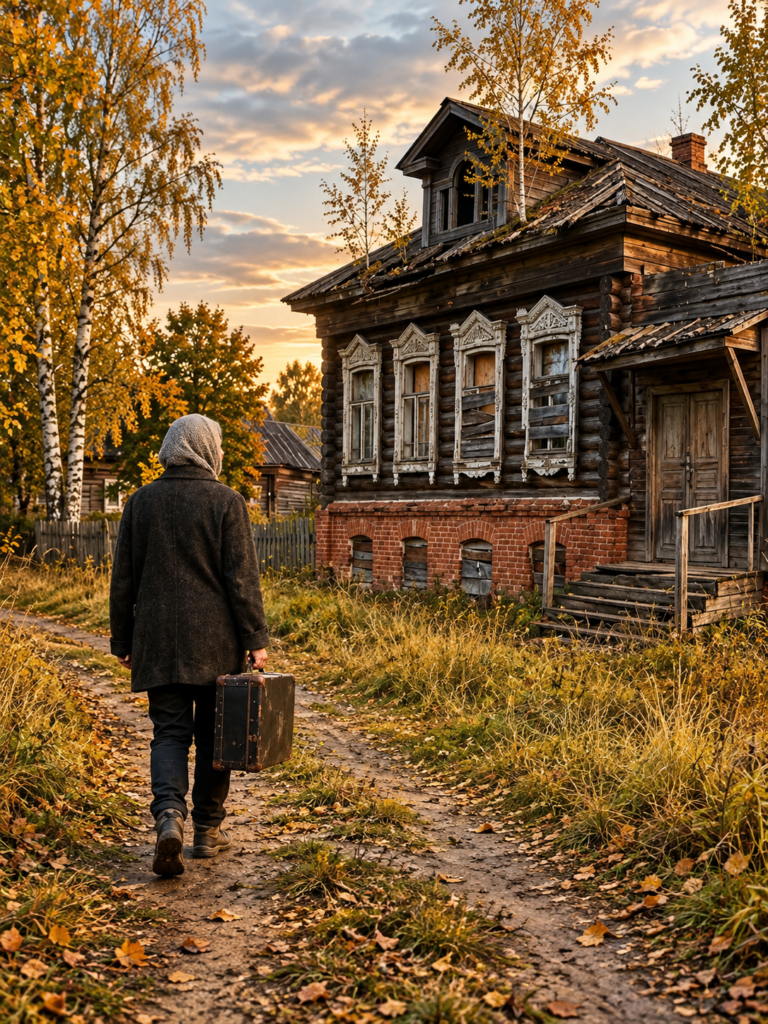
Part 1
The morning Edith Bennett lost her home, her nephew arrived with a removal van and two men wearing navy-blue work jackets.
It was a Thursday in October, and the North Yorkshire coast had disappeared beneath a blanket of grey cloud. Rain had been falling since dawn, and a bitter wind swept through the narrow streets of Brackenwick, carrying the smell of salt water and wet stone.
Edith was standing at her kitchen window, watering a pot of geraniums, when she heard a key turn in the front door.
Her nephew, Paul Foster, came in without knocking.
“Morning, Auntie.”
She smiled automatically.
“You’re early, love. Fancy a cuppa?”
He didn’t answer.
Instead, he stepped aside to let the two removal men enter.
One carried a roll of packing tape. The other was holding a clipboard.
Edith lowered the watering can.
“What’s all this, then?”
Paul shut the door.
“Listen, Auntie. I need you not to make a fuss.”
She looked from him to the men.
“A fuss about what?”
“The flat. We’ve got to clear it today.”
“What on earth are you talking about?”
Paul took a folded document from his jacket.
“The property’s in my name now. You signed it over, remember?”
Edith stared at him.
For a moment, she thought she must have misunderstood.
“What do you mean, signed it over?”
“The transfer papers. Last week. You signed them.”
“Those were for the council tax and sorting out my affairs.”
Paul sighed.
“Well, they weren’t just for that. You signed the property transfer. The flat’s mine now, and I’ve got a buyer interested.”
Edith felt her fingers tighten around the watering can.
“Paul, this is my home.”
“I know, Auntie.”
“Your uncle George and I paid for it.”
“I know.”
“We worked for years—”
“Look, I haven’t got all morning.”
The first removal man shifted awkwardly beside the door.
Edith Bennett was sixty-six years old.
She had spent forty years working as a technical draughtswoman, preparing plans for roads, bridges and public buildings. Her late husband, George, had been a building foreman who could look at a wall and tell whether it was straight before anyone brought out a spirit level.
They had never been wealthy, but they had been careful.
They owned their modest two-bedroom flat outright and had a little cottage in the Yorkshire Dales where they spent their summers.
George had died five years earlier.
Since then, Edith had lived quietly on her pension, tending her plants, visiting the library and occasionally taking the bus to the cottage.
She had no children.
Paul was the son of her younger sister, Rose, who had died nine years earlier.
After Rose’s death, Paul had become the closest family Edith had left.
He came round regularly, fixed leaking taps, drove her to the cottage when the weather improved, and sometimes brought fish and chips on a Friday evening.
He called her Auntie Edie.
When her boiler broke, he found someone to repair it.
When she had trouble understanding a letter from the bank, he explained it.
She trusted him.
And he knew she did.
A week earlier, Paul had arrived with a packet of chocolate digestives and a blue folder.
“Just getting your paperwork sorted,” he’d told her, settling into George’s old chair at the kitchen table.
“There’s a way to simplify everything. Council tax, property arrangements, bank access if you ever get poorly. Saves a lot of trouble later.”
There had been several documents.
Edith’s reading glasses were somewhere upstairs.
Paul offered to read the paperwork aloud.
“Honestly, Auntie, it’s the usual legal stuff. Here, sign by that little mark. And here.”
She had signed six times.
She remembered that now.
She remembered his hand resting on the papers, covering some of the smaller print.
She remembered how pleased he had looked when she finished.
And now those signatures were being used to take everything away.
“What about the cottage?” Edith asked.
Paul glanced towards the removal men.
“That’s included.”
She felt the blood drain from her face.
“And the savings?”
He avoided her eyes.
“I’ve moved the money. You gave me authority to deal with the accounts.”
“That was George’s money too.”
“I had debts, Auntie. Serious debts. The mortgage payments were getting out of hand.”
“So you took our savings?”
“I didn’t take anything illegally. You signed the forms.”
The words hung between them.
One of the removal men began taking books from the sitting-room shelves.
The other unplugged the television.
Edith watched them carry out George’s armchair.
It was a brown leather recliner, badly worn on the right arm where he used to rest his elbow while watching football.
Next came the old sideboard.
Then the grandfather clock that had belonged to George’s parents.
Finally, they brought out the bedroom wardrobe.
As the wardrobe passed through the hallway, Edith noticed a faded piece of masking tape stuck to the side.
Six feet high. Three feet wide. Twenty-two inches deep.
George had written those measurements himself when they moved into the flat twelve years earlier.
She could still picture him standing there, tape measure in hand, pencil tucked behind his ear.
“Always measure twice, Edie,” he’d said. “The doorframe won’t get any wider just because you’re optimistic.”
Now the wardrobe was being carried down the stairs.
Edith followed it without quite knowing why.
Outside, the rain had stopped.
The pavement was wet, and the removal van stood with its rear doors open.
Two women from the neighbouring flats were watching from a bench near the entrance.
Mrs Henderson from the first floor suddenly became very interested in her handbag.
Her friend looked the other way.
Paul came down carrying two bags.
One was a large checked holdall containing Edith’s winter coat, cardigans and shoes.
The other held her papers, medication and a few personal belongings.
On top lay George’s old steel tape measure in its worn leather case.
Edith picked it up.
She rubbed her thumb over the cracked leather.
“Paul,” she said, “I was like a mother to you.”
He looked irritated.
“Auntie, please don’t start.”
“After your mum died, I did everything I could for you.”
“And I’m grateful.”
“This is how you thank me?”
His expression hardened.
“You signed it yourself. I haven’t stolen anything.”
Then he held out his hand.
“I’ll need your key.”
Edith stared at the key on her ring.
It was an ordinary brass key, polished smooth after twelve years of daily use.
She removed it slowly.
And placed it in his palm.
By lunchtime, she was standing outside the building with two bags at her feet.
The removal van drove away.
Paul followed in his car.
Neither came back.
Mrs Henderson finally approached.
“Oh, Edith. What a dreadful business.”
Edith said nothing.
“You really should have read those papers, love.”
That was the first thing anyone said to her.
Not whether she had somewhere to go.
Not whether she needed help.
Only that she should have known better.
Edith was sixty-six, with just under £30 in her purse.
Her pension came to roughly £900 a month, and the next payment was still nine days away.
The savings she and George had built over decades were gone.
So was their cottage.
And she no longer had a front door of her own.
Her old colleague, Jean Atkinson, took her in that afternoon.
Jean had worked at the next drafting table for nearly twenty years before they both retired.
She lived in a modest terraced house with her daughter, son-in-law and two grandchildren.
There was no spare bedroom.
They set up a camp bed in the hallway, between the coat rack and a child’s bicycle.
“Stay as long as you need, Edie,” Jean said, putting the kettle on.
“I won’t impose for long.”
“You’re not imposing.”
But by the third evening, Jean’s son-in-law was banging cupboard doors in the kitchen.
Edith heard him speaking through the thin wall.
“How long is she staying? There’s hardly room to move as it is.”
Jean told him to keep his voice down.
It made no difference.
Edith lay awake that night staring at the bicycle wheel above her head.
She began adding figures in her mind.
Rent for a room.
Council tax.
Electricity.
Food.
Her blood-pressure tablets.
A new pair of winter boots.
Even a cheap room would swallow most of her pension.
A bedsit might be affordable if she could find one, but the thought of spending her remaining years in somebody else’s cramped spare room made her chest ache.
She turned onto her side.
And remembered something she’d overheard weeks earlier at the library.
Two women had been discussing a council scheme for abandoned historic buildings.
Apparently, the council had been offering some derelict properties for a nominal price, provided buyers agreed to restore them.
One woman had laughed.
“They’re practically giving the old places away.”
At the time, Edith hadn’t paid much attention.
Now she lay awake thinking about those words.
Practically giving them away.
What if one of those buildings still had a roof?
What if it had a room she could make habitable?
What if it was the only chance she had of owning a home again?
The next morning, she put on her best coat and walked to the council offices.
The property department occupied the ground floor of a stone building near Brackenwick’s old market square.
Inside, the air smelled faintly of carpet cleaner and reheated tea.
Behind a desk sat a woman in her forties with short dark hair and a grey cardigan.
Her nameplate read:
Claire Whitfield — Property and Heritage Officer.
“Morning. How can I help?”
“I heard the council was selling old houses.”
Claire looked up.
“Historic properties?”
“Yes.”
“Are you representing a development company?”
“No.”
“Have you renovated listed buildings before?”
“I worked in technical drawing for forty years. I know my way around plans.”
Claire folded her hands.
“Right. Well, the properties we’re dealing with aren’t ordinary houses. Most have been empty for years. They’re expensive to repair, and some have serious structural problems.”
“I’m aware of that.”
“Are you?”
Edith met her gaze.
“Perhaps you could show me what’s available.”
Claire opened a thick folder.
“There’s one remaining under our heritage rescue disposal programme. Bellamy House, on the corner of Market Square.”
Edith knew it immediately.
Everybody in Brackenwick knew Bellamy House.
It had stood empty for decades, a once-grand merchant’s residence with boarded windows, carved wooden trim and a balcony that looked as though it belonged in another century.
Schoolchildren called it the haunted house.
Most adults called it an eyesore.
“How much?” Edith asked.
Claire hesitated.
“One pound.”
Edith stared.
“Sorry?”
“One pound. The purchase price is symbolic because the building has substantial liabilities. But the agreement requires the buyer to carry out urgent preservation works within twelve months.”
“What sort of works?”
“Make the roof weather-tight, secure the windows and doors, and preserve the historic frontage. Repairs would need the proper building-control and heritage permissions.”
“And if I couldn’t finish?”
“The council could enforce the conditions and potentially recover the property under the transfer agreement.”
Edith looked down at the photographs.
One showed a collapsed roof.
Another showed rotten floors and an exposed upstairs room.
At the next desk, a young employee glanced over.
“Bellamy House? You’d be better off with a tent.”
Claire gave him a sharp look.
He grinned.
“Honestly, the place is fit for demolition.”
Edith turned towards him.
“I beg your pardon?”
“Nothing personal.”
“I’ve spent forty years preparing drawings for buildings other people said couldn’t be built.”
He stopped smiling.
Claire closed the folder.
“Before we discuss any sale, I’d strongly recommend you view it. And you’ll need an assessment of the unsafe areas.”
“I’d like that.”
Claire took a long black key from a drawer.
“The front door doesn’t close properly. Please be careful.”
Bellamy House stood at the edge of Brackenwick’s market square, a ten-minute walk from the council offices.
The old town had once prospered on shipping, timber imports and coastal trade.
Its narrow streets were lined with brick and stone buildings, and beyond the rooftops Edith could see the grey North Sea.
Bellamy House had been built in 1902 for Arthur Bellamy, a prosperous timber merchant.
The ground floor was pale brick, stained by salt air and decades of neglect.
Above it rose dark timber cladding, decorated with carved bargeboards and elaborate window surrounds.
The upper windows had once been framed in white-painted wood.
Even now, beneath peeling paint, Edith could make out flowers, curling leaves and little sunbursts.
A balcony projected above the entrance.
Its supports were ornate, and the wooden railing was carved in an interlacing pattern of branches.
Remarkably, much of it remained intact.
But half the roof had collapsed.
Broken rafters protruded into the sky.
Rain had soaked the upper floors.
Several windows were boarded over, and weeds grew between the front steps.
Edith stood in the square and studied the house.
Then she opened her handbag.
Inside was George’s tape measure.
She pulled out the steel tape.
It clicked into place just as it always had.
“Well, George,” she murmured, “let’s have a proper look.”
She walked around the exterior first, measuring what she safely could and making notes.
Then she pushed open the front door.
The entrance hall smelled of damp plaster, old wood and stale air.
Pigeons fluttered somewhere overhead.
To the left was a large kitchen with an old cast-iron range set into a brick chimney breast.
The range was rusted and filthy, but most of its structure remained intact.
The ceiling above the kitchen appeared dry.
To the right were two rooms with damaged floorboards and peeling wallpaper.
The staircase was solid oak, though several sections of railing had disappeared.
Edith tested the first few steps, then carefully climbed to the safer part of the upper floor.
Two rooms remained sheltered by the surviving roof.
Each had a tall Victorian fireplace with a green-tiled surround, decorated with delicate white flowers.
She wiped one tile with her handkerchief.
The glaze shone beneath the dirt.
The right side of the floor was exposed to the sky.
She didn’t enter it.
Standing behind the damaged threshold, she could see fallen plaster, rotten boards and broken slates.
It was an appalling amount of work.
Edith took out her notebook anyway.
She recorded room dimensions, window heights, wall thicknesses and the positions of the surviving beams.
By the time she finished, her fingers were numb.
She went onto the balcony, keeping well clear of the damaged sections.
Down below, a woman carrying two shopping bags stopped and looked up.
Edith imagined what she must be thinking.
An elderly woman standing inside a ruin, taking measurements like a surveyor preparing to move in.
Perhaps she looked foolish.
But the brick walls were still standing.
The staircase had survived.
The kitchen had a ceiling.
The balcony was beautiful.
And those green tiles alone deserved better than a demolition skip.
Edith looked towards the sea.
“There’s still a house here,” she said quietly.
The following morning, she returned to Claire Whitfield’s office and placed a pound coin on the desk.
Claire stared at it.
“You’re serious.”
“Quite.”
“Edith, may I call you Edith?”
“Of course.”
“You’re sixty-six. Winter’s coming. That building is not fit to live in.”
“I know.”
“You can’t simply move in and start sleeping there.”
“I understand there are inspections and permissions.”
“And the cost?”
Edith hesitated.
She had almost no money.
She knew perfectly well that the house would require far more than her pension could provide.
But she also knew that turning away meant returning to Jean’s crowded hallway with no other plan.
“I can draw the repairs,” she said. “I can measure. I can clean. And I know which parts need proper tradesmen.”
Claire studied her for a long moment.
Then she opened the transfer paperwork.
“This won’t be easy.”
“No.”
“And nobody can promise you the money will come.”
“I know.”
Claire began explaining the agreement.
Edith interrupted gently.
“Would you mind reading every condition aloud?”
Claire looked surprised.
“Every one?”
“Yes, please. Then I’d like to read them myself.”
They spent nearly an hour on the documents.
Edith checked the details, asked questions and made Claire repeat anything that wasn’t clear.
At last, she took out her glasses.
“I signed something without reading it once,” she explained.
Claire said nothing.
“It cost me everything.”
She picked up the pen.
“I’m not doing that again.”
She signed the necessary documents.
The council’s conveyancing process took care of the formal transfer, and Edith was given the key to begin the permitted preliminary work.
She had purchased Bellamy House for one pound.
It was a ruin.
But it was hers.
Jean thought she’d lost her mind.
“Edie, that place has got rats!”
“I expect it has.”
“And half a roof!”
“That’s true.”
“You can’t live there!”
“Not properly. Not yet.”
Jean stared at her.
“You’re the most stubborn woman I’ve ever met.”
Edith gave a faint smile.
“George used to say that.”
In the end, Jean lent her the camp bed, two blankets, an old electric kettle and a box of kitchen things.
Her son-in-law helped carry everything to Bellamy House.
He said very little.
But when he left, he shook Edith’s hand.
“Hope it works out.”
That first night, Edith stayed in the kitchen despite knowing the building was not yet approved for occupation.
She wore her coat to bed.
There was no electricity.
The kettle was useless.
She ate bread and tinned soup warmed on a small camping stove outside the doorway, then sat beside a battery lantern listening to the wind shake the loose roof slates.
Mice scratched behind the walls.
Somewhere upstairs, rain dripped steadily into the exposed rooms.
She slept badly.
At dawn, she lay staring at the cracked ceiling.
For a moment, she wondered whether she had made the worst decision of her life.
Then she remembered Paul holding out his hand for her flat key.
She got up.
In the corner of the kitchen, she found an old broom.
By lunchtime, the floor was swept.
The windows had been wiped.
Three black bin bags were filled with rubbish.
She carried them outside one at a time.
Then she sat on the front step, rubbing her aching back.
Three bags a day, she decided.
No more.
There was no sense in putting herself in hospital before she’d even started.
Over the following week, people began to notice her.
A man walking a terrier stopped outside.
“Are you working for the council?”
“No. I’m the owner.”
He looked at the broken roof.
“Good Lord. Rather you than me.”
Two women outside the corner shop spoke loudly as Edith passed.
“That’s the one whose nephew turned her out.”
“Imagine signing your house away like that.”
“She ought to have known better.”
“She’ll be gone before the first frost.”
Edith said nothing.
But the last sentence stayed with her.
Before the first frost.
On the ninth day, a boy appeared on the front steps.
He was fourteen, with untidy brown hair, a school blazer and headphones hanging around his neck.
“My nan said I should ask whether you need a hand.”
Edith looked at him.
“What’s your name?”
“Ben.”
“Who’s your nan?”
“Mavis Clarke. She lives on Harbour Lane. Green front door.”
“I know the house.”
He nodded towards the rubbish bags.
“Need those shifting?”
“Can you manage them?”
“Course.”
“Right, then. Gloves are by the door.”
Ben worked until nearly dark.
Edith made beans on toast using a portable stove in the sheltered yard.
He ate two portions.
“Why’ve you bought this place?” he asked.
“Because I needed somewhere to live.”
“Didn’t you have a house before?”
“Yes.”
“What happened?”
Edith stirred her tea.
“I trusted somebody I shouldn’t have.”
Ben considered that.
Then he shrugged.
“My nan says people can be rotten.”
“Your nan sounds sensible.”
“She usually is.”
He came back the following afternoon.
And the next.
Soon, Ben was helping her clear smaller rooms after school.
His grandmother sent sandwiches, homemade scones and occasionally a flask of soup.
In the evenings, Edith spread an old roll of lining paper across the kitchen table and drew plans of the house.
She used George’s tape measure, a pencil and an old ruler borrowed from Jean.
First the ground floor.
Then the upper floor.
Then the roof structure as she believed it had originally been built.
Along one edge, she wrote two lists.
Things she could manage herself.
Things she couldn’t.
The first list included cleaning, measuring, sorting, washing and drawing.
The second was much longer.
Roofing.
Structural timbers.
Windows.
Chimneys.
Electrical wiring.
Floors.
Heating.
Edith stared at the page.
Every major repair required money and skilled labour.
She had almost neither.
But she kept drawing.
The first hard frost arrived near the end of October.
By evening, the paving stones in Market Square shone with ice.
Edith had spent the afternoon covering broken windows with temporary sheeting.
Now the kitchen was so cold that she could see her breath.
She decided to light the old range.
She placed a few pieces of dry wood inside, added kindling and struck a match.
At first, the fire burned.
Then smoke began rolling out into the kitchen.
It came through gaps around the doors and from the old flue.
Within minutes, Edith was coughing.
Her eyes streamed.
She opened the outside door and stumbled into the cold air.
The fire died.
That night, the temperature fell below freezing.
Edith slept in her coat, hat and thick socks, wrapped in both blankets.
By morning, her hands were stiff and her head ached.
Ben arrived on his way to school.
He found her sitting on the camp bed, shivering.
“Mrs Bennett?”
She looked up.
“You look awful.”
“The range won’t draw.”
He saw the soot around the stove.
Then he looked at the blankets and the unheated room.
“You slept in here?”
Edith nodded.
Ben didn’t say anything else.
He turned and ran.
For a moment, Edith thought she’d frightened him away for good.
Forty minutes later, he returned with his grandmother.
Mavis Clarke was a short, sturdy woman in a thick purple coat, carrying a thermos and a paper bag.
“Right,” she said, stepping into the kitchen. “First things first.”
She put two warm cheese scones into Edith’s hands.
“Eat those.”
Edith obeyed.
Mavis inspected the old range, then shook her head.
“This needs Graham Pritchard.”
“Who’s that?”
“Chimney and stove man. Knows every old fireplace from here to Scarborough. Miserable old sod, but he’s good.”
“Will he come?”
“He will if I ask him.”
Graham arrived the following afternoon.
He was broad-shouldered, about fifty, with grey stubble and a heavy toolbox.
He examined the range and chimney, then spent a long time checking the flue.
At last he returned, covered in soot.
“Blocked chimney,” he announced. “Fallen brick, old bird nesting, and a damper that’s seized solid.”
“Can it be fixed?”
“Yes. It needs cleaning, rebuilding in places and a proper safety check.”
“How much will it cost?”
Graham looked at the camp bed.
Then at the two travel bags in the corner.
Then at Edith.
“I can use some of the old brick from the house. I’ve got suitable materials left from another job.”
“And the labour?”
He scratched his chin.
“Buy me a decent Sunday roast when you’ve got a proper kitchen.”
For two days, Graham worked on the range and chimney.
Edith carried small materials to him.
He complained that she was getting under his feet.
Then he began asking her to fetch particular bricks and tools.
When the repairs and safety checks were complete, he lit a small fire.
The chimney drew properly.
Smoke travelled upwards.
Slowly, warmth spread through the kitchen.
Edith took off her coat.
Then she rested her palms near the warm iron range.
And began to cry.
She hadn’t cried when Paul took the flat.
She hadn’t cried when the neighbours looked away.
She hadn’t cried on Jean’s camp bed.
But now, standing in a kitchen that was finally warm, the tears came.
Graham packed his tools and pretended not to notice.
Before leaving, he examined the green-tiled fireplaces upstairs.
He carefully removed a loose decorative tile and turned it over.
Pressed into the clay was a maker’s mark.
Two birds inside a circle.
Beneath them was the year 1902.
“Yorkshire pottery,” Graham said. “Very fine work. You’d see things like this in a heritage museum.”
He returned the tile.
“Look after those, Mrs Bennett. They don’t make them like that any more.”
Edith touched the green glaze.
For the first time, she began to think Bellamy House might be more than a roof she desperately needed.
It might be something worth saving for other people too.
By November, Claire had helped arrange a safe temporary electrical supply for the work area and had persuaded Edith to accept emergency accommodation while the building remained unsafe to occupy.
Edith spent her days at Bellamy House and her nights in a modest room arranged through the council.
She hated leaving the building.
But she understood that dying of cold in the kitchen wouldn’t help anybody.
Ben came after school.
Mavis brought food.
Graham occasionally returned to check the range.
Slowly, the safer rooms began to change.
Edith cleaned the green tiles until their flowers shone again.
Ben brought two school friends to help carry rubbish.
Mavis sent old curtains to hang over the draughty windows.
People continued passing through the square.
Some stopped to watch.
Others still shook their heads.
In December, heavy snow blew in from the moors and settled across the town.
The damaged upper floor began taking on water and snow through the missing roof.
One morning, Edith stood at the entrance to the unsafe section, studying the sagging timbers.
Ben pointed towards an elderly man standing beside the railings outside.
“That’s Albert Marsh,” he whispered. “Everyone calls him Alf.”
“Who’s he?”
“Used to be a carpenter. My nan says he can make anything out of wood, but he shouts at everybody.”
Alf was tall and stooped, with thick grey eyebrows and large hands.
He wore an old waxed jacket and a flat cap pulled low over his forehead.
He studied the roof for several minutes.
Then he called out.
“You’re not planning to stand on those rotten joists, are you?”
Edith leaned out of the safer upstairs window.
“No.”
“Good. Because they’ll go straight through.”
“Would you like to come and have a proper look?”
Alf scowled.
“I’ve seen enough of that place.”
“Then why are you standing there?”
He glared at her.
And walked away.
Ben sighed.
“Well, that’s him offended.”
But the next morning, Alf returned.
He arrived in an old pickup with a neighbour, several lengths of timber, and a folded tarpaulin.
“I’ve avoided this house for forty years,” he announced.
“Why?”
“Because it’s falling to bits.”
“Then why’ve you brought all that wood?”
“Because if the rest of it comes down on your head, I’ll have to go to your funeral. And I’ve got better things to do.”
He and his neighbour began installing temporary weather protection and supports, keeping everyone away from the weakened floor.
Alf worked with the certainty of a man who had spent his entire life listening to timber.
Ben was allowed to hand him tools.
Edith made tea.
At lunchtime, she served him a bowl of vegetable stew.
“Needs salt,” Alf grumbled.
Then he asked for seconds.
After two days, the exposed roof section was protected from the worst of the weather.
Alf stayed to examine the floors in the sheltered upstairs rooms.
Near the far green-tiled fireplace, he tapped the boards with his heel.
One section gave a hollow sound.
“Hear that?”
Edith nodded.
“Could be a rotten joist,” Alf said.
He knelt to examine it.
Edith studied the floorboards beside him.
Most ran the full length of the room.
They were old, even and fixed with square-cut nails.
Except for one.
A board beside the fireplace was almost two feet shorter than the others.
And its nails were different.
Round wire nails.
Edith pointed to them.
“This was put down later.”
Alf leaned closer.
“You’re right.”
He fetched a pry bar and carefully lifted the board.
Beneath it was a narrow cavity between two sound joists.
There was no rotten timber.
But something else lay in the darkness.
A flat rectangular bundle wrapped in black oilcloth.
Tied with string.
Edith reached inside and lifted it out.
The bundle was surprisingly light.
Through the stiff wrapping, she could feel the edges of a small metal box.
Alf shone his torch over it.
For a long moment, neither spoke.
Somebody had hidden this object deliberately.
And for nearly a century, it had remained beneath the floor of a house everyone had given up on.
Edith held the bundle against her chest.
“Let’s take it downstairs,” she said.
They carried it to the kitchen.
And placed it on the table beneath the light, beside the drawings Edith had made of Bellamy House.
Part 2
Alf Marsh removed his flat cap before Edith opened the box.
She noticed because he’d never taken it off in her presence, not even when drinking tea beside the warm kitchen range.
The string had become brittle with age. It crumbled as Edith untied it.
She peeled back the oilcloth and uncovered an old rectangular tea tin.
The lid was decorated with a faded picture of a sailing ship, beneath which were the words Finest Indian Tea.
One edge had rusted.
Edith slipped a kitchen knife beneath it and gently lifted.
Inside were papers.
No gold sovereigns.
No jewellery.
No bundles of banknotes.
Only papers, folded carefully and stacked inside.
At the top lay a cream-coloured envelope.
Written across it in faded ink were the words:
For my dear Kitty, if this should ever reach her.
Below was a small notebook with a dark cloth cover.
Edith opened it.
Inventory of Bellamy House, Market Square, Brackenwick. 1902.
Its pages contained neat columns of measurements and descriptions.
Beneath the notebook lay several folded sheets of thick drawing paper.
Edith unfolded the first.
It showed the elaborate woodwork surrounding an upstairs window.
At the top was a sunburst.
Below it, two branches curved towards one another, with carved leaves and flowers arranged between them.
Every detail had been measured.
Every line was carefully drawn.
In the bottom corner was a signature.
Carved by Samuel Marsh, 1902.
Alf stopped breathing for a moment.
“What did you say?”
Edith looked up.
“Samuel Marsh.”
He leaned forward.
“Let me see.”
She turned the drawing towards him.
Alf stared at the signature.
“That was my great-grandfather.”
His voice sounded different.
Quieter.
“My dad used to tell me about him. Said he did the fancy woodwork on all the grand houses round here.”
He studied the flourishes of the signature.
“We’ve still got his old carving tools in the shed.”
He reached towards the drawing but didn’t quite touch it.
“I thought they were just family stories.”
For several minutes, he sat studying the paper.
Then Edith picked up the envelope.
The flap wasn’t sealed.
Inside were two handwritten sheets, dated October 1931.
The letter was from Florence Bellamy, wife of Arthur Bellamy, the timber merchant who had built the house.
It was addressed to their daughter, Katherine, whom Florence called Kitty.
Edith put on her glasses and began to read aloud.
The Great Depression had devastated the Bellamy family’s business.
Ships no longer brought timber into Brackenwick as they once had. Orders had dried up. Creditors were demanding payment.
Arthur had tried to keep the business afloat, borrowing against the house.
When the debts became impossible, the bank began repossession proceedings.
Arthur had gone south looking for work, leaving Florence to deal with the final notices.
The house was being taken.
Florence had been told to leave before November.
She intended to stay with her sister in a village outside York.
Kitty was training to become a schoolteacher and was not to abandon her studies to come home.
Then came the reason for the hidden box.
Florence had placed the inventory and the carpenter’s original drawings beneath the floorboard beside the green fireplace.
She wanted her daughter to know what the family had built.
She wanted somebody, someday, to have the information needed to restore it.
And she begged Kitty not to let bitterness consume her.
The people who had turned away during the family’s troubles were frightened of losing their own livelihoods.
The house was not to blame.
Nor was the town itself.
At the bottom of the letter was a small postscript.
Your balcony is still standing, my darling. I asked them not to pull it down.
Edith lowered the paper.
Alf turned towards the window.
For a while, neither spoke.
Then Edith said quietly, “She was turned out too.”
Alf nodded.
“Plenty were, in those days.”
“She had a home. A family. Everything she knew.”
“Yes.”
“And somebody came and told her it didn’t belong to her any more.”
Edith looked at the envelope.
The words were nearly a hundred years old.
But they could have been written about that October morning when Paul brought the removal van.
She folded the letter carefully.
“Well,” she said, “at least we know why somebody hid this.”
Alf looked at the drawings again.
“Better than that.”
“What?”
He pointed to the original measurements.
“Now we know how to put the bloody house back together.”
Edith spent most of that night reading Arthur Bellamy’s inventory.
The merchant had recorded everything.
The dimensions of each room.
The ceiling heights.
The size of the timber beams.
The positions of the fireplaces.
The original window designs.
The construction of the balcony.
Edith placed her own drawings beside the notebook.
She checked the measurements one by one.
Most matched almost exactly.
In places where the house had been altered, the old inventory explained what had changed.
At two in the morning, Edith was still working.
She had forgotten the cold.
Forgotten the aching in her back.
Forgotten, for a little while, that she was sleeping somewhere else because her own house remained unfit to occupy.
The building had given her something she hadn’t expected.
Not money.
Not an answer to Paul’s betrayal.
But a way forward.
Two days later, Ben brought a woman from the local heritage centre.
Her name was Dr Helen Vale, a historian who had spent more than twenty years researching Brackenwick’s maritime and architectural history.
Helen arrived carrying cotton gloves, a magnifying glass and a notebook.
She examined the papers carefully.
She compared the handwriting with old municipal records, studied the ink, and checked the tile maker’s mark against the inventory.
Then she opened the drawing signed by Samuel Marsh.
“We’ve got a contractor’s receipt in the archive with his signature,” she said. “I’d need a full examination to authenticate everything, but this looks extremely promising.”
Ben was sitting on the windowsill.
“Are they worth anything?”
Helen smiled.
“Historically? Quite a lot.”
“I mean money.”
She considered the question.
“A specialist collector might offer somewhere around ten thousand pounds for a complete set like this, perhaps more with proper provenance. That’s only a rough estimate.”
Ben let out a whistle.
“Ten grand?”
Edith stared at the tin box.
Ten thousand pounds could solve a great many problems.
It could pay for timber.
Roofing materials.
Windows.
Repairs she had barely dared to calculate.
But the drawings belonged with the house.
If she sold them, the original patterns might disappear into a private collection.
“I’m not selling them,” she said.
Ben turned towards her.
“Mrs Bennett, are you mad?”
“Probably. But I’m keeping them.”
Helen didn’t argue.
Edith touched the letter.
“And this wasn’t written to me.”
“No,” Helen agreed.
“It was written to Kitty.”
“Katherine Bellamy.”
“Can we find out what happened to her?”
Helen nodded thoughtfully.
“Possibly. School records, census returns, marriage certificates. There may be a trail.”
“Please try.”
“Nearly a century has passed.”
“I know.”
Edith returned the papers to the tin.
“Someone kept them safe all that time. I think we can make the effort.”
By February, Alf had full-size copies of Samuel Marsh’s drawings pinned to the wall of his workshop.
His great-grandfather’s tools hung above the bench.
There were gouges, chisels and a small carving axe with a dark wooden handle.
Alf had kept them for years without knowing exactly what work they had once produced.
Now he could look at the drawings and see his family’s history in every line.
Five upstairs window surrounds had rotted beyond repair.
He began carving replacements.
When Edith asked what she owed him, he grunted.
“Nothing.”
“Alf, I can’t expect you to work for free.”
“It’s my great-grandfather’s work.”
“That’s not the point.”
“It is to me.”
He arranged for suitable timber through contacts at a local sawmill.
Ben started spending afternoons in the workshop.
At first, he swept the floor.
Then Alf gave him a piece of limewood and a small carving tool.
“Make that leaf.”
Ben tried.
Alf examined it.
“Again.”
The second attempt wasn’t much better.
“Again.”
By the end of the afternoon, Ben had carved twenty leaves.
His fingers ached.
But Alf finally picked one up and nodded.
“Better. You’ve got a light touch. Just need patience.”
Ben repeated those words to Edith three times that evening.
She smiled.
For a boy who had begun by carrying rubbish bags, learning a disappearing craft was quite an achievement.
And for Alf, who had avoided Bellamy House for forty years, the work had become something more than a favour.
It was a conversation with his great-grandfather.
By March, rumours about the hidden box had spread throughout Brackenwick.
Some said Edith had found buried treasure.
Others claimed she’d discovered a secret fortune.
People began stopping outside more often.
The first unexpected visitor was one of the women from the corner shop.
She arrived carrying two old window frames.
“These have been in our shed for years,” she said. “Thought you might want them.”
Edith took out George’s tape measure.
She measured both.
“They’ll fit the downstairs room.”
The woman looked relieved.
Then she hesitated.
“I said some things about you last autumn.”
Edith remembered.
“Yes.”
“Well, I shouldn’t have.”
Edith looked at the old frames.
“Thank you for bringing these.”
The woman nodded and left quickly.
Other people followed.
A retired builder donated reclaimed bricks.
A neighbour brought tins of white paint.
The secondary school’s design-and-technology teacher organised supervised volunteer sessions for older pupils.
And one Saturday morning, Owen, the young council employee who had laughed at Edith, arrived carrying a drill and a toolbox.
“I used to work in construction,” he said awkwardly. “Claire mentioned you needed some help with the framing.”
Edith studied him.
“Do you know what you’re doing?”
“Yes.”
“Right, then. Come in.”
That evening, while drinking tea, Owen looked embarrassed.
“I was rude to you back in October.”
“You were.”
“Sorry.”
Edith stirred her tea.
“Well, you’re here now.”
He looked up.
“That’s better than standing around making jokes.”
In April, Claire Whitfield arrived with a folder and an unusually broad smile.
“The roofing materials,” she announced.
Edith looked up from her plans.
“What about them?”
“We’ve got the funding.”
Claire explained that a regional heritage repair scheme had approved support for the roof.
Enough appropriate metal roofing could be supplied to cover the building.
Alf had arranged discounted structural timber.
And residents had quietly started raising money towards the remaining costs.
Across the square, the corner shop had placed a wooden collection box beside the till.
A handwritten sign hung above it.
Help Save Bellamy House — Every Pound Helps.
Edith stood looking at the shop through the kitchen window.
She hadn’t known.
For months, she’d been counting every pound she spent.
Now other people were contributing their own money to a house most of them had once dismissed as worthless.
She couldn’t find anything to say.
Claire stood beside her.
“People want to see it finished, Edith.”
Edith swallowed.
“So do I.”
At the end of April, Edith became ill.
Her blood pressure rose sharply overnight, and by morning she was weak and dizzy.
Ben found her sitting on the camp bed, pale and sweating.
He called an ambulance.
At hospital, the doctor told her she had been pushing herself too hard.
“No more carrying timber, climbing ladders or hauling rubbish.”
“But there’s still so much—”
“Mrs Bennett, somebody else can carry a bag of plaster. They can’t replace you.”
Edith fell silent.
For the next two weeks, Jean and Mavis visited her regularly.
They brought soup, tea and news of the building work.
When Edith was well enough to return to the site, Alf placed a folding chair in a safe upstairs room.
He put her drawings on a table beside it.
“Your new job,” he announced.
“What job?”
“Supervisor.”
Edith raised an eyebrow.
“You expect me just to sit here?”
“Exactly. And tell us when we’ve got something wrong.”
That afternoon, the men positioned the first roof frame.
Edith examined the angle.
“Too steep.”
Alf looked up.
“What?”
“Three degrees too steep.”
He checked the measurement.
Then swore softly.
“She’s right.”
The workers corrected it.
Alf looked at Edith.
“Not bad for someone sitting down.”
She smiled.
For the first time, she understood that she didn’t need to carry every brick herself.
Her knowledge mattered.
And there were people willing to do the lifting.
In early June, Brackenwick organised a community repair weekend.
Alf called it a proper old-fashioned working bee.
Claire posted a notice on the council website.
Helen told the heritage society.
Mavis spoke to people at church.
The schoolteacher brought volunteers.
On Saturday morning, twenty-six people arrived.
Some carried tools.
Others brought food.
A few simply asked what needed doing.
Experienced tradesmen handled the structural work while the other volunteers cleared the yard, sorted timber and prepared materials.
Graham arrived with his two brothers.
Owen brought three friends.
Alf directed the work, his flat cap pushed back on his head.
Jean and Mavis organised lunch.
There were sandwiches, sausage rolls, soup, homemade cakes and enormous flasks of tea.
The local bakery donated bread.
Even Jean’s son-in-law turned up carrying a box of nails.
Edith stood near the kitchen doorway, watching people move in and out.
A year earlier, she had struggled to imagine anyone helping her.
Now there were more people than she had chairs for.
At lunchtime, everyone sat in the yard.
Alf tasted the soup.
“That’s better. You’ve finally learned how to season it.”
Edith pointed her spoon at him.
“Careful, Alf. I know where all your tools are.”
Laughter spread across the yard.
The work continued over the following weekends.
New rafters rose above the damaged half of the house.
Roof boarding followed.
Then the underlay and metal roofing.
By mid-June, the final section was ready.
On a Thursday evening, the roofing team secured the last panel.
Alf stood in the square, looking up.
“That’s it, Edie.”
She stepped beside him.
“The whole roof?”
“The whole roof.”
Edith stared.
The silver-grey roof stretched from end to end, complete and shining in the evening light.
She reached into her pocket.
George’s tape measure was there.
She held it in her hand.
For a moment, she could almost hear him speaking.
Measure twice, Edie.
She looked at Alf.
“It’s beautiful.”
He nodded.
“Not bad for a pound.”
In July, a regional newspaper sent a reporter to Brackenwick.
Helen had told the editor about the hidden documents and the restoration.
The reporter took photographs of the roof, the balcony and the carved window surrounds.
Then she interviewed Edith.
“Why did you buy the house?”
“Because I needed somewhere to live.”
“For one pound?”
“Yes.”
“Didn’t you realise how much it would cost to repair?”
“Of course.”
“Then why take the risk?”
Edith thought for a moment.
“Because I didn’t have much left to lose.”
The reporter asked about the historical documents.
“Why didn’t you sell them?”
Edith looked towards Alf, who was working on a carved panel.
“Because they belong with the house.”
The article appeared online three days later.
Pensioner Buys Derelict Edwardian House for £1 — Then Restores It With the Help of an Entire Town.
The story spread across Yorkshire and beyond.
Ben delighted in reading the comments on his phone.
“Listen to this, Mrs Bennett. Somebody says you should be on television.”
“No, thank you.”
“Someone else says they don’t believe the pound bit.”
“They can come and see Claire.”
“And somebody says their family did something similar to them.”
Edith’s expression changed.
“That’s enough comments for today, Ben.”
A week later, a silver car with dark-tinted windows stopped outside Bellamy House.
Paul stepped out.
Behind him came a man in a smart jacket, carrying a leather folder.
Edith saw them from upstairs.
She was standing beside Alf, discussing which balcony posts needed replacing.
He noticed her face change.
“Who’s that?”
“My nephew.”
“The one who took your flat?”
“Yes.”
Alf put down his chisel.
“Right.”
Paul walked up the steps with a wide smile.
“Auntie Edie! Look at this place!”
Edith came downstairs.
He was already inspecting the kitchen, glancing at the repaired walls and the cleaned range.
“I saw you in the papers. Couldn’t believe it. You’ve done brilliantly.”
She said nothing.
He gestured towards his companion.
“This is Richard Hale. He develops holiday lets around the North Yorkshire coast.”
Richard smiled politely.
“Lovely to meet you, Mrs Bennett. It’s a remarkable building.”
Paul continued.
“Richard’s interested in buying the property. A historic house like this, near the sea? Tourists would pay a fortune to stay here.”
Edith looked at her nephew.
“The house isn’t for sale.”
Paul laughed.
“Now, Auntie. Just hear me out.”
He explained his plan.
Edith would transfer the property to him.
Richard would buy it.
Paul would arrange a comfortable one-bedroom flat for Edith and pay the rent for several years.
He would even send her money every month.
“You’ve got to be sensible,” Paul said. “You’re nearly sixty-seven. You can’t maintain a great big place like this forever.”
Edith folded her hands.
“You found me somewhere to live last October.”
Paul frowned.
“What?”
“A camp bed in Jean’s hallway. Three nights.”
He sighed.
“Don’t start that again. I told you I was under pressure.”
“You had a mortgage.”
“Exactly.”
“And you paid it with my home.”
Paul glanced at Richard.
“Can we focus on the opportunity here?”
Edith looked around the kitchen.
“This house cost a pound. But the roof cost money. The woodwork took months. People gave their time, their materials, their savings.”
“And that’s lovely. But now you can make a profit.”
“No, Paul.”
He opened his folder.
“Look, I’ve had the paperwork prepared. We can transfer it into my name first, then sort the sale. It’s straightforward.”
He produced a blue ballpoint pen.
“Sign here. And here.”
Edith stared at it.
It looked just like the pen he’d put in her hand the previous October.
She felt a familiar tightening in her stomach.
Then she reached for her glasses.
“Give me the papers.”
Paul smiled.
“Good.”
She began reading.
Slowly.
Every line.
Paul shifted from one foot to the other.
Richard looked out of the window.
Alf stood in the doorway with his arms folded.
Ben appeared behind him.
When Edith finished, she placed the documents neatly on the table.
“This is another property transfer, Paul.”
“Yes, but—”
“Another gift of a house to you.”
“It’s just a way to simplify—”
“You’ve even used nearly the same wording.”
Paul fell silent.
Edith pushed the papers back towards him.
“I read things now. Properly.”
He opened his mouth.
She continued.
“You taught me that.”
Richard cleared his throat.
“Paul, you told me your aunt had already agreed.”
“She will.”
“No,” Edith said.
She looked directly at Richard.
“I’m sorry you’ve come all this way, but I’m not selling.”
Richard closed his folder.
“Understood, Mrs Bennett.”
He turned towards Paul.
“I’ll wait in the car.”
When he’d gone, Paul looked around the kitchen.
His gaze moved from Alf to Ben and back to Edith.
“You’ll regret this, Auntie.”
Edith shook her head.
“I’ve spent enough time regretting what happened last year.”
Paul picked up his papers.
Then he left.
The silver car pulled away from the square.
Alf sat heavily on a kitchen chair.
“I’d have liked to give him a piece of my mind.”
“No need,” Edith replied.
“He deserved it.”
“He came for the house. He left without it. That’s enough for today.”
That evening, Jean visited.
She’d already heard what happened.
“Edie, why don’t you take him to court?”
Edith looked into her tea.
She explained that she’d spoken to a solicitor through a local advice service during the winter.
There might be grounds to challenge the original transfers, particularly if she could establish the deception.
But proving what Paul had told her would be difficult.
The paperwork carried her signatures, and she had few witnesses.
Proceedings could be lengthy and expensive, with no guarantee of recovering the properties or the money already spent.
“Maybe you should still try,” Jean said.
“Perhaps.”
Edith looked around the kitchen.
“But I’ve spent this year doing something I wanted to do. I don’t want the rest of it swallowed by Paul.”
Jean said nothing.
She simply reached across the table and squeezed Edith’s hand.
For several nights afterwards, Edith listened for cars stopping outside the house.
She knew Paul well enough to fear he might return.
But he didn’t.
And at the end of August, Helen Vale arrived carrying a thick folder.
She placed it on Edith’s kitchen table.
“I found Kitty,” she said.
Part 3
Helen Vale removed a rubber band from the folder and spread several documents across the kitchen table.
There were copies of birth certificates, school records, marriage entries and an old photograph of a young woman standing outside a teacher-training college.
“Katherine Bellamy finished her training in York in the 1930s,” Helen explained. “She married a man called William Turner and spent most of her working life teaching English.”
Edith studied the photograph.
The woman had dark hair, a serious expression and an old-fashioned coat with a wide collar.
“Did she ever come back?”
“As far as I can establish, no.”
“What happened to her?”
“She died in 1987.”
Edith looked down at the letter lying inside the old tin.
“She never knew it was there.”
“Apparently not.”
Helen turned another page.
“But she had a son. And he had a daughter.”
She pointed to a name.
“Elaine Turner. Sixty-eight years old. A retired librarian living in York.”
Edith looked up.
“She’s still alive?”
“Very much so. I spoke to her last week.”
“What did she say?”
Helen smiled.
“At first she didn’t believe me. Then I described the house.”
“And?”
“She asked whether the balcony was still standing.”
Edith looked towards the staircase.
“What did you tell her?”
“That it was.”
Helen paused.
“She started crying. Then she asked if she could come and see it.”
Elaine Turner arrived in Brackenwick on a Wednesday morning in mid-September.
Edith and Helen met her at the bus station.
A small woman with silver hair stepped off the bus wearing a beige raincoat and carrying a wheeled suitcase.
She looked around uncertainly.
“Mrs Bennett?”
“Edith, please.”
“I’m Elaine.”
They shook hands.
For a moment, neither knew what to say.
“It feels rather strange,” Elaine admitted. “Coming to a town I’ve heard about all my life but never visited.”
“Come and see the house,” Edith said.
They walked through the town together.
Past the old church.
Past the stone buildings on the high street.
Past the shops and narrow lanes that led down towards the harbour.
When they reached Market Square, Elaine stopped.
Across the road stood Bellamy House.
Its silver-grey roof was complete.
The upstairs window surrounds were being restored.
The balcony railing had been removed temporarily while Alf and his helpers repaired the carved posts.
Elaine stared.
“My grandmother used to tell me about this place.”
She looked at the balcony.
“She said her father had it built so she could watch the market stalls being set up.”
Edith waited.
“She told me about the green fireplaces too. With white flowers.”
Her voice trembled.
“I thought she’d made it sound grander than it really was.”
“It was a grand house,” Edith replied.
Elaine nodded slowly.
“Yes. I can see that now.”
On the porch, Alf removed his cap.
Edith introduced him.
“His great-grandfather carved much of the original woodwork.”
Elaine looked at the partly restored railing.
“And you’re doing it again?”
“Trying to,” Alf said.
She touched one of the carved posts.
“Thank you.”
Alf looked embarrassed.
“Still a bit to finish.”
Upstairs, Edith led Elaine into the room with the green-tiled fireplace.
The tiles had been cleaned until the flowers shone beneath the window light.
Edith pointed to the shorter floorboard.
“That’s where we found the box.”
Elaine knelt carefully.
She rested one hand on the old wood.
Then Edith took out the envelope.
“I believe this belongs to you.”
Elaine accepted it with both hands.
She looked at the writing.
For my dear Kitty, if this should ever reach her.
Her eyes filled.
She unfolded the letter and began reading.
Edith moved towards the window, giving her privacy.
For several minutes, the room was quiet.
At last Elaine spoke.
“My grandmother used to say something.”
Edith turned.
“She said you mustn’t let the people who hurt you decide what sort of person you become.”
Elaine looked at the letter.
“I thought those were her own words.”
She swallowed.
“But her mother was trying to teach her the same thing.”
Edith sat beside her.
“Perhaps she listened.”
“I think she did.”
Elaine looked around the restored room.
“Grandmother always said the house had been lost. She never knew anyone might save it.”
Edith smiled faintly.
“Neither did I, at first.”
That evening, Elaine joined Edith, Helen, Alf and Ben for tea in the kitchen.
She agreed to let the historical documents be cared for by the local heritage centre, with copies displayed inside the house.
But she took Florence’s letter home.
It had been written to her grandmother.
She wanted to keep it with the family.
Before leaving the following morning, Elaine asked to stand near the balcony doorway.
The railing was still being repaired, so Alf stayed beside her.
She looked out over Market Square.
There were cars where the old market stalls had once stood.
A delivery van was unloading outside the bakery.
Pigeons wandered across the paving stones.
Elaine rested a hand on the doorframe.
Then she quietly repeated the final line of Florence’s letter.
“The balcony is still standing, my darling.”
She turned to Edith.
“My great-grandmother hoped somebody would come back and restore this house.”
Edith looked around.
“Well, we did our best.”
Elaine shook her head.
“No. You did what our family never managed to do.”
She hugged Edith.
“Thank you.”
Less than a month remained before the final council inspection.
Through September and into October, the sound of hammering filled Market Square.
Alf and his helpers reassembled the balcony.
They preserved the original carved pieces wherever possible and replaced three posts that had rotted beyond repair.
Five new window surrounds were installed upstairs.
Ben had carved several leaves on one of them himself.
Alf inspected the work and left it untouched.
For Ben, that was the finest praise he’d ever received.
“Mrs Bennett,” he asked one afternoon, “can I carve my name on the back?”
Edith looked at him.
“Why?”
“So somebody might find it in another hundred years. Like we found Mr Marsh’s name.”
Edith glanced at Alf.
He shrugged, but she could see he was pleased.
“Go on, then.”
Ben carefully carved his name and the year.
Alf added his own name beside it.
Then he paused.
Beneath both names, he carved one word.
Together.
Graham completed the fireplace and chimney repairs.
One original green tile was missing, so he found a similar period tile to replace it.
Its flower pattern was slightly different.
Edith told him to leave it that way.
“There shouldn’t be any pretending the house was never damaged.”
The windows were glazed.
The brickwork was cleaned.
The exterior woodwork received fresh paint.
And gradually, Bellamy House began resembling the original drawings.
On a Friday in mid-October, one year and three days after Edith had bought it for a pound, the final inspection team arrived.
Claire Whitfield accompanied two officers responsible for checking the restoration conditions.
The older officer stopped in the square.
He looked at the address on his tablet.
Then at the house.
“Are you sure we’ve got the right building?”
Claire smiled.
“Quite sure.”
He glanced down at the photograph taken the previous autumn.
It showed a collapsed roof, boarded windows and a balcony surrounded by broken timber.
Then he looked back at the restored house.
“Good heavens.”
He shook his head.
“I wouldn’t have recognised it.”
The inspection lasted nearly two hours.
The officers examined the roof, windows, doors, exterior repairs and supporting records.
Edith followed with her notebook, answering questions about dimensions and materials.
At last, the senior officer closed his folder.
“The preservation conditions have been fulfilled, Mrs Bennett.”
Edith stared at him.
“All of them?”
“Yes.”
He offered his hand.
“Congratulations.”
She shook it.
Then looked towards the people waiting by the porch.
Alf.
Ben.
Mavis.
Graham.
Claire.
Jean.
And several neighbours who had helped during the year.
“I had a lot of help,” Edith said.
The officer smiled.
“So I can see.”
That evening, Edith switched on every light in the house.
The kitchen glowed warmly.
Then the downstairs rooms.
Then the rooms with the green fireplaces.
Finally, the upstairs room that had once been open to the sky.
Across Market Square, people stopped to admire the building.
Two women stood beside the corner shop.
Edith recognised them immediately.
Mrs Henderson and her friend.
The same women who had looked away while Paul took her furniture.
Mrs Henderson stared up at the balcony.
“Edith? Is that really you?”
Edith smiled.
“It is.”
“Would you look at this place! It’s like something out of a magazine.”
Edith rested her hands on the restored railing.
“Come in for a cuppa, if you like.”
Mrs Henderson hesitated.
Then she took her friend’s arm and walked across the square.
Two weeks after the inspection, there was a quiet knock on Edith’s front door.
It was Thursday evening.
When she opened it, Paul stood alone on the porch.
He wore the same dark jacket he’d worn the previous autumn.
The cuffs were frayed now.
There was no expensive car.
No property developer.
No folder full of documents.
“Hello, Auntie.”
Edith looked at him.
“Hello, Paul.”
“Could I come in?”
She stepped aside.
He sat at the kitchen table.
Edith put the kettle on.
For a long time, Paul stared at his hands.
Then he began speaking.
He had sold the flat and paid off his mortgage.
The cottage had gone too.
The rest of the money was spent.
His wife had left him during the summer.
After the newspaper story, the family had learned what he’d done to Edith.
Several relatives no longer spoke to him.
“I thought everything would be all right,” he muttered.
Edith poured the tea.
“It wasn’t.”
He shook his head.
“No.”
They sat quietly.
Then Paul looked towards the window.
“The house is beautiful.”
“Thank you.”
“Better than the pictures.”
He looked around the kitchen.
“Did you really do all this?”
“Not by myself.”
He gave a small, unhappy laugh.
“That’s the difference, isn’t it? You’ve got people.”
Edith thought of Ben, Alf, Mavis, Jean, Claire and everyone who had come to help.
“Yes,” she said.
“I have.”
Paul noticed George’s tape measure resting on the windowsill.
He picked it up.
“Uncle George’s.”
Edith nodded.
“He used to let me measure things with this when I was little.”
“I remember.”
“I’d pull the tape too far and break the spring.”
“He always managed to mend it.”
Paul turned the leather case over in his hands.
Then he looked at Edith.
“Do you think you’ll ever forgive me?”
She didn’t answer immediately.
She remembered that October morning.
The removal van.
The neighbours looking away.
Her belongings in two bags.
The three nights on Jean’s camp bed.
She remembered the cold kitchen, the broken roof and how frightened she’d been when the range filled the room with smoke.
And she remembered the people who had helped her.
At last she spoke.
“I don’t know, Paul.”
He lowered his eyes.
“Fair enough.”
“Forgiveness doesn’t happen over one cup of tea.”
He nodded.
“And not in one year.”
They sat quietly until the tea had nearly gone cold.
Then Edith looked towards the front porch.
“The steps will need painting again in spring.”
Paul looked up.
“What?”
“The steps. And some of the railing.”
She paused.
“Alf can’t do everything on his own. He’s getting older.”
Paul waited.
“If you’ve got the hands for it, you can come and help.”
He stared at her.
“You’d let me?”
“Yes.”
He swallowed.
“After everything?”
Edith looked directly at him.
“But don’t come expecting forgiveness.”
She put down her cup.
“Come to paint.”
Paul remained sitting for another moment.
Then he stood.
At the doorway, he pulled up his jacket zip.
“I’ll come.”
Edith watched him walk away.
She didn’t know whether he would keep his word.
And she decided not to spend the evening wondering.
When he had gone, she climbed the staircase and stepped onto the balcony.
The October air was cold.
Below, the market square glistened after the rain.
Streetlights were coming on, and the sea beyond the rooftops was dark beneath the evening sky.
Across the square, the old fundraising notice still hung in the corner shop window.
The collection box had been removed months ago.
A year earlier, Edith had stood outside her flat with two bags and watched everything she owned disappear into a removal van.
Now she stood on the balcony of a house that had once been abandoned.
A house built by the Bellamy family.
Carved by Samuel Marsh.
Remembered in a letter hidden beneath the floor.
And restored by people who had decided it was worth saving.
Some still called it Bellamy House.
Others had begun calling it Edith’s House.
She didn’t correct either name.
A woman passing through the square looked up and waved.
Edith waved back.
Then she went downstairs to put the kettle on.
Ben and his grandmother were coming round that evening.
There would be tea, biscuits and the familiar sound of people laughing in her kitchen.
And for the first time in a very long while, Edith Bennett wasn’t worried about where she would sleep.
She had her own key.
Her own front door.
And a home filled with people who were glad to see her.


