
Part 1
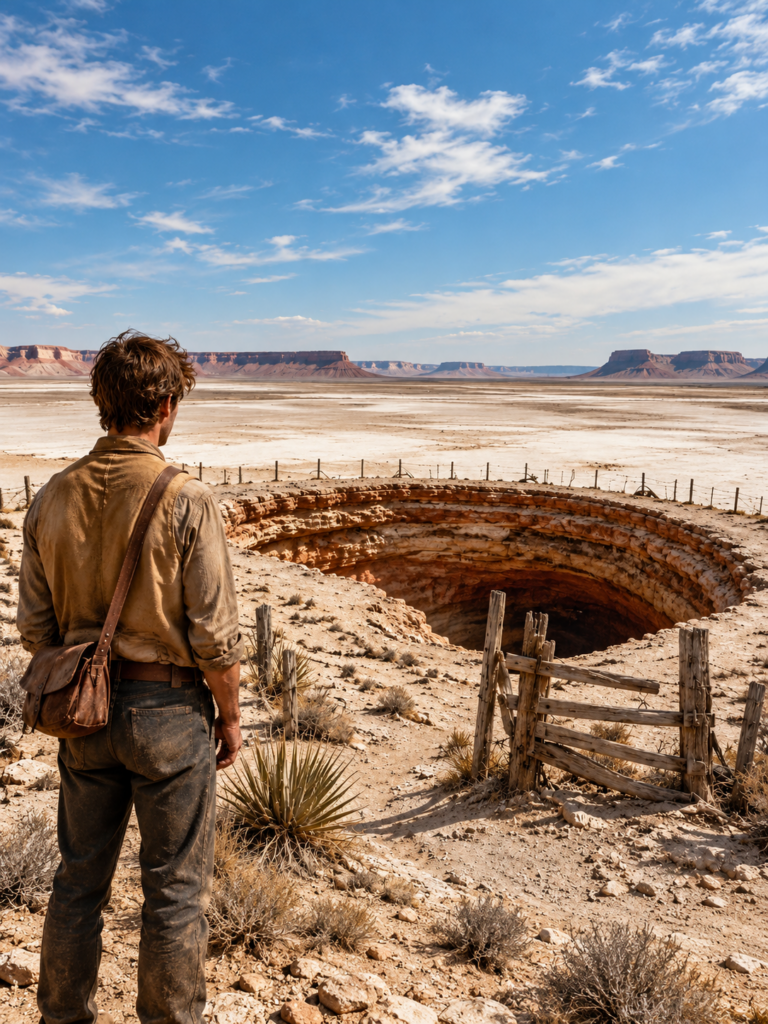
The morning Walter Marsh learned he was homeless, he was standing beside a barn he had helped build with his own hands.
The June sun had barely risen above the cottonwoods, and the cattle were still gathered around the watering trough. Walter had already milked the cow, scattered feed for the chickens, and repaired a broken section of fence before most men in Pine Flat had finished their coffee.
He was twenty-three years old, with broad shoulders, sun-darkened arms, and hands that looked considerably older than the face above them.
For nine years, he had worked the land belonging to Rucker Bell.
Now Rucker was dead.
And the farm was being sold.
A stranger in a fine gray traveling coat stood beside the barn door, studying a paper in his hand.
His name was Edwin Bell, Rucker’s nephew from Missouri.
He had arrived three days earlier, carrying a leather suitcase and a letter establishing his claim to everything his uncle had owned.
Edwin had never visited Rucker during the old man’s final years.
He had not come when Rucker’s eyesight began failing or when arthritis made it difficult for him to climb into the saddle. He had not helped cut firewood during the winter when snow buried the fences.
But he had arrived promptly after learning that forty acres, thirty-eight cattle, two horses, and a sound farmhouse were waiting to be inherited.
“Walter,” Edwin said, folding the paper, “the buyers want possession by Friday.”
Walter looked toward the farmhouse.
“Friday?”
“That’s right.”
“Where am I supposed to go?”
Edwin shifted his weight.
“You’re a capable young fellow. I imagine you’ll find employment somewhere.”
Walter remained silent.
Edwin reached into his coat, produced a ten-dollar bill, and held it out.
“Uncle Rucker apparently thought highly of you. Consider this something for your trouble.”
Walter looked at the money.
Nine years.
Nine summers of cutting hay beneath a merciless sun. Nine winters of breaking ice so cattle could drink. Nine planting seasons, nine harvests, nine years of fixing fences and sleeping in a narrow bunkhouse with snow drifting beneath the door.
Ten dollars.
He could have told Edwin about the night Rucker collapsed in the barn, when Walter carried the old man home through freezing rain.
He could have mentioned the two months he stayed awake beside Rucker’s bed, feeding him broth and rubbing warmth into his hands.
But Edwin had already turned toward the house.
Walter accepted the money without thanking him.
That afternoon, he packed everything he owned into a canvas bundle.
Two shirts. A pair of wool socks. His mother’s Bible. A tobacco tin containing thirty-one dollars saved from wages.
And a small folding pocketknife with a bone handle and a worn brass bolster.
It was the only thing Rucker had ever given him that was not payment for work.
Two autumns earlier, they had been sitting together beside the kitchen stove while rain tapped against the windows.
Rucker had taken the knife from his pocket and laid it in Walter’s palm.
“This belonged to my father,” he said.
Walter had looked up in surprise.
“I can’t take that.”
“Yes, you can.”
“But it’s yours.”
Rucker closed Walter’s fingers around the handle.
“A tool’s no good to a dead man. And a good man ought to have something worth keeping.”
Then he returned to stirring the beans on the stove.
That was Rucker’s way.
He had never been a man who spoke openly about love, but Walter understood what the gift meant.
Rucker Bell had been the nearest thing to a father he had ever known.
Walter’s actual father, Ellis Marsh, had rented land two valleys east, growing wheat for a landlord who collected a third of the harvest.
Ellis drank away much of what remained.
Walter remembered nights when his mother, Hannah, sat sewing by lamplight while his father staggered through the doorway smelling of whiskey.
He remembered her hands most clearly.
Small hands, always busy, mending shirts, washing clothes, kneading bread, counting coins.
Hannah had once taught school. Even after poverty forced her to leave the classroom, she insisted that her sons learn to read.
“Nobody can take away what you’ve learned,” she often told Walter.
She died when he was nine.
A cough had begun in October. By Christmas, she could hardly stand. In February, Walter watched two neighbors carry her coffin through the snow.
His older brother Thomas left home at sixteen and never returned.
When Ellis finally drank himself into an early grave, the landlord claimed the remaining tools and livestock against unpaid rent.
Walter was fourteen when he walked away with his mother’s Bible and a change of clothes.
Rucker Bell found him sleeping beneath a hay wagon outside Pine Flat.
The old rancher studied him for a moment.
“You looking for work?”
“Yes, sir.”
“Know anything about cattle?”
“A little.”
“Can you get up before daylight?”
“Yes, sir.”
Rucker scratched his beard.
“Then get up. I’ve got thirty-eight head waiting to be fed.”
That was the beginning.
Rucker taught Walter how to mend harness, set fence posts below the frost line, graft fruit trees, read storm clouds, and determine whether a horse was frightened or merely stubborn.
He also taught him something Walter would remember long after the old man was gone.
“Land doesn’t care whether you’re rich or poor,” Rucker once said while they repaired a gate. “It only cares whether you understand it.”
Now Walter stood outside that same gate, carrying his entire life across one shoulder.
The farm had been sold.
Rucker was buried beneath a cedar on the ridge.
And Walter had nowhere to go.
He walked four miles into Pine Flat and rented a bed in a boardinghouse for twenty-five cents a night.
That evening, he spread his savings across the blanket.
Thirty-one dollars from his tobacco tin.
Ten dollars from Edwin Bell.
Forty-one dollars.
It was not enough to buy a decent horse, much less a farm.
Still, Walter stared at those coins for a long time.
He had spent nine years making another man’s land productive.
He had repaired buildings that would belong to strangers, raised calves another family would sell, and planted fields somebody else would harvest.
He could not bear the thought of spending another nine years the same way.
The following morning, he made a decision.
He would buy land.
Not good land.
Not a large farm.
Just a small piece of ground with his name on the deed.
He began at the Whitaker place.
Ford Whitaker owned two hundred acres along the creek and had a neglected field overgrown with willow.
Walter approached him respectfully.
“Mr. Whitaker, I was wondering whether you’d consider selling that bottom parcel.”
Whitaker leaned against his porch railing.
“What would you want with it?”
“Clear the brush. Grow vegetables. Maybe raise a few hogs.”
Whitaker looked Walter up and down.
“You’ve got money?”
“Some.”
“How much?”
“Enough to make a fair beginning.”
The older man’s expression changed.
“Walter, you’re a good worker. Everybody knows that. But owning ground is different from working it.”
“I understand.”
“Do you? You haven’t got a wife, a family, or anybody standing behind you.”
Walter felt his face grow warm.
Whitaker continued.
“My nephew may come from Illinois next spring. I’d better keep that field for him.”
Walter knew the nephew had supposedly been coming from Illinois for six years.
Nevertheless, he removed his hat.
“Thank you for hearing me, sir.”
He tried Purcell Hines next.
Hines was seventy-eight, a widower living alone on a farm too large for him to manage.
The old man invited Walter into his kitchen and poured him coffee.
They talked about Rucker for nearly half an hour.
At last Walter asked whether Hines would sell ten or fifteen acres from the far boundary.
Hines stared into his cup.
“A farm needs roots, son.”
“I know.”
“You’re young. No father to advise you. No family to help when things go wrong.”
“I can work.”
“Working isn’t always enough.”
Walter said nothing.
Hines sighed.
“Wait a few years. Find yourself a wife. Put some money away.”
Walter thanked him and left.
At the general store, Mercer Ash told him nobody had land available.
Two days later, Walter watched Ash arrange the sale of a small field to another man’s cousin.
That buyer was nineteen years old.
His father owned three hundred acres.
Walter finally understood the difference.
It was not his age.
It was not his ability.
It was the absence of a respected family name and money that could guarantee his success.
One after another, the landowners of Pine Flat turned him away.
Some were friendly. Others sounded almost apologetic.
Nobody openly insulted him.
That somehow made the rejection worse.
After eleven days, Walter sat outside the county land office holding his hat between his knees.
The clerk had just told him that another property was unavailable.
Walter watched wagons roll past, carrying sacks of grain and bundles of timber.
He thought about returning to hired farm work.
Perhaps Whitaker would give him a place.
Perhaps he could spend another decade saving money until he was considered old enough, established enough, respectable enough.
Then he thought of Rucker’s hands closing around his own.
A good man ought to have something worth keeping.
Walter rose from the bench.
Across the street stood Pine Flat’s small brick bank.
Its windows shone in the afternoon sun.
He crossed the road and stepped inside.
Behind the counter sat August Renner, a thin man with silver spectacles and a reputation for never forgetting a debt.
“Mr. Renner,” Walter said, “I’d like to borrow ten dollars.”
Renner lowered his pen.
“Against what?”
“My work.”
“Your work?”
“I can repay it.”
“Do you own anything?”
“No, sir.”
“Have somebody willing to sign with you?”
“No, sir.”
Renner laughed.
It was only a short laugh.
But Walter would remember it for years.
Then the banker noticed that Walter had not smiled.
“You’re serious.”
“Yes, sir.”
Renner leaned back.
“A bank doesn’t lend money on good intentions, young man.”
“I know.”
“Then what exactly do you expect me to do?”
Walter swallowed.
“Give me a chance to prove they’re worth something.”
For a long moment, the banker studied him.
Then he picked up his pen.
“I’ll think about it.”
Walter returned the next morning.
And the morning after that.
For nearly three weeks, he appeared at the bank every day, sitting quietly on a wooden bench with his hat on his knees.
Renner rarely acknowledged him.
At the boardinghouse, the owner warned that his money was running out.
Walter began skipping supper.
He found small jobs unloading freight, chopping wood, and cleaning stalls, earning just enough to cover his bed and a little food.
One evening, hungry and exhausted, he took Rucker’s knife from his pocket.
The worn blade caught the lamplight.
He opened it.
Closed it.
Opened it again.
Then he whispered to the empty room.
“I’m trying, Rucker.”
The next morning, he returned to the bank.
Renner was waiting.
Without saying a word, the banker pushed a paper across the counter.
A loan for ten dollars.
With interest.
And a clear repayment deadline.
Walter looked at the document.
“You’re willing?”
Renner adjusted his spectacles.
“I’m willing to see whether you’re as stubborn about paying debts as you are about asking for them.”
Walter signed before the man could reconsider.
For the first time in weeks, he walked out of the bank feeling that a door had opened.
He did not yet know that the only land he would be allowed to buy was the very piece of ground that every other man in the valley considered a hopeless mistake.
And when he finally saw it, he would understand why.
Part 2
Otis Prine had spent two years trying to get rid of twenty acres that nobody wanted.
He was a railroad clerk, a narrow-shouldered man with thinning hair who had inherited the property from an elderly aunt he had never met.
The land lay six miles beyond Pine Flat, where the wagon road dwindled into two ruts between sagebrush and broken stone.
Otis had never farmed it.
He had visited only once.
That had been enough.
When Walter asked about the property, Otis pulled a county map from a drawer and flattened it across the land office counter.
“There,” he said, pointing to a crooked shape in the valley’s northwest corner. “Twenty acres. No proper road. No standing house. Half of it won’t take a plow.”
Walter studied the map.
“Does it have water?”
“A creek passes through the bottom. Trouble is, the ground’s too wet down there and too steep everywhere else.”
“How much?”
Otis hesitated.
“Forty-one dollars.”
Walter looked up.
“Exactly forty-one?”
“That’s my price. And I won’t hold it.”
It was every dollar Walter had managed to preserve from his original savings and the bank loan, despite the weeks he had spent looking for land.
He could almost hear Rucker’s voice.
Never buy something just because another fellow wants to be rid of it.
“May I look at the deed?”
Otis slid the document across the counter.
Walter read every line.
The boundaries were clearly marked. The taxes were current. There were no outstanding claims.
He asked the clerk to confirm the ownership.
Then he opened his tobacco tin.
The coins made a small, sharp sound as they struck the wooden counter.
Otis watched without speaking.
Walter counted them twice.
Forty-one dollars.
Not one cent left.
The clerk prepared the transfer while Otis stood near the window, impatient to be finished.
When the document was ready, Walter signed his full name.
Walter James Marsh.
The clerk pressed the county seal into the paper.
“There you are,” he said. “It’s yours.”
Walter lifted the deed carefully.
For a moment, he could not speak.
He had signed employment agreements before. He had signed receipts and bank papers.
But never a deed.
Never anything that said a piece of the world belonged to him.
Outside, Otis adjusted his hat.
“You ought to go see it before the weather turns,” he remarked.
Walter looked toward the western hills.
“I intend to.”
Otis gave a thin smile.
“Don’t say I didn’t warn you.”
By the time Walter returned to the boardinghouse, news of the purchase had already spread through town.
Two men at the feed store shook their heads when he passed.
Someone behind him muttered that Rucker Bell would have known better.
That night, the boardinghouse keeper looked at his empty tobacco tin.
“You’re telling me you spent every dollar on that Redfern place?”
“Yes, ma’am.”
“Merciful heavens.”
She set a bowl of stew before him.
“Eat. You look like you’re about to fall over.”
Walter reached for his pocket.
She caught his wrist.
“No charge tonight.”
He lowered his eyes.
“Thank you.”
“Don’t thank me yet. You may need the strength to walk back here when that land defeats you.”
Walter ate without answering.
At dawn, he packed his canvas bundle and set out on foot.
He carried his mother’s Bible, Rucker’s knife, two shirts, a blanket, and the deed tucked safely inside his clothing.
The morning smelled of dry grass and warm earth.
Meadowlarks rose from the roadside. Beyond the cultivated farms, cattle grazed beneath scattered cottonwoods.
Walter passed Whitaker’s fence.
Then the Hines property.
Then the Duncan fields.
He knew those farms well.
Their straight furrows, sturdy barns, and painted houses spoke of generations of work.
At each property line, he rested his palm briefly against the fence.
It was something Rucker had taught him.
“Respect another man’s ground,” the old rancher would say. “That’s how you learn to respect your own.”
Four miles from Pine Flat, the road became narrow.
After another mile, the last cultivated field disappeared behind him.
The valley opened into a wide, shallow bowl surrounded by low ridges.
At first, Walter thought he had taken the wrong trail.
He could see no house.
No barn.
No fence worth mentioning.
Only sagebrush, willow thickets, patches of dark earth, and a steep hillside covered with stone.
He took out the deed and checked the landmarks.
A bend in the creek.
A line of cedars.
A rocky shoulder rising above the western boundary.
There was no mistake.
This was his farm.
Walter stood motionless.
Then he began walking the boundaries.
The first problem appeared almost immediately.
The level ground near the creek was saturated.
After twenty paces, water seeped through the seams of his boots.
Another fifty yards brought him into thick willow growth where mosquitoes rose in clouds around his face.
The hillside was worse.
Loose stones shifted beneath his feet, and the slope was so steep that a horse-drawn plow would have been useless.
He found a patch of comparatively dry ground near the northern edge, but it was narrow and covered with stubborn brush.
Twenty acres.
And almost nowhere to plant.
Walter sat on a rock and stared across the valley.
For the first time since leaving Rucker’s farm, fear settled heavily in his stomach.
He had borrowed money.
Spent everything.
Walked away from the possibility of steady wages.
And purchased land that might not produce enough food to keep him alive.
He rubbed his face with both hands.
“Lord,” he whispered, “I hope I haven’t made a fool of myself.”
The afternoon sun had begun leaning toward the ridge when he noticed something among the willows.
A chimney.
It stood alone beyond a clump of young cottonwoods, crooked shadows stretching across the ground around it.
Walter approached slowly.
A cabin had once stood there.
Most of its roof had collapsed, and two walls lay scattered across the dirt.
The remaining logs were weathered gray, but the corners had been fitted carefully.
He knelt beside one of them.
The timber was still solid beneath the outer layer of decay.
A few rafters lay intact beneath the wreckage.
The stone chimney remained surprisingly sound.
Someone had built this place to last.
Walter stepped into what had once been the doorway.
A horseshoe was nailed above it, points facing upward.
Inside, a bed frame made of peeled poles stood against one wall.
A narrow shelf held a tin cup, a horn spoon, and a small blue bottle.
They were coated in dust.
Nothing else remained.
Walter touched the edge of the cup.
He imagined a woman setting it there before preparing supper.
He imagined boots drying near the hearth and firelight moving across the walls.
Somebody had lived here.
Somebody had worked this ground.
And somebody had once believed this lonely place could be a home.
That thought gave him just enough courage to begin.
He spent the remaining daylight moving fallen branches away from the doorway.
He stacked usable pieces of timber beside the chimney.
Then he spread his blanket over the large flat hearthstone and prepared to sleep.
The first night was miserable.
Wind swept through the missing roof.
Mosquitoes found every patch of exposed skin.
The stone beneath him held the day’s warmth for only an hour before turning cold.
Near midnight, a coyote called from the ridge.
Walter sat upright, gripping Rucker’s knife.
He listened until the animal called again farther away.
There were no neighbors within shouting distance.
No lantern burning in another window.
No old man clearing his throat in the next room.
For nine years, Walter had fallen asleep knowing that Rucker Bell was somewhere nearby.
That night, the silence felt larger than the valley.
He lay awake remembering his mother.
There had been one winter when their rented farmhouse grew so cold that frost formed inside the bedroom windows.
Hannah had tucked both boys beneath the same quilt and told them a story about a traveler who found shelter inside a hollow tree.
“What happened to him?” young Walter had asked.
“He stayed until spring.”
“Was he scared?”
“Of course.”
“Then why didn’t he leave?”
His mother had smiled.
“Because sometimes the place that looks least promising is the place where you have to begin.”
Walter had forgotten the story for years.
Now, beneath the broken roof, he remembered every word.
The following morning, he rose stiff and hungry.
He had only a little bread and dried meat remaining in his bundle.
He ate half.
Saved the rest.
Then he started clearing the cabin.
The work was slow.
He had no horse, no wagon, and almost no tools.
He fashioned a lever from a fallen timber and used stones as fulcrums to move the heavier logs.
Every usable piece went into a separate pile.
Every rotten section was carried outside.
The afternoon heat became oppressive.
Blisters opened across his palms.
By evening, his shoulders trembled whenever he lifted his arms.
Still, the cabin floor gradually appeared beneath the debris.
On the third morning, Walter discovered that three flat stones had been set neatly along the north wall.
They looked like a small raised step.
Beside the fireplace, the hearthstone had been fitted into the ground more carefully than the surrounding rocks.
Walter ran his hand across it.
Something felt unusual.
He tapped the stone with the handle of his knife.
A hollow sound answered.
Walter stopped.
He tapped again.
Then he looked toward the silent doorway.
The cabin had been abandoned for years.
But somebody had taken the trouble to build a hidden space beneath its hearth.
He found a strong piece of timber, wedged it under one edge of the slab, and leaned his weight against it.
The stone shifted.
Only an inch.
He adjusted the lever and pushed again.
This time, the slab rose enough for him to drag it aside.
Beneath it lay a square opening lined with creek stones.
And inside that opening was a bundle wrapped tightly in dark, oil-stained canvas.
Walter stared at it.
For several seconds, he did not move.
Then he knelt and reached into the darkness.
Part 3
The bundle was heavier than Walter expected.
He lifted it onto the cabin floor and brushed loose dirt from the canvas.
Whoever had hidden it had worked carefully.
The outer covering was tied with waxed cord. Beneath it lay another layer of cloth, folded tightly around a rectangular object.
Walter carried the bundle into the sunlight.
With Rucker’s old knife, he cut through the cord.
Inside was a tin box.
Its red paint had darkened with age, and rust had formed around the hinges.
A small metal hook held the lid closed.
Walter hesitated before opening it.
He remembered stories told around winter fires about abandoned homesteads, missing travelers, and possessions buried during times of trouble.
Perhaps this belonged to someone who had meant to return.
Perhaps there were children or grandchildren who still had a claim to it.
He did not want to steal from the dead.
But he needed to know what lay inside.
He released the hook.
The lid opened with a faint scraping sound.
A folded sheet of yellowed paper rested on top.
Beneath it, Walter saw silver coins arranged in careful rows.
There were dollars, half dollars, smaller pieces, and a little cloth pouch that made a bright metallic sound when he touched it.
At the bottom lay a woman’s locket on a broken chain.
Beside it was a tiny brown wool glove.
Walter picked up the glove.
It was scarcely larger than his palm.
He turned it over, noticing a small repair at the thumb.
Someone had taken the trouble to mend it.
He pictured his mother sitting beneath a lamp, repairing his own childhood clothes.
The memory struck so suddenly that he had to set the glove down.
Finally, he reached for the folded paper.
A dark spot of sealing wax held it closed.
Walter broke the seal and opened the letter.
The handwriting was precise, with rounded letters and careful spacing.
He began reading.
“My name is Ivy Redfern. I am sixty-one years old, and for fifteen years this place has been my home.”
Walter lowered himself onto the hearthstone.
Ivy wrote that she and her husband John had settled there with little more than a wagon, a mule, and several sacks of seed.
They had built the cabin themselves.
John had cut the logs.
Ivy had carried stones from the creek.
Together, they had worked the hillside until their hands cracked and bled.
For eleven years, they managed to make a living.
Then John was killed by a bull in the willow bottom.
Ivy buried him beneath a cedar on the ridge.
She stayed four more years.
Alone.
She kept chickens, geese, and a small garden. She sold eggs whenever someone passed through the valley and earned extra money mending clothing.
Eventually, age and loneliness made the work too difficult.
Her brother in Ohio wrote repeatedly, begging her to return to her family.
At last she agreed.
But she refused to leave without explaining the land to whoever might come after her.
Walter read on.
“The wet place on the flat is not useless ground. It is a spring. My John meant to dig it into a pond, but after he passed, I had neither the strength nor the heart.”
Walter stopped reading.
He looked toward the damp field where he had nearly lost a boot.
A spring?
He returned to the letter.
“The hillside catches the afternoon sun longer than anywhere else in this valley. Cut it into terraces and hold the soil with stone. Beans will grow there. Squash will grow below them.”
Walter rose slowly.
He walked to the doorway and studied the land.
The steep slope faced southwest.
The sunlight struck it even as shadows lengthened across the creek bottom.
Suddenly, he understood.
The ground had not defeated Ivy and John Redfern.
They had simply learned to farm it differently.
Walter hurried back to the letter.
Ivy explained how she had saved the money beneath the hearth.
Every coin had come from eggs, geese, repaired clothing, or something she had sold from the homestead.
She wrote that she had no living children to inherit what remained.
She hoped the savings might help another person begin where she and John had stopped.
Near the bottom, her handwriting grew uneven.
“I do not know who will find this. Perhaps no one ever will. But if you are reading these words, this land has brought you here for a reason.”
Walter swallowed.
The final lines were shorter.
“I hope you are young. I hope you have time.”
He read them twice.
Then a third time.
Outside, the wind moved softly through the willows.
For the first time since Rucker died, Walter felt as though someone had spoken directly to him with kindness.
He carefully placed the letter inside his shirt beside the deed.
Then he counted the money.
One hundred eighty-seven dollars.
He counted it again to be certain.
It was more money than he had ever held at one time.
Enough to buy tools.
Enough to repair the cabin.
Enough, perhaps, to survive a winter.
But Walter did not celebrate.
He looked again at the locket and the child’s glove.
Those things were worth more than their weight in silver.
They belonged to a woman who had buried hopes this cabin once held.
He placed them back inside the box.
“You helped me, Mrs. Redfern,” he said quietly. “I’ll take care of what you left.”
The next morning, Walter walked six miles back to Pine Flat.
Mercer Ash was sweeping the feed store when Walter entered.
“Morning, Marsh.”
“Morning.”
“What brings you in?”
“I need a few things.”
Walter handed him a list.
A shovel. A mattock. A felling axe. Nails. Wire. A crosscut saw. Oakum for sealing gaps between logs. Seed potatoes.
Mercer read the list and raised an eyebrow.
“That’s quite an order.”
“I know.”
“How do you intend to pay?”
Walter reached into his pocket and laid several silver dollars on the counter.
Mercer’s broom stopped moving.
“Where’d you get those?”
“Found something useful on my land.”
Mercer stared.
“What kind of something?”
Walter met his eyes.
“The kind that lets a man buy a shovel.”
The storekeeper said nothing more.
Walter carried the supplies home in two exhausting trips, stopping repeatedly along the road to rest his aching shoulders.
That evening, he laid everything on the cabin floor and studied the damaged walls.
He could rebuild them.
Not quickly.
Not easily.
But he could.
The following weeks tested that belief.
He worked from dawn until darkness.
He stripped away rotten wood, repaired the cracked ridgepole, raised fallen logs into their original notches, and cut new pieces wherever the old timber could no longer hold.
He built a temporary shelter with a canvas sheet while the roof remained open.
When rain came, he slept sitting upright, wrapped in his blanket, listening to water strike the ground around him.
One morning, a heavy log slipped from its support and struck his shoulder.
The pain sent him to his knees.
For several minutes, he could not lift his right arm.
He sat against the wall, breathing through clenched teeth.
There was no one to call.
No wagon to take him to town.
No family waiting to help.
He looked toward the unfinished roof.
A part of him wanted to leave everything where it stood.
Sell the property for whatever another fool might pay.
Return to the boardinghouse.
Find work somewhere.
But then he saw Ivy’s letter resting beside his mother’s Bible.
I hope you have time.
He closed his eyes.
“I’ve got time,” he whispered.
It took three days before he could work normally again.
He used those days to prepare lighter materials, straighten bent nails, and plan the drainage around the cabin.
By the fourth week, the north wall stood again.
The roof had most of its rafters.
And the front doorway had a rough wooden door hung on hinges cut from old harness leather.
That afternoon, Walter heard hoofbeats on the ridge.
He stepped outside.
An elderly man sat atop a swaybacked bay horse.
Purcell Hines.
Walter wiped his hands on his trousers.
“Afternoon, Mr. Hines.”
Hines surveyed the cabin without speaking.
Then he swung carefully down from the saddle.
“I heard you were living out here.”
“Yes, sir.”
“Thought I’d see whether the rumors were true.”
He walked around the cabin, examining the repaired logs and timber joints.
At last he touched one corner notch.
“That’s honest work.”
Walter said nothing.
Hines looked toward the chimney.
“I knew Ivy Redfern.”
Walter turned.
“You did?”
“Long time ago. Her husband too. John was a stubborn old mule.”
A faint smile touched his face.
“Ivy was worse.”
Walter found himself smiling.
Hines looked across the wet flat.
“She used to say this place would grow anything if a man understood where to put it.”
Walter reached inside the cabin and brought out the letter.
“She left instructions.”
Hines read slowly.
His expression changed.
For a long while, he stared at the handwriting.
“Well, I’ll be,” he murmured.
He lowered the paper.
“That woman was still trying to help somebody, even after she left.”
Walter nodded.
Hines cleared his throat.
“I brought you something.”
He returned to the horse and lifted down a smoked ham wrapped in cheesecloth.
There was also a spool of waxed thread.
Walter looked at the gifts.
“I can’t pay you for those.”
“Didn’t ask you to.”
“Mr. Hines—”
The old man interrupted him.
“Don’t make an old fool regret being decent.”
That night, for the first time since buying the property, Walter ate supper with another human being.
They sat beside a small fire near the chimney, sharing bread, ham, and coffee brewed in the old tin cup.
Hines told stories about Ivy and John.
He remembered the winter John lost three fingers to frostbite.
The year a flood washed away their first garden.
The spring Ivy planted beans in the rocky hillside and everyone laughed until she brought baskets of them into town.
Walter listened closely.
In the morning, Hines walked beside him to the seep.
He thrust the shovel into the wet earth and showed Walter how to cut the channel so water would drain toward a deeper hollow.
They worked until their backs ached.
By late afternoon, clear water had collected in a pond no bigger than a wagon bed.
Walter knelt beside it.
He dipped his hands into the cold water and watched it run between his fingers.
Hines stood nearby, breathing heavily.
“Good spring,” he said.
Walter looked across the flat.
For the first time, he saw the place not as twenty acres of obstacles, but as twenty acres of possibilities.
Yet the old man did not offer false comfort.
“You’ve got water,” Hines said. “You’ve got part of a roof. But winter’s coming, Walter. And no man’s dreams will keep him warm when the snow starts falling.”
Walter followed his gaze toward the western ridge.
The first dark clouds of autumn were gathering.
He still had no proper floor, no stove, no livestock, and no stored harvest.
The land had given him a chance.
Keeping it would demand everything he had.
Part 4
By October, every morning began with frost.
Walter woke to find a thin white crust across the grass and ice forming along the edges of his new pond.
The cabin was not finished.
Cold air slipped through gaps between the logs.
His blanket was worn.
Some mornings, his fingers were so stiff that he had to hold them near the fire before gripping a hammer.
But he kept working.
He patched the roof with cedar shakes, packed oakum between the timbers, and laid a rough floor of split cottonwood over the hard earth.
He built shelves from discarded boards and hung a lantern beside the doorway.
Each improvement seemed small.
Together, they slowly changed the ruin into a home.
Word spread through Pine Flat.
People began riding out to see whether the young man had survived another week.
Not all came out of kindness.
Some wanted to confirm that he was failing.
Others were curious about the money he had spent at the feed store.
But a few came because they remembered Rucker Bell.
And because Purcell Hines, who had refused to sell Walter land, was now telling people that the boy knew exactly what he was doing.
Ada Merrow arrived one Saturday afternoon carrying a covered pail.
She was a forty-four-year-old widow who kept bees on the eastern ridge.
“I hear you’ve got flowers near the creek,” she said.
“Wild ones.”
“Bees don’t care whether flowers are wild.”
She showed him three honeycombs and a small hive.
“I’ve got an extra colony. They’ll do better here than crowded at my place.”
Walter shook his head.
“I don’t know anything about bees.”
“Then you’ll learn.”
She spent the afternoon teaching him how to position the hive above the damp ground and keep ants from reaching it.
Before leaving, she handed him a jar of honey.
“Eat some of that. You’re too thin.”
Walter laughed.
It surprised him how unfamiliar the sound had become.
A week later, Nils Burger, the blacksmith, offered him an old plowshare in exchange for help repairing a fence.
Walter worked two full days instead of one.
Nils grumbled about the unnecessary labor, but the next month he sent a small iron stove made from a damaged boiler.
Job Halverson, a cedar cutter, arrived with a wagonload of rough shingles.
“Not fit to sell,” he announced.
Walter examined them.
Most were perfectly usable.
“There’s nothing wrong with these.”
Job shrugged.
“Then you’ve saved me the trouble of burning them.”
Walter understood the lie and accepted the gift without embarrassing him.
Every kindness carried a little weight.
He had spent months believing that Pine Flat wanted nothing to do with him.
Now he began to understand that not everyone who had remained silent had meant to be cruel.
Some had been cautious.
Some had been ashamed.
And some had simply needed to see whether he would stay.
One November afternoon, a young schoolteacher appeared at the cabin.
Her name was Maddy Cobb.
She was nineteen, with brown hair usually pinned beneath a plain hat and the steady manner of someone accustomed to keeping twenty restless children in order.
Walter was splitting kindling when he saw her coming down the track.
He hurried to put on his coat.
“Miss Cobb?”
“Mr. Marsh.”
She held out a jar wrapped in a towel.
“Sourdough starter.”
Walter looked confused.
“You brought me bread dough?”
“Not bread. The beginning of bread.”
She smiled.
“My mother gave me some when I started keeping house. I thought you might need it.”
Walter looked down at his rough hands.
“I’ve never made bread.”
“Then you’ve got another thing to learn.”
She showed him how to feed the starter with flour and water.
How to keep it near the stove.
How to save a portion for the next loaf.
Before leaving, she glanced around the cabin.
Her eyes rested on the old horseshoe above the doorway.
“Did you put that there?”
“No, ma’am. It was here when I bought the place.”
“Are you going to keep it?”
Walter looked up.
“I think so.”
“Good.”
She smiled again.
“Looks like somebody meant for this house to be lucky.”
By the first heavy snowfall, Walter had a roof that held against the wind, a stove that drew properly, and enough wood stacked along the south wall to last several weeks.
He had also learned that a repaired house required constant attention.
The chimney needed cleaning.
The door swelled when moisture reached it.
One cold night, a section of roof leaked directly onto his bedding.
He spent the next morning standing on the frozen slope, repairing it while wind cut through his coat.
His meals were simple.
Beans.
Potatoes.
Bread.
Occasionally ham or eggs traded from neighboring farms.
The money beneath Ivy’s hearth had become tools, building materials, seed, and necessities.
Walter recorded every purchase in the small ledger Rucker had taught him to keep.
He did not spend on anything that would not help the land support him.
By February, the worst storms had passed.
In March, the ground softened.
Walter began the work Ivy Redfern had described in her letter.
He cut terraces into the hillside.
Six long shelves of soil, each held by stones carried from the creek.
The labor was punishing.
He hauled rock uphill in a wheelbarrow Job Halverson had built for him.
He dug until his boots were coated in mud and his shoulders burned.
Some evenings he fell asleep before finishing supper.
But by planting time, he had six terraces ready.
Beans went on the upper three.
Squash on the lower three.
Potatoes filled the drier ground below the spring-fed pond.
The first seedlings appeared beneath a warm April sun.
Walter crouched beside them, scarcely believing what he saw.
Green.
Healthy.
Growing.
The land everybody called worthless had begun to feed itself.
Purcell Hines visited every few weeks, sometimes bringing advice, sometimes a little coffee or a sack of meal.
He never again suggested that Walter ought to wait before becoming a landowner.
Maddy began visiting on Sundays.
She brought books from the schoolhouse and sat beside the window reading while Walter repaired harness or sharpened tools.
At first, they spoke very little.
Later, she began asking about Rucker.
Walter told her how the old man had taught him to handle frightened horses.
How he never wasted food.
How he sharpened his knife every Saturday evening.
“He sounds like he loved you,” Maddy said once.
Walter kept working.
After a long moment, he answered.
“I believe he did.”
That first summer, the garden produced modestly.
Not enough for wealth.
But enough to put food away.
Walter dried beans, stored potatoes in a cool pit, and sold small baskets of squash in town.
He kept aside seed for the following year.
Yet the bank loan remained.
August Renner sent a reminder that autumn.
Ten dollars.
Interest.
And a firm deadline.
Walter studied the figures at his table.
After paying for repairs and winter necessities, he did not have enough ready cash to settle everything.
He could make a payment.
But not clear the debt.
The following morning, he walked into the bank.
Renner looked over his spectacles.
“Marsh.”
“Mr. Renner.”
Walter laid several coins on the counter.
“It’s not all of it. But it’s what I can pay now.”
Renner counted the money.
“When will you have the remainder?”
“After the next harvest, if the weather holds.”
The banker considered him.
“That’s a dangerous promise for a farmer.”
“I know.”
“An early frost could cost you a crop.”
“Yes, sir.”
“A sick animal could cost you your savings.”
“Yes, sir.”
Renner leaned forward.
“And if you don’t pay, the bank has a right to seek judgment.”
Walter held his gaze.
“I understand.”
The banker studied him.
Then he entered the payment in his ledger.
“You’ve made every payment you promised so far. Don’t make me regret trusting you.”
Walter left with the receipt folded beside his deed.
He was not angry.
A debt was a debt.
But that night, he stared at the stove long after the fire had burned low.
If next year’s crops failed, the money would be gone.
If illness prevented him from working, there would be no wages.
And if the bank demanded payment, he had nothing else to offer.
Everything depended on the land.
The following spring, Walter expanded his work.
He repaired a small animal pen beside the willows and bought young hogs with carefully counted coins.
Nils helped him frame a chicken coop.
Ada’s bees prospered near the creek, producing enough honey to trade.
The terraces were stronger now, held in place by stones and deepening roots.
His second summer brought more food than the first.
Eight hogs grew fat in their pen.
Twenty hens laid steadily.
The garden supplied beans, squash, and potatoes.
And the spring-fed pond remained clear even when neighboring creeks ran low.
But prosperity still felt fragile.
One afternoon in late August, dark clouds rose suddenly above the western ridge.
The air turned strangely cool.
Walter noticed the cottonwoods twisting their leaves.
Rucker had taught him that sign.
Bad weather.
Fast.
Within an hour, a violent storm struck the valley.
Rain battered the roof.
Wind tore branches from the trees.
The creek swelled and spilled into the lower ground.
Walter ran outside to reinforce the hog pen, then hurried toward the pond.
The overflow channel was clogged with branches.
Water was rising toward the potato field.
If it reached the bank below the terraces, the saturated earth could slide and carry months of labor into the creek.
Walter seized his shovel.
He worked knee-deep in muddy water, clearing the channel one obstruction at a time.
Lightning flashed above the ridge.
Thunder rolled across the valley.
The current knocked him off balance.
He fell hard against a stone and felt pain shoot through his ribs.
For one frightened moment, he lay in the mud.
Then he thought of the deed inside his cabin.
Rucker’s knife on the shelf.
His mother’s Bible.
Ivy’s letter.
All the things that had brought him here.
He struggled upright.
Using the shovel as a brace, he forced the last fallen branch away from the channel.
Water surged through the opening and rushed safely toward the creek.
Walter stumbled backward, coughing.
The bank held.
The terraces remained standing.
And the hogs were safe.
He returned to the cabin soaked, shaking, and barely able to breathe deeply.
He sat beside the stove until dawn.
When daylight finally revealed the valley, the garden was battered but alive.
His fence needed repair.
Some potato plants had been washed loose.
Several sections of the road were damaged.
But the worst had passed.
Walter looked at his muddy hands.
For two years, people had told him that land like this could never support a man.
Now he understood something they did not.
The place was difficult.
Sometimes frightening.
But it was no longer a mystery to him.
He knew where the water traveled.
Where the soil would hold.
Where the wind would strike first.
He had learned its dangers and its strengths.
And that knowledge was worth more than any favorable opinion in Pine Flat.
Still, the banker would soon expect his final payment.
Walter had to bring in the harvest before the first hard frost.
And beyond the repaired fence, along the road from town, a familiar rider was approaching.
Ford Whitaker.
The very man who had first told Walter he was too young, too poor, and too alone to own land.
Part 5
Ford Whitaker stopped his horse at the top of the rise.
For a long moment, he said nothing.
Below him stood a neat little cabin with a sound roof, a fenced garden, a chicken coop, and a hog pen beside the willows.
Smoke rose gently from the chimney.
Six terraces climbed the hillside, their rows of vegetables catching the afternoon sun.
Near the center of the flat, a clear pond reflected the sky.
Whitaker had known this piece of ground for most of his life.
He remembered when Ivy Redfern left it.
He remembered the ruined cabin and the marshy field that no plow could cross.
He had passed the place dozens of times without imagining that it might become productive again.
Now he could hardly believe his eyes.
Walter came out carrying a hammer.
“Afternoon, Mr. Whitaker.”
Whitaker dismounted.
“Afternoon, Walter.”
His gaze moved from the repaired fence to the terraces.
“You did all this?”
“Had some help.”
“I heard that.”
Whitaker walked toward the pond.
He studied the channel and the small spillway Walter had cut through the lower bank.
“That’s what saved your garden in the storm?”
“Yes, sir.”
“Smart work.”
Walter shrugged.
“Ivy Redfern knew where the water wanted to go. I just followed her instructions.”
Whitaker turned toward him.
“I knew Ivy. Stubborn woman.”
“So I’ve heard.”
“She tried to tell people about that spring.”
Walter nodded.
“She left me a letter.”
Whitaker looked down at the grass.
Then he drew a slow breath.
“Walter, I’ve come to say something.”
Walter waited.
“When you asked me about that willow field, I told you to wait.”
“Yes, sir.”
“I said you weren’t ready to own land.”
Walter remained quiet.
Whitaker glanced back toward the garden.
“I was wrong.”
The words were simple.
But Walter felt them more deeply than he expected.
Whitaker continued.
“I looked at your age. Looked at your money. Looked at the fact that you didn’t have anybody important standing behind you.”
He removed his hat.
“I never bothered to look at what Rucker Bell had taught you.”
Walter swallowed.
Whitaker pointed toward the road.
“I’ve got a mare I could sell. Four years old. Red roan. Good feet, sound lungs. Needs a steady hand.”
Walter looked surprised.
“How much?”
“Eighteen dollars.”
He knew the animal was worth more.
“Mr. Whitaker, that’s generous.”
“It’s a fair price.”
Walter considered it.
He needed a horse.
He had already spent more miles walking between Pine Flat and the farm than he cared to count.
A reliable mare would allow him to carry produce to town and haul materials without borrowing a wagon.
But eighteen dollars was still a serious expense.
Finally, he nodded.
“I’ll take her.”
They shook hands.
Whitaker’s grip was firm.
Before leaving, the older man looked once more across the little farm.
“Rucker would have been proud of you.”
Walter’s eyes moved toward the ridge.
“I hope so.”
A few days later, the red roan stood in a small shed beside the cabin.
Walter brushed her coat each evening and spoke to her as Rucker had taught him, quietly and without sudden movements.
She became his first horse.
The first large animal he had ever owned outright.
That autumn, Walter sold enough potatoes, vegetables, honey, and livestock produce to settle his remaining obligations.
He went into Pine Flat on a cool morning, riding the mare with a basket of eggs and jars of honey secured behind the saddle.
The town looked much as it always had.
The same wooden porches.
The same dusty road.
The same feed store where men had once discussed his foolish purchase.
Yet something had changed.
People greeted him by name.
Not with the cautious sympathy once reserved for a penniless farmhand.
With respect.
Mercer Ash stood behind his counter and examined the honey.
“Good color.”
“Bees did the work,” Walter replied.
Mercer laughed.
“They had a good place to do it.”
Walter sold his goods and walked across the street to the bank.
August Renner was working at his desk.
He looked up.
“Marsh.”
“Mr. Renner.”
Walter placed the final payment on the counter.
The banker counted it slowly.
Then he checked his ledger.
Walter watched every movement.
His heart beat harder than it had on the day he first signed the loan.
At last Renner opened a drawer and removed the original note.
He stamped it.
PAID.
Then he pushed it across the counter.
Walter stared at the word.
For nearly two years, that loan had followed him like a shadow.
Every failed planting.
Every broken tool.
Every cold night.
Every storm cloud.
Behind all of it had been the knowledge that he owed money against a future he could not guarantee.
Now the debt was finished.
Renner folded his hands.
“Well.”
Walter looked up.
The banker adjusted his spectacles.
“You did what you said you would.”
“Yes, sir.”
Renner nodded.
“That’s worth something.”
Walter took the paper.
“Thank you for giving me the chance.”
The banker hesitated.
Then he said quietly, “I knew Rucker Bell a little. He was not a man who gave trust easily.”
Walter waited.
“He spoke of you once. Said you had a better head for land than half the men who already owned it.”
Walter felt his throat tighten.
Rucker had never told him that.
Renner continued.
“When you came asking for ten dollars, I thought you were another desperate young man with an impossible idea.”
He paused.
“But I remembered what Rucker said.”
Walter looked down at the note.
All those mornings on the bank bench.
All those days believing nobody would take him seriously.
And somewhere behind the decision, unseen by Walter, had been the old rancher’s faith in him.
He put the paid note inside his shirt beside the deed and Ivy’s letter.
For a moment, he could not trust himself to speak.
Then he held out his hand.
Renner shook it.
Walter left the bank with no debt hanging over his farm.
As he stepped into the autumn sunlight, the courthouse clock struck eleven.
He stood on the sidewalk and breathed deeply.
The land was not merely his in name anymore.
It was his without a bank note waiting to be satisfied.
His home.
His work.
His future.
That evening, Purcell Hines came for supper.
Walter placed the canceled note on the table.
The old man read it, then smiled.
“Well, now.”
Walter laughed.
“Seems to be everybody’s favorite thing to say.”
Hines settled into his chair.
“Some things don’t need a lot of words.”
They ate beans, fried potatoes, and fresh bread made from Maddy Cobb’s sourdough starter.
Afterward, Hines leaned back beside the stove.
“You know, I owe you an apology.”
Walter looked at him.
“For what?”
“When you came asking to buy land, I told you to find a wife first. Told you to wait until you had somebody standing behind you.”
“I remember.”
Hines nodded toward the window.
“Turns out you were the one who knew what you needed.”
Walter considered the words.
Then he shook his head gently.
“I needed help, Mr. Hines. More than I knew.”
The old man smiled.
“Nothing wrong with that.”
Outside, the red roan moved quietly in her shed.
The hens settled onto their roosts.
Wind brushed the dry grass along the hillside.
For the first time in his adult life, Walter could imagine growing old in a place he would not be forced to leave.
Winter came again.
And with it, a different kind of test.
One bitter morning, word reached the farm that the schoolhouse stove had cracked.
The iron firebox had split, and smoke was entering the classroom.
Nils Burger could repair it, but he needed several days.
Meanwhile, the children were being sent home.
The temperature had fallen below freezing.
Some families had no warm place for their children during the day, and several youngsters were already coughing.
Walter thought of Maddy standing in the doorway with her jar of sourdough starter.
He thought of the books she carried down the lonely road.
And he remembered his mother.
Hannah Marsh had once taught school in a room heated by a small iron stove.
She often spoke of the children who arrived wearing thin coats and shoes that leaked.
She would warm their hands by the fire before beginning lessons.
Walter looked at the stove in his own cabin.
It was not large.
It was not expensive.
But it was sound.
That afternoon, he hitched the mare to a borrowed stone boat and loaded the stove onto it.
He hauled it into Pine Flat and carried it inside the schoolhouse with Nils’s help.
Maddy watched in astonishment.
“Walter, what are you doing?”
“Keeping the children warm.”
“But that’s your stove.”
“I know.”
“What will you use?”
He smiled.
“I’ve got quilts. And the old chimney still draws.”
“Walter, it’s going to be terribly cold.”
“Then Nils had better fix your stove quickly.”
Nils grunted.
“Three days.”
Walter nodded.
“Three days, then.”
For three nights, he slept beneath two heavy quilts beside his cabin’s stone chimney.
The cold entered the room until water froze in a cup on the table.
He wore his coat to bed.
He kept a small fire burning in the original hearth and woke repeatedly to feed it.
It was uncomfortable.
But it was temporary.
And every morning, he pictured the children sitting in their warm classroom.
When Maddy arrived the following Sunday, she brought fresh bread and a stack of books.
She found Walter outside splitting firewood.
“You didn’t have to do that,” she said.
He rested the axe against a stump.
“I know.”
“Then why?”
Walter looked toward the schoolhouse road.
“My mother taught school.”
Maddy waited.
“She used to tell me that a child shouldn’t have to choose between learning and keeping warm.”
His voice softened.
“I reckon she’d have liked me to help.”
Maddy studied him for a long moment.
Then she stepped closer and took his cold hand between hers.
“She would have been proud of you.”
Walter looked away.
He had heard those words twice now.
Once about Rucker.
Once about his mother.
For years, he had imagined that everyone who mattered was gone.
Now he was beginning to understand that their love had remained inside the things they taught him.
In spring, Walter planted again.
By summer, he had expanded his vegetable beds and improved the fencing.
The hogs grew well.
The hens laid enough eggs that he could trade regularly in town.
Ada’s bees produced more honey than either of them expected.
Job helped him build a proper wagon.
Nils repaired a broken plow handle without charge.
Purcell continued visiting on the first Saturday of every month.
And Maddy still came on Sundays.
Sometimes she read aloud.
Sometimes Walter read to her.
Sometimes they sat without speaking, watching the afternoon light move across the hillside.
Neither was in a hurry to give a name to the companionship growing between them.
Walter had spent much of his life feeling that every good thing could be taken from him without warning.
He was learning, slowly, that some things could stay.
Three winters after he bought the farm, a heavy snowfall settled across Pine Flat.
The valley lay silent beneath white fields and dark cedars.
Walter sat at the table he had made from a broad cottonwood plank.
A bowl of beans rested before him.
Fresh bread lay beside it.
The stove ticked softly as it cooled.
Beyond the window, the terraces appeared as six long white shelves rising toward the ridge.
His mare stood warm in her shed.
The hogs were sheltered.
The pond remained unfrozen at its spring-fed center.
Walter ate slowly.
Then he rose and walked to the shelf above his bunk.
The old tin cup was still there.
So was the horn spoon.
And the small blue bottle Ivy Redfern had left behind.
He had never moved them.
Beside them rested his mother’s Bible.
Rucker’s Barlow knife.
The tobacco tin that once held his entire fortune.
And Ivy’s letter.
Walter took down the tin.
Inside lay a single old coin, the ten-dollar bill Edwin Bell had handed him when Rucker’s farm was sold, and the tiny brown wool glove found beneath the hearthstone.
He had kept the bill as a reminder of the day he was told he had no place in the life he had worked to build.
He had kept the glove because someone, long before him, had loved a child enough to mend it carefully and save it.
Walter placed the glove beside Rucker’s knife.
Two small objects.
One from a woman he had never met.
One from a man who had loved him like a son.
He thought of Ivy Redfern kneeling beside the hearth many years earlier, wrapping her savings in canvas and hoping they might one day help a stranger.
He thought of Rucker Bell placing the pocketknife in his palm.
Neither had known what the future would bring.
Neither had lived to see this farm restored.
Yet both had left something behind that changed another person’s life.
Walter returned to the table and opened Ivy’s letter.
He had read it so many times that the folds were beginning to weaken.
Near the bottom, the words remained.
“I hope you are young. I hope you have time.”
He looked around the room.
The repaired logs.
The solid roof.
The warm stove.
The shelves holding jars of preserves.
The boots drying beside the hearth.
Everything had been built slowly.
Not through luck alone.
Not because a box of money had appeared beneath a stone.
The money had helped him begin.
But no silver dollar had lifted those heavy logs.
No hidden treasure had dug six terraces into the hillside.
No old letter had carried water from the spring, repaired fences after storms, or stayed awake beside frightened livestock.
Walter had done those things with his own hands.
And when his strength had not been enough, people had stepped forward.
A widower with smoked ham.
A beekeeper with a spare hive.
A blacksmith with a stove.
A cedar cutter with unwanted shingles.
A schoolteacher with sourdough starter and books.
The town that once refused him had become the community he belonged to.
Walter folded the letter carefully.
For years, he had carried anger toward the men who dismissed him.
He remembered every polite refusal.
Every sympathetic smile.
Every suggestion that he ought to wait until somebody more important could speak for him.
But as he sat in the warm cabin, he found the anger had lost its hold.
He did not need those men to feel ashamed.
He did not need to remind Whitaker of the imaginary nephew from Illinois.
He did not need Mercer Ash to admit that he had treated him unfairly.
He had something better than an apology.
He had a life they once believed he could never build.
The following Sunday, Maddy arrived carrying a new book and a basket of biscuits.
Walter saw her coming down the track through the snow.
He opened the cabin door before she reached it.
“You’re early,” he said.
“The school let out a little sooner on Friday, so I finished my chores.”
She brushed snow from her coat.
“Is the coffee ready?”
“Just about.”
She stepped inside.
The smell of fresh bread filled the room.
Maddy set her basket on the table and glanced toward the shelf.
“Still keeping all those old things?”
Walter nodded.
“Every one.”
She picked up the Barlow knife.
“Rucker’s?”
“Yes.”
“And the letter?”
“Ivy Redfern’s.”
Maddy carefully returned the knife.
Then she looked through the window toward the terraces.
“You ever think about what would have happened if someone had sold you better land?”
Walter considered it.
A flatter field would have been easier.
A proper house would have spared him months of work.
A larger farm might have earned more money.
But there would have been no abandoned cabin.
No hidden letter.
No old spring waiting to be uncovered.
No reason for Purcell Hines to ride out with smoked ham.
Perhaps no Sunday afternoons with Maddy reading by his window.
He smiled.
“Sometimes.”
“Do you wish they had?”
Walter looked around the room.
Then he shook his head.
“No, ma’am.”
Maddy smiled back.
“Good.”
She pulled out a chair.
“Because I like this place.”
Walter poured her coffee.
Outside, the snow continued falling.
The wind brushed the roof, but not a breath of it entered the cabin.
For a while, they spoke about ordinary things.
Schoolchildren.
Spring planting.
The price of feed.
A calf born at Whitaker’s farm.
Then Maddy opened her book, and Walter sat near the stove to sharpen a tool.
The blade made a soft, familiar sound against the whetstone.
He paused.
For an instant, he could almost see Rucker Bell sitting across from him.
The old man’s strong hands.
His quiet expression.
His habit of speaking only when something needed to be said.
Walter glanced toward the empty chair beside the hearth.
“Thank you,” he whispered.
Maddy looked up.
“What was that?”
Walter smiled.
“Nothing. Just remembering somebody.”
She returned to her book.
And the quiet in the cabin was no longer the painful emptiness Walter remembered from his childhood.
It was the comfortable silence of a home.
A silence filled with warmth, belonging, and the certainty that he would still be there when morning came.
Years earlier, Walter Marsh had stood outside a barn with his entire life packed into a canvas bundle.
His employer was dead.
His home was sold.
His family was gone.
The men who owned the valley’s best land had refused to give him a chance.
He had no respected family name, no inheritance, and no one willing to guarantee his future.
Only forty-one dollars, a mother’s Bible, an old man’s pocketknife, and the determination not to spend the rest of his life working ground he could never call his own.
He had taken that money and bought twenty crooked acres that nobody else wanted.
Twenty acres of swampy bottomland, steep hillside, broken timber, and an abandoned cabin.
The whole valley thought he had made the worst bargain of his life.
But the land had held a spring beneath its mud.
Good soil beneath its brush.
Sunlight on its rocky slope.
And a letter from a lonely widow who had believed that someone, someday, might discover what she and her husband had seen there.
Walter had spent his last forty-one dollars on something everybody called worthless.
And in the years that followed, he discovered that the greatest treasure hidden on those twenty acres was not the silver beneath the hearthstone.
It was the chance to become the man Rucker Bell had always believed he could be.
A man with a home.
A man whose word could be trusted.
A man who could lend a hand when others needed help.
A man who belonged somewhere.
And whenever a young farmhand passed through Pine Flat wondering whether he was too poor, too inexperienced, or too alone to begin, Walter never told him to wait until the world approved.
He would offer him a cup of coffee.
Listen to what he hoped to build.
And sometimes, if the young fellow seemed particularly discouraged, Walter would take the old bone-handled knife from the shelf and tell him about the man who once placed it in his hand.
Then he would point through the window toward the hillside, the pond, and the thriving farm beyond.
“Don’t let somebody else tell you what a piece of ground is worth,” he would say. “Not until you’ve walked it yourself.”
Because Walter Marsh had learned something the richest landowners in Pine Flat had forgotten.
A person’s worth cannot always be measured by the money in his pocket.
A piece of land cannot always be judged by its appearance.
And sometimes, the door everybody refuses to open is the very reason a young man finally finds the place where he belongs.
That winter evening, as the last light faded over the valley, Walter added another log to the stove.
Maddy turned a page.
The mare shifted quietly in her shed.
Beyond the cabin, twenty acres slept beneath the snow, waiting for another spring.
And Walter Marsh, who had once believed he owned nothing in the world, sat warm and content inside the home he had built.
Forty-one dollars.
Twenty unwanted acres.
And a life worth more than anything he could have imagined.
It was the best forty-one dollars he ever spent.


