Part 1
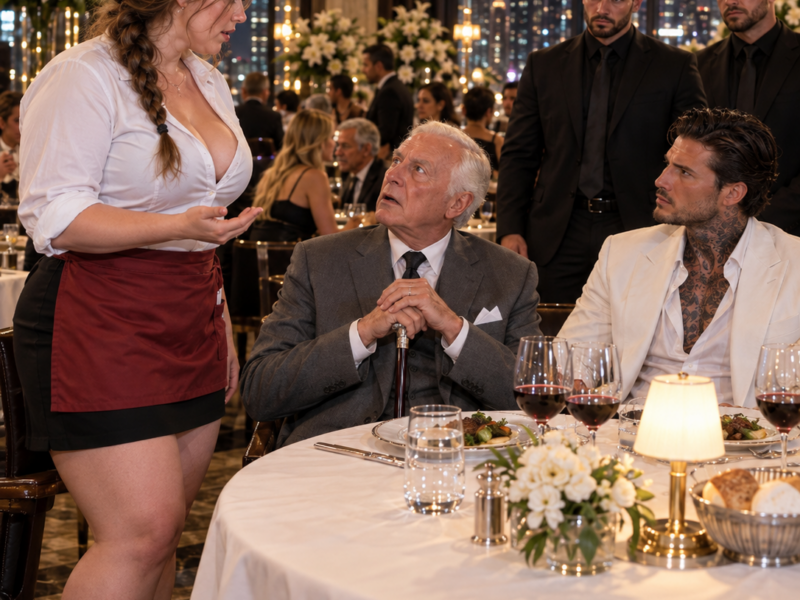
By the time Tobias Halverson was buried, his two grandsons had already begun dividing everything he owned.
The house where he had spent most of his life. The woodworking shop behind it. The collection of tools he had gathered over forty years. Even the $81,000 sitting in his bank accounts.
Garrett and Cole Halverson had barely visited their grandfather while he was alive, but death had brought them home with remarkable speed.
And Ren, their twenty-one-year-old sister, stood in the middle of the house she had grown up in and watched strangers carry her grandfather’s belongings out the door.
She had been the one who stayed.
She had cooked his meals when his hands began to tremble. She had driven him to the clinic, sorted his medications, helped him bathe, and sat beside his bed through the long nights when his breathing frightened her.
When he died just after four on a February morning, Ren had been holding his hand.
Yet when the estate was divided, all she received was a brass key and the deed to forty acres of mountain land.
On that land stood an abandoned cabin.
There was no electricity, no running water, and no reliable road leading to it. Its roof was old, its porch was collapsing, and the county had been complaining about unpaid property taxes for years.
Garrett laughed when the lawyer mentioned it.
“Well, Ren,” he said, leaning back in his chair, “looks like Grandpa saved the best for you.”
Cole stared at the floor.
Ren said nothing.
She turned the brass key over in her palm. A little paper tag was tied to it with string, and on the tag, in her grandfather’s familiar blocky handwriting, was one word.
Cabin.
She had no idea that the key would eventually lead her to a secret her grandfather had kept for forty years.
Or that the brother who laughed loudest would soon be standing in that same cabin, begging her to save him.
Ren had been five years old when her mother died.
The doctors called it an aneurysm. There had been no warning, no long illness, no opportunity for anyone to prepare. One ordinary Thursday afternoon, her mother was alive. By evening, she was gone.
Their father had disappeared two years earlier, leaving behind an address that eventually stopped receiving mail.
That left Tobias Halverson.
Most people called him Tob.
He was a widower, a carpenter, and a man who could go an entire afternoon without speaking unless something needed to be said.
When his daughter died, three grandchildren came to live with him.
Garrett was sixteen. Cole was thirteen. Ren was five.
The boys remembered a bigger world beyond their grandfather’s small valley town. They missed their old friends, their old routines, and the possibilities they believed the mountains were keeping from them.
Garrett left for the city as soon as he turned eighteen.
Cole followed two summers later.
Ren remained.
She grew up behind the family house, where her grandfather operated a small woodworking shop that smelled of pine shavings, linseed oil, and coffee gone cold.
People brought him whatever had broken.
A table with a loose leg. A dresser that would no longer close. A porch railing damaged by winter ice. An old chair that everyone else considered beyond repair.
Tob seldom charged enough to justify the hours he spent working.
Ren once watched him spend an entire afternoon repairing a chair for an elderly couple who could barely afford groceries.
“They’re only paying forty dollars,” she complained.
Tob continued smoothing the seat with his spokeshave.
“Doesn’t change how the chair ought to be made.”
“But you could spend those hours making something worth more.”
He stopped working and looked at her.
“A chair holds somebody up whether they notice it or not. People ought to do the same.”
Ren was twelve. She thought about his answer for a moment, then returned to sweeping.
Only years later would she understand how completely he had meant it.
Her grandfather never treated her like a child who needed entertaining. He gave her work.
First a broom. Then sandpaper. Later, a sharpening stone.
By ten, she could put an edge on a chisel. By twelve, she could run her thumb across a board and recognize where the grain might tear beneath a blade.
When she hurried, Tob would place his weathered hands over hers.
“Slow down, Ren. Wood doesn’t care how fast you are. It only cares whether you’re paying attention.”
Sometimes she hated hearing that.
Eventually, she heard his voice whenever she worked, even if he was nowhere near the shop.
He was not demonstrative with affection. He rarely hugged her, and he seldom said things that sounded sentimental.
But when she was little, he had carved her a wooden bird.
A wren, small enough to fit inside her fist.
Every feather was carefully shaped. Its tiny beak pointed upward, as though it had just heard something worth singing about.
She carried it in her pocket for years, rubbing it between her fingers whenever she was frightened or uncertain.
By the time she became an adult, most of the paint had worn away.
The wood had darkened from the touch of her hands.
It was the only thing she had ever owned that she could not imagine losing.
Tob’s heart began failing when he was seventy-six.
The first episode frightened him more than he admitted. Afterward, he tired easily. Some mornings he could not climb the steps to the workshop without stopping.
Ren took a morning job at the lumber yard outside town.
She spent her shifts selling nails, boards, hinges, fencing supplies, and sacks of feed. At noon she drove home, made her grandfather something to eat, and checked his medication.
His appointments were an hour away.
She learned the names of his pills and the warning signs that meant another trip to the clinic. She learned how to help him stand without embarrassing him and how to pretend she did not notice when he struggled with simple things.
Garrett called twice during that first year.
Cole sent a card.
Then, during Tob’s final autumn, Garrett appeared in an expensive truck.
He wore polished boots and a coat that looked too clean for the valley. He carried a bottle of whiskey Tob was no longer supposed to drink and spoke warmly about memories Ren had never heard him mention.
He called the old man Grandpa again.
At dinner, he asked about fishing trips and childhood afternoons at the workbench.
Tob enjoyed every minute.
Ren could see it in the way his face softened whenever Garrett entered the room.
That made what followed difficult to challenge.
“You shouldn’t have to handle all this paperwork alone,” Garrett told him one evening.
They were sitting at the kitchen table.
Ren stood at the sink, washing dishes.
“I’ve been thinking about the bills and the bank accounts,” Garrett continued. “What if something happens suddenly? Somebody needs to be able to take care of things.”
“Ren takes care of the books,” Tob said.
“Of course she does. But she’s twenty. She shouldn’t be worrying about lawyers and hospital bills.”
His voice was gentle.
That was what frightened Ren.
“Put me on the accounts,” Garrett suggested. “We can get a power of attorney arranged. You deserve to have somebody take the load off.”
Over the following weeks, he repeated the suggestion until it sounded less like a proposal and more like common sense.
Eventually, Tob agreed.
Garrett returned to the city with access to the accounts and a signed power of attorney.
Ren said nothing.
She told herself it would be cruel to deny a dying man the comfort of believing his oldest grandson finally wanted to help.
Four months later, her grandfather died.
Ren remained beside him until dawn, with Bram, his elderly shepherd mix, lying across the foot of the bed.
Afterward, she made coffee.
She poured a cup for herself and another for Tob before remembering he would never drink it.
She stood staring at the two mugs until the coffee went cold.
Then she called her brothers.
The funeral filled the little church.
People stood along the walls and outside in the cold because there were not enough seats. The woman who owned the diner cried openly. The hardware-store family arrived together. Farmers, loggers, mechanics, and people Ren barely recognized came to say goodbye.
Garrett watched the crowd with visible surprise.
“All these people,” he said afterward. “For a guy who fixed screen doors.”
Ren looked at him but did not answer.
She knew that her grandfather had mattered to people.
She simply did not know how much.
The next morning, Garrett began inspecting the house.
He opened drawers, studied furniture, and asked questions about the value of the equipment behind the house.
Within days, men Ren had never met were loading Tob’s best chisels, hand planes, and heavy cast-iron vise into a van.
An estate sale followed.
Strangers walked through the rooms placing price stickers on the ordinary objects of Ren’s childhood.
Someone bought her grandfather’s favorite coffee mug for a dollar.
Another person carried away the lamp that had stood beside his chair for as long as she could remember.
Ren wanted to stop them.
But every time she tried to speak, Garrett reminded her that estates needed settling and everyone would receive what was fair.
The $81,000 disappeared first.
Garrett said the money had been transferred into an estate account.
Later, a local lawyer explained that a power of attorney did not simply authorize someone to take an inheritance after the account holder’s death.
By then, the money was gone.
Garrett and Cole had divided it between themselves.
“You could challenge what happened,” the lawyer told Ren. “But it could take time. And money.”
Ren looked down at her hands.
They were rough from years of labor, with small scars across the knuckles.
She had spent her savings helping care for Tob.
She could not afford a lengthy fight.
The lawyer studied her for a moment, then opened another folder.
“There is something your grandfather prepared separately.”
He placed a deed on the desk.
Beside it lay the brass key.
“Forty acres up the old quarry road. The cabin and the land belong to you alone. He left very specific instructions.”
Garrett laughed.
“That shack?”
Ren remembered visiting the place once or twice when she was small.
Her grandfather had taken sandwiches and disappeared inside while she waited on the porch.
He never let her enter.
For years he made trips up there, sometimes staying two or three days.
When she asked where he went, he said he was fishing.
She could not remember him bringing home a single fish.
“There’s no well,” Garrett said. “No electricity. And the road’s a disaster. You’d be better off letting the county have it.”
Ren picked up the key.
For the first time since the funeral, something belonged to her that neither brother could touch.
“I’ll keep it,” she said.
Garrett shrugged.
“Suit yourself.”
The final argument happened over Bram.
The old dog had been with Tob for nearly ten years. His muzzle was gray, his joints were stiff, and since the funeral he had barely eaten.
Ren found Garrett in the kitchen speaking on the telephone.
“Just one old dog,” he was saying. “Nobody wants him. Can somebody pick him up today?”
Ren stopped in the doorway.
“Who are you calling?”
Garrett covered the receiver.
“The shelter.”
“Hang up.”
“Ren, we can’t keep him here. The house is being sold.”
“He’s not going to a shelter.”
“Then where’s he supposed to go?”
She answered without hesitation.
“With me.”
“Where? You don’t even have a house.”
“I have a cabin.”
He stared at her.
Then he sighed and ended the call.
Ren knelt beside Bram, who lifted his head slowly.
“Come on, old boy,” she whispered. “We’re leaving.”
She packed her clothes, some kitchen supplies, two containers of water, a sleeping bag, a flashlight, and dog food into Tob’s rusted pickup.
The truck had been registered in her name for years.
Even Garrett could not sell it.
Cole approached while she was securing the last box.
He looked uncomfortable.
“Garrett’s under a lot of pressure,” he began.
Ren waited.
“His business hasn’t been going great. I think he’s just trying to get things sorted.”
“Is that what you think?”
Cole lowered his eyes.
After a long moment, he asked whether she would be all right on the mountain.
“I don’t know,” Ren answered. “But it’s mine.”
She climbed into the pickup.
Bram settled beside her.
Ren drove away without looking back.
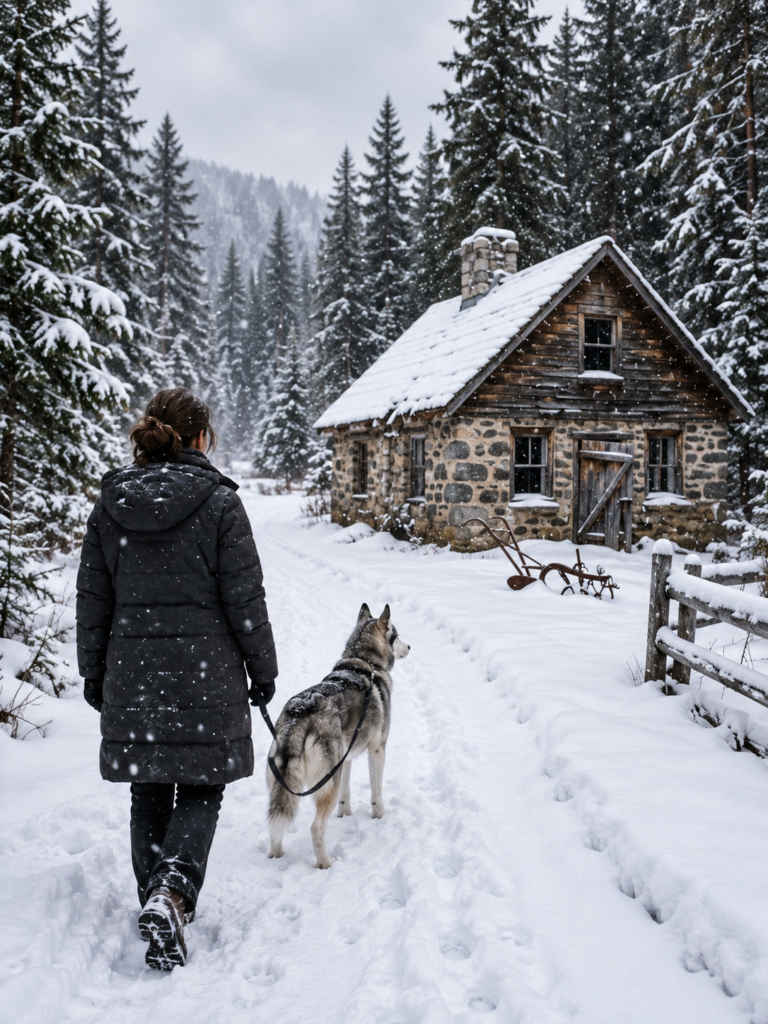
The paved road ended four miles outside town.
Beyond it, the old quarry road climbed through thick pine forest. Frozen ruts shook the truck, and the tires slipped on patches of ice beneath the trees.
Ren kept both hands tight around the steering wheel.
The cabin appeared late that afternoon.
It was smaller than she remembered.
Weather had silvered the logs. Moss covered the stone chimney. The porch sagged to one side, and dirt coated the single front window.
Ren sat behind the wheel for several minutes.
Perhaps Garrett was right.
Perhaps her grandfather had left her nothing but a burden.
She climbed out anyway.
Bram followed, sniffing the frozen ground.
The porch boards groaned beneath her boots.
She inserted the brass key into the lock.
It turned smoothly.
That surprised her.
Everything about the outside suggested years of neglect. Yet the lock moved as though somebody had oiled it recently.
She pushed open the door.
And stopped.
The smell came first.
Linseed oil.
Fresh pine.
The faint trace of smoke from a woodstove.
It smelled exactly like her grandfather’s workshop.
As her eyes adjusted, she realized the cabin was not abandoned at all.
Along one wall hung rows of polished chisels and carving tools. Hand planes rested above a long workbench. A woodstove stood in one corner with neatly stacked firewood nearby.
At the center of the room sat a chair.
Ren had never seen anything so beautifully made.
Its slender spindles curved into a graceful fan. The carved seat flowed smoothly into its angled legs. Every joint appeared seamless.
Another chair stood unfinished in a vise, its remaining spindles arranged neatly beside it.
Ren bent down and picked up a shaving from the floor.
The wood was still pale and flexible.
Her grandfather had worked here shortly before he died.
All those years when he claimed to be fishing, he had been making chairs.
But why?
And why had he never told her?
Bram walked straight across the room toward a low door in the back corner.
He pressed his nose against it and whined.
Ren tried the handle.
Locked.
She tried the brass key.
It did not fit.
The door was unusually thick, reinforced with iron bands.
Whatever her grandfather had kept behind it, he had meant to keep secure.
“We’ll figure it out,” she told Bram.
She lit the stove and found that the chimney drew perfectly.
Then she noticed an envelope resting on the beautiful chair.
A smooth riverstone held it in place.
On the front was her name.
Ren.
She recognized the handwriting immediately.
She sat on the floor beside the stove and opened it.
Her grandfather began by apologizing.
He had expected her brothers to return after his death. He had expected them to take the house, the money, and the tools.
And, the letter explained, he had allowed it.
Ren read that passage twice.
For a moment, she felt angry with him.
He had known what Garrett might do. He had known how much she had sacrificed. Why had he allowed her to stand there helpless while her brothers stripped the family home?
But the next lines stopped her.
Anybody can leave somebody money, Ren. I wanted to leave you something they couldn’t carry away.
He told her that everything inside the cabin belonged to her.
The tools.
The chairs.
The wood.
And whatever was behind the locked door.
He warned her not to sell anything until she understood its value.
Then he reminded her that he had already taught her more than she realized.
At the bottom, where another man might have written Love, Grandpa, Tob had drawn four simple lines.
A little wren.
Ren pressed the page against her chest.
Bram lay beside her, his warm body settling against her leg.
For the first time since the funeral, she felt as though her grandfather had left her something more personal than an object.
He had left her a question.
And she intended to answer it.
The following morning, hunger and practical necessity forced her back into town.
She needed food, water, and supplies for Bram.
She stopped at Fay’s diner, the small brick building on Main Street where Tob used to take her for pancakes.
Fay had owned the place for decades.
She was a gray-haired woman with a sharp tongue and a generous heart, and she had been slipping Ren extra bacon since childhood.
The moment she saw Ren, she came around the counter and hugged her.
Ren had held herself together through the funeral, the estate sale, and her brothers’ betrayal.
But standing in Fay’s arms, she finally cried.
Fay did not rush her.
When Ren could speak again, the older woman guided her into the familiar corner booth and brought her eggs, toast, and coffee.
She put scraps on the floor for Bram.
“They took everything, didn’t they?” Fay asked.
Ren nodded.
“They left me the cabin.”
Fay’s expression changed.
“Up the quarry road?”
“Yes.”
“Your grandpa went up there for years. I always figured it was where he went to think about your grandmother.”
Ren looked into her coffee.
“I think it meant something different to him.”
She said no more.
Fay offered her a place to stay, but Ren declined.
The cabin belonged to her. She wanted to understand it before she let anyone else into its secrets.
Before she left, Fay filled a box with bread, a roast chicken, and bones for Bram.
Ren tried to pay.
Fay waved the money away.
“Your grandfather fixed half the furniture in this diner and never let me pay him properly.”
Then she repeated something Tob used to tell her.
“You’re never poor as long as you’ve still got something to give away.”
Ren remembered that sentence all the way to the door.
She also remembered an old story.
Eleven years earlier, when Fay’s husband was dying, hospital bills had nearly cost them the diner.
Then someone had paid every bill anonymously through a lawyer.
“Did you ever find out who helped you?” Ren asked.
Fay looked toward the window.
“No. But I always had my suspicions.”
Ren wondered whether the answer had something to do with the cabin.
She did not know yet how close she was.
Outside, her phone finally picked up a voicemail.
It was Garrett.
He sounded friendly again.
He asked her to look around the cabin for any old business records or documents her grandfather might have stored there.
If she found anything official, he wanted her to bring it to him.
Ren listened to the message twice.
Two days earlier, Garrett had called the cabin worthless.
Now he was interested in what might be inside.
She put the phone away and drove back up the mountain.
That evening, after lighting the lamps, she began examining the workshop carefully.
On a shelf above the bench, she discovered a bundle of letters tied with string.
The first came from an art gallery eight hundred miles away.
It thanked someone for making an extraordinary writing armchair and asked whether two matching chairs could be commissioned for $9,000.
Other letters came from museums, galleries, and private collectors.
Some were decades old.
All expressed admiration for the same mysterious furniture maker.
All asked when another chair might become available.
And all were addressed to the same name.
Ren.
Her hands began to tremble.
She crossed the room and gently turned the finished chair onto its side.
On the underside of the seat, burned into the wood, was a tiny maker’s mark.
Four lines forming a bird.
A wren.
She found the branding iron hanging on the tool wall.
Then she took the little wooden bird from her coat pocket.
She held the carving beside the mark.
They matched.
Her grandfather had been creating extraordinary furniture in secret for forty years.
And on every piece, he had placed her name.
Ren sat on the workshop floor, staring at the three matching birds.
For the first time, she understood that the cabin contained something valuable.
But she still had no idea what lay behind the locked door.
Or why her grandfather had chosen to hide it.
Part 2
Ren did not sleep much that night.
She kept returning to the letters.
Some customers had waited two years for a single chair. Others had commissioned entire sets. The galleries spoke about craftsmanship with a reverence Ren had never encountered at the lumber yard.
The prices were unlike anything she associated with her grandfather.
Four thousand dollars.
Six thousand.
Nine thousand for a pair.
And somewhere in the workshop stood a finished chair that could be worth more than the truck she drove.
She examined its construction again.
Now she noticed details she had missed: how the spindles entered the seat at slightly different angles, how the curve of each arm matched the natural movement of a resting hand, how the chair balanced without the slightest rocking.
She had grown up watching Tob repair ordinary furniture.
Apparently, he had spent his private hours making extraordinary furniture.
But the mystery of the signature troubled her most.
He had not used Tobias Halverson.
He had used her name.
Long before she was old enough to understand what that meant.
Bram remained beside the locked door, occasionally raising his head as though reminding her that the discovery was not complete.
“All right,” she finally told him. “I haven’t forgotten.”
She studied the door.
There were no visible hinges she could remove easily, and forcing it open might damage something her grandfather had carefully protected.
She needed the key.
Then she remembered the workbench.
Tob had made several benches over the years, and each contained a hidden drawer.
He used to challenge her to find the concealed mechanism, pressing two knots in the wood at the same time to release a narrow compartment.
She had loved those little puzzles.
Now she knelt beside the cabin’s workbench and ran her fingers beneath the front rail.
The first knot was easy to locate.
The second took longer.
She pressed both.
Something moved.
A shallow drawer slipped forward so smoothly that she almost laughed.
Inside lay a long iron key.
Nothing else.
She carried it to the locked door.
The key turned on the first try.
Bram squeezed past her before the door had fully opened.
Ren lifted her oil lamp and followed.
The room beyond was larger than she expected.
Two rows of furniture stood beneath gray moving blankets.
She lifted the nearest covering.
Underneath was a beautifully carved settee, its curved arms flowing into the frame with a precision she could scarcely believe.
Nearby stood an elegant rocking chair.
Beyond it were more chairs, each different, each representing weeks or months of work.
There were at least a dozen pieces.
Along the far wall stood shelves filled with ledgers, boxes of correspondence, and notebooks.
Ren approached the shelves.
She knew her grandfather’s handwriting better than anyone.
She had managed his household accounts for years, and the columns in the first ledger were immediately familiar.
But the amounts startled her.
Every page recorded carefully dated commissions.
The name of a gallery. The destination of a chair. The amount paid.
One entry listed an $11,000 settee delivered to a museum during a year when Ren had still been in grade school.
Another documented a private commission that had taken nearly three years to complete.
Forty years of work filled those books.
Her grandfather had earned more money than anyone in the valley would have guessed.
He had lived in a modest house, driven an aging pickup, and worn the same patched winter coat for years.
People had assumed he was poor.
Ren had assumed it too.
Then she noticed the second column.
Money received on one side.
Money given away on the other.
She began reading.
A family whose roof had collapsed during a storm.
A widow behind on her property taxes.
A volunteer fire department needing a pumper truck.
Tuition for a girl named Okafur.
Mortgage payments for the hardware-store family during three terrible winters.
A young couple whose furnace had failed shortly after bringing home their first baby.
There were dozens of entries, each recorded with the same precision he had applied to his woodworking.
Many were identified only by initials.
The payments had been arranged anonymously.
Then she found an entry from eleven years earlier.
F. Husband. Hospital. Paid in full through lawyer. She is never to know.
Ren read the line again.
Fay.
Her grandfather had paid the hospital bills that saved Fay’s diner.
He had never mentioned it.
Not once.
She turned more pages.
The more she read, the more familiar names appeared.
People she had seen at the funeral.
People who had stood in the church with tears running down their faces.
People who had spoken about Tob as if he had somehow appeared during the worst moments of their lives.
Ren finally understood.
The man everybody believed was repairing broken furniture for pocket money had quietly been keeping an entire community afloat.
His chairs had paid for hospital care, funerals, taxes, tuition, groceries, and roofs.
And he had done it without expecting anyone to thank him.
She lowered herself onto a covered chair.
For years she had believed she knew her grandfather completely.
She knew how he liked his coffee, which knee bothered him in the cold, and why he always kept the workshop windows slightly open when varnish was drying.
But she had never known this.
The generosity in those ledgers was almost too large to comprehend.
And with it came another troubling realization.
He had watched her worry over household expenses. He had allowed everyone to believe they were struggling. He had kept this secret even when she was exhausted from caring for him.
Why?
On the shelf beside the ledgers stood another envelope.
It bore her name.
She opened it with unsteady hands.
The second letter explained what the first had only hinted at.
When Tob was a young man, a large furniture manufacturer had offered to purchase one of his original chair designs.
Not the individual chair.
The design itself.
The company wanted to produce thousands of copies.
For two years, Tob had pursued the deal.
He had imagined money, recognition, and the kind of success that would make everyone respect him.
During that time, his daughter had been a teenager.
He had missed ordinary evenings with her. He had spent more hours thinking about contracts than listening to what she needed.
When she fell in love with a young man he disliked, they argued bitterly.
He told her she was ruining her future.
She told him he cared more about money than his family.
Then she left.
By the time Tob abandoned the manufacturing arrangement, the distance between them had become difficult to cross.
Years later, she returned with baby Ren.
She was tired, alone, and no longer interested in continuing their quarrel.
Tob had begun hoping they might rebuild what they had lost.
Then came the aneurysm.
His daughter died, leaving him with three grandchildren and the knowledge that he could never recover the years he had wasted.
In the hospital hallway, with little Ren asleep against his shoulder, he made himself a promise.
He would never again sacrifice somebody he loved for money.
He would make furniture with his own hands, one piece at a time, and use what he earned to help people who needed it.
He would keep his name out of the transactions so praise and pride could not become another kind of hunger.
Ren paused and wiped her eyes.
Now she understood why he had hidden the sales, the commissions, and the donations.
The work had become his way of remembering what mattered.
Then she reached the passage explaining the little bird.
He had signed his chairs with her name not as a marketing trick, but as an apology to her mother and a promise to Ren.
The ambition that had nearly destroyed his relationship with his daughter would instead carry his granddaughter’s name into the world.
He hoped the furniture would outlast him.
He hoped Ren would someday understand that worth was not measured by how much a person could keep.
At the end, he wrote that the money her brothers had taken had never been the true inheritance.
That was merely the portion they knew how to recognize.
Ren sat holding the letter until the lamp began to burn low.
Her grief had changed shape.
She still missed the man who had taught her to sharpen chisels and repair chairs.
But now she was beginning to understand the man he had spent his whole life trying to become.
Over the following days, she worked.
Her grandfather had left notebooks documenting decades of techniques.
There were drawings, measurements, notes about wood movement, instructions for shaping seats, and sketches of designs she recognized from the chairs in the locked room.
Ren returned to the unfinished chair in the vise.
She shaped its seat, steam-bent the back, fitted the remaining spindles, and smoothed every surface by hand.
It took four days.
When she finally stood the chair on the floor, it balanced perfectly.
She walked around it several times.
Then she turned it over.
The underside of the seat was blank.
She reached for the branding iron.
But she could not bring herself to heat it.
Her grandfather had spent a lifetime earning that mark.
She had made one chair.
It was good work, but she was not ready to claim that she could carry his name forward.
She returned the iron to the wall.
Later that week, Fay drove up the mountain in a small hatchback with a mechanic from down the valley.
Together they got the old wellhouse pump operating again.
Fay inspected the workshop while Ren worked nearby.
She saw the tools, the chairs, and the shelves of correspondence.
For a while, she said nothing.
Then she rested her hand on the workbench.
“Your grandfather was something special, wasn’t he?”
Ren smiled faintly.
“You have no idea.”
Fay did not press for an explanation.
Ren was grateful.
The secret had belonged to Tob for forty years. She needed time to decide what it meant to inherit it.
But the quiet did not last.
Cole arrived one afternoon as a storm gathered over the mountains.
His city sedan struggled over the frozen ruts, tires spinning before he managed to reach the clearing.
Ren was standing on the porch when he stepped out.
Bram approached him.
The dog sniffed his hand, then turned away without growling.
“You shouldn’t have driven that car up here,” Ren said.
“I know.”
“Road could freeze before dark.”
“I know that too.”
Cole remained beside the car for a moment.
He looked exhausted.
Finally, he climbed the steps.
“Ren, I need to tell you something.”
She brought him inside.
He stopped just beyond the doorway, staring at the workshop.
His eyes moved from the rows of polished tools to the chairs and the workbench.
“What is all this?”
“What Grandpa was doing when he said he was fishing.”
Cole approached one of the chairs.
“He made these?”
“Yes.”
“All of them?”
Ren nodded.
For several seconds, Cole simply looked around.
Then he remembered why he had come.
“Garrett’s in trouble,” he said.
Ren pulled out a stool.
“Sit down.”
“The development he’s been working on is finished. The bank is calling the loan. He owes more than the business is worth.”
Ren watched him carefully.
“Why are you telling me?”
“Because he used Grandpa’s land.”
Her eyes narrowed.
Cole explained what he knew.
About a year earlier, Garrett had needed additional security for the development loan.
The bank wanted land that was owned free and clear.
Garrett had none.
But Tobias Halverson owned forty acres in the mountains.
Cole had helped with parts of the paperwork, signing documents when Garrett instructed him to.
He had not asked enough questions.
Now the development was collapsing, and Garrett needed the cabin sold before the bank investigated everything.
“He says he can find a buyer,” Cole continued. “He’s coming up here to convince you.”
Ren leaned against the workbench.
“He called this place worthless.”
“I know.”
“He told me to let the county take it.”
“I know that too.”
“Then why would anybody pay to buy it now?”
Cole looked miserable.
“Because if he can’t get the debt sorted, he could lose everything.”
Ren stared at her brother.
“Did Grandpa ever agree to guarantee the loan?”
Cole hesitated.
“I don’t think he even knew about it.”
“Was there a signature?”
“There had to be.”
“Did you see him sign?”
“No.”
“Did Garrett ever take papers to him?”
“No. Grandpa was already too sick to travel, and Garrett never mentioned anything to him.”
The wind rattled the window.
Ren thought about the documents Garrett had asked her to retrieve.
She remembered his friendly voicemail and the urgency concealed beneath his voice.
Then she thought about the strong room.
Her grandfather had kept forty years of correspondence in meticulous order.
Surely he would have kept something concerning the land.
She fetched a lamp and went into the back room.
Cole followed her to the doorway.
Ren began examining the newest boxes.
Near the bottom of one, she found a photocopied loan document.
It pledged the forty-acre property on the old quarry road as security for Garrett’s development loan.
The date was from the previous year.
At the bottom appeared the signature:
Tobias Halverson.
Ren stared at it.
The letters were broad and confident.
Her grandfather’s handwriting had not looked like that in years.
During his final illness, his hand had trembled so badly that Ren sometimes held his coffee cup steady while he drank.
He could barely sign a birthday card.
Yet this signature looked like the work of a healthy young man.
Clipped to the document was a handwritten note.
It explained that Tob had received a copy from the bank and discovered that Garrett had signed his name without permission.
He had never agreed to guarantee the loan.
He had never authorized the use of his land.
He had kept the document because he believed Garrett would eventually come looking for the cabin.
Ren read the final paragraph slowly.
Her grandfather could have reported the forgery immediately.
He had chosen not to.
Not because he believed Garrett innocent, but because he feared what the anger and consequences might do to the family.
He left the evidence with Ren so she would know the truth and could protect herself.
What she did with it would be her decision.
He asked her not to let the betrayal turn her into a hard person.
At the bottom was the little bird.
Ren folded the letter around the photocopy.
Outside, two headlights appeared through the trees.
A car was climbing the quarry road.
Cole moved beside her.
“That’s Garrett.”
Ren slipped the documents into the pocket of her flannel shirt.
For years, Garrett had treated her like a child who could be persuaded to give up anything.
Now he was coming for the only inheritance their grandfather had protected for her.
And for the first time, Ren knew something about her older brother that he did not know she knew.
She walked toward the porch.
Bram followed.
Behind them, the locked room stood open, filled with forty years of extraordinary work.
Ahead, through the sleet, Garrett’s car approached.
Part 3
Garrett’s sedan slid into the clearing and stopped at an awkward angle.
He climbed out into the sleet, pulling his expensive coat around himself.
When he noticed Cole’s car, his expression changed.
“What are you doing here?”
Cole stepped onto the porch behind Ren.
“Visiting my sister.”
Garrett looked from one to the other.
Then he smiled.
The same reassuring smile Ren remembered from the evening he persuaded their grandfather to sign the power of attorney.
“Ren, thank God you’re all right. I’ve been worried about you up here.”
He looked at the old cabin.
“You shouldn’t be living like this. I’ve actually got some good news.”
Ren opened the door.
“Come inside.”
Garrett entered and stopped.
His eyes moved slowly around the workshop.
He noticed the polished tools, the finished chairs, and the workbench.
For one brief moment, he looked like a boy remembering something he had forgotten.
Then he regained his composure.
“Well,” he said, “this is interesting.”
He pulled out a chair and sat down without asking.
“I’ve been thinking about how the estate worked out. You got the short end, and I feel terrible about that.”
Ren remained standing.
“Do you?”
“Of course. Which is why I’ve been making some calls.”
He explained that he knew someone interested in purchasing mountain property for hunting leases.
The buyer was prepared to offer $30,000 for the forty acres.
“Cash,” Garrett emphasized. “You could get an apartment, replace that old truck, and start fresh.”
Ren glanced toward Cole.
He said nothing.
“Thirty thousand,” she repeated.
“That’s right.”
“What’s the buyer’s name?”
Garrett blinked.
“Just a guy I know.”
“Does he know there’s a cabin?”
“Ren, that’s not important.”
“Does he know about the road?”
Garrett shifted in the chair.
“Of course he knows it’s rough.”
“Two weeks ago, you told me the land was worthless. Now somebody wants to pay thirty thousand dollars for it.”
Garrett’s smile faded.
“Markets change.”
“In two weeks?”
“Don’t make this difficult.”
Ren sat across from him.
“I’m trying to understand why you suddenly want me to sell the only thing Grandpa left me.”
Garrett looked toward Cole.
His brother stared back.
Something in Garrett’s expression hardened.
“What did you tell her?”
“The truth,” Cole answered.
Garrett stood.
“You had no right.”
“I should have told her sooner.”
“After everything I’ve done for you?”
Cole shook his head.
“You used Grandpa’s property to back your loan.”
Garrett turned toward Ren.
“You don’t understand how business works.”
“I understand the development failed.”
His face drained.
“I understand the bank wants its money,” she continued. “And I understand you need this land because you’ve already promised it to them.”
Garrett took a step forward.
Bram rose from beside the stove.
The old dog positioned himself between Garrett and Ren.
He did not bark.
He simply stood there, watching.
Garrett stopped.
For several moments, nobody spoke.
Then he dragged a hand across his face.
“I’m going to lose everything,” he said.
His voice had changed.
The practiced warmth was gone.
“The house. The cars. The business. Marissa’s already talking about taking the kids to her mother’s.”
He looked exhausted.
“I have eleven days before the bank starts taking things apart.”
Ren watched him.
For years, Garrett had seemed larger than life to her. Always confident. Always telling everyone what needed to happen.
Now she saw a frightened man who had borrowed more than he could repay.
“Grandpa didn’t leave me this cabin to punish you,” she said.
Garrett laughed bitterly.
“Didn’t he?”
“No.”
“He always favored you.”
Ren stiffened.
“That’s not true.”
“Of course it is. You were the one he kept. He taught you everything. He never wanted me around.”
“You left, Garrett.”
“Because there was nothing here for me!”
His voice filled the cabin.
“I spent my whole life trying to build something big enough that he’d finally respect me. And you know what? Nothing was ever enough.”
His eyes were wet.
“He looked at you like you were the future. He looked at me like I was already a disappointment.”
Ren remembered the boy who had once let her sleep beside his bed when she was frightened of the dark.
She had not thought about that memory in years.
Now she could see how long her brother had carried his own hurt.
But pain did not excuse what he had done.
“Sit down,” she said.
He stared at her.
“Please.”
Garrett lowered himself into the chair.
Ren went into the strong room.
She returned carrying one of the ledgers and a beautiful settee covered with a blanket.
She pulled the blanket away.
Garrett stared.
“Grandpa made this,” she said.
She turned it carefully and showed him the small bird burned underneath.
“He made furniture like this for forty years. Museums bought it. Galleries sold it. Some people waited years just to get one chair.”
Garrett leaned forward.
“That mark,” Ren continued, “is a wren.”
She took the tiny wooden bird from her pocket and placed it beside the mark.
“He signed every piece with my name.”
Garrett touched the edge of the seat.
“He never told us.”
“No.”
“Why?”
Ren opened the ledger.
“Because he didn’t want the money to become the most important thing in his life.”
She showed him the second column.
The gifts.
The hospital bills.
The mortgages.
The scholarships.
The payments made secretly to people throughout the valley.
“He helped all these people,” she said. “And nobody knew.”
Cole moved closer.
He recognized names.
His hand covered his mouth as he read.
Garrett stared at the entries for a long time.
“He had that much money?”
“He earned it. And he gave most of it away.”
Ren closed the ledger.
“The money you took wasn’t everything Grandpa had. It was only everything you knew how to look for.”
Garrett looked around the workshop again.
For the first time, he seemed to see it properly.
Then Ren removed the folded documents from her shirt pocket.
She placed them on the bench.
“This is the loan guarantee.”
Garrett went still.
“And this is Grandpa’s note explaining that he never signed it.”
His face turned gray.
“Ren—”
“You forged his name.”
He said nothing.
“Grandpa found out before he died. He kept the paperwork.”
Garrett stared at the signature.
“Do you know what happens if the bank discovers this?” Ren asked.
He nodded slowly.
“The guarantee could be challenged. The bank would investigate. And you could face criminal charges.”
Garrett lowered his head.
“You could destroy me.”
Ren looked at the paper.
She thought about the morning he had taken the money. The tools carried away. Bram nearly sent to a shelter.
She could report him.
Part of her wanted to.
But she also remembered the final line of her grandfather’s letter.
Don’t let it make you hard.
“Tomorrow,” she said, “when the road clears, you’re going to call the bank.”
Garrett looked up.
“You’re going to tell them the signature is forged. You’re going to correct what you did and deal with the money you actually owe.”
“I’ll lose the development.”
“Then you’ll lose it.”
He looked defeated.
Ren softened her voice.
“I won’t sell the cabin to save your business.”
Garrett nodded.
“But you have children. And I won’t stand by if they need food or a place to live. I’ll help them where I can.”
He stared at her.
“After everything I did?”
“You’re my brother. That doesn’t make what you did right.”
She gathered the documents.
“It means I can refuse to let you hurt me again without wishing your family would suffer.”
Cole stepped beside her.
“I’m staying up here,” he said quietly.
Garrett looked at him.
“I’m done working for you. I should have stopped going along with things years ago.”
He turned toward Ren.
“I’d like to learn what Grandpa taught you. If you’ll let me.”
Ren looked at her younger brother.
For the first time since the funeral, Cole was standing beside her without trying to explain Garrett’s behavior.
She nodded.
Garrett lowered his face into his hands.
His shoulders began to shake.
Ren let him cry.
Then she knelt beside him and put a hand on his knee.
“He loved you,” she said.
Garrett shook his head.
“He did. I think he was afraid you’d become like the man he used to be. He knew what ambition could cost a family because it had already cost him his daughter for years.”
Garrett wiped his face.
“I don’t know how to be somebody different.”
Ren looked toward the workbench.
“Neither did he at first.”
She stood.
“He learned one piece at a time.”
The storm closed the road that night.
There was no safe way down the mountain, so the three siblings remained in the cabin.
Cole kept the stove burning.
Ren heated the roast chicken Fay had given her, made coffee, and set out mismatched plates.
Garrett asked how long it took to make one of the chairs.
“A month, sometimes more,” Ren answered.
He looked toward the strong room.
“Forty years,” he murmured.
They ate quietly.
It was the first night the three of them had spent together under one roof since childhood.
Nothing was repaired completely.
There were still years of neglect, resentment, and betrayal between them.
But for once, nobody pretended those things did not exist.
Late that night, after her brothers fell asleep, Ren returned to the chair she had finished during her first week.
She turned it over and touched the blank underside.
She still was not ready to burn the bird into it.
But she was closer.
By spring, the cabin was no longer difficult to reach.
Cole had rented a grading machine and spent ten days repairing the quarry road.
He helped replace the failing porch supports and claimed a small room off the workshop for himself.
Most mornings, he worked beside Ren.
His early attempts were terrible.
He ruined joints, cut spindles crooked, and once turned an expensive piece of cherry into firewood.
Ren taught him the way Tob had taught her.
Slowly.
One afternoon, she watched him run his thumb along the grain of a board before cutting.
He noticed something in the wood that might cause the blade to tear.
Ren smiled without saying anything.
Her grandfather would have understood.
Bram slept on the repaired porch, warming his old bones in the sunlight.
And Ren finally decided her first chair was ready.
One evening in April, she heated the branding iron until the metal glowed.
She turned the chair over.
Then she pressed the little bird into the wood.
When she lifted the iron, the mark remained.
It was her grandfather’s signature.
It was also her name.
For the first time, she felt she had earned the right to use it.
She wrote to the gallery eight hundred miles away.
The message was brief.
The workshop was making chairs again.
One was ready.
The mark was unchanged.
Nine days later, the gallery replied.
A longtime customer had been waiting nineteen years for a writing armchair.
He was prepared to pay $7,000.
Ren built a shipping crate herself and drove the chair two hours to the freight office.
Three weeks later, a card arrived.
The customer wrote that he had almost given up hope of receiving his chair.
He was an old man now.
But when he sat down, he recognized the same care and workmanship he had admired decades earlier.
Ren placed his letter beside the others.
When the payment arrived, she remembered the ledgers.
Her grandfather had left her more than the ability to make chairs.
He had taught her what to do with the money they earned.
Garrett kept his promise.
The morning the road cleared, he contacted the bank and admitted that the guarantee had been forged.
The following months were difficult.
There were lawyers, statements, financial investigations, and painful conversations.
His development failed.
He lost his house.
But Marissa stayed after Garrett finally told her the complete truth.
She kept their family together while he took a job managing a building-supply yard two towns away.
He earned far less than before.
For the first time in years, he no longer had to pretend he was successful.
He discovered he was good at the work.
Ren retained the evidence in the strong room, where it remained among Tob’s other documents.
She never delivered the photocopy herself to the authorities.
Garrett knew where it was.
He also knew that Ren had not mistaken forgiveness for trust without conditions.
In June, he drove up the mountain with Marissa’s two children and a cooler of food.
The children immediately fell in love with Bram.
Then they discovered the workshop.
Garrett stood in the doorway watching his son lift a curl of wood shaving and smell it.
Something softened in his face.
“I spent my whole life thinking this place was nothing,” he said.
Ren stood beside him.
“I know.”
“I thought I had to become rich to prove I came from somewhere worth remembering.”
He watched his son exploring the workbench.
“And it was all here.”
That afternoon, Garrett helped Ren steam-bend a chair back.
He was awkward and impatient.
He made mistakes.
For once, he laughed at himself.
It was a sound Ren had almost forgotten.
Before leaving, he paused beside the strong room.
“You could still ruin me,” he said.
Ren looked at him.
“I know.”
He nodded.
“Then I’d better become somebody who deserves another chance.”
She watched him walk back to his children.
For the first time, she believed he might mean it.
Fay’s diner nearly closed in May.
The roof had begun leaking badly, and repairs would cost more than the business earned in a year.
One morning, Ren stopped for coffee and saw a notice taped to the window.
Closing. Thank you for 38 years.
She stood outside reading it.
She thought about the corner booth where she and Tob had eaten pancakes.
She thought about Fay’s husband and the hospital bills paid eleven years earlier.
Then she went to see the lawyer.
Three weeks later, roofers arrived.
Fay received a letter explaining that an anonymous friend had covered the repairs and the outstanding property taxes.
The donor had only one request.
The corner booth must remain where it was.
Because a town needed at least one place where people could sit across from each other.
Fay read the letter several times.
She looked out toward the mountains.
She had a suspicion.
She could not prove it.
A week later, Ren arrived for breakfast.
Fay sat across from her.
“Your grandfather used to sit right there,” she said. “Always paid too much. Always told me to keep the change.”
Ren stirred her coffee.
“Sounds like him.”
Fay studied her face.
“Funny how some things come back around.”
Ren reached across the table and covered the older woman’s hand with hers.
“Eat your breakfast, Fay. It’s getting cold.”
Fay laughed, wiping at her eyes.
She did not ask another question.
In the fall, a seventeen-year-old girl named Dany arrived at the workshop.
She had aged out of a foster placement and had been sleeping in her car behind a laundromat two towns away.
The lawyer had mentioned her situation to Ren.
Ren drove down to meet her.
She did not offer pity.
She offered work.
Dany began with a broom.
She was suspicious of every kindness and expected to be disappointed.
Ren understood that feeling better than the girl knew.
Over time, she taught Dany how to sharpen a blade.
Then how to hold a chisel.
One morning, Dany cut too deeply into a seat blank that Ren had spent two days preparing.
The wood split.
Dany went pale.
She moved toward the door, expecting to be shouted at or dismissed.
Ren examined the damaged piece.
Then she placed it beside the stove.
“Wood’s cheap,” she said.
Dany stared at her.
“That’s it?”
“That’s it.”
“You’re not angry?”
“I’m going to show you how to keep the gouge from running next time.”
Ren picked up another piece of wood.
“Slow down. Wood doesn’t care how fast you are. It only cares if you’re paying attention.”
Dany sat.
And for the first time, she listened without waiting for the punishment that usually followed a mistake.
The cabin gradually became a gathering place.
Cole worked beside Ren.
Dany learned the craft.
Garrett brought his children whenever he could.
On Sundays, Fay sometimes arrived with a pie and settled into a chair with the diner’s bookkeeping.
Bram moved from one warm patch of sunlight to another.
Outside, the forest remained quiet.
Inside, the workshop was filled with the sounds of tools, conversation, and occasional laughter.
Chairs began leaving the mountain again.
Their buyers never learned much about the person making them.
They knew only the little bird stamped beneath each seat.
And around the valley, unexpected acts of generosity continued.
The volunteer fire department received money for a new truck motor.
A student found her next semester of tuition paid.
Families facing impossible bills sometimes received letters explaining that an anonymous donor had helped them.
Most people attributed it to the strange good fortune the valley seemed to enjoy.
Ren allowed them to believe that.
Her grandfather had taught her that kindness did not always need a witness.
Sometimes the gift was greater when the giver remained unknown.
Late that year, on the first night cold enough to require a serious fire, Ren stayed behind in the workshop after everyone else had gone home.
She had just finished her second chair.
She carried her grandfather’s old chair beside the stove and placed her new one next to it.
For a long time, she studied the two.
The older chair bore the unmistakable confidence of a craftsman who had spent decades learning his work.
Her chair was simpler.
But its joints were sound.
Its legs stood level.
And it had been made with care.
Ren turned it over and pressed the heated branding iron into the wood.
The little bird appeared dark and clean beneath the seat.
She set the chair upright.
Then she sat down.
It held her perfectly.
On the windowsill stood the little wooden wren her grandfather had carved when she was small.
She no longer carried it everywhere.
It belonged here now, above the workbench, watching over the place where her grandfather had spent forty years creating things that could outlast him.
Ren thought about the morning her brothers laughed at the lawyer’s office.
They had taken the house.
The money.
The tools.
Everything they could sell.
And they had believed she was the one who had been left with nothing.
But her grandfather had known something they had not.
He had known that a person’s true inheritance was not always something that could be counted, transferred into an account, or carried away in a truck.
Sometimes it was the knowledge in their hands.
The people they had helped.
The work they had done with care.
The love they had chosen to give, even after life had given them reasons to withhold it.
Ren rose from the chair and banked the stove.
Bram slowly lifted himself from the rug and followed her toward the door.
At the threshold, she turned once more.
Two chairs stood beside the fading fire.
One her grandfather had made.
One she had made.
Both ready to hold whoever needed to sit.
She closed the cabin door and stepped into the cold mountain air.
For the first time since Tob’s death, she did not feel that she was leaving him behind.
The workshop was his legacy, but it was hers to carry forward.
And high on the mountain, at the end of a road that once had seemed to lead nowhere, a single lamp glowed through the window.
The warmest light in the valley.
A chair holds you up whether you notice it or not.
Her grandfather had spent his life proving that people could do the same.