
Part 1
There was no mention of it in the cavalry reports.
That was the first thing Father Esteban noticed when he began comparing the dying man’s confession against the few military records he could obtain.
The official papers were clean.
Too clean.
They spoke of a routine patrol into northern Sonora in the spring of 1886, conducted under the agreement that permitted American troops to pursue hostile Apache bands across the Mexican border. They listed horses, rations, personnel, dates of departure and return. They recorded a failed pursuit, several losses attributed to sickness and desertion, and the eventual death of a sergeant from what was described as brain fever.
Nothing in the file suggested terror.
Nothing in it explained why Corporal Wendell Crane, nearly 50 years after the patrol, asked for a priest during the final hours of his life and insisted that the confession be written down.
He was 62 then, white-haired, wasted by illness, living in the mining country of northern Sonora with his Mexican wife and their grown sons. He had been a soldier once, then a prospector, then a husband, then simply an old man who avoided mirrors after dark.
Father Esteban sat beside him in a small parish house in Bavispe and listened for nearly 2 hours.
When the confession was finished, the priest copied it into the back of the parish register.
He did not write it in Spanish.
He chose Latin.
Perhaps that was habit. Perhaps education. Perhaps fear.
The story began with an Apache scout known to the army only as Closson.
No surname appeared beside his name on the detachment payroll. No birth name was given. There was only a thumbprint where other men placed signatures.
The army papers listed him as an Indian scout, Company B, mounted, sworn into service in August of the previous year.
Crane remembered him as a man of about 42.
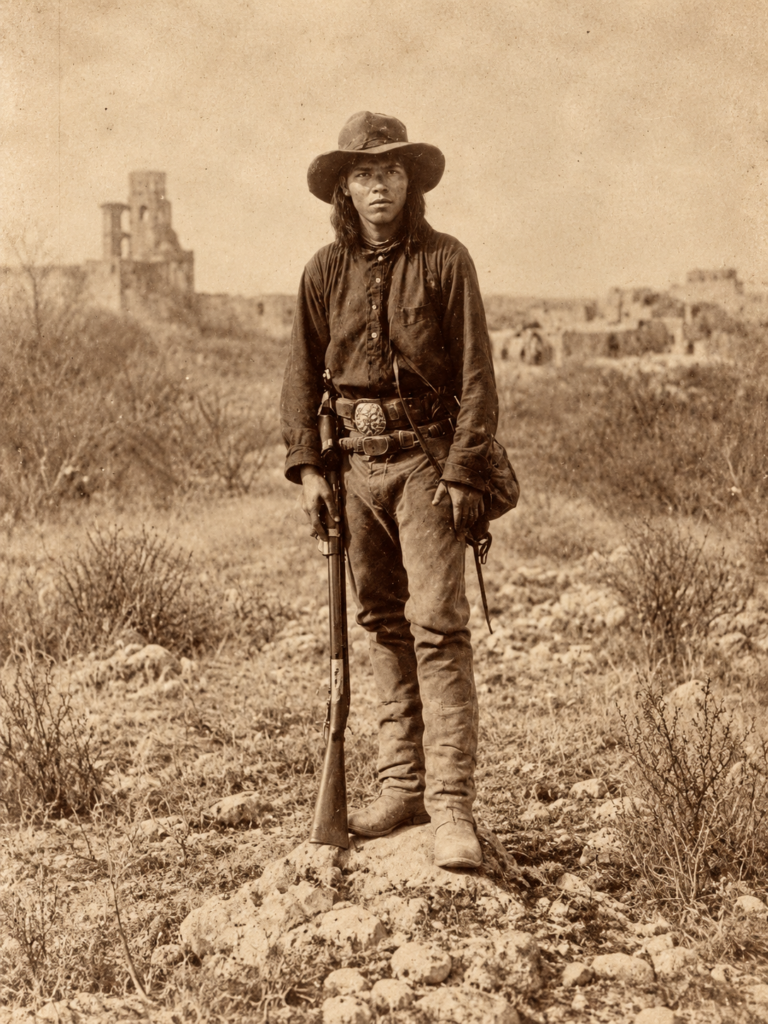
Closson stood nearly 6 ft tall, unusual enough that he drew notice even among cavalrymen who had spent years around Apache scouts. He had the hard, rope-like build of someone who had grown up walking mountains rather than roads. His face was narrow, his cheekbones high. A pale scar ran from near the corner of his left eye toward the hairline above his ear.
Someone, Crane had once thought, had tried to blind him.
Someone had failed.
Army regulations had taken his long hair. He wore it short and wore the issued scout’s clothing when required: a dark blouse, canvas trousers, cavalry boots.
But one thing did not belong to the United States Army.
Around his neck, beneath his shirt, he carried a small leather pouch.
No one ever saw him remove it.
Not to sleep.
Not to wash.
Not even when the men stripped down beside a river after days in the dust.
Crane eventually came to think of that pouch as the only thing Closson possessed that the cavalry had never managed to own.
Almost nothing was known about his life before enlistment.
Some said he was Chiricahua.
Others said only partly.
There were stories that he had killed someone among his own people and had been driven out. One version said it was over a woman. Another said a child.
Crane heard a different account from another Apache scout during a cold night in Arizona.
According to that man, Closson had once discovered the body of his own brother in a wash near the Bonita headwaters.
The brother had been dead.
But something about the body had been wrong.
Crane had asked what that meant.
The scout repeated the word wrong in English, then said something in Apache that Crane could not understand.
After that, he stopped speaking.
He rose, walked out into the darkness and checked the horses although they had been checked less than an hour earlier.
Crane remembered thinking it strange.
Years later, he would remember it differently.
The patrol left in April of 1886.
There were 16 men under Captain Garrick Voorssen, a careful officer from Pennsylvania who had graduated from West Point 15 years earlier. Voorssen was 38 and carried himself like a man accustomed to lists, maps, measured distances and reports that could be defended line by line.
He had already ridden once into the Sierra Madre.
That expedition had left him 30 lb lighter and with a tremor in his right hand.
He had never discussed what happened there.
Under him rode Sergeant Augustus Threlfall, broad across the shoulders, 50 years old, twice divorced and weathered into permanent displeasure.
Then came Crane, 26 and still young enough that the older men sent him for coffee.
There was a farrier, 2 Mexican muleteers, 9 enlisted soldiers, and 3 Apache scouts.
Closson was one.
Biduya, a Tonto Apache, was another.
The third was a White Mountain Apache whom the soldiers called Nilan because few could pronounce his actual name.
They were following reports of a small hostile band moving southwest from the Rio Bavispe country.
A Mexican rancher named Saturnino Quintanilla had brought the report himself.
He arrived at the American post on a horse nearly ruined by the ride.
2 vaqueros had been killed.
3 horses had been taken.
So had several pieces of saddle gear.
Captain Voorssen asked whether Apache renegades had done it.
Quintanilla did not answer directly.
He said only that they should follow those who had left the tracks.
When he said it, he crossed himself.
Closson had been sitting in the corner of headquarters.
At the gesture, he looked up.
Quintanilla looked at him.
For almost 10 seconds neither man spoke.
Then Closson lowered his eyes.
The rancher said nothing more.
The patrol rode south.
At first the country was familiar.
Mesquite crowded the low ground. Ocotillo stood red-tipped on the slopes. Dry washes twisted through cottonwoods whose branches looked bleached and skeletal beneath the heat.
Broken volcanic rock covered the bajadas.
The mountains rose beyond them in gray tiers, with dark pine high on the ridges.
They rode at dawn.
They rested when the sun was worst.
By the third day, the reserve water was gone.
By the fourth, the men were rationing what remained in their canteens.
That was when Closson found the first sign.
It lay in a narrow dry canyon near a seep that bled foul water from a crack in the stone.
The water had created a patch of alkaline mud.
In that mud was a mountain lion track.
Large.
Clean.
Deep enough that every pad could be seen.
There was nothing remarkable about a lion in that country.
Crane had seen hundreds of tracks.
The remarkable part was what followed.
Nothing followed.
There was no second lion print.
About 1 yard ahead of the first mark lay the bare footprint of a man.
A left foot.
Beyond it was another.
Then dry stone.
Closson dismounted.
He squatted beside the mud.
He remained there long enough that Voorssen became impatient.
“What is it?”
Closson did not answer.
The captain asked again.
The scout finally rose.
“This is not the man we are looking for.”
Voorssen glanced at the prints.
“Then what is it?”
Closson looked toward the canyon walls.
“I do not have a word for it in your language.”
“Then say it in yours.”
Closson spoke a word Crane would remember for the rest of his life without ever being able to reproduce it.
It began softly, almost like a breath through teeth.
The ending closed somewhere deep in the throat.
Biduya heard it and snapped something sharply in Apache.
Nilan said nothing.
He walked directly to his horse and tightened the saddle girth although Crane had watched him check it twice that morning.
Voorssen stood over the prints.
“Well?”
No one translated.
Finally Biduya looked at the captain.
“He says it is a skin one.”
Voorssen frowned.
“A what?”
“A wearer of skins.”
Biduya looked toward the canyon mouth.
“We should go back.”
The captain studied him.
Then he looked at the lion track, the bare footprints and the empty rock beyond them.
He gave a tired laugh.
He had ridden for days beneath a hard sun and had been sent across the border with orders.
Stories were not orders.
He told the men to mount.
He ordered the muleteers to fill the water casks.
He told Closson to take point and find a track that made sense.
Closson obeyed.
As he passed Crane, however, he slowed.
The scout looked directly at the young corporal.
Then he shook his head once.
Not warning.
Not refusal.
Something closer to resignation.
That night they camped in a saddle between 2 peaks.
The Mexicans called the place El Cuello del Lobo.
The Wolf’s Throat.
After sundown the wind shifted.
It carried a smell from the south.
Crane later told the priest that he could describe it only through exclusions.
It was not carrion.
Not smoke.
Not sage.
Not manure.
Not rot as he knew rot.
There was a sweetness to it, but not a pleasant sweetness. It reminded him of fruit left beyond ripeness, collapsing inward beneath its own skin.
Threlfall said a javelina had died somewhere downwind.
Closson said nothing.
One muleteer left the fire and stood beside the animals for nearly 1 hour, stroking the neck of his lead mule and whispering in Spanish.
The horses were restless.
2 repeatedly strained at their picket ropes.
None lay down.
Crane had second watch.
The night was moonless.
The mountains were black against a dark purple sky.
He sat with his Springfield across his knees and listened to the ordinary night sounds of Sonora.
Then he heard a coyote.
At least he thought it was a coyote.
The call came once.
Crane stood immediately.
The sound had not come from a ridge.
It had not come from the wash.
It had seemed to come from directly above him.
Not from high above.
From the height of a mounted man.
He raised the rifle and turned slowly.
Nothing.
The men slept.
The fire settled.
The horses stared into the dark.
Crane listened until his muscles hurt from holding still.
The sound did not return.
When his watch ended, he told no one.
By morning, 1 horse was missing.
It had somehow torn free without waking a man.
Another remained tied to the line but could not stand.
The farrier examined it and found no wound, no swelling, no fever he could identify.
The animal lay on its side, breathing fast, eyes showing white.
It died near noon.
The men salvaged what meat they could.
Voorssen ordered the carcass burned.
Then a muleteer found the missing horse.
He returned to camp pale and refused at first to explain.
Voorssen, Threlfall and Closson went with him.
Crane stayed behind.
They were gone roughly 30 minutes.
When they returned, Voorssen had removed his hat.
His right hand was shaking badly enough that he hid it in his pocket.
Threlfall’s face was hard and expressionless.
Closson appeared unchanged.
The captain told the men only that the horse had wandered into predators.
They were to break camp.
No one was permitted to see the remains.
That night Crane carried Voorssen his coffee.
The captain sat alone on a saddle near the watch fire.
He accepted the tin cup without raising his head.
For a while he said nothing.
Then, almost to himself, he spoke.
“It was the way it had been opened.”
Crane stopped.
Voorssen stared into the fire.
“That is what I cannot get past.”
His right hand trembled against the cup.
“It was the way it had been opened.”
Crane did not ask what he meant.
He returned to his bedroll.
Above him the stars appeared with the violent clarity they sometimes possess in dry country.
He lay awake thinking about the prints.
The mountain lion.
The bare feet.
The word Closson had spoken.
A wearer of skins.
After that day, Closson changed the way he scouted.
He had previously ranged close enough that someone saw him every few hours.
Now he disappeared across ridges for half a day at a time.
He rode parallel to the patrol, sometimes miles off.
At noon or dusk he would return.
His reports to Voorssen were short.
He ate alone.
Biduya grew irritable.
Nilan became almost entirely silent.
Then Crane noticed the red cloth.
Nilan had tied a narrow strip around the upper part of his right arm.
Crane asked no questions.
On the sixth day they entered a high basin.
It was perhaps 3 miles long and 1 mile wide.
A dry creek ran along its center.
At the far end stood the remains of a Spanish mission.
The walls had collapsed in places.
A roofless chapel leaned toward the desert.
The bell tower remained, though the bell was gone.
The place had been abandoned for more than a century.
According to stories Crane later heard, even people who had no fear of ordinary ruins avoided it.
The Mexicans had a phrase for the basin.
A place that remembers.
Voorssen ordered camp made well away from the mission.
The open ground gave them clear lines of sight.
They would rest 1 night.
At dawn they would turn west.
The 2 muleteers refused to approach the ruins.
They built no fire of their own.
Instead they sat beside the animals with their backs to the mission and prayed.
Crane could hear them whispering for hours.
Near midnight the watch fire went out.
Crane woke before anyone called an alarm.
A fire in dry country did not simply die unless someone stopped feeding it.
He sat upright.
The soldier assigned to watch stood 20 paces beyond the ashes.
He was a private from Ohio.
The name had faded from Crane’s memory by the time he confessed.
The image had not.
The private stood perfectly still.
Facing the mission.
Crane called softly.
No response.
He called again.
The man did not turn.
Crane rose.
As he came closer, he saw the private’s mouth hanging open.
His eyes were wide.
Not frightened.
Fixed.
Crane followed his gaze.
The mission lay half a mile away.
At first he saw nothing beyond the black geometry of walls.
Then something altered in the chapel doorway.
A figure.
Tall.
Human in proportion.
Standing motionless inside the dark opening.
Crane could not see its face.
Could not see clothing.
Could not even say with certainty that what he saw was a person.
But an understanding came over him with such force that he nearly staggered.
The thing was not looking at the camp.
It was waiting for someone in the camp to look at it.
Crane seized the private.
The man did not react.
He shook him.
Nothing.
Crane slapped him.
Still nothing.
Finally he grabbed the private by both shoulders and physically turned him away from the mission.
The reaction was immediate.
The man gasped.
His knees buckled.
He stared at Crane.
“I was watching the fire.”
Crane pointed.
“The fire is out.”
The private looked toward the ashes.
Then he began to weep.
Not gradually.
One moment blank, the next trembling so badly Crane had to hold him upright.
Crane walked him back to his bedroll.
Then he sat beside the dead fire with his Springfield until dawn.
He never looked toward the mission again.
He did not need to.
For the remaining hours of darkness, he could feel something looking toward him.
In the morning, the private was gone.
His boots remained beside his blanket.
His hat lay on his saddle.
His rifle stood within reach.
His canteen was full.
There was no sign that he had prepared to leave.
Searchers found footprints in the dry creek bed.
Bare human feet.
They pointed toward the mission.
Halfway across the basin, they ended.
No turn.
No doubling back.
No disturbed sand.
The footprints simply ceased.
Closson spent the late morning examining the ground alone.
At noon he returned.
He asked to speak privately with Captain Voorssen behind the picket line.
Crane was currying his horse nearby.
He heard almost everything.
“Captain,” Closson said, “I will tell you what this is, and you will not believe me.”
Voorssen said nothing.
“After I tell you, I will go to find it. I will not come back until I have.”
The captain looked toward the mission.
Closson continued.
“If I come back and I am still myself, I will speak to you alone before any man comes near me.”
Voorssen’s expression changed.
“And if you are not?”
“You will see the difference.”
Closson looked toward the soldiers.
“The men must be ready.”
Voorssen lowered his voice.
“Tell me what it is.”
Closson was silent long enough that Crane stopped moving the curry comb.
“At home,” the scout said, “some will not speak the name.”
“Why?”
“Because a name can be a door.”
The wind moved through the picket ropes.
Closson’s voice remained quiet.
“I will tell you only what it does.”
He pointed toward the mountains.
“In open country, it wears the lion.”
Then toward the pine.
“In timber, it may wear bear. Wolf.”
His eyes moved toward the camp.
“In dark places, it wears a man.”
Voorssen stared at him.
Closson continued.
“It cannot hold one shape forever. It does not need to.”
“What does it want?”
“It hunts.”
“How?”
“Slowly.”
That answer appeared to disturb Voorssen more than the others.
Closson said, “It chooses 1 from a group. Then it waits. A day. 2 days. Many. Until the chosen one walks away alone.”
“And then?”
“It takes him.”
Voorssen asked what happened to the body.
Closson looked at him with something close to pity.
“What happens to the body is not the part you should fear.”
“What, then?”
“The rest.”
“The rest of what?”
“The man.”
Crane felt the hair rise on his arms.
Voorssen’s face had gone still.
“Why this patrol?”
Closson looked past him.
For a moment the only sound was leather shifting on the picket line.
Then the scout spoke.
“Because one of your men is already looking at it the way a dog looks at the door before the door opens.”
Voorssen said nothing.
“It showed him in the canyon.”
“The prints?”
Closson nodded.
“It has been with us since then.”
Voorssen glanced toward the abandoned mission.
Closson followed his gaze.
“It is not in the mission.”
He turned his eyes slowly across the camp.
“It has been here the whole time.”
Part 2
Captain Voorssen did not believe Closson completely.
Crane understood that much from the way the officer stood.
Men like Voorssen survived by distrusting conclusions that could not be written cleanly in a report. The captain had been trained to measure distance, ration ammunition, calculate supply and place men where terrain gave them advantage.
There was no regulation for a thing that wore men.
But there was an empty bedroll behind him.
There were barefoot tracks that ended in open ground.
There was a dead horse he had refused to let the patrol see.
And there was Closson.
Voorssen trusted him enough for that to matter.
Finally the captain said, “Go.”
Closson turned toward the horses.
Voorssen stopped him.
“If you do not come back?”
Closson looked over his shoulder.
“Second sunrise.”
“What?”
“If I am not back by the second sunrise, you ride.”
Voorssen waited.
“You do not look behind.”
The scout’s eyes were hard now.
“You do not wait for any man missing.”
He paused.
“You do not bury the men who fall.”
Then he repeated it.
“You ride.”
Closson took 2 extra canteens.
He packed pemmican and removed from his saddle a small clay jar Crane had always assumed contained tobacco.
He took his Winchester and the horn-handled knife he carried at the small of his back.
He left everything else.
No blanket.
No spare clothes.
No cooking gear.
He did not say goodbye.
He mounted and rode south toward the mission.
By afternoon, the basin had swallowed him.
The patrol waited.
At night, Sergeant Threlfall doubled the guard.
Crane stood first watch with Linus Marbury, a private from New Jersey.
They sat back-to-back on a flat stone.
For nearly 2 hours neither man spoke.
Then Marbury whispered, “Corporal.”
Crane felt his shoulders tighten.
“What?”
“Picket line.”
Crane turned.
The horses shifted uneasily.
The muleteers sat where they had been all day.
Biduya appeared asleep.
Nilan worked a strip of leather between his hands.
Beyond the animals stood a man.
He was perhaps 200 yd away.
The starlight showed only outline and contrast.
Dark upper body.
Lighter trousers.
The silhouette was the right height for Closson.
The right build.
Marbury raised his head.
“Is that him?”
Crane lifted the Springfield.
He placed the front sight on the figure.
The man did not move.
Crane could not see a face.
He could not distinguish the scar.
There was no visible detail he could identify as wrong.
Yet he knew.
“No.”
Marbury barely breathed.
“How?”
“I don’t know.”
The figure stood in the grass.
Crane kept the sight trained on its chest.
Then another certainty came to him.
If he fired and missed, it would know he could see it.
And if it knew that—
He lowered the rifle.
“Turn around.”
“What?”
“Look at the fire.”
Marbury hesitated.
“Do it.”
They both looked away.
Crane counted slowly to 10.
When they looked back, the field was empty.
No one came through camp.
No one heard footsteps.
Nothing moved among the horses.
At roughly 3 in the morning, Nilan approached Crane alone.
“Tomorrow night,” he said, “do not stand watch.”
Crane frowned.
“The night after also.”
Nilan pressed something into his palm.
A strip of red cloth.
“Tie.”
“Why?”
Nilan looked toward the darkness.
“Tell no one.”
Crane wrapped the cloth around his upper arm beneath the sleeve of his uniform.
Nilan nodded once and left.
The following day passed without sign of Closson.
Heat filled the basin.
The men ate hardtack and salt pork.
Conversation had nearly vanished.
One of the muleteers no longer ate at all. He drank water in small amounts and worked his rosary bead by bead.
Around noon, Sergeant Threlfall slept in the shadow of the picket line.
When he woke, Crane noticed something.
He could not have explained what.
The sergeant emerged into the sun.
“Coffee.”
Crane brought him a cup.
Threlfall accepted it.
“Thank you, son.”
Crane almost dropped the pot.
Threlfall’s voice had always been rough, as if every sentence required scraping over something.
This voice was recognizably his.
But smoother.
The sergeant drank.
Crane watched him for the next 2 hours.
Threlfall checked saddles.
Inspected rifles.
Complained to the farrier.
Studied the horizon through field glasses.
Every action was ordinary.
Every motion belonged to the man Crane had served under for more than 1 year.
And yet Crane could not stop watching.
At about 4, Threlfall crossed the camp.
He squatted in front of Crane.
Then he smiled.
That alone nearly confirmed what Crane already feared.
He had seen Augustus Threlfall smile only twice.
“Corporal Crane.”
“Sergeant.”
Threlfall pointed toward his sleeve.
“What’s that?”
Crane did not look down.
“What?”
“Under there.”
Threlfall’s smile remained.
“A lump.”
Crane felt the red cloth tight against his skin.
“Tobacco.”
The sergeant tilted his head.
“Tobacco?”
“I keep it under my sleeve so the captain won’t see.”
Threlfall watched him.
“Show me.”
Crane knew instinctively that refusing would be dangerous.
Obeying would be worse.
He kept his voice steady.
“I will.”
Threlfall’s eyes narrowed slightly.
“But first, Sergeant, tell me something.”
“What?”
“Yuma.”
The smile faded.
“2 summers ago.”
Threlfall remained still.
“You told me about your first wife.”
Silence.
“You said she had a sister.”
Crane looked directly into his eyes.
“What was her name?”
The real Threlfall had told him while drunk.
He had cried when he said the name.
Geneva.
An unusual enough name that Crane had remembered.
The man squatting before him did not answer.
For perhaps 3 seconds nothing happened.
Then Threlfall stood.
He did not blink.
He walked back across camp.
Sat beside his gear.
Began cleaning his rifle.
Crane waited until no one appeared to be watching.
Then he approached Nilan.
He did not face the scout when he spoke.
“It is the sergeant.”
Nilan continued working the leather in his hands.
“No.”
Crane felt a chill despite the heat.
“What?”
“It is not yet the sergeant.”
Nilan’s voice was nearly inaudible.
“It sits beside him.”
He pulled the leather tighter.
“It has not finished putting him on.”
That night Crane did not sleep.
When his watch came near 3, he ignored Nilan’s earlier warning and went to the edge of camp.
Nilan joined him.
They stood back-to-back.
The scout whispered a chant for the duration of the watch.
Crane understood none of the words.
He remembered the rhythm for the rest of his life.
At first light, Closson returned.
He came from the south.
On foot.
His horse was gone.
There was dried blood across his blouse.
Not enough to reveal whether the wound belonged to him.
At 100 yd he stopped.
“Captain Voorssen.”
The call carried across the basin.
Voorssen stepped out alone.
Crane watched from the picket.
The captain walked down the rise.
He stopped perhaps 10 paces from Closson.
For a long while he examined the scout.
Closson did not move.
Voorssen asked something too quietly for Crane to hear.
Closson answered.
The captain asked another question.
Again, Crane could not hear.
Then Closson stepped forward.
3 paces.
They stood nearly hat brim to hat brim.
Closson leaned close to the captain’s ear.
He whispered.
6 words.
Crane could not hear them.
But Voorssen reacted as if heat had struck his face.
He stepped backward.
Then again.
His skin went white.
Without another word he turned and walked steadily into camp.
“Sergeant Threlfall.”
The sergeant looked up from his rifle.
“Saddle the patrol.”
Voorssen’s voice was controlled.
“We ride north in 20 minutes.”
Threlfall rose slowly.
“The men have not eaten.”
Voorssen did not look at him.
“We do not stop at the Wolf’s Throat.”
A few soldiers had turned to listen.
“We do not stop at the seep.”
Voorssen looked toward the north.
“We ride.”
The thing wearing Threlfall’s face stared at him.
“20 minutes,” Voorssen repeated.
As Threlfall crossed camp, he looked once toward Closson.
The Apache scout was still standing on the rise.
For the first time since Crane had known him, Closson smiled.
It was not warmth.
It was the expression of a man who had just placed a bar across a door.
They left shortly after sunrise.
The abandoned bedroll of the Ohio private remained behind.
So did a saddle no one wanted to touch.
Closson rode a spare mount at the rear of the column, nearly a quarter mile back.
Crane eventually drew close to the captain.
“Why is he riding behind us?”
Voorssen did not turn.
“He is making sure.”
“Of what?”
The captain said nothing else.
They rode hard.
Through El Cuello del Lobo.
Past the canyon where the lion print had become a human foot.
The horses stumbled under them.
Men drank while riding.
No one complained.
At sunset they made a cold camp on exposed ground.
No fire.
No tents.
The soldiers slept in boots with rifles held close.
Closson did not sleep.
He sat on a rock facing south.
At dawn he was still there.
When he stood, Crane thought the scout looked 10 years older.
They continued north.
Behind them rode Sergeant Threlfall.
Or something that answered to that name.
As the days passed, the imitation worsened.
At first it had been nearly perfect.
Now its head rested at an angle that the real sergeant had never used.
It stopped eating.
It barely spoke.
The horses disliked it.
When it approached the picket line, ears flattened and eyes rolled.
On the second day, its horse threw it.
The animal ran.
The sergeant rose without anger.
Without pain.
Then walked behind the column.
No one offered another mount.
No one told it to hurry.
No one looked backward longer than necessary.
When they crossed back into Arizona, a small border station flew both the American and Mexican flags.
Voorssen ordered the patrol to salute.
Every soldier raised a hand.
The muleteers did.
Closson did.
The thing wearing Threlfall’s body did not.
That night Crane stood watch.
Moonlight spread over open ground.
He saw the sergeant standing away from camp.
Its face was visible.
Its jaw moved.
Slowly.
Working side to side.
There was something dark inside its mouth.
Crane could not tell what.
He looked away.
At sunrise, the sergeant was gone.
Tracks led south.
Mountain lion tracks.
There were no human footprints mixed among them.
No place where one kind became the other.
Only lion.
Going south.
The patrol reached the American outpost near noon.
Voorssen’s report stated that 3 men had been lost.
A private had deserted.
Sergeant Augustus Threlfall had died of an unknown illness, entered administratively as brain fever.
One civilian muleteer had died from dehydration.
The hostile Apache band had not been located and was presumed to have moved beyond the patrol’s authorized range.
Permission was requested to return to garrison.
Permission was granted.
The incident was closed.
The paper record said Threlfall’s body had been buried in Sonora.
There were no coordinates.
No grave marker.
No body.
3 weeks later Closson was discharged from the Indian Scout Detachment.
The papers listed expiration of service.
He received final pay of $14.40 and rations sufficient for 1 week.
Then he left on foot.
East.
No cavalry post recorded seeing him again.
Biduya remained a scout for another 6 years.
Nilan resigned 2 days after Closson.
He also walked east.
He also vanished from the record.
Captain Voorssen never volunteered for another field command.
He spent the remainder of his military career in garrison assignments and retired in 1898.
Less than 1 year later he died in Philadelphia at his sister’s home.
Toward the end, according to a letter she later wrote, he had become intensely religious.
He slept with a lamp burning.
He refused to spend a night alone.
Once, when his sister asked why, Voorssen told her there was something he had heard many years earlier that might still be waiting for him to be alone.
Wendell Crane finished his enlistment.
He left the army.
He drifted into Mexico.
He married.
He had sons.
He became an old man.
For decades he told no one what happened in Sonora.
But he never forgot the 6 words.
Part 3
Father Esteban waited beside Crane’s bed while evening settled over Bavispe.
The old man had spoken for almost 2 hours.
At times his voice had fallen so low the priest had to lean close.
At other times he had stopped entirely, not from exhaustion but because he seemed to be listening for something beyond the room.
When he finished describing the patrol’s return, silence remained between them.
The priest looked down at his notes.
He knew what question had been waiting since the beginning.
“What did Closson whisper?”
Crane’s eyes were closed.
“What 6 words did he say to Captain Voorssen?”
The old corporal opened his eyes.
“Father.”
“Yes?”
“I never heard them.”
The priest frowned.
Crane swallowed.
“I was at the picket line. 100 yards away.”
“I understand.”
“No.”
The old man turned his head on the pillow.
“You don’t.”
He gathered breath.
“The captain told me.”
Father Esteban waited.
“2 weeks later. At garrison.”
Crane’s fingers moved weakly against the blanket.
“He had been drinking.”
The priest leaned closer.
“He told me the words.”
“And you never repeated them?”
Crane shook his head.
“Never.”
“Not to your wife?”
“No.”
“Your sons?”
“No.”
“Anyone?”
“Not even to myself.”
The priest looked toward the candle.
Crane’s voice became almost a whisper.
“I did not say them in the dark.”
For the first time during the confession, Father Esteban felt a reluctance to hear what came next.
But confession required completion.
“What were they?”
Crane stared at him.
Then he spoke.
The priest wrote the words down.
Not in English.
Not in Spanish.
Latin seemed safer.
The meaning was simple.
It came back wearing my face.
Father Esteban put down his pen.
For several seconds he thought he had misunderstood.
Crane watched him.
“That is what Closson said?”
“That is what the captain told me.”
The priest examined the sentence.
“It came back wearing my face.”
Crane nodded.
Father Esteban considered what the warning appeared to mean.
Closson had gone toward the mission alone.
Something had followed him.
Something capable of imitating him.
Closson had returned first and warned Voorssen that another figure wearing his shape might appear.
That would explain the captain’s order to move immediately.
It would explain why Closson rode at the rear.
It might even explain the scout’s smile when the thing wearing Threlfall looked toward him.
Perhaps Closson had trapped it in the wrong body.
Perhaps the thing had tried to return as him and failed.
Perhaps Threlfall had been taken instead.
The priest looked at Crane.
“So Closson survived.”
Crane did not answer.
“Didn’t he?”
Still nothing.
Father Esteban set the book aside.
“What is it?”
For a long time Crane looked at the ceiling.
Then he began speaking again.
This, the priest later realized, was the part of the story the old man had feared most.
Not the prints.
Not the mission.
Not the imitation of Threlfall.
The logic.
For 50 years Crane had taken apart the 6 words.
He had examined them from every side.
If the man who returned from the mission was the real Closson, then the warning made sense.
It came back wearing my face.
Watch for the second one.
The real scout had fought the thing.
He had survived.
The creature had tried to imitate him.
Closson returned to warn the captain before the imitation reached camp.
That interpretation was clean.
Almost comforting.
But there was another possibility.
Crane turned his face toward the priest.
“What if the thing knew what Closson would say?”
Father Esteban said nothing.
“What if it learned him?”
The candle flame shifted.
“What if that was how it came back?”
The priest felt the room grow smaller.
Crane continued.
“The real Closson did not talk much.”
His voice weakened.
“He never explained himself if a sign would do.”
Crane closed his eyes, seeing the basin again.
“If Closson believed a thing could wear his shape, would he walk straight to the captain and say in the captain’s own language exactly what the captain needed to hear?”
Father Esteban thought of the warning.
It came back wearing my face.
“What else could he have done?” the priest asked.
Crane opened his eyes.
“A sign.”
“What kind?”
“One only the 2 of them knew.”
“You know they had such a sign?”
“No.”
“Then you cannot know—”
“I know men like Closson.”
The old corporal’s voice gained force.
“He would have used something the imitation could not learn by watching.”
Father Esteban looked again at the Latin words.
Crane whispered, “But he did not.”
The room was silent.
“One Closson entered the mission,” Crane said.
“Yes.”
“One came out.”
“Yes.”
“I rode 3 days with him.”
The priest nodded.
“I watched him.”
Crane’s expression tightened.
“I saw nothing wrong.”
He gave a faint, bitter laugh.
“That is what frightened me.”
After returning to garrison, Crane saw Closson several times before his discharge.
The scout behaved as he always had.
He spoke little.
He cared for his gear.
He kept the leather pouch around his neck.
He carried the same scar.
He moved with the same patience.
When he looked at men, he looked at them in the same quiet way.
On the morning he left, Crane happened to be near the post.
Closson had already turned in the equipment belonging to the army.
He carried his own things.
He had no horse.
The east lay open before him.
Crane stood watching.
Closson looked back once.
Not long.
Not significantly.
No warning.
No farewell.
Then he walked east.
The corporal watched until distance reduced him to a dark mark in the light.
For years afterward, Crane tried to decide whether he had watched a man walk away.
Or something that had learned a man well enough to leave like one.
He never found an answer.
The uncertainty entered the rest of his life.
He checked eyes.
Threlfall’s had changed first.
Only slightly.
Blue becoming too pale.
So Crane watched the eyes of strangers.
He watched his wife’s eyes when she woke in the night.
He watched his children after fever.
He watched miners come out of shafts after days underground.
He watched travelers cross roads.
He hated himself for it.
Still he watched.
He checked hands.
Voorssen’s trembled.
Closson’s had not.
Threlfall’s imitation had been too still.
Crane came to believe that hands revealed something faces could hide.
When a man appeared alone at the edge of open country, Crane looked away.
That became another rule.
Never invite attention.
Never let the thing know you had recognized it.
As the years passed, stories reached him.
They were never strong enough to prove anything.
A ranch hand in New Mexico vanished after following a mountain lion track that ended beside a boot print.
A prospector outside Silver City swore he saw the same traveler twice on the same road, hours apart, approaching from opposite directions.
A widow said her husband returned after 6 days missing in the mountains but refused to sleep beside her and could no longer remember the name of the dog he had raised from a pup.
A railroad worker disappeared near an arroyo after telling companions that someone had been standing outside camp for 3 nights.
Crane kept those stories to himself.
He did not know whether they were connected.
Fear connects things even when the world does not.
He understood that.
He tried to remain rational.
He failed.
Father Esteban listened.
Outside the parish house the evening bells had long since stopped.
Crane’s breathing was shallow now.
The priest expected the confession to end.
Instead the old man said, “There is more.”
Father Esteban leaned forward.
Crane lifted his left hand.
“Under my sleeve.”
The priest hesitated.
“Look.”
He gently raised the cuff of the old man’s nightshirt.
Something was wrapped around the upper arm.
Cloth.
Red once.
Now faded almost brown.
Father Esteban stared.
The strip was thin with age.
The edges had frayed.
Some places had nearly worn through.
“You kept it?”
Crane nodded.
“Nilan told me not to take it off.”
“For 50 years?”
“50 years.”
The priest touched the cloth carefully.
It was tied beneath layers of old knots and repairs.
“You never removed it?”
“No.”
“Not once?”
“Not once.”
Crane looked frightened then.
Not with the distant fear of a man recalling youth.
With immediate fear.
“Father.”
“I am here.”
“I have felt it.”
“What?”
“Watching.”
The priest looked toward the dark window.
Crane saw the movement.
“Do not.”
The priest looked back.
“Do not look because I said that.”
Father Esteban forced himself to remain still.
Crane swallowed.
“I have felt it since I came home.”
The old man breathed slowly.
“I think the cloth let me know.”
“Know what?”
“When it was near.”
Father Esteban said nothing.
Crane turned his wrist weakly.
“Nilan knew.”
“The White Mountain scout?”
“He knew more than Closson said.”
Crane closed his eyes.
“That night, when he gave me the cloth, he was not protecting me from being taken.”
The priest waited.
“He was marking me.”
“For what?”
Crane’s mouth trembled.
“So I would know afterward.”
The priest looked again at the red strip.
Crane seemed to gather what little strength remained.
“Father, when I die, take it off.”
“You want it removed?”
“Yes.”
“What should I do with it?”
“Put it in my hand.”
“Why?”
Crane’s eyes opened.
“Not on my arm.”
The priest nodded slowly.
“I will.”
“Promise.”
“I promise.”
Crane’s body relaxed slightly.
The silence deepened.
Then the old man whispered, “It is still out there.”
Father Esteban leaned closer.
“What is?”
Crane did not answer the question directly.
“I have felt it watching me from the day I came home.”
His voice was fading.
“Every road. Every town.”
The priest could barely hear him.
“Every time a man stood too long at the edge of my sight.”
Crane’s fingers curled weakly around the sheet.
“1 of those Clossons went east.”
Father Esteban said nothing.
“1 of them.”
The old man’s gaze moved past the priest.
“To open country.”
A final breath passed through him.
Then another.
Then none.
Father Esteban remained beside the bed for some time.
When he was certain Crane had died, he untied the red cloth.
It took several minutes.
The knot had tightened over decades.
The skin beneath it was pale.
He placed the strip in Crane’s hand.
Then the priest returned to the parish register.
He added a note recording that the cloth had remained tied to the corporal’s arm for approximately 50 years.
At the bottom of the page, below the confession, he wrote 1 final sentence in Latin.
Hear me, Lord, for this story is not finished.
The register remained at the parish for decades.
Eventually it passed out of church possession.
Collections changed hands.
Papers were boxed.
Names were forgotten.
The story survived because ink survived.
The official cavalry file told something different.
It said the patrol crossed the border.
Failed to find its target.
Lost men.
Returned.
Closed.
Augustus Threlfall died of brain fever.
The missing private deserted.
The mission was never mentioned.
Neither were the prints.
Nor the dead horse.
Nor the thing seen in the chapel doorway.
Nor the red cloth.
Nor 6 words whispered to a captain on a sunlit rise in Sonora.
There was no place in the record for them.
Perhaps that was because they were not true.
Perhaps old soldiers remembered badly.
Perhaps fear accumulated in memory until accidents became patterns and ordinary deaths became legends.
The desert has always produced stories.
So have mountains.
Men who spend too long in either begin to notice shapes.
They hear voices in wind.
They mistake animals for people.
They carry guilt until guilt acquires a body.
There are reasonable explanations for almost every piece of Crane’s account.
Almost.
The problem is that the stories did not stop with Crane.
During the years that followed Closson’s disappearance, scattered reports continued along the eastern side of Apache country.
A figure standing beyond camp.
A traveler seen where no traveler should be.
Large feline prints becoming human.
Dogs refusing to bark.
Horses pulling away from a particular man.
People returning from isolated country subtly changed.
Never enough to prove.
Always enough to repeat.
One story came from a ranch family whose dogs went silent before a stranger approached the house.
The dogs did not hide.
They simply lowered themselves to the ground.
The stranger asked for water.
He was described as tall, dark-haired and scarred near 1 eye.
The rancher gave him a cup.
The man drank.
Then looked east.
He asked which road led toward the settlements beyond the mountains.
The rancher pointed.
The stranger thanked him.
As he walked away, none of the dogs moved until he disappeared from sight.
Years later, another account described a lone Apache walking beside railroad tracks far from any reservation.
He appeared middle-aged.
That alone was impossible if the year was correct.
He wore no uniform.
He had a pale scar running from near the eye into the hair.
The railroad crew offered him food.
He refused.
One worker said the man’s eyes seemed ordinary.
Another insisted they were too pale.
Neither followed him.
No one knows whether those stories concern the same man.
No one knows whether Closson survived the mission.
No one knows what stood in the chapel doorway.
No one knows what happened to the missing private or to the body of the real Sergeant Threlfall.
No grave has settled the question.
No surviving military report explains the discrepancy.
The one piece of certainty is the structure of the fear itself.
Something was believed to exist.
The Apache scouts recognized the signs.
2 of them left the army soon afterward.
Captain Voorssen abandoned field command.
Crane carried a strip of red cloth around his arm until death.
And somewhere between an abandoned mission and the Arizona border, a thing wearing Sergeant Threlfall’s face ceased pretending to be human and walked back south on the paws of a mountain lion.
Unless that, too, was part of the deception.
For the old corporal’s final question remains unanswered.
If Closson returned from the mission and said, “It came back wearing my face,” then perhaps the scout standing before Captain Voorssen was warning him about an imitation.
But a perfect imitation would have known that such a warning was exactly what the real Closson needed to say.
The captain made a decision.
The patrol followed it.
They trusted the Closson who returned.
They rode north with him.
They crossed the border with him.
They watched him leave the post weeks later and walk alone into the eastern country.
What happened after that has no reliable record.
Maybe nothing happened.
Maybe Closson died somewhere under a nameless tree.
Maybe he joined people who knew him by another name.
Maybe the army lost track because the army often lost track of men who had ceased being useful to it.
Or perhaps Crane’s fear was justified.
Perhaps the patrol returned with the wrong survivor.
Perhaps the thing under the skin had learned patience.
Perhaps it had discovered that open country offered more roads, more towns and more faces than Sonora ever could.
The old priest never offered an answer.
He left only the confession.
Only the Latin.
Only the warning.
Hear me, Lord, for this story is not finished.
And somewhere beyond the last line of the record, 1 figure continued walking east.


