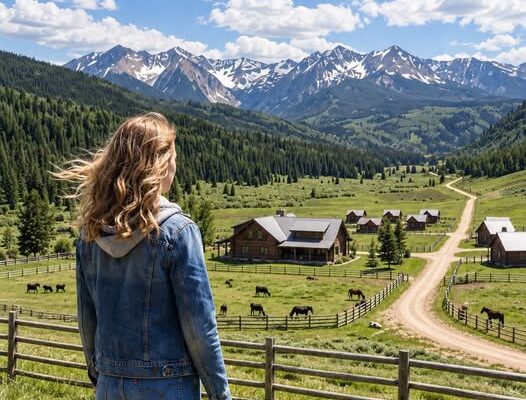
They Laughed When He Built a Bed Into His Stove—Then the Temperature Hit 38 Below
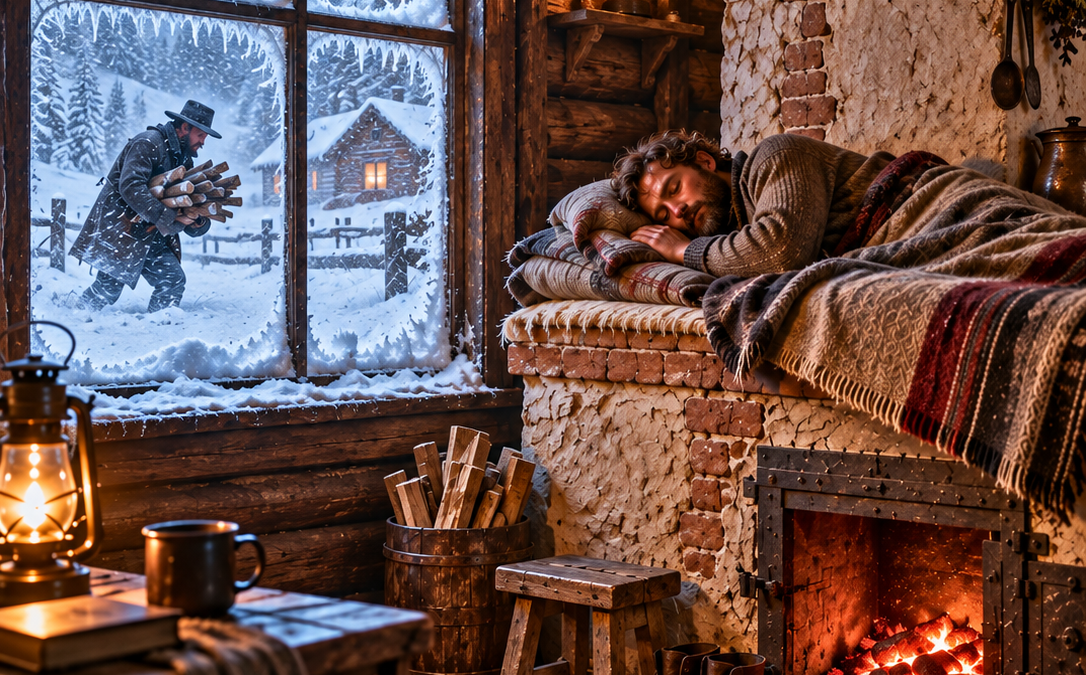
Part 1
Late November of 1888 came hard to Ash Creek Crossing in Wyoming Territory.
Old snow lay in white seams along fence lines, packed there by the first north winds, and every household in the small settlement had begun the same familiar preparations. Roofs were checked. Wood was hauled closer to the cabins. Stove pipes were tightened. Cracks around doors were stuffed and patched before the cold found them.
Warren Hail, a rancher who had wintered livestock in the basin for years, had already installed his cast-iron box stove.
It had taken less than two days.
Each evening, smoke rose cleanly from Warren’s chimney. His wife, Matilda, could put a kettle on the stove top and have hot water within minutes. There was nothing experimental about it. The stove was a proven answer to a simple frontier problem: feed iron enough wood, and iron gave you heat.
Emmett Row, Ash Creek’s blacksmith, understood that logic better than most. He had spent the week helping neighbors inspect dampers and tighten stove-pipe joints. Metal was his trade. He trusted things that responded directly to fire and force.
Then there was Jonas Varic.
At forty-one, Jonas had the deliberate manner of a man who had spent much of his life working with materials that punished impatience. Before coming west, he had worked around masonry in Moravia. He had laid brick, repaired ovens, and watched old men build heated walls that seemed almost absurdly slow compared with the cast-iron stoves common in America.
On a gray afternoon, Warren stopped at the Varic cabin and found Jonas standing in the middle of the floor with a worn mason’s square in one hand.
The cabin measured only seventeen by twenty-three feet.
Jonas had marked a broad rectangle across a large part of that limited space.
Now he was filling it with fieldstone.
Outside, under a canvas sheet, stood a stack of salvaged brick.
Warren remained in the doorway, looking from the foundation on the floor to the unused stove pipe overhead.
“Are you heating a house, Jonas,” he asked, “or building another room inside it?”
Jonas set another stone.
He checked it with the square.
Then he reached for the next.
That was answer enough to make Warren smile.
Within a week, the structure became impossible to ignore. Its base measured roughly five feet four inches by four feet eight inches. Jonas meant to carry it more than seven feet high.
Around the firebox, he used refractory brick purchased cheaply from an abandoned kiln. Beyond that inner shell came salvaged kiln brick and local fieldstone, all joined with lime-clay mortar.
It was not merely a stove.
It was becoming part of the cabin.
His wife, Elena, watched it consume the room one careful course at a time.
She did not laugh as Warren had.
She asked questions.
“Where does the table go?”
“Against the window.”
“What if the masonry cracks?”
“Then I open the crack and repair it.”
“What if the chimney won’t draw?”
“I test it before the hard cold.”
“And if winter comes before all this mortar dries?”
Jonas glanced at the wall he had just laid.
“We fire it slowly.”
Elena looked at the shrinking floor space.
She knew there was little use arguing with him once he had begun thinking in brick.
Jonas was not a man who called himself an engineer. He had no certificate hanging on a wall and no desire to impress anyone with theories. What he knew had come through work.
“Brick has to be given time,” he told her.
Then he checked another mortar line.
That evening, Elena lifted one end of their table while Jonas lifted the other. Together they moved it under the window.
The unfinished heater now owned the center of the cabin.
And Jonas still was not finished.
He began building a masonry bench along one side.
The ledge rose to about thirty-four inches above the floor. Jonas checked every course for level, then smoothed the mortar with his trowel.
Warren returned while he was working.
He examined the new extension.
“At least you remembered somewhere to sit.”
Jonas did not look up.
“Sleep, too.”
Warren waited.
“On the coldest nights.”
Warren laughed.
“You’re building a bed into the stove.”
Jonas went on smoothing mortar.
Where he had grown up, the idea had not been ridiculous.
Families did not always try to keep a flame alive until sunrise. They made a hard fire. They heated a large body of brick or stone. Then they allowed the fire to die.
The masonry stayed warm.
On bitter nights, people slept near that stored heat and trusted the heavy walls to continue doing what the flame no longer could.
Years before, Jonas had placed his palm on such a wall in Moravia the morning after a fire had gone dark. He still remembered the quiet warmth beneath his hand.
That memory had stayed with him longer than the fire itself.
His first American winters had only strengthened his conviction.
He had watched settlers feed cast-iron stoves hour after hour. The iron became fiercely hot. Men backed away from it. Cabins warmed quickly.
Then the fire weakened.
The iron cooled.
The room followed.
“They burn the heat,” Jonas had once told Elena, “then watch it leave.”
He rarely said more.
Warren remained unconvinced.
A few days later, he invited Jonas to his cabin to demonstrate why.
The cast-iron stove needed no explanation. Warren placed kindling beneath split lodgepole pine, struck a match, and opened the draft.
Flames climbed.
Within twenty minutes, heat spread through the room.
Matilda placed a kettle on the top plate.
Steam soon lifted from the spout.
Emmett stood nearby warming his hands.
This was what a heater was supposed to do.
Warren looked at Jonas.
“A man comes home in a wet coat when it’s ten below. He needs warmth now. Not three hours from now.”
Jonas approached the stove and held his palm near the iron.
The heat became uncomfortable almost immediately. He pulled his hand away.
“It does that well.”
Warren seemed pleased.
Jonas looked toward the stove pipe.
“Mine is meant to answer a different question.”
“What question?”
Jonas nodded toward the flames.
“What happens four hours after that is gone?”
Warren answered without hesitation.
“You add another log.”
Emmett nodded.
For men who had survived years of frontier winters, there was nothing foolish in that answer. It was practical. It was familiar. It had worked.
Jonas did not argue.
He watched Warren add another piece of lodgepole pine.
The flames caught.
The iron became hotter.
Then Jonas followed the stove pipe with his eyes until it disappeared through the roof.
Heat went into the room.
Heat also went up the chimney.
Back in his own cabin, Jonas resumed work on the part of his heater nobody would see once he closed the outer courses.
The firebox sat low inside the masonry mass.
Above it, he formed a chamber where hot gases could rise and spread against brick rather than escaping immediately into a pipe. As the gases lost heat, they would move downward through a side passage before reaching the chimney.
Jonas wanted the fire to burn hard and clean for a limited time.
Then he wanted it gone.
The fire would heat the masonry.
The masonry would heat the cabin.
Cast iron warmed quickly because there was comparatively little mass to heat. That was its great advantage.
It was also why it cooled quickly.
Jonas’s structure required the opposite bargain.
He would wait longer for warmth in exchange for keeping it longer.
Elena watched him install the damper.
He moved it back and forth several times.
Nothing scraped.
Nothing caught.
He checked another course with the old mason’s square. Two faded initials remained on its wooden handle, nearly polished away after years of use.
Outside, snow began to fall.
It gathered on fence rails and wagon tracks and covered the canvas protecting Jonas’s remaining brick.
Inside, he worked until the light at the window faded to gray.
Then he laid the final brick in the upper chamber.
After that, there was nothing to do but wait.
Mortar could not be bullied.
Jonas gave it time to harden.
Only then did he load seasoned lodgepole pine into the firebox and strike the first real flame.
An hour passed.
The cabin remained cold.
The fire was burning well enough, but the inner masonry was taking almost everything it produced.
Jonas touched the bench.
Barely warm.
A second hour passed.
Warren stopped by and remained near the doorway with his coat buttoned.
At his own cabin, the cast-iron stove would already have driven everyone away from the hottest side of the room.
Here, Jonas continued feeding wood into a structure that seemed more interested in heating itself than heating the people who had built it.
Warren did not need to say anything.
Jonas knew what he was thinking.
Then Jonas opened the firebox door.
A curl of gray smoke rolled into the room.
He paused.
Another followed.
Elena moved quickly and cracked the vent.
Jonas watched the flame.
Instead of drawing steadily toward the chimney, it wavered.
He closed the firebox, pulled on his coat, and went outside.
A northwest breeze crossed the roof ridge.
Jonas stood in the snow and watched.
A gust struck.
Air spilled downward near the chimney.
Another gust did the same.
Then another.
The roof was pushing wind directly into the area around his chimney cap and disrupting the draft.
Inside, the masonry was finally beginning to warm.
It no longer mattered.
The first firing had exposed a flaw.
When Warren left, he made no joke.
That silence bothered Jonas more than laughter would have.
Smoke still hung beneath the Varics’ rafters.
At first light, Jonas climbed onto the roof.
He crouched near the ridge, studied the soot around the flue, and waited for the wind.
The mistake became obvious.
The chimney ended too low.
He had expected the air to move upward cleanly. Instead, northwest gusts rolled over the roof and pressed down around the cap.
Jonas removed it.
He raised the flue roughly thirty inches.
Emmett helped by making a simple sheet-iron wind hood at the forge.
When he handed it to Jonas, he looked toward the brick mass filling the cabin.
“Fixing your pipe doesn’t prove your brick mountain.”
“No,” Jonas said.
That evening, they fired the heater again.
The draft held.
Jonas opened the firebox door.
The flame leaned inward.
No smoke escaped.
One problem was solved.
Then Elena found the second.
She sat on the masonry bench and slowly moved her hand along its surface.
Near the chamber, the brick had become uncomfortably hot.
Several feet away, the far end was barely lukewarm.
“Jonas.”
He came over.
She moved aside.
“Feel it.”
He did.
The difference was unmistakable.
His heater was storing heat.
It simply was not distributing that heat the way he had intended.
Warren heard about the second failure.
To him, it confirmed what he had suspected from the beginning. An iron stove needed a pipe and a damper. Jonas’s enormous brick contraption seemed to demand one correction after another.
Jonas offered no defense.
He waited for the masonry to cool.
Then he marked the overheated section with chalk and removed several bricks he had already mortared into place.
Behind them lay the internal passage.
Jonas studied it.
He shifted the baffle and extended the route the hot gases would follow before descending toward the flue.
Then came the part he disliked most.
He took a hammer and chisel and began knocking hardened mortar from bricks he had already set.
Chip by chip.
Brick by brick.
Elena watched him reclaim each usable piece.
He did not complain.
When the surfaces were clean, he started again.
The third firing began on a night when the temperature fell to eight degrees.
Jonas filled the firebox with seasoned lodgepole pine and let it burn hard.
For two and a half hours, flame moved through the rebuilt chamber.
The masonry slowly took the heat.
By nine o’clock, the last flames were fading.
Jonas closed the damper at the point he had marked.
Then he did something Warren still considered unreasonable.
He added nothing.
No final log.
No banked fire for midnight.
No attempt to keep embers alive until dawn.
The fire went out.
Jonas spread a wool mattress over the masonry bench.
He and Elena went to bed.
Several hours later, around two in the morning, Elena woke.
Silence filled the cabin.
No wood cracked.
No draft sighed through the firebox.
No orange flame moved across the walls.
She pushed one foot beyond the blanket.
Beneath the mattress, the masonry was still warm.
She lay still for a moment, feeling it.
For the first time, the enormous structure in the center of their cabin no longer felt like an experiment.
By dawn, the room had cooled.
But not brutally.
Elena could dress without rushing to build another fire. A kettle left near the upper ledge had no skin of ice across its water.
Jonas opened the firebox.
Only ash remained.
He pressed a hand against the masonry.
Then he picked up a piece of chalk.
On the wall beside the heater, he marked when he had closed the damper.
Later, he marked the point when the masonry finally lost most of its useful warmth.
The strange brick mass had answered Warren’s question.
The flame was gone.
The heat had stayed.
Part 2
The next stretch of winter was cold without yet becoming cruel.
That distinction mattered.
In ordinary weather, Warren’s cast-iron stove was excellent.
He could wake to a cold cabin, lay kindling, open the draft, and feel useful warmth within minutes. Matilda could boil water before breakfast. Wet gloves could be held near the iron and dried quickly. When immediate heat was needed, the stove answered before Jonas’s masonry heater would even have warmed its outer skin.
Jonas never denied that.
But nighttime temperatures began settling near zero, and another difference slowly appeared.
The wood piles started shrinking.
Warren noticed his first.
One morning he stood outside dragging his boot heel through the snow where part of his lodgepole pine stack had stood only weeks earlier.
The stove did exactly what he asked of it.
That was the problem.
To remain hot, it needed fire.
To maintain fire, it needed wood.
Constantly.
Across Ash Creek, others were making the same calculations.
Emmett and Ruth Row discovered that the fierce local heat from their stove did not mean the whole cabin was comfortable. The area nearest the iron could become almost too warm while frost lingered on window sills and in the outer corners.
Ruth gradually moved more of their daily life toward the center.
Wet things dried there.
Chairs migrated there.
Unused corners became cold territory.
Arland Pike had a different problem.
At sixty-three and living alone, he had gone through his best dry wood sooner than intended. He began burning damp cottonwood.
It hissed.
It spat.
Dark residue accumulated in the stove pipe.
And every poor-burning piece of wood forced him to choose between a weak fire and a dirtier chimney.
Yet the most common cost of the iron stoves was not fuel.
It was sleep.
When Warren’s fire fell, the iron cooled quickly.
The cabin followed.
He woke.
He crossed the room.
He opened the stove.
He stirred the coals.
He added wood and waited until the draft caught.
Then he returned to bed.
A few hours later, he did it again.
Matilda felt the mattress shift each time.
At first she said nothing.
Warren had always tended fires in winter. So had other men. There was nothing remarkable about it.
That was simply what winter required.
At least, that was what they had always assumed.
Across the yard, Jonas followed another rhythm.
He fired the masonry heater hard in the afternoon or evening. Sometimes he gave it a small morning charge.
Then he stopped.
The outer walls of the Varic cabin remained cold. The room never became fiercely hot.
But around the masonry mass was an island of steady warmth.
Elena could leave damp kitchen cloths nearby at night and find them dry in the morning.
Jonas accepted a cooler average room in exchange for not waking every few hours to rescue it.
His wood stack seemed to diminish with insulting slowness.
Warren saw that too.
He did not comment.
By the middle of January, the old hands at Ash Creek began watching the northwest horizon.
The sky there had flattened into a hard steel gray.
The wind shifted.
Then it held.
At sunrise, the temperature stood near five degrees.
By noon, it had fallen.
People who had lived in the basin long enough did not need a formal warning.
Warren spent the afternoon splitting lodgepole pine.
He carried several loads inside and stacked them close to the wood box. Whatever happened after dark, he did not intend to cross the yard unnecessarily.
At the forge, Emmett carried in another bucket of coal.
He nearly filled the stove.
Then he stopped.
Freight had been delayed.
Nobody knew when another supply would arrive.
What remained had to last.
Arland went behind his shed and searched the cottonwood stack for the driest pieces he could find.
He carried them indoors one armload at a time.
By the last trip, he was breathing hard.
Jonas prepared with less urgency, though not with less care.
He moved several days of dry lodgepole pine into the lean-to on the leeward side of the cabin, close enough that he could reach it without crossing open ground.
Inside, Elena checked the heater.
She ran her fingers along the mortar joints.
She examined the bench.
She worked the damper.
She looked around the firebox.
Nothing had failed.
That did not mean nothing would.
Before sunset, the first snow arrived.
Fine grains struck the windows.
Then came thicker flakes.
The northwest wind lifted loose snow from the ground and drove it sideways across the settlement.
Warren lit his stove early.
Jonas began the evening firing.
Emmett closed the shop door.
Arland carried his final armload inside.
Darkness fell.
By then, snow had thickened between the buildings so completely that fence posts appeared for a moment and vanished again.
Jonas looked through his window toward Warren’s cabin.
He knew it was there.
He could no longer see it.
The blizzard struck in earnest after dark.
Wind hit the cabins in hard bursts.
Snow piled against doors and sheds.
Paths disappeared.
The iron stoves fought the storm the same way they fought every other cold night—with direct, immediate heat.
But maintaining that heat required somebody awake.
Near midnight, Warren felt the change.
The room cooled.
He got out of bed, stirred the coals, and added pine.
The stove recovered quickly.
Around two, he did it again.
Near four, again.
Each time the fire weakened, the room gave ground to the cold.
Each time Warren rebuilt the fire, heat returned.
Matilda stayed beneath the blankets, listening to the scrape of his poker and the low rush of new flame.
Down the road, Emmett stuffed a blanket beneath his rear door and surrendered the coldest edges of the cabin to conserve fuel.
Arland had to throttle back his stove.
His chimney was already dirty from damp cottonwood, and the wind made the draft unreliable. Burn too hard and smoke threatened to push back into the room.
At the Varic cabin, the main firing had ended after supper.
The firebox was dark.
Wind shook the walls.
Elena lay beneath her blanket.
No stove door opened.
No one crossed the floor carrying wood.
The masonry bench beneath the mattress simply continued giving back what the evening fire had stored inside it.
Jonas slept.
By dawn, the storm still had not moved on.
Jonas woke after hours of uninterrupted rest.
He put his palm against the heater.
The outer brick was cooler than it had been at midnight, but steady warmth remained beneath the surface.
He opened the firebox.
Gray ash covered a few glowing embers.
Jonas stirred them, added a modest charge of pine, and let the masonry begin taking heat again.
He did not know that Warren was already rebuilding his fire for the fourth time since the previous evening.
He did not know that Ruth had found a thin rim of ice forming around a water pail left near the edge of their room.
He did not know Arland had been forced to crack his door when a gust pushed smoke back down his dirty chimney, dumping precious warmth directly into the storm.
The blizzard continued.
One day became two.
Then three.
The danger was no longer simply how low the temperature could fall.
The storm was outlasting people’s endurance.
Every trip to a wood pile became harder. Drifts rose around sheds. A short walk across a yard became a fight through snow.
Arland was forced to burn his worst green cottonwood.
His chimney became dirtier.
Emmett and Ruth stopped heating the blacksmith shop entirely so they could preserve fuel for their home.
Warren’s world narrowed to the firebox.
His stove still worked.
That was never in question.
But the stove demanded service whenever it cooled.
Warren slept until the iron lost heat.
Then he woke.
Fed it.
Waited.
Slept again.
On the third morning, exhaustion finally caught him.
He sat in a chair beside the stove waiting for a fresh load of lodgepole pine to ignite.
The warmth had not yet reached the room.
His eyes closed.
The split log in his hand slipped.
Matilda caught it before it fell to the floor.
Warren jerked awake.
For a moment he did not understand what had happened.
Matilda looked at the wood in her hands.
“You need sleep.”
“So does the stove.”
She did not laugh.
That was the worst part.
Across the yard, Jonas maintained the same simple routine.
A hard evening burn.
A small morning charge when needed.
Then long hours in which the stored heat did the work.
The masonry gave him twelve hours or more of useful warmth without asking him to stand beside it.
It gave him something else too.
Time.
And rest.
The coldest night came after the storm had already worn everyone down.
Outside Warren’s cabin, the thermometer reached thirty-eight below zero.
Wind pressed cold through every weak seam in the walls.
Warren kept his stove hot, but he knew better than to drive the iron recklessly. A stove overheated to glowing red created dangers of its own.
So he fed it steadily.
Midnight.
Again after two.
Near four, he shoved back the blankets and put on his boots.
He crossed to the wood box, added another load, and waited for the draft to strengthen.
Then he happened to look through the window.
Beyond the blowing snow, he could barely make out the Varic chimney.
There was no smoke.
Warren leaned closer to the glass.
Nothing.
Jonas’s fire had gone out.
For the first time that night, Warren felt something close to satisfaction.
Whatever Jonas had claimed about stored heat, thirty-eight below was different.
Surely the Varic cabin had surrendered by now.
Surely Jonas was learning the limit of brick.
Morning gave Warren his answer.
He saw Jonas outside clearing snow near the cabin door.
Jonas looked tired from the days of storm, but not like a man who had spent the night rising every two hours.
Warren crossed the yard.
Snow came nearly to his knees in places.
“When did you feed it last?”
Jonas stopped shoveling.
“After supper.”
“Nothing after that?”
“Nothing.”
Warren looked toward the chimney again.
Then at Jonas.
Jonas rested the shovel against the wall and opened the cabin door.
Warren followed him inside.
The firebox was dark.
No flame moved behind the iron door.
Jonas walked to the masonry bench and placed his palm against the brick.
Warren did the same.
It was not hot.
That surprised him.
Then he understood.
It did not need to be hot.
There was still a deep, steady warmth in the masonry, enough to soften the air around the center of the room and enough to keep a sleeping man under blankets until morning.
Warren left his hand there for several seconds.
He did not tell Jonas he had been right.
Neither man needed the sentence.
Outside, the wind continued moving snow across Ash Creek.
By the fifth day, the storm still had not fully released them.
And Arland Pike was running out of choices.
He still had wood.
That was not the problem.
His dry cottonwood within easy reach was nearly gone. A larger pile remained behind his shed, but a deep drift had formed across the path.
The wood he could reach safely was damp and dirty burning.
His chimney had worsened.
Whenever the wind changed direction, his draft weakened.
If he burned hard enough to warm the cabin, smoke threatened to push back.
If he reduced the fire, the temperature inside fell.
Warren found him sitting beside the stove in his coat.
Weeks earlier, Warren might have told him to clean the pipe, find better wood, or tend the fire more carefully.
He might have pointed toward his own cabin as proof that iron and persistence could solve the problem.
He did not.
“You’re coming to Jonas’s until this wind drops.”
Arland stared at his stove.
Then he nodded.
Before they left, Warren returned home.
From his own carefully rationed supply, he chose several pieces of his best dry lodgepole pine.
He tied them into a bundle.
Then he and Arland made their way toward the Varic cabin through the blowing snow.
Jonas opened the door.
His eyes went first to Arland.
Then to the bundle under Warren’s arm.
Behind them, the storm still filled the yard.
Elena looked toward the remaining wood in their lean-to.
They had enough.
But winter was not finished.
Warren stepped inside and placed the bundle of dry pine against the wall.
Only then did Arland enter.
No one mentioned the brick mountain.
No one mentioned the bed built into a stove.
Jonas simply opened the door wider.
Part 3
Arland sat on the masonry bench without removing his coat.
For several minutes, nothing dramatic happened.
There was no blast of heat against his face.
No roaring iron box glowed beside him.
No fire was even burning hard enough to impress a man who had spent the past several days fighting cold.
Warmth simply moved through the brick beneath his weight.
He sat there.
Then he removed his gloves.
A little later, he opened his coat.
Elena hung his damp things near the masonry rather than directly over flame.
By the time Matilda and Ruth arrived carrying bread, dried meat, and a covered pot, the Varic cabin had become something none of them had expected at the beginning of winter.
Not the hottest cabin in Ash Creek.
The safest gathering place.
Their mittens were damp after the crossing. Elena arranged them near the masonry mass where they could dry slowly.
A kettle rested on an upper ledge.
The main fire had been reduced hours earlier, but the water was still warm.
Warren noticed.
He had begun noticing everything.
That evening he watched Jonas prepare the main firing.
Jonas did not feed the stove continuously.
He loaded dry lodgepole pine and let it burn hard.
The flame moved fiercely through the firebox.
The masonry took the heat.
Then the fuel burned down.
There would be no midnight feeding.
Ruth sat near the bench with Elena.
“Where does it stay hottest?”
Elena pointed toward part of the masonry.
“And how long can you keep food warm?”
“Depends where I put it and how long since the firing.”
Ruth looked toward the wall.
Chalk marks covered part of it.
Some recorded firing times.
Others marked how many hours useful warmth remained afterward.
Elena had learned when the ledge was too hot for certain tasks, when it could warm a pot gently, and when the remaining heat was better suited to drying cloth than cooking.
Near the firebox was another mark of the heater’s history.
An old soot stain remained from the first failed draft.
Jonas had never completely scrubbed it away.
Warren studied that stain.
The heater had not emerged perfect from Jonas’s imagination.
It had smoked.
It had heated unevenly.
Jonas had climbed onto the roof in winter and raised the chimney.
He had torn apart bricks he had already laid.
He had moved a baffle.
He had chiseled mortar from old courses and rebuilt them.
The structure carried its mistakes beside its proof.
Across the room, Arland leaned back against the warm masonry.
His gloves now rested beside him.
His coat hung open.
Before Jonas’s evening fire finished burning down, Arland’s head lowered against the wall.
Within minutes he was asleep.
Nobody woke him.
When the storm finally weakened, Ash Creek did not return to the conversation it had been having before.
Nobody asked whether Jonas’s heater worked.
That question was finished.
Emmett came to the Varic cabin carrying a spring scale and a notebook.
He wanted numbers.
“How much wood in one firing?”
Jonas showed him.
“How long before the outside gets warm?”
Jonas explained.
“How many hours after the fire dies?”
“Depends on the weather.”
“How high is the chimney now?”
Jonas gave him the measurement from the correction.
Emmett wrote it down.
Then he pointed toward the masonry bench.
“What made that end overheat on the second firing?”
Jonas looked at him.
Weeks earlier, Emmett had treated the heater as a curiosity.
Now the blacksmith wanted to know exactly how it had failed.
Jonas took out paper and sketched the internal path.
He showed Emmett where the gases had originally traveled.
He explained how too much heat reached the near end before the gases had moved through enough masonry.
Then he showed where he had altered the baffle and extended the passage.
Emmett studied the drawing.
“What about the first smoke?”
“Chimney too low.”
“Because of the roof?”
“Wind came down over the ridge.”
Jonas took him outside and showed him where the original flue had ended.
There was no attempt to hide the mistake.
A machine that worked after being corrected was more useful than a machine whose builder pretended it had never failed.
Warren agreed to a comparison.
Emmett weighed the wood Warren used over an overnight heating cycle.
Then he weighed Jonas’s charge.
Nobody expected the numbers to prove that cast iron was worthless.
They did not.
Warren’s stove still did something Jonas’s masonry heater could not do well.
It produced warmth quickly.
A freezing man could enter Warren’s cabin, light a fire, and feel a difference within minutes.
Jonas’s heater demanded patience.
That mattered.
But the comparison showed what happened after the room became warm.
Warren had to rebuild useful heat three or four times through a bitter night.
Jonas built the heat once, stored part of it in brick and stone, and went to sleep while the masonry released it.
Emmett wrote the final figure in his notebook.
Then he closed it.
For a few seconds he looked at the heater.
Not at the firebox door.
Not at the chimney.
At the mass itself.
“How wide did you make that upper chamber?”
Jonas told him.
Warren said nothing.
The argument was over.
They had moved on to dimensions.
By March, snow began drawing away from the south-facing walls.
The great winter pressure eased.
People dug out paths that had been buried for weeks. Wood piles became visible again. The forge returned to full use.
Warren had made up his mind.
He was not throwing away his iron stove.
That would have missed the lesson.
He still valued what it did.
It heated quickly.
It was convenient for cooking.
On a bitter morning when a room needed immediate warmth, iron was difficult to beat.
What Warren no longer wanted was another winter spent serving the stove through every night.
Before the next cold season, he moved the iron stove farther inward and began planning a compact masonry mass behind it.
The idea was not to choose one system and condemn the other.
The iron could provide quick heat.
The brick could absorb part of that heat and release it more slowly.
Emmett made new damper hardware at the forge.
Ruth talked with Elena about using stored warmth for food after the main firing.
And one day Warren crossed the yard and found Jonas.
“I’ve got the base ready.”
Jonas looked at him.
Warren waited.
“You bringing that square?”
Jonas went inside.
When he returned, the old mason’s square was in his hand.
No apology passed between them.
None was necessary.
No neighbors gathered around to watch Warren admit anything.
There was no speech.
Jonas simply came into Warren’s cabin and knelt beside the prepared base.
He spread mortar.
Then he handed the square to Warren.
Warren lowered the first brick into place.
He pressed the tool against its edge.
The brick was slightly out.
He adjusted it.
Checked again.
Still not right.
He moved it once more.
Jonas watched without interfering.
Finally the brick sat straight.
The man who had laughed at a bed built into a stove was now measuring his own first course.
By autumn of 1889, Ash Creek Crossing looked much as it had the autumn before.
The cabins were still small.
The wind still came down from the northwest.
Winter still demanded wood, labor, and judgment.
But some of the stoves had changed.
One afternoon, a rancher from the eastern side of the basin stopped at Warren’s cabin.
He had heard about the alterations made after the long winter.
In the back of his wagon lay salvaged kiln brick.
Warren showed him the cast-iron stove.
Then he showed him the masonry mass positioned to capture and hold heat behind it.
The rancher measured the structure.
He asked about the damper.
He wrote figures into a pocket notebook.
Nobody went to fetch Jonas.
There was no reason.
Across the settlement, Jonas was beside his own cabin splitting lodgepole pine.
Inside, the enormous masonry heater still occupied the center of the floor.
It consumed exactly as much space as before.
The table still stood against the window.
The sleeping bench remained part of the structure Warren had once mocked.
The soot stain from the failed first firing had never entirely disappeared.
Neither had the knowledge earned from the second failure.
The heater had not been proven right because the idea was old.
Warren’s cast-iron stove had not been proven wrong because it was newer.
Winter had judged something simpler.
Heat made quickly had value.
So did heat that remained after the flame was gone.
A man coming home in a wet coat at ten below might need warmth immediately.
A man exhausted after three nights of tending a stove might need something different.
He might need heat that asked nothing from him for a few hours.
He might need sleep.
The rancher finished writing in his notebook, climbed into his wagon, and turned east.
The salvaged bricks went with him.
Jonas stood beside his chopping block.
He set another piece of lodgepole pine upright, raised the ax, and brought it down cleanly through the wood.
He never looked up as the wagon left Ash Creek.
You Might Also Enjoy
At 82, He Bought an Abandoned House for $100—Then He Found a Hidden Staircase Under the Floor

He Came Home With Another Woman’s Perfume—His Nurse Wife and Newborn Daughter Were Already Gone