
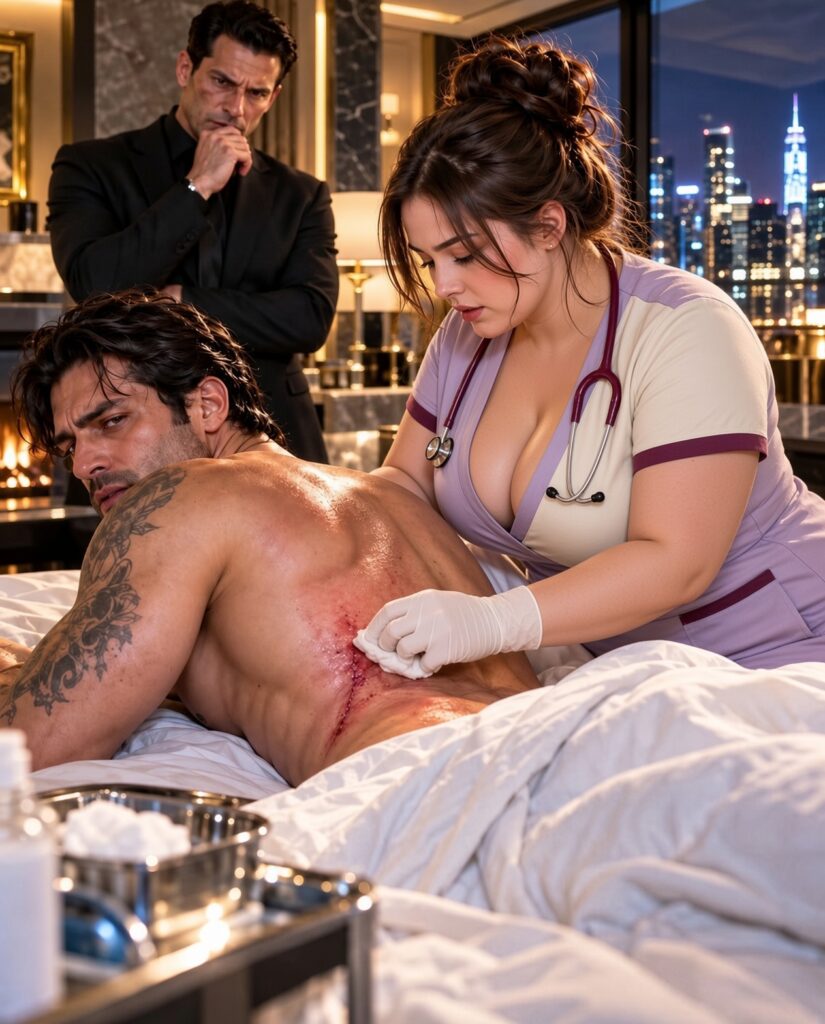
Gabriel’s eyes opened.
And in a voice barely above a whisper, he said the one name nobody in that penthouse expected.
“Vincent.”
For several seconds, the room went still.
Luca was the first to move.
He crossed toward the bedside, but I lifted one hand.
“Not yet.”
His expression tightened. “He just named the man who arranged the surgery.”
“He also has a temperature of 103.8 and oxygen saturation in the eighties. I’m interested in what he says, but I’m not treating it as sworn testimony.”
Gabriel’s eyes found mine.
“I know what I heard.”
“Good. Then remember it until you’re well enough to explain it.”
His jaw tightened.
He didn’t like that answer.
Men like Gabriel Moretti probably didn’t hear it often.
I examined the second incision more closely.
The stitches were neat. Professional. No obvious redness around the wound. No drainage. The incision itself wasn’t infected.
That made it more troubling, not less.
“Luca, I need the complete surgical record.”
“You have it.”
“No. I have six pages somebody decided were enough.”
“That’s what the clinic sent.”
“Then the clinic didn’t send everything.”
Gabriel shifted.
Pain moved across his face.
Not shoulder pain.
Lower.
Again.
I placed two fingers lightly beside the hidden incision.
His back muscles tightened immediately.
“There?”
“Yes.”
“Sharp?”
“Deep.”
“Does it travel?”
He hesitated.
“Down my legs.”
Luca and I looked at each other.
“When did that start?” I asked.
“After the surgery.”
“How soon?”
Gabriel closed his eyes.
His breathing was still too shallow.
“Next morning.”
“And you told the doctor?”
“Vale said swelling.”
“What kind of swelling?”
“I didn’t ask for a lecture.”
“That habit may have become expensive.”
One corner of Gabriel’s mouth moved.
It wasn’t a smile.
But it was close enough to surprise Luca.
I straightened.
“I need him in a hospital.”
“No.”
The answer came from Gabriel immediately.
“You can barely breathe.”
“No hospital.”
“You can’t move your legs.”
“No.”
“You have a fever high enough to make you delirious.”
His eyes opened again.
“I said no.”
I folded my arms.
“All right.”
Luca stared at me.
Gabriel did too.
Neither had expected surrender.
I walked toward the medical cart.
“Then I need equipment.”
“What equipment?” Luca asked.
“Portable blood cultures. A full metabolic panel. CBC. Inflammatory markers. Blood gas. Urinalysis. Chest imaging if you can arrange it. And somebody needs to find out exactly what was done during that procedure.”
Luca pulled out his phone.
“I can have a mobile lab here within forty minutes.”
“Twenty.”
“That’s not realistic.”
“Neither is practicing intensive care fifty-eight floors above Michigan Avenue, but apparently tonight we’re improvising.”
He left the room without arguing.
That concerned me more than if he had.
I turned back toward Gabriel.
His eyes had closed again.
“You’re not frightened of me,” he murmured.
“I’m frightened of plenty of things.”
“Not me.”
I adjusted the oxygen line beneath his nose.
“You’re currently losing an argument with a blanket.”
He looked down.
Somehow, during our conversation, the sheet had tangled around his hand.
He stared at it.
Then at me.
A quiet sound escaped him.
A laugh.
It lasted only a second before becoming a cough.
But it changed the room.
Until then, Gabriel Moretti had been a reputation occupying a bed.
For one second, he became a sick man who understood the absurdity of his own condition.
I helped untangle his hand.
His fingers brushed the bruise already forming around my wrist.
His expression changed.
“I did that?”
“Yes.”
He looked away.
“I’m sorry.”
The apology was so unexpected that I almost missed it.
“Fever makes people unpredictable.”
“That isn’t an excuse.”
“No.”
His gaze returned to mine.
“I’m still sorry.”
I nodded once.
“Accepted.”
Something in his face softened.
Not dramatically.
Just enough.
Then he slept.
Luca returned nineteen minutes later with two laboratory technicians, a portable imaging unit, and a woman in navy scrubs carrying three cases.
Her name was Dr. Evelyn Park.
She was an infectious-disease specialist from Northwestern who had apparently been pulled out of a charity dinner.
She still wore pearl earrings.
“You’re the nurse?” she asked.
“Claire Bennett.”
“Show me.”
I did.
Unlike everyone else, Dr. Park didn’t react to Gabriel’s name.
She reacted to the scar.
“That incision isn’t consistent with removal of a shoulder fragment.”
“No.”
“Do we have operative notes?”
“No.”
She glanced toward Luca.
“We need them.”
“I’m working on it.”
“Work faster.”
I liked her immediately.
For the next hour, the penthouse stopped feeling like the residence of a feared man and started feeling like a badly equipped hospital room.
Blood was drawn.
Cultures were taken.
A portable chest X-ray showed mild congestion but nothing that explained the fever.
Gabriel drifted between sleep and confusion.
Twice, he asked for his mother.
The first time, Luca pretended not to hear.
The second time, I didn’t.
“Where is she?”
Luca’s face became guarded.
“Florida.”
“Call her.”
“No.”
“Why?”
“Because Gabriel doesn’t want her worried.”
“He just asked for her.”
“He’s delirious.”
“So he’s only trustworthy when he says Vincent’s name?”
That landed.
Luca looked toward the bed.
For all his size and careful control, something tired entered his expression.
“You don’t understand this family.”
“Then explain it.”
He was silent.
I waited.
Eventually he sat in the chair beside the window.
The skyline spread behind him in gold and white.
“Gabriel’s father died twelve years ago,” he said. “Heart attack. After that, Gabriel took over the family businesses.”
“What kind of businesses?”
Luca gave me a look.
“I’m a nurse, not a federal prosecutor. You can leave out anything requiring a lawyer.”
That almost earned another smile.
“Restaurants. Property. Shipping. Construction. Some things Gabriel has spent years trying to separate from the older parts of the family.”
“And Vincent?”
“His cousin. More like a brother.”
That surprised me.
“They grew up together?”
“Same block. Same schools. Gabriel’s father and Vincent’s father were brothers.”
“What happened to Vincent’s father?”
“Died when Vincent was seventeen.”
“And Gabriel’s family took him in?”
“Gabriel did, mostly.”
I looked toward the sleeping man.
“So why would Gabriel say his name?”
Luca rubbed a hand across his jaw.
“That’s what I’m trying to understand.”
“Who arranged the clinic?”
“Vincent.”
“Who chose Dr. Vale?”
“Vincent.”
“Who has the full medical records?”
“Probably Vincent.”
“And where is Vincent?”
Luca glanced at his phone.
“He’s on his way.”
I stared at him.
“You called him?”
“He called me.”
“When?”
“Three minutes after I requested the operative report.”
A cold little thought settled into place.
“How did he know?”
Luca didn’t answer.
He didn’t have to.
Vincent Moretti arrived at 1:43 in the morning.
He wasn’t what I expected.
Gabriel filled a room even when unconscious.
Vincent entered quietly.
Thirty-seven, slim, dark-haired, wearing a charcoal overcoat over a sweater instead of a suit. His face carried the exhaustion of someone who hadn’t slept properly in weeks.
He looked first at Gabriel.
Not at Luca.
Not at me.
Gabriel.
And whatever else Vincent Moretti was, the concern on his face was real.
“What happened?”
“His fever climbed,” Luca said.
“I told you to call Vale.”
“We’re done calling Vale.”
Vincent stopped.
His eyes moved to me.
“Who are you?”
“Claire Bennett.”
“The nurse?”
“The fifth one.”
Something flickered across his face.
“You stayed.”
“So far.”
He approached the bed.
Gabriel stirred.
Vincent stopped immediately.
Not fear.
Respect for a boundary.
That interested me.
“You arranged his surgery,” I said.
“Yes.”
“With Dr. Adrian Vale?”
“Yes.”
“What procedure did he perform?”
Vincent looked at Luca.
“Bullet-fragment removal.”
“Only that?”
His eyes returned to mine.
“Yes.”
“Then why does Gabriel have a second incision in his lower back?”
The color drained from Vincent’s face.
He didn’t answer.
Luca stepped closer.
“Vincent.”
“I didn’t know.”
It came quietly.
Not defensively.
Almost to himself.
“You signed the authorization,” Luca said.
“I signed authorization for exploration of the shoulder wound.”
“Did you read it?”
Vincent’s jaw tightened.
“I read what Vale gave me.”
“Do you have a copy?” I asked.
“At my office.”
“Get it.”
He studied me.
“Do you always give orders in other people’s homes?”
“When somebody’s temperature is 103.8, ownership becomes less interesting.”
His eyes narrowed.
Then, unexpectedly, he nodded.
“I’ll have it brought.”
He made one phone call.
No shouting.
No threats.
Just a request to someone named Elena to open the locked drawer in his office and send photographs of everything inside the blue medical folder.
Afterward, Vincent sat across from Gabriel.
For nearly ten minutes, he said nothing.
I watched him watching his cousin.
There was history in that silence.
And guilt.
But guilt wasn’t the same as guiltiness.
That distinction had saved more than one patient from a bad assumption.
“Why did Gabriel say your name?” I asked.
Vincent looked at me.
“I don’t know.”
“You have a guess.”
His gaze dropped.
“Gabriel and I argued before the surgery.”
“About what?”
“The clinic.”
“You wanted him there?”
“Yes.”
“He didn’t?”
“He wanted to recover here.”
“Why did you insist?”
Vincent leaned forward, elbows on his knees.
“Because he’d been shot.”
His voice remained controlled, but something underneath it cracked.
“He was bleeding in the back seat of a car telling Luca to take him home. He kept saying it was nothing. He always says that. Broken ribs are nothing. Pneumonia is nothing. Three days without sleep is nothing.”
He looked toward Gabriel.
“When we were boys, he decided his job was to be the person nothing could hurt.”
There was no admiration in the sentence.
Only sadness.
“So I insisted,” Vincent continued. “I found Vale through someone I trusted. Private clinic. No press. No police questions. No public records beyond what was legally required.”
“Who recommended Vale?”
Vincent hesitated.
“My mother.”
That shifted the room.
Luca frowned.
“Aunt Sofia?”
“Yes.”
“You never told me that.”
“You never asked.”
“Why would Sofia know a surgeon?”
“She sits on the board of St. Catherine’s Foundation. Vale donated to their surgical program.”
I wrote the name down.
Sofia Moretti.
Another branch of the family.
Another person connected to the decision.
The mystery was becoming less like a straight line and more like a knot.
My phone buzzed.
Dr. Park had sent preliminary laboratory results.
I read them twice.
White blood-cell count elevated.
Inflammatory markers significantly elevated.
Kidney function mildly impaired.
But one number bothered me.
Creatine kinase.
Very high.
I showed Dr. Park.
She frowned.
“That could explain some of the weakness.”
“Not all of it.”
“No.”
Gabriel stirred.
His eyes opened.
This time, they were clearer.
He saw Vincent.
Everything in his face changed.
Not rage.
Something harder to understand.
Hurt.
Vincent stood.
“Gabe.”
Gabriel stared at him.
“You came.”
“Of course I came.”
“You always come after.”
Vincent absorbed the sentence.
“After what?”
Gabriel closed his eyes.
“The papers.”
“What papers?”
“You signed them.”
Vincent looked at me.
“What is he talking about?”
I moved beside the bed.
“Gabriel, what papers?”
His forehead creased.
“Vale.”
“What did Dr. Vale tell you?”
“He said Vincent agreed.”
“To what?”
Gabriel’s breathing quickened.
I touched his shoulder lightly.
“Don’t force it.”
But his eyes remained fixed on his cousin.
“You told him.”
Vincent stepped closer.
“Told him what?”
Gabriel swallowed.
“That I wouldn’t stop.”
Vincent went completely still.
The room became quiet enough to hear the oxygen machine.
Then Gabriel slipped back into sleep.
Vincent sat down.
For the first time since entering, he looked frightened.
“I never told Vale anything like that.”
“What wouldn’t Gabriel stop?” I asked.
Vincent stared at the floor.
“I don’t know.”
But this time I wasn’t sure I believed him.
At 2:18 a.m., the photographs arrived.
Vincent handed me his phone.
The first pages were routine.
Consent.
Insurance waiver.
Privacy documents.
Surgical authorization.
Then I reached page seven.
There was an additional paragraph.
Tiny print.
“Possible secondary diagnostic intervention if medically indicated.”
I enlarged the image.
“Did you read this?”
Vincent leaned closer.
“Yes.”
“What did Vale tell you it meant?”
“That if he found internal bleeding or another fragment, he could address it.”
Dr. Park read over my shoulder.
“This wording is extremely broad.”
“Is it legal?” Luca asked.
“I’m not a lawyer.”
“But medically?”
She frowned.
“It wouldn’t satisfy me for an unrelated invasive procedure.”
I kept scrolling.
Page eight.
Page nine.
Then something strange.
Page ten was missing.
The sequence jumped from nine to eleven.
“Where’s page ten?”
Vincent took the phone.
“That’s everything in the folder.”
“Was it missing when you signed?”
“I don’t remember.”
Luca walked toward the windows.
His reflection floated against the dark glass.
“Somebody removed it.”
“Maybe,” I said.
He turned.
“You don’t think so?”
“I think we have incomplete information. That’s different.”
Vincent looked at me.
“You really don’t make assumptions.”
“I make plenty. I just try not to confuse them with facts.”
For the first time, he smiled faintly.
“I understand why Gabriel let you stay.”
“He was delirious.”
“Gabriel is selective even when delirious.”
I returned the phone.
“We need Dr. Vale.”
Vincent shook his head.
“He’s not answering.”
“Where is he?”
“According to his office, attending a medical conference in Toronto.”
Dr. Park looked up sharply.
“Which conference?”
“I don’t know.”
“There’s no major surgical conference in Toronto this week.”
Vincent’s expression changed.
That was the moment I realized something important.
Whatever secrets Vincent carried, he was discovering parts of this alongside us.
At three in the morning, Gabriel’s fever finally began dropping.
Not much.
But enough.
103.8 became 102.9.
Then 102.4.
His oxygen climbed to ninety-two.
Still concerning.
But better.
I sat beside him with a cup of coffee that had gone cold.
Vincent remained near the windows.
Luca had disappeared to investigate Vale.
Dr. Park was speaking quietly on the phone with a hospital colleague about arranging an MRI without admitting Gabriel publicly.
“You should sleep,” Vincent said.
“So should you.”
“I’m not responsible for keeping someone alive.”
“You might be surprised how much responsibility people carry without realizing it.”
He considered that.
“You think I did something.”
“I think you’re hiding something.”
His face tightened.
“That’s different.”
“Yes.”
He walked toward the kitchen and returned with fresh coffee.
He handed it to me.
I accepted it.
“Thank you.”
He sat across from me.
“When Gabriel and I were seventeen, my father died.”
“Luca told me.”
“He didn’t tell you how.”
I waited.
“Heart condition. Undiagnosed. He collapsed at work.”
“I’m sorry.”
Vincent nodded.
“Afterward, my mother barely functioned. Gabriel was nineteen. He started taking me everywhere. Work. Basketball. Dinner. He made sure I finished school.”
His eyes moved toward his cousin.
“He never talked about grief. He just kept moving.”
“And you?”
“I learned from him.”
“That doesn’t sound healthy.”
“It wasn’t.”
He gave a small, tired laugh.
“For years, we called it strength.”
“What changed?”
“Gabriel did.”
“How?”
“He started wanting something different.”
“Different from what?”
Vincent looked toward the skyline.
“Our fathers believed family meant never leaving. Same neighborhood. Same businesses. Same loyalties. Same grudges.”
He paused.
“Gabriel started selling things. Closing certain operations. Investing in legitimate companies. Scholarships. Housing projects.”
“Some relatives didn’t like that.”
“No.”
“Your mother?”
Vincent’s silence answered before his words did.
“She believed he was erasing the family.”
“And you?”
“I thought he was saving it.”
There it was.
The thing Vincent had been hiding.
Not betrayal.
Division.
“You and your mother disagree about Gabriel.”
“About many things.”
“Does Gabriel know?”
“Some.”
“Not all?”
Vincent rubbed his hands together.
“I kept trying to stand between them.”
“That rarely works.”
“I know that now.”
“Did your mother know about the clinic before the shooting?”
He looked at me.
“No.”
“Did she know about Gabriel’s medical history?”
“Yes.”
“What history?”
Vincent hesitated.
Then he stood.
“I need to show you something.”
He walked into Gabriel’s study.
I followed.
The room was surprisingly modest compared with the rest of the penthouse.
Books.
Old photographs.
A battered leather chair.
Vincent opened a cabinet.
Inside were files.
He pulled one from the bottom.
“Gabriel would hate me for showing you this.”
“If it affects his treatment, he can hate you after he recovers.”
Vincent handed it over.
The file contained records from almost fifteen years earlier.
I read the first page.
Then the second.
My attention sharpened.
“Gabriel had a spinal injury?”
“Car accident. He was twenty-four.”
“Why wasn’t this in his current medical file?”
“He recovered.”
“That isn’t how medical history works.”
“He hated anyone knowing.”
I turned another page.
Lumbar disc injury.
Nerve compression.
Temporary weakness in the right leg.
No surgery.
Physical therapy.
Full functional recovery.
I stared at the old MRI notes.
Then thought about the new incision.
Lower back.
Leg weakness.
Elevated inflammatory markers.
Deep pain.
Something clicked.
“Vincent.”
“Yes?”
“Did Dr. Vale know about this?”
His expression changed.
“My mother might have told him.”
“Why?”
“I don’t know.”
I closed the folder.
“We need imaging now.”
By 4:11 a.m., an extraordinary amount of medical equipment had entered the penthouse without anyone outside the building noticing.
Money could buy privacy.
It could not buy certainty.
A mobile MRI wasn’t practical, but Dr. Park arranged something better: a private imaging suite in a medical building owned by one of Gabriel’s companies.
No public registration.
Minimal staff.
Gabriel finally agreed to go.
Mostly.
“I’m not wearing a hospital gown.”
“You’re negotiating wardrobe while possibly having a spinal infection?”
“Yes.”
“Fine.”
“And Vincent doesn’t come.”
Vincent’s face fell.
I looked at Gabriel.
His fever had dropped enough that his thoughts were clearer.
“Why?”
“Because I said so.”
“That isn’t a reason.”
His eyes narrowed.
“You work for me.”
“Technically, the agency does.”
“You enjoy this.”
“More than I should.”
For a moment, something almost warm passed between us.
Then his expression became serious.
“I don’t know if I can trust him.”
Vincent heard every word.
He didn’t defend himself.
That bothered me.
“Then let him earn the answer,” I said.
Gabriel studied me.
Finally, he looked at his cousin.
“Come.”
One word.
But Vincent seemed to understand what it cost.
The MRI gave us our first real answer.
And several new questions.
There was inflammation near Gabriel’s lumbar spine.
A small collection of fluid.
Not yet catastrophic.
But serious.
Dr. Park stared at the images.
“This explains the fever.”
“And the weakness?” I asked.
“Possibly. There’s pressure and inflammation near the nerve roots.”
Gabriel lay quietly on the examination table.
“What caused it?”
Dr. Park glanced at me.
Then at him.
“Most likely a recent procedure.”
The room became silent.
Gabriel looked at Vincent.
Vincent went pale.
“I didn’t authorize that.”
“I know,” Gabriel said.
Vincent blinked.
“You know?”
“I remember more now.”
“What?”
Gabriel looked toward the ceiling.
“Vale came in before surgery.”
His voice was low.
“He asked about the old accident. Said he’d seen my records.”
Vincent stepped closer.
“How?”
“I thought you gave them to him.”
“I didn’t.”
Gabriel continued.
“He said the bullet might have aggravated an old spinal problem. Said he wanted to run a diagnostic procedure while I was under.”
“What kind?”
“I told him no.”
My stomach tightened.
“Clearly?”
Gabriel looked at me.
“Very.”
“Then what did he mean when he said Vincent agreed?”
“I woke up afterward. Vale told me they found something concerning and Vincent had authorized him to proceed.”
Vincent shook his head.
“No.”
“I believed him.”
“I never did that.”
Gabriel’s eyes closed.
“I know.”
The words changed something.
Vincent stepped backward.
For several seconds, neither cousin spoke.
Then Vincent whispered, “Why didn’t you ask me?”
Gabriel opened his eyes.
“Why didn’t you tell me my mother was the one who recommended Vale?”
Vincent had no answer.
There it was.
Not one betrayal.
Two silences.
Each had filled the other with the worst possible explanation.
Dr. Park cleared her throat gently.
“We still need to determine what procedure was performed. And we need to treat the infection.”
Gabriel looked at her.
“What happens now?”
“Antibiotics immediately. Neurosurgical consultation. Possibly drainage, depending on the collection and your response.”
He nodded.
No argument.
That was how I knew he was truly frightened.
At 5:30 a.m., sunrise began turning Lake Michigan silver.
Gabriel slept after receiving antibiotics.
Vincent stood near the window.
Luca returned carrying a thin envelope.
“I found Vale.”
Vincent turned.
“Where?”
“He never went to Toronto.”
“Then where is he?”
“Wisconsin.”
“Why?”
Luca placed the envelope on the table.
“He checked himself into a rehabilitation center three days ago.”
That surprised all of us.
“For what?” I asked.
“Prescription medication dependency.”
Dr. Park frowned.
“Was he practicing impaired?”
“We don’t know.”
Luca opened the envelope.
“And there’s something else.”
Inside were copies of clinic records.
A receptionist at Vale’s practice had apparently kept backups because she was worried about irregular documentation.
Luca placed one page in front of me.
Page ten.
The missing page.
I read it.
Then read it again.
It wasn’t an authorization for spinal surgery.
It was a refusal.
Gabriel had explicitly declined any spinal intervention unrelated to the bullet wound.
His signature was at the bottom.
So was Dr. Vale’s.
Vincent sat heavily.
“He refused.”
“Yes,” I said.
“Then why did Vale do it?”
Luca placed another document beside it.
A billing record.
Not from Gabriel’s account.
Not from Vincent’s.
A private foundation had paid Dr. Vale a consulting fee two days before the surgery.
The Moretti Family Preservation Foundation.
Vincent stared at the name.
“My mother controls that foundation.”
Nobody spoke.
But I wasn’t ready to accuse Sofia.
A payment wasn’t proof.
It was another thread.
And threads could lead in unexpected directions.
“Call her,” Gabriel said from behind us.
We turned.
He was awake.
Vincent looked at him.
“Gabe—”
“Call your mother.”
Vincent hesitated.
Then dialed.
Sofia answered on the fourth ring.
Her voice came through quietly.
“Vincent?”
“Mom.”
“Is Gabriel all right?”
Vincent looked at his cousin.
“He’s sick.”
A pause.
“I know.”
That changed the air.
Vincent’s face went still.
“How do you know?”
Another pause.
Then Sofia said, “Because Adrian called me yesterday.”
Gabriel pushed himself slightly upright.
“What did he tell you?”
Sofia heard his voice.
“Gabriel.”
“What did Vale do to me?”
Silence.
Then a woman’s exhausted sigh.
“I think,” Sofia said, “you deserve to hear it from me in person.”
Sofia arrived at seven.
She was sixty-four and elegant without appearing to try.
Gray threaded through her dark hair. Her coat was plain. She carried no handbag.
When she entered Gabriel’s bedroom, she stopped.
Whatever she had prepared to say disappeared when she saw him.
“Oh, Gabriel.”
He looked away.
Vincent stood between them without meaning to.
Sofia noticed.
“Move, sweetheart.”
Vincent did.
She sat beside Gabriel.
She didn’t touch him.
That restraint told me more about their family than a hundred arguments could have.
“You paid Vale,” Gabriel said.
“Yes.”
Vincent closed his eyes.
Sofia continued before anyone could interrupt.
“But not to operate on your spine.”
Gabriel looked at her.
“Then why?”
“To evaluate you.”
“For what?”
She looked at Vincent.
Then at Luca.
Then at me.
“This is family.”
“I’m his nurse.”
“She stays,” Gabriel said.
Sofia studied me.
Then nodded.
“Your father had a condition.”
Gabriel frowned.
“His heart.”
“Not only his heart.”
She folded her hands.
“After your accident fifteen years ago, the doctors found something in your scans. A congenital abnormality near your lower spine. They told your father it was probably harmless.”
“What abnormality?”
“A small vascular malformation.”
Dr. Park stepped forward.
“Do you have those records?”
Sofia looked at her.
“I do.”
Gabriel’s voice became quiet.
“You knew?”
“Yes.”
“And nobody told me?”
“Your father asked us not to.”
“Why?”
“Because you were twenty-four, recovering from an accident, and terrified you’d never walk normally again. The specialist said it might never matter.”
Gabriel stared at her.
“So everyone decided for me.”
Sofia’s eyes filled.
“Yes.”
No excuse.
No justification.
Just the truth.
“I was wrong to agree,” she said.
Gabriel looked away.
Sofia continued.
“When you were shot, I panicked. I wondered whether the weakness might have something to do with that old finding. I told Adrian about it.”
“And paid him.”
“For a consultation. For imaging. Nothing invasive.”
Vincent’s voice was strained.
“Why didn’t you tell me?”
“Because you would have told Gabriel.”
“Yes.”
“I know.”
She looked down.
“That was why.”
Gabriel gave a tired laugh without humor.
“Everyone protecting me from my own life.”
Sofia’s face tightened.
“I thought I was protecting you from fear.”
“You protected yourself from having to watch me be afraid.”
That landed softly.
But deeply.
Sofia didn’t argue.
After a moment, she nodded.
“Yes.”
Gabriel’s anger seemed to lose some of its shape.
Not disappear.
Just become sadder.
More human.
Dr. Park interrupted gently.
“Mrs. Moretti, we need those old scans.”
“They’re at my house.”
“Can someone retrieve them?”
“I brought copies.”
She reached inside her coat and removed a flat envelope.
I almost smiled.
Families were complicated.
Mothers were prepared.
Sometimes both truths existed at once.
The old scans answered the final medical question.
The vascular malformation existed.
Small.
Stable.
And nowhere near the location of the new incision.
Vale had apparently attempted a diagnostic needle procedure to evaluate it despite Gabriel’s written refusal.
The procedure had introduced infection.
But why?
Why risk it?
The answer arrived from the least dramatic person in the entire mystery.
A clinic nurse named Maribel Santos.
She called at 8:22.
Luca put her on speaker.
“I assisted Dr. Vale that night,” she said.
Her voice trembled slightly.
“I should have said something sooner.”
“What happened?” I asked.
“Dr. Vale seemed distracted. He kept reviewing Mr. Moretti’s old scans.”
“Did he know Gabriel refused the procedure?”
“Yes.”
“Then why did he perform it?”
Maribel was quiet.
“He thought he was right.”
I closed my eyes.
Of course.
Sometimes the most dangerous mystery had the most ordinary explanation.
Not conspiracy.
Certainty.
“Dr. Vale believed the old vascular finding explained Mr. Moretti’s symptoms,” Maribel continued. “He said delaying could cause permanent damage.”
“Why didn’t he get new consent?”
“He said Mr. Moretti was already anesthetized and the family authorization covered medically necessary intervention.”
Vincent whispered, “It didn’t.”
“I know.”
Maribel’s voice broke slightly.
“I told him that.”
“What did he say?”
“That if he woke Mr. Moretti and waited, he would refuse.”
Gabriel stared at the phone.
Maribel continued.
“I should have stopped it. I documented my objection, but afterward Dr. Vale asked me to change the record. I wouldn’t.”
“Is that why page ten disappeared?” I asked.
“Yes.”
“Do you have the original?”
“I have a scanned copy.”
Luca nodded.
“We already found one.”
“I’m sorry,” Maribel said.
Gabriel remained silent.
Then he asked, “Why are you calling now?”
Another pause.
“Because Dr. Vale called me yesterday. He said he’d entered treatment. He told me Mr. Moretti had developed a fever and asked me to destroy my notes.”
Everyone in the room became still.
“I didn’t,” she said.
Gabriel looked at Vincent.
Then Sofia.
Then me.
“What do the notes say?”
Maribel took a breath.
“They say Dr. Vale wasn’t the only person in the operating room who knew you had refused.”
Gabriel’s expression changed.
“Who else?”
Maribel answered.
“Someone arrived halfway through the procedure.”
Vincent frowned.
“Who?”
“She said she was family.”
Sofia went pale.
“I wasn’t there.”
“No,” Maribel said. “It wasn’t you.”
Gabriel pushed himself higher against the pillows.
“Then who was it?”
Maribel hesitated.
And when she finally gave us the name, the mystery changed again.
“Her name was Elena Rossi.”
Vincent stood so quickly his chair scraped backward.
Elena.
The woman he trusted with the locked drawer.
The woman who had sent us the medical documents.
His executive assistant.
And, according to the family photographs in Gabriel’s study, the woman standing beside Vincent in nearly every picture from the last eight years.
Vincent’s fiancée.
He stared at his phone.
“She was there?”
“Yes,” Maribel said.
“And she knew Gabriel had refused?”
“Yes.”
Vincent’s face lost all expression.
I watched the realization settle over him.
Not that Elena had necessarily harmed Gabriel.
We still didn’t know what she had done.
Or why.
But the person closest to Vincent had been standing inside that operating room while a decision was made that changed Gabriel’s life.
And she had never told him.
Vincent slowly looked at Gabriel.
For once, Gabriel didn’t look angry.
He looked almost compassionate.
“Call her,” he said.
Vincent stared at the phone in his hand.
Then at the engagement ring visible in the photograph on Gabriel’s desk.
“I don’t know what to ask.”
Gabriel’s answer came quietly.
“The truth.”
Outside the windows, Chicago had fully awakened.
Inside the penthouse, the family finally understood that the scar on Gabriel’s back wasn’t hiding one person’s betrayal.
It was hiding a chain of choices.
Some made from fear.
Some from misplaced certainty.
Some from love that had forgotten to ask permission.
And somewhere in that chain was Elena Rossi.
The woman Vincent intended to marry.
The woman who had been there.
And the only person left who knew exactly what happened in that operating room.
Vincent didn’t call Elena immediately.
That surprised everyone.
He stood beside the windows with his phone in his hand while morning traffic moved far below.
Gabriel watched him.
Sofia watched Gabriel.
Luca watched everyone.
Families, I was beginning to understand, could turn silence into a language.
Finally Vincent put his phone down.
“I want to hear her without accusing her.”
Gabriel’s eyebrows rose.
“That’s new.”
Vincent looked at him.
“I’ve learned something tonight.”
“What?”
“That assuming the worst saves time but ruins everything else.”
Gabriel considered that.
Then nodded.
“Call her.”
Vincent did.
Elena answered almost immediately.
“Vincent?”
“Where are you?”
“At home.”
“Can you come to Gabriel’s?”
Silence.
“How is he?”
That question told me she already knew something.
Vincent heard it too.
“He’s awake.”
Another silence.
“Elena.”
“I’m coming.”
She disconnected.
No denial.
No excuse.
Just two words.
I’m coming.
Elena Rossi arrived thirty-five minutes later.
She was thirty-four, with dark blond hair pulled into a loose knot and the exhausted face of someone who had spent the night expecting a particular phone call.
She stopped when she saw Sofia.
Then Gabriel.
Then me.
Her eyes finally settled on Vincent.
“I should have told you.”
Vincent’s expression remained painfully calm.
“Yes.”
Elena swallowed.
“Can I sit?”
Gabriel gestured toward a chair.
She sat.
Nobody rushed her.
That mattered.
Truth rarely emerged cleanly when everyone in the room was trying to drag it out.
Elena folded her hands.
“Three weeks ago, after Gabriel was shot, Vincent asked me to coordinate with the clinic.”
Vincent nodded.
“I remember.”
“You were dealing with the restaurants, the lawyers, the press, everything else. Dr. Vale’s office kept calling me.”
“About what?”
“Gabriel’s old medical records.”
Sofia closed her eyes.
Elena looked at her.
“They said you had told Vale about the spinal abnormality.”
“I did.”
“Vale wanted the old scans. I helped locate them.”
Vincent stared at her.
“Why didn’t you tell me?”
“I thought it was administrative.”
“At first?”
“Yes.”
“And later?”
Elena looked toward Gabriel.
“Later, Vale called me during the surgery.”
Gabriel’s expression hardened slightly.
“He said he’d found something?”
“He said your symptoms and the old scans concerned him. He wanted permission to perform an additional diagnostic procedure.”
“I refused before anesthesia.”
“I know.”
Gabriel went still.
“How?”
“Because I saw the form.”
The room became silent.
Vincent leaned forward.
“And you still authorized it?”
“No.”
The answer came immediately.
“No. I told him he couldn’t do it.”
Something changed in Vincent’s face.
Not relief.
Not yet.
“Then why were you in the operating room?”
“Because I drove there.”
Elena looked at him.
“I told Vale to stop. He said Gabriel’s condition might worsen while we waited. I told him to wake Gabriel. He said that would create unnecessary risk.”
Dr. Park frowned.
“That was not his decision to make.”
“I know that now.”
Elena’s voice remained quiet.
“I didn’t know enough then. So I went to the clinic because I wanted to make sure he waited.”
Gabriel studied her.
“When you arrived?”
“He had already started.”
Nobody spoke.
Elena looked down.
“I saw the refusal form on the counter. Maribel was arguing with him.”
“What did you do?” Vincent asked.
“I told him Gabriel had refused.”
“And?”
“He said the family had given him broader authorization.”
Vincent shook his head.
“I never did.”
“I know.”
“You knew then?”
“I suspected.”
“Why didn’t you call me?”
That was the question Elena had been dreading.
Her eyes filled.
“Because I was afraid.”
Vincent’s expression tightened.
“Of me?”
“No.”
She looked at Gabriel.
“Of what would happen if the family believed Vale had deliberately ignored Gabriel’s wishes.”
Gabriel’s face remained unreadable.
Elena continued.
“I thought everything would become about blame before anyone knew whether Gabriel was all right.”
“So you stayed quiet,” Sofia said.
“Yes.”
“And when his legs became weak?”
“I asked Vale.”
“What did he say?”
“That it was temporary inflammation.”
“And you believed him?”
Elena’s voice cracked.
“I wanted to.”
There was the answer.
Not malice.
Not conspiracy.
The oldest human mistake in the world.
Believing the explanation that allowed you to postpone the harder truth.
Vincent stood and walked toward the window.
Elena didn’t follow.
That restraint mattered too.
“I kept thinking,” she said, “tomorrow he’ll improve. Tomorrow I’ll tell Vincent. Tomorrow this will make sense.”
She looked at Gabriel.
“Then every tomorrow made telling the truth harder.”
Gabriel stared at her.
“Why did you send the records this morning?”
“Because I knew page ten was missing.”
Vincent turned.
“You knew?”
“Yes.”
“I kept a copy.”
“Where?”
“In the blue folder.”
“The copy Luca found?”
Elena shook her head.
“No.”
Everyone looked at her.
“I put another envelope beneath the lining.”
Vincent called his office.
Twenty minutes later, the envelope arrived.
Inside was more than a copy of Gabriel’s refusal.
There were handwritten notes.
Emails.
A timeline Elena had created after the surgery.
Every call.
Every conversation.
Every instruction Vale had given.
She had documented everything.
Gabriel read the pages slowly.
“So you were preparing for this.”
Elena shook her head.
“I was preparing to tell the truth.”
“When?”
“I don’t know.”
“That’s convenient.”
“I know.”
She didn’t defend herself.
That seemed to affect him more than any argument could have.
Vincent picked up one of the pages.
“You wrote that Vale was shaking.”
“Yes.”
Dr. Park looked over.
“Before the procedure?”
“Yes.”
“Did you know about his medication problem?”
“No.”
“He said he hadn’t slept in almost two days.”
Dr. Park’s expression darkened.
“That should have disqualified him from operating.”
Elena nodded.
“I understand that now.”
I watched Gabriel.
He had spent the entire night discovering how many people had made decisions around him.
His father.
Sofia.
Vincent.
Elena.
Vale.
Even Luca, in smaller ways.
Everyone had wanted to protect something.
Gabriel’s health.
His privacy.
The family.
Their relationships.
Their own fear.
And somewhere along the way, Gabriel himself had disappeared from the decisions concerning his own body.
“What happens to Vale?” Vincent asked.
Gabriel didn’t answer immediately.
Then he looked at me.
“What would you do?”
It was the first personal question he had asked me.
“I’d separate two things.”
“What things?”
“Your recovery and accountability.”
He waited.
“You don’t need to decide everything today,” I said. “You need treatment. Later, when you’re stronger, you can decide what legal or professional steps you want to take.”
He looked at Elena.
“And her?”
“That isn’t a medical question.”
“No.”
“So don’t ask your nurse.”
A faint smile appeared.
“You’re inconvenient.”
“I’ve heard.”
Then he looked at Vincent.
“Talk to her.”
Vincent stared at him.
“Now?”
“Yes.”
“Why?”
“Because I spent three weeks not asking you questions.”
The words were simple.
But they changed the room.
Vincent nodded.
He and Elena walked into the study.
The door remained partly open.
Not because anyone was listening.
Because, perhaps, neither of them wanted another closed door between them.
Gabriel’s fever reached 100.9 by noon.
His oxygen improved.
More importantly, he could move his left foot.
Barely.
But he could move it.
Dr. Park noticed first.
“Again.”
Gabriel concentrated.
His toes shifted.
Sofia covered her mouth.
Luca turned toward the window.
I smiled.
Gabriel looked at me.
“That good?”
“Very.”
“Will I walk?”
I didn’t give him the answer he wanted.
“I don’t know.”
His smile disappeared.
“But this is encouraging.”
He stared at his foot.
“I hate uncertainty.”
“Most people do.”
“I’m not most people.”
“No. Most people don’t have an entire building rearranged because they dislike hospitals.”
He laughed softly.
Then became serious.
“What if I don’t?”
“Don’t what?”
“Walk.”
There it was.
The question beneath every other question.
I pulled the chair closer.
“Then your life changes.”
His jaw tightened.
“That’s it?”
“No inspirational speech?”
“Would you like one?”
“No.”
“Good.”
He looked toward the window.
“I built everything around being able to stand on my own.”
“That sounds exhausting.”
“It worked.”
“Until it didn’t.”
He glanced at me.
“You always answer like that?”
“Only when someone gives me an opening.”
He looked away again.
After a moment, he said, “My father hated needing people.”
“Did you?”
“I learned from him.”
“That isn’t what I asked.”
He was quiet.
“Yes.”
The answer seemed difficult.
“I hated it.”
“And now?”
He looked toward Sofia, who was asleep in a chair across the room.
Luca was quietly speaking with Dr. Park.
Behind the study door, Vincent and Elena were still talking.
“I’m reconsidering.”
That was probably the most important thing Gabriel Moretti said all day.
Vincent and Elena emerged an hour later.
They weren’t holding hands.
They weren’t angry either.
They looked tired.
Honest.
Sometimes that was better.
Vincent sat beside Gabriel.
“Elena is going home.”
Gabriel looked between them.
“Are you two all right?”
Vincent almost laughed.
“That’s complicated.”
“Everything is complicated.”
“Apparently.”
Elena stepped closer to Gabriel’s bed.
“I’m sorry.”
Gabriel studied her.
“For what?”
“For deciding that protecting everyone from conflict mattered more than telling the truth.”
He nodded.
“I’m angry.”
“You should be.”
“I’m also tired.”
“I understand.”
“No, I mean literally tired.”
Elena laughed despite herself.
Gabriel smiled faintly.
Then he held out his hand.
She hesitated before taking it.
“This doesn’t fix it,” he said.
“I know.”
“But it’s a beginning.”
Her eyes filled.
“Thank you.”
Vincent walked Elena to the elevator.
When he returned, Gabriel looked at him.
“You still marrying her?”
Vincent stared.
“Seriously?”
“I’ve been unconscious for half the interesting parts.”
Vincent sat down.
“We’re postponing the wedding.”
Gabriel nodded.
“That sounds reasonable.”
“We’re going to counseling.”
Gabriel raised an eyebrow.
“You?”
“Yes.”
“Voluntarily?”
“Don’t ruin it.”
For the first time since I had arrived, the two cousins laughed together.
It wasn’t dramatic.
It didn’t erase anything.
That was why it mattered.
The following three days passed quietly.
Gabriel remained in the penthouse under a medical arrangement that would have made most hospital administrators faint.
Dr. Park supervised treatment.
A neurosurgeon visited twice.
The fluid collection responded to antibiotics well enough that surgery was avoided.
Gabriel regained movement gradually.
First his toes.
Then his ankles.
Then enough strength to lift his right leg slightly from the bed.
Every improvement made him impatient for the next one.
Every plateau irritated him.
Physical therapy began on the fourth day.
His therapist was a cheerful fifty-eight-year-old named Martin Delgado who had absolutely no interest in Gabriel’s reputation.
“Lift.”
“I am lifting.”
“You’re complaining.”
“I can do both.”
“Apparently.”
I stood near the door hiding a smile.
Gabriel noticed.
“You’re enjoying this.”
“Immensely.”
Martin pointed at Gabriel’s leg.
“Again.”
Gabriel glared.
Martin waited.
Gabriel lifted.
By the end of the session, sweat covered his forehead.
But his leg had moved.
After Martin left, Gabriel lay exhausted against the pillows.
“I hate him.”
“You asked him to come back tomorrow.”
“I can hate efficiently.”
I handed him water.
He drank.
Then he looked at the bruise on my wrist.
It was fading yellow.
“Still there.”
“Almost gone.”
“I remember more about that night.”
“That unfortunate gasoline conversation?”
His mouth moved.
“That too.”
He became serious.
“I remember thinking everyone in the room wanted something from me.”
“And me?”
“You wanted my oxygen saturation.”
“Still do.”
“You were the first person in weeks who didn’t seem impressed by who I was.”
“I was impressed.”
He raised an eyebrow.
“Your fever was remarkable.”
He laughed.
This time without coughing.
Sofia visited every day.
At first, Gabriel barely spoke to her.
She didn’t force him.
She brought food he didn’t eat, books he didn’t read, and stories he pretended not to enjoy.
On the fifth afternoon, I found them looking through old photographs.
Gabriel held one of himself and Vincent as teenagers.
Both were skinny.
Both wore terrible haircuts.
Sofia laughed.
“You thought that jacket made you sophisticated.”
“I was nineteen.”
“You wore it to breakfast.”
“I was committed.”
Gabriel turned the photograph over.
His expression changed.
On the back, his father had written:
My boys. Look after each other.
Gabriel stared at the words.
Sofia became quiet.
“He loved you,” she said.
“I know.”
“He made mistakes.”
“I know.”
“So did I.”
Gabriel looked at her.
Sofia didn’t look away.
“I should have told you about the spinal finding.”
“Yes.”
“I thought keeping you from worrying was kindness.”
“It wasn’t.”
“No.”
He studied her.
“Why are you agreeing with everything?”
“Because I spent fifteen years defending the decision to myself.”
Her eyes glistened.
“I’m tired of defending it.”
Gabriel looked down at the photograph.
“Did my father ever want to tell me?”
“Once.”
“When?”
“About a year after the accident.”
“What stopped him?”
“Me.”
Gabriel absorbed that.
Sofia’s voice trembled.
“I told him you were happy again. Walking. Working. Living. I asked what good fear would do.”
“And he listened.”
“Yes.”
“Do you regret it?”
“Every day since you got sick.”
Gabriel looked toward the window.
Then back at her.
“I don’t want you regretting it every day.”
Sofia’s eyes widened slightly.
“That doesn’t mean I’m not angry.”
“I know.”
“It means I don’t want this becoming the only thing between us.”
She nodded.
“I don’t either.”
Gabriel held out the photograph.
“Take this.”
“Why?”
“You always liked it.”
Sofia smiled through tears.
“You hated that haircut.”
“I still do.”
She took the photograph.
Their hands touched.
Neither pulled away.
Forgiveness didn’t arrive as a speech.
It arrived as permission to remain in the room.
Vincent had a harder time forgiving himself.
He visited every evening but became quieter.
On the seventh day, I found him alone in the kitchen.
“You’re avoiding Gabriel.”
“No.”
“You’ve reorganized the refrigerator twice.”
He looked inside.
“It was chaotic.”
“It contains six bottles of water and some yogurt.”
He closed it.
“Fine.”
I leaned against the counter.
“What are you afraid he’ll ask?”
Vincent stared at me.
“How do you do that?”
“People are less mysterious than lab results.”
He sat down.
“I should have protected him.”
“From Vale?”
“From everything.”
“That sounds impossible.”
“It was what he did for me.”
“When you were seventeen.”
“Yes.”
“You’re thirty-seven.”
He smiled weakly.
“Thank you for the math.”
“My point is that maybe you’ve been trying to repay a debt Gabriel never asked you to carry.”
Vincent looked toward the bedroom.
“He gave me a family.”
“Then maybe being family is enough.”
He was quiet.
“Without fixing everything?”
“Especially without fixing everything.”
Gabriel appeared in the doorway.
He was in a wheelchair.
Martin stood behind him.
Vincent immediately rose.
Gabriel frowned.
“Sit down.”
Vincent sat.
Gabriel rolled himself closer.
“I heard that.”
Vincent looked at me.
“You could have warned me.”
“I’m a nurse, not surveillance.”
Gabriel stopped beside him.
“You don’t owe me.”
Vincent looked at his hands.
“Yes, I do.”
“No.”
“You took care of me.”
“Because you were family.”
“That’s what I’m saying.”
“No. You’re saying it was a loan.”
Vincent looked up.
Gabriel’s expression softened.
“It wasn’t.”
Something passed between them.
Twenty years of obligation.
Gratitude.
Misunderstanding.
Love disguised as responsibility.
Vincent nodded.
Slowly.
“Okay.”
Gabriel extended his hand.
Vincent took it.
Then Gabriel pulled him into a brief embrace.
Martin looked at me.
I looked at Martin.
We both quietly left the kitchen.
Some moments didn’t need witnesses.
Two weeks after I first entered the penthouse, Gabriel stood.
Not alone.
Martin was on one side.
I was on the other.
Gabriel gripped the walker.
His arms trembled.
“Ready?” Martin asked.
“No.”
“Good.”
Gabriel looked at him.
“What kind of answer is that?”
“The honest kind.”
Gabriel inhaled.
Then pushed.
His legs straightened.
For three seconds, he stood.
Then five.
Then eight.
His face changed.
Not triumph.
Disbelief.
I had seen it before.
The moment when someone’s body returned something illness had taken.
“Sit,” Martin said.
“I can keep going.”
“Sit.”
Gabriel sat.
He stared at his legs.
Nobody celebrated loudly.
Nobody needed to.
Gabriel looked at me.
“You knew.”
“Knew what?”
“That I’d stand.”
“No.”
“You looked like you knew.”
“I hoped.”
He considered the difference.
Then nodded.
“Hope is uncomfortable.”
“Uncertainty usually is.”
“Still hate it.”
“You’re improving.”
Dr. Vale surrendered his medical license temporarily while the state medical board investigated.
Gabriel hired an attorney.
Not to destroy anyone.
To establish what happened.
Maribel gave her records voluntarily.
Elena gave hers too.
Sofia provided the old scans and financial records showing exactly why she had paid Vale.
The facts became clearer.
Vale had been exhausted, dependent on prescription medication, and convinced he had identified the explanation for Gabriel’s weakness.
He had treated Gabriel’s refusal as an obstacle rather than a decision.
Nothing made that acceptable.
But understanding the chain mattered to Gabriel.
He told me so one evening.
“I spent years believing everything had an enemy.”
We were sitting beside the windows.
He could now walk several steps with assistance.
“Sometimes it does,” I said.
“And sometimes?”
“Sometimes people make terrible decisions while believing they’re helping.”
He looked at the fading lights over the lake.
“That’s harder.”
“Why?”
“Because anger is simpler when somebody meant harm.”
I nodded.
“Yes.”
He glanced at me.
“What do you do with that?”
“You decide what understanding changes.”
“And forgiveness?”
“That’s yours.”
“Do you forgive everyone?”
“No.”
The answer surprised him.
“Why not?”
“Because forgiveness isn’t a medical requirement.”
He laughed softly.
“What is?”
“Honesty helps.”
“That sounded suspiciously philosophical.”
“I’m off duty in twelve minutes.”
My contract ended after four weeks.
Gabriel was walking with a cane.
Slowly.
Imperfectly.
But walking.
The morning I packed my bag, the penthouse felt different.
Not smaller.
Just less guarded.
Luca carried my equipment case toward the elevator.
“You lasted longer than nine hours.”
“Barely.”
“Four weeks.”
“I expect triple pay.”
He smiled.
“It was approved after the first night.”
I stopped.
“You’re kidding.”
“No.”
“Gabriel?”
“Gabriel.”
I looked toward the study.
“Of course.”
Luca pressed the elevator button.
“You changed things here.”
“No.”
He looked at me.
“I treated a patient.”
“You did more.”
“People changed themselves.”
Luca considered that.
“Fair.”
The elevator doors opened.
Then Gabriel called my name.
“Claire.”
I turned.
He stood near the hallway with his cane.
No assistance.
His posture wasn’t as effortless as it had probably once been.
Maybe it never would be.
But there was something steadier about him now.
“You’re leaving without saying goodbye?”
“I was told mafia bosses dislike sentimental scenes.”
“Who told you?”
“Common knowledge.”
He walked toward me.
Carefully.
One step.
Then another.
When he reached me, he held out an envelope.
“What’s this?”
“Your final payment.”
“If this contains triple—”
“It does.”
I stared at him.
“Gabriel.”
“You negotiated.”
“I was joking.”
“I wasn’t.”
I took the envelope.
“Thank you.”
He nodded.
Neither of us moved.
Finally he said, “Dinner.”
“What?”
“When you’re no longer my nurse.”
“That sounds suspiciously like an invitation.”
“It is.”
I studied him.
“Are you asking because I saved your life?”
“No.”
“Good answer.”
“Did it work?”
“I’ll think about it.”
His expression changed.
“You enjoy uncertainty now?”
“Only when it belongs to someone else.”
He laughed.
Behind him, Vincent entered carrying two coffees.
Elena followed.
They were still together.
Not pretending everything had returned to normal.
Building something different.
Sofia arrived several minutes later carrying enough food for twelve people.
Martin was coming that afternoon.
Dr. Park had promised to visit the following week.
The strange collection of people formed by Gabriel’s illness had become something resembling a family.
Not because every wound had healed.
Because they had stopped hiding them.
I stepped into the elevator.
Gabriel placed one hand against the door before it closed.
“Claire.”
“Yes?”
“You were wrong about something.”
“That seems unlikely.”
“The first night.”
“What did I say?”
“You said everybody lets go eventually.”
I remembered his hand around my wrist.
The fever.
The fear.
The man who believed strength meant holding everything alone.
“And?”
He looked back at his family.
Then at me.
“Sometimes letting go is how you keep what matters.”
The elevator doors closed.
Six months later, I returned to the penthouse.
Not as a nurse.
That distinction mattered.
Gabriel opened the door himself.
No cane.
His walk still carried a slight stiffness when he was tired, but most people would never notice.
I noticed.
Occupational hazard.
“You’re late,” he said.
“Three minutes.”
“I was worried.”
“No, you weren’t.”
“No.”
He smiled.
Dinner was already underway.
Sofia had brought lasagna.
Vincent and Elena were arguing gently about wedding flowers.
Their wedding was scheduled for spring.
Smaller this time.
Their decision.
Luca had brought his daughter, Mia, a cheerful twelve-year-old who spent most of dinner explaining astronomy to Gabriel with the authority of a tenured professor.
Gabriel listened seriously.
“Black holes don’t actually suck everything in,” she informed him.
“I’ve been misled.”
“By movies.”
“Unforgivable.”
Mia laughed.
The room was warm.
Ordinary.
Safe.
Later, Gabriel and I stood by the windows.
The city stretched beneath us.
“Vale’s hearing was today,” he said.
I looked at him.
“How did it go?”
“He accepted responsibility.”
“For everything?”
“For performing the procedure without consent. For altering documentation. For practicing when he wasn’t fit.”
Gabriel was quiet.
“He apologized.”
“How do you feel?”
“I don’t know yet.”
“That’s allowed.”
He nodded.
“The board suspended his license for several years. Treatment requirements. Monitoring if he ever returns.”
“And you?”
“I’m done.”
“With the case?”
“With carrying it every morning.”
I looked at him.
“That sounds healthy.”
“Careful. You almost sound impressed.”
“I’m impressed by the lasagna.”
He smiled.
Then became serious.
“I forgave Sofia.”
“I know.”
“Vincent too.”
“I know.”
“Elena is taking longer.”
“That’s allowed too.”
He nodded.
“And Vale?”
I waited.
Gabriel looked out over Chicago.
“I don’t think forgiveness means pretending he didn’t make the choice he made.”
“No.”
“But I don’t need him to suffer for me to recover.”
I said nothing.
There was nothing to add.
He turned toward me.
“You taught me that.”
“No.”
His eyebrows rose.
“You figured it out.”
“That sounds like something you’d say.”
“It’s something I believe.”
From the dining room came Sofia’s voice.
“Gabriel! Dessert!”
He closed his eyes.
“She brought cannoli.”
“You say that like it’s a problem.”
“She brought forty.”
“That does seem medically significant.”
He offered me his arm.
I looked at it.
“Seriously?”
“I’m attempting to be charming.”
“You need practice.”
“Dinner next Friday?”
“That would be practice.”
“Good.”
I took his arm.
We walked back toward the others.
The scar on Gabriel’s back would never disappear completely.
Neither would the history surrounding it.
But scars were strange things.
They marked where something had happened.
They did not dictate what happened next.
Vincent was learning that love did not require debt.
Elena was learning that truth delayed could become its own kind of distance.
Sofia was learning that protecting someone sometimes meant trusting them with difficult knowledge.
Gabriel was learning something harder than all of them.
Strength wasn’t the absence of dependence.
It wasn’t refusing fear.
It wasn’t carrying every burden alone.
Sometimes strength was allowing another person to stand beside you while you found your footing.
And I had learned something too.
On my first night in the penthouse, I had looked at Gabriel Moretti and seen a dangerously sick man surrounded by people who were afraid of him.
I had been wrong.
They weren’t afraid of Gabriel.
They were afraid of losing him.
And because none of them knew how to say it, they had spent years turning love into secrecy, loyalty into obligation, and protection into silence.
It took a hidden scar to make them speak.
Not perfectly.
Not all at once.
But honestly.
As we entered the dining room, Sofia placed an enormous tray of cannoli on the table.
I stared.
“Forty?”
Gabriel sighed.
“I warned you.”
Mia immediately claimed two.
Vincent reached for one.
Elena slapped his hand lightly away.
“Dinner first.”
“I ate dinner.”
“You moved food around your plate.”
“That counts.”
“It does not.”
Sofia pointed at Gabriel.
“Sit.”
Gabriel looked at me.
“See what I endure?”
“Terrifying.”
He pulled out my chair.
I sat.
Then he took the seat beside me.
Around us, conversation resumed.
Wedding plans.
Physical therapy.
Mia’s science fair.
Luca’s complaints about traffic.
Sofia insisting everyone needed more food.
Nothing extraordinary.
That was what made it extraordinary.
Six months earlier, this family had gathered around a bed believing strength meant secrecy.
Tonight, they gathered around a table knowing better.
Gabriel looked across at Vincent.
Vincent caught his eye.
No words passed between them.
None were necessary.
Some relationships survived because nothing ever broke them.
Others survived because, after something did, the people involved chose to rebuild with more honesty than before.
Gabriel reached beneath the table and found my hand.
His grip was gentle.
I looked at him.
He remembered too.
The first night.
The fever.
My bruised wrist.
Everybody lets go eventually.
This time his fingers rested loosely around mine.
Not holding.
Not demanding.
Simply there.
I squeezed once.
His smile appeared slowly.
Outside, Chicago glittered against the darkness.
Inside, the Moretti family argued about cannoli.
And for the first time since I had met them, nobody was hiding anything important.

