
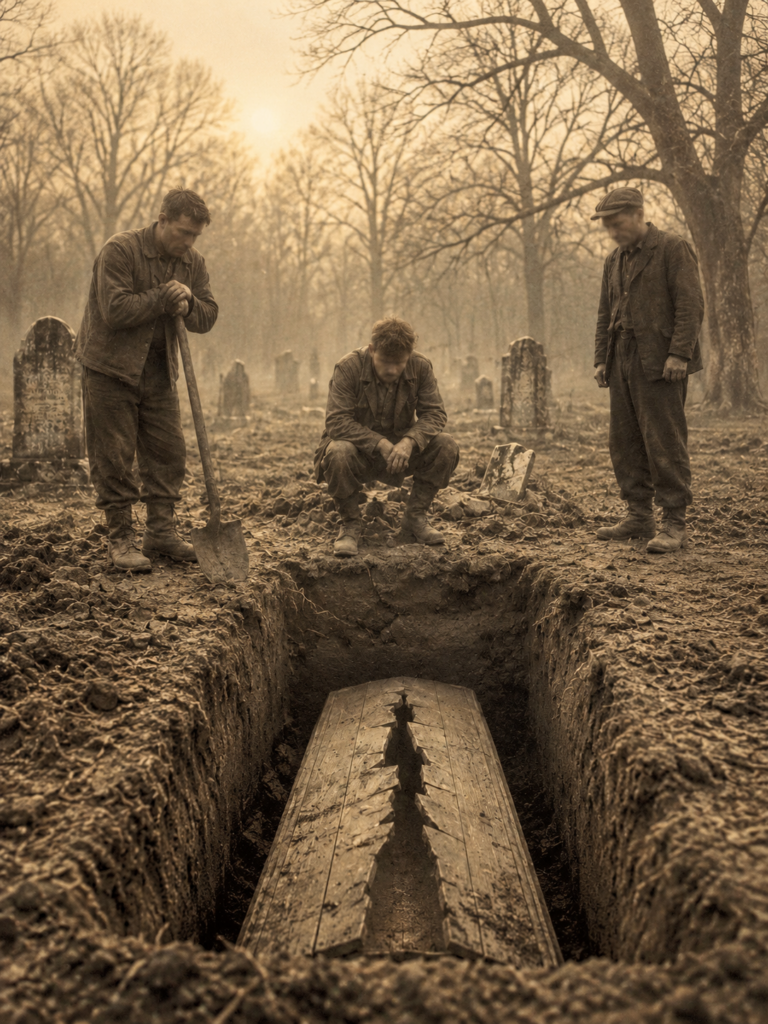
Part 1
In the eastern coal country of Kentucky, where ridges crowded so closely together that a man could shout from one slope and hear his own words come back altered by distance, there was once a county called Craven.
It had been organized in 1838 from pieces of older counties and would eventually disappear back into them, its boundaries erased, its courthouse records scattered, its name removed from maps. Its seat was Drace, a town consisting chiefly of 1 road, a creek-stone courthouse, a post office, a company store, and a church whose tin roof had never carried a bell.
From Drace, a road followed Nettle Creek into the hills. For roughly 7 miles the country narrowed around it. The slopes steepened. Houses became fewer. Coal smoke vanished. The creek crossed and recrossed the road beneath sycamores and laurel until, beyond a wooden bridge, the valley widened enough to hold a settlement.
That place was Nettle.
There were 12 houses there in 1933. There had once been more. The families carried names that had occupied the hollow longer than some counties had existed: Jessup, Prater, Skaggs, Hensley, Comely, Drawn. They lived on small patches of level ground beside the creek and cultivated what the hills permitted. They were not coal people. The mines lay several hollows away. Nettle belonged to an older arrangement of the mountains, one in which families remained because their dead remained and because leaving was considered an act that required explanation.
The creek had given the hollow its name. Nettles grew thick along both banks, sometimes 6 ft high in summer. Children raised there learned to pass through them without being stung. Outsiders almost always came away bleeding.
Above the west side of the hollow, roughly 120 ft over the creek, a south-facing shelf of ground held the cemetery.
Everyone called it the Nettle Graves.
There were 47 stones.
The first belonged to Absalom Jessup.
In March of 1842, when he was 41, Absalom walked up to the hillside and dug his own grave. He was not sick. He had suffered no visible injury. He had cleared the first Jessup field in the hollow 3 years earlier, built a house, planted corn, fathered children, and appeared to have every ordinary intention of continuing.
Instead, on March 9, he finished the hole, climbed into it, lay on his back, and asked his wife to cover him.
She did.
The family remained in Nettle afterward. No one called what Absalom had done suicide.
They called it the beginning.
During the next 87 years, every person from the hollow who died was carried to that same hillside.
The final burial occurred in 1929.
Her name was Celia Jessup.
She was 7 years old.
Her father, Harlan Jessup, had been born in Nettle in 1892, the second of 4 children. Absalom was his great-grandfather. The Jessups were said to keep the graves, though the phrase meant more than cutting weeds or standing fallen stones upright. Harlan had grown up understanding that much without understanding the rest.
He left the hollow at 20.
That mattered.
Most young men who left those hills went toward coal. Harlan went first to Berea and then to Lexington, where he learned surveying under a man named Gage. He was suited to the work. Land made sense to him. Grade, drainage, elevation, distance—these were things that could be measured, and once measured they remained what the instrument said they were.
He married Ruth Barlow in 1917.
Their only child was born in 1922.
Celia was an ordinary-looking girl with several habits people remembered long after her death.
She counted.
Fence posts, buttons, floorboards, birds sitting on a telephone wire. She whispered the numbers just loudly enough that someone close to her could hear. Storms did not frighten her because she could count the seconds between lightning and thunder. Darkness did, because darkness removed the edges of things and made them impossible to number.
She also called her father “Daddy, sir,” a form of address she had invented after hearing a man speak to a judge.
And before she sat anywhere—a chair, a porch step, a patch of grass—she placed one hand flat against the surface for a moment.
When Ruth once asked what she was doing, Celia answered simply.
“I’m seeing if it wants me.”
In June of 1929, Harlan brought Celia to Nettle while his mother was ill.
He had not been home in 11 years.
On the afternoon of June 14, Celia stood in Nettle Creek while Harlan talked with Otis Prater on the bank about the condition of the bridge. The creek was 14 in deep where the girl stood. She had been counting stones under the water.
Then Harlan heard the counting stop.
He later said it was like hearing a clock cease ticking in another room: not a sound, but an absence so distinct that the silence itself became an alarm.
He turned.
Celia was face down.
He reached her in 4 seconds.
He knew because he counted them.
She was dead.
The physician in Drace called it drowning. There was water in her lungs. Nothing in the official conclusion challenged that.
One detail, however, remained in the medical note.
The girl’s hands had been found flat against the creek bottom, palms down, fingers spread against the stones.
They buried her in the Nettle Graves.
Grave 47.
Harlan returned to Lexington with Celia’s shoes on the seat beside him. His marriage did not survive the following year. Ruth eventually returned to Clark County and remarried. Harlan remained in Lexington and worked.
He began counting.
At first he did not know he was doing it.
Steps from one building to another. Windows in a courthouse. Fence rails beside a road.
He counted because his daughter’s counting had been the sound of her living, and somewhere inside him the numbers became a way of keeping that sound from stopping entirely.
Then, early in 1933, Craven County decided to build a road.
Federal relief money had been made available for state construction. A new route was planned along the west side of Nettle Creek to reach a coal tipple farther up the valley.
The west slope was the only practical grade.
The west slope was also where the dead were.
A letter from the state instructed the county to remove the Nettle burial ground and reinter the approximately 40 to 50 remains elsewhere.
County Judge Tillman Bowles hired Harlan.
Whether he did so because Harlan was the best available surveyor or because he thought a Jessup should be the one to disturb Jessup graves was never made clear.
Harlan received the request in Lexington on February 25.
He read it 3 times.
His father was buried on that hill.
His mother was buried there.
His daughter was grave 47.
On February 27 he accepted, with the condition that he be allowed to live in Nettle for the duration of the work.
The county placed him in the abandoned Skaggs cabin at the upper end of the hollow.
Harlan arrived on March 16 at 3:15 in the afternoon.
He noticed the quiet before anything else.
Not silence.
The creek moved. A crow called from the ridge. Somewhere farther down the hollow an ax struck wood.
Yet beneath those ordinary sounds was something else. Harlan would later describe it as the difference between a room in which nobody is speaking and a room in which everybody has suddenly stopped.
He unloaded his truck and looked up at the cemetery.
He counted the stones.
47.
Near evening a truck stopped across the bridge. An old man crossed into the Skaggs yard carrying his hat in both hands.
His name was Odell Prater, the mail carrier.
He did not sit down.
“I’ve got 3 things to tell you,” he said. “Then I’ve got mail to run.”
The first concerned the remains.
“When you dig them up, count the bones. Not the coffins. Not the stones. The bones. Count before you move them and after. If the number isn’t the same, put them back and fill the hole. Don’t touch that grave again.”
Harlan listened without interrupting.
Prater gave the second warning.
“If you’re on that hill after dark and you hear counting, listen to which way it’s going. If the counting is going up, walk down. If it’s going down, don’t move until it stops.”
Then the third.
“Don’t put them in Drace. Don’t put them in any cemetery. New ground only. Ground that’s never held anybody. Salt the bottom of every hole before you lay them down.”
He placed his hat on his head.
“My father told me to say that to whoever came to move them. I’ve said it.”
He crossed the bridge and drove away.
Harlan entered the warning in his notebook under the heading local superstition.
Later that night he added another sentence beneath it.
Something is listening.
The following morning he began the survey.
He established a grid and worked upward, recording names, dates, dimensions, stone positions, grave depth, slope, and surface depression. He measured 31 graves the first day and finished the remainder during the weekend.
The first irregularity appeared in the settlement measurements.
Old graves should, within limits, have shown greater settling than new graves.
These did not.
Their depression corresponded less to the amount of time the coffin had occupied the ground than to the age of the person inside.
The youngest dead had sunk deepest.
Two infant graves had settled nearly 7 in.
An elderly man’s grave had scarcely moved.
Absalom Jessup, 91 years underground, had almost no depression at all.
Celia’s grave had sunk 3½ in in only 4 years.
Harlan plotted every measurement.
The pattern remained.
The younger the dead, the deeper the ground seemed to have drawn them.
He wrote a note beneath the figures.
The ground takes some of them deeper than others.
He crossed out takes.
Then wrote beneath it:
Some of them are taken.
On Sunday night he sat in the Skaggs cabin preparing the county report.
At about 9:00, a sound came from the hillside.
He stopped writing.
At first he believed he was hearing wind moving through grass.
There was no wind.
Then he heard the numbers.
A child’s voice, faint but distinct.
1.
2.
3.
The cadence was familiar.
He sat without moving.
The voice counted to 47.
Paused.
Started again.
After several cycles, it began descending.
47.
46.
45.
Odell Prater’s warning returned to him.
If it is going down, do not move.
Harlan remained at the table.
The voice reached 1.
Silence returned.
He waited several minutes before opening the cabin door.
The cemetery showed dimly through the trees.
Harlan counted the stones.
48.
He counted again.
48.
There was an additional shape in the upper cemetery.
He shut the door and lowered the old wooden bar into its brackets.
Then he counted the stones a third time from memory.
47.
He did not sleep.
Around 3:00 in the morning he began comparing his survey checks from Friday and Saturday.
Of 14 headstones measured twice, 11 were precisely where they should have been.
3 were not.
Each had moved between 1 in and slightly more than 2 in.
All 3 had shifted downhill.
Toward the cabin.
At daylight he climbed the slope with his instruments.
The stones had moved again.
Behind them lay short grooves in the clay, as if they had been dragged.
Harlan knelt beside one.
There were 10 grooves.
5 on the left.
5 on the right.
The digging began March 23.
A county crew arrived from Drace: Gaither Flint, who had spent 22 years digging graves; 2 laborers; and a 17-year-old named Curtis Rowe.
Before they came, Harlan went alone to grave 47.
He carried a lantern and shovel.
He began before dawn.
After nearly 2 hours he reached Celia’s coffin.
The lid remained intact.
The sides had survived.
Yet the coffin was not resting on the bottom of the grave.
There was a space beneath it.
Harlan reached under.
The boards forming the floor had been shattered upward.
Something had entered from below.
His fingers found the fabric of Celia’s burial dress.
Then they touched something else.
Something warm.
He withdrew his hand.
For a long time he knelt beside the hole while morning spread across the hillside.
Then he replaced every shovelful of earth.
When Gaither Flint arrived, he saw the fresh soil.
He saw the clay on Harlan’s hands.
He asked nothing.
They started instead with grave 1.
Absalom Jessup had been underground 91 years.
The walnut coffin was remarkably intact except for its bottom.
The floorboards had splintered inward, broken by force from beneath.
The grave floor itself was solid clay.
No roots.
No animal burrow.
Only 10 shallow marks pressed into the clay beneath the coffin.
5 and 5.
Inside, Absalom’s skeleton lay face down.
Family accounts said he had been buried on his back with his arms beside him.
Now his arms reached above his head.
The finger bones were pressed against the inside of the lid.
The jaw hung open.
Gaither Flint climbed out and sat on the grass.
“That man wasn’t dead when they put him in,” he said.
Harlan stared into the hole.
“Or something woke him afterward.”
They opened grave 2.
The bottom was breached.
The remains were face down.
Grave 3 was the same.
Then 4.
Then 5.
By late afternoon they had opened 11.
Every coffin had been penetrated from below.
Every skeleton had turned face down.
Every set of arms reached forward.
Every grave floor carried the paired marks.
Curtis Rowe placed his shovel on the ground at 4:00 and walked out of Nettle.
He never returned.
Gaither stayed.
At dusk, with 11 graves open behind them, he asked Harlan if they were going to continue until all 47 had been examined.
Harlan said yes.
“And the little girl’s?”
“Mine.”
“You opened hers already.”
“Yes.”
“Was it the same?”
Harlan looked toward the place where Celia lay beneath the freshly replaced soil.
“No.”
Gaither waited.
Harlan only said, “It was worse.”
The work continued for 6 more days.
Every evening the counting returned.
At first the voice stopped at 47.
Then one night it reached 48.
2 nights later, 49.
Then 50.
The number was growing.
During the same week, the open graves began changing.
Their rough earthen walls became smooth overnight, polished as though something had repeatedly passed through them.
The clay was cold enough to numb a hand.
Gaither pressed his palm against one wall and drew it back sharply.
“Something’s using these holes,” he said.
Harlan asked what he meant.
Gaither looked along the line of excavations.
“Like a snake uses a burrow.”
On March 26 Harlan measured the tree line.
The result troubled him more than he expected.
The trees were farther from the cemetery where graves clustered thickly and nearer where they were sparse. The pattern was too regular to be chance.
The clearing itself seemed to correspond to something beneath the ground.
The trees were not merely surrounding the cemetery.
They were outlining it.
That afternoon, inside the Skaggs cabin, Harlan opened a closet and found a leather ledger behind an old lantern.
The name inside the cover was Lorana Skaggs.
The journal began in September of 1889.
Lorana had once kept the Nettle Graves.
Her first entries were practical.
31 stones.
Count morning and evening.
Record each name.
Watch the ground.
Soon the entries changed.
She wrote of one child’s grave sinking faster than it should.
Then of a sound beneath the hill—thin and distant, like wire being drawn through packed soil.
She pressed her palm against the cabin floor and felt vibration below.
In December she heard her dead son Orin humming on the hill.
Orin had died of scarlet fever at 5.
Lorana did not go to him.
The sound was almost perfect.
That was how she knew it was wrong.
The living boy had never been able to hold a tune.
Whatever hummed among the graves did.
From that observation she wrote down what an older Jessup woman had told her.
The ground in Nettle did not keep what was buried there.
It borrowed.
It learned.
What it learned, it tried to return.
Not the dead themselves.
Something made from them.
A likeness assembled from soil, memory, bone, voice, and repetition.
A thing capable of wearing the dead person’s face and knowing what the dead person had known.
Yet it failed in one respect.
It made the pattern too clean.
Human beings were irregular.
The copy was perfect.
In March of 1890, Lorana tried to put her understanding into words.
Soil remembered crops, she wrote. Roots followed old roots. Paths retained the pressure of feet. A door carried the wear of the hands that had opened it.
If bodies were planted in the same ground long enough, perhaps the earth learned bodies as a field learned corn.
It learned shape.
Weight.
Voice.
Name.
It learned the name from the stone and from mourners speaking it.
It learned the body from decay.
Then, eventually, it attempted to grow what it had learned.
Lorana discovered something worse.
Some copies were good enough to remain.
They returned to houses.
They were accepted by families.
They lived.
She began counting the people in the hollow as carefully as she counted the graves.
94 one Sunday.
95 the next.
Then 96.
She knew everyone.
Yet the number kept changing.
One morning the cemetery contained an additional headstone.
It looked decades old.
The date carved into it belonged to the distant past.
The name was her own son’s.
The stone had not been there the previous evening.
Lorana understood then that the ground was not merely using graves.
It could make them.
The false stones were receipts.
Records of names the ground had taken.
Her journal narrowed after that.
Trips to Drace stopped.
References to friends disappeared.
The cabin, the hill, and the counting became her entire world.
In 1891 she began hearing a voice beneath the floor.
At first it hummed.
Later it called her by a family name no outsider could have known.
Then it spoke secrets belonging to her dead husband and child.
It had learned them in the ground.
Eventually the voice beneath the floor became her own.
It was practicing her.
Lorana never answered.
Every night she counted backward.
In March of 1893, the journal ended in the middle of a sentence.
The count had risen by 2 stones overnight.
She wrote that she was afraid to go up and read the names because one of them might say—
The pen stroke ran across the remainder of the page.
The rest of the book was blank.
Lorana Skaggs disappeared.
No death certificate was filed.
No burial was recorded.
The cabin was later found open, her coat still hanging inside, her shoes beside the door.
On the hill stood a stone bearing her name.
Lorana Skaggs.
Born 1849.
Died 1851.
The death date preceded the adult woman by decades.
Harlan closed the journal.
Outside, daylight lay over the cemetery.
He counted the stones.
47.
For the first time since arriving, the number gave him no comfort.
He no longer knew whether 47 was correct.
He no longer knew whether the stones had been there when Celia was buried.
He no longer knew whether every grave they had opened belonged to someone who had once lived above ground.
And in the back of Lorana’s journal he found names.
Names he recognized.
Jessups.
Praters.
Skaggs.
Comelys.
People who had once lived in Nettle.
People whose descendants were still there.
Some, perhaps, who were still walking the creek road while Harlan sat inside the Skaggs cabin holding the book.
That night the counting from the hill reached 53.
Part 2
On March 31, Harlan crossed the ridge on foot to Punchon Hollow.
He went to see Dorcas Hensley.
Everyone called her Granny Hensley, though she had no grandchildren. She was 84 and lived alone in a cabin where a line of salt lay across the threshold.
The Hensley women had carried knowledge from mother to daughter for 5 generations.
Dorcas looked at Harlan for a long time before telling him that he had his father’s forehead.
Then she told him what lay beneath Nettle.
She did not call it a creature.
She did not claim to know whether it was living.
She described it instead as a process, something existing under the earth the way a river existed within its bed.
It had been there before the first grave.
Before Craven County.
Before the first permanent families entered those hollows.
It wanted shape but possessed none.
The dead provided patterns.
Every burial became a lesson.
Young bodies were easier to learn, Dorcas said. There was less history in them, fewer years of variation. The ground learned children quickly.
That was why the youngest graves sank deepest.
The graves themselves became channels.
Roads.
The thing below entered the coffins from underneath, passed through the dead, learned whatever remained to learn, and eventually pushed something upward.
Names mattered because names were patterns too.
Repeated aloud at funerals, carved in stone, spoken by relatives, carried through generations.
The network could extend along families as easily as it extended through graves.
That was why the Jessups had kept the cemetery.
They had not merely tended it.
They had counted.
Morning and evening.
If the number changed, a boundary had been breached.
Harlan asked Dorcas what could be done.
“You’re already doing the worst thing,” she said. “And maybe the best.”
If the dead were removed to untouched ground, she told him, the passages could be closed.
Every old grave had to be salted and filled.
Every stone had to be broken.
The remains had to be placed somewhere no one had previously been buried, with salt beneath them and no names above them.
But if the remains were carried to an existing cemetery, the old network would be connected to another.
Drace held hundreds of dead.
Moving the Nettle bones there would not close 47 roads.
It would create hundreds more.
Harlan thought of Odell Prater’s warning.
The old mail carrier had not been repeating superstition.
He had been giving instructions.
Then Harlan asked about Celia.
Dorcas’s face changed very little.
“Your girl was young,” she said. “It learns the young fast.”
Harlan stared at the cup between his hands.
Dorcas told him the copies could not easily cross the limits of the underground network. The tree line marked, approximately, the boundary of what the thing below could hold together. Beyond it, the borrowed form weakened.
“That girl has been trying to come back to you for 4 years,” Dorcas said. “But you left.”
Harlan put his face in his hands.
That afternoon he walked 7 miles back to Nettle.
Near the Skaggs cabin, movement at the edge of the trees stopped him.
A girl stood there.
She was about 7.
Dark hair.
Small shoulders.
One hand flat against the trunk of a tree.
Harlan knew the shape of her before he could see the face clearly.
He stood on the opposite side of the clearing.
The girl did not move.
Then she raised her second hand and pressed both palms against the bark.
She tilted her head.
“Daddy, sir.”
Harlan could not answer.
“I’ve been counting,” she said. “I can’t stop. I need you to tell me when.”
His eyes filled.
The voice was right.
The height was right.
The words were right.
The habit of pressing her hands flat was right.
Too right.
Celia had never performed any of those things perfectly.
Her counting sometimes lost its place.
Her invented “Daddy, sir” contained a tiny hesitation in the middle.
Before sitting, her hand paused against a surface with a moment of uncertainty, as if she truly needed to discover whether the chair or step or earth would accept her.
The girl by the trees showed no uncertainty at all.
Perfection was the flaw.
Harlan entered the cabin and barred the door.
He counted backward from 47.
When he finished, the clearing was empty.
The remaining graves were opened.
Of the 47 coffins, 43 followed essentially the same pattern: breach from below, body turned face down, arms reaching, jaw open, marks beneath.
4 did not.
Orin Skaggs’s grave was one.
His coffin remained completely intact.
It was also completely empty.
No bones.
No clothing.
No residue.
Nothing suggesting that a child had ever decayed inside it.
Gaither Flint said somebody must have removed the body years earlier.
Harlan thought of Lorana listening to the perfect humming of the thing that wore her son’s sound.
The second anomalous grave belonged to an unnamed infant girl who had died in 1863.
Her coffin was not empty.
It contained 3 skeletons.
2 adults and a child of perhaps 8, disassembled and fitted into the infant-sized box with an orderliness Gaither found worse than confusion.
None belonged to a newborn.
The third was Ezra Prater, dead since 1897.
His coffin had been opened from below, but Ezra had not turned face down.
He was sitting upright.
The back of his skull pressed against the lid.
His teeth were clenched.
Between them remained a fragment of fabric from a woman’s or girl’s dress.
Harlan studied the cloth.
He could imagine no natural process that would seat a skeleton upright and leave material held tightly between its teeth.
That night he wrote only one sentence concerning Ezra.
He was fighting it.
The fourth grave was Celia’s.
Harlan had already found what made it different.
When he opened the grave alone on the first morning, the warm object beneath his daughter’s dress had been a hand.
Not bone.
Not flesh.
Something shaped like a child’s hand and made from the earth beneath the coffin.
It had pushed upward through the broken boards.
The palm faced Harlan.
He touched it.
For one moment he held the hand beneath his daughter’s coffin.
It squeezed back.
Then he released it and filled the grave.
For 34 years he told no one.
The county completed its excavation plans at the beginning of April.
An order arrived stating that the remains would be reburied in Drace.
Harlan read the letter on the post office steps.
400 dead lay in the Drace cemetery.
He thought of Dorcas describing roads.
He thought of the smooth grave walls.
He thought of the 10 finger marks beneath every coffin.
He knew he could not obey.
That night a new stone stood near the edge of the Nettle cemetery.
Harlan read the inscription.
Celia Jessup.
Born 1922.
Died 1851.
He remained beside it for a long time.
The impossible date meant the ground had possessed the pattern of Celia decades before her birth.
Perhaps, as Dorcas had suggested, the family itself was enough.
A Jessup name. A Jessup line. Generations supplying information from which the thing below could predict what might come later.
That night, April 2, the count reached 61.
At about 2:00 in the morning someone knocked on the cabin door.
3 evenly spaced knocks.
Then 3 more.
Harlan sat at the table.
A voice spoke from outside.
His voice.
“Open up. It’s cold out here. I’ve been a long time coming.”
Harlan’s hand went over his mouth.
The voice knew he counted when he was frightened.
It knew why.
It spoke about Celia.
Then it told him the county would move the bones to Drace and there was nothing he could do.
Unless he made a trade.
The thing below wanted a name.
Only 1.
A stranger.
Someone Harlan did not love.
Someone he would never meet.
Speak that name over the graves, the voice said, and the network would leave Drace alone.
In exchange, Celia would come home.
For a dangerous interval Harlan considered it.
A stranger’s name could be found anywhere.
A courthouse document.
A mailbox.
A newspaper.
The person might live 20 more years before anything happened. Harlan might be dead before the copy came.
Celia would be home.
Then he remembered Lorana refusing her own son.
He remembered the thing at the tree line whose voice had been too perfect.
One name was still one life.
Harlan removed his hand from his mouth.
“No.”
The voice outside became quiet.
When it spoke again, it still sounded like Harlan.
“Then the bones go to Drace,” it said. “And I follow. And you have chosen 400 for 1.”
After sunrise Harlan drove straight to Tillman Bowles.
He told the county judge the Nettle remains could not be buried in Drace.
He spoke instead about drainage, soil condition, preservation, public health—anything that could be placed in a government file.
Bowles listened.
“What do you want?”
“Unused land. High ground. No cemetery. No churchyard. Ground that’s never held a body.”
Bowles regarded him.
“That’s peculiar.”
“Yes.”
“There’s a reason?”
“Yes.”
Bowles did not ask further.
When Harlan returned to Nettle, an old woman sat on the Skaggs porch.
She introduced herself as Delphia Jessup, his father’s sister.
Harlan remembered her only dimly.
She had not left the hollow in 31 years.
“I know what came to your door,” she said. “It came to mine.”
31 years earlier, after Delphia’s mother died, a stranger had entered the hollow to survey a boundary fence.
For several nights the counting came.
Then the voice of Delphia’s dead mother offered a bargain.
One name for one rest.
One stranger for one mother.
Delphia had agreed.
She spoke the surveyor’s name over the cemetery.
The man left the hollow unchanged.
Years passed.
Then the change began.
Small things.
Details nobody else noticed.
Eventually even those differences vanished, and he appeared completely himself again.
Delphia understood what she had done only after it could no longer be undone.
She had remained in Nettle for 31 years because she could not bear to enter a wider world in which her decision was walking around under another man’s name.
“That thing will keep asking you,” she told Harlan.
“It already did.”
“And?”
“I said no.”
Delphia nodded.
“I know. The whole hollow heard you.”
The ground carried sound, she said. The entire valley was connected beneath the surface.
Then she told him where Lorana Skaggs had hidden another record.
At the upper end of Nettle, an abandoned root cellar remained beneath the site of the old Drawn cabin.
Harlan found the cellar behind laurel.
A stone shelf at the back held a wax-sealed Mason jar.
Inside was a roll of paper.
43 names.
Lorana’s handwriting.
Beside each name she had written a year and a brief notation.
These were the copies she believed had successfully returned and remained among the living.
7 names were Jessups.
4 belonged to Harlan’s direct ancestors.
He sat outside the cellar with the paper in his hands.
If Lorana was right, then parts of his own family line descended from people who had come out of the cemetery after the originals died.
Those copies had married.
They had children.
The children had been flesh and blood.
Generations had followed.
Harlan himself stood at the end of that line.
The distinction between what the ground made and what people became after generations of ordinary birth no longer seemed simple.
Even Absalom’s first burial looked different now.
A man digging his own grave and lying down willingly.
Not an ending.
A planting.
Harlan began breaking the new stones whenever he found them.
He salted the ground.
He counted morning and evening.
But the number continued to rise.
The last serious night came during heavy rain.
The salt around the cabin dissolved.
The count outside reached 61.
Something struck the door.
The bar bowed inward.
Another blow shook the frame.
The floor trembled beneath Harlan’s boots.
From below came a grinding sound, clay against clay, something moving through the packed earth under the cabin.
The door struck his shoulder.
He leaned his full weight against the bar.
Wood cracked.
There was nowhere to go.
The window faced the cemetery.
The walls were shaking.
The ground itself seemed to press toward him.
Harlan did the only thing left.
He counted.
Not upward.
Backward.
“61.”
Another blow.
“60.”
“59.”
The pressure against the door diminished almost imperceptibly.
“58.”
“57.”
The bar stopped bending.
He continued.
At 54, the sound under the floor weakened.
At 50, the cabin was still.
At 47, everything stopped.
47 was the last number he trusted.
47 actual burials.
47 bodies.
47 names belonging to people who had lived and died in the hollow.
He stood with his shoulder against the cracked bar while rain struck the roof.
Then he counted backward from 61 to 47 again.
And again.
And again.
At dawn he opened the door.
The hillside contained 47 stones.
The 14 planted markers were gone.
For one morning, at least, the number had been restored.
Harlan packed his belongings.
Then he looked toward the shed where the bone boxes waited.
He could have left.
But leaving would have allowed another man to complete the county order.
The dead would be taken to Drace.
The road would spread.
So he stayed.
Tillman Bowles found a piece of county land called Bald Knob.
It was dry, empty, exposed to wind, and had never been used for burial.
Harlan walked the hilltop on April 12.
He placed his palm against the ground.
It was cold.
Ordinarily cold.
There was no humming beneath it.
No unnatural warmth.
No sense of depth beyond dirt, stone, and root.
“This will do,” he told Bowles.
He moved the bone boxes himself.
Each new grave was only about 3 ft deep.
He poured salt into the bottom.
He laid the remains down.
He did not install markers.
No names.
No carved family lines.
Nothing for mourners to repeat aloud.
47 unmarked rectangles with 3 ft between them.
When the last was covered, Harlan stood in the wind and said, “This is the count. This is the number. This is all there is.”
Then he returned to Nettle.
The empty graves remained open on the old hillside.
He salted them.
He broke every headstone.
Celia’s was last.
Harlan stood before it holding the sledgehammer.
He told whatever lay under the hill that his daughter had never belonged to it.
The thing it had made was too exact.
His real child had been frightened of darkness.
She lost count.
She hesitated.
She made mistakes.
The copy did not.
Perfection was the lie.
He swung.
The first strike cracked the stone.
The second widened the break.
The third split the name JESSUP.
He shoveled the pieces into the grave and covered them.
Lorana Skaggs’s journal went into oilcloth, then into a Mason jar sealed with wax.
The 43-name list went with it.
Harlan packed his notebooks.
On the final page he recorded the condition of the 47 graves, the relocation to Bald Knob, the salt, and the broken stones.
Then he wrote:
The ground borrows. It does not keep. Count the dead before you sleep.
On April 14, 1933, Harlan Jessup drove out of Nettle.
At the courthouse he told Tillman Bowles the work was finished.
Bowles asked about the headstones.
“Deteriorated,” Harlan said. “I disposed of them.”
“You broke them?”
“Yes.”
“The families may object.”
Harlan looked toward the window.
“No,” he said. “They won’t.”
Then he drove to Lexington.
For the first time in 31 days, he entered a room where silence felt like nothing more than silence.
Part 3
Harlan never stopped counting.
He counted steps, fence posts, windows, ceiling tiles.
Every night he counted backward from 47 before sleeping.
He placed chairs beneath doorknobs when no wooden bar was available. He avoided beds on ground floors. He never camped outside again.
He also refused every surveying job involving a cemetery.
In 1938 he married Elise Greer.
She noticed his habits early.
The counting.
The barred door.
She married him without receiving an explanation for either.
They had no children.
Harlan never told her why he did not want them.
The journal remained sealed in the bottom of a trunk.
He did not return to Nettle.
He did not visit Bald Knob.
When Delphia Jessup died in 1941, Harlan stayed in Lexington.
She had been found in bed with her coat and shoes on. Her cabin door was barred. Salt lay across the threshold.
A sealed letter addressed to Harlan rested on the table.
He received it several weeks later.
He read it once.
Then he burned it.
Many years afterward he would say only that he wished he had never read it and wished he had not burned it, and that both wishes were true.
Gaither Flint carried his own piece of Nettle away.
For the rest of his grave-digging career, before breaking ground in any cemetery, he counted every stone.
Then he counted them again before leaving.
In 1951, long after the Nettle work, Gaither walked through another cemetery and noticed a weathered marker he did not remember seeing.
The date carved into it belonged to 1897.
The name did not appear in county records.
He returned with a sledgehammer.
He broke the marker.
Then he salted the place where it had stood.
Years later his granddaughter found the hammer in his truck and asked about it.
Gaither told her some stones were not real.
He advised her never to ask who planted them.
The new road through Nettle was eventually completed.
Graders cut across the old burial ground.
Broken stones disappeared beneath fill.
The hillside was leveled.
Asphalt covered the earth where the 47 coffins had rested.
Cars passed over it.
Coal trucks passed over it.
Rain ran from the road into the creek.
The hollow slowly emptied.
Houses collapsed or were dismantled.
Foundations sank beneath weeds.
The nettles remained.
Harlan heard pieces of this over the years and asked few questions.
Elise died in 1966.
Cancer.
She was in a hospital bed above ground when she told him, near the end, that whatever he had been counting all those years, he could stop now.
He could not.
In the summer of 1967 an oral historian named Boyd Deaton came to interview Harlan about old Craven County.
Harlan was 75.
They sat at a kitchen table with a reel-to-reel recorder between them.
For roughly 2 hours the conversation stayed ordinary.
Surveying.
Roads.
Coal.
County politics.
Then Deaton asked about the Nettle Graves.
Harlan was quiet.
34 years had passed since he drove away.
He began talking.
He described the settlement measurements.
The moving stones.
The counting.
The coffins breached from below.
The bodies turned face down.
The 10 marks in the clay.
The journal.
Dorcas Hensley.
Delphia.
The bargain.
The 43 names.
The night the door nearly opened.
The hand beneath Celia’s coffin.
He told Deaton he had touched it.
Held it.
Felt it squeeze.
“The worst part,” Harlan said, “is I never knew if it was trying to pull her down or trying to come up.”
Then he described the girl at the tree line.
The voice calling him Daddy, sir.
He explained that it had been perfect.
That was how he knew it was not Celia.
At the end of the recording, Harlan told Deaton where his daughter’s real remains lay.
Bald Knob.
No stone.
No name.
Only a bone box beneath grass, with whatever remained of the salt washed gradually through the soil.
That, Harlan said, was what he could not forgive.
Not that something had copied Celia.
Not that it had worn her face.
Not that it had used her voice.
What he could not forgive was that protecting his daughter’s remains had required him to erase her.
He had removed her name.
He had taken away the marker by which anyone might someday find her.
He had made his own child invisible in order to keep something else from learning her more completely.
After the recorder stopped, Harlan showed Boyd Deaton a photograph.
It was small and poorly composed.
A line of open graves occupied the center.
In one grave stood a girl of about 7.
Only the upper half of her body was visible.
Dark hair.
Still face.
One hand pressed flat on the edge of the grave.
Harlan told Deaton the picture had been taken on the morning of April 11, 1933.
The figure had been walking among the graves through the night.
At dawn, he said, it returned to the open earth.
He photographed it as it went down.
Not climbing out.
Going back.
Boyd Deaton never published the book for which he had interviewed Harlan.
The tape entered a university collection.
Harlan returned the photograph to the sealed envelope.
He continued counting.
On November 4, 1971, he died in Lexington at 79.
A chair stood against the bedroom door.
His boots were on.
His hands rested flat against the mattress.
The coroner attributed his death to his heart.
He was buried in Lexington, far from Nettle and far from Bald Knob.
When his executor opened the trunk, he found the wax-sealed Mason jar, Lorana Skaggs’s journal, Harlan’s notebooks, the 43-name list, and the photograph.
The photograph’s envelope carried a warning in Harlan’s handwriting.
Do not open.
The executor opened it.
The photograph later disappeared.
The journal’s location became uncertain.
The tape survived.
So did the notebooks.
And on the last page of Harlan’s final notebook were the lines he had written before leaving Nettle.
47 graves opened.
The record of the breached coffins.
The removal to Bald Knob.
The salt.
The broken stones.
Then his warning:
The ground borrows. It does not keep. Count the dead before you sleep.
Beneath those words was another sentence.
The handwriting was not Harlan’s.
The letters were small.
The pencil pressure lighter.
The line read:
I am still counting. I cannot stop. Will you tell me when?
Harlan had said that sentence was not on the page when he closed the notebook in 1933.
By 1971 it was.
At some point during the 38 years the notebook remained in his possession, someone—or something—had added it.
There were other details that did not disappear with Harlan.
Gaither Flint’s habit of counting stones persisted through the stories his family told.
So did Delphia’s final letter, though its contents were gone.
So did rumors from the hollow after the road was paved.
Drivers occasionally spoke of seeing a child near the creek where no houses remained.
Others described voices heard after stopping along the road at night.
No account was consistent enough to become evidence.
Most had the indistinct shape of rural stories: something glimpsed, something heard, a figure that vanished after headlights passed.
The more troubling evidence remained physical.
Bald Knob.
The old Nettle site.
The records of 47 exhumations.
And the knowledge Dorcas Hensley had carried from 5 generations of women.
For her line had not guarded only Nettle.
Each Hensley woman, according to what she told Harlan, had kept watch in a different hollow.
Different cemetery.
Different opening.
They had not guarded a single place.
They had guarded a territory.
Dorcas died sometime in the late 1930s without a daughter to receive the knowledge.
The line ended.
Whatever sites the earlier women had watched were left without counters.
That possibility changed the scale of Lorana Skaggs’s list.
43 successful copies in and around 1 hollow were disturbing enough.
If comparable burial grounds existed throughout the mountains, the number could have been far greater.
And if copies had lived ordinary lives, married, raised children, and died, then the question of what counted as a copy ceased to be simple after the first generation.
The children would not have come from the ground.
They would have been born.
Their children after them would have been born.
Whatever had begun beneath a grave might, within several generations, become indistinguishable from any other family history.
The transcript’s later investigator eventually went to Bald Knob.
The place was still what Harlan had selected: open high ground, grass and wind, no trees, no markers.
Yet careful examination revealed faint rectangular changes in the vegetation.
47 of them.
Rows.
Approximately 3 ft apart.
The investigator placed a palm against the ground.
It was warm.
Not warm from sunlight.
Warm from below.
Then, faintly, came counting.
Upward.
He left before learning how high it would go.
At Nettle, most of the old settlement was gone.
The road crossed the former cemetery.
The creek continued below it.
In the abandoned ground near where the graves had once been, the investigator found a stone.
Old-looking sandstone.
Weathered lettering.
The inscription read:
Harlan Jessup.
Born 1892.
Died 1847.
The impossible death date preceded Harlan’s birth by 45 years.
It followed the same pattern as Lorana’s false stone and Celia’s.
The investigator drove to Hazard, purchased a sledgehammer, returned, and broke it.
3 blows.
Yet destroying the stone did not answer what it represented.
If the marker truly belonged to the same phenomenon Harlan had described, then the thing beneath Nettle had possessed a pattern for Harlan long before Harlan existed.
Perhaps the family line gave it enough information.
Perhaps the copies were not merely recreating the dead.
Perhaps, after generations of studying a family, the process had learned to anticipate them.
Harlan’s false death date was 1847.
Celia’s had been 1851.
Lorana’s had also been pushed backward beyond the lives they actually lived.
The dates made the markers look less like gravestones than reservations.
Names placed in the earth before the people who would carry them arrived.
That possibility suggested another.
The earliest copies may have been easy to identify because they were perfect.
Orin’s humming was in tune.
The child at the tree line used every remembered gesture correctly.
But a process capable of learning might also learn imperfection.
It had generations.
It did not think in the span of a human life.
Each failure taught it something.
Each mistaken detail became information.
A copy could learn to sing a little flat.
To hesitate.
To miscount.
To fear something irrationally.
To make the small errors by which the living recognized one another.
The difference between imitation and personhood would become narrower every time.
That was the question Harlan had never been able to close inside a measurement.
A surveyor could establish a boundary only if 2 sides remained distinct.
In Nettle, the boundary had blurred.
Between grave and road.
Between memory and flesh.
Between the original and the thing that remembered being original.
The only distinction Lorana trusted was the flaw.
The imperfection no pattern would deliberately create.
But even that defense depended on the copies not understanding why flaws mattered.
Given enough years, perhaps they would.
Under the road in Nettle, there was no longer a visible cemetery.
No headstones remained to count.
The openings had been filled.
Salt had long since dissolved into rainwater.
Asphalt lay where the coffins had been.
On Bald Knob, the 47 unmarked dead remained beneath ordinary grass, and whatever salt Harlan placed below them had washed away decades earlier.
Nothing in the landscape provided certainty.
Only records remained.
The county’s public account reduced the exhumation to coffin deterioration, soil pressure, subsidence, and root intrusion.
That was what could be typed into a government form.
The other account existed in Harlan’s notebooks, Lorana’s journal, Boyd Deaton’s recording, and the habits of people who emerged from Nettle counting things they had never counted before.
Harlan had gone there believing numbers fixed the world.
47 graves.
47 stones.
47 names.
Then the stones moved.
The number changed.
Some coffins contained too much.
One contained nothing.
The dead had shifted.
The ground had acquired names it should not have known.
By the time he left, counting no longer measured the world.
It defended a boundary.
47 became less a number than a line.
Above it, the living.
Below it, everything that had learned them.
And somewhere within that account remained the smallest and most difficult part of the mystery.
Not the broken coffins.
Not the finger marks.
Not the thing that spoke in Harlan’s voice.
A sentence.
I am still counting. I cannot stop. Will you tell me when?
If Harlan was right, the thing that wore Celia’s shape was not Celia.
It had never been Celia.
It had been constructed from what the earth learned of a girl who counted because counting made the world bearable.
But in learning that habit, it may also have inherited the need behind it without understanding why.
It counted because Celia counted.
It waited because Celia had waited for her father to tell her things were safe.
And because Harlan refused to answer what was not his daughter, the counting never received an end.
The question remained in the notebook.
Perhaps it remains nowhere else.
Perhaps the warm earth on Bald Knob was ordinary geology.
Perhaps the voice there was wind.
Perhaps the stone bearing Harlan’s impossible date was a fraud whose maker had long since disappeared.
Perhaps the newspaper description—subsidence and roots—was closer to the truth than any story told afterward.
There is no measurement that settles those possibilities.
That is where Harlan’s record ends.
Not with proof.
With a count.
47 people buried on a hillside above Nettle Creek.
47 coffins removed in 1933.
43 disturbed in nearly identical ways.
4 that were not.
47 boxes placed in unnamed ground.
A vanished keeper.
A broken line of watchers.
A road laid over the old graves.
And a final sentence written in a hand Harlan said was not there when he closed the book.
The hills have changed since then.
Counties vanished.
Families moved.
Roads were widened.
Old cemeteries disappeared behind brush.
The people who knew why certain stones had to be counted died without always explaining themselves.
The Hensley women are gone.
Gaither Flint is gone.
Delphia Jessup is gone.
Harlan is gone.
No one officially keeps the Nettle Graves now.
There are no graves left to keep.
But beneath the road lies the ground where they were.
And farther away, on a bald Kentucky hilltop, 47 rectangles remain without stones or names.
If anything still counts them, there is no record of who taught it.
If anything still comes up, there may be no one left who knows to look for the flaw.
And if the thing beneath those hollows has had all these years to learn imperfection, then the oldest protection may no longer be protection at all.
The last person known to have deliberately held the line died with his hands flat against a mattress and a chair against his door.
He had spent 38 years counting backward.
47.
46.
45.
Down through the names.
Down through the dead.
Down toward 1.
And somewhere, in a notebook sealed away from Nettle, another hand had already begun counting with him.


