Part 1
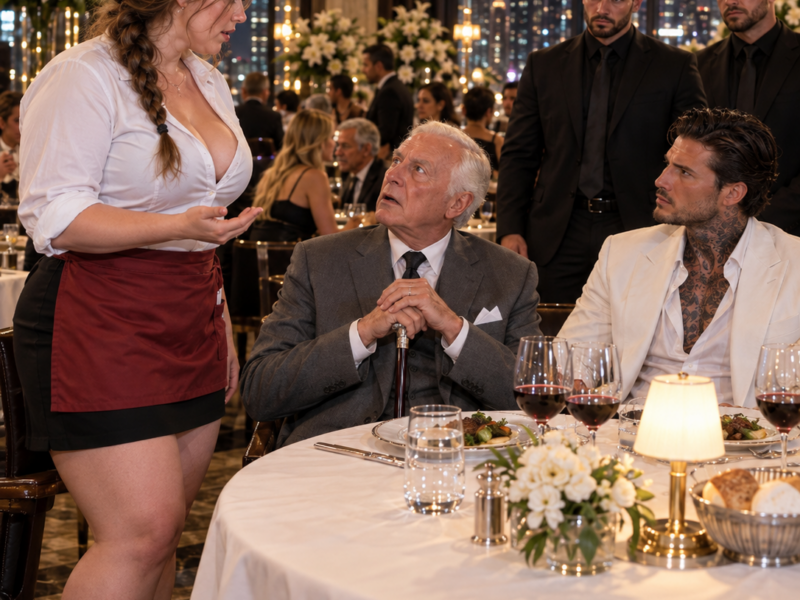
The first time Phoebe Beecher heard her brother laugh after their father’s death, they were sitting across from each other in a lawyer’s office, and he was laughing at her inheritance.
Not at a joke.
Not at some cherished family memory.
At the only thing their father had left her.
Outside, December snow drifted across Main Street in Bartlett, New Hampshire. The mountains beyond the town were buried beneath a dull gray sky, and the wind rattled the old windows of Otis Hartwell’s law office.
Phoebe sat at the far end of a polished maple conference table, her hands folded tightly in her lap.
She was twenty-six years old, with tired brown eyes, dark hair pulled into a loose braid, and a green wool barn jacket that had belonged to her grandmother. Underneath it, she wore the only black dress she owned.
Across from her sat her older brother, Beck.
At thirty-seven, Beck Beecher looked like a man who had never been told no. His charcoal overcoat cost more than Phoebe’s aging Ford Bronco, and the silver watch around his wrist probably cost more than everything in her checking account.
Beside him sat his wife, Adelaide, who had spent most of the morning looking at her phone.
Their father, Edmund Beecher, had been buried four days earlier.
He was seventy-one when he died.
For most of his life, Edmund had owned considerable property in the White Mountains: a working family farm, timberland, investments, and a summer cottage on Cape Cod.
Phoebe had known the family was comfortable.
She had never understood just how wealthy they were.
Until the lawyer began reading.
“To my son, Beckett Edmund Beecher, I leave the family farm on Bare Mountain Road, including the farmhouse, barns, equipment, and surrounding acreage.”
Beck gave a small, satisfied nod.
“Additionally, the Boston investment portfolio, currently valued at approximately four million eight hundred thousand dollars.”
Adelaide finally looked up.
“The cottage in Wellfleet, Massachusetts. The timber holdings above Crawford Notch. The family Steinway piano, silver collection, and remaining financial assets.”
The lawyer paused to turn a page.
By the time he finished listing Beck’s inheritance, the total was approximately eleven and a half million dollars.
Phoebe felt her stomach tighten.
Not because she wanted her brother’s money.
Because she was beginning to understand what her father had decided about her.
Beck had inherited their childhood home.
The fields where she had helped deliver calves.
The kitchen where their mother had once baked bread every Sunday.
The porch where their grandmother used to sit with a basket of seed packets balanced across her knees.
Everything that had made up her childhood now belonged to her brother.
Mr. Hartwell adjusted his glasses.
“And to my daughter, Phoebe Charlotte Beecher, I leave the parcel at the crossroads of Bartlett Road and Bare Mountain Road, consisting of approximately two-thirds of an acre, including the timber-framed country store built in 1898, the former post office, the attached caretaker’s apartment, and all contents therein.”
Silence settled over the room.
Then Beck laughed.
A short, sharp sound.
“You’ve got to be kidding.”
Mr. Hartwell looked up.
“Your father was quite specific.”
“The store?” Beck repeated. “Dad left her that rotten old store?”
Adelaide leaned forward.
“Isn’t that the property the county declared unsafe?”
“The building requires substantial repairs,” the lawyer answered.
“Substantial?” Beck shook his head. “The roof is falling in. Nobody’s opened that place in seven years.”
He turned toward his sister.
“Well, congratulations, Phoebe. You got the shed.”
Adelaide gave a small laugh.
Phoebe stared at the paperwork in front of her.
She knew the store.
Of course she knew it.
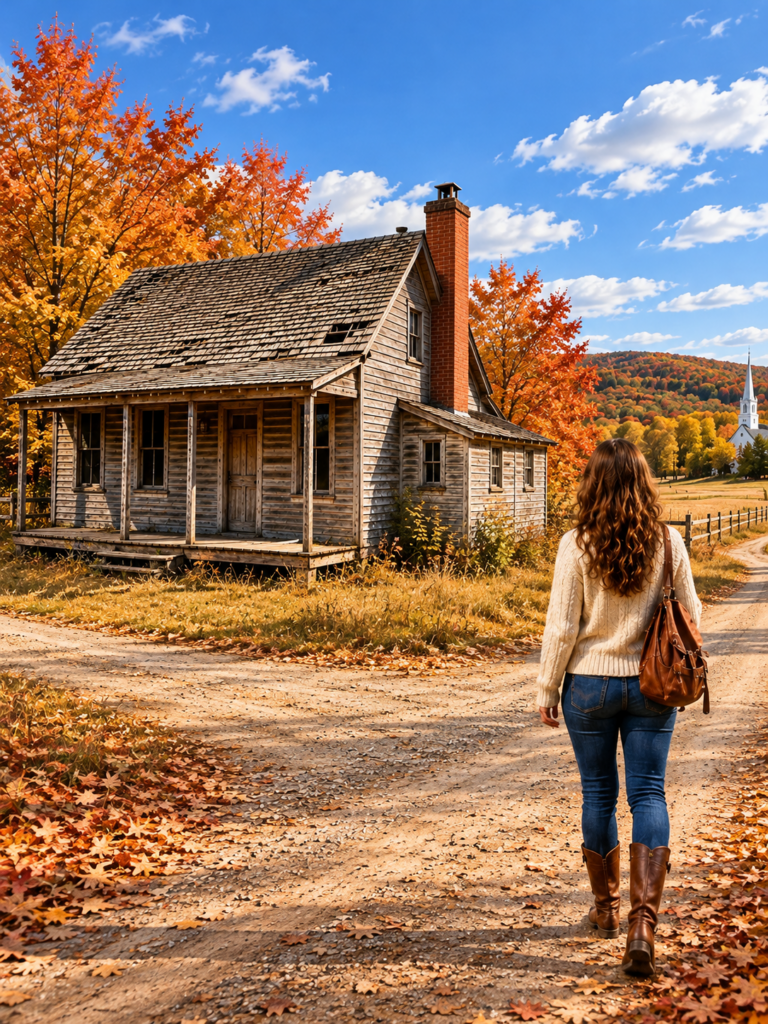
The Beecher Country Store stood at a lonely crossroads outside Bartlett, where two narrow mountain roads met beneath towering maples.
Its cedar siding had weathered silver-gray. The slate roof sagged in places. The front windows had been dark for years.
Most people driving past probably saw an abandoned building.
But Phoebe remembered something different.
She remembered the brass bell above the door.
The enormous maple counter polished by generations of customers.
The smell of fresh coffee, maple sugar, woodsmoke, and penny candy.
And her grandmother’s voice.
Patience, little one. The best things grow slowly.
“Phoebe?”
Mr. Hartwell was watching her.
“Do you understand the terms of the bequest?”
She swallowed.
“Yes, sir.”
Beck leaned back.
“You can probably get something for the land. Maybe a buyer who wants to tear the building down.”
“I don’t want to tear it down.”
Her voice came out quieter than she intended.
Beck raised his eyebrows.
“What?”
“I said I don’t want to tear it down.”
He stared at her for a moment.
Then he shrugged.
“Suit yourself. Just don’t come asking me to pay for the roof.”
Phoebe didn’t answer.
There had been a time when her brother’s words would have made her cry.
That time had passed years earlier.
Mr. Hartwell finished the paperwork and handed her a small envelope.
Inside was an old brass key attached to a faded leather cord.
“The key to the store,” he explained.
Phoebe recognized it immediately.
Her grandmother used to wear that key around her neck.
As a little girl, Phoebe had watched her slip it into the enormous black padlock every Saturday morning.
The sight of it nearly broke her composure.
She closed her fingers around the envelope.
“Thank you.”
Mr. Hartwell studied her face.
“Your father wanted you to have that building, Phoebe.”
She lowered her eyes.
“He made that clear.”
Beck stood and buttoned his coat.
“Well, he certainly made everything else clear.”
The meeting ended thirty-four minutes after it began.
Outside, Beck’s expensive Audi sat warming beside the curb.
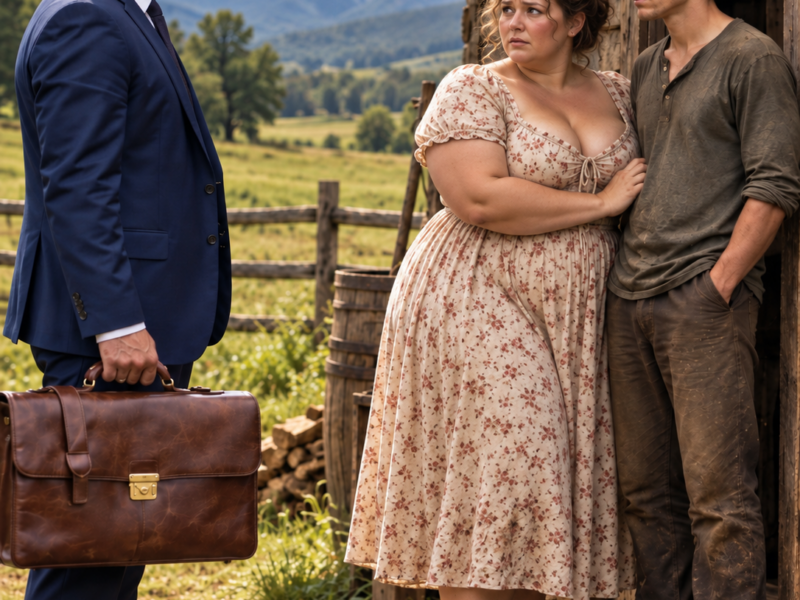
Phoebe stood next to her old Bronco while her brother loaded a leather briefcase into the back seat.
“Oh, Phoebe,” he called.
She turned.
“We’ll be putting the farmhouse on the market in the spring. You’ll need to have your things out by April first.”
She stared at him.
“That’s where I live.”
“I know.”
“Beck, I’ve lived there my entire life.”
“And I’ve got a buyer interested in the property as a complete package. I can’t have someone occupying the house during showings.”
“I’m your sister.”
He sighed.
“Don’t make this personal.”
Something cold settled inside her.
“How could it possibly be anything else?”
For a moment, Beck looked uncomfortable.
Then Adelaide called to him from the passenger seat.
He glanced toward the car.
“You’ve got three months. That’s more than fair.”
He climbed inside.
Phoebe watched the Audi disappear into the falling snow.
Then she sat in her Bronco, laid the envelope on the passenger seat, and finally began to cry.
Not loudly.
Not dramatically.
She simply bent forward until her forehead rested against the steering wheel.
Eleven and a half million dollars.
An entire family estate.
And her brother couldn’t even let her stay in the house until spring without reminding her it wasn’t hers anymore.
Her father hadn’t been much different.
After Phoebe’s mother died of ovarian cancer when Phoebe was twelve, Edmund had become a man of almost complete silence.
He worked the farm.
He paid the bills.
He fixed fences, checked cattle, and brought firewood into the house.
But he rarely spoke to his daughter.
When she graduated from high school, he’d nodded and said, “Good work.”
When she turned twenty-one, he’d left a birthday card beside the kitchen sink.
When she needed someone to talk to about her mother, he would stand at the window and say he had chores waiting.
Phoebe had spent fourteen years wondering what she had done wrong.
Only her grandmother, Charlotte Beecher, had known how to fill the silence.
Everyone in Bartlett called her Lottie.
For more than half a century, Lottie had operated the family country store.
And from the time Phoebe was three years old, she’d taken the little girl to work with her.
She taught Phoebe to count change before she started school.
To measure dry beans by weight.
To tell the difference between a good apple and one that would spoil by morning.
And, most importantly, to preserve the old seeds kept in heavy oak chests beneath the store.
“These aren’t just seeds,” Lottie used to tell her.
“They’re memories that learned how to grow.”
Phoebe hadn’t understood what that meant at five years old.
At twenty-six, she was beginning to.
Her grandmother had died seven years earlier.
Edmund locked the country store the next morning and never reopened it.
Now he was gone too.
And somehow, out of everything the Beecher family owned, he had left Phoebe the one place where she had ever truly felt loved.
She wiped her face.
Started the Bronco.
And drove toward the crossroads.
The country store emerged through the snowfall shortly before sunset.
It looked worse than she remembered.
One corner of the porch had settled.
A shutter hung crooked beside the window.
The faded sign above the entrance was gone, leaving a pale rectangle on the siding.
Snow had collected against the front steps.
She parked in the gravel turnaround and sat staring at the building.
For the first time that day, her grief felt different.
Not smaller.
Just less empty.
She stepped out into the cold, climbed the porch steps, and placed her hand against the front door.
“I’m home, Grandma,” she whispered.
The wind moved through the bare branches overhead.
For a moment, Phoebe could almost hear the old brass bell ringing.
But the door remained locked.
And the building behind it was dark.
Part 2
The next morning, Phoebe returned with a flashlight, a broom, a thermos of coffee, and the brass key.
The temperature had dropped below ten degrees overnight.
Snow squeaked beneath her boots as she crossed the deserted parking area.
She stood before the padlock, rubbing her hands together for warmth.
Then she inserted the key.
It turned with a stubborn metallic click.
For seven years, nobody had opened that door.
Phoebe pushed.
The hinges protested.
A long, scraping groan echoed through the building.
Then the door swung inward.
The smell hit her first.
Old wood.
Dust.
Cold iron.
Dried maple sugar.
And beneath it all, something faintly familiar that made her heart ache.
Home.
She stepped across the threshold.
The country store seemed frozen in time.
The thirty-foot maple counter stretched along one wall, its surface gray beneath a thick layer of dust.
An old brass weighing scale stood near the register.
Glass jars occupied the shelves behind it, empty now except for a few faded candy wrappers.
Along the back wall were forty-seven little mail compartments, each bearing the engraved surname of a Bartlett family.
The former post office had been part of the store for generations.
And against the far wall stood the heavy oak cabinets where her grandmother had kept the heritage seeds.
Phoebe approached the counter.
She ran two fingers across the surface.
Under the dust, the maple was still smooth.
She could remember standing on an overturned wooden crate at four years old while her grandmother taught her to wrap licorice in brown paper.
“Never rush a customer,” Lottie would say.
“But Grandma, the line is long.”
“Then the people at the back of the line have more time to visit.”
Phoebe smiled through sudden tears.
She walked farther inside.
The old woodstove stood in the center of the room.
The flue pipe had rusted badly.
Several ceiling panels showed water stains, and a patch of plaster had fallen near the rear doorway.
She found a cracked window behind the counter.
A thin ribbon of snow had blown inside.
The caretaker’s apartment was worse.
The kitchen was empty except for a small wooden table and a rusted stove.
The bedroom smelled of damp plaster.
One corner of the ceiling had partially collapsed.
The bathroom pipes had frozen years earlier.
Phoebe stood in the middle of the apartment and stared at the damage.
Three months.
That was all the time she had before Beck expected her out of the farmhouse.
She had twelve hundred dollars in savings, an aging truck that sometimes refused to start in cold weather, and a part-time bookkeeping job at a feed supplier in Conway.
She didn’t have money for a new roof.
She didn’t have money for plumbing.
And she certainly didn’t have money to rebuild an abandoned building.
For one terrible moment, she wondered whether Beck had been right.
Maybe the place really was worthless.
Maybe their father had given her a burden instead of an inheritance.
She sank onto the old wooden kitchen chair.
The chair creaked beneath her.
“Grandma,” she whispered, “I don’t know what to do.”
Only the wind answered.
She sat there until her fingers went numb.
Then she got up.
Because sitting in the cold wasn’t going to fix anything.
She found a stack of old burlap sacks in the storage room and used them to block the worst draft beneath the door.
She swept broken glass into a bucket.
She photographed the damaged roof and wrote down the measurements of the windows.
She made a list on the back of an old store receipt.
Roof. Windows. Stove. Plumbing. Electricity. Floor.
The list seemed endless.
That afternoon, she drove to the hardware store in North Conway.
A large tarp cost more than she wanted to spend.
She bought it anyway.
She also purchased a box of roofing nails, heavy work gloves, and two rolls of weatherproof tape.
The clerk looked at her purchases.
“Fixing up a barn?”
“An old store.”
He glanced up.
“Not the Beecher place?”
She nodded.
He whistled softly.
“That’s a project.”
“That’s what everyone keeps telling me.”
He gave her a sympathetic smile.
“Well, spring’s a long way off.”
She carried the supplies to her truck.
By the time she returned, the sun was already sinking behind the mountains.
She unloaded everything alone.
The tarp was heavy.
The ladder in the rear shed had a damaged rung, so she refused to climb onto the roof in the gathering darkness.
Instead, she worked from the porch, covering the broken window with plastic and tape.
Her hands burned from the cold.
Her shoulders ached.
And just as she finished, a truck pulled into the gravel lot.
An elderly man stepped out.
He wore a brown wool cap and a faded canvas coat.
“Phoebe Beecher?”
She turned.
“Yes?”
“Royal Hartwell.”
She recognized him immediately.
Mr. Hartwell had delivered mail through Bartlett for decades. When she was little, he used to stop at the country store every Saturday for coffee and a slice of her grandmother’s maple-walnut bread.
He was eighty-one now, stooped slightly, but his eyes were bright.
“I heard somebody got the store open,” he said.
“Just me.”
He looked at the patched window.
“Your grandmother would’ve had a thing or two to say about that tape.”
Phoebe laughed despite herself.
“She’d say I used too much.”
“She’d say you should’ve started before sundown.”
They smiled.
Then the old man looked toward the dark interior.
“I miss this place.”
“So do I.”
He was silent for a moment.
“Your grandmother kept it open during the winter of ’78 when half the county lost power. Folks came here for coffee, batteries, kerosene, whatever they could get.”
Phoebe nodded.
“She told me.”
“She tell you about the winter of 1934?”
“About George?”
Royal smiled.
“That’s the one.”
George Beecher had built the store in 1898.
During the Great Depression, when the mountain farms were starving and banks were threatening foreclosure, George had done something nobody in Bartlett forgot.
He opened his private seed collection.
For fourteen weeks, he carried carefully preserved corn, bean, squash, and cucumber seeds by horse-drawn sleigh to forty-seven struggling farms.
He asked for no money.
No promissory notes.
No favors.
He simply gave the families enough seed to plant another harvest.
And when summer came, all forty-seven farms survived.
“People around here owe that family more than they realize,” Royal said.
Phoebe looked down.
“Apparently not everybody feels that way.”
The old man studied her face.
“Your brother giving you trouble?”
She hesitated.
Then told him about the inheritance.
The farm.
The investments.
The eviction deadline.
The country store.
Royal listened without interrupting.
When she finished, he stared toward the darkened windows for a long time.
“Funny thing about people,” he finally said. “They see an old building and think it’s empty because nobody’s inside.”
Phoebe followed his gaze.
“Isn’t it?”
“No, ma’am.”
He placed a weathered hand against the porch railing.
“Sometimes a place is full of things you can’t see anymore.”
Before leaving, Royal promised to return with proper ladders and some spare window glass.
Phoebe thanked him.
He waved away the gratitude.
“Your grandmother fed my family more times than I can count. I figure I can spare a few panes.”
That night, Phoebe returned to the farmhouse exhausted.
Her brother was waiting in the kitchen.
He had arrived from Boston unexpectedly.
A stack of real estate documents lay on the table.
“Where have you been?”
“At the store.”
Beck frowned.
“Why?”
“Working.”
“On what?”
“Trying to keep it from falling down.”
He sighed.
“Phoebe, this is ridiculous.”
She took off her gloves.
“I’m not asking you to help.”
“Good, because I’m not going to.”
He pushed a paper toward her.
“A developer in Conway offered to take the property off your hands. As-is. He’d handle demolition.”
She looked at the figure.
Eighty-five thousand dollars.
For a moment, her breath caught.
That amount of money could change her life.
She could rent a small apartment.
Replace the Bronco.
Pay her bills without worrying every month.
Maybe even put something away.
Beck watched her expression.
“It’s a generous offer, considering the condition.”
She kept looking at the number.
Then she noticed the buyer’s proposal included a condition.
All existing structures would be demolished.
The land would become a roadside commercial lot.
No maple counter.
No old mailboxes.
No oak seed cabinets.
No country store.
She pushed the paper back.
“No.”
Beck stared at her.
“What?”
“I’m not selling it.”
“Phoebe, don’t be stupid.”
“Please don’t call me that.”
He stood.
“You cannot afford to be sentimental.”
She looked up.
“Is that what you think this is?”
“I think you’ve convinced yourself an old building is worth destroying your future over.”
Phoebe felt her face grow hot.
“You inherited eleven and a half million dollars, Beck. Why do you care whether I keep one little store?”
His jaw tightened.
“Because someone in this family has to be practical.”
She almost laughed.
Instead, she picked up her gloves.
“Good night.”
“Phoebe—”
She stopped at the doorway.
“You already got everything you wanted. Please leave me the one thing I got.”
He said nothing.
She went upstairs.
But she couldn’t sleep.
The number eighty-five thousand kept returning to her mind.
For the first time, she understood how easily fear could make someone give up something precious.
She also understood that keeping the store would cost her more than money.
It might cost her the last fragile relationship she had with her brother.
And as the wind shook the farmhouse windows, Phoebe wondered whether she had the strength to lose one more piece of her family.
Part 3
On December eighteenth, Phoebe began working before sunrise.
The country store stood dark against the snow-covered mountain road when she arrived. Her flashlight illuminated the broken porch rail, the cracked window, and the faded boards beneath the eaves.
She unlocked the door, carried her supplies inside, and set a small battery-powered lantern on the counter.
Then she went to work.
She swept seven years of dust from the floor.
She emptied the ruined food jars.
She removed the broken glass and carefully wrapped the old brass weighing scale in a clean towel.
By noon, her back was aching so badly she had to sit on the front steps with her coffee.
She hadn’t eaten breakfast.
There was a stale peanut-butter sandwich in her truck, but she couldn’t bring herself to get it.
Instead, she stared at the mountains.
Somewhere beyond the distant ridge stood the farm that no longer belonged to her.
Her father had worked that land every day of his adult life.
She had helped him mend fences there.
She had carried buckets of water to the cattle through February blizzards.
She had spent countless summer afternoons stacking hay while Beck was away at boarding school or visiting friends in Boston.
And yet somehow, when the time came to divide the estate, all those years had meant nothing.
Phoebe pressed her palms against her eyes.
She wanted to be angry with her father.
But she missed him too much.
That was the hardest part.
She missed a man who had barely spoken to her.
A man whose approval she’d spent her childhood trying to earn.
A man who had left her with unanswered questions even after death.
“Well, now. That won’t do.”
Phoebe looked up.
Royal Hartwell stood beside an old pickup truck loaded with window glass, lumber, and a pair of heavy ladders.
Behind him was another elderly man carrying a toolbox.
“This is Walter Briggs,” Royal said. “Used to build houses around here before the younger generation decided every wall needed to be made out of plastic.”
Walter grunted.
“Not every wall.”
“Most of ’em.”
Phoebe stood.
“Mr. Hartwell, I can’t afford to pay anyone.”
“Who said anything about paying?”
Walter adjusted his wool cap.
“Your grandmother bought my wife a winter coat when I was laid off in 1986. Told us it was store credit. Wouldn’t let us pay it back.”
He looked toward the roof.
“Figured I owed her at least a morning.”
Phoebe felt her throat tighten.
“That was forty years ago.”
Royal smiled.
“Some debts don’t get smaller with time.”
The two men spent the afternoon examining the building.
Walter found that most of the main timber framing remained sound, though several roof battens had rotted and one porch support needed immediate replacement.
“The bones are good,” he told Phoebe. “George built this place to outlive him.”
“What about the roof?”
“Needs work. But it isn’t finished yet.”
Royal helped her cover the worst section with a heavy tarp. Walter replaced the shattered window pane and temporarily braced the weakened porch.
By late afternoon, Phoebe could stand inside without feeling snow blow against her face.
It was a small improvement.
But it was something.
When the men left, she walked the length of the counter.
The building was still cold.
Still damaged.
Still officially unsafe for occupancy.
Yet for the first time, it felt possible that she might save it.
She laid both hands on the maple counter and closed her eyes.
She could almost hear her grandmother behind her.
“How many seed packets for the Wallace family, Phoebe?”
“Six, Grandma.”
“And the Hartwells?”
“Four.”
“And what happens if we mix the Painted Mountain corn with the sweet corn?”
Phoebe remembered that lesson more vividly than almost anything else.
She had been eleven.
Impatient.
Certain she knew everything.
She’d mixed two separate varieties of corn while filling a customer’s order.
Lottie had discovered the mistake before the packets left the store.
Instead of shouting, she’d taken Phoebe down into the ordinary storage cellar, placed the contaminated seeds in her hands, and explained what could happen.
The corn might grow beautifully the first season.
But the next generation might no longer retain the characteristics the farmers depended upon.
An irreplaceable family seed line could disappear because one careless person failed to keep the varieties separate.
“Things can look perfectly fine while they’re being lost,” her grandmother had said.
Phoebe opened her eyes.
She understood that lesson differently now.
Her family had looked perfectly fine from the outside.
A prosperous farm.
A successful son.
A daughter who stayed close to home.
But somewhere along the way, something precious had been lost.
And nobody had known how to save it.
That evening, the county building inspector arrived.
Her name was Ellen Morse, a practical woman in her fifties who had inspected farm buildings across Carroll County for twenty years.
She walked through the store with a flashlight, examining the roof framing, the foundation, the electrical panel, and the old chimney.
Finally, she faced Phoebe.
“I know you want to bring this place back.”
“I do.”
“But you can’t live in it yet. And you certainly can’t open it to customers until the safety problems are corrected.”
Phoebe nodded.
“I understand.”
“You’ll need a structural engineer’s assessment, electrical repairs, a working heating system, and proper plumbing.”
“How much?”
Ellen hesitated.
“That depends on what the engineer finds. But you should prepare for a significant expense.”
Phoebe looked around.
“Do you think I should tear it down?”
The inspector studied the enormous old counter.
Then the hand-hewn beams above it.
“No,” she said.
Phoebe looked up.
Ellen gave a small smile.
“I think you should find a way to save it. But find a safe way.”
After the inspector left, Phoebe sat alone behind the counter.
Her savings were disappearing.
The roof still needed work.
Her brother still wanted her out of the farmhouse.
And the county had just confirmed what she already feared.
Love couldn’t repair a building by itself.
She took out her notebook and started calculating expenses.
Roofing materials.
Contractors.
Electrical work.
Plumbing.
Insurance.
Permits.
When she added the numbers, her stomach sank.
Even with Royal and Walter helping, she would need tens of thousands of dollars before she could reopen.
She closed the notebook.
For nearly an hour, she considered calling Beck.
Eighty-five thousand dollars.
The offer was still there.
One signature could end the struggle.
She pictured an apartment with working heat.
A refrigerator full of food.
A dependable vehicle.
A future that didn’t involve freezing her fingers while trying to save a building everyone else had abandoned.
She reached for her phone.
Then stopped.
On the shelf behind the counter stood an old photograph in a tarnished silver frame.
She lifted it carefully.
It showed her grandmother standing outside the country store on a summer morning.
Phoebe was beside her, no older than six, holding a paper bag of candy against her chest.
Lottie was smiling.
Not at the camera.
At Phoebe.
Behind them, the old store sign was visible, its lettering freshly painted.
Phoebe traced her grandmother’s face with one finger.
“I miss you,” she whispered.
She sat with the photograph until darkness gathered at the windows.
Then she put the phone away.
The next morning, she returned.
She carried more firewood from the rear shed to a dry corner, though the stove would remain unlit until the chimney was repaired.
She cleaned the brass scales.
She inventoried the old oak cabinets.
She found a box of handwritten receipts dating back to the 1950s.
And she began scrubbing the wooden floor.
The floorboards were made from longleaf pine, carefully fitted together in 1898.
Years of customers had worn shallow depressions near the counter.
Phoebe worked slowly, board by board.
At the center of the counter, she stopped.
Something about the grain looked different.
One plank was slightly darker than the others.
She wiped it again.
The darker board had a tiny iron ring set almost flush into the wood near one corner.
Phoebe froze.
A memory surfaced.
She was ten years old again.
Her grandmother was kneeling on this very spot, one hand resting against the pine floor.
“Your ancestor George was a careful man, little one.”
Phoebe could hear her voice perfectly.
“When he built this store, he put a special hiding place beneath the floor.”
“Why, Grandma?”
“For things the family couldn’t afford to lose.”
“Like money?”
Lottie had smiled.
“Some things are worth more than money.”
Phoebe stared at the iron ring.
She had forgotten that conversation for sixteen years.
Now, slowly, she knelt.
The little ring was dark with age.
She hooked one finger through it.
Pulled.
Nothing happened.
She tried again.
The plank moved slightly.
Her heart began to pound.
She reached for the small pry bar Walter had left beside the counter.
Carefully, she worked the tool beneath the edge of the board.
The old wood lifted with a dry creak.
Underneath was darkness.
Phoebe set the pry bar down.
She was trembling.
For a long moment, she couldn’t bring herself to look.
Then she raised the board farther.
And saw something hidden beneath the floor that had not been touched in generations.
Part 4
The space beneath the floorboard was lined with old river stones.
It was about three feet deep, narrow enough that Phoebe had to lean over it to see the bottom.
In one corner sat a rectangular tin box.
Its lid was coated with dust.
Across the top, someone had stamped two words.
George, 1898.
Phoebe stared at them.
George Beecher had built the country store more than a century earlier.
He had died long before she was born.
Yet here was something his hands had placed beneath the floor.
Something nobody had told her about.
She lowered herself onto her stomach and reached into the cavity.
The box was heavier than she expected.
She dragged it upward, scraping her sleeve against the rough stone.
Then she sat back on the floor and placed it between her knees.
The lid was stiff.
She worked a butter knife beneath the edge until the old metal finally gave.
Inside lay a bundle wrapped in dark oilcloth.
Her fingers trembled as she unfolded it.
Gold coins spilled into her palm.
Phoebe gasped.
There were rows of them, packed carefully in small fabric sleeves.
Some bore the faces of long-dead presidents and figures of Liberty.
Others carried eagles with outstretched wings.
She had never held a gold coin before.
For several minutes, she simply stared at them.
Then she laughed once.
A startled, breathless sound.
“Grandma, what on earth?”
She counted two hundred twenty-five coins.
Beneath them lay a small leather-bound notebook.
On its first page was written:
Beecher Country Store — October 1898.
The following pages contained lists of household goods, prices, recipes, and seed varieties.
George’s handwriting was precise and beautifully formed.
Phoebe turned the fragile pages with extraordinary care.
There were instructions for making maple candy.
Measurements for storing dried beans.
Notes about the first farmers who brought seeds to the store.
Names she recognized from the old mailboxes on the back wall.
Hartwell.
Wallace.
Greenleaf.
Tuckerman.
Bartlett.
Beneath the notebook lay another ledger, this one written in her grandmother’s familiar hand.
The pages contained decades of purchases, customer accounts, and Saturday transactions.
Phoebe smiled when she saw one entry from 2007.
Phoebe ran store alone today. Twenty-three customers. Eleven seed orders. Till balanced perfectly.
She remembered that Saturday.
She’d been eight years old.
Lottie had pretended to be busy in the back room while Phoebe handled every customer.
At closing time, her grandmother had placed a maple cookie beside the register.
“For my assistant manager,” she’d said.
Phoebe touched the faded handwriting.
She hadn’t known her grandmother had recorded the day.
Then she found the envelope.
It was folded beneath an old newspaper clipping and sealed with brown wax.
Her name was written on the front.
For my little Phoebe.
The handwriting belonged to Lottie.
Phoebe stopped breathing for a moment.
She broke the seal.
Inside was a single letter dated October 4, 2018.
Only days before her grandmother had died.
My darling Phoebe,
If you are reading this, then the store has finally come back to you.
Your ancestor George hid his savings beneath this floor because he had lived through too many bank failures to trust everything he owned to somebody else’s promises.
He told me about this place when I was young. I gave him my word that I would protect what he left.
The coins belong to you now. Use them wisely, but don’t mistake them for the greatest thing he saved.
Your brother will likely think the old store is a burden. Perhaps your father will too, at times. But I know you remember what this place meant to our family.
You learned to count here.
You learned to work here.
You learned that kindness is not weakness and that keeping your word matters more than keeping your money.
The store was always meant for the hands that understood it.
Look beneath the tin box, sweetheart.
There is one more door.
Love always, Grandma Lottie.
Phoebe read the letter twice.
Then a third time.
By the fourth reading, tears were falling onto the paper.
She hadn’t heard her grandmother’s voice in seven years.
But there it was.
Every word.
Every gentle instruction.
Every bit of faith she had placed in a little girl who had never felt good enough for the rest of her family.
Phoebe pressed the letter against her chest.
“Oh, Grandma.”
She cried then.
For her grandmother.
For her mother.
For her father’s years of silence.
For every lonely Christmas in the big farmhouse.
And for the frightened twenty-six-year-old woman sitting on the cold floor of an abandoned store, wondering how she was going to survive.
When she could finally breathe steadily again, she looked back into the cavity.
Beneath the space where the tin box had rested was another wooden panel.
This one was sealed with dark wax around its edges.
An acorn was pressed into each wax seal.
Phoebe recognized the symbol.
It appeared on the oldest Beecher seed packets.
She leaned closer.
The panel had an iron handle.
She tugged gently.
It wouldn’t move.
The wax seals had become brittle with age, but the panel itself was heavy.
She didn’t want to damage it.
So she stopped.
She would need better light and another pair of hands.
First, though, she had to understand what she’d already found.
The following morning, she carried a selection of the coins to Bartlett Mountain Savings.
The branch manager, Anora Hartwell, had known her grandmother for nearly fifty years.
When Phoebe placed the coins on the desk, Anora went very still.
“Where did you get these?”
Phoebe told her about the floor.
The letter.
The box.
The old woman listened without speaking.
Finally, she removed her glasses.
“Lottie used to say George had something put away for a hard winter.”
“Do you think she meant these?”
Anora smiled faintly.
“I think your grandmother had a remarkable talent for telling the truth without telling the whole story.”
She contacted a coin specialist in Concord.
After examining the collection and its condition, the specialist arranged a preliminary valuation.
Twenty-eight thousand two hundred dollars.
Phoebe sat staring at the figure.
It was more money than she had ever had in her own name.
Enough to pay for immediate stabilization work.
Enough to repair the windows and begin addressing the roof.
Enough to keep her from having to surrender the store that winter.
She deposited most of the proceeds after the sale was completed, retaining a little cash for supplies.
Then she drove straight to the country store.
She stood behind the counter, holding the bank receipt.
Twenty-eight thousand two hundred dollars.
Beck had laughed at the building.
Had called it worthless.
And underneath its floor had been enough money to give her a fighting chance.
Still, she didn’t call him.
She had no desire to humiliate her brother.
She only wanted to save the place.
That afternoon, she returned to work.
Royal came by with fresh coffee and found her studying the sealed wooden panel.
He crouched beside her.
“Well, I’ll be.”
“Did you know this was here?”
“No.”
He touched one of the wax seals.
“But that acorn was George’s mark. He stamped it on the old seed boxes.”
“Grandma says there’s another door.”
Royal studied the structure.
“Then we’d better be careful opening it.”
He fetched a work light from his truck while Phoebe photographed the seals and the surrounding wood.
They worked slowly, loosening the old wax without forcing the frame.
At last, the panel shifted.
A breath of cold, dry air rose from beneath it.
Royal gripped the handle.
Together, they lifted.
Underneath was a narrow flight of stone steps.
Descending into darkness.
Phoebe stared.
“Did you know the cellar went down this far?”
Royal shook his head.
“Nobody ever mentioned another room.”
The ordinary storage cellar was accessible through a different stairway near the back of the store.
This passage went deeper into the riverstone foundation, under the oldest part of the building.
Phoebe shone the work light down the steps.
The beam reached a stone wall, then vanished around a corner.
She took a step toward the opening.
Royal caught her arm.
“Not yet.”
She looked at him.
“Phoebe, that’s a hundred-year-old underground room. We don’t know if the stairs are sound or what the air’s like.”
He was right.
They covered the opening securely, and Royal helped her arrange for an inspection before entering.
That night, Phoebe drove back to the farmhouse.
She needed winter clothes and a few books before Beck began preparing the house for sale.
As she crossed the hall, she noticed that her father’s study door was open.
She hadn’t been inside since his death.
For a moment, she stood looking at the old white-pine rolltop desk.
Her father had sat there nearly every evening of her childhood.
Paying bills.
Reading farm reports.
Studying maps.
Sometimes she would stand in the doorway, waiting for him to look up.
Usually he didn’t.
She entered the room.
On the desk was a green leather writing pad.
And resting in its center was an envelope.
Her name was written on the front.
Phoebe.
She recognized her father’s handwriting immediately.
The envelope was sealed with brown wax.
The same color as her grandmother’s letter.
The same acorn imprint that had protected the hidden door.
Phoebe sat in her father’s chair.
For years, she had wanted him to explain himself.
Now he had left her something to read.
She broke the seal.
The first sentence made her blood run cold.
My darling daughter, if you have found the hidden staircase, then you have found the reason I left you the country store.
She stopped.
Outside, snow began falling against the study window.
Phoebe looked down at the letter.
Whatever lay beneath that store, her father had known about it.
And suddenly, the inheritance that had seemed like one final rejection began to look like something else entirely.
Part 5
Phoebe read her father’s letter beneath the yellow light of his desk lamp.
There are things I should have told you while I was alive.
I was never good at speaking after your mother died. I convinced myself that working hard and keeping the family secure was the same as being a good father.
It wasn’t.
You needed me to talk to you. You needed me to remember your birthdays without being reminded. You needed me to tell you that your mother would have been proud of the woman you became.
I failed you in ways I don’t know how to repair.
Phoebe covered her mouth.
She had waited fourteen years to hear something like that.
Fourteen years.
The letter continued.
Your grandmother understood you better than I did. She always said the store belonged to you, whether the law recognized it yet or not.
But there is something else beneath that floor.
George Beecher’s original heritage seed archive.
For decades, agricultural historians have searched for the records that explain how dozens of White Mountains farm families preserved their crops through the Great Depression.
The Smithsonian and the National Plant Germplasm System have been interested in the collection for years. I quietly made arrangements to have its historical importance examined if the archive could ever be located and authenticated.
The person you need to contact is Dr. Sebastian Greenleaf at the National Museum of American History in Washington.
His family was among those George helped.
The store, the underground collection, and everything in it belong to you.
I didn’t leave them to Beck because he would have sold the property without looking beneath the floor.
I left them to you because you would look.
And because you would understand what you found.
Phoebe could barely see through her tears.
At the bottom of the letter, her father had written one final paragraph.
One last thing, sweetheart.
Your grandmother and I sold a small portion of George’s gold over the years. We used the proceeds to quietly help fund forty-seven university scholarships, one for each farm he saved in 1934.
Your mother knew.
She was proud of it.
I hope you will keep that kindness going in whatever way you choose.
I love you, Phoebe.
I should have said it more often.
Dad.
For a long time, Phoebe sat without moving.
She couldn’t forgive fourteen years of emotional distance in a single moment.
The little girl who had waited in the study doorway still deserved more than a letter.
But the words mattered.
Her father had seen her.
Perhaps too quietly.
Perhaps too late.
But he had seen her.
And what she had mistaken for rejection was, at least in part, his awkward attempt to leave her something meaningful.
The next morning, she called Dr. Sebastian Greenleaf.
At first, his assistant thought she was mistaken.
“The Beecher archive?”
“Yes.”
“You’re saying you’ve found it?”
“I think so.”
“Where?”
“Under my grandmother’s country store in Bartlett, New Hampshire.”
There was a long silence.
Then a man’s voice came onto the line.
“Miss Beecher?”
“Yes?”
“This is Sebastian Greenleaf.”
She could hear papers moving.
“Are you telling me there is an original archive beneath George Beecher’s store?”
“There’s a sealed staircase. I haven’t entered the room yet.”
Another silence.
Then he said something she would never forget.
“Miss Beecher, people in my family have been waiting generations for someone to find that room.”
Dr. Greenleaf explained that the family records already known to historians suggested George Beecher had collected seeds from scores of mountain farms between 1898 and the 1940s.
But much of the original documentation had vanished.
Researchers knew about the forty-seven farms saved in 1934.
They knew about the seed deliveries.
They knew about the newspaper articles.
What nobody had located was the full collection of seed records, family histories, and agricultural maps.
If the underground room contained what they believed, it could preserve information that had been missing for nearly a century.
Dr. Greenleaf arranged to travel to Bartlett with agricultural conservators and preservation specialists.
By the time they arrived, the underground space had been assessed for safe entry, and the old staircase had been temporarily supported.
Phoebe stood at the opening with Royal Hartwell beside her.
Dr. Greenleaf, a tall man in his sixties with silver hair and wire-rimmed glasses, held a flashlight in one hand.
“Are you ready?” he asked.
Phoebe looked down into the darkness.
She thought of her grandmother kneeling over the same floorboard years earlier.
Then she nodded.
“Yes.”
They descended fourteen narrow stone steps.
The air grew colder.
At the bottom, the passage opened into a rectangular chamber.
Dr. Greenleaf swept his flashlight across the walls.
And stopped.
There were shelves everywhere.
Beautiful old heart-pine shelves built directly into the stonework.
On them stood hundreds of small oak chests.
Each one bore a brass plate.
Each plate carried the name of a seed variety, a farm, and a date.
Painted Mountain Corn — Hartwell Farm — 1898.
Cherokee Trail of Tears Beans — Wallace Farm.
Long Pie Pumpkin — Bartlett Family.
Connecticut Cranberry Runner Beans.
Phoebe raised her hand to her mouth.
There were three hundred eighty chests.
Three hundred eighty carefully labeled containers preserving the history of mountain agriculture.
Some held sealed seed packets.
Others contained records of seed collections and later replenishments.
The collection had been maintained across generations, with dated labels showing how individual varieties had been refreshed and saved.
Along the lower shelves were forty-seven leather-bound ledgers.
Their pages documented decades of transactions, harvests, seed distributions, and family farming histories.
In the center of the room stood a small pine table.
On it lay a bundle wrapped in oilcloth.
Phoebe looked toward Dr. Greenleaf.
He nodded.
She carefully unfolded the covering.
Inside were twelve large sheets of yellowed drafting paper.
Hand-drawn maps.
The White Mountains.
The valleys around Bartlett, Bethlehem, Crawford Notch, and surrounding communities.
Across the maps were tiny symbols marking farm locations.
Beside each symbol was a family name.
And beside each name, handwritten notes recording which crops the family had cultivated and which seed lines they had contributed.
Dr. Greenleaf leaned closer.
He took off his glasses.
Then put them back on.
“Oh, my goodness.”
Phoebe looked at him.
“What is it?”
He didn’t answer immediately.
He turned one page.
Then another.
Finally, he lowered himself onto a nearby stool.
“Miss Beecher,” he said quietly, “this is George’s original farm register.”
He pointed to the writing.
“One hundred eighty-seven farms. Locations, varieties, collection dates, family records. Some of these farms disappeared generations ago.”
Phoebe stared at the pages.
“Why is that important?”
“Because these records tell us where the seed lines came from. They could help researchers trace surviving varieties and understand what was grown in these mountains before commercial seed distribution changed American agriculture.”
He looked around the room.
“And because someone preserved the stories of the families who grew them.”
Royal Hartwell stood near the doorway, gripping his wool cap.
“My grandfather’s farm is on there,” he whispered.
Phoebe turned.
The old man was pointing toward a spot on the map.
Bare Mountain Road.
Hartwell Farm.
He stared at the name.
“My grandfather used to tell us that George brought seed to the house in a sleigh when the bank was getting ready to take the land.”
His voice shook.
“Granddad always said that if it hadn’t been for George Beecher, none of us would have grown up on that mountain.”
He touched the edge of the table.
“And here it is.”
For several minutes, nobody spoke.
The only sound was the faint hum of the preservation team’s equipment above them.
Phoebe looked around the room.
She had expected money.
Perhaps a few old family possessions.
She hadn’t expected to find an entire community’s history.
And she finally understood what her grandmother had meant.
A seed is a memory.
George hadn’t merely saved crops.
He had saved families from losing their land.
Saved children from leaving the only homes they’d ever known.
Saved a little part of those people’s lives so future generations could plant it again.
Dr. Greenleaf looked at her.
“Your family protected something extraordinary.”
Phoebe shook her head.
“My grandmother protected it. My father too, I suppose.”
“And now you.”
She looked down at her hands.
The same hands that had scrubbed the counter.
The same hands that had counted pennies beside Lottie.
The same hands Beck had dismissed as incapable of managing anything valuable.
For the first time since the funeral, Phoebe felt something unfamiliar.
Pride.
Not because she had discovered something worth money.
Because she understood why she had been chosen to find it.
Over the following days, conservators examined the collection, photographed its contents, and reviewed the extensive provenance records Edmund had left with the family attorney.
The original ledgers and farm maps provided crucial evidence of the archive’s history.
The preservation team also explained that the old seeds would need careful scientific viability testing. Not every packet could be expected to germinate after years in storage.
But the historical records, preserved samples, and documented seed lines together formed an exceptional collection.
Dr. Greenleaf then presented Phoebe with an extraordinary proposal.
The Smithsonian and its agricultural preservation partners were prepared to acquire the archive under an agreement that would keep the historical collection intact and accessible for research.
The price was five million four hundred thousand dollars.
Phoebe read the figure several times.
“Five million?”
“Five point four,” Dr. Greenleaf confirmed.
She looked toward the maple counter where they were sitting.
Eleven days earlier, her brother had laughed when she inherited this building.
Now she was being offered almost half the value of everything Beck had received.
But Phoebe had one condition.
“The country store stays open.”
Dr. Greenleaf smiled.
“Tell me what you have in mind.”
“I want to keep the building. And I want the families who still grow these varieties to have access to their history.”
She took a breath.
“I want this to be a place where people can learn what George did. What my grandmother did. I don’t want all of it locked away where ordinary families can’t see it.”
The preservation team discussed the possibilities.
Eventually, they agreed that Phoebe would retain the historic store, George’s original mercantile teaching notebook, and authorized working reference collections for future community seed programs.
The research archive would be protected in professional conservation facilities.
Digital copies of the maps and ledgers would be available for educational use.
And the Beecher Country Store would become a participating heritage agriculture center.
Phoebe signed the agreement at the same maple counter where her grandmother had worked for fifty-six years.
On December twenty-seventh, eleven days after the reading of her father’s will, the acquisition funds were transferred.
Five million four hundred thousand dollars.
Phoebe sat in the small bank office, staring at the confirmation.
She thought of Beck.
His laughter.
His words.
Congratulations, Phoebe. You got the shed.
Then she thought of Lottie.
And her father.
And the generations of farmers who had walked through the country store door carrying seed packets and empty flour sacks.
She lowered her head.
And cried.
Not because she was rich.
Because for the first time in her life, she knew she had enough to protect the place she loved.
News spread quickly through Bartlett.
The local paper ran a story about the rediscovered archive.
Historians began calling.
Neighbors came by with memories of the old store.
Families whose ancestors had received George’s seeds brought photographs, letters, and handwritten planting records.
And then Beck called.
Phoebe was measuring a replacement window frame when her phone rang.
“Phoebe?”
“Hello, Beck.”
“Is it true?”
She knew what he meant.
“Yes.”
“Five point four million dollars?”
“Yes.”
There was silence.
Then he said, “You knew.”
Phoebe stopped working.
“Knew what?”
“You knew there was money under that building.”
“No.”
“Come on, Phoebe.”
“I didn’t know anything was there until I opened the floor.”
He breathed heavily.
“Dad should have told me.”
She looked toward the old seed cabinets.
“Maybe he thought you wouldn’t be interested.”
“That’s not fair.”
“Neither was laughing at me in the lawyer’s office.”
He went quiet.
She didn’t enjoy saying it.
But she wouldn’t take it back.
Finally, Beck asked, “So what happens now?”
“I’m restoring the store.”
“You’re not going to sell it?”
“No.”
“Even with all that money?”
“Especially now.”
Another silence.
Then Beck said something unexpected.
“I always thought Dad trusted me with everything important.”
Phoebe stared through the window at the snowy road.
“He trusted you with the farm.”
“Apparently he trusted you with the family history.”
She thought about that.
Then answered carefully.
“Maybe he trusted us with different things.”
Beck didn’t apologize.
Not that day.
But his voice was quieter when he said goodbye.
And for Phoebe, that was enough for now.
She had no interest in making her brother suffer.
She knew what it felt like to be dismissed by family.
She wouldn’t turn her new fortune into another kind of cruelty.
By January, restoration work had begun.
Licensed contractors repaired the slate roof.
An electrician replaced the dangerous wiring.
The old stove received a new flue and proper inspection.
The caretaker’s apartment was made safe and warm.
The county inspector returned and helped Phoebe understand what remained necessary before the public could enter.
Phoebe insisted on preserving as much original woodwork as possible.
The maple counter was carefully cleaned and refinished.
The mailboxes remained on the rear wall as a historical display.
The oak cabinets were restored.
And above the front entrance, Royal Hartwell helped hang the original painted store sign that had been recovered from an old estate collection.
BEECHER COUNTRY STORE — EST. 1898
The morning the sign went up, Royal stood in the road admiring it.
“Looks like she did when your grandmother was running things.”
Phoebe smiled.
“Not quite.”
He glanced at her.
“What do you mean?”
“Grandma would’ve already told me the windows needed washing.”
Royal laughed so hard he had to lean against his truck.
In the months that followed, Phoebe worked with preservation specialists to establish educational seed programs and carefully managed distributions of tested heritage varieties.
University researchers began using the farm maps to reconnect historical records with surviving family farms.
Of the 187 locations George had documented, 141 still had working farms or active agricultural operations when the survey was conducted.
The discovery led to new research partnerships and long-term support for regional heritage agriculture.
Phoebe also established a scholarship fund honoring the forty-seven families George had helped in 1934.
She wanted her father’s quiet tradition to continue.
Not because she owed him.
Because she finally understood what he and her grandmother had been trying to preserve.
That spring, she moved into the renovated caretaker’s apartment.
It was small.
One bedroom.
A narrow kitchen.
A sitting room with two windows overlooking the maple trees.
The furniture was simple.
A secondhand dining table.
A comfortable armchair.
A quilt folded at the foot of her bed.
Phoebe could have bought a mansion.
She could have moved to Boston or New York.
She could have purchased almost any kind of life she wanted.
Instead, she chose the country store.
On her first night there, she made herself a cup of tea and sat beside the window.
Outside, spring rain tapped against the roof.
The building was warm.
The windows were dry.
And everything around her was finally hers.
She no longer had to wonder where she would live after April first.
No longer had to worry about her brother selling the house around her.
No longer had to apologize for wanting something the rest of her family didn’t understand.
She sat quietly until the rain stopped.
Then she took her father’s letter from the drawer beside her bed.
She read the final paragraph again.
I love you, Phoebe. I should have said it more often.
She pressed the paper flat against her knee.
“I loved you too, Dad,” she whispered.
There were still things she wished he had done differently.
There always would be.
But she no longer had to spend every day wondering whether he had loved her at all.
The following autumn, the Beecher Country Store reopened for its first full season.
People came from all over New Hampshire.
Some came to see the historic building.
Others came for maple candy, coffee, and old-fashioned dry goods.
Farmers came to learn about heirloom seeds.
Children stood beside the brass scale and watched Phoebe measure small paper packets just as her grandmother once had.
One Saturday morning, an elderly woman entered carrying a small glass jar.
Her name was Eleanor Wallace.
She was eighty-three years old.
“My grandfather farmed up near Hart’s Location,” she explained.
Phoebe smiled.
“The Wallace family?”
Eleanor stared at her.
“You know them?”
“Your family’s name is in George’s records.”
The old woman’s eyes filled.
She held out the jar.
Inside were dried corn kernels.
“My mother kept these. Said they came from the seeds George Beecher brought our family during the Depression.”
Phoebe accepted the jar carefully.
Eleanor touched the worn maple counter.
“My grandfather would have lost the farm if it hadn’t been for him.”
Her voice trembled.
“I just wanted someone here to know we never forgot.”
Phoebe came around the counter and embraced her.
For a long moment, the two women stood together in the middle of the old country store.
When Eleanor left, Phoebe placed the jar in a display case beside a copy of George’s map.
Then she wrote a label.
Wallace Family Corn — A Gift of Gratitude Across Generations.
That evening, after the last customer had gone, Phoebe balanced the day’s ledger.
Twenty-three customers.
Eleven seed orders.
Every penny accounted for.
She stopped writing.
A memory returned so clearly it almost felt real.
She was eight years old again.
Her grandmother was standing beside the counter, pretending not to watch as Phoebe added the day’s sales.
“Well done, little one.”
Phoebe smiled.
“Grandma, I did it all myself.”
Lottie shook her head gently.
“Nobody does anything entirely by themselves, sweetheart.”
She had placed one warm hand over Phoebe’s.
“Not if they’re lucky.”
Now, almost twenty years later, Phoebe understood.
She looked around the store.
The hand-hewn ceiling beams.
The polished maple counter.
The old brass scales.
The carefully restored shelves.
The photographs of farmers whose families had survived because a man named George Beecher once loaded a sleigh with seeds and drove through a bitter mountain winter.
Then she looked toward the door.
Outside, the last light of autumn lay across the mountains.
Beck’s expensive properties were still worth millions.
His investments had grown.
The family farm remained his.
And Phoebe wished him no harm.
But none of those things could give him what she had found inside the country store.
A place where she belonged.
A history she could carry forward.
A family legacy that measured wealth by something other than dollars.
She turned off the lights and walked to the front entrance.
Before closing the door, she looked back one final time.
“I kept it, Grandma,” she whispered.
Then she smiled.
“And I think you’d be proud.”
The brass bell rang softly as she stepped outside.
The night air smelled of fallen leaves and distant woodsmoke.
Above the mountains, the first stars were beginning to appear.
Phoebe locked the door, slipped the old brass key around her neck, and walked toward the little apartment behind the store.
She had inherited what everyone else thought was worthless.
A crumbling roof.
Weathered boards.
A broken window.
An abandoned building at the side of a lonely mountain road.
Eleven days later, the world learned that what lay beneath its floor was worth five million four hundred thousand dollars.
But the money was never the greatest treasure.
The greatest treasure was the love that had survived beneath all those years of silence.
The kindness carried from one generation to another.
The promises kept by people who expected nothing in return.
And the knowledge that the little girl who once counted pennies beside her grandmother had finally grown into the woman who could protect everything her family had almost lost.
Her brother had inherited a fortune.
Phoebe had inherited a legacy.
And for the first time in her life, she knew the difference.
Cho đến nay, cuộc hội thoại này có hữu ích với bạn không?