
Part 1
The invitation had arrived in a cream-colored envelope, its address written by hand.
The Family of Mrs. Nettie Lytle.
Joelle Lytle had read those six words so many times over the past three days that the edges of the card had begun to soften beneath her fingers.
There was no personal message. No explanation. Only an embossed gold invitation to the 138th anniversary dinner of Ambler Seed Company, to be held at Belle Meade Conservatory in Richmond, Virginia.
Her grandmother had been dead since March.
And Joelle couldn’t imagine why one of Virginia’s wealthiest business families would want anyone connected to Nettie Lytle at their celebration.
At 6:52 on a humid June evening, she sat behind the wheel of her aging Toyota Corolla, studying the expensive vehicles filling the conservatory parking lot.
Her car looked as though it had taken a wrong turn into someone else’s life.
She had finished her last regular school-bus route of the academic year that afternoon. Forty-one children, two missing lunchboxes, and one little boy who had cried when he realized he wouldn’t see her every morning during summer vacation.
Her nine-year-old daughter, Clem, was spending the evening with their neighbor, Bobby Greer.
Joelle had promised she wouldn’t stay long.
Now, looking at the people stepping out of luxury cars beneath the conservatory’s illuminated entrance, she wondered whether she should stay at all.
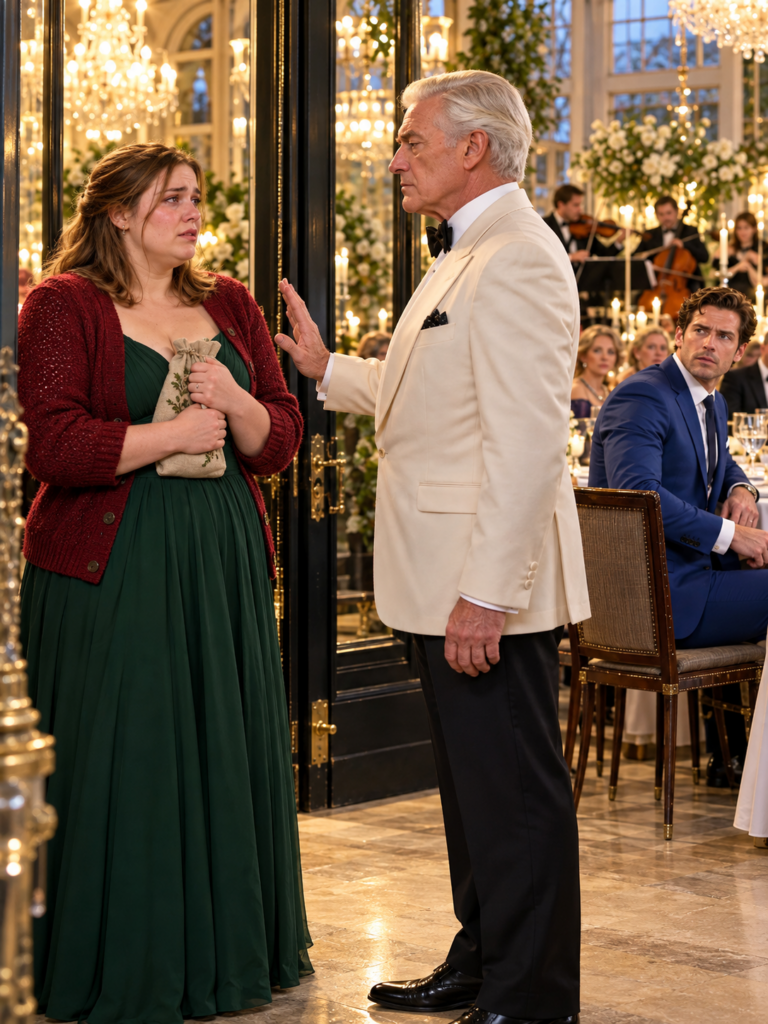
She glanced down at her dress.
Dark green. Modest. Slightly faded at the seams.
She had bought it for her grandmother’s funeral, and it remained the nicest thing she owned.
On the passenger seat lay a small cotton bundle, its faded fabric gathered with string. Inside were seeds Nettie had saved from her beloved pink tomatoes.
Joelle had brought them without a plan.
Perhaps someone inside had known her grandmother. Perhaps there was some connection to the Ambler family that Nettie had never explained.
Perhaps someone would simply say they remembered her kindly.
Joelle picked up the bundle, stepped into the heavy evening air, and walked toward the light.
Inside, Belle Meade Conservatory glittered.
Glass walls rose around towering palms. Candlelight trembled across white tablecloths. A string quartet played beside a fountain, and the air carried the mingled scents of flowers, polished wood, and expensive perfume.
Women in elegant summer dresses greeted one another with familiar kisses. Men in linen jackets exchanged handshakes that seemed to seal agreements without requiring words.
Joelle recognized the atmosphere immediately.
It was the kind of place where everyone knew which room they belonged in.
And she did not.
Keeping the seed bundle close to her body, she moved toward an anniversary exhibition arranged along one wall.
There were antique seed packets, photographs of the original brick warehouse beside the James River, and handwritten catalog pages dating back to the nineteenth century.
At the center stood a glass display case.
Beneath it was a painting of a woman’s hand holding an unusually large pink tomato.
Only the wrist and fingers were visible.
A small brass plaque read:
Ambler’s Pride. Discovered in a Hanover County backyard, 1961.
Joelle stopped.
She knew that tomato.
Not something resembling it. Not another old-fashioned variety with the same unusual color.
That tomato.
She had eaten it every summer of her childhood, thick slices layered over white bread with mayonnaise and salt at her grandmother’s kitchen table.
Nettie had never given it a grand name.
She had simply called them the pink ones.
Joelle leaned closer.
There was something about the position of the fingers, the gentle curve of the wrist, that stirred a memory she couldn’t quite grasp.
Across the room, Hugh Ambler was finishing a story.
As chief executive officer of Ambler Seed Company, he had told it dozens of times at dinners like this.
His great-grandfather had discovered a remarkable tomato growing in an ordinary backyard. Through determination, agricultural knowledge, and generations of family dedication, that humble discovery had become Ambler’s Pride, the company’s most celebrated variety.
The guests smiled at the familiar conclusion.
Hugh knew exactly when to pause for laughter.
Then he noticed his uncle.
Garland Ambler stood near the exhibition, staring at a woman in a green dress.
At seventy-one, Garland was still the most composed man Hugh knew. He had negotiated contracts during economic crises, buried family members without allowing the business to falter, and raised Hugh after his father’s sudden death.
Hugh had seen him angry.
He had seen him grieving.
He had never seen him look frightened.
Garland’s face had gone nearly colorless.
He crossed the room with a careful smile.
“Good evening,” he said to Joelle. “I don’t believe we’ve been introduced.”
“Joelle Lytle.”
She offered him the invitation.
“I received this. It was addressed to my grandmother’s family.”
Garland looked at the card.
His expression changed so subtly that Joelle might have missed it if she hadn’t been watching him closely.
“Nettie Lytle,” he murmured.
“You knew her?”
Garland folded the invitation once, neatly, and slipped it into his jacket pocket.
“I’m afraid tonight’s gathering is intended for family and a small circle of longtime friends.”
Joelle blinked.
“Oh.”
“It appears someone made an unfortunate mistake with the guest list.”
Two people nearby stopped speaking.
Garland lowered his voice, maintaining the gentle tone of a man trying to spare someone embarrassment.
“I’m very sorry for the confusion, Miss Lytle.”
But the kindness in his voice only made the dismissal more unmistakable.
Joelle felt heat climbing her neck.
For a moment, she considered asking who had sent the invitation.
Then she heard her grandmother’s voice, as clearly as if Nettie were standing beside her.
Some doors aren’t meant for us, baby. Don’t stand there knocking.
It was advice Joelle had heard all her life.
Leave before someone has to ask you.
Don’t mistake politeness for welcome.
Don’t make yourself a burden in a room that has already decided you don’t belong.
She lowered her eyes.
“I’m sorry,” she said quietly. “I didn’t know I wasn’t welcome.”
She turned and walked toward the exit.
She didn’t hurry.
Nettie had taught her that much, too. Whatever happened, never let people see you run.
Hugh had witnessed the entire exchange.
He excused himself from his guests and followed.
Outside, the cicadas were loud beneath the magnolia trees.
Joelle was reaching for her car door when a man’s voice called after her.
“Miss Lytle. Please.”
She turned, her keys gathered tightly in one hand.
Hugh stopped a respectful distance away.
“I’m Hugh Ambler.”
“I know who you are.”
“I wanted to apologize for what happened inside.”
“You don’t need to. It’s your party.”
“It’s my company,” he replied. “That makes what happened my responsibility.”
Something in his answer surprised her.
He looked toward the small cotton bundle in her hand.
“May I ask you something?”
She waited.
“The painting. You seemed to recognize it.”
Joelle looked back toward the conservatory.
“Those tomatoes belonged to my grandmother.”
Hugh offered the polite, uncertain smile of a businessman hearing an unexpected family claim.
“Your grandmother grew the same variety?”
“No, Mr. Ambler.”
She raised her left hand beneath the parking-lot light.
A narrow gold ring rested on her finger. Its surface was worn nearly smooth, and a small irregular notch interrupted one edge, as though someone had bitten into the metal.
“These were hers.”
Hugh’s smile disappeared.
But before he could ask another question, Joelle opened her car door.
“Good night, Mr. Ambler.”
He stood beneath the magnolia trees as her taillights vanished along the drive.
When he returned to the conservatory, the music was still playing.
People were still laughing.
The evening had continued without noticing that anything important had happened.
Hugh went directly to the painting.
For the first time in his life, he studied the hand instead of the tomato.
On its third finger was a narrow gold ring.
With a small notch along one side.
Identical to the ring Joelle Lytle had shown him.
He felt a slow uneasiness move through his chest.
If the woman in that painting was Nettie Lytle, why had his family spent more than sixty years telling the world the tomatoes had come from an unnamed backyard?
And why had Garland been so determined to send her granddaughter away?
Hugh turned.
His uncle was standing near the doors, an untouched drink in his hand.
Watching him.
Someone had wanted Joelle Lytle at the anniversary dinner.
Someone else had needed her to leave.
By Monday morning, Hugh was sitting on the brick steps of a small house in Church Hill.
He wore khakis and a rumpled blue shirt. Beside him stood two takeaway coffees and a large flat envelope.
Joelle opened the front door and stared.
“How did you find me?”
“Your grandmother’s obituary led me to the neighborhood. I asked around until someone pointed me here.”
“That doesn’t sound like something a CEO usually does before breakfast.”
“It isn’t.”
He stood.
“I didn’t come to apologize again. I came because I have questions. But I won’t ask them unless you’re willing to talk.”
She considered closing the door.
Then she saw the envelope.
After a moment, she stepped aside.
Inside, Clem sat at the kitchen table in her pajamas, eating cereal.
She studied Hugh with the serious curiosity of a child encountering someone from a different world.
“You’re the man from the party.”
“Yes.”
“Did you make my mama leave?”
Hugh looked at her.
“No. But I didn’t stop it.”
Clem considered this.
“That’s almost the same thing.”
Hugh didn’t argue.
Joelle turned away, hiding the reluctant recognition in her face. Her daughter had said in seven words what Joelle herself had been trying not to think all weekend.
Hugh spread a photograph across the kitchen table.
The painted hand.
The pink tomato.
Joelle placed her own hand beside the image.
The ring matched.
Even the damage to the gold.
For a long time, Hugh said nothing.
Then he asked, “Will you tell me about her?”
And Joelle did.
Nettie Lytle had grown up on rented farmland in Hanover County. Her mother saved the seeds of the best tomatoes every year in an old coffee tin, passing them along with a knowledge of soil, weather, and patience that no agricultural degree could have replaced.
When Nettie was young, she worked in the household of a wealthy Richmond family.
She never spoke much about those years.
Not about the people. Not about the house.
Only that she had worked hard and eventually returned to making a life of her own.
“Was it the Ambler family?” Hugh asked.
“I don’t know.”
“You never asked?”
“Of course I asked.”
Joelle rubbed her thumb across the ring.
“She always gave me the same answer. Some doors aren’t meant for us. Don’t knock twice.”
Hugh studied her.
“And you listened.”
“I was raised to.”
There was no bitterness in the statement.
That made it harder for him to hear.
He told her what the painting meant to his company.
Ambler’s Pride represented approximately forty percent of annual sales. Hugh’s cousin Forrest was finalizing a major licensing agreement with a national seed distributor.
The agreement was scheduled for signature on August thirty-first.
Every commercial packet of Ambler’s Pride carried the same origin story.
His great-grandfather. A dusty doorstep. An extraordinary discovery.
“I’ve repeated that story for twenty years,” Hugh admitted. “I’ve told it at investor dinners, trade events, family celebrations.”
Joelle looked at the photograph.
“Then maybe you’ve been telling someone else’s story.”
He didn’t defend himself.
That evening, Hugh visited his great-aunt Louisa on Cary Street.
Louisa Ambler was eighty-four and had once illustrated nearly every page of the company’s seed catalogs.
Her sunroom smelled faintly of turpentine and old paper.
Hugh placed the photograph in her lap.
“Whose hand is this?”
Louisa looked at it for a long time.
Her fingers moved once across the painted ring.
“I painted many hands, Hugh.”
“That isn’t what I asked.”
She returned the photograph without looking at him.
He knew she was withholding something.
He had almost reached the doorway when she spoke again.
“Your father asked me that same question once.”
Hugh turned.
Louisa’s eyes were closed.
And she refused to say another word.
That night, Joelle noticed a dark pickup parked near the end of her street.
Its engine was running.
Its lights were off.
When she stepped onto the porch, it pulled away slowly.
The following morning, Clem woke her crying.
Joelle ran barefoot through the house and found her daughter standing in the backyard.
Every tomato plant Nettie had started before her death had been pulled from the ground.
Twelve young plants.
They lay in a perfectly straight row across the grass, their roots exposed to the rising sun.
Nothing else had been disturbed.
Not the shed. Not the flowers. Not even the garden tools.
Clem’s small hand shook in Joelle’s.
Bobby Greer appeared at the fence, still wearing her housecoat.
She had seen a dark truck around two in the morning, she explained. No plates. A large man with a flashlight.
“I thought maybe he was checking a meter,” Bobby said grimly. “Though what fool checks meters in the middle of the night?”
Joelle considered calling the police.
But what could she tell them?
Someone had uprooted plants.
Someone had delivered a warning she couldn’t prove.
Instead, she knelt in the dirt beside Clem and opened Nettie’s cotton seed bundle.
The seeds were wrapped in folded tissues, each packet marked in Nettie’s careful handwriting.
Clem pushed the first seed into the soil with her thumb.
“Great-Grandma said we save seeds from the best ones. Not the first ones.”
Joelle swallowed.
“That’s right.”
“Then we’ll grow them again.”
Joelle looked at the ruined plants lying across the grass.
Someone had wanted her frightened.
Perhaps they had succeeded.
But as she knelt beside her daughter, she realized fear did not require obedience.
“Yes, sweetheart,” she whispered. “We’ll grow them again.”
That Sunday, Hugh sat at his uncle’s dining table in Windsor Farms.
Silver candlesticks stood beside platters of fried chicken. The same chair had been waiting for him since he was twelve, the year his father died and Garland began collecting him for Sunday dinners.
After Walker Ambler’s funeral, Garland had shown up every Saturday morning at five-thirty to take Hugh fishing along the James River.
They hadn’t talked much.
They hadn’t needed to.
For a grieving boy, the simple reliability of those mornings had felt like something stronger than words.
Now Hugh looked across the table at the man who had raised him.
“Uncle Garland. The woman at Belle Meade was Joelle Lytle.”
Garland folded his napkin.
“Yes. I remember.”
“Her grandmother was Nettie Lytle.”
A pause.
“Nettie,” Garland said softly. “A good woman. She worked for our family.”
“She grew the pink tomatoes.”
“She gave my father some seeds. A small kindness.”
Hugh watched him carefully.
“Then why does the catalog say my great-grandfather discovered them?”
“Because this family developed them. Sixty years of work, investment, and breeding. That’s what made Ambler’s Pride successful.”
“That doesn’t answer my question.”
Garland’s expression hardened.
“Hugh, your father would never have wanted you to damage this family’s reputation over a housekeeper’s story.”
The words struck exactly where Garland intended.
Across the table, Forrest Ambler remained silent, looking at his phone.
Hugh had known that tone since childhood.
The discussion was over.
Except this time, he wasn’t certain he could let it end.
That same evening, Joelle received a phone call.
“Miss Lytle? This is Louisa Ambler. I was wondering whether you might visit me.”
Joelle held the telephone tightly.
“Why?”
“Because I knew your grandmother.”
Louisa hesitated.
“And because there is something I should have said a very long time ago.”
The next afternoon, Joelle sat across from her in the Cary Street sunroom.
Louisa looked first at Joelle’s face, then at the ring on her finger.
“You have her ring.”
“You knew Nettie?”
“I painted her.”
Louisa’s eyes filled.
“In August of 1961. In the Ambler kitchen. I was nineteen.”
She looked toward an old watercolor leaning against the wall.
“Nettie had come inside from the garden carrying one of those magnificent pink tomatoes. I asked her to hold still. I wanted to paint her hand.”
A fragile laugh escaped her.
“She told me to make sure I included the ring. Said it was the only gold she owned.”
Joelle pressed a hand to her mouth.
“When the catalog was printed,” Louisa continued, “the caption said the tomatoes had been discovered in a backyard. I asked my brother why Nettie’s name wasn’t there.”
“What did he say?”
“That it was family business.”
Louisa lowered her gaze.
“And I let that answer satisfy me.”
More than sixty years had passed.
The painting had become a company symbol.
Nettie had become invisible.
“Why tell me now?” Joelle asked.
“Because I’m eighty-four. And because someone else asked me the truth once, and I failed him too.”
She explained that Hugh’s father, Walker, had visited her in 1998 carrying the old catalog.
He had asked whose hand appeared in the illustration.
Louisa told him.
Walker promised to correct the record.
“He said he’d take care of it by spring,” Louisa whispered.
“What happened?”
“He died that February. A heart attack. Forty-four years old.”
Joelle sat very still.
The room seemed colder.
She rose to leave, but Louisa caught her wrist.
“There is something else.”
Joelle turned.
“Your grandmother came back to the company in 1974. She brought one pink tomato in a paper bag.”
“Why?”
Louisa’s fingers tightened around hers.
“You need to ask Garland what he said to her.”
Part 2
Hugh Ambler had negotiated with bankers, distributors, and corporate attorneys without ever feeling particularly out of place.
Yet on a Wednesday morning in early July, he discovered that boarding a school bus required more courage than entering most executive meetings.
Bobby Greer signed him into the Henrico bus yard as an approved ride-along escort.
She inspected his clean shirt and polished shoes.
“Sit behind the driver,” she instructed. “Don’t touch anything, and don’t make her late.”
Joelle stood beside Bus 14, finishing her safety inspection.
“You wanted to see my world,” she reminded him.
“I did.”
“Then you’re going to have to wake up earlier.”
At 6:40, they pulled into the gray heat of the Virginia morning.
Hugh had expected an ordinary job.
Instead, he watched Joelle perform a hundred small acts of care without drawing attention to a single one.
She knew which boy needed to sit near the front because his father shouted at him before school.
She knew the girl on Laburnum Avenue frequently arrived without breakfast, so she kept a spare breakfast bar near the dashboard and pretended to discover it there.
She knew which house near Creighton Road had a loose dog, and she slowed down until a frightened little boy reached the bus safely.
She remembered birthdays.
She noticed missing jackets.
She spoke quietly to children who were embarrassed, frightened, or angry, offering them ways to recover without making them feel watched.
Hugh managed a company employing three hundred people.
He approved expenditures that could alter entire families’ futures.
But watching Joelle guide her bus through morning traffic, he wondered whether he had ever been responsible for anyone with the same steady attention.
At the final stop, a rear window latch jammed.
Joelle sighed.
“That thing again.”
Without asking for help, she reached for her maintenance notebook.
Hugh took out a small pocketknife.
“May I?”
She nodded.
He worked at the stubborn mechanism for five minutes until it moved freely.
Joelle checked it twice.
Then she gave him a small smile in the rearview mirror.
For reasons Hugh couldn’t explain, that smile pleased him more than the compliments he had received at the anniversary dinner.
That evening, he arrived at her house carrying wooden garden stakes.
The second planting of pink tomatoes had begun to show green leaves.
Clem watched him work with the grave concentration of a building inspector.
“You’re tying them wrong,” she announced.
Hugh looked up.
“I’ve worked in the seed business my entire life.”
Joelle came down the porch steps.
“You’ve worked in the business of selling seeds. There’s a difference.”
She took the string from his hand.
“That knot will tighten around the stem as it grows.”
She demonstrated a loose figure-eight tie, leaving enough room for the plant to move.
Hugh watched her hands.
They were capable, weathered by ordinary work, and marked by the narrow gold ring that had first brought him here.
“Like that?” he asked.
“Like that.”
Clem folded her arms.
“You can be the assistant gardener. But you have to listen.”
“Yes, ma’am.”
Later, after Clem went inside, Hugh and Joelle sat on the back steps as the evening sky turned copper above the rooftops.
“My father died when I was twelve,” Hugh said.
Joelle looked toward him.
“I remember the funeral home smelled like carnations. For months afterward, I couldn’t stand the smell.”
He rested his elbows on his knees.
“Garland started taking me fishing every Saturday. Five-thirty in the morning. He was always there.”
“You loved him.”
“I do.”
Hugh stared at the garden.
“He’s the reason I survived that year.”
Joelle understood then why every question about the tomatoes seemed to cost him something.
He wasn’t simply investigating a company legend.
He was questioning the man who had held his family together.
“Louisa confirmed the painting,” she said. “It’s Nettie’s hand.”
Hugh closed his eyes briefly.
“I thought so.”
She could have told him the rest.
About his father’s promise.
About Nettie’s visit in 1974.
But she saw the strain behind his composure and decided to wait until she understood more.
It was a decision she would soon regret.
The next afternoon, a silver sedan entered the bus yard.
A handsome man in his mid-thirties stepped out, pushing sunglasses onto his neatly styled hair.
“Miss Lytle? Forrest Ambler. Hugh’s cousin.”
Joelle remained beside her bus.
“I know who you are.”
Forrest extended his hand.
She didn’t take it.
His smile remained unchanged.
“I’ll be brief. The family deeply regrets the misunderstanding at the anniversary dinner.”
“I’m sure.”
“We’d like to resolve the situation privately.”
He placed a thick envelope on the bus step.
“Twenty-five thousand dollars. In exchange, we’d ask you to provide any seeds, documents, or family possessions relating to this variety, and sign a straightforward confidentiality agreement.”
Joelle stared at the envelope.
“Twenty-five thousand dollars?”
“Think about your daughter’s education. Her future. Think about what your grandmother would have wanted.”
“My grandmother wanted her tomatoes growing in the ground.”
Forrest’s smile flickered.
“Miss Lytle, I hope you understand this is a generous offer.”
Joelle picked up the envelope.
For one awful instant, she thought about the bills on her kitchen counter.
The repairs her Corolla needed.
The way Clem sometimes asked whether college was expensive.
Then she placed the envelope back into Forrest’s hand.
“I understand exactly what you’re offering.”
“And?”
“No.”
Forrest looked at her for several seconds.
Then he shrugged, returned to his car, and drove away.
That evening, Joelle called Hugh.
He listened without interrupting as she described the envelope and the agreement.
“He did what?”
“You didn’t know?”
“No.”
His voice had gone cold.
“Joelle, I didn’t authorize any offer.”
She hesitated.
“Someone tore up Nettie’s plants.”
“I remember.”
“I don’t think it was random.”
A long silence followed.
“Neither do I,” Hugh said. “And I think I know who might know something about that truck.”
After the call, Joelle sat alone at her kitchen table.
Nettie’s cotton seed bundle lay before her.
She turned it over, brushing dirt from the seams the way her grandmother had done each autumn.
Something hard shifted beneath the lining.
Joelle frowned.
She found a small pair of scissors, carefully opened three stitches, and drew out a folded yellow paper.
It was brittle with age.
At the top were the printed words:
Ambler Seed Company — August 1961.
Below was a handwritten entry.
Received: $40 for seed stock.
And beneath it was Nettie’s signature.
Joelle read it again.
Then a third time.
Her grandmother had sold the seeds.
There was no uncertainty about the payment.
Forty dollars.
An amount that must have seemed enormous to a young woman with a sick husband and no money for medical care.
Joelle slowly lowered herself to the kitchen floor.
She had imagined a theft.
A discovery taken without permission.
But now she held evidence of a transaction Nettie herself had signed.
Perhaps the Ambler family had every right to sell the tomatoes.
Perhaps Hugh would see this paper and conclude there was nothing more to discuss.
Perhaps he would stop coming by.
The thought hurt more than she wanted to admit.
Her phone lay within reach.
She could have called him.
Instead, she folded the receipt and put it inside a plastic sleeve.
The following Saturday, Hugh arranged a meeting at the Ambler experimental garden.
It stood behind the old brick warehouse along the James River, where company gardeners had cultivated test plots since 1888.
Rows of beans, squash, and tomatoes stretched toward the water.
At the far end, Ambler’s Pride vines sagged beneath heavy pink fruit.
Garland waited beside an old potting table, wearing a straw hat and a freshly pressed shirt.
Forrest leaned against the fence nearby.
Hugh remained standing beside Joelle.
Before anyone could begin, he turned toward his cousin.
“Forrest, do you own a dark pickup?”
Forrest smiled.
“Half of Virginia owns dark pickups.”
Garland raised a hand.
“Enough.”
He opened a large leather ledger on the table.
Its pages had darkened with age.
He turned to an entry dated August 1961.
Lytle, N. Seed stock. $40. Paid in full.
“Your grandmother completed a sale,” Garland said gently. “We purchased seeds and built a business. This was commerce, Miss Lytle. Not theft.”
The river moved slowly behind him.
Joelle looked at the ledger.
She knew what it would say.
Hugh noticed.
His gaze shifted to the plastic sleeve partly visible inside her shoulder bag.
“You already knew.”
Joelle couldn’t speak.
“When did you find it?”
“Thursday night.”
“Thursday?”
His voice was quiet.
But she heard the injury beneath it.
“We talked for an hour Thursday night.”
“I know.”
“You told me about Forrest.”
“Yes.”
“But not about this.”
She wanted to tell him she had been frightened.
Not of losing money.
Of losing the one person who had listened to her grandmother’s story without making her feel foolish.
But Garland and Forrest were watching them.
And shame made her unable to explain.
Forrest shifted against the fence, almost smiling.
Garland waited with the patience of a man who believed he had already won.
Joelle took a slow breath.
“My grandmother’s husband had pneumonia that summer,” she said. “They couldn’t afford a doctor. I know she needed forty dollars.”
Garland nodded.
“Exactly.”
“But I don’t know what she thought she was selling.”
“A seed supply.”
“Maybe.”
She stepped closer to the ledger.
“But I know something else. She wanted her name on the packet.”
Garland’s face remained still.
“She made no such request.”
“Louisa told me Nettie came back in 1974.”
Garland’s hand trembled.
He pressed his palm against the ledger to steady it.
Hugh noticed immediately.
“What happened in 1974?”
Garland said nothing.
Forrest straightened.
“My father is seventy-one years old, and it’s ninety-two degrees out here. We’re finished.”
He closed the ledger.
“Miss Lytle, the offer remains available until the end of the month. After that, it disappears.”
Joelle looked at Hugh.
She wanted him to say something.
Anything.
But he was staring at the ground.
Finally, without a word, he turned toward his car.
Joelle watched him drive away.
She stood among the tomato vines with the receipt in her bag and the river moving beside her.
It felt like the night at Belle Meade.
Except this time, she hadn’t walked away.
And somehow staying hurt worse.
That evening, Clem fell asleep on the couch with a library book open across her chest.
Joelle sat at the kitchen table, staring at Nettie’s receipt.
At 9:40, the telephone rang.
“Miss Lytle?”
Louisa sounded unsteady.
“Hugh called me. He was very upset. He said you mentioned 1974.”
“I’m sorry. I shouldn’t have brought it up without asking you.”
“No, dear. I’m glad you did.”
Louisa drew a long breath.
“It’s time you heard the rest.”
She had been working in the company’s front office on a rainy morning in 1974.
Nettie entered carrying a brown paper bag.
She placed one pink tomato on the counter and asked to see Mr. Clement Ambler.
Clement did not come.
Instead, his nineteen-year-old son Garland appeared.
“What did he say?” Joelle whispered.
Louisa paused.
Then, softly, she repeated his words.
“I’m afraid there’s been a mistake, Mrs. Lytle.”
Joelle’s fingers tightened around the telephone.
Those words.
That same calm, courteous dismissal.
Garland had used almost exactly the same words at Belle Meade.
Fifty-two years later, standing before Nettie’s granddaughter, he had repeated the same rejection.
On Monday morning, Hugh sat alone in his office above the warehouse.
The national licensing agreement lay open on his desk.
Two hundred pages.
His signature line waited at the end.
He had spoken to Louisa again on Saturday, and she had told him what she remembered of Nettie’s visit.
Hugh knew the forty-dollar transaction might have been lawful.
But it no longer seemed possible to hide behind that fact.
The seeds had been purchased.
The woman’s contribution had been erased.
Those were separate truths.
By Wednesday, everyone in the Ambler family knew Hugh had refused to sign the licensing agreement.
Forrest confronted him in front of the warehouse shipping crew.
“You’re putting forty percent of this business at risk because a school-bus driver has gotten into your head!”
Hugh closed the folder he was holding.
“She hasn’t asked me for a dime, Forrest.”
He stepped closer.
“You’re the one who keeps handing out envelopes.”
Forrest’s face reddened.
Hugh walked past him.
That Sunday, Hugh drove to Garland’s house out of habit.
Through the dining-room window, he saw the familiar table.
The silver candlesticks.
The fried chicken.
The people who had been his family every Sunday for nearly thirty years.
His chair was gone.
Not pushed aside.
Removed.
He remained in his car for ten minutes before driving home.
Late in July, a violent thunderstorm struck Richmond.
The sky over Church Hill turned a strange green, and streets flooded beneath the sudden rain.
Summer school ended early.
Joelle brought Clem home through the storm and immediately noticed the back door standing open.
Inside, Nettie’s old wooden trunk had been overturned.
Quilts lay across the bedroom floor. Letters, photographs, and a church fan were scattered around a woman kneeling with a flashlight.
Joelle grabbed a heavy flashlight from the hallway.
“Get out of my house!”
The woman turned.
“Put that down, Joelle. It’s me.”
Joelle froze.
“Mom?”
Dena Lytle stood amid the scattered belongings, soaked through, mascara running down her face.
At fifty-eight, Dena looked exhausted.
“What are you doing?” Joelle demanded.
“What do you think I’m doing?”
Dena’s voice broke.
“That Ambler boy came to see me. Twenty-five thousand dollars for Mama’s old papers.”
Joelle stared at her.
“Which Ambler?”
“The younger one. Forrest.”
“Mom, you broke into this house?”
“It was my mother’s house before it became yours!”
Clem moved behind Joelle and clung to her leg.
Dena looked away.
“Do you know how much I owe on those credit cards? What that kind of money could do?”
“Then you should have called me.”
“You wouldn’t have listened.”
“You didn’t even ask.”
Dena’s expression hardened.
“My mother accepted their money and never complained. She did what she had to do. And now you’re dragging her name into their dining rooms like she was begging rich people for scraps.”
Joelle felt those words more sharply than anything Garland had said.
“Grandma wasn’t begging.”
“Then why can’t you leave it alone?”
Joelle looked at the open trunk.
At the letters and the photographs lying in the rain-dampened air.
“Because they won’t even say her name.”
Dena left without taking the papers.
The rain continued.
Outside, the young tomato plants lay flattened in the mud.
Joelle sat on the bedroom floor among Nettie’s quilts and wondered how one dead woman’s story could leave so many living people ashamed.
Two days later, Hugh came to her porch carrying a folder.
“I’ve been looking at this the wrong way,” he said.
Joelle said nothing.
He opened the folder.
It contained a proposed royalty agreement, offering Joelle and Clem a percentage of future sales.
He had also prepared a payment to help with their immediate needs.
“Your daughter’s education,” he explained. “The house. The things you shouldn’t have to worry about alone.”
Joelle looked at the check.
Then at him.
“You’re paying her forty dollars again.”
Hugh went still.
For a moment, he didn’t understand.
Then he did.
The first payment had bought the seeds.
This one would buy his peace of mind.
He had turned a demand for recognition into another transaction.
Without defending himself, Hugh took back the folder.
He tore the agreement and the attached check in half.
Then again.
“I’m sorry,” he said.
Joelle watched him put the torn pieces away.
He didn’t ask her to reconsider.
And more importantly, he didn’t disappear.
That week, when Bobby injured her back, Hugh mowed her lawn.
On Saturday, he knelt in the mud with Clem and helped restore the damaged tomato bed, carefully tying each stem in the loose figure-eight knots Joelle had taught him.
When a tool broke, he fixed it.
When Joelle needed silence, he didn’t fill it with promises.
He simply kept coming back.
One evening, after Clem went inside, Joelle sat beside him on the back steps.
“I didn’t tell you about the receipt because I was ashamed,” she said.
Hugh looked at her.
“I thought you’d see it and decide Grandma had been paid what she was worth. And then you’d leave.”
He remained quiet for a long moment.
“Do you want to know what I’m ashamed of?”
Joelle nodded.
“For twenty years, I told people that story about my great-grandfather discovering those tomatoes. I made it entertaining. I knew where the laughs belonged.”
He rubbed his hands together.
“I never once asked whose hand was in the painting.”
Joelle looked toward the young green vines.
“You didn’t know.”
“I didn’t try to know.”
He turned toward her.
“You’re not the one who should be ashamed, Joelle.”
She told him then about Garland’s words.
About the way he had dismissed her at Belle Meade with almost the same sentence he had used to send Nettie away in 1974.
Hugh closed his eyes.
For a moment, Joelle saw the twelve-year-old boy who had waited every Saturday for the uncle who never failed to arrive.
Then Hugh reached across the space between them.
His fingers touched hers.
Neither moved away.
For the first time since the anniversary dinner, Joelle felt she could stay without having to explain why she belonged.
Part 3
By the last week of August, the second tomato planting had recovered.
The vines were stronger than Joelle had dared hope, their leaves broad and dark green beneath the late-summer sunlight.
One morning, Clem ran into the kitchen holding the first ripe tomato in both hands.
“Mom! Look!”
It was large and irregularly shaped, with the delicate pink coloring Nettie had loved.
Joelle took it carefully.
“Beautiful.”
Clem shook her head.
“It’s not the first one.”
Joelle looked at her.
“The first ones got killed. This is the second first one.”
Joelle laughed.
Then she unexpectedly felt tears gathering.
For months, someone had been trying to convince her that growing something again wasn’t worth the trouble.
Yet here it was.
A living answer in her daughter’s hands.
Three days before the licensing deadline, the telephone rang.
An unfamiliar number appeared on the screen.
“Miss Lytle?”
The voice was old and tired.
“This is Garland Ambler.”
Joelle gripped the kitchen counter.
“I’d like you to come to my house tomorrow evening. Alone, please.”
She said nothing.
“Seven o’clock.”
Another pause.
“And Miss Lytle?”
“Yes?”
“Please knock.”
The following evening, Hugh agreed to look after Clem.
He didn’t question Joelle’s decision or ask to accompany her.
“I’ll take her to the bus garage,” he said. “She keeps telling me she can operate Bus 14 better than I can.”
“She probably can.”
“Bobby’s working late. We’ll be fine.”
Joelle watched him kneel to help Clem tie her shoelace.
The trust between them had grown quietly, through small decisions and ordinary days.
She knew what it meant to leave her daughter in his care.
And Hugh understood it too.
At seven o’clock, Joelle stood outside Garland’s imposing brick house in Windsor Farms.
She carried a small brown paper bag.
Inside was one ripe pink tomato.
The front steps were clean. Magnolia blossoms hung over the entrance, and somewhere inside an old clock chimed.
Joelle knocked.
No answer.
She waited.
Her grandmother’s warning stirred in her memory.
Don’t knock twice.
Joelle looked down at the paper bag.
Then she raised her hand and knocked again.
The door opened.
Garland stood before her without a tie, his sleeves rolled to the elbows.
He appeared older than he had at Belle Meade.
For the first time, she could see uncertainty in his face.
“You came.”
“You asked me to.”
“I wasn’t sure you would.”
Joelle stepped inside.
He led her to a study smelling of old books and pipe tobacco.
She crossed to his desk, opened the paper bag, and placed the tomato in front of him.
Garland stared.
For nearly a minute, he said nothing.
Then he lowered himself into his chair.
“I was nineteen,” he began.
“It was raining the day your grandmother came back.”
Joelle sat opposite him.
“She asked to see my father. Clement Ambler.”
Garland looked toward the window.
“He told me to get rid of her. Politely.”
His voice faltered.
“She didn’t come for money. Not one dollar. She brought that tomato because she wanted to show him what she had grown from the same seeds.”
“What did she ask for?”
“Her name.”
Garland’s eyes filled.
“She wanted the packets to say, ‘From the Garden of Nettie Lytle.’ Nothing more.”
Joelle looked at the pink tomato between them.
“And you told her there had been a mistake.”
“Yes.”
“What did she do?”
“She apologized.”
Garland swallowed.
“She said she was sorry for troubling me. Then she picked up her tomato and walked back into the rain.”
His hands rested flat against the desk.
“I have heard those words in my sleep for fifty years.”
Joelle remembered the night at Belle Meade.
Her green dress.
The faces turned toward her.
The invitation disappearing into his pocket.
“You said the same thing to me.”
Garland lowered his head.
“I know.”
She waited.
He continued.
“Your grandmother’s obituary appeared in March. I read it. And I thought perhaps there was one decent thing I could still do.”
“You sent the invitation.”
“Yes.”
“Then why did you turn me away?”
Garland looked directly at her.
“Because you walked into that room with her face.”
His voice shook.
“And you were wearing her ring. I remembered being nineteen. I remembered standing behind that counter and doing exactly what my father expected.”
A tear moved slowly down his cheek.
“I became that coward again.”
Joelle’s throat tightened.
She wanted to hate him.
Part of her did.
But she had never seen someone so completely defeated by the memory of his own choices.
“What about Walker?” she asked. “Hugh’s father?”
Garland closed his eyes.
“Walker found out in 1998. He wanted to change the catalog. He said we couldn’t keep pretending your grandmother had never existed.”
“And?”
“I told him to wait until spring. There was no need to make trouble during the busy season.”
He took a ragged breath.
“He died in February.”
Joelle watched his hands begin to tremble.
“I kept telling myself there would be time. Time to fix the catalog. Time to explain. Time to make one telephone call.”
He shook his head.
“There was always another reason to wait.”
The front door slammed.
Footsteps approached.
Forrest entered the study carrying a thick folder.
“Dad. Don’t do this.”
Garland didn’t stand.
“Sit down, Forrest.”
“I won’t.”
Forrest dropped the folder beside the tomato.
“The contracts are ready. The distributors are waiting. All we need is your shareholder support.”
Garland looked at the documents without touching them.
Forrest turned toward Joelle.
His controlled expression finally gave way.
“Yes, I paid someone to pull out your plants,” he said. “And yes, I offered your mother money. You want to know why?”
Joelle stared at him.
“Because this licensing deal is the only thing keeping me afloat.”
His voice rose.
“Everyone’s acting like we can afford to throw away forty percent of our business because somebody feels guilty about what happened fifty years ago.”
Garland rose slowly.
“Enough.”
Forrest looked at his father.
“Dad, we’ve spent generations building this company.”
“That’s true.”
Garland picked up the folder.
“The seeds were sold to us, Forrest. I won’t deny that.”
He held the documents toward his son.
“But her story wasn’t sold. And her name wasn’t sold.”
Forrest looked as though he might argue again.
Then he snatched the folder and walked out.
The front door slammed a second time.
Silence settled over the study.
Garland turned to Joelle.
“What do you want, Miss Lytle? Tell me, and if it’s in my power, I’ll give it to you.”
Joelle looked at the tomato on the desk.
For a moment, she pictured Nettie standing in the company’s front office in 1974.
Her wet dress.
Her brown paper bag.
Her small request.
“Her name,” Joelle said.
Garland nodded.
“That’s all?”
“That’s all she ever asked for.”
He picked up the telephone.
Hugh answered.
“Uncle Garland?”
“Hugh. It’s time we did what your father wanted.”
A pause.
“The deal is finished. We won’t sign it.”
Joelle heard Hugh draw a breath.
“Are you certain?”
“I am.”
Garland looked at Joelle.
“And tomorrow, you and I are going to tell the truth together.”
When he ended the call, he remained holding the receiver.
Then he asked something Joelle hadn’t expected.
“Would you take me to see her?”
Joelle understood.
He wasn’t asking to see a portrait.
He wanted to visit Nettie’s grave.
“I’d like to tell her myself,” Garland whispered.
They drove at dawn.
The little white church in Hanover County stood beneath old oak trees, its gravel yard still wet with morning dew.
Hugh’s car followed behind.
Clem climbed out holding the finest tomato she could find on the vine, freshly picked that morning.
Together, the four walked toward a simple gray gravestone.
Nettie Mae Lytle.
Beneath her name were the words:
She kept the best.
Garland removed his hat.
For several moments, he seemed unable to speak.
Finally, he addressed the stone.
“Mrs. Lytle.”
His voice broke.
“There was no mistake.”
Joelle felt Clem’s fingers curl around hers.
“You were always welcome. I was the one who didn’t deserve to stand at your door.”
Garland lowered his head.
“I should have told the truth when you were alive. I’m sorry I didn’t.”
Clem stepped forward and placed her pink tomato at the base of the stone.
Garland turned toward Hugh.
For the first time in Hugh’s memory, his uncle looked like a man waiting for a judgment rather than delivering one.
“Hugh, I ask you to forgive me. For your father. For the lies. For everything I allowed to happen.”
Hugh looked at the older man.
He remembered the fishing trips.
The cold mornings beside the James River.
The uncle who had never missed a Saturday after Walker’s death.
And now he knew that the same man had spent decades running from a truth Walker had tried to face.
“I forgive you,” Hugh said.
Garland began to cry.
“Not because what you did was right,” Hugh continued. “And not because this makes it disappear.”
He paused.
“But I’m not going to carry it for another fifty years.”
Sunlight moved through the oak branches.
Beside the gravestone, Joelle felt Hugh’s hand find hers.
This time, she held on.
One year later, in June, new Ambler Seed Company catalogs began arriving in mailboxes across the country.
The cover showed an enormous pink tomato.
Above it was a new name.
Lytle Pink.
Beneath the photograph appeared the words:
From the Garden of Nettie Lytle, Hanover County, Virginia — 1961.
The company had retired the name Ambler’s Pride.
The new catalog included a photograph Louisa had preserved for more than sixty years.
A young woman in a simple cotton dress laughed at someone beyond the camera.
A narrow gold ring shone on her hand.
Her name was Nettie Mae Lytle.
And for the first time, customers buying her tomatoes could see the woman whose care had made the variety possible.
The transition had not been easy.
Some longtime customers complained.
Sales declined for one season.
The abandoned licensing agreement had cost the company a major opportunity, and not everyone in the Ambler family approved of Hugh’s decision.
But the business survived.
Then sales began climbing again.
Customers responded to the true story, and the company’s willingness to acknowledge it gave people a new reason to trust the name on the packet.
Hugh now told the history himself at business dinners.
He still spoke about his family’s work.
He still honored the generations of growers and employees who had developed the company.
But he began with Nettie.
He described her garden, the seeds passed down from her mother, and the extraordinary pink tomatoes she had grown.
And nobody laughed at the punch line anymore.
There wasn’t one.
Forrest left Richmond that September.
The national licensing deal never returned.
Garland and Hugh continued working toward rebuilding their relationship, though there were conversations they avoided and silences neither knew how to fill.
Forgiveness, Hugh discovered, did not instantly restore trust.
Sometimes it merely made it possible to begin again.
Dena Lytle started paying down her credit-card debts a little each month.
She came to Joelle’s house on Sunday afternoons and worked beside Clem in the tomato garden.
At first, she barely spoke.
Then one afternoon, while carefully separating seeds from a ripe tomato, she began crying.
“I should have listened to you,” she told Joelle. “I was so worried about what we needed that I forgot what Mama needed.”
Joelle looked at her mother’s shaking hands.
“I know.”
“I’m sorry.”
Joelle moved closer and showed her how Nettie had always saved the seeds.
The apology did not undo the broken door or the hurtful words.
But Dena returned the following Sunday.
And the Sunday after that.
She learned the difference between a healthy seed and one that would never sprout.
She learned why Nettie always chose fruit from the strongest plants instead of simply picking the first ripe tomato.
Slowly, she began to understand what her mother had tried to preserve.
Garland started driving to the white church in Hanover County every June.
He went alone.
He brought a pink tomato and placed it beside Nettie’s grave.
He and Joelle still spoke only occasionally.
That was all right with her.
She had never asked him to become part of her family.
She had asked him to tell the truth.
Joelle continued driving Bus 14.
Hugh once offered her a position at Ambler Seed Company.
She laughed.
“And who’s going to make sure that little girl on Laburnum Avenue gets breakfast?”
He had no answer.
On Saturday mornings, Joelle also volunteered at the downtown public library, running a free seed-lending table.
Anyone could take a packet of Lytle Pink seeds.
They didn’t have to pay.
They only had to agree to one rule, written in Joelle’s handwriting on a card beside the packets.
Return seeds from your best tomatoes.
Bobby Greer returned more seeds than anyone else.
She reminded the librarians of that fact every chance she got.
As for Hugh and Joelle, their relationship grew slowly.
There were Saturday mornings at the farmers’ market, where Hugh learned to distinguish ripe peaches from ones that merely looked impressive.
There were afternoons in the garden, where ten-year-old Clem issued instructions to him with the authority of someone who knew he would obey.
There was an evening baseball game when Hugh bought Clem two hot dogs, only for her to spill mustard down the front of his shirt.
She didn’t apologize.
He pretended to be offended.
Joelle laughed so hard she had to sit down.
And there were long evenings on the back steps when the three of them watched the sky turn orange over Church Hill.
Sometimes, after Clem went to bed, Hugh stayed.
They talked about things that had nothing to do with tomatoes or business agreements.
About the kinds of people they had hoped to become.
About the kinds of people life had required them to be.
One evening, Hugh admitted a fear he had carried for years.
“I used to worry that I was only the story people told about me.”
Joelle turned toward him.
“The CEO?”
“The Ambler heir. Walker’s son. Garland’s nephew. The man who inherited a company.”
He looked at her.
“I wasn’t sure there was much of a man underneath all that.”
Joelle considered the man beside her.
The one who had fixed a broken bus window without expecting praise.
Who had listened when she told him he was wrong.
Who had torn up a check instead of insisting she accept it.
Who had shown up in the garden the following Saturday.
“I think,” she said, “you’re doing a better job of finding out than you realize.”
He smiled.
Then he reached for her hand.
Their relationship was not perfect.
Sometimes Joelle still withdrew too quickly when she sensed disapproval.
She had spent too many years learning to leave before anyone could reject her.
Sometimes Hugh tried to solve a problem she only wanted him to hear.
Old habits did not vanish because two people cared for each other.
But they noticed.
They apologized.
They tried again.
And slowly, Joelle learned that someone could disagree with her without closing the door.
At Ambler Seed Company’s 139th anniversary dinner, Belle Meade Conservatory looked almost exactly as it had the year before.
The same glass walls.
The same palms.
The same candles trembling beneath the evening lights.
A string quartet played beside the fountain.
But this time, Joelle did not sit in the parking lot wondering whether to go inside.
She walked toward the entrance wearing her green dress.
Clem held one of her hands.
Dena, nervous in a borrowed jacket, walked beside her.
At the doors stood Garland Ambler.
When he saw Joelle, he stepped forward.
He took her hand between both of his.
“Miss Lytle,” he said.
His voice was loud enough for everyone in the entrance to hear.
“You are welcome here.”
Joelle looked at him.
For a moment, she couldn’t speak.
Then she nodded.
And walked inside.
Later that evening, Louisa Ambler rose slowly from her wheelchair near the anniversary exhibition.
Hugh offered his arm to steady her.
A covered painting stood behind them.
Louisa had completed it herself, though her hands had become less steady with age.
With Hugh’s help, she lifted the cloth.
The painting showed two hands holding a pink tomato.
One was a young woman’s hand with a narrow gold ring, its small notch clearly visible.
The other belonged to a child.
A small, square hand, with traces of garden soil beneath the fingernails.
Clem gasped.
“That’s me!”
Joelle stepped closer.
In the first painting, Nettie’s hand had appeared without her name.
In the new one, her hand was joined by her great-granddaughter’s.
The room grew quiet.
Then someone began clapping.
Others joined.
The sound swelled beneath the conservatory’s glass ceiling until Joelle had to turn away and cover her mouth.
Hugh stood beside her.
He didn’t make a speech.
He didn’t tell her what the moment should mean.
He simply remained there, close enough that she could reach for him if she wanted.
And she did.
Near midnight, Joelle drove Clem and Dena home.
She tucked Clem into bed and covered her sleeping mother with a blanket on the couch.
Then she returned to her car.
The streets of Richmond were warm and quiet.
She drove across the city toward Hugh’s house in the Fan District.
His porch light was on.
She parked, climbed the steps, and stood before the door.
For a moment, she thought about every doorway that had shaped her life.
Her grandmother’s warning.
The conservatory.
Garland’s house.
The office door Nettie had approached in the rain.
All those years of learning to leave before anyone asked her to.
Joelle raised her hand.
And knocked.
Footsteps sounded inside.
The door opened.
Hugh stood there in his shirtsleeves, surprise giving way to a slow smile.
“Joelle?”
She smiled back.
He stepped closer.
“You know you never have to knock here.”
Joelle looked at him.
“I know.”
She glanced at the open doorway, then back into his eyes.
“I wanted to.”
Hugh stepped aside.
And Joelle Lytle walked in.
Not because she had finally been given permission.
Not because a wealthy family had decided she was worthy.
And not because someone had promised her she would never be hurt again.
She walked through the door because, for the first time in her life, she no longer needed anyone else to decide where she belonged.


