
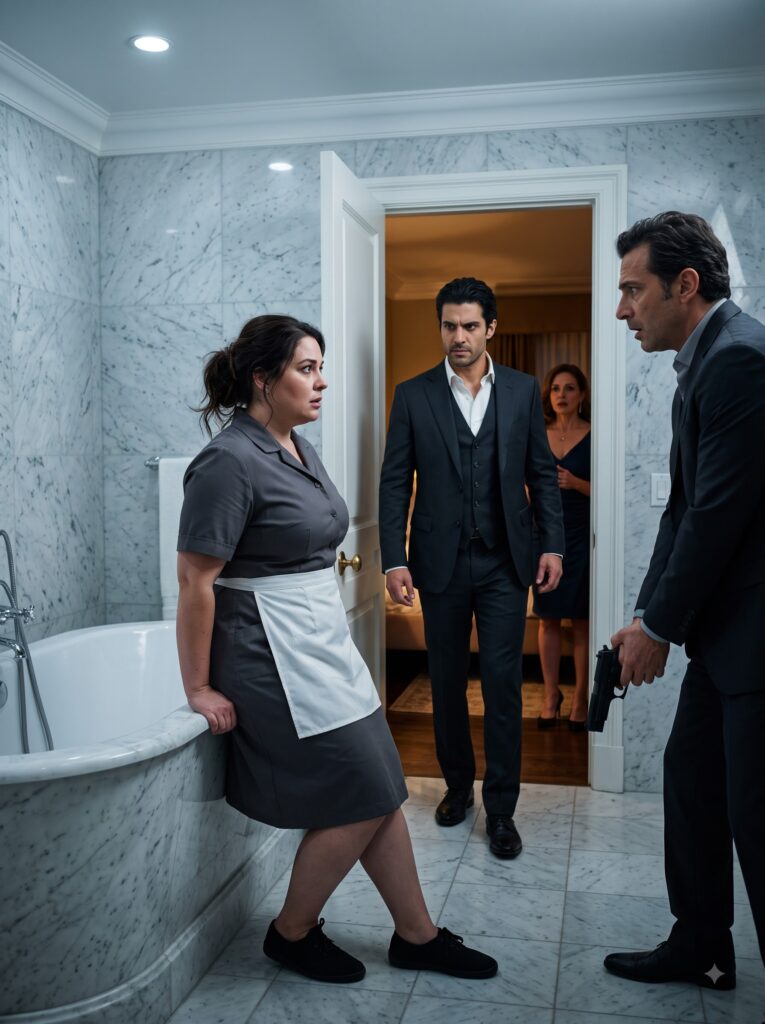
Melanie pulled the hidden panel open and found three burner phones, a satellite communicator, and a black leather ledger stacked inside the wall.
Her stomach tightened.
Diego had not merely been awake.
He had been running an operation from the bed she changed every morning.
She took the ledger before he could.
“May I?” he asked.
She almost laughed.
“You’re asking now?”
“I should have earlier.”
“Yes.”
She opened it.
Columns of transfers filled the pages.
Dates.
Names.
Shell companies.
One entry matched the document she had seen Claudio leave beside the bed weeks ago.
Forty million dollars.
Cecilia’s maiden name.
Melanie looked up.
“You knew they were moving this?”
“Yes.”
“And you let them?”
“I needed the transfer completed so I could prove intent.”
Her anger sharpened.
“You let them keep hurting people around you because you wanted better evidence.”
Diego did not defend himself.
That mattered.
Not enough.
But it mattered.
“I believed I could control the risk.”
“You couldn’t.”
“No.”
Behind them, Claudio was dragged from the bathroom and secured to a chair.
Cecilia began crying.
“Diego, please. Claudio planned everything.”
Melanie turned toward her.
“You were standing here discussing the mechanic.”
Cecilia’s mouth closed.
Melanie had spent months shrinking whenever Cecilia entered a room.
Now the fear was still there.
But it no longer controlled her posture.
“You ordered uniforms too small for me because you thought humiliating me was entertainment.”
Cecilia looked away.
“You called him a burden while planning to take his money.”
Still nothing.
“You thought servants didn’t count as witnesses.”
Cecilia’s face tightened.
Melanie closed the ledger.
“That was your mistake.”
Diego watched her.
Not possessively.
Not triumphantly.
Like a man seeing someone clearly for the first time.
Dario connected a laptop to the bedroom television.
Documents appeared.
Wire transfers.
Garage records.
Payments to a mechanic.
Messages between Claudio and Cecilia.
Melanie followed them more easily than anyone expected.
“Go back.”
Dario paused.
“To what?”
“The garage payment.”
He enlarged it.
Melanie pointed.
“That date is wrong.”
Diego stepped closer.
“How?”
“The crash happened Monday morning.”
“Yes.”
“This payment cleared Sunday night.”
Claudio gave a muffled curse through the restraint at his mouth.
Melanie continued.
“That means the mechanic was paid before anyone knew whether Diego would use that vehicle.”
Dario stared.
“So someone knew his route.”
Diego’s eyes hardened.
“My security schedule.”
“Who had it?” Melanie asked.
“Claudio. Cecilia. My driver. Two guards.”
Melanie looked at Cecilia.
She was suddenly far too still.
“Who changed the driver?”
Cecilia’s face drained.
Diego turned slowly toward her.
“What?”
Melanie held up one hand.
“Let her answer.”
Cecilia said nothing.
Melanie remembered the morning after the crash.
The household had been chaos.
She had carried linens through the kitchen while Cecilia complained that Diego’s usual driver had called in sick.
At the time, it meant nothing.
Now it meant everything.
“You changed his driver that morning.”
Cecilia’s eyes widened.
“I heard you tell the housekeeper the replacement was already arranged.”
Diego’s stare became lethal.
Cecilia began shaking.
“He was supposed to be alone.”
There it was.
A smaller truth.
And a worse one.
The crash had not merely been opportunistic.
It had been choreographed around Diego’s exact movements.
Diego took one step toward Cecilia.
Melanie moved between them.
He stopped.
“Don’t make me watch you kill her.”
His jaw flexed.
“She tried to murder me.”
“I know.”
“She would have killed you tonight too.”
“I know.”
“Then why should she walk away?”
“I didn’t say she walks away.”
Melanie held his gaze.
“I said I’m not becoming collateral damage to your revenge.”
Silence filled the room.
Dario looked from Melanie to Diego.
Slowly, Diego stepped back.
“What do you want?”
The question startled her.
Not because she lacked an answer.
Because nobody in that house had asked her that before.
“I want the police evidence preserved.”
Claudio made a furious sound.
Diego did not react.
“I want the financial records copied somewhere they can’t disappear.”
Dario nodded once.
“I want every household employee who had nothing to do with this protected from retaliation.”
Diego’s expression shifted.
“And you?”
Melanie looked at him.
“I haven’t decided.”
That answer hurt him.
She saw it.
Good.
Some consequences should hurt.
Dario’s phone buzzed.
He checked it.
“The syndicate council is already on its way. Claudio called the vote for tonight.”
Diego looked at the clock.
“How long?”
“Twenty-six minutes.”
Claudio began struggling against the chair.
Diego stared at his brother.
Melanie stared at Diego.
There it was—the next choice.
He could reclaim everything exactly as he had always ruled it.
Through fear.
Through secrecy.
Through men making decisions over other people’s lives.
Or he could prove the first thing Melanie had demanded of him.
That power did not excuse taking someone else’s choices away.
Diego looked at Dario.
“Move the council meeting downstairs.”
Then at Melanie.
“You do not have to stay.”
Melanie gripped the ledger.
“No.”
Diego’s face tightened.
She continued.
“I’m staying.”
His eyes searched hers.
“Why?”
“Because I’ve spent a month hearing powerful people discuss me like I wasn’t in the room.”
Melanie lifted the evidence.
“Tonight, they’re going to hear me.”
Melanie carried the ledger downstairs herself.
Nobody tried to take it from her.
That was new.
The main salon had been transformed into a council room by the time they entered. Six senior men waited around a long walnut table beneath an iron chandelier. They had arrived expecting to decide whether Diego Ramos was permanently incapable of leading.
Instead, Diego walked into the room beside the maid who had been bathing him.
Every chair went silent.
Elio, the oldest of the men, stood first.
His face went pale.
“Boss.”
Diego did not take the head chair.
Not yet.
He remained standing.
“My medical condition was exaggerated.”
A younger captain stared.
“Exaggerated?”
Melanie almost smiled despite herself.
Diego said, “I could see. I could move. I needed whoever arranged my crash to believe otherwise.”
Shock moved through the room.
Then anger.
Not at Diego.
At the realization that someone inside the family had caused the crash.
Elio looked at Claudio, who had been brought down under guard.
“You?”
Claudio spat at the floor.
Melanie placed the ledger on the table.
“Not just him.”
Every gaze turned toward her.
Several men clearly did not know who she was.
One did.
He frowned.
“You work here.”
“I did.”
The word came out before Melanie had consciously chosen it.
Past tense.
Diego heard.
His eyes shifted toward her, but he said nothing.
Melanie opened the ledger.
“Claudio and Cecilia arranged the crash. There are payments to the mechanic and transfers into accounts linked to Cecilia.”
One captain looked at Diego.
“Why is she presenting this?”
Diego answered before Melanie could.
“Because she noticed what the rest of us missed.”
The room changed.
Not dramatically.
But enough.
Melanie continued.
“The garage payment happened before the crash. Cecilia arranged a substitute driver that morning. Claudio then used Diego’s incapacity to move forty million dollars.”
Dario brought up the supporting records.
Elio’s face hardened.
“This is treason.”
Claudio laughed.
“You’re going to take testimony from a servant?”
Melanie looked at him.
“No.”
She turned a page.
“You’re going to take testimony from your own transactions.”
A few of the men shifted.
Claudio’s expression cracked.
Melanie felt it then.
The first real power reversal of her life.
Not because Diego stood beside her.
Because the facts did.
Elio looked at Diego.
“What punishment?”
The room expected blood.
Melanie felt Diego become still.
This was the point where his old world demanded a certain answer.
The kind of answer men like Claudio understood immediately.
Diego looked at his brother.
Then at Melanie.
Claudio saw it.
“You’re letting her decide now?”
Melanie’s stomach tightened.
Diego said, “No.”
She glanced at him.
He continued.
“She does not carry responsibility for what I choose.”
That mattered more than giving her authority she had never asked for.
Diego faced the council.
“Claudio is removed from every business, account, property, and position connected to me. Evidence of the crash, theft, coercion, and conspiracy goes to the authorities through counsel.”
The room erupted.
“You can’t be serious,” one captain said.
“Elio, tell him.”
But Elio was watching Diego.
“You want police near the family?”
“No,” Diego said. “I want Claudio unable to hide behind our silence.”
Claudio’s face twisted.
“You’ve become weak.”
Diego looked at him.
“No. I became tired of confusing brutality with strength.”
Melanie’s breath caught.
Diego continued.
“Anyone involved in the crash leaves my organization tonight. Anyone who threatens an uninvolved employee, witness, or family member after tonight is done.”
The younger captain frowned.
“Since when?”
“Since I discovered my own house could become more dangerous to innocent people than to my enemies.”
He looked briefly at Melanie.
Then away.
He did not use her pain as decoration.
He did not call her his reason.
He owned the choice himself.
That was the first thing she saw that looked like change rather than guilt.
The council lasted nearly an hour.
Financial control returned to Diego.
Claudio lost every vote.
Cecilia’s access was frozen pending investigation.
The mechanic’s location was handed to counsel.
And every employee at the estate was given a choice: remain under new contracts, transfer elsewhere with references, or leave with severance.
When the room finally emptied, Melanie stayed beside the long table.
Diego approached slowly.
“You said ‘worked here.’”
She looked at him.
“I noticed.”
“Are you leaving?”
“Yes.”
The answer hit him visibly.
“When?”
“Tomorrow.”
“Melanie—”
“You asked.”
He stopped.
“Yes.”
She closed the ledger.
“I can’t stay in this house.”
“You’re safe now.”
“That is not the issue.”
“Then tell me.”
“You listened to me for more than a month while pretending you could not answer.”
His face tightened.
“I know.”
“No. You know I’m angry. That isn’t the same thing.”
She moved around the table.
“You heard me talk about my mother. My weight. Cecilia. My fear. You heard me promise to spend money I barely had getting you into private care.”
His voice dropped.
“Every word.”
“And you never gave me a choice about whether I wanted to become emotionally responsible for a situation that wasn’t real.”
Diego took that without interrupting.
Melanie continued.
“I believed you were helpless.”
“Yes.”
“I stayed because I believed you had nobody.”
His expression broke for just a second.
“I did have nobody.”
“You had a doctor helping you. Dario. A plan. Money. Resources.”
“They were part of the operation.”
“They existed.”
He looked down.
Melanie had never seen Diego Ramos look ashamed before.
“I let your kindness become useful to me.”
The sentence came quietly.
Melanie’s anger paused.
Not disappeared.
Paused.
“Yes.”
“I should have told you sooner.”
“When?”
“The first night I knew you were not involved.”
“That was nearly a month ago.”
“Yes.”
“Why didn’t you?”
His answer took time.
“Because you were the only person in that house who behaved normally around me.”
Melanie frowned.
“I was feeding you through a tube.”
“You talked to me.”
“You couldn’t answer.”
“You talked anyway.”
He looked toward the dark windows.
“Everyone else performed for me before the crash. Afterward, they performed differently because they believed I couldn’t punish or reward them.”
His eyes returned to hers.
“You were exactly the same when you thought I was powerless.”
Melanie felt something painful move inside her.
Compassion.
She did not want compassion yet.
“Then you liked the lie.”
“Yes.”
The honesty hurt.
Diego continued.
“I liked hearing someone care about me without knowing I could give them anything.”
“And that made it acceptable?”
“No.”
Good answer.
Melanie folded her arms.
“What would you have done if Claudio hadn’t found me tonight?”
“Revealed myself after the council vote.”
“To everyone?”
“Yes.”
“To me first?”
He hesitated.
“No.”
Wrong answer.
Melanie looked away.
Diego exhaled.
“I would have been wrong then too.”
She picked up the ledger and handed it to him.
“I’m leaving tomorrow.”
“I won’t stop you.”
Her eyes returned to his.
“Do you mean that?”
“Yes.”
“If I go somewhere you don’t approve of?”
“Yes.”
“If I refuse your money?”
“Yes.”
“If I never come back?”
That cost him.
She saw it.
“Yes.”
Melanie nodded.
“Good.”
Then the main doors opened.
Dr. Fausto entered carrying a medical bag.
He looked relieved to see Diego standing.
Then he saw Melanie.
His expression changed.
“Miss Mercer.”
Melanie stared at him.
“You knew.”
The doctor removed his glasses.
“Yes.”
“You watched me lift him every day.”
“I was instructed—”
“No.”
Diego stepped forward.
“Don’t put this on my orders.”
Fausto went silent.
Diego looked at Melanie.
“I asked him to keep the deception.”
The doctor did not argue.
Melanie nodded slowly.
“Thank you.”
Diego frowned.
“For what?”
“For not making someone else carry your decision.”
He absorbed that.
Dr. Fausto cleared his throat.
“There is one other matter.”
Dario returned to the room behind him.
“What?”
“The crash wasn’t only intended to kill Diego.”
Everyone went still.
Fausto set a folder on the table.
“The substitute driver was never supposed to survive either.”
Melanie remembered the driver.
Marco Bellini.
A quiet man who had worked the estate for years.
“I thought he died.”
“He did,” Fausto said.
Melanie looked at Diego.
His face had gone stone still.
Fausto continued.
“The police report called it collateral. But the mechanic’s preliminary statement says Claudio insisted on a route where the passenger side would take the worst impact.”
Dario swore.
Melanie understood before Diego spoke.
“Why?”
Fausto looked toward Diego.
“Marco had discovered the account transfers two weeks earlier.”
Diego’s voice became low.
“He never told me.”
“He tried,” Dario said. “I found a deleted voicemail tonight.”
A recording played from his phone.
Marco’s voice, distorted but recognizable.
Boss, something is wrong with Claudio’s accounts. I need to talk to you alone.
The message ended.
Diego stared at the floor.
Melanie saw the deeper wound.
He had not merely nearly died because he trusted the wrong people.
A loyal employee had died trying to warn him.
“And you didn’t get the message?” Melanie asked.
Dario shook his head.
“Claudio had access to the internal phone administrator.”
Diego closed his eyes.
The room stayed silent.
When he opened them again, something had shifted.
“Marco’s family?”
Dario answered quietly.
“His wife and daughter live outside Naples.”
“Were they told anything?”
“Accident.”
Diego’s jaw tightened.
Melanie expected him to start giving orders.
Instead he looked at her.
“May I ask what you think?”
The question surprised everyone.
Especially Dario.
Melanie considered.
“Tell them the truth.”
Diego nodded.
“And don’t arrive with money as if it fixes what happened.”
His expression tightened.
“I was going to.”
“I know.”
“What should I do?”
“Ask what they need.”
He looked almost uncomfortable.
Good.
“Then do that.”
Diego nodded.
“I will.”
Melanie turned toward the staircase.
“I need sleep.”
“I’ll have a driver—”
She looked back.
He stopped himself.
“Would you like a driver?”
“No.”
“A car?”
“No.”
“Someone nearby?”
“No.”
“Then good night.”
Melanie almost smiled.
“Good night, Diego.”
She slept in the servants’ room one final time.
Not because Diego wanted her there.
Because it was hers until morning.
At dawn she packed two dresses, three sweaters, a photograph of her mother, and the small envelope of cash she had been saving to rescue a man who had never needed rescuing.
When she carried her suitcase downstairs, Diego was waiting in the entrance hall.
He did not approach.
He wore no suit.
No weapon.
Just dark trousers and a white shirt.
“You’re really leaving.”
“Yes.”
“I had Dario prepare severance.”
“I’ll take what I’m legally owed.”
“Nothing more?”
“No.”
He nodded.
There was a car outside.
Melanie looked at it.
Then at him.
“I didn’t request one.”
“It’s a taxi.”
She blinked.
Diego almost smiled.
“I am capable of learning.”
“Slowly.”
“Painfully.”
She walked toward the doors.
His voice followed.
“Melanie.”
She stopped.
“I meant what I said last night.”
“Which part?”
“You are not nothing.”
Her throat tightened.
For weeks she had wanted those words from him.
Now they arrived after the truth.
They felt different.
Less magical.
More real.
She turned.
“You don’t get to decide my worth either.”
Diego nodded immediately.
“No.”
Melanie opened the front door.
“Good.”
Then she left the Ramos estate without knowing whether she would ever return.
Three weeks later, she was working mornings at a small hotel outside Naples.
The pay was worse.
The room she rented was tiny.
Nobody called her names.
That alone felt luxurious.
She was carrying clean towels down the second-floor corridor one afternoon when the manager called after her.
“Melanie? Visitor.”
Her body went still.
She knew before she turned.
Diego stood near the lobby windows.
Alone.
No guards.
No car visible outside.
He looked almost absurdly out of place beneath a sign advertising discounted weekend rooms.
Melanie set down the towels.
“How did you find me?”
“I asked Dario.”
Her face hardened.
Diego immediately added, “After three weeks. And only after I decided I would come once, ask one question, and leave if you wanted me gone.”
That was not perfect.
But at least he knew why it mattered.
“What question?”
“Will you have coffee with me?”
Melanie looked toward the hotel café.
“Here?”
“Wherever you choose.”
She studied him.
“How long do you have?”
“All day.”
“I have twenty minutes.”
“I’ll take nineteen.”
Melanie sat.
Diego took the chair across from her.
Not beside her.
They ordered coffee.
For several minutes, neither spoke.
Then Melanie asked, “What happened to Cecilia?”
“She’s under investigation for conspiracy and fraud.”
“Claudio?”
“The same.”
“You didn’t kill them.”
“No.”
“Why?”
“Because I realized I wanted the truth documented more than I wanted revenge.”
Melanie stirred her coffee.
“And Marco’s family?”
“I went alone.”
That caught her attention.
“His wife threw me out.”
Melanie stared.
Diego’s mouth moved faintly.
“You seem pleased.”
“A little.”
“I went back the next day.”
“She let you in?”
“No.”
“The third?”
“No.”
Melanie started laughing.
Diego watched her.
“The fourth day, his daughter spoke to me through the gate.”
“What did she say?”
“That if I wanted to honor her father, I should protect the people who warn me instead of building systems where they fear speaking.”
Melanie’s smile faded.
“What did you say?”
“That she was right.”
“Did you mean it?”
“I changed the internal reporting structure yesterday.”
He took a folded document from his coat but did not push it toward her.
“I brought it because you once said you wanted proof through behavior.”
Melanie looked at the paper.
Then at him.
“I don’t need to see it.”
His expression changed.
“Why?”
“Because if you only changed it so I’d come back, it doesn’t matter.”
Diego sat very still.
“If I never come back,” she said, “does the system stay?”
“Yes.”
“Then maybe it matters.”
The hotel clock ticked behind them.
Nineteen minutes became twenty-six.
Melanie noticed.
She did not stand.
Not yet.
Diego noticed too.
He did not mention the time.
That, more than anything grand he could have said, made Melanie remain seated.
Their coffee cooled.
The little hotel lobby filled and emptied around them.
People checked in.
A child dropped a stuffed rabbit.
An elderly couple argued gently over a map.
Diego Ramos, who had once made entire rooms rearrange themselves around his presence, sat quietly at a table designed for tourists and waited for Melanie to choose whether the conversation continued.
She did.
“What do you want from me?”
The question stripped away everything decorative.
Diego did not answer quickly.
“I wanted to say you should come back.”
“That’s not what I asked.”
“I know.”
He looked at his hands.
“I want another chance to know you when you know me too.”
Melanie’s chest tightened.
Not because it was romantic.
Because it was precise.
“What does that mean?”
“No medical bed. No secrets designed to make you behave naturally. No deciding what you need before asking.”
“Those are minimum standards.”
“Yes.”
“What else?”
“I don’t know.”
She frowned.
A month earlier, he would have offered certainty.
Money.
Protection.
A house.
A future described as if her agreement were already assumed.
Now he looked uncomfortable.
Human.
“I have never done this correctly,” he said.
“What is ‘this’?”
“Care about someone without using authority to keep them close.”
Melanie looked away.
Outside, afternoon light reflected from parked cars.
“You barely know me.”
“I know what you do when nobody can reward you.”
“That isn’t the same as knowing me.”
“No.”
“Do you know what music I like?”
“No.”
“What food I hate?”
“No.”
“What I wanted to be when I was sixteen?”
“No.”
“What makes me angry besides you?”
He almost smiled.
“No.”
Melanie leaned back.
“Then maybe start there.”
Something warm moved through his face.
“What did you want to be when you were sixteen?”
“A pastry chef.”
Diego blinked.
“You?”
“What does that mean?”
“You threatened Cecilia with a mop once.”
“I did not threaten her.”
“You said, ‘If you step on the wet marble again, I will show you where this handle fits.’”
Melanie covered her face.
“You heard that?”
“I heard everything.”
She glared.
He lost the smile.
“Sorry.”
A beat passed.
Then Melanie laughed despite herself.
“I wanted to be a pastry chef,” she repeated. “My mother said kitchens were too hard on people my size.”
Diego’s jaw tightened.
Melanie pointed a finger at him.
“No threatening dead people.”
He raised both hands.
“Understood.”
“I believed her.”
“I’m sorry.”
“So I took hotel work. Laundry first. Housekeeping. Then private service.”
“You were good at all of it.”
“That didn’t make me happy.”
“What would?”
Melanie had spent so many years answering what was practical that the question felt almost foreign.
“I don’t know.”
Diego nodded.
For once, he did not solve it for her.
That was how their second beginning started.
Not with a kiss.
Not with a promise.
With coffee.
Diego returned to Naples two weeks later.
He asked first.
Melanie said yes.
They walked through a crowded market where nobody knew him.
She discovered he hated olives despite owning property surrounded by olive groves.
He discovered she loved old American soul records.
She learned he read history before sleeping.
He learned she could not stand lilies because Cecilia filled the Ramos estate with them.
When he sent flowers the next week, they were sunflowers.
Melanie stared at them for a long time.
Then called.
“You remembered.”
“Yes.”
“That’s annoyingly effective.”
“I’m learning.”
“You keep saying that.”
“I intend to keep proving it.”
They argued too.
Diego hated when she took late buses after work.
He offered a car.
She said no.
He offered a driver.
She said no.
He started to say he would arrange one anyway.
Then stopped himself.
Melanie saw him stop.
“You were about to do it.”
“Yes.”
“Why didn’t you?”
“Because fear doesn’t become permission just because it belongs to me.”
She went quiet.
That sentence stayed with her.
A month later, she called him after a man followed her from the train station.
Not because she had surrendered independence.
Because there was a credible threat and she wanted help.
Diego arrived with security.
He asked whether she wanted them visible.
She said yes.
He asked whether she wanted police involved.
She said yes.
He asked whether she wanted him to stay.
She said yes.
Choice by choice, trust formed.
Slowly.
Never cleanly.
Never magically.
Then Dario called Melanie directly one rainy afternoon.
Not Diego.
That alone warned her something was wrong.
She answered from the hotel bakery where she had begun spending two evenings a week learning pastry.
“Dario?”
“Can you come to the Ramos office?”
“Why?”
“Diego found something connected to the crash.”
Melanie’s stomach tightened.
“What?”
“A second ledger.”
She closed her eyes.
“Does he know you called me?”
“Yes.”
“Did he ask you to?”
“No. He asked whether I thought you deserved to know.”
“And?”
“I said yes.”
Melanie removed her apron.
“I’ll come.”
The Ramos office was not the estate.
Diego had moved operations into a smaller commercial building near Naples after the arrests began.
The old mansion was being sold.
When Melanie entered, Diego stood from his desk.
He did not cross the room.
“Thank you for coming.”
“What did you find?”
Dario placed a worn accounting book on the table.
Claudio had kept a second record.
Not just of the stolen forty million.
Of smaller payments across years.
Bribes.
Kickbacks.
Household expenses.
Payments tied to Cecilia.
One name appeared repeatedly.
Arthur Fausto.
Melanie stared.
“The doctor?”
Diego’s face was grim.
“Yes.”
“He helped you fake the paralysis.”
“Yes.”
“Why was Claudio paying him before the crash?”
“We don’t know.”
Melanie turned pages.
Dates stretched back eighteen months.
Some payments were labeled consulting.
Others carried no description.
Diego looked older than she had ever seen him.
“I trusted him.”
Melanie glanced up.
“Like you trusted Claudio.”
“Yes.”
The old Diego might have hidden the ledger until he had answers.
This Diego had called her before certainty.
That mattered.
“What has Fausto said?”
“Nothing yet.”
“You haven’t confronted him?”
“No.”
“Why?”
“Because I wanted another person in the room who would challenge my assumptions.”
Melanie stared at him.
“You mean me.”
“Yes.”
“Why?”
“Because the last time I built a plan around only people who thought like me, Marco died.”
Silence.
Melanie sat.
“Then show me everything.”
The payments told a different story than they first appeared to.
Dr. Fausto had accepted money from Claudio.
But most payments preceded Diego’s crash.
Melanie noticed the amounts were irregular.
“Not salary,” she said.
Dario nodded.
“Too inconsistent.”
“Debt?”
“Possible.”
Melanie kept reading.
One payment matched the date of an expensive surgery listed in the household insurance archive.
Not Fausto’s.
His daughter’s.
Dario searched the records.
Cancer treatment.
Private clinic.
Denied coverage.
Melanie looked at Diego.
“Claudio paid for her treatment.”
Diego’s face tightened.
“And bought leverage.”
That did not excuse Fausto.
But it changed the shape of the betrayal.
When they confronted him, Fausto did not deny it.
He sat across from Diego with both hands folded.
“My daughter was dying.”
Diego’s voice was cold.
“You sold information.”
“Yes.”
“To the man who tried to kill me.”
“I gave him medical access schedules. Household routines. Nothing operational.”
“You gave him enough.”
Fausto closed his eyes.
“Yes.”
Melanie watched Diego.
His anger was visible.
So was restraint.
Fausto looked at Melanie.
“I am sorry you were deceived.”
She answered evenly.
“You helped maintain the lie.”
“I did.”
“Did you ever tell Diego to tell me?”
Fausto hesitated.
“No.”
“Why?”
“Because I thought you were safer ignorant.”
Melanie almost laughed.
“There it is again.”
Diego looked at her.
She continued.
“Powerful men deciding ignorance is safety.”
Fausto lowered his head.
Melanie turned toward Diego.
“What happens now?”
He looked at Fausto.
“His medical license goes before the proper board with the full record. Any criminal exposure goes through counsel.”
Fausto looked startled.
“You are not going to—”
“No.”
Diego’s voice was flat.
“Not everything I can do is something I should do.”
Melanie felt the answer settle somewhere deep.
After Fausto left, she stood near the window.
Diego joined her but remained a respectful distance away.
“You did well.”
He gave a tired smile.
“That sounded like praise.”
“It was.”
“I may frame the moment.”
“Don’t ruin it.”
He laughed softly.
Then Melanie’s expression changed.
“What happens to the estate?”
“Sold.”
“The staff?”
“Most accepted transfers or severance. A few stayed with the legitimate companies.”
“And Cecilia?”
“Awaiting trial.”
“Claudio?”
“The same.”
“No warehouse?”
“No.”
“No disappearance?”
“No.”
Melanie nodded.
“Good.”
Diego looked at her.
“I thought vengeance would make the betrayal smaller.”
“Did it?”
“No.”
“What did?”
He thought about it.
“Telling the truth.”
Melanie looked at him.
Months ago, she had seen a man who used control because uncertainty terrified him.
Now uncertainty still terrified him.
He simply no longer treated fear as authority.
That was different.
“Come with me,” she said.
His eyebrows lifted.
“Where?”
“You ask too many questions.”
“That is rich coming from you.”
She took him to the bakery.
It was closed for the evening.
Her instructor had left them permission to use the back kitchen.
Melanie tied on an apron.
Diego looked at the bowls, flour, butter, and lemons.
“You brought me here to cook?”
“Bake.”
“I do not bake.”
“I know.”
She handed him a zester.
“Tonight you learn.”
He stared at it as though it were a weapon from another civilization.
Melanie laughed.
“Careful. Dangerous.”
“You’re enjoying this.”
“Deeply.”
They made lemon tart.
Badly.
Diego overworked the crust.
Melanie forgot the timer while arguing with him about sugar.
The first tart cracked.
The second leaned to one side.
They ate it anyway.
Diego took another bite.
“You should do this professionally.”
Melanie looked at him.
“No.”
He frowned.
“No?”
“You are not allowed to discover my dream and immediately turn it into a business plan.”
His expression became sheepish.
“I was doing that.”
“Yes.”
“Sorry.”
Melanie rested her elbows on the stainless-steel table.
“I want to decide whether I still want it first.”
“Fair.”
“And if I do, I want to learn properly.”
“Fair.”
“And I pay for school.”
He opened his mouth.
She raised one eyebrow.
He closed it.
“Fair.”
Melanie smiled.
Six months later, she enrolled in a pastry program in Naples.
She used her own savings and a small scholarship.
Diego offered nothing until she asked him to taste-test.
Then he took the responsibility with absurd seriousness.
Their relationship became known slowly.
No announcement.
No public declaration.
No sudden transformation from maid to queen.
Melanie did not want a throne.
She wanted a life.
She rented a brighter apartment with a kitchen large enough to practice in.
She kept her own bank account.
She finished her hotel contract before leaving to train full-time.
And when Diego eventually asked whether she wanted to move into his new home, she said no.
He looked disappointed.
Then asked, “Later?”
“Maybe.”
Months passed.
Trust grew.
One evening, after class, Melanie found Diego waiting outside with no entourage.
She stopped.
“You’re alone.”
“Yes.”
“Why?”
“You said you wanted dinner without six men pretending not to listen.”
“I did.”
He held out no hand.
Made no assumption.
Melanie walked beside him.
They ate at a tiny trattoria where the owner knew Melanie from school.
Halfway through dinner, Diego said, “I love you.”
Melanie set down her fork.
He did not add anything.
No claim.
No demand.
No expectation.
“You’re not going to say ‘and therefore’?”
A small smile touched his face.
“I’ve been advised against it.”
“By whom?”
“You.”
She laughed.
Then became serious.
“I love you too.”
His expression changed.
She held up one finger.
“But.”
“There is always a but.”
“There should be.”
He nodded.
Melanie continued.
“I love you. I do not belong to you.”
“I know.”
“I am not proof you became a better man.”
“I know.”
“I am not responsible for keeping you better.”
“I know.”
“And if you ever lie to me the way you did in that bed—”
“You leave.”
“Yes.”
Diego’s eyes held hers.
“I understand.”
Melanie believed him.
Not because of the words.
Because for nearly a year he had behaved as if her leaving was a possibility he had to respect rather than prevent.
That was what made staying meaningful.
A year after the crash, Melanie returned to the old Ramos estate one final time.
The sale had closed.
Workers were removing furniture before the new owners arrived.
She walked upstairs alone.
The master bedroom stood nearly empty.
No medical equipment.
No silk drapes.
No Cecilia.
No Claudio.
Only marks on the floor where furniture had once stood.
Diego found her beside the doorway.
“Dario said you came.”
“I wanted to see it empty.”
He looked around.
“So did I.”
Melanie entered the adjoining bathroom.
The bathtub remained.
She remembered the gun.
The cold tile against her back.
Diego’s impossible voice from the doorway.
She turned.
“This is where everything changed.”
“For me it changed earlier.”
“When?”
“The night you told me you were going to steal a van and take me to Tuscany.”
Melanie covered her face.
“Oh God.”
“You had seventeen hundred euros saved.”
“You knew?”
“You counted the envelope once when you dropped it.”
“That is horrifying.”
“I know.”
“You should be ashamed.”
“I am.”
He smiled.
Melanie lowered her hands.
“Why didn’t you tell me then?”
His smile vanished.
“Cowardice.”
That answer surprised her.
“You?”
“Yes.”
“I was afraid the moment I told you the truth, the only uncomplicated kindness in my life would disappear.”
Melanie absorbed that.
“And instead you nearly destroyed it yourself.”
“Yes.”
He stepped closer.
Then stopped.
“May I?”
She knew what he meant.
Melanie closed the remaining distance.
Diego lifted one hand to her cheek.
Gentle.
Questioning.
Not ownership.
She leaned into it.
“You know what I hated most?” she asked.
“What?”
“Not that you could see me.”
His brows drew together.
“That you let me believe nobody did.”
Pain moved across his face.
Melanie continued.
“I spent years thinking being overlooked was safer. Then I thought caring for you mattered because you couldn’t judge me.”
“It mattered because you cared.”
“Yes.”
She smiled faintly.
“I know that now.”
Diego lowered his hand.
“And I know something too.”
“What?”
“You never needed me to make you visible.”
Melanie looked at him.
“No.”
“You only needed people to stop pretending they couldn’t see you.”
Her throat tightened.
That was closer to the truth.
Outside, workers carried Cecilia’s old wardrobe down the stairs.
The house was becoming ordinary.
Melanie liked that.
Two years later, she opened a small pastry shop on a quiet Naples street.
Not funded by Diego.
Not owned by the Ramos companies.
Hers.
She called it Mercer.
On opening morning, Diego arrived early.
He wore a dark suit.
No guards came inside.
He placed one small box on the counter.
Melanie narrowed her eyes.
“What is that?”
“A gift.”
“I’m suspicious.”
“You should be.”
She opened it.
Inside was the old gray maid’s name badge from the Ramos estate.
Cleaned.
Mounted beneath glass.
Nothing else.
No diamonds.
No title.
No attempt to erase who she had been.
Melanie touched the edge of the frame.
“Where did you find this?”
“In a drawer before the estate was sold.”
She looked up.
“You kept it?”
“I thought you should decide whether it mattered.”
Melanie stared at the badge.
For years, that uniform had meant humiliation.
Invisibility.
Work nobody respected.
Then it became the clothing she wore while refusing to abandon a man everyone else had discarded.
The meaning had changed.
She placed the frame beneath the counter.
Not hidden.
Not displayed as a shrine.
Kept.
Diego watched her.
“Right decision?”
“My decision.”
He smiled.
“Yes.”
Customers began arriving.
Melanie tied on a clean white apron.
Diego stepped aside.
That, too, had become natural.
He did not take over the room.
He did not introduce himself as the reason the shop existed.
He ordered coffee like everyone else.
At noon, Melanie found him washing cups because the dishwasher had jammed.
She leaned against the kitchen doorway.
“The feared Diego Ramos.”
He looked over.
“Your employee told me to make myself useful.”
“Smart employee.”
“I’m considering recruiting him.”
“Don’t.”
“I won’t.”
Melanie smiled.
Later, after the doors closed, Diego joined her outside.
Naples glowed gold in the evening.
Motor scooters passed.
Someone laughed from an upstairs balcony.
The city went on without caring who Diego had once been inside a criminal empire.
Melanie liked that too.
He reached his hand toward hers.
Stopped just short.
She looked down.
Then placed her palm in his.
That small pause remained between them even after years.
Not distance.
Choice.
Diego had once pretended he could not see and could not move because he believed absolute control was the only way to expose betrayal.
Melanie had once pretended she did not mind being unseen because she believed shrinking herself was the only way to survive cruelty.
Neither illusion survived.
He learned that protecting someone did not mean deciding for them.
She learned that kindness was not weakness and size was not shame.
He learned that loyalty demanded truth.
She learned that love did not require surrendering independence.
And when they finally walked home together through the warm Italian night, Melanie did not walk behind him like a servant or beside him like a trophy.
She walked at her own pace.
Diego matched it.


