Part 1
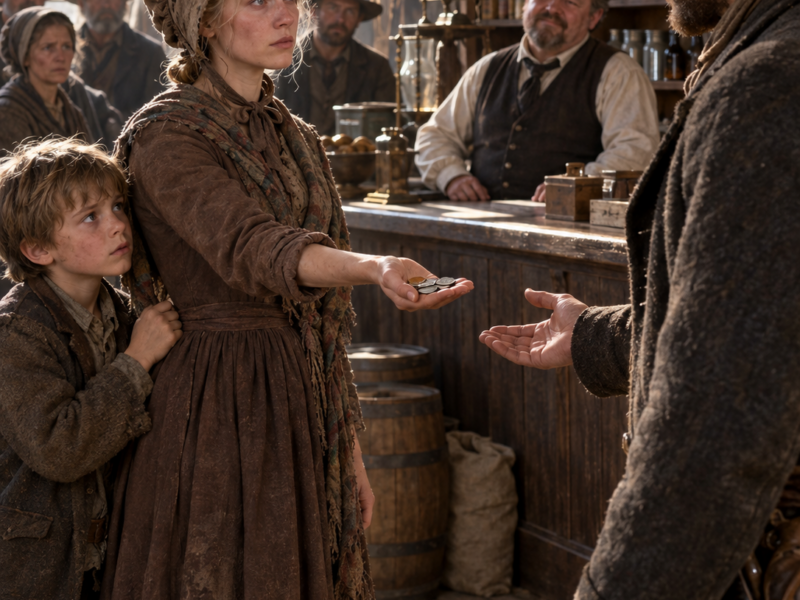
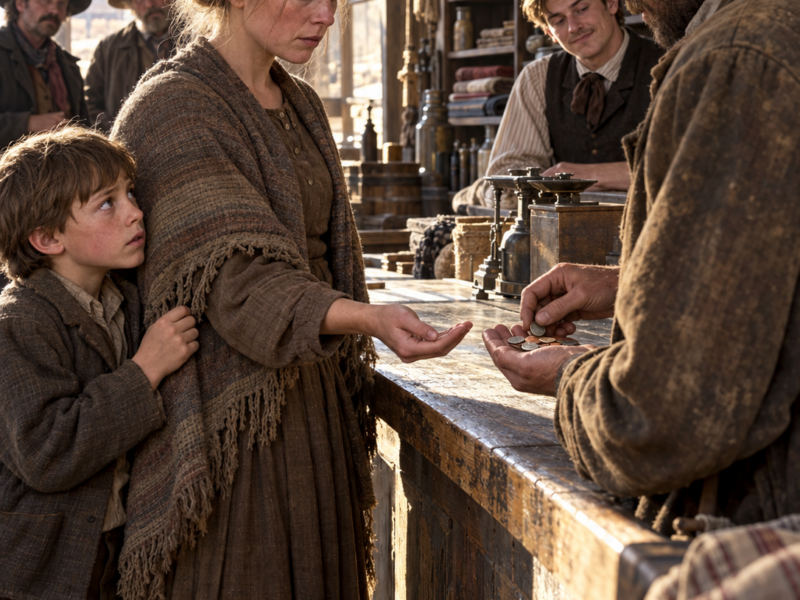
The funeral bells were still ringing when Edward Fairfax ordered Hetty Metcalfe out of the only home she had known for fourteen years.
She was twenty-two, dressed in a plain black gown, standing beneath the high ceiling of Fairfax Hall with a small wooden trunk beside her feet. Outside, the October rain swept across the Yorkshire countryside, bending the bare branches of the elms and turning the gravel drive into a muddy stream.
Edward stood at the foot of the grand staircase, holding his late aunt’s will.
“The wedding house in Scarth Wood,” he repeated, giving a short, unpleasant laugh. “And everything it contains.”
His solicitor, Mr. Pritchard, remained seated beside the drawing room fireplace.
“That is the precise wording, sir.”
“Then Aunt Millicent was more foolish than I thought.”
Hetty lowered her eyes.
Only that morning, she had followed Miss Millicent Fairfax’s coffin through the churchyard, carrying the old woman’s prayer book against her chest. She had expected grief. She had expected loneliness. But she had not expected to be turned out before the flowers on the grave had settled.
Edward folded the will.
“You understand, Miss Metcalfe, that my aunt’s generosity does not entitle you to remain at Fairfax Hall.”
“I never supposed it did, sir.”
“Good. Mrs. Dawson has packed your belongings.”
The housekeeper stood near the drawing room doorway, looking as though she wanted to speak but dared not.
Hetty glanced at the trunk.
“My sewing basket isn’t there.”
“Whatever belongs to you has been packed.”
“My mother gave me that basket.”
Edward sighed impatiently.
“Then perhaps Mrs. Dawson will find it before you leave.”
He looked at his pocket watch.
“The carriage is needed this afternoon. I suggest you make haste.”
Hetty had served his aunt since she was eight years old, first as a kitchen girl, then as a chambermaid, and finally as her companion when age and illness made reading difficult for the old woman.
Miss Millicent had taught her to read properly, to write a clear hand, and to mend fine fabrics without leaving a visible stitch. She had allowed Hetty to sit by the drawing room fire on winter evenings and had sometimes spoken to her more tenderly than to any of her own relations.
To Hetty, she had been employer, teacher, and the nearest thing to a mother left in the world.
Now the house was silent without her.
Edward cleared his throat.
“There is one other matter.”
He looked toward the gray silk shawl around Hetty’s shoulders.
“That belongs to the estate.”
Hetty’s fingers tightened around its edges.
“Miss Millicent gave it to me last February.”
“I am not interested in sentimental explanations.”
“She placed it around my shoulders herself.”
“Mrs. Dawson.”
The housekeeper approached slowly.
For a moment, Hetty thought the older woman might refuse. Mrs. Dawson had worked in that house for thirty years. She had seen Miss Millicent wrap the shawl around Hetty during a particularly bitter evening when the young woman’s hands had turned blue from tending the fire.
But Edward was the new master.
Mrs. Dawson carefully unfastened the silver pin beneath Hetty’s chin.
The shawl slid away.
The cold air from the open front doors touched Hetty’s neck.
“I’m sorry,” Mrs. Dawson whispered.
Hetty gave the smallest nod.
Edward draped the silk over his arm.
“Now, the key.”
He reached up to a wooden board beside the servants’ entrance and lifted a heavy iron key from its hook.
It was nearly the length of Hetty’s hand, blackened with age and covered in reddish rust.
“The wedding house,” he said. “Three miles through Scarth Wood. Beyond the old carriage track.”
“Is it habitable?” Mr. Pritchard asked.
Edward smiled.
“Nobody has opened the wretched thing in fifty years. I imagine the mice are enjoying themselves.”
“Your aunt specified the house and its contents as a separate bequest.”
“And she was entitled to do so.”
Edward walked to the front doors.
Hetty followed, carrying her carpetbag.
Her trunk had already been placed outside.
When she reached the steps, Edward tossed the key onto the wet gravel.
It landed in a shallow puddle.
“There you are, Miss Metcalfe. Your inheritance.”
One of the footmen looked away.
Hetty bent down and picked it up.
The metal was cold enough to sting her fingers.
For a heartbeat, anger rose in her throat. She wanted to remind Edward that his aunt had paid his gambling debts, sheltered him after his father’s death, and defended him when creditors threatened disgrace.
She wanted to ask what kind of man could laugh at the woman who had fed him, clothed him, and loved him.
But she said nothing.
There was nothing to be gained by arguing with a man who had already decided she was beneath his notice.
At the park gates, the old lodgekeeper opened the iron doors.
“Sorry, lass,” he murmured.
Hetty looked back once.
Fairfax Hall stood on its hill beneath the gray sky, every window shining with a light she would never again be invited to enjoy.
“Goodbye, Mr. Ellis.”
He swallowed.
“God keep you.”
The gates closed behind her.
For several minutes, she stood with her trunk in the rain, uncertain how she would move it. Then a carter returning from the village stopped his horse and offered her a battered handcart.
“You’ll never carry that through the wood,” he said.
“I’ve no money for hire.”
“Didn’t ask for any.”
His name was Thomas Bell, and his face was roughened by weather.
He helped her secure the trunk with rope.
“Track gets narrow beyond the old mill,” he warned. “Mind the lower crossing. Floods quickly.”
Hetty thanked him.
Then she pushed the cart into the woods.
The first mile was difficult. The second was worse.
Rainwater soaked through her boots. Wet leaves gathered around the wheels. The track climbed sharply between great beech trees whose copper-colored branches stretched overhead.
By the time she reached the ruined mill, her shoulders ached and her fingers had begun to blister.
She stopped beneath a leaning oak and took a piece of bread from her bag.
It was all she had eaten since breakfast.
She chewed slowly, listening to the rain.
Miss Millicent had always insisted that grief should not be endured on an empty stomach.
“People who are miserable must eat, Hetty,” she would say. “Otherwise they have two troubles instead of one.”
The memory was so clear that Hetty almost turned to answer her.
Instead, she began crying.
Not loudly.
There was nobody to hear her.
She covered her face with her wet hands and wept for the woman she had lost, for the home behind the locked gates, and for the frightening emptiness of a future she had never imagined having to face alone.
Eventually, she wiped her cheeks.
“Come along,” she told herself.
She pushed the cart forward.
The light was fading when she reached the clearing.
There, half-hidden beneath ivy, stood the wedding house.
It was unlike any cottage Hetty had ever seen.
Pale stone walls rose beneath a shallow dome crowned with a little lantern tower. Tall arched windows stood behind wooden shutters. Carved stone urns lined the roof, and a flight of worn steps led to a broad front door.
The building looked like a miniature country mansion abandoned by time.
Hetty stared.
It was beautiful.
And utterly deserted.
Weeds grew between the steps. Moss covered the stone threshold. One shutter hung crookedly from a rusted hinge.
She climbed to the door and pushed the key into the lock.
It would not turn.
She tried again.
Nothing.
She pressed her shoulder against the timber.
The door remained firmly closed.
Rain streamed down her face.
“Please,” she whispered.
She tried once more, twisting the key until her wrist hurt.
The lock did not move.
Night was coming.
She had no shelter, no food beyond half a loaf, and no strength left to drag the cart back through the woods.
She sat on the steps and stared into the darkness.
For the first time since leaving Fairfax Hall, she wondered whether Edward had known the door would be impossible to open.
Perhaps that had been part of the joke.
After some time, Hetty stood up.
Miss Millicent had once told her that a locked door was only one way into a building.
She walked around the house, testing the shutters.
The first would not move.
Neither would the second.
At the third, her fingers found a loosened hinge.
She pulled.
The wood shifted.
She set her foot against the stone wall and pulled harder.
With a violent crack, the hinge broke loose.
The shutter swung inward, striking something behind it.
At that very instant, the rain clouds parted.
A narrow beam of evening sunlight entered the window.
It fell across a vast room.
And there, stretching almost from one wall to the other, stood a long dining table covered in gray sheets.
The broken shutter had caught the nearest covering.
As the cloth slipped away, something beneath it flashed.
Gold.
Then silver.
Then a whole row of tall candlesticks, shining briefly in the fading sunlight.
Hetty gripped the window frame.
She had expected rats, rotten furniture, and damp walls.
Instead, she was looking at what appeared to be a great banquet frozen in time.
The sunlight disappeared.
Darkness returned.
For several seconds, she could not move.
Then, carefully, she climbed through the window.
Her boots touched a floor covered in decades of dust.
The room smelled of cold stone, old linen, and beeswax.
High overhead, rain tapped against the dome.
Hetty found a candle in her bag, struck a match, and raised the little flame.
The long table emerged from the darkness.
Something about it made her feel as though she had entered a place where she was not yet welcome.
She did not touch the remaining sheets.
Instead, she climbed back through the window, fetched her bag and bedding, and settled on a broad stone window seat.
The room was cold.
Her clothes were wet.
Her stomach was empty.
She wrapped herself in a worn brown shawl and held the iron key against her chest.
“Miss Millicent,” she whispered, looking toward the covered table. “What have you left me?”
Only the rain answered.
That night, while the forest wind pressed against the shutters, Hetty cried herself to sleep in the house that had remained unopened for fifty years.
And beneath the dust of that forgotten room waited the reason an elderly woman had chosen to leave it to her instead of to her own family.
Part 2
Morning arrived in pale gold.
Hetty woke stiff and shivering, with her cheek pressed against the rough fabric of her carpetbag.
Birdsong came through the broken shutter.
For a moment, she forgot where she was.
Then she saw the long gray-covered table, the stone floor, and the unfamiliar ceiling high above her.
She sat up.
The rain had stopped.
Outside, the beech trees glittered with thousands of droplets. Mist lay between their trunks, and the distant hills beyond the park rose blue beneath a clearing sky.
Hetty climbed through the window.
In daylight, the house was even more remarkable.
Someone had built it with care and expense, though it stood miles from the nearest proper road. The carved window frames were delicate, the stonework carefully fitted, and the little dome gave it an almost ceremonial appearance.
She tried the front door again.
The key refused to turn.
She remembered how Miss Millicent had once freed the rusted fastening on an old jewel box.
“Never fight old metal,” the lady had said. “Persuade it.”
Hetty fetched the small bottle of lamp oil from her bag.
Using a feather she found beneath the eaves, she worked a few drops into the lock.
She waited.
Then she turned the key gently, first one way, then the other.
She repeated the motion for nearly an hour.
Her fingers became black with rust.
At last, something moved.
She froze.
Another careful twist produced a deep metallic clunk.
The key turned.
Hetty pushed against the door.
It scraped across the floor and opened slowly.
Sunlight entered the wedding house.
For the first time in half a century, the front doorway stood open.
Hetty remained on the threshold, taking in the room.
Then she began removing the dust sheets.
She did it carefully, folding each one as she went.
Beneath them lay a magnificent dining table set for a wedding feast.
A white damask cloth covered its full length.
At every place stood a porcelain plate edged in gold. Silver knives and forks lay beside clouded crystal glasses. Little salt dishes shaped like seashells were arranged between the settings.
Massive gilded silver candelabra stood at intervals down the table.
Their branches were darkened with tarnish, but even beneath the dust, Hetty could see the extraordinary workmanship.
She walked slowly along one side.
One chair.
Two.
Three.
She counted beneath her breath.
When she reached the far end, she turned and continued.
“Thirty-eight. Thirty-nine. Forty.”
Forty places.
Every one prepared.
Every one untouched.
At the head of the table stood two tall chairs carved with roses and ribbons.
One had been pushed back.
The other remained close to the table.
Before the empty chair lay a small gray glove.
Three pearl buttons decorated its wrist.
Beside it stood a place card turned facedown.
Hetty reached toward it.
Then stopped.
She could not explain why, but the entire room seemed to belong to a moment of sorrow that had never been allowed to end.
In the center of the table stood a glass-covered wedding cake.
Its icing had hardened and darkened with age. The once-white sugar roses had broken and fallen around its base.
Hetty stared at it.
Someone had prepared a wedding breakfast for forty guests.
Then something had happened.
Something terrible enough that the entire house had been closed, with every plate, fork, glass, and chair left exactly as they stood.
She looked toward the empty bride’s chair.
“Who were you waiting for?” she whispered.
There was no answer.
That afternoon, Hetty walked to the village of Osmotherley.
Her purse held four shillings and a few pennies.
She bought bread, a small quantity of tea, and two candles.
Inside the shop, three women stopped speaking when she entered.
The shopkeeper looked her over.
“You’ll be the young woman Mr. Fairfax gave the old wedding house.”
“Yes.”
“Found your mice, then?”
One of the women laughed.
Hetty felt heat rise into her cheeks.
“No mice that I’ve seen.”
“Well, you’ll have plenty before winter.”
She took her purchases and left without answering.
Outside, the village smelled of wet stone, coal smoke, and baking bread.
She walked slowly toward the northern road.
At the last cottage, an elderly woman sat on a bench beneath a small porch.
She wore a dark shawl, and her narrow face was deeply lined.
“You’ve been inside,” the woman said.
Hetty stopped.
“Yes, ma’am.”
“Did you touch the table?”
“I uncovered it.”
The woman’s eyes changed.
“All of it?”
“Almost.”
“Forty places?”
Hetty nodded.
The old woman looked toward the distant woods.
“After all these years.”
“Do you know whose wedding it was?”
The woman said nothing.
“My name is Hetty Metcalfe.”
“Bessie Ainslie.”
She shifted on the bench.
“I was twenty years old when they laid that table. Carried cream up from the dairy myself. Nearly dropped it twice on the hill.”
Hetty stepped closer.
“Then you remember what happened.”
Bessie looked at her sharply.
“Remember? Child, there’s not a day passes I don’t remember.”
“Will you tell me?”
The old woman studied her for a long time.
“Some things belong to the people who suffered them.”
“Miss Millicent left me the house.”
At that name, Bessie’s expression softened.
“Then perhaps she meant you to find out.”
She reached for Hetty’s hand.
“Whatever you do, girl, be gentle with what’s inside. Every plate was placed there with hope.”
Hetty walked home with more questions than answers.
That evening, she built a small fire in the kitchen behind the dining room.
The fireplace smoked at first, and she had to clear a nest of dried leaves from the chimney’s lower opening.
Eventually, flames caught the beechwood.
She boiled water in an old iron pan and drank tea from a chipped cup.
The kitchen had a stone sink, shelves, a broad hearth, and a small pantry. Rain had entered through cracks near the roof, but the walls were sound.
With work, it could become a home.
The trouble was that she had almost no money.
She could not afford coal.
She could not afford repairs.
And she had no income.
At Fairfax Hall, food, shelter, and clothing had been provided. She had never needed to think much about how a woman alone might keep herself alive through a Yorkshire winter.
Now she counted every penny.
The next morning, she went outside to gather fallen branches.
She carried them in bundles, stacking them in the driest corner of the kitchen.
Then she washed the windows.
She mixed vinegar with water and cleaned the glass using scraps of newspaper. Some panes were cracked. Others were thick with grime.
By sunset, the first window was clear.
Light poured across the table.
Hetty looked at the nearest candelabrum.
Her hands remembered Miss Millicent’s instructions.
“Silver must never be treated like kitchen iron,” the lady had told her. “Especially gilded silver. The gold is terribly thin. Once you rub it away, no amount of regret will put it back.”
Hetty warmed water over the fire, shaved a little soap into it, and fetched the soft brush she used for cleaning delicate embroidery.
She worked slowly.
The candelabrum was heavy.
Its branches were covered with flowers, leaves, and tiny sculpted figures.
Dirt had settled into every crevice.
She washed each section with patient, gentle movements.
Then she dried it with soft cloth.
At first, almost nothing seemed to change.
But by the third afternoon, the metal had begun to glow.
Hetty carried it back to the table and placed it beneath the window.
Sunlight caught its gilded branches.
For a moment, the entire room appeared warmer.
She stared.
“Well,” she murmured, “aren’t you beautiful?”
The words surprised her.
She had not spoken aloud for nearly two days.
That evening, someone knocked on the door.
It was Thomas Bell, the carter.
He stood beneath the porch with a basket.
“My wife heard you were living up here. Thought you might need something.”
Inside were potatoes, two onions, a small piece of cheese, and six eggs.
Hetty’s eyes filled.
“I can’t pay for these.”
Thomas shrugged.
“My wife’s old christening gown needs mending. She’s hoping you might take a look.”
“I’d be glad to.”
He gave her the basket.
“Then consider us square.”
The next day, the gown arrived.
Its hem had been torn, and the delicate lace around the sleeves was coming apart.
Hetty sat beside the fire and worked until her eyes hurt.
She repaired the lace, strengthened the seams, and washed the yellowed fabric in gentle soap.
When Mrs. Bell came to collect it, she held the gown against her cheek.
“My mother made this,” she whispered. “I thought it was ruined.”
Hetty smiled.
“Good cloth can often be saved.”
Mrs. Bell paid her three pennies more than they had agreed upon.
Within a fortnight, other baskets arrived.
Shirts with torn cuffs.
Sheets worn thin in the middle.
Children’s coats needing patches.
A widow’s best black dress.
Hetty worked by daylight whenever possible, saving her candles for evenings.
Some customers paid in coins.
Others brought bread, eggs, milk, or potatoes.
She accepted all of it gratefully.
And every day, when her paid sewing was finished, she returned to the wedding table.
She cleaned the silver.
She washed the crystal.
She repaired tiny tears in the damask.
She arranged each plate exactly where she had found it.
By November, frost covered the clearing.
The stream below the house ran bitterly cold, and Hetty’s hands ached when she washed the old linen there.
She knelt on a flat stone, scrubbing carefully, then carried the cloth uphill in a heavy basket.
She spread it over the grass to whiten beneath the weak sunlight.
When the damp fabric froze stiff, she brought it inside and dried it by the kitchen fire.
Her fingers cracked.
Her boots began to leak.
At night, the wind screamed around the dome.
Sometimes she woke to find frost on the inside of the windows.
She slept on a straw mattress near the hearth, wearing every garment she owned.
There were evenings when she wanted desperately to return to Fairfax Hall.
Not to Edward.
Never to Edward.
But to the warm kitchen, Mrs. Dawson’s familiar voice, and the old drawing room where Miss Millicent had once sat reading beside the fire.
One December night, after a long day of sewing, Hetty found herself standing before the closed shutters.
Snow was falling outside.
Her supper had been a potato and a piece of bread.
She was so tired that her hands shook.
“What am I doing here?” she whispered.
She thought of the long table, the empty chairs, and the woman who had locked them away.
Then she remembered Miss Millicent’s face on the evening she had given her the gray silk shawl.
“You’ve a talent for saving things, my dear,” the old woman had said.
Hetty wiped her eyes.
She turned back toward the fire.
And in the morning, she began cleaning the second great candelabrum.
The winter would not defeat her.
Not while there was work to do.
Part 3
By Christmas, the wedding house had begun to change.
The windows were clear. The long table shone beneath its clean white cloth, and the silver branches of the candelabra caught every little gleam of winter sunlight.
The transformation had not happened quickly.
Hetty had worked through days when her fingers were so stiff she could scarcely hold a needle. She had carried firewood through snow, patched cracks around the kitchen window with strips of old cloth, and learned to make a small sack of flour last far longer than she would once have thought possible.
She kept careful accounts in a notebook.
Three pennies for hemming a shirt.
Six pennies for repairing a wool coat.
A dozen eggs for mending a bedspread.
Two loaves and half a pound of butter for restoring a wedding veil.
There were weeks when she earned almost nothing.
But the village began to notice her skill.
One afternoon, the blacksmith’s wife brought a fine linen tablecloth that had belonged to her grandmother. A careless servant had spilled hot grease across it years earlier, leaving a dark stain that nobody had managed to remove.
“I don’t expect miracles,” the woman said.
“Neither do I,” Hetty replied. “But I’ll see what can be done.”
She spent two days working on it.
When the cloth was returned, the stain was faint enough to disappear beneath the folds.
The blacksmith’s wife stared.
“How on earth did you manage it?”
“Patience, mostly.”
Within days, Hetty had more work than she could finish before dark.
Bessie Ainslie became a regular visitor.
Though she was nearly eighty, Bessie still walked the woodland path with the help of a polished ash stick. She brought gossip from the village, occasional scraps of food, and an endless supply of practical advice.
One afternoon, she found Hetty standing on a ladder, trying to repair a crack above a window.
“Come down from there before you break your neck.”
“If I leave it, the rain will come in.”
“And if you fall, the rain will have the house to itself.”
Hetty laughed.
Bessie looked around the dining room.
The candelabra gleamed. Crystal glasses sparkled beneath the dome. Every folded napkin stood carefully beside its plate.
The old woman went very still.
“Oh, my dear,” she whispered.
Hetty climbed down.
“Is something wrong?”
Bessie shook her head.
“I haven’t seen it like this since that morning.”
She walked slowly toward the head of the table.
Her hand rested on one of the tall chairs.
“I remember the flowers,” she murmured. “White roses and little sprigs of heather. They brought them from the gardens at the hall.”
Hetty listened without interrupting.
“There were cakes in the kitchen. Roast meats. Jellies. More cream than I’d ever seen in one place. Everybody was laughing.”
“What happened afterward?”
Bessie’s fingers tightened around the chair.
“Afterward?”
She looked toward the empty bride’s place.
“Afterward, nothing was ever quite the same.”
Hetty wanted to ask more.
But Bessie’s eyes had filled with tears, and she knew better than to press.
Instead, she brought the old woman into the kitchen and made tea.
They sat together beside the fire while snow drifted past the windows.
For the first time since Miss Millicent’s death, Hetty felt something like companionship.
As winter deepened, she developed a routine.
She rose before sunrise, stirred the ashes, and carried water from the stream when the pump was frozen.
She swept the kitchen, prepared a little porridge, and spent the morning sewing for paying customers.
In the afternoon, she worked on the wedding room.
After supper, she wrote in her notebook, calculated her earnings, and planned the next day’s tasks.
Sometimes she read aloud from the one book she had managed to bring from Fairfax Hall.
It was a collection of poems Miss Millicent had given her years earlier.
The old woman’s handwriting remained on the first page.
To my dear Hetty, who understands that even forgotten things deserve to be remembered.
Hetty read the inscription often.
It made her feel less alone.
One particularly severe January evening, a violent wind swept across the valley.
Snow piled against the eastern wall, and the old kitchen chimney began drawing badly.
Hetty noticed smoke gathering beneath the ceiling.
She opened the window, dampened the fire, and waited until the flue cooled. Then she cleared a blockage of fallen mortar from the accessible lower section.
The smoke began rising properly again.
But the room had become bitterly cold.
By midnight, her hands were blue.
She sat beside the hearth, holding a blanket around her shoulders.
“If I were a sensible woman,” she muttered, “I’d have gone into service somewhere warm.”
Yet she knew she could not bear returning to a household where another person could take away her bed, her belongings, and her dignity with a single order.
The wedding house was freezing.
It was inconvenient.
It was falling apart.
But it was hers.
That truth gave her courage.
In February, Thomas Bell returned with news.
“I hear the master at the hall’s asking questions about you.”
Hetty stopped working.
“Mr. Fairfax?”
“Aye. Wants to know how you’re managing. Whether the place is fit to live in.”
“What did you tell him?”
“That you’re alive, which seemed to disappoint him.”
Hetty lowered her eyes.
Thomas scratched his chin.
“He’s also been asking whether you’ve found anything worth selling.”
She looked toward the dining room.
“Nothing I intend to sell.”
“Best be careful, lass. Men who have money often think everything ought to belong to them.”
After Thomas left, Hetty examined the iron key hanging around her neck.
She remembered Edward’s laughter.
Fifty years of mice.
She had never told anyone at Fairfax Hall what she had discovered inside the house.
Not out of spite.
She simply feared that Edward would find some way to claim it.
That evening, she reread the copy of Miss Millicent’s will Mr. Pritchard had given her.
The wording was plain.
To Hetty Metcalfe, in recognition of her faithful care and affection, I leave the wedding house situated within Scarth Wood, together with all furnishings, possessions, and contents belonging thereto.
Hetty traced the words with her finger.
The house belonged to her.
Everything inside belonged to her.
But she understood how little protection a young woman without money might have against a wealthy gentleman determined to challenge her.
She folded the document carefully and placed it in a tin box beneath her bed.
The following week, she walked into town to speak with Mr. Pritchard.
His office smelled of ink, polished wood, and damp wool.
He looked surprised when she entered.
“Miss Metcalfe. What brings you here?”
“I need to understand the will.”
He motioned her into a chair.
She asked whether Mr. Fairfax could take the house back.
Mr. Pritchard studied her.
“Your inheritance is valid. Miss Fairfax was quite deliberate in her instructions.”
“Even the things inside?”
“Everything included in that bequest.”
Hetty hesitated.
“What if those things are valuable?”
The solicitor raised his eyebrows.
“Have you discovered something?”
She looked down at her gloves.
“I’ve discovered that Miss Millicent cared for the place very much.”
Mr. Pritchard remained silent for a moment.
“Then I advise you to preserve what she left and keep the property secure. If anyone challenges your ownership, come directly to me.”
Hetty thanked him.
She walked home feeling slightly stronger.
Not safe.
But stronger.
By early March, the wedding room was almost entirely restored.
Every plate was clean.
Every glass was clear.
Every candelabrum had been carefully washed.
The white damask shone beneath the windows.
Only three things remained untouched.
The place card turned facedown.
The gray glove.
And the strange object beneath the bride’s plate that made it rock slightly whenever Hetty passed.
She had left them alone for months.
Some part of her believed that if Miss Millicent had wanted those things discovered, the old woman would have explained them.
But another part remembered how deliberately the house had been given to her.
On a quiet evening, Hetty lit the candles nearest the head of the table.
Their light spread across the white linen.
She stood behind the bride’s chair.
Her hands were trembling.
“Forgive me,” she whispered.
Then she turned over the card.
One name had been written in faded ink.
Millicent.
Hetty stared.
The bride had been Miss Millicent Fairfax.
The woman who had lived unmarried for half a century.
The woman who had never explained why.
Slowly, Hetty sat down.
The old lady had once been a young bride.
She had once worn flowers in her hair.
She had once waited at this very table for a man she loved.
Hetty lifted the gray glove.
Its leather was extraordinarily soft.
Beneath the glove, the plate tilted slightly.
She raised it.
A folded letter lay underneath.
It was sealed with gray wax.
Unlike the old paper around it, the letter looked comparatively new.
On its front was written a name in the familiar, trembling handwriting Hetty had seen on hundreds of notes and Christmas cards.
For Hetty.
Her breath caught.
She held the letter against her chest.
For a long time, she could not bring herself to break the seal.
Then, with tears already gathering in her eyes, she opened it.
What she read would change the way she understood the house, the woman who had loved her, and the strange inheritance Edward Fairfax had thrown away.
Part 4
Hetty read the letter three times before she trusted herself to put it down.
It began with the words she remembered so well.
My dear Hetty,
If you are reading this, then you have found your way into the wedding house. I hope the journey was not too difficult, although I fear my nephew has offered you little kindness.
I know Edward. I know what he thinks of those who serve him. I also know that you would never ask for anything beyond what you believed you had earned.
This house was once the happiest place in my world. Then it became the saddest.
I was twenty-two when I prepared to marry. He was a lieutenant in His Majesty’s Army, and his name was Thwaite.
Hetty covered her mouth.
She remembered that name.
Two years earlier, while reading poems aloud in Miss Millicent’s drawing room, she had discovered a pressed sprig of white heather between the pages of a book.
“Who gave you this?” she had asked.
The old woman had looked at the little flower for a very long time.
Then she had whispered, “Lieutenant Thwaite.”
Hetty had asked nothing more.
But she had repeated the name aloud, gently, and Miss Millicent had taken her hand.
Now, fifty years later, the meaning of that moment became clear.
Hetty returned to the letter.
He was called away with his regiment before our wedding. We had already made our plans, and he promised he would return if duty allowed.
I refused to cancel the day. I believed that if I kept my promise, somehow he would be able to keep his.
We prepared the table for forty guests. I dressed in my bridal gown. The servants filled the house with flowers.
I waited.
The candles burned lower.
The food grew cold.
He never came.
Hetty’s eyes blurred.
She wiped them and continued.
Three days before our wedding, he had been killed at Waterloo. The news had not reached us.
When I finally learned the truth, I could not bear to look at the place where I had waited for him.
I locked the door.
For fifty years, everyone has been careful with me. They have called me fortunate, respectable, and independent. They have spoken of my charity and my comfortable life.
But almost nobody has spoken his name.
You did.
Hetty stopped reading.
The candle flickered.
Somewhere outside, an owl called from the woods.
The letter continued.
You asked who he was, and when I told you, you repeated his name without embarrassment or pity.
For one moment, he belonged to the world again.
That kindness meant more to me than you could ever know.
I have left you the wedding house and everything it contains. Keep it safe, but do not allow it to become another prison of grief.
Let there be laughter inside those walls again.
Let there be music.
Let those who have little find welcome there.
And please, my dear girl, do not spend your life believing that love only has value when it reaches the ending we wished for.
With all my affection,
Millicent.
Hetty lowered the letter.
The room seemed to shift around her.
Every chair had been arranged for a celebration that never happened.
Every glass had waited for guests whose joy had turned to grief.
The gray glove had belonged to a bride who never became a wife.
Hetty looked at the chair pushed back from the table.
She could almost imagine Miss Millicent rising from it on that long-ago afternoon, refusing at last to continue waiting.
“Oh, Miss Millicent,” she whispered.
She remembered helping dress the old woman for burial.
In a drawer beside her bed lay a single gray kid glove wrapped in tissue paper.
Miss Millicent had once asked that it be buried with her.
Hetty had placed it in her hands without understanding why.
Now she knew.
One glove had gone with the woman.
The other had remained where her young heart had broken.
Hetty lifted it and pressed it against her cheek.
It smelled faintly of old leather and violets.
She wept for a woman who had been loved, who had lost everything she expected of life, and who had nevertheless found a way to offer tenderness to a lonely servant girl.
By morning, Hetty had made a decision.
The wedding house would not remain a monument to sorrow.
She removed the glass covering from the ancient wedding cake.
The cake was so hard that it seemed made of plaster. She carried it outside, found a sheltered place beneath the largest beech tree, and dug carefully into the soft spring earth.
She laid the cake in the ground, together with its broken sugar roses.
Then she covered it.
She said a quiet prayer for Lieutenant Thwaite and the young bride who had waited for him.
Inside, she washed the great glass dome until it shone.
She set it back on the table, empty.
The room felt different.
Not because the past had disappeared.
But because the past no longer seemed to hold everything still.
Spring brought primroses along the stream and new leaves to the great beeches.
It also brought unexpected visitors.
One wet afternoon, Mrs. Dawson appeared at the front door.
Her bonnet was dripping, and she carried a wicker basket.
“May I come in?”
Hetty stood aside.
The housekeeper entered and stopped abruptly when she saw the restored room.
For several seconds, she could only stare.
“Good heavens.”
Hetty watched her carefully.
“Would you like some tea?”
Mrs. Dawson did not answer immediately.
She walked toward the table, touching the polished wood of a chair.
“Miss Millicent brought me here once,” she said. “Years ago. I was a young girl then, and we stood outside in the gardens. She would never open the door.”
Hetty said nothing.
Mrs. Dawson turned.
“She used to tell me you were the only person who listened to her without waiting for her to finish.”
Hetty looked down.
“I loved her.”
“I know.”
The housekeeper placed the basket on a chair.
“I should have spoken when Mr. Fairfax took this from you.”
She lifted the cloth.
Beneath it lay the gray silk shawl.
Hetty stared.
“How did you get it?”
“Miss Millicent gave it to you. Everyone knew that. I told Mr. Fairfax it was not his to keep.”
“And he listened?”
Mrs. Dawson’s mouth tightened.
“Not at first.”
She lifted the shawl and held it out.
“I should have defended you that day, Hetty. I was afraid of losing my place.”
Hetty took the silk.
For a moment, neither woman spoke.
Then Hetty said, “I was afraid too.”
Mrs. Dawson began to cry.
They stood together in the old room, and Hetty put her arms around the woman who had once helped take away her last comfort.
By summer, the village joiner had repaired the window and strengthened the front steps.
Hetty paid him gradually from her sewing earnings.
He was surprised to discover that she had prepared her own measurements and sketched the repair with considerable accuracy.
“Where did you learn that?” he asked.
“By watching people who knew what they were doing.”
He looked around.
“You’re a resourceful young woman.”
“I’ve had to be.”
She smiled as she said it, but the words were true.
The house had become a refuge.
She had a small kitchen garden now, planted with beans, cabbages, onions, and potatoes. Thomas Bell had helped turn the soil, and Bessie had provided seeds.
A neighbor gave her three hens.
She built their enclosure from salvaged timber and kept them in the old lean-to behind the kitchen.
Their eggs became a welcome source of food and occasional income.
Hetty began to feel settled.
Yet trouble was gathering beyond the woods.
One afternoon, Mr. Pritchard arrived in a carriage.
He refused tea.
“Miss Metcalfe, I have come because Mr. Fairfax has made inquiries concerning your inheritance.”
Hetty grew still.
“What sort of inquiries?”
“He believes certain objects belonging to the Fairfax family may have been left in the house without his aunt’s authority to dispose of them.”
“Miss Millicent owned the house.”
“Yes.”
“And the objects?”
“That may require examination if he chooses to pursue the matter.”
Hetty looked toward the wedding table.
“He laughed when he gave it to me.”
Mr. Pritchard sighed.
“That is not a legal argument, unfortunately.”
“Can he take it away?”
“Not without establishing grounds for his claim.”
Hetty folded her hands.
“Then I shall keep every receipt, every document, and every letter.”
“That would be wise.”
Before leaving, Mr. Pritchard asked to see the room.
He entered.
He stopped.
For a long time, he examined the silver and the china.
Then he turned toward Hetty.
“Has anyone assessed the value of these things?”
“No.”
“Do you realize they may be worth a considerable sum?”
“They were important to Miss Millicent.”
“That is not quite what I meant.”
“I know.”
The solicitor watched her.
“Be careful, Miss Metcalfe. Wealth often attracts people who did not care where it came from.”
After he left, Hetty locked the door and stood for a long time beside the wedding table.
She was no longer frightened of hunger.
She was frightened of losing the one thing that had given her a place in the world.
Autumn approached.
The nights grew colder.
The leaves turned copper and red.
And one October afternoon, almost a year to the day since Hetty had arrived in the wood with a broken trunk and a rusty key, a storm came rolling over the Yorkshire hills.
It was unlike anything she had experienced.
The wind struck before sunset.
Black clouds swallowed the sky, and branches whipped against the windows.
Hetty hurried outside to secure the henhouse and fasten the shutters.
Rain came sideways.
Thunder rolled over the valley.
She had just latched the final shutter when a tremendous cracking sound echoed from the woods below.
Something enormous fell.
The ground shuddered.
Hetty looked toward the carriage track.
A great beech tree had collapsed across the road.
She could see its broken trunk through the rain.
There would be no carriage passing that way until men came with axes.
She went inside, barred the door, and lit the kitchen fire.
An hour later, someone began pounding on the front door.
“Help! Is anybody there?”
Hetty grabbed her lantern.
She opened the door.
Outside stood a crowd of drenched, terrified people.
Men in hunting jackets.
Two women wrapped in wet coats.
Several beaters and gamekeepers.
One man had blood streaming down the side of his face.
Their leader shouted above the wind.
“The road’s blocked! We saw your light!”
Hetty recognized the Fairfax estate’s head gamekeeper.
She also recognized several gentlemen who had attended Miss Millicent’s funeral.
They were Edward Fairfax’s guests.
Men who had sat comfortably in the drawing room while she was turned out.
The gamekeeper looked at her desperately.
“Please, Miss Metcalfe. We’ve nowhere else to go.”
Hetty stood in the doorway.
For one brief moment, she remembered Edward’s mocking laughter, the cold gravel beneath her knees, and the shawl being pulled from her shoulders.
She could have sent them away.
No one would have blamed her.
Instead, she opened the door wider.
“Come inside,” she said. “All of you.”
The guests crowded into the wedding house.
They were soaked, exhausted, and shivering.
Then they entered the dining room.
And every one of them stopped.
The long table gleamed in the lantern light.
Forty places stood ready beneath the dome.
The gold-edged plates shone.
The silver candelabra rose above them like branches of a winter forest.
The guests stared in astonishment.
Hetty crossed the room.
She lifted a taper from the kitchen fire.
Then she began lighting the candles.
One after another, flames rose above the long table.
Gold flashed across silver.
Crystal glasses caught the light.
The white cloth glowed.
By the time she reached the far end, the room was filled with warm candlelight.
“Sit down,” Hetty said. “You’re safe here.”
No one moved at first.
Then the injured gamekeeper sank into a chair.
The others followed.
Ladies and servants.
Gentlemen and laborers.
All of them sitting together at the same magnificent table.
Hetty went to the kitchen.
She had prepared a pot of mutton and barley stew for herself.
It was supposed to last most of the week.
She added potatoes, onions, and enough water to stretch the meal.
She took three loaves from the cupboard.
Then she carried the food into the dining room.
The first bowl went to the injured gamekeeper.
The second to an elderly beater who was shaking uncontrollably.
Then she served the others.
Nobody asked why a servant was eating beside a gentleman.
Nobody complained that the stew was simple.
They were too cold, too hungry, and too grateful.
When she had finished, Hetty took warm water and clean linen to the injured keeper.
She washed the blood from his forehead and dressed the cut.
The storm continued raging outside.
But inside the wedding house, warmth returned to frightened hands.
People began talking quietly.
One gentleman complimented the stew.
Another asked whether the beautiful table had belonged to the Fairfax family.
Hetty answered only that Miss Millicent had left it to her.
At the far end of the room sat an older man with spectacles and a neatly trimmed gray beard.
He had scarcely touched his meal.
Instead, he kept turning his silver spoon over in his hand, studying the tiny marks beneath its handle.
After a while, he put the spoon down.
Then he looked toward the nearest candelabrum.
His expression had changed completely.
“Miss Metcalfe,” he said quietly, “may I ask you something?”
Hetty approached.
“Of course, sir.”
“Where did you find this silver?”
“It was here when I inherited the house.”
“Has anyone restored it?”
“I cleaned it myself.”
“All of it?”
“Yes, sir.”
The gentleman removed his spectacles, wiped them carefully, and put them back on.
Then he stood.
“Would you permit me to examine one of those candelabra?”
Hetty nodded.
He lifted the heavy silver object with extraordinary care.
He turned it over.
And when he saw the marks beneath its base, he drew in a sharp breath.
The room grew quiet.
The gentleman looked at Hetty.
“My dear young woman,” he said, “I believe you have no idea what has been standing in this house for fifty years.”
Part 5
The older gentleman carried the candelabrum toward the nearest window.
“My name is Charles Royall,” he told Hetty. “I work with the collections at the South Kensington Museum in London. I have spent most of my professional life studying English silver.”
He carefully turned the base toward the candlelight.
“Come here, Miss Metcalfe. I want to show you something.”
Hetty stepped beside him.
He pointed to several tiny marks stamped into the metal.
“Do you see this leopard’s head?”
“Yes.”
“It indicates London.”
He moved his finger.
“And this walking lion tells us the piece is sterling silver.”
Then he pointed toward two letters.
“P and S. Paul Storr.”
One of the gentlemen rose from his chair.
“Good heavens. The royal silversmith?”
Royall nodded.
“Storr worked for Rundell, Bridge and Rundell, goldsmiths to the Crown. His finest work is among the most remarkable silver ever produced in England.”
He examined the delicate gilding.
“And this piece has survived with almost no damage to its original surface.”
Hetty swallowed.
“Miss Millicent taught me how to clean it.”
“Then she taught you exceedingly well.”
He looked toward the long table.
“Forty complete settings, you say?”
“Forty.”
“And all the serving pieces?”
“As far as I know.”
Royall walked slowly along the table.
He examined a dish, a fork, and one of the little seashell-shaped salt cellars.
His astonishment deepened.
“I have never encountered a service of this kind preserved together in such remarkable condition.”
Someone asked what it might be worth.
Royall shook his head.
“I would not attempt to value it without a complete examination. But I can tell you this much: it is an exceptional collection.”
Hetty looked down at the cloth.
For nearly a year, she had washed, polished, carried, and protected these things without knowing their importance to anyone beyond Miss Millicent.
She remembered kneeling beside the icy stream with cracked hands, worried about how she would pay for another sack of flour.
She remembered the first candelabrum taking three days to clean.
And she remembered Edward Fairfax laughing as he threw the key into the mud.
“Did you know what you were caring for?” Royall asked.
“No, sir.”
“Then why devote so much effort to it?”
Hetty thought carefully before answering.
“Because it mattered to someone who was kind to me.”
The old gentleman regarded her in silence.
Then he said, “I believe that is an excellent reason.”
Morning came gray and cold.
The storm had passed, leaving broken branches scattered across the clearing.
Down on the carriage track, woodsmen were already chopping through the fallen beech.
The guests gathered their damp belongings and prepared to return to Fairfax Hall.
Before they could leave, a carriage approached along the upper track.
Edward Fairfax stepped out.
He had come with two grooms after hearing that his guests had taken refuge in the old wedding house.
He entered without knocking.
“Well,” he began, “I understand you’ve all had quite an adventure.”
Then he saw the table.
He stopped.
His eyes traveled across the silver, the crystal, and the gold-edged plates.
He looked at the carved chairs and the magnificent candelabra.
Then he saw Hetty standing beside the kitchen doorway.
She wore Miss Millicent’s gray silk shawl.
For several seconds, Edward said nothing.
“What is all this?”
Royall stepped forward.
“A remarkable collection, Mr. Fairfax.”
Edward looked sharply at him.
“Collection?”
“Your aunt’s wedding silver. It appears to include an extraordinary service by Paul Storr.”
Edward stared.
He approached the nearest candelabrum and touched its base.
“That belongs to my family.”
The room fell silent.
Hetty felt her heart begin to pound.
Edward turned toward her.
“Where did you get this?”
“It was here when Miss Millicent left me the house.”
“Don’t be ridiculous. This is Fairfax silver.”
One of the older guests, Sir Henry Ashcombe, set down his teacup.
“I was present when your aunt’s will was read, Fairfax.”
Edward ignored him.
“Miss Metcalfe, I shall expect these objects to be returned to the hall immediately.”
Hetty looked toward the door.
She remembered how quickly Edward had stripped her of the silk shawl, the warmth of her room, and the life she had known.
Her hands were trembling.
But she did not lower her head.
“No, sir.”
Edward stared.
“What did you say?”
“I said no.”
His face darkened.
“Have you forgotten your position?”
Hetty lifted her chin.
“I know my position exactly. I am standing in my own home.”
Sir Henry cleared his throat.
“Fairfax, your aunt’s will gave Miss Metcalfe the wedding house and everything it contained.”
Edward turned toward him.
“You cannot seriously suggest she intended to give away a fortune in silver.”
“That is what she wrote.”
“She was an old woman!”
“An old woman who knew her own mind,” Sir Henry replied.
Royall placed the candelabrum carefully on the table.
“And one whose collection has been preserved through the skill of the young woman standing before you.”
Edward looked around.
He seemed to expect his friends to support him.
But the men who had eaten Hetty’s stew, sheltered beneath her roof, and watched her care for the injured gamekeeper remained silent.
One by one, they looked away.
For the first time in his life, Edward Fairfax had entered a room where his money and his family name could not command respect.
He turned back toward Hetty.
“You have been remarkably fortunate.”
Hetty looked at the long table.
“No, Mr. Fairfax. I have been cold. I have been hungry. I have worked until my fingers bled. I have spent nights wondering whether I could survive until morning.”
Her voice was quiet.
“But I have been fortunate in one thing. Your aunt trusted me.”
Edward’s jaw tightened.
“You imagine that makes you better than your station?”
“No. I believe it means I must be worthy of her trust.”
Sir Henry rose.
“Come along, Fairfax. I think we have imposed on Miss Metcalfe long enough.”
Edward hesitated.
Then he turned and walked out.
No one followed until he reached the carriage.
Hetty stood motionless.
She had not raised her voice.
She had not insulted him.
Yet somehow, after all those months, the memory of his laughter no longer seemed powerful enough to hurt her.
A week later, Mr. Pritchard visited the wedding house.
He had spoken with Edward and examined the relevant estate records.
“The house and contents were specifically left to you,” he told Hetty. “Mr. Fairfax has no grounds to remove them simply because he now regrets his aunt’s decision.”
Hetty sat beside the kitchen fire, holding her teacup with both hands.
“Then I may stay?”
“You may stay.”
She closed her eyes.
The relief was so great that for a moment she could not speak.
Mr. Pritchard continued.
“There may be a considerable sum involved here if you choose to sell.”
Hetty looked toward the dining room.
“I don’t intend to.”
“You could live very comfortably.”
“I already have a home.”
He smiled faintly.
“And what do you intend to do with it?”
Hetty thought about Miss Millicent’s letter.
Let there be laughter inside those walls again.
“I think,” she said slowly, “I know.”
The following spring, Charles Royall returned with correspondence from the museum.
He asked whether Hetty might consider lending two candelabra for a public exhibition.
She agreed, provided they were properly insured, carefully transported, and returned afterward.
When they departed in a wooden crate lined with straw, Hetty watched the carriage disappear down the road with an anxious heart.
But they came back safely in autumn.
She unpacked them herself.
Each piece went into its original place.
She never sold a spoon.
Instead, she opened the house.
The first person to ask for its use was a farmer’s daughter named Mary Bell, a relative of Thomas, who was preparing to marry a shepherd.
The couple had little money.
Mary’s parents lived in a cottage too small to hold their wedding breakfast, and the village inn was beyond their means.
When Hetty heard, she invited the girl to visit.
Mary entered the dining room and gasped.
“Oh, Miss Metcalfe.”
Hetty smiled.
“Would this be large enough?”
Mary covered her mouth.
“For us?”
“Why not?”
“We couldn’t possibly afford—”
“You needn’t worry about that.”
Mary began to cry.
Three weeks later, the wedding house filled with flowers.
White roses decorated the windows. Sprigs of heather lay along the table. The kitchen smelled of fresh bread, roasted meat, and apple pies.
Forty places were set once more.
This time, the guests arrived laughing.
They came on foot, in wagons, and in small carriages.
Farmers sat beside shopkeepers.
Children ran around the clearing.
The bride entered in a simple white gown her mother had sewn.
Her husband waited nervously by the fireplace.
And when they sat at the head of the long table, Hetty lit the candles.
The room shone.
Bessie Ainslie sat beside the kitchen door with tears in her eyes.
“It’s just as it was,” she whispered.
Hetty placed a hand on her shoulder.
“Is it?”
Bessie nodded.
“Just as it was that June morning.”
Then she smiled through her tears.
“Only this time, the bridegroom came home.”
Hetty looked toward the happy couple.
She felt something inside her settle.
For fifty years, the wedding house had held the memory of a promise that death had prevented a young man from keeping.
Now it was holding another promise.
One that would begin a new life.
In the months that followed, more couples came.
Some had little money. Others had nowhere suitable for a celebration.
Hetty asked only that they treat the house with care and contribute what they could toward food, candles, and maintenance.
The village women helped with cooking.
Thomas Bell carried supplies.
The joiner repaired the remaining windows.
Bessie attended every celebration she was well enough to reach.
The wedding house became known throughout the surrounding countryside.
And Hetty was no longer the poor servant girl who had been given a ruin as a cruel joke.
She was Miss Metcalfe of Scarth Wood.
A woman with a house of her own.
A woman whose door was open.
One evening, after the last wedding guests had gone, Hetty stood alone in the dining room.
The candles were burning low.
Clean plates stood neatly in their places.
Outside, autumn leaves drifted across the clearing.
She wore the gray silk shawl around her shoulders.
In her hand was the little glove with its three pearl buttons.
She walked toward the bride’s chair.
For a moment, she imagined Miss Millicent sitting there as a young woman, waiting for a lieutenant who would never come home.
Then she looked around the room.
She could almost hear the laughter that had filled it that afternoon.
“He thought you left me nothing,” Hetty whispered.
Her eyes filled.
“He thought it was an old house full of mice.”
She touched the carved back of the chair.
“But you left me something far greater than silver.”
She thought of Thomas and his handcart.
Of Mrs. Bell’s christening gown.
Of Bessie’s visits.
Of Mrs. Dawson bringing back the shawl.
Of the storm and the frightened strangers who had found shelter beneath her roof.
“You gave me somewhere to belong.”
The room was silent.
Hetty laid the glove carefully beside the bride’s place.
Then she went to the kitchen and brought back a small plate of bread, cheese, and apple preserves.
She placed one clean glass beside it.
She drew out a chair at the foot of the long table.
For the first time, she sat down there not as a servant tending other people’s needs, not as a frightened girl seeking shelter, but as the mistress of her own home.
She looked toward the empty chair at the opposite end.
“Good evening, Miss Millicent,” she said softly.
Then she began to eat.
Beyond the windows, the last light faded from the Yorkshire hills.
The old trees stood quietly around the clearing.
And beneath the little stone dome, the candles continued burning over a table that had finally become what it was always meant to be.
A place where people were welcomed.
A place where love was remembered.
A place where happiness could begin again.
Edward Fairfax had given Hetty a rusty key because he believed he was sending her into poverty and loneliness.
He never understood that the greatest inheritance was not the priceless silver, the beautiful house, or even the security they brought her.
It was the freedom to build a life where kindness mattered more than wealth, where no one was turned away for being poor, and where the love of a forgotten woman continued to bless strangers long after she was gone.
And for the rest of Hetty Metcalfe’s life, whenever someone asked why she had refused to sell the wedding silver, she always gave the same simple answer.
“Some things were never meant to be sold. They were meant to be loved, cared for, and passed on.”
Then she would open the great wooden door, welcome another family inside, and light the candles once more.