Part 1
The first warning did not come from the weather.
It came from an old shepherd dog standing motionless beside a cabin door in the Wyoming wilderness.
Boon had never been a difficult animal. At his age, he preferred predictable mornings: a little food, a warm place near the stove, and an occasional trip outside to investigate whatever had passed through the yard during the night. But on that bitter January morning, he refused his breakfast.
Martha Hail noticed because Boon had never refused food without a reason.
“Come on, boy,” she said, setting his bowl closer to the stove. “It isn’t getting any warmer.”
The dog did not even look at her.
His ears stood rigid. His nose pointed toward the floorboards, and his entire body had the peculiar stillness of an animal listening to something a human being could not hear.
Martha lowered the tin cup she had been drinking from.
“What is it?”
Then she heard it.
A faint knock came from somewhere beneath the cabin.
Not the sharp crack of a timber shrinking in cold weather. Not the familiar tapping of a branch against the wall. This sound was deeper, hollow and deliberate enough to make her turn toward the hearth.
Boon scratched twice at a wide floorboard near the stove.
Martha watched him for several seconds before kneeling beside him.
For three winters, she had heard peculiar sounds beneath the cabin. Sometimes a dull shift disturbed the silence after midnight. Sometimes there was a dry cracking noise from somewhere below the foundation. Once, during a particularly severe freeze, she had been certain she heard water moving beneath the ground.
Her husband, Caleb, had always blamed mice.
He would come in from the barn, see her standing still with her head tilted, and tell her that an old wooden house made noises.
“Wood moves, Martha. Ground settles. And mice never ask permission before moving in.”
Then he would grin, and she would reluctantly smile.
But Caleb had been dead for two years, taken by pneumonia after a winter that seemed determined to strip every living thing from the hills.
Since then, Martha had become familiar with the noises of an empty house.
She knew which stair creaked beneath her weight. She knew when the stove pipe rattled because the wind had changed direction. She knew how the roof sounded beneath fresh snow and how the barn doors complained before a hard freeze.
The knock beneath Boon’s paws belonged to none of them.
She pressed her palm against the board.
Another hollow sound came from underneath.
By breakfast, Martha had found Caleb’s old hand shovel and pried the first plank loose.
Boon crowded against her shoulder, sniffing so eagerly that she had to push his muzzle aside.
“Not yet.”
Beneath the floor was packed earth and the narrow gap where the foundation joined the hillside behind the cabin.
At first, she found nothing remarkable.
Then the shovel struck a layer of clay that sounded strangely empty.
Martha scraped away the dirt, widened the opening, and uncovered a dark pocket beneath the foundation.
It was not a cellar. It was not an animal burrow.
The ground had opened naturally between layers of earth and stone.
She fetched a lantern and lowered it into the hole.
Its flame remained steady, although that alone could not tell her whether the deeper passage was safe. Martha held still, studying what the weak light revealed.
The air rising through the opening was cold but far warmer than the January morning outside.
She returned to the shovel.
By noon, the opening was wide enough for her to climb through.
The drop measured only about four feet. Her boots landed on dry clay, and when she raised the lantern, its light reached farther into the darkness than she expected.
A narrow underground passage stretched beneath the hillside.
Its ceiling was low. The walls showed alternating bands of earth and shale. In some places the ground had split into natural seams, while elsewhere it appeared that water had carved channels long ago and then disappeared.
Martha stood perfectly still.
Above her was the cabin Caleb had worked so hard to build and maintain. He had repaired its roof, straightened its fence posts, reinforced its barn, and spent countless evenings worrying about how to keep the Wyoming winter outside.
Yet beneath the very house they had shared lay a place where the wind could not reach.
Boon scrambled through the opening behind her.
He landed clumsily, shook dust from his coat, and trotted ahead with renewed confidence.
“Boon.”
The dog stopped.
Martha followed him twenty feet into the passage before noticing something that made her study the direction more carefully.
The hollow turned east.
Toward Prospect Junction.
The little frontier town stood less than half a mile from her cabin. It was hardly more than a scattering of buildings pressed against a wide, unforgiving landscape: a general store, a blacksmith shed, a church, a schoolhouse, and a collection of modest homes whose owners knew one another’s business almost as well as their own.
On the surface, the land between Martha’s cabin and town appeared nearly flat.
Underground, it was anything but.
She remembered Caleb walking the property with his stick, occasionally stopping to tap the ground and explain how water and shifting earth could create hollows no one suspected.
“What you see on top is only the first answer,” he used to say.
She had found that irritating. Caleb could turn a simple walk to the barn into a lesson about soil, weather, and the shape of the land.
Standing in the underground hollow with his lantern in her hand, she wished she had listened more carefully.
She lifted the light and studied the passage one last time.
Then she turned back toward the cabin.
That afternoon, Martha began digging.
Not because she intended to reach Prospect Junction. Such an undertaking would have sounded ridiculous even to her.
She wanted a second way out of her house.
Living alone had made her practical about dangers that once seemed remote. Wolves could be heard across the hills, and blizzards were capable of swallowing the road for days. But what frightened her most was fire.
A stove pipe could crack. A chimney could become blocked. Sparks could reach old rafters, and a wooden cabin with one door could turn into a trap before a sleeping person had time to escape.
An underground passage might offer another route out.
So Martha worked.
Every morning, she finished the necessary chores before bringing up two buckets of loose earth. She scattered the dirt behind the barn, where it looked like nothing more than the result of ordinary repairs.
After feeding the animals and checking the water, she returned beneath the floorboards.
Boon became her constant companion.
Sometimes he lay near the opening and watched. Sometimes he followed her underground and scratched enthusiastically at softer sections of clay.
Occasionally, he managed to throw more dirt onto Martha’s skirt than into the bucket.
“You’re faster than me,” she admitted one afternoon.
Boon sneezed.
“But you aren’t much for cleaning up afterward.”
The dog wagged his tail and went back to work.
As the passage lengthened, Martha began noticing places where the ceiling needed support.
She purchased short pine timbers from Jackson Reed at the mill and carried them home in her wagon. She braced the weaker sections carefully, checking the earth above each timber before working farther.
Within three weeks, the passage extended nearly forty feet.
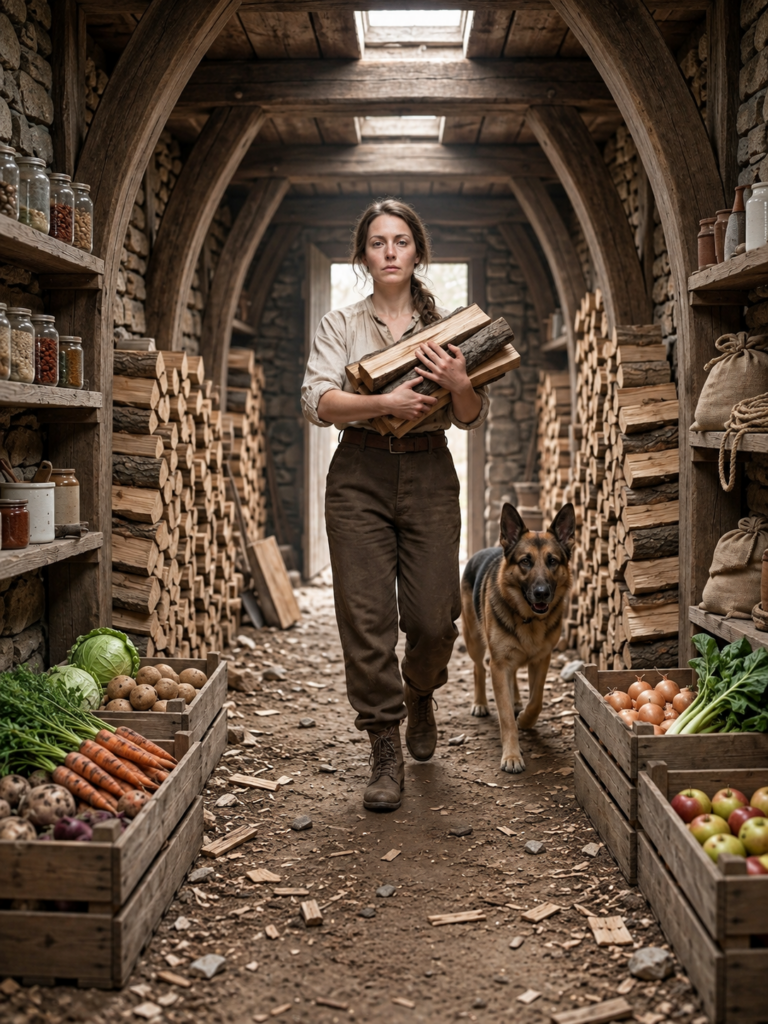
She carved small storage shelves into the walls and stocked them with supplies: lamp oil, matches sealed in a jar, dried beans, potatoes, and two wool blankets.
She carried down a small water barrel.
Then came more food and additional wood.
It was nothing grand. She had no elaborate plan, no expectation of admiration, and certainly no intention of explaining herself to the town.
She was building the sort of shelter a person might appreciate when an ordinary winter night turned dangerous.
Unfortunately, small towns seldom allow unusual behavior to remain private.
Mrs. Carter noticed the dirt beneath Martha’s fingernails when she visited the general store.
“What on earth are you building out there?”
“A place for winter supplies.”
Mrs. Carter glanced through the window toward the road leading to Martha’s cabin.
“Haven’t you already got a shed?”
“I do.”
The woman waited for a better explanation.
Martha placed her purchases on the counter and counted out the money.
None came.
Soon Jackson Reed was answering questions about why the widow needed so much pine. Men at the blacksmith shed speculated that she was digging a cellar too deep for her own good.
Children found the story much more entertaining.
They began calling it Widow Hail’s Burrow.
One afternoon, as Martha loaded a sack of flour into her wagon, a boy dropped to his hands and knees in the snow and pretended to dig like a badger.
His friends laughed.
A mother caught him by the coat and pulled him upright, though Martha noticed that the woman was smiling too.
Boon stood in the wagon, his lip lifting faintly.
Martha rested a hand on his neck.
“Leave it.”
She tied down the flour and climbed onto the seat.
She had learned, after Caleb’s death, that people could make judgments about a woman’s life without understanding anything about it.
Some believed she ought to move into town.
Others thought she was stubborn for staying on land too isolated to be practical.
A few were simply uncomfortable with a widow who had learned to do work they expected a man to handle.
Martha had stopped explaining herself long ago.
There was always another fence to repair, another animal to feed, or another cold evening requiring enough wood to keep the stove burning until morning.
Words did very little of that work.
The weeks passed.
Then the weather began behaving strangely.
Three days before the storm, the barometer inside the general store started falling.
Martha noticed horses resisting their harnesses and cattle turning away from the northwest before any wind had reached them.
Boon became restless again.
One evening, Martha stepped outside her cabin and studied the sky beyond the western ridge.
Smoke rose almost straight from the chimneys of Prospect Junction.
Above the ridge, the sky had acquired a pale, flattened color she did not like.
She had lived through enough Wyoming winters to recognize the difference between ordinary cold and weather that seemed to be gathering strength somewhere beyond sight.
That evening, she checked every timber brace in her tunnel.
She filled the lanterns.
She carried another sack of flour below, followed by extra matches, blankets, and food.
Finally, she took her shovel and walked to the eastern end of the passage.
By then, she had extended her work to eighty-seven feet, following the natural breaks wherever they offered a reasonably stable route.
She raised the shovel and cut into a narrow seam of clay.
The blade suddenly broke through.
Cold air touched her face.
Boon barked once.
Martha lowered the shovel and carefully enlarged the opening with her hands.
Beyond the clay lay another hollow space.
Then she heard something impossible.
A bell.
Faint, distorted, and distant enough to sound like metal being struck inside a heavy box.
But Martha knew the sound.
The church bell at Prospect Junction.
She raised the lantern and listened again.
The discovery unsettled her more than she cared to admit.
Her passage had followed the underground seams toward the western edge of town.
She studied the opening for several minutes before replacing the flat stone and sealing it with packed clay.
Whatever lay beyond, she did not intend to stumble into it unprepared.
Back inside the cabin, she spread Caleb’s old property map across the kitchen table.
The paper had yellowed along its folds. Small marks showed the edges of fields, the cabin, and the rough position of the road leading toward town.
She laid a ruler across it.
Measured.
Then measured again.
The direction was almost exact.
If the connected hollows continued east, the passage might run beneath the schoolhouse before reaching the church.
She stared at the map for a long while.
What had begun as a private escape route now seemed capable of becoming something far more important.
But she did not yet know what to do with that knowledge.
The following morning, Martha drove into Prospect Junction.
The town was preparing for what most residents expected to be an ordinary winter storm.
Men moved wood from outdoor stacks into sheds. Mrs. Carter arranged barrels of flour and salt near the front of her store. Children played near a frozen horse trough while their teacher, Miss Eleanor Price, attempted to gather them for lessons.
Martha stopped beside Jackson Reed’s lumber wagon.
“How much dry pine have you got left?”
Reed scratched his beard.
“Enough.”
“For how long?”
He glanced at two men standing nearby.
“Planning to bury the town, Martha?”
The men laughed.
Martha looked toward the blacksmith shop. Much of the visible wood was green, unlikely to burn well when people needed heat most.
“You need more dry fuel.”
Reed’s smile faded.
“We’ve been wintering here longer than you have.”
“Then you know how fast this country can change.”
She turned away before he could answer.
By afternoon, the wind began arriving in short, irregular bursts.
A shutter struck the church wall.
Thin ribbons of loose snow ran across the road.
Back at the cabin, Martha spent the remaining daylight moving supplies underground.
Beans. Flour. A crock of rendered fat. Two smoked hams.
She carried each load down the ladder herself, stopping occasionally to rub her aching knees.
Boon accompanied her until she finally pointed toward his blanket.
“Stay.”
He obeyed, reluctantly.
The temperature had fallen eleven degrees since noon when Reverend Samuel Miller drove his wagon toward her fence.
Miller was a broad-shouldered man in his early fifties, with a neatly trimmed gray beard and the comfortable authority of someone whose advice was usually welcomed.
He glanced toward the disturbed ground behind Martha’s barn.
“So the stories are true.”
Martha set her axe against the chopping block.
“Depends on which stories.”
“They say you’ve been digging under your house.”
“I have.”
“What for?”
“Winter.”
Miller looked toward the sky.
“We get winter every year, Martha.”
“Not like this.”
He studied her.
“And how would you know?”
“The pressure. The animals. Those clouds yesterday.”
Miller gathered his reins.
“You spend too much time alone.”
Boon appeared behind Martha in the doorway.
The dog did not bark. He watched the reverend with the same solemn attention he gave unfamiliar sounds beneath the floor.
“Tell people to bring their wood inside,” Martha said.
Miller sighed.
“And send the schoolchildren home early tomorrow.”
“You’re frightening yourself.”
Martha picked up another log and split it cleanly.
“Then nothing is lost if I’m wrong.”
The reverend drove away.
Martha watched until the wagon disappeared, then carried the wood inside.
Snow began falling at sunset.
Around midnight, it stopped.
That bothered her more than anything.
At four in the morning, Boon’s wet nose touched her wrist.
Martha opened her eyes.
The cabin was silent.
No wind disturbed the shutters. No snow struck the windows.
She dressed, took her coat from its peg, and went outside.
The stars shone brightly above a landscape covered in fresh white snow.
The thermometer beside the door read twelve degrees below zero.
She walked several yards from the cabin.
The cold was sharp, but the air felt unnaturally still.
Then Boon turned toward the west.
The fur along his spine rose.
Martha followed his gaze.
Across the horizon stretched a dark line, black underneath and white above.
It was moving.
Fast.
She ran.
Inside the cabin, she opened the trapdoor and lowered additional blankets, matches, and a lantern into the shelter.
Then she took a piece of chalk and wrote the time beside the ladder.
4:17.
She wanted to remember when she had first seen it.
At 4:31, the first tremendous gust struck.
The cabin groaned.
At 4:36, snow covered the window so thickly that Martha could no longer see through it.
At 4:40, the morning disappeared.
The storm did not arrive gradually. It attacked the little cabin in heavy, sustained blows, pressing against its walls until the entire structure seemed to lean.
Boon stayed close to her legs.
Martha looked toward the clock.
Only twenty-three minutes had passed since she first noticed the advancing wall of snow.
That was all the warning the people of Prospect Junction had received.
She opened the trapdoor.
“Come on, boy.”
The difference underground was immediate.
The deafening wind faded to a distant vibration. Her lantern burned without shaking, and the earth around her held a temperature far less savage than the air above.
She reached the supply chamber and checked the little iron stove she had installed there.
Then she sat beside Boon and listened.
By noon, snow had buried the cabin windows.
Martha climbed above twice to clear the stove pipe. On the second trip, she tied a rope around her waist before venturing into the blinding weather.
She could scarcely see the barn.
Beyond that, nothing existed but swirling white.
The road had vanished.
So had Prospect Junction.
She returned underground with snow crusted across her coat and her hands numb inside her gloves.
Boon shook himself beside the stove.
Martha dried him with an old blanket.
“Enough adventures for today.”
But the dog would not lie down.
Instead, he walked toward the eastern passage.
Stopped.
Looked back.
Then continued.
Martha followed with the lantern.
At the far end, Boon pressed his nose against the stone she had used to seal the opening into the next hollow.
He scratched.
“There’s a storm above us, boy.”
The dog scratched harder.
Martha knelt and removed a little clay from the edge of the stone.
Boon pushed his muzzle against the crack.
A low whine escaped his throat.
Martha stopped working.
Something was different.
She carefully loosened the stone and pulled it aside.
Cold air entered the passage.
Then came three distinct sounds.
Knock.
Knock.
Knock.
Martha’s fingers tightened around the lantern handle.
Someone was on the other side.
She widened the opening.
“Hello?”
For several seconds, there was no answer.
Then a small voice emerged from the darkness.
“Please.”
A child.
Martha leaned toward the opening.
“Where are you?”
A cough answered.
Then the frightened voice spoke again.
“School cellar.”
Martha looked at Boon.
The dog was already digging.
Part 2
Martha dropped to her knees beside Boon and drove the shovel into the clay.
The first strike loosened only a small amount of earth.
The second exposed a narrow crack between two stones.
She leaned forward, listening.
“Can you hear me?”
A faint cough came from beyond the wall.
“Yes.”
“Are you alone?”
“No.”
The answer was so weak that Martha almost missed it.
She worked faster.
Boon clawed at the softer earth beside her, throwing dirt backward in frantic bursts. The lantern stood on a shelf cut into the passage wall, its yellow light illuminating Martha’s bent shoulders and the dog’s dirt-covered paws.
She was no longer thinking about the hours she had spent digging or the townspeople who had laughed at her.
She was thinking about a child trapped beneath a building with a blizzard raging overhead.
The schoolhouse stood on the western edge of Prospect Junction, close enough to the natural underground hollow that the sound of knocking had somehow traveled through the earth.
Martha dug until the clay beneath her knees became loose and uneven.
Then part of the wall collapsed inward.
She caught herself against the remaining stone.
Light spilled through the opening.
Not daylight.
Lantern light.
Martha pulled another clump of earth free and peered through.
Beyond the broken wall was a cramped cellar.
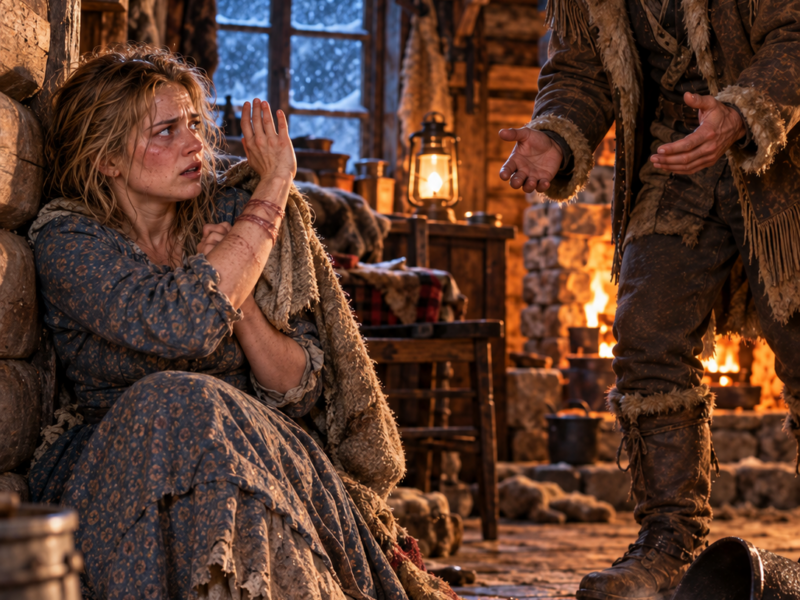
Five children huddled together against its stone foundation. Their teacher, Eleanor Price, sat beside the smallest boy with an arm wrapped around his shoulders.
A broken cellar door leaned against the opposite wall.
Snow had forced its way through gaps above it, collecting in dirty ridges along the floor.
One little girl sat with her bare hands tucked into her armpits. Another child stared toward the lantern without moving.
Eleanor looked at the opening as if she could not understand what she was seeing.
“Martha?”
“That’s right.”
“How did you get here?”
“Under the ground.”
The teacher stared.
Martha began pulling more dirt from the opening.
“How long have you been trapped?”
“Since yesterday morning.”
“Can the children walk?”
“Most of them.”
Martha studied the five frightened faces.
“Then we’ll manage.”
She crawled through the opening and immediately felt how cold the cellar had become.
The children were dressed for a winter school day, not for prolonged confinement beneath a building whose entrances had been buried.
One boy’s lips were pale.
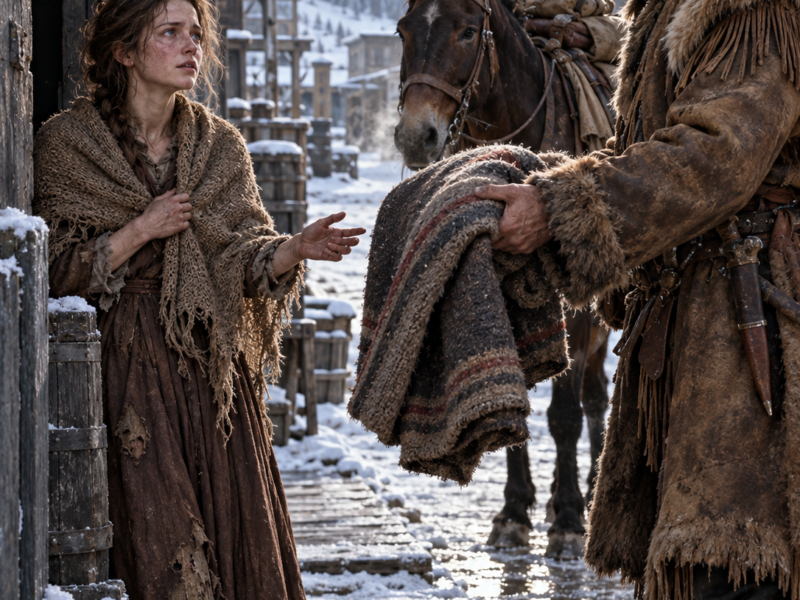
Martha removed her scarf and wrapped it around his neck.
“What’s your name, sweetheart?”
He tried to answer, but his teeth were chattering too hard.
“Never mind. You can tell me when you’re warm.”
She turned to Eleanor.
“There’s a passage behind me. It leads back to my cabin.”
“Your cabin?”
“Yes.”
“Under the ground?”
Martha gave a brief nod.
Eleanor looked beyond her toward the opening, where Boon was sniffing the children’s boots.
For a moment, the teacher seemed unable to move.
Then she gathered herself.
“Children, listen to Mrs. Hail.”
Martha crouched beside the opening.
“Stay low. Keep your hands in front of you. Follow the lantern, and don’t try to stand until I tell you.”
One boy shook his head.
“It’s dark.”
Martha could hear the fear in his voice.
She looked at Boon.
“Go on, boy.”
The dog pushed through the hole, walked several feet into the passage, and turned around.
His tail moved slowly.
Martha pointed toward him.
“Follow Boon. He knows the way.”
The boy watched the dog.
Then he lowered himself to his knees.
One by one, the children crawled through.
Eleanor came last, pausing to look around the cellar where she had spent so many hours trying to keep them calm.
“How did you know we were here?”
Martha picked up the lantern.
“I didn’t.”
She nodded toward Boon.
“He did.”
The old shepherd waited farther down the passage until the children began following him.
Back beneath the cabin, Martha helped them into the supply chamber.
Warm air rose from the little stove.
The children gathered around it, extending their hands toward the heat.
Eleanor helped remove wet coats and stiff boots. Martha filled a pot with water, warmed broth, and poured it into tin cups.
For several minutes, no one said much.
There was only the sound of children drinking, boots shifting across clay, and the stove ticking as its iron expanded.
The smallest boy held his cup with both hands.
One girl stared at the shelves of provisions.
“Is all that yours?”
Martha looked at the food and blankets she had carried underground over the previous weeks.
“For now,” she answered.
Eleanor studied the braced walls and the passage disappearing into darkness.
“You dug all this?”
“Most of it.”
“Why?”
Martha placed another piece of wood into the stove.
“In case one door wasn’t enough.”
Eleanor looked at the children.
For the first time since Martha had entered the cellar, the teacher’s expression softened.
Then she said something that made Martha stop.
“There were twenty-three children at school yesterday.”
Martha turned.
“Twenty-three?”
Eleanor nodded.
“Most of their fathers came before noon to take them home. These five were still with me when the road became impossible.”
Martha looked toward the eastern passage.
Twenty-three children.
Twenty-three sets of parents or guardians. Families scattered across Prospect Junction, living in buildings that might already be buried beneath several feet of snow.
Some had plenty of firewood.
Others might have been preparing to buy another load when the storm arrived.
Some homes had strong roofs and protected cellars.
Others were old wooden structures that could barely withstand an ordinary Wyoming winter.
Martha thought about the green wood stacked beside the blacksmith shop.
She thought about Reverend Miller’s wagon disappearing down the road.
And she thought about the silence that had swallowed the town beyond her cabin.
Eleanor followed her gaze.
“What are you thinking?”
Martha stood.
“There are people out there who won’t last much longer.”
“You can’t go outside.”
“I know.”
“The snow is too deep. You couldn’t see where you were going.”
Martha reached for Caleb’s old map.
“I’m not going outside.”
She placed the map on the small wooden table.
“I’m going under.”
Eleanor stared at her.
Martha spread the paper flat and weighted its corners with two jars.
The teacher came closer.
She knew the town’s families because she taught their children. She knew which homes stood near the church, which families lived beyond the blacksmith shed, and who occupied the smaller houses toward the eastern road.
Martha knew the underground passage.
Together, they began marking what lay above it.
“The Carters are here,” Eleanor said, pointing.
Martha made a charcoal mark.
“The Millers live two streets east. The blacksmith’s place is south of the church.”
Another mark.
Another house.
Soon the map was covered with charcoal notes and rough lines.
Martha knew that her passage reached only as far as the schoolhouse cellar.
Beyond it lay unfamiliar ground.
There was no promise that the soil would be soft enough to dig through or that the natural seams would continue in the directions they needed.
But the surface offered no safer route.
She took up the shovel.
Eleanor watched her.
“You can’t possibly dig all the way through town by yourself.”
“Then I suppose you’d better help.”
For the next six hours, they worked.
Martha dug at the eastern end of the passage, following the softer layers wherever they allowed her to advance.
Boon scratched at loose sections until she pushed him aside to prevent him from getting beneath the shovel.
Eleanor carried buckets of excavated clay back toward the cabin.
The older children helped stack the dirt against the walls, keeping the central walkway clear.
They developed a simple rhythm.
Martha loosened the earth.
Boon helped wherever he could.
Eleanor filled the buckets.
The children moved them.
Every few feet, Martha examined the ceiling and reinforced any section that seemed likely to shift.
The work was exhausting.
The tunnel was too low for her to stand comfortably in most places. Her shoulders ached from swinging the shovel in cramped quarters, and clay worked its way into every crease of her hands.
But each time she stopped, she could hear the storm vibrating through the ground above.
It reminded her why they could not afford to spend the day wondering whether the plan was sensible.
About forty feet beyond the schoolhouse, her shovel struck something solid.
Not stone.
Wood.
Martha cleared the clay carefully.
A heavy timber emerged from the wall.
She ran her fingers along its rough surface.
“Foundation beam.”
Eleanor brought the map closer to the lantern.
“The Carter place.”
Martha nodded.
She changed tools, using the pick with controlled strokes until a crack opened beside the beam.
Cold air moved through it.
Then she heard coughing.
“Mrs. Carter?”
Silence.
Martha leaned closer.
“Mrs. Carter, can you hear me?”
A weak voice finally answered.
“Who’s there?”
“Martha Hail.”
There was a long pause.
Then Mrs. Carter said, with an astonishment that survived even her exhaustion, “Of course it is.”
Martha almost smiled.
She widened the opening and crawled through.
The Carter cellar was nearly as cold as the schoolhouse.
Mrs. Carter sat beside an empty stove. Her husband, Jackson Carter, was crouched against the wall, wrapped in a coat that looked too thin for the conditions.
Pieces of broken furniture lay around them.
Someone had chopped the legs from two chairs.
Part of a cupboard door had been split into narrow strips.
A table brace lay beside the stove, ready to become the next piece of firewood.
The couple had been burning their furniture to survive.
Jackson looked past Martha toward the opening.
“What is that?”
“A way out.”
He stared at the dark passage.
“From where?”
“My cabin.”
Mrs. Carter gave a faint, disbelieving laugh that turned into a cough.
“You mean that hole everyone was talking about?”
Martha offered her an arm.
“That would be the one.”
Mrs. Carter tried to stand.
Her knees gave way.
Martha caught her before she fell.
“No talking,” Martha said gently. “Bring your blankets.”
Jackson gathered what they could carry.
When they reached the supply chamber, Eleanor helped Mrs. Carter toward the stove while the children made room.
Mrs. Carter sat with a blanket around her shoulders, looking from the warm fire to the timber braces overhead.
For once, she had no questions.
Martha returned to the map.
There were more houses to reach.
The passage grew by yards, then by connections.
A pantry cellar.
A coal storage pit.
A narrow crawl space beneath the church.
At each breakthrough, Martha stopped and listened before widening the opening.
Sometimes she heard nothing.
Sometimes she heard someone moving weakly on the other side.
One household had been burning fence rails because the family had exhausted its stacked firewood.
Another had gone without a proper meal since the previous day.
An elderly man had wrapped his feet in flour sacks after his boots froze so stiffly that he could no longer wear them comfortably.
Martha helped him through the passage, holding the lantern close enough for him to see where to place his hands.
“Slowly,” she told him. “There’s no need to hurry in here.”
He looked at her tiredly.
“That’s a strange thing to hear with the whole world coming apart upstairs.”
Martha steadied his elbow.
“Upstairs can wait.”
By dusk, eleven people had gathered beneath her cabin.
By midnight, there were seventeen.
The supply chamber no longer felt like a private winter shelter.
It had become the center of a small, desperate community.
Blankets lined the walls.
Wet gloves hung near the stove.
People who had spent years exchanging polite greetings across store counters now shared narrow spaces and waited for news of neighbors they had not seen since the storm began.
Martha continued digging.
Her knuckles split.
Blood darkened the shovel handle where the skin had torn.
Eleanor noticed when Martha stopped to flex her fingers.
“Let me see your hands.”
“They’ll be fine.”
“Martha.”
The teacher’s voice contained the firmness she probably used with stubborn schoolchildren.
Martha surrendered the shovel.
Eleanor wrapped strips of clean cloth around her palms.
“You need to rest.”
Martha looked toward the map.
“How many households haven’t we reached?”
Eleanor counted the names written in charcoal.
“Nine.”
Martha took back the shovel.
“Then we keep going.”
Half an hour later, Boon stopped at a fork where the passage met a natural seam in the stone.
His head turned north.
Martha called him.
“Boon. This way.”
He did not move.
Instead, he barked three times.
Martha raised the lantern.
The passage to the north was narrow and low, disappearing between layers of dark stone.
Boon moved into it before she could call him again.
Martha followed.
The ceiling forced her to crawl on one knee.
About twenty feet ahead, Boon began scratching at the earth.
Martha stopped.
A faint wooden crack came through the wall.
She listened.
Another crack.
This one was louder.
Something heavy shifted above them.
Eleanor crawled up behind her.
“What is it?”
Martha pressed her ear against the earth.
A third cracking sound traveled through the ground.
She unfolded the map enough to see their position.
They were beneath Reverend Miller’s house.
Then came a deep, unmistakable crash.
Dust fell from the ceiling.
Martha jerked backward.
The house above them was beginning to collapse.
“Get everyone back,” she told Eleanor.
The teacher hesitated.
“What about the Millers?”
Martha reached for the pick.
“They’re still up there.”
She struck the wall.
Clay broke loose.
She struck again.
The pick met stone, jolting her already injured hands.
Behind her, Eleanor called her name.
“Martha, come back!”
But Boon was digging frantically, and Martha knew that every second mattered.
Another beam cracked overhead.
Fine dust drifted through the lantern light.
Martha shifted her grip and drove the pick into a softer seam.
The wall began to open.
Then Boon stopped.
His ears lifted.
A voice came from the other side.
“Help.”
Martha dropped the pick and pulled the loose clay apart with her hands.
“Reverend?”
A man coughed.
“Martha?”
“I’m coming through.”
“No. Stay where you are. We can’t—”
His words disappeared beneath the sound of shifting timber.
Martha widened the opening until she could push herself through on her stomach.
Inside the Miller cellar, the situation was worse than she feared.
A support post had split near its center.
One heavy floor beam sagged several inches below its proper position, and snow had already forced part of the house inward.
Reverend Samuel Miller stood beneath the damaged beam with both hands braced against it.
His wife, Sarah, crouched near the far wall with their two children.
Their stove had gone out.
Broken furniture lay in a pile beside it.
Miller looked toward Martha.
For several seconds, he said nothing.
His gaze moved from her dirt-covered coat to the dog pushing through the opening behind her.
Martha pointed toward Sarah.
“Your wife first. Then the children.”
Sarah moved toward the tunnel.
But Miller remained where he was.
“If I let go,” he said, “the whole thing comes down.”
Martha studied the split post.
He was right.
The beam had shifted, and the reverend’s weight was helping keep it from slipping farther.
She looked around the cellar.
Only four pieces of firewood remained beside the stairs.
She seized two.
“What are you doing?” Miller asked.
“Making you another post.”
She set one length of wood upright beneath the sagging beam.
Too short.
She added the second at an angle and tried to wedge it into place.
The wood slipped.
The beam dropped another inch.
Sarah cried out and pulled the children closer.
Martha stepped back, breathing hard.
She searched the room.
A wooden workbench stood against the wall.
“Help me with that.”
Miller glanced toward it.
“I can’t move.”
“Then hold what you’ve got.”
Martha dragged the bench away from the wall and kicked it onto its side.
Its legs scraped across the cellar floor.
She forced it closer to the failing support, inch by inch, until it stood beneath the damaged beam.
“Push,” she told Miller.
He shifted his shoulder beneath the timber while Martha forced the bench upright.
The wood groaned.
For a moment, nothing moved.
Then the bench caught beneath the beam.
Miller cautiously relaxed one hand.
The support held.
He removed the other.
Still it held.
Martha looked at the sagging timber.
“For now.”
Sarah crawled into the tunnel.
The children followed Boon, who waited on the other side.
Miller hesitated.
He looked around the cellar.
The empty shelves.
The broken furniture.
The stove that would no longer keep his family warm.
Then he looked toward the tunnel and the woman who had spent weeks building it.
His eyes settled on Martha’s bandaged hands.
Blood had soaked through Eleanor’s cloth strips.
“You did this all night?”
Martha held the lantern toward the opening.
“Move.”
He obeyed.
There was no argument.
By morning, thirty-six people had found shelter beneath Martha Hail’s cabin.
The underground chambers were crowded beyond anything she had imagined when she first began digging.
Children slept shoulder to shoulder along the passage walls.
The elderly sat near the stove, wrapped in whatever blankets could be spared.
Those who were strong enough helped carry supplies, tend the fire, and clear the paths between the connected cellars.
Martha counted everything.
Thirty-six people.
The remaining food.
The water.
The lamp oil.
The firewood.
She had stored those provisions for one person and a dog.
Now an entire community was depending on them.
Eleanor stood beside her as she counted the wood one more time.
“You saved them,” the teacher said quietly.
Martha looked toward the people sleeping beneath the low ceiling.
Outside, the blizzard was still raging.
She shook her head.
“We’ve got them here.”
She closed the ledger of supplies she had begun keeping.
“Now we have to keep them alive.”
Part 3
By the third day, the tunnel had acquired a rhythm of its own.
People woke according to the small demands of survival rather than the hours shown on a clock.
Someone checked the stove.
Someone carried water.
Someone counted blankets and made certain the children were warm.
The stronger men took turns hauling wood from the dry storage chamber, while the women heated broth in every usable pot Martha owned.
There were no comfortable rooms beneath the cabin. The clay floors remained hard, the passages were narrow, and the air carried the smell of wool, smoke, damp leather, and too many people sharing too little space.
But the underground shelter provided something the buildings above could not.
Protection from the wind.
Martha had never been so grateful for still air.
At night, she walked through the connected passages with a lantern, checking the weaker supports and making certain no one had wandered into an unfinished section.
Boon usually accompanied her.
The dog was tired. His paws were scratched from digging, and he moved more slowly than he had during their frantic rescue work.
Yet whenever Martha stopped, he stopped.
Whenever she turned back, he followed.
Sometimes she rested her hand on his neck and allowed herself a few seconds without thinking about the next task.
“You found them,” she whispered once.
Boon leaned against her leg.
Above them, the storm continued battering Prospect Junction.
The earth transmitted its force as a low, constant vibration.
Martha had become so accustomed to that vibration that she could tell when the wind intensified without ever going upstairs.
By the fourth day, the hidden exit beneath the elderberry thicket had disappeared behind tightly packed snow.
A passage Martha had once considered an important second route to safety was now blocked.
She examined the opening and returned to the main chamber without announcing the problem to everyone.
There was little point in frightening people over an exit they could not use while the storm continued.
But she told Eleanor.
“We’ve lost the way out by the thicket.”
Eleanor looked toward the tunnel.
“Can it be cleared?”
“Not safely from this side, not while the snow keeps piling up.”
The teacher nodded.
“Then we’ll keep the other passage clear.”
Martha was grateful that Eleanor understood the difference between a useful question and an unnecessary argument.
Over the previous days, the teacher had become indispensable.
She organized the older children, kept track of the families, and helped Martha stretch the supplies without making anyone feel that their share had been withheld.
When food was served, she made sure the youngest children received theirs before the adults.
When someone became frightened by the pressure of the storm above, she found something useful for that person to do.
The arrangement was not perfect.
People grew hungry.
They grew tired of sleeping on the ground.
Small frustrations surfaced over places near the stove, blankets, and how long someone had been allowed to rest.
But every time Martha looked around the chamber, she saw the same people who had been stranded in frozen cellars only days earlier.
Now they were alive, sharing warmth beneath her cabin.
And that was enough reason to keep working.
Reverend Miller had changed more than anyone.
He no longer offered advice from a wagon seat.
He carried wood, repaired supports, and helped move supplies wherever Martha needed them.
The man who had once dismissed her warnings now listened when she spoke about the condition of the tunnel.
He did not ask her to forget their earlier conversation.
Martha did not bring it up.
There was too much work requiring both their hands.
On the fifth day, a different danger appeared.
Martha smelled smoke collecting near the ceiling.
At first, she thought someone had opened the stove incorrectly.
Then she noticed that the air felt heavier than before.
She examined the ventilation passage.
One of the shafts had become obstructed by snow.
Without proper airflow, the underground stove could become deadly to everyone sheltering there.
Martha immediately reduced the fire and took a metal rod from beside the supplies.
Miller saw her moving toward the maintenance passage.
“Where are you going?”
“Vent’s blocked.”
He looked toward the ceiling.
“I’m coming.”
Martha handed him a shovel.
“Then bring that.”
They climbed into the narrow service passage together.
The farther they went, the more difficult the air became.
Smoke scratched at Martha’s throat.
Miller coughed behind her.
Boon followed despite Martha’s attempts to make him remain below.
At the upper end of the passage, frozen snow had packed itself tightly inside the ventilation pipe.
Miller raised the metal rod.
He shoved it upward.
Nothing moved.
He tried again.
The blockage held.
Martha leaned against the stone, catching her breath.
“Harder.”
Miller braced himself and pushed.
The rod scraped against frozen snow but did not break through.
Martha reached for it.
“Both of us.”
They wrapped their hands around the metal and pushed together.
For a moment, the obstruction resisted.
Then something cracked.
The rod jumped upward.
A solid plug of snow broke free.
Cold air rushed down the pipe, and the lantern flame bent sharply.
Miller staggered backward, coughing.
Martha lowered herself against the wall until her breathing steadied.
They listened to the renewed airflow.
Neither spoke for a while.
Miller finally wiped his mouth with his sleeve.
“That could have been bad.”
Martha nodded.
“Still could be if it blocks again.”
He looked toward the pipe.
“I’ll check it.”
She handed him the rod.
“Good.”
They climbed down together.
Neither mentioned his sermons.
Neither mentioned the land claim or the old disagreements that had once seemed important enough to divide opinions in Prospect Junction.
Underground, the work mattered more.
That evening, Martha divided the last fresh potatoes among the people sheltering with her.
The dried provisions would have to carry them through whatever remained of the storm.
She sat beside the stove afterward, holding a cup of broth that had become more water than anything else.
Her hands throbbed beneath their bandages.
Her knees hurt from days of crawling and climbing.
She thought of Caleb.
He would have examined the timber braces, tested every weak section, and probably found half a dozen things he wanted to improve.
She could almost hear him asking why she had chosen one kind of support instead of another.
Then he would have listened to her answer.
Caleb had taught her enough about the land to recognize the hollow beneath the cabin, but she was the one who had dug it.
She had followed Boon through the darkness.
She had opened the walls.
She had decided to keep going when exhaustion made every movement difficult.
She looked across the room at the sleeping children.
Nothing about the tunnel had been grand when she began.
It had been one widow’s answer to the simple fear of becoming trapped inside her own home.
Now thirty-six people were alive because that fear had made her prepare.
She lowered her empty cup and leaned back against the wall.
Boon lay beside her.
For the first time in days, Martha allowed herself to sleep without holding a tool.
On the sixth morning, Boon woke everyone.
He stood beneath the ladder leading up into the cabin.
His tail moved.
His ears were raised.
Martha opened her eyes and listened.
Something was missing.
Not a sound exactly, but the ceaseless pressure that had surrounded them for nearly a week.
The low vibration in the earth had stopped.
She sat upright.
Boon looked toward the trapdoor.
Martha climbed the ladder.
The door resisted when she pushed it.
Snow had packed over it.
She pushed harder.
Nothing.
Three men came to help.
Together, they forced their shoulders and hands against the heavy door.
It moved six inches.
A narrow blade of white light entered the cabin.
Martha shut her eyes against its brightness.
The men pushed again.
Snow spilled through the opening.
Then the door lifted far enough for them to climb out.
Sunlight touched the wooden floor.
For a few seconds, Martha simply stood there.
She had forgotten how beautiful ordinary daylight could be.
People began following her out of the tunnel.
Slowly, carefully, they stepped into the cabin and looked through the openings cleared in the snow.
Prospect Junction had almost vanished.
Only rooftops and chimneys broke through the enormous drifts.
The church steeple leaned toward the east.
The schoolhouse windows were buried.
Several barns had disappeared completely beneath the snow or had collapsed under its weight.
The road no longer existed as a recognizable path.
Martha stood beside Boon, looking toward the town.
She had warned them.
She had seen the signs.
But looking at the devastation, she felt no satisfaction in having been right.
There was too much damage for that.
Behind her, someone picked up a shovel.
Then another person did the same.
Soon the people who had sheltered beneath the cabin were working their way back into Prospect Junction.
They dug paths first.
Then doors.
They searched for livestock and cleared roofs that still appeared capable of being saved.
Families returned to their homes, carrying whatever could be recovered.
Some buildings were damaged beyond immediate repair.
Others needed new doors, new supports, and days of labor before they could be occupied safely.
The tunnel remained open throughout the difficult weeks that followed.
Firewood traveled through it.
Food passed from one cellar to another.
When the streets were too deep with snow for wagons, the underground passages became a practical route between parts of town.
People who had once laughed about Widow Hail’s Burrow now used it to carry supplies to their neighbors.
No one seemed interested in that old nickname anymore.
By spring, the town council had begun discussing what should happen to the passage.
It had saved too many lives to be filled in and forgotten.
One afternoon, several council members came to Martha’s cabin and asked whether the connection to the schoolhouse cellar could remain open.
Martha listened while they explained their proposal.
They wanted the tunnel strengthened.
They wanted the weaker sections widened and its entrances kept accessible.
They believed it might offer protection during future storms.
Martha considered the request.
She thought about how much work had gone into digging the passage, how frightened the children had been when she found them, and how many people had crowded around her stove.
Then she gave the council her answer.
“Yes.”
The men looked relieved.
“But on one condition.”
“What condition?”
Martha pointed toward the trapdoor.
“Keep it stocked.”
The council agreed.
That summer, the people of Prospect Junction went to work.
Men widened the narrowest sections and reinforced the weaker walls with timber.
Women carried beans, flour, dried apples, salt, candles, and blankets underground.
Water and emergency supplies were placed where they could be reached easily.
The children who had once mocked Martha’s digging now helped mark the passages.
They painted small white signs along the walls so that anyone traveling through smoke or darkness could find the proper direction.
Boon supervised as well as an elderly dog could, occasionally walking through the tunnel and inspecting whatever work attracted his attention.
Reverend Miller brought timber himself.
He carried it down the ladder, helped brace the ceiling, and worked beside the woman he had once told was frightening herself.
On a warm afternoon, Martha was sharpening her shovel near the original entrance when Miller approached.
He stood for a moment watching her work.
Then he said, “I was wrong.”
Martha continued drawing the sharpening stone along the blade.
She did not look up immediately.
Miller waited.
The words had not come easily to him. She knew that much.
But she also knew that an apology could not strengthen a ceiling or fill an empty shelf.
After several seconds, she lowered the shovel.
“Brace the north wall before winter.”
Miller glanced toward the passage.
Then he almost smiled.
“I will.”
And he did.
The tunnel became part of Prospect Junction.
Every autumn, residents checked the stored provisions. They examined the ventilation shafts, inspected the supports, and replaced supplies that had spoiled or been used.
The schoolhouse connection remained open.
Children learned the meaning of the white marks along the walls, and parents showed them where to go if another terrible storm ever came.
Over time, the story of that winter passed from one family to another.
People remembered the five children trapped beneath the schoolhouse.
They remembered Mrs. Carter and her husband burning furniture to survive.
They remembered Reverend Miller holding up a failing beam while snow crushed his house above him.
And they remembered Martha Hail, the widow who had spent weeks digging beneath her cabin while the town wondered what had become of her good sense.
But Martha rarely spoke about what she had done.
There were still animals to feed.
Still wood to split.
Still fences that needed repairing after the spring thaw.
Her life did not become effortless simply because the town had learned to respect her.
She remained a widow in an isolated Wyoming cabin, with chores waiting every morning and long winters still ahead.
Only now, when she drove into Prospect Junction, people greeted her differently.
Jackson Reed no longer joked about burying the town.
Mrs. Carter sometimes sent her home with more supplies than she had paid for.
Eleanor Price brought her students out to help maintain the tunnel and made sure they understood why it mattered.
And when Miller offered assistance, he generally arrived with a tool already in his hand.
The years passed.
Boon grew slower.
His muzzle turned almost entirely white, and he no longer had the strength or inclination to dig for hours beside Martha.
But he never forgot the tunnel.
Whenever the first hard winter wind came down from the western ridge, he walked toward the trapdoor and lay beside it.
Sometimes Martha found him there in the evening, his head resting between his paws.
She would sit beside him for a while.
“You remember, don’t you?”
His tail would move gently against the floor.
She would rub the gray fur behind his ears.
“I do too.”
One winter evening, many years after the great blizzard, snow began falling over Prospect Junction again.
Not violently.
Not yet.
Just steady flakes drifting across the road and settling along the fence rails.
Martha closed the cabin shutters.
She added another log to the stove and checked the lantern on the kitchen table.
Beneath the floorboards, the tunnel stretched quietly toward town.
Its walls were stronger now.
Its shelves held supplies gathered by people who understood their value.
The white marks painted by the children remained visible along the passage, leading toward the schoolhouse and the connected cellars.
Martha looked toward Boon.
The old shepherd was resting beside the rug.
He lifted his head when the wind began to rise.
She smiled faintly.
Then she crossed the room and placed her hand on the iron ring of the trapdoor.
For years, people had believed that a lonely widow was digging a useless hole beneath her home.
They had seen dirt beneath her fingernails and decided she had nothing better to do.
They had watched her bring timber from the mill and laughed because they could not imagine what she was building.
They had mistaken preparation for foolishness because the danger had not yet arrived.
But Martha had never needed them to understand.
She had needed a shovel, enough patience to keep digging, and the determination to trust what she could see when others saw nothing.
And when the worst storm Prospect Junction had known finally came, the woman everyone dismissed had been ready.
Not because she possessed anything extraordinary.
Not because she had known exactly what would happen.
But because she had prepared for the possibility that one day, one door would not be enough.
Outside, the snow gathered along the windows.
Boon settled his head against his paws.
Martha listened to the wind.
Then she checked the lantern once more.
And beneath her feet, the passage that had saved thirty-six lives waited quietly for anyone who might need it again.