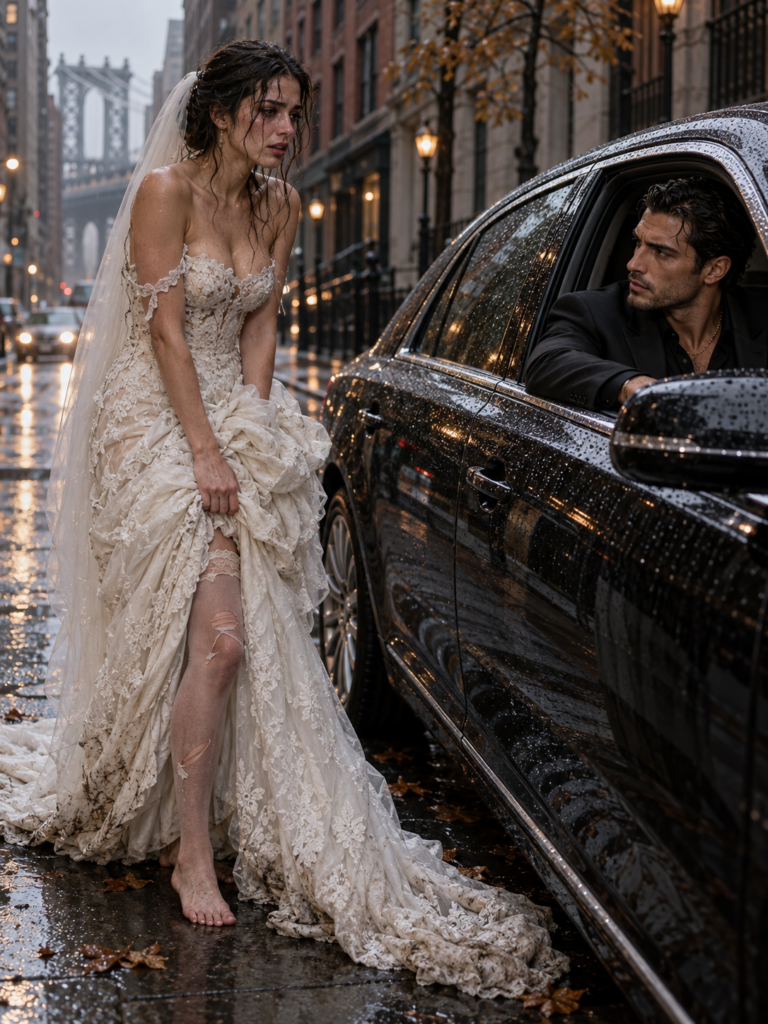
Luca sat across the kitchen island from Alara, placing his phone facedown before speaking.
“Your father’s company has business relationships that extend beyond ordinary shipping contracts.”
Alara felt her shoulders tighten.
“I know.”
“Daniel Chen’s interests overlap with some of those relationships.”
“That doesn’t explain why I was supposed to marry him.”
“No. But it helps explain why the arrangement mattered so much to the people organizing it.”
She looked at her phone.
Seventeen unanswered notifications had become twenty-three.
“My father spent months telling me Daniel was reliable. My mother called it a wonderful match.”
“What did you call it?”
Alara stared at him.
“A transaction.”
Luca didn’t contradict her.
She opened the sketchbook again, more to steady her hands than to show him anything.
“The strange thing is, Daniel never even pretended to love me. We had dinner six times. He talked about shipping, investment, tax considerations. Once, he asked whether I planned to continue working after the wedding.”
“What did you say?”
“That I wanted to practice architecture.”
“And?”
“He told me I would have plenty of time for hobbies.”
Luca’s jaw tightened slightly.
Alara noticed.
“Please don’t tell me what a terrible man he is. I already know I didn’t want to marry him.”
“I wasn’t going to.”
“Good.”
She turned the notebook toward herself.
For several moments, the only sound was the distant movement of traffic below.
Then Luca asked, “Have you signed anything binding?”
“No. My father’s attorney explained that the marriage itself wouldn’t be legally effective until the ceremony.”
“Then you’ve made a personal decision, not broken a marriage contract.”
Alara looked up.
“Tell that to Patricia Vasquez.”
“Your mother?”
“She thinks I’ve destroyed thirty years of family progress.”
Luca studied her.
“And what do you think?”
Alara swallowed.
“I think I was about to destroy the next fifty years of my own life.”
He accepted the answer without trying to improve it.
That simple restraint unsettled her.
She had expected a man like Luca Vitale to take charge, make calls, issue instructions, and demand gratitude.
Instead, he asked where she wanted to go.
“I have an apartment in Carroll Gardens,” she said. “But my parents help pay for it. My father controls access to most of my money.”
“Do you want to return there?”
“Eventually. I need my clothes, laptop, and portfolio.”
“I can arrange a car.”
She looked sharply at him.
“Why?”
“Because you have no shoes and it’s cold outside.”
“That’s not what I meant.”
Luca folded his hands.
“I understood.”
Their eyes met.
He waited.
Alara found that harder to endure than persuasion.
“I don’t have much money I can access. I don’t have a job yet. And I have absolutely no idea where I’m sleeping tomorrow.”
“You can use the guest room tonight.”
“And what do you get?”
“Nothing.”
“No one does things for nothing.”
“Sometimes they do.”
She shook her head.
“You can’t expect me to believe that.”
“Then don’t believe it yet.”
The answer stopped her.
Luca rose and moved toward the coffee machine.
“You can judge what I do instead.”
He refilled his cup, then offered her more.
She declined.
He didn’t insist.
Later, she called Jess again, this time explaining that she was staying with someone who had helped her after she left the hotel.
Jess demanded details.
Alara promised to provide them when she understood the situation herself.
As evening settled across Manhattan, the penthouse began receiving visitors.
Men in dark suits arrived, spoke quietly with Luca, and departed.
An older man with a silver beard appeared around five.
He introduced himself as Marco.
He regarded Alara with a long, thoughtful look.
Then he glanced at the abandoned wedding gown folded on a chair.
“Unusual day?” he asked.
“You could say that.”
Marco almost smiled.
Luca eventually offered her the guest bedroom at the eastern end of the apartment.
Alara accepted.
The room overlooked the East River.
Its door locked from the inside.
She checked.
Then she hated herself for feeling relieved.
Before bed, Luca knocked.
“May I speak to you?”
“Yes.”
He remained in the doorway.
“There’s food in the kitchen if you’re hungry.”
“Thank you.”
“And Alara?”
She looked up.
“Tomorrow, don’t make any decision because you think you owe me something.”
Her throat tightened.
“What if I don’t know what I want?”
“Then take time to find out.”
After he left, Alara sat beside the window.
Her phone vibrated again.
This time the message came from Daniel Chen’s assistant.
It informed her that arrangements were being reviewed following the cancellation and that her father would be contacted regarding business consequences.
Alara read it twice.
Then she opened her notebook and began writing down everything she needed to do.
Find independent housing.
Secure her finances.
Call the architecture firm.
Speak with her parents when she was ready.
For the first time that day, her fear had somewhere practical to go.
She had nearly finished the list when another message appeared.
Her father.
He wanted to know where she was.
And whether Luca Vitale was involved.
Alara stared at the name.
How did her father know?
She rose from the bed and walked into the hallway.
Luca was still awake at his desk.
He looked up.
“Something wrong?”
She held out her phone.
“My father knows I’m here.”
Luca read the message.
Then his expression changed.
Alara withdrew the phone.
“You haven’t called him?”
“No.”
“Then how does he know?”
Luca glanced toward the private elevator.
“Marco made inquiries about your circumstances earlier. Your family’s connections may already have learned where you are.”
Alara felt cold.
“I told Jess not to reveal my location. I wanted time.”
“I understand.”
“Then why was anyone investigating me?”
“Because you arrived here frightened, without resources, and with a powerful family searching for you. I wanted to know whether someone might come looking.”
“You should have told me.”
“Yes.”
The immediate answer surprised her.
But it didn’t erase her anger.
“You can’t offer me freedom and then quietly decide which parts of my life you’re entitled to examine.”
Luca met her gaze.
“You’re right.”
She studied him.
“Will you tell me before making decisions that affect me?”
“Yes.”
“And if I leave tomorrow?”
“I’ll make sure you know your options. The choice will be yours.”
Alara held the phone tightly.
Then she typed a message to her father.
She was safe.
She would contact him when ready.
And she would not return to marry Daniel Chen.
She pressed Send.
For a moment, she felt as though the entire Vasquez empire might collapse beneath that single message.
Then she opened another contact.
The architecture firm in Greenwich Village.
She drafted a request for the interview she’d postponed for six months.
Luca watched without speaking.
Alara read the email once.
Twice.
Then she pressed Send.
Only afterward did she look at him.
“I’ve just done two things my family would consider unforgivable.”
“What things?”
“Told them no. And applied for a life they didn’t choose.”
Luca looked at her sketchbook beneath her arm.
“Which one frightens you more?”
Alara considered the question.
Then a slow, incredulous smile crossed her face.
“The second.”
Her phone lit up.
A reply had arrived from the architecture firm.
They wanted to meet her.
Alara opened the email with shaking fingers.
Alara read the email twice before trusting herself to speak.
“They want an interview.”
Luca remained at his desk.
“When?”
“As soon as I can come in. They remembered my portfolio.”
She laughed, then pressed a hand over her mouth.
For months she had hesitated to follow up with the Greenwich Village architecture firm, afraid that accepting a real position would turn her private ambition into an open confrontation with her parents.
Now she had an interview because she had finally sent an email.
The simplicity nearly brought her to tears.
“That’s good news,” Luca said.
“It might be.”
“You’re allowed to enjoy it before knowing how it ends.”
Alara smiled.
“You’re remarkably philosophical for someone who frightened half the people entering your apartment today.”
“They’re easily frightened.”
“I doubt that.”
Something like laughter appeared in his eyes.
The next morning, Marco drove her to Carroll Gardens to collect her belongings.
Alara had insisted on returning to her apartment herself.
She wanted her laptop, clothes, drafting materials, and passport.
And she wanted to stand inside a space she had once considered her own and decide what to take.
The brownstone looked exactly as it had before the wedding.
Nothing about the neighborhood had changed.
A delivery cyclist hurried past.
A neighbor struggled with groceries.
Someone upstairs was playing music too loudly.
Alara climbed the stairs carrying the first real sense of freedom she could remember.
Inside, she packed methodically.
The portfolio came first.
Then her drawings.
Her favorite books.
Clothes she had chosen without Patricia’s approval.
A framed photograph of herself and Jess at their college graduation.
She left behind several expensive gifts from Daniel.
They belonged to a life she no longer intended to lead.
When she carried her bag downstairs, Marco took it without comment.
He didn’t ask whether she was returning to Luca.
She appreciated that.
During the drive, Jess called.
“Tell me something real,” her friend demanded. “Are you safe?”
“Yes.”
“Are you sure?”
“As sure as I can be.”
Alara looked at Marco in the front seat.
“Jess, the man who helped me isn’t an ordinary businessman.”
“How not ordinary?”
Alara hesitated.
Then she told her.
The Vitale name.
The organization.
The penthouse.
The unexpected kindness.
Jess listened.
Finally, she said, “You escaped one powerful man’s plans. Don’t let another powerful man become your entire future.”
Alara looked out the window.
“I won’t.”
“Promise me.”
“I promise.”
Back at the penthouse, she found Luca reviewing documents at the kitchen island.
He looked at the bag.
“Everything you need?”
“For now.”
He indicated the coffee machine.
There was a note beside it explaining the controls.
Alara picked it up.
“Did you draw instructions for me?”
“It’s an unreasonable machine.”
“That’s an architectural diagram.”
“It seemed appropriate.”
She laughed.
And Luca, hearing the sound, looked as though something in the room had become unexpectedly important.
Over the next several days, Alara began reconstructing her future.
She attended the architecture interview.
The firm liked her portfolio, especially her proposal to transform an old warehouse in Red Hook into a mixed-use building.
It offered her a position.
Alara accepted.
Then she began searching for an apartment she could afford on her own income.
She found one above a bookshop in Greenwich Village.
Two rooms.
Tall windows.
A tiny kitchen.
Enough light for a drafting table.
She loved it immediately.
When she told Luca, his expression barely changed.
“You found somewhere.”
“Yes.”
“Good.”
“That’s all?”
“What would you like me to say?”
She studied him.
“Most men in your position would offer to buy me something bigger.”
“I could.”
“I know.”
“But that isn’t what you want.”
“No.”
“Then congratulations.”
The relief was almost painful.
Alara signed the lease after the necessary checks were completed.
She arranged to move her belongings.
For the first time, she had a home supported by her own work.
Yet every evening she returned to Luca’s penthouse for coffee, dinner, or another conversation that lasted longer than either anticipated.
Their closeness developed around ordinary things.
Architectural drawings.
Books.
His surprisingly serious approach to cooking.
Her habit of leaving pencils wherever she worked.
They began sharing the kitchen island, each absorbed in separate projects.
Sometimes an entire hour passed without either speaking.
At other times, Luca looked over a drawing and asked a question so precise that Alara forgot he had no formal architectural degree.
One morning, she challenged him about a structural detail in her Red Hook design.
He suggested redistributing the load.
She studied the page.
He was right.
She looked up to tell him.
Their faces were unexpectedly close.
Neither moved.
For a moment, Alara could hear only the refrigerator and the distant noise of Manhattan.
Then she leaned forward and kissed him.
Luca went completely still.
She began to retreat.
But he lifted one hand to her cheek.
“Alara?”
“Yes.”
“Are you sure?”
She smiled.
“I’ve spent enough time having other people decide what I want.”
Then she kissed him again.
This time he answered.
The kiss was gentle at first, filled with everything neither had said during the preceding days.
When they finally separated, Luca rested his forehead against hers.
“This complicates things.”
“Probably.”
“You have your own life to build.”
“I know.”
“And mine isn’t simple.”
“I’ve noticed.”
He smiled.
Alara stepped back.
“I don’t want this to become another arrangement where everyone assumes the ending has already been decided.”
“It won’t.”
“Then we keep choosing.”
He held her gaze.
“All right.”
Their relationship deepened, but Alara refused to abandon the independence she had just gained.
She began work at the architecture firm.
Moved her drafting table into the Village apartment.
Spent evenings with Jess.
And continued developing the Red Hook project.
Luca visited her apartment by invitation.
He never suggested she give it up.
But his world remained complicated.
One afternoon, Valentina Conti came to lunch.
She had known Luca since childhood and managed legitimate charitable interests connected to her family.
She watched Alara work at the kitchen island before asking, “Does he understand that you’re not going to rearrange your life around his convenience?”
Alara looked up.
“He seems to.”
Valentina smiled.
“Then perhaps he’s finally learning.”
Luca entered carrying coffee.
“I can hear you.”
“Excellent,” Valentina replied.
Later, when they were alone, Valentina spoke more seriously.
“Luca has lived with responsibility since he was very young. He learned to survive by anticipating problems before anyone else noticed them.”
“That sounds exhausting.”
“It is.”
“And dangerous.”
“Yes.”
Alara considered the warning.
“Then I need to make sure he doesn’t confuse taking care of me with making decisions for me.”
Valentina’s smile softened.
“Exactly.”
By the second week, Alara called her mother.
Patricia answered with a silence more painful than anger.
When she finally spoke, she asked whether Alara was safe.
“Yes, Mama.”
“Your father has been dealing with the consequences of the canceled wedding.”
“I know.”
“Daniel’s people were furious.”
“I didn’t marry him to preserve their comfort.”
“Alara, your father spent his life building something he wanted to leave to you.”
Alara closed her eyes.
“I understand that. But I wanted to build something of my own.”
Patricia said nothing.
Then, unexpectedly, she asked, “Are you happy?”
Alara looked at the drawings spread across the kitchen table.
At the lease documents for her new apartment.
At the offer from the architecture firm.
“I’m beginning to be.”
Her mother’s voice changed.
“Then call me again next week.”
It wasn’t an apology.
But it was the first conversation they had shared in years that didn’t end with Patricia issuing instructions.
Her father’s call came later.
Ramon already knew she was staying with Luca.
He knew the Vitale name.
He understood the influence Luca possessed.
And he warned Alara not to be careless.
She listened.
Then she asked whether he had ever considered that forcing her toward Daniel might have endangered their relationship as father and daughter more than canceling the ceremony endangered his business.
Ramon was quiet.
Finally, he admitted that Luca had contacted him.
The canceled engagement, Luca had said, should not become an excuse for retaliation against Alara or a dispute between their business circles.
Daniel’s concerns would be addressed through the proper business channels.
Alara felt a complicated rush of gratitude and anger.
Luca had helped her.
But he had also acted without telling her first.
That evening, she confronted him.
“You spoke to my father.”
“Yes.”
“Why didn’t you tell me?”
“I wanted to keep the canceled engagement from becoming another obligation placed on you.”
“And you thought I wouldn’t want to know?”
Luca looked at her.
“I should have told you.”
“Yes.”
He didn’t defend himself.
He explained what he had said and what he had not promised.
No new alliance.
No exchange involving Alara.
No commitment she would be expected to honor.
But he acknowledged that his intentions had not removed her right to information.
“I won’t make another arrangement affecting your life without telling you,” he said.
Alara watched him.
“That’s going to take practice.”
“Then I’ll practice.”
They remained together.
Not because every difficulty had disappeared.
Because they were beginning to discover how to handle difficulties without turning love into another form of control.
Several weeks later, Luca’s uncle arrived at the penthouse.
Giuseppe Vitale was an older man accustomed to deference.
Two associates accompanied him.
Luca was away.
Alara was working on her Red Hook plans when Giuseppe entered.
He looked at the drawings, then at her.
“So you’re the runaway bride.”
“I’m Alara.”
His mouth twitched.
“I’ve heard a great deal about you.”
“I imagine some of it is inaccurate.”
He sat opposite her.
“Some members of the organization believe Luca has become distracted.”
Alara rested her pencil on the table.
“Am I the distraction?”
“That is one interpretation.”
“And you’re here to decide whether I should leave?”
“To understand what kind of woman has entered his life.”
Alara felt fear rise.
But she refused to let it decide her response.
“I am an architect. I have a job, an apartment, and work that matters to me.”
Giuseppe watched her.
“I grew up around powerful men,” she continued. “I know how easily they begin treating everyone else as part of a strategy.”
“And?”
“I refused to become part of Daniel Chen’s strategy. I’m not going to become part of yours.”
The older man’s expression shifted.
“You’re speaking very confidently to someone you don’t know.”
“So are you.”
Silence settled across the kitchen.
Then Giuseppe laughed.
Not cruelly.
With unmistakable surprise.
“I see why Luca finds you interesting.”
Alara picked up her pencil.
“With respect, that’s not the question you should be asking.”
“Then what is?”
“Whether Luca is capable of loving someone whose decisions he doesn’t control.”
Giuseppe considered her.
Then he rose.
“I suspect you’ll make him answer that himself.”
After he left, Alara sat alone.
Her hands were shaking.
She let them shake.
Then she returned to work.
That evening, Luca noticed her tension immediately.
When she explained Giuseppe’s visit, his expression hardened.
“He came here without telling me?”
“Yes.”
“I’ll speak to him.”
“Good. But I also need to speak to you.”
Luca sat.
Alara turned toward him.
“Your family is going to judge me. People in your organization will wonder whether I’m a weakness. I can accept that those problems exist. What I can’t accept is being kept ignorant of them.”
Luca listened.
“I don’t want to be protected from understanding the life I’m choosing.”
He leaned forward.
“You’re not an inconvenience to me.”
“Then don’t treat my independence like one.”
His expression softened.
“I won’t.”
She moved beside him.
For a long moment, they sat without speaking.
Then Luca took her hand.
“I love you.”
Alara felt her breath catch.
He had never said it before.
Not in those words.
“I didn’t expect to,” he admitted. “I wasn’t looking for it.”
She turned toward him.
“Neither was I.”
“I understand if you need time.”
Alara shook her head.
“I love you, too.”
He kissed her.
And for a while, the obligations beyond the penthouse seemed very far away.
But they were not gone.
Three weeks later, a realignment among three criminal families threatened the fragile stability Luca had spent years maintaining.
A meeting was arranged without Alara’s knowledge.
Luca attended.
When he returned, something about him had changed.
He was uninjured.
His clothes were immaculate.
But he looked exhausted in a way she had never seen.
She found him standing by the windows.
“What happened?”
He turned.
“An agreement was reached.”
“What kind?”
“The kind that prevents a larger conflict.”
She waited.
Luca looked at her carefully.
“There were consequences. For the people involved, for the relationships between families, and for the authority I still carry.”
“Can you tell me what happened?”
“Some of it.”
“Then start there.”
He did.
He described the dispute, the obligations involved, and why the settlement mattered.
He did not ask her to participate in criminal decisions.
But he stopped pretending that silence alone could keep their relationship untouched by his world.
When he finished, Alara sat beside him.
“Does this end the problem?”
“This particular problem.”
“And the next one?”
“There will be another.”
She looked toward the city.
It was the most difficult truth he had offered her.
Luca could provide safety.
Money.
Influence.
But he could not promise a life without consequences.
Finally, he said, “You have your apartment. Your work. People who love you. I would understand if you decided this was too much.”
Alara studied him.
“Are you asking me to leave?”
“No.”
“Then what are you asking?”
“I’m making sure you know you can.”
She moved her hand over his.
“I know.”
For the first time, Luca looked genuinely uncertain.
And that uncertainty made him seem more human than his reputation ever had.
Alara thought of the hotel bathroom.
The fire escape.
The black car.
The first man in months who had offered help without insisting that her future become his property.
Then Luca spoke again.
“My grandfather had a house outside Palermo.”
She turned.
“In Sicily?”
“Yes. I haven’t visited in years.”
“Why not?”
He looked away.
“Because it belonged to a version of my life I thought I’d lost.”
“What version?”
“The one where I could imagine a future beyond responsibility.”
Alara studied his face.
Then she closed the distance between them.
“Take me there.”
Luca looked at her.
“Are you sure?”
She smiled faintly.
“That’s becoming your favorite question.”
“It’s an important one.”
“Yes,” she said. “I’m sure.”
He raised her hand to his lips.
And for the first time since she had met him, Luca Vitale looked toward a future he had not already planned.
Luca held Alara’s hand for another moment, then crossed the room to the cabinet where he kept family photographs.
He took out an old picture of a stone house overlooking olive groves.
“This belonged to my grandfather.”
Alara examined it.
The building had thick masonry walls, deeply recessed windows, and a terrace positioned to catch the afternoon sun without overheating the rooms behind it.
She studied the photograph with professional curiosity.
“Who designed the extension?”
Luca’s expression shifted.
“I did.”
She looked up.
“When?”
“Sixteen.”
Alara stared at him.
The proportions were remarkably good.
The terrace overhang was practical, elegant, and sensitive to the age of the building.
“You designed this at sixteen?”
“Yes.”
“Why didn’t you become an architect?”
He returned the photograph to the cabinet.
“Because when my father died, the family needed someone to take over.”
Alara knew the broad story.
Luca had inherited leadership at twenty-three following his father’s sudden death.
He had spent the next fifteen years consolidating authority and preventing the organization from collapsing into a conflict that might have destroyed everyone dependent on it.
But she had never considered the personal cost of that inheritance.
She had fled a family determined to choose her future.
Luca had remained inside one.
And unlike her, he had never truly believed departure was possible.
“Did anyone ask you what you wanted?” she said.
“No.”
The answer was quiet.
Alara looked down at the photograph.
Then back at him.
“That’s a terrible thing to have in common.”
Luca gave a short, humorless laugh.
“Yes.”
She moved beside him.
“I’m not going to tell you that everything you’ve done was justified because you had obligations.”
“I wouldn’t ask you to.”
“But I understand what it means to wake up one day and discover that everybody else has already decided who you’re supposed to become.”
He looked at her.
“And you changed that.”
“I ran down a fire escape.”
“You did more than that.”
She smiled.
“So did you. You just haven’t decided what comes next.”
He took her hand.
For years, Luca had thought of his responsibilities as fixed structures.
Something that could be strengthened.
Maintained.
Defended.
But rarely redesigned.
Alara had built her career around a different idea.
An old structure did not necessarily have to be destroyed to become useful in a new way.
Sometimes the important question was what could be preserved.
And what needed to change.
Their trip to Sicily came in December.
The house stood among olive trees in the hills outside Palermo, overlooking a gray Mediterranean sea.
Alara loved it immediately.
Not because it was grand.
Because it felt inhabited by generations of ordinary human decisions.
Someone had repaired the stone steps.
Someone had adjusted the shutters to protect the rooms from wind.
Someone had planted rosemary near the kitchen door.
The building carried its history without pretending to be untouched by time.
Luca showed her through the rooms.
Then he took her onto the terrace.
“This is where I used to draw.”
Alara rested her hands against the parapet.
“You were good.”
“I might have been.”
She turned toward him.
“You still are.”
He looked skeptical.
“You haven’t seen me draw in years.”
“I’ve seen how you look at spaces.”
He smiled.
For five days, they lived without the constant interruptions of Manhattan.
Luca cooked.
Alara sketched.
They walked through the olive groves.
Talked about their childhoods.
And learned how different their lives had been beneath the similar expectations of powerful families.
On the second evening, Alara asked about the woman he had loved when he was young.
Luca was quiet for a long time.
Then he told her.
Years earlier, before he fully understood the responsibilities he would inherit, he had imagined a future with someone outside the worst parts of his family’s world.
When circumstances made that life impossible, he let the relationship end rather than demand she sacrifice everything for him.
It had hurt.
He had carried the memory as evidence that love and the life he led could not coexist.
“And afterward?” Alara asked.
“I stopped asking anyone to share it.”
“Until me.”
“Until a woman in a wedding dress nearly damaged my car.”
She laughed.
“I’m still sorry about that.”
“The car survived.”
“So did I.”
His expression grew serious.
“That’s what matters.”
Alara leaned against the terrace wall.
“Do you ever regret helping me?”
“No.”
“Even knowing who my father is?”
“Yes.”
“Even knowing I wasn’t going to follow your instructions simply because you gave them?”
“Especially that.”
She shook her head.
“You’re impossible.”
“I’ve been told.”
Then Luca stepped closer.
“Alara, there’s something I need you to understand.”
She waited.
“I didn’t offer you shelter because I wanted you to stay.”
“I know.”
“But somewhere between the first night and now, I began hoping you would.”
Her breath caught.
He continued.
“I know what my life can cost. I know there are things about my work you may never accept. And I know that loving me cannot mean surrendering the life you’ve built.”
Alara looked toward the sea.
She had spent her entire adult life waiting for someone to acknowledge that her dreams were not negotiable property.
Luca had done so from the beginning, imperfectly but increasingly deliberately.
He had supported her career.
Respected her apartment.
Accepted boundaries.
And when he made mistakes, he had begun learning to account for them instead of calling his authority an explanation.
“You haven’t always handled this perfectly,” she said.
“I know.”
“You investigated me without telling me. You spoke to my father without asking first.”
“Yes.”
“And you’ve spent years believing you need to handle everything alone.”
“That may take longer to change.”
She smiled faintly.
“Then keep working on it.”
He studied her.
“Why?”
“Because I love you.”
He went still.
She stepped closer.
“And because I don’t want either of us to spend the rest of our lives being exactly what our families expected.”
Luca looked at the old stone house behind them.
“What do you want us to build?”
It was the first time he had asked the question that way.
Not what did she want him to provide.
Not what could he arrange.
What could they build?
Alara looked toward the terrace he had designed as a boy.
Then out over the olive groves.
“Something that leaves room for both of us.”
He nodded slowly.
“And something worth keeping.”
She took his hand.
“Yes.”
They kissed beneath the pale December sky.
There was no proposal.
No promise that the outside world would become harmless.
No declaration that love had washed away his history.
Only the beginning of a future they intended to choose together.
They returned to New York shortly before Christmas.
Alara spent the holidays dividing her time between her Village apartment, the penthouse, and Jess’s increasingly enthusiastic invitations.
Her relationship with her parents remained complicated.
Ramon had begun acknowledging that the canceled wedding was not simply a business inconvenience.
His daughter had wanted a different life.
And he had failed to hear her.
Patricia found that admission harder.
For decades, she had measured stability through carefully arranged marriages, well-maintained appearances, and the influence of respectable families.
Alara’s choice had challenged every part of that system.
Their conversations were often awkward.
Sometimes painful.
But they continued.
One January afternoon, Patricia came to see Alara’s apartment.
She stood in the middle of the small living room and looked around.
There was a drafting table beside the window.
Architectural drawings covered one wall.
Bookshelves stood beside a rug Alara had found at a flea market.
A plant leaned toward the light.
Patricia inspected the kitchen alcove.
“It’s very small.”
“Yes.”
“You could afford something larger if you asked your father.”
“I don’t want to.”
Her mother looked toward the drafting table.
“Do you work here?”
“Every evening.”
Patricia studied the drawings.
“Are these for your firm?”
“Yes.”
“And they trust you with this?”
“They hired me because of my work.”
Her mother’s expression changed.
Not dramatically.
But enough.
For the first time, she seemed to understand that Alara’s architecture degree had not been an expensive diversion.
It was the beginning of a profession.
Patricia approached one of the drawings.
“What is this?”
“The warehouse project in Red Hook.”
“You’re designing an entire building?”
“A redevelopment, yes.”
Patricia looked at her daughter for several seconds.
Then she asked about the plans.
It wasn’t an apology.
But it was a conversation Alara had waited years to have.
By March, Alara was spending most nights at Luca’s penthouse.
They had grown accustomed to working beside one another.
She brought drawings.
He reviewed documents.
They made coffee together.
Sometimes they argued about design.
Other times they sat quietly, enjoying the comfort of being with someone who didn’t demand constant performance.
One evening, Alara announced that she wanted to move in.
Luca looked up from his laptop.
“You’re sure?”
She laughed.
“At some point, you’re going to have to accept that I can make decisions.”
“I accept it.”
“You just enjoy checking.”
“I do.”
She sat beside him.
“But I’m keeping my Village apartment.”
“Of course.”
“My drafting table stays there. I need a workspace that’s mine.”
“Understood.”
“And I don’t want your staff managing my schedule.”
“They won’t.”
She watched him.
“You’re agreeing suspiciously quickly.”
“I’ve learned that arguing with an architect about space is rarely productive.”
Alara smiled.
He reached for her hand.
“Besides, I want you here because you want to be here. Not because you have nowhere else.”
The distinction mattered.
She had once entered his penthouse with forty dollars, torn stockings, and no plan.
Now she had a salary.
A lease.
Professional standing.
And a future she could support independently.
Choosing to live with Luca was no longer an act of desperation.
It was simply a choice.
He understood that.
And it made her love him more.
The Red Hook project received final backing that spring.
It was the first major development Alara had led as an architect.
The old warehouse would be transformed into residential spaces with communal areas and a rooftop garden.
The Greenwich Village firm managed the architectural commission.
Luca participated through a legitimate investment arrangement that recognized the firm’s professional responsibility and Alara’s design authority.
She insisted on clear contracts.
Independent review.
And the freedom to reject his suggestions.
He accepted those conditions.
One night, while reviewing the rooftop plan, Luca pointed to a section near the eastern edge.
“More greenery here.”
Alara studied it.
“That reduces the gathering space.”
“It also makes the terrace more comfortable.”
She considered the proportions.
Then picked up her pencil.
“You’re right.”
Luca looked pleased.
“That happens occasionally.”
“Don’t become unbearable.”
He smiled.
She adjusted the drawing.
In that moment, they were not a mafia boss and the woman he had rescued.
They were two people discussing how to improve a building.
It was one of the most intimate moments of their relationship.
Because work had become something they could share without either surrendering ownership of their dreams.
The groundbreaking took place in April.
Alara arrived early.
She wore practical shoes and a dark coat against the cold morning air.
Construction workers prepared the site.
Representatives from the architecture firm gathered near the entrance.
Reporters and local supporters stood beside the temporary fencing.
Jess arrived carrying coffee.
“Remember when you were afraid to send your portfolio?”
Alara smiled.
“Unfortunately.”
“And now look at you.”
“Still afraid of plenty of things.”
“Yes, but you’re doing them.”
Alara hugged her.
Marco stood near the rear of the gathering.
Valentina arrived shortly afterward.
She embraced Alara warmly.
“The plans are beautiful.”
“Thank you.”
“I told Luca you’d make his life interesting.”
Alara laughed.
“I suspect he was already interesting enough.”
“Not in the right ways.”
They shared a smile.
Then Alara noticed a familiar figure near the edge of the crowd.
Patricia Vasquez.
Her mother stood beside Ramon, wearing a sensible coat and an expression Alara couldn’t read.
For a moment, Alara forgot the speeches.
Her parents had come.
She walked toward them.
“You’re here.”
Ramon nodded.
“We wanted to see what you’ve built.”
“It’s only the groundbreaking.”
“The beginning matters,” he said.
Patricia looked toward the old warehouse.
Then at the drawings displayed nearby.
“I didn’t realize how much work went into something like this.”
Alara smiled gently.
“A great deal.”
Her mother reached for her hand.
For years, Patricia had expressed affection by arranging things.
Choosing clothes.
Making introductions.
Organizing futures.
Now she seemed uncertain what to do when her daughter had arranged her own.
Finally, she said, “You look happy.”
Alara felt tears rise.
“I am.”
Patricia squeezed her hand.
“I should have asked you that before the wedding.”
It was not the apology Alara had imagined.
It was smaller.
More difficult.
More real.
She embraced her mother.
“I wish you had.”
“I know.”
They stood together for a moment.
Then Ramon placed a hand on his daughter’s shoulder.
“I’m proud of you.”
Alara looked up.
He appeared uncomfortable saying it.
Perhaps because he had spent so many years praising outcomes that benefited the family business rather than accomplishments meaningful to his daughter.
“Thank you, Papa.”
Across the gathering, Luca watched quietly.
He didn’t interrupt.
Didn’t claim credit.
Didn’t approach until Alara looked toward him and smiled.
Only then did he join her.
Ramon greeted him with cautious respect.
Patricia thanked him for helping Alara after she fled the hotel.
Luca glanced toward Alara.
“She helped herself first.”
Alara felt something warm settle in her chest.
That was the truth.
He had stopped the car.
Offered shelter.
Made room.
But she had climbed out of the bridal suite herself.
She had refused the marriage.
Applied for the job.
Signed the lease.
Completed the designs.
And chosen this future.
Luca’s role had mattered enormously.
But her life had not begun because he noticed her.
It had begun when she finally acted on what she already knew she wanted.
Later, after the ceremony, the crowd thinned.
Alara remained beside the architectural drawings, studying the building that would one day stand where the aging warehouse had been.
Luca joined her.
“Happy?”
“More than I can explain.”
He looked toward the site.
“You should be proud.”
“I am.”
She turned toward him.
“Are you?”
“Of you?”
“Of us.”
He considered the question.
“Yes.”
“What part?”
He looked toward the project drawings.
“That you can tell me I’m wrong about a design and I know you’ll still come home.”
Alara laughed.
“That’s your definition of happiness?”
“Part of it.”
“And the rest?”
He took her hand.
“That I no longer have to arrange every part of my life before allowing someone into it.”
She leaned against him.
They watched workers move across the site.
A structure that had stood empty for years was about to become something useful again.
Alara thought about how much of her life had changed since October.
Not everything had been easy.
Her family had struggled to accept her independence.
Luca’s organization still brought difficult responsibilities.
There were parts of his work she refused to romanticize.
And she had no illusions that loving a powerful man automatically made the world safe.
But she trusted the relationship they were building because it had space for truth.
For disagreement.
For work.
For privacy.
For both of them to grow.
The following years brought more projects.
Alara’s reputation expanded beyond Red Hook.
Her firm entrusted her with increasingly ambitious redevelopment work across Brooklyn and other New York neighborhoods.
She became known for designs that respected existing communities while giving neglected spaces new purpose.
Her professional identity grew independently of Luca’s name.
He was proud of her.
But he stopped speaking about her achievements as though they were gifts his influence had made possible.
They were hers.
Their personal life developed with the same care.
She kept the Village apartment.
Sometimes she spent an entire afternoon there working alone.
Other nights she returned to the penthouse, where Luca had learned to make room for piles of drawings, architectural models, and a woman who considered an unfinished plan a perfectly reasonable reason to postpone dinner.
Valentina became a trusted friend.
Marco remained quietly protective without treating Alara as incapable.
Jess continued to remind her that independence needed tending, even inside a happy relationship.
And Patricia slowly learned to visit without offering instructions.
Years later, when Alara had become a respected architect in her own right, an interviewer asked how she had first met Luca Vitale.
She smiled.
Then told the story.
The wedding dress.
The fire escape.
The cold October street.
The black sedan stopping inches away.
The interviewer seemed fascinated by the coincidence.
“Did you know who he was when you got into the car?”
“No.”
“Would you have gotten in if you’d known?”
Alara considered the question.
“I don’t know. I was frightened, exhausted, and making decisions with very little information.”
“Then what made the relationship work?”
She looked toward the drawing displayed behind her, a recently completed redevelopment project.
“He learned to respect that my life was mine. And I learned that accepting help doesn’t mean surrendering independence.”
The interviewer asked whether she regretted leaving Daniel Chen at the altar.
Alara shook her head.
“No. I regret that I didn’t feel able to say no sooner.”
That evening, she returned to the penthouse.
Luca was in the kitchen.
Coffee was brewing.
Her sketchbook lay beside a stack of his papers.
The windows overlooked Manhattan, still loud and enormous and full of people trying to find their way.
“How was the interview?” he asked.
“Interesting.”
“Did they ask about the car?”
“Of course.”
He smiled.
“Did you tell them you nearly damaged it?”
“I told them you were a very careful driver.”
“Accurate.”
She approached him.
He put down his cup.
Alara rested her hands against his chest.
“Do you ever think about what would have happened if you hadn’t stopped?”
Luca looked at her.
“I try not to.”
“I do sometimes.”
“And?”
She glanced around the kitchen.
At her drawings.
At the coffee.
At the man who had once seemed impossibly dangerous and now knew exactly when she needed quiet.
“I think I would have found my way eventually.”
He nodded.
“So do I.”
“But I’m glad you were there.”
His expression softened.
“So am I.”
She kissed him.
And he held her without tightening his arms as though he feared she might disappear.
Outside, the city moved through another evening.
Somewhere, another woman was probably being told what her future should look like.
Somewhere, another family was confusing obedience with loyalty.
And somewhere, another unfinished building was waiting for someone to recognize what it could become.
Alara understood those things now.
A life could be redesigned.
A relationship could be built differently from the examples that came before it.
And love did not have to be another beautiful structure with locked doors.
She remembered the forty-three buttons on her wedding dress.
How each one had seemed to seal her inside a future she didn’t want.
Then she looked at the windows of the home she shared with Luca.
The doors she could open.
The city she could enter whenever she chose.
And the man beside her, who had finally discovered that loving someone did not mean deciding where she belonged.
Alara smiled.
She had run from a wedding because she wanted her life back.
She had found a man who helped her reclaim it.
But the greatest thing she had gained was not his protection, his wealth, or even his love.
It was the certainty that she would never again have to ask permission to become herself.