
Part 1
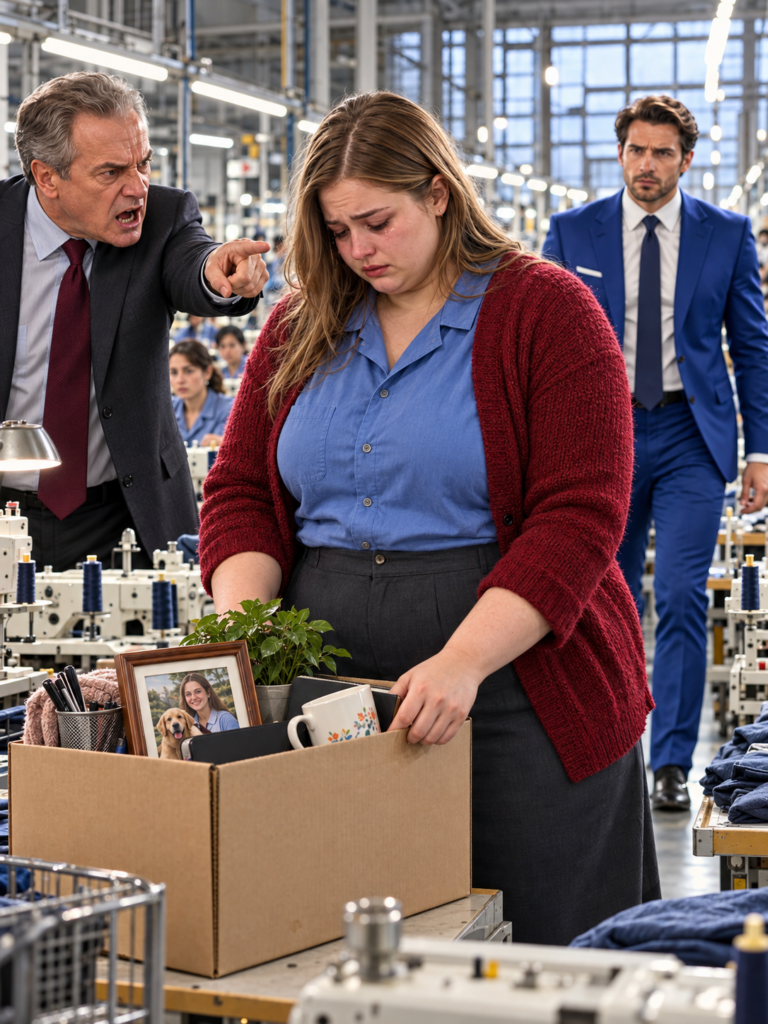
At 8:42 on a freezing Tuesday morning in late October, Cora Ostby lost the job she had spent six years doing properly.
Outside Tollefson Protective Wear, sleet rattled against the factory windows. Inside, forty sewing machines filled the production floor with their familiar mechanical rhythm.
Cora had left her lunch bag in the thermal-testing laboratory. Beneath the fluorescent light, a square of protective fabric lay sealed inside a plastic sleeve, its damaged stitching visible along one edge.
It was a sample from Lot 14.
And it was the reason she had been summoned to the glass office beside the cutting tables.
As she crossed the factory floor, the machines began falling quiet. The silence traveled down the production line, one station at a time, until Cora could hear the soles of her own shoes against the concrete.
Everyone knew something was wrong.
Glenn Rudd, the operations manager, waited behind his desk.
Twenty-five years at Tollefson had taught Glenn how to make a decision sound final before anyone else had spoken.
He didn’t offer her a chair.
“Lot Fourteen passed inspection Friday,” he said.
Cora remained standing.
“It passed the scheduled test,” she replied. “I ran another test Monday because I found a problem with the collar.”
“Without authorization.”
“Because the seam separated where the outer shell joins the lining.”
She held her thumb and forefinger a small distance apart.
“That much separation, Glenn. Right at the neck.”
Glenn looked toward the factory floor.
“You were directed to sign the release.”
“And I told you I couldn’t.”
“You refused an instruction from your supervisor.”
“I refused to certify something I knew was unsafe.”
His expression barely changed.
He slid a document across the desk.
Notice of Termination. Effective Immediately. Reason: Insubordination.
Cora stared at the word.
Insubordination.
Six years of overtime. Six years of double-checking stitch counts when everyone else wanted to go home. Six years of being the inspector who delayed shipments, irritated managers, and insisted that protective clothing should actually protect the people wearing it.
Reduced to one word on a piece of paper.
“Glenn,” she said carefully, “give me another hour with the equipment. Stand beside me. Watch what happens to that seam under stress.”
“The testing is complete.”
“Then let me show you the sample.”
“We’re not discussing the test anymore.”
For a moment, Cora looked at him as though she were waiting for the man she had worked beside for years to recognize what they were talking about.
These weren’t ordinary winter jackets.
Firefighters wore them into burning buildings. Volunteer crews trusted them when there was no second chance to discover that a collar had been stitched incorrectly.
Glenn folded his hands.
“Your employment ends today.”
Beyond the glass, the factory remained quiet.
Cora could see Norma Brekke at her sewing machine. Norma had trained her on her first day, six years earlier, when she’d been nervous about making a mistake.
Now Norma was watching her hands.
Cora understood why.
She also understood what losing this job meant.
Rent was due on the first.
Frankie’s after-school program had to be paid for. Their health insurance depended on her employment. Her daughter needed winter boots, something Cora had promised to buy with the next paycheck.
The savings account still hadn’t recovered from the years following Seth’s death.
She could almost see the figures lining up in her head, one expense after another.
There had been a time when she might have called her husband after a morning like this.
Three years had passed since she’d lost that option.
Glenn waited.
Perhaps he expected an argument. Perhaps he wanted her to cry or raise her voice, something he could add to the report.
Instead, Cora reached for the badge clipped to her sweater.
She removed it and placed it carefully on the desk.
“I understand,” she said.
Her voice was steady.
“I’ll pack my things.”
It took less than ten minutes.
A chipped coffee mug. A desk calendar decorated with purple star stickers Frankie had chosen. A framed photograph of Seth wearing his firefighter’s uniform, holding their newborn daughter against his chest.
Six years of work fitted inside a single cardboard box.
Cora walked toward the loading dock with the box against her hip.
Nobody spoke.
She didn’t blame them. Everyone on that floor had bills to pay, and she knew exactly how terrifying it was to lose the money that paid them.
Still, their silence hurt more than she expected.
At the loading entrance, the heavy door opened.
A man stepped inside from the freezing rain, shaking water from a dark wool coat. A small travel bag hung from one shoulder.
Bram Tollefson.
The CEO.
He had returned early from Bismarck.
Bram stopped when he saw the cardboard box.
Then he recognized the woman carrying it.
Two years earlier, Cora had held a major shipment for four days over defective stitching. Management had complained about the delay, but when the additional testing was finished, she had been right.
He remembered her because she had been willing to inconvenience an entire company rather than approve work that failed her standards.
“Ms. Ostby?”
Before she could answer, Glenn appeared behind her.
“Nothing you need to concern yourself with, Bram. Personnel issue. Already resolved.”
Bram’s eyes moved from Glenn to the box.
“Why is she leaving?”
“Disciplinary matter. Lot Fourteen is on schedule. Everything’s under control.”
Bram didn’t answer him.
He walked past both of them and entered the glass office.
Through the walls, Cora watched him pick up her termination notice.
He read the entire page.
Then he looked out toward the sewing machines.
“Nobody touches Lot Fourteen,” he announced, his voice carrying across the floor, “until I’ve examined it myself.”
Glenn took a step forward.
“Bram, I told you—”
“I’m not asking.”
The CEO turned back to Cora.
“Would you give me an hour? I want to understand what happened.”
An hour.
Cora had already spent six years trying to make the people in that building understand her work.
She thought about Frankie getting out of school at 3:15.
She thought about the word insubordination.
And she thought about how easily a company could discard someone who refused to lie for it.
“No,” she said.
Bram looked surprised.
“I’m not trying to be difficult,” she continued. “I’m exhausted. I don’t think another conversation in that office will help me.”
She shifted the cardboard box and reached beneath the calendar.
From inside it, she removed the sealed test sample.
She held it out.
“This came from Lot Fourteen. Don’t take my word for anything. Just look at it.”
Bram accepted the plastic sleeve.
“Ms. Ostby—”
But she had already turned toward the exit.
She walked into the freezing rain without looking back.
Bram stood at the doorway until she disappeared across the parking lot.
Only then did he raise the sample toward the gray daylight.
He had never personally operated a thermal-testing machine.
He didn’t know every technical requirement of a firefighter’s coat.
But he could see the opened seam.
And he knew enough to understand that there should not have been an opening there at all.
That evening, when the factory had emptied, Bram went to Warehouse Bay Six to personally hold Lot Fourteen.
He switched on the overhead lights.
The loading area was empty.
A night-shift supervisor approached, looking uneasy.
“Where are the coats?” Bram asked.
The man glanced toward the loading doors.
“They shipped Friday, Mr. Tollefson. Eleven forty that morning.”
“Who authorized it?”
“Glenn Rudd.”
Bram turned slowly toward the empty concrete floor.
“Where did they go?”
“Fourteen volunteer fire departments. Across the valley.”
Two hundred and twelve coats.
Already delivered.
Already beyond the factory’s control.
And the woman who had identified a dangerous defect had been fired for refusing to sign them off.
For the first time that day, Bram understood that Cora Ostby might have been the only person standing between his company and a disaster.
Frankie noticed something was wrong the moment she climbed into the car after school.
“You’re early, Mom.”
Cora reached back to help her with the seat belt.
“Am I?”
“You’re never early on Tuesdays.”
Frankie’s backpack hung half-open from one shoulder. At seven years old, she possessed an unsettling talent for detecting changes in her mother’s face.
“Do you have a holiday?”
“No, sweetheart. Things changed a little at work.”
“Is that bad?”
Cora started the engine.
“I haven’t decided yet.”
Frankie studied her for another moment, then began telling her about a classmate who had spilled milk on a library book.
Cora listened, asked questions, and drove home through the gray Fargo afternoon.
Their apartment in south Fargo was small, warm, and organized with the careful precision of a home where every dollar mattered.
A calendar on the refrigerator recorded Friday library visits, the first-of-the-month rent, and Frankie’s dentist appointment on November ninth.
Cora wrote things down because forgetting something important could become expensive.
They made grilled cheese sandwiches and tomato soup for dinner.
When Cora reached for the cookie tin afterward, Frankie shook her head.
“I’m not hungry for dessert.”
The answer came too quickly.
Cora watched her daughter carry her plate to the sink.
She had never explained their finances in detail, but children learned things adults didn’t intend to teach them.
Frankie knew when the grocery cart contained less than usual. She knew that the good boots had been postponed. She knew not to ask for certain things twice.
Cora hated that her daughter was learning to economize before she had learned multiplication.
After bedtime, she stood alone in the hallway.
Inside the closet hung Seth’s firefighter coat.
The heavy tan fabric had softened with years of use. Its reflective bands were faded, the cuffs worn. Cora had never washed it.
Even after three years, it carried the faintest trace of smoke.
She touched one sleeve.
On the afternoon Seth had collapsed, Cora had been conducting a laboratory test. Company rules required phones to remain in lockers.
When she’d retrieved hers at 4:10, she’d found three missed calls from the fire station.
She had spent years trying not to remember the exact number.
Three.
Now the same job that had kept her away from the phone had rejected her because she’d cared too much about another test.
She closed the closet door.
Across town, the lights in Bram Tollefson’s office remained on.
His office contained a desk, a large window, and a folding bed he had repeatedly told himself was temporary.
His travel bag sat beside the door, as it had for most of the previous decade.
Dinner was a sandwich from a vending machine.
Four years earlier, Anika had returned her engagement ring. She hadn’t made a scene. She had simply become tired of inviting a man to dinner who never arrived.
Bram had accepted her decision because he’d known she was right.
He’d built his life around the belief that keeping the factory running was proof he could be trusted.
Yet today he had discovered that one of his most dependable employees had been dismissed while dangerous equipment was being delivered to firefighters.
Glenn entered without knocking.
He had done that for twenty-five years.
“You embarrassed me today.”
Bram placed the defective sample on the desk.
“Two hundred and twelve coats left this building before the additional test.”
“They passed Friday.”
“Then why was there a failed sample in Cora’s laboratory?”
Glenn exhaled.
“That woman has been difficult since her husband died. Grief changes people, Bram. Sometimes it makes them impossible to manage.”
Bram looked at him.
Glenn continued before he could respond.
“You wanted every order delivered before the thirty-first. You made it clear there would be no excuses.”
Bram remembered saying exactly that.
Six weeks earlier, frustrated by delays, he had demanded that the production schedule be met.
He hadn’t ordered Glenn to ship untested equipment.
But he had created the pressure, then trusted Glenn to handle the consequences.
And now firefighters might be wearing the result.
At 9:30 that night, Cora’s telephone rang.
Norma Brekke.
“I saw the truck,” Norma whispered.
Cora sat on the edge of the bathtub.
“What truck?”
“Friday morning. They were loading Lot Fourteen. I was leaving late, and I saw it go.”
Cora closed her eyes.
“Norma, you stood there today. You watched him fire me.”
“I know.”
For a while neither woman spoke.
Then Norma said, “Dennis’s insulin is covered by my insurance. I’m sixty years old, Cora. I can’t lose this job.”
Cora wanted to be angry.
Part of her was angry.
But she remembered calculating her own rent in Glenn’s office, and she understood why another woman might have been too frightened to speak.
“I know,” she said quietly.
It was not forgiveness.
Not yet.
But it was the truth.
The following evening, someone knocked on Cora’s apartment door.
She opened it with the security chain still attached.
Bram stood in the stairwell in his dark wool coat.
No lawyer.
No human-resources representative.
Just the man whose name was on the building that had fired her.
“I’m sorry to come to your home,” he said. “I didn’t know another way to ask.”
“Ask what?”
His face looked more tired than it had at the factory.
“The coats are gone. All of them. Fourteen fire departments received them.”
“I warned Glenn.”
“I know.”
“Then why are you here?”
Bram swallowed.
“Because I don’t know which coats are unsafe. I can’t identify the defect the way you can.”
Cora held his gaze through the narrow opening.
“Yesterday your company fired me in front of forty people. Today you want me to help you save it.”
“Yes.”
“Do you understand what agreeing to that would cost me?”
He could have offered money immediately. He could have reminded her that he owned the factory and controlled whether she returned.
Instead, he answered the question.
“No. But I believe I need to understand.”
Small footsteps sounded behind Cora.
Frankie appeared in her pajamas, peering around her mother’s side.
“Are you a firefighter?”
Bram looked down.
“No. I make the coats they wear.”
Frankie considered that.
“My dad was a firefighter.”
The words changed his expression.
Cora rested a hand on her daughter’s hair.
Nobody spoke for several seconds.
Then Cora turned back to Bram.
“I’ll help locate and inspect them. But I have conditions.”
“Tell me.”
“I’m doing it unpaid and independently. I’m not coming back as your employee. You don’t put my name on a company report to make yourself look better.”
“Agreed.”
“And if you lie to me once—about anything—I leave. Even if we’re in the middle of nowhere.”
Bram nodded.
“Agreed.”
Cora closed the door.
For the first time since leaving the factory, she felt that she had made a decision rather than simply endured one.
Ten minutes later, she went downstairs to retrieve Frankie’s school bag from the car.
Something was tucked beneath the windshield wiper, protected from the rain.
Her old employee badge.
The one she had placed on Glenn’s desk.
A note was attached in block letters.
Keep this. You’ll need the door code.
Cora looked toward the apartment building.
Whoever had left it was gone.
She slipped the badge into her coat pocket.
The next morning, Arlis Moe, their downstairs neighbor, took Frankie’s backpack.
Arlis owned an orange cat named Pickles and had a reassuring habit of asking only questions that required useful answers.
She and Cora had already reviewed Frankie’s school schedule, bedtime routine, and emergency numbers. Frankie would stay downstairs during the trip.
“Go do what you have to do,” Arlis said. “Pickles needs somebody who can beat him at Go Fish.”
Frankie giggled.
Cora kissed her daughter, then climbed into a company truck beside the man who owned the business that had dismissed her.
They headed northwest into the Red River Valley.
The landscape spread flat beneath an enormous pale sky. Grain elevators stood along the horizon, rising above the fields like narrow towers.
Casselton. Hillsboro. Portland.
Small communities where the fire station often doubled as a gathering hall, polling place, and pancake-breakfast venue.
At the first department, the fire chief refused to surrender the coats.
“Five years of pancake fundraisers,” he told Bram. “That’s what it took to buy equipment that wasn’t secondhand.”
“You’ll receive replacements,” Bram promised. “At our expense.”
The chief turned toward Cora.
“And what do you have to say?”
She met his eyes.
“I won’t promise a result before I’ve inspected the coats. Let me examine them first.”
He considered her for a moment.
Then he opened the equipment room.
Cora worked methodically.
She turned each collar inside out, flexed the seams between her fingers, and examined the joining points where the outer shell met the lining.
Safe coats to the left.
Suspect coats to the right.
Bram helped move the equipment and watched her work.
He had negotiated contracts for thousands of garments.
Yet standing beside her, he realized how long it had been since he’d paid close attention to how a single one was made.
By their third day on the road, they had developed a routine.
Bram bought convenience-store burritos and drank too much coffee.
Cora brought sandwiches from home.
One morning she handed him a brown paper bag without explanation.
Inside were a turkey sandwich on wheat bread, an apple, and a cookie.
He looked at the food, then at her.
“Is this for me?”
“You can keep living on gas-station meals if you’d rather.”
He opened the sandwich carefully.
Cora watched him take the first bite.
“It’s lunch, Bram. You don’t need to negotiate over it.”
For the first time, she saw a real smile begin to form.
In the truck, she kept their inspection results in a spiral notebook divided by colored tabs.
Blue for cleared equipment.
Red for confirmed failure.
Yellow for anything needing further review.
“Frankie’s idea,” she explained when Bram asked. “She uses colored tabs for school projects. She says adults would remember things better if they used colors.”
“She may be right.”
Bram watched the fields passing outside.
“My father used to write the firefighter’s name inside the collar of the first coat he made for him.”
Cora glanced over.
“Why?”
“He believed you did better work when you remembered there was a person inside the thing you were making.”
Bram looked down at his hands.
“We stopped doing that years ago.”
Cora said nothing.
She was thinking about another collar hanging inside a closet in south Fargo.
Four days into their effort, they had reached thirteen fire departments and recovered 196 coats.
Thirty-one showed the same dangerous defect.
The remaining sixteen belonged to the department in Hatton, the only one that had not cooperated.
As they left the Mayville station at dusk, the weather changed.
Snow swept sideways across the fields, driven by a hard western wind. Within minutes, the truck’s headlights illuminated little but whiteness.
Highway 200 closed before they could leave the area.
They spent the night at the Mayville fire station with three volunteers, a pot of coffee, and an incomplete deck of playing cards.
At eight o’clock, Cora called home.
Frankie told her that Pickles had behaved badly at cards.
Then she asked, “Is the man who makes coats there?”
Cora looked toward Bram.
“He is.”
“Can I talk to him?”
She handed him the phone.
“Hello, Frankie.”
“Do you know any stories?”
Bram thought for a moment.
Then he told her about his grandfather, Sig Tollefson.
In 1962, Sig had stood outside a burning grain silo and watched volunteer firefighters enter wearing canvas coats that caught fire around the sleeves.
He’d returned home that night and begun working at his wife’s kitchen table, determined to make something better.
“Did he?” Frankie asked.
“He did. He kept making coats until he was eighty.”
Cora listened from across the room, her coffee cooling between her hands.
She had known Bram as a name on paychecks, a man who traveled and gave orders.
She had not known this story.
Later, when the firefighters settled onto cots, she and Bram sat on a bench in the dim truck bay. Wind pushed against the large doors.
“Why did you come to my apartment?” she asked.
“I told you. I needed your help.”
“That’s not all of it.”
Bram considered denying it.
Instead, he looked toward the floor.
“When I saw you remove your badge, you didn’t argue. You set it down as though it still deserved respect, even after the company had decided you didn’t.”
He turned toward her.
“I couldn’t stop thinking about that.”
Cora felt the weight of his attention.
She wasn’t ready to trust it.
But she didn’t move away.
At dawn, the storm eased.
Bram’s phone rang.
The caller was Vern Odegaard, fire chief in Hatton.
Bram put the call on speaker.
“We have sixteen of your Lot Fourteen coats,” Vern said. “And we’re keeping them.”
“Chief, they need to be inspected.”
“Glenn Rudd called me personally yesterday. Said the woman making these accusations has a grudge against the company. Said she was fired and wants to take everyone down with her.”
Cora stared at the phone.
Hatton was Glenn’s hometown.
His son Tanner served with the volunteer fire department there.
One of those sixteen coats might be hanging on Tanner Rudd’s shoulders.
And Glenn had personally told the department not to cooperate.
For the first time, Cora began to understand that finding the defective seams might be easier than making people believe her.
Part 2
The interview in West Fargo went well for twenty minutes.
Cora answered every technical question. She explained her experience with heat-resistance testing, quality documentation, and production inspections. The hiring manager seemed impressed by six years of records showing how often she’d caught errors before products reached customers.
Then he excused himself to make a telephone call.
When he returned, something in his manner had changed.
“Your previous supervisor mentioned an issue with insubordination.”
Cora folded her hands in her lap.
“I refused to approve protective equipment after a test revealed a safety failure.”
The manager nodded politely.
It was the kind of nod that ended conversations.
The interview in Moorhead went much the same way, except the rejection came faster.
By Friday, Cora had stopped counting how many applications she’d submitted.
That afternoon, Frankie came home and dropped a brightly colored flyer into the recycling bin.
Cora retrieved it.
The Scholastic Book Fair.
“Don’t you want to go?”
Frankie bent over her shoelaces.
“I already have books.”
Cora lowered herself onto the kitchen floor.
“Frankie, look at me.”
Her daughter raised her eyes.
“Money is something grown-ups are responsible for. It isn’t your job to fix it. Your job is to be seven.”
Frankie thought about that.
“Can I still be seven at the library?”
“Especially at the library.”
They went that evening, as they did every Friday.
Frankie came home carrying nine books and fell asleep beneath four of them.
On Monday, a text arrived from an unfamiliar number.
Glenn Rudd. Big Iron Truck Stop, I-29. Noon. There’s something you need to hear.
Cora almost ignored it.
But curiosity—and the terrible possibility that Glenn knew something about the remaining coats—brought her to the truck stop.
He sat in a corner booth with an untouched cup of coffee.
He looked older outside the factory, his usual authority diminished beneath the flat restaurant lighting.
“I’m not here to argue,” he said.
“Then what do you want?”
“To make sure you understand what’s happening.”
He placed his phone on the table and started an audio recording.
Bram’s voice filled the space between them.
Lot Fourteen has to ship by the thirty-first. I don’t care what it takes. No excuses, Glenn.
Cora listened without moving.
It was unmistakably Bram.
The recording ended.
Glenn watched her reaction.
“Six weeks ago,” he said. “He gave me that order. And now he’s pretending to save you from the consequences.”
“He didn’t tell you to ignore failed tests.”
“He told me exactly what he wanted. He just didn’t want to know how I delivered it.”
Cora stared at the phone.
Glenn leaned closer.
“You’re useful to him until the last coat is recovered. After that, he’ll go back to his office, and you’ll go back to being unemployed.”
He sent her the recording, placed five dollars beside his coffee, and left.
Cora remained in the booth.
She didn’t know whether Glenn was telling the whole truth.
But she knew Bram had kept something important from her.
And he had promised not to do that.
At nine that evening, while Frankie slept downstairs at Arlis’s apartment, Cora used her old badge to enter Tollefson Protective Wear.
The access code still worked.
Light spilled from Bram’s office.
She found him beside the folding bed, going through a stack of reports.
He stood when he saw her.
“Cora? Is something wrong?”
She placed her phone on his desk.
Then she played the recording.
Bram listened until his own voice finished giving the order.
He didn’t interrupt.
He didn’t accuse Glenn of manipulation.
When the recording ended, he lowered himself into his chair.
“I said it.”
Cora waited.
“I didn’t know Glenn shipped the coats before the testing was complete,” he continued. “But I demanded that deadline. I pushed him to meet it.”
“Yes.”
“I should have told you.”
“You sat beside me for four days, Bram.”
He looked up.
“Thirteen fire departments. Nearly two hundred coats. Four days when I trusted you to tell me what I needed to know.”
“I know.”
“I wasn’t asking you to be perfect.”
Her voice trembled, and she despised the way it betrayed her.
“I was asking you not to let me discover the truth from the person who fired me.”
Bram rubbed his forehead.
“Glenn taught me to ride a bicycle.”
Cora frowned.
“He worked with my father for decades. When Dad died, Glenn helped carry his coffin. Sometimes it feels as though he’s the last person alive who remembers my father the way I do.”
Bram took a breath.
“Questioning him felt like losing that part of my family too.”
Cora listened.
For the first time, she saw that Bram’s loyalty wasn’t simply professional. It was tangled with grief, history, and the fear of admitting that someone he loved could have done something unforgivable.
“That doesn’t make it right,” she said.
“No,” he replied. “It doesn’t.”
He glanced toward her phone.
“I should have told you the truth myself.”
She believed him.
And the fact that she believed him made leaving harder.
The following morning, Bram called.
“I can reinstate you today,” he said. “Back pay, a raise, and removal of the termination from your record. Everything in writing.”
Cora sat at her kitchen table.
Rent. Insurance. Boots. Groceries.
Every number she had calculated in Glenn’s office suddenly seemed within reach.
She closed her eyes.
“There are still sixteen coats in Hatton.”
“I know.”
“If I return while those firefighters are wearing equipment I know could fail, then I’m helping the company move on before we’ve finished protecting them.”
“Cora—”
“I’ll come back when the last coat is returned. Not before.”
The line was quiet.
Then Bram said, “All right. We’ll get them back.”
Cora rested the phone against her forehead after the call ended.
It would have been easier to take the job.
She had no idea whether she was making the wisest financial decision.
But she knew which choice she could live with.
That night, shortly after ten, someone knocked at her door.
Glenn stood outside, wearing his old brown Carhartt jacket. He held his cap in both hands, slowly turning it by the brim.
“My son wears one of those coats,” he said.
Cora kept the chain on the door.
“I know.”
“Tanner. That’s my boy.”
“Then help us recall them, Glenn.”
His fingers stopped moving.
“You think I’d send my own son into a fire wearing something dangerous?”
“I think you’ve been told the coats need inspecting, and you’re stopping it.”
Glenn opened his mouth, then closed it.
For several seconds, he looked at her as if he wanted her to provide a way out of the conversation.
She couldn’t.
He put his cap back on and walked away.
Cora didn’t sleep much that night.
By morning, she knew what she would do.
She wouldn’t rely on another letter from the company or wait for another call to be returned.
She would go to Hatton herself.
Thursday was training night at the Hatton Volunteer Fire Department.
Cora brought a portable seam-strength tester from the laboratory, a steel frame fitted with clamps and a hand-operated crank.
She also brought one of the thirty-one defective coats they had already recovered.
She had kept it as evidence, marked the failure point, and recorded its results in her notebook.
Bram drove.
Twenty miles outside Hatton, Cora looked across the dark fields.
“Tonight, don’t speak for me.”
“All right.”
“I mean it. They need to hear what I know, not what the company wants them to think.”
“I understand.”
The station stood beneath a single orange streetlight.
Inside, the air smelled of diesel fuel, work clothes, and coffee that had been heating too long.
Two red fire trucks occupied the garage. Folding chairs faced a table near the front. The volunteers wore heavy boots and seed-company caps.
Vern Odegaard stood with his arms crossed.
Glenn was there too.
In the second row sat a younger man with Glenn’s broad jaw and familiar eyes.
Tanner Rudd.
He was wearing a Lot Fourteen coat.
Glenn spoke first.
Most of the firefighters had known him for years. His family was part of the town, and Tollefson had supplied equipment to the valley for generations.
He reminded them that the coats had passed inspection.
He reminded them of the years they’d spent raising money for new gear.
Then he reminded them that Cora had been fired.
Some of the men nodded.
Cora walked to the front and placed the testing frame on the table.
“I’m not here to argue about why I lost my job,” she said. “You can believe whatever you want about that.”
She unfolded the damaged coat.
“I’m here because I know something about the equipment you’re wearing.”
She turned the collar outward.
“This seam connects the outer material to the lining. When it’s properly constructed, it holds under the stresses it’s designed to withstand. When it isn’t, it can open.”
She touched the side of her neck.
“Right here.”
The volunteers leaned forward.
“I’ve identified thirty-one coats from this lot with this defect. I haven’t tested every coat in this room, and I’m not going to pretend I have.”
She looked toward Vern.
“But I’d like to show you what happens to one I know is defective.”
She secured the sample in the clamps.
“Chief, would you turn the crank?”
Vern studied her.
Then he uncrossed his arms and stepped forward.
He took the handle.
One turn.
Then another.
The material drew tight.
The seam resisted.
Cora watched the marked stitching.
“Keep going.”
Vern turned the handle again.
A thread snapped.
Then the seam opened, exposing a narrow gap.
Another turn widened it.
The failure ran across the exact point where a firefighter’s collar should have protected his neck.
Nobody said anything.
Vern released the crank.
A young volunteer named Dale stood from the third row.
He unzipped his coat, removed it, and folded it on the table beside Cora’s sample.
Then another man stood.
Then two more.
Vern took off his own coat and added it to the growing pile.
Cora watched without speaking.
She understood what Dale had done.
In a small community, disagreeing publicly with someone everyone respected could be harder than admitting fear.
When the volunteers had begun surrendering their equipment, Bram stepped forward.
“The deadline came from me,” he told them.
Glenn looked sharply in his direction.
“I demanded that this lot be shipped on schedule. I didn’t know the testing would be bypassed, but I created the pressure that led to it. I’m responsible for that.”
Bram paused.
“Every firefighter here will receive safe replacement equipment. By Monday, I’ll arrange temporary protection, even if we have to borrow spare gear from other departments. And the new coats won’t cost you a dollar.”
He looked from one face to another.
“I’m not asking you to forgive me. I’m asking you not to wear equipment we can’t verify as safe.”
Glenn remained motionless.
Then he picked up his jacket and left through the side door.
Moments later, his truck started outside.
The pile on the table grew.
Thirteen coats.
Fourteen.
Fifteen.
Only Tanner remained seated.
His face had turned red.
“My father gave twenty-five years to that factory,” he said.
Cora faced him.
“He did.”
“And you come into his hometown and make him look like a liar?”
She didn’t reach for Tanner’s coat.
“I won’t take it off you.”
He looked surprised.
“All I’m asking is that the next time you’re alone at the station, you turn the collar over and examine that seam yourself.”
Tanner stared at her.
Then he looked away.
He kept the coat.
Outside, Bram loaded the fifteen returned coats into the truck.
The orange streetlight threw long shadows across the icy pavement.
“That took courage,” he told Cora.
She shook her head.
“Dale was the brave one.”
“Dale?”
“He was the first person willing to take off his coat in front of everyone he knows.”
Bram looked at her for a long moment.
Cora turned toward the truck before he could say anything else.
Two nights later, at 2:07 in the morning, a farmhouse four miles outside Hatton caught fire.
At 3:40, Cora’s telephone rang.
It was Norma.
Her sister lived in Hatton and had heard the emergency calls.
“Cora,” she said, her voice shaking. “Tanner Rudd is in an ambulance. They’re taking him to the burn unit in Fargo.”
Cora sat upright.
The farmer’s name was Harlan.
He was eighty-one years old and had gone back inside his burning home to rescue his dog.
Tanner found him collapsed in a mudroom and carried him out.
Harlan survived.
So did the dog.
But Tanner came out with second-degree burns along the right side of his neck.
Exactly where the collar had failed.
The doctors expected him to recover.
They also expected the injury to leave a scar.
Cora drove to the hospital that morning.
She didn’t know what she hoped to accomplish by going.
Glenn sat in the hallway outside the burn unit, still wearing the clothes he’d had on the previous day.
When he saw her, his expression hardened with something that looked almost like hatred.
Then he turned toward the wall.
Cora couldn’t bring herself to approach him.
She drove home and sat in her parked car for twenty minutes.
She kept thinking about Tanner.
What if she’d insisted harder?
What if she’d reached for his coat despite his refusal?
Arlis found her on the stairs.
“Cora?”
Cora looked up.
“I knew it could happen.”
Arlis sat beside her.
“That young man made a choice. So did his father. You told them what you knew.”
“But I couldn’t stop it.”
“You can’t carry everybody else’s choices around in that old cardboard box of yours, sweetheart. You’ve tried. It’s too heavy.”
Cora looked at the floor.
She wanted to believe her.
Two days later, Norma called again.
“The insurance people have been in Bram’s office all morning,” she said. “Some attorney came in from Minneapolis. They’re talking about paying the Rudd family’s expenses and settling everything privately.”
Cora gripped the phone.
“Privately?”
“Money, an agreement, and nobody discusses what happened. They don’t want you involved. As far as they’re concerned, you’re a former employee.”
Cora waited for Bram to call.
He didn’t.
That evening, he came to the apartment instead.
Frankie was asleep.
They sat across from each other beneath the yellow kitchen light.
“Is it true?” Cora asked.
Bram lowered his eyes.
“The insurers recommended a settlement. They think it protects the company.”
“Did you agree?”
“No.”
“Did you reject it?”
He hesitated.
And that was enough.
“Bram, you can’t buy silence after a firefighter gets burned.”
“I’m trying to keep the company alive.”
“So the next crew can trust equipment without ever learning why the last crew got hurt?”
“That’s not fair.”
“People deserve to know what happened. The truth isn’t something you get to negotiate away.”
His chair scraped against the floor as he stood.
“I have done everything you’ve asked me to do.”
Cora looked up.
“Not everything.”
“Every time I try to fix something, you act as though I’m setting a trap.”
He grabbed his coat and walked out.
The door closed behind him.
Cora remained at the table.
Outside, Bram reached his truck but didn’t start the engine.
He sat there for forty minutes, watching his breath cloud the windshield.
He remembered Anika returning her ring.
He remembered how she’d stopped asking him to come home because asking had become more painful than his absence.
And he realized he had just done the same thing again.
He had left because staying required him to admit that somebody else was right.
Bram climbed out of the truck.
He returned upstairs and knocked.
When Cora opened the door, he stayed on the threshold.
“You were right,” he said.
She waited.
“I was trying to decide how this ended. I wasn’t listening to what needed to happen.”
His voice was rough with exhaustion.
“No secret settlement. I’ll contact the state fire marshal myself tomorrow. Every shipment from this year will be reviewed.”
“That could cost you the state contract.”
“I know.”
“Your company could take years to recover.”
“Then we’ll have to deal with that.”
Cora searched his face.
This was not a promise to make everything disappear.
It was an agreement to let the truth have consequences.
She moved aside and allowed him in.
A sleepy voice came from the hallway.
“Mom?”
Frankie stood beside the open closet.
Seth’s tan firefighter coat hung in the shadows behind her.
She looked at Bram, then at her mother.
“Was Daddy’s coat a good one?”
Cora felt the question strike somewhere deep inside her chest.
Bram didn’t answer.
He knew that wasn’t his place.
Cora guided Frankie back to bed, tucked her in, and waited until she was asleep.
When she returned, Bram stood beside the closet without touching anything.
She lifted Seth’s coat from its hanger.
Inside the collar, written in faded ink, was his name.
Below it sat a small, slanted letter.
F.
“For Frankie,” Cora whispered. “He put it there after she was born. Said he’d carry a little part of her with him on every call.”
Bram looked at the lettering.
“My father used to do exactly that.”
Cora held the collar between her fingers.
Then she spoke about something she hadn’t told anyone in three years.
“The day Seth collapsed, I was running a test.”
Bram stood still.
“We weren’t allowed to have our phones in the lab. I thought I was being responsible. I was doing my job properly.”
Her voice grew unsteady.
“When I finished, I checked my locker. Three missed calls. All from the station.”
She swallowed.
“Four ten. I remember the time because I stared at it for so long.”
Bram said nothing.
“I keep thinking that I chose one more test instead of being there for him. And then the same company fires me because I wouldn’t stop caring about a test.”
Tears filled her eyes.
Bram didn’t try to correct her feelings.
He didn’t offer a comforting explanation that would make everything sound simple.
He stayed beside her in the narrow hallway while she cried.
For the first time, Cora did not feel compelled to hide the grief before someone else became uncomfortable.
Two days later, she telephoned the hospital to ask about Tanner.
The nurse told her he was recovering well.
Then she mentioned something else.
“His protective gear is gone from his belongings. His father signed it out last night.”
Cora went cold.
Tanner’s burned coat was evidence.
Without it, nobody could examine the seam that had failed during the fire.
Glenn had taken it.
Again, she was faced with the possibility that the truth would disappear because someone powerful enough to hide it had decided it should.
That evening, an unfamiliar number appeared on her phone.
The message was short.
Glenn Rudd. Factory. Six tomorrow morning. Come alone. Please.
Cora showed it to Bram.
Every instinct he had told him to go inside with her.
Instead, he asked what she wanted.
“I need to hear what he has to say.”
Bram nodded.
“I’ll stay in the parking lot. I won’t come inside unless you ask.”
At 5:55 the following morning, Cora pulled into the factory.
Both production shifts had gathered.
Through the windows, she could see workers standing beside silent sewing machines, coffee cups in their hands.
Glenn waited near the cutting table.
A folded firefighter’s coat rested across his arm.
Tanner’s coat.
And when Cora stepped inside, the entire factory turned to look at her.
Part 3
Glenn Rudd looked as though he hadn’t slept.
His old jacket hung loosely from his shoulders. His cap lay on the cutting table beside him.
For twenty-five years, workers had looked to him for instructions. He had decided which orders went out, which problems required attention, and which complaints were worth hearing.
Now he stood before both production shifts with his son’s burned coat in his hands.
When Cora approached, he spoke so quietly only she could hear.
“Tanner woke up last night.”
She stopped.
“He looked right at me and said two words.”
Glenn struggled to continue.
“You knew.”
His eyes were wet.
“That’s all he said. And I haven’t been able to sleep since.”
Cora watched him turn toward the workers.
“I authorized Lot Fourteen to ship before the additional testing was completed,” he announced.
A few people exchanged uneasy glances.
“I was afraid of missing the deadline. Then I became more afraid of admitting what I’d done.”
He looked directly at Cora.
“I fired Cora Ostby because she wouldn’t approve something she knew was wrong.”
The words seemed to cost him effort.
“I told the fire chief in Hatton that she was bitter and trying to destroy the company. I said it because I wanted people to stop listening to her.”
Glenn unfolded Tanner’s coat on the cutting table.
The collar was torn along one edge. The fabric surrounding the damaged seam was darkened by heat.
He held it up for everyone to see.
“My son was wearing this when he got hurt.”
He lowered the coat.
“Cora tried to warn us.”
Nobody moved.
Then Norma Brekke stood beside her sewing machine.
“I saw them loading that shipment Friday,” she said.
Her voice shook.
“I knew Cora was still testing it. I didn’t tell anyone.”
Two more workers stepped forward.
Others began speaking, admitting what they had seen, suspected, or chosen not to question.
Cora looked around the factory.
The same people who had watched her carry away her belongings were finally finding their voices.
Glenn held Tanner’s coat toward her.
She accepted it with both hands.
Then she took out her phone and sent Bram a single word.
Come.
He entered through the loading door moments later.
Glenn handed him an envelope.
“My resignation.”
Bram looked at the man who had taught him to ride a bicycle and helped bury his father.
“I’ve already contacted the state fire marshal’s office,” Glenn continued. “I’ll give them a complete statement this afternoon.”
Bram stared at him.
There was no way to undo what had happened.
Tanner’s burns wouldn’t disappear. Cora’s humiliation couldn’t be erased. The fear carried by firefighters who had unknowingly trusted dangerous equipment was real.
But Glenn was finally telling the truth.
Bram extended his hand.
After a moment, Glenn took it.
Neither man managed to hide his tears.
The investigation confirmed serious failures in the company’s safety procedures.
Glenn’s resignation became permanent. He never managed another production line.
Tollefson Protective Wear paid Tanner’s medical expenses openly, without requiring the Rudd family to sign a confidentiality agreement.
Every coat shipped during that year was replaced.
Bram also lost the state contract.
The financial consequences were severe, and the factory struggled through the months that followed.
But for the first time in years, Bram stopped measuring every important decision by the next delivery date.
On a Monday morning, Cora returned to the same production floor where she’d been fired.
This time, she wasn’t carrying a cardboard box.
An independent committee had appointed her head of quality.
Her termination was formally rescinded, with back pay and the agreed salary increase. Bram removed himself from decisions concerning her compensation and performance evaluations.
Cora accepted the position on one condition.
“If a batch fails, I can stop it,” she told the committee. “No matter who ordered it or how much money is involved.”
The members agreed.
She returned to the laboratory where her lunch bag had once sat beneath the fluorescent lights.
The machines were familiar.
So were the people.
But the meaning of her work had changed.
She no longer needed permission to protect the standards she had always believed in.
And Bram understood something he hadn’t understood before.
Helping Cora did not mean giving her a place inside his company.
It meant respecting the authority she’d earned there.
Their relationship developed slowly.
There were bowls of soup in a café on Broadway, where they talked about ordinary things instead of damaged coats and delivery schedules.
There were walks beside the frozen Red River, their breath turning white in the cold.
There were cups of coffee in the skating-rink lobby while Frankie attempted her lessons, falling often and rising with a determination that reminded Bram of her mother.
Cora remained cautious.
So did Frankie.
One afternoon, her daughter brought home a drawing titled My Family.
In it were three people.
Mom.
Frankie.
And Dad, wearing his firefighter’s helmet.
Halfway home, Frankie crumpled the picture.
At bedtime, Cora asked what was wrong.
Frankie studied the blanket covering her knees.
“If I like Bram, will I forget Daddy?”
Cora smoothed her daughter’s hair.
“No, sweetheart. Loving someone new doesn’t erase somebody you already love.”
Frankie considered that.
“Even if I love him a lot?”
“Even then. Your heart can make more room.”
Frankie leaned against her.
Cora held her until she fell asleep.
She had been wondering something similar herself.
Whether opening her life to Bram meant leaving Seth behind.
Slowly, she was beginning to understand that remembering one person and loving another did not have to be competing loyalties.
But Bram still had lessons to learn.
He promised to attend Frankie’s winter school program.
On the evening of the performance, a machine failed during the second production shift.
Bram stayed at the factory.
By the time he reached the school, the gymnasium was empty.
The following morning, he tried to make amends by suggesting a larger outing.
Maybe a weekend trip.
Maybe something special Frankie could look forward to.
Cora stopped him.
“She doesn’t need something bigger. She needs you to do what you said you would.”
Bram looked toward the living room, where Frankie was reading.
He knew Cora was right.
He knelt beside the little girl and told her he’d chosen to remain at work instead of keeping his promise.
He apologized without offering excuses.
Frankie was quiet.
He didn’t ask her to forgive him immediately.
Three weeks later, she had a classroom reading night.
Bram arrived ten minutes early.
He sat on a chair designed for eight-year-olds and listened while Frankie read her entire report about bald eagles, carefully pronouncing every difficult word.
That Saturday, she handed him a flat cardboard box containing an inexpensive bookshelf for her library books.
Bram studied the instructions.
“I’m terrible at putting these together.”
Frankie sat cross-legged beside him.
“That’s okay. I can read the directions.”
They installed the second shelf upside down.
Then they took it apart and corrected it.
Cora watched from the doorway.
She wasn’t moved because Bram could build a bookshelf.
She was moved because he could admit he didn’t know how, listen to a child, and remain until the job was finished.
That winter, the folding bed disappeared from Bram’s office.
He moved it into the staff’s Hat and Fire room for the night-shift crew.
And he began going home.
One Sunday in March, Cora came out of the kitchen and found Frankie standing in the hallway.
Seth’s firefighter coat was draped over her shoulders, the heavy material pooling around her feet.
Bram stood nearby.
Frankie looked up at him.
“Do you know how to tell if a coat is good?”
Bram glanced at Cora.
He could have answered.
After everything that had happened, he had learned more about seams, testing, and protective equipment than he’d ever expected.
But this was not his question to answer.
Cora put down her dish towel.
She had feared this moment for three years.
She knelt beside Frankie.
“Would you like us to check it together?”
Frankie nodded.
They spread Seth’s coat on the hallway floor.
Cora showed her how to examine the collar, fold the seams between her thumbs, and inspect the joins along the sleeves.
Frankie worked carefully, concentrating so hard that the tip of her tongue appeared between her teeth.
They checked every section.
At the final sleeve, Cora rested her hands on the fabric.
“It’s a good coat, sweetheart.”
Frankie looked at her.
“Then why did Daddy die?”
The question was small and devastating.
Cora drew a breath.
“Your daddy’s heart stopped working. His coat didn’t cause it.”
Frankie’s expression shifted.
“So the coat wasn’t bad?”
“No.”
“Did somebody do something wrong?”
Cora looked at Seth’s name written inside the collar.
For three years, she’d blamed herself for three missed phone calls.
She had replayed that afternoon as if arriving sooner could have rewritten everything.
Now she looked into her daughter’s eyes.
“No, Frankie. Nobody did something wrong.”
She paused.
“And it wasn’t anybody’s fault.”
The final words came slowly.
She was saying them to Frankie.
She was also saying them to herself.
Cora found a marker and turned the collar over.
Beneath Seth’s name and the small slanted F, she wrote:
Inspected — C.O.
Frankie touched the letters.
That evening, she asked if her father’s coat could remain in her closet.
Cora agreed.
It still hung there months later.
One year after the morning in the glass office, October returned to Fargo.
Tollefson Protective Wear was still recovering financially.
The lost state contract had hurt badly.
But local fire departments had begun trusting the company again for a simple reason: when they called with questions, Cora answered them.
And she told them the truth.
Every newly manufactured coat carried a printed line inside its collar.
Inspected by:
Beneath it was the name of an actual inspector.
Norma helped introduce a new safety-alert cord along the production floor, so workers could signal problems without fearing they would be ignored.
Arlis declared herself honorary inspector of Frankie’s homework.
Tanner’s neck healed, leaving a faint scar he made no attempt to conceal.
He returned to the Hatton volunteer crew wearing a coat Cora had personally inspected.
In August, a postcard arrived at the factory.
I checked the collar like you told me.
It was signed with two initials.
T.R.
Glenn found part-time work at a farm-supply store in Hatton.
When the volunteer department needed help operating its water truck, he still answered the call.
He never demanded forgiveness from the people he’d hurt.
On Seth’s birthday, Cora and Frankie brought sunflowers to the cemetery.
They talked to him for a while.
Frankie told him about school, skating, and the books she was reading.
Then they went home and made his favorite tater-tot hotdish, using more cheese than Cora normally allowed.
Bram came over for dinner afterward.
Only dinner.
He had understood that the morning belonged to Cora and Frankie and the man who would always be part of their family.
He never tried to take that place.
In late October, the Hatton Fire Department held its annual fundraising supper.
The department still needed equipment it couldn’t afford.
Bram stood behind a serving table, ladling chili into bowls while wearing a borrowed apron.
Frankie sold slices of pie and counted change with the seriousness of a bank manager.
Cora helped where she could, though she suspected Vern Odegaard was finding excuses to keep her near the center of the gathering.
Eventually, Vern tapped a spoon against his coffee cup.
Conversation quieted.
“I want to thank the people who helped our department this past year,” he announced.
He nodded toward Bram.
“Tollefson replaced our equipment without charging us. That mattered.”
Then he turned toward Cora.
“And they sent us a woman who made sure every stitch was worth trusting.”
Applause filled the hall.
Cora wished she could disappear beneath the table.
Near the end of the supper line, Glenn Rudd appeared with his cap in his hands.
He hesitated when he saw her.
Then he approached.
“Cora?”
She turned.
“Would it be all right if I joined you for a bowl of soup?”
She studied the man who had once fired her for refusing to compromise.
The man whose son had been hurt.
The man who had finally admitted the truth in front of the people who mattered.
“Yes, Glenn,” she said. “It would.”
They sat at the same long table.
They didn’t say much.
There were things an apology could not repair.
There were also times when a quiet meal was a reasonable place to begin.
Later, outside beneath the orange streetlight, Bram walked Cora toward the car.
The October air was sharp and cold.
For a while they stood together, watching Frankie laugh with the volunteers through the station window.
Bram took Cora’s hand.
“I love you.”
There was no elaborate speech.
No demand.
No expectation that she had to answer because of everything he’d done.
He simply wanted her to know.
Cora looked at him.
“I love you too.”
He smiled, but she wasn’t finished.
“I need you to understand something.”
“Anything.”
“I didn’t return to the factory because of you. And I didn’t fall in love with you because you gave me my job back.”
Bram listened.
“I fell in love with you because you learned how to stay.”
His smile softened.
He slipped his arm around her, and they remained beneath the streetlight a little longer.
When they returned to the apartment, Frankie fell asleep on the couch with a crumb of pie still clinging to her sweater.
Bram carried her to bed.
As he always did, he collected his coat and keys afterward.
He was preparing to leave when a sleepy voice came from the bedroom doorway.
Frankie stood rubbing her eyes.
“You don’t have to pack everything,” she murmured. “You can come back tomorrow.”
Cora laughed.
Then, unexpectedly, tears filled her eyes.
Bram crouched so he could meet Frankie’s gaze.
“I’ll be here,” he told her.
And he was.
Not because he owned a company.
Not because he’d made a grand promise.
But because he’d finally learned that loving people meant being there on ordinary days, too.
The following Tuesday morning, freezing rain fell over Fargo again.
Cora found her old cardboard box in the storage closet.
The one that had carried her cracked mug, Seth’s photograph, and the calendar covered with purple stars.
For a moment, she remembered how it had felt to walk out of the factory with everything she’d worked for reduced to what she could carry.
Then she flattened the box and placed it with the recycling.
She stood on the loading dock a moment longer, letting the cold air touch her face.
When she returned home, Bram had already arrived to take Frankie to school, as he did every Tuesday.
They were seated at the kitchen table, conducting a spirited debate about whether blueberry pancakes could count as vegetables.
Frankie insisted they could.
Bram was pretending to consider the evidence.
Cora stopped in the doorway and watched them.
One year earlier, she’d said she would pack her things because she had been dismissed from a place where she’d given her best.
Now her work belonged to her again.
Her daughter felt safe.
Seth’s memory had a cherished place in their home.
And the man at the kitchen table had learned that being present mattered more than appearing important.
Bram looked up.
“What’s your opinion? Do blueberries make pancakes vegetables?”
Cora smiled.
“Not even close.”
Frankie groaned.
Bram laughed.
And Cora walked into the kitchen to join them.
There was nothing left she needed to pack.
And nowhere else she would rather be.


