
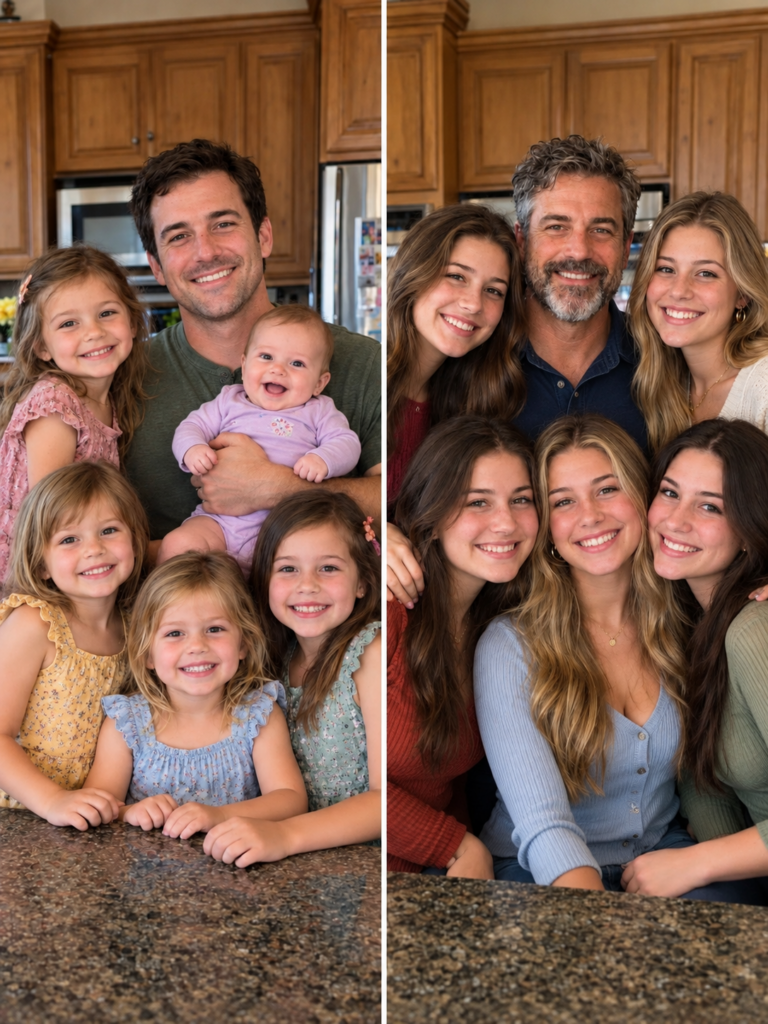
Part 1
The wedding reception was being held in a renovated country estate outside Lancaster, Pennsylvania. Through the tall windows, I could see the last orange light of September settling over the fields. White flowers lined the tables, and the smell of roasted chicken and fresh bread still lingered in the dining room.
A few minutes earlier, people had been laughing.
Now nobody seemed to know where to look.
Meredith stood near the head table, holding the microphone with one hand and resting the other against her expensive necklace.
She looked almost exactly as I remembered her.
Not because fifteen years hadn’t changed her face. They had. There were faint lines near her eyes, and her hair was a darker shade of blonde than it used to be.
But that particular expression hadn’t changed.
The slightly raised chin. The wounded smile. The way she could make an accusation sound like a confession she was bravely struggling to share.
“I never wanted things to turn out this way,” she continued. “A mother should never have to spend years wondering whether her own children are being told to hate her.”
Across the table, my youngest daughter, Rose, lowered her eyes.
She was fifteen.
The last time Meredith had held her, Rose was nine months old.
I felt Nora’s fingers tighten around my wrist.
“Please,” she whispered.
I thought she was asking me to stay quiet.
Then she leaned closer.
“Just this once, Dad. Let me take care of you.”
I looked at her.
Her wedding veil had been removed, leaving a few loose strands of brown hair around her face. She had her mother’s eyes, but the steadiness in them belonged entirely to her.
“Nora, this is your wedding.”
“I know.”
“Don’t let her ruin it.”
Nora glanced toward the microphone.
“She doesn’t get to decide what ruins my day.”
Before I could answer, she stood.
Her husband, Owen, immediately moved his chair back to give her room.
Meredith noticed.
“Oh, sweetheart,” she said warmly. “I didn’t mean to upset you.”
Nora smiled.
It wasn’t an angry smile. That almost frightened me more.
“Mom, would you mind giving me the microphone?”
“Of course.”
Meredith handed it over.
Nora held it at her side for a moment.
Then she looked around the room.
“Before we continue with the speeches, there’s something my mother and I need to clear up.”
I closed my eyes.
Somewhere near the entrance, a serving cart rattled against the floor.
Nobody laughed.
Meredith’s husband, Preston Vale, sat at the table reserved for her family.
He was a tall, silver-haired man in an immaculate charcoal suit. Years earlier, he’d been the wealthy executive who employed my wife.
Now he owned a chain of luxury hotels and vacation properties across several states.
When Meredith left us, Preston was the man who had promised her a life of expensive vacations, designer clothes, and freedom from ordinary worries.
Apparently, fifteen years later, he was still paying for that promise.
He leaned forward.
“Nora, perhaps this isn’t the appropriate moment for family disagreements.”
My daughter turned toward him.
“Mr. Vale, you’re right about one thing. A wedding shouldn’t be the place for a family disagreement.”
She paused.
“But my mother decided it was the perfect place to accuse my father of something terrible. In front of all the people who love him.”
Meredith’s smile disappeared.
“Nora, don’t be dramatic.”
“Then please tell everyone what you just said about Dad.”
“I said we’ve all suffered.”
“No. You said he prevented you from seeing us.”
Meredith looked toward Preston.
“That’s what happened.”
Nora nodded slowly.
“Okay.”
She handed the microphone to Owen.
Then she looked toward my other daughters.
“Girls?”
Five chairs moved almost together.
Lucy, my second-oldest, rose first.
At twenty-three, she was working toward becoming a nurse and had developed the practical, no-nonsense patience that our family depended on.
The triplets stood beside her.
June, the quietest, had tears in her eyes.
Tess looked furious.
Ivy had that still, watchful expression she always wore when something upset her more than she wanted to admit.
And Rose, the baby I’d once carried around the house in a sling because there was nobody else to hold her, stood with her hands trembling.
Nora glanced at her.
“You don’t have to do anything, Rosie.”
Rose swallowed.
“I know.”
Then she stepped beside her sisters.
Meredith stared at them.
“What is this?”
Nora looked toward the blue wooden chest.
“Something Dad kept for fifteen years.”
For the first time that evening, I saw genuine fear cross Meredith’s face.
“David,” she said sharply.
My name sounded strange coming from her.
“Tell your daughter to stop this.”
I slowly stood.
Every instinct I had developed while raising six girls told me to step between them and anything that might hurt them.
But Nora was twenty-eight years old.
She was married now.
And I suddenly understood that protecting her no longer meant making every difficult decision on her behalf.
“I can’t tell Nora what to say,” I answered.
Meredith gave a short, disbelieving laugh.
“Of course you can. You’ve been controlling what these girls think about me their entire lives.”
Tess took a step forward.
Lucy caught her hand.
Nora remained calm.
“Mom, I’m going to give you a choice.”
“A choice?”
“You can correct what you said. You can tell everyone that Dad didn’t keep us from you. Then we can put this behind us for tonight.”
Meredith looked around.
Some of Preston’s relatives were watching closely.
His grown daughter, Caroline, sat beside him with an uncomfortable expression.
Several people had their phones on the table, but nobody moved to pick one up.
Meredith straightened her shoulders.
“I will not be bullied into lying.”
Nora looked at her for a long moment.
Then she nodded.
“All right.”
She turned toward Owen.
“Bring it over.”
The sound of the chest scraping softly across the floor made my stomach tighten.
And as I watched it move toward the center of the reception room, I remembered the afternoon fifteen years earlier when my family had first fallen apart.
It had been a Wednesday in February.
A winter storm had left dirty piles of snow along our driveway, and our heating system had begun making a noise that sounded like a handful of coins trapped in a pipe.
I was thirty-six years old, working as a mechanic for the county transit department.
The pay wasn’t terrible, but six children made every paycheck feel smaller than it was.
Our house was modest.
Three bedrooms upstairs. One bathroom with a stubborn faucet. A kitchen table with scratches from homework projects, spilled juice, and a particularly disastrous attempt to make homemade slime.
I loved that house.
Meredith hated it.
She’d once loved it too, or at least she’d said she did.
When we moved in, she painted the front door yellow.
“Yellow means somebody happy lives here,” she’d told me.
For years, I kept repainting it the same color.
Even after she left.
That Wednesday, I came home early because Lucy’s school had called. She had developed a fever, and Meredith hadn’t answered her phone.
When I opened the front door, I found two large suitcases waiting in the hallway.
At first, I thought someone had died.
Meredith was upstairs, emptying drawers into a third suitcase.
“What’s going on?”
She didn’t look at me.
“I’m leaving.”
I stood in the doorway.
“Leaving where?”
“Don’t make this harder.”
My heart began pounding.
“Meredith.”
She folded a sweater with careful, almost ridiculous precision.
“I’ve been unhappy for years, David.”
“We’ve been tired for years. That’s different.”
“No. You just don’t want to see the difference.”
I heard Rose crying in the nursery.
I went to pick her up, expecting Meredith to follow me so we could talk without upsetting the girls.
She didn’t.
When I came back with Rose against my shoulder, Meredith was closing the suitcase.
“Is there somebody else?”
She finally looked at me.
“Yes.”
One word.
That was all it took to divide my life into everything before that moment and everything after.
“Who?”
“Preston.”
I knew the name.
Preston Vale owned the hospitality company where Meredith worked as an administrative coordinator.
I’d met him twice at office holiday parties.
He drove a car that cost more than our house had when we bought it.
He wore a watch I was afraid to look at too closely.
And every time he spoke to Meredith, she seemed to stand a little straighter.
“Your boss?”
She lifted her chin.
“He understands what I want.”
I looked down at Rose.
Her small hand had curled around my shirt collar.
“Does he understand you have six children?”
Meredith’s expression changed.
“Of course he knows.”
“And?”
“And he wants to make me happy.”
I could barely recognize her voice.
“Meredith, happiness doesn’t mean walking away from your children.”
“You don’t get to tell me what happiness means.”
I tried not to raise my voice.
“Nora is thirteen. Lucy’s eight. The triplets are five. Rose isn’t even walking. What exactly are you planning to do?”
“I need space.”
“How much space?”
She said nothing.
“Are you taking the girls?”
Her eyes widened.
“All six? David, be reasonable.”
I remember that sentence more clearly than almost anything else she said.
Be reasonable.
As though keeping our daughters together were some extravagant demand.
“Then you’re leaving them here?”
“For now.”
“How long is ‘for now’?”
She lifted her handbag.
“Preston has a place in Philadelphia. We’re going to spend some time away.”
“How much time?”
“Please stop interrogating me.”
I stepped aside when she approached the doorway.
That was when I saw Nora standing at the top of the stairs.
She was barefoot.
Her hair was still damp from a shower.
She was holding Rose’s favorite stuffed rabbit, which she’d retrieved from the nursery floor.
“Mom?”
Meredith stopped.
For one brief moment, I thought everything might change.
A child calling for her mother should have been enough.
“What is it, honey?”
Nora looked at the suitcases.
“Where are you going?”
“I have to take care of some things.”
“Are we coming?”
“No.”
“Then when are you coming back?”
Meredith glanced at me.
“Ask your father.”
I felt something inside me harden.
“Don’t do that.”
She ignored me.
Nora’s eyes filled.
“Did we do something wrong?”
“No, sweetheart.”
I answered before Meredith could speak.
“None of you did anything wrong.”
But Meredith had already reached for her suitcase.
“You’ll understand when you’re older,” she told Nora.
Then she walked past me.
I followed her onto the porch, still holding Rose.
Snow melted beneath her shoes.
A dark luxury sedan waited by the curb.
Preston was sitting behind the wheel.
He looked toward our house but didn’t get out.
“Meredith,” I said.
She paused.
“Please. Whatever is happening between us, don’t disappear from the girls’ lives.”
She looked at Rose.
For a second, her eyes softened.
Then she reached into her handbag, took out a folded piece of paper, and handed it to me.
It contained the name and number of an attorney.
“Have your lawyer call mine.”
She went down the steps.
Nora appeared behind me.
“Mom!”
Meredith stopped beside the car.
Nora’s voice cracked.
“Are you coming to my school concert next week?”
I watched Meredith hesitate.
Then Preston opened the passenger door from inside.
“We’ll see,” she said.
She got into the car.
And they drove away.
Nora stood beside me until the taillights disappeared.
Finally, she looked up.
“Dad?”
“Yeah, sweetheart?”
“Does ‘we’ll see’ mean no?”
I wanted to lie.
More than anything, I wanted to tell her that her mother would come back, that this was temporary, that grown-ups sometimes made foolish choices but eventually remembered what mattered.
Instead, I knelt in the doorway, balancing Rose against my chest.
“I don’t know, honey.”
Nora nodded.
Then she reached for her little sister.
“Give me Rosie. You should go check on Lucy.”
That was the first time my eldest daughter tried to become the second adult in our house.
It would take me years to convince her she wasn’t supposed to be one.
At the wedding, Owen and Lucy lifted the blue chest onto a small table.
Its paint was chipped along the edges.
One brass hinge had been replaced with a cheaper silver one.
A faded yellow ribbon hung from the handle.
Nora had tied that ribbon around it when she was fourteen.
Meredith recognized it.
I could tell by the way her gaze settled on the handle.
“David,” she said quietly. “Where did you get that?”
“From our attic.”
“You kept it?”
I nodded.
“Every year.”
Preston frowned.
“Kept what?”
Meredith didn’t answer.
Nora placed her palm on the lid.
“Mom, I’m asking one last time. Do you want to tell the truth yourself?”
Meredith looked toward Preston, then his daughter Caroline, then the guests whose respect she had worked so hard to earn.
She drew herself upright.
“My truth is that your father destroyed our relationship.”
The room went completely silent.
Nora looked at me.
I knew she was asking permission.
For fifteen years, I had kept that chest locked because I believed some pain belonged inside a family, not in front of strangers.
But those strangers were now being asked to condemn me for something I hadn’t done.
And my daughters were being asked to deny their own memories.
I reached into my jacket pocket.
The small brass key was exactly where Nora had asked me to keep it.
I laid it on the table.
“Then open it,” I said.
Part 2
The key turned with a small metallic click.
I heard it clearly, even though a hundred and fifty people were sitting around us.
Nora lifted the lid.
Inside were fifteen thick folders, their cardboard edges softened by age. Each had a year written across the front in my handwriting.
There were also bundles of letters tied with string, a small photo album, several returned packages, and a faded pink envelope with a butterfly sticker.
Near the bottom lay a yellow legal folder.
I hadn’t opened that one in almost seven years.
Nora reached for the first bundle.
Meredith stepped forward.
“Those are private.”
“Yes,” Nora replied. “They are.”
“Then why are you showing them to people?”
“Because you just accused Dad of keeping us from you. And the only reason these things still exist is that he was afraid we’d grow up believing exactly that.”
Preston rose from his chair.
“Meredith, what are these letters?”
She waved a hand.
“Old correspondence. David always liked keeping records. It’s how he operates.”
I almost laughed.
I had never been an organized man.
My garage was full of mismatched tools. I forgot where I put my keys at least twice a week. More than once, I’d arrived at a parent-teacher conference carrying the wrong daughter’s report card.
But I had kept every attempt to reach Meredith.
Because there was something unbearable about watching a little girl stand at the mailbox waiting for a letter that never arrived.
During the first few weeks after Meredith left, I believed she would come home.
I didn’t tell the girls that.
I was careful.
But every evening, when headlights swept across the living room windows, I found myself looking toward the driveway.
Sometimes Nora looked too.
We never spoke about it.
The first real crisis came nine days after Meredith left.
Lucy was still recovering from the flu, Rose was teething, and one of the triplets had brought home a stomach bug.
I had used almost all my available leave from work.
My supervisor, Frank Delaney, called.
“Dave, I don’t know how to tell you this, but I need you at the garage tomorrow.”
I sat on the kitchen floor with Rose in my lap.
Behind me, the washing machine was running for the third time that day.
“I can’t leave the girls alone, Frank.”
“I know.”
“If I lose this job—”
“You’re not losing your job. But we’ve got seven buses waiting on repairs and drivers calling every hour.”
I rubbed my eyes.
“I’ll figure something out.”
After hanging up, I sat there for a long time.
Then somebody knocked.
It was our neighbor, Mrs. Alvarez.
She lived across the street, had been widowed for eleven years, and possessed the remarkable ability to know when every child in the neighborhood was hungry.
She held a casserole dish covered with foil.
“I made too much chicken and rice.”
I looked at the dish.
Then at her.
Something in my face must have changed.
“David?”
I tried to answer.
Instead, I started crying.
I was thirty-six years old, standing in my kitchen with a baby against my chest, crying because someone had brought dinner.
Mrs. Alvarez didn’t make a fuss.
She set down the casserole, washed her hands, and took Rose.
“Go sit down,” she said.
“I can’t. The girls—”
“I can count to six, David.”
That was how we began surviving.
Not because I suddenly became a perfect father.
I didn’t.
I burned dinners.
I shrank school sweaters.
I once sent June to school wearing two different shoes because she insisted they were a matching pair.
I learned to braid hair by practicing on an old doll Lucy found in a closet.
Mrs. Alvarez helped with childcare whenever she could. My sister, Marlene, rearranged her shifts at the pharmacy so she could take the girls twice a week.
Frank let me work earlier hours when possible.
People helped us.
But there were still nights when everyone else had gone home and the entire responsibility of six small lives settled onto my shoulders.
I would stand in the hallway listening to the sounds of my daughters sleeping.
And I’d wonder whether loving them would be enough.
Three months after Meredith left, I received a formal letter from her attorney.
She wanted a divorce.
She requested that I have primary physical custody of the children.
She did not request a regular visitation schedule.
I read that sentence at least twenty times.
Then I called the attorney who was helping me.
“Does this mean she doesn’t want to see them?”
“It means she’s not asking the court to establish parenting time right now,” he said carefully.
“She’s their mother.”
“I understand.”
“She can come to birthdays. She can call them. I’m not stopping her.”
“Then we’ll put your willingness to facilitate contact in writing.”
So we did.
I never told the girls that their mother had chosen not to request scheduled visits.
I told them something simpler.
“If Mom wants to call, I’ll help you talk to her.”
For months, Nora asked me to check the telephone.
Then she stopped asking.
“Year one,” Nora said into the microphone.
Her voice brought me back to the wedding.
She opened the first folder and removed an invitation decorated with purple stars.
“This is from my eighth-grade choir concert.”
She held it carefully by the edges.
“There’s a note Dad wrote on the back. He told Mom the date, the time, and that there would be a seat for her beside us.”
Meredith looked away.
Nora turned the card over.
“She never came.”
“That doesn’t prove anything,” Meredith said.
“No, one missed concert doesn’t.”
Nora picked up the second folder.
“Neither does one missed birthday.”
She opened a third.
“Or one missed graduation.”
Then she laid her hand across the remaining twelve.
“But fifteen years tell a different story.”
Meredith shook her head.
“You don’t know what your father did behind the scenes.”
“Then tell us.”
“I tried to reach you.”
“When?”
“Many times.”
“Which year?”
Meredith hesitated.
“That’s unfair.”
Nora lowered the microphone.
“Mom, I spent most of my childhood waiting for you. I’m not asking whether you missed us. I’m asking when you tried to come back.”
Meredith looked at me.
“David, you know perfectly well there were complications.”
I did know there had been complications.
But not the kind she meant.
The first birthday after she left was Lucy’s ninth.
She had asked for a chocolate cake with strawberries.
I worked overtime that week, then stayed up until nearly two in the morning decorating it.
When I finished, the strawberries were sliding down one side and the frosting looked like a snowstorm had landed on the plate.
Lucy loved it.
After we sang, she waited until the other girls were busy with their cake.
“Dad?”
“What’s up, sweetheart?”
“Could I save a piece for Mom?”
I felt my throat close.
“Of course.”
We put it in a small plastic container.
Lucy wrote For Mom on a piece of masking tape.
For three days, the cake remained in the refrigerator.
On the fourth, I had to throw it away.
Lucy didn’t cry.
She merely watched me wash the container and asked if we could make another one when Meredith came.
That night, I started the blue chest.
Originally, it had been a toy chest in the girls’ room.
I carried it into my bedroom and placed Lucy’s birthday invitation inside.
I added a copy of the email I’d sent Meredith and the delivery confirmation showing it had reached the address she’d provided.
Then I wrote the date.
I didn’t know I would still be doing that fifteen years later.
At first, the chest was supposed to be temporary.
A place to keep things until their mother returned and I could show her what she’d missed.
But the months became years.
And the folders multiplied.
When Nora entered high school, I sent Meredith a photograph of her first homecoming dance.
When Lucy won an academic award, I sent the program.
When June, Tess, and Ivy turned ten, they each wrote a letter asking for a separate phone call so their mother could learn to tell their voices apart.
I mailed all three.
They were returned unopened.
At Christmas, I sent cards.
At Easter, I sent pictures.
When Rose lost her first tooth, I sent a photograph of her grinning with a gap in the front of her mouth.
I received a brief email two weeks later.
David, I need you to respect my boundaries. Please stop filling my inbox with these updates.
I sat with that message open for almost an hour.
Then I wrote a reply.
These are your daughters, Meredith. I’m not asking you to come back to me. I’m asking you to remember them.
She didn’t answer.
I printed both messages and placed them in the chest.
Later, when the girls became old enough to use email themselves, I let them decide whether they wanted to write.
Some did.
Some didn’t.
I never made them.
And I never allowed myself to tell them their mother didn’t care.
That was something I wanted them to decide from their own experiences, not from my anger.
But there were moments when my restraint cost more than I could explain.
When Nora was sixteen, she found the chest.
I’d left it unlocked while searching for an old school certificate.
She came downstairs holding the pink envelope with the butterfly sticker.
“Dad, what’s this?”
I recognized it immediately.
It was a birthday card June had made when she was seven.
Inside, she’d drawn a picture of our family.
Six girls.
One father.
And a woman with long blonde hair standing apart from the rest.
Above the woman, June had written:
I can make room for you if you come back.
Nora sat at the kitchen table.
“Why do you keep these?”
I told her the truth.
“Because someday somebody might tell you I didn’t try.”
She examined the returned envelope.
“Mom didn’t even open it?”
“No.”
Her face changed.
“Why didn’t you tell us?”
“Because it wasn’t your job to carry that.”
Nora looked at me with a sadness that was far too old for a sixteen-year-old.
“Dad, we’ve been carrying it anyway.”
I couldn’t answer.
She placed the envelope on the table.
Then she said something I’ve never forgotten.
“You know what’s the hardest part?”
“What?”
“Sometimes I don’t remember what she sounded like. And I feel guilty about that.”
I reached across the table.
“Nora, forgetting the sound of somebody’s voice isn’t the same as choosing to forget them.”
She started crying.
I moved beside her and held her until she stopped.
Afterward, she asked whether she could look through the rest of the chest.
I said yes.
She stayed there for almost three hours.
When she finished, she tied a yellow ribbon around the handle.
“What’s that for?” I asked.
“So we remember what’s inside.”
I assumed she meant the letters.
Years later, I realized she meant the truth.
At the reception, Nora lifted the pink envelope from the chest.
June recognized it immediately.
“Oh,” she whispered.
Nora turned toward her.
“Is it okay?”
June pressed her lips together.
Then she nodded.
Nora showed the drawing but didn’t read the private words inside.
“This was returned to our house,” she said. “So were dozens of other things.”
Preston looked at Meredith.
“You told me David wouldn’t give you an address where you could send letters.”
“He wouldn’t,” she answered.
Nora frowned.
“Then how did Dad receive a letter from your lawyer at the same house where we still live?”
Meredith’s face flushed.
“Because he was willing to deal with attorneys. Not with me.”
I looked toward Preston.
“For what it’s worth, my phone number hasn’t changed since the day she left.”
“David,” Meredith snapped.
“Neither has my email address.”
“Stop pretending you were welcoming.”
I lowered my eyes for a moment.
“I wasn’t always welcoming to you, Meredith. That’s true. There were times I couldn’t stand the thought of speaking to you.”
A murmur passed through the room.
Meredith seized on it.
“Exactly!”
“But I never told the girls they couldn’t speak to you. And I never prevented you from contacting them safely.”
Preston moved around his chair.
“There’s something I think everyone should know.”
My stomach tightened.
He took out his phone.
“Meredith showed me messages from David. Messages that made it clear she wasn’t welcome near the children.”
Nora studied him.
“Can I see?”
Preston hesitated.
Then he held up the screen.
I recognized the words instantly.
They were mine.
Stay away from my daughters. If you come near them again, I’ll call the police.
Several guests turned toward me.
Meredith folded her arms.
“There’s your wonderful father.”
Rose stared at me.
For a moment, she looked like the little girl she’d been when she used to ask why everyone else had a mother who attended school events.
“Dad?”
I felt the familiar urge to shield her from the truth.
But she was old enough to hear it.
“Yes,” I said quietly. “I wrote those words.”
Meredith smiled for the first time since the chest was opened.
“Finally.”
Preston looked relieved, as though an unpleasant misunderstanding had been resolved.
Nora said nothing.
I looked toward my youngest daughter.
“Rose, do you remember the photographer who came to your elementary school when you were in second grade?”
Her eyes widened.
Then she nodded.
A horrible old memory had returned.
Rose was seven when Meredith made her first attempt to see one of our children in person.
Or at least that was what I believed for a few hours.
I was at the transit garage when the school office called.
“Mr. Randall, we need you to come over.”
My stomach dropped.
“Is Rose hurt?”
“No. She’s safe. But someone has been asking questions about her.”
I drove straight there.
Rose was sitting in the office beside her teacher.
She looked frightened.
A man with a camera had been standing outside the school, asking staff members when Rose would be coming out.
He’d claimed he was there on behalf of her mother.
The school refused to provide information and contacted me.
When I called Meredith, she answered for the first time in almost two years.
“Why did you send somebody to Rose’s school?”
“Oh, David. Don’t exaggerate.”
“A stranger was asking for our seven-year-old daughter’s schedule.”
“He was a professional photographer.”
“What?”
“We needed some current family pictures.”
“For what?”
There was a pause.
“Preston’s company is preparing a charitable campaign. It’s about families overcoming difficult circumstances.”
I remember gripping the phone so tightly that my hand hurt.
“You sent someone to photograph our daughter for a publicity campaign?”
“She’s my daughter too.”
“Then call her. Write to her. Ask if she wants to see you.”
“David, please. You know how emotional that would become.”
I couldn’t believe what I was hearing.
She hadn’t called on Rose’s birthday.
She hadn’t attended her first day of school.
She hadn’t come when Rose had pneumonia and spent three nights in the hospital.
But she was suddenly interested in having a photograph of her for a corporate campaign.
I told her not to send anyone to our children’s schools again without arranging contact through me.
She replied that I was being unreasonable.
After the call, I sent a written message.
It was angry.
I won’t pretend otherwise.
But it was also specific.
Do not send photographers to the girls’ schools or try to approach them without my knowledge. Rose was frightened today. If you or anyone acting for you comes near my daughters this way again, I will call the police. If you want a real relationship with them, contact me and we’ll arrange it properly.
Meredith never replied to the full message.
Instead, she saved one sentence.
And apparently, she’d been showing it to Preston for years.
At the wedding, I watched Preston lower his phone.
Nora looked at him.
“Mr. Vale, would you please open the original message? Not the screenshot. The actual email thread.”
He hesitated.
“Meredith forwarded me the image.”
“Then you should ask her for the whole conversation.”
Meredith shook her head.
“I don’t have it anymore.”
Nora took a document from the chest.
“I do.”
Meredith’s expression changed immediately.
Nora laid the complete exchange on the table.
Beside it, she placed a copy of the school incident report that I’d requested for my attorney after the photographer appeared.
Preston read slowly.
His face began to change.
He looked up.
“You sent someone to a school?”
“It wasn’t what David made it sound like.”
“To photograph a seven-year-old?”
“Preston, don’t start.”
His voice became very quiet.
“You told me he threatened to call the police because you wanted to see your daughter.”
“I did want to see her.”
Nora looked at her.
“Then why didn’t you come yourself?”
Meredith had no immediate answer.
Instead, she looked at the guests, at the wedding decorations, at the flowers and candles and family photographs arranged along the windows.
Her eyes filled.
“You’re all treating me like a monster.”
Nobody spoke.
She turned toward me.
“You have no idea what it was like living with the guilt. Every year I thought about coming back, and every year it became harder. I knew they’d hate me. I knew you would make sure they hated me.”
For the first time, I heard something underneath her anger that sounded like fear.
I wanted to believe it was remorse.
But Nora asked the question I had spent fifteen years avoiding.
“If you were afraid we hated you, why didn’t you ask us?”
Meredith pressed her lips together.
Nora stepped closer.
“You had our phone numbers. Dad sent them. You had our email addresses. You knew where we lived.”
Her voice trembled.
“We were children, Mom. We weren’t supposed to make it easy for you to be our mother.”
Meredith’s eyes flashed.
“You have no idea what sacrifices I made.”
Something shifted in Preston’s expression.
He looked at the yellow legal folder still resting at the bottom of the chest.
“Meredith,” he said, “what sacrifices?”
She suddenly reached for the folder.
“That’s enough. This has gone far enough.”
Nora moved it out of reach.
Meredith turned toward me.
“David, if you let her show them those papers, I will tell everyone what really happened in that divorce.”
My heart began pounding.
Because I knew exactly what she meant.
The financial settlement.
The custody agreement.
And one particular letter she’d signed after our youngest daughter was born.
For years, I’d hidden those documents from my daughters.
Not because they made me look bad.
But because of what they said about their mother.
Meredith looked around the room, trying to regain control.
“Your father took money from me,” she announced. “A considerable amount. Money that could have changed all your lives. And he kept you in that shabby little house anyway.”
Lucy looked at me.
“Dad?”
Tess’s expression went cold.
“What money?”
Preston stared at Meredith.
“You told me you walked away with nothing.”
Meredith ignored him.
“He’ll never tell you that part,” she said. “Because then you’d know this wasn’t about love. It was about control.”
I stared at the folder.
For fifteen years, I had dreaded this exact moment.
Not because I was ashamed of what the documents contained.
But because explaining them meant telling my daughters that their mother had once tried to place a price on never seeing them again.
Nora rested her hand on my arm.
“Do you want me to stop?” she whispered.
I looked at Rose.
Then at Lucy.
At the triplets.
At Nora.
Six young women who had spent their childhoods wondering why someone who was supposed to love them had chosen not to stay.
I shook my head.
“No,” I said.
Then I picked up the yellow folder myself.
“There’s one more thing they deserve to know.”
Part 3
I removed three documents from the folder and laid them on the table.
The first was a copy of our divorce settlement.
The second was the custody agreement.
The third was a personal letter Meredith had written six months after she left.
That last document was the one I had never wanted my daughters to see.
I looked toward Meredith.
“You’re right about one thing,” I said. “There was money.”
She crossed her arms.
“Finally, you’re admitting it.”
“After the divorce, the court ordered you to pay child support. That’s true.”
Preston looked confused.
“You told me David demanded a private payment to keep the children away.”
“That’s not what happened,” I said.
I held up the settlement.
“The court ordered support because we had six children, and I was their primary caregiver. That money went toward their needs.”
I looked around the room.
“Daycare. Medical bills. School expenses. Groceries. The things it takes to raise children.”
Meredith laughed bitterly.
“And you expect everyone to believe you didn’t benefit?”
“I benefited from being able to pay the electric bill, Meredith. If that’s what you mean, yes.”
Lucy stepped closer.
“Dad, you don’t have to explain our grocery bills to strangers.”
I gave her a small smile.
“You’re right.”
Then I looked at Preston.
“But you should know that I never accepted money in exchange for keeping my daughters from their mother.”
He frowned.
“What do you mean?”
I placed a second sheet on the table.
“Before the divorce was finalized, Meredith’s attorney proposed a separate private arrangement.”
Meredith went rigid.
“David.”
“The proposal included a substantial lump-sum payment. In exchange, I was supposed to agree not to initiate or facilitate further contact between Meredith and the girls.”
Preston stared at the document.
“That’s impossible.”
“It was an offer. Not a court order. And I rejected it.”
I pointed toward the notation from my attorney confirming that the proposed arrangement had been declined.
“I told them I would never make an agreement that prevented my children from having a relationship with their mother if they wanted one.”
Meredith shook her head.
“You’re twisting what happened.”
“Then explain why you sent this letter afterward.”
I picked up the final page.
For a moment, I couldn’t make myself unfold it.
I remembered the day it arrived.
Nora had been at school. Lucy was helping the triplets build a blanket fort. Rose was asleep in her crib.
I had opened the envelope while standing at the kitchen counter.
I remembered thinking the handwriting looked familiar.
Meredith used to leave notes beside the coffee maker.
Don’t forget milk.
Lucy needs new shoes.
Love you. See you tonight.
For a second, seeing her handwriting again had made me feel like I was still married.
Then I read the letter.
It had taken me several minutes to sit down.
Back at the wedding, Nora gently touched my shoulder.
“Dad?”
I blinked.
“I’m okay.”
But I wasn’t.
Not completely.
Even after fifteen years, some things still hurt when I held them in my hands.
I gave Nora the letter.
She looked at me, uncertain.
“You don’t have to read it aloud,” I said. “But you deserve to know what’s there.”
She read silently.
I watched her face.
At first, she looked confused.
Then her lips parted slightly.
She read the page again.
Finally, she turned toward Meredith.
“You wrote this?”
Meredith’s eyes filled.
“It was a difficult time.”
Nora looked down at the letter.
Then she read a short passage into the microphone.
“I have made my decision to begin a new life with Preston. I don’t want continued contact with David or the children interfering with that. Please stop asking me to reconsider.”
Her voice shook.
She lowered the page.
For several seconds, nobody moved.
Preston reached for the letter.
Nora handed it to him.
He read it.
Then he looked at his wife.
“You told me you fought to see them.”
Meredith said nothing.
“You told me the courts took them away from you.”
“Preston—”
“You said David made an agreement with you and then refused to honor it.”
Her face crumpled.
“It was complicated.”
Preston looked at the settlement again.
“Where is the agreement you told me about?”
She didn’t answer.
“Meredith.”
“I thought it was what you wanted.”
He stared at her.
“What?”
She drew in a shaking breath.
“When we first got together, everything was supposed to be different. You said we could travel. You said we could start over. You had Caroline, and you already understood how difficult children could make a marriage.”
Caroline, his adult daughter, stood near the table.
Her expression changed.
“Dad never told you to abandon your children.”
Meredith turned toward her.
“You don’t understand what it was like.”
Caroline looked at Nora and the five women standing beside her.
“You’re right. I don’t.”
Then she said quietly, “But they do.”
The words seemed to land harder than anything else that had been said.
Meredith’s shoulders sank.
For the first time, she appeared to be looking at all six of her daughters rather than at the people watching her.
I saw her eyes travel from Nora to Lucy, then to the triplets, and finally to Rose.
She had missed fifteen years of their lives.
Now she was looking at six strangers whose faces still carried pieces of her own.
“Do you think I didn’t suffer?” Meredith whispered.
I looked at her.
“I believe you did.”
She seemed surprised.
“I believe you missed birthdays and thought about the girls at Christmas. I believe there were nights when you wondered what they were doing. I even believe there were times you wanted to call.”
Her lips trembled.
“Then you understand.”
“No.”
The word came out quietly.
I took a step toward her.
“Thinking about your children isn’t the same as raising them.”
She looked away.
“You had help.”
“Yes, I did.”
I thought about Mrs. Alvarez bringing casseroles.
Marlene sleeping on our sofa after working a double shift because I had to be at the garage before dawn.
Frank adjusting my schedule.
Teachers who quietly sent home extra school supplies when money was tight.
“I had people who cared about us. Without them, I don’t know how I would have managed.”
I paused.
“But every one of those people understood something you didn’t seem to understand.”
“What?”
“Helping a child is not the same as deciding that child is somebody else’s problem.”
Meredith lowered her head.
I didn’t feel victorious.
For years, I’d imagined what it would be like to confront her.
In those imaginary conversations, I was always calm and clever. I knew exactly what to say. She understood everything she’d done, apologized, and somehow the pain finally disappeared.
The truth was nothing like that.
I was fifty-one years old, standing at my daughter’s wedding, looking at a woman I had once loved so much that I thought growing old beside her would be the simplest thing in the world.
And I felt tired.
Not angry enough to shout.
Not bitter enough to celebrate her humiliation.
Just terribly tired of the past following us into rooms where we were trying to be happy.
“Meredith,” I said, “I never needed you to come back to me.”
She looked up.
“Then what did you want?”
“I wanted you to remember that leaving your husband didn’t require leaving your daughters.”
She covered her face.
For a moment, I thought she might finally apologize.
Instead, she whispered, “I didn’t know how to come back after so much time.”
Nora stepped forward.
“Mom, I would have answered the phone.”
Meredith looked at her.
Nora’s eyes glistened.
“When I was fourteen, I would have answered. When I was eighteen, I would have answered. Even when I got engaged, there was a part of me that wondered if you would call.”
She swallowed.
“You didn’t need the perfect words.”
A tear rolled down her cheek.
“You could have just said hello.”
Meredith began crying.
“I was ashamed.”
Nora nodded.
“I believe that.”
“I didn’t know what you would say to me.”
“Neither did I.”
There was a long silence.
Then Nora continued.
“But you weren’t the child in that relationship. I was.”
I looked at my daughter and felt something inside me break open.
She was no longer the thirteen-year-old girl standing barefoot on our staircase.
She didn’t need me to answer for her.
And she was finally saying what she’d needed to say for most of her life.
Meredith moved toward her.
“Nora, sweetheart—”
Nora took a small step back.
“Please don’t.”
Meredith stopped.
“I just want to hug you.”
“I know. But I don’t want that right now.”
The words were gentle.
They were also final.
Meredith glanced toward me.
I could see the old accusation gathering in her eyes.
Before she could speak, Rose stepped forward.
“Mom?”
Every head turned.
My youngest daughter rarely spoke in front of large groups.
She hated giving presentations at school. She even disliked ordering at restaurants when too many people were standing nearby.
Now she stood between her sisters, twisting the small silver bracelet on her wrist.
It had been a gift from Nora on her fifteenth birthday.
Meredith looked at her.
“Rosie.”
Rose flinched slightly at the nickname.
“I need to ask you something.”
Meredith nodded quickly.
“Anything.”
Rose took a breath.
“Do you know when my birthday is?”
Meredith stared at her.
The silence stretched.
I could see her searching through her memory.
“Of course I do.”
Rose waited.
Meredith gave a nervous laugh.
“Honey, there’s so much going on right now.”
“That’s okay.”
Rose glanced down.
Then she looked up again.
“Do you know what grade I’m in?”
Meredith’s face reddened.
“I know you’re in high school.”
“What kind of music do I like?”
“Rosie, please.”
“What’s my favorite food?”
“You’re trying to embarrass me.”
Rose shook her head.
“No. I’m trying to figure out whether you know anything about me.”
Meredith began to cry harder.
Rose’s own eyes filled, but she kept speaking.
“I used to tell people I didn’t remember you because I was a baby when you left.”
Her voice cracked.
“And I thought that was the worst part.”
I wanted to go to her.
But Lucy gently touched my elbow.
“Let her finish, Dad.”
Rose wiped her cheek.
“Now I think the worst part is that you don’t remember me either.”
Meredith made a small, broken sound.
She reached out.
Rose moved back beside her sisters.
I had never seen my youngest daughter look so frightened and so brave at the same time.
She turned toward me.
“Dad, can we be done?”
Those five words ended the confrontation.
Not because every question had been answered.
Not because Meredith had confessed to everything or Preston had made some grand declaration.
But because Rose had reminded us why we were there.
We weren’t at a courtroom.
We weren’t at a public hearing.
We were at Nora’s wedding.
And my daughters had already lost enough happy days to their mother’s decisions.
I nodded.
“Yes, sweetheart.”
Nora took the microphone.
“Thank you, everyone, for giving us a moment.”
She looked toward Meredith.
“I didn’t plan to open that chest today. I hoped you would come, congratulate me, and let us enjoy the wedding. But I wasn’t going to let you tell another story about Dad being the reason you weren’t there.”
Meredith lowered her head.
Nora continued.
“I’m not asking people to take sides. I just needed the truth to be said.”
She turned toward the guests.
“Now, I’d really like to have my wedding back.”
A few people smiled through their tears.
Owen stepped beside her and put his arm around her waist.
“I think that’s the best idea I’ve heard all evening.”
A little laughter moved through the room.
It was the first sound of relief we’d heard in almost an hour.
Meredith didn’t immediately leave.
She remained beside the table, staring at the open chest.
Preston stepped away from her and approached me.
I’d never had a proper conversation with him.
Fifteen years earlier, he had remained inside his car while my wife carried her bags down our porch steps.
After that, he existed mostly as a name on legal papers and the occasional expensive photograph Meredith posted online.
Now he stood in front of me, looking much older than he had when I first met him.
“David.”
“Preston.”
He glanced toward the chest.
“I owe you an apology.”
I said nothing.
“For years, I believed she had tried to stay involved with the children and that you were preventing it.”
I looked toward Meredith.
“She made sure you believed that.”
He nodded.
“I should have questioned it.”
“Yes. You should have.”
He accepted the words without arguing.
Then he looked toward Rose, who was standing with Lucy.
“I didn’t know about the photographer.”
“Neither did the school until he showed up.”
Preston shook his head.
“That campaign never used any pictures of the children. I remember Meredith saying there had been problems getting permission.”
“There were.”
He stood silently for a moment.
Then he extended his hand.
I looked at it.
There had been a time when I would have wanted to hit him.
Not because I believed violence would solve anything, but because anger was easier to understand than helplessness.
I remembered sitting awake at two in the morning with a feverish baby.
I remembered trying to decide which overdue bill could wait.
I remembered Nora coming home from school and pretending she’d already eaten so her younger sisters could have seconds.
While we were struggling through those years, Preston had been taking Meredith on vacations I couldn’t have afforded even before we had children.
He hadn’t forced her to leave.
That decision belonged to her.
But he’d helped make walking away look like an easy thing.
I shook his hand.
Not because I forgave him.
Not because I wanted to become friends.
But because my daughter’s wedding was not the place where I wanted to spend the rest of my anger.
“Take care of whatever you need to take care of,” I said.
He nodded.
Then he returned to Caroline.
They spoke quietly for several minutes.
Meredith approached them, but Preston stepped aside when she reached for his arm.
I couldn’t hear what they said.
I didn’t try.
Whatever was happening in their marriage belonged to them now.
Eventually, Meredith walked toward the exit.
She stopped near Nora.
“Can I call you sometime?”
Nora hesitated.
“I can’t promise I’ll answer.”
Meredith’s face tightened.
“But you can try,” Nora added. “Just don’t ask me to pretend none of this happened.”
Meredith nodded.
Then she looked at the other girls.
Nobody approached her.
Rose held Lucy’s hand.
June looked down.
Tess and Ivy stood close together.
They weren’t trying to punish her.
They simply didn’t know her.
Meredith finally understood enough not to demand affection.
She left without another word.
Preston remained for a few minutes to speak with Caroline, then excused himself as well.
The doors closed.
And for the first time all evening, the room felt quiet in a peaceful way.
Owen helped carry the blue chest into a small office beside the reception room.
I followed him.
When we were alone, I stood staring at the faded paint.
“Are you all right?” he asked.
I let out a breath.
“I don’t know.”
He nodded.
“Fair answer.”
I sat down in a chair near the window.
From outside, I could hear the band starting another song.
People were talking again.
Someone laughed.
Life was continuing.
I had spent fifteen years imagining that the truth would set everything right.
But the truth couldn’t return lost childhoods.
It couldn’t give Rose a mother who knew her favorite food.
It couldn’t bring back Lucy’s ninth birthday or Nora’s school concert.
It couldn’t change the cold Wednesday afternoon when Meredith drove away.
Owen took a chair beside me.
“I know you probably didn’t want any of this.”
“No.”
“Nora didn’t either.”
I rubbed my forehead.
“She could have had a beautiful, peaceful wedding.”
He smiled faintly.
“She did have a beautiful wedding.”
I looked at him.
“Really?”
“I married her today. That part went pretty well.”
I laughed despite myself.
He continued.
“David, Nora loves you. She didn’t do this because she wanted everyone to hate her mother.”
“I know.”
“She did it because she couldn’t stand watching someone make you ashamed of being the person who stayed.”
I looked toward the chest.
For fifteen years, I’d been afraid of failing my daughters.
I had worried about money.
I had worried about whether they needed things I didn’t know how to give.
I had worried that my exhaustion would become something they remembered more clearly than my love.
And I had worried that Nora, especially, had been forced to grow up too quickly.
“I leaned on her too much,” I admitted.
Owen waited.
“After Meredith left, Nora helped with everything. Feeding Rose. Getting the triplets ready. Watching Lucy when I worked late.”
My voice became unsteady.
“She was thirteen, Owen. Thirteen. She should have been thinking about school dances and sleepovers.”
“Have you ever told her that?”
“That I’m sorry?”
He nodded.
I looked down.
“I always tried to thank her.”
“Maybe she needs both.”
A few minutes later, Nora appeared in the doorway.
She had changed into comfortable shoes and was holding two slices of wedding cake on little white plates.
“Apparently,” she said, “there’s a rumor that the father of the bride hasn’t eaten dessert.”
Owen stood.
“I’ll give you two a minute.”
He kissed her cheek and left.
Nora handed me a plate.
I looked at the cake.
Lemon with raspberry filling.
The exact flavor she’d picked after making me taste six different samples.
“Your mother always hated lemon cake,” I said without thinking.
Nora smiled.
“Good thing she didn’t choose it.”
I laughed.
Then the laughter caught in my throat.
“Nora, I’m sorry.”
She looked surprised.
“For what?”
“For today. For all of it.”
“Dad—”
“No. Let me say this.”
I set down the plate.
“When your mother left, I made a lot of mistakes. I thought I was keeping things together, but sometimes I depended on you more than I should have.”
Nora’s face softened.
“You were doing your best.”
“I was. But my best wasn’t always fair to you.”
She sat beside me.
I continued.
“You made lunches when you should have been sleeping in. You helped your sisters with homework before you finished your own. And when something went wrong, you looked at me like it was your job to fix it.”
My eyes burned.
“I wish I could give you those years back.”
Nora was quiet for a long moment.
Then she took my hand.
“Dad, I did miss some things.”
The admission hurt.
“But I also remember a lot of good things.”
She smiled.
“Remember when the triplets all decided they wanted to be astronauts?”
I laughed.
“They used the laundry baskets as spacecraft.”
“And you made helmets out of cardboard.”
“Your teachers were very concerned about the amount of aluminum foil we were using.”
Nora laughed.
“Remember when you tried to make pancakes shaped like animals?”
“Those were animals.”
“Dad, one of them looked like a shoe.”
“It was a horse.”
She laughed harder.
Then her expression grew tender.
“I remember you coming home exhausted and still sitting through my history presentation because I was nervous.”
I swallowed.
“I remember you teaching Lucy to ride a bike. You fell trying to demonstrate.”
“She still brings that up.”
“I remember the triplets falling asleep on you during movie nights. And Rose dancing on your feet in the kitchen.”
Nora squeezed my hand.
“I remember the hard parts, Dad. But I remember being loved too.”
I pressed my lips together.
For years, I’d thought that if I could just work harder, sacrifice more, and never complain, maybe I could make up for everything the girls had lost.
But Nora was telling me something I hadn’t understood.
I couldn’t make up for another person’s absence.
I could only be present.
And somehow, that had mattered more than I realized.
She wiped away a tear.
“Now come on. I believe somebody owes me a dance.”
When we returned to the reception room, the band was playing softly.
Our guests had settled back into their seats.
Nobody approached me with questions.
Nobody asked for more documents.
Several people gave me quiet smiles, and Mrs. Alvarez, now eighty-two and still as sharp as ever, reached out to squeeze my arm as I passed.
“You did good, David,” she whispered.
I shook my head.
“We all did.”
She smiled.
“That’s usually how a family works.”
Nora led me to the center of the dance floor.
The musicians began the song we’d chosen months earlier.
It was an old favorite we used to play in the kitchen while making Sunday breakfast.
I placed one hand carefully against Nora’s back.
She rested her other hand in mine.
For a few moments, we moved slowly beneath the warm lights.
I remembered holding her as a newborn.
I remembered her first steps across our living room floor.
I remembered her standing at the top of the stairs as her mother left.
And now I was dancing with her on her wedding day.
“You okay, Dad?” she whispered.
“Getting there.”
She smiled.
“Me too.”
After a minute, she leaned her head against my shoulder.
I couldn’t stop the tears.
But I didn’t try to hide them.
When the song ended, Lucy came onto the dance floor.
“Excuse me,” she said to Nora. “I believe we have a family tradition to uphold.”
Nora laughed.
“Oh, absolutely.”
June, Tess, and Ivy joined us.
Then Rose.
For years, whenever one of the girls had a birthday, we’d ended the evening dancing in the living room.
There was never enough space.
Somebody always stepped on somebody else’s foot.
And if Rose was small enough, I would pick her up and spin her until she squealed with laughter.
At the wedding, all six daughters gathered around me.
Lucy took my left hand.
Rose took my right.
Nora stood in front of us with Owen.
The triplets squeezed into the remaining space.
We looked ridiculous.
Six grown girls and their father, laughing and crying while the band tried to figure out what song to play next.
Then Owen called out, “Everybody join them!”
The dance floor filled.
People clapped.
The music grew louder.
And the wedding finally became what Nora had wanted it to be.
A celebration of people choosing to stand beside one another.
Two weeks later, I received a letter from Meredith.
Not an email.
Not a text message.
A handwritten letter in a plain white envelope.
For several minutes, I left it unopened on the kitchen counter.
Then I made coffee and sat down.
She wrote that she was ashamed.
She admitted she had convinced herself, year after year, that returning would only hurt the girls more.
She said that eventually, it had become easier to tell people she wasn’t allowed to see them than to admit she had been too frightened and selfish to try.
She wrote that Preston had moved into another part of their home while they decided what would happen to their marriage.
I didn’t feel satisfaction reading that.
I felt sadness.
Not because I wanted Meredith back.
But because I’d once known a younger version of her who might have been horrified by the woman she’d become.
Near the bottom, she wrote:
I know I have no right to ask for forgiveness. If any of the girls want to speak to me, I will be available. This time, I won’t expect them to make the first move.
I read that sentence twice.
Then I folded the letter.
That evening, I told my daughters it had arrived.
I didn’t ask them to respond.
I didn’t encourage them to forgive her.
I didn’t tell them to cut her off.
I simply said, “If anyone wants to read it, it’s in the kitchen drawer.”
Nora read it.
So did Lucy.
June asked for a copy.
Tess said she wasn’t ready.
Ivy didn’t want to look at it.
Rose shrugged and went back to her homework.
And that was all right.
For the first time, I understood that my daughters didn’t need me to manage their feelings about their mother.
They needed me to respect them.
The following Sunday, Nora and Owen came over for dinner.
Lucy arrived straight from work.
The triplets brought groceries.
Rose had invited a friend to help make dessert.
My house was loud again.
There were shoes by the door, coats over chairs, and too many people arguing about how much garlic belonged in spaghetti sauce.
Just before dinner, Nora asked me to come upstairs.
She was standing in the hallway beside the blue wooden chest.
We had brought it home after the wedding.
I still hadn’t decided what to do with it.
“Do you want me to put it back in the attic?” I asked.
She shook her head.
“I was thinking maybe we don’t need to keep it up there anymore.”
“What do you mean?”
Nora opened the lid.
The old folders were still inside.
She carefully lifted them out and set them on the floor.
Then she removed a small photograph from her handbag.
It was from the wedding.
All six daughters stood beside me beneath a large oak tree.
Nora held her bouquet.
Lucy was laughing.
The triplets had their arms around one another.
Rose was leaning against my shoulder.
I looked happy.
Not because the day had been perfect.
But because the people standing beside me were the people who had helped make my life worth living.
Nora placed the picture inside the chest.
“I thought we could keep other things here now.”
I looked at her.
“Like what?”
“Good memories.”
I glanced at the old folders.
“Should we throw these away?”
She considered the question.
“Not unless everyone agrees. They’re part of our story too.”
Then she reached for the wedding photograph.
“But they don’t have to be the only part.”
I stood beside her for a moment.
Then I helped her put the photograph into a clean album.
We added a picture of Lucy graduating from nursing school.
One of June holding the keys to her first apartment.
One of Tess completing her first half-marathon.
Another of Ivy and her sisters standing beside the car they’d spent a summer repairing together.
And one of Rose on her fifteenth birthday, grinning over a crooked homemade cake.
The old letters went into a separate archival box.
We didn’t destroy them.
We simply stopped giving them the most important place.
When we finished, Nora closed the chest.
From downstairs, I heard Lucy calling.
“Dad! Are you two coming or are we eating without you?”
Nora smiled.
“Some things never change.”
I laughed.
Then I followed her down the stairs.
At the kitchen table, everyone was already talking over one another.
Rose was telling Owen a story about school.
June was arguing with Tess about the correct way to serve pasta.
Ivy was trying to rescue the garlic bread from the oven.
Lucy was setting out extra glasses.
Nora pulled out the chair beside mine.
“Sit down, Dad.”
I looked at the six women around my table.
Fifteen years earlier, I had stood in the doorway with a baby in my arms, terrified that I couldn’t give them the family they deserved.
Now I understood something I hadn’t understood back then.
A family wasn’t made whole by pretending nobody had ever left.
It became whole when the people who remained stopped measuring their love against the absence of someone who chose to go.
For years, I’d kept a chest full of everything their mother had missed.
That Sunday, sitting beneath the warm kitchen lights and listening to my daughters laugh, I realized I no longer needed to count those missing years.
I had been there for them.
And they were here with me.
Rose reached across the table for my hand.
“Dad?”
“Yeah, sweetheart?”
“You’re smiling.”
I looked around at my daughters.
“I know.”
“What’s so funny?”
I squeezed her hand.
“Nothing, honey.”
Then I picked up my fork.
“I’m just glad everybody’s home.”


