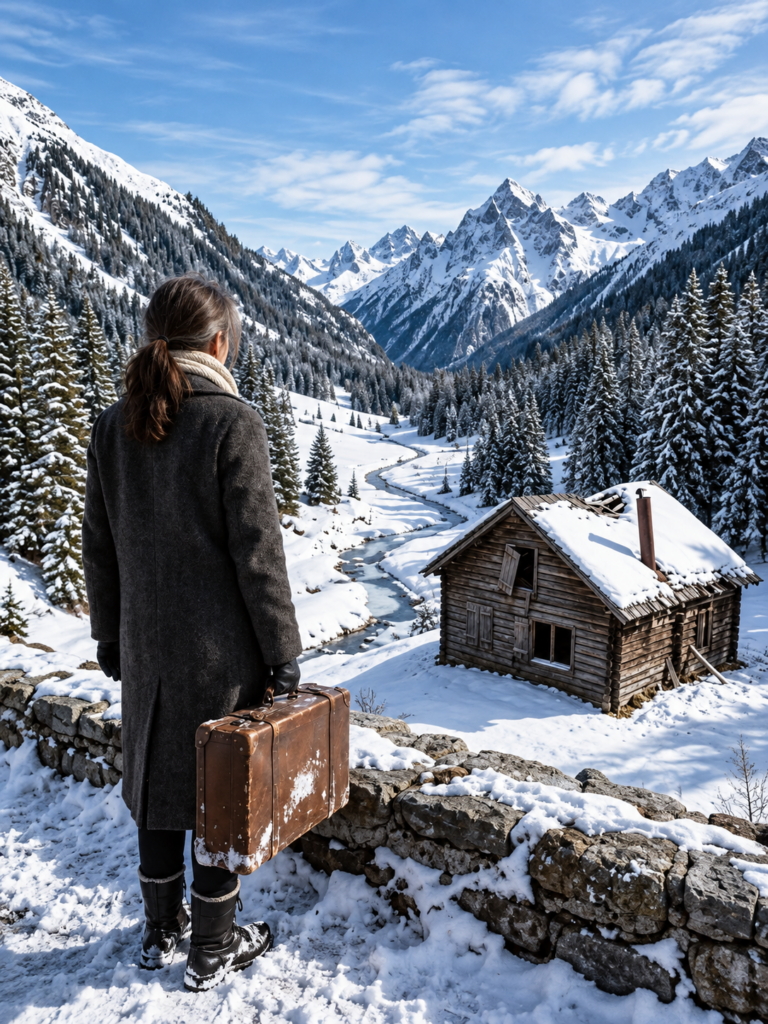
Part 1
The morning Marin Holt’s marriage ended, she had been awake since six, sitting at her kitchen table with a calculator, a stack of invoices, and a cup of coffee that had gone cold before she remembered to drink it.
At forty-three, she knew the financial rhythms of Holt Heating and Air better than she knew the patterns of her own sleep. November meant furnaces breaking down, frightened customers calling before sunrise, technicians working overtime, and money finally coming in fast enough to cover the leaner months.
She was checking a discrepancy in the quarterly accounts when her husband walked into the kitchen.
Wade cleared his throat.
It was a familiar little sound. For fifteen years, it had usually meant he wanted something: a clean shirt, an appointment changed, a customer called back, or his dry cleaning picked up.
This time he pulled out the chair across from her.
“Marin, sit down. We need to talk.”
She looked up from the invoices.
“I’m already sitting.”
He didn’t smile.
Wade was fifty-one now, with a new haircut and a gym membership she had paid for without asking why he suddenly needed one. Lately, he had been coming home later than usual, keeping his phone facedown and answering simple questions with a distracted impatience.
She had noticed.
She had simply chosen not to make a life out of noticing.
“I haven’t been happy for a long time,” he said.
Marin waited for the rest.
He looked at the salt shaker instead of her face.
“I think it would be better if we separated.”
For several seconds, the refrigerator humming behind her was the only sound she could hear.
“Separated?”
“There’s already an apartment. I’ve spoken to a lawyer. The paperwork is being prepared.”
Already.
That was the word that caught.
Somewhere, while she had been answering customer calls and reconciling bank statements, Wade had rented an apartment and hired an attorney. He had planned a future in which she was not included.
“Who is she?” Marin asked.
Wade told her.
She had expected the truth to hurt. What surprised her was how little the woman’s name mattered compared with the practical arrangements Wade had already made.
“This is cleaner for both of us,” he said.
“Cleaner?”
“You’ll be taken care of.”
Marin looked down at his hands.
Years earlier, those same hands had been split open by a sharp piece of sheet metal when they were still operating out of one rusted white van. They hadn’t had medical insurance worth using. She had cleaned the wound, stitched it at this very table, and stayed awake most of the night checking for infection.
He had called her the best thing that had ever happened to him.
She remembered because she had written those exact words inside her checkbook, where she could find them on difficult days.
Now he was discussing the end of their marriage as though he were terminating a service agreement.
Three days later, she learned how thoroughly he had prepared.
Holt Heating and Air, the business they had built from a van purchased with $4,000 of Marin’s nursing savings, was worth more than $600,000.
She had handled the books, answered the phones, collected overdue payments, learned the tax rules, and comforted elderly customers whose furnaces failed in the middle of winter.
Wade had been the face of the company.
Marin had been much of what kept it operating.
Yet somewhere along the way, the business had been incorporated, documents had changed, and her name had disappeared from the ownership records.
She remembered signing papers whenever Wade brought them home.
“Just routine business stuff,” he would say.
She had trusted him.
The house was another problem. Wade had owned it before their marriage, and although she had spent fifteen years helping pay the mortgage and improve it, his attorney treated the property as though her contribution had been incidental.
The bank accounts had been moved in October.
By the time Marin fully understood what was happening, the machinery had already been running for months.
Then she drove home from the lawyer’s office and saw a locksmith’s van parked in her driveway.
A young man stood on a ladder replacing the front-door lock.
Behind him was a silver sedan.
Inside sat a woman Marin had never seen, scrolling through her phone.
Marin stopped beside the ladder.
“I live here,” she told the locksmith.
He glanced toward the sedan.
The woman looked up, studied Marin for a moment, and gave a small nod.
The locksmith stepped aside.
“Two minutes,” he said.
Two minutes.
Fifteen years of marriage, years of mortgage payments, birthdays, Christmas mornings, late-night arguments, reconciliations, and meals cooked for a man who had promised to grow old beside her.
And now she had two minutes.
Marin took the duffel bag she had packed in case things got worse. From the closet shelf, she retrieved an old sewing tin that had belonged to her mother.
As she turned toward the door, she noticed a shopping bag resting beside the wall.
Inside were new throw pillows.
The woman outside had already begun furnishing the house while Marin was still living in it.
That detail hurt more than she expected.
She walked out without saying another word.
By evening, her possessions amounted to a duffel bag, her mother’s sewing tin, a nineteen-year-old Honda with a quarter tank of gas, and sixty-one dollars.
Forty of those dollars sat in an old checking account Wade had apparently forgotten about.
She slept behind a hardware store that night, curled across the car seat beneath her coat.
She thought about calling someone.
But almost every friendship she could name had grown out of Wade’s business or his social circle. Even her own sister had stopped returning her messages weeks earlier.
Marin began to understand that losing a marriage could mean losing the entire network of people around it.
At four in the morning, shivering in the driver’s seat, she opened her mother’s sewing tin.
Karen Sorenson had died six years earlier.
She had raised Marin alone, worked exhausting shifts at a laundry, and avoided nearly every question her daughter asked about the past.
Whenever Marin asked about her father, Karen gave the same answer.
“Gone before you knew to miss him.”
Whenever she asked where they had lived before the city, her mother’s expression closed.
Eventually, Marin had stopped asking.
Inside the sewing tin were spools of thread, pinking shears, needles, and a thimble worn smooth by decades of use.
Underneath them lay a folded paper, an envelope yellowed with age, and a heavy brass key.
Marin unfolded the paper first.
It was a hand-drawn map.
A county road somewhere far north. An abandoned quarry. A narrow lane leading into the mountains.
At the end of the lane, someone had drawn a small square.
Beside it was a single word.
Home.
Marin opened the envelope.
Inside was a deed describing forty acres of mountain land and a cabin, recorded in her mother’s name when Marin had been barely a year old.
She stared at it.
Her mother had owned property.
Not a rented apartment, not a few possessions tucked away in cardboard boxes, but forty acres and a cabin.
For more than four decades, Karen had carried the deed and the key from one cheap apartment to another without ever telling her daughter.
Marin couldn’t understand it.
But at that moment, she was too exhausted to investigate the mystery.
The deed was the only evidence she had of a place that might still belong to her family.
And she needed somewhere to go.
At dawn, she put eleven dollars’ worth of gas into the Honda, bought coffee and a sandwich, and headed north.
Four hours later, the farmland had disappeared behind her.
The highway narrowed between black pines, climbing toward mountains under a sky the color of dirty wool.
Snow began tapping against her windshield.
Then it came harder.
The radio announced a dangerous storm moving across the region. Heavy accumulation, high winds, and travel conditions that could become life-threatening.
People were being told to remain at home.
Marin kept driving.
She didn’t have a home.
She passed through a small town called Calder, where a diner glowed behind steamed windows and a little store stood beside two gas pumps.
She considered stopping.
Then the snow thickened, and she was afraid that if she turned around, she would never return.
Beyond town, the paved road became gravel and then a narrow track beneath fresh snow.
She found the old quarry.
A few yards beyond it, almost concealed by pine branches, was the lane drawn on her mother’s map.
The Honda managed perhaps two hundred yards before the tires sank into a drift.
Marin tried rocking the car forward and backward.
Nothing.
The wind shook the vehicle.
She sat gripping the steering wheel, suddenly aware of how far she had come without telling anyone where she was going.
Then she gathered her duffel, the sewing tin, and a flashlight from the glove compartment.
She stepped into the storm.
Snow reached past her knees in places. Her shoes filled with ice. Twice she stumbled and fell.
By the time she saw the clearing, her fingers were growing numb.
The cabin stood beneath towering pines, small and dark, its logs weathered almost silver.
One side of the porch had collapsed.
A window was broken open to the wind.
Snow had gathered against the front door.
It looked abandoned.
It looked nearly ruined.
To Marin, it was beautiful.
She forced her shoulder against the swollen door until it finally scraped inward.
Inside, she found two chairs, a wooden table, an old iron bed, shelves holding cracked mugs and rusted cans, and a cast-iron stove.
A supply of dry split wood had been protected beneath the roof.
There were matches near the stove, old and soft with age.
Four attempts later, a flame caught.
Marin knelt beside the iron door and watched the kindling brighten until the logs began to burn.
Warmth spread slowly into her aching hands.
Outside, the blizzard roared.
Inside, the cabin held.
Only after she stopped shaking did she begin to examine the place.
Between the main room and a smaller back room stood an old wooden doorframe marked with pencil lines.
At first, she assumed they were measurements of children.
But there were too many initials.
Too many different years.
The earliest date she could make out was 1951.
The marks climbed from the height of a small child to that of a grown adult.
Somebody had measured dozens of people here.
Perhaps hundreds.
Marin ran her finger along a faint pencil line.
She was still trying to make sense of it when she heard scratching at the front door.
Then came a thin, desperate cry.
She hesitated.
The nearest town was miles away, and the storm had erased every visible track.
The scratching came again.
Marin lifted the latch.
A large gray dog collapsed across the threshold.
The animal was old, painfully thin, and covered in ice. Its paws were torn, and its breathing came in shallow bursts.
One amber eye followed Marin as she crouched beside it.
“Oh, sweetheart,” she whispered. “What happened to you?”
She dragged the dog toward the stove and placed her own dry sweater beneath its body.
Her nursing experience told her that the animal was dangerously dehydrated and exhausted.
She melted snow, let the water cool enough to drink, and offered it carefully.
Eventually, the dog’s tongue moved.
Marin broke apart the remaining half of her sandwich and fed the animal tiny pieces.
“Easy now,” she murmured. “There’s more where that came from.”
There wasn’t.
But she kept talking.
She had spent much of her working life speaking gently to frightened people, even when she couldn’t promise them a good outcome.
Now she used the same voice for a half-frozen dog.
They survived the night together.
By morning, the snow had stopped.
The dog lifted its head when Marin rose, then pressed its nose against her palm.
She hadn’t been touched with that kind of uncomplicated trust in weeks.
“All right,” she said softly. “You and me.”
She named the dog Juno, after the watchful goddess from the old stories her mother used to love.
Juno followed her around the clearing while she inspected the cabin and found a coal shovel.
Marin spent two hours digging the Honda out of the snow.
By afternoon, she managed to get the car back down to the county road.
She drove to Calder with Juno riding on the passenger seat.
The woman behind the counter at the little store looked past Marin toward the dog, then studied the snow on Marin’s coat.
“Well,” she said. “You found Vera’s place.”
Marin froze.
“Whose place?”
“Vera Lond. Up past the quarry.”
The woman’s name was Fay. She had worked in the store so long that she knew practically everyone in the valley.
Marin took a basket and gathered rice, dried beans, two cans of soup, matches, a little dog food, and a soup bone.
At the register, she realized she couldn’t afford everything.
She started putting the dog food back.
Fay stopped her.
“Leave it. I’ll put it on your tab.”
“You don’t know me.”
“I know you bought food for that dog before you bought enough for yourself.”
Marin stared at her.
Fay began bagging the groceries.
“Out here, we get people warm first. We can find out their story afterward.”
Marin swallowed hard.
She had almost forgotten what kindness sounded like when it came without conditions.
Before Marin left, Fay asked whether she intended to stay at the cabin through winter.
“I don’t have anywhere else.”
“What about your husband?”
Marin looked out toward the car.
“He kept the house. I kept the dog.”
Fay nodded, accepting the explanation without asking for more.
Then her expression changed.
“There’s something you ought to know about that property.”
Marin felt her stomach tighten.
“The county’s selling it for back taxes. January. There’s a company buying up the whole valley, and they’ve got their eye on that land.”
Marin gripped the counter.
“But I have a deed.”
“That doesn’t mean the taxes were paid, honey.”
She drove back toward the mountain with her groceries and her dog, feeling as though someone had opened a door in front of her only to announce it would soon be locked again.
That afternoon, she examined the cabin more carefully.
In the back room, she found a second narrow bed made up beneath a wool blanket.
Along the wall hung coats in different sizes.
A man’s work jacket.
A child’s red parka.
A girl’s thin spring coat.
They weren’t abandoned belongings scattered at random.
They had been cleaned and hung ready for use.
Marin stood before them, unsettled by the thought of so many strangers sharing this remote place.
Then Juno began scratching at the floorboards near the inner doorway.
“Easy, girl. Your paws.”
But the dog wouldn’t stop.
One board sat higher than its neighbors. The wood around it had been worn smooth, as though someone had lifted it many times.
Marin pried it up with the coal shovel.
Beneath it was a shallow hollow lined with stones.
Inside lay a rusted biscuit tin.
She carried it to the stove and forced open the lid.
Wrapped in oilcloth was a thick leather ledger.
Marin opened it.
The pages were filled with names.
Hundreds of names.
Each entry included a date and a few lines describing the person who had arrived.
A father and two boys whose truck had slipped off an icy mountain road.
A sixteen-year-old girl who had run away.
Two children who had walked eleven miles after leaving a county home.
A family driven out by fire.
Women who arrived with bruises and refused to explain them.
Beside almost every name, written in a strong, slanting hand, were the same words.
Came in cold, left warm.
Marin looked around the room.
The extra bed.
The clean coats.
The waiting mugs.
The measurements climbing the doorframe.
She understood.
The cabin had not merely been somebody’s private mountain home.
It had been a refuge.
For decades, people with nowhere else to go had found shelter here, and the woman who kept the ledger had written down their names so they would not be forgotten.
Marin turned another page.
Then another.
Near the back, in an entry dated winter 1982, she found a name she knew.
Karen Sorenson. Nineteen. Baby coming. Sick through the winter. Stayed until the thaw.
Marin read it again.
Then she counted backward.
Her mother had been nineteen that winter.
Marin had been born the following spring.
The baby in the ledger was her.
She sat on the floor, the book trembling against her knees.
Her mother had been here.
Pregnant, sick, and alone.
Someone in this cabin had kept Karen alive during a winter when she had nowhere else to go.
Marin reached for the next entry, but something made her stop.
Under every other name, the keeper had written those three familiar words.
Came in cold, left warm.
Under Karen Sorenson’s name, there was nothing.
The entry simply ended.
Marin stared at the empty space.
For some reason, the woman who had recorded everyone else’s safe departure had left her mother’s story unfinished.
And Marin had no idea why.
Part 2
The next morning, Marin drove down to Calder with the ledger beside her and Juno stretched across the passenger seat.
Fay was behind the counter working on a crossword puzzle.
One look at Marin’s face made her put down the pencil.
“Coffee,” Fay said. “You look like you need it.”
She poured a cup and pulled out a stool.
Marin sat.
“Tell me about Vera Lond.”
Fay’s expression changed.
For a moment, she seemed to be deciding where to begin.
“Vera was a war widow,” she said at last. “No children. No family left that anybody knew of. She came up here when she was young and made that cabin her home.”
“Why so far out?”
“Maybe she wanted to be alone. Maybe the world had taken enough from her.”
Fay wrapped her hands around her coffee.
“The first winter, a family went off the road in a storm. They saw smoke from her chimney and walked toward it. Vera took them in, fed them, dried their clothes, and kept them until the road opened.”
“And after that?”
“People kept coming.”
Fay smiled faintly.
“For fifty winters, that woman opened her door to anyone who needed it. Hunters, travelers, children, folks whose houses burned down, women running from men they were afraid of. Some stayed a night. Some stayed all winter.”
Marin thought of the coats hanging in the back room.
“The county knew?”
“Of course. So did the church. But nobody made it official. Vera didn’t want officials deciding who deserved a bed.”
Fay leaned forward.
“She used to say you got somebody warm before you worried about the rest. Even when a man running from the law showed up, she fed him first. Then she listened to what he’d done and drove him to the sheriff herself.”
Marin looked into her coffee.
“She measured people against the doorframe.”
“The children, mostly. Every one she could.”
“Why?”
“She said every child ought to have somewhere that remembered them growing.”
Fay’s voice softened.
“Some came back years later and brought their own children to be measured.”
Marin remembered the pencil marks, the crowded dates, the names overlapping on the old wood.
Half the valley, Fay explained, had passed through Vera’s door at one time or another.
Some people had survived a single terrible night there.
Others had been given the time they needed to find work, recover from illness, or decide where to go next.
One little boy who had been brought to Vera by the county eventually grew up to run the very office now preparing to sell the property.
Marin looked up sharply.
“He runs the tax office?”
Fay nodded.
“He was one of Vera’s children, in a manner of speaking. Came to her half-frozen one winter and left in the spring with shoes that fit.”
Marin hesitated.
“Was there a girl there in 1982? Nineteen years old. Pregnant?”
Fay went still.
“Her name was Karen Sorenson,” Marin continued. “She was my mother.”
Fay slowly removed her glasses.
For a long moment, she said nothing.
Then she pressed her fingers against her eyes.
“I remember her.”
Marin could barely breathe.
“I was nineteen that winter myself,” Fay said. “My mother still ran this store. Vera brought a young woman down one time when she needed to see the doctor. Dark hair, frightened eyes. She sat over there by the stove with both hands on her belly.”
Fay looked toward an old chair near the wall.
“Hardly spoke a word. I never learned her name.”
Marin’s throat tightened.
“She died six years ago. She never told me about any of this.”
Fay reached across the counter.
“Vera left that place to your mother. Of all the people she helped, Karen was the one she chose. Signed it over to her.”
“Why?”
“I couldn’t tell you. But Vera must have seen something in her.”
Marin thought of her mother keeping the deed folded in a sewing tin.
All those years of rented apartments.
All those double shifts.
All those times when even a modest piece of property might have changed their lives.
“She never went back,” Marin said.
“No.”
“She kept the key, though.”
Fay gave her a long, sad look.
“Sometimes the place that saves you is also the place that reminds you what nearly killed you.”
On the drive up the mountain, Marin remembered things about her mother that had never seemed important before.
Karen had always kept their apartments unusually warm.
Even in the summer, she hated the feeling of cold rooms.
Whenever a homeless man slept in the stairwell of their building, she found something to feed him.
Once, a teenage girl from down the hall appeared at their door carrying a bag and hiding a black eye.
Karen let her sleep on the couch for a week without demanding an explanation.
Marin had grown up believing that was simply what her mother did.
Now she understood where Karen had learned it.
Vera’s kindness had not ended when Karen left the mountain.
She had carried it into every apartment afterward.
And now Karen’s daughter had returned to the place where it began.
But understanding that history did nothing to change the approaching tax sale.
Two days later, Marin drove to the county seat and stood before a clerk beneath fluorescent lights.
He checked the property records.
The accumulated taxes, penalties, and interest came to $3,211.
The sale was scheduled for January.
Unless the balance was paid before the auction, the property could be sold.
Marin looked at the figure.
She had less than a hundred dollars she could readily put toward it.
The clerk explained that the sale notices were already published.
An investment company had been purchasing farms and timber parcels throughout the valley, and everyone expected it to bid.
Marin thanked him and walked outside.
She stood beside her Honda for several minutes, staring at the frozen pavement.
Wade had taken the home she had helped maintain for fifteen years.
Now strangers were preparing to take the one place her mother had secretly left her.
She drove back to the cabin determined to search every inch of it.
That evening, she opened drawers, checked shelves, examined old trunks, and studied the ledger again.
Inside a slit in the back cover, she found a paper folded into a narrow square.
It was a letter.
At the top, in Vera’s familiar handwriting, were four words.
To whoever comes next.
Marin sat beside the stove with Juno resting her chin on her knee.
She unfolded the paper carefully.
Vera wrote that she was growing too old to keep the cabin going forever.
The mountain, however, would never stop sending people.
There would always be another traveler caught in a storm, another child with nowhere to sleep, another frightened person who needed a door that would open.
She asked whoever inherited the place to keep the stove ready and the door unlocked.
Then Marin reached a sentence that made her straighten.
Vera had put money aside for the county.
Enough, the letter promised, to protect the property.
The money was hidden in the place someone would look if she were cold, alone, and had nothing.
Marin read that passage three times.
There was no explanation.
No drawing.
No location marked with an X.
Just the strange assurance that a desperate person would know where to look.
The letter ended with a request to keep the ledger and continue recording the names of everyone who found shelter there.
Marin folded the paper and sat watching the flames.
Somewhere inside the cabin, Vera had hidden money.
But the more Marin considered the letter, the more important something else became.
Vera had not written to a specific heir.
She had written to whoever came next.
Whoever was willing to keep the place alive.
Marin glanced toward the back room where the coats still hung waiting.
She thought of her mother’s unfinished entry.
Then she remembered Wade sitting across from her in the kitchen, explaining that the life she had spent years building could be taken away with a few documents.
For most of her marriage, she had measured her worth by how much she contributed to somebody else’s plans.
Here, in an aging cabin beyond a quarry, she was being asked to do something she already knew how to do.
Care for people who needed help.
She looked down at Juno.
“I’m staying,” she said.
The dog thumped her tail.
Marin smiled.
“I suppose that means you are, too.”
The next morning, she started repairing the cabin.
She shaved the swollen door until it closed properly.
She braced the damaged corner of the porch with posts cut from a fallen pine.
She boarded the broken window and stuffed the gaps with cloth to stop the drafts.
Her shoulders ached at night.
Blisters formed on her palms.
But each evening, when she looked around the room, something was better than it had been the day before.
The stove burned more efficiently.
The wind no longer slipped through the doorframe.
The porch held firm beneath fresh snow.
She had spent years handling paperwork for a business that didn’t truly belong to her.
Now every repair was for a place she intended to keep.
Money remained the problem.
Fay mentioned around town that the woman living at Vera’s old cabin had once worked as a nurse.
Before long, somebody asked Marin to check on an elderly neighbor.
Then another person called.
An older man needed help getting to a clinic because his hip had become too painful for him to travel alone.
A retired schoolteacher needed someone to check her blood pressure.
A widow who could barely see was frightened of making a mistake with her insulin.
Marin visited the widow one afternoon and helped organize her medication, making the instructions easier for her to distinguish.
Afterward, the woman asked Marin to stay for coffee.
They sat at a kitchen table while the widow spoke about her late husband, her failing eyesight, and the loneliness of a house that had once been full.
When Marin stood to leave, the woman pressed forty dollars into her hand.
Marin tried to refuse.
The widow closed her fingers around the money.
“You sat with me,” she said. “Nobody sits with me anymore.”
Marin accepted the bills.
They were the first money she had earned in weeks doing work that made her feel like herself.
More people began calling.
Some paid in cash.
Others brought food, firewood, or winter clothing.
One morning, she found canning jars on the porch.
Another day, a man she had never met delivered wrapped venison.
The county plow driver began clearing her lane after finishing the public road.
When Marin tried to thank him, he explained that Vera had once rescued his father from a ditch during a whiteout.
He acted as though the debt had simply been waiting for someone to collect it.
Marin kept her earnings in a coffee can.
Ninety dollars.
Then a hundred and seventy.
Then two hundred and forty.
She counted the money at night while Juno slept by the stove.
The tax bill remained far beyond her reach.
She searched for Vera’s hidden money whenever she had time.
Under the hearthstones.
Behind the chinking between the logs.
Inside the old bed frame.
Along the rafters and beneath the shelves.
Nothing.
The riddle kept returning to her.
Cold, alone, and nothing.
She understood all three conditions.
What she didn’t understand was where Vera expected a person in that condition to look.
January drew closer.
Juno grew stronger.
The hollows along the dog’s ribs disappeared beneath a thick gray coat. Her torn paws healed. She patrolled the clearing every morning and slept close to Marin every night.
Marin changed, too.
The work strengthened her arms.
She slept more deeply.
Her appetite returned.
Sometimes she caught herself humming while carrying water or splitting wood.
She had begun to feel useful again.
Then the radio started warning about another storm.
A large system was moving down from the north and west.
Forecasters described it as potentially the worst storm the valley had seen in a decade.
It was expected to arrive during the same week as the tax sale.
Marin listened while standing beside the stove.
The county wanted $3,211.
She had nowhere near enough.
And the only road out of the mountains might soon disappear beneath several feet of snow.
The storm arrived after dark.
All afternoon, Marin had been preparing.
She filled every pot and jug with water.
She stacked wood beside the stove, moved blankets within reach, checked the matches, and placed a lamp where she could find it in darkness.
Juno’s bedding came closer to the fire.
By midnight, the cabin shook beneath the wind.
Snow hammered the walls.
Marin sat beside the stove, thinking about the courthouse.
If she left before dawn, she might reach the county seat before the road became impassable.
She would bring the coffee can.
She would explain what the place meant.
She would ask for more time.
It was not much of a plan.
But it was the only one she had.
Then Juno stood.
The dog moved to the front door and raised her head.
A low growl sounded in her chest.
“What is it, girl?”
Juno barked.
Marin listened.
Wind rattled the boards.
Snow hissed against the roof.
Nothing else.
“There’s nobody out there.”
Juno scratched at the door.
Again.
More urgently.
Marin remembered the first night, when the dog had nearly died outside that same doorway.
She remembered Juno scratching at the floorboard above the ledger.
She had learned that when Juno insisted something needed attention, it usually did.
Marin opened the door a few inches.
Wind forced its way inside.
For several seconds, she could see nothing beyond the porch.
Then the snow shifted.
Far below, near the county road, a faint light blinked through the darkness.
Headlights.
Pointing at an unnatural angle.
A vehicle had gone into the ditch.
Marin shut the door.
Her mind began working with the practiced urgency she remembered from hospital emergencies.
Somebody was down there.
The road was almost invisible.
If the person inside the car couldn’t get out, the cold might kill them before morning.
She pulled on a heavy coat, added another pair of socks, and filled her pockets with the things she thought she might need.
From a peg near the door, she took a long coil of rope Vera had left behind.
She tied one end to the porch post.
Then she took the lamp and stepped into the storm.
Juno bounded ahead.
The slope was steep, and the wind drove snow across it in blinding sheets.
Several times, Marin fell to her knees.
The rope pulled against her gloved hand.
Juno returned repeatedly, circling close and then pushing forward again as though urging her to follow.
At last, the shape of a car emerged from the white darkness.
It was a small sedan, nose down in the ditch.
Snow had piled against the doors.
Marin cleared the driver’s window with her sleeve.
Inside sat a young woman, barely conscious, her lips blue with cold.
In the back seat was a little boy strapped into a car seat beneath a thin blanket.
He was terrifyingly still.
Marin dug snow away from the driver’s door and forced it open.
The woman tried to speak.
“My boy.”
“I see him,” Marin said. “I’m a nurse. I’m going to help you.”
The woman’s eyes moved toward the back seat.
“Please.”
Marin reached inside and freed the child first.
He was perhaps three or four.
She pulled him against her chest, zipped her coat around him as far as she could, and leaned close enough to feel his faint breathing.
Then she helped the mother out of the car.
The young woman’s legs barely supported her.
Marin got her arm across her shoulders and reached for the rope.
“Hold on to me,” she said. “We’re going uphill.”
She could not have explained afterward how they managed that climb.
The boy lay motionless against her chest.
The mother’s feet dragged.
The wind knocked them sideways.
Marin followed the rope hand over hand, keeping her eyes on the faint shape of Juno moving through the snow.
Halfway up, her legs began to fail.
She stopped.
For one dreadful moment, she believed she had made a terrible mistake.
She had brought two people out of a stranded car only to have all three freeze on the mountainside.
Then Juno came back.
The dog barked directly in her face, pressed against her leg, and moved uphill again.
Marin took another step.
Then another.
Somewhere ahead, the cabin appeared.
A square of darkness against the snow.
A warm stove beyond its door.
She struggled onto the porch and pushed inside with the mother and child.
For the next hour, Marin forgot about the county, the tax bill, and Wade.
Her whole attention narrowed to keeping two people alive.
She moved them out of wet clothing and into dry blankets, began careful warming measures, and spoke constantly, even when neither could answer.
The mother’s shivering returned first.
She cried with relief and fear as she watched her child.
The boy remained limp, his skin frighteningly pale.
Marin kept talking to him.
“Come on, little man. Stay with us.”
She warmed him carefully and watched his breathing.
When he finally began to stir, she barely dared to believe it.
Then he opened his eyes.
A moment later, he started crying.
His mother burst into tears.
Marin closed her eyes briefly, overwhelmed by the sound.
The child was alive.
His name was Eli.
His mother was Cass, twenty-three years old.
When Cass became strong enough to speak, she explained that she had been driving north to escape a man in a town to the south.
She had no real destination.
No money for a safe place to stay.
Only the certainty that she needed to get her son away.
Then the storm swallowed the road.
“I didn’t know where I was going,” Cass whispered, holding Eli close. “I just kept driving.”
Marin sat beside her.
Looking at the young woman, she saw a frightened nineteen-year-old Karen Sorenson arriving at a mountain cabin in the winter of 1982.
She saw all the years between them.
She saw Vera opening the door.
And now, somehow, she was sitting in Vera’s place.
“You don’t have to go anywhere tonight,” Marin told her. “You’re safe here.”
Cass began apologizing.
For the trouble.
For the food.
For the blankets.
For needing help.
Marin shook her head.
“You don’t apologize in this house.”
Cass looked at her.
“Why are you doing this?”
Marin glanced toward the old doorframe.
“Because somebody did it for my mother. And because it’s what this place is for.”
Before dawn, Cass and Eli were asleep near the stove.
Marin took down the ledger and opened it to the first blank page.
She found Vera’s old pen.
Beneath the date, she wrote their names.
Cass and her son Eli. Found after their car went off the road during the storm. No place to go.
Then she added the words that had appeared beneath hundreds of names before theirs.
Came in cold, left warm.
She closed the book.
At sunrise, the wind died.
The valley lay beneath an extraordinary silence.
Snow buried the lane, the trees, and almost everything beyond the clearing.
Marin stood on the porch with Juno beside her.
Then, far down the mountain, she heard an engine.
She looked toward the road.
A plow truck was cutting its way uphill.
Behind it came a county sedan with chains on its tires.
Marin watched both vehicles climb toward the cabin.
She recognized the plow driver.
But she didn’t recognize the man getting out of the county car.
He wore a courthouse badge.
And he was coming toward her with an envelope in his hand.
Part 3
The plow driver reached the porch first.
He removed his cap and looked at the smoke rising from the chimney.
“Glad to see you’re still here,” he said. “That was one wicked storm.”
Marin glanced toward the county sedan.
“Who’s with you?”
“Somebody who wanted to see the place.”
Fay climbed out next, bundled in a heavy coat over her familiar robin’s-egg-blue cardigan.
Behind her came a gray-haired man in a county jacket.
He looked to be about sixty, perhaps older, with the careful movements of someone whose knees had begun to object to mountain winters.
He stopped at the foot of the porch.
“Mrs. Holt?”
Marin stiffened.
Then the man corrected himself.
“Miss Sorenson. I’m from the county tax office.”
Marin looked at the envelope in his hand.
“If you’ve come about the sale, I know what I owe.”
“I know you do.”
“I’ve been trying to raise the money. I don’t have it yet.”
The man didn’t answer immediately.
Instead, he looked past her at the cabin.
His gaze moved over the repaired porch, the boarded window, and the chimney sending smoke into the pale morning sky.
Something changed in his face.
“Would you mind if I came inside?” he asked. “It’s been a very long time.”
Marin hesitated.
Then she stepped aside.
The man entered slowly.
Cass sat beside the stove with Eli asleep in her lap. Juno lay nearby, resting after the night’s ordeal.
The ledger remained on the table.
The county official barely noticed any of them at first.
He was staring at the inner doorway.
He walked toward it, bent with some difficulty, and touched a pencil mark near the bottom.
Beside it were initials and a date.
1966.
“That’s me,” he whispered.
Marin looked at Fay.
Fay nodded.
The man kept his finger against the wood.
“I was seven. My parents were gone. The county didn’t know what to do with me that winter. There wasn’t room where they usually sent children.”
He swallowed.
“Somebody brought me up here.”
For a moment, he couldn’t continue.
“I remember being cold. I remember crying because I thought nobody was coming back for me.”
He looked around the room.
“Vera gave me a bed. The next morning, she stood me against this doorframe and marked my height.”
A faint smile crossed his face.
“She told me I’d be taller by spring.”
He wiped his eyes with the back of his hand.
“I was, too.”
The man stood before the pencil marks as though they were the most important official records he had ever seen.
“When I left here in April, I had shoes that fit. A coat of my own. And somebody had spent a winter telling me I was worth feeding.”
Marin felt her throat tighten.
The official turned toward her.
“I spent my whole life acting like I made something of myself without anybody’s help.”
He glanced at the ledger.
“Then last fall, a delinquent property file came across my desk. Forty acres. An old cabin. Decades of unpaid taxes.”
His voice became quieter.
“I approved the sale.”
He looked ashamed.
“I never stopped to think about what that parcel was. It was just a number.”
Fay moved closer.
“Then I called him,” she said.
The man nodded.
“Three days ago, Fay told me somebody had moved back into Vera Lond’s place. Said the woman living here was Karen Sorenson’s daughter.”
He looked toward Cass and Eli, then at the fire.
“And now I come up here and find another mother and child alive because that stove was burning.”
Marin crossed her arms.
She was afraid to hope for anything.
“What are you telling me?”
The official pulled out a chair.
“Please sit down.”
Marin remained standing for another moment before lowering herself into it.
The man placed the envelope on the table.
“The sale is canceled.”
She stared at him.
“What?”
“The taxes are paid. All of them. Three thousand two hundred eleven dollars. Cleared two days ago.”
Marin looked toward Fay.
Fay was smiling through tears.
“I don’t understand,” Marin whispered.
“It wasn’t me,” the official said. “I want that understood. Though I wish I’d thought to do something sooner.”
He rested one hand on the table.
“After Fay called, word began spreading. First to a few people who remembered Vera. Then to their families. Then to people whose parents or grandparents had stayed here.”
He smiled faintly.
“They started coming into my office.”
Marin said nothing.
“A farmer who spent the winter of 1959 in this cabin. A pharmacist whose mother had nowhere to go when she was young. A retired teacher. A truck driver. A man who repairs furnaces.”
One of his hands trembled against the tabletop.
“They brought cash. Checks. Whatever they could spare. One fellow came in carrying a jar full of coins.”
He paused.
“I’ve worked in that office for years, and I’ve never seen anything like it.”
Marin’s eyes filled.
“Why?”
The man looked toward the doorframe.
“Because most of us are standing here today because Vera Lond opened that door.”
He took a slow breath.
“Some people gave ten dollars. Some gave a hundred. They kept coming until the entire bill was paid.”
He pushed the envelope toward Marin.
Inside was the county’s receipt showing the overdue taxes satisfied, along with the updated parcel record in Karen Sorenson’s name.
The property no longer faced the January auction.
The company purchasing land throughout the valley would not acquire Vera’s cabin through that sale.
Marin touched the paper.
She had spent weeks imagining herself at the courthouse, begging for time.
She had counted every dollar in her coffee can until the sum seemed painfully small.
And while she was struggling alone on the mountain, people throughout the valley had been remembering debts she had never known existed.
The official stood.
“I wanted to bring you that myself.”
He glanced around the room again.
“And I wanted to see this place before I got too old to come back.”
Marin pressed her hand against her mouth.
The tears came suddenly.
She had not cried when Wade told her their marriage was over.
She had not cried when the locks were changed.
She had not cried while sleeping in her car or walking through the first blizzard.
But now, sitting beside the stove of a dead woman she had never met, she finally broke.
Fay crossed the room and wrapped her arms around her.
Marin cried against her shoulder.
Juno rose and leaned against her knees.
Across the room, the county official stood holding his hat, looking once more at the pencil mark Vera had made when he was seven.
For a long while, nobody tried to explain anything.
There was nothing that needed explaining.
The cabin was safe.
And Marin could stay.
After the visitors left, Marin sat beside the stove with the envelope in her lap.
She looked around the room.
The fire crackled.
Cass was resting in the back room with Eli.
Juno snored beneath the table.
The danger that had occupied Marin’s every waking thought was gone.
Only one mystery remained.
Vera’s hidden money.
Marin retrieved the old letter and read the passage again.
Money saved for the county.
Hidden where a person would look if she were cold, alone, and had nothing.
She had searched nearly everywhere.
Under the floorboards.
Behind shelves.
Inside furniture.
Beneath the hearthstones.
Then she looked up at the stove.
She remembered her first night.
Her frozen fingers.
Her wet shoes.
The terrible pain of feeling warmth return to her hands.
When she had entered the cabin with nothing, what had she looked for first?
Not money.
Not food.
Not even a bed.
Fire.
Marin knelt beside the iron stove.
She examined the stonework behind it and noticed a narrow recess tucked behind the firebox, beyond the direct flames.
She reached carefully into the cavity.
Her fingertips touched metal.
She drew out a flat tin.
The container was warm and dusty.
Inside lay a tightly wrapped roll of old bills.
She counted them slowly.
More than a thousand dollars.
Money Vera had saved over the years, little by little, against the possibility that the cabin might someday need protecting.
There was also a photograph.
The old print had been folded so many times that white cracks ran across it.
It showed a much younger Vera standing outside the cabin with a family she had rescued from the snow.
The logs behind them still looked new.
Everyone was squinting in the bright sunlight.
Marin turned the photograph over.
On the back, in Vera’s strong handwriting, were three words.
Came in cold, left warm.
The same promise.
The same measure of a life.
Marin sat before the stove with the money and photograph in her lap.
She thought about Vera putting bills away whenever she could.
A little saved from one season.
A little from another.
Not for luxuries, not for travel, not for something she wanted to buy.
For the cabin.
For the people who might need it after she was gone.
Marin placed the money back in its hiding place.
The taxes had been paid.
The next emergency might be different.
She wanted Vera’s savings to remain available when that day came.
The photograph she kept.
She set it on the mantel, where she could see it every morning.
Then she took up her tools and returned to repairing the window.
There was still work to do.
Wade arrived in the last week of February.
Marin heard an unfamiliar engine at the bottom of the lane.
A few minutes later, a man appeared between the trees, walking carefully through the snow in polished shoes.
She was splitting kindling near the porch.
Juno stood at her side.
It took Marin a moment to recognize him.
Wade looked smaller than she remembered.
Not physically, perhaps, but somehow diminished without the office, the house, and all the familiar surroundings that had made him seem important.
He stopped below the steps.
“Marin.”
“Wade.”
His eyes traveled across the clearing.
The repaired porch.
The newly glazed window.
The stacked firewood.
Smoke rising from the chimney.
He studied the heavy winter coat she wore, the color in her face, and the big gray dog watching him.
“You look good,” he said.
Marin set the kindling down.
“Thank you.”
“I heard what happened up here.”
She waited.
“The storm. The people you saved. The county thing.”
He glanced toward the cabin.
“I didn’t believe it at first.”
Marin said nothing.
Wade shifted his weight.
“You really did all this with nothing.”
She looked toward the house.
The old logs.
The doorframe.
The fire burning inside.
“I had more than nothing,” she said. “I just didn’t know it yet.”
He nodded slowly.
“I brought the final papers.”
He held out an envelope.
They both knew he could have mailed them.
Marin took the documents and spread them across the porch railing.
She read each page carefully.
There would be no more signing simply because Wade pointed to a blank space.
No more trusting another person’s assurances in place of understanding what she was agreeing to.
When she reached the signature line, she took out Vera’s pen.
Wade watched.
Marin signed the name she had chosen to reclaim.
Marin Sorenson.
Wade stared at the writing.
For a moment, something uncertain crossed his face.
Perhaps regret.
Perhaps surprise.
Perhaps the realization that the woman before him was no longer waiting for him to tell her what happened next.
“I never meant for things to get so ugly,” he said quietly.
Marin folded the papers.
She thought of the locksmith’s van.
The woman waiting in the silver sedan.
The throw pillows already purchased for a house Marin was still trying to leave.
She could have reminded him of every detail.
She could have asked him how long the affair had lasted, why he had moved the accounts, or whether he had ever once considered what would happen to her.
But the questions no longer seemed important enough to carry back into her life.
She handed him the signed documents.
Wade looked toward the open cabin door.
“You seem happy here.”
“I have work I care about.”
He nodded.
For a moment, Marin thought he might apologize properly.
He didn’t.
She found that she no longer needed him to.
“Take care of yourself, Wade.”
Her voice was neither bitter nor affectionate.
She meant it.
He looked at her for another moment, then turned and walked back toward the lane.
Marin did not watch him leave.
She went inside to feed the stove.
It was the last time she spoke to him.
Cass and Eli stayed through the remainder of the winter.
Gradually, Cass began sleeping through the night without waking at every small noise.
She helped with chores, cooked when Marin was out visiting neighbors, and learned to manage the stove.
Eli recovered his appetite and became a lively little boy who followed Juno everywhere.
The old dog tolerated his endless questions, clumsy hugs, and attempts to persuade her to play in the snow.
One morning, Marin found Eli studying the markings on the inner doorframe.
“What are those?” he asked.
“Measurements.”
“Of what?”
“People who stayed here.”
He looked up.
“Like me?”
“Just like you.”
Marin brought out a pencil and stood him against the frame.
She made a small mark above his head and wrote the date beside his name.
It was the first new measurement the cabin had received in nearly thirty winters.
Eli looked at the mark with enormous pride.
“Do it again.”
Marin laughed.
“You haven’t grown since I measured you.”
“But I might have.”
She measured him again anyway.
Cass found work at the diner in Calder.
The hours were steady, and eventually she saved enough to rent a small place nearby.
She didn’t need to remain in the cabin anymore.
But Marin made sure she understood there was no deadline forcing her out.
In April, when the roads had cleared, Cass brought her repaired sedan up the lane.
The plow driver had helped get it out of the ditch and fixed it without charging her.
Eli ran around the clearing with Juno while Cass loaded their bags.
When everything was ready, Cass came onto the porch carrying her son.
“I don’t know how to thank you,” she said.
“You already have.”
“No. You saved our lives.”
Marin looked at the young woman standing before her.
Cass’s face was no longer drawn with fear.
She had a job.
A home of her own.
A little boy who could laugh without being frightened of what might happen next.
“Just keep going,” Marin said. “And someday, when you find somebody who needs help, leave a door open for them.”
Cass began crying.
Marin embraced her.
Then she crouched beside Eli.
“You come back and get measured, you hear?”
Eli nodded.
“I’m gonna be taller than that whole door.”
“I suppose we’ll have to wait and see.”
Marin stood with Juno and watched the sedan travel down the lane.
This time, watching someone leave did not feel like being abandoned.
Cass and Eli were going forward.
That was what the cabin had always been meant to help people do.
Later, Marin opened the ledger.
Beneath their original entry, she wrote that Cass and Eli had gone into Calder, where Cass had found work and a home.
Then she added the old words.
Came in cold, left warm.
And for the first time, she understood how much hope could fit inside a sentence that short.
As spring spread across the mountains, the snow withdrew from the clearing.
Marin repaired the porch properly.
She replaced the remaining broken glass, painted where the weather had worn the wood bare, and began planting near the cabin.
Juno spent long afternoons sleeping on the sunny boards.
The dog’s fur had grown thick and healthy, and she had the peaceful expression of an animal that knew exactly where it belonged.
Visitors began finding their way to the cabin again.
Not crowds.
The road remained remote, and the mountain was too quiet for that.
But people came when they needed to.
Two hunters caught by a late snow squall.
A young man traveling on foot with everything he owned in a backpack.
He stayed three nights, ate warm meals, and split enough firewood to help prepare for another winter.
Marin wrote every name into the ledger.
Each guest was offered food and shelter without first having to explain why they needed either.
Those who wished to tell their stories could.
Those who preferred silence were allowed to keep it.
And every child who stayed long enough was measured against the doorframe.
One afternoon, Marin took her mother’s brass key from the sewing tin.
She had carried it from the car to the cabin on that first desperate night.
It had been her last connection to something she could call home.
Karen had kept it hidden for decades.
Marin found a small nail beside the front door and hung the key there.
She would never need to use it again.
The door remained unlocked.
Vera had asked for that.
And Marin intended to honor the request.
During the first week of the thaw, a man appeared at the end of the lane.
He was thin, exhausted, and wearing a coat too light for the mountain weather.
He stood at the bottom of the steps with a bag hanging from one shoulder.
Something in his expression told Marin he had spent a long time trying to find the courage to ask for help.
He looked toward the open door.
Then back at her.
“I’m sorry,” he began. “I didn’t know if anybody lived here.”
Marin stepped onto the porch.
Juno came out beside her.
“Somebody does.”
The man shifted uncomfortably.
“I’ve been walking. I don’t really have anywhere…”
His voice trailed off.
Marin remembered Karen at nineteen.
Cass at twenty-three.
The seven-year-old boy who had once been brought to Vera by the county.
She thought of herself sleeping behind a hardware store with sixty-one dollars and no one she knew how to call.
She understood the shame of needing a place to go.
She also understood something she had not known then.
Needing help did not mean a person was worth less than someone who could offer it.
“You look cold,” she said.
The man stared at her.
“There’s coffee inside. And the stove’s warm. You can tell me whatever you want after you’ve eaten.”
He looked as though he might cry.
“Are you sure?”
Marin opened the door wider.
“Come in. You found the right place.”
That evening, after the man had been fed and settled into the back room, Marin sat beside the stove with the old ledger.
Juno slept at her feet.
The photograph of Vera stood on the mantel.
Marin turned back through decades of names.
The father whose truck had gone off the road.
The runaway girl.
The orphaned children.
The families, travelers, and frightened women whose lives had crossed this small room.
Then she reached the winter of 1982.
Her mother’s entry.
Karen Sorenson. Nineteen. Baby coming. Sick through the winter. Stayed until the thaw.
For more than forty years, the words beneath it had remained unwritten.
Marin had spent weeks wondering why.
Perhaps Vera had feared that Karen had gone back into a world that would hurt her.
Perhaps Karen had been too frightened and wounded for Vera to believe she was leaving truly safe.
Or perhaps the blank space had simply remained because Vera had never learned what became of the young mother and her baby.
Marin would never know for certain.
But she knew what had happened afterward.
Karen had survived.
She had raised her daughter.
She had worked hard, endured loneliness, and quietly offered shelter to people the world had overlooked.
Even when she could not bring herself to return to the mountain, she had carried the kindness she found there into the rest of her life.
And now her daughter had come back.
Not merely to live in the cabin.
To keep its promise.
Marin uncapped Vera’s pen.
She held it for a moment above the old paper.
Then, beneath Karen Sorenson’s name, she carefully wrote two words.
Left warm.
She read them once.
Then she closed the ledger.
In the back room, the exhausted stranger was sleeping beneath a clean blanket.
Juno breathed peacefully beside the stove.
Outside, the mountain stood dark and quiet under the spring stars.
Marin remembered the night she had driven north with a duffel bag, a brass key, and a life that seemed to have ended.
She had believed she was traveling toward the only place left where she could disappear.
Instead, she had found a place that remembered everyone who came through its door.
A place where a person’s value was not determined by a bank account, a last name, a house, or somebody else’s decision to stay.
The cabin had sheltered her mother.
Then it had sheltered her.
And now, as long as she could keep the fire burning, it would shelter whoever came next.
Marin set the ledger on the shelf.
She checked the stove, lowered the lamp, and looked once toward the front door.
The brass key hung beside it, catching a faint glimmer of firelight.
She left the door unlocked.
Because the mountain would never stop sending people.
And someone would always come.