Part 1
The bank took Audrey’s house on a Tuesday.
On Wednesday, her husband flew to Aspen with his twenty-four-year-old assistant.
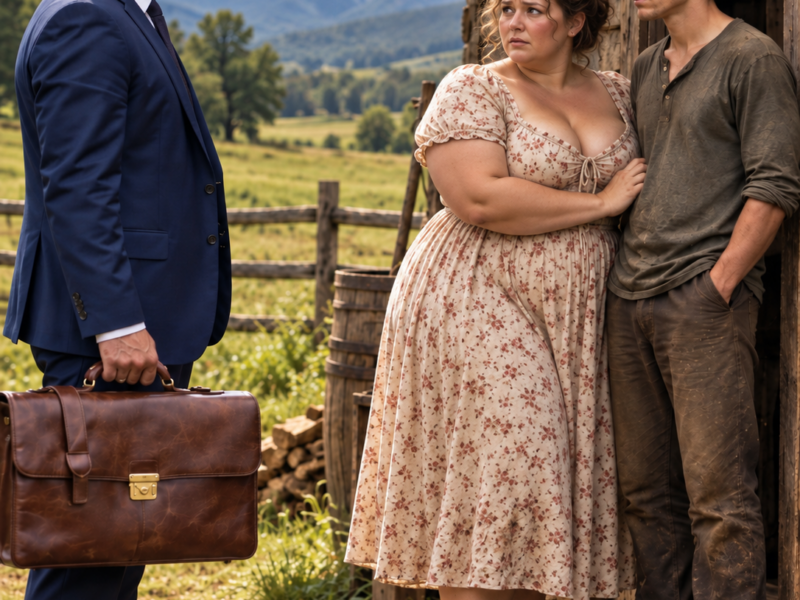
By Friday, Audrey had everything she owned packed into a duffel bag with a broken zipper, a 2008 Honda Civic that rattled whenever she accelerated, and a deed to an abandoned limestone quarry that nobody had wanted in almost sixty years.
David had laughed when the property came up during the divorce.
“At least you’ll have somewhere to put all your disappointment,” he’d said.
His attorney hadn’t laughed. He’d simply pushed the paperwork across the polished conference table and indicated where Audrey needed to sign.
Ten years of marriage. Two years of financial manipulation. Three months of depositions and arguments.
And this was what remained.
Audrey had discovered the affair through a series of emails she wasn’t supposed to see. But the woman David had been sleeping with wasn’t what destroyed her.
It was a spreadsheet.
David had named the file Project Restructure.
For two years, while they ate breakfast together and discussed vacations, he had been transferring their joint savings through offshore shell companies. Every movement had been documented. Every account had been arranged to make their financial position appear worse than it was.
By the time their divorce became final, the money was effectively beyond her reach.
She had been awarded half of almost nothing.
David kept the lifestyle, the connections, and the financial structure he’d spent years building.
Audrey got the quarry her grandfather had left her.
She drove there in October, during an afternoon of steady, cold rain.
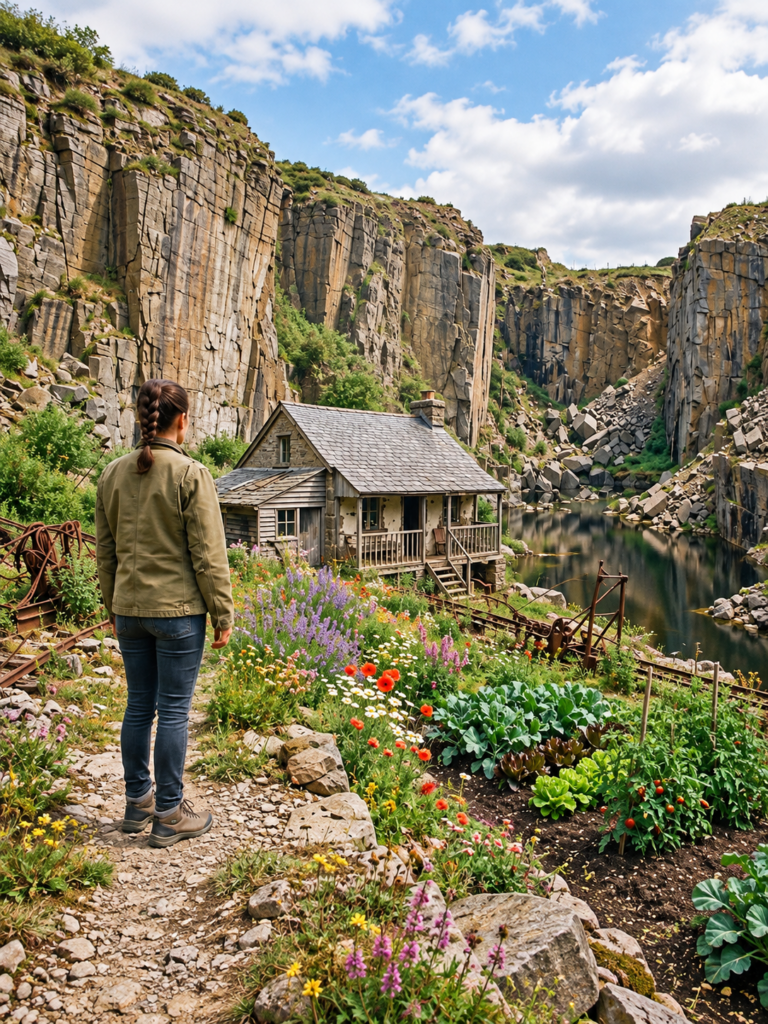
The entrance was nearly invisible from the county road. Dead weeds crowded a rusted gate, and a chain hung between two leaning steel posts. Beyond it, the land fell away into an enormous limestone excavation.
Audrey stopped the Civic and stared through the streaked windshield.
The quarry walls dropped nearly a hundred feet toward a pool of stagnant green water. Broken equipment sat among the weeds. Gravel roads disappeared beneath thistles and creeping brush.
Near the far edge of the excavation stood a small wooden cabin.
Its roof sagged. One corner of the porch had collapsed. Several windowpanes were either broken or missing.
Audrey looked down at the folded deed on the passenger seat.
Her grandfather had purchased the property in the 1970s for next to nothing. He’d treated it as a tax write-off, rarely mentioning it and never, as far as she knew, visiting the place.
For years, David had mocked it as her useless inheritance.
Now it was the only piece of land in the world that belonged to her.
She turned off the engine.
The silence that followed made her aware of how far she had fallen.
At their old house, there had always been noise: the refrigerator humming, the dishwasher running, David taking business calls from his study, cars moving along the quiet suburban street.
Here, the only sound was rain striking the windshield.
Audrey pulled on her thin coat and stepped outside.
A gust of wind caught the door and nearly slammed it against her hip.
She retrieved a tire iron from the trunk and approached the gate. The padlock had rusted so badly that its edges were indistinguishable from the chain.
She struck it once.
Pain traveled up her wrist.
She struck it again.
The weakened metal snapped.
She dragged the chain aside, pushed the gate open, and drove through.
The road toward the cabin was little more than two muddy tire tracks. The Civic scraped its undercarriage over exposed stones, and Audrey stopped short of the porch rather than risk getting stuck.
She grabbed her duffel.
Inside were three sweaters, work boots, a toothbrush, and the twenty-dollar sleeping bag she’d purchased at a pawn shop.
She carried it all up the porch steps.
The front door hung crookedly from a damaged hinge. When she pushed, it scraped across the floor.
The smell inside was unbearable.
Wet timber. Mouse droppings. Old dust. Something sour beneath the cabinets.
Rainwater dripped through a hole in the roof and collected in a shallow depression between two warped floorboards.
There was a rusted wood stove, an iron bed frame without a mattress, and a narrow counter supporting an old hand-pump sink.
Audrey set down her bag.
For a moment, she stood without moving.
Then she walked to the sink and pushed the pump handle.
Nothing happened.
She tried again.
The handle resisted, then loosened with a squeal. She pumped harder until something coughed inside the pipe.
A thin trickle of muddy brown water splashed into the basin.
It smelled of rust and decay.
Audrey stared at it.
She had not cried when she discovered David’s affair.
She had not cried when the bank took the house with its wraparound porch, or when she handed over her keys, or when David’s lawyer spoke to her in the careful tone people used with someone they considered defeated.
But the sight of that dirty water finally broke something.
She gripped the counter.
Her knees gave way, and she slid down the cabinet until she was sitting on the rotten floor.
Then she cried.
Not quietly. Not with any concern for dignity.
She sobbed until her chest hurt and her throat burned, until she couldn’t tell whether she was grieving her marriage, her money, or the woman who had believed David every morning for ten years.
She remembered him standing in their kitchen, smiling while the coffee brewed.
She remembered defending him when friends thought he worked too much.
She remembered every time he’d told her not to worry about the finances because he had everything under control.
He had.
That was the terrible part.
He had controlled everything.
When Audrey finally looked at her watch, it was 4:12 p.m.
She calculated that she’d been crying for twelve minutes.
Outside, the light was already fading.
There was no working heat, no prepared food, and no one coming to help her.
She wiped her face against her sleeve.
Then she stood.
The quarry was littered with fallen branches and remnants of timber from its mining years. Audrey hauled enough dry wood inside to build a fire in the stove, using a crumpled gas receipt as kindling.
It took several attempts before the flames caught.
She sat on the floor and watched the little fire grow.
The stove gradually warmed the air immediately around it, though cold drafts continued to slip beneath the door.
Audrey spread her sleeping bag across the floorboards and lowered herself onto it.
Every part of her body hurt.
Her rib still ached where she had walked blindly into a doorframe during the worst days of the divorce. Her hands were sore from the tire iron. Her shoulders throbbed from dragging wood.
She thought about the heated bathroom floors in her old house.
The linen sheets.
The thick rug beneath the bed.
All the things she’d once considered ordinary.
At some point, a mouse scratched inside the wall.
Audrey opened her eyes.
Under different circumstances, she would have called someone to remove it.
Tonight, she merely pulled the sleeping bag higher around her shoulders.
“Stay over there,” she whispered.
The mouse continued scratching.
She almost laughed.
Almost.
Throughout the night, she woke to feed the stove. When morning arrived, she had slept perhaps two hours.
She stood at the window and wiped condensation from the glass.
Mist hung low over the quarry. The water at the bottom was invisible beneath it.
The whole place looked abandoned, dangerous, and forgotten.
Which meant nobody would come looking for her here.
“Perfect,” Audrey murmured.
The first month nearly defeated her.
The roof leaked in three places. The hand pump worked only sporadically. The door admitted icy wind, and the wood stove smoked whenever the weather changed.
Audrey learned because she had no alternative.
She drove two towns over and traded the last of the money she’d received from pawning her jewelry for roofing tar and discarded tin sheets.
She climbed onto the roof with trembling legs and patched the worst openings.
She dismantled the hand pump, cleaned the corroded check valve with steel wool, and eventually coaxed a steady flow of cold, clear groundwater from the spout.
She washed dishes in a basin.
She heated water on the stove.
She learned how much wood a person could burn through in a single freezing night.
When mice invaded her food supplies, she tried crushed peppermint leaves along their usual paths.
Some nights the remedy helped.
Other nights she lay awake listening to tiny feet in the walls.
Her hands developed blisters. The blisters split, healed, and hardened into calluses.
She stopped caring about her fingernails.
Her hair was usually tied back, and her coat permanently smelled of woodsmoke.
She lost fifteen pounds without meaning to.
One morning, she caught her reflection in the cracked mirror she’d hung above the sink.
Her face looked thinner. Her jaw seemed sharper. The tired woman in the glass had an unfamiliar steadiness in her eyes.
Audrey studied that reflection for several seconds.
David had always handled the money, the repairs, the arrangements, the decisions.
He had made dependence feel like comfort.
Out here, no one made decisions for her.
If the roof failed, she fixed it.
If the stove went cold, she gathered more wood.
If something frightened her, she had to work through the fear because there was nowhere else to go.
By late November, the cabin was finally dry enough to live in.
Audrey had stacked a cord of firewood against the southern wall and laid thick thrift-store wool rugs across the floorboards.
She could sleep without waking in panic every hour.
But surviving the present didn’t solve the problem of the coming winter.
She needed somewhere to store potatoes, canned beans, and the other supplies she’d been gathering.
A root cellar seemed possible if she could dig below the coldest layer of ground.
She chose a spot along the north side of the cabin, close to its stone foundation.
The soil was terrible.
Clay and limestone gravel resisted every strike of her pickaxe.
She developed a rhythm.
Swing. Break. Shovel.
Swing. Break. Shovel.
Sometimes she thought about David.
Sometimes she imagined him at some beautiful resort, complaining that the service wasn’t what he’d expected.
Sometimes she pictured the spreadsheet on his computer.
Project Restructure.
She swung harder when she remembered that name.
Two months after arriving at the quarry, Audrey was working in a hole nearly three feet deep when her pickaxe struck something that rang.
Not the flat thud of stone.
Metal.
The impact traveled through the handle and into her shoulder.
She dropped the pickaxe and crouched beside the hole.
A patch of rust showed beneath the clay.
She fetched a hand trowel and started scraping.
After several minutes, a straight edge appeared.
Then another.
Audrey cleared away more dirt until she could see a square iron plate roughly two feet across.
A thick ring had been fixed to its center.
She sat back.
The plate was positioned beneath the line of the cabin’s stone foundation, almost as though someone had deliberately concealed it there.
Audrey knew the quarry had closed in the late 1960s.
She knew her grandfather had purchased the land sometime afterward.
But he had never mentioned anything underground.
She gripped the ring and pulled.
It didn’t move.
She planted both boots against the surrounding earth and tried again.
Nothing.
For an instant, she considered leaving it alone.
Then she remembered the roof.
The pump.
The broken gate.
All the times something had seemed impossible until she found a way to make it work.
She returned to the cabin for penetrating oil and soaked the seams.
While the oil worked, she made tea and sat on the porch, staring toward the hole.
A septic tank?
An abandoned utility chamber?
A capped well?
None of those explanations quite fit its position.
An hour later, she brought out a crowbar.
She forced its flattened edge into the narrow seam between the iron plate and its stone rim.
Then she leaned on it.
The metal resisted.
She changed her footing and pushed again.
Something cracked beneath the soil.
The seal broke with a hiss of stale air.
Audrey recoiled.
A faint dry smell rose from the opening—old dust, metal, and something she couldn’t identify.
She gripped the iron ring and hauled upward until the heavy lid shifted. With one final effort, she tipped it backward onto the dirt.
Beneath it was a square black opening.
She knelt and looked down.
A wooden ladder disappeared into the darkness.
Audrey hurried inside for her flashlight.
When she returned, she directed the beam into the shaft.
The ladder descended approximately twelve feet to a smooth concrete floor.
Steel supports lined the walls.
This wasn’t an old well.
It was a concealed underground chamber.
A bunker.
Audrey remained at the opening for a long time, listening.
Nothing moved below.
She placed a boot on the first rung and tested it cautiously.
The wood creaked but held.
She descended slowly, stopping more than once to sweep her flashlight across the walls.
At the bottom, her boots touched dry concrete.
The room was about ten feet square.
Its construction was far more substantial than anything aboveground. Reinforced beams supported the ceiling, and the dry air seemed unnaturally still.
In the center stood an enormous olive-green metal trunk secured with a thick brass padlock.
But something else caught her attention first.
Canvas bags.
Dozens of faded folds of heavy material, stacked on wooden pallets along the far wall.
They resembled the bags banks once used for transporting money.
One had deteriorated near its bottom corner.
Something rectangular showed through the torn fabric.
Audrey approached.
She knelt beside the pallet and carefully opened the damaged section.
Inside were bundles of old paper, held together by brittle bands.
At first, she thought they were oversized banknotes.
Then she raised one toward the flashlight.
A printed date caught her attention.
1934.
She examined the lettering.
Bearer bonds.
Some of the certificates were marked in denominations of one thousand dollars. Others were five thousand or ten thousand.
She recognized the term from something David had once said at a dinner party.
Ghost money, he had called it.
Financial instruments issued to whoever physically held them, rather than registered under an owner’s name.
Audrey stared at the certificate.
Upstairs, she had less than enough money for a comfortable winter.
Down here, someone had buried what looked like a substantial fortune.
She took one of the canvas bags and dragged it toward the ladder.
It was astonishingly heavy.
Getting it up the twelve-foot shaft was miserable work. Her shoulders burned. The canvas began tearing halfway up, and she had to brace the bag against each rung while she repositioned her grip.
By the time she reached the surface, she was sweating despite the cold.
She hauled the bag inside, closed the hatch, and pulled a rug over the opening.
For the first time since moving into the cabin, she barred the door.
Then she built up the fire and opened the bag.
Bundles spilled across the wool rug.
Audrey began counting.
One thousand.
Five thousand.
Ten thousand.
She arranged the certificates by denomination and recorded the totals on a piece of torn cardboard.
The work lasted through the night.
At four in the morning, she counted the figures one final time.
The contents of that single bag amounted to approximately $4.2 million in face value.
Audrey put down her pencil.
Beneath her cabin were at least twelve more bags.
She sat motionless beside the stove, surrounded by certificates older than her parents.
David had called the quarry worthless.
His attorneys hadn’t bothered contesting it.
The man who’d spent two years hiding their savings had left her standing above a fortune without realizing it.
But Audrey did not celebrate.
She was beginning to understand the difference between discovering money and being able to use it.
Old bearer bonds would invite questions. Banks would demand authentication and documentation. Regulators might become involved. And if her sudden wealth became visible, David’s legal team could try to reopen their financial dispute.
She had no secure banking structure, no trustworthy financial adviser, and almost no cash.
She looked down at her hands.
They were rough, cracked, and stained with dust from paper that might be worth millions.
For the first time since the divorce, Audrey wasn’t thinking about how much David had taken from her.
She was thinking about how to keep him from taking anything else.
Part 2
The following morning, Audrey drove to the public library in Oak Haven.
The building stood between a shuttered auto parts store and a discount pharmacy. Its brick exterior was stained by years of rain, and half the lights inside seemed permanently switched off.
She entered wearing the same coat she’d used to patch her roof.
The librarian barely glanced up.
Audrey sat at a public computer and spent four hours researching bearer bonds, financial regulations, and how old securities could be authenticated and redeemed.
The more she read, the less comfortable she became.
Some bonds had matured long ago. Some might require extensive historical verification. Others could be difficult to redeem at all without establishing their legal status.
They weren’t stacks of cash.
They were promises written on paper, and Audrey needed to find out which promises were still enforceable.
She also needed to establish whether she had a legitimate claim to the securities simply because she had found them on her property.
She made notes until her fingers cramped.
Finally, she leaned back and closed her eyes.
There were millions of dollars’ worth of certificates hidden beneath her cabin, but she couldn’t purchase a hot dinner with any of them.
And she was running out of money.
By the time she drove back to the quarry, rain was falling again.
The Civic struggled up the muddy road. Twice, its tires spun uselessly before finding traction.
When she entered the cabin, the fire had died.
She didn’t bother relighting it immediately.
Her eyes went toward the concealed opening leading to the bunker.
The canvas bags could wait.
There was another object down there.
The olive-green trunk.
Audrey took her flashlight and a hacksaw and descended into the chamber.
The trunk occupied the center of the concrete floor, its brass padlock showing thick green patches of corrosion.
She studied it.
Someone had hidden enormous quantities of financial paper in canvas bags without placing individual locks on them.
Yet the trunk had been secured.
Whatever it contained, its owner had considered it worth additional protection.
Audrey knelt and positioned the hacksaw against the brass.
The work was slow.
Her arm began aching after ten minutes.
By twenty, sweat ran down her forehead.
She changed her grip, rested briefly, and started again.
Eventually, the weakened metal separated.
The padlock fell onto the concrete.
Audrey set aside the saw and unfastened the trunk’s stiff steel clasps.
She raised the lid.
At first, the flashlight showed only rows of dull yellow rectangular objects.
She reached down and attempted to lift one.
Its weight surprised her so badly that she nearly dropped it.
She used both hands.
The object was a rough-cast gold bar, small enough to hold but far heavier than its size suggested.
She turned it toward the light.
A crude assayer’s mark had been stamped into the surface.
Beneath it were the words indicating one kilogram of .999 fine gold.
Audrey stared at the stamp.
Then she looked back inside the trunk.
Ten bars across.
Several layers deep.
Approximately fifty kilograms of gold.
She lowered herself onto the concrete floor, still holding the bar.
For a moment, she could hear nothing except her own breathing.
The bonds had represented possible wealth.
This was something else.
Dense, tangible, unmistakably valuable metal sitting in her lap.
She thought of David hiring accountants to move their savings overseas.
The fees he’d paid. The secret accounts. The careful deception.
He had believed himself so clever.
And all that time, the property he considered worthless had concealed a fortune beneath its rotting cabin.
Audrey gave a short, exhausted laugh.
“Checkmate,” she whispered.
The word sounded strange in the underground chamber.
She looked at the gold again.
Then her expression changed.
She couldn’t afford to become careless simply because she had finally found something worth protecting.
She wrapped one bar in a wool sock and placed it inside her duffel bag.
The others remained in the trunk.
The following morning, she drove nearly three hundred miles, crossing two state lines before reaching an industrial district of Pittsburgh.
She had chosen a coin and precious-metals dealer called Apex Coins and Metals.
Its storefront had barred windows and a faded neon sign.
Audrey parked three blocks away, carried her bag to the shop, and stepped inside.
The air smelled faintly of cigars and cleaning chemicals.
Behind a thick glass partition sat a heavyset man with a beard.
“What can I do for you?”
Audrey took the wrapped gold from her bag.
“I need to sell this.”
She pushed it through the transaction opening.
The dealer lifted it.
His eyebrows rose.
He examined the rough casting with a jeweler’s loupe, checked its weight, and performed a preliminary test.
“Old bar,” he muttered.
He looked at Audrey more closely.
“Where’d you get it?”
“Inheritance.”
“Got any documentation?”
“Nothing beyond the property it came from.”
The dealer tapped the counter with one finger.
“You understand I can’t just take your word for what this is.”
“Then test it.”
He studied her for several seconds.
She was thin, plainly dressed, and clearly not someone who ordinarily walked into precious-metals shops carrying kilogram gold bars.
But she didn’t look nervous.
That interested him.
After further inspection and calculations, he named a figure.
“Fifty-five thousand.”
Audrey knew the gold’s estimated market value was closer to sixty-four thousand dollars at the price he was using.
He was offering substantially less.
She also knew she lacked the time, contacts, and financial stability to negotiate from a position of strength.
“Cash?” she asked.
He hesitated.
Then he nodded.
“Fine.”
The transaction left Audrey with a thick envelope of money and a feeling she hadn’t experienced in months.
She could afford choices again.
She drove to a cheap motel instead of returning immediately to the quarry.
That night, she took a long hot shower.
She stayed beneath the water until the bathroom mirror was completely covered in steam.
For the first time since arriving at the cabin, she washed without calculating how much firewood it would take to heat another kettle.
Afterward, she sat on the edge of the sagging motel mattress in clean clothes.
The envelope lay beside her.
Fifty-five thousand dollars.
Not enough to restore everything David had taken.
But enough to begin.
She purchased a prepaid phone, opened a notebook, and started making calls.
It took three days to find Hollis.
He was a disbarred corporate attorney operating from a strip-mall office in Cleveland. People who knew him described a man with questionable professional boundaries and an extensive understanding of business structures.
Audrey arranged to meet him at a diner.
He arrived smelling of cheap cologne and looking as though he expected trouble.
Throughout their conversation, he shredded paper napkins into narrow strips.
“You want a limited liability company,” he said, glancing at her notes.
“Three.”
His fingers stopped.
“Three companies?”
“Nested. A parent company, a second company beneath it, and an operating company.”
Hollis examined her face.
“What are you trying to protect?”
“My assets.”
“From whom?”
“Someone who has already taken enough.”
He continued watching her.
Audrey placed a cash payment on the table.
“I want a Delaware structure. A trust arrangement. Proper accounts. And I want to control the companies without my personal circumstances becoming public information every time I conduct business.”
Hollis looked at the money.
“Structures like that aren’t magic,” he said. “There are still disclosures, tax obligations, and people who can ask questions.”
“I understand.”
He gave her a skeptical smile.
“Most people who come to me don’t understand nearly as much as they think.”
Audrey met his eyes.
“Then do the part you understand.”
His smile faded.
“What should the operating company be called?”
Audrey looked toward the diner’s rain-streaked window.
“Limestone Holdings.”
Hollis wrote it down.
She returned to the quarry after another week, bringing a rugged laptop, a secondary safe, and supplies she couldn’t previously have afforded.
She had broken the remaining cash into manageable reserves and kept it secured.
The first thing she did was reconsider the bunker.
A fortune protected by an old brass padlock wasn’t much of a fortune if someone else found the entrance.
Over the next three days, she moved the remaining gold away from the original trunk.
Inside the cabin, she worked beneath the cast-iron stove, breaking through part of the limestone foundation and preparing a concealed storage cavity.
She lined it with concrete and waited for the material to cure.
Then she transferred the bars one by one.
The labor left her muscles trembling.
When she finished, she secured the heavy stove over the concealed space.
The gold was no longer sitting in an obvious trunk at the center of an underground room.
But gold hidden beneath a stove could not pay bills indefinitely.
She needed a functioning business.
Hollis called when the Delaware entities were established and their banking arrangements were in place.
“You’re incorporated,” he told her. “Now you need operations. A business that actually does something.”
Audrey had already been studying the county records.
Outside Oak Haven sat a failing business called Oak Haven Salvage and Towing.
The property covered four acres of oil-stained gravel and contaminated soil. Rusting automobiles filled the yard. Tangled copper wire lay beside piles of scrap metal.
Two tow trucks stood near the office.
One was hardly operational.
The owner, a sixty-year-old man named Miller, had spent years trying to keep the business alive.
Audrey entered his prefabricated trailer on a cold Tuesday morning.
Miller sat in front of a portable television.
Without looking up, he said, “Parts aren’t sold to the public. Scrap drop-off’s around back.”
“I’m not here to drop anything off.”
“Then what do you want?”
“To buy the yard.”
Miller finally looked at her.
He laughed.
“Lady, this isn’t a yard sale.”
Audrey remained standing.
“You’re three years behind on property taxes. Your insurance lapsed in March. One of your tow trucks has a cracked engine block. And the state environmental agency is threatening fines over the leaking diesel tank.”
The laughter ended.
Miller switched off the television.
“Who are you?”
“Someone who reads county records.”
He leaned back in his chair.
“Yard isn’t for sale.”
“It will be when the county moves against you.”
He looked toward the window.
Audrey could see the pride fighting with exhaustion on his face.
She placed a stack of cash on the counter.
“Twenty thousand dollars. You settle the immediate problems and get out. Limestone Holdings assumes the mortgage and takes ownership of the property, the inventory, and the liabilities.”
Miller stared at the money.
“You’d take this place with all its problems?”
“Yes.”
“Why?”
“Because you don’t want it anymore.”
He studied her cracked knuckles and muddy boots.
Then he sighed.
“I’ve spent half my life out there.”
Audrey said nothing.
Miller looked toward the window again.
Finally, he took the offer.
Within two weeks, Audrey owned Oak Haven Salvage and Towing.
The business provided something she desperately needed: activity that existed outside the buried fortune.
People brought in scrap. Suppliers and customers came and went. Larger refineries purchased material. Money moved through a commercial account.
It also offered opportunities Audrey knew were dishonest.
The old gold bars could be recast, sold through private precious-metal contacts, and disguised within the salvage company’s records.
She began doing exactly that, using a locked shed at the rear of the yard and working with a specialized buyer in Philadelphia who showed little interest in asking questions.
The proceeds began appearing as business revenue.
On paper, Limestone Holdings was becoming a profitable enterprise.
Audrey understood that she was taking risks no ordinary business owner should have taken.
David had manipulated accounts to strip her of everything, and now she was manipulating records to protect and use what she had discovered.
She didn’t pretend the similarity was noble.
She simply refused to surrender her advantage.
Unlike David, she didn’t use the money to purchase another expensive home or surround herself with luxury.
She reinvested it.
First in the business.
Then in the quarry.
She hired a contracting crew from three counties away and paid them generously to renovate the cabin without making its exterior attractive.
The sagging walls remained visibly weathered.
The porch still looked old.
From the road, the building appeared scarcely better than the shelter Audrey had found that first rainy afternoon.
Inside, the transformation was extraordinary.
The rotten floorboards were replaced with solid oak.
The roof was insulated and permanently sealed.
The windows received thick ballistic glass.
A reinforced steel door replaced the one that had barely hung from its hinge.
A solar array was installed behind the tree line, and a buried communications line connected the property to reliable internet service.
Six concealed thermal cameras watched the roads and the quarry rim.
The original rusted gate was replaced by heavy steel tubing and an electronically controlled lock.
Audrey also purchased the surrounding two hundred acres, extending the controlled boundary around the quarry.
Her cabin was becoming a secure command center disguised as an abandoned shack.
Six months after David had locked her out of their house, Audrey sat in an ergonomic leather chair beside the cabin window.
Snow drifted across the limestone cliffs.
A cup of expensive pour-over coffee steamed on her desk.
Six camera feeds glowed on the monitors.
Her laptop displayed the Limestone Holdings bank balance.
$840,000.
And she hadn’t redeemed a single bearer bond.
She looked down at her hands.
The skin was still rough. Small scars crossed several knuckles. Her fingernails no longer resembled the careful manicures she’d worn during her marriage.
She could have had them restored.
She didn’t want to.
They reminded her of the months when money had meant nothing because she had none, when the difference between sleeping warm and sleeping cold had depended on how much wood she could carry.
She lifted her coffee.
Then a silent proximity alert flashed red across one of the monitors.
Audrey put down the cup.
A vehicle had entered the outer access road.
She leaned forward.
The camera sharpened the image as it rounded a bend.
A black 2026 BMW X7.
The vehicle rolled toward the locked gate and stopped.
A man climbed out.
He wore a tailored wool coat and polished Italian leather shoes that sank immediately into the mud.
Audrey recognized him before he raised his head.
David.
For several seconds, she simply watched.
He looked thinner.
His shoulders were tight, and the confidence he’d once worn so effortlessly had been replaced by agitation.
He walked to the gate and pulled at it.
When it refused to move, he kicked the steel bar.
Mud splashed over his expensive shoes.
Audrey felt an unexpected calm settle over her.
She had imagined seeing him again many times.
In some versions, she’d shouted at him.
In others, she’d demanded an apology.
Sometimes she’d simply wanted him to witness how completely he had broken her.
But now, sitting in the warm cabin he’d considered worthless, she realized she wanted none of those things.
Her phone buzzed.
David.
She let it ring.
On the monitor, he lowered his phone and approached the gate’s intercom.
A chime sounded inside the cabin.
Audrey activated the speaker.
She remained silent.
“Audrey? I know you’re in there.”
She watched him shift his weight.
“Open the gate.”
She waited.
His expression darkened.
“Audrey, don’t play games. I drove three hours to get to this godforsaken place.”
Finally, she spoke.
“You’re trespassing, David.”
He looked directly into the camera.
“We need to talk.”
“No, we don’t.”
“Open the gate.”
“The court divided our assets. Our divorce is final. You have no reason to be here.”
David struck the intercom housing with his palm.
“Stop pretending you don’t know why I’m here.”
Audrey leaned back.
“Then explain it.”
“My lawyers found Limestone Holdings.”
She remained silent.
“You bought a salvage business. You paid cash. You bought two hundred acres around this quarry. You’re hiding something.”
“Am I?”
“Where did the money come from?”
Audrey glanced at the bank ledger on her screen.
David continued.
“You had nothing six months ago. Nothing. You couldn’t even afford an attorney who knew what she was doing.”
“Apparently, that bothered you less then.”
“Don’t turn this around. You hid assets during the divorce.”
Audrey felt her lips curve slightly.
The accusation was almost perfect.
David was accusing her of exactly what he had done.
“You siphoned money into some secret account, didn’t you?” he demanded. “You pretended to be broke while you were stealing from me.”
Audrey opened a background report on his real estate businesses.
She had been monitoring his financial situation through the secure system Hollis had arranged, but the latest details surprised even her.
The Securities and Exchange Commission had opened a preliminary inquiry involving one of David’s offshore partners.
Two of his real estate developments had filed for Chapter 11 bankruptcy.
His liquid capital was frozen.
The young assistant who had accompanied him to Aspen had disappeared from his recent public life.
David hadn’t driven three hours to gloat.
He was in serious financial trouble.
And somehow, he’d decided Audrey might have money he could claim.
“If you believe I’ve hidden marital assets,” she said evenly, “file a motion.”
David stared toward the camera.
“That’s it?”
“That’s it.”
“You’re going to let me stand out here?”
“You can leave whenever you want.”
“I’m not going anywhere until I see what you’ve built up there.”
He grabbed the gate and shook it.
Audrey watched the heavy steel remain motionless.
She had once spent entire evenings trying to calm this man’s temper.
She knew his methods.
First came outrage.
Then threats.
Then the sudden change of tone, when he would explain that his anger was only a reaction to how unreasonable she had been.
She wasn’t interested in hearing any of it again.
“Leave my property, David.”
“Make me.”
Audrey switched off the intercom.
She stood and crossed the cabin to a locked oak cabinet.
Inside was a legally purchased twelve-gauge pump-action shotgun she kept for site security.
She retrieved it, checked the weapon, and walked to the reinforced front door.
Cold wind swept across the porch when she stepped outside.
She carried the shotgun pointed toward the ground.
From the quarry rim, she could see David standing at the gate roughly a hundred yards below.
He spotted her.
For the first time since arriving, he stopped shouting.
Audrey stood beneath the falling snow.
She didn’t raise the weapon.
She didn’t advance.
She simply watched him from the high ground.
David took one backward step.
Then another.
He looked toward his BMW, then back at Audrey.
She reached into her coat and raised the remote for the electronic gate, reminding him that she controlled its lock.
David’s face tightened.
But he said nothing.
He returned to his vehicle, climbed inside, and reversed down the road.
The BMW’s tires spun in the mud before finding traction.
Then the car disappeared around the bend.
Audrey remained outside until the sound of its engine faded.
She looked down at the gate.
Six months earlier, David had watched her lose everything without offering a word of comfort.
Now he had traveled three hours to demand access to property he had once mocked.
She turned back toward the cabin.
For the moment, he was gone.
But Audrey knew desperation could make people dangerous.
And she knew David well enough to understand that being turned away wouldn’t end his obsession.
Inside, she returned the shotgun to its cabinet and sat at her desk.
The account balance still read $840,000.
Beneath the cabin, the old bearer bonds remained untouched.
David had built his financial empire using contracts, companies, and debt.
He had taught Audrey, without ever intending to, that the most devastating weapons in his world weren’t made of steel.
They were made of paper.
She opened her notebook.
This time, she wasn’t planning how to defend herself.
She was planning how to end the fight.
Part 3
Three mornings after David’s visit, Audrey drove to Cleveland carrying a leather briefcase.
Inside were bearer bonds with a combined face value of one million dollars.
She had spent hours selecting and checking the certificates, examining their dates and denominations beneath the cabin’s desk lamp.
Now she needed Hollis to find a way to turn them into usable capital.
The heater in her Civic barely worked, and the windshield kept fogging in the cold.
Audrey didn’t care.
She could have bought a new car.
Instead, she kept driving the one David had considered too worthless to fight over.
When she entered Hollis’s strip-mall office, he was eating a pastrami sandwich behind a cluttered desk.
He looked up.
“You’re early.”
Audrey set the briefcase in front of him.
“Open it.”
Hollis wiped his hands on a paper towel.
He released the brass latches and lifted the lid.
His chewing stopped.
For several seconds, he stared down at the bundles of old securities.
Then he carefully removed a ten-thousand-dollar certificate and held it toward the fluorescent light.
“Good Lord.”
He examined the printing and watermark.
“Where did you find these?”
Audrey sat in the chair opposite him.
“They’re part of my property.”
Hollis looked at the other certificates.
“These belong in a museum.”
“Are they valuable?”
“Potentially. If they’re authentic, if the obligations are still enforceable, and if nobody has a competing claim.”
“Then verify them.”
He placed the certificate back in the briefcase.
“You’re talking about a million dollars in old bearer paper. Domestic banks aren’t going to handle something like this without serious scrutiny.”
Audrey crossed her legs.
“You have international contacts.”
“That doesn’t mean—”
“Private asset managers. Geneva. People who specialize in legacy securities.”
Hollis leaned backward.
“Who told you that?”
“You did. During one of our earlier conversations.”
He glanced toward the office door.
Audrey continued.
“I want the instruments authenticated and processed. I’ll accept a twenty-percent fee if the transaction can be completed.”
Hollis rubbed his forehead.
“You don’t understand how complicated this is.”
“Then explain what you need to do.”
For the next half hour, he talked about institutions, verification, custodial procedures, and the difficulties posed by bearer instruments issued decades before modern recordkeeping systems existed.
Audrey listened.
She asked questions.
When he finished, she looked toward the briefcase.
“Can you do it?”
Hollis studied her.
He had initially assumed she was a desperate woman trying to recover money from a failed marriage.
Now he saw something else.
Someone who had learned how much danger could hide behind a reassuring smile, and who no longer mistook confidence for competence.
“It’ll take at least three weeks,” he said.
“And your fee?”
“More than we discussed.”
“Take it from the twenty percent.”
He opened his mouth to object.
Audrey stood.
“Call me when it’s finished.”
She walked out, leaving him alone with the briefcase.
For the next twenty-one days, Audrey stayed close to the quarry.
She chopped wood.
She reviewed the salvage company’s accounts.
She monitored the cameras and watched snow accumulate along the limestone cliffs.
Her life had acquired a routine she had never expected to enjoy.
Each morning, she prepared coffee, opened the financial reports, and checked the businesses David had once considered unassailable.
His position continued deteriorating.
The preliminary regulatory inquiry had unsettled lenders.
His real estate companies were missing obligations.
Assets were tied up in bankruptcy proceedings.
The structure he had used to create the appearance of endless wealth was proving remarkably fragile once the money stopped moving.
Audrey remembered the first time she’d questioned one of his investments.
He had smiled across the dinner table.
“Debt is a tool, Audrey. People who understand money know how to use it.”
At the time, she’d accepted the explanation.
Now she understood another side of it.
Debt could make a person powerful.
It could also make that person vulnerable to whoever owned the obligation.
On the twenty-second day, her encrypted laptop chimed.
Audrey looked at the screen.
A wire transfer had cleared into the Limestone Holdings account.
$800,000.
The proceeds of the processed bonds, after the substantial fee.
She read the confirmation twice.
Then she picked up her phone and called Hollis.
“Funds arrived,” she said.
He sounded exhausted.
“Those certificates caused more trouble than you can imagine.”
“Your fee was paid.”
“Yes.”
“Good. Initiate phase two.”
Hollis went quiet.
“You’re certain about this?”
“Completely.”
“Audrey, this is going to get personal.”
“It already is.”
She ended the call.
Phase two had nothing to do with improving the cabin.
It had nothing to do with expanding the salvage yard.
She wanted to acquire David’s defaulted debt.
His real estate companies were collapsing under loans that their creditors no longer expected to recover in full.
The distressed obligations were being packaged for sale.
To the banks, they were damaged assets.
To Audrey, they were something more valuable.
They represented the financial structure David had spent years using to control everyone around him.
And now pieces of that structure were available to purchase.
Hollis attended the closed-door debt auction as Limestone Holdings’ registered representative.
The banks were eager to remove David’s troubled portfolio from their balance sheets.
The winning purchase price came to approximately $1.6 million.
Audrey used the recently processed bond proceeds and capital accumulated through the salvage business.
By the end of the transaction, Limestone Holdings controlled the consolidated debt portfolio.
The mortgage on David’s Aspen timeshare.
Liens associated with his leased luxury vehicles.
Primary claims against substantial portions of his frozen business assets.
Audrey reviewed the documents at her desk, page by page.
She was not merely wealthier than David now.
She had become one of the people to whom he owed money.
For ten years, David had told her which bills could be paid, what purchases were sensible, and whether their finances permitted her to make decisions of her own.
He’d made those decisions while secretly dismantling their joint savings.
Now, his remaining financial future was tangled in obligations controlled by the woman he had abandoned.
Audrey closed the file.
The satisfaction she felt was real.
But it wasn’t simple.
She remembered sitting on the cabin floor, staring at muddy water from the pump.
She remembered how cold she’d been that first night.
She remembered believing that her life had become too small to matter.
No amount of money could make those memories disappear.
Still, for the first time, David would be forced to confront the consequences of his own decisions.
The final confrontation came on a bleak Tuesday in November.
Audrey drove to Chicago wearing a tailored charcoal-gray suit.
Her hair was neatly arranged, her shoes polished, and her documents organized inside a leather folder.
She deliberately left her hands uncovered.
The calluses were still there.
She wanted them visible.
The federal courthouse smelled of floor polish and stale coffee.
Inside an arbitration room, David sat at a long mahogany table with two lawyers.
He looked terrible.
His expensive suit hung loosely from his shoulders. His complexion had turned gray, and he was chewing the edge of his thumbnail while studying a legal pad.
The confidence that once filled every room he entered was gone.
Audrey paused outside the doorway.
For an instant, she saw the husband she’d married.
The man who used to reach for her hand across restaurant tables.
The man who had promised they would build a life together.
Then she remembered Project Restructure.
She stepped inside.
Her heels clicked across the polished floor.
David did not immediately look up.
He assumed another bank representative had arrived.
Audrey pulled out the chair directly opposite him and sat down.
Only then did he raise his head.
His expression emptied.
“Audrey?”
She placed her folder on the table.
He stared at her suit, her face, her hands.
“What are you doing here?”
Audrey said nothing.
David turned toward the mediator.
“Who let her in? She’s my ex-wife. This is a closed proceeding.”
The court-appointed mediator adjusted his glasses.
“Mr. Vance, Ms. Audrey Vance is the primary shareholder of Limestone Holdings.”
David stopped moving.
The mediator continued.
“Limestone Holdings purchased your consolidated debt portfolio. Ms. Vance has requested to present the proposed restructuring terms herself.”
David looked back at Audrey.
For several seconds, he appeared incapable of speaking.
Then he shook his head.
“No.”
Audrey opened the folder.
“No. That’s impossible.”
She removed a document.
David looked at the papers on the table as though they might vanish if he stared long enough.
“How?”
Audrey met his eyes.
She remembered every financial conversation in which he had made her feel foolish.
Every question he’d dismissed.
Every document he’d insisted she didn’t need to read.
Then she spoke softly enough that only he could hear.
“Project Restructure.”
His expression changed.
Recognition came first.
Then rage.
“You—”
He pushed back his chair.
“You stole from me!”
One of his attorneys reached for his arm.
David pulled away.
“You set me up. You’ve been planning this!”
Audrey remained seated.
“No, David. You did most of the planning yourself.”
He lunged across the table.
Both lawyers grabbed him before he could reach her.
“I’ll kill you!” he shouted. “I’ll take everything back!”
The mediator called for order.
David was forced into his chair, breathing hard.
Audrey watched him.
For years, she had feared his anger.
She had apologized to stop arguments she’d never started.
She had learned to measure her words because the wrong question could ruin an evening.
Now she could see the anger for what it was.
A man losing control.
She slid a single sheet of paper across the table.
The document outlined a complete asset-seizure demand and settlement terms concerning his remaining available property, including watches, vehicles, and funds in his personal accounts.
David stared at it.
“What is this?”
“The terms.”
“You can’t do this.”
“Limestone Holdings owns the claims, David.”
He turned toward his attorneys.
Neither looked confident.
Audrey leaned forward slightly.
“Your companies are failing. Your creditors have sold their interests. And the records surrounding your bankruptcy filings are going to face scrutiny.”
David swallowed.
She continued.
“Sign the agreement or fight these claims and face the consequences of any bankruptcy fraud that investigators uncover.”
He looked down at the document.
Audrey waited.
Then she added, “You have thirty seconds.”
David’s face tightened.
For one moment, she thought he might explode again.
Instead, something in him collapsed.
His shoulders fell.
His mouth trembled.
He bent forward, covering his face with both hands.
Then he began to cry.
Audrey remembered the floor of the old cabin.
The brown water in the sink.
The twelve minutes she’d spent sobbing with her back against rotten cabinets.
She had been completely alone then.
David was surrounded by lawyers, documents, and every advantage money had once purchased for him.
Yet he looked no less defeated.
He picked up the pen.
His hand shook so badly that he had to steady it against the table.
Then he signed.
Audrey watched the pen move across the paper.
She had imagined this moment differently.
She’d expected triumph to arrive like a sudden burst of warmth.
She’d expected laughter, or relief, or perhaps the satisfying disappearance of every bitter memory.
Instead, she felt quiet.
David set down the pen.
He wouldn’t look at her.
Audrey retrieved the signed document and returned it to her folder.
She rose.
No speech.
No insult.
No final accusation.
She simply walked out.
That evening, Audrey returned to the quarry.
She drove the same old Civic up the access road, stopped at the steel gate, and opened it with her remote.
The road beyond was familiar now.
Every bend.
Every patch of loose gravel.
Every tree that leaned toward the cliffs.
She parked beside the cabin and climbed the porch steps.
From the outside, the little building still looked much as it had when she first arrived.
Weathered boards.
An uneven roofline.
A lonely wooden structure perched above an abandoned excavation.
But behind its walls were warmth, security, and a life she’d constructed with her own hands.
Audrey stepped inside.
The wood stove crackled.
She set her leather folder on the desk and stood beside the window.
Down in the quarry, wind moved across the dark water.
She thought about her grandfather.
He had purchased this property decades earlier and never imagined what it would become to her.
She thought about the old underground chamber, the canvas bags, the iron trunk, and the first gold bar she’d struggled to lift.
She thought about Miller and his failing salvage yard.
About Hollis with his nervous hands and shredded napkins.
About the contractors who had transformed a rotting cabin into a secure home.
And then she thought about David.
The person she’d once trusted more than anyone.
She no longer needed him to explain why he’d betrayed her.
His choices had provided enough explanation.
Audrey poured herself a glass of expensive bourbon and stepped onto the porch.
The wind was sharp, but she barely noticed.
She raised the glass toward the empty quarry and took a slow drink.
Six months after being abandoned, she’d realized she was capable of surviving without the life she’d lost.
Now, after confronting David and taking control of his remaining debt, she understood something even more important.
Survival had never been the end of her story.
It had been the beginning of a different one.
The money had given her security. The businesses had given her independence. The final settlement had given her an answer to the man who believed she could never recover without him.
But the thing she valued most had begun long before she discovered the bunker.
It began the afternoon she’d stood up from the cold cabin floor, wiped her face, and gathered enough wood to make a fire.
Audrey looked out over the dark limestone cliffs.
She was exactly where David had left her.
Except she was no longer the woman he had abandoned.
And the ground he’d dismissed as worthless now supported everything she’d built.
She finished her bourbon, went inside, and closed the door against the wind.