Part 1
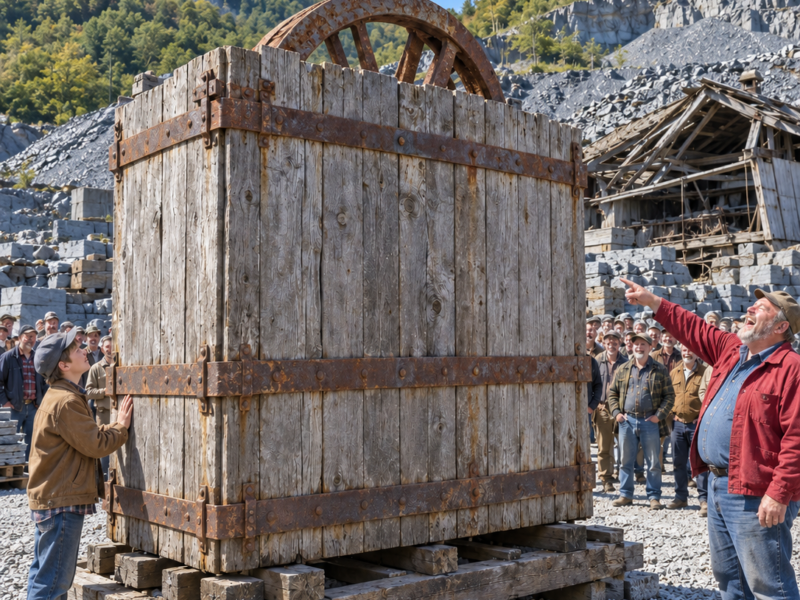
The first person to laugh was a contractor sitting three rows ahead of Frank Hollis.
The second was his friend.
By the time the auctioneer brought down his gavel, several people in the county courthouse were shaking their heads at the seventy-six-year-old man who had just purchased the worst house in Ridgeway for three dollars.
Frank heard every whisper. He heard the contractor say that somebody ought to check whether the old man knew what he was doing.
He didn’t turn around.
Instead, he slipped the newly signed deed into the inside pocket of his faded canvas jacket, thanked the county clerk, and walked into the cold January morning with forty years of structural engineering experience behind him and a secret he hadn’t yet shared with his wife.
He had just bought back the house where their marriage had begun.
And he had no idea whether Edith would forgive him.
Four days earlier, Frank had been sitting at the kitchen table in their rented apartment on the south side of Ridgeway, eating oatmeal and reading the Gazette. The apartment was comfortable enough. Two bedrooms, decent heating, a parking space close to the door. It was exactly the sort of place people expected an elderly couple to occupy after retirement.
Nothing was particularly wrong with it.
That, Frank sometimes thought, was the problem.
His days had become a series of small routines. Coffee, newspaper, a walk if his knee wasn’t bothering him, television in the evening. For forty years he had studied buildings, calculated loads, inspected foundations, and solved problems that younger engineers considered impossible. Now his greatest daily challenge was remembering whether he’d replaced the furnace filter.
Then he saw the foreclosure notice.
Lot 9. Residential property. Cedar Street. Four hundred square feet. Minimum bid, one dollar.
The address made him forget his breakfast.
He read the listing twice. He folded the paper and placed it beside his bowl. Then he looked toward the living room, where Edith was sitting with a book.
He considered telling her.
Instead, he kept quiet.
That night, while Edith slept, Frank lay awake remembering a different house, a younger woman, and two people who had once believed that their entire future could fit inside four hundred square feet.
In 1975, Frank had been twenty-five and Edith twenty-three. They had six hundred dollars in savings, a card table instead of a dining table, and an unreasonable amount of confidence.
They had bought the little house on Cedar Street for $11,800.
On their first evening there, they ate dinner sitting on pillows on the floor because they hadn’t yet acquired proper furniture. Frank had carved their initials into the wooden doorframe between the main room and kitchen.
F.E.H.
Frank and Edith Hollis.
Edith had scolded him for damaging their new home.
He could still remember her smiling while she said it.
Fifty-one years later, Frank found himself wondering whether those initials were still there.
On Tuesday morning, he told Edith he was going to the hardware store.
He drove to the courthouse instead.
The foreclosure auction was almost finished when the little property came up. Nobody wanted it. Contractors had already inspected the listings and dismissed the house as a demolition problem. Its roof leaked, the floors were rotten, and the county assessment listed its value as practically nothing.
Frank raised his paddle at one dollar.
Nobody challenged him.
When the auctioneer began closing the bidding, Frank suddenly called out three dollars.
He couldn’t have explained why.
Perhaps one dollar seemed disrespectful for a place that had once held everything he loved.
The gavel fell.
And just like that, the house belonged to him again.
He drove straight to Cedar Street.
The sight of it made his chest tighten.
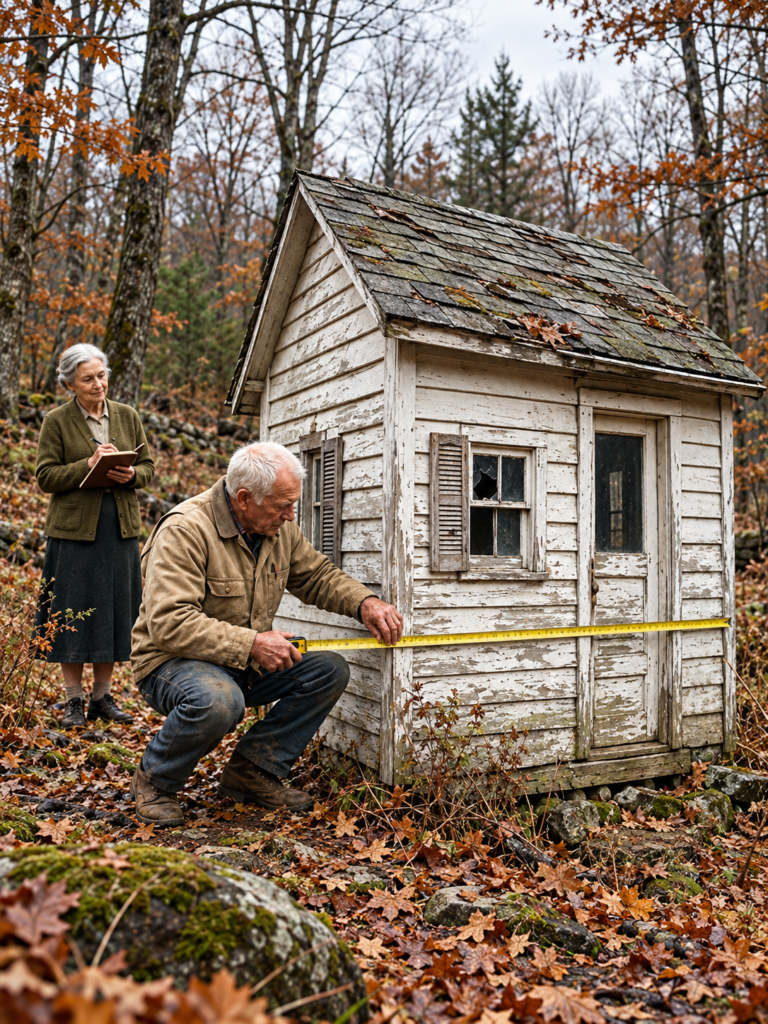
The house stood at the end of the block behind a patch of hard-looking brown dirt. Large sections of roofing were missing, exposing plywood underneath. The front steps were split. Paint peeled from the siding. The mailbox leaned sideways.
Worst of all, a wide diagonal crack cut across the visible foundation.
Frank stood on the sidewalk studying the building.
For a moment, he almost regretted what he’d done.
Then he went inside.
The air smelled of mildew and old plaster. Water stains spread across the ceiling. The kitchen sink had pulled away from the wall. The bathroom was missing its door, and warped flooring curled upward near the bedroom.
Someone had neglected the house for years.
But Frank hadn’t spent four decades studying structures by judging them from the paint.
He examined the framing. He checked the floor joists. He studied the foundation crack, searching for displacement or evidence that the soil beneath the house had shifted.
The more he investigated, the more interested he became.
The original hardwood framing was solid. The damaged floor concealed white oak worth saving. The foundation crack was severe-looking but superficial, consistent with shrinkage rather than structural movement.
The roof needed serious work. The plumbing and electrical system needed attention. Much of the interior would have to be stripped.
But the house itself had survived.
Frank pressed his palm against one of the walls.
“You’re still here,” he murmured.
He wasn’t entirely sure whether he meant the building or the young man who had once lived in it.
When he returned to the apartment, Edith looked up from her book.
“Find your furnace filters?”
“No.”
She lowered the book.
“Frank?”
“I went to the courthouse.”
He placed the deed on the coffee table.
Edith picked it up. Her eyes traveled down the page, then stopped.
“Cedar Street?”
Frank nodded.
She stared at him.
“Frank Hollis, tell me that isn’t what I think it is.”
“I bought the house.”
“Which house?”
He gave her a look.
She pressed a hand against her mouth.
“Our house?”
“Three dollars.”
For several seconds, Edith didn’t speak.
Then she stood.
“Take me there.”
They drove without turning on the radio.
When they reached Cedar Street, Edith got out slowly. Frank waited for her to see the missing shingles, the crooked steps, the broken windows.
But she walked past the building and stopped in the middle of the bare yard.
She was looking at the maple trees along the neighboring fence.
“Those were little things when we lived here,” she said.
Frank joined her.
“Hardly taller than me.”
“They’ve had fifty-one years.”
She crouched and pushed her fingers into the soil.
Frank watched her crumble a handful of dark earth between her fingertips.
“Look at this.”
“Looks like dirt.”
“It’s beautiful soil, Frank.”
He knelt beside her.
She explained how decades of fallen maple leaves had gradually enriched the ground. Nobody had paved it or stripped away its organic matter. Beneath the neglected surface was soil that could support a remarkable garden.
Her eyes traveled across the property, calculating the slope, the sunlight, the direction rainwater would move.
Frank recognized that expression.
It was the same expression she wore when studying a garden in a magazine or passing a neglected park.
She wasn’t seeing what was there.
She was seeing what could be.
“I can do something with this,” she said.
Inside, he showed her the foundation crack and the salvageable flooring. He explained why the walls could be rebuilt and how the roof structure remained sound.
Edith listened carefully.
Then, near the kitchen, she stopped.
Her hand moved to the wooden doorframe.
Three small initials remained carved into the wood.
F.E.H.
She traced them with one finger.
“You ruined this doorframe,” she whispered.
Frank smiled.
“You told me that in 1975.”
Edith looked around the broken little house.
Their first home.
The place where they had made plans for children, careers, holidays, and a future neither could properly imagine.
Now it was abandoned, worn down, and nearly forgotten.
She turned toward Frank.
“Are we really going to do this?”
“We don’t have to. I can repair it and sell it.”
She looked again toward the yard.
“No,” she said. “I don’t think you can.”
News of the purchase spread through Ridgeway within twenty-four hours.
The town had fewer than four thousand residents, and practically everyone had an opinion.
At the diner, two men joked about Frank buying himself an expensive pile of firewood.
At the post office, a woman asked Edith whether things were all right at home. Her voice carried the careful concern people use when they suspect someone is becoming confused.
A teenager photographed the property and posted it online with a mocking caption about Ridgeway’s three-dollar mansion.
The comments were worse.
Then Mayor Dale Puckett heard about it.
Dale had governed Ridgeway for fourteen years. He drove a Buick, owned an impressive four-bedroom colonial on the hill, and treated the appearance of his town as a reflection of his leadership.
He drove past Cedar Street, looked at the damaged house, and called the town clerk.
“That property is an embarrassment to the neighborhood. Get code enforcement out there.”
Frank heard about the mayor’s opinion.
He didn’t particularly care.
His children, however, were harder to dismiss.
Kevin called from Columbus.
“Dad, please tell me you didn’t actually buy a house for three dollars.”
“I did.”
“A house that’s practically condemned?”
“Foreclosed, Kevin. There’s a difference.”
“Dad, you’re seventy-six. Mom is seventy-four. This is not a reasonable retirement project.”
Frank gripped the telephone.
“When exactly would be a reasonable time?”
Kevin hesitated.
Then he mentioned a retirement community outside Columbus, somewhere with manageable accommodations and activities for older residents.
Frank listened.
When Kevin finished, he said they were managing perfectly well and ended the call.
Lisa left a voicemail soon afterward.
She worked in real estate and had checked the property records.
“Mom, the house has code violations, and its assessed value is zero. I’m telling you professionally, this is a terrible decision.”
Edith listened without interrupting.
Then she carried the phone into the bedroom and sat beside an old cardboard box.
Frank found her there.
Inside were textbooks with worn spines, rolls of yellowed tracing paper, and a framed diploma.
Bachelor of Science in Landscape Architecture.
1974.
Edith held the diploma across her knees.
“I earned this when I was twenty-two,” she said.
Frank sat beside her.
He knew about the degree, of course. He had been there when she finished school. He knew how talented she was.
But somewhere between getting married, raising children, and building a life together, that part of Edith had been quietly placed in storage.
“I thought I’d go back to it someday,” she said.
Frank said nothing.
“I kept designing things. Every garden we passed. Every empty lot. Every park that needed better drainage. I made plans in my head for fifty-one years.”
She looked at him.
“And now there’s a whole yard waiting for me.”
Frank reached for her hand.
“Then we’d better get started.”
They moved into Cedar Street that Saturday.
Their first night back involved two air mattresses, a camp stove, a cooler, and a few boxes of tools.
The electricity barely worked. A single overhead light illuminated the main room. Water dripped somewhere above the ceiling.
Edith lay on her mattress listening to the building creak.
“Everybody thinks we’re crazy.”
“I know.”
“Even the children.”
Frank reached across the gap between their mattresses and found her hand.
“Then we’ll have to show them.”
At dawn, Frank began tearing away the damaged flooring.
Under the rotten boards, the original white oak emerged, its grain still tight and beautiful.
Outside, Edith opened her sketchbook on the cracked front step.
She measured the yard, marked the angles of sunlight, and calculated the eighteen-inch fall between the foundation and sidewalk.
By breakfast, she had started designing three terraced planting beds.
By lunchtime, she had sketched flagstone walkways, drainage channels, and a rain garden.
She planned native perennials that would flower at different times of the year: purple coneflowers, black-eyed Susans, wild bergamot, switchgrass.
Frank emerged from the house with sawdust in his hair and looked over her shoulder.
He studied her drawings.
“Edith, these are professional plans.”
She didn’t look up.
“I know.”
He smiled.
For the first time since purchasing the house, he began to understand that he hadn’t simply brought them back to a familiar address.
He had given Edith a place where the life she’d postponed might finally begin.
At the local hardware store, Frank presented a handwritten supply list to the owner, Hank.
Hydraulic cement, lumber, vapor barrier, roofing materials, fasteners, and a new pry bar.
Hank examined the list.
“You’re the fellow who bought Cedar Street?”
“That’s right.”
“You know how to repair a foundation?”
“Forty years as a structural engineer.”
The man’s expression changed.
He began asking technical questions.
Frank answered each one precisely, describing the crack’s direction, lack of displacement, and the repairs he intended to make.
Hank nodded.
“Contractor rate,” he said. “You’re going to need a lot of supplies.”
Frank thanked him.
Within days, the foundation had been cleaned, filled, and sealed. Frank repaired the subfloor and preserved as much original hardwood as possible.
Meanwhile, Edith tested soil, marked elevations, and arranged for stone and plants to be delivered.
Their progress attracted attention.
Not all of it was welcome.
During the second week, a code enforcement officer arrived in a white truck.
He informed Frank that the town had received complaints about unpermitted renovations.
Frank reached into his pocket.
He handed over four permits covering foundation repairs, roofing, electrical updates, and plumbing.
The officer checked the dates and signatures.
Everything was in order.
“I obtained them before beginning the work,” Frank explained.
The officer looked embarrassed.
“Who complained?” Frank asked.
“I’m not authorized to say.”
“You don’t have to.”
After the truck left, Frank went straight back to work.
Edith’s first shipment of stone arrived soon afterward.
She began building the terraced beds herself, carefully selecting each piece of flagstone and packing gravel behind the walls to control water movement.
Two houses down, an elderly neighbor named Ruth watched from her porch.
For weeks, she had observed the couple working from morning until evening.
She had seen Frank carry lumber, Edith haul heavy stones, and the town vehicles arrive and depart.
Finally, one April morning, she crossed the street.
Edith was kneeling beside an unfinished retaining wall.
“Need help?” Ruth asked.
“I’m managing.”
“Didn’t ask whether you’re managing.”
Edith looked up.
Ruth folded her arms.
“I asked whether you need help.”
A smile spread across Edith’s face.
“Can you carry stone?”
“I’ve been carrying things longer than you’ve been drawing gardens.”
They worked together for an hour.
When they stopped for water, Ruth asked where Edith had learned to build stone walls.
Edith told her about the degree.
“And you’ve been doing this for fifty years?”
“No,” Edith replied. “I’ve been thinking about doing this for fifty years.”
Ruth looked at the plans.
“Well, I’d say you’ve thought about it long enough.”
She returned the next day.
And the next.
Soon, she was bringing sandwiches and tea, and the three of them developed a quiet working rhythm.
Frank repaired the roof, sometimes climbing the ladder despite his troublesome knee. When a worried neighbor called the fire department to report an elderly man in danger, two firefighters arrived to find him calmly removing damaged shingles.
They left after satisfying themselves that he wasn’t in distress.
Edith and Ruth laughed about it over tea that evening.
As spring advanced, Frank installed insulation, repaired walls, and began building storage into every available corner.
Edith’s terraces took shape outside.
But photographs on social media still showed what appeared to be a chaotic construction site.
And Kevin and Lisa were becoming increasingly worried.
Kevin searched online for signs of cognitive decline in elderly parents.
Lisa consulted a lawyer friend about conservatorship.
Neither told Frank or Edith.
In early May, Kevin collected Lisa from the airport, and they drove three hours to Ridgeway without warning.
They arrived shortly after one in the afternoon.
Frank was on a ladder installing a bedroom window.
Edith was kneeling in the yard planting switchgrass.
Ruth worked beside her.
The siding remained unpainted. Tools lay scattered near the porch. The garden was mostly bare soil, surveyor’s string, and partly completed stone walls.
Lisa got out of the car.
She looked at her seventy-four-year-old mother kneeling in mud and her father balancing on a ladder.
Then she turned toward Kevin.
“This is worse than I thought.”
Edith heard her.
Slowly, she rose to her feet.
“Frank,” she called.
He looked down and saw his children standing on the sidewalk.
Kevin stepped forward.
“Mom, Dad, we need to talk about your living situation.”
Frank climbed down, wiped his hands on his work pants, and studied his son’s face.
He recognized that tone.
It was the same patient, careful voice Kevin had used on the phone.
“All right,” Frank said. “Then you’d better come inside.”
Part 2
Kevin expected the inside of the house to be as disastrous as the yard.
Instead, he stopped in the doorway.
The walls were unfinished but straight. New insulation sat behind fresh drywall. The ceiling had been repaired. The worst flooring had been removed, and sections of restored white oak shone beside temporary plywood.
Built-in shelves lined the main room.
A fold-down table hung against the kitchen wall, providing both a dining surface and additional workspace.
The kitchen sink worked. A compact stove stood beside the refrigerator. Every cabinet had been planned to make use of limited space.
Lisa ran her fingers along one of the shelves.
“Dad built this?”
“Every bit,” Edith answered.
Frank stood near the window, waiting.
Kevin cleared his throat.
“It looks better than I expected.”
Frank raised an eyebrow.
“That’s generous of you.”
“But that doesn’t change the problem.”
“What problem?”
“Dad, you’re seventy-six years old. Mom is seventy-four. You’re living in a four-hundred-square-foot construction site without proper heating, doing physical labor all day.”
“Some days are longer than others,” Frank said.
“That’s exactly what worries us.”
Lisa stepped forward.
“We aren’t saying you’re incapable of fixing things. We’re saying this is more than you should be taking on.”
Edith quietly pulled out the storage bench so they could sit.
“What would you like us to do?” she asked.
Kevin glanced at his sister.
“There’s an assisted living facility near Columbus. It’s very nice. They have private rooms, meals, activities, even a garden.”
Edith looked at him.
“A garden.”
“Yes, Mom. You’d love it.”
For a long moment, she studied her son’s face.
He meant well.
That almost made it worse.
He genuinely believed that offering her a small communal garden was an adequate replacement for the work she had been waiting half a century to begin.
“And the house?” Frank asked.
“We could sell it,” Lisa said. “At least recover what you paid. Then we can discuss how to handle your living expenses.”
Frank looked away.
He had spent his professional life making decisions about buildings where mistakes could cost lives. Now his children were speaking as if buying three dollars’ worth of property proved he couldn’t manage his own affairs.
Before he could respond, Edith stood.
“Sit there a minute.”
She disappeared into the bedroom.
When she returned, she was carrying the cardboard box.
She set it on the fold-down table.
Kevin and Lisa watched as she removed the diploma.
“Do you know what this is?”
Lisa leaned forward.
“A degree?”
“My degree. Landscape architecture. I earned it in 1974.”
She placed old textbooks beside it, then carefully unrolled several sheets of tracing paper.
The sketches were detailed and precise.
Paths followed graded contours. Planting areas reflected soil conditions and sunlight. Benches occupied carefully chosen viewpoints. Drainage arrows crossed the designs in neat pencil lines.
Kevin picked up one of the drawings.
“You did these?”
“Yes.”
“When?”
“Before you were born.”
Lisa stared at her mother.
“Mom, I didn’t know you were an architect.”
Edith looked at the paper in her daughter’s hands.
“I put this away when I married your father. It was what people expected then. I raised you and Kevin, and I loved being your mother. But the work didn’t disappear from my mind.”
She gestured toward the window.
“That yard is my first real project. I designed the terraces. I worked out the drainage. I selected every plant.”
Lisa turned toward the half-finished garden.
Edith continued.
“Your father has spent forty years studying structures. He understands this house better than anyone who has been calling us foolish.”
Frank remained quiet, listening.
“We aren’t confused,” Edith said. “We aren’t doing this because we don’t understand our age. We’re doing it because we understand how much life we still have.”
Kevin studied the drawings again.
His mother’s hands, the same hands that had packed his school lunches and repaired his childhood clothes, had produced work of extraordinary technical skill.
He tried to remember ever asking her about it.
He couldn’t.
“Dad,” he said finally, “are you safe doing this?”
Frank nodded toward the permits hanging in a folder by the kitchen.
“Everything is approved. I know what I’m doing. I know my limits.”
Kevin lowered his eyes.
“It scared us.”
“I understand that,” Frank replied. “But worrying about us is different from deciding we can’t think for ourselves.”
Lisa touched the edge of the diploma.
“I really didn’t know.”
Edith watched her.
“You never took much interest in that part of me.”
The words weren’t spoken angrily.
That made them harder to hear.
When Kevin and Lisa left, the hugs were short and awkward.
Kevin apologized for arriving unannounced.
Edith invited them to stay and examine the plans, but both said they needed time to think.
Halfway back to Columbus, Lisa broke the silence in the car.
“I looked at Mom and saw an old woman who needed help.”
Kevin kept his eyes on the road.
“What do you see now?”
She watched the landscape pass.
“I don’t know. But I think I’ve been looking at her wrong.”
Back on Cedar Street, Frank found Edith standing in the doorway, holding one of her old sketches.
“You all right?” he asked.
She nodded, although her eyes were wet.
“They didn’t know who I was.”
Frank put an arm around her shoulders.
“They’re starting to.”
She stood there for another moment.
Then she put away the sketch, pulled on her gardening gloves, and returned to work.
The following weeks were exhausting.
Frank finished the interior through May and June. He repaired the bathroom, installed new fixtures, insulated the remaining walls, and painted the rooms a warm white.
He carefully restored the surviving white oak floors until the afternoon sun made them glow.
The built-in furniture transformed the small rooms.
A storage bench provided seating and concealed compartments. Shelves occupied spaces that would otherwise have remained unused. The fold-down kitchen table opened for meals and disappeared against the wall afterward.
The house was still only four hundred square feet.
But it no longer felt like four hundred square feet of limitations.
One evening, Edith walked through the finished main room.
“You made it feel twice as big.”
Frank examined the shelves.
“I just stopped wasting space.”
She smiled.
“I think that’s what we’ve been doing with our lives, too.”
Outside, her garden was becoming something extraordinary.
The three terraced beds followed the natural slope of the lot, held in place by carefully fitted flagstone. Curving pathways connected the beds and guided stormwater at a gentle two-percent grade.
At the lowest corner, Edith constructed a rain garden with gravel beneath moisture-loving rushes and sedges.
She designed it to catch runoff before it escaped onto the sidewalk.
Rainwater that once traveled down the street now filtered into the soil.
The first heavy storm proved the system worked.
Frank stood on the porch watching water follow the paths Edith had planned.
There was no pooling against the foundation.
No muddy stream crossed the sidewalk.
The water moved through the garden and settled exactly where she intended.
Two houses down, Ruth joined him beneath the porch roof.
“She knew it would do that?”
Frank nodded.
“Every inch.”
Across the street, another neighbor watched the rainwater disappear into the planting beds.
He had never considered that a garden could function like a piece of infrastructure.
Neither had most of the people in Ridgeway.
By June, the first flowers opened.
Purple coneflowers spread across the upper terrace. Black-eyed Susans brightened the middle bed. Switchgrass stood behind lower flowering plants, its slender leaves moving in the wind.
The brown dirt that had defined the property was disappearing beneath layers of green and gold.
Ruth brought a camera and began documenting the changes.
She had saved pictures from when the place was nearly falling apart.
“People will forget,” she told Edith.
“No one is going to forget how ugly this yard was.”
Ruth smiled.
“They might forget how much they laughed.”
Meanwhile, Frank painted the exterior slate blue with cream-colored trim.
Edith chose a red front door.
When he stepped back to examine the finished house, he almost failed to recognize it.
For the first time in decades, 125 Cedar Street looked cared for.
People began slowing down when they passed.
Then they started stopping.
A man Frank recognized from the diner pulled up one afternoon.
“Hollis?”
Frank approached the car.
The man looked embarrassed.
“I said some things back when you bought this place. I shouldn’t have.”
Frank waited.
“Looks good,” the man added, nodding toward the house. “Your wife did that garden?”
“Every bit of the design.”
“Best yard on the street.”
Frank glanced toward the terraces.
“Best yard in Ridgeway, if you ask me.”
The man laughed.
This time, it was a different kind of laughter.
In early July, a reporter from the county newspaper stopped outside the house.
She had heard about the three-dollar purchase and couldn’t reconcile the story with the beautiful property in front of her.
Edith agreed to an interview.
She explained the auction, Frank’s engineering background, her own long-unused degree, and the months of repair work.
She also described the town’s reaction.
The reporter asked about the mayor’s early comments.
Edith didn’t exaggerate.
She simply repeated what he had said.
The article appeared the following Thursday.
It was a front-page feature with before-and-after photographs.
The headline told the story of an elderly couple transforming Ridgeway’s worst property into one of its most beautiful.
The reporter described Frank’s structural repairs, Edith’s landscape design, and the way their combined expertise had rescued a house almost everyone else had written off.
A building inspector praised the quality of Frank’s work.
Ruth spoke about the persistence she had witnessed.
Within two days, the article had been shared thousands of times online.
People from neighboring towns began driving past.
A garden club requested a visit.
Other homeowners started asking Edith for advice.
One evening, she sat on the porch with the newspaper spread across her knees.
Frank settled into the chair beside her.
“You’ve read that article three times.”
“Four.”
“Any good?”
She considered the question.
“Not bad for my first professional review in fifty-one years.”
Frank laughed.
At town hall, Mayor Dale Puckett was considerably less amused.
The article quoted his description of the house as an embarrassment.
He read the words twice.
Then he instructed the town clerk to prepare a statement supporting neighborhood revitalization.
The clerk reminded him that he had previously ordered code enforcement to investigate the property.
“That was then,” Dale replied.
The public statement did little to change anyone’s impression.
The house on Cedar Street was attracting attention because of Frank and Edith, not because the mayor had helped them.
By August, Frank had added a small front porch large enough for two chairs and a table. Edith planted clematis beside the doorway, training it up a trellis.
Ruth repainted her own home.
She insisted it had nothing to do with what was happening next door.
Edith didn’t believe her.
Neither did Frank.
Then a call arrived from Claire Brennan, an editor at American Home & Design.
She had read the county article and wanted to send a photographer and writer to Ridgeway.
Edith listened carefully.
“A national magazine?”
“That’s right. We think your project deserves a feature.”
When she hung up, she found Frank sanding a porch railing.
“Frank.”
“Yeah?”
“They want to put our house in a magazine.”
He lowered the sandpaper.
For a moment, they simply looked at each other.
Then Frank inspected the unfinished railing.
“Better get this done properly.”
The magazine team arrived in September.
The photographer, Sarah, spent nearly an hour studying the property before taking her first picture.
She examined the terraces, traced the curves of the flagstone paths, and inspected the rain garden.
Inside, she admired the shelves and restored flooring.
“Who designed all this?”
“Frank did the house,” Edith explained. “I did the garden.”
“And you worked on it together?”
Edith smiled.
“Side by side. Mostly staying out of each other’s way.”
Sarah photographed the house in morning and afternoon light.
She took pictures of Frank on the porch, Edith among the flowers, the restored flooring, and the tiny initials carved into the old doorframe.
The writer spent an afternoon interviewing them at the fold-down kitchen table.
Frank told the story of the foreclosure auction.
Then he opened a drawer and withdrew an old document.
The original deed from 1975.
Beside it, he placed the three-dollar auction receipt.
The writer examined both.
“Why this particular house?” she asked.
Frank looked at Edith.
“We started here.”
He told her about their first dinner on the floor and the six hundred dollars they had saved. He described their early years, their growing family, and the larger home they eventually needed.
Kevin had been born in 1978, and as their family expanded, Cedar Street became too small.
They had moved away.
The house passed through other hands.
Eventually, it fell into neglect.
“When I saw the address in the newspaper,” Frank said, “I knew it was time to come back.”
“Why?”
He thought for a moment.
“Maybe the house needed us. And maybe we needed it.”
Edith touched the edge of the old deed.
Frank continued.
“We paid $11,800 the first time. Three dollars the second time. But I don’t think either price tells you what this place is worth.”
The writer began taking notes again.
In October, while they were awaiting the magazine’s publication, another unexpected development began.
A man at the diner asked Frank how to identify a serious foundation crack.
Frank drew a diagram on a napkin.
The following week, more people wanted advice.
Edith suggested they simply invite interested neighbors to the house on a Saturday.
They wrote a sign and attached it to the mailbox.
Free Workshop — Home Repair and Garden Design — Saturday, 10:00 AM
Fourteen people attended the first session.
Frank demonstrated basic foundation assessment and repair techniques, explaining why cracks had to be understood before they could be treated.
Edith displayed her drawings and discussed soil, drainage, native plants, and the relationship between function and beauty.
Ruth served lemonade and cookies.
The following Saturday, twenty-two people came.
By the third, more than thirty visitors crowded the yard.
Frank built extra benches from scrap lumber.
Edith began preparing simple diagrams to help people understand their own properties.
Then November arrived.
The magazine issue reached Ridgeway with a six-page feature.
The headline celebrated the three-dollar house and the fifty-one years of history behind it.
The photographs showed the little slate-blue building, the red door, the garden, the carved initials, and the couple who had brought it back to life.
The online edition spread quickly.
Regional news coverage followed.
Frank and Edith became the most talked-about homeowners in the county.
Soon afterward, an official from the assessor’s office visited.
The reassessment had been triggered by the permitted improvements.
He inspected the property, measured the building, and documented the finished renovations and landscaping.
Three weeks later, a letter arrived.
Frank opened it at the kitchen table.
Edith was sketching beside him.
He read the figure.
Then he read it again.
“Edith.”
She glanced up.
“What?”
“Five hundred and twenty thousand dollars.”
She stopped drawing.
“What are you talking about?”
“The new assessed value.”
He handed her the letter.
Edith studied the page.
The assessment took account of the property’s distinctive improvements, professionally designed landscaping, historical associations, public recognition, and neighborhood context.
“$520,000,” she repeated slowly.
Frank nodded.
“For this little house?”
“For this little house.”
It wasn’t a buyer’s offer or money sitting in a bank account. It was the county’s valuation of the property they had restored.
Even so, the number astonished them.
Then Frank remembered something.
“Do you know what Dale Puckett’s house is assessed at?”
Edith shook her head.
“$410,000.”
She looked from the letter to her husband.
“You’re telling me our little house is valued at more than the mayor’s?”
“One hundred and ten thousand dollars more.”
Edith began to laugh.
Not cruelly.
Not triumphantly.
She laughed because she remembered the leaking roof, the dirty floors, the cruel comments, and every person who had looked at them as though age had emptied their heads.
Frank joined her.
Within hours, the entire town knew.
At the diner, men who had mocked the three-dollar purchase now discussed the half-million-dollar assessment.
At the post office, people praised the Hollises’ vision.
Dale Puckett released another congratulatory statement.
Meanwhile, Kevin discovered the magazine article when a colleague mentioned recognizing his surname.
He opened the photographs at his desk.
There was his father, standing proudly in the restored house.
And there was his mother, kneeling beside a garden that looked like something belonging to a botanical estate.
He called Lisa immediately.
“Have you seen it?”
“I’m looking at it right now.”
“The assessment?”
“I checked. It’s real.”
Kevin exhaled.
“I can’t believe we tried to get them to move.”
Lisa said nothing.
“I thought Dad was losing his judgment.”
“I thought Mom was just making herself exhausted over a garden.”
Kevin looked at the photograph of Edith studying a set of plans.
For years, he had thought of her primarily as his mother.
He had rarely considered the person she had been before becoming one.
“We need to go back,” he said.
Lisa looked again at the magazine cover.
“Yes,” she replied. “This time, we need to actually see them.”
Part 3
When Kevin and Lisa returned to Cedar Street the following Saturday, neither spoke as the car turned onto the block.
They had visited in May.
They remembered what the property had looked like then.
But the house waiting for them now seemed almost impossible to connect with that memory.
The roof was new.
The siding was a rich slate blue. Cream trim framed the windows, and a bright red door stood at the center of the front wall.
The small porch held two wooden chairs and a table.
Clematis climbed beside the entrance.
And the garden stretched across the yard in sweeping layers of stone, grasses, and late-season flowers.
Kevin stepped onto the sidewalk.
He stared at the terraces.
He had seen expensive landscaping before.
But this was different.
Each bed appeared natural while revealing careful planning to anyone who looked closely. The stone walls curved with the slope. Paths wound through the plants without disturbing the drainage.
Ornamental grasses swayed above low ground covers.
In the corner, the rain garden held clear water among rushes and sedges.
Lisa, who spent her working life evaluating houses, stood completely still.
“I didn’t see any of this in May,” she said.
Kevin shook his head.
“It wasn’t finished.”
“No. I mean I didn’t see what it could become.”
Edith opened the front door.
She saw her children standing together on the sidewalk, studying the garden.
For a moment, she remembered their last visit.
Their frightened faces.
The assisted living conversation.
The way they had looked at her plans as though discovering a stranger.
Then she smiled.
“Come inside. I’ll make coffee.”
The house was warm.
They sat around the fold-down table while Frank poured coffee from a stainless-steel percolator.
There were books on the shelves, a framed magazine feature on the wall, and soft afternoon light across the white oak floor.
The house smelled faintly of coffee and clean wood.
Kevin looked around.
“You really did all of this yourself?”
Frank settled opposite him.
“Your mother helped inside when I needed another pair of hands. Ruth helped her outside. But the design and repair work were ours.”
Kevin nodded.
Then he looked at his father.
“Why didn’t you tell us this was your first house?”
Frank gave him a patient look.
“I did.”
Kevin frowned.
“When?”
“You were a teenager. We drove past Cedar Street one afternoon. I pointed at the house and told you that was where your mother and I lived when we were first married.”
Kevin tried to remember.
“What did I say?”
“Something like ‘Huh.’ Then you put your headphones back on.”
Lisa smiled faintly.
Kevin lowered his head.
“Sounds about right.”
Then Lisa turned toward Edith.
“Mom, why didn’t you ever tell me about your degree?”
Edith rested her cup on the table.
“I showed you when you were twelve. You found the box in the attic.”
Lisa stared at her.
“You did?”
“You asked why I never used the diploma.”
“What did you say?”
“I told you I had you instead.”
The memory returned slowly.
A dusty attic.
A framed document.
Her mother’s voice.
Lisa remembered asking the question.
And she remembered leaving the room without thinking much more about it.
“I didn’t understand,” she whispered.
“Of course you didn’t. You were twelve.”
Edith smiled gently.
“But you grew up. And somehow, we never talked about it again.”
Kevin studied his mother.
“You gave up a lot for us.”
“We made choices,” Edith said. “We loved raising you. I wouldn’t trade being your mother.”
She paused.
“But being your mother wasn’t everything I was.”
Lisa looked toward the window.
Outside, Edith’s garden filled the view.
“I think I treated you like you’d already lived the important part of your life.”
Edith didn’t answer immediately.
Frank watched his children.
They were finally saying what had been missing from their conversations for months.
Kevin turned toward him.
“I’m sorry, Dad. About the assisted living. About talking to a lawyer. I acted like I knew what was best for you without listening.”
Frank folded his hands on the table.
“You were worried.”
“That doesn’t excuse everything.”
“No,” Frank said. “But I know why you did it.”
Lisa reached for Edith’s hand.
“I’m sorry too.”
Edith covered her daughter’s fingers with her own.
“We were hurt,” she said. “Mostly because you couldn’t see who we still were.”
Kevin swallowed.
“And now?”
Edith smiled.
“Now you’re here.”
Frank stood and opened the kitchen drawer.
He brought out the old deed and the three-dollar receipt, placing them beside the reassessment letter.
Three pieces of paper.
Three different figures.
$11,800.
$3.
$520,000.
Kevin studied them.
“That’s an incredible change.”
Frank tapped the old deed.
“Same house.”
Then he glanced at Edith.
“Same people.”
Lisa picked up the oldest document.
Her parents’ signatures had faded with time.
For the first time, she imagined them young.
Two people without much money, just beginning a marriage, signing the papers for a modest house because they believed in a future together.
She suddenly understood why her father had wanted it back.
“Can we see the garden?” she asked.
Edith stood.
“Of course.”
They went outside together.
Edith led them along the flagstone path, pointing out the different planting zones.
She explained why the upper terrace received drought-tolerant perennials and how moisture moved through the lower beds.
She showed them the native grasses and the rain garden.
When Kevin asked about the stone walls, she described choosing the placement of each piece.
“There’s no mortar?” he asked.
“No. The walls are dry-stacked. Properly fitted stone, drainage material, and careful construction.”
He crouched and touched the nearest wall.
“You placed all these?”
“Ruth helped carry them, and we worked together. I designed the walls and fitted the stones.”
Kevin looked toward the house.
“And Dad handled all the structural work.”
Edith nodded.
“Your father knows what he’s good at. I finally found out what I could do with what I know.”
Lisa paused beside the rain garden.
“So all the water from the yard comes here?”
“That’s the idea. The paths are graded to guide runoff toward the planted basin. It captures water before it reaches the street.”
“The house on the corner used to flood,” Kevin remembered.
“It doesn’t anymore,” Edith said.
Lisa looked at the neighboring property.
A problem that had troubled the block for years had been improved by a garden everyone initially considered a foolish waste of effort.
She turned toward her mother.
“This isn’t just beautiful. It’s useful.”
Edith smiled.
“Good design should be both.”
They spent the afternoon walking, asking questions, and listening.
As evening approached, Frank prepared dinner, and all four squeezed around the fold-down table.
Kevin’s knees bumped the wall.
Lisa sat on the storage bench.
There wasn’t quite enough room for everyone to move comfortably.
Nobody complained.
It was their first shared family dinner in more than a year.
When the children left, Kevin hugged his father and held on.
“I’m proud of you, Dad.”
Frank patted his back.
“Took you long enough.”
Kevin laughed.
“It did.”
Lisa embraced Edith.
“Next time, I want you to show me the sketches you never got to build.”
Edith held her a little tighter.
“I’d like that.”
After the car disappeared, Frank and Edith sat on their porch.
The night air carried the smell of damp earth and late asters.
Ruth’s porch light glowed two houses away.
For several minutes, they listened to crickets among the grasses.
Finally, Edith said, “They saw us.”
Frank nodded.
“They did.”
She leaned back.
“Frank?”
“Hmm?”
“I’m glad you lied about the furnace filters.”
He laughed softly and reached for her hand.
During the months that followed the renovation, the changes reached far beyond 125 Cedar Street.
People began improving their own homes.
Ruth painted her siding white and planted winter pansies in window boxes.
The man across the street replaced his sagging chain-link fence with a low cedar rail.
Another couple removed a gravel walkway and installed a flagstone path using advice from Edith.
The homeowner whose basement used to flood built a rain garden beside his house.
Seven properties on Cedar Street showed noticeable improvements before the end of the year.
No one had organized a neighborhood campaign.
There were no speeches or municipal grants.
People had simply watched what Frank and Edith accomplished and begun asking what might be possible on their own properties.
Frank noticed the changes during his daily walks.
He was taking regular laps around the block to keep his stiff knee moving.
One morning, he returned home and found Edith reviewing drawings.
“The street’s waking up,” he said.
She looked out the window.
“Streets don’t wake up, Frank.”
He smiled.
“All right.”
“People do.”
Their free Saturday workshops had become part of Ridgeway life.
What began with fourteen interested neighbors had grown into a regular gathering that drew people from across the county.
Some came to learn how to identify foundation problems.
Others wanted advice on drainage, roofing, or maximizing small spaces.
Edith’s sessions often attracted the largest crowds.
She spread her drawings across a table and explained how to study a site before purchasing plants.
She demonstrated why rainfall patterns mattered, how native species could support local ecology, and how well-designed gardens could solve practical problems.
“Making a yard pretty is easy to imagine,” she told one group. “Making it work properly requires understanding what the land needs.”
Frank taught people how to recognize potential structural trouble and understand when professional evaluation was necessary.
He used drawings, samples, and stories from his engineering career.
He never spoke down to his students.
A foundation problem in an ordinary family’s basement mattered to him as much as one in a commercial building.
Ruth attended every session.
She brought lemonade, coffee, and homemade cookies, keeping visitors comfortable while Frank and Edith taught.
By November, the workshops were attracting school groups.
A high school shop teacher brought students to learn about construction.
A representative from the community college invited Edith to speak to an environmental science class.
Edith hesitated.
“I’ve never taught a college class.”
The woman smiled.
“You’ve been teaching people here for weeks.”
Edith glanced at the drawings spread across her table.
“Could I bring my plans?”
“Please do.”
She accepted.
When Frank heard, he grinned.
“Professor Hollis.”
“Don’t start.”
“Should I call you Professor at breakfast?”
“Only if you want your oatmeal served cold.”
Kevin began visiting more often.
He sometimes drove down from Columbus on Friday evenings and slept on an air mattress in the main room.
The first time, Frank recognized the mattress.
It was the same one they had used when they moved into the house.
“Still got that thing?” Kevin asked.
“Nothing wrong with it.”
“Of course there isn’t.”
One Saturday, Kevin stood at the back of the yard watching his father teach a group of strangers about load-bearing walls.
Frank drew diagrams on a whiteboard and patiently answered questions.
People listened to him with the attention Kevin remembered from childhood, when his father would explain how bridges and buildings worked.
For years, Kevin had thought retirement meant his father’s useful work was finished.
Now he understood that Frank had merely stopped collecting a paycheck for it.
After the workshop, Kevin approached him.
“Dad, I’ve been thinking.”
“Always dangerous.”
Kevin smiled.
“Let me build you a greenhouse.”
Frank looked toward the rear fence.
“A greenhouse?”
“Mom could start plants earlier. There’s room behind the house.”
“You don’t know how to build a greenhouse.”
“Then teach me.”
Frank studied his son’s face.
He could have mentioned all the years Kevin had been too busy for projects together.
He could have reminded him how recently he had wanted the house sold.
Instead, he said, “We’ll need good plans.”
Kevin’s smile widened.
They began the following weekend.
Kevin purchased lumber and polycarbonate panels.
Frank designed an eight-by-twelve-foot structure, small enough for the property and practical for Edith’s plant propagation.
They spent several Saturdays building it.
Kevin struggled with measurements.
He sometimes drove screws before checking whether a board was level.
Frank corrected him without impatience.
When they finished hanging the door, Kevin stepped back and examined the completed greenhouse.
“I built that.”
Frank folded his arms.
“You helped build it.”
Kevin grinned.
“That’s still something.”
“It is,” Frank said.
And he meant it.
Lisa visited less frequently because of her work, but when she came, she behaved differently.
She brought pastries from Chicago and sat in the garden asking Edith questions.
She wanted to know why some plants required more moisture than others and how the slope affected the design.
Edith delighted in explaining.
Sometimes they spent hours together, talking about soil, flowers, and drawings.
Lisa gradually started reconsidering the way she approached her own career.
She had always focused on square footage, bedroom counts, neighborhood comparisons, and sales prices.
Now she began noticing details she once overlooked.
One afternoon, she brought a client to see the property.
He wanted a weekend home in a small town, somewhere with character.
Standing in Edith’s garden, Lisa gestured toward the terraces.
“This is what value can look like,” she said. “Not just square footage or the number of bathrooms. It’s the care and thought someone has put into a place.”
The client studied the garden.
“You sound different from most agents.”
Lisa smiled.
“I’m learning.”
Then, on a Saturday in late November, Mayor Dale Puckett arrived during one of the workshops.
His Buick stopped outside the house.
Around thirty people were gathered in the yard.
Conversations slowed when Dale stepped out.
Everyone remembered what he had called the property.
Everyone remembered the code enforcement complaint.
Frank was standing beside the whiteboard, explaining gutter installation.
He saw Dale approach.
For a moment, neither man spoke.
“Frank,” Dale said.
“Dale.”
The mayor shifted his weight.
“I’ve got a drainage problem at my house.”
A few visitors exchanged glances.
Dale continued.
“Water keeps pooling against the north foundation. I’ve tried putting in French drains twice, but they clog.”
Frank lowered his marker.
“What kind of soil?”
“Heavy clay.”
Frank considered the problem.
“Without proper filter fabric and a suitable outlet, you’re mostly collecting water in a gravel-filled trench.”
Dale nodded.
“That’s what seems to be happening.”
Frank studied him.
He could have mentioned the newspaper article.
He could have reminded him how quickly the mayor’s opinion had changed after the assessment.
Instead, he said, “Come by Tuesday. I’ll take a look.”
Dale appeared relieved.
“I’d appreciate that.”
He nodded to Edith and returned to his car.
When he left, Ruth approached Frank.
“You’re going to help him?”
Frank wiped the marker board.
“He’s got a drainage problem.”
“After everything he said about your house?”
Frank glanced toward the road.
“Ruth, if I know how to fix something and somebody asks for help, I don’t see much point in refusing.”
She shook her head.
“You’re a better man than I am.”
“Maybe I’m just an engineer.”
On Tuesday, Frank inspected the mayor’s property.
The problem was exactly what Dale had described.
Heavy clay soil trapped runoff near the foundation.
Frank drew a solution involving a properly filtered curtain drain, a gravel bed, and an outlet that would carry water safely toward the rear of the lot.
He explained what needed to be done and handed over the sketch.
Dale examined it.
“What do I owe you?”
“Nothing. I’m not licensed to practice here, so this is advice, not a paid engineering job.”
Dale looked up.
“Still, I should do something.”
Frank considered him.
“Stop calling people’s houses embarrassments.”
For a moment, Dale didn’t respond.
Then his mouth moved in something that might have been a reluctant smile.
“Fair enough.”
Frank returned home and told Edith what had happened.
She smiled but didn’t say much.
She had her own project underway.
Through December, Edith had been quietly working on something in the garden.
She ordered rounded fieldstone from the same quarry that supplied the original terrace walls.
Ruth helped her move the stones.
Edith followed a private drawing she’d made late one night at the kitchen table.
She worked in the mornings while Frank was at the hardware store or busy building storm windows.
She wanted the project finished before showing him.
On a Wednesday morning in mid-December, Frank stepped onto the porch with his coffee.
He stopped.
At the center of the garden, where the three terraced beds came together, stood a circular wall of carefully stacked fieldstone.
It was about six feet across and low enough to step over.
Inside the circle was a wooden bench.
Frank recognized the wood immediately.
White oak.
Reclaimed from the original house.
The bench was simple and strong, supported by sturdy legs and carefully finished.
Around it, Edith had planted black-eyed Susans.
December had left them brown and dormant, their seed heads swaying above the cold soil.
Frank went down the steps.
“Edith?”
She appeared from beside the garden wall.
“What do you think?”
He approached the circle.
“Those flowers…”
She nodded.
“I saved seed from the black-eyed Susans that grew here this summer.”
Frank looked at her.
“You remember the ones along the fence?”
“Of course. When we first moved in. In 1975.”
Edith stepped beside him.
“They were growing here all those years ago. I wanted their descendants in this part of the garden.”
Frank looked at the small plants.
“They’ll bloom again?”
“In June. Gold flowers everywhere.”
He studied the stone circle.
Then he looked at the bench.
“You made this for us.”
Edith smiled.
“I did.”
Frank stepped over the low wall and sat.
The oak held his weight firmly.
Edith joined him.
Their shoulders touched.
For several minutes, neither spoke.
Around them, the garden rested beneath the winter sky.
The coneflowers and asters had faded. The switchgrass stood bronze and dry. The rain garden lay quiet, its rushes dormant.
But the terraces remained.
The paths remained.
Beneath the ground, roots were waiting for spring.
Behind them stood the house Frank had once purchased with a young man’s savings, lost to the passage of time, and reclaimed for three dollars.
The roof no longer leaked.
The foundation was sound.
The white oak floors had been restored.
And the doorway still carried the initials he’d carved when they were newly married.
Across the street, a neighbor had installed holiday lights along his new cedar fence.
Ruth’s freshly painted home glowed in the afternoon light.
The house on the corner had a rain garden of its own.
People greeted each other on Cedar Street now.
They stopped to talk, compared repairs, exchanged tools, and asked whether their neighbors needed anything.
It wasn’t a famous street.
Most people outside Ridgeway would never hear of it.
But it had become a different place.
Frank looked at Edith.
“I spent forty years helping build bridges, offices, and buildings that were supposed to last.”
She rested her head against his shoulder.
“You did good work.”
He nodded.
“But the best thing I ever helped build is right here.”
Edith looked around at the garden.
At the little house.
At the street that had begun caring for itself again.
She slipped her hand into his.
“Right here,” she agreed.
Frank remembered the morning of the foreclosure auction.
The smell of burnt coffee in the courthouse.
The laughter behind him.
The contractor who thought he’d bought the worst house in town.
He remembered Kevin’s worried voice, Lisa’s disbelief, and the mayor’s declaration that the property was an embarrassment.
One year earlier, all those people had looked at the neglected building and seen only its flaws.
Frank had seen a sound structure beneath the damage.
Edith had seen fertile ground beneath the dirt.
Neither of them had imagined that their work would reach so far beyond the property line.
The reassessment letter still lay in their kitchen drawer.
The house was valued at $520,000, one hundred and ten thousand dollars more than the mayor’s grand home on the hill.
It was a remarkable number.
But sitting beside Edith on the oak bench, Frank realized that the letter wasn’t the most valuable thing they had gained.
Their children came to visit now because they wanted to spend time with them.
Kevin was building things with his father.
Lisa was finally learning about her mother’s lifelong passion.
Ruth had become a dear friend.
Neighbors were taking pride in their homes.
And Edith had built the garden she’d been carrying in her imagination for fifty-one years.
Frank tightened his hand around hers.
“Do you think we’ll still be sitting here next June?”
Edith looked at the dormant black-eyed Susans.
“We’d better be. I want you to see these bloom.”
He smiled.
“I’d like that.”
They remained together as the afternoon grew colder.
Eventually, the porch light came on behind them, illuminating the red front door and the little house that had held their beginnings.
There was no treasure buried beneath the floorboards.
No forgotten fortune hidden in the walls.
No secret inheritance waiting to be claimed.
What Frank and Edith recovered was something no auctioneer could measure and no assessor could put into a letter.
A life that still belonged to them.
A dream that had never truly died.
And a home that had waited fifty-one years for them to return.
As the winter wind moved softly through the dry stems of the garden, Edith leaned closer to her husband.
The flowers would come back.
The house would stand.
And this time, they weren’t leaving.
Some dreams take fifty-one years to bloom.
But when they finally do, even an entire town can learn to see what was there all along.