Part 1
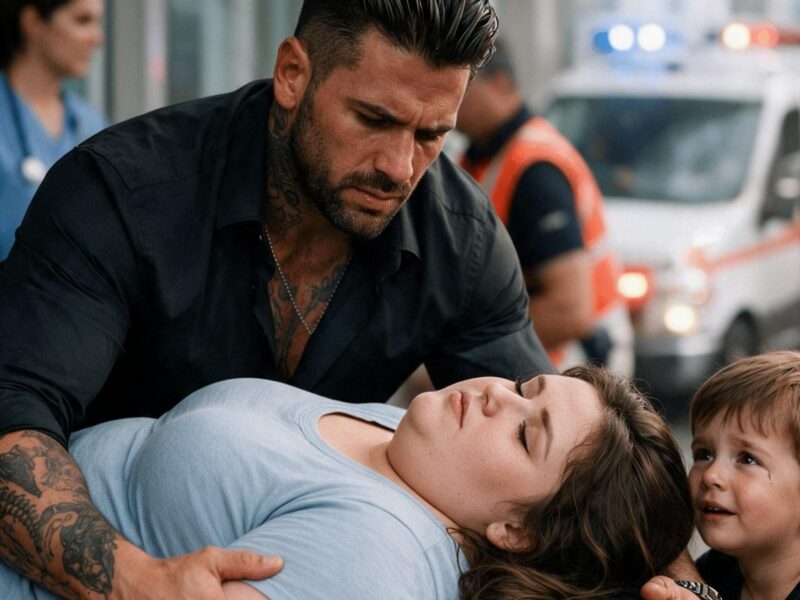
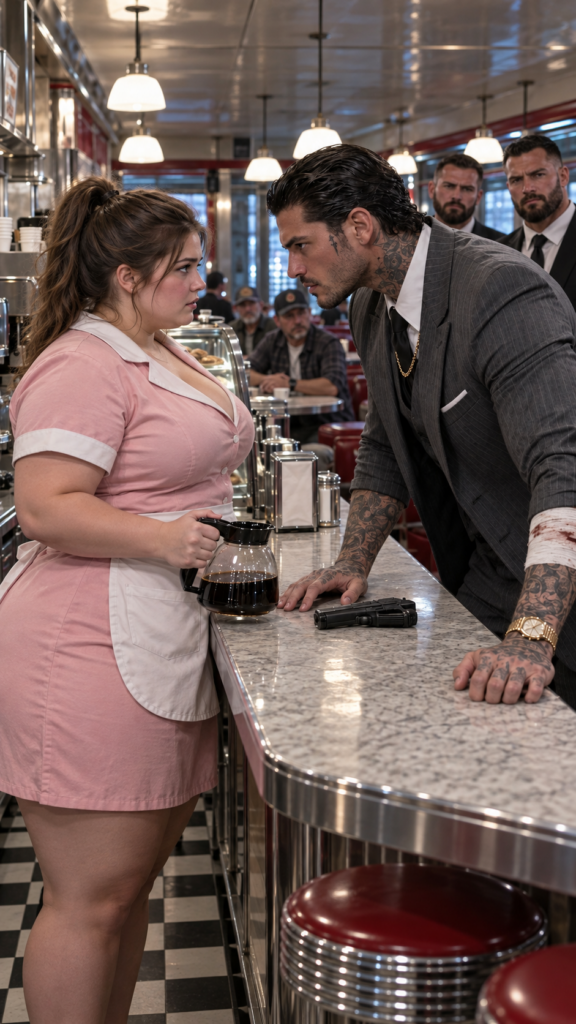
The first time Dora threatened to kill Leonardo Costas, she was holding a pot of boiling coffee, and one of his bodyguards had a gun aimed directly between her eyes.
The second hand on the clock above Rusty’s pie display continued its slow, indifferent journey around the dial.
Behind Dora, the refrigerators hummed. Rain struck the windows in uneven bursts. Somewhere inside the ancient ventilation system, a loose metal panel rattled with every gust of wind.
And sitting on the other side of her counter was the most feared organized-crime boss in the city, bleeding through a shirt that probably cost more than three months of her rent.
He had just threatened her life because she hadn’t brought him a first-aid kit fast enough.
Dora was making seven dollars and twenty-five cents an hour.
Under ordinary circumstances, she might have swallowed the insult.
But after fourteen hours on her feet, with an overdue electric bill waiting at home and the smell of bleach permanently embedded in her hands, ordinary circumstances had ceased to exist.
She raised the steaming coffee pot slightly.
“Listen carefully,” she said. “I’ve been working since noon. I cleaned that floor fifteen minutes ago, and you walked in here dripping blood like you own the place. If you raise your voice at me one more time, I’m going to pour this coffee straight into that wound. Then we’ll see how much shouting you have left in you.”
The bodyguard’s gun clicked.
Dora could hear her own heartbeat.
She didn’t lower the pot.
Leonardo Costas looked at her for several seconds.
Then, to everyone’s astonishment, he started laughing.
Only twenty minutes earlier, Dora’s greatest problem had been figuring out whether she could pay her electric bill without falling behind on rent.
It was November, and the overnight shift at Rusty’s 24-Hour Diner had settled into its familiar rhythm of stale coffee, exhausted truck drivers, and fluorescent lights that made everyone look faintly ill.
The diner stood just off Interstate 95, surrounded by cracked asphalt and businesses that had survived several economic downturns through sheer stubbornness.
Its red neon sign flickered whenever the weather turned bad.
The stools had splits in their vinyl covers. Half the booths leaned slightly to one side. The rotating pie display made a clicking sound that management had refused to repair for two years.
Dora had worked there for seven.
Seven years of double shifts, customers who confused kindness with weakness, and managers who treated every broken dish like a personal financial betrayal.
She had learned to count money without looking at the bills, carry six plates through a crowded aisle, and recognize which customers would leave a tip before they ever opened their mouths.
She had also learned that exhaustion could become something deeper than physical discomfort.
It could settle into a person’s bones until even fear had difficulty finding room.
That was the condition she was in when the front door flew open.
The brass bell rang violently.
Cold rain swept across the entrance, followed by three men.
Two truckers at the counter stopped talking.
One of them looked toward the newcomers, immediately reached for his wallet, and placed a few bills beside his untouched coffee.
The other followed him out through the side door.
Dora understood why.
Everyone in the city knew Leonardo Costas, even people who preferred to pretend they didn’t.
He was the kind of man whose name appeared in whispered conversations but rarely in formal accusations. Restaurants opened for him after closing. Politicians accepted his invitations. Men with violent reputations lowered their eyes when he entered a room.
Tonight, however, the city’s untouchable syndicate boss looked disturbingly mortal.
His dark suit was soaked with rain. His hair had lost its immaculate shape, and his left arm hung stiffly beside his body.
Blood spread across the white fabric beneath his jacket.
One of his guards held the door. The other, a broad-shouldered man named Dante, surveyed the diner with the expression of someone measuring distances and exits.
Leonardo approached the counter.
He lowered himself onto a stool, bracing his uninjured hand against the laminate.
“Black coffee,” he ordered. “And bring me whatever medical supplies you have.”
Dora stared at the blood reaching his cuff.
“You’re going to need a hospital.”
“I asked for coffee and a medical kit.”
“This is a diner. I’ve got cheap adhesive bandages and burn ointment. I don’t think either one is going to solve that.”
His right hand came down hard on the counter.
The sugar dispenser jumped.
“Then find something useful. Now.”
Dora looked at the red drops landing on the checkerboard floor.
She had spent twenty minutes mopping that floor.
Something inside her finally gave way.
She picked up the coffee pot.
And a moment later, Dante was pointing a gun at her head.
Leonardo’s laughter sounded painful, as though every movement pulled against the injury beneath his jacket.
He bent forward slightly, pressing his good hand against his ribs.
Dante looked horrified.
“Boss?”
Leonardo raised his head.
“Put the gun away.”
“She’s threatening you.”
“I heard her.”
“Then let me—”
“Dante.”
The single word carried enough authority to end the argument.
The weapon disappeared beneath Dante’s jacket.
Dora finally lowered the coffee pot.
Leonardo studied her with pale hazel eyes that had lost some of their original hostility.
“What’s your name?”
“Dora.”
“Well, Dora. You’ve got an unusual idea of customer service.”
“You’ve got an unusual idea of how to speak to someone who’s making minimum wage.”
His mouth shifted, not quite forming a smile.
“You really weren’t afraid?”
She set the coffee pot on its warmer.
“I’m afraid of plenty of things. Right now, I’m too tired to put you near the top of the list.”
Then she walked into the back office.
Behind her, one of the guards muttered something furious.
Leonardo said nothing.
Dora returned with an ancient first-aid box, several clean bar towels, gauze, a bottle of hydrogen peroxide, and a roll of duct tape.
She dropped everything onto the counter.
“Take off the jacket.”
Leonardo raised one eyebrow.
“What?”
“If you want me to help you, stop arguing and take it off.”
He glanced at Dante.
For the first time that evening, the bodyguard seemed uncertain whether he was permitted to intervene.
Leonardo eased his uninjured arm out of his jacket. Dante helped remove the other sleeve.
The wound ran along Leonardo’s upper left arm, a deep, ragged slash that had soaked through his shirt.
Dora had expected a bullet hole.
A knife wound wasn’t much better, but at least she could see what she was dealing with.
She placed a folded towel beneath his arm.
“Whoever did this wasn’t trying to give you a little warning.”
Leonardo regarded her steadily.
“No.”
She decided not to ask anything else.
The fewer details she knew about his business, the better.
She reached for the peroxide.
“This is going to hurt.”
“I’ve experienced pain before.”
“Congratulations.”
She began cleaning the wound.
Leonardo’s fingers closed around the edge of the counter. His breathing changed, but he made no complaint.
Dora worked with the concentration she normally reserved for balancing the register after a chaotic dinner rush.
She pressed clean towels against the injury, wrapped the arm firmly in gauze, and used strips of duct tape to keep the improvised bandage secure.
It was crude.
It was probably the ugliest dressing she had ever seen.
But the bleeding slowed.
“There,” she said, stepping back. “Now you can go get proper medical care. Stitches, probably. And ask about a tetanus shot.”
Leonardo examined the silver strips crossing his upper arm.
“You always use duct tape on injured customers?”
“Only the ones who threaten to kill me.”
She gathered the bloodied towels.
“Also, that roll was stored next to rat poison. So I’d strongly recommend finding an actual doctor.”
For the first time, he seemed to look past her pink uniform and tired face.
He noticed the dark circles beneath her eyes, the worn seams of her shoes, and the way she shifted her weight to ease the strain on her feet.
“Why didn’t you leave when I came in?” he asked.
Dora stopped beside the sink.
“Because I still have two hours on my shift.”
“You could have locked the doors.”
“And my manager would dock my pay. I can’t afford that.”
Something unreadable moved across Leonardo’s face.
He reached into his coat with his uninjured hand and removed a silver money clip.
Without counting the bills, he slid a folded stack beneath his coffee mug.
“For the trouble.”
Dora looked at the money but didn’t touch it.
“You missed a spot on the floor,” she said.
Leonardo glanced at the smear beneath his stool.
“Then consider the tip compensation for cleaning.”
He rose slowly.
Dante moved beside him, placing his ruined jacket across his good shoulder.
At the door, Leonardo paused.
“Make sure the coffee is fresh tomorrow night.”
Before Dora could decide whether that was a threat or a joke, he stepped into the rain.
The door closed.
The bell rang once.
And Rusty’s became an ordinary, miserable diner again.
Dora waited until the black car disappeared before lifting the mug.
Five crisp hundred-dollar bills lay beneath it.
Five hundred dollars.
She counted them twice, then stared at the empty stool.
That was more money than she could take home from an entire week of exhausting work.
She should have felt lucky.
Instead, she felt as though someone had slipped a dangerous object into her pocket without telling her how to dispose of it.
That morning, she lay awake in her cramped studio apartment, listening to the radiator bang against the wall.
The money sat on her nightstand.
Across the room, an overdue utility notice waited beneath a chipped coffee cup.
She thought about what Leonardo Costas probably did to earn his money.
Then she thought about losing electricity in the middle of winter.
By the time she left for work, the bills were inside her wallet.
She hated how quickly the decision had become easy.
The following night, Dora spent most of her shift glancing toward the front windows.
She expected retaliation.
Men like Leonardo Costas didn’t normally accept threats from exhausted waitresses without demanding some form of payment.
Perhaps he had been amused at first and offended afterward.
Perhaps Dante had spent the day convincing him that allowing an ordinary woman to humiliate him was a sign of weakness.
At 2:15 in the morning, a black sedan stopped outside.
Dora’s stomach tightened.
Leonardo entered alone.
He wore a charcoal overcoat and a dark suit, perfectly pressed. His injured arm remained stiff, but there was no visible blood.
He walked directly to the same stool.
Dora approached cautiously.
“Back already?”
“You told me the coffee was terrible. I wanted to see whether you’d improved it.”
“I never said I was going to improve it.”
“Then I’ll have to manage my disappointment.”
She poured his coffee.
He took a sip, watching her over the rim of the mug.
“Dante wanted to burn this diner down yesterday.”
Dora slowly set the pot aside.
“That’s an interesting thing to tell someone while she’s standing inside it.”
“I told him if he damaged this place, he’d answer to me.”
“Why?”
Leonardo put down the mug.
“Because you treated me like an ordinary man.”
“You weren’t acting like one.”
“Exactly.”
He rested his forearms against the counter.
“In my business, people spend their lives anticipating what I want to hear. They agree with me when they shouldn’t. They apologize before they’ve done anything wrong.”
“And I threatened you with hot coffee.”
“You were sincere.”
“I was furious.”
“Most people are too frightened to be either.”
Dora looked toward the rain-streaked window.
“What do you want, Leonardo?”
He was quiet long enough that she began to wonder if he would answer.
“A place where nobody needs anything from me.”
She almost laughed.
“You’re sitting in a restaurant. We literally take orders.”
“I mean somewhere I can think. Somewhere nobody comes looking for favors or answers.”
He glanced around at the scratched counters, buzzing lights, and stained ceiling panels.
“My enemies wouldn’t imagine I’d spend my nights in a place like this.”
Dora crossed her arms.
“That’s comforting.”
“I’ll pay you five hundred dollars every night. All I need is a quiet seat.”
She stared at him.
“Five hundred?”
“Every night.”
“To sit here and drink coffee?”
“That’s the arrangement.”
Dora felt the familiar pressure of unpaid bills rising behind her ribs.
Five hundred dollars could keep her landlord from threatening eviction.
It could replace the shoes that left her feet numb every morning.
It could turn her apartment from a place she endured into somewhere she could actually rest.
But money from Leonardo Costas wasn’t ordinary money.
“What happens when somebody comes through that door looking for you?” she asked.
Leonardo’s expression hardened.
“They won’t get close enough to become your problem.”
“That’s a promise you can’t guarantee.”
“It’s my responsibility to make it true.”
She considered him carefully.
“You’re asking me to let a mafia boss use my workplace as a hiding place.”
“I’m a businessman.”
“Of course you are.”
“A businessman working in a poorly regulated industry.”
Dora gave a disbelieving laugh.
“That’s an elaborate way of saying someone stabbed you.”
For a moment, she thought she had gone too far.
Then Leonardo looked down at the dark surface of his coffee.
“My father left me an organization that was already beginning to break apart,” he said.
His voice had changed.
“The men who were loyal to him don’t all believe they should be loyal to me. Every decision becomes a test. Every conversation hides an accusation. I spend my days preventing people from tearing apart what he built.”
He rubbed his forehead.
“I haven’t slept more than three hours a night in months.”
Dora recognized that particular exhaustion.
Not the luxury of having too much work, but the relentless feeling that one mistake could destroy everything you were trying to hold together.
She knew what it was like to wake already behind.
Of course, her mistakes generally resulted in unpaid bills.
His could get people killed.
“I don’t want trouble in here,” she said.
“Neither do I.”
“The coffee costs two dollars. Cherry pie is three fifty. You’re not getting special treatment just because you have money.”
“I understand.”
“And you don’t get to shout at me.”
Leonardo’s mouth curved slightly.
“Understood.”
She picked up the sugar dispenser.
“Then welcome to Rusty’s.”
That was how their arrangement began.
No handshake.
No written agreement.
Just a cup of bitter coffee, a waitress who refused to be intimidated, and five hundred dollars left beneath a ceramic mug every night.
As November gave way to December, Dora stopped being surprised by the sound of the bell at 2:15.
Leonardo arrived with the precision of a man whose life was otherwise surrounded by uncertainty.
Sometimes he stayed twenty minutes.
Sometimes he remained until the first suggestion of daylight appeared behind the buildings across the highway.
On nights when he brought paperwork, he used booth six.
He would spread out thick folders containing financial figures, property documents, and reports Dora had no desire to read.
On quieter nights, he sat at the counter, drinking coffee and watching the pie display rotate.
At first, she stored his money in a rusted container beneath her kitchen sink.
She imagined the police discovering it.
She imagined Leonardo asking for it back.
Most often, she imagined what life might feel like without the constant threat of losing everything.
When her landlord delivered another eviction warning, she took five hundred dollars from the container and paid what she owed.
The following week, she bought waterproof winter boots.
Later, she replaced her failing radiator.
For the first time in years, her apartment was warm enough that she didn’t have to sleep wearing two sweaters.
Yet every purchase brought a quiet discomfort.
Her safety was being purchased with money from a man whose livelihood depended on other people’s fear.
She knew that.
She didn’t stop accepting the bills.
Leonardo rarely discussed his business.
Dora rarely asked.
Instead, they learned each other through silence.
She discovered that he always positioned himself where he could see the entrance. He never ignored a sudden movement outside. His telephone could interrupt a perfectly peaceful evening without making a sound, simply by lighting up beside his cup.
Sometimes he stared at the caller’s name for a long time before refusing the call.
She could tell the difficult nights by the way he held his left arm, even after the knife wound had begun healing.
He, in turn, noticed things she had stopped expecting anyone to see.
The blistered skin on her fingers after a shift near the grill.
The way she counted tips twice before placing them in her pocket.
The discomfort she concealed whenever she walked across the room after several hours without sitting.
He didn’t comment.
But he remembered.
One Thursday morning, shortly after four, a regular customer named Hayes decided that the night’s final cup of coffee hadn’t been enough.
Hayes was heavyset, loud, and smelled of alcohol and stale cigars.
Dora approached his booth with the check.
“Time to head home, Hayes.”
He pushed the paper away.
“More coffee.”
“Machine’s shut down for cleaning.”
“Then turn it back on.”
“I’m not doing that.”
When she bent to retrieve the check he’d knocked onto the floor, Hayes seized her wrist.
His fingers pressed painfully against the bones.
“Listen, sweetheart. You depend on customers like me. Don’t forget that.”
Dora straightened, preparing to pull free.
She had dealt with men like Hayes before.
Then she saw the expression on his face change.
Leonardo stood beside the booth.
He had approached so quietly that Dora hadn’t heard him leave his stool.
“Release her.”
Hayes looked up.
“Who the hell are—”
Leonardo closed his hand around Hayes’s wrist.
He didn’t shout.
He simply tightened his grip until Hayes gasped and released Dora.
“You’re leaving,” Leonardo said.
Hayes’s face had gone pale.
“Okay. Okay, I’m going.”
“And if you ever put your hands on her again, Dante will find you. I promise you won’t enjoy what happens afterward.”
Hayes stumbled out of the booth, grabbed his coat, and fled.
Dora rubbed the reddening skin around her wrist.
Leonardo looked at the marks.
“Are you hurt?”
“I’ve had worse.”
“That’s not what I asked.”
She met his eyes.
“I could have handled him.”
“I know.”
“Then why interfere?”
Leonardo glanced toward the door Hayes had just disappeared through.
“Because being able to endure something doesn’t mean you should have to.”
Dora had no immediate answer.
She was accustomed to people expecting her to solve her own problems.
She was accustomed to being ignored until someone wanted coffee, money, or an apology.
Leonardo hadn’t acted because she was helpless.
He had acted because he’d seen someone hurting her and considered that unacceptable.
She still disliked the ease with which he threatened violence.
She still knew what he was.
But that night, when he returned to his stool, she looked at him differently.
And when he placed his usual five hundred dollars beneath the mug, she realized with unsettling clarity that she had stopped looking forward to the money nearly as much as she looked forward to seeing him.
By January, the diner had become the closest thing either of them possessed to a peaceful place.
For Dora, it was the first time she could remember wanting a particular customer to arrive.
For Leonardo, it was the only room in the city where he could lower his shoulders and exist without being treated like a throne someone wanted to steal.
Neither spoke openly about what was happening.
But Dora had begun preparing his coffee three minutes after he sat down, giving him time to remove his coat and check the messages that followed him everywhere.
And Leonardo, who had once threatened her over a missing medical kit, began arriving with small gifts.
A box of expensive Earl Grey tea because he’d noticed she disliked the diner’s house blend.
A portable heater for the freezing space behind the register.
He simply left the items where she would find them, refusing to turn his thoughtfulness into a performance.
Dora told herself not to mistake attention for affection.
She knew that powerful men could be generous without being good.
She knew that dangerous men could behave gently when they wanted something.
But Leonardo never asked her to flatter him.
He never demanded gratitude.
He never tried to purchase her silence when she disagreed with him.
Some nights, they talked about broken jukeboxes and terrible customers.
Others, he sat quietly while she described the ridiculous things she’d endured during the dinner rush.
He listened.
Really listened.
Once, after a particularly brutal evening, Dora caught him watching her wipe down a table.
“What?” she asked.
“Nothing.”
“You’ve been staring.”
“I was thinking.”
“About?”
Leonardo glanced at the empty diner.
“How strange it is that I spend every day surrounded by people, and this is the only place I don’t feel alone.”
Dora paused, cloth in hand.
Then she looked away before he could see the effect his words had on her.
“Well,” she said, “that’s probably because everyone else makes better coffee.”
He laughed.
It was a quiet, unguarded sound.
Dora carried it home with her that morning.
She was beginning to understand that the greatest danger Leonardo posed might not come from his enemies.
It might come from the possibility that she was falling in love with him.
And somewhere beyond the diner, in the world he was trying so desperately to escape, men had begun noticing that their boss disappeared every night at exactly the same time.
One of those men was Carmine.
He was already looking for the weakness that would bring Leonardo Costas down.
And without knowing it, Dora had become the most valuable weakness Leonardo possessed.
Part 2
The night everything fell apart began with snow.
It had been falling since sunset, thick enough to cover the parking lot in white and soften the ugly outlines of the buildings along the highway.
Inside Rusty’s, the heating system rattled against the cold.
Dora was cleaning the milkshake machine when she glanced at the clock.
3:02 a.m.
Leonardo was late.
She looked toward the windows.
He had never missed a night without warning her, and she disliked the uncomfortable feeling gathering beneath her ribs.
She told herself he was busy.
That he had meetings, arguments, and obligations far more important than drinking terrible coffee beside a tired waitress.
She told herself it was ridiculous to worry about a man who traveled in armored cars and employed people whose primary qualification was their willingness to commit violence.
Nevertheless, she kept checking the clock.
At 3:10, headlights swept across the front windows.
Relief moved through her.
Then she noticed the vehicle.
It wasn’t Leonardo’s sedan.
A battered black SUV rolled over the curb and stopped at an awkward angle near the entrance.
Its windows were heavily tinted.
Dora set down her cloth.
Two men climbed out.
She recognized trouble before they reached the door.
They moved without Leonardo’s controlled confidence. Their jackets were worn, their boots heavy, their faces marked by the kind of damage men acquired after years of solving disagreements with their fists.
The taller man had a jagged scar through one eyebrow.
He entered first.
His companion followed, glancing around the diner.
“We’re closed,” Dora said.
Scarface looked at the illuminated sign.
“Funny. Says twenty-four hours outside.”
“Grill’s down. Come back in the morning.”
“We’re not hungry.”
The second man moved toward the counter.
Dora became aware of the empty booths, the side exit, and the heavy iron ice mallet stored beneath the register.
“We’re looking for somebody,” he said.
“Try the phone book.”
“Leonardo Costas.”
The name seemed to absorb all the warmth in the room.
Dora kept her expression flat.
“Never heard of him.”
Scarface smiled.
“Come on, sweetheart. We’re not stupid.”
“Then you’ve got a strange way of showing it.”
He approached the counter.
“Word is he spends a lot of time here. Our boss wants a conversation.”
“Then call him.”
“He hasn’t been answering.”
“Sounds like a personal problem.”
Scarface leaned forward.
“Maybe we should stay until he comes.”
Dora stepped back.
“Maybe you should leave before I call the police.”
The man laughed.
Then he reached across the counter and grabbed a fistful of her pink uniform.
“Maybe we take you with us. Bet that gets his attention.”
The fabric tightened against Dora’s throat.
Fear shot through her, immediate and physical.
But she didn’t scream.
Her right hand moved beneath the counter.
Her fingers found the iron handle of the ice mallet.
“Let go,” she said.
Scarface pulled her closer.
“Or what?”
The front door exploded inward.
Glass cracked inside its frame.
A blast of freezing wind swept through the diner, carrying snow across the floor.
Leonardo Costas entered with Dante directly behind him.
For one terrible second, Dora barely recognized him.
The exhaustion she’d grown accustomed to was gone. So was the quiet amusement that sometimes softened his expression when she argued with him.
His attention fixed on the fist gripping her uniform.
“Get your hand off her.”
Scarface released Dora and reached inside his jacket.
Leonardo was already moving.
He seized the man by the back of the neck and drove him into the glass pie display.
The case shattered.
Dora stumbled backward as glass scattered across the counter and floor.
The second intruder drew a revolver.
Dante fired before the weapon could be raised.
The gunshot cracked through the diner.
The man fell, screaming, clutching his injured knee as his revolver skidded beneath a stool.
Dora pressed herself against the wall near the kitchen entrance.
She had imagined danger before.
She had watched Leonardo threaten men.
She had even seen him cause pain.
But she’d never witnessed the speed with which his world could turn an ordinary room into a place of carnage.
Leonardo dragged Scarface away from the ruined display and hurled him across the counter.
The man collided with the grill station, sending a container of old grease crashing to the floor.
Leonardo followed him.
He drew his handgun and pressed it against the man’s forehead.
“Who sent you?”
Scarface spat blood.
Leonardo moved the barrel toward his shoulder and fired.
The scream made Dora flinch.
“Name,” Leonardo demanded.
“Carmine!”
The man was sobbing now.
“Carmine sent us. He said you were losing your grip. Said you were hiding in some roadside dump because you couldn’t handle your own people.”
Leonardo stared down at him.
Then he turned.
He saw Dora against the wall, staring at the pistol in his hand.
Her fingers trembled uncontrollably.
The look on her face changed him more completely than any threat could have.
He lowered the gun.
“Dante. Get them out.”
His bodyguard moved immediately.
In the minutes that followed, Dora watched the injured men disappear through the rear exit.
A car waited outside.
The doors slammed.
Then the diner was quiet except for the wind slipping through the broken entrance.
Dora looked around.
The pie display was destroyed.
Glass covered the floor.
Blood marked the tiles she’d spent hours cleaning.
A sticky mixture of cherry filling, grease, and shattered porcelain spread beneath the counter.
She picked up a broom.
It was the only action that made sense.
She began sweeping.
The sound of bristles scraping against the floor filled the room.
“Dora.”
She kept working.
“Dora, stop.”
“The display costs at least three hundred dollars,” she said. “The manager’s going to lose his mind.”
Leonardo stood on the other side of the counter.
His shirt was marked with blood.
“The damage will be covered.”
“That’s not the point.”
She swept harder.
“The floor’s going to stain. I need to get everything cleaned before the morning shift.”
“Dora.”
“And the door. The glass is broken. Anybody could come in now.”
He moved closer and touched the broom handle.
She recoiled.
It was instinctive.
A tiny movement.
But Leonardo saw it.
He released the broom and stepped back.
For the first time since she’d known him, Dora saw genuine helplessness in his face.
“I’m sorry,” he said.
She stared at him.
“I promised you they wouldn’t get past the parking lot.”
He looked toward the destroyed entrance.
“Carmine had a tracker placed on one of my cars. We found it too late. By the time I realized he’d discovered this place, his men were already here.”
Dora looked at the red marks on her uniform where Scarface had grabbed her.
“They were going to take me.”
“I know.”
“You came before they could.”
His eyes closed briefly.
“I nearly didn’t.”
He reached into his coat and removed several bundles of cash, placing them beside the register.
“There should be enough to repair everything and cover your living expenses for a year.”
Dora looked at the money.
“What are you doing?”
“Making sure you never have to stand behind this counter again.”
Leonardo spoke with the controlled precision she recognized from the nights when business interrupted their conversations.
“Leave the job. Find somewhere better to live. Dante can arrange whatever you need.”
“And then?”
His expression was almost unbearably still.
“Then you go on with your life.”
Dora felt a coldness that had nothing to do with the broken door.
“What about you?”
“You won’t see me again.”
He began putting on his coat.
“I brought my problems into the one place I went to forget them. You were safe before I came here. You’ll be safer after I leave.”
He turned toward the entrance.
Dora stood motionless.
She should have allowed him to walk away.
She knew that.
A sensible woman would accept the money, move somewhere secure, and be grateful to have survived the night.
But Dora had spent seven years letting other people decide what she could afford, where she could work, and how much mistreatment she was required to tolerate.
She wasn’t going to let Leonardo Costas decide what she was permitted to feel.
“Leonardo.”
He stopped.
She put down the broom.
“Do you think I didn’t know who you were?”
He remained facing the door.
“Do you think I believed you made five hundred dollars a night selling insurance?”
He turned slightly.
“Dora—”
“No. You don’t get to do this.”
She came around the counter.
“I knew you were dangerous the night you walked in bleeding. I knew your money wasn’t clean. I knew sitting here with you was a risk.”
“Not this kind of risk.”
“I made those decisions.”
Her voice rose.
“I chose to help you. I chose to take your money. I chose to let you come back every night.”
Leonardo faced her fully.
“They touched you because of me.”
“And you’re acting like that gives you the right to choose the rest of my life.”
His expression changed.
He looked suddenly older, weighted down by something she couldn’t repair with a towel and duct tape.
“Everything near me becomes a target,” he said quietly. “I came here because this was the only place in the city that didn’t ask me to be what I am.”
He glanced around the destroyed diner.
“Look what I’ve done to it.”
Dora could smell gunpowder beneath the familiar scent of burnt coffee.
She was frightened.
Frightened by what she’d seen him do.
Frightened by how easily he could become the man everyone else knew.
And frightened by how badly she wanted him to stay.
“You’re not innocent, Leonardo,” she said.
“I’ve never claimed to be.”
“And what happened tonight doesn’t disappear because you feel guilty.”
“I know.”
“But don’t tell me my feelings are yours to manage.”
His gaze searched hers.
“If you ask me to stay, I won’t be able to walk away from you again.”
Dora raised a hand and rested it against his cheek.
His breath caught.
For a moment, he did nothing.
Then his eyes closed, and he leaned into her palm with an exhaustion that reached deeper than his physical wounds ever had.
Dora’s thumb moved gently across his cheekbone.
“I can’t pretend you’re harmless,” she whispered. “But I’m not going to pretend you mean nothing to me, either.”
Leonardo opened his eyes.
He looked at her for a long second, giving her every opportunity to step away.
She didn’t.
Instead, Dora caught the front of his coat and pulled him closer.
He kissed her.
The force of his relief startled her more than the movement itself.
She kissed him back, holding on as the cold wind blew through the ruined entrance.
For months, they had hidden behind coffee cups, sarcastic remarks, and comfortable silence.
Now there was nowhere left to hide.
When they finally separated, Leonardo rested his forehead against hers.
His breathing was uneven.
Dora could feel his heart pounding beneath her fingers.
Then sirens sounded in the distance.
Reality returned.
Leonardo lifted his head.
“We have to leave.”
Dora looked around the diner.
“What about this place?”
“The police will find the damage. They’ll investigate.”
“So I’ll explain what happened.”
“You’ll be giving Carmine a way to identify you. Your statement becomes a record. His people will know exactly where to find you.”
She understood immediately.
The danger hadn’t ended when the two intruders were taken away.
It had only exposed how much Leonardo’s enemies knew.
He retrieved her coat from the peg near the kitchen and draped it over her shoulders.
Dora went behind the counter and collected the five hundred dollars he’d left there earlier.
Then she followed him into the snow.
A black sedan waited near the street.
Dante stood beside its open rear door.
He glanced at Dora but asked no questions.
She climbed inside.
Leonardo settled beside her.
The door closed, shutting out the sirens and the bitter wind.
“Penthouse?” Dante asked.
“No,” Leonardo answered. “If Carmine tracked the cars, assume the penthouse is compromised. Take us to the shipyard office.”
He pulled out a phone.
“Have the crew deal with the security recordings at the diner.”
“Already handled,” Dante said.
Dora looked toward the darkened rear window.
Just like that, the diner was becoming something she had left behind.
She had spent seven years hating the place.
Yet the realization that she might never return made her chest ache.
It had been an exhausting, humiliating existence.
But it had belonged to her.
Leonardo finished sending a message and reached for her hand.
Only then did she realize she was still clutching the bleach-stained rag she’d been holding when the intruders arrived.
He carefully removed it from her fingers and placed it aside.
“You’re scared.”
Dora looked at him.
“I just walked away from my job after watching two men get shot. I’m riding through the city with a mafia boss who’s arranging a war on his phone. I’d be worried about myself if I wasn’t scared.”
A trace of his familiar smile returned.
“You’ll be safe at the shipyard.”
“What’s going to happen to Carmine?”
The smile disappeared.
“He attacked you to get to me. He’ll have to answer for that.”
Dora studied him.
She recognized the difference between the man who sat beside her every night and the man now planning his enemy’s destruction.
They were not two separate people.
That was what frightened her.
Leonardo was capable of listening to her complaints about customers, noticing when she was cold, and remembering how she liked her tea.
He was also capable of killing a man without hesitation.
Dora had fallen in love with all the gentleness she found beneath his reputation.
Now she had to face the violence that made the reputation possible.
The car traveled through deserted streets until warehouses and shipping containers replaced apartment buildings.
Armed guards patrolled the entrance to a sprawling industrial complex.
Dante drove through the secured gate and stopped beside a corrugated metal office building.
Inside, Dora found an ordinary logistics workspace.
Desks. Filing cabinets. Fluorescent lights.
It could have belonged to any shipping company.
Only the armed men moving through the corridors suggested otherwise.
Leonardo led her into a private office at the rear.
A leather couch stood beside a mahogany desk. Several monitors covered one wall, displaying camera feeds from industrial properties across the city.
“Stay here,” he told her.
Dora looked at him.
“You’re leaving.”
“I have to deal with Carmine before he makes another move.”
Dante waited in the corridor.
Leonardo indicated the desk.
“There’s a weapon in the top-right drawer if you need protection. Keep the door locked.”
Dora didn’t look at the drawer.
“Don’t do anything reckless.”
His expression softened.
He came close, rested a hand at the back of her neck, and kissed her.
This time, the kiss was brief.
But Dora felt the weight of everything he couldn’t promise.
“I’ll bring you coffee tomorrow,” he murmured.
Then he was gone.
The office door closed behind him.
Dora locked it.
For several minutes, she remained standing where he’d left her.
Eventually, she opened the drawer.
A black handgun rested on top of a stack of invoices.
She looked at it without touching it.
Then she closed the drawer and walked to the wall of monitors.
Outside, snow settled over the shipyard.
On the screens, armed guards passed between containers while distant vehicles moved along empty roads.
Dora sat at the desk.
She had spent three months telling herself that Leonardo’s world could remain separate from hers.
Now she was sitting in the center of it.
And somewhere across the city, the man who had promised to bring her coffee in the morning was preparing to face the enemy who wanted him dead.
Part 3
Three hours passed.
Dora tried sitting on the leather couch.
She tried pacing.
She made a pot of coffee in the small break area, discovered it tasted worse than Rusty’s, and drank it anyway.
Every few minutes, she returned to the monitors.
The security feeds showed quiet loading docks, fenced parking areas, and rows of shipping containers.
Nothing moved except the occasional guard crossing beneath an exterior light.
At 6:45 a.m., the telephone on Leonardo’s desk began vibrating.
Dora turned.
It was one of his burner phones.
She stared at the unfamiliar number glowing on the screen.
Then she answered.
“Leonardo?”
The voice was Dante’s.
He sounded as if he’d been running.
“It’s Dora.”
A brief silence followed.
“Dora, listen carefully. Things have gone bad.”
Her stomach tightened.
“Where’s Leonardo?”
“We’re at the Southside warehouse. Carmine brought in everyone he had. We walked straight into an ambush.”
Gunfire cracked somewhere behind him.
Dora gripped the telephone.
“Is Leonardo alive?”
“He’s been hit. Shoulder and leg. We’re trapped behind the loading bays. Carmine’s men have blocked the exits, and they’ve jammed our radios.”
Dora closed her eyes for one second.
She pictured Leonardo at the diner, resting his hand around a chipped ceramic mug.
Then she pictured him on the floor somewhere, bleeding.
“Tell me where you are.”
“Southside Transit. Bay Four.”
She turned toward the monitors.
Several camera feeds were labeled with the same location.
Dora hurried to the desk, found the controls, and expanded the images.
A massive warehouse appeared on the central screen.
Dark SUVs blocked the loading areas.
Armed men moved between vehicles and concrete barriers.
She could make out flashes of gunfire near one of the bays.
“Dante, I can see the building.”
“What?”
“The cameras. I have the warehouse on the monitors.”
She leaned closer.
“Tell me what you need.”
“We need a way out.”
Dora studied the images.
Seven years at Rusty’s had taught her something most people never understood about managing chaos.
When a diner filled with impatient customers and every order arrived at once, panic accomplished nothing.
You watched movement.
You identified the obstruction.
You figured out which problem had to be solved first so the others could follow.
This situation was infinitely more dangerous.
But the need to think clearly was the same.
She searched the camera feeds for a man who wasn’t running or firing a weapon.
Someone directing the others.
Then she saw him.
Near the chain-link fence, a black SUV stood with its driver’s door open.
Behind it, a man in a camel-hair coat was smoking.
The others appeared to be watching him.
“There’s a man beside a black SUV near the fence,” she said. “Camel-colored coat. Cigarette.”
“That’s Carmine.”
Dora’s mouth went dry.
So this was the man who had sent armed strangers into her diner.
The man who had used her as bait.
The man who had turned Leonardo’s one place of refuge into a battlefield.
“He’s staying away from the fighting,” she observed.
“He wants us cornered before he comes closer.”
Dora changed camera angles.
Five men advanced along the left side of the warehouse.
To the right, a narrow drainage trench ran beside the loading area.
The cameras showed no armed men immediately covering it.
“Dante, the left side’s closing in. Five men are moving toward your position.”
“I know.”
“The right side has a drainage channel. Can you reach it?”
“We’d have to cross open ground.”
She looked again at Carmine’s vehicle.
The men surrounding the warehouse were moving according to his commands.
If something disrupted that coordination, Leonardo might have a chance.
“Is there anything that could interrupt the floodlights?”
Dante hesitated.
“There’s a transformer on the north side.”
Dora watched two armed men pass beneath the glaring lights.
“Then use it. When the lights go out, get Leonardo toward that drainage trench. I’ll send help from here.”
“Dora—”
“He’s wounded, Dante. You don’t have time to argue with me.”
She ended the call and ran to the door.
The corridor was empty.
Dora raced through the building and burst outside into the freezing air.
A guard near the entrance turned toward her.
“Who’s in charge here?”
The yard captain approached.
Dora didn’t give him time to ask questions.
“Leonardo and Dante are trapped at Southside Transit. Bay Four. They’re under fire, and Leonardo’s been wounded.”
The man’s expression changed.
“How do you know?”
“Because Dante just called me. They need every vehicle you can send.”
The captain reached for his radio.
Within moments, the quiet shipyard transformed.
Men ran toward parked cars.
Engines started.
Security personnel gathered at the gates.
Dora stood in the snow, watching the vehicles pull away.
Then she hurried back inside.
She returned to Leonardo’s office and stared at the monitors.
For several seconds, nothing changed.
The floodlights continued shining over the warehouse.
Men advanced through the loading area.
Dora held her breath.
Then bright blue sparks flashed near the northern fence.
The floodlights went dark.
Several cameras briefly lost their images before switching to night vision.
The warehouse appeared in shades of green and black.
Movement broke out across the screen.
Dora found Bay Four.
A figure emerged from behind the concrete loading area.
Tall.
Broad-shouldered.
Moving with a painful limp.
Leonardo.
Her hand flew to her mouth.
He was alive.
She watched him make his way toward the drainage trench as Carmine’s men struggled to understand what was happening.
Then he changed direction.
Instead of retreating, Leonardo moved toward the chain-link fence.
Toward the black SUV.
Dora knew what he intended before he raised his weapon.
She wanted to look away.
She couldn’t.
Three flashes appeared near his outstretched arm.
Across the yard, Carmine collapsed beside the open vehicle door.
The cigarette fell from his hand.
Everything seemed to stop for one suspended moment.
Then his men began retreating.
Without their leader, the attack lost its direction.
Some scattered behind vehicles. Others ran toward the warehouse exits.
Dora leaned closer, searching for Leonardo.
He had dropped behind the fence, his injured leg apparently giving way beneath him.
“Dante,” she whispered.
As though he could hear her through the screen.
“Find him.”
A moment later, Dante appeared and reached Leonardo.
He hauled his boss upright, taking most of his weight.
Then headlights swept across the warehouse yard.
The vehicles from the shipyard had arrived.
Dora watched men spread out to secure the area while Dante guided Leonardo toward an extraction car.
The rear door opened.
Leonardo disappeared inside.
Only then did Dora realize she was crying.
She sat down slowly in the leather chair.
Her hands were trembling.
On the monitors, the fighting had ended.
The man who’d orchestrated it lay motionless beside the SUV.
Dora stared at the screen.
She had seen where Carmine stood.
She had identified the opening that allowed Leonardo to reach him.
She had helped turn a desperate defense into a lethal confrontation.
No matter how she tried to describe what had happened, she could not remove herself from the result.
A man was dead.
And she had played a part in it.
The realization made her sick.
Yet beneath the nausea was another truth she couldn’t deny.
Leonardo had been dying.
Dante had been trapped beside him.
And if she had done nothing, they might both have been dead before sunrise.
She didn’t regret saving them.
That certainty frightened her almost as much as the violence itself.
For years, Dora had believed the most important thing in life was surviving without depending on anyone.
Now she had crossed a line she could never entirely step back over.
And she had crossed it because someone she loved had been on the other side.
Seventy-two hours later, Dora sat beside a window in the private wing of an expensive hospital.
Snow drifted past the glass.
The city below looked peaceful beneath its white covering.
She knew better.
In three days, everything had changed.
Carmine was dead.
His surviving supporters had surrendered or abandoned their positions.
The factions that had challenged Leonardo’s authority for months no longer possessed the strength to resist him.
The criminal organization his father had left him was finally under his control.
Dora couldn’t decide whether that was a victory.
She only knew Leonardo was still alive.
That morning, she wore a soft gray cashmere sweater Dante had brought her, along with a secure telephone and keys to an apartment she had not yet seen.
The sweater felt impossibly expensive.
Its softness unsettled her.
She kept thinking about her old pink uniform, the cracked floor at Rusty’s, and the bleach stains she could never completely wash from her fingers.
There was something almost absurd about sitting in a private hospital wing surrounded by orchids and polished furniture while men outside referred to Leonardo with the reverence normally reserved for royalty.
She hadn’t slept properly since the warehouse.
Each time she closed her eyes, she saw the grainy green security footage.
The flash of gunfire.
The man collapsing beside his vehicle.
Then she remembered Leonardo limping toward the fence, and every other thought became secondary.
A nurse emerged from his room.
“You can go in now.”
Dora stood immediately.
Her knees felt weak.
She entered the private suite.
Leonardo was sitting upright in an adjustable hospital bed.
His left shoulder was heavily bandaged, his arm supported by a medical sling.
His right leg rested above the sheets, enclosed in a thick cast.
He was pale.
There were bruises beneath his eyes and a deep weariness in his face.
But when he saw her, his expression softened.
Dora crossed the room without speaking.
At the kitchenette, she poured coffee into a thick ceramic mug.
“The coffee in this place is terrible,” she said.
Her voice sounded rough.
“I had to pay an orderly twenty dollars to use the industrial machine near the morgue. It’s been on the burner for hours, so it should taste appropriately awful.”
Leonardo watched her.
She brought the mug to his bedside.
He didn’t reach for it.
Instead, he extended his uninjured hand.
Dora put the cup aside and took it.
His fingers closed around hers.
Warm.
Solid.
Alive.
For several moments, neither spoke.
Then Leonardo said, “Dante told me everything.”
Dora looked toward the window.
“He’s exaggerating.”
“He told me you found the way out.”
“I was watching security cameras.”
“You recognized what was happening. You got help to us.”
She shrugged.
“You were the one doing the dangerous part.”
Leonardo tightened his grip slightly.
“Dora.”
She looked at him.
“If you hadn’t been there, Dante and I would be dead.”
Her throat tightened.
“I wasn’t going to let you die after three months of paying me five hundred dollars a night.”
His mouth curved.
“Financial planning?”
“Exactly. You still owe me a lifetime of rent on that stool.”
He laughed, then winced as the movement pulled against his injuries.
Dora immediately leaned forward.
“Careful.”
“I’m fine.”
“You’re wearing enough medical equipment to qualify as hospital furniture. Don’t tell me you’re fine.”
His smile deepened.
For a brief moment, they were back at Rusty’s.
She was the exhausted waitress.
He was the impossible customer.
And the greatest conflict between them was the price of coffee.
Then Leonardo spoke again.
“I bought the diner.”
Dora stared at him.
“What?”
“Rusty’s. I purchased the building and the empty lot next to it.”
She blinked.
“Why?”
“It’s being rebuilt.”
“Rebuilt how?”
“The old interior was beyond saving. I had the crew strip everything down to the structure.”
Dora slowly straightened.
“You did what?”
“The foundation needed attention. The wiring was dangerous. Half the fixtures should have been replaced years ago.”
“Leonardo.”
He recognized the warning in her voice.
“The morning manager received a substantial severance package,” he added. “He’s been encouraged to enjoy an early retirement in Florida.”
Dora stared in disbelief.
“You destroyed my workplace.”
“I purchased the property.”
“That isn’t the part I’m having trouble understanding.”
She stepped away from the bed, folding her arms.
“Three days ago, I had a job. A miserable job, but it was mine. I knew the schedule. I knew the customers. I knew exactly how much I needed to make every week.”
“You don’t have to live that way anymore.”
“And what exactly am I supposed to do instead?”
Leonardo watched her carefully.
“Tell me.”
She laughed without amusement.
“Sit in some penthouse all day? Wear expensive clothes? Smile beside you at charity events while everyone pretends not to know where the money comes from?”
“No.”
“Because I’m not doing that.”
“I know.”
“You can’t buy a building and automatically decide what happens to me.”
Leonardo waited until she had finished.
Then he spoke.
“I want you to own the new restaurant.”
Dora went still.
“What?”
“Not manage it for me. Own it.”
She stared at him.
“You’ve lost a lot of blood.”
“Dora.”
“Maybe the pain medication is interfering with your judgment.”
His expression remained serious.
“The deed is in your name. The restaurant will be yours outright.”
Dora looked toward the window, then back at him.
“You’re giving me a restaurant?”
“I’m giving you the property. What you do with it will be your decision.”
He gestured toward the chair.
“Sit with me for a minute.”
After a long hesitation, Dora sat.
Leonardo continued.
“You’ve spent seven years working for people who treated you as though your time meant nothing. You kept that place functioning when everything around you was falling apart.”
He paused.
“You understand customers. You understand employees. You know what the business needs because you’ve spent years dealing with everything its owners ignored.”
Dora listened without interrupting.
“You choose the layout. The equipment. The floors. The menu. You hire whoever you want, and you decide what they earn.”
Her chest tightened.
“You’ve already arranged all this?”
“I arranged the ownership. The decisions are yours.”
She studied his face.
“And what do you get?”
He frowned slightly.
“What do you mean?”
“Don’t insult me, Leonardo. I know how your world works. Nobody gives away property without expecting something back.”
He didn’t look offended.
He appeared to understand why she needed to ask.
“The restaurant won’t be part of the syndicate’s operations,” he answered.
“No money laundering?”
“No.”
“No meetings with men carrying guns in the back office?”
“No.”
“No mysterious deliveries or favors I have to pretend not to understand?”
“None.”
Dora searched his eyes.
“And if I disagree with you about something?”
“Then we disagree.”
“If I decide I want someone else handling the renovation?”
“That’s your choice.”
“If I don’t want to accept it at all?”
Leonardo was quiet for a moment.
Then he nodded.
“Then you don’t accept it.”
The answer mattered more than the deed.
Dora had spent most of her adult life believing security could be obtained only through obedience.
Keep the customer happy.
Keep the manager happy.
Keep the landlord happy.
Don’t challenge anyone who can take something away from you.
And now the most powerful man she’d ever met was telling her that she could build something of her own.
She wouldn’t have to ask permission to repair a broken heater.
She wouldn’t have to apologize for giving an employee a day off.
She could pay her staff wages that allowed them to live without constant fear.
She could make sure no exhausted waitress ever had to choose between keeping a job and walking away from danger.
The thought was so overwhelming that she had to look down at her hands.
Leonardo watched her.
“I know I should have asked before buying the property,” he said.
She nodded.
“You should have.”
“And I’m sorry.”
She looked up.
It wasn’t easy for him to admit he’d made a mistake.
She’d learned that much during their nights together.
But he was trying.
“What made you think of a restaurant?” she asked quietly.
A faint smile touched his face.
“Because I wanted to give you something that belonged to you. Something I couldn’t turn into another part of my business.”
Dora swallowed.
“And where are you going to get coffee at three in the morning when you can’t sleep?”
“I was hoping I might persuade the owner to make it for me at home.”
She laughed softly.
Then her expression became serious.
“Leonardo, I saw what happened at the warehouse.”
His smile faded.
“I know.”
“I saw Carmine.”
He waited.
“I know what I helped you do.”
The hospital monitors continued their steady rhythm.
Dora looked at their joined hands.
“I don’t know what that makes me.”
Leonardo didn’t rush to reassure her.
Perhaps he understood that neither of them could make those three days innocent merely by wanting them to be.
“You helped bring me home,” he said finally. “But what happened is something we’ll both have to live with.”
She nodded slowly.
For once, neither of them hid behind a joke.
Dora thought about all the choices that had brought her there.
The first night, when she’d threatened him with coffee.
The five hundred dollars beneath his mug.
The quiet evenings that followed.
Hayes grabbing her wrist.
The two men who had entered the diner looking for Leonardo.
The shattered glass, the gunfire, the kiss beneath the broken neon sign.
And finally, the morning she’d watched a man die through a security camera.
She couldn’t return to the woman she’d been before any of it happened.
But she could still decide the woman she wanted to become.
She looked at Leonardo.
“I want the restaurant to be legitimate,” she said.
“It will be.”
“Completely.”
“Completely.”
“And my employees are going to be treated properly.”
“I’d expect nothing less.”
“I’m choosing the coffee supplier.”
Leonardo gave a small, resigned smile.
“Naturally.”
“And you’re not interfering when I decide how things should run.”
“Understood.”
She leaned closer.
“One more thing.”
“Anything.”
“If you ever come into my restaurant and shout at one of my employees, I’ll still pour boiling coffee on you.”
He laughed.
This time, he seemed to have forgotten about his stitches.
His eyes closed briefly as the pain caught up with him.
Dora shook her head.
“You’re impossible.”
“So I’ve been told.”
She leaned carefully over the bed, avoiding his injured shoulder.
Her fingers brushed his cheek.
Leonardo looked at her with the same pale hazel eyes that had once regarded her across a bloodstained counter.
But the man looking back at her now had nothing to demand.
He wasn’t issuing orders.
He wasn’t trying to purchase her loyalty.
He was waiting for her to make a choice.
Dora kissed him.
Slowly.
Deliberately.
Without the terror that had surrounded their first kiss.
When she pulled away, Leonardo rested his forehead gently against hers.
“Does this mean you’ll accept the restaurant?” he asked.
Dora considered the question.
“It means I’m willing to build something worth owning.”
He smiled.
“And me?”
She brushed a stray lock of dark hair away from his forehead.
“You,” she said, “are going to have to learn how to behave yourself around the owner.”
Outside the hospital window, snow continued falling over the city.
Somewhere beneath it, the old Rusty’s stood gutted, waiting for the next stage of its reconstruction.
Its broken pie display was gone.
The greasy floors and buzzing lights were gone.
The stool where Leonardo had first sat bleeding was gone, too.
Dora would miss parts of the place.
She would even miss the old ceramic mugs and the irritating bell above the entrance.
But she didn’t want to preserve the life that had forced her to endure so much simply because it was familiar.
She wanted something better.
Not a gilded prison.
Not an expensive hiding place.
A restaurant where people could work with dignity, where customers would be expected to show respect, and where the woman making the decisions had once been the lowest-paid person in the room.
Leonardo had gained complete control of the empire that nearly destroyed him.
Dora had been offered something that mattered more to her than an empire.
The chance to control her own future.
And neither of them could pretend the road ahead would be simple.
His past had not disappeared with Carmine.
The consequences of their choices would remain.
But for the first time, Leonardo was no longer facing that future entirely alone.
And Dora no longer believed she had to survive by accepting whatever the world handed her.
She had entered his life as an exhausted waitress who refused to be intimidated.
She had challenged him when he was cruel, defended her own decisions when he tried to make them for her, and saved his life when the men who feared him couldn’t reach him.
Now, with his hand warm in hers and the promise of a restaurant waiting beyond the hospital walls, she understood something.
She hadn’t survived Leonardo Costas by becoming smaller in the shadow of his power.
She had remained herself.
And that was the one thing about her he had never wanted to change.