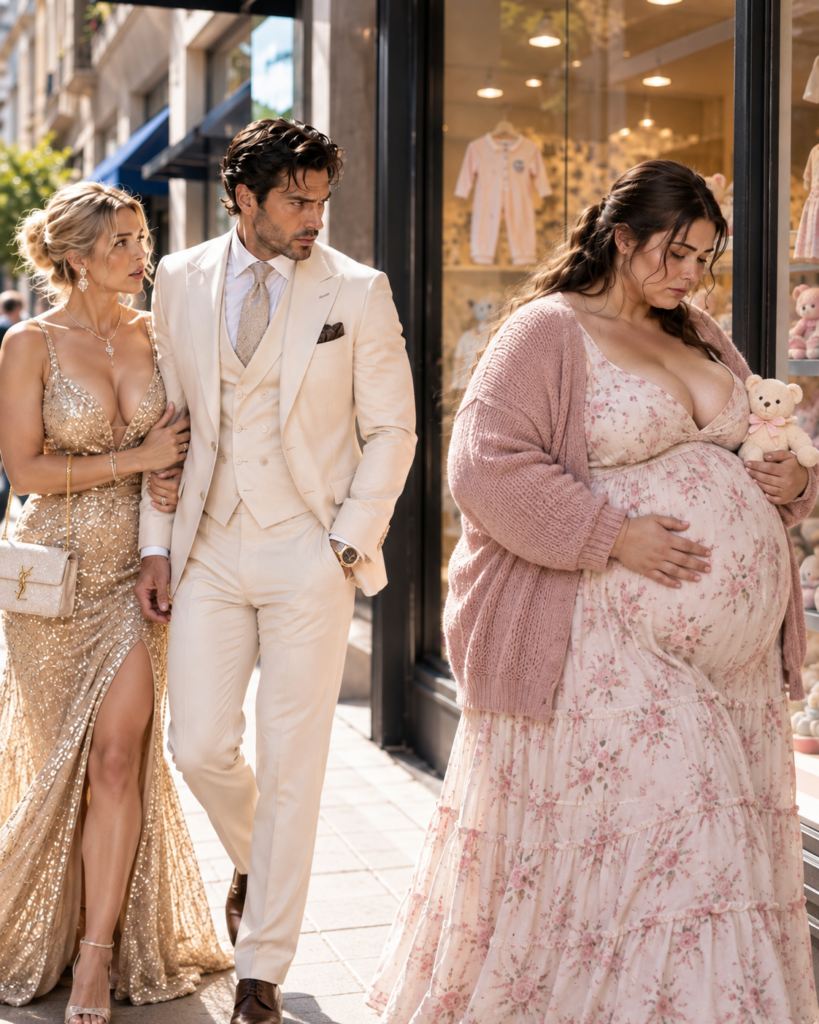
PART 2
Grant did not call Desmond that night.
That surprised even him.
For most of his adult life, Grant Holloway had lived according to a simple principle: uncertainty was expensive. If a problem existed, identify it. If a question mattered, answer it. Waiting merely gave other people time to arrange the truth into whatever shape suited them.
But Jolene had changed the mathematics of the situation.
Five months ago, someone had told him she was dead.
That same woman had stood four meters away from him that afternoon with one hand resting beneath a seven-month pregnancy.
And she had looked at him without surprise.
That last part mattered most.
It meant Jolene knew more than he did.
Possibly much more.
Grant stayed at the office until nearly two in the morning, reading everything Trent could find without crossing into Jolene’s private medical records.
There was little.
Her old apartment lease had ended four months earlier.
Her phone number had been disconnected shortly after her supposed death.
No credit cards under her name had been used since.
No utility accounts.
No recent employment records.
Someone looking casually would conclude that Jolene Tab had simply disappeared.
Someone looking carefully would notice something else.
She had disappeared too neatly.
At 2:17 a.m., Trent sent one final message.
One possible lead.
Grant opened it.
Three weeks after Jolene’s supposed death, a woman named Joelle Tate had signed a six-month rental agreement for a small cottage on the south side of Savannah.
Cash deposit.
No employer listed.
Emergency contact: Eleanor Tate.
Grant stared at the name.
Joelle Tate.
Two letters changed.
He could almost hear Jolene’s voice from years ago, amused at some small joke.
If I ever need an alias, I’ll pick something lazy. Otherwise I’ll forget it.
At the time, they had been sitting in a booth at an all-night diner after one of Grant’s meetings. Jolene had stolen half his fries while insisting she wasn’t hungry.
He remembered looking at her and thinking there were certain people who made silence feel inhabited.
He had never told her that.
He sent Trent one instruction.
Address only. Nothing else. Nobody follows her. Nobody approaches her.
The reply came almost immediately.
Understood.
Grant shut his phone off.
For the first time that night, he allowed himself to wonder whether the child was his.
He stopped the thought before it became hope.
Hope was worse than uncertainty.
Hope could make a person dishonest with himself.
The cottage stood at the end of a narrow street where live oaks bent over the road and older houses sat behind short fences crowded with late-summer flowers.
Grant arrived the next afternoon alone.
He parked half a block away.
Not because he was attempting to be discreet.
Because he needed the walk.
The cottage was pale yellow with green shutters. There was a small porch, two mismatched chairs, and a clay pot containing basil near the front steps.
Nothing about it belonged to the world Grant Holloway occupied.
No gates.
No dark-windowed cars.
No men standing ten feet away pretending not to stand guard.
A folded stroller leaned against the porch wall.
Grant stopped at the gate.
For perhaps the first time in years, he did not know whether he had the right to walk farther.
He had spent the previous night telling himself that someone had stolen five months from him.
Standing there, another possibility arrived.
Maybe Jolene believed she had needed those five months away from him.
The front door opened.
An older woman stepped onto the porch carrying a dish towel.
She was perhaps sixty, with silver threaded through dark hair and the posture of someone who had spent a lifetime refusing to hurry simply because the rest of the world had decided something was urgent.
Her eyes found Grant immediately.
She did not seem frightened.
“Mr. Holloway.”
Grant’s expression changed slightly.
“You know me.”
“I’ve seen photographs.”
“You’re Eleanor Tate.”
The woman nodded.
“Aunt Ellie to Jolene.”
That answered one question.
Not the important ones.
Grant rested one hand on the wooden gate.
“Is she here?”
Eleanor looked toward the house.
“No.”
“Where is she?”
“I’m not going to tell you.”
Grant studied her.
Eleanor held his gaze calmly.
Then she added, “But not because I’m trying to keep you from her.”
That distinction caught his attention.
“Then why?”
“Because she went to an appointment, and she’ll be back when she’s finished.”
Grant’s fingers loosened from the gate.
“A doctor’s appointment?”
“Routine.”
The word carried deliberate reassurance.
Mother and child were safe.
He hadn’t realized how hard his chest had tightened until it released slightly.
Eleanor watched him notice.
“You can come in,” she said.
Grant hesitated.
“Does Jolene want me here?”
“No.”
The answer was immediate.
Then Eleanor’s expression softened.
“But I think she’s tired of running from conversations she knows she has to have.”
Grant opened the gate.
The cottage smelled like coffee and something baked with cinnamon.
There were baby clothes drying on a collapsible rack near the kitchen window. A stack of parenting books sat on the table beside grocery coupons clipped into careful squares.
Grant noticed everything.
He always noticed everything.
But these details landed differently.
A half-used jar of prenatal vitamins beside the sink.
A handwritten budget taped to the refrigerator.
Rent.
Electricity.
Groceries.
Doctor.
Baby.
Under the last word Jolene had written three possible amounts, each crossed out and replaced by a smaller number.
Grant stared at it a second too long.
Eleanor followed his eyes.
“She won’t take much from me.”
Grant looked at her.
“Why?”
“Because she says I’ve done enough.”
“Have you?”
Eleanor poured coffee into two mugs.
“Probably.”
She placed one in front of him.
Grant did not sit.
“Did you help fake her death?”
Eleanor’s hand stopped on the second mug.
For the first time since Grant arrived, something like discomfort entered her face.
“No.”
“But you knew she was alive.”
“Yes.”
“Since when?”
“Since the beginning.”
Grant’s jaw tightened.
Eleanor looked toward the table.
“If you’re going to ask questions, sit down.”
Grant remained standing another second.
Then he sat.
Eleanor took the chair opposite him.
For a moment neither spoke.
Outside, a truck moved slowly down the street. Somewhere nearby, someone was running a lawn mower.
Ordinary sounds.
Grant found them almost offensive.
His entire understanding of the past five months was being dismantled in a kitchen where someone had left peaches ripening in a bowl.
“Start wherever you think I should have started five months ago,” he said.
Eleanor studied him carefully.
“With Jolene being afraid.”
Grant’s eyes narrowed.
“Of me?”
“Not exactly.”
“That’s not an answer.”
“It’s the truthful one.”
Eleanor wrapped both hands around her coffee mug.
“Jolene loved you.”
Grant’s face gave nothing away.
Eleanor continued.
“Maybe she still does. That’s not mine to say. But loving someone and feeling safe inside the life surrounding them are not always the same thing.”
Grant remained silent.
“She never told me much about your organization,” Eleanor said. “I didn’t ask. I knew enough from newspapers and from the kinds of people whose names appeared beside yours at charity dinners. But Jolene told me something important about a year ago.”
“What?”
“She said everyone around you seemed to know what was best for you before you had time to decide for yourself.”
Grant looked toward the window.
Desmond.
Monica’s father.
Board members.
Family advisors.
People who had spent years explaining necessity as though necessity were a law of nature.
“What does that have to do with her disappearing?”
Eleanor’s voice lowered.
“More than you know.”
The front door opened.
Grant stood before he consciously decided to.
Jolene entered carrying a small paper bag from a pharmacy.
She saw him.
Stopped.
Then closed the door behind her.
For several seconds no one spoke.
In daylight, without glass between them, there was no room for disbelief.
She was thinner in the face than he remembered.
Her hair was longer.
And the pregnancy was unmistakable.
Jolene set the pharmacy bag on the narrow table by the door.
“Aunt Ellie.”
“I let him in.”
“I can see that.”
Eleanor rose.
“I’ll be in the garden.”
Jolene gave her a look.
Eleanor ignored it with the skill of someone who had known Jolene since childhood.
Before leaving, she touched Jolene lightly on the shoulder.
It was a small gesture.
Grant understood it immediately.
You’re not alone.
The door closed behind Eleanor.
Grant and Jolene stood eight feet apart.
Five months of death certificates, unfinished conversations, and imagined funerals occupied the distance.
Jolene spoke first.
“You found me quickly.”
“You didn’t make it difficult.”
“No.”
“Why?”
She looked at him.
“Because I wasn’t planning to disappear forever.”
Grant’s right hand moved automatically toward the silver ring.
Jolene noticed.
Her eyes went to it.
Something passed through her expression.
“You still wear that.”
Grant looked down.
“It’s a ring.”
“You used to say you hated rings.”
“I changed my mind.”
Her mouth pressed into a line.
He recognized the movement. It meant emotion had arrived before words.
Grant asked the question he had been refusing to ask.
“Is the baby mine?”
Jolene looked directly at him.
“Yes.”
Nothing in the room moved.
Grant had imagined answers since yesterday.
He had prepared himself for yes.
He had prepared himself for no.
Preparation did nothing.
His eyes dropped to her stomach.
Jolene placed one hand over it instinctively.
“The due date is November twenty-third.”
Grant calculated automatically.
Then stopped himself because calculation made the moment too small.
“Boy or girl?”
“A girl.”
His gaze lifted.
“A girl.”
“Yes.”
Grant turned slightly away.
Not from Jolene.
From the weight of it.
A daughter.
For months, somewhere in the same city, a daughter he did not know existed had been growing while he signed contracts, attended dinners, approved wedding invitations, and allowed himself to believe her mother had been buried somewhere he had never even visited because Desmond said the family had handled everything.
That realization hurt in a way anger could not organize.
“You knew when you left.”
Jolene hesitated.
“I suspected.”
“Did you know before the death certificate?”
“Yes.”
Grant looked at her.
“How long?”
“Two days.”
He nodded once.
The movement was restrained, but Jolene saw the wound behind it.
“I was going to tell you.”
“But you didn’t.”
“No.”
“Why?”
She walked to the kitchen table and sat slowly.
Pregnancy had changed how she moved. Grant noticed the care she took lowering herself into the chair.
He almost stepped forward.
He stopped.
Jolene noticed that too.
“Three days before I found out,” she said, “Desmond came to see me.”
Grant’s expression sharpened.
“What did he want?”
“To talk.”
“About?”
“You.”
Grant waited.
Jolene looked down at her hands.
“He said your family was entering a financial arrangement with the Langfords. He said the organization had spent years trying to move parts of its business into legitimate investments and that the partnership depended heavily on trust between both families.”
Grant already knew this.
He did not know where it was going.
“He told me Monica’s father wanted a closer family connection.”
Grant’s face went still.
“He told you about Monica?”
“He told me there had been discussions.”
“There hadn’t been discussions with me.”
“I know that now.”
“How?”
“Because Desmond admitted it later.”
Grant leaned one hand against the back of a chair.
“Continue.”
Jolene took a breath.
“He never directly told me to leave you. That’s important.”
Grant said nothing.
“He said you had obligations. He said there were decisions coming that would determine whether hundreds of people kept jobs, whether businesses stayed open, whether old problems followed your family into another generation.”
“That’s Desmond’s language.”
“I know.”
“And you believed him.”
Jolene’s eyes met his.
“I believed that you would choose responsibility.”
Grant’s jaw moved.
“You decided that for me.”
“Yes.”
The answer was quiet.
No excuse.
No defense.
That honesty stopped him.
Jolene continued.
“And that was wrong.”
Grant pulled out the chair opposite her and sat.
“Why fake your death?”
“I didn’t.”
His eyes held hers.
Jolene shook her head.
“I left Savannah.”
“Where?”
“Atlanta. With Aunt Ellie.”
“For how long?”
“Six weeks.”
“And the death certificate?”
“I didn’t know about it until later.”
Grant’s expression changed.
Jolene seemed to understand that this was the first thing she had said that he had not anticipated.
“I left you a letter,” she said.
Grant stared at her.
“No.”
“Yes.”
“There was no letter.”
“I put it in your apartment myself.”
“When?”
“The morning I left.”
“Where?”
“On the desk in your bedroom.”
Grant remembered that desk.
Dark wood. Usually empty except for his watch box and whatever documents he brought home.
He would have seen a letter.
“I never got it.”
“I know.”
“How?”
“Because Desmond called me three days later.”
Grant went very still.
“What did he say?”
“He said you’d read it.”
Jolene looked toward the window.
“He said you agreed that separating was best.”
Grant’s voice lowered.
“I never said that.”
“I know.”
“When did you learn?”
“Not until months later.”
“Tell me everything.”
Jolene folded her hands over her stomach.
“When Desmond called, I asked if you were all right. He said you were angry, but you understood. He said you didn’t want contact.”
Grant looked at her as though he could force the past to correct itself through concentration.
“And you accepted that.”
“I tried to.”
“Jolene.”
“What was I supposed to think?”
“That you knew me.”
Her eyes changed.
“I thought I did.”
The sentence struck both of them.
Jolene looked away first.
Grant leaned back.
Neither spoke for several seconds.
Finally Jolene said, “That was the real problem, wasn’t it?”
Grant’s eyes returned to her.
“We both thought we knew what the other person would do. Neither of us asked.”
Something in him resisted the symmetry.
He had believed she was dead.
She had believed he had let her go.
These were not the same mistake.
And yet beneath both mistakes lay the same thing.
They had trusted information about each other more than they had trusted each other.
“How did the death story happen?” he asked.
“I don’t know all of it.”
“What do you know?”
“About two weeks after I left Savannah, Desmond called again. He sounded… different.”
“Different how?”
“Worried.”
Grant said nothing.
“He told me someone had been asking questions about where I’d gone. He said it would be safer if people believed I was completely out of your life.”
“People who?”
“He wouldn’t say.”
Grant’s expression hardened slightly.
Jolene noticed.
“Grant, don’t turn this into something larger before you know what it is.”
“You disappeared and someone manufactured a death certificate.”
“I know.”
“That is already larger.”
“Maybe. But Desmond wasn’t threatening me.”
“I didn’t say he was.”
“You were thinking it.”
Grant looked at her.
“No. I was thinking he lied to both of us.”
That answer seemed to affect her more.
“Yes,” she said.
“Why did you agree?”
“To disappear?”
“Yes.”
Jolene rubbed her thumb across her palm.
“Because I’d just learned I was pregnant.”
Grant looked down again.
She continued.
“I was confused. Hurt. I believed you had chosen the future your family wanted. And suddenly I had a child to think about.”
“You could have called me.”
“I know.”
“You had my private number.”
“I know.”
“Then why didn’t you?”
Jolene’s voice became very soft.
“Because I was afraid you’d answer.”
Grant stared at her.
She gave a small, sad laugh.
“That sounds ridiculous.”
“No.”
“If you answered and told me Desmond was right—if you said you’d chosen Monica or the partnership or your family—I would have had to live with hearing it in your voice.”
Grant’s gaze stayed on her.
“And if I’d told you he was lying?”
Jolene’s eyes filled, but no tears fell.
“Then I would have had to admit I’d almost left without giving you the chance.”
The truth sat between them.
Not flattering.
Not dramatic.
Human.
Grant looked at the floor for a long moment.
“When did you discover the death certificate?”
“Six weeks after I left. Aunt Ellie saw a notice online.”
“A notice?”
“A short obituary.”
Grant frowned.
He had never seen it.
“It used my full name,” Jolene said. “No photograph. It said services were private.”
“Who posted it?”
“We couldn’t trace it.”
“What did Desmond say?”
“That he’d done it.”
Grant’s eyes hardened.
“He admitted it?”
“Yes.”
“Why?”
“He said things had become complicated. He said if anyone came looking for me, it was better they believed there was nothing to find.”
“What people?”
“He still wouldn’t tell me.”
“And you accepted that too.”
“No.”
Something firmer entered Jolene’s voice.
“I told him I wanted the entire thing corrected.”
Grant leaned forward slightly.
“And?”
“He asked me for forty-eight hours.”
“Then?”
“He called back and said you had seen the death notice.”
Grant’s face emptied.
“He said what?”
“He said you knew I was alive.”
Grant stopped breathing for a second.
Jolene continued carefully.
“He told me the two of you had argued. He said you were furious I’d left but had agreed keeping my location private was safer until the Langford arrangement was finished.”
Grant stared at her.
“That never happened.”
“I know.”
“How do you know?”
“Because yesterday I saw your face.”
Silence.
Jolene looked down.
“No one who knew I was alive would have looked at me that way.”
Grant remembered the glass.
Three seconds.
Her eyes.
His face reflected faintly over hers.
She had known then.
That was why she had not run.
Not exactly.
She had been realizing something.
“You understood yesterday,” he said.
“Yes.”
“Why did you leave through the back door?”
“Because Monica was standing beside you.”
Grant looked away.
Fair.
“I didn’t want our first conversation in five months to happen on a sidewalk while your fiancée watched.”
The word landed differently now.
“Monica and I—”
“You don’t need to explain.”
“I do.”
Jolene’s expression tightened.
“Grant.”
“The engagement is an arrangement.”
Her eyes closed briefly.
“That’s exactly the sort of sentence I don’t want to hear.”
“It’s the truth.”
“It doesn’t matter whether you love her.”
“It matters to me.”
“You’re marrying her in three weeks.”
Grant said nothing.
Jolene looked toward the porch.
“That’s part of why I didn’t come back sooner.”
Grant leaned back.
“Explain.”
“When I returned to Savannah two months ago, I learned about the engagement.”
“You’ve been here two months?”
“Yes.”
“And you never contacted me.”
“No.”
“Why?”
“Because by then I thought you knew I was alive.”
Grant rubbed a hand over his mouth.
The absurdity of it almost made him laugh.
Two people living miles apart.
Both believing the other possessed information neither had.
A life rearranged by intermediaries.
“Why come back at all?”
Jolene’s hand settled over the curve of her stomach.
“Because this is my home.”
That answer was simple enough to hurt.
“My mother is buried here. Aunt Ellie lives close. My doctor is here. And I didn’t want my daughter to begin her life because I was running from mine.”
Grant looked at her.
“My daughter.”
Jolene’s eyes returned to his.
“Yes.”
He said nothing more.
But the words had changed something.
Not possession.
Recognition.
Eleanor returned twenty minutes later carrying tomatoes from the garden and immediately understood that the room had altered.
Not healed.
Altered.
She placed the tomatoes in the sink.
“Anyone hungry?”
“No,” Jolene and Grant said simultaneously.
Eleanor nodded.
“Wonderful. More for me.”
Jolene nearly smiled.
Grant saw it.
He realized he had missed that expression with physical intensity.
Eleanor began washing the tomatoes.
Grant stood.
“I should leave.”
Jolene looked surprised.
“So soon?”
The question escaped her before she could disguise it.
Grant heard it.
“So you can rest.”
“I’m pregnant, not fragile.”
“I know.”
“Do you?”
“No,” he said. “I don’t know anything about this yet.”
That silenced her.
Grant reached into his pocket, took out a card, and set it on the table.
Not one of his business cards.
A plain card containing a number almost nobody had.
“My private line changed last year.”
Jolene looked at it.
“Use it if you need me.”
She did not pick it up.
Grant did not push it toward her.
He walked toward the door, then stopped.
“When is your next appointment?”
Jolene hesitated.
“Tuesday.”
“Can I come?”
Her surprise was immediate.
Grant waited.
“No pressure,” he said. “If the answer is no, say no.”
Eleanor looked at him over her shoulder.
Jolene was quiet for several seconds.
Finally she said, “It’s at ten.”
Grant nodded once.
“I’ll be there at nine fifty.”
“Ten is fine.”
“I know.”
The smallest hint of amusement moved through her face.
Grant left before he could need more from the moment than it could give.
Monica was sitting in his living room when he returned home.
Not his family estate.
The downtown residence he had bought because the estate contained too many rooms where dead Holloways had once made decisions for living ones.
She sat on the sofa with one leg crossed over the other, still wearing the cream-colored suit from that afternoon.
A folder of wedding samples rested unopened on the coffee table.
Grant stopped inside the doorway.
“How did you get in?”
“You gave me a key.”
“I remember.”
“I assumed you would.”
He put his keys on the table.
Monica watched him.
“You found her.”
Grant looked at her.
It was not a question.
“How much do you know?”
“Less than you think.”
“That’s becoming a popular answer.”
Monica exhaled.
“Grant, I saw your face.”
He remained standing.
“The woman in the store?”
“Yes.”
“Her name is Jolene.”
Monica nodded once.
“I know.”
Grant’s eyes sharpened.
Monica reached into her handbag and removed an envelope.
She placed it on the coffee table.
“I found this yesterday.”
Grant did not move.
“Where?”
“In my father’s study.”
That answer changed the room.
“What were you doing in your father’s study?”
“Looking for the seating list he insisted he had mailed me.”
Grant glanced at the envelope.
His name was written across the front.
Not typed.
Handwritten.
He recognized the handwriting instantly.
Jolene.
His eyes lifted to Monica.
“Did you read it?”
“No.”
“How do you know it’s from her?”
“There’s another page clipped to the back.”
Grant picked up the envelope.
A yellow note was attached.
Desmond’s handwriting.
Arthur—keep this with the other documents. G must not see it until everything is settled.
Grant read it twice.
Monica’s father.
Arthur Langford.
The partnership.
The engagement.
His uncle.
All occupying the same sentence.
Monica’s expression was composed, but her hands were clasped too tightly.
“I think,” she said, “we both need to ask whether our engagement belongs to us.”
Grant looked at her.
“You knew it was partly strategic.”
“Partly.”
“Did your father pressure you?”
“He didn’t have to.”
Monica gave a faint, humorless smile.
“I grew up understanding what was useful.”
Grant sat across from her.
For the first time, he looked at Monica not as a fiancée, not as Arthur Langford’s daughter, not as the competent woman who had entered their engagement with clear expectations.
As a daughter.
That changed the questions.
“Did you want to marry me?”
Monica considered her answer.
“I wanted to be the kind of person who could.”
Grant frowned.
She continued.
“You were respected. Controlled. You didn’t embarrass people. You understood obligation. My father said we would make an excellent partnership.”
“That’s not what I asked.”
“I know.”
She looked at the wedding samples on the table.
“I think I kept hoping affection would arrive because the arrangement was sensible.”
Grant understood that better than he wanted to.
“And did it?”
“Some.”
Her honesty surprised him.
“I like you, Grant.”
“I like you too.”
“I know.”
A small smile appeared.
“That’s the problem.”
He almost smiled back.
Monica looked toward the envelope.
“Open it.”
Grant hesitated.
Five months late.
A piece of paper that had apparently traveled through hands it had never been meant to touch.
He opened the envelope.
Inside was one sheet.
Jolene’s writing filled both sides.
Grant read.
The first lines were enough.
Grant,
I wish I were brave enough to have this conversation with you face-to-face, but right now I don’t trust myself not to ask you to choose me before you’ve decided what kind of life you actually want.
He stopped.
Monica looked away to give him privacy without leaving the room.
Grant continued.
Jolene wrote about Desmond’s visit.
About learning there might be an expectation involving the Langfords.
About refusing to become another obligation Grant had to manage.
She wrote that she was leaving Savannah for a while.
Not forever.
Not necessarily.
And near the end:
There is something else I need to tell you, but I want to be certain before I do. If I’m right, it changes more than just my life. I will call you when I know.
Grant lowered the page.
She had intended to tell him.
Before fear.
Before misinformation.
Before one lie required another.
Monica watched him.
“There’s more,” she said.
Grant looked at the yellow note again.
“What?”
“When I found the envelope, my father walked in.”
“And?”
“He asked me to put it back.”
Grant’s expression changed.
“I didn’t.”
“I can see that.”
“I asked him what it was.”
“What did he say?”
Monica took a breath.
“He said it was an old mistake.”
Grant’s hand tightened slightly around the paper.
“Whose?”
“He wouldn’t answer.”
Grant stood.
Monica stood too.
“Grant.”
He looked at her.
“If you go to him angry, he will become defensive.”
“I’m not angry.”
“You look like a man trying very hard not to be.”
That was accurate enough that Grant did not respond.
Monica stepped closer.
“My father is many things. Proud. Controlling sometimes. Too convinced that he knows the practical answer to every emotional problem.”
Grant raised an eyebrow.
“That sounds familiar.”
“Yes.”
She held his gaze.
“But he’s not heartless.”
“Neither is Desmond.”
“Then find out why two men who aren’t heartless did something that hurt three people.”
Grant looked down at the letter.
Three people.
No.
Four now.
A child belonged to the consequences too.
Desmond Holloway lived in the same brick house he had occupied for twenty-seven years.
Grant arrived the following morning at seven thirty.
His uncle was in the kitchen making toast.
Desmond looked up as Grant entered.
“You still have the key.”
“You never asked for it back.”
Desmond glanced toward the coffee maker.
“Coffee?”
“No.”
That made Desmond pause.
Grant placed Jolene’s letter on the kitchen table.
Desmond went still.
The toast popped up.
Neither man moved to retrieve it.
“Where did you get that?” Desmond asked.
“Monica.”
A long silence.
“Arthur kept it.”
“Apparently.”
Desmond closed his eyes briefly.
Grant pulled out a chair.
“Sit down.”
Desmond looked at his nephew.
“You’ve been giving me orders since you were twenty-six.”
“And you’ve been ignoring half of them since I was twenty-six.”
That almost produced a smile.
Almost.
Desmond sat.
Grant remained standing for another moment before taking the chair opposite him.
“Jolene is alive.”
Desmond’s gaze lowered.
“I know.”
“She’s pregnant.”
Desmond looked up.
That he had not known.
Grant watched the information register.
“Seven months,” Grant said. “A girl.”
Desmond leaned back.
For the first time in Grant’s memory, his uncle looked old.
Not elderly.
Simply older than yesterday.
“I didn’t know,” he said.
“No.”
Grant placed both hands flat on the table.
“Tell me why.”
Desmond looked at the letter.
Then toward the window.
“I thought I was protecting you.”
Grant said nothing.
“And her.”
“From what?”
Desmond rubbed his forehead.
“From a situation I had helped create.”
“That’s vague.”
“I know.”
“Try again.”
Desmond nodded slowly.
“Two years ago, when the organization began moving more of its money into legitimate holdings, we needed credit relationships we didn’t have.”
Grant knew this.
“Arthur Langford helped.”
“Yes.”
“What does that have to do with Jolene?”
“At first, nothing.”
Desmond folded his hands.
“Arthur wanted stability. Predictability. He was worried you would eventually choose a personal life that complicated the business relationship.”
Grant’s expression chilled.
“My personal life wasn’t his concern.”
“I told him that.”
“Did you?”
“Yes.”
Desmond met his eyes.
“And then I made the mistake of trying to prove you would always choose responsibility.”
Grant waited.
“I told Arthur that if the business depended on it, you’d put the organization first.”
“Meaning?”
“Meaning I let him believe a closer relationship between the families might be possible.”
Grant’s voice was very quiet.
“You discussed my marriage.”
“I discussed the possibility.”
“Without me.”
“Yes.”
Grant looked away.
Desmond continued.
“Arthur liked the idea. Monica was single. You were—”
“Not.”
Desmond nodded.
“No. You weren’t.”
“Yet you went to Jolene.”
“Not to force her away.”
“She told me.”
“I went because I thought if she understood what was happening, she’d push you to make a decision.”
Grant stared at him.
“You wanted her to do your work.”
Desmond accepted that.
“Yes.”
“Why?”
“Because I was afraid if I came to you directly, you’d reject the entire Langford arrangement out of principle.”
“I might have.”
“I know.”
“That was my decision.”
“I know that now.”
Grant’s face remained controlled.
Desmond looked down.
“Jolene left. She told me she’d written you. I found the letter before you came home.”
Grant’s eyes fixed on him.
“You took it.”
“Yes.”
“Why?”
“Because I panicked.”
Desmond gave a tired exhale.
“I thought if you read it, you’d go after her immediately. And if you did, Arthur would know I’d overstated your willingness to put the partnership first.”
There it was.
Not protection.
Not strategy.
Fear.
Desmond had been afraid of being exposed as wrong.
Grant almost preferred a darker motive.
Darker motives were easier to reject.
Human weakness was harder.
“You lied to her.”
“Yes.”
“You told her I accepted the breakup.”
“Yes.”
“And then?”
Desmond’s face changed.
“The obituary was Arthur’s idea.”
Grant went still.
“Why?”
“Someone from an old legal dispute began asking questions about you. Nothing dangerous. Nothing criminal. Just someone looking for leverage in negotiations. They had noticed Jolene attended events with you.”
Grant’s eyes narrowed.
“You could have said she moved.”
“We should have.”
“But?”
“Arthur said a clean break would prevent anyone from bothering her.”
“And you agreed.”
“I did.”
“The hospital record?”
Desmond looked ashamed.
“Arthur had a consultant create the notice and supporting paperwork in case anyone checked.”
Grant stared at him.
“It was never filed officially. Just a document.”
“A document you put on my desk.”
Desmond’s eyes lifted.
That was the part he had been waiting for.
“Yes.”
“Why?”
“Because you saw the obituary before I could stop it.”
Grant remembered that morning.
Desmond arriving with a folder.
The controlled expression.
The statement: Grant, sit down.
“I asked what happened.”
“You did.”
“And you told me there had been complications at a hospital.”
Desmond nodded.
“Why not tell me the truth then?”
His uncle’s answer came after a long pause.
“Because by then I’d lied too many times.”
Grant looked at him.
Desmond continued.
“I thought if I told you she’d chosen to leave, you’d go after her. If I told you I’d hidden her letter, you would never trust me again.”
“And your solution was to make me think she was dead.”
“I told myself it was temporary.”
“Five months.”
“I know.”
“You watched me believe it for five months.”
Desmond’s voice nearly broke, but he steadied it.
“I know.”
Grant stood.
Desmond did not stop him.
Grant walked to the window.
Morning sunlight lay across the small backyard where Desmond had once taught him to throw a baseball after Grant’s father stopped showing up for weekends.
That memory arrived without permission.
Desmond had attended school meetings.
Taught him to drive.
Sat outside a hospital room when Grant’s mother died.
He was the closest thing Grant had ever had to a reliable parent.
And he had lied about Jolene’s death.
Both truths existed.
Grant hated that.
“What am I supposed to do with this?” he asked.
Desmond looked toward him.
“I don’t know.”
It was perhaps the first time Grant had ever heard his uncle admit those words.
“I’m sorry isn’t enough,” Desmond said. “And I don’t expect forgiveness because I’m family.”
Grant turned.
“Good.”
Desmond nodded.
Grant picked up the letter.
“Does Arthur know Jolene is alive?”
“He always knew.”
“Does Monica?”
“Not from us.”
Grant thought of Monica sitting in his living room.
We both need to ask whether our engagement belongs to us.
“Anything else?”
Desmond hesitated.
Grant saw it immediately.
“What?”
“There is one thing.”
“Say it.”
“Arthur didn’t keep the letter because I asked him to.”
Grant’s expression changed.
“Your note says otherwise.”
“I asked him to destroy it.”
Grant became completely still.
Desmond continued.
“He refused.”
“Why?”
“He said someday you might need proof that Jolene hadn’t abandoned you without explanation.”
Grant looked at the letter in his hand.
That did not absolve Arthur.
But it complicated him.
Again.
Every answer seemed determined to turn a villain into a flawed person and a victim into someone who had also made choices.
Grant was beginning to understand that truth rarely arrived clean enough to hate.
Tuesday morning, Grant reached the clinic at nine forty-eight.
Jolene was already sitting in the waiting room.
She looked at the clock.
“Two minutes early.”
“I compromised.”
“Remarkable personal growth.”
Grant sat beside her.
For the first time since he had found her, the silence between them contained something other than grief.
Not comfort yet.
Possibility.
Jolene glanced at him.
“Did you talk to Desmond?”
“Yes.”
“And?”
“He told me the truth.”
“You believe him?”
“Most of it.”
“Most?”
“Trust doesn’t repair itself because someone finally tells the truth.”
Jolene nodded.
“No.”
Grant looked at her.
“That applies to us too.”
Her eyes lowered.
“Yes.”
A nurse opened the door and called Jolene’s name.
They stood.
Inside the examination room, Grant stayed near the wall until the technician told him he could move closer.
Then the monitor came alive.
A small profile.
A curve of forehead.
A hand near a face.
Grant stopped moving.
The room became strangely distant.
The technician pointed gently.
“She’s facing sideways today.”
Jolene looked at Grant rather than the screen.
His face had changed.
Not dramatically.
Grant Holloway did almost nothing dramatically.
But the guardedness was gone.
For one unprotected moment, he looked like someone being introduced to a future he had not known he was allowed to want.
“That’s her?” he asked.
Jolene smiled.
“That’s her.”
The technician continued taking measurements.
Grant asked three questions.
Then seven more.
The technician answered all of them patiently.
By the time they left, Grant was carrying a strip of ultrasound photographs with the seriousness of a man transporting legal documents that could alter nations.
Outside, Jolene stopped beneath the shade of a magnolia tree.
“You can keep one.”
Grant looked at the photographs.
“One?”
“There are four.”
“I know.”
She watched him.
“You want all four.”
“I didn’t say that.”
“You didn’t have to.”
Jolene laughed.
It was the first full laugh he had heard from her in five months.
Grant looked at her.
The laugh faded slowly.
For a second, they were themselves again.
Then her phone rang.
She checked the screen.
Her expression changed.
“Who is it?”
“Monica.”
Grant stared at her.
“Why is Monica calling you?”
“I don’t know.”
Jolene answered.
“Hello?”
She listened.
Her eyes lifted to Grant.
“Yes. He’s here.”
Another pause.
“When?”
Jolene’s face became thoughtful rather than alarmed.
“I understand.”
She ended the call.
Grant waited.
“What?”
“Monica wants to meet us.”
“Us?”
“Both of us.”
“Why?”
Jolene looked at the ultrasound pictures in his hand.
“Because she found something else in her father’s study.”
“What?”
“A second envelope.”
Grant’s fingers tightened slightly.
“From whom?”
Jolene met his eyes.
“Your mother.”
Grant did not speak.
His mother had been dead for nine years.
Jolene continued.
“Apparently it was addressed to Desmond.”
The breeze moved through the magnolia leaves above them.
Grant looked back at the clinic doors, then at the image of his unborn daughter in his hand.
For five months he had believed the mystery began with Jolene’s death.
Now he understood that it had begun long before either of them knew there was anything to lose.
And for the first time, the question was no longer simply why Jolene had disappeared.
It was what Grant’s family had been trying to decide for him for years—and whether he was finally ready to decide differently.
PART 3
Monica chose a café beside Forsyth Park.
Not one of the places her father preferred, where waiters knew the Langford name and managers appeared before anyone had requested them.
This café had mismatched wooden tables, ceiling fans turning lazily overhead, and students working on laptops beside mothers with strollers.
Grant arrived with Jolene shortly after noon.
Monica was already there.
The envelope rested on the table in front of her.
Grant recognized his mother’s handwriting before he reached the chair.
For a moment, he forgot to sit.
Margaret Holloway had written with a slight rightward slant, every capital letter wider than necessary.
He had not seen it in years.
“Where was this?” he asked.
Monica gestured toward the chair.
Grant sat.
Jolene took the seat beside him.
“In a locked drawer behind my father’s desk,” Monica said.
“How did you open it?”
“He gave me the key.”
Grant looked up.
“Voluntarily?”
“Eventually.”
That answer contained a story.
Monica folded her hands.
“I talked to him last night.”
Grant studied her face.
“How did that go?”
“Quietly.”
Something about the word pleased Jolene.
Monica noticed.
“My father and I don’t yell,” she explained.
“What do you do?” Jolene asked.
“Become extremely polite until someone surrenders.”
Jolene smiled.
Grant almost did.
Monica pushed the envelope toward him.
“I haven’t opened it.”
Grant looked at the handwriting.
Desmond.
Only the name.
No date on the outside.
“Why did your father have it?”
“He said Desmond gave it to him years ago with several other family documents when they were working on your estate planning.”
Grant frowned.
“Why would my mother’s letter be part of estate planning?”
“That’s why he gave me the key.”
Grant glanced at Jolene.
She did not tell him to open it.
She simply sat beside him.
He slid one finger beneath the flap.
The letter inside was dated ten years earlier.
One year before Margaret died.
Grant began reading.
The first paragraph concerned financial documents.
The second mentioned Desmond’s promise to help Grant take more responsibility in the family businesses.
Then the letter changed.
Desmond, there is something I need you to remember when Grant begins carrying more of this family than anyone his age should.
Grant stopped.
Jolene saw his eyes move back to the sentence.
He continued.
His mother wrote that the Holloway men had a habit of confusing duty with love.
His grandfather had done it.
His father had done it.
Margaret had watched both men make decisions they disliked because they believed family loyalty required sacrifice without conversation.
Then came the line that Grant read three times.
Do not teach my son that being dependable means surrendering the right to choose his own life.
Grant lowered the page.
The café continued around him.
Cups against saucers.
A milk steamer.
Quiet conversation.
Monica said nothing.
Jolene said nothing.
Grant returned to the letter.
Margaret wrote that responsibility mattered.
Commitments mattered.
Family mattered.
But a family that required one person to disappear inside everyone else’s expectations was not being held together.
It was merely being obeyed.
At the end she wrote:
If there ever comes a time when Grant believes he must choose between being a good man and being a happy one, please remind him that I never asked him for that bargain.
Grant folded the letter carefully.
He did not speak for nearly a minute.
Finally Monica said, “My father said Desmond kept that letter in his desk for years.”
“Why did Arthur have it?”
“Because after your mother died, Desmond gave him a box of documents during the restructuring of the family holdings. He apparently forgot the letter was inside.”
Grant looked at the envelope.
“Desmond forgot.”
“That’s what my father claims.”
Grant gave a faint, humorless breath.
“Convenient.”
“Maybe.”
Monica did not defend Arthur.
That mattered.
She continued.
“My father also told me something else.”
Grant waited.
“He never required our marriage.”
Grant’s gaze sharpened.
Monica nodded.
“The partnership did not depend on it.”
Jolene looked at Grant.
He became still.
“Explain.”
“My father liked the idea,” Monica said. “He encouraged it. He thought family ties would make the partnership more durable.”
“Desmond said the same.”
“But it was never a condition.”
Grant’s jaw tightened.
Monica continued.
“Apparently Desmond interpreted preference as necessity.”
That sounded painfully possible.
Grant had watched his uncle do variations of that for years.
A concern became a risk.
A risk became a responsibility.
A responsibility became something no reasonable person could refuse.
“What did your father say when you asked why he allowed Desmond to believe otherwise?” Jolene asked.
Monica’s expression changed.
“He said because it benefited him.”
No one spoke.
Monica looked down at the table.
“I appreciated the honesty less than he hoped I would.”
Grant leaned back.
“So Arthur let Desmond build an entire strategy around something that wasn’t required.”
“Yes.”
“And you?”
Monica looked at him.
“I knew my father wanted the marriage. I didn’t know Desmond believed the business depended on it.”
Grant considered that.
“Would you have agreed if you had?”
“No.”
The answer was immediate.
“I don’t want anyone marrying me because a balance sheet told him to.”
Jolene’s mouth twitched.
“Reasonable.”
“I thought so.”
Monica turned toward Grant.
“Which brings us to the wedding.”
Grant’s expression remained neutral.
“We need to cancel it.”
Monica nodded.
“Yes.”
No hesitation.
No scene.
Two people acknowledging that a bridge had been built toward a place neither actually wanted to reach.
Grant studied her.
“Are you all right?”
Monica looked surprised.
Then thoughtful.
“I will be.”
He waited.
She gave a small smile.
“That’s probably the most truthful answer.”
Grant nodded.
“I’m sorry.”
“For what?”
“For agreeing to something before asking what either of us wanted.”
Monica looked at him for a moment.
“Then we’re both sorry.”
She reached across the table.
Not romantically.
Not dramatically.
Her hand stopped halfway.
Grant understood and shook it.
Jolene watched them.
Something in her expression softened.
Monica released Grant’s hand and turned to her.
“I owe you an apology too.”
Jolene blinked.
“You don’t.”
“I represented something that frightened you.”
“That wasn’t your fault.”
“No. But I also never asked whether there was someone before me.”
Jolene shook her head.
“Grant told you I was dead.”
Monica looked at him.
“He told me almost nothing.”
Grant raised an eyebrow.
“You never asked.”
“That’s true.”
She looked back at Jolene.
“But I should have wondered why a man wearing a plain silver ring on his right hand never explained where it came from.”
Jolene glanced at Grant’s ring.
He looked down too.
Monica smiled faintly.
“I’m not as observant as I believed.”
Jolene’s voice softened.
“Neither were we.”
Grant looked at her.
She met his eyes.
No accusation.
Just fact.
The wedding cancellation took six phone calls.
Monica handled four.
Grant handled two.
The wedding planner was remarkably calm.
Arthur Langford was less so, though not for the reason Grant expected.
“You could have told me before Monica canceled the florist,” Arthur said when Grant visited him that evening.
Grant sat across from Arthur in the same study where the letters had been hidden.
“You seem more concerned about flowers than the marriage.”
“The florist has a waiting list.”
Grant stared.
Arthur exhaled.
“That was a joke.”
“I know.”
“I’m attempting to adjust.”
Arthur Langford was sixty-three, silver-haired, immaculately dressed, and accustomed to being taken seriously.
Grant had known him for years without ever knowing him well.
Arthur poured two glasses of water and offered one.
Grant accepted.
“Monica told me you spoke.”
“She did most of the speaking.”
“How novel.”
Arthur smiled despite himself.
Then his face grew serious.
“I owe you an apology.”
Grant said nothing.
Arthur sat opposite him.
“I encouraged Desmond’s assumptions.”
“Why?”
“Because at the time I thought stability was worth encouraging.”
“My marriage.”
“Not specifically.”
Arthur paused.
“Though I understand why that distinction sounds inadequate now.”
“It does.”
Arthur nodded.
“I liked you. I trusted you. I knew Monica respected you. And I was foolish enough to think compatibility could be engineered if everyone involved was sensible.”
Grant looked around the study.
“People keep using that word.”
“Sensible?”
“Yes.”
Arthur leaned back.
“It has ruined many perfectly good lives.”
Grant almost smiled.
Almost.
“What about Jolene’s death certificate?”
Arthur’s face sobered.
“That was my worst contribution.”
“Why create it?”
“At the time, Desmond was worried that a lawyer connected to an old dispute might contact her.”
“There was no actual threat.”
“No.”
Grant’s eyes hardened.
Arthur did not look away.
“There was inconvenience,” he said. “Potential embarrassment. Questions. I treated those things as though they justified an extreme solution.”
“Why?”
“Because I had spent forty years fixing problems with paperwork.”
Arthur glanced toward the shelves.
“Contracts. settlements. trusts. confidentiality agreements. Documents create order. I convinced myself another document could create distance.”
“And you let me believe she was dead.”
Arthur’s voice lowered.
“I did.”
“Did you know Desmond intended to show me the paperwork?”
“No.”
Grant studied him.
Arthur continued.
“When I learned, I told him to correct it.”
“When?”
“Two days later.”
“And did you follow up?”
“No.”
“Why?”
Arthur’s answer was painful in its simplicity.
“Because it wasn’t my life.”
Grant stared.
Arthur nodded.
“That’s the worst part, isn’t it?”
Yes.
It was.
To Arthur, it had been a problem at the edge of his business arrangements.
To Grant, it had become five months of grief.
To Jolene, five months of isolation.
Human beings could damage one another without hatred.
Sometimes all that was required was distance from the consequences.
Arthur looked toward the window.
“Monica told me about the baby.”
Grant’s eyes lifted.
“I hope that wasn’t meant to be secret.”
“No.”
Arthur nodded.
“A daughter changes a man’s understanding of interference.”
Grant understood what he meant.
“You think about Monica.”
“Constantly.”
Arthur looked at him.
“I believed I was arranging security for her. She informed me yesterday that I had mostly been arranging her furniture.”
Grant actually smiled.
“That sounds like Monica.”
“It does.”
Arthur’s mouth softened.
“I am learning.”
Grant set down his water.
“So am I.”
Grant did not ask Jolene to move in with him.
The old version of Grant might have.
The old version of Grant would have identified the obvious problem—pregnant woman in a small rented cottage with limited finances—and solved it using the resources immediately available.
But the old version of Grant had spent his life surrounded by people who mistook solving someone’s circumstances for respecting their choices.
So he asked a different question.
They were sitting on Eleanor’s porch three evenings later.
“What would make the next two months easier?”
Jolene looked at him suspiciously.
“That’s a dangerous question coming from you.”
“Why?”
“Because your definition of easier probably involves buying a hospital.”
“I don’t need an entire hospital.”
“Grant.”
“I said I don’t need one.”
She laughed.
He liked being able to cause that now.
Not often.
But sometimes.
Jolene thought.
“I need a better crib.”
“Done.”
She held up one finger.
“I didn’t ask you to buy it.”
“You said you need one.”
“I was answering your question.”
Grant leaned back.
“Fine.”
She gave him a look.
“You are allowed to help.”
“Thank you.”
“But you are not allowed to take over.”
“Define take over.”
“Grant.”
“I’m clarifying.”
Jolene shook her head, smiling.
Eleanor stepped onto the porch carrying lemonade.
“You two negotiate like diplomats.”
“He’s worse,” Jolene said.
“I’ve known him longer today than yesterday,” Eleanor replied. “I’m beginning to see that.”
Grant accepted the lemonade.
Eleanor sat.
“What about the spare room?” Grant asked.
Jolene looked at him.
“What spare room?”
“Here.”
He nodded toward the cottage.
“It needs repairs before the baby comes. The window doesn’t close properly.”
Jolene stared at him.
“How do you know that?”
“I noticed.”
“Of course you did.”
“The floorboard near the closet is also loose.”
Eleanor looked impressed.
“I’ve lived here three years and hadn’t noticed.”
Grant turned toward her.
“It moves six millimeters.”
Jolene covered her face.
Eleanor began laughing.
Grant waited.
“What?”
“You,” Jolene said through her hands.
“What about me?”
“Nothing.”
She lowered her hands.
“Have the window repaired.”
“And the floorboard.”
“Fine.”
“The porch railing—”
“No.”
“It’s unstable.”
“It’s decorative.”
“It is literally a railing.”
Eleanor laughed harder.
That became the arrangement.
Grant helped.
Not silently, because Jolene insisted they discuss things.
Not endlessly, because Grant insisted some matters required efficiency.
They found a rhythm somewhere in between.
He purchased the crib only after Jolene chose it.
She allowed him to pay for it only after making him promise he would not replace every inexpensive item in the cottage simply because he could.
He attended a childbirth class and discovered, to Jolene’s profound amusement, that he took breathing exercises as seriously as tactical planning.
“You know this isn’t an exam,” she whispered.
The instructor was demonstrating swaddling.
Grant folded the practice blanket again.
“The corner is uneven.”
“The baby won’t grade you.”
“She might have standards.”
Jolene laughed so loudly the instructor looked over.
Grant did not care.
Desmond stayed away.
That, Grant noticed.
No calls.
No unexpected visits.
No messages asking whether they could talk.
One week became two.
Finally Grant drove to his uncle’s house on a Sunday afternoon.
Desmond was repairing a cabinet hinge in the garage.
He looked up.
“Grant.”
“Desmond.”
Neither moved.
Then Desmond gestured toward a second chair.
Grant sat.
For several minutes, Desmond continued working.
It was oddly peaceful.
Finally Grant said, “Jolene told me you haven’t contacted her.”
“I didn’t think I should.”
“Why?”
“Because I already made too many decisions about what she needed.”
Grant considered that.
“That’s probably wise.”
Desmond nodded.
They fell silent again.
Then Grant said, “My mother wrote you a letter.”
Desmond’s hand stopped.
“Arthur had it.”
Understanding moved slowly across Desmond’s face.
“You read it.”
“Yes.”
Desmond set the screwdriver down.
“I should have listened to her.”
“Yes.”
His uncle gave a faint laugh.
“You don’t make forgiveness easy.”
“I haven’t forgiven you.”
Desmond nodded.
“I know.”
“But I don’t want you gone.”
That was different.
Desmond looked at him.
Grant stared toward the open garage door.
“You were there for most of my life.”
“I was.”
“You also lied to me about something that mattered more than you understood.”
“I know.”
“I don’t know how long it takes to hold both things without one erasing the other.”
Desmond’s eyes lowered.
“Maybe you don’t have to know yet.”
Grant turned toward him.
That sounded like something his mother might have said.
Desmond swallowed.
“I’ve thought about the letter every day since she died.”
“Then why didn’t it change you?”
His uncle was quiet.
“Because understanding something isn’t the same as being brave enough to live differently.”
Grant looked away.
That, too, felt familiar.
Desmond continued.
“I loved your mother.”
Grant knew.
Everyone knew.
Not romantically.
Desmond had been Margaret’s younger brother.
They had fought constantly and called each other every Sunday.
“She worried about you,” Desmond said.
“Everyone worried about me.”
“Yes.”
“We turned it into a family profession.”
Grant almost smiled.
Desmond did too.
Then Grant said, “The baby is due in November.”
“I heard.”
“From Arthur?”
“From Monica.”
Grant nodded.
Desmond hesitated.
“Would Jolene mind if I sent something?”
“Ask her.”
Desmond absorbed the answer.
Not I’ll ask her for you.
Not I’ll decide.
Ask her.
“All right,” he said.
A week later, Jolene received a text from Desmond.
It contained no explanation.
No defense.
Just:
I know I have no right to ask for trust. I wanted to say I’m sorry directly, without using Grant as a messenger. If there is ever a time you’re comfortable speaking, I’ll listen. If not, I understand.
Jolene read it twice.
She did not reply immediately.
Three days later, she wrote:
Coffee. Sunday. Aunt Ellie’s porch.
Grant was not invited.
He found that strangely reassuring.
Some relationships needed to be repaired without him in the middle.
Monica canceled the honeymoon herself.
Then, because the reservation was nonrefundable, she took the trip with her mother.
She sent Jolene a photograph from Lisbon of two pastries beside a handwritten note:
Turns out this works better without a husband.
Jolene laughed and showed Grant.
“She seems happy.”
“She’s becoming dangerous.”
“Why?”
“She’s discovered independence and international bakeries.”
“Terrifying.”
Grant looked at the photograph.
Monica had changed too.
When she returned two weeks later, she came to the cottage carrying a gift bag.
Inside was a knitted baby blanket.
Jolene unfolded it.
“It’s beautiful.”
“My mother made it.”
“Your mother knits?”
“No. Apparently canceling my wedding created a developmental milestone for everyone.”
Jolene laughed.
Monica sat.
Grant brought tea.
Three months earlier, there would have been no imaginable version of this room.
Grant’s former fiancée.
The woman believed dead.
The uncle who had lied to both of them scheduled to arrive later for Sunday coffee.
A baby due in six weeks.
Families, Jolene thought, were not always created through tidy sequences.
Sometimes they were created by people deciding, one uncomfortable conversation at a time, not to repeat the mistakes that had shaped them.
The first cold morning of November arrived with rain.
Grant woke at 4:12 a.m. to his phone ringing.
Jolene.
He answered before the second ring.
“What’s wrong?”
“Nothing is wrong.”
Her breathing was careful.
“But I think she’s coming.”
Grant was already standing.
“Now?”
“That is generally how babies work.”
“How far apart?”
“Eight minutes.”
“I’m coming.”
“Grant.”
He stopped with one hand on his closet door.
“Yes?”
“Drive normally.”
“I always drive normally.”
“No, you drive like traffic laws are recommendations written for other people.”
“I’ll drive normally.”
“And Grant?”
“Yes?”
There was a pause.
“I’m a little scared.”
Everything in him changed.
His voice softened.
“I’m coming.”
This time she didn’t tease him.
“Okay.”
The baby did not arrive quickly.
Grant learned that immediately.
By noon, he had walked the hospital corridor seventeen times.
Jolene’s labor progressed slowly.
Eleanor stayed near her.
Grant stayed when Jolene wanted him and stepped out when she needed quiet.
Nothing dramatic happened.
No alarms.
No rush of doctors.
Just hours.
Waiting.
Breathing.
Water.
Small conversations.
At three in the afternoon, Jolene looked at him and said, “I hate you.”
Grant nodded.
“I understand.”
“This is your fault.”
“Biologically, partly.”
“Do not become technical.”
“Understood.”
Eleanor turned away to hide laughter.
Later, when the contractions intensified, Grant stopped trying to say useful things.
He simply held Jolene’s hand.
That was what she needed.
Not solutions.
Not reassurance he could not guarantee.
Presence.
At 8:41 that evening, their daughter was born.
Six pounds, eleven ounces.
Dark hair.
An outraged cry.
Ten fingers.
Ten toes.
Safe.
When the nurse placed her against Jolene’s chest, Grant forgot every sentence he had prepared for the possibility of this moment.
Jolene was crying.
Quietly.
Grant stood beside the bed, staring.
“Grant.”
He looked at Jolene.
“Come here.”
He moved closer.
The baby’s face was pink and serious.
Her eyes remained closed.
One tiny hand opened and closed against the blanket.
Grant touched one finger to her palm.
Her fingers curled around it.
He stopped breathing.
Jolene watched him.
“Hi,” Grant said softly.
That was all.
One syllable.
It seemed to contain his entire life.
Jolene smiled through tears.
“She needs a name.”
They had discussed thirty-seven.
Rejected thirty-five.
Two remained.
Grant looked at Jolene.
“You choose.”
“No.”
“You carried her.”
“We made her.”
Grant looked down at the baby.
“Margaret?”
Jolene’s eyes softened.
“Middle name.”
Grant understood.
“All right.”
Jolene looked at their daughter.
“Elena.”
Grant repeated it.
“Elena Margaret Holloway.”
Jolene looked up.
“Holloway?”
Grant’s expression changed.
“It doesn’t have to be.”
She studied him.
Months ago he would have assumed.
Now he asked.
Jolene smiled.
“Holloway.”
Grant looked back at Elena.
“Elena Margaret Holloway.”
The baby yawned.
Grant decided this indicated approval.
Desmond met Elena two days later.
He stood outside the hospital room holding a small box.
Grant opened the door.
Desmond looked past him toward Jolene.
“May I come in?”
Jolene nodded.
“Yes.”
He entered.
His attention went immediately to the bassinet.
For a moment he did not move.
Grant watched the same transformation he had experienced days earlier.
All the strategies.
All the calculations.
All the things adults called necessary.
They became very small beside a sleeping newborn.
Desmond looked at Jolene.
“She’s beautiful.”
“Thank you.”
He held out the box.
“I brought something.”
Jolene opened it.
Inside was a small wooden music box.
Old.
Carefully restored.
Grant recognized it.
“That was Mom’s.”
Desmond nodded.
“She kept it in her room when we were children.”
Jolene touched the lid.
“Are you sure?”
“No,” Desmond said.
Everyone looked at him.
He gave a faint smile.
“But I’m learning that certainty isn’t required for every decision.”
Grant shook his head.
Jolene smiled.
Desmond’s expression grew serious.
“I thought Margaret would want Elena to have it.”
Grant looked at the box.
“So do I.”
That was not forgiveness.
But it was something.
Desmond seemed to understand.
He stayed fifteen minutes.
He did not ask to hold Elena.
As he prepared to leave, Jolene surprised him.
“Desmond.”
He turned.
“Would you like to?”
His eyes moved toward the baby.
“Only if you’re sure.”
“I am.”
Grant lifted Elena carefully and placed her in Desmond’s arms.
His uncle looked terrified.
“You’ve held babies before,” Grant said.
“Not this one.”
There was the difference.
Desmond looked down.
Elena slept.
His face softened.
Grant saw tears gather in his uncle’s eyes.
Desmond did not hide them.
No one mentioned them.
Grant and Jolene did not get back together immediately.
People around them seemed confused by that.
Arthur assumed they would.
Eleanor suspected they would.
Desmond wisely offered no opinion whatsoever.
But Grant and Jolene had learned something expensive about assumptions.
So they did not call themselves anything for a while.
They raised Elena.
They talked.
They argued occasionally.
Usually about practical matters.
Grant wanted a night nurse.
Jolene refused.
Three sleepless nights later, Jolene requested information about the night nurse.
Grant managed not to say I told you so.
This achievement was recognized by everyone as extraordinary.
They learned one another again.
Not the people they had been before the separation.
The people they had become after it.
One December night, Elena finally fell asleep after two hours of unexplained outrage.
Grant and Jolene sat on the cottage floor beside the crib.
Neither wanted to risk moving.
Jolene leaned against the wall.
Grant sat beside her.
“Do you ever think about what would’ve happened if you hadn’t seen me in the store?” she whispered.
“Yes.”
“What do you think?”
“I would have found you eventually.”
“That sounds arrogant.”
“It’s statistically likely.”
She smiled.
“You still think like that.”
“Less often.”
They listened to Elena breathe.
After a while Jolene asked, “Why were you wearing the ring?”
Grant looked at his hand.
The plain silver ring.
He had never explained it.
“You gave it to me.”
“I know.”
Years earlier, Jolene had bought it at a street market because Grant once said people spent absurd amounts of money on symbols.
She had handed him the inexpensive silver band and said, Fine. Here’s a symbol that cost nineteen dollars.
He had laughed.
Then worn it for three years.
After she “died,” he moved it to his right hand.
“I kept wearing it because taking it off felt like agreeing you were gone.”
Jolene’s eyes filled.
Grant looked toward the crib.
“I don’t know whether that’s romantic or unhealthy.”
“Maybe both.”
“Probably.”
Jolene rested her head against his shoulder.
It was the first time she had done that since returning.
Grant went completely still.
“You can breathe,” she whispered.
“I am.”
“No, you’re not.”
He exhaled.
She smiled.
They stayed that way.
No declaration.
No promise.
Just a shoulder.
A head resting against it.
A sleeping child.
Sometimes a life changed through almost invisible permissions.
In January, Jolene moved out of Eleanor’s cottage.
Not into Grant’s house.
Into a small house three streets away.
Grant paid half the deposit because Jolene allowed him to.
They chose the neighborhood together.
Elena had a room with pale walls, a rocking chair from Eleanor, the music box from Desmond, and Monica’s mother’s blanket folded over the crib.
The Holloway family, Grant realized, was beginning to contain things no Holloway had planned.
That seemed healthy.
Arthur visited once with Monica.
He held Elena for exactly four minutes before becoming nervous and returning her.
“She looks disappointed in me,” he said.
“She does that,” Grant replied.
Monica looked at Elena.
“Smart girl.”
Arthur gave his daughter an offended look.
Monica kissed his cheek.
Their relationship had changed too.
Not perfectly.
But more honestly.
Arthur asked fewer leading questions.
Monica answered more directly.
It was a start.
Spring arrived early in Savannah.
Magnolias opened.
Tourists returned.
Brotton Street filled again with people carrying shopping bags beneath the afternoon sun.
One Saturday, Grant and Jolene walked past the baby supply store where everything had restarted.
Elena slept in her stroller.
Jolene noticed the window first.
“Look.”
Grant stopped.
The display had changed.
Summer clothes.
Tiny hats.
A yellow dress.
Jolene glanced toward the checkout counter.
“The onesie I couldn’t afford is gone.”
Grant looked at her.
“You remember it?”
“Of course.”
He looked through the glass.
“Which one?”
“Blue. Clouds.”
Grant entered the store.
Jolene stared.
“Grant.”
He returned three minutes later carrying a bag.
She looked inside.
A blue onesie with clouds.
Size nine months.
Jolene started laughing.
“That’s not the same one.”
“I know.”
“Then why?”
“Symbolism.”
“You hate symbolism.”
“I’ve changed my mind.”
She looked at him.
“Apparently.”
They continued down the street.
At the corner, Grant stopped.
Jolene turned.
“What?”
He looked strangely uncertain.
That caught her attention immediately.
Grant Holloway rarely looked uncertain.
“What?” she repeated.
“I’ve been thinking.”
“That sounds serious.”
“It is.”
He reached into his jacket.
Jolene’s eyes widened.
“Grant.”
He removed a small velvet box.
“Don’t panic.”
“You cannot begin something with a ring box by telling me not to panic.”
“It’s not what you think.”
“That sentence has never improved anything.”
Grant opened the box.
Inside was no diamond.
It was another plain silver ring.
Almost identical to his.
Jolene stared.
Grant spoke carefully.
“I am not asking you to marry me.”
Her eyes lifted.
“Okay.”
“Not today.”
“Grant.”
“I’m asking whether you want to try again.”
She looked at the ring.
“No arrangements. No assumptions. No one else deciding what it means.”
His voice remained calm, but Jolene knew him now.
His right hand was turning the ring on his finger.
Nervous.
Grant Holloway was nervous.
“I don’t know where it ends,” he said. “I don’t know whether we get married next year or five years from now or ever.”
People moved around them on the sidewalk.
No one paid attention.
Grant continued.
“But I know I want to choose you when choosing you isn’t required.”
Jolene’s eyes filled.
“And I want you to choose me only if you actually want the life we’re building.”
She looked toward Elena.
Their daughter slept beneath the stroller shade.
Then back at Grant.
“What happens if I say I need more time?”
“I give you more time.”
“What happens if I say yes?”
“We get lunch.”
Jolene laughed through tears.
“That’s your plan?”
“I made reservations.”
“Of course you did.”
“At one thirty.”
She looked at the ring again.
Nineteen-dollar symbolism had apparently become a family tradition.
Jolene held out her hand.
“Which finger?”
Grant looked at her.
“You decide.”
She smiled.
That answer mattered more than he knew.
Or perhaps he did know.
Jolene slipped the ring onto her right hand.
“One thirty?”
“Yes.”
“We’re going to be late.”
“I accounted for that.”
“Naturally.”
Grant took the stroller handle.
Jolene slipped her hand into his.
They crossed the street together.
Not because a family agreement required it.
Not because anyone had calculated the sensible outcome.
Not because fear had decided what happened next.
Because they had finally learned that love could not survive indefinitely on assumptions, however noble those assumptions seemed.
It needed questions.
It needed inconvenient truth.
It needed people willing to discover that forgiveness did not mean pretending nothing had happened.
Grant never completely forgot the five months he thought Jolene was dead.
Jolene never completely forgot the months she believed Grant had willingly let her disappear.
Desmond never asked them to forget.
Arthur never defended what he had done.
Monica never regretted canceling the wedding.
Their family did not become perfect.
It became honest enough to grow.
That summer, Desmond began volunteering one morning each week with a neighborhood business program Margaret had once supported.
Arthur revised the partnership agreements so Monica held an independent voting position rather than participating through him.
Eleanor became Elena’s favorite person, largely because she was the only adult who considered mashed banana an acceptable form of entertainment.
And Grant learned how to leave meetings early.
The first time it happened, Trent assumed there was an emergency.
“There is,” Grant told him.
“What?”
“Elena rolled over.”
There was a long silence.
Then Trent said, “Congratulations?”
“Thank you.”
Grant hung up.
He arrived home twelve minutes later.
Jolene was sitting on the rug beside Elena.
“You missed it.”
Grant frowned.
“Can she do it again?”
“She’s a baby, not a trained performer.”
Grant sat on the floor.
Elena stared at him.
He stared back.
“Go ahead.”
Jolene laughed.
Ten minutes later, Elena rolled over.
Grant looked absurdly pleased.
Jolene watched him and thought about the man behind the store window months earlier.
White-faced.
Motionless.
Holding grief he had never been meant to carry.
She sometimes wished she could erase that moment for him.
But if their lives had taught her anything, it was that erasing pain was not the same as healing it.
Healing meant being able to look backward without needing to live there.
Grant looked up.
“What?”
“Nothing.”
“You were staring.”
“I was thinking.”
“About?”
Jolene moved closer.
“How different everything is.”
Grant looked around.
Toys on the floor.
A bottle on the table.
One of his expensive jackets draped over a chair with milk on the sleeve.
Elena attempting to eat her own foot.
“Yes.”
“Do you miss your old life?”
Grant considered it seriously.
“Parts.”
Jolene appreciated the answer because it was real.
“What parts?”
“Quiet.”
She laughed.
“Anything else?”
“Knowing where everything was.”
“You still know where everything is.”
“No. Someone moved my watch yesterday.”
“Elena cannot walk.”
“I didn’t say Elena.”
Jolene narrowed her eyes.
Grant smiled.
It was easier now.
Smiling.
Being wrong.
Asking.
Waiting.
Simple things that had once seemed inefficient.
Jolene leaned against him.
Grant put one arm around her.
Elena rolled sideways and made a pleased sound.
Outside, Savannah moved through another ordinary afternoon.
Cars passed.
Neighbors talked across fences.
A dog barked somewhere down the street.
Nothing looked extraordinary.
That was perhaps what Grant valued most.
Once, his life had been shaped by large decisions made in closed rooms.
Contracts.
Partnerships.
Family expectations.
Documents placed on desks with facts he had been too devastated to question.
Now the decisions that mattered most often happened in kitchens and hospital rooms, on porches, on floors beside a baby’s crib.
They were smaller.
Slower.
Sometimes harder.
But they belonged to the people living them.
Months later, on Elena’s first birthday, the family gathered in Eleanor’s garden.
Monica brought a cake.
Arthur brought an unnecessarily expensive wooden toy and endured Jolene’s raised eyebrow.
Desmond brought nothing except a card because he had learned to ask before purchasing furniture-sized gifts.
Grant carried Elena outside.
She wore the blue onesie with clouds.
It barely fit.
Jolene laughed when she saw it.
“You did that deliberately.”
“Yes.”
Everyone gathered around a small table.
One candle burned in the center of Elena’s cake.
Grant looked at the people standing there.
None of them had reached this garden through a straight road.
Some had lied.
Some had hidden.
Some had obeyed when they should have questioned.
Some had left when they should have stayed long enough to ask.
But they had also returned.
Listened.
Changed.
And perhaps that was what family meant when stripped of all the rules people tried to attach to it.
Not perfection.
Not obligation.
The willingness to keep becoming safer for one another.
“Make a wish for her,” Eleanor said.
Grant looked at Jolene.
Jolene looked at Elena.
“No,” Grant said.
Everyone turned toward him.
He smiled.
“She can make her own when she’s old enough.”
Jolene laughed softly.
Then she leaned over and blew out the candle for their daughter.
Applause rose around the table.
Elena clapped because everyone else did.
Grant reached for Jolene’s hand.
Her silver ring caught the afternoon light beside his.
Neither ring was a promise that nothing would ever go wrong again.
That would have been another kind of lie.
They meant something simpler.
That whenever life asked them to choose between fear and truth, between assumption and conversation, between obligation and a life consciously chosen, they would try to remember the distance that once stood between them through a pane of glass.
And they would walk toward each other instead.