
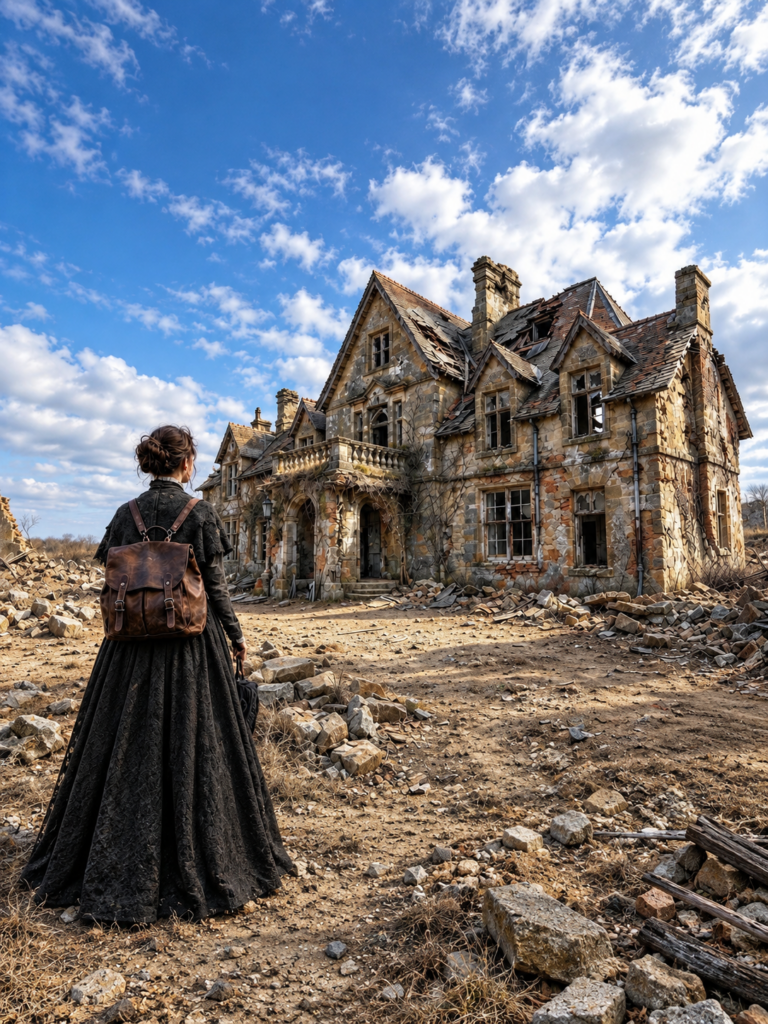
they laughed when the widow spent $37 on a ruined manor—until a hidden room proved the land beneath it was worth more than anyone knew
Part 1
The auctioneer’s hammer came down once.
“Sold.”
For a heartbeat, no one in the county courthouse said anything.
Then Thomas Whitmore laughed.
It was not a polite laugh.
It was the kind of laugh a man gave when he wanted everyone in the room to understand that someone else had made a fool of herself.
Thirty-eight-year-old Eleanor Whitmore kept her eyes on the paper in front of her.
Thirty-seven dollars.
That was what she had just paid for Ravenswick Manor.
Or, more accurately, for what remained of Ravenswick Manor.
The abandoned stone estate stood fourteen miles outside the little Pennsylvania town of Bellweather, at the far end of a valley where the Allegheny foothills began climbing toward darker country.
Once, Ravenswick had belonged to one of the wealthiest families in the county.
Now its roof leaked.
Its western wing had partly collapsed.
Its windows were broken.
The gardens had disappeared beneath blackberry brambles.
No one had lived there properly in twelve years.
A county inspector had described the house as “structurally questionable.”
The auction notice had described it as “an estate requiring substantial restoration.”
People in Bellweather used simpler language.
A ruin.
Thomas leaned back in his chair.
“You cannot possibly be serious.”
Several men nearby smiled.
Eleanor folded the deed.
“Yes.”
“Thirty-seven dollars for Ravenswick.”
“Yes.”
“The roof alone will cost ten times that.”
“I know.”
“There isn’t a whole pane of glass left on the western side.”
“I know.”
“The main chimney is cracked.”
“I know.”
“You don’t even have enough money to furnish three rooms.”
Eleanor finally looked at him.
Thomas had been her husband Henry’s older cousin.
He was forty-six, well dressed, prosperous, and accustomed to being listened to.
In the three months since Henry died, Thomas had become even more accustomed to giving Eleanor advice she had not requested.
“Then it is fortunate,” she said, “that most of the rooms already have furniture.”
Someone coughed to hide a laugh.
Thomas’s face hardened.
“I’m trying to keep you from making another mistake.”
Eleanor stood.
“Another?”
The room grew quiet.
Thomas realized what he had said.
He looked away.
Eleanor waited.
He did not apologize.
That did not surprise her.
Nothing about Henry’s family surprised her anymore.
Three months earlier, Eleanor had been the wife of a respected merchant.
She had lived in a comfortable brick house on Willow Street.
She had managed the household.
Helped Henry with correspondence.
Entertained clients.
Kept accounts whenever his clerk was ill.
She had believed she knew exactly what her future looked like.
Then Henry died at the dinner table.
One moment he had been complaining about freight charges.
The next his spoon had fallen from his hand.
By midnight, the doctor was gone.
By morning, Eleanor was a widow.
Within a week, Henry’s relatives began arriving.
At first, she believed they were helping.
Thomas took control of business correspondence.
Henry’s brother Samuel gathered bank records.
An aunt inventoried household valuables.
A cousin removed several ledgers from Henry’s desk.
Eleanor was numb enough to allow it.
Then one morning she walked into the parlor and found two men carrying away Henry’s desk.
“What are you doing?”
Thomas stood near the fireplace.
“Samuel is taking it.”
“Why?”
“It belonged to the business.”
“No. Henry’s father gave it to us when we married.”
Thomas smiled in the patient way people smiled at children.
“Eleanor, these distinctions become complicated after a death.”
“Then put it down until they become less complicated.”
The men stopped.
Thomas did not.
“You will be provided for.”
Those four words changed everything.
Provided for.
At first they sounded almost kind.
Then Eleanor learned what they meant.
Henry’s family claimed the business accounts.
The house was technically held through a family partnership.
Several investments she had believed belonged jointly to Henry and herself were registered under arrangements no one had ever explained to her.
The jewelry Henry had given her was inventoried.
The carriage was sold.
Aunt Margaret offered Eleanor a room.
Samuel suggested an allowance.
Thomas suggested she could eventually become a companion to an older widow or perhaps teach children.
Eleanor listened to all of it.
Then she asked one question.
“What belongs to me?”
No one answered quickly.
That was when she understood.
Comfort had never been security.
Comfort was simply the experience of living inside something controlled by people who had not yet decided to take it away.
She began searching newspapers.
Estate notices.
Foreclosures.
Tax sales.
She was not looking for grandeur.
She was looking for a door she could lock from the inside.
Then she found Ravenswick.
The advertisement was short.
OLD STONE RESIDENCE.
BARNS.
ORCHARD.
APPROXIMATELY 180 ACRES WITH ADJOINING PARCELS.
DELINQUENT TAX SALE.
No reserve beyond fees owed.
Eleanor read the phrase adjoining parcels several times.
Something about it bothered her.
Not in a bad way.
In the way a loose floorboard bothered a person who knew there might be something beneath it.
She attended the auction.
Almost no one bid.
Thirty dollars.
Thirty-five.
Thirty-seven.
Sold.
Now Thomas followed her outside the courthouse.
“You will regret this.”
Eleanor put on her gloves.
“Possibly.”
“I’m serious.”
“So am I.”
“What do you think you bought?”
She looked across the courthouse square.
Bare November trees moved in the wind.
“A place nobody else can tell me to leave.”
Thomas’s expression changed slightly.
For perhaps the first time, he understood that the purchase was not about architecture.
“You could stay with family.”
“I tried that.”
“No one forced you out.”
“No.”
Her voice remained calm.
“You simply explained repeatedly that nothing around me was mine.”
Thomas looked uncomfortable.
“That is unfair.”
“Perhaps.”
She picked up her small traveling case.
“I’m becoming less afraid of unfair things.”
Ravenswick stood at the end of a mile-long lane.
The first time Eleanor arrived, the hired wagon driver stopped at the gates and refused to continue.
“Road’s too muddy.”
Eleanor looked at the house in the distance.
Four stories of gray stone.
A central tower.
Two wings.
Broken windows staring across dead gardens.
Ivy climbing the eastern wall.
The place looked less abandoned than exhausted.
“How far?”
“Quarter mile.”
Eleanor climbed down.
The driver placed her case beside the road.
“You staying here alone?”
“For now.”
He stared at her.
“Ma’am, there are stories about this place.”
“What kind?”
“Depends who tells them.”
“Ghosts?”
He hesitated.
“Among other things.”
Eleanor looked at the ruined house.
“I recently lived with relatives.”
The driver blinked.
“I’m not particularly afraid of ghosts.”
He laughed despite himself.
She carried her suitcase up the lane.
The front door was swollen from moisture.
It took both hands and one shoulder to force it open.
Cold air met her.
Dust.
Old wood.
Damp plaster.
The faint mineral smell of stone that had not been properly heated in years.
Sheets covered furniture.
Leaves had blown into the entrance hall through a broken side window.
A chandelier hung crookedly.
Eleanor set down her suitcase.
“This is mine.”
Her own voice returned from the high ceiling.
The words sounded ridiculous.
Then wonderful.
She smiled.
The first night, she slept in a small room beside the kitchen because it was the only place where the old iron stove still drew properly.
Rain began after midnight.
At one in the morning, water dripped from the ceiling.
Eleanor placed a bowl beneath it.
At two, another leak opened.
Another bowl.
At three, she woke to splashing.
One bowl had overflowed.
She sat on the edge of the narrow bed.
Her hair had come loose.
Her feet were freezing.
The room smelled of wet plaster and smoke.
For three months, she had refused to cry in front of Henry’s family.
She had cried at Henry’s funeral.
Then stopped.
She had not cried when Thomas explained the accounts.
Not when Samuel removed the desk.
Not when Aunt Margaret spoke about her future as though Eleanor were an inconvenient package needing storage.
Now she looked at rainwater running down a wall of a house everyone had called worthless.
And she began to cry.
Quietly at first.
Then harder.
Not because of the roof.
Because no one would hear her.
That realization broke something open.
She was completely alone.
No husband.
No mother.
No father.
No children.
No family willing to treat her as an adult capable of owning her own life.
Only a ruined house bought for thirty-seven dollars.
Eleanor covered her face.
For perhaps ten minutes, she allowed herself everything she had refused for three months.
Fear.
Humiliation.
Grief.
Anger.
Then the rain struck the metal bowl again.
Ping.
Ping.
Ping.
Eleanor lowered her hands.
She stared at the ceiling.
“No.”
Her voice shook.
She stood.
“No.”
Not because the house was worth saving.
She did not know whether it was.
Not because Thomas was wrong.
He might not be.
But Eleanor had spent three months watching other people decide what she could keep.
She would not leave Ravenswick merely because a roof leaked.
The following morning, she opened the last box of valuables she still possessed.
Inside was her mother’s silver tea service.
Her mother had received it as a wedding gift.
Eleanor remembered polishing it as a girl.
She remembered tea served from it on Sundays.
She remembered her mother saying, “Beautiful things are useful only if they serve the living.”
Eleanor sold it.
The money paid for emergency repairs.
A local carpenter named Josiah Bell arrived two days later.
He was fifty-seven, widowed, with thick hands and a permanent squint.
He walked through Ravenswick carrying a notebook.
Every few minutes he said something discouraging.
“Roof flashing’s gone here.”
Eleanor nodded.
“Joists damaged in the west corridor.”
She nodded.
“Window frame rot.”
She nodded.
“Chimney mortar’s bad.”
She nodded.
Finally he stopped.
“Mrs. Whitmore.”
“Yes?”
“There is an extraordinary amount wrong with this house.”
“I had gathered that.”
He looked at her.
“You have money?”
“Some.”
“A lot?”
“No.”
Josiah closed the notebook.
“Then we do the roof first.”
Eleanor smiled.
“That was my thought.”
“Windows after.”
“Yes.”
“Everything else waits.”
“Yes.”
He studied her.
“You determined?”
Eleanor looked down the dark corridor.
“I don’t have much else.”
Josiah did not ask what she meant.
“Then I’ll bring my boy tomorrow.”
They began.
And for the first time since Henry died, Eleanor woke each morning knowing exactly what belonged to her.
The work.
Part 2
Winter settled over Ravenswick early.
Snow gathered in the broken garden.
Wind came through windows they had not yet repaired.
Eleanor wore two dresses under her wool coat while cleaning rooms.
Josiah Bell and his twenty-two-year-old son Caleb repaired the worst sections of roof.
Eleanor carried boards.
Swept plaster.
Pulled rotted carpet.
Opened shutters that had not moved in a decade.
She discovered an old pantry beneath the main staircase.
A greenhouse hidden behind thorn bushes.
A springhouse near the creek.
Three barns.
Two collapsed sheds.
An orchard of ancient apple trees that had somehow continued producing fruit without anyone tending them.
Each discovery created more work.
And more possibility.
One afternoon, Thomas Whitmore arrived.
He stepped into the entrance hall wearing polished boots.
Dust immediately settled on them.
Eleanor came down the stairs carrying a bucket.
Thomas stared.
“You’re actually living here.”
“Yes.”
He looked upward.
Scaffolding crossed one side of the hall.
A canvas tarp covered part of the ceiling.
“You should sell.”
“I’ve heard that.”
“To whom?”
“You.”
Thomas ignored it.
“This place will consume every dollar you have.”
“Possibly.”
“And then?”
“I’ll know more than I did before.”
He frowned.
“This isn’t a game.”
“I know.”
“You had choices.”
Eleanor set down the bucket.
“I had arrangements other people were willing to make for me.”
“That is not the same thing.”
“No.”
Thomas seemed relieved.
Then she continued.
“It is much worse.”
His face tightened.
“You have become very bitter.”
Eleanor considered that.
“Perhaps.”
“That is not like you.”
“No.”
She picked up the bucket.
“A great many things are no longer like me.”
Thomas lowered his voice.
“Henry would not want this.”
That stopped her.
Eleanor turned.
“You don’t know that.”
“He would not want you ruining yourself in an abandoned house.”
“Henry died.”
Thomas stared.
She continued.
“And I loved him.”
Her voice softened.
“But I am beginning to understand that loving a dead man does not require me to obey what living men claim he would have wanted.”
Thomas looked almost wounded.
Perhaps he truly believed he was helping.
That realization made Eleanor less angry.
But not more obedient.
He left twenty minutes later.
Three weeks after Thomas’s visit, Eleanor found the hidden passage.
It happened in the library.
The room occupied the eastern corner of the ground floor.
Most books had been removed long ago.
Several shelves sagged.
One wall had water damage.
Eleanor was clearing old estate ledgers when a heavy leather-bound volume caught against the wood backing.
She pulled.
The book came free.
Something clicked.
Eleanor stopped.
A narrow wooden panel shifted inward.
She stared at it.
Then pushed.
The wall opened.
Behind it was darkness.
Eleanor called for Josiah.
No answer.
He and Caleb had gone to town for nails.
She should have waited.
She knew that.
Instead, she took a candle.
The passage was barely wide enough for her shoulders.
Cobwebs covered the ceiling.
Dust softened the floor.
At the end stood an iron door.
Locked.
Eleanor examined the wall.
Nothing.
The floor.
Nothing.
Then she noticed one stone slightly raised.
She worked her fingers beneath it.
A small black key lay underneath.
The iron lock resisted.
Then turned.
The door opened inward.
The room beyond was small.
No windows.
One desk.
One chair.
Shelves of leather-bound ledgers.
A metal document box.
Eleanor set the candle down.
The dust was thick enough that she could see her footprints.
No one had entered for years.
She opened the first ledger.
Inside, written in faded ink:
EDMUND WHITMORE
1874
Eleanor frowned.
Edmund had been Henry’s grandfather.
She turned pages.
Land purchases.
Tenant agreements.
Water rights.
Timber leases.
Boundary descriptions.
One name appeared repeatedly.
BLACKMERE FIELD.
Eleanor pulled out an old estate map.
Ravenswick’s boundaries were marked in black.
A large parcel northwest of the manor was labeled BLACKMERE.
A railroad line cut across it.
She remembered the railway.
Everyone in Bellweather did.
The Allegheny Central had crossed the valley for nearly forty years.
Its tracks ran three miles north of Ravenswick before turning west toward Pittsburgh.
Eleanor examined another ledger.
Temporary access granted.
Grading rights.
Timber removal compensation.
Negotiation toward purchase.
But no final transfer.
She opened the metal box.
Inside were smaller maps.
Correspondence.
Receipts.
One folded page had a red line drawn around Blackmere.
Beneath it, someone had written five words.
DO NOT SURRENDER THIS LAND.
Eleanor read them twice.
Then again.
She carried everything to attorney Nathaniel Harcourt the following morning.
Harcourt was sixty-three and built like a fence post.
He read the papers slowly.
Too slowly for Eleanor’s nerves.
Finally, he removed his spectacles.
“If these are genuine, Mrs. Whitmore, you may have a problem.”
Her heart dropped.
“A problem?”
“Or an opportunity.”
“That is not a comforting distinction.”
Harcourt almost smiled.
He spread out the map.
“Blackmere Field was once part of Ravenswick.”
“Yes.”
“The railroad apparently negotiated to purchase it.”
“Yes.”
“But the documents you have do not show a completed sale.”
“What does that mean?”
“It may mean the railroad has been using land it never legally purchased.”
Eleanor stared at him.
“For forty years?”
“Possibly.”
“How does that happen?”
“The same way many things happen.”
He tapped the ledger.
“People assume someone else handled the paperwork.”
He leaned back.
“We need county records.”
“How long?”
“Several weeks.”
“What else?”
“A survey.”
“Cost?”
He told her.
Eleanor winced.
She sold a brooch.
The surveyor arrived in January.
Snow complicated everything.
Old stone markers had disappeared beneath brush.
Boundary descriptions referenced trees that no longer existed.
A creek had shifted.
Yet slowly, the shape of the old property emerged.
Blackmere Field remained legally connected to Ravenswick.
Three weeks later, the railroad sent a representative.
Mr. Charles Pembroke arrived in a private carriage.
That alone told Eleanor something.
He was courteous.
Too courteous.
He accepted coffee.
Complimented the repairs.
Asked about the weather.
Then placed a document on the dining-room table.
“We believe this misunderstanding can be resolved easily.”
Eleanor read the figure.
Five thousand dollars.
She almost stopped breathing.
Five thousand dollars could repair the roof completely.
Replace every window.
Pay taxes.
Restore the barns.
Allow her to live comfortably for years.
Pembroke watched her face.
“We would purchase any interest Ravenswick may claim in Blackmere.”
Eleanor looked up.
“Any interest?”
“Yes.”
“If you already own the land, why would you purchase my interest?”
His expression barely changed.
“A precaution.”
“Five thousand dollars is an expensive precaution.”
“The railroad prefers clarity.”
“So do I.”
Pembroke folded his hands.
“It is a generous offer.”
“It is.”
“Then we agree?”
Eleanor looked at the paper again.
Five thousand.
She imagined a dry roof.
Heat.
Workers.
Security.
Then she remembered the note.
DO NOT SURRENDER THIS LAND.
“I need time.”
Pembroke’s voice changed almost imperceptibly.
“I would advise you not to delay.”
“Why?”
“The company may reconsider.”
“Then it may.”
He stood.
After he left, Eleanor remained at the table.
For an hour she stared at the offer.
Every sensible instinct told her to accept.
Five thousand dollars for land she had not even known existed.
But another instinct had kept her at Ravenswick when the roof leaked.
The instinct that told her to look again whenever someone powerful urged her to stop asking questions.
She returned to the hidden room.
This time, she searched everything.
Desk drawers.
Shelves.
Ledgers.
Loose floorboards.
Nothing.
Hours passed.
Her candle shortened.
Then she noticed one support beneath the desk was a slightly different shade.
She pressed it.
The piece moved.
Something dropped behind the desk.
A folded document.
Eleanor unfolded it carefully.
The Ravenswick seal remained visible.
RAILWAY ACCESS AGREEMENT.
She read every line.
The Allegheny Central had been granted temporary rights through Blackmere while negotiating a permanent purchase.
Ownership would transfer only after the final payment.
Eleanor searched the ledgers.
First payment.
Second.
Third.
No final payment.
She read the agreement again.
Then sat down on the dusty floor.
For months, people had told her she had purchased a worthless ruin.
Now, inside its walls, she held proof that a large parcel beneath one of the region’s most important railway approaches might still belong to Ravenswick.
Eleanor began to laugh.
Quietly.
Almost helplessly.
Not because she was rich.
She was not.
Not yet.
Because for the first time since Henry died, someone else’s mistake might not become her loss.
Part 3
The railroad did not surrender politely.
Nathaniel Harcourt had warned her.
“They will challenge everything.”
They did.
The authenticity of the document.
The boundary descriptions.
The county archive.
The interpretation of payments.
The validity of Ravenswick’s tax title.
Whether Eleanor had legal standing.
Whether old access use had created rights through time.
Letters arrived weekly.
Some were courteous.
Others sounded increasingly like threats written by men careful enough not to use threatening language.
Thomas heard about the dispute.
Of course he did.
Bellweather contained approximately eleven hundred residents and no secret had ever survived there longer than two church services.
Thomas arrived one afternoon.
“You refused five thousand dollars?”
Eleanor was repairing torn curtains.
“Yes.”
“Have you completely lost your senses?”
“Possibly.”
“Do you understand what five thousand dollars is?”
“Yes.”
“You paid thirty-seven for this place.”
“I remember.”
Thomas paced.
“You could take the money and walk away.”
“I don’t want to walk away.”
“You could repair everything.”
“Perhaps.”
“Then why refuse?”
Eleanor lowered the needle.
“Because they offered too quickly.”
Thomas stopped.
“What?”
“If you believe a thing belongs to you, do you immediately offer five thousand dollars to the person questioning you?”
He stared.
“That is not proof.”
“No.”
“It could be cheaper than litigation.”
“Yes.”
“So take it.”
“No.”
Thomas exhaled sharply.
“You are doing this because you want to prove us wrong.”
Eleanor felt the accusation strike closer than she liked.
For several seconds, she said nothing.
Then she answered carefully.
“At first, perhaps I did.”
Thomas’s expression softened slightly.
“But not anymore.”
She set the curtain aside.
“I spent three months after Henry died surrendering things because someone told me resistance would be inconvenient.”
Thomas looked away.
“The house.”
“The business.”
“That was legally complicated.”
“I know.”
“Then why keep bringing it up?”
“Because complicated became a word everyone used when they wanted me to stop asking questions.”
Thomas flushed.
Eleanor continued.
“I may lose Blackmere.”
“Then what?”
“Then I lose after finding out the truth.”
She held his gaze.
“That is different from surrendering before I know it.”
The legal fight lasted seven months.
During that time, Ravenswick nearly defeated Eleanor without assistance from the railroad.
Spring rain exposed new roof leaks.
A kitchen chimney partially collapsed.
Two orchard trees fell during a storm.
The eastern barn roof gave way.
Money disappeared as quickly as she earned it.
Eleanor began taking sewing work from women in Bellweather.
Josiah reduced his rate without telling her.
She discovered it and objected.
“You have a family.”
“So do you.”
“I do not.”
Josiah looked toward the manor.
“Beg to differ.”
He nodded toward Caleb working on a window frame.
Then toward Mrs. Finch from the village, who had begun helping Eleanor twice a week in exchange for meals and sewing lessons.
“This place has people in it now.”
Eleanor did not know how to answer.
Summer came.
Gardens emerged beneath weeds.
Eleanor planted potatoes.
Beans.
Onions.
Cabbage.
She repaired an old chicken coop.
Mrs. Finch brought six hens.
The orchard gave apples.
Ravenswick was still broken.
But it was no longer dead.
Then the railroad escalated.
One morning, Eleanor found three men near Blackmere measuring trackside ground.
She rode out in Josiah’s wagon.
A supervisor approached.
“Company work.”
“On my property?”
“That is disputed.”
“Then until the dispute is resolved?”
He looked uncomfortable.
“We have orders.”
“So do I.”
She stood in the middle of the access road.
The men waited.
“What exactly are your orders, ma’am?”
“To prevent anyone from expanding railway use beyond the existing right until the court determines ownership.”
The supervisor sighed.
“Mrs. Whitmore, I have twenty men coming tomorrow.”
“Then they will have an excellent view of me standing here.”
He almost smiled.
“You serious?”
“Very.”
The next day, she brought a chair.
Josiah brought coffee.
Mrs. Finch brought sandwiches.
By noon, four villagers had arrived simply to watch.
No violence occurred.
No dramatic confrontation.
The railway attorney sent new instructions.
Work stopped.
That small victory mattered more than Eleanor expected.
Not because the railroad had been defeated.
Because people saw her refuse.
For months, Bellweather had treated the Ravenswick dispute as entertainment.
Now some began wondering whether the widow might actually be right.
The hearing occurred in September.
The county courtroom was full.
Eleanor sat beside Harcourt.
Thomas sat three rows behind her.
She did not know why he came.
Railroad attorneys presented decades of use.
Harcourt presented the original agreement.
Payment ledgers.
Tax maps.
Survey results.
County records.
The decisive evidence came from an old clerk named Walter Ames.
He was eighty-one.
His father had served as county recorder.
Walter remembered hearing about the Blackmere purchase when he was a boy.
He also remembered why it had never been completed.
“The railroad changed its planned junction.”
The judge leaned forward.
“So?”
“They no longer wanted the entire field.”
“Yet continued using the access line?”
“Yes.”
“Was final payment made?”
Walter shook his head.
“Not according to my father.”
The railroad attorney objected.
Hearsay.
The judge agreed.
Then Harcourt produced one final county ledger.
A notation made forty years earlier.
TRANSFER PENDING FINAL PAYMENT.
NO RECEIPT FILED.
The room became very still.
Three weeks later, the ruling came.
Blackmere Field remained part of the Ravenswick estate.
The railroad possessed an easement only for the original track corridor.
Nothing more.
Water rights associated with the property also remained with Ravenswick.
Eleanor read the decision twice.
Then placed it on the kitchen table.
No shouting.
No celebration.
She made tea.
Not from her mother’s silver service.
That was gone.
She used a chipped brown pot.
Josiah entered carrying lumber.
“Well?”
Eleanor handed him the ruling.
He read slowly.
Then smiled.
“Suppose the roof gets finished now.”
Eleanor laughed.
“Yes.”
The railroad returned to negotiate.
This time, Eleanor did not sell the land.
She granted formal access.
Annual payments.
Maintenance conditions.
Limits on expansion.
Harcourt helped her negotiate water agreements with neighboring farms that had unknowingly drawn from channels crossing Ravenswick property.
By spring, money began coming into the estate.
Enough to stabilize the manor.
Not enough to make Eleanor wealthy.
Enough to give her choices.
That was better.
She repaired the roof.
Then the windows.
Then the kitchen.
Then the eastern wing.
Thomas visited again.
He looked around.
“I heard you won.”
“We reached clarity.”
“You sound like a lawyer.”
“I have spent too much time with one.”
Thomas walked through the entrance hall.
Sunlight now entered through restored windows.
“You could sell Ravenswick for twenty times what you paid.”
“Probably more.”
“So?”
“So what?”
“Will you?”
“No.”
Thomas stared at her.
“Why?”
Eleanor looked through the window toward the old stable.
Because she had begun thinking about something else.
Her mother’s loom.
The steady wooden rhythm.
Wool stretched between practiced hands.
A skill Eleanor had not used in twenty years.
“What are you thinking?” Thomas asked.
“That Ravenswick still has too many empty buildings.”
Thomas almost laughed.
Then stopped himself.
That was wise.
Part 4
The first loom arrived in October.
It was secondhand.
Heavy.
Scarred.
One treadle had been repaired with an iron strap.
Eleanor placed it inside the restored stable.
Josiah stood nearby.
“You buying horses?”
“No.”
He looked at the loom.
“Apparently not.”
Eleanor remembered more than she expected.
Her mother had taught her at twelve.
Warp.
Weft.
Tension.
Rhythm.
How a single uneven thread could travel through an entire piece of cloth.
The first blanket Eleanor produced was terrible.
Too loose in one section.
Too tight in another.
Edges uneven.
She laughed when she spread it across the table.
Mrs. Finch did not.
“I’d sleep under it.”
“That is not the same as buying it.”
“It would keep me warm.”
“So would a flour sack sewn properly.”
Mrs. Finch smiled.
“What now?”
“Again.”
Eleanor bought four more looms.
Five women came from Bellweather.
Two were widows.
One had a husband injured in a mine.
One supported an elderly mother.
One, nineteen-year-old Clara Bell, was Josiah’s niece.
None had reliable income.
Eleanor did not promise fortunes.
She taught them weaving.
They taught one another.
At first, the stable sounded awkward.
Wood clacked out of rhythm.
Threads snapped.
Someone cursed.
Someone laughed.
Eleanor worked beside them.
That mattered.
She had spent enough time around people who confused ownership with superiority.
Ravenswick would not become that.
Their first merchant rejected the cloth.
“Too rough.”
Second merchant:
“Color isn’t consistent.”
Third:
“No demand.”
Eleanor returned home with unsold blankets stacked behind her.
Mrs. Finch stared at them.
“Well.”
Clara crossed her arms.
“We should make better ones.”
Everyone turned.
The girl reddened.
“What?”
Eleanor smiled.
“Nothing.”
She touched the rejected blanket.
“She’s right.”
They changed the weave.
Improved washing.
Tested different wool.
Experimented with linen blends.
Eleanor invested part of the railway payment.
For three months, almost nothing sold.
Thomas heard.
He arrived carrying exactly the expression Eleanor expected.
“You are now operating a textile mill?”
“A workshop.”
“Out of a stable.”
“A repaired stable.”
“With village women.”
“Yes.”
“Why?”
Eleanor looked at him.
“Why not?”
“Because your land income is secure.”
“For now.”
“You don’t need this.”
Eleanor turned toward the looms.
“That is precisely why I can try.”
Thomas frowned.
“You could live comfortably.”
“Yes.”
“Then live comfortably.”
There it was again.
The old idea.
Comfort as destination.
Comfort as obedience.
Eleanor shook her head.
“I have learned that comfort depending on one source can disappear very quickly.”
Thomas understood the reference.
“You think our family stole from you.”
“I think your family taught me a useful lesson.”
“That sounds worse.”
“It isn’t.”
“What lesson?”
Eleanor looked toward the women.
“Never build a life that collapses because one person closes one door.”
Thomas was quiet.
He left without arguing.
Two weeks later, the first order arrived.
Twenty blankets.
A store in Pittsburgh.
Mrs. Finch read the letter aloud three times.
Clara screamed.
Josiah came running from outside believing someone was injured.
The women laughed so hard one had to sit down.
Twenty blankets did not make them successful.
But it proved someone would pay.
They filled the order.
Another came.
Then forty.
Then winter coats.
Then heavy work cloth.
Ravenswick Wool and Linen Works became a name.
Slowly.
No miracle.
No overnight fortune.
There were bad shipments.
Broken machinery.
A batch of dyed wool ruined by contaminated water.
A merchant who failed to pay.
A winter when ice damaged part of the water system.
Eleanor learned payroll.
Inventory.
Freight.
Contracts.
She made mistakes.
Some expensive.
Whenever people called her lucky because she had discovered the hidden room, she wanted to laugh.
The hidden room had given Ravenswick leverage.
It had not repaired one roof tile.
It had not taught one woman to weave.
It had not balanced one ledger.
It had not stayed awake during storms worrying whether wages could be paid.
Inheritance, Eleanor discovered, was not the same as achievement.
It was simply material handed from one generation to another.
What a person built from it remained their responsibility.
Within two years, twenty-three women worked at Ravenswick.
Some full time.
Some seasonally.
A second stable became a finishing room.
The old greenhouse returned to use.
Vegetables supplied the kitchens.
Eleanor reopened two upstairs rooms for women traveling from farther farms who needed temporary lodging during heavy production months.
The manor changed.
Smoke rose from chimneys.
Windows glowed at night.
Gardens returned.
Children waited outside for their mothers at the end of shifts.
Laughter traveled through corridors that had once contained only wind.
Eleanor occasionally stood in the entrance hall after everyone left.
She remembered her first night.
The bowls beneath the leaking ceiling.
Her wet shoes.
The certainty that she was alone.
That woman seemed both very near and very far away.
Then trouble returned.
Not from the railroad.
From Henry’s family.
Thomas arrived first.
This time, he looked embarrassed.
“Samuel believes the records in the hidden room belong to the Whitmore family.”
Eleanor stared at him.
“Samuel can believe that.”
“He may file suit.”
“For what?”
“Family property.”
“Ravenswick was sold publicly.”
“Yes.”
“You all knew about the sale.”
“Yes.”
“No one bid.”
Thomas looked away.
“That is true.”
“I purchased the estate.”
“Yes.”
“The documents were inside the estate.”
“Yes.”
“What precisely is Samuel claiming?”
“That Edmund Whitmore was his grandfather.”
“He was Henry’s grandfather too.”
“Yes.”
“And I was Henry’s wife.”
Thomas rubbed his forehead.
“I told Samuel this would be difficult.”
Eleanor’s voice remained even.
“Did you tell him it would be insulting?”
“Yes.”
That surprised her.
Thomas continued.
“I also told him not to do it.”
Eleanor studied him.
“Why?”
He looked around Ravenswick.
“Because I am beginning to understand the difference between something belonging to a family and a family bothering to care for it.”
That was perhaps the first wise thing Thomas Whitmore had said to her.
Samuel sued anyway.
The case lasted six months.
He lost.
The court found that the contents of Ravenswick transferred with the property except items specifically reserved at auction.
Nothing had been reserved.
Samuel left the courthouse without speaking to Eleanor.
Thomas remained.
They stood beneath the same stone steps where he had laughed at her two years earlier.
“I owe you an apology.”
Eleanor looked at him.
“Yes.”
He gave a small laugh.
“You never make that easy.”
“No.”
“I thought you bought Ravenswick because you were grieving.”
“I was.”
“I thought grief had made you irrational.”
“Perhaps it had.”
Thomas looked toward the street.
“But you were right.”
Eleanor considered that.
“Not about everything.”
“About this.”
“Yes.”
He nodded.
“I laughed.”
“I remember.”
“I’m sorry.”
For years Eleanor had imagined apologies differently.
She thought they would feel like triumph.
Instead, Thomas looked older.
Smaller.
Human.
She no longer needed him humiliated.
“I accept.”
He seemed relieved.
Then Eleanor added, “That does not make you right retroactively.”
He laughed.
“I would never expect such generosity.”
They walked back toward Ravenswick together.
Part 5
Five years after Eleanor spent thirty-seven dollars on a ruined manor, Ravenswick employed forty-one people.
Thirty-four were women.
The others maintained buildings, handled freight, managed livestock, and worked the gardens.
The western wing had finally been stabilized.
The tower roof was repaired.
The orchard was pruned.
Ravenswick blankets were sold in Pittsburgh, Harrisburg, and Baltimore.
Eleanor resisted expansion beyond what the workshop could sustain.
Several investors approached.
She refused them.
Thomas questioned that decision.
“You could double production.”
“Yes.”
“Then why not?”
“Because I would have to borrow heavily.”
“You hate debt.”
“I respect debt enough to fear using it carelessly.”
“You sound eighty.”
“I feel eighty some mornings.”
Thomas had changed too.
He occasionally helped review contracts.
He never again tried to direct her life.
Samuel stopped visiting.
Aunt Margaret sent Christmas cards.
Eleanor answered them politely.
Healing, she learned, did not always mean restoring relationships to what they had been.
Sometimes it meant creating a version that no longer caused harm.
One November evening, Eleanor walked through the workshop.
Looms fell silent one by one.
Women put away tools.
Mrs. Finch, now sixty-three, pulled on her coat.
“You going up to the house?”
“In a minute.”
“Don’t stay all night.”
“I won’t.”
“You said that yesterday.”
“And eventually I went upstairs.”
Mrs. Finch rolled her eyes.
After everyone left, Eleanor carried a candle into the library.
The hidden panel still worked.
She kept the mechanism repaired.
Not because the room remained secret.
Everyone at Ravenswick knew about it now.
But Eleanor liked entering it the old way.
The narrow passage forced her to slow down.
Inside, the desk remained.
So did the ledgers.
Copies of important documents had been stored elsewhere.
The originals stayed where Edmund Whitmore had left them.
Eleanor sometimes wondered about him.
Why had he hidden everything?
Whom had he distrusted?
Why the warning?
DO NOT SURRENDER THIS LAND.
She opened the oldest ledger.
Near the back, several papers remained loose.
Eleanor had read them before.
Or thought she had.
One folded note was stuck beneath the leather binding.
She carefully pulled it free.
The handwriting was Edmund’s.
If you have found this room, Ravenswick has almost certainly fallen into difficult times.
Eleanor sat.
She continued reading.
Do not mistake neglect for worthlessness.
A house can be neglected.
Land can be neglected.
A family can neglect its duties.
None of these facts prove the thing itself has lost value.
Look carefully before surrendering what another person has failed to understand.
Eleanor stopped.
For several minutes, she simply held the page.
Outside the hidden room, Ravenswick was alive.
She could hear distant footsteps overhead.
A door closing.
Wind against repaired glass.
The low thump of the furnace.
She thought about the auction.
Thomas laughing.
Thirty-seven dollars.
A roof leaking over bowls.
Her mother’s silver tea service leaving in someone else’s hands.
The first terrible blanket.
The first order.
The railroad hearing.
Samuel’s lawsuit.
Women walking through the gates each morning carrying lunch pails.
She had once believed Ravenswick saved her because there was valuable land hidden beneath its legal history.
That was not quite true.
Blackmere mattered.
The railway money mattered.
Without it, she might have lost the house.
But Ravenswick had begun saving her before she found the passage.
It saved her the first night she chose to stay.
It gave grief physical work.
A roof to repair.
Floors to scrub.
Windows to open.
A garden to clear.
Something broken that did not resent being repaired.
Henry had been dead five years.
Eleanor still missed him.
That surprised some people.
As if building a new life required proving the old one had meant nothing.
It did not.
She could love what she had lost and still love what came afterward.
Those truths did not cancel each other.
The following spring, Eleanor established a small fund.
Women employed at Ravenswick could borrow from it without interest for emergencies.
A doctor’s bill.
A broken stove.
School fees.
Funeral costs.
No one was required to explain more than necessary.
Thomas read the paperwork.
“You’re going to lose money.”
“Possibly.”
“Why do it?”
Eleanor looked at him.
“Do you remember the allowance?”
Thomas did.
“When Henry died?”
“Yes.”
“You hated it.”
“I hated needing permission.”
He nodded.
“The fund is different?”
“Yes.”
“How?”
“It is designed to return control, not create dependence.”
Thomas read the page again.
“You’ve thought about this.”
“For five years.”
Ravenswick continued growing.
Not dramatically.
Steadily.
Young women trained older ones in new finishing techniques.
Older women taught younger ones how to judge wool by touch.
Children who once waited outside the workshop eventually worked there.
Some left.
Some returned.
Eleanor never demanded loyalty.
That had become another lesson.
A place proved its value by allowing people to leave with more capacity than they arrived with.
Josiah Bell retired at seventy.
Ravenswick held a supper for him in the main hall.
He complained that too many people attended.
Eleanor gave him a wooden toolbox made from old Ravenswick oak.
Inside the lid was engraved:
THE ROOF FIRST.
Josiah stared at it.
Then at Eleanor.
“You remember that?”
“You saved the house.”
“No.”
He shook his head.
“I fixed things you paid me to fix.”
“You stayed when I had almost nothing.”
Josiah’s eyes became wet.
“You stayed too.”
That was true.
Caleb took over his father’s carpentry business.
Clara eventually became workshop manager.
Mrs. Finch never retired properly.
At seventy, she still arrived three mornings a week.
“No one else checks the finishing correctly.”
Clara objected.
Mrs. Finch ignored her.
Eleanor grew older.
Her hair silvered.
Lines deepened around her eyes.
Ravenswick changed with her.
Electric lights eventually replaced many lamps.
New machinery entered the stable.
A telephone appeared in the office.
Thomas hated it.
Eleanor enjoyed reminding him that he was becoming sentimental.
One autumn afternoon, nearly twenty years after the auction, a young widow arrived.
Her name was Mary Callahan.
Thirty-one.
Two children.
Her husband had died in a mill accident.
The company provided a small payment.
His relatives controlled the rented house.
Mary had nowhere secure to go.
She sat across from Eleanor in the office.
“I don’t want charity.”
“Good.”
Mary looked surprised.
“I mean—I’m grateful. I only…”
Eleanor waited.
“I want work.”
“What can you do?”
“Sew.”
“Anything else?”
“Keep accounts.”
“Anything else?”
Mary hesitated.
“My husband said I ask too many questions.”
Eleanor smiled.
“That may be useful here.”
Mary began the following Monday.
Years later, she would supervise shipping.
Her daughter would become a teacher.
Her son would study engineering.
Eleanor did not know any of that when Mary first walked through the gates.
She only knew the expression.
The shame of dependence.
The fear of being treated as a burden.
The desperate desire to control one small corner of life.
She recognized it because Ravenswick had once found her wearing the same face.
At seventy-one, Eleanor walked more slowly.
Thomas had died two winters earlier.
They had become friends in the end.
Not the kind who forgot old injuries.
The kind who no longer needed to.
He left Eleanor a short note.
You were right about one thing I hated admitting.
A person can be mistaken for years and still choose not to remain mistaken.
Thank you for giving me the chance.
Eleanor kept the note in the hidden room.
Beside Edmund’s.
Beside Henry’s old letters.
Beside the railroad agreement.
The room no longer held a secret fortune.
It held something stranger.
Evidence of people changing.
Evidence of people failing.
Trying again.
Leaving instructions.
Warnings.
Apologies.
One winter morning, Eleanor stood at Ravenswick’s front doors.
Snow covered the drive.
Smoke rose from the workshop chimneys.
Thirty-seven years had passed since she first walked up that road carrying one suitcase.
A horse wagon approached.
The driver stopped near the steps.
Two visitors climbed down.
A young man and woman.
They had read about Ravenswick in a newspaper.
The woman looked at the manor.
“This was really bought for thirty-seven dollars?”
Eleanor smiled.
“Yes.”
“And nobody wanted it?”
“Not particularly.”
The young man stared at the building.
“They must have been fools.”
Eleanor shook her head.
“No.”
He looked surprised.
“They saw what was visible.”
Broken windows.
Collapsed roofs.
Debt.
Work.
Risk.
Those things had all been real.
Eleanor had seen them too.
“They simply stopped looking too soon.”
The visitors followed her inside.
Warm air met them.
Voices came from the workshop.
The entrance hall smelled faintly of woodsmoke, wool, and coffee.
Light fell through restored windows.
Eleanor paused near the staircase.
For one brief instant, she could see Ravenswick as it had been.
Dust.
Darkness.
Rainwater.
Sheets over furniture.
Then the image passed.
That evening, Eleanor entered the hidden room alone.
She placed Edmund’s note beside the first map of Blackmere.
She sat at the desk.
Her hands were thinner now.
Veins visible.
Knuckles enlarged with age.
Hands that had scrubbed floors.
Carried boards.
Turned ledger pages.
Worked a loom.
Signed contracts.
Refused settlements.
Paid wages.
Held grieving women.
Built something.
Eleanor looked around the small room.
People often said her inheritance had been hidden there.
They were wrong.
The documents were hidden there.
The land rights were hidden there.
The inheritance was larger.
It had taken her years to understand.
Ravenswick had taught her that value could survive neglect.
That being unwanted did not mean being worthless.
That abandonment was not proof of failure.
That ownership meant responsibility more than possession.
That money could restore a roof but not a life unless the person beneath that roof had something meaningful to do.
That independence did not require isolation.
That accepting help was not surrender.
That giving someone work could sometimes preserve dignity better than giving them pity.
And that the people who laughed when you began did not need to become enemies forever.
Sometimes the best ending was not seeing them defeated.
Sometimes it was living long enough for them to understand.
Eleanor closed the ledger.
She extinguished the candle.
Then she walked through the narrow passage.
Into the library.
Into the hall.
Into the house everyone once called worthless.
Outside, Ravenswick’s windows glowed across the winter fields.
The railway still crossed Blackmere.
Water still moved beneath the property.
The old stable still held looms.
Women still worked there.
Families still depended on wages earned beneath a roof Eleanor once could not afford to repair.
Thirty-seven dollars had purchased a ruin.
Everything after that had required work.
And that was why, when people later told the story, Eleanor always corrected one part.
She had not discovered a fortune.
She had discovered a chance.
The fortune was what everyone built from it.


