
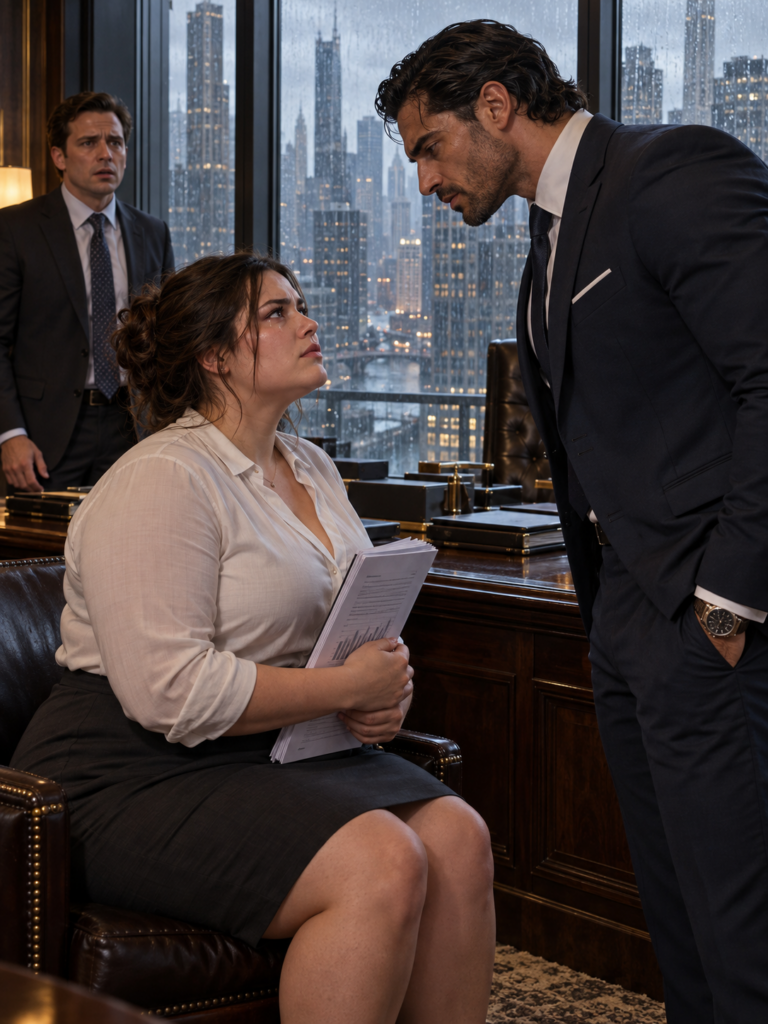
Dante leaned closer to the screen.
“What am I looking at?”
“The foundation overrun wasn’t caused by one unexpected expense,” Norah explained. “Several contractors revised their estimates after the initial budget was prepared. Todd combined the revisions without updating the contingency calculation.”
Dante examined the figures.
“Meaning?”
“The two-million-dollar increase was predictable. It could have been addressed before approval.”
“Can you demonstrate that?”
Norah opened the spreadsheet’s earlier version and placed the two estimates side by side.
“Here. The quantities changed. The unit costs didn’t. Anyone reviewing both versions should have noticed.”
Dante was quiet.
Norah expected him to challenge her.
Instead, he pulled a chair alongside the desk.
“Show me the rest.”
The request startled her more than Todd’s firing.
For three years, she had learned to compress complicated work into simple explanations that would flatter her superiors.
Now the most intimidating man she had ever met wanted the details.
She walked him through the calculations.
He asked precise questions.
She answered every one.
When she finished, Dante leaned back.
“Your manager was taking credit for work he didn’t understand.”
Norah looked at the empty doorway.
“He wasn’t the first.”
Dante regarded her carefully.
“How long have you worked here?”
“Three years.”
“And how many projects have you analyzed?”
“Eleven major ones.”
“Your personnel records list you as a junior analyst.”
“That was Todd’s decision.”
“Why didn’t you challenge it?”
She almost laughed.
“Because people who can’t afford to lose their jobs have to choose their battles.”
The words settled between them.
Dante didn’t ask her to elaborate.
That restraint made it easier to continue.
“My mother needs assisted living. I cover most of the bill. A promotion would have helped, but Todd controlled the recommendations.”
“Did he know?”
“He knew enough.”
Dante’s jaw tightened.
Norah recognized the expression.
She had seen men become angry on her behalf before.
Usually, their anger disappeared when helping her required something inconvenient.
So she lifted the report.
“I appreciate what you did. But I don’t want a position because you feel sorry for me.”
“I don’t.”
“Then evaluate me like anyone else.”
“That’s exactly what I’m doing.”
He rose.
“Come downstairs. We’ll discuss the Southside work.”
Norah hesitated.
“What about my current contract?”
“Human resources will explain the transfer options. You’re free to decline.”
“And if I find something you don’t want me to find?”
A silence followed.
Dante’s eyes settled on hers.
“Then I expect you to tell me.”
“That isn’t the same as promising you’ll like it.”
“No,” he said. “It isn’t.”
Outside, employees hurried past Todd’s open office without looking inside.
Norah gathered her belongings from the cubicle she had occupied for three years.
A photograph of her mother at Navy Pier.
Three construction reference books.
A chipped coffee mug.
A gray cardigan.
Everything fit inside one cardboard box.
Dante waited near the service corridor.
When she reached him, he didn’t take the box from her without asking.
“Would you like help?”
“I’ve got it.”
He nodded and pressed the elevator button.
Inside stood Arthur, Dante’s driver, a broad-shouldered man with a battered nose and an expression that revealed nothing.
“Miss Hayes,” Arthur acknowledged.
Norah returned the greeting.
The elevator descended.
“Mr. Rossi,” she said.
“Dante.”
“Dante. Does the job involve anything outside legitimate financial analysis?”
His gaze moved to hers.
“Rossi Holdings has complicated business interests.”
“That isn’t an answer.”
“No,” he agreed. “It isn’t.”
She tightened her hold on the box.
“If you expect me to approve false numbers, hide unsafe construction, or sign reports I can’t defend, the answer is no.”
Dante watched her.
Then he said, “That’s precisely why I want you.”
The elevator doors opened onto the underground garage.
Arthur walked toward a waiting black SUV.
Dante remained beside Norah.
“Read the contract before you decide. Ask every question you need answered. I won’t promise that working for me will be uncomplicated.”
“Will you promise I can leave?”
“Yes.”
“And take my work history with me?”
“Anything you’re legally entitled to retain.”
She looked at the waiting vehicle, then back at him.
Todd had offered her humiliation disguised as opportunity.
Dante was offering something far more uncertain.
But for the first time in years, she was being asked what she thought instead of being told what she was worth.
She shifted the box onto her other hip.
“Then I want to see the accounts.”
Dante opened the rear passenger door.
Norah stepped toward it.
What she didn’t yet know was that the first set of Southside accounts would reveal a discrepancy far larger than Todd Mitchell’s mistake.
And the name attached to those numbers belonged to Dante Rossi’s own family.
Norah settled into the back seat, placing her cardboard box beside her.
Dante entered from the opposite side.
Arthur closed the doors, climbed behind the wheel, and pulled into Chicago traffic.
For several minutes, nobody spoke.
Rain washed over the SUV’s dark windows. The city moved around them in streaks of gray, red, and amber.
Dante reviewed documents on a tablet.
Norah studied his reflection.
She had expected someone like him to fill silence with instructions.
Instead, he seemed perfectly comfortable leaving her alone with her thoughts.
Eventually, she asked, “Why were you at the office today?”
Dante looked up.
“I wanted to review the West Loop project.”
“Because of the overrun?”
“Because of several things.”
“Did you know Todd was blaming me?”
“I knew your figures differed from the approved budget. I didn’t know he was humiliating you.”
“And you bought the company before that?”
“Yes.”
She considered the answer.
“Then firing Todd wasn’t why you bought it.”
“No.”
Something about that distinction reassured her.
Not completely.
But enough.
“Do you normally investigate employees before meeting them?”
“I review the people responsible for important work.”
“You knew I taught myself foundation-cost modeling?”
His eyebrow lifted.
“I read your personnel file.”
“And the project records.”
“Those too.”
Norah turned toward the window.
For years, she had wished someone would notice how hard she worked.
Now someone had.
The complication was that he belonged to a world she didn’t understand.
Twenty minutes later, Arthur turned into an alley behind an unremarkable commercial building.
A steel security gate rose.
The SUV entered a private garage.
Norah followed Dante into an elevator that carried them to the upper floors of Rossi Holdings.
When the doors opened, she found polished concrete, glass offices, and an uninterrupted view of Lake Michigan.
No excessive gold.
No theatrical displays of wealth.
Just a place designed for people who preferred privacy.
A silver-haired woman approached them carrying a tablet.
“Dante. The contractor reports are waiting, and the union representative has called again.”
“Schedule the call for this afternoon.”
“He’s threatening another work stoppage.”
“Then we’ll discuss the safety conditions and the hazard-pay dispute before the next pour.”
The woman nodded.
Dante gestured toward Norah.
“Fay, this is Norah Hayes. I want her to review the Southside financial models.”
Fay’s gaze moved from Norah’s damp shoes to the cardboard box.
“Has her employment agreement been completed?”
“Not yet,” Norah answered.
Fay looked surprised.
“Then we’ll begin there.”
For the next forty minutes, Norah sat in a quiet conference room examining an employment agreement, confidentiality provisions, and the scope of her proposed responsibilities.
The salary was more than she currently earned.
Considerably more.
Enough to cover her mother’s care without calculating which bills could wait until Friday.
But money wasn’t her only concern.
“I won’t accept personal liability for information withheld from me,” she told Fay.
Fay glanced at the highlighted clause.
“A reasonable objection.”
“And I need a clear process for reporting safety concerns.”
“We can put that in writing.”
Norah reviewed the revised language before signing.
Dante entered as she finished.
“Everything satisfactory?”
“For now.”
He accepted the answer without demanding enthusiasm.
Fay led her to a glass-walled annex equipped with two large monitors.
Arthur arrived with her box.
Norah placed her mother’s photograph beside the keyboard.
Then she opened the Southside accounts.
Numbers had always steadied her.
A person could lie through a smile.
A manager could hide incompetence behind a title.
But physical materials still had to occupy space, weigh something, and arrive somewhere.
She began with contractor payments.
Then purchase orders.
Then shipping manifests.
Four hours passed.
At three seventeen, she stopped typing.
Apex Logistics.
The supplier appeared repeatedly in the warehouse redevelopment accounts.
The invoices described premium structural steel.
But the reported freight weights didn’t match the expected weights for the stated quantities and specifications.
At first, Norah assumed the manifests contained incomplete load information.
She checked another shipment.
Then six more.
The discrepancy persisted.
She calculated the difference.
Approximately twenty percent.
Her stomach tightened.
She pulled the procurement invoices alongside the shipping records.
Apex Logistics was billing Rossi Holdings for higher-grade materials than the shipments appeared to contain.
The potential excess charges ran into hundreds of thousands of dollars each month.
Norah checked the figures again.
Then a third time.
There were several possible explanations, but none could be ignored.
If the wrong steel was actually being installed, the problem wasn’t merely financial.
It could become structural.
She printed the analysis.
The pages emerged warm from the machine.
For several moments, she stared at them.
She had been employed by Rossi Holdings for only a few hours.
Now she had information that could cost someone an enormous amount of money.
She could send Fay a cautious email.
She could wait until Monday.
Or she could walk directly into Dante Rossi’s office and see whether his promise to value the truth survived contact with his own accounts.
Norah gathered the pages.
She walked down the corridor.
Dante stood beside his office window, speaking quietly in Italian.
When he ended the call, she entered.
“I found something.”
He looked at the stack of paper.
“Already?”
“Yes.”
She placed the report on his desk.
“Apex Logistics is charging premium rates for structural steel, but the shipping records suggest a substantial discrepancy in the material being delivered.”
Dante examined the first page.
“How substantial?”
“Approximately twenty percent by weight, based on the shipment descriptions. I need independent inspection before I can identify the material conclusively.”
“And financially?”
“Potentially four hundred thousand dollars a month in excess billing.”
Dante turned another page.
Norah watched him closely.
He understood the numbers.
That was immediately clear.
He also understood their implications.
“Are the materials already being installed?” she asked.
“Some shipments have reached the Southside sites.”
“Then the construction records need to be checked before work continues.”
Dante picked up his phone.
“Fay. Hold the affected steel work pending inspection. Get the project engineers involved.”
He ended the call and studied the supplier’s name.
“Apex Logistics,” he said quietly.
“Who owns it?”
“My cousin.”
Norah went still.
“Gianni Rossi?”
“Yes.”
She remembered something she had overheard during her first hour in the building.
A conversation about loyalty.
Family.
A disagreement at the docks.
Suddenly, the financial discrepancy felt less like an accounting problem and more like a doorway into an argument that had begun long before she arrived.
“I didn’t know,” she said.
“That doesn’t change your analysis.”
“Your cousin could lose his business.”
“If the evidence is correct, he should answer for it.”
“And if it isn’t?”
“Then he’ll have every opportunity to show us why.”
Norah searched his expression.
“Are you going to confront him?”
“Yes.”
“Where?”
“At the docks.”
She felt the first genuine chill of fear since arriving.
“What happens when you get there?”
Dante paused.
“That depends on what Gianni tells me.”
She thought of everything she had heard about the Rossi family.
The stories were inconsistent.
Some described Dante as a businessman who negotiated hard.
Others described consequences that never appeared in court records.
Norah looked at the report between them.
“I need you to understand something,” she said.
Dante waited.
“I found evidence of possible fraud and unsafe materials. I didn’t give you permission to use my work as an excuse to hurt somebody.”
His expression hardened.
For one uncomfortable moment, she wondered whether she had finally crossed the invisible line.
Then he said, “You don’t need to give me permission to investigate my company.”
“That’s not what I said.”
“I know.”
“Then don’t make me responsible for what you decide to do.”
Dante regarded her for a long time.
Finally, he nodded.
“Your analysis is yours. My decisions are mine.”
It wasn’t reassurance.
But it was an acknowledgment.
Fay appeared in the doorway.
“Arthur has the vehicle ready.”
Dante gathered the pages.
“Send the engineering reports to Norah. I want her reviewing them while we’re gone.”
He turned toward her.
“Stay here if you prefer. Arthur can arrange transportation home whenever you’re ready.”
“I want the complete materials records.”
“You’ll have them.”
“And an independent assessment.”
“I’ve requested one.”
Dante headed for the elevator.
Norah watched him disappear.
Then she returned to her desk.
The afternoon became evening.
The sky darkened over Lake Michigan.
Office lights switched off one by one.
At seven, Fay brought her coffee and asked whether she needed a car.
“Not yet,” Norah answered.
At eight, she found another discrepancy.
This one involved hazard-pay funds associated with a local construction union.
The approved payments were higher than the amounts listed in the payroll summaries.
The missing portion appeared to pass through a Delaware company before disappearing into another account.
Norah remembered Fay mentioning the union representative earlier.
The disputed hazard-pay increase.
The repeated telephone calls.
She copied the transaction references into a separate working file.
She didn’t yet have enough information to accuse anyone.
But the pattern deserved scrutiny.
At nine forty-two, the private elevator opened.
Arthur emerged first.
His right hand was scraped.
Dante followed several steps behind.
His jacket was missing.
A dark mark stained the lower side of his white shirt.
Norah stood in the annex doorway.
Their eyes met.
Dante looked exhausted.
Not triumphant.
Not relieved.
Simply exhausted.
He entered his office and closed the glass door.
Norah remained in the corridor.
She thought about leaving.
Her employment agreement allowed it.
Her analysis was saved.
She could go home, call her mother tomorrow, and begin looking for a less complicated job.
Instead, she walked to Dante’s door.
She knocked.
“Come in.”
The office was dim.
Dante stood beside a credenza, pouring a drink.
His shirt carried a small rust-colored stain near his ribs.
Norah noticed it immediately.
“Are you hurt?”
“No.”
“Someone else?”
He set down the bottle.
“Gianni injured his hand during the confrontation.”
Norah felt cold.
“What happened?”
“He admitted that Apex had substituted materials on some shipments. He’s relinquishing management.”
“Was the injury accidental?”
Dante didn’t answer immediately.
And that hesitation told her more than a polished explanation would have.
“Arthur restrained him when the confrontation became physical,” Dante said. “Gianni’s hand was injured.”
Norah looked at him.
“You knew things might turn violent.”
“Yes.”
“And you went anyway.”
“He’s family. I needed to hear it from him.”
“That doesn’t make the violence acceptable.”
“No.”
The quiet agreement disarmed her.
Dante rubbed his forehead.
“Work has stopped on the affected deliveries. Engineers will inspect the material. We won’t use anything that fails the specification.”
“Good.”
“Gianni is leaving Apex.”
“Is he going to Sicily?”
Dante glanced at her.
“He intends to.”
Norah considered the word.
“Intends?”
“Nothing has been finalized.”
She looked at the bloodstain.
“There’s something else I need to tell you.”
Dante straightened.
“I found irregularities in the union hazard-pay accounts.”
He stared at her.
She explained the transfers.
The Delaware company.
The missing funds.
The timing of the payments.
As she spoke, the exhaustion in his face gave way to concentration.
When she finished, he remained silent.
Then he asked, “How long have you been working on this?”
“Since you left.”
“Why didn’t you go home?”
“Because I wanted to know whether the workers were actually getting paid.”
He looked at her with an expression she couldn’t identify.
Admiration, perhaps.
But mixed with something more complicated.
A man accustomed to commanding rooms had discovered someone who refused to be impressed by his authority alone.
Norah folded her arms.
“I want the workers paid whatever they’re owed, Dante. Not another private confrontation that leaves somebody bleeding.”
“Understood.”
“And I want to know what kind of company I’m working for.”
He looked toward the dark lake.
For a moment, she thought he would evade the question.
Instead, he said, “One that’s been run for too long by people who confuse loyalty with silence.”
Norah watched him carefully.
“Including you?”
Dante turned back.
“Yes.”
The answer was almost inaudible.
Then he walked to his desk, opened a drawer, and removed a thin folder.
“This came from the managing partner’s office before the acquisition,” he said.
He placed it between them.
Norah saw her own name on the cover.
Beneath it was an internal recommendation prepared months earlier.
Todd Mitchell had proposed removing her from the West Loop project.
Not because her analysis was poor.
Because she had repeatedly challenged inaccurate cost reporting.
Norah opened the folder.
The first paragraph made her pulse race.
Todd had described her as disruptive.
Overly meticulous.
Unsuited for client-facing responsibility.
She turned another page.
There was a copy of her original West Loop warning.
Dated weeks before the report that had caused the confrontation.
She looked up.
“You had this?”
“Since yesterday evening.”
“Before you walked into Todd’s office?”
“Yes.”
The room seemed to narrow around her.
“You knew he wanted to get rid of me?”
“I knew he had recommended it.”
“And you didn’t tell me.”
“I intended to discuss it after reviewing the financial reports.”
Norah closed the folder.
She wasn’t crying now.
That frightened Dante more than her tears had.
“You walked into that room already knowing he was trying to destroy my career.”
“Yes.”
“And you let me sit there believing I had to convince you I was innocent.”
Dante held her gaze.
“I should have told you what I knew.”
Norah stepped away from the desk.
For the first time that day, she wasn’t certain whether the man who had rescued her from Todd Mitchell had come into that office because she needed help—
Or because her work was already valuable enough that he wanted it for himself.
Dante reached for the folder.
Norah placed her hand on top of it.
“No,” she said.
He stopped.
“I’m taking a copy of this.”
She opened the final page.
And found Todd Mitchell’s signature beneath a recommendation that hadn’t merely questioned her competence.
It had proposed excluding her from every major development account in the firm.
Norah read the recommendation twice.
Then she looked at Dante.
“He wanted me removed from every major account.”
“Yes.”
“And he submitted this weeks before the supposed mistake?”
“Yes.”
She placed the folder flat on the desk.
“So today’s confrontation wasn’t really about the two million dollars.”
“No,” Dante said.
The admission hung between them.
Outside, traffic moved along the lakefront. From forty floors above, the headlights looked almost peaceful.
Norah could hear the quiet hum of the ventilation system.
She could also hear her own heartbeat.
“Tell me everything you knew,” she said.
Dante moved away from the credenza and sat across from her.
He didn’t offer another drink.
Didn’t reach for her hand.
Didn’t tell her she was overreacting.
“I was reviewing the firm before the acquisition,” he began. “The West Loop development had drawn my attention because the approved cost figures didn’t match the supporting estimates. Your name appeared on the original analysis.”
“Then?”
“I requested the internal project history. Your warnings were documented. So was Todd’s recommendation to remove you from the account.”
“And you still bought the company.”
“Yes.”
“Why?”
“Because there were management problems I wanted corrected. Your reports were one reason I knew those problems existed.”
Norah studied him.
“Did you buy it because of me?”
“No. The acquisition was already under consideration. But your work strengthened the case for changing management.”
It was an answer she could believe.
Not flattering.
Not romantic.
Just specific.
She looked down at the folder.
“Then why didn’t you tell me?”
Dante was quiet.
“Because I thought I could deal with Mitchell, verify the work, and offer you something better without involving you in the acquisition dispute.”
“You thought you could decide which facts I needed.”
“Yes.”
“And you were wrong.”
“Yes.”
Norah leaned back.
The apology didn’t come immediately.
When it did, there was nothing theatrical about it.
“I’m sorry, Norah. I should have told you what I knew before asking you to trust me.”
She wanted to accept it.
Part of her already did.
But another part remembered the afternoon she’d spent trapped in a chair while Todd Mitchell treated her fear as entertainment.
She had been rescued from one man’s control.
She wasn’t going to surrender her judgment to another man’s version of protection.
“I need you to understand what today felt like,” she said.
Dante nodded.
“Todd threatened my job. My mother’s care. My ability to pay rent. And when you walked in, I suddenly had to decide whether speaking honestly to a man everyone fears would make things better or worse.”
“I understand.”
“No. You understand now because I’m telling you.”
Dante said nothing.
Norah continued.
“You had the evidence. I didn’t know that. You had already bought the firm. I didn’t know that either. You had a folder about me before you ever offered me a job.”
She pushed it toward him.
“You controlled every piece of information that mattered.”
He looked down.
For a moment, the powerful man behind Rossi Holdings seemed older than he had that morning.
“You’re right.”
“Then if we’re going to work together, that changes.”
“How?”
“Information about my employment goes to me. Safety concerns get documented. Nobody hides reports because a relative or executive might be embarrassed. And I won’t be asked to defend accounts I’m not allowed to examine.”
Dante considered her conditions.
“Agreed.”
“I want them in writing.”
“Fay can prepare the amendments.”
“And the folder?”
“You can have a copy. The original stays with the company records.”
Norah exhaled.
For the first time since entering his office, she felt the ground settle beneath her feet.
Not because Dante had surrendered his authority.
Because he had accepted that her own authority mattered too.
She gathered her papers.
“There’s still the union account,” she said.
Dante nodded.
“And the steel inspections.”
“Yes.”
“And the West Loop project.”
“That too.”
She gave him a tired look.
“You’ve got a lot of problems.”
A faint smile touched his mouth.
“Apparently.”
Norah glanced at the clock.
Nearly eleven.
“I need to go home.”
“I’ll have Arthur drive you.”
“Is there another car available?”
Dante paused.
Then understood.
“You’d rather not ride with Arthur.”
“Not tonight.”
He made the arrangements without argument.
***
The following morning, Norah arrived at Rossi Holdings carrying a leather laptop bag and the copy of Todd Mitchell’s recommendation.
She had slept badly.
She had also made a decision.
The job was worth considering.
The money mattered.
The responsibility interested her.
But she would not mistake an impressive employer for an infallible one.
Fay greeted her at the reception desk.
“Good morning, Miss Hayes.”
“Morning. Is Dante available?”
“He’s reviewing the West Loop permits.”
Norah stepped into his office.
Dante looked up from a stack of documents.
Arthur stood near the windows.
The previous night’s exhaustion was no longer visible, but Norah noticed a small bruise near Dante’s wrist.
He followed her glance.
“From the docks,” he said.
She nodded.
Then opened her laptop bag.
“I completed the union payment analysis.”
She placed a concise report on his desk.
“The approved hazard-pay funds were transferred through a Delaware company before reaching the intended payroll accounts. The transaction pattern suggests the union representative may have diverted the difference.”
Arthur stepped closer.
Dante read the summary.
“How certain are you?”
“Certain enough to request full records. Not certain enough to accuse someone without verification.”
Dante looked at Arthur.
“Arrange for the documents to be preserved. I want the union’s authorized representatives notified and the payroll discrepancy reviewed.”
Arthur nodded.
“And the workers?” Norah asked.
Dante turned back.
“If the funds were withheld, the company will ensure the agreed payments reach them while responsibility is determined.”
Norah felt a small measure of relief.
It was not a perfect answer.
But it was better than another nighttime confrontation.
“There’s one more thing,” she said.
Dante waited.
“Gianni’s materials.”
“The engineers are inspecting the affected shipments.”
“I want access to the findings.”
“You’ll have it.”
“Even if the results are worse than we expect?”
“Especially then.”
She studied him.
“Good.”
For the first time, he looked faintly amused.
“You don’t believe in making anything easy, do you?”
“I spent three years making things easy for Todd Mitchell.”
“And?”
“It didn’t work.”
Dante laughed.
The sound surprised her.
It was warm and unguarded, entirely unlike the voice that had silenced Todd the day before.
For a moment, Norah saw not the feared head of the Rossi organization but an exhausted man who had built an empire around the idea that nothing could be left to chance.
A man who had become so accustomed to controlling outcomes that he sometimes forgot people weren’t numbers.
Then he pushed another folder toward her.
“The West Loop project.”
Norah opened it.
“What about it?”
“I need an executive director of structural oversight.”
She looked up.
“Are you offering me the position?”
“Yes.”
“After one day?”
“After reviewing three years of your work and watching you identify two serious financial problems in less than twenty-four hours.”
“That doesn’t automatically make me qualified to run a department.”
“No,” he said. “It makes you worth considering. We can discuss what support and authority the position would require.”
Norah examined the proposal.
The title was significant.
The salary was higher.
The position would give her responsibility for the development reviews Todd had once forbidden her from attending.
But there was something else.
“Who would I report to?”
“Me, for major decisions.”
“And day-to-day?”
“You’d run the oversight function.”
She continued reading.
“Would I have authority to stop a project over documented safety concerns?”
“Yes, within the review process.”
“Would I control staffing?”
“With an approved budget.”
“And what happens if one of your relatives objects?”
Dante’s expression changed slightly.
“You’ve met only one of them.”
“That’s already enough to make the question reasonable.”
He accepted that.
“Your findings would be evaluated on their merits.”
“Put it in writing.”
Dante slid a pen across the desk.
“Make the changes you want.”
Norah looked at him.
“You’re serious?”
“Completely.”
She sat down.
For nearly an hour, they reviewed the proposed responsibilities.
They disagreed about reporting lines.
About deadlines.
About whether she should be required to attend every investor meeting.
Norah argued for additional engineering support.
Dante questioned the cost.
She showed him the volume of projects the department would oversee.
He revised the budget.
At one point, Arthur appeared with a call from the Southside site.
The independent inspection had identified material that did not meet the documented specifications.
Dante listened.
His face grew hard.
“Keep the affected steel out of construction,” he said. “Have the engineers document the quantities and identify where any of it has already been installed.”
When he ended the call, he looked at Norah.
“You were right.”
“About the discrepancy?”
“About the safety risk.”
Norah felt no satisfaction.
Only a heavy awareness of how close the problem had come to being buried beneath the assumption that invoices must be accurate.
“What happens to the project?”
“We correct it.”
“What happens to Gianni?”
“His company loses the supply contract. The financial losses and material substitutions will be documented.”
“And your family?”
Dante’s mouth tightened.
“Some of them will be angry.”
“Because you’re holding him accountable?”
“Because they think family problems should stay inside the family.”
Norah remembered Todd’s office.
The locked door.
The accusation.
The pressure to remain silent.
“That’s how bad decisions survive,” she said.
Dante regarded her for a long moment.
“Yes.”
***
The next several days were the busiest of Norah’s professional life.
She divided her time between the Southside financial review and preparations for the West Loop transition.
The steel investigation expanded to include additional shipments and contractor records.
Gianni’s admission was supported by the procurement discrepancies and the results of the material inspections.
Apex Logistics was removed from the affected work.
Replacement supplies had to be verified, schedules revised, and earlier installations reviewed before construction could safely resume.
The financial loss was considerable.
The reputational damage was worse.
Some of Dante’s associates objected to exposing misconduct connected to the family.
Dante rejected the argument that loyalty required concealing it.
Norah watched the consequences unfold.
He didn’t solve everything with a telephone call.
The projects suffered delays.
Contractors demanded answers.
Financial partners wanted assurances.
The organization was less invincible than its reputation suggested.
And that, strangely, made Dante more believable.
He could make difficult decisions.
He could also be wrong.
On Thursday afternoon, Fay brought Norah an updated payroll review.
The union hazard-pay discrepancies had been confirmed.
The representative responsible for the transfers was removed from handling the disputed funds while the matter was addressed through the appropriate financial and union processes.
The workers’ missing payments were being reconciled.
Norah reviewed the figures carefully.
There were still questions.
But the money was finally being traced toward the people it had been intended to reach.
Fay watched her finish.
“You don’t seem pleased.”
“I’ll be pleased when the final payments are confirmed.”
Fay gave a small smile.
“Dante said you’d say that.”
Norah looked up.
“He talks about me?”
“Professionally,” Fay answered.
The pause that followed was just long enough to be suspicious.
Norah returned to her spreadsheet.
She was smiling despite herself.
***
That evening, Dante found her working late.
He stopped outside the glass annex.
“Are you planning to spend the entire night here?”
“Depends. Are you planning to give me another company to audit?”
“Not tonight.”
He entered carrying two coffees.
He set one near her keyboard.
Norah glanced at it.
“Trying to influence the findings?”
“Attempting to keep my executive director awake.”
“I haven’t formally accepted the role.”
“I know.”
She took the cup.
“Thank you.”
Dante settled into the chair opposite her.
For several minutes, they talked about ordinary things.
The weather.
Chicago traffic.
A restaurant near Navy Pier that Norah’s mother used to love.
It was the first time their conversation had felt unrelated to a problem demanding an immediate solution.
Eventually, Dante asked, “How is your mother?”
Norah was surprised he remembered.
“Some days are better than others.”
“Does she recognize you?”
“Usually. Sometimes she remembers me as a little girl and asks why I haven’t finished my homework.”
Dante’s expression softened.
“That must be difficult.”
“It is.”
Norah stared into her coffee.
“She used to be the person I called whenever something went wrong. Now I spend most of my visits trying to make sure she doesn’t notice how worried I am.”
She hadn’t intended to say so much.
But Dante didn’t interrupt.
He simply listened.
“And that’s why you stayed at the old firm?” he asked.
“Partly. I needed stability. I thought if I kept working hard enough, somebody would eventually notice.”
“Somebody did.”
She looked at him.
“Yes,” she said quietly. “You did.”
The silence that followed felt different.
There was no immediate danger.
No frightened manager.
No threatening financial discrepancy.
Only two adults sitting across from each other with the city lights beyond the glass.
Dante moved his hand toward hers.
Then stopped.
Norah noticed.
“You can ask,” she said.
His gaze lifted.
“May I hold your hand?”
She smiled faintly.
“Yes.”
His fingers closed around hers.
The contact was gentle.
Almost tentative.
A curious contrast to the man who could make seasoned executives stumble over their words.
“I don’t want you to feel indebted to me,” he said.
“I don’t.”
“Good.”
“I do want you to understand something, though.”
“Tell me.”
“If anything happens between us, it can’t be because you’re my employer.”
He nodded.
“Agreed.”
“And it can’t affect my work.”
“I’ll arrange independent employment oversight if we pursue anything personal. You shouldn’t have to depend on my approval for your career.”
Norah studied him.
“That’s the first romantic thing you’ve said.”
Dante looked almost offended.
“I brought coffee.”
She laughed.
And he smiled in a way she’d never seen before.
It changed the entire room.
***
On Monday morning, Norah returned to the building where Todd Mitchell had made her cry.
The same lobby.
The same elevators.
The same forty-second-floor view.
But she was no longer carrying a cardboard box.
She carried the revised executive director agreement, approved and signed.
Fay had helped establish the reporting structure, with formal review procedures that gave Norah the authority to challenge unsafe or unsupported decisions.
She had negotiated the staffing budget herself.
She had also required independent oversight for her employment terms so that her professional future would not depend on a personal relationship with Dante.
The receptionist greeted her.
“Good morning, Ms. Hayes.”
Norah stopped for a moment.
Nobody had ever used that tone with her at this firm before.
“Good morning.”
When the elevator opened, several former colleagues looked up.
Some recognized her.
Others saw the unfamiliar confidence in her posture and seemed uncertain what to make of it.
She walked directly to the corner office.
Todd’s nameplate was gone.
The mahogany desk remained.
So did the low leather guest chair.
Norah stood in the doorway, remembering the way she had sat there with tears on her face while someone else decided how much dignity she was allowed to keep.
A facilities manager approached.
“Ms. Hayes? We’ve received your office renovation request.”
“Good.”
“Would you like to review the furniture options?”
Norah stepped inside.
“Yes.”
She glanced at the massive mahogany desk.
“Start with that.”
“Remove it?”
“Please.”
“And the guest chairs?”
“Those too.”
The manager made a note.
“Anything else?”
Norah looked at the heavy oak door.
“Leave the door.”
“Of course.”
“But make sure it stays unlocked during ordinary meetings.”
She smiled.
“I don’t intend to run my department the way my predecessor did.”
***
Dante arrived just after noon.
He found her standing in the nearly empty office, studying architectural drawings spread across a temporary worktable.
“You removed the desk.”
“I told you I hated mahogany.”
“I thought you were joking.”
“I was not.”
He walked toward the window.
The city stretched beneath them.
For a moment, they stood side by side without speaking.
Then Dante looked at her.
“Are you happy with the position?”
“I’m interested in what I can accomplish with it.”
“That wasn’t quite my question.”
“I know.”
She turned toward him.
“I spent three years thinking I needed someone powerful to rescue me.”
Dante’s expression became serious.
“And now?”
“Now I think I needed someone to stop standing in my way.”
He accepted the distinction.
“That’s fair.”
Norah looked around the office.
“I want to build a department where the junior analyst can tell the executive director she’s wrong.”
Dante smiled.
“That sounds uncomfortable.”
“For the executive director?”
“Especially for the executive director.”
“Good.”
He extended his hand.
“Then welcome aboard, Ms. Hayes.”
She shook it.
His grip was warm and steady.
“Thank you, Mr. Rossi.”
Neither let go immediately.
Dante looked down at their joined hands.
“Would you have dinner with me Friday?”
Norah raised an eyebrow.
“As my employer?”
“No.”
“As a reward for uncovering financial misconduct?”
“Definitely not.”
She pretended to consider.
“Are you asking because you actually want to spend time with me?”
“Yes.”
“Then ask again.”
Dante smiled.
“Norah Hayes, would you have dinner with me Friday evening?”
She held his gaze.
“Yes, Dante Rossi. I would.”
***
Their relationship didn’t become simple.
Dante still carried obligations tied to his family’s complicated business.
Norah still challenged decisions that didn’t make sense.
They disagreed.
Sometimes sharply.
But he learned not to mistake her questions for disloyalty.
She learned that his silences weren’t always threats.
And when he withheld something he should have shared, she expected him to correct it rather than excuse it.
The changes were gradual.
A habit of asking instead of ordering.
A difficult conversation that didn’t end with somebody walking away.
A willingness to admit uncertainty.
The kind of trust that could survive disagreement because neither person was required to surrender themselves to preserve it.
At work, Norah built the structural oversight department she had imagined.
Her team reviewed costs alongside engineering records.
Junior staff were encouraged to document concerns without seeking permission from the person whose work they were questioning.
Safety findings went into formal reports.
The Southside projects resumed only after the affected materials had been addressed and the required inspections completed.
Her mother’s care remained stable.
For the first time in years, Norah paid the bills without the familiar knot of panic tightening in her stomach.
And when Dante visited her office, he knocked.
Every time.
One evening several months later, he appeared in the doorway carrying two cups of coffee.
Norah was reviewing a West Loop progress report.
“Busy?” he asked.
“Always.”
“Can I come in?”
She looked up.
The question still meant something to her.
The first time Dante Rossi had entered that room, he had locked the door while she was crying.
Now he stood outside it, waiting for an answer.
Norah closed the report.
“Yes.”
He stepped inside.
She smiled.
“And Dante?”
“Yes?”
“Leave the door open.”
He glanced back at the hallway, then at her.
“Of course.”
He set her coffee on the desk.
Outside, the Chicago skyline glittered beneath a clear evening sky.
Inside, Norah Hayes sat in the office where someone had once tried to convince her she was worthless.
She had earned her place there through work, intelligence, and the courage to defend what she knew was true.
Dante had opened an opportunity.
But she had decided what to do with it.
And when he reached for her hand, she took it because she wanted to.
Not because he owned the company.
Not because he had rescued her.
Not because she owed him anything.
Because the man who had once arrived with a key and all the answers had learned that love wasn’t about deciding another person’s future.
It was about standing beside someone strong enough to decide her own.

