
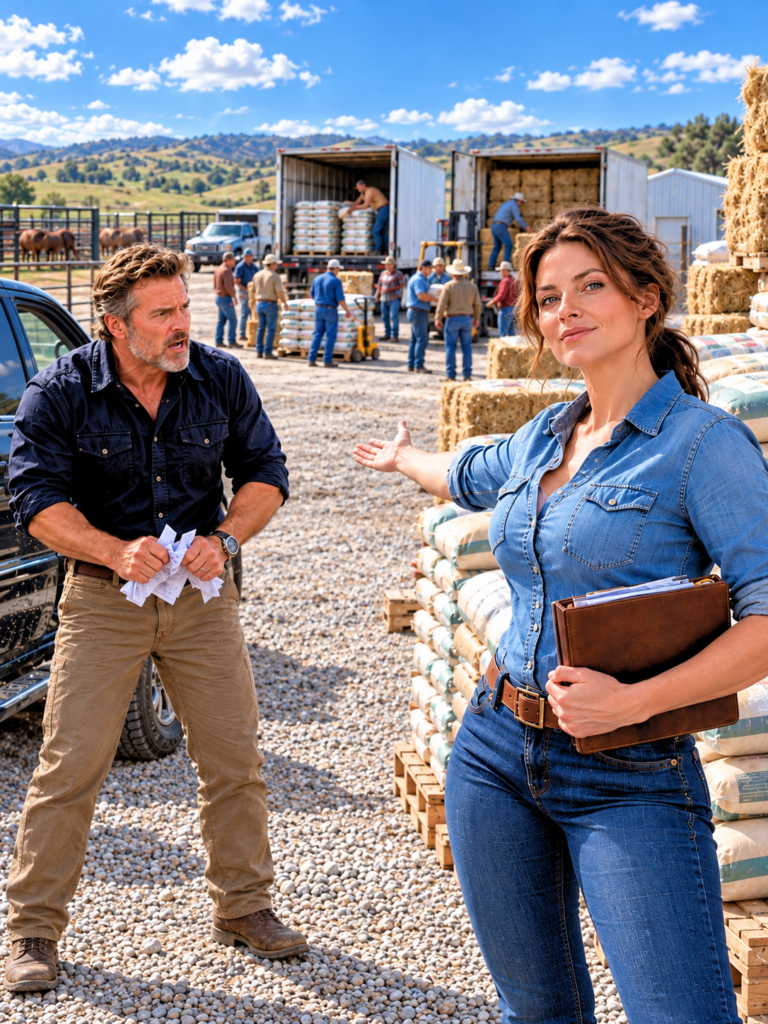
the feed man canceled her hay and told her the herd would starve or sell cheap so she spent the last of her savings on a rock lot with no well and no shade and one month later every small farm in the county had a place to unload
Part 1
Lenora Bennett wiped flour from her wrists on the worn apron hanging behind the bakery door and stepped out into the cool Missouri dark just after five. The main street of Hartwell was still empty except for the single sodium light over the post office and the smell of yeast that clung to her hair. She walked the three blocks to her truck, the same gray Ford that had carried her since she was twenty-nine, and turned the key. The engine caught on the second try. She let it idle while she checked the thermos of coffee she had filled from the bakery pot and the paper bag of day-old rolls she took home for the goats.
The half-acre behind the old farmhouse sat on the edge of town where the pavement ended and the county road turned to gravel. Eighteen meat goats waited under the pole barn she had patched with used tin two winters ago. They lifted their heads when the headlights swept the pen. Lenora killed the engine, climbed down, and walked the fence line the way she did every morning before the bakery shift and every afternoon when she returned. The does with kids pressed close to the wire. The wethers, heavier now, stood farther back, watching. She counted them without speaking the numbers aloud. Eighteen. Still eighteen.
She poured a measured scoop of the last hay into the feeder and stood while they ate. The barn held enough for six more days if she stretched it. After that the grass in the small pasture would not keep condition on animals meant for market. She knew the math. She had kept the same notebook for six years, columns for feed cost, vet visits, and the separate account she opened after the landlord told her the lease would not renew. The owner of the farmhouse was not unkind. He simply planned to sell when the papers came due in under two years. The half-acre had no well of its own and no room for a bulk truck to turn. Everything Lenora had built rested on deliveries that arrived on schedule and left the same way.
Grant Mercer had been the only one who would deliver small loads. He ran the largest hay and feed business in the county, several hundred acres of his own and a side route that served the smaller places. His prices were not the lowest, but the trucks came when he said they would. Lenora had tried other suppliers twice. Both times the delivery fee for a partial order ate the margin she needed to keep the herd growing. She had learned to order just enough, pay on delivery, and keep the rest of her bakery wages in the land account. Three thousand eight hundred dollars. Not enough for pasture with water and fencing. Enough, she hoped, for something else if she watched the listings carefully.
That morning Grant’s truck pulled in while she was still checking the water trough. He stepped down without shutting the door. The engine idled. He held a folded check in one hand and spoke the way he spoke to everyone, even and final.
“Sell me the herd. Or watch them starve. I already pulled your next delivery. Refunded the payment this morning.”
Lenora looked at the check, then at the goats. “You’re doing this because I said no.”
“I’m doing this because I run a business. You’ve got maybe a week before they start losing condition. My offer stands, same price as before. Or you can watch them go thin and sell for even less.”
She had declined his first offer three days earlier. The number was low. She had planned to finish the animals herself and sell at weight. Grant had not raised his voice then. He had not raised it now. He simply stood in the gravel and waited while the goats ate the last of the hay she had measured for them.
Lenora folded her arms. The cold of the morning settled against her jacket. “I’ll think about it.”
He nodded once, as if that was the answer he expected, and climbed back into the truck. The door shut. The tires turned and he was gone down the county road before the dust settled. Lenora stayed by the pen until the last of the hay was gone. Then she walked to the truck, opened the glove box, and pulled out the county property map she had kept there for weeks. The folds were soft from handling. She spread it on the hood under the pale light and found the small square she had marked in pencil the month before. Four-tenths of an acre. Listed at two thousand. No well. Thin soil over rock. A gate that opened straight onto the public road.
She folded the map again and drove to the bakery. The morning shift passed the way it always did: dough, ovens, the regulars who asked after her goats without waiting for long answers. At noon she called the county office from the back room and asked about zoning on the rock lot. The clerk put her on hold. When the woman returned she read from the file. Agricultural storage and staging were permitted if the gate stayed on the public right-of-way and no permanent structure blocked the drainage. Lenora wrote the words on the back of an order slip and slipped it into her pocket.
That afternoon she drove past the lot twice before she stopped. The gravel surface was pale and hard. Nothing green grew taller than the weeds along the fence. She walked the boundary, tested the gate latch, and stood in the middle where a truck could turn. The sky was wide and empty. She took the listing number from the sign and called before she lost the nerve. The owner, an older man in the next county, said the price was firm and the papers could be ready by Friday if the check cleared. Lenora told him she would bring it.
She drove home, fed the goats the evening portion, and sat at the kitchen table with the notebook open. The land account held three thousand eight hundred. Two thousand would leave her with filing costs, a new lock, and whatever emergency hay she could still find. The rest of the money would be gone. She looked at the empty chairs across the table and the single photograph of her parents that hung above the stove. They had raised her on a rented place farther north. When her father died the landlord had sold. Her mother had moved to a sister’s house in town and never kept animals again. Lenora had started with four goats and the money she saved from the bakery. She had not asked anyone to co-sign. The herd was the only thing that belonged to her completely.
She closed the notebook, washed the coffee mug, and set the alarm for four-thirty. Outside the goats settled for the night. Six days of hay remained in the barn. She turned off the light and listened to the quiet of the house. The decision was already made. She would buy the rock lot before the week ended. What she would do with it after that she did not yet know, only that the gate would open onto a public road and no one else would hold the key.
Part 2
Friday afternoon the papers were signed in the county office. Lenora wrote the check for two thousand and another for the filing fee. The clerk stamped the receipt and handed her the keys to the gate. She drove straight to the lot, unlocked the chain, and stood with the map in her hand while a late truck passed on the county road. The gravel crunched under her boots. She walked the length of the pad and back again, measuring with her eyes the space a delivery truck would need. Then she locked the gate, drove to the farm-supply store in the next town, and bought a portable storage unit on sale, a new padlock, and a roll of heavy tarp. The unit arrived the following Monday. Two men from the store set it on the gravel and anchored it with the stakes she had already driven. She paid them in cash and watched them leave.
That same afternoon she called the supplier two counties over whose number she had kept from an old feed catalog. The woman who answered listened while Lenora explained the staging lot, the gate, the gravel. The supplier said they would deliver if the order filled a truck and the address was commercial. Lenora wrote the minimum volume on a scrap of paper and began the calls.
She started with the families she had spoken to when she first tried to find hay after Grant canceled. Two of them mentioned delivery fees that had risen after they asked about other suppliers. One man said a load had arrived four days late with no explanation after he questioned a price. None of them used the word pressure. They simply said the numbers had changed and they had adjusted. Lenora told each of them the same thing: pool the orders, pay upfront, split the freight, pick up at the lot off the county road. She would coordinate and list a small processing fee separate from the feed. Most listened. Most said they would think about it. Five households called back by Wednesday and agreed to the first run.
She spent the rest of the week preparing the site. She padded the storage unit with old blankets from the farmhouse and labeled sections with cardboard signs. She wrote a one-page sheet that listed what she would do and what she could not guarantee if a bag arrived damaged. She made copies at the library and left them in a plastic box on the tailgate of her truck. The emergency hay she ordered for her own goats arrived on a small trailer driven by a man who asked no questions. She paid him and stacked the bales under the pole barn at home. The animals ate. Their condition held.
The first delivery truck arrived an hour and forty minutes late. The driver climbed down, looked at the storage unit, and shook his head. The pallet jack he carried would not clear the doorway. Every bag and bale had to come off by hand. It was August. The heat sat on the gravel and did not lift. Lenora and the five families worked in shifts, walking the load across the pad, sorting by order, stacking until the last item was counted. Her processing fee disappeared into an extra set of straps, a tarp that tore, and a cooler of water she bought at the gas station on the way. When they finished, one of the men walked his stack twice and compared the total on his phone to the invoices he had kept from Grant. He nodded once, loaded his trailer, and drove away without speaking. The others did the same. Lenora locked the gate, drove home, and sat in the truck until the light faded. She had made almost nothing. The goats were still fed. Five other households had feed that cost less than the last load they had bought from Grant. She wrote the numbers in the notebook and went inside to wash the dust from her arms.
Within a week someone posted a plain cost breakdown on the local agricultural forum. No commentary. Just the figures. The questions arrived the next day. People wanted to know how to join the next run. Lenora answered each message with the same details she had given the first five. She did not promise more than she could deliver. She did not hide the late truck or the hand unloading. She listed the fee and the pickup window and waited.
Grant called on a Tuesday morning. His tone was easy. He said he was willing to offer her a better rate going forward, competitive pricing, regular deliveries, no disruption, if she stopped aggregating orders for other households. Keep the land, he said. Use it however she liked. Just do not run a competing supply line through it. Lenora stood in the bakery back room with the phone to her ear and listened to the ovens cycle. She was tired. She woke before five, worked the full shift, and spent the afternoons on calls and ledger lines for animals that were not hers. Saying yes would have returned her to something simpler. She told him she would think about it and ended the call.
That same afternoon Dale Whitfield drove out to the lot. He was older, cattle, and had watched the first run from a distance without joining. He leaned on the gate while Lenora finished labeling the next order sheets. He mentioned, almost as an aside, that his delivery fees from Grant had gone up a few weeks back, right around the time her account was canceled. He showed her the invoices on his phone. The increase was not large, but it was there, and it had arrived without a letter or a call. Lenora looked at the numbers, then at the gravel under their boots. She thanked him for stopping. After he left she called Grant and told him she was not interested in the arrangement. She opened the second run with a larger ceiling and posted the updated total where anyone could see it.
Part 3
The second run filled faster than the first. Households that had stayed quiet after the forum post now sent orders. Lenora recalculated freight, set a firm pickup window in two-hour blocks, and required payment before the supplier loaded the truck. Two families asked about credit. She turned them down. She did not have the cash to front their share, and a single unpaid order would end the model before it proved itself. Two other households dropped after Grant offered them a temporary rate reduction. Their departure raised the per-unit freight for everyone who stayed. Lenora posted the new total the same day and reduced her own processing fee to absorb part of the difference. Most people remained. Her reserve cash was nearly gone.
The delivery was confirmed for day twenty-eight. Several families had managed their remaining feed with that date as the fixed point, stretching portions so the animals would not go short before the truck arrived. On day twenty-six rain fell hard enough to flood a drainage culvert on the primary route. The county closed the road for repairs. There was a secondary route, but the bridge on that road carried a posted weight limit the loaded truck could not legally cross. The freight company called that evening. They could delay seven to ten days or transfer the load to smaller vehicles at an added cost. Lenora asked for the number. It was more than she had left in the account.
Customers who had already paid began to message. Some had animals that would run short before a week’s delay could be fixed. Lenora sat at the kitchen table with the ledger open and the phone face-down. Outside the goats moved in the dark. She had sold nothing of her own herd yet. The two wethers closest to market weight were still hers. She could call the independent buyer she had used once before. The check would cover the gap. It would also reduce the herd she had spent six years building by two animals she had raised from kids. She wrote the arithmetic on the back of an envelope and set it aside.
Grant arrived the next morning without calling. He pulled up to the gate of the lot, stepped out, and told her the offer on the herd was still open. The price he named was lower than the first time. Lenora stood with the order ledger in one hand. The customers’ money was already with the supplier. Her savings were in the gravel under her boots. Eighteen other people were counting on a delivery she currently had no way to finish. She did not answer him. She waited until his truck turned onto the county road, then spent two hours on the phone with the freight company, the supplier, and a local hauler named Pete Daniels who ran medium-duty trucks out of a yard twelve miles south. His vehicles sat under the bridge limit. He had two available. His rate was still more than she could cover alone.
Before she closed the gap she sent a message to every household on the second run and asked them to meet her at the lot that evening. She told them it was not good news. When they arrived she set three things on the tailgate of her truck: the original delivery confirmation, the freight company’s updated estimate, and a paper showing her current account balance. She did not speak long. She told them the road was closed, the bridge could not hold the original truck, and the cost to fix it was more than she had. She told them she had not set aside enough reserve for a transportation failure. That was her mistake. She said it without softening the words.
The silence that followed was not comfortable. Carol Briggs said she had been counting on the delivery for four days and had already told her husband it was handled. A younger man in the back crossed his arms and looked at the ground. Someone asked if they could get a refund immediately. Lenora said she could not issue immediate refunds. The money was already with the supplier, but she would work with them to release any portion back to customers who wanted to exit. Then she laid out the only path she could see. The supplier would hold the inventory and help load smaller vehicles if the group organized the final transport. Pete Daniels could run two trucks on a schedule that would get most orders within forty-eight hours. Households with their own trailers could drive to the supplier’s warehouse and pick up directly, which would reduce the volume Pete’s trucks needed to carry and lower the overall cost. She would take no processing fee on this run. Nothing. The remaining gap she would close herself.
She made the call that night to the independent buyer. He came the next morning, looked the two wethers over, and wrote the check on the spot. Lenora loaded them herself. She stood at the gate of the home place after he pulled away and did the arithmetic one more time. She had sold two animals from a herd she had spent six years building in order to cover a logistics shortfall she had not anticipated. She had not sold them to Grant Mercer. The cost was real. The distinction mattered. She folded the check into her pocket, locked the gate, and drove to the lot to meet Pete and confirm the schedule.
Part 4
By day thirty the operation looked nothing like the plan she had written on the first order sheet. Pete’s trucks made four separate trips. Customers with trailers drove to the warehouse and loaded on site. The staging lot received three partial deliveries across the afternoon. Each truck pulled through the gate in sequence, unloaded into the sorted piles Lenora had marked, and left. She stood at the entrance with the ledger and checked every order as it arrived. Weight. Count. Condition. Every household received what they had paid for. Some of them said thank you. Some of them did not. She marked the last line either way and locked the gate when the final truck cleared.
Grant showed up at the lot two days later. He did not bring a trailer. He stepped out of his truck with the same even manner and offered to supply the staging point directly: competitive pricing, regular schedule, no complications. He framed it as a practical arrangement for everyone involved. Lenora listened. She told him she was open to hearing from any supplier. She also told him what she would need before any agreement moved forward. A written price schedule. Clearly defined delivery terms. And a confirmed policy that no customer of hers would ever be asked to sell their livestock as a condition of continuing to purchase feed. He did not answer the last point. He got back in the truck and drove out the gate without another word.
In the weeks that followed Lenora scaled the runs carefully. She capped the number of households per delivery. She set a minimum reserve that had to sit in the account before any new run was confirmed. She made contact with two additional suppliers so the operation was not dependent on a single source the way the smaller places had once depended on Grant. The runs were not always smooth. A tire went flat on one of Pete’s trucks and delayed a partial load by three hours. A bag of mineral arrived torn and had to be replaced from her own stock. She still woke before five for the bakery shift. She still drove home afterward to check the remaining goats. The herd was smaller. The animals had feed. The gate on the rock lot was hers to open.
One afternoon a neighbor from the next place over leaned on the fence while Lenora finished the ledger for the latest run. He asked when she planned to put something in the ground, maybe get some grass going, make the lot look like something. Lenora looked out at the gravel, the storage unit with its new latch, and the worn tracks where the trucks had turned. “I didn’t buy it to grow anything,” she said. “I bought it so I’d have a place where no one could lock the gate in my face.” She turned back to the numbers and kept working.
The forum posts continued. More households asked to join. Lenora answered with the same plain details and the same requirement for payment upfront. She kept the processing fee small and listed. She did not promise credit. She did not promise that every delivery would arrive on the minute. What she offered was a gate that opened onto a public road, a pad solid enough for a truck, and a ledger that showed every order accounted for. Some people joined. Some stayed with Grant. The ones who joined brought their trailers through the gate and left with feed that cost what the numbers said it would cost.
Part 5
Winter came early that year. The first hard frost settled on the gravel of the lot and on the remaining pasture at the home place. Lenora checked the goats at dusk and found the water trough skimmed with ice. She broke it with the handle of the feed scoop and stood while they drank. Sixteen animals now. The two she had sold were gone, but the rest held condition. She had enough hay stacked under the pole barn to reach the next coordinated run. The reserve account held the minimum she had set. The storage unit on the rock lot was locked and dry.
Grant’s trucks still moved on the county roads. He still delivered to the places that had not joined the pooled orders. Lenora saw his name on invoices when people showed her the comparisons, but she did not call him and he did not call her. The written price schedule and the policy she had asked for never arrived. She kept the two additional suppliers on the list and rotated orders so no single company held the full volume. When one of them raised a delivery fee she posted the change the same day and let the households decide. Most stayed.
On a clear afternoon in late November she met Dale Whitfield at the lot to confirm his share of the next mineral order. He had joined after the second run and had not missed one since. While they waited for Pete’s truck he mentioned that two more cattle places farther out had asked him how the staging worked. Lenora gave him the same one-page sheet she had written in August. He folded it into his coat pocket. When the truck arrived they unloaded in the cold, counting bags onto the marked sections. Dale loaded his trailer last. Before he pulled away he looked at the gate and the storage unit and the pale gravel that still grew nothing.
“You know,” he said, “most folks figured that lot was worthless. Couldn’t raise a crop on it. Couldn’t water stock. Just rock.”
Lenora wiped her hands on her jeans. “It was.”
He nodded, shut the trailer gate, and drove out onto the county road. Lenora locked the chain behind him, checked the ledger one last time, and stood for a moment in the quiet. The light was already thinning. She could see her own truck at the edge of the pad and, beyond it, the long empty stretch of road that ran past the place where Grant’s larger operation sat miles away. The goats would need their evening feed when she reached home. The bakery alarm would sound before five. The reserve would have to be rebuilt after this run the way it had been rebuilt after the last one. None of that had changed.
What had changed was the gate. It opened when she turned the key. It closed when she decided it should. No one else held the chain. The households that brought their trailers through it left with what they had paid for, and the numbers on the ledger matched the numbers they had agreed to before the truck ever rolled. Lenora turned the key, tested the lock, and walked to her own truck. The engine caught on the second try. She pulled onto the county road and headed toward the half-acre where the remaining goats waited under the patched tin. The rock lot sat behind her, flat and dry and exactly as useless for growing as the day she bought it. It was no longer useless for anything else.


