
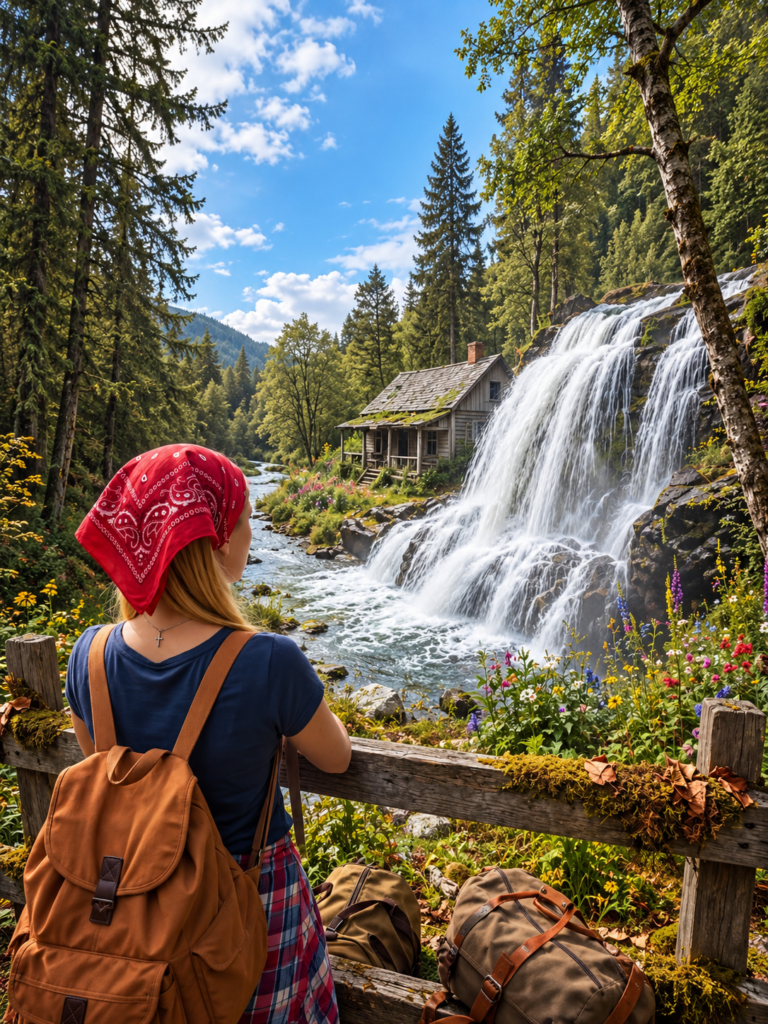
A penniless widow inherited a cabin sealed for twenty-four years — then the cattleman whose family owned the valley came asking for her deed
Part 1
Marlo Wickham arrived in Pine Hollow, Colorado, with forty-two dollars, one carpetbag, a five-year-old boy, and a letter claiming she owned a house no one had entered in twenty-four years.
The stage driver did not believe the last part.
He read the address twice while Beckett slept against Marlo’s side beneath an old wool blanket.
“Old Wickham Trail?”
“Yes, sir.”
“There hasn’t been a Wickham living up there since before the railroad came.”
Marlo tightened one hand around the folded estate letter inside her coat.
“So I’ve been told.”
The driver looked toward the mountains.
October snow had already touched the highest ridges. Pine Hollow lay below them, a collection of timber buildings, hitching posts, a white church, one hotel, a general store, a bank, and a broad main street built by men who expected the railroad to make them rich.
Above all of it stood Ashcroft Mountain.
Everyone called it that.
The Ashcroft Land and Cattle Company owned most of the lower valley, the timber rights along the north ridge, three cattle leases, the freight depot, and—if the brass plaque outside the bank could be believed—most of the respectable history of Pine Hollow.
Marlo had never heard the name before yesterday.
Now she had heard it six times.
The driver pulled the stage to a halt beside an abandoned trail marker.
“This is as far as I go.”
Marlo stared at the narrow path disappearing into pine.
“How far?”
“Cabin?”
“Yes.”
“Two miles. Maybe three.”
Beckett stirred.
“Mama?”
“I’m here.”
He sat up and blinked at the mountain.
“Is that ours?”
Marlo almost laughed.
She did not know whether anything was theirs.
For eleven months, everything had belonged to someone else.
The room where she slept after her husband died belonged to a boardinghouse keeper.
The bed she lost when the rent came due belonged to the landlord.
The kitchen where she washed dishes belonged to a hotel.
The room at the church shelter belonged to the parish.
Even the blanket around Beckett’s shoulders had been loaned to them by a widow in Denver.
Then the letter came.
Miss Marlo Josephine Wickham.
Sole surviving qualifying heir of Judson Ames Wickham.
Property held under sealed testament.
One cabin.
Two acres immediately surrounding structure.
Old Wickham Trail, Pine Hollow County, Colorado Territory records transferred after statehood.
Access prohibited except to a direct descendant.
Marlo had read it so many times that the sentences had become a kind of prayer.
She stepped down from the stage.
The driver placed her carpetbag beside the road.
Then he hesitated.
“Ma’am.”
“Yes?”
“If anybody from Ashcroft Company comes asking questions before you know what you’ve inherited, don’t answer quickly.”
Marlo looked at him.
“That sounds very specific.”
He glanced toward town.
“I’ve lived here forty years.”
“That doesn’t answer me.”
“No.”
He climbed back onto the box.
“Still good advice.”
The stage rolled away.
Beckett slipped his hand into hers.
“Mama?”
“Yes, Bug?”
“Are we lost?”
Marlo looked at the mountain trail.
“No.”
She hoped that was true.
They walked.
The trail climbed through lodgepole pine, aspen already stripped yellow by autumn, and granite outcroppings shining where snowmelt ran across them.
Beckett tried to make the journey into an adventure.
He counted squirrels.
Collected smooth stones.
Asked whether bears knocked before entering houses.
Marlo answered every question she could.
The questions she could not answer, she turned into questions of her own.
“What do you think?”
“I think bears don’t knock.”
“Why?”
“No manners.”
“That’s unfortunate.”
“Maybe mountain bears have manners.”
“We can hope.”
He grinned.
It was the first full grin she had seen from him in days.
That alone made the climb worth something.
Her husband, Daniel, had been gone eleven months.
Pneumonia.
Five days from cough to burial.
By the end of the following month, Marlo had lost their rented house because his wages had been their only steady income.
She found work.
Then lost it when the hotel changed owners.
Found another.
Lost that when Beckett became sick and she missed four shifts.
Poverty did not usually arrive like a storm.
It arrived one small surrender at a time.
First the good coat.
Then the furniture.
Then the wedding china.
Then Daniel’s watch.
Then the room.
Finally, two days before receiving the estate letter, Marlo had sold her wedding ring.
She kept nothing from that marriage except Beckett.
She had told herself that was enough.
Sometimes it was.
Sometimes it had to be.
They reached the clearing near sunset.
Beckett stopped first.
“Mama.”
Marlo looked up.
The cabin stood alone beneath the western ridge.
It was larger than she had imagined, built of squared pine logs darkened by weather, with a stone chimney and a narrow covered porch. Boards covered the windows. Moss climbed one side of the foundation.
The roof sagged slightly but had not fallen.
A metal plate covered the front-door latch.
COUNTY PROPERTY SEAL.
Below it:
NOVEMBER 1878.
Marlo stood motionless.
Twenty-four years.
The cabin had been closed three years before she was born.
Beckett squeezed her fingers.
“It looks lonely.”
“Yes.”
“Do houses get lonely?”
Marlo stared at the windows.
“I suppose they might.”
“Then we should go inside.”
She smiled.
“That simple?”
“Yes.”
Marlo knelt in front of him.
“You stay beside me.”
“I will.”
“If I tell you to run back toward the trail?”
“I run.”
“If there’s an animal?”
“I don’t pet it.”
“Especially if it’s bigger than you.”
“That’s almost everything.”
“Exactly.”
She kissed his forehead.
The estate attorney in Denver had given her the court key for the outer seal.
It turned reluctantly.
The metal groaned.
The plate came free.
On the back, scratched by hand, were three words.
For Josephine’s girl.
Marlo’s breath stopped.
Josephine had been her mother.
She touched the letters.
Her mother had died when Marlo was eighteen.
Cancer had taken her quickly.
Near the end, Josephine had tried several times to tell Marlo something.
There are things about our family—
Then pain.
Morphine.
Sleep.
The sentence never finished.
Marlo stared at the scratched message.
For Josephine’s girl.
She opened the door.
Cold cedar air drifted outward.
Not rot.
Not mildew.
Dust.
Old wood.
Ash.
A room sealed in time.
A table stood in the center.
Two chairs.
Cast-iron stove.
Cupboard.
Bookshelf.
A green wool coat hung beside the door.
Boots stood beneath it.
Someone had left intending to return.
Marlo stepped farther inside.
A calendar remained on the wall.
October 1878.
Pencil marks crossed every day until the fourteenth.
Then nothing.
“Mama.”
Beckett stood near the western wall.
Photographs.
Three.
The first showed a tall young man beside a team of horses.
Marlo knew him.
She had seen the same face in one faded photograph her mother owned.
“Judson.”
“Who?”
“My great-grandfather.”
Beckett counted silently.
“That makes him my great-great-grandfather.”
“Yes.”
“That’s a lot.”
“It is.”
The second photograph showed Judson beside the cabin.
The third showed a woman holding a little girl.
Marlo moved closer.
The woman’s face was startling.
Her own nose.
Her mother’s eyes.
A jaw Marlo saw every morning in the mirror.
She touched the frame.
“Family,” she whispered.
Beckett slipped an arm around her waist.
Then Marlo noticed something on the table.
A white handkerchief folded into a perfect square.
She opened it.
Josephine Rose.
The name had been embroidered in blue thread.
Marlo sat down abruptly.
Her mother.
Josephine Rose Wickham.
Named for someone before her.
Loved by someone before she knew it.
Marlo pressed the cloth to her mouth.
Beckett climbed onto her lap.
“Are you sad?”
“A little.”
“Bad sad?”
She shook her head.
“No.”
“What kind?”
Marlo looked around the cabin.
“The kind that comes when you find something too late.”
Beckett considered that.
“Maybe it isn’t late if you found it.”
Marlo stared at him.
Children occasionally said things adults spent years becoming wise enough to understand.
She kissed his hair.
They slept on quilts beside the stove.
For the first time in eleven months, Marlo locked a door that belonged, according to a court document, to her.
She woke before sunrise.
Beckett remained asleep.
Marlo explored.
She opened cupboards.
Checked floorboards.
Examined books.
Then found a leather journal hidden behind an almanac.
Judson Wickham.
She read standing beside the window.
January.
The mountain wintered hard.
March.
His closest friend, Thaddeus Ashcroft, wanted partnership in the land.
July.
Thaddeus was in debt.
Judson had temporarily transferred timber rights on part of the northern acreage as collateral.
August.
Lawyers brought new papers.
September.
The papers no longer described timber rights.
They described land.
All the land.
October 8.
I will not sign the final conveyance.
October 12.
I fear Thaddeus has become a man I no longer recognize.
October 14.
If I do not return, the deeds are beneath the third hearthstone.
Marlo lowered the journal.
Her hands had begun trembling.
She went to the fireplace.
First stone.
Second.
Third.
The mortar around it was brittle.
She worked nearly half an hour before the stone came free.
Behind it was an oilcloth parcel.
Inside were deeds.
Survey maps.
Tax receipts.
A ten-page land transfer.
Judson’s signature appeared on nine pages.
The final conveyance page remained unsigned.
The survey read:
412 acres.
Marlo sat on the floor.
She read it again.
Four hundred twelve.
The cabin estate letter had mentioned two acres because that was the parcel the county presently recognized under Wickham ownership.
But these older documents said something else.
The land began at the western ridge.
Followed the river.
Crossed the meadow.
Included the valley slope.
Marlo knew enough from the stage ride to understand what stood there now.
Ashcroft cattle.
Ashcroft timber.
Ashcroft freight road.
Part of Pine Hollow itself.
She was still sitting there when horses entered the clearing.
Two riders.
Beckett ran to her.
“Mama.”
Marlo wrapped the deeds back in oilcloth.
She put them beneath Beckett’s spare shirt in his little pack.
“Bedroom.”
His eyes widened.
“Now.”
He obeyed.
Marlo stood in the center of the cabin.
A knock came.
Polite.
Three times.
“Miss Wickham?”
She did not answer.
“My name is Hollis Peyton. I represent Ashcroft Land and Cattle.”
Of course he did.
Marlo opened the door three inches.
Two men stood outside.
One was in his fifties.
Expensive coat.
Silver watch chain.
The younger man carried a leather case.
“Miss Wickham.”
“What?”
“We understand you opened the county seal.”
“How?”
The younger man blinked.
“I beg your pardon?”
“This cabin is several miles from town. I arrived yesterday. How did you know?”
The older man smiled.
“We keep an eye on property adjoining company land.”
“For twenty-four years?”
The smile changed.
“May we come in?”
“No.”
A pause.
Hollis cleared his throat.
“We are prepared to simplify what could otherwise become a complicated legal matter.”
“That sounds generous.”
“It is.”
“What matter?”
“Historic boundary confusion.”
Marlo almost laughed.
Instead she said, “Send your proposal to my lawyer.”
“Who is your lawyer?”
“I haven’t decided.”
The older man’s eyes hardened.
“You’ll find legal representation expensive.”
“I’ve found most things expensive.”
His gaze drifted toward the cabin interior.
Marlo moved, blocking the view.
He smiled again.
“These mountains can be difficult for a woman alone.”
Marlo’s skin went cold.
“Snow.”
He continued.
“Wild animals. Accidents.”
“Are you threatening me?”
“I’m advising you.”
“Then I advise you to leave.”
Hollis lifted a hand.
“Miss Wickham—”
“Leave.”
The older man stared at her.
Then both turned away.
Marlo watched until the horses disappeared.
Only then did her knees weaken.
Beckett came out.
“Were they bad men?”
“I don’t know.”
“That means yes.”
“Sometimes it means I don’t know yet.”
He nodded toward his pack.
“Are the papers safe?”
Marlo looked at him.
“How did you know?”
“You hide important things under my shirts.”
She laughed despite herself.
That afternoon, they walked to Pine Hollow.
The county clerk was named Greta Fenn.
Sixty-three.
Gray curls.
Small spectacles.
She went pale when Marlo said Wickham.
“Judson Wickham?”
“My great-grandfather.”
Greta closed her eyes.
When she opened them, something in her face had changed.
“Dear God.”
“What?”
The clerk rose and locked the records-office door.
“Show me what you have.”
Marlo hesitated.
Then withdrew one deed.
Greta read.
Her hands shook.
“I knew it.”
“Knew what?”
“That final page was never signed.”
“You knew?”
“I knew the county copy disappeared.”
Marlo felt cold.
“Who took it?”
Greta glanced toward the window.
“Ashcroft men have controlled this town longer than I’ve been alive.”
“That isn’t an answer.”
“No.”
Greta leaned across the desk.
“But listen carefully. Do not sign anything. Do not give those originals to anyone. And do not go to Sheriff Colter.”
“Why?”
“Because his brother manages Ashcroft cattle.”
Marlo slowly sat down.
“Is there anyone here I can trust?”
Greta thought.
“One.”
“Who?”
“Garrison Ashcroft.”
Marlo actually laughed.
Greta did not.
“You misunderstand.”
“That appears likely.”
“Thaddeus Ashcroft was Garrison’s grandfather.”
“And you want me to trust him?”
“I want you to decide for yourself.”
Marlo stood.
“No.”
“Miss Wickham—”
“His family has used my family’s land for twenty-four years.”
“Yes.”
“And I’m supposed to walk into his office?”
“No.”
Greta met her eyes.
“I think he will come to you.”
He did.
The following afternoon, one rider climbed Old Wickham Trail.
Alone.
Marlo saw him from the porch.
Tall man.
Dark coat.
Gray horse.
No lawyer.
No hired men.
No visible rifle.
He stopped twenty feet from the cabin.
“Mrs. Wickham?”
“Who are you?”
“Garrison Ashcroft.”
Marlo’s hand tightened around the porch rail.
Of course.
He was perhaps thirty-eight.
Older than Hollis.
Younger than the silver-haired lawyer.
Dark hair touched with early gray at the temples.
Not handsome in a polished way.
Weather had marked his face.
There were lines beside his eyes.
The face of a man who spent more time outdoors than behind a desk.
Marlo looked at the revolver at his hip.
“You came armed.”
“This is Colorado.”
“Convenient answer.”
“I can leave the gun with the horse.”
“That would be less convenient for you.”
Something almost like amusement crossed his face.
He removed the gun belt anyway.
Hung it over the saddle horn.
Then stepped back.
“I heard Hollis Peyton visited.”
“Fast company.”
“He wasn’t sent by me.”
“Your name is on his office.”
“My grandfather’s money is.”
“That distinction probably matters more to you than it does to me.”
Garrison nodded.
“Fair.”
Marlo had expected denial.
Not that.
“What do you want?”
“To know what you found.”
“No.”
“All right.”
She blinked.
“That’s all?”
“For today.”
He turned toward the horse.
“Mr. Ashcroft.”
He stopped.
“If you believe this land belongs to your company, why aren’t you demanding the papers?”
Garrison looked back.
“Because if it belongs to you, demanding them would make me exactly the man I have spent fifteen years trying not to become.”
The answer unsettled her.
“What man is that?”
“My grandfather.”
He mounted.
Then looked toward the cabin.
“My father never spoke about Judson Wickham.”
Marlo said nothing.
“He would go quiet whenever anyone mentioned this mountain.”
Garrison’s voice changed.
“I’ve spent most of my life wondering why.”
He touched his hat.
“Good afternoon, Mrs. Wickham.”
He rode away.
Beckett appeared beside Marlo.
“I like his horse.”
“That is not relevant.”
“He looked sad.”
“That is also not relevant.”
Beckett considered.
“Maybe.”
Marlo looked down.
“Maybe what?”
“Maybe sad people are relevant.”
She stared at him.
He went inside.
For the second time that week, Marlo wondered how a five-year-old had become the wisest person she knew.
That night, snow began falling.
By midnight, the mountain trail disappeared.
By morning, Pine Hollow was unreachable.
Marlo and Beckett were alone in a sealed cabin with enough food for perhaps four days.
At noon, someone knocked.
Marlo opened the door.
Garrison Ashcroft stood outside holding two sacks of provisions.
“What are you doing here?”
“Storm.”
“I can see that.”
“The trail will be closed three days.”
“And?”
“You have a child.”
Marlo stared.
“You rode up here in snow to bring flour?”
“Beans too.”
He lifted the second sack.
“And bacon.”
She folded her arms.
“Why?”
Garrison looked past her toward Beckett, who was openly inspecting him from beside the stove.
“Because five-year-old boys shouldn’t spend storms eating flour.”
Beckett announced, “I like bacon.”
Marlo closed her eyes.
Garrison’s mouth twitched.
“I see.”
“You can come in,” Beckett said.
“Beckett.”
“What?”
Marlo looked at Garrison.
Snow covered his shoulders.
His horse was trembling.
She hated every reason she had to distrust him.
She hated the weather more.
“You may put your horse in the lean-to.”
“Thank you.”
“And you’ll sleep near the stove.”
“Understood.”
“And you do not touch any paper in this house.”
His expression became serious.
“Understood.”
That was how Garrison Ashcroft spent three days trapped inside the cabin his grandfather had once tried to steal.
And that was when everything became complicated.
Part 2
Garrison was good with children.
Marlo considered that suspicious.
On the first evening, Beckett asked him whether mountains belonged to people.
Garrison stopped carving kindling.
“What do you think?”
Beckett shrugged.
“Mama says the cabin belongs to us.”
“It does.”
“But the mountain?”
Garrison looked toward Marlo.
She was kneading biscuit dough.
“The law says land can belong to people.”
“That wasn’t what I asked.”
Marlo hid a smile.
Garrison noticed.
It was the first time he had seen her smile without exhaustion beneath it.
He looked back at Beckett.
“I suppose mountains mostly belong to themselves.”
Beckett nodded.
“That makes more sense.”
Later, while the boy slept, Marlo and Garrison sat opposite each other at Judson’s table.
Wind struck the walls.
“What was your grandfather like?” she asked.
Garrison stared at the fire.
“Powerful.”
“That isn’t a character.”
“No.”
He rubbed a thumb across the coffee cup.
“He built Ashcroft Land and Cattle from almost nothing.”
“Almost?”
Garrison looked at her.
“You found something.”
Marlo did not answer.
He continued.
“My grandfather arrived here poor. Twenty years later he owned half the valley.”
“That should have seemed miraculous.”
“It did when I was a boy.”
“And now?”
“Now I know fortunes are usually built from more complicated materials than the stories engraved on statues.”
Marlo thought about Thaddeus’s photograph in the cabin.
Judson beside him.
Brother in all but blood.
“What did your father say about him?”
“My grandfather?”
“Yes.”
“Almost nothing.”
“That seems strange.”
“It was.”
Garrison leaned back.
“My father drank.”
Marlo said nothing.
“He ran the company because he inherited it, not because he liked it. I thought he was weak.”
The confession seemed difficult.
“When he died, I found a box of letters.”
“What kind?”
“Letters he never sent.”
Garrison looked toward the boarded window.
“One addressed to a Wickham family in Denver.”
Marlo’s breath changed.
“My family?”
“I believe so.”
“What did it say?”
“I never opened it.”
“Why?”
“It was sealed.”
“You still have it?”
“Yes.”
“Where?”
“My office.”
Marlo’s anger flared.
“You’ve had a letter addressed to my family for fifteen years?”
“I didn’t know where to send it.”
“You could have opened it.”
“It wasn’t mine.”
The answer stopped her.
Garrison held her gaze.
“I know that may sound convenient now.”
“It does.”
“But it is true.”
The storm continued.
On the second day, Garrison repaired the chimney damper.
He fixed the porch step.
He showed Beckett how to braid a short rope.
He never asked for the documents.
That troubled Marlo more than asking might have.
“What do you want from me?” she finally demanded.
Garrison was standing on a chair securing a loose window board.
“To finish this nail.”
“You know what I mean.”
He stepped down.
Marlo crossed her arms.
“You know I found something.”
“Yes.”
“You know your lawyers are frightened.”
“Yes.”
“You know this cabin matters.”
“Yes.”
“Why aren’t you pressing me?”
Garrison set the hammer down.
“My grandfather pressed Judson.”
The room went quiet.
Garrison looked at her.
“I don’t intend to repeat him.”
“You don’t even know what he did.”
“No.”
“But you believe he did something.”
“Yes.”
“Why?”
Garrison’s jaw shifted.
“My father once told me that the Ashcroft name owned more than it had earned.”
Marlo stared.
“How old were you?”
“Sixteen.”
“What did you say?”
“I told him he was drunk.”
“And was he?”
“Yes.”
Garrison looked away.
“That did not make him wrong.”
On the third morning, the storm broke.
Garrison saddled his horse.
Before leaving, he handed Marlo a folded note.
“My office address.”
“I know where your office is.”
“Then burn it.”
She almost smiled.
He mounted.
“Mrs. Wickham.”
“Yes?”
“If the papers prove what I think they might…”
He stopped.
Marlo waited.
Garrison’s face was unreadable.
“I will not fight you for land that isn’t mine.”
She did not believe him.
Not fully.
But for the first time, she wanted to.
Two days later, Marlo went to Pine Hollow.
She brought Beckett.
She brought Judson’s journal.
She brought copies of the deeds.
The originals remained hidden.
Garrison’s office occupied the second floor above the company bank.
Hollis Peyton stood the moment she entered.
“What is she doing here?”
Garrison looked up from his desk.
“I invited her.”
“You did what?”
“Close the door, Hollis.”
Marlo’s suspicion returned immediately.
Hollis stared at the folder beneath her arm.
“We should have counsel present.”
“You are counsel.”
“I mean additional counsel.”
Garrison stood.
“No.”
His eyes moved to Marlo.
“What do you want me to see?”
She placed the copies on his desk.
Garrison read silently.
First page.
Second.
Survey.
Transfer.
Unsigned final conveyance.
His face changed slowly.
Hollis came closer.
“Those documents are unauthenticated.”
Garrison ignored him.
Marlo placed Judson’s journal down.
He read the October entries.
The office became silent.
At last Garrison sat.
“My grandfather.”
“Yes.”
“This says he tried to obtain the entire four hundred twelve acres.”
“Yes.”
Hollis interjected.
“A dead man’s private journal proves nothing.”
Marlo looked at him.
“County records confirm the transfer was never completed.”
“That is disputable.”
Greta’s voice came from the doorway.
“No, Mr. Peyton.”
Everyone turned.
The clerk entered carrying a record book.
Behind her stood Pastor Dunlap from the white church.
Marlo had met him that morning after Greta revealed one final detail.
The church had kept something.
For twenty-four years.
Dunlap carried a small iron box.
Garrison looked at it.
“What is that?”
The pastor placed it on the desk.
“Truth your family paid men to forget.”
Hollis went pale.
Inside was a sworn statement.
Judson Wickham’s.
Dated October 12, 1878.
Witnessed by Pastor Dunlap’s father.
It described the debt.
The false conveyance.
The threats.
Thaddeus.
And one more person.
A seventeen-year-old boy named Leland Ashcroft.
Garrison’s father.
Garrison stopped reading.
Marlo saw the blood leave his face.
“My father witnessed it?”
Dunlap nodded.
“He was brought to the cabin.”
Garrison read the final paragraph.
If Leland Ashcroft ever speaks of what he witnessed, do not condemn the boy for silence. His father has taught him fear before he has learned what sort of man he wishes to become.
Garrison closed his eyes.
Hollis said, “This is still not—”
“Get out.”
Hollis froze.
“Garrison.”
“Get out.”
“My responsibility is protecting this company.”
Garrison opened his eyes.
“Your father threatened Mrs. Wickham at her cabin.”
Hollis said nothing.
“I asked him.”
Silence.
“He told me it was necessary.”
Garrison rose.
“So was watching her property?”
Hollis’s jaw tightened.
“You have no idea what is at stake.”
Garrison laughed once.
There was no humor in it.
“I am beginning to.”
He walked to the door.
Opened it.
“Hollis.”
The lawyer’s face hardened.
“You’re going to destroy everything your grandfather built.”
Garrison looked toward the deeds.
“No.”
His voice was quiet.
“I’m going to find out what he actually built.”
Hollis left.
The door closed.
Marlo looked at Garrison.
She had imagined this moment many ways.
A fight.
A denial.
An offer.
She had not imagined grief.
Garrison sat in his father’s chair.
For a long time he said nothing.
Then he whispered, “The letter.”
“What?”
“My father’s letter.”
He unlocked the lower drawer.
Removed a sealed envelope.
Josephine Wickham.
Marlo’s mother’s name.
Her hands shook when she took it.
The paper was fifteen years old.
Inside was a confession.
Leland Ashcroft wrote that he had been present the night his father and two hired men confronted Judson.
He had seen Judson struck.
Had seen him taken from the cabin.
Had never seen him alive again.
He had been threatened into silence.
Later, Thaddeus used political influence to bury the disappearance.
Leland inherited the company.
Inherited the land.
Inherited the lie.
I told myself I could repair a wrong by being less cruel than the man who committed it.
I was mistaken.
Keeping stolen things gently does not make them less stolen.
Marlo stopped reading.
Garrison stood at the window.
“My father wrote that.”
“Yes.”
“He never sent it.”
“No.”
“I spent years believing he was a coward.”
Marlo folded the letter.
“Maybe he was.”
Garrison flinched.
She continued.
“And maybe frightened people are still capable of telling the truth eventually.”
He turned.
“You should hate us.”
“I don’t know you well enough.”
It surprised him.
Marlo looked at the papers.
“But I do know this.”
“What?”
“I am not going to punish Beckett for what Daniel’s father did. I won’t punish you for your grandfather either.”
Garrison’s face tightened.
“That sounds like forgiveness.”
“No.”
Marlo met his eyes.
“It sounds like refusing to become cruel just because cruelty would be understandable.”
Something changed between them in that room.
Not romance.
Not yet.
Recognition.
Garrison arranged independent counsel.
Not company counsel.
A Denver attorney named Eleanor Kincaid came to Pine Hollow.
She examined everything.
Three days later, she gave Marlo the conclusion.
“The four hundred twelve acres are yours.”
Marlo sat very still.
Garrison was not present.
She had insisted on that.
“All of them?”
“Yes.”
“The Ashcroft cattle leases?”
“Invalid where they overlap your title.”
“The timber?”
“Yours.”
“The freight road?”
“Complicated.”
Marlo almost laughed.
“How much is the land worth?”
Eleanor removed her spectacles.
“That depends on whether you want a modest answer or an honest one.”
“Honest.”
“Enough that you and your son would never worry about rent again.”
Marlo thought of the last cracker.
Beckett eating slowly.
A shelter cot.
Forty-two dollars.
“Sell it?”
“You could.”
“To Ashcroft?”
“They would likely offer.”
“They already have.”
“And?”
Marlo looked toward the mountain.
“I don’t know.”
Garrison did make an offer.
A fair one.
So fair Eleanor Kincaid stared at the number twice.
“He’s offering full market value.”
Marlo looked at him across Judson’s kitchen table.
Garrison had come alone.
Again.
“If I sell,” she asked, “what happens to the mountain?”
“We expand cattle north. Timber selectively.”
“And the ridge?”
“A rail spur eventually.”
“Hotels?”
“No.”
“Mining?”
“If deposits are found, perhaps.”
Marlo folded the offer.
Garrison watched.
“It would make Beckett secure.”
“I know.”
“You would never need wages again.”
“I know.”
“You could buy a home anywhere.”
“I already have a home.”
His gaze moved around the cabin.
Something in his face softened.
“Yes.”
Marlo pushed the paper back.
“No.”
Garrison’s eyebrows rose.
“No?”
“My great-grandfather could have sold this land.”
“Yes.”
“He didn’t.”
“You don’t owe him the same decision.”
Marlo studied him.
“You mean that.”
“Yes.”
“Even though buying it helps you?”
“Yes.”
She smiled faintly.
“That must be inconvenient.”
“Extremely.”
Marlo folded her hands.
“I want the lower pasture leased to Ashcroft cattle.”
Garrison went still.
“At fair rent.”
“Marlo—”
“The timber ridge stays untouched.”
He listened.
“The cabin and forty acres remain private.”
“All right.”
“The eastern meadow…”
She hesitated.
“I want houses.”
“Houses?”
“For widows.”
Garrison stared.
“Women with children. Women traveling west. Women who’ve lost farms. Women whose husbands died and left debts instead of protection.”
Her voice became quieter.
“I know what happens to women who run out of places.”
Garrison did not interrupt.
“I want cottages. A kitchen. A schoolroom if we can afford one.”
“We can.”
“We?”
He caught himself.
“You can.”
Marlo looked at him.
“You know construction.”
“Yes.”
“I don’t.”
Garrison’s expression changed.
“Are you asking for help?”
“I am considering hiring you.”
His mouth moved.
“Dangerous.”
“You’ve been warned.”
That was the first time they laughed together.
The work began before winter.
Three cottages.
Then four.
Garrison came every Saturday.
At first, Marlo assumed guilt brought him.
He carried lumber.
Repaired roofs.
Dug drainage.
Worked beside hired men.
Never gave orders unless she asked.
Never put his name on anything.
Beckett began waiting for him.
That frightened Marlo.
One afternoon she found her son sitting beside Garrison while the cattleman repaired a broken wagon wheel.
“Mr. Ashcroft?”
“Yes?”
“Did you have a boy?”
Garrison stopped.
“No.”
“Did you want one?”
Marlo froze behind the barn.
Garrison took time.
“Yes.”
“What happened?”
“I married once.”
Marlo had not known.
“My wife died.”
Beckett’s face softened with the solemn sympathy children gave freely.
“Like Papa.”
“Yes.”
“Did you get sad?”
“Very.”
“Did it stop?”
Garrison looked at the wheel.
“No.”
Beckett frowned.
“That’s bad.”
“No.”
Garrison smiled slightly.
“It changes.”
“How?”
“You carry it differently.”
Beckett thought.
“I carry Papa here.”
He touched his chest.
Garrison nodded.
“That seems like a good place.”
Marlo walked away before either saw her crying.
After that, resisting Garrison became harder.
Not because he courted her.
He did not.
He respected the invisible fence she kept around herself.
But he remembered things.
That Beckett hated turnips.
That Marlo preferred coffee weak.
That the kitchen door stuck in damp weather.
That she always reached for nails using her left hand.
He repaired the step before winter.
Built shelves because her mother’s books had begun arriving from Denver.
Placed a small desk near the cottage schoolroom.
He did things quietly.
That was worse.
Grand gestures were easy to distrust.
Consistency was not.
One December evening, snow trapped him again.
Beckett went to bed.
Marlo and Garrison remained by the stove.
“You don’t have to keep coming,” she said.
“I know.”
“The cottages are built.”
“Yes.”
“The lease is signed.”
“Yes.”
“You’ve repaid what your family owed as much as anyone can.”
Garrison looked at her.
“Is that why you think I come?”
Marlo’s heart changed rhythm.
“Isn’t it?”
“No.”
Silence.
Garrison stood.
He moved toward the door.
Marlo frowned.
“Where are you going?”
“To the barn.”
“In a snowstorm?”
“You asked a question I should not answer while I’m staying under your roof.”
Her breath caught.
“What question?”
“Why I keep coming.”
He pulled on his coat.
“Garrison.”
It was the first time she had used his given name.
He stopped.
Marlo stood.
“Answer it.”
He looked at her for a long moment.
“Because I think about you when I’m not here.”
The room became very quiet.
“I think about Beckett.”
He continued.
“I think about whether the roof leaks.”
A faint smile.
“Whether you remembered to order coffee.”
Marlo almost laughed.
“I think about your hands when you read your great-grandfather’s journal.”
His voice roughened.
“I think about you standing in my office refusing to hate me when hatred would have been easier.”
He took one breath.
“And I come here because this is the first place in years where I stop feeling like the Ashcroft name entered the room before I did.”
Marlo looked down.
“I can’t be the place you hide from your family.”
“I know.”
“I can’t be forgiveness.”
“I know.”
“And Beckett…”
“I know.”
His answer was immediate.
“I will never ask that boy to replace his father with me.”
Marlo looked up.
Garrison’s face held no demand.
That was what undid her.
“What are you asking?”
“Nothing tonight.”
“Why?”
“Because you spent a year with no home.”
He glanced around the cabin.
“Now you have one.”
His eyes returned to hers.
“I will not make the first safe place you’ve had feel like somewhere a man is waiting for payment.”
Marlo’s eyes filled.
“Garrison.”
He opened the door.
Cold wind rushed inside.
“I’ll sleep in the barn.”
“You’ll freeze.”
“I’ve survived worse decisions.”
“You are impossible.”
“So I’m told.”
She grabbed his sleeve.
He looked at her hand.
Then at her.
Marlo whispered, “Stay by the stove.”
He searched her face.
“That’s all.”
“Yes.”
He nodded.
“That’s enough.”
Neither slept much.
Part 3
Spring arrived late.
The snow withdrew from the valley in muddy ribbons.
New grass appeared beneath it.
The cottages filled.
First came Ruth Bell and her two daughters after her husband died in a logging accident.
Then Clara Ames with a newborn and no wedding ring.
Then Mrs. Gardner, fifty-six, whose sons had gone east and whose landlord had sold her room.
Marlo never asked women for the story before giving them a bed.
That rule mattered.
Stories came later if women wanted to tell them.
Garrison respected that too.
He was no longer running Ashcroft Land and Cattle alone.
After confronting the company books, he dismissed Hollis Peyton and two senior managers who had maintained fraudulent titles.
Several old claims were returned.
Other families received compensation.
Some men called Garrison a traitor to his blood.
He stopped attending those men’s dinners.
One Saturday in May, he arrived at the cabin with a small wooden box.
Marlo was planting beans.
“What is that?”
“Something I should have given you months ago.”
He placed the box on the porch table.
Inside were shares in Ashcroft Land and Cattle.
Marlo frowned.
“No.”
“You haven’t even read it.”
“I recognize paper designed by wealthy men.”
Garrison laughed.
“Fair.”
“What is it?”
“Ownership.”
“In your company?”
“A portion.”
“Why?”
“Because our cattle use your valley. Your freight access keeps us profitable. Your land should benefit when we do.”
“I receive lease money.”
“This is different.”
Marlo stared at him.
“I don’t want charity.”
“It isn’t.”
“Garrison.”
He sat across from her.
“This is exactly what I mean.”
“What?”
“You keep treating every offer as though accepting means owing.”
Her back stiffened.
“Because often it does.”
“I know.”
“No, you don’t.”
His expression changed.
Marlo immediately regretted the sharpness.
But Garrison only said, “You’re right.”
That disarmed her.
He continued.
“I grew up with money. I do not know what it means to count crackers before giving them to a child.”
Marlo went still.
He had heard Beckett mention the shelter.
“I don’t know what it means to choose between food and a room.”
Garrison folded his hands.
“But I do know what ownership means.”
He tapped the box.
“My grandfather used ownership to make other people dependent.”
His voice lowered.
“I want the company structured so the people whose land sustains it possess power over it.”
Marlo looked at the certificates again.
“You’ve offered this to the other leaseholders?”
“Yes.”
That mattered.
“This isn’t because of me.”
“No.”
A pause.
“Not entirely.”
She smiled despite herself.
Garrison smiled too.
“Take time.”
“I will.”
“I expected you to.”
Beckett ran from the cottage yard.
“Mr. Garrison!”
Garrison turned.
The boy carried a fishing pole.
“Can we go?”
Marlo looked between them.
“Go where?”
“River.”
“You told him yes?”
Beckett shook his head.
“He told me ask Mama.”
Marlo looked at Garrison.
He raised both hands.
“I learn.”
She laughed.
“Be back before supper.”
Beckett cheered.
Garrison took the fishing pole.
Marlo watched them walk toward the river.
She thought of Daniel.
Guilt came.
It always came at unexpected moments.
Not because she loved Garrison.
She had not admitted that.
Because seeing another man beside her son felt like betrayal.
That evening, after Beckett slept, she told Garrison.
He was quiet.
“I loved Daniel.”
“I know.”
“He was good.”
“I know.”
“You never met him.”
“No.”
“Then stop saying you know.”
Garrison nodded.
“You’re right.”
Marlo covered her face.
“I don’t know how to do this.”
He remained several feet away.
“Do what?”
“Want something without feeling like I am erasing what I had.”
Garrison looked toward Beckett’s room.
“My wife’s name was Eleanor.”
Marlo lowered her hands.
“I haven’t said her name to you before.”
“No.”
“She laughed badly.”
Marlo blinked.
“Badly?”
“Snorted.”
A smile touched his mouth.
“She hated horses but married a cattleman.”
“That seems poorly planned.”
“It was.”
He smiled.
Then the smile faded.
“I loved her.”
Marlo waited.
“I love her still.”
Something loosened in Marlo’s chest.
Garrison looked at her.
“Loving you would not undo that.”
Her breath caught.
He had said it.
Not elegantly.
Not with preparation.
Simply.
Loving you.
Garrison seemed to realize the words had escaped.
He did not take them back.
Marlo whispered, “Do you?”
“Yes.”
The answer came without hesitation.
She looked toward the stove.
“I’m afraid.”
“I know.”
“This time you may say that.”
A small smile.
Garrison waited.
Marlo walked toward him.
Stopped.
“Do not kiss me because you think I need someone.”
“I don’t.”
“Do not kiss me because you want forgiveness.”
“I don’t.”
“Do not kiss me because Beckett likes you.”
“I wouldn’t.”
Marlo’s voice weakened.
“Then why?”
“Because I have wanted to for months.”
She laughed once through tears.
“That will do.”
Garrison lifted one hand.
Stopped before touching her face.
Marlo noticed.
“You can.”
His palm settled against her cheek.
Warm.
Careful.
Then he kissed her.
It was not dramatic.
No storm.
No music.
No one watching.
Just a kitchen built twenty-four years before by a man who had tried to protect his descendants from a lie.
A widow who had spent too long surviving.
A man carrying shame that was never fully his.
And a kiss neither needed in order to live.
That was why it mattered.
They did not marry that summer.
Garrison asked.
Marlo said no.
He accepted it.
That mattered even more.
“I love you,” she told him. “But I have owned my own life for less than a year.”
Garrison nodded.
“I can wait.”
“You’re not angry?”
“No.”
“Disappointed?”
“Painfully.”
She smiled.
“Good.”
“Cruel woman.”
“Patient man.”
He waited.
Marlo expanded the cottages.
The eastern meadow became Wickham House.
A long central building held a kitchen, schoolroom, washroom, and six bedrooms.
Traveling women could stay a week or six months.
Those able to work were paid.
Those unable were not punished.
Children ate first.
Always.
Marlo made that rule herself.
Greta became bookkeeper after retiring from the county office.
Pastor Dunlap taught reading twice a week.
Ruth Bell managed the kitchen.
Garrison provided lumber at cost and no less.
Marlo checked every invoice.
He pretended to be offended.
Beckett started school.
He grew.
So did Marlo.
Not physically.
Into herself.
The woman who had once measured every decision against immediate survival began planning years ahead.
Orchard.
Additional cottages.
A proper road.
A legal fund for widows facing fraudulent debts.
And preservation of the upper ridge.
No logging there.
No mining.
No sale.
Judson’s trees remained standing.
In October, exactly one year after Marlo arrived, she walked alone to the ridge.
Garrison found her there.
“How did you know?”
“You always come here when you’re deciding something.”
“That sounds invasive.”
“It’s observation.”
She gave him a look.
He smiled.
Below them, Wickham House stood beside the meadow.
Smoke rose from the chimney.
Children played near the fence.
Ashcroft cattle grazed farther south.
The cabin roof had been repaired.
The valley looked neither like Judson’s nor Thaddeus’s dream.
It had become something new.
Marlo held out a paper.
Garrison took it.
“What is this?”
“Read.”
He read.
Marriage agreement.
Separate ownership retained.
Wickham land remained Marlo’s.
Wickham House independent.
Ashcroft shares separately controlled.
Beckett’s inheritance protected.
Garrison looked up.
“You wrote a contract.”
“Yes.”
“For marriage.”
“Yes.”
His mouth twitched.
“You may be the least romantic woman in Colorado.”
“I learned from you.”
He read the final line.
Marriage does not merge ownership of property named herein.
Garrison nodded.
“Good.”
Marlo blinked.
“That’s all?”
“What should I object to?”
“I don’t know.”
“Neither do I.”
He folded the paper.
“Anything else?”
“Yes.”
She suddenly became nervous.
Garrison saw it.
“What?”
“I want Daniel’s name spoken in our house.”
“Yes.”
“I want Beckett to know his father.”
“Yes.”
“I will not change the cabin name.”
“Marlo.”
“What?”
“You are negotiating with a man who already agreed.”
She exhaled.
Garrison stepped closer.
“My condition.”
She narrowed her eyes.
“You have one?”
“Yes.”
“What?”
“When you are angry, you tell me.”
“That seems dangerous.”
“When you are afraid, you tell me.”
“Worse.”
“When you want me gone, you tell me.”
Marlo’s expression changed.
“And?”
“When you want me to stay…”
His voice softened.
“You tell me that too.”
Her eyes filled.
“That’s your condition?”
“Yes.”
Marlo looked over the valley.
Then back at him.
“Stay.”
Garrison’s face changed.
She smiled.
“Was that clear enough?”
“Almost.”
She took his coat and pulled him down.
The kiss clarified it.
They married six weeks later.
No grand church crowd.
No company banquet.
The ceremony took place beside the Wickham cabin.
Beckett carried the rings.
He dropped one.
Spent two full minutes searching through pine needles.
No one hurried him.
When he finally found it, he lifted it triumphantly.
“I knew it didn’t go far.”
Garrison knelt.
“Good work.”
Beckett handed him the ring.
Then whispered loudly enough for everyone to hear, “Can I call you Papa Garrison sometimes?”
Silence fell.
Marlo’s throat closed.
Garrison looked at Beckett.
“You can call me anything you choose.”
“Even Garrison?”
“Especially Garrison.”
“Papa Garrison?”
“If you want.”
Beckett nodded.
“I want.”
Garrison’s eyes filled.
He did not hide it.
After the ceremony, Marlo stood alone inside the cabin for a moment.
The calendar still hung on October 1878.
Judson’s green coat remained beside the door.
The old boots beneath it.
Her mother’s handkerchief, Josephine Rose, lay beneath glass on the table.
Beside the black-and-white family photographs sat a new photograph.
Marlo.
Beckett.
Garrison.
Not replacing anyone.
Joining them.
Garrison entered quietly.
“You all right?”
“Yes.”
He stopped several feet away.
Even now, he did not assume every silence wanted company.
Marlo looked at the wall.
“My great-grandfather thought someone would find this.”
“He was right.”
“He probably imagined someone braver.”
Garrison frowned.
“You came here with forty-two dollars and a five-year-old.”
“I was desperate.”
“Those conditions are not mutually exclusive.”
She smiled.
Outside, someone called for them.
Marlo took Garrison’s hand.
Years passed.
The Ashcroft company changed.
So did Pine Hollow.
The bronze statue of Thaddeus Ashcroft remained in the square, but a second plaque was eventually placed beneath it.
Not to destroy the old one.
To tell the whole story.
Thaddeus Ashcroft, founder.
Judson Wickham, landholder.
The disputed deeds.
The fraudulent transfers.
The restoration.
Some townspeople objected.
Marlo did not care.
Truth did not become revenge simply because it made powerful people uncomfortable.
Wickham House grew to twelve rooms.
Women came from Denver, Kansas, Wyoming, Nebraska.
Some stayed days.
Some months.
One remained years and became the schoolteacher.
Another married a blacksmith.
Another bought twenty acres using wages saved while working in the kitchen.
Some never married at all.
Marlo considered every outcome respectable if chosen freely.
Beckett grew tall.
At ten, he could ride better than Marlo.
At twelve, he began helping Garrison with cattle records.
At fourteen, he informed both adults that their bookkeeping methods were ancient.
Marlo blamed Garrison.
Garrison blamed Marlo.
The argument lasted twenty years.
The mountain remained.
That mattered most.
One autumn evening, long after the fear surrounding the deeds had faded, Marlo climbed the old trail alone.
She found Garrison sitting on the cabin porch.
Gray had spread through his hair.
He held two coffee cups.
“You knew I was coming?”
“No.”
“You brought two cups.”
“One is optimism.”
She sat beside him.
The clearing had changed.
Not much.
That was intentional.
The same pine.
Same stone step.
Same mountain wind.
Marlo looked at the door.
“The first night Beckett and I slept here, I thought owning a locked door was the greatest luxury in the world.”
Garrison handed her coffee.
“Reasonable.”
“I was terrified someone would take it.”
“I remember.”
“I was terrified you would take it.”
“So do I.”
She leaned against him.
“You never tried.”
“No.”
“Why?”
Garrison looked toward the ridge.
“Because I grew up inside a family that confused love, loyalty, land, and ownership.”
He took her hand.
“It took me too long to learn that none of them mean much if the other person has no choice.”
Marlo rested her head on his shoulder.
That had been the thing.
Not that Garrison protected her.
Marlo had learned to protect herself.
Not that he gave her a home.
The home had come from Judson.
Not that he made her wealthy.
She had refused the easy sale.
Garrison’s gift had been simpler.
He had stood beside an open door without blocking it.
Every choice remained hers.
The land.
The cottages.
The company shares.
The marriage.
Even him.
Especially him.
Marlo smiled.
“Do you remember what Beckett asked the first night you stayed here?”
“Whether mountains belong to people.”
“What did you tell him?”
“That they mostly belong to themselves.”
“Do you still believe that?”
Garrison looked across the four hundred twelve acres.
“Yes.”
“Good.”
Below them, Wickham House glowed in the gathering dusk.
A dinner bell rang.
Children shouted.
Someone laughed.
Smoke rose above the trees.
Marlo thought of the shelter where Beckett had once eaten two crackers as though they were treasure.
She thought of her wedding ring sold for travel money.
Her mother.
Daniel.
Judson.
Leland Ashcroft’s unsent confession.
Thaddeus and the terrible things a man could justify when possession became more important than love.
Then she looked at Garrison.
“What?”
he asked.
“Nothing.”
“That was something.”
She smiled.
“I was thinking about how I came here with forty-two dollars.”
“And?”
“I thought I had inherited a cabin.”
Garrison squeezed her hand.
“You inherited trouble.”
“That too.”
“And land.”
“Yes.”
“And me eventually.”
Marlo laughed.
“You are becoming very confident.”
“Marriage has ruined my humility.”
“You had little to begin with.”
He kissed her temple.
The light faded.
Inside the cabin, the old photographs waited on the wall.
Outside, the mountain remained exactly where Judson Wickham had left it.
But the story no longer belonged to the men who had tried to own everything.
It belonged to a widow who had arrived with almost nothing.
To a little boy who believed lonely houses should not remain lonely.
To a cattleman who chose truth over inheritance.
And to every woman who came up the valley road afterward with a child beside her, a bag in her hands, fear in her chest, and nowhere certain left to go.
At Wickham House, someone always opened the door.
No one asked what she could repay.
No one told her she was lucky to be allowed inside.
There was food.
There was work when she wanted it.
There was time.
There was dignity.
And above the main entrance, carved into a timber beam in letters Garrison had cut himself, were words Marlo chose after remembering the first night she had slept safely in the cabin:
YOU MAY REST HERE UNTIL THE ROAD IS YOURS AGAIN.
Every evening, the mountain shadow crossed those words.
Every morning, sunlight found them again.
And for Marlo Wickham Ashcroft, that was the truest inheritance of all.

