
Part 1
The first sign that Dante Moretti might actually lose everything came when a man he had trusted for twelve years raised his right hand and swore to tell the truth.
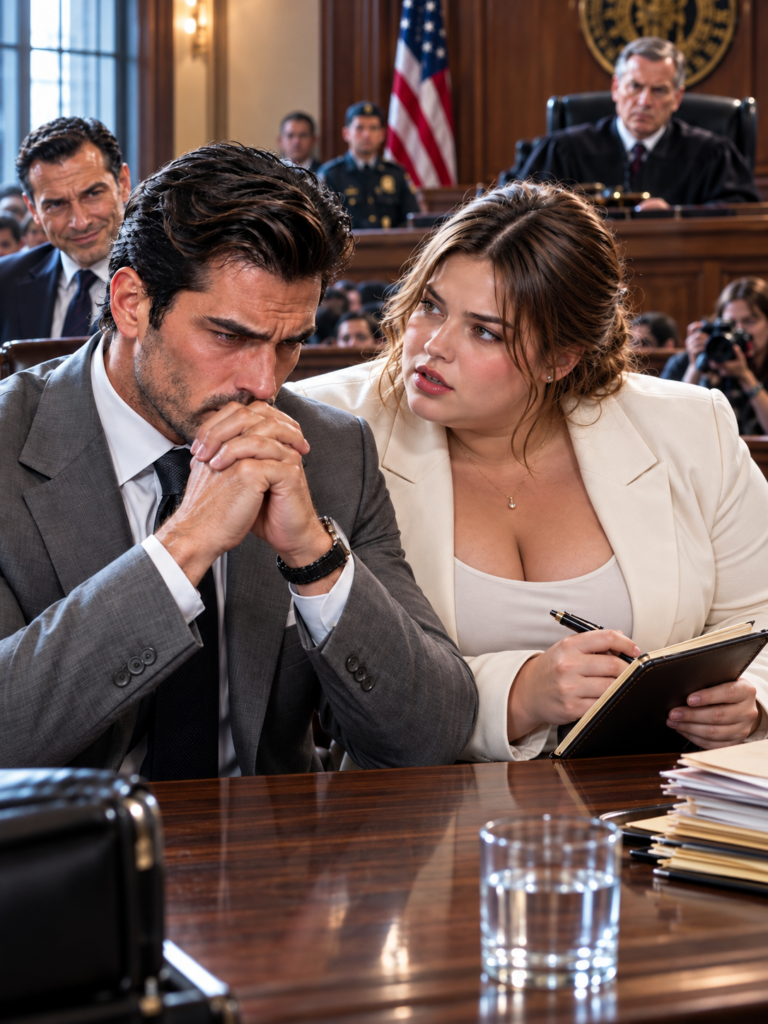
Thomas Vance stood in the witness box of Courtroom 14, wearing an inexpensive gray suit that looked strangely deliberate. He avoided looking toward the defense table, where Dante sat between his attorney and a woman in a plain navy dress.
“Mr. Vance,” the opposing attorney asked, “did Dante Moretti personally authorize the financial transfers under investigation?”
Thomas swallowed.
“Yes.”
The answer traveled through the courtroom like a match dropped onto dry paper.
“And how can you be certain?”
“I examined the documents myself. His signature was on every authorization.”
Across the aisle, Victor Hail smiled.
Dante didn’t move.
He had faced hostile competitors, government investigations, public scandals, and men who believed threatening his family would make him surrender. None of them had ever seen him flinch.
But beneath the polished wooden table, his hand slowly curled into a fist.
Because Thomas was lying.
And if Dante couldn’t prove it, the empire his father had spent a lifetime building would be taken apart before his eyes.
Beside him, Elena Brooks lowered her gaze to the battered leather notebook resting in her lap.
She knew Thomas was lying, too.
More importantly, she knew exactly where the lie had begun.
But the truth in her notebook could do more than save Dante Moretti.
It could finally explain why her younger brother had died.
In New York, the Moretti name opened doors that remained closed to almost everyone else.
Dante controlled luxury hotels, profitable shipping companies, and warehouses stretching across some of the city’s most valuable commercial districts. His businesses employed thousands. His signature could move millions before the financial markets closed.
To the business press, he was a brilliant, ruthless billionaire.
To competitors who had survived negotiations with him, he was something far less flattering.
And to people who whispered about the darker corners of New York’s business world, he was simply the Boss.
Dante rarely bothered correcting anyone.
He had learned long ago that fear accomplished what politeness often could not.
At the entrance to Courtroom 14 that morning, however, fear had become something he could no longer control.
Reporters crowded the benches, holding notebooks and phones. Cameras had been barred from the courtroom, but the frenzy outside made it clear that every word of the proceeding would reach the public within minutes.
Two attorneys accompanied Dante through the doors.
Marcus Reed, his lead counsel, carried the expression of a man who had spent too many nights examining evidence that refused to cooperate.
Dante wore a black suit cut precisely to his broad shoulders. His dark hair was combed back, his tie immaculate. Even under the attention of dozens of strangers, he seemed entirely composed.
Only Marcus knew how serious the situation had become.
For three years, Victor Hail had been working to dismantle everything Dante controlled.
Once, Victor had been his business partner.
They had signed contracts at the same tables, negotiated shipping agreements together, and shared confidential financial information that few employees were permitted to examine.
Dante had ended their association when their interests could no longer be reconciled.
Victor had never forgiven him.
What followed had not been an ordinary business rivalry.
Accusations appeared. Financial irregularities surfaced. Contracts bearing Dante’s approval were discovered in company records. Investigators began examining transactions that seemed to connect the Moretti organization to an extensive fraud scheme.
And somehow, Victor always appeared prepared to benefit from Dante’s misfortune.
The evidence had accumulated with such precision that even Marcus, a lawyer with twenty years of experience defending wealthy and powerful clients, struggled to find a convincing explanation.
Now the government was seeking restrictions that could strip Dante of control over crucial assets.
His hotel group.
His shipping operations.
The warehouses his father had left him.
Everything.
Dante took his seat without acknowledging the reporters.
Marcus sat to his left.
On his right was Elena Brooks.
She wore a simple navy dress with sleeves ending just above her wrists. Her dark leather notebook looked old enough to have accompanied her through several jobs. Her hair was neatly arranged, and she sat with an almost deliberate stillness.
No one in the courtroom had reason to notice her.
She was not an attorney.
She was not scheduled to testify.
She had been hired as Dante’s temporary administrative assistant six weeks earlier, following the abrupt departure of the employee who previously held the position.
To most of the people around her, Elena was another quiet office worker whose presence would be forgotten the moment she left.
Dante himself had barely exchanged more than a few dozen sentences with her.
He knew she was efficient. He knew she arrived when expected, kept his schedule organized, and rarely needed instructions repeated.
He also knew she never wasted his time with unnecessary conversation.
That had been enough.
At least until that morning.
The judge entered, and the courtroom rose.
When everyone was seated again, the proceeding began with an examination of the allegedly fraudulent transfers.
The prosecution presented contracts connected to companies operating under Dante’s control. The documents reflected millions of dollars moving through questionable transactions.
Each transfer appeared to carry an authorized approval.
Each approval appeared to lead back to Dante.
Marcus stood and challenged the allegations.
The attorney representing Victor’s interests responded immediately.
“The defense may dispute whatever it wishes,” he said, “but the evidence includes testimony from someone with direct knowledge of these transactions.”
Thomas Vance was called.
Dante recognized him the moment he stepped forward.
Six months earlier, Thomas had disappeared from his position as financial director, taking with him access to confidential information and leaving behind unanswered questions.
Dante had searched for explanations.
Now Thomas was standing under oath, offering the government precisely the testimony it needed.
When he claimed Dante had approved the fraudulent payments, Marcus leaned closer to his client.
“Tell me there’s something they overlooked,” Marcus murmured.
Dante studied the documents being displayed.
“Those aren’t my signatures.”
Marcus exhaled slowly.
“I believe you.”
“Then prove it.”
“That’s the problem.”
The judge was already examining another contract.
The signature resembled Dante’s.
The account numbers were correct.
The approval history appeared legitimate.
On paper, the entire sequence was nearly flawless.
Marcus objected to the assumption that a signature alone established authorization, but the prosecution produced additional records.
Bank transfers.
Shipping invoices.
Contract approvals.
Digital timestamps.
Thomas calmly maintained that Dante had personally authorized everything.
Each document narrowed the space in which the defense could maneuver.
Eventually the judge looked toward Marcus.
“Mr. Reed, do you have evidence that directly contradicts these records?”
Marcus stood.
“We request additional time to examine the electronic history underlying the transactions.”
The judge reviewed the paperwork before him.
“Your client has already been provided sufficient opportunity to prepare. The request is denied.”
A faint sound came from Victor’s side of the courtroom.
Dante turned his head.
Victor was leaning comfortably back in his chair.
Smiling.
It wasn’t a triumphant grin. It was smaller, more controlled, and therefore more offensive.
He looked like a man watching the final minutes of a game whose outcome had been decided long before anyone else understood the rules.
Dante returned his attention to the judge.
He had built his reputation on refusing to surrender.
Yet for the first time in fifteen years, he could see the possibility that strength, money, and intimidation would not be enough.
What he couldn’t see was the woman beside him studying the documents with the concentration of someone recognizing a familiar enemy.
Elena Brooks had spent forty-two days inside the Moretti organization.
Forty-two days was enough to understand certain things about Dante.
He never repeated an instruction unless someone had failed to follow it.
He remembered faces even after brief introductions.
And he could recognize a dishonest answer faster than most people recognized a familiar voice.
Yet he had one extraordinary blind spot.
He rarely paid attention to anyone who made no effort to attract it.
Elena had learned to use that blind spot.
She organized correspondence, maintained schedules, sorted financial archives, and handled administrative work that more ambitious employees considered beneath them.
She rarely volunteered information about herself.
She never mentioned that before becoming an administrative assistant, she had worked as an accountant for a small forensic accounting firm specializing in corporate fraud.
And she never told anyone why she had abandoned that career.
Three years earlier, Elena had possessed a life that seemed ordinary enough to take for granted.
She had a profession she understood, a steady income, and a younger brother whose curiosity occasionally frightened her.
Daniel Brooks was bright, stubborn, and convinced that numbers could tell the truth even when people refused to.
He worked as a junior analyst for one of Victor Hail’s companies.
He had been proud when he received the position.
Elena remembered how seriously he took the work, how often he stayed late trying to understand financial systems that more experienced employees barely bothered examining.
Then one evening he called her.
His voice sounded wrong.
Not frightened exactly.
Careful.
“Elena, I think I’ve found something I wasn’t supposed to find.”
She was still working when he called, surrounded by files and unfinished reports.
“What kind of something?”
“Company payments. Contracts. I need to check a few things before I say anything else.”
“Daniel, are you in trouble?”
A pause.
“I don’t know.”
She remembered putting down her pen.
“Then stop looking at it.”
“I can’t. Not if I’m right.”
“Come over. Bring whatever you found.”
He promised they would talk.
But they never did.
The following morning, a warehouse fire killed Daniel.
The official investigation concluded that the death had been an accident.
Elena read the report until the words blurred.
She attended meetings, asked questions, contacted people who had worked with her brother, and tried to understand how an ordinary young analyst could die only hours after suggesting that he had uncovered something dangerous.
The answers never satisfied her.
Eventually people stopped answering her calls.
She was told there was nothing more to investigate.
She was told grief could make coincidences appear meaningful.
She was advised to move on.
But grief did not explain why Daniel had been frightened.
And coincidence did not explain why company names he had mentioned began appearing in financial irregularities connected to Dante Moretti.
That discovery changed the direction of Elena’s life.
She no longer cared whether her next position matched her qualifications.
She wanted access.
When an administrative position became available inside the Moretti organization, she applied.
She expected to find a company hiding criminal transactions behind impressive buildings and legitimate contracts.
She expected that Dante himself might be responsible.
Instead, she discovered something more complicated.
The suspicious payments appeared to have been arranged to implicate him.
At first, Elena resisted that conclusion.
She had no personal loyalty to Dante. She knew his reputation. She understood that men who possessed great power often surrounded themselves with people willing to conceal ugly things.
But she had spent years learning to separate suspicion from evidence.
And the evidence refused to behave the way she expected.
Several approvals had supposedly been issued while Dante was traveling abroad.
Others bore timestamps corresponding to public events where his presence had been documented.
Transactions passed through shell companies connected to Victor Hail.
And behind every questionable approval was the same internal financial system.
Someone had used that system to imitate Dante’s authority.
Someone had been patient enough to build an entire record of misconduct around his name.
Elena began examining the archives after completing her ordinary assignments.
She studied the sequence of approvals, compared transaction histories, and checked documents against older records.
The further she followed the money, the more deliberate the deception appeared.
It had required access, preparation, and someone familiar with the Moretti organization’s financial procedures.
Thomas Vance had possessed precisely that familiarity.
Elena did not yet know whether he was responsible.
She did know that the records did not support the simple narrative being constructed against Dante.
Two days before the hearing, she found the first piece of evidence she believed could withstand serious examination.
Inside a digital archive were duplicate invoices.
At first glance, the files appeared identical.
The invoice numbers matched.
The company names matched.
The descriptions matched.
But the timestamps differed.
When she compared the documents more carefully, she discovered that the figures and approval histories had been altered.
One set reflected the original financial activity.
The other had been changed to create the transactions now being used against Dante.
She searched the associated audit history.
An administrator account had modified the relevant approval records.
The account belonged to Thomas Vance.
Then she discovered an archived message he had sent to an unidentified recipient.
The message indicated that once the hearing began, nobody would accept Dante’s explanation.
It also claimed the original ledger had been destroyed.
Elena read that message repeatedly.
Whoever had written it had expected the altered documents to survive scrutiny.
And whoever received it might have known exactly what Thomas was doing.
Elena copied the relevant records onto an encrypted drive and began checking them against the available archive backups.
She did not immediately approach Dante.
Part of her caution was professional. Evidence handled carelessly could be discredited, especially in a case involving millions of dollars and powerful adversaries.
But another part was personal.
She still did not know who had ordered the actions that led to Daniel’s death.
She had no proof that Dante was innocent of everything connected to the warehouse.
Saving his companies before understanding his role might mean protecting a man who had helped destroy her family.
That possibility kept her silent.
Until Thomas Vance took the witness stand.
Back in Courtroom 14, Elena watched him swear he had seen Dante approve the transactions.
His answers were controlled.
His voice barely changed.
He behaved like a man who had rehearsed the truth so many times that the lie had become comfortable.
Elena opened her notebook.
She wrote three words beneath the date of the hearing.
Ask about September 18th.
Then she closed the book.
The prosecution continued.
A digital forensics specialist was called to explain the electronic approval records.
He testified that the company’s system showed Dante authorizing the disputed transactions.
Marcus approached for cross-examination.
“Is it technically possible to alter electronic approval records?”
“With appropriate access,” the specialist replied.
“Administrator access?”
“Yes.”
“Could an administrator also change timestamps?”
“The system permits certain modifications, depending on the account privileges.”
“And did your examination reveal such alterations?”
“Not in the records provided to me.”
Marcus glanced toward the defense table.
Elena understood the distinction immediately.
The specialist had found no evidence of manipulation in the material he examined.
That was not the same as proving the original archive had never been altered.
She looked down at her bag.
The encrypted drive was inside.
Everything depended on whether the court would permit the records to be examined.
The judge listened to the final testimony, then addressed the defense.
Unless substantially contradictory evidence emerged, the court would consider the prosecution’s request to freeze the remaining assets pending final judgment.
For Dante, the implications were immediate.
He could lose control of the companies that had defined his adult life.
The hotel group.
The shipping business.
The warehouses that belonged to his family’s history.
Thousands of employees faced uncertainty about their futures.
And Victor Hail stood to gain what three years of calculated betrayal had been designed to secure.
Dante rose.
“Your Honor, I did not approve those transfers.”
The opposing attorney objected.
“A denial unsupported by evidence cannot establish that the documents are false.”
The judge instructed Dante to sit.
He obeyed, but Elena saw the effort it cost him.
The man beside her had never appeared physically helpless.
Yet in that moment, surrounded by lawyers and official records, she understood how easily a powerful person could become trapped by evidence manufactured to look undeniable.
He could not command the judge.
He could not intimidate a timestamp.
He could not purchase an authentic record that everyone believed had been destroyed.
Elena looked at her notebook.
Then at the man whose future was narrowing with every passing minute.
She thought of Daniel.
She thought of the phone call she had failed to understand until it was too late.
And she decided she would not allow another carefully constructed lie to stand unchallenged.
“Mr. Moretti,” she whispered.
Dante turned, irritation flashing across his face.
“Not now.”
“I found something you need to see.”
He glanced toward the judge.
“Elena—”
“I can demonstrate that the financial records were altered.”
His attention returned to her.
For the first time since she had joined his company, he looked at her without distraction.
“What did you say?”
“The timestamps were changed. The invoices were duplicated. And the original transaction history still exists.”
Marcus leaned across Dante.
“Miss Brooks, are you certain?”
“Yes.”
“Do you have the records?”
Elena opened her bag and removed the small encrypted drive.
“The original transaction log. Archived invoices. The administrator audit trail. And a message from Thomas Vance indicating he knew the records had been manipulated.”
Marcus stared at the drive.
“Where did you obtain this?”
“Your client’s company archive.”
“Was that archive restricted?”
“Yes.”
The attorney shut his eyes briefly.
Dante’s expression darkened.
“You accessed a restricted system without authorization?”
“I accessed the records necessary to trace the transactions.”
“Why didn’t you bring them to me?”
“Because I was still verifying what I found.”
That was true.
It simply wasn’t the entire truth.
Dante studied her face.
He had seen Elena pass documents across his desk, adjust his schedule, and disappear quietly when meetings began.
He had never asked much about her background.
He had certainly never imagined that she was capable of unraveling financial evidence his own legal team had struggled to challenge.
“How do I know you aren’t making this worse?” he asked.
Elena met his gaze.
“You don’t.”
Marcus looked between them.
Elena continued, her voice steady.
“You shouldn’t accept my conclusions because I’m employed by your company. You should have the evidence examined by someone independent. If the records are genuine, they’ll establish what happened regardless of what either of us says.”
Dante remained motionless.
He was accustomed to people giving him reassurance.
He had built businesses surrounded by advisers who weighed their words against his temper.
The woman beside him offered neither comfort nor deference.
She was asking him to trust a process he could not control.
And she was willing to let the evidence speak even if it proved her wrong.
Finally, Dante turned toward Marcus.
“Request permission to recall the witness.”
Marcus looked at Elena once more.
Then he rose.
Across the courtroom, Victor Hail continued smiling, unaware that the woman he had overlooked was about to challenge the entire foundation of his victory.
Part 2
For several seconds, Marcus Reed remained standing while the judge examined him over the rim of his glasses.
“Counsel, are you requesting to reopen the evidentiary record?”
“Yes, Your Honor. The defense has located electronic records that may directly contradict the testimony presented today.”
The attorney representing Victor Hail rose immediately.
“Objection. The defense cannot simply produce unverified files at the last moment and expect this court to accept them.”
“We aren’t asking the court to accept them without examination,” Marcus replied. “We’re requesting independent authentication of records that appear to show deliberate manipulation of the financial evidence.”
The judge held up one hand.
“Approach the bench.”
As the attorneys moved forward, Dante remained seated.
He could hear the reporters shifting behind him, already preparing to turn the interruption into another headline.
For three years, he had watched Victor anticipate his defenses, exploit his weaknesses, and construct allegations that appeared increasingly difficult to dispute.
Now his survival depended on a woman he had hired to organize appointments and handle correspondence.
Dante turned toward Elena.
“Tell me one thing.”
She looked at him.
“If that drive contains what you say it contains, why didn’t my financial investigators find it?”
“The records were stored in an older archive. The versions your investigators received appear to have come from the altered system.”
“Appear?”
“I won’t claim certainty about something I haven’t established.”
He examined her expression.
Most people adjusted their answers when they realized he wanted reassurance.
Elena seemed almost determined not to give it.
“Are you afraid of what might happen if this doesn’t work?” he asked.
She glanced toward Victor.
“Yes.”
“Then why are you doing it?”
Her fingers tightened around her notebook.
“Because the truth doesn’t become less important when someone powerful wants it buried.”
Dante said nothing.
The answer bothered him.
Not because he disagreed with it, but because he couldn’t remember the last time someone had expressed that principle in his presence without asking for something in return.
At the bench, Marcus finished explaining the source of the evidence.
The judge looked toward the defense table.
“Who discovered these records?”
Marcus hesitated.
“An employee of Mr. Moretti’s organization.”
“Is that employee present?”
“Yes, Your Honor.”
“Then I would like to hear from that person.”
Marcus turned.
“Miss Brooks.”
Elena stood.
Every head in the courtroom seemed to follow the movement.
She felt the attention immediately.
Reporters leaned forward.
Victor’s attorney turned with open curiosity.
Thomas Vance looked up from his seat.
And for the first time that morning, Victor Hail’s smile lost a little of its certainty.
Elena stepped into the aisle.
Her heels made a faint sound against the courtroom floor.
She had spent three years imagining different ways she might confront the people who had concealed the truth about Daniel.
In those imagined encounters, she always knew what to say.
She never imagined that the moment would arrive in a courtroom where a mistake might discredit the strongest evidence she had ever discovered.
She approached the witness stand and took the oath.
When she sat, the room appeared larger than it had from the defense table.
The opposing attorney rose.
He studied her for a moment before speaking.
“Miss Brooks, you work as an administrative assistant for Mr. Moretti. Is that correct?”
“Yes.”
“And you’ve held that position for approximately six weeks?”
“That’s correct.”
“You’re not employed by the organization as a forensic investigator?”
“No.”
“And you’re not serving as one of Mr. Moretti’s attorneys?”
“No.”
The attorney offered a faint smile.
“Yet you claim to have discovered something that professional investigators, accountants, and government specialists apparently overlooked.”
Elena waited until he finished.
“I’m presenting records for examination. Whether they’re authentic is a question the court can determine.”
“You expect us to believe your interpretation?”
“I expect the records to be tested.”
He folded his hands.
“That’s a convenient answer.”
“It’s also the only responsible one.”
A few people in the gallery exchanged looks.
Dante watched without moving.
Elena’s voice remained soft, but the attorney was beginning to lose control of the conversation.
“Did you personally witness Victor Hail altering any financial record?” he asked.
“No.”
“Did you witness Thomas Vance doing so?”
“No.”
“Then you cannot establish that either of them committed fraud.”
“I can establish what I found in the archive. The audit history may help identify who altered the files.”
The attorney glanced toward the judge.
“Your Honor, the witness is speculating.”
The judge considered the objection.
“Miss Brooks, confine your testimony to the records you examined and the observations you can support.”
“Of course.”
Elena opened her notebook.
“On September eighteenth, at 11:42 p.m., the original financial ledger was exported from the company’s archived system.”
The opposing attorney looked toward his notes.
Elena continued.
“Four minutes later, an administrator account modified the timestamps associated with the corresponding approval records.”
“Are you suggesting the system was compromised?”
“I’m saying the audit history records changes to the approval timestamps.”
“Can you identify the account?”
“Yes.”
“Whose was it?”
“Thomas Vance’s.”
The reaction was immediate.
A reporter began writing so quickly that his pen scraped audibly across the page.
Thomas shifted in his chair.
Victor turned toward his attorney.
Dante looked at Marcus.
For the first time, the defense had something more substantial than a denial.
The opposing attorney approached the witness stand.
“That’s a serious allegation, Miss Brooks.”
“I understand.”
“Do you have evidence connecting that account to the modifications?”
“Yes. The archive contains the access history, the affected transaction records, and the original versions of the invoices.”
“And where are these materials?”
“On the encrypted drive provided to Mr. Reed.”
“Have they been independently verified?”
“Not yet.”
The attorney straightened as though the answer had settled the matter.
“Then your conclusions remain unproven.”
Elena nodded.
“That’s why they should be verified.”
Dante lowered his eyes for an instant.
He had faced a thousand arguments with sophisticated legal and financial professionals. He had rarely seen one dismantled so quietly.
Marcus stood.
“Your Honor, the defense formally requests that the court-appointed specialist examine the material and compare it with the company’s archive backups.”
Victor’s attorney protested again.
The judge reviewed the request before turning toward the specialist who had testified earlier.
The records were sufficiently relevant to warrant examination.
Authentication would determine what weight, if any, they deserved.
The request was granted.
The court recessed.
And for the first time all day, Victor Hail stopped smiling.
In the corridor outside Courtroom 14, Elena stood with her notebook pressed against her side.
The courthouse was crowded with attorneys, employees, reporters, and people waiting for other hearings.
She watched them pass without really seeing them.
Her heart had been beating too quickly since she stepped into the witness box.
Now that the testimony was over, the physical consequences of fear were catching up with her.
She loosened her grip on the notebook and flexed her fingers.
“Miss Brooks.”
Dante stood a short distance away, with Marcus beside him.
Elena straightened.
“Mr. Moretti.”
Marcus spoke first.
“The specialist has been given access to the material. The judge wants the relevant backups examined before the hearing resumes.”
“Good.”
“Assuming the audit trail matches the original system, you’ve given us an entirely different defense.”
Elena looked toward the courtroom doors.
“Assuming it matches.”
Marcus gave a brief, exhausted laugh.
“You really don’t make promises you can’t support, do you?”
“No.”
The attorney studied her for another moment.
“Where did you learn to examine financial records like that?”
Elena hesitated.
Dante noticed.
Until that moment, neither of them had known much about the woman standing in front of them.
“I used to work in forensic accounting,” she said.
Marcus blinked.
“You were an accountant?”
“Yes.”
“Why didn’t you mention that when you applied?”
“The position was administrative. I met its requirements.”
Dante regarded her carefully.
“You’re not answering his question.”
“No,” Elena said. “I’m not.”
Marcus looked between them.
He seemed about to continue, then thought better of it.
“I need to speak with the specialist,” he said. “Please remain available.”
He walked away.
Elena watched him go.
Dante remained.
“There’s something else,” he said.
She looked up.
“Something you haven’t told me.”
Elena knew better than to pretend she misunderstood.
“Yes.”
For a moment, Dante seemed surprised by the admission.
“Is it connected to those records?”
“Yes.”
“Can it affect the case?”
“It may.”
“Then I need to know.”
Elena lowered her gaze.
The last time she had trusted someone with the details surrounding Daniel’s death, she had been told to stop asking questions.
She had learned that powerful organizations could make inconvenient people feel foolish simply by refusing to take them seriously.
Dante’s organization was larger and more intimidating than most.
She wasn’t ready to surrender control of the one investigation that mattered more to her than anything.
“Not until I know what the records prove,” she answered.
Dante’s expression hardened slightly.
People did not often refuse him information about his own company.
But before he could respond, Elena spoke again.
“I’m not trying to damage your defense.”
“I didn’t accuse you of that.”
“You were thinking it.”
He considered denying it.
Instead, he said, “I don’t know what to think.”
That was more candid than she expected.
“Neither do I,” she admitted.
They stood facing one another while footsteps echoed along the corridor.
Dante had been suspicious of her from the moment she produced the drive.
He had every reason to be.
Yet nothing about her behavior resembled the calculated performance he had come to expect from people trying to gain his favor.
She had placed herself under hostile questioning without seeking his approval.
And when offered the chance to make herself indispensable, she insisted that the evidence, not her importance, was what mattered.
He found himself wanting to understand her.
Not because she might save him.
Because she appeared to have entered his world carrying an entirely separate battle.
An hour later, the court-appointed specialist returned with his preliminary findings.
The atmosphere inside Courtroom 14 had changed.
Earlier, the prosecution’s evidence had seemed to form a complete and unbroken chain.
Now everyone understood that the chain might have been manufactured.
The specialist explained that the original transaction records on Elena’s drive were consistent with the company’s archived backup.
Several approval timestamps had been modified.
The alterations corresponded to records used to implicate Dante.
The analysis also identified suspicious transactions routed through companies connected to Victor Hail.
The archived message associated with Thomas Vance appeared genuine.
Further examination of the original systems would be necessary to establish the complete chain of responsibility, but the preliminary findings raised substantial questions about the authenticity of the prosecution’s central records.
Marcus asked the specialist to clarify one point.
“Are you saying the financial records presented earlier may not reflect the original transactions?”
“That is correct.”
“And are the discrepancies consistent with deliberate alteration?”
“The audit history indicates that the records were changed. Establishing the circumstances and responsible individuals will require further investigation.”
The distinction mattered.
Elena understood that better than anyone.
A suspicious pattern was not a conviction.
An administrator account was not automatically proof that its owner had personally operated it.
And an altered ledger did not establish who had ordered a warehouse fire three years earlier.
But the records had survived independent preliminary examination.
For the first time, the truth was beginning to acquire witnesses of its own.
The judge ordered Thomas Vance recalled.
Thomas returned to the witness stand without the composure he had displayed earlier.
His face had lost color, and he adjusted his cuffs more than once before settling his hands on the wooden rail.
The judge addressed him directly.
“Mr. Vance, did your position give you administrator access to the organization’s financial system?”
“Yes, Your Honor.”
“Did other employees possess similar access?”
“Some did.”
“The audit history identifies modifications made through your account. Can you explain them?”
Thomas glanced toward Victor.
“It could have been used by someone else.”
“Are you denying that you made the modifications?”
“Yes.”
The judge reviewed the specialist’s findings.
“Then how do you account for this record?”
“I don’t know.”
Marcus rose.
“Mr. Vance, earlier you testified that Mr. Moretti personally authorized the disputed transfers.”
“Yes.”
“And now we have evidence showing that the approval history was altered through an account assigned to you.”
Thomas rubbed his palms against his trousers.
“I’ve already said I don’t know how that happened.”
“Would you agree that a forged approval could create the appearance of authorization where none existed?”
“I suppose.”
“Would you agree that your original testimony did not account for that possibility?”
Thomas’s eyes moved toward Victor again.
“I answered the questions I was asked.”
Dante watched him closely.
He remembered years of routine reports, board-related financial discussions, and trusted access.
Thomas had worked inside his organization long enough to understand its strengths and weaknesses.
Long enough to know how devastating a credible fraud allegation could become.
Long enough to learn which documents would be believed.
For years, Dante had treated loyalty as a practical arrangement.
Pay people well. Reward results. Punish betrayal.
He had believed those rules were sufficient.
Now a former employee was sitting under oath, and no amount of money could recover the trust he had misplaced.
But Elena was studying Thomas for a different reason.
She recognized the way he looked toward Victor.
She had seen it once before.
Years earlier, during the questions that followed Daniel’s death, she had encountered employees who grew nervous whenever Victor Hail’s company was mentioned.
They became less certain.
They searched for approval before answering.
They behaved like people who believed the wrong sentence could cost them more than their jobs.
Thomas was doing the same thing.
And suddenly Elena understood that the financial evidence was only one part of what he feared.
She rose.
“Your Honor, may I ask the witness a question?”
Marcus turned sharply.
Dante looked at her.
The judge studied Elena before granting her permission.
“One question, Miss Brooks. Keep it relevant.”
Elena stepped toward the microphone.
She could hear her heartbeat.
Thomas watched her approach.
The recognition in his eyes was unmistakable now.
He knew who she was.
He had probably known since she entered the witness box.
For three years, Elena had imagined confronting him.
She had prepared accusations.
She had rehearsed angry questions.
But when she stood before him, the only thing she wanted was an answer.
“Mr. Vance,” she asked, “do you remember Daniel Brooks?”
Thomas went rigid.
Dante turned toward her.
The name meant nothing to him.
But Elena’s expression had changed in a way he had never seen before.
The quiet concentration remained, yet something beneath it had become painfully exposed.
Thomas cleared his throat.
“I worked with a lot of people.”
“Daniel was a junior analyst at Hail Logistics.”
Thomas looked down.
“He died in a warehouse fire three years ago.”
A reporter stopped writing.
Elena continued.
“He was my younger brother.”
Dante felt the significance of the admission settle over him.
This was what she had refused to explain.
This was why she had taken a position beneath her qualifications.
This was why she had been searching his financial archives with such determination.
She wasn’t simply helping him defend his empire.
She had been searching for someone who knew why her brother was dead.
Thomas shifted in the witness box.
“I don’t know anything about the fire.”
Elena opened her notebook.
“Two days before Daniel died, you sent him a message concerning the financial records he’d discovered.”
Thomas’s lips parted.
“You warned him about what would happen if he delivered the original ledger to the authorities.”
Victor stood abruptly.
“Your Honor, this has nothing to do with the allegations against Moretti.”
The judge struck his gavel.
“Mr. Hail, sit down.”
Victor remained standing for another second.
Then his attorney touched his arm and persuaded him to comply.
Elena had not taken her eyes from Thomas.
“Daniel found money being diverted through fraudulent shipping contracts,” she said. “He wanted those records investigated.”
“That’s not true.”
“Then explain the message recovered from his archived account.”
Thomas looked toward Victor.
Only for a moment.
But long enough.
Victor stared back at him with an expression that made Elena feel suddenly cold.
It was not the anger of a man surprised by an accusation.
It was the fury of someone watching another person lose control of a secret.
“Mr. Vance,” the judge said, “answer the question.”
Thomas stared at the microphone.
His breathing had become shallow.
Elena waited.
She could still remember Daniel’s voice during that last call.
I think I’ve found something.
For three years, those words had followed her into empty rooms, sleepless nights, and offices where people refused to answer.
Now the man who had warned Daniel was sitting directly in front of her.
And he was afraid.
“I didn’t kill anybody,” Thomas said suddenly.
Elena’s breath caught.
No one had asked him whether he had killed Daniel.
Thomas looked toward Victor again.
“I didn’t arrange that fire.”
Victor leaned forward.
“Thomas.”
The judge immediately intervened.
“Mr. Hail, you will not address the witness.”
Thomas was no longer listening to the judge.
“I changed the records,” he said.
The words came out unevenly.
“I made the modifications. But Victor told me it was necessary. He said the company had to be protected.”
Victor stood.
“That’s a lie.”
Thomas recoiled.
“I did what you told me to do.”
“You’re trying to save yourself.”
“You said the records were already taken care of!”
The judge struck the gavel again, demanding order.
Marcus remained standing beside the defense table, watching the foundation of the case against Dante begin to collapse.
Thomas looked from Victor to the judge.
Then, with the exhausted expression of a man who could no longer see a way to protect himself, he spoke.
“Victor ordered the transfers.”
The courtroom erupted.
“He wanted the transactions to look like Moretti approved them. He said once the case was underway, Moretti would be blamed for everything.”
Victor’s attorney moved toward him.
Thomas kept talking.
“And he said nobody would ever have a reason to investigate that warehouse again.”
Elena stood motionless.
Those final words mattered more than anything else he had said.
Thomas had not confessed to arranging Daniel’s death.
He had not identified the person responsible for the fire.
He had not explained whether anyone had deliberately caused it.
But he had connected the fraudulent financial scheme to an effort to keep the warehouse out of investigators’ attention.
For three years, Elena had been told that Daniel’s death and the irregularities he had discovered were unrelated.
Now a man with direct knowledge of the fraud had indicated that the two matters might be connected after all.
Her hands began to tremble.
She held the edge of her notebook until they steadied.
The judge called for order and directed the relevant authorities to preserve the newly disclosed evidence and investigate the allegations.
The hearing could no longer proceed as though the prosecution’s original account remained undisputed.
Thomas sat with his shoulders bent, staring at the floor.
Victor ignored his attorney’s urgent whispers.
His attention was fixed entirely on Elena.
When she turned toward the defense table, she heard him speak.
His voice was low enough that only those nearest him could hear.
“You have no idea what you’ve started.”
Elena stopped.
Dante was already watching Victor, ready to intervene if the confrontation went further.
But Elena did not move toward him.
She faced Victor on her own.
“For three years,” she said, “you counted on my brother’s death staying a closed case.”
Victor’s expression did not change.
Elena tightened her hold on the notebook.
“Now there’s finally a reason for someone to reopen the questions.”
She returned to her seat.
Dante shifted slightly to give her room.
For a moment, he seemed about to say something.
Then he noticed the way she was struggling to control her hands.
He left her alone.
It was a small decision.
For Dante, a man accustomed to filling uncertainty with commands, it required more restraint than he expected.
Elena looked at the documents spread across the defense table.
The evidence had begun to expose Victor.
It might save Dante.
But Daniel’s case remained unresolved.
And now that Victor understood why she had entered the Moretti organization, she could no longer pretend her search had gone unnoticed.
Still, she felt something she had not experienced in three years.
Not relief.
Not yet.
Something quieter, and far more dangerous to the people who had concealed the truth.
Hope.
Part 3
The hearing continued for another two days.
By then, the story being reported outside the courthouse had changed.
What had begun as the apparent collapse of Dante Moretti’s business empire had become an investigation into whether the evidence against him had been deliberately manufactured.
Independent investigators examined additional financial records.
Approval histories were compared against archived backups.
Transactions were traced through companies connected to Victor Hail.
The discrepancies Elena had identified survived further scrutiny.
There were still unanswered questions. Some transactions remained under investigation, and the full extent of the deception had not been established.
But the court could no longer treat the original evidence as unquestionable.
After reviewing the additional findings, the judge lifted the temporary freeze on several of Dante’s assets.
His companies were not immediately lost.
His remaining businesses could continue operating.
His controlling interests were no longer facing the same immediate threat.
Dante was not declared innocent of every allegation. His financial affairs remained subject to scrutiny, and the investigation was far from complete.
Yet the machinery that had been moving steadily toward the destruction of his empire had finally been interrupted.
Victor Hail was now facing serious questions of his own.
Thomas Vance’s testimony had opened a line of investigation that neither man could easily close.
And the death of Daniel Brooks was no longer an isolated tragedy in Elena’s private search for answers.
The records suggested a connection that investigators would have to examine.
For Elena, that mattered more than any temporary victory.
She had not spent three years searching for someone to punish.
She had spent three years trying to understand what had happened to her brother.
Now there was a chance she might finally learn the truth.
When Dante emerged from the courthouse, reporters surged toward him.
“Mr. Moretti, are you accusing Victor Hail of orchestrating the fraud?”
“Will you pursue legal action?”
“What does this mean for your company?”
“Are the remaining allegations against you false?”
His security team moved forward, creating a narrow passage through the crowd.
Dante answered none of the questions.
He walked down the courthouse steps with the same controlled expression he had worn on the morning the hearing began.
But Elena, following several paces behind, noticed something different.
He no longer seemed determined to intimidate everyone around him.
He seemed tired.
Not defeated.
Simply aware of how close he had come to losing everything.
A black car waited near the curb.
Dante approached it, then stopped.
Elena expected him to get inside and leave her to find her own way back.
Instead, he turned.
“Miss Brooks.”
She stopped beside the car.
“Mr. Moretti.”
His security team maintained a respectful distance while reporters continued shouting from behind the barriers.
“Why didn’t you tell me about your brother?”
Elena looked toward the courthouse.
“Because I didn’t know whether you were involved.”
Dante absorbed the answer.
“And now?”
“Now I know the financial records were manipulated. I know Thomas Vance lied. I know Victor Hail wanted the warehouse kept out of the investigation.”
She returned her gaze to him.
“But I still don’t know everything.”
Dante studied her for a long moment.
He could have reminded her that she had accessed a restricted company archive.
He could have demanded an explanation for her silence.
He could have told her that her actions had exposed the organization to additional scrutiny.
Instead, he found himself thinking about the position she had occupied all along.
She had entered his company with no reason to trust him.
She had believed there might be evidence connecting him to her brother’s death.
And when she discovered records that could save him, she had chosen to expose them rather than conceal information that might complicate her search.
“You could have taken those files directly to the authorities,” he said.
“I considered it.”
“You could have approached Victor.”
Elena’s expression changed.
“Never.”
“Why?”
“Because Daniel died trying to expose people who believed they could make the truth disappear.”
The answer struck him more forcefully than he expected.
For years, Dante had considered fear an essential part of power.
People obeyed because they understood what disobedience might cost them.
He had rarely questioned the consequences of creating that kind of world.
But standing beside Elena, he found himself looking at it through someone else’s eyes.
A young man had died.
His sister had spent three years fighting indifference.
And men with money and influence had apparently expected the questions surrounding his death to vanish.
Dante spoke more quietly.
“I’m sorry about Daniel.”
Elena blinked.
It was such a simple statement that she almost didn’t know how to receive it.
She had been offered official conclusions, sympathetic expressions, and explanations about how unfortunate accidents happened.
She had been told to find peace.
She had been told that nothing could change the past.
But Dante’s apology contained no instruction about what she should feel next.
He simply acknowledged what she had lost.
Elena turned her face slightly away.
“Thank you,” she whispered.
Dante opened the rear door of the car.
“Come with me.”
She looked at him.
“Where?”
“Somewhere we can speak without having our conversation turned into tomorrow’s headlines.”
She hesitated.
“Is that an order?”
Dante paused.
Six weeks earlier, he might not have understood why the distinction mattered.
Now he did.
“No,” he said. “It’s an invitation.”
Elena considered him.
Then she stepped inside.
The car moved away from the courthouse, leaving the reporters behind.
New York passed beyond the tinted windows: office buildings, crowded sidewalks, impatient traffic, people hurrying toward ordinary destinations.
Neither Dante nor Elena spoke immediately.
She sat with her notebook on her lap.
He looked out the opposite window.
It was an unfamiliar silence for him.
Usually, the people around Dante waited for instructions. Conversations began when he chose to begin them and ended when he decided they were finished.
Elena did not seem uncomfortable allowing the quiet to continue.
Eventually, Dante spoke.
“I spent most of my life believing fear was useful.”
She turned toward him.
“When someone challenged me, I made certain they understood the consequences. When people questioned my authority, I treated it as something to correct.”
Elena listened.
“I thought that was how you protected what you’d built.”
“And now?”
He looked at her.
“Today, I watched someone who had every reason to remain silent risk everything to tell the truth.”
“Your attorneys helped make sure the evidence was examined.”
“They did.”
“They’ll still have work to do.”
“I know.”
She looked down at her notebook.
“Then don’t confuse what happened today with the end of the case.”
A small, almost disbelieving breath escaped him.
“You really can’t resist correcting me.”
“Only when you’re wrong.”
Dante regarded her with an expression she hadn’t seen before.
Not anger.
Something closer to reluctant admiration.
“You found something my entire legal team missed.”
“I had different reasons for looking.”
“Still, you found it.”
Elena thought about Daniel.
About the countless hours she had spent examining records simply because she couldn’t accept the explanation of his death.
“I found evidence,” she said. “There are still truths neither of us knows.”
Dante considered that distinction.
Then he asked the question that had occupied him since she took the witness stand.
“Are you afraid of me?”
Elena gave a small, exhausted laugh.
“Of course.”
He looked surprised.
Most people who feared him tried to disguise it.
Most people who claimed not to fear him wanted him to believe they were exceptional.
Elena did neither.
“Then how did you find the courage to stand up in that courtroom?”
She looked out at the passing city.
“Because I was afraid when Daniel called me, too.”
Dante waited.
“I knew he was getting involved in something dangerous. I wanted him to stop. I thought if he stepped away, everything would be fine.”
Her voice remained composed, but he heard the pain beneath it.
“After he died, I spent a long time wishing I’d asked different questions.”
“Elena—”
She shook her head gently.
“I’m not saying I could have prevented what happened. I don’t know that.”
She paused.
“But I do know what it feels like to stay silent because you’re frightened. And I know how much it can cost to spend the rest of your life wondering whether you should have spoken.”
Dante watched her.
“Being afraid doesn’t mean you have to give up your voice,” she said.
The words stayed with him.
He had heard men threaten his life.
He had watched enemies plead for mercy.
He had made decisions that affected thousands of people without allowing himself the luxury of doubt.
Yet the quiet woman beside him had shown him something his experience had never taught him.
Power could force obedience.
It could buy cooperation.
It could make people afraid to challenge a lie.
But it could not make that lie true.
And it could not make the person who exposed it weak.
Dante returned his gaze to the window.
He understood that surviving the case would not erase the harm done under his authority.
He had questions to answer about the people he employed, the systems he had trusted, and the consequences of mistakes he had once considered someone else’s responsibility.
For the first time, those questions felt more important than preserving his reputation.
Beside him, Elena remained quiet.
Neither reached for the other’s hand.
Neither made promises.
But the distance between them no longer felt like the distance between an employer and an employee who had never really known one another.
Something more complicated had begun.
Something that would require honesty if it was ever going to become trust.
Three weeks later, Dante asked Elena to come to his private office.
She arrived carrying the same worn notebook.
The room was familiar.
She had entered it dozens of times to deliver correspondence, confirm appointments, and arrange paperwork.
But that morning, the atmosphere felt different.
Dante stood behind his desk.
A thick folder lay in front of him.
“Close the door, please.”
Elena did.
Then she approached the desk.
“What’s this?”
“Documents connected to your brother’s case.”
She stopped.
For a moment, all she could do was look at the folder.
“What have they found?”
“Investigators recovered additional records from the warehouse company.”
He pushed the folder toward her.
“The material supports Thomas Vance’s statement that the financial fraud may be connected to the circumstances surrounding Daniel’s death.”
Elena opened it.
Her eyes moved across the first page.
“May be connected?”
“Yes.”
She looked up.
“You’re not certain.”
“No.”
Dante rested his hands on the desk.
“I won’t promise you an answer until the evidence supports one.”
Elena lowered her eyes to the documents.
Three weeks earlier, she would have assumed he was withholding information.
Now she recognized the restraint.
For a man accustomed to being obeyed, Dante was learning that not every problem could be solved by making a promise.
“I appreciate that,” she said quietly.
He moved another document toward her.
“There’s something else.”
Elena examined it.
It was a formal offer for her to work as an independent financial investigator for the legitimate side of the Moretti organization.
The position included access to records relevant to the ongoing inquiry.
She read it twice.
“You want me to continue working here?”
“In a different capacity.”
“Why?”
Dante leaned back slightly.
“Because I need someone capable of examining my company’s records without treating my approval as proof that everything is correct.”
“You have attorneys.”
“I do.”
“And accountants.”
“Yes.”
“And financial advisers.”
“More than I care to count.”
Elena raised an eyebrow.
“Then it sounds like you’ve already hired enough people.”
Dante almost smiled.
“I’ve hired plenty of people who know how to agree with me.”
“And you think I won’t?”
“I’ve seen what happens when you disagree with someone.”
Elena looked down at the offer again.
For a moment, she imagined what accepting could mean.
Access to financial systems.
Permission to examine records without concealing her purpose.
An opportunity to assist investigators in tracing the transactions that had led her to Daniel’s last days.
But working with Dante would also mean entering a complicated relationship with a man whose businesses remained under scrutiny.
She could not allow gratitude to become dependence.
She could not let the possibility of answers compromise her judgment.
And she could not forget that the truth might still implicate people Dante wanted to protect.
Before she could speak, something attached to the folder caught her attention.
A small handwritten note.
She turned it over.
The sentence written there made her forget everything else.
If anything happens to me, look for the blue ledger.
Elena went still.
For several seconds, she couldn’t breathe properly.
“Where did you get this?”
Dante straightened.
“It was recovered from an archived backup. Investigators believe it’s part of your brother’s final message.”
She read the sentence again.
Then again.
Three years.
For three years, she had searched for the blue ledger.
She had imagined a physical book hidden in a warehouse office, a storage cabinet, or among Daniel’s belongings.
But every attempt to locate it had failed.
Now the recovered records suggested that the phrase might refer to something else entirely.
A separate financial archive.
A coded reference Daniel had used to identify information he believed was dangerous.
A place where the original records might still exist.
Elena looked at Dante.
“Do they know where it is?”
“Not yet.”
“Do they know what it contains?”
“Not exactly. But they believe it may identify more of the people involved.”
Her fingers tightened around the paper.
The answers were not in her hands.
Not yet.
But they were closer than they had ever been.
For a long moment, she stood with her eyes closed, remembering her brother’s voice.
She had spent so long trying to preserve that memory that she sometimes feared it would become the only thing she had left of him.
Now his final message might help investigators uncover the truth he had died trying to expose.
When she opened her eyes, Dante was watching her.
Not impatiently.
Not with the detached curiosity she had once associated with him.
He looked concerned.
Elena folded the note carefully.
“Why are you helping me?”
Dante took his time answering.
“At first, because you saved my companies.”
She waited.
“Now, because I’ve seen what happens when powerful people decide that someone else’s loss is an inconvenience.”
He glanced at the folder.
“I can’t change what happened to your brother. But I don’t want the truth about his death buried simply because exposing it might damage someone important.”
Elena studied him.
She remembered the man she had first encountered.
A ruthless businessman whose employees became uneasy whenever he entered a room.
A man who seemed to believe obedience was the only reliable form of loyalty.
That man was still standing in front of her.
Dante had not suddenly become gentle.
His wealth, authority, and complicated history had not disappeared.
But something in his understanding of responsibility had begun to change.
“You can’t undo everything you’ve done,” she said.
“No.”
“And you can’t pretend the people working under you haven’t caused harm.”
“I won’t.”
“If I accept this position, I’m not going to conceal anything to protect your reputation.”
“Then don’t.”
Elena searched his face.
He did not look away.
She picked up the offer.
“I’ll help investigate the financial records.”
Dante nodded.
“But I make my own decisions.”
“Agreed.”
“I want complete access to the relevant accounts.”
“You’ll have it.”
“And if I discover that you were involved in something that endangered innocent people, I’ll report it.”
Dante regarded her for several seconds.
Then, unexpectedly, he laughed.
A quiet, genuine laugh.
“You negotiate more aggressively than my attorneys.”
Elena felt the corner of her mouth lift.
“Perhaps they should be taking notes.”
His smile widened.
It was the first time she had seen him look happy without the satisfaction of defeating someone.
And for an instant, the intimidating distance that had always surrounded Dante Moretti seemed to disappear.
He was simply a man standing across from a woman who had seen him at his most vulnerable and refused to flatter him afterward.
Elena felt the unfamiliar warmth of that realization.
She did not know what would happen between them.
She did not know whether the fragile understanding they had begun building would survive everything the investigation might reveal.
But she knew one thing.
For the first time since Daniel died, she was no longer searching alone.
Elena gathered the folder and moved toward the door.
Outside Dante’s office, the city continued as it always had.
Business deals were being negotiated.
Fortunes were rising and falling.
Reporters were pursuing their next scandal.
And somewhere inside financial archives that had remained hidden for years, the truth about Daniel Brooks might still be waiting.
Dante watched Elena reach the doorway.
“Elena.”
She turned.
“Yes?”
He looked at her for a moment before speaking.
“Thank you.”
She tilted her head slightly.
“For what?”
“For speaking when everyone else was willing to let the evidence go unchallenged.”
Elena considered the words.
Then she gave him a small smile.
“Someone needed to.”
Dante nodded.
She opened the door and stepped into the corridor, carrying the documents that might finally reveal what had happened to her brother.
He watched until she disappeared from view.
Three weeks earlier, Dante had entered Courtroom 14 believing he understood power.
He believed it lived in money, reputation, control, and the fear his name inspired.
He had possessed all of those things.
And none had been enough to save him.
His enemy had nearly taken everything.
His most trusted records had been turned against him.
His former financial director had lied under oath.
And when Dante finally confronted the possibility that his empire could collapse, the person who changed its fate was the one he had barely noticed.
A quiet woman in a navy dress.
An assistant with an old leather notebook.
A sister who refused to abandon the truth about her brother.
Elena had not defeated Victor through intimidation.
She had not demanded anyone believe her simply because she was certain.
She had brought evidence, accepted scrutiny, and spoken even when fear told her that silence would be safer.
Dante’s empire was still standing.
Victor Hail was under investigation.
The search for Daniel’s truth was finally advancing.
And between Dante and Elena, something neither money nor authority could manufacture was beginning to take shape.
Respect.
Trust that would have to be earned.
Perhaps, one day, something deeper.
For now, that was enough.
Dante looked at the empty doorway and understood that the most powerful person in his office had not been the billionaire behind the desk.
It had been the woman who was brave enough to challenge him.
The woman who had walked into a courtroom carrying evidence nobody wanted to see.
The woman who reminded him that courage did not require the absence of fear.
Only the decision that the truth mattered more.
And for the first time in his life, Dante Moretti understood that being feared by everyone was not nearly as valuable as being trusted by someone who knew she had the freedom to walk away.

