
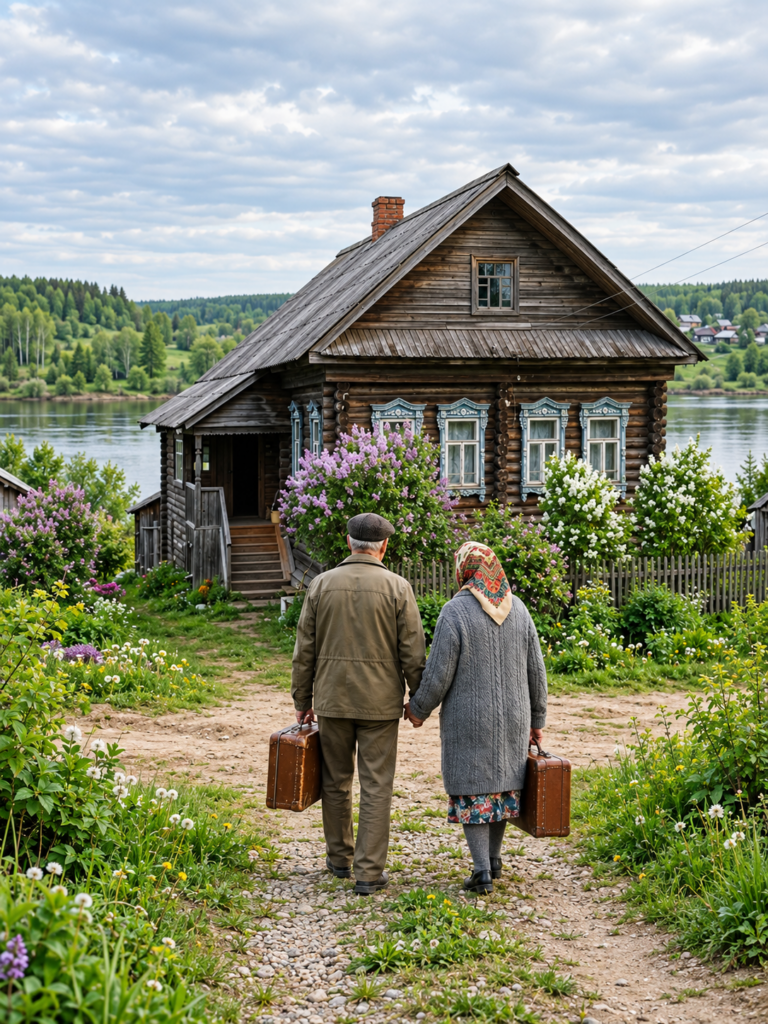
Part 1
Walter Mercer was seventy-five years old when he overheard his eldest son discussing how to sell his home.
His wife, Helen, was seventy-two.
They were sitting in their dark kitchen in Albany, New York, listening through a thin plywood wall as their son explained what should happen to them once the property was sold.
“The condo should go on the market before fall,” Daniel said. “Prices are still decent. The lake cabin is another matter. That little building’s falling apart, but the land could bring in some money.”
Walter knew that voice. It was the calm, confident tone Daniel used at the Manhattan bank where he worked as a senior manager.
His daughter-in-law, Rebecca, asked, “And what about your parents?”
“I found a private assisted-living community outside the city. Good reputation. Medical staff available. I’ve already spoken to them.”
“Honestly, they’d probably be better off there,” Rebecca replied. “Your dad’s not getting any younger.”
“Exactly. We just need to present it carefully.”
“What do you mean?”
“Tell him it’s temporary. Once he’s settled, it’ll be easier. And once the condo sells, there won’t be a reason to come back.”
On the other side of the wall, Helen sat perfectly still.
Her husband had one hand resting beside his heart medication.
Neither of them had been invited into this conversation.
Daniel continued.
“Sarah will understand. She always does. And Luke’s halfway across Alaska. He’ll agree to whatever paperwork we need if somebody explains it to him.”
Rebecca laughed softly.
“You’re making this sound like a business deal.”
“It is a business deal, in a way. Somebody has to be practical.”
Walter looked down at his hands.
They were rough, swollen at the knuckles, and marked with small scars from nearly forty years of factory work.
He had worked overtime to pay for Daniel’s college education. He had helped their daughter Sarah through school. He had bought tools, covered unexpected bills, and given up vacations when the family needed money.
He had even helped Daniel with the down payment on his own home three years earlier.
Now his son was planning to sell the only apartment Walter and Helen owned.
And he was discussing it as if his parents were already gone.
The worst part was the wall.
Walter had built it himself.
Thirty-eight years earlier, Daniel had turned twelve and begged for a room of his own.
Their apartment had only two bedrooms, and the three children had always been crowded together.
So Walter brought home plywood from the manufacturing plant, built a wooden frame, and divided part of the larger room.
He covered the wall in cheap floral wallpaper.
Daniel had been delighted.
He finally had his own desk, a narrow bed, a bookshelf, and a little room with a window.
Later, Sarah slept there.
Then Luke.
The wallpaper had been replaced twice over the years, but the plywood remained.
It let sound pass straight through.
Walter had built that wall to give his eldest son privacy.
Now it was telling him exactly what his son thought of him.
Earlier that Friday, Helen had spent most of the day making homemade meat dumplings.
They were an old family favorite, a recipe passed down from her mother.
She had rolled out the dough, mixed ground beef and onions, and lined up the finished dumplings on wooden boards dusted with flour.
Daniel and Rebecca had driven up from the New York City area for Mother’s Day weekend.
Their daughter Sarah, an accountant in Philadelphia, couldn’t come because of work.
Their youngest, Luke, was working a rotation at an oil facility on Alaska’s North Slope.
Still, Helen had made enough for everyone.
She had planned to freeze the leftovers and send a bag home with Daniel.
At dinner, Daniel ate two full plates.
“Nobody makes these like you, Mom,” he’d said.
Rebecca had eaten very little, explaining that she was watching her carbs.
They talked about traffic, rising property values, Daniel’s demanding job, and a new SUV someone at his bank had purchased.
Nobody asked about Luke.
After dinner, Daniel and Rebecca went into the guest room.
Walter and Helen cleaned the kitchen.
Then Walter developed the familiar discomfort beneath his shoulder blade and went looking for his medication.
The bulb above the stove had burned out earlier, so they left the kitchen dark rather than disturb their guests.
That was how they ended up hearing everything.
Now, after Daniel and Rebecca finally stopped talking, Walter remained seated.
Helen was holding a half-finished dumpling she’d forgotten to put away.
The dough had dried and cracked between her fingers.
“Walt?” she whispered.
He didn’t answer.
She watched him stare toward the dark window, where a few distant lights reflected on the Hudson River.
Then he stood.
He walked into the hallway, dragged a wooden stool beneath the overhead storage cupboard, and climbed onto it.
Helen hurried after him.
“Be careful. Your back.”
“Hold the stool.”
He reached into the cupboard and pulled out an old brown suitcase.
Then another.
They were the same suitcases they’d bought for a seaside vacation many years earlier.
The leather handles had cracked, and one had a wheel that never rolled properly.
Walter climbed down, breathing heavily.
He looked at his wife.
“Pack what you need.”
Helen didn’t ask where they were going.
After fifty years of marriage, she knew when her husband was still considering something and when he’d already made up his mind.
They packed by the light of her phone.
Warm sweaters, even though it was May.
Extra socks.
Two pairs of shoes.
Walter’s heart medication.
Their identification, Social Security information, property documents, and the folder containing the old papers for their lake cabin.
Helen tucked a family photograph between two sweaters.
It showed all five of them at the cabin years earlier.
Little Luke sat on Walter’s shoulders.
Daniel stood beside Helen, smiling toward the camera.
Sarah had one arm around her mother’s waist.
Helen removed the photograph from its frame because the glass wouldn’t fit safely in the suitcase.
Then she counted their remaining cash.
It was money Walter had withdrawn after their latest Social Security payments.
If they were careful, it might last until the next payments arrived.
Their savings were gone.
Three years earlier, Daniel had needed help buying a home closer to his work.
He’d told them it was the perfect opportunity, but he needed help with the down payment.
Walter and Helen had given him nearly everything they’d saved.
They hadn’t regretted it.
At the time, helping their successful eldest son had seemed like the natural thing to do.
Walter sat on the hallway stool and began tying his shoes.
It took him a long time.
Bending made his back hurt, and his fingers no longer worked as they once had.
From the guest room came Daniel’s steady snoring.
Walter paused.
Then he finished tying the second shoe.
Helen placed their apartment keys on the hook beside the front door.
She reached for a small grocery-list notepad.
“Should we leave a message?”
Walter shook his head.
“Let him figure it out.”
She put the pen down.
Then, after a moment, she picked it up again.
She wrote one word on a small piece of paper.
Alive.
She left it beneath the keys.
Walter noticed, but said nothing.
They opened the apartment door slowly, lifting the handle slightly to prevent the old hinge from squeaking.
Walter held the latch as he pulled the door closed.
The lock clicked so softly that even Helen barely heard it.
For some reason, that tiny sound stayed with her.
The elevator was out of service.
A handwritten notice had been taped beside the buttons earlier that week.
They carried their suitcases down five flights of stairs.
Walter went first, stopping at almost every landing to catch his breath.
Helen followed, carrying her suitcase with both hands.
On the third floor, a television was playing behind someone’s door.
She found herself worrying that they might wake the neighbors.
Then she realized there was nothing to hide.
They were two adults leaving their own home.
Still, they moved quietly.
Outside, the night air smelled of damp pavement and spring blossoms.
A taxi stood near the all-night convenience store on the corner.
The driver was sitting behind the wheel with his window partly open.
Walter approached.
“Could you take us to the bus station?”
The driver looked at him, then at Helen and the two old suitcases.
It was almost two in the morning.
“Sure. Get in.”
He climbed out and loaded their luggage himself.
His name was Sam, according to the identification card on the dashboard.
They drove through nearly empty streets.
Helen watched Albany slide past the windows.
The dark storefronts.
The familiar intersections.
The streetlights along the river.
She wondered whether she would ever come back.
At the station, Sam carried their bags inside.
He charged them only the fare shown on the meter.
Then he disappeared toward a vending area.
A few minutes later, he returned carrying two hot coffees and a packet of oatmeal cookies.
“First bus isn’t until six,” he said. “Might as well have something warm.”
Walter reached for his wallet.
“How much do we owe you?”
Sam shook his head.
“Nothing.”
He hesitated.
“My mom lives alone about an hour from here. I keep telling myself I’ll visit her more often.”
He looked at them.
“Don’t know why I keep putting it off.”
Then he nodded and returned to his cab.
Helen held the paper coffee cup between both hands.
The coffee was too sweet and not particularly good.
She drank it anyway.
The waiting room was almost empty.
A young man in a military jacket slept with his head against a backpack.
A woman rocked a restless toddler.
Somewhere near the entrance, a janitor pushed a mop across the tile floor.
Walter sat upright, watching the departure board.
He hadn’t yet told Helen where they were going.
When the bus toward Gloversville appeared, he stood.
“Come on, Helen.”
She lifted her suitcase.
“We’re going home.”
He meant Birch Landing.
It was a small, nearly forgotten hamlet near Great Sacandaga Lake, tucked into the southern Adirondack foothills.
Both Walter and Helen had grown up there.
Walter’s family had lived in an old timber farmhouse near a well.
Helen had lived across the road, in a house that had been torn down decades earlier.
There had once been a school, a general store, and a little community hall where Walter first asked Helen to dance.
Later, people moved away.
The school closed.
The store shut its doors.
Several houses were abandoned.
Walter’s mother had stayed in the farmhouse until she died.
After her funeral, Walter boarded up the windows.
For a while, he and Helen visited every summer.
Then they bought the small cabin nearer Albany and stopped making the journey.
The farmhouse sat empty for years.
Walter wasn’t sure whether it was still standing.
But he knew one thing.
It belonged to him.
After changing buses and finding a local ride as far as the county road, they were dropped near a weathered sign pointing toward Birch Landing.
The final stretch was on foot.
The dirt road was deeply rutted from the spring thaw.
Walter pulled his suitcase until one of its wheels broke off.
After that, he carried it.
Every few minutes, they stopped.
Helen took his medication bag to lighten the load.
Birds called from the trees.
The morning sun rose slowly over the wooded hills.
When they finally reached the crest of the road, the hamlet appeared below them.
A scattering of old houses lined the narrow street.
Some had sagging porches.
One had part of its roof missing.
Another had a young tree growing through the ruined front room.
Beyond them, the lake shimmered beneath the pale sky.
Walter’s childhood home stood near the far end.
Five windows faced the road.
All were boarded shut.
The roof was still intact.
Walter stopped walking.
“Well,” he said quietly. “She’s still standing.”
Helen looked at the house.
Then she looked at her husband.
“Walt, where’s the key?”
He stared at her.
He had no idea.
The last time he’d seen it was the day they locked the house after his mother’s funeral.
Fortunately, someone else remembered.
Nora Bennett lived two houses away.
She was an elderly widow who had known Walter and Helen since they were children.
Her little blue house had flower boxes beneath the windows and a dog that rarely barked.
Nora came outside when she heard footsteps.
She squinted toward the two figures standing near the abandoned farmhouse.
Then she raised a hand to her mouth.
“Helen? Helen Parker?”
Nobody had called Helen by her maiden name in more than fifty years.
For a moment, she couldn’t answer.
Nora looked at the suitcases, Walter’s exhausted face, and the broken wheel lying beside the road.
She didn’t ask questions.
Instead, she went back inside.
When she returned, she carried a large iron key attached to an old length of cord.
“I kept it,” she said. “Your mother gave it to me before she passed.”
Walter took the key.
“All these years?”
Nora nodded.
“Figured somebody might come back.”
Together, they pried the boards from the windows.
Rusty nails squealed as they came free.
When sunlight finally entered the house, it revealed a room that looked almost exactly as Walter remembered.
A wooden table.
Two benches.
An old dresser covered in newspapers.
A narrow metal bed.
A wall clock that had stopped years ago.
In the corner stood a large wood-burning stove, its brick surround cracked and dusty.
The house smelled of damp timber, old furniture, and mice.
Nora helped them start a small fire after checking that the chimney would draw.
At first, smoke drifted into the room.
Then it began moving properly through the flue.
The stove slowly warmed.
Nora brought potatoes, eggs, milk, half a loaf of bread, and an onion from her kitchen.
She sat with them while they ate.
She told them which neighbors were still alive, which families had moved away, and what had happened to the old general store.
She didn’t once ask why they’d arrived carrying everything they needed in two suitcases.
Before leaving, she glanced toward the overgrown garden.
“I’ve got extra tomato plants,” she said. “And some peppers. You’re welcome to them.”
That night, Walter and Helen made a bed using the old mattress and their folded clothes.
Walter fell asleep almost immediately.
Helen lay awake staring at the ceiling beams.
She thought about the dumplings in the freezer back in Albany.
She thought about Daniel finding the note.
And she wondered whether her daughter-in-law would tell everyone they’d finally lost their minds.
She cried quietly so Walter wouldn’t hear.
On the second day, she switched on her phone.
It struggled to find a signal.
Then it began vibrating.
Thirty-seven missed calls.
Most were from Daniel.
Two were from Rebecca.
There were text messages.
Mom, where are you?
This isn’t funny.
Dad isn’t thinking clearly.
I’ve contacted the police.
Then she played a voicemail.
Daniel sounded impatient.
“Mom, I don’t know what you two think you’re doing, but I don’t have time for this. Call me immediately. I’ve filed a missing-person report. The police are going to find you anyway.”
He didn’t ask whether they had food.
He didn’t ask whether Walter had his medication.
Helen turned off the phone and put it in a dresser drawer.
Five days later, a sheriff’s deputy arrived.
His white vehicle came slowly down the dirt road, raising a cloud of dust.
Nora watched from her porch.
The deputy introduced himself and explained that their son had reported them missing.
Daniel had also suggested that Walter was becoming forgetful and might not be capable of making safe decisions.
Walter listened.
“Forgetful?”
The deputy looked uncomfortable.
“That’s what the report says, sir.”
Walter straightened.
“Well, ask me whatever you need to.”
The deputy spoke with both of them, confirmed that they knew where they were and had chosen to come voluntarily, and asked whether they needed help.
Walter answered every question clearly.
By the time the deputy finished, he seemed satisfied.
“You’re both adults,” he said. “You have the right to live where you want. I’ll update the report.”
He called Daniel from the porch.
“Mr. Mercer? I found your parents. They’re safe. They’re staying at a family property, and they’re here by choice.”
Daniel’s voice rose through the phone.
“Dad, are you listening? You can’t stay out there. There’s no hospital nearby. I’ve already paid a deposit at the assisted-living place.”
Walter leaned toward the phone.
“Nobody’s taking us anywhere, Daniel. We’re home.”
“Dad, that place is practically falling down.”
“It’s standing.”
“You’re not being reasonable.”
“The deputy seems to think I know what I’m doing.”
There was a pause.
In the background, someone mentioned a meeting.
Daniel sighed.
“I’ve got people waiting. I’ll call tonight.”
He hung up.
Helen stood beside the stove.
She’d been hoping he might ask to speak to her.
He hadn’t.
The deputy gave them his number and advised them to contact the county services office if they needed support.
Then he left.
Daniel didn’t call that evening.
Or the next.
A few days later, Helen borrowed Nora’s phone and called Sarah in Philadelphia.
Her daughter sounded alarmed.
“Mom? Where are you? Daniel’s been frantic.”
“We’re at your grandmother’s old place.”
“Birch Landing? Mom, why? That place has been empty forever.”
“We’re managing.”
“Daniel’s only trying to help,” Sarah said. “You’d have doctors nearby. People looking after you. It might actually be better.”
Helen gripped the phone.
“Sarah, did you know?”
Silence.
She could hear voices from an office hallway.
A door opening.
Someone laughing in the distance.
“Sarah?”
Her daughter didn’t answer the question.
Finally, she said, “Mom, I’ve got a meeting. Can I call you tonight?”
Helen closed her eyes.
“Of course.”
Sarah never called back.
That afternoon, Nora brought over a box of tomato and pepper seedlings.
Helen took them without asking why.
They spent the evening planting.
Walter carried water while she worked along the rows.
The soil was hard, the garden badly overgrown.
By sunset, both were exhausted.
They didn’t talk about Sarah.
And they didn’t call Luke.
Their youngest son had left home at nineteen after dropping out of technical college.
Walter had called him irresponsible.
Daniel had called him a loser.
Luke had gone to Alaska to work with a friend, eventually finding employment in industrial maintenance at an oil operation.
He called on birthdays and holidays.
Sometimes he sent money.
But he rarely came home.
Walter assumed the distance suited him.
Perhaps Luke would support Daniel.
Perhaps he wouldn’t care at all.
Then one evening, Nora’s dog began barking.
Walter was sitting on the porch when he saw a man coming down the road.
The stranger was tall, broad-shouldered, and wearing a dark work jacket with reflective stripes.
He carried a suitcase.
At the gate, he stopped and looked at the house.
Then he saw Walter.
The man removed his knitted cap.
Short fair hair.
A weather-beaten face.
A rough blond beard.
Walter stood.
Helen came outside carrying a dish towel.
For several seconds, neither recognized him.
Then the man opened the gate.
“Hey, Mom. Hey, Dad.”
It was Luke.
Their youngest son.
And he’d come all the way from Alaska.
Part 2
Helen dropped the dish towel.
She crossed the yard faster than Walter had seen her move in years.
Luke barely had time to set down his suitcase before she wrapped her arms around him.
His jacket smelled of cold air, diesel fuel, and long-distance travel.
He had grown broader since she’d last seen him.
His shoulders were so wide that she could barely get her arms around him.
Luke stood stiffly for a moment.
Then he put one large hand against her back.
Walter remained on the porch.
He wanted to move.
He wanted to embrace his son.
But he couldn’t stop thinking about one thing.
In almost two weeks, he hadn’t once tried to call Luke.
Now the boy he’d spent years criticizing had crossed the country to find them.
At dinner, Luke ate quickly.
Helen kept putting more food on his plate.
When he finally pushed the plate away, he explained what had happened.
Daniel had called him at work three days after their parents disappeared.
The phone signal was poor, so Luke stepped outside into the freezing Alaskan air.
His brother talked for nearly twenty minutes.
Their father was confused.
Their mother had followed him somewhere.
The police were searching for them.
The Albany condo needed to be sold.
And Daniel wanted Luke to agree in writing that he wouldn’t challenge the family’s plans for the property.
“You’re out in Alaska,” Daniel had said. “Sarah’s in Philly. I’m the one who has to sort this out.”
Luke asked where their parents were.
“Probably Birch Landing,” Daniel admitted. “That’s the only place I can think of.”
“Have you gone there?”
“When am I supposed to go? We’re closing the quarter at work.”
Luke ended the call.
His rotation wasn’t due to finish for another three weeks.
When he asked his supervisor for emergency leave, the man warned him that he’d lose his bonus.
He might even lose his position.
There was a waiting list of experienced workers who would happily take it.
Luke listened.
Then he packed.
He flew out of Alaska, made his way across the country, and took a train north from New York City to Albany.
He still had a key to his parents’ condo.
He’d kept it on his key ring since the day he left home.
When he entered, the apartment was empty.
Everything looked normal.
The dishes were clean.
The furniture was in place.
A bag of his mother’s dumplings remained in the freezer.
Then he saw the note beside the front door.
He reached into his jacket pocket now and unfolded a small piece of paper.
He laid it on the table.
Alive.
Helen recognized her handwriting.
“You kept it?”
Luke shrugged.
“Figured it mattered.”
He’d carried the note through airports, train stations, and bus terminals.
He’d kept it in his pocket all the way to Birch Landing.
“How did you know we’d come here?” Walter asked.
Luke looked at him.
“Dad, you’ve been saying it for years.”
“Saying what?”
“That when you got old, you’d go back to Birch Landing. Every time you got fed up with your boss, or the neighbors, or one of us, you’d say you were going back to the old house.”
Walter remembered.
He hadn’t known Luke remembered too.
That night, they put their son on an old couch in the back room.
His feet hung over the end.
“It’s fine,” he said. “I’ve slept in worse places at work.”
Walter lay awake long after everyone else was sleeping.
He heard Luke moving through the house.
Every so often there was a dull tapping sound.
His son was knocking on the wooden beams, checking for soft spots and rot.
Walter recognized the sound.
His own father used to inspect timber that way.
The next morning, he found Luke on the roof.
His son was walking carefully along the ridge, examining the old roofing and the structure beneath it.
After a while, Luke climbed down.
“The rafters look solid,” he said. “Some of the roof boards are bad, and a few metal panels need replacing. If we leave it, you’ll have leaks when the summer storms come.”
He said it so matter-of-factly that Walter almost forgot how much work was involved.
Nora had some leftover roofing materials in her shed.
Luke found additional usable boards from an abandoned neighboring property after checking that nobody objected.
For four days, he worked from morning until evening.
Walter handed him tools.
Helen carried water and sandwiches.
Every time she looked up, she found herself wondering when her son had learned to do all this.
They knew he worked in Alaska.
They knew the hours were long and the weather was brutal.
But they had never asked much about the actual work.
To them, Luke was still the boy who had left school and disappointed his father.
Daniel had gone to college.
Sarah had become an accountant.
Luke had gone north.
At family dinners, Daniel sometimes referred to him as “our wandering oilfield cowboy.”
People laughed.
Luke usually wasn’t there to hear it.
Now the same man was repairing a roof with the confidence of someone who had spent years solving difficult problems in worse conditions.
On the fourth evening, a storm rolled in off the lake.
Rain hammered the roof.
The wind shook the shutters.
Helen carried an old bucket from room to room, waiting for water to begin dripping through the ceiling.
Nothing happened.
The roof held.
Luke sat at the kitchen table drinking coffee.
Walter lowered himself onto the bench opposite him.
For a long time, neither spoke.
Then Walter said, “You did a good job.”
Luke looked up.
He seemed almost surprised.
“Thanks, Dad.”
After that came the garden.
Then the fence.
Then the old well.
Luke cleared years of debris, repaired what he could, and arranged to have the water checked before they relied on it for drinking.
He also fixed Nora’s sagging gate and rehung the door of her garden shed.
Nora repaid him with homemade biscuits, apple pie, and enough food to feed three men.
She started calling him “hon.”
Helen once saw them sitting together on Nora’s porch, laughing over something the old woman had said.
Luke threw his head back and laughed.
Helen stopped beside the fence.
She couldn’t remember the last time she’d seen her son so happy.
Maybe she’d simply never paid enough attention.
Meanwhile, money was becoming a problem.
Helen counted their remaining cash each morning.
Groceries were expensive.
Walter’s prescription refills weren’t cheap.
The little country store was miles away, and transportation was difficult.
One morning, she opened an old cookie tin where she kept spare change.
Inside were several folded bills.
She assumed Walter had put them there.
A week later, more money appeared.
She found Luke outside carrying a bucket.
“Are you leaving money in that tin?”
He looked embarrassed.
“Mom, what else am I supposed to do with it?”
“It’s your money.”
“I know.”
“You might need it.”
“I’ve got enough.”
“Luke—”
“Mom.”
He gave her a small smile.
“Buy Dad’s medicine. Get some decent groceries. That’s what it’s for.”
Then he went back to work.
Toward the end of May, they planted potatoes.
Nora said it was later than she preferred, but the weather had been kind, and she thought they might still get a decent harvest.
Luke dug the holes.
Walter placed the seed potatoes.
Helen covered them with soil.
At first, Walter kept bending down to reach into the bucket.
It hurt his back.
Luke noticed.
Without saying anything, he began handing each potato directly to his father.
They moved along the row together.
It was a small thing.
But Walter noticed.
In June, on a hot afternoon, Walter collapsed.
He’d been working in the garden longer than Helen wanted.
She’d asked him several times to come inside.
He insisted he was fine.
Then he sat down on an overturned bucket and couldn’t stand again.
His face turned gray.
His lips looked bluish.
Helen screamed for Luke.
He came running from the shed.
He helped his father into the house, laid him down, and called for emergency medical help.
With the village so remote, help was not immediately available. A neighbor with a vehicle helped them get toward the nearest medical facility while they followed emergency advice.
Helen sat beside Walter, terrified by how weak he looked.
At the hospital, doctors kept him under observation for three days.
His heart condition needed close attention, they explained.
He had to take his medication regularly, avoid overexertion, and stop working outdoors in extreme heat.
One of the doctors looked toward Luke.
“Has he been under unusual stress?”
Luke glanced at his mother.
Helen turned toward the window.
During those three days, Daniel called Luke four times.
Luke ignored the first three calls.
On the fourth, he answered in the hallway.
Helen could hear only his side of the conversation.
“No.”
A pause.
“No, I’m not bringing them back.”
Another pause.
“Daniel, Dad’s in the hospital. Do you understand that?”
His voice became firmer.
“Then come up here yourself if you’re so worried.”
He listened.
Finally, he said, “Don’t call me about the property again.”
He ended the call.
When he returned to the waiting area, he sat beside Helen.
Neither spoke.
She reached for his hand.
It was rough and marked with little white scars.
Two fingers on his left hand were slightly crooked.
She noticed, but didn’t ask why.
Instead, she held his hand until the nurse came for them.
After Walter returned home, he became quieter.
He spent more time sitting on the porch, watching Luke work.
The roof was repaired.
The garden was growing.
The well was usable again.
But the old wood stove and chimney were still a concern.
Luke had noticed cracked masonry and problems with the flue.
If his parents stayed through winter, the heating system had to be safe.
He found an elderly retired mason named Mike living in a nearby town.
Mike was hard of hearing, complained about almost everything, and knew more about old fireplaces and brickwork than anyone Luke had met.
For two weeks, they worked on the stove’s brick surround, firebox, and chimney.
Walter watched from a chair and occasionally offered advice.
He remembered his father repairing the same heating system when he was a boy.
He’d carried bricks for him.
One at a time.
When the repaired stove was finally inspected and lit, the fire drew properly.
Warmth spread through the room.
Mike stood back, looking pleased.
“Should give you plenty more winters,” he said.
He grinned.
“Not that I’ll be around to check.”
By July, the farmhouse felt different.
The old rooms no longer smelled abandoned.
There were clean curtains in the windows.
Food in the kitchen.
Fresh vegetables growing behind the house.
A repaired rocking chair stood on the porch.
Nora’s dog had taken to sleeping beside their gate.
Some evenings, Walter, Helen, and Luke ate outside while the last sunlight stretched across the lake.
They talked about the weather.
The garden.
Firewood.
Repairs that still needed doing.
They rarely mentioned Daniel.
They rarely mentioned Sarah.
And Luke never asked why his parents had left Albany.
Helen knew he must be curious.
One evening in the middle of July, she went inside to make tea.
When she returned, Walter was leaning forward in his chair.
His expression was serious.
“Luke,” he said, “there’s something your mother and I need to tell you.”
Luke put down his coffee.
Walter began with the Friday before Mother’s Day.
He described the dinner.
The homemade dumplings.
The plywood wall he’d built when Daniel was twelve.
Then he repeated what he and Helen had heard.
The plan to sell the condo.
The decision to sell the lake cabin property.
The assisted-living community.
The suggestion that Walter should be told the move was temporary.
The assumption that Sarah would agree.
And the belief that Luke would sign anything placed in front of him.
Walter spoke carefully.
Only near the end did his voice begin to shake.
Luke sat motionless.
“He said I’d sign anything?”
Helen nodded.
“That’s what he said.”
Luke stood.
He walked toward the gate and remained there with his back to the porch.
Helen started to rise.
Walter caught her hand.
“Give him a minute.”
Eventually, Luke returned.
He sat on the porch steps, facing both of them.
“Why didn’t you call me?”
His voice wasn’t angry.
That made it worse.
“I had to hear from Daniel that you’d disappeared. He told me Dad was losing his mind. He told me the police were searching for you.”
Helen opened her mouth.
No words came.
Walter answered.
“We thought you might agree with him.”
Luke looked at his father.
“Or that you wouldn’t care,” Walter added. “You’ve always been far away.”
Luke nodded slowly.
“So that’s what you thought.”
He looked out at the water.
“Well, if we’re telling the truth, I should tell you something too.”
Daniel hadn’t merely asked Luke to support the assisted-living plan.
He’d offered him money.
If Luke helped persuade their parents, Daniel promised to make sure he received a third of the condo proceeds later and something extra from the cabin property.
“I didn’t say no right away,” Luke admitted.
Helen looked at him.
“I stood outside my work trailer in the freezing cold, thinking about it. Maybe Daniel was right. Maybe you’d actually be safer somewhere with medical staff.”
He paused.
“Then I remembered something Dad taught me.”
Walter looked up.
“When I was eight, we were at the lake cabin. You showed me how to graft a branch onto an apple tree.”
Walter remembered.
“You told me the tree would still be growing long after you were gone.”
Luke glanced at him.
“I kept thinking about that tree. The next morning, I went to my supervisor and told him I had to leave.”
Walter stared at his son.
Luke rubbed his hands together.
“Don’t make me out to be some kind of hero. I had doubts. I just couldn’t leave you here without knowing you were safe.”
For a while, nobody spoke.
Then Luke asked a question.
“Mom, do you remember Daniel’s wedding?”
Helen nodded.
Of course she remembered.
The ceremony in New York City.
The expensive reception.
The flowers.
The photographs.
She’d worn a blue dress she’d saved for months to buy.
“I was in the hospital that weekend,” Luke said.
She frowned.
“What?”
“There was an equipment problem at the site. We were outside in extreme cold for a long time while the crew dealt with it. I got frostbite.”
He held up his left hand.
“Doctors thought I might lose these two fingers.”
Helen stared at the crooked fingers.
“I called you from the hospital,” he continued.
She couldn’t remember.
“You answered, and I said, ‘Mom, I’m in the hospital.'”
He looked down.
“You told me it wasn’t a good time. You said Daniel was getting married and I should call later.”
Helen felt sick.
“I don’t remember that.”
“I know.”
Luke didn’t raise his voice.
“That’s kind of the point.”
He turned toward his father.
“And when I left home at nineteen, you wouldn’t come to the station.”
Walter stared at the floorboards.
“You said you weren’t going to waste your morning saying goodbye to a failure.”
He remembered saying it.
Every word.
“But when Daniel graduated from college, you took time off work and traveled to see him.”
Luke looked toward the lake.
“I’m not telling you this to make you feel bad.”
He hesitated.
“Actually, maybe part of me is. I’ve kept it to myself a long time.”
Then he continued.
His parents didn’t know he’d become the lead technician on his crew.
They didn’t know he’d received an award from his company after the emergency at the drilling site.
They didn’t know he’d once planned to build a home of his own.
“I even bought some plans,” he said. “Then I put them away. Didn’t have anybody to build it for.”
Helen was crying now.
Luke looked at both of them.
“You don’t really know me. You never asked much about my life.”
Walter stood slowly.
He needed the porch railing to steady himself.
He stepped down beside Luke.
For several seconds, he searched for something to say.
He had spent years believing that being a good father meant providing for his children and teaching them to be responsible.
He had never considered how easily responsibility could turn into judgment.
Finally, he placed a hand on Luke’s shoulder.
“I’m sorry, son.”
His voice cracked.
Luke said nothing.
He reached up and covered his father’s hand with his own.
They remained like that until the evening light began to fade.
The tea Helen had brought outside went cold.
That night, she couldn’t sleep.
She remembered Luke as a little boy.
He’d followed Walter everywhere, carrying nails, handing him tools, asking endless questions.
When Daniel got a new bicycle, Luke inherited the old one.
When Sarah needed money for a school trip, Luke was told he’d have to wait for his own.
He rarely complained.
They had interpreted his silence as indifference.
Now Helen understood that silence could mean something entirely different.
The next morning, Luke returned from the lakeshore carrying three fish.
Helen met him on the porch.
She took the fish.
Then she took his left hand.
The one with the damaged fingers.
She brought it to her lips and kissed the scars.
Luke blushed.
“Mom.”
She smiled through her tears.
He looked embarrassed and went off to split firewood.
A week later, Helen switched on her phone to check whether Sarah had tried to contact her.
Among the old messages was a new text from Daniel.
He planned to come to Birch Landing on August 16.
He’d found a buyer for the condo.
The buyer wanted to move quickly.
Sarah would come too.
They would settle the matter together.
As a family.
Helen read the message aloud.
Walter listened without lifting his eyes from his coffee.
Luke repeated the final words.
“As a family.”
He gave a quiet, humorless laugh.
Then he looked at his father.
Walter set down his cup.
“Let him come.”
Part 3
For the next three weeks, nobody talked much about Daniel’s visit.
But everyone prepared.
Helen washed the curtains and scrubbed the windows.
Luke cut the grass around the farmhouse and stacked firewood beneath the lean-to beside the shed.
Walter began waking earlier than usual.
He often sat on the porch for an hour, staring toward the road.
One Wednesday, he asked Luke to take him into town.
Helen went too.
They met with a local attorney who handled estate planning and property matters.
By the time they returned, it was nearly dark.
Nora asked where they’d been.
“Taking care of something,” Walter replied.
He didn’t explain.
On the morning of August 16, mist covered the lake.
Helen woke before dawn.
She mixed ground beef with onions and seasoning, rolled dough across the kitchen table, and began folding dumplings.
She made enough for everyone.
Daniel.
Rebecca.
Sarah.
Luke.
Walter.
Herself.
Exactly as she’d done that Friday in May.
Walter sat beside the window, peeling garlic.
His hands moved slowly.
Outside, Nora’s dog began barking.
A large black SUV appeared on the hill.
It moved carefully down the narrow road, rocking in the deep ruts, before stopping beside the farmhouse gate.
Daniel stepped out wearing expensive casual clothes and sunglasses.
He removed the glasses and surveyed the old buildings.
Rebecca climbed out on the other side.
Her white sneakers immediately sank into the soft ground.
She looked irritated.
Several neighbors appeared on their porches.
There hadn’t been such an expensive vehicle in Birch Landing for years.
Daniel opened the back door and removed a leather folder.
Walter walked toward the gate.
Luke stood to follow him.
His father raised a hand.
“I’ve got this.”
Daniel approached.
“Hey, Dad.”
“Hello, Daniel.”
“You look better than I expected.”
“I’m feeling better.”
“Good. Look, I’d like to get this sorted out before lunch. I’ve got a long drive home.”
He opened the folder.
The buyer was serious.
The offer was reasonable.
The assisted-living community was still willing to reserve a place for Walter and Helen.
Daniel had prepared documents authorizing him to handle the property sale.
He held out the papers and a pen.
“Just sign where I’ve marked. You won’t have to deal with any of the details.”
Walter didn’t take them.
“No.”
Daniel blinked.
“Dad?”
“I’m not signing anything.”
“Can we at least talk about it?”
“We can talk. But the condo isn’t for sale.”
Daniel sighed.
“We’ve been through this.”
“And we’re not moving into assisted living.”
“Dad, come on.”
Walter looked directly at his son.
“Your mother and I are staying here because we want to.”
Daniel glanced toward the farmhouse.
“You’re seriously planning to live in that place through winter?”
“Yes.”
“That makes no sense.”
Walter opened the gate.
“Come inside. Your mother’s making dumplings.”
Daniel looked uncertain.
Walter stepped aside.
“You said you wanted us all together. So let’s have lunch.”
Rebecca followed Daniel through the gate, carefully avoiding the mud.
Sarah arrived an hour later.
She’d taken public transportation as far as she could and arranged a ride to the county road. From there, she walked the final stretch carrying a travel bag.
Luke saw her coming.
He went out to meet her.
From the kitchen window, Helen watched him take his sister’s bag.
Sarah stopped walking.
Then she began crying.
Luke didn’t say anything.
He simply walked beside her.
When Sarah reached the porch, she threw her arms around her mother.
“Mom, I’m so sorry.”
Helen held her.
Sarah kept repeating the words.
Finally, Helen stepped back.
“Go wash your face, sweetheart. We’re about to eat.”
They gathered around the large table beside the stove.
Luke brought in an extra bench from the shed.
Helen served dumplings, sour cream, bread, and homemade pickles Nora had given her.
Daniel ate generously.
“Still the best dumplings anywhere,” he said.
Rebecca ate little.
Sarah barely touched her plate.
Luke remained quiet.
Daniel filled most of the conversation.
He talked about traffic, problems at work, and the difficulty of managing property from a distance.
He glanced around the farmhouse.
“You’ve done a lot of work here. I’ll give you that.”
His eyes moved toward Luke.
“But winter’s another story. What happens if Dad gets sick again? You’re miles from proper medical care.”
Walter said nothing.
Helen noticed that Daniel knew about her husband’s hospitalization.
Later, she learned that Sarah had quietly contacted Nora in July to ask whether their parents were safe.
Nora had told her about Walter’s health scare.
Sarah hadn’t called her mother.
But she had worried.
After lunch, Helen cleared the table and brought out coffee and a homemade apple cake.
Walter waited until everyone had been served.
Then he folded his hands.
“All right,” he said. “Now we can talk.”
Daniel reached for his folder.
“Dad, I know you’re upset. Maybe I didn’t handle things perfectly. But if you look at the numbers—”
Walter lifted a hand.
“Let me finish first.”
Daniel stopped.
Walter looked at his eldest son.
“Do you remember the room I built for you when you were twelve?”
Daniel frowned.
“What?”
“The little room behind the kitchen. You wanted your own space.”
“Yeah, I remember.”
“I built the wall out of plywood because that’s what I could afford.”
Walter paused.
“Plywood doesn’t keep sound out.”
Daniel stopped moving.
“That Friday before Mother’s Day, you and Rebecca were in that room. Your mother and I were sitting in the dark kitchen.”
Helen lowered her eyes.
Walter continued.
“We heard everything.”
Daniel’s face began to redden.
“The condo should be sold before fall. The cabin property should be sold too. We’d be moved into an assisted-living community.”
“Dad—”
“And you wanted to tell me it was temporary because you knew I’d object.”
Daniel stared at him.
Rebecca looked down at her plate.
“You said Sarah would go along with it. You said Luke would sign whatever you needed.”
Walter let the words sit between them.
Then he looked at Rebecca.
“You said we’d probably be better off with professional care.”
She swallowed.
“I really was thinking about your health.”
“Maybe you were.”
Walter’s voice remained calm.
“But you didn’t ask us what we wanted.”
He turned back toward Daniel.
“And you knew better.”
Daniel shifted in his chair.
“I was trying to solve a problem.”
Walter looked at him for a long moment.
“That’s exactly what hurt.”
Daniel frowned.
“What?”
“We weren’t a problem until you decided we were.”
No one answered.
Walter continued.
“You reported us missing. You told the police I was confused. Then you sent someone else to find us.”
“I had work.”
“I know.”
Walter nodded.
“You always have work.”
Then he looked at Sarah.
“Your mother called you. She asked whether you knew about the plan.”
Sarah’s eyes filled with tears.
“You didn’t answer,” Walter said. “You told her you’d call back. And you didn’t.”
Sarah bowed her head.
Tears fell onto her napkin.
Walter’s expression softened.
“I taught you to listen to your older brother. I spent years telling you Daniel knew what he was doing. Maybe I taught you the wrong lesson.”
He turned toward Luke.
His youngest sat quietly at the far end of the table.
“And Luke.”
Walter stopped.
He needed a moment before continuing.
“Luke was the one I thought would never amount to much.”
Luke looked up.
“I said terrible things to him. When he left for Alaska, I wouldn’t even go to say goodbye.”
Walter’s voice grew unsteady.
“But when we disappeared, he left his job. He lost money. Maybe he lost the job itself. He came here carrying a suitcase.”
He looked around the room.
“He fixed the roof. He helped make the water safe. He repaired the heating system. When I got sick, he made sure I got help.”
Daniel looked uncomfortable.
Walter continued.
“When Luke went to our apartment in Albany, he found a note his mother had left.”
He glanced at Helen.
“One word.”
Helen closed her eyes.
“Alive,” Walter said.
“He carried it all the way here.”
For a while, nobody spoke.
Then Walter straightened.
“Now I want you to hear what your mother and I have decided.”
Daniel leaned forward.
“We’re not selling the condo while we’re alive. It’s ours.”
He looked around the table.
“We’ve found a family who wants to rent it. A young couple with a child. The rent and our Social Security will help us live here.”
Daniel opened his mouth, but Walter continued.
“And the lake cabin isn’t being torn down. The little building may need work, but the apple trees are still there. I planted some of them with Luke when he was a boy.”
Luke lowered his eyes.
Walter paused.
“Last Wednesday, your mother and I met with an attorney.”
Daniel sat straighter.
“We’ve made arrangements for this farmhouse to belong to Luke. The deed paperwork has been signed and filed.”
Luke turned toward his father.
Walter raised a hand slightly.
“This isn’t a reward. He lives here. He’s put his time and money into this place. If he hadn’t come, the house might not have survived another winter.”
He looked at Daniel.
“And we’ve updated our wills. Our plans for the condo and the rest of what we own are written down.”
Daniel’s face tightened.
“So you’re cutting me out?”
Walter shook his head.
“I didn’t say that.”
He paused.
“But I want you to remember something.”
Daniel looked away.
“Three years ago, when you were buying your house, your mother and I gave you our savings for the down payment.”
“I know.”
“Everything we had.”
Daniel said nothing.
“We were happy to help. I don’t regret it.”
Walter’s voice became firmer.
“But don’t sit here talking about what you’re entitled to as though we’ve never given you anything.”
Daniel leaned back.
For a long time, he remained silent.
Then he picked up his folder.
“Right.”
He stood.
“So Luke’s running the family now.”
Luke didn’t respond.
Walter looked up at his eldest son.
“Nobody’s running the family, Daniel. That’s the point.”
Daniel gave a short laugh.
“Well, good luck out here.”
He turned toward Rebecca.
“Let’s go.”
She stood and pushed in her chair.
At the doorway, she stopped.
“Thank you for lunch, Helen.”
Helen nodded.
Rebecca followed her husband outside.
Daniel was already getting into the SUV when Helen called after him.
“Danny!”
He stopped.
She hadn’t called him that in years.
He turned.
Helen stood on the porch wearing her faded apron.
“Are you feeling all right, honey? Are you taking care of yourself?”
Daniel looked surprised.
For a moment, the self-assured bank manager disappeared.
He looked almost like the boy who had once begged his father for a bedroom of his own.
Then he nodded.
“I’m fine, Mom.”
He got into the car.
The SUV turned around and climbed the hill.
Helen watched until it disappeared.
Sarah stayed the night.
There was no convenient transportation back until the following day.
That evening, she helped Helen wash the dishes.
They stood beside one another in the small kitchen.
For a long time, neither spoke.
The next morning, Helen found Sarah outside carrying a shovel.
“Mom, Nora said the potatoes are ready to dig. Can I help?”
Helen looked at her daughter’s clean jeans and city shoes.
Then she handed her an old pair of work gloves.
They started in the garden.
Sarah was clumsy at first.
She cut through several potatoes with the shovel.
Helen showed her how to loosen the soil before lifting each plant.
Slowly, Sarah improved.
After a while, she stopped working.
“Mom?”
Helen straightened.
“Yes?”
“I knew about the plan.”
Helen didn’t answer.
Sarah stared at the shovel.
“Daniel called me in April. He told me about the assisted-living community and selling the condo.”
She swallowed.
“He said we’d all get something from the sale.”
Helen waited.
“You know how hard things have been with our mortgage. Mark and I have been struggling for two years. And when Daniel told me what he was thinking, I wanted to believe it was a good idea.”
She wiped her cheek.
“I convinced myself you’d be safer. That we weren’t taking anything from you. That it was just practical.”
She looked at her mother.
“When you called me from Nora’s phone, I knew what you were asking.”
Helen held a potato in one hand.
“I went into the restroom at work afterward and cried,” Sarah said.
“Why didn’t you call me back?”
“Because I was ashamed.”
Tears ran down her face.
“I didn’t know how to explain it.”
Helen placed the potato in the bucket.
“I knew, sweetheart.”
Sarah began crying harder.
“Can you forgive me?”
Helen looked at her daughter’s muddy gloves.
Her wet hair.
The woman who had always tried to please everyone and had ended up hurting the people she loved.
Then she nodded toward the unfinished garden.
“Keep digging. We’ve still got another row and a half.”
Sarah laughed through her tears.
She picked up the shovel.
They finished the row together.
Before Sarah left, Helen packed her a jar of raspberry preserves, some potatoes, and a container of homemade pickles.
Luke walked her to the county road.
At the gate, Sarah hugged her parents.
Walter placed a hand on her shoulder.
“Come back for Christmas,” he said. “The stove works properly now.”
Sarah nodded.
“I will, Dad.”
A week later, Helen received a text from Daniel.
It was short.
Mom, how are you and Dad doing? How’s his heart?
There was no mention of the condo.
No mention of paperwork.
No pressure.
Helen read the message several times.
Then she showed Walter.
He read it and handed the phone back.
For the rest of the evening, Helen struggled to write a reply.
She started one message about the repaired stove.
Deleted it.
Another about the garden.
Deleted that too.
She wanted to tell Daniel she loved him.
She wanted to ask why he’d hurt them.
She wanted to say that the door was still open, even if their trust wasn’t what it had been.
Finally, late that night, she typed one word.
Alive.
Daniel didn’t reply.
But two days later, Luke mentioned that his brother had called.
“What did he want?” Helen asked.
“Wanted to know if we needed money for firewood.”
“What did you say?”
“Told him we’re doing all right.”
Luke paused.
“He said to call if we need anything.”
Walter looked up from his newspaper.
“That’s all?”
“That’s all.”
There was no apology.
No dramatic reconciliation.
But it was the first time Daniel had spoken to Luke in years without making a joke at his expense.
In September, Luke took a temporary maintenance job at a heating plant in a nearby town.
The schedule gave him long stretches of time at home between shifts.
He told his parents he might return to Alaska in the spring if his old position was available.
If it wasn’t, he’d find something else.
“For now,” he said, “I’d rather stay close.”
Walter didn’t argue.
Helen began baking pies on the days Luke came home.
The firewood pile grew.
Then a second pile appeared beside the fence.
Nora inspected their work regularly and offered advice whether anyone asked for it or not.
By the middle of September, the three of them traveled back to Albany.
They needed to meet the young family who would rent the condo.
Luke went with them.
They followed the same route Walter and Helen had taken in May, but in reverse.
This time, the journey didn’t feel like an escape.
When they reached the apartment building, the elevator was working.
Luke unlocked the fifth-floor door.
The familiar smell of the old rooms greeted them.
Everything was where they’d left it.
Helen walked into the kitchen.
She opened the freezer.
The bag of dumplings was still there.
The ones she’d made that Friday before Mother’s Day.
They were stuck together in a solid frozen lump.
She looked at them for a moment.
Then she took the bag out and threw it away.
In the guest room, Walter stood beside the plywood partition.
A little piece of wallpaper had peeled away near the floor.
Underneath were pencil marks from the day he’d measured the wood.
Luke came over.
“I could take this wall out in a day, Dad. Make the room bigger for the tenants.”
Walter studied it.
Then he shook his head.
“Leave it.”
“Sure?”
“The family has a little girl. Maybe she’ll like having her own room.”
Helen packed her old sewing machine, a favorite blanket, and a pair of reading glasses she’d left on the windowsill.
She also found the empty frame from the family photograph.
She took the picture from her bag and placed it behind the glass.
All five of them together at the cabin.
Little Luke on Walter’s shoulders.
She wrapped the frame carefully.
The new tenants arrived that evening.
They were a young couple with a daughter about five years old.
The father worked at a local manufacturing plant.
The mother worked at a medical clinic.
Their little girl wandered into the small room behind the plywood wall.
“Mom!” she called. “I have my own window!”
Walter smiled.
Helen showed the young woman how the kitchen appliances worked and where the water shutoff was located.
Walter explained the utility meters and warned that the balcony door needed weatherstripping.
Luke checked the rental agreement with them.
Everything was settled.
As they prepared to leave, Walter stopped in the hallway.
He looked at the little stool.
The hook where the keys had hung.
The door he’d opened so quietly that night.
He remembered struggling to tie his shoes while Daniel slept in the next room.
Then he stepped into the corridor.
He closed the apartment door without trying to silence the latch.
The lock clicked loudly.
He didn’t mind.
On the journey back, they stopped at the lake cabin.
The little wooden building looked worse than Walter remembered.
Its green paint was peeling.
One corner had begun to sag.
Daniel had been right about the structure.
But behind it stood the apple trees.
Their branches were heavy with fruit.
Some apples were yellow.
Others were green.
One tree carried small red-striped apples.
Walter recognized it immediately.
It was the one he’d grafted with Luke when his son was eight.
Luke walked over, picked an apple, wiped it against his jacket, and took a bite.
He chewed slowly.
Then he removed his jacket, spread it on the grass, and began gathering apples.
His parents joined him.
They filled two large bags before their driver sounded the horn.
Back at Birch Landing, Helen gave half the apples to Nora.
She sliced the rest for drying and set some aside for pies.
Soon the farmhouse smelled of cinnamon and autumn fruit.
One evening, Helen walked across the road to the place where she’d grown up.
Her childhood house was gone.
Only a few moss-covered foundation stones remained beneath the weeds.
She stood where her mother’s kitchen had once been.
She remembered winter mornings when her mother warmed her boots beside the stove before sending her off to school.
Among the old stones, Helen found a small broken piece of patterned tile.
White, with a blue stripe.
She brought it home.
Walter turned it over in his hand.
“I remember this.”
Helen smiled.
“You used to come over and ask my mother for salt.”
Walter nodded.
“Yep.”
“We always had salt.”
“I know.”
He smiled.
“I wasn’t really there for the salt.”
Helen laughed.
It was the first time she’d laughed like that in months.
By late September, the nights were cold.
Luke and Walter strengthened the shutters.
They sealed gaps around the windows and repaired the porch railing.
The heating system worked well, but there was still plenty to do before winter.
Walter showed Luke how to care for the old wooden walls, pointing out repairs his father had made decades earlier.
In the shed, he found a worn wooden-handled tool his father had used.
The grip was smooth from years of work.
Walter handed it to Luke.
“My dad used this.”
Luke examined it.
“Still good.”
“Good tools usually are, if somebody takes care of them.”
They worked together until evening.
At one point, Luke looked toward his father.
“Dad, why didn’t you teach me more of this stuff when I was a kid?”
Walter stopped.
He considered the question.
“I guess I thought you weren’t interested.”
Luke smiled faintly.
“I followed you around every weekend.”
Walter remembered.
The little boy carrying nails.
Asking questions.
Waiting to be trusted with the hammer.
“I know,” he said.
After a while, he added, “I should’ve paid more attention.”
Luke nodded.
Then they went back to work.
A few mornings later, Walter woke before sunrise.
The house was warm.
Helen slept peacefully beside him.
He dressed quietly, stepped outside, and walked toward the gate.
Mist floated above the lake.
The grass was wet.
The air smelled of woodsmoke, fallen leaves, and apples.
Walter stood in the place where Luke had stopped with his suitcase that evening in May.
Inside the house, the two old brown suitcases rested on top of a wardrobe.
Luke’s suitcase sat beside them.
All three were empty.
Helen had suggested putting them in the attic.
Walter had said no.
He wanted to keep them where he could see them.
The little note Helen had written was folded carefully in a drawer.
The family photograph stood on the dresser.
Everything seemed to have found its place.
Behind him, the porch door opened.
Luke stepped outside wearing his work jacket and carrying an axe.
He was going to split firewood before his next shift.
He noticed Walter standing at the gate.
“Dad? You okay?”
“I’m fine.”
“Your heart?”
“Heart’s fine.”
Walter reached into his coat pocket.
“Come here a minute.”
Luke approached.
Walter opened his hand.
On his palm lay an old iron key attached to a faded cord.
The key Nora had kept all those years.
“My father made this,” Walter said.
Luke looked at it.
“He shaped it himself when they built the house. Same old lock’s still on the door.”
Walter turned the key over.
“When I moved away, my mother gave it to me. She said I’d come back someday.”
He looked toward the farmhouse.
“I didn’t come back when I should have. So Nora kept it safe.”
He held out his hand.
“Take it.”
Luke hesitated.
“Dad, you don’t have to—”
“I want you to have it.”
Walter took his son’s left hand.
The one with the two crooked fingers.
He placed the old iron key in Luke’s palm and closed his fingers around it.
Then he held his son’s hand for a moment.
Luke looked down.
He didn’t say anything.
He slipped the key into his jacket pocket.
The two men stood beside the gate, watching the morning mist rise from the water.
After a while, Luke went to chop firewood.
Walter remained where he was.
He thought about that night in May.
The dark apartment.
The two suitcases.
The five flights of stairs.
The door he’d closed so carefully because he didn’t want his son to hear him leaving.
He remembered the tiny click of the lock behind him.
At the time, it had sounded like the end of his life.
Now he understood it differently.
It had been the sound of leaving a place where he was no longer being heard.
Behind him, the axe struck wood.
One clean blow after another.
Helen appeared on the porch wearing a sweater over her nightgown.
The sun was rising above the lake.
“Walt!” she called. “You coming in for coffee?”
He turned toward her.
“Sure am.”
He walked across the yard.
The front door stood partly open, letting a little of the stove’s warmth escape into the cool morning air.
There was no need to lift the handle.
No need to hold the latch.
No need to worry about waking anybody.
Walter climbed the porch steps and went inside.
And this time, he left the door open.

