
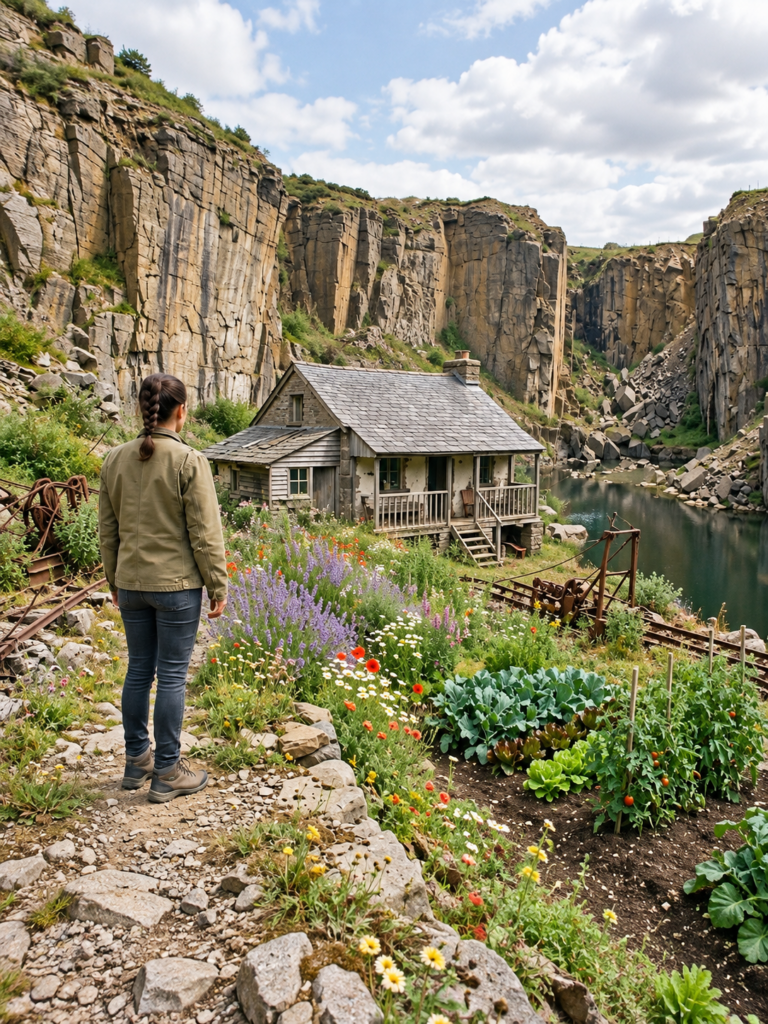
the man who emptied their accounts left her a rotting cabin in a forgotten quarry but the secret buried under the limestone let her reclaim every piece of the life he stole
Part 1
The bank took the house on a Tuesday. By Wednesday morning David was already on a plane to Aspen with the twenty-four-year-old assistant whose name Audrey had found stamped across the bottom of the project-restructure spreadsheet. The file had been sitting in a shared folder for nearly two years, quiet and neat, while David poured their coffee and asked how she slept. Every transfer had a date. Every offshore shell had a purpose. When the divorce papers finally arrived, Audrey received half of nothing and a single sheet of paper that still carried her grandfather’s shaky signature: the deed to an abandoned limestone quarry nobody had worked since the late sixties.
She drove the 2008 Civic west with the radio off. Rain smeared the windshield and the heater only managed a thin breath of warm air against her knees. The quarry road was little more than two ruts of gravel cut between bare trees. At the top of the last rise the land opened into a raw bowl of pale stone. Cliffs dropped a hundred feet to a pool the color of old tea. On a narrow ledge of slate and weeds sat the cabin her grandfather had never lived in. Calling it a cabin was generous. It was a square of weathered boards that had gone gray and soft at the corners.
Audrey cut the engine. The silence that rushed in felt heavy, not peaceful. She sat with both hands locked on the wheel until her knuckles ached. The duffel on the passenger seat held three sweaters, a pair of work boots, a toothbrush, and the hollow place in her chest that had not closed since the morning she opened the spreadsheet. She stepped out into the October wind. The thin coat she wore did little against it. She did not shiver. She walked.
The gate was chained with a padlock that had rusted into a single orange lump. She took the tire iron from the trunk and swung. The crack bounced off the limestone walls. On the second swing the chain parted. She shoved the gate wide and it scraped a groove in the dirt. Thistles caught at her jeans on the steep path. The porch steps groaned under her weight. The door hung from one hinge. When she pushed it open the smell met her first—damp earth, mouse droppings, decades of rot. Rain leaked through a hole in the roof and struck a warped floorboard in a steady drip.
She dropped the bag. Dust rose in the dim light. A rusted wood stove stood in the corner. An iron bed frame held no mattress. A hand-pump sink occupied a short counter. Audrey worked the handle. Nothing came. She pumped harder until a thin stream of brown water coughed into the basin and stopped. For three months she had not cried. Not in the lawyer’s office. Not when she handed over the keys to the four-bedroom house with the wraparound porch. But the muddy puddle undid her. She slid down the cabinet and pulled her knees to her chest. The sound that left her was not soft. It tore out and filled the empty room. She cried for the ten years she had spent building a life with a man who had already written the end of it. She cried because the cabin was freezing and she had no fire, no food, and no idea what came next.
The breakdown lasted twelve minutes. She checked her watch. The sun was dropping. If she stayed on the floor she would freeze. She stood, wiped her face on her sleeve, and walked outside to gather wood. Fallen branches and old support beams littered the quarry floor. She dragged them back until her hands were scraped raw. By six she had a pile beside the stove. A crumpled gas receipt served as kindling. The match caught. The flame hesitated, then climbed a dry piece of pine. Audrey sat on the floor and watched the heat push against her face while cold air still moved across her back. She unrolled the twenty-dollar sleeping bag she had bought at a pawn shop and lay facing the stove. Every time the wind shifted the cabin groaned on its stone foundation. Something small scratched inside the far wall. She hoped it stayed there. Sleep came in thin pieces. Each time the fire dropped she woke and fed it another chunk of salvaged wood. By the time the sky turned bruised gray she was already sitting up, breath white in the cold air.
Part 2
The first month taught her the price of soft hands. Blisters rose, broke, and sealed into thick callus. Her nails, once shaped and clean, chipped down to the quick and stayed stained with soil and grease. She patched the roof with discarded tin and tar she bartered for at a hardware store two towns over, paying with the last of her pawned jewelry. She learned that a line of crushed peppermint leaves kept the mice on their side of the room. She took the hand pump apart, scrubbed the check valve with steel wool, and got it drawing clear cold water again. Fifteen pounds left her. The soft curves of her old life thinned into lean muscle. When she looked in the cracked mirror above the sink she barely recognized the woman looking back. The eyes were harder. She liked the hardness. That woman could not be talked out of what she already knew.
By late November the cabin was watertight. A cord of wood stood against the south wall. Thick wool rugs from a thrift store covered the floorboards. Survival was no longer in question. A life still was. The silence of the quarry broke only for crows and the occasional crack of rock shifting in the freeze. She needed a root cellar before winter locked the ground. The soil near the cabin was clay packed with limestone gravel. She chose a spot against the stone foundation and started digging. Drive the pick. Loosen. Shovel. Repeat. The rhythm became something she could lean on. On the downswing she thought of David’s white teeth. On the crunch she thought of his lawyer’s smile. On the heave she thought of the spreadsheet that had named her worth nothing.
The rhythm broke on a Tuesday two months after she arrived. The pick struck metal and the shock ran up her arm into her shoulder. She dropped the tool and knelt. Ten inches down her trowel scraped a flat rusted plate, square and heavy, set with a thick iron ring. She sat back on her heels. The quarry had closed in the late sixties. Her grandfather had bought the deed in the seventies for almost nothing and treated it as a write-off. He had never come out here. No one had. Audrey soaked the seams with penetrating oil, drank a cup of black tea on the porch while the sky darkened toward snow, then returned with a crowbar. She wedged the tip into the hairline crack and leaned her full weight. For a long moment nothing moved. Then the seal broke with a dull crack and a puff of dry, dusty air rose from the seam. She grabbed the ring with both hands and pulled until the lid lifted and flipped onto the dirt.
The shaft went down about twelve feet. A wooden ladder, still sound, led to a concrete floor. Reinforced steel beams lined the walls. It was a bunker. Audrey fetched the tactical flashlight and climbed down. The air grew colder. At the bottom she swept the beam across a small chamber. In the center sat a massive olive-green metal trunk locked with a heavy brass padlock. Against the far wall, stacked on pallets, were rows of canvas bags of the kind banks once used. One bag had rotted at the corner. Neatly banded stacks of paper showed through the tear. Audrey crouched and pulled one free. The paper was thick and stiff. Series 1934. Bearer bonds. She wiped dust from the band and counted. The single bag held more than four million dollars in municipal and federal debt issued between 1934 and 1938. At least twelve more bags waited in the dark.
She hauled the first bag up the ladder and barred the cabin door for the first time in months. By the wood stove she sliced the canvas open and spent the night counting. The number she wrote on a scrap of cardboard with charcoal read 4.2 million. Down below there was more. She did not cry. She did not laugh. A cold practical weight settled over her. Finding the paper was an accident. Keeping it would be a fight. No bank would take a stack of 1934 bearer bonds from a woman living in a rotting cabin without questions that would reach David’s lawyers before the ink dried.
Part 3
At dawn she washed her face in the freezing basin, tied her hair back, and drove to the public library in Oak Haven. She logged onto a computer and spent four hours reading tax code, banking rules, and the thin modern history of bearer-bond redemptions. The bonds were still legal debt. To move them quietly she needed a corporate shell that did not point straight back to a destitute divorce. She needed a lawyer who preferred cash to questions.
She returned to the quarry in freezing rain. The Civic spun twice on the mud incline before she reached the cabin. Inside, the fire was out. She stood looking at the trapdoor she had covered with a rug. The bonds were the long game. She needed walking money now. She went back down the ladder with a hacksaw and cut the brass padlock on the trunk. The lid lifted. Inside, stacked in dull yellow rows, were rough-cast bricks stamped 1 kilo .999 fine gold. She counted the top layer and the ones beneath. Fifty kilos. She wrapped one brick in a wool sock, shoved it into the bottom of her duffel, and climbed out.
The next morning she drove three hundred miles, avoiding the main highways, until she reached a bleak stretch of industrial Pittsburgh. She parked three blocks from a storefront with a barred window and a faded neon sign that read Apex Coins and Metals. The man behind the bulletproof glass looked at the weight of the brick, not her face. He tested it with acid. It did not fizz. “Rough cast. Old. Where’d you get it?”
“An inheritance,” she said. She held his eyes. “Do you want it or should I walk down the street?”
He weighed it. Spot price hovered near sixty-four thousand. He offered fifty-five cash. She knew it was a robbery. She took it. Ten minutes later she walked out with a thick envelope inside her coat. She checked into a cheap motel, took the first hot shower she had had in two months, and bought a burner phone. It took three days of careful calls to find Hollis. He had been a corporate attorney until he was disbarred. Now he worked out of a strip-mall office in Cleveland and formed entities for people who preferred not to exist on paper.
They met in a diner booth. Hollis shredded a paper napkin while he talked. Audrey slid a stack of hundreds across the table. “I want three nested Delaware LLCs. Blind trust. Nominee director. Ultimate beneficial owner buried behind attorney-client privilege. The operating company is called Limestone Holdings.”
Hollis looked at her cracked knuckles and the flat stare she had learned in the quarry. He took the cash. “What’s the front?”
“Something that handles cash and does not ask where the metal came from.”
She stayed in the motel another week, buying prepaid cards and a rugged laptop. When she finally drove back up the muddy road the isolation no longer felt like a threat. It felt like a perimeter. She spent three days moving the gold. She chipped a new cavity beneath the cast-iron stove, lined it with concrete she hauled in fifty-pound bags, and transferred the bricks one by one. Unless someone dismantled a four-hundred-pound heater, the gold stayed invisible.
Hollis called a week later. The LLCs were active. Limestone Holdings had a commercial bank account. “A company with no revenue looks like a shell,” he said. “You need a front.”
Audrey already had one. Oak Haven Salvage sat on four acres of contaminated soil at the edge of a dying town. The owner, a man named Miller, was three years behind on taxes, short one working tow truck, and facing an EPA notice for a leaking diesel tank. Audrey walked into his trailer and set a rubber-banded stack of twenties on the greasy counter. “Twenty thousand. That clears the back taxes and buys you a ticket to Florida. Limestone Holdings takes the deed, the inventory, and the liabilities. Effective today.”
Miller looked at the cash, then at her eyes. He took the money. Within two weeks she owned the yard. Scrap came in. She paid cash. She sold the scrap to larger buyers who wired the LLC. In a locked shed she installed an industrial smelter. One gold brick at a time became unmarked industrial ingots logged as salvaged copper and brass. A buyer in Philadelphia who did not ask questions wired clean funds back to Limestone Holdings. The gold turned into taxable revenue. She did not buy a house or new clothes. She poured the money into the quarry. A crew from three counties over installed three-inch ballistic glass, a reinforced steel door, a buried fiber line, and a high-capacity solar array behind the tree line. They were paid triple and asked no questions. Outside, the cabin still looked like it was dying. Inside, the floor was solid oak, the roof was sealed, and six thermal cameras watched the rim.
Part 4
Six months to the day after David locked her out of the house, Audrey sat in an ergonomic chair and watched snow fall on the limestone cliffs through ballistic glass. The Limestone Holdings ledger showed eight hundred forty thousand dollars. She had not touched the bearer bonds. She sipped pour-over coffee and felt, for the first time, the absence of the old hollow ache. One of the monitors flashed red. A heat signature moved up the access road. It was a black 2026 BMW X7. The car stopped at the new steel gate. David stepped out in a wool overcoat and Italian shoes that sank into the mud. He looked thinner. The easy confidence was gone. He kicked the lower bar, then pulled out his phone. Audrey’s burner buzzed. She did not answer. She watched him.
She logged into the secure server Hollis had arranged and pulled a background check on David’s primary LLC. The SEC had opened a preliminary inquiry into one of his offshore partners a month earlier. Two of his real-estate developments had filed Chapter 11. His liquid capital was frozen. The assistant no longer appeared on his social media. He was not here to gloat. He was bleeding.
David pressed the call box. Audrey let the dead air hang for thirty seconds, then keyed the intercom. “You’re trespassing.”
His voice came back thin. “Open the gate. We need to talk.”
“The court already split the assets. You got the gold mine. I got the shaft.”
“My lawyers did an asset sweep. You bought the salvage yard cash. You bought the two hundred acres around this place cash. You formed a Delaware trust. Where did the money come from?”
She smiled without warmth. He could not imagine she had survived him, let alone moved past him. “If you have proof of hidden assets, file a motion. Until then, get off my property.”
He hit the call box with his palm. “You siphoned my money before the divorce. You played the victim while you robbed me.”
The projection was almost funny. She had spent ten years watching him do exactly that. Audrey stood, unlocked the oak cabinet, and took out the matte-black twelve-gauge registered to Limestone Holdings as site security. She racked the slide. The sound carried. She stepped onto the porch and walked to the quarry rim. David looked up through the falling snow. He saw the gun and the woman holding it. She did not raise the barrel. She only held the remote for the magnetic lock where he could see it. He stepped back, got into the BMW, and reversed hard. The tires spun, then caught. The car fishtailed down the road. Snow began to cover the tracks before he was out of sight.
Audrey locked the steel door and set the shotgun against the desk. She looked at the bank balance, then at the rug that hid the trapdoor. David’s desperation was a clock. Desperate men hired cheap investigators and trespassed at night. She was not going to wait inside a reinforced cabin for him to try again. He had taught her that paper was a better weapon than fists. She packed one million dollars in 1934 bearer bonds into a leather briefcase and drove to Cleveland.
Hollis was eating a pastrami sandwich when she set the case on his desk and opened it. He lifted a ten-thousand-dollar certificate and held it to the light. “These belong in a museum. Or an evidence locker. Where did you get this volume of unregistered paper?”
“That falls under privilege. Your job is to process them.”
“No domestic bank will touch this without flagging the FBI.”
“I don’t need a domestic bank. You have contacts in Geneva. Private managers who take a flat twenty percent to digitize paper ghosts and wire the rest into corporate trusts.”
Hollis looked at the briefcase, then at her. Greed won. “Three weeks. My fee doubles.”
“Take it out of the twenty.” She left before he could argue.
For twenty-one days she chopped wood, watched the cameras, and fed the stove. On the twenty-second day the laptop chimed. An offshore wire had cleared. Eight hundred thousand dollars of clean capital sat in the Limestone Holdings account. Audrey called Hollis. “Initiate phase two.”
David’s real-estate LLCs were defaulting. When a developer goes under, the debt is packaged and sold at auction for pennies. Audrey did not want a new house. She wanted the paper that owned what was left of his.
Part 5
Hollis attended the closed-door auction as proxy for Limestone Holdings. The major banks were eager to clear David’s toxic portfolio. For one-point-six million, combining salvage revenue with the newly digitized bond money, Audrey purchased the entirety of his defaulted corporate debt. She owned the mortgage on the Aspen time-share. She owned the liens on the leased luxury vehicles. She owned the primary claim on his frozen assets. The trap did not merely snap. It locked.
The final meeting was set for a bleak Tuesday in November in a federal arbitration room in Chicago. Audrey drove in a charcoal suit she had bought with salvage money. She left the gloves off. She wanted the calluses visible. David sat on one side of the long table between two tired lawyers. His skin was gray. The designer suit hung loose. He chewed a thumbnail and stared at his legal pad.
The door opened. Audrey’s heels clicked across the polished floor. She took the seat directly across from him. David looked up. For a moment his face simply failed to process what he saw. “What are you doing here? This is a closed proceeding.”
The mediator adjusted his glasses. “Mr. Vance, this is the primary shareholder of Limestone Holdings. They purchased your consolidated debt portfolio. They requested to present the restructuring terms in person.”
Color left David’s face. He looked at the suit, then at her rough knuckles resting on the table. Audrey spoke softly enough that only he could hear. “Project restructure.”
He lunged. His lawyers caught his arms and pulled him back. “You stole from me! I’ll kill you. I’ll take it all back.”
She did not flinch. She opened her folder and slid a single sheet across the table—an asset-seizure demand covering the watches, the cars, and the remaining cash in his personal accounts. “Sign it. Or go to federal prison for bankruptcy fraud. You have thirty seconds.”
He stared at the paper. A broken sound left him. With a shaking hand he picked up the pen and signed. Audrey took the sheet, placed it in the folder, and stood. She did not smile. She walked out.
That night she sat on the porch of the cabin. Wind moved through the limestone cliffs. Inside, the wood stove crackled. She poured a glass of bourbon and raised it once toward the dark quarry. The hollow place in her chest was gone. She had not become the man who had emptied their accounts. She had simply refused to stay buried in the hole he left her. The land her grandfather had bought for almost nothing and never visited now held a quiet, solid life. The cameras watched the rim. The gold slept under the stove. The bonds were clean paper in a Geneva trust. David’s signature sat in a folder on her desk. None of it felt like victory so much as the simple fact that the ground under her boots finally belonged to her, and she intended to keep it.
She took a long drink and listened to the wind. Somewhere below the cliffs a rock shifted in the cold. The sound was small and ordinary. For the first time in a year it did not feel like a warning. It felt like the land settling into something that would last.


