
PART 2
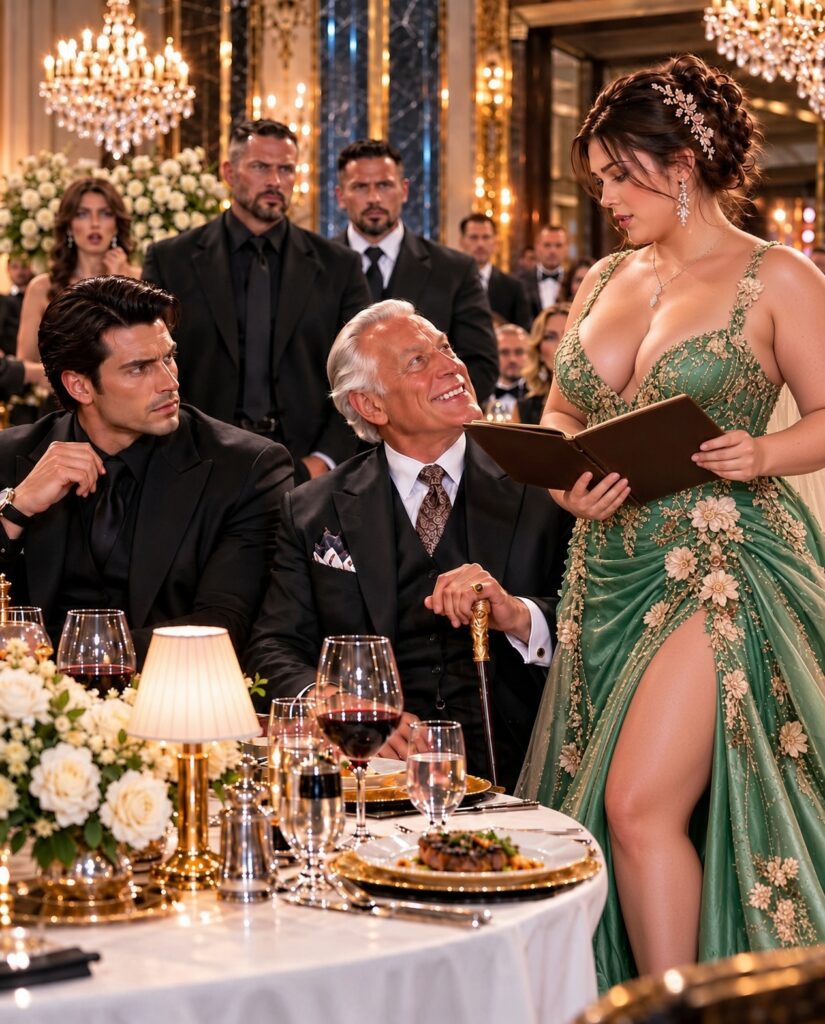
For several seconds, Don Salvatore Rossi said nothing.
Neither did anyone else.
The silence at the table seemed to spread through Ilvento in widening circles. At the next booth, a man froze with his wineglass halfway to his mouth. Two servers stood near the service station pretending to study a reservation sheet. Even Richard had stopped hovering, though I could practically feel his panic from twenty feet away.
Gabriel looked at me as if I had just stepped out of a photograph he had spent years trying to understand.
His father stared longer.
Then, very slowly, Salvatore leaned back.
The hard line of his mouth shifted.
Not quite a smile.
Something older than a smile.
Recognition, perhaps.
He answered in the same dialect.
“Who taught you to speak like that?”
I picked up the pitcher again.
“A man who complained even more than you do.”
Gabriel lowered his eyes.
I could have sworn he was hiding a laugh.
Salvatore noticed.
“You find something amusing?”
“No, Papa.”
“You always were a bad liar.”
That did it. Gabriel’s mouth twitched.
The room began breathing again.
I should have walked away then. I had other tables, a manager approaching cardiac collapse, and a kitchen that was already fifteen minutes behind.
But Salvatore tapped one finger against the menu.
“Your teacher,” he said. “Where was he from?”
“Near Palermo.”
“That tells me nothing.”
“He said anybody who needed a map wasn’t worth explaining it to.”
This time Salvatore did smile.
It transformed him.
For an instant, the feared old man disappeared beneath the years, and I saw someone sitting on a stone wall under a Sicilian sun, arguing with a friend.
“What was his name?”
“Cosenza.”
The smile vanished.
Not dramatically.
It simply left.
Beside him, Gabriel became still.
I noticed because Gabriel Rossi was always still. His ordinary calm was deliberate, controlled. This was different.
This was surprise.
“First name?” Salvatore asked.
“Antonino. He hated being called Anthony.”
Salvatore’s hand tightened around the head of his cane.
Gabriel turned toward him.
“Papa?”
Salvatore ignored him.
“Antonino Cosenza.”
“Yes.”
“From Via della Rosa?”
My heart gave a strange little beat.
Mr. Cosenza had mentioned that street.
Not often.
He usually talked about Sicily the way people talk about dreams after waking—certain pieces vivid, everything else blurred around the edges.
A church bell.
A fig tree.
A yellow house.
A street called Via della Rosa where, according to him, every family knew every other family’s business before breakfast.
“Yes,” I said carefully. “I think so.”
Salvatore looked down at the white tablecloth.
When he spoke again, he used English.
“Bring the steak.”
I waited.
“With garlic?”
He gave me a tired glare.
“Do not become arrogant because you speak correctly.”
“So that’s a yes?”
Gabriel covered his mouth with his hand.
Salvatore pointed toward the kitchen.
“Go.”
I went.
Richard intercepted me before I made it ten feet.
“What happened?”
“They’re ordering.”
“You insulted Salvatore Rossi.”
“I translated his preferences.”
“You told him to go eat chickpea fritters.”
“In a respectful dialect.”
Richard stared at me.
“There is a respectful way to say that?”
“Apparently.”
His eyes moved toward the booth.
Salvatore was speaking quietly to Gabriel now.
“What did he say to you?”
“He asked who taught me Sicilian.”
“And?”
“I told him.”
“And?”
“Richard, Table Twelve has been waiting for their second bottle of Burgundy for seven minutes.”
“Tessa.”
“I have work.”
I slipped around him.
My hands didn’t start shaking until I reached the kitchen.
Chef Marco was standing beneath the heat lamps with both palms on the stainless-steel counter.
“Tell me,” he said, “that you did not just criticize my food in front of Salvatore Rossi.”
“He criticized it first.”
“That is not the comforting answer.”
“He wants bone-in steak, charred hard outside, rare inside. Garlic. Olive oil. Nothing fancy.”
Marco looked offended.
Then thoughtful.
Then offended again.
“I have a thirty-day dry-aged porterhouse.”
“Perfect.”
“It costs two hundred and forty dollars.”
“He came to an eight-hundred-dollar restaurant.”
“True.”
“And he wants potatoes.”
“He said that?”
“No, but Mr. Cosenza always wanted potatoes.”
Marco stared at me.
“What does your old neighbor have to do with Salvatore Rossi?”
I looked through the small rectangular kitchen window toward the dining room.
“I have absolutely no idea.”
That was the truth.
But something had begun scratching at the back of my memory.
A sentence.
A name.
An envelope.
I couldn’t catch it.
Not yet.
Chef Marco took Salvatore’s meal personally.
He grilled the steak himself. He crushed garlic with the flat side of his knife, warmed it slowly in olive oil, added rosemary, then stopped.
“No rosemary,” I said.
He frowned.
“Why?”
“Trust me.”
He sighed as though I had asked him to abandon civilization.
“Fine. No rosemary.”
Twenty minutes later I carried the plate out.
Salvatore smelled it before I set it down.
His eyes closed.
Just briefly.
When they opened again, they looked strangely bright.
“Potatoes?” he asked.
“I told you he wanted potatoes,” I muttered toward the kitchen.
Gabriel heard me.
“You guessed?”
“I had a difficult teacher.”
Salvatore cut into the steak.
He chewed.
Everyone near us seemed to wait.
Finally, he nodded once.
“Acceptable.”
“High praise,” Gabriel said.
“Do not exaggerate.”
Gabriel looked at me.
“From him, that’s practically a standing ovation.”
Salvatore gave his son a look that should have silenced him.
It didn’t.
For the first time in three months, I saw Gabriel Rossi look relaxed.
Not happy exactly.
But younger.
It made me wonder how much effort it took him to look composed all the time.
The rest of dinner passed without disaster.
Salvatore criticized the bread but ate three pieces.
He complained that the potatoes needed more salt and then finished all of them.
He called the espresso “American sadness,” ordered another, and drank that too.
Gabriel had his usual steak but barely touched it.
Instead, he kept watching his father.
Not nervously.
Curiously.
As though he was seeing something he hadn’t seen in years.
When I brought the check, Salvatore didn’t look at it.
Instead he asked, “Antonino. Is he still in New York?”
That was when I understood the question I’d been hoping he wouldn’t ask.
“No.”
Salvatore’s eyes lifted.
“He died two years ago.”
The restaurant continued around us—glasses touching tables, silverware against china, a low murmur of conversation—but something at our booth became very quiet.
Salvatore looked toward the window.
Outside, Manhattan glittered with reflected lights.
“How?”
“Pneumonia after a long winter. He was eighty-six.”
“Was he alone?”
“No.”
I didn’t know why I answered so quickly.
Maybe because I understood what he was really asking.
“No,” I repeated. “He had people around him.”
Salvatore nodded.
“He had family?”
“Not by blood. At least none that I knew.”
A shadow crossed his expression.
I remembered Mr. Cosenza saying something once while I was putting groceries away in his tiny apartment.
Blood makes relatives. Choice makes family.
At the time, he’d been angry because I’d bought the wrong canned tomatoes.
With him, wisdom and grocery complaints often arrived together.
“He had friends,” I continued. “Neighbors. People from his church. Me.”
Salvatore looked at me.
“You?”
“I lived across the hall.”
“For how long?”
“Six years.”
“And he taught you our language?”
“His language, he would have said.”
That earned another faint smile.
“Yes,” Salvatore murmured. “He would.”
There it was again.
Not curiosity.
Knowledge.
“You knew him,” I said.
Gabriel glanced toward his father.
Salvatore’s hand rested on the cane.
“We were boys together.”
Something inside me clicked into place.
Not completely.
But enough to hear the mechanism turning.
“You were friends?”
Salvatore looked down.
“Once.”
One word.
Heavy with years.
I wanted to ask what happened.
I wanted to ask why Mr. Cosenza had never mentioned him.
I wanted to ask why Gabriel had gone so quiet.
Instead, I picked up the check folder.
“Would you like anything else?”
Salvatore shook his head.
Gabriel reached for his wallet.
His father stopped him.
“I invited you.”
“You haven’t invited me anywhere since 2009.”
“I am inviting you now.”
Gabriel raised an eyebrow.
“You’ve been complaining for ninety minutes.”
“That is how you know I am enjoying myself.”
I turned away before either of them could see me smile.
At the service station, Richard seized my elbow—not hard, just desperately.
“He likes you.”
“He tolerates me.”
“Do you understand what this could mean?”
“Hopefully a good tip.”
Richard lowered his voice.
“It could mean regular private events. Catering. Corporate dinners.”
There it was.
The arithmetic of Ilvento.
Every human interaction eventually became a revenue projection.
“I think he came here to have dinner with his son.”
Richard blinked.
“Yes, but—”
“Then maybe let him.”
I walked away.
When I returned to clear the table, Salvatore was standing.
Up close, his age showed more than it had when he entered. Getting out of the booth took effort. Gabriel moved instinctively to help him, but Salvatore waved him away.
“I can stand.”
“I know.”
“Then stop hovering.”
“I wasn’t hovering.”
“You have been hovering since 1998.”
“I was four.”
“You started early.”
They looked at each other.
And suddenly I understood something obvious that all the newspaper stories had managed to erase.
Whatever else the Rossis were, tonight they were also a father and son who did not quite know how to talk to each other.
Salvatore buttoned his coat.
Then he turned to me.
“When did Antonino die?”
“February.”
“What day?”
“The seventeenth.”
He nodded.
He knew that date now.
I could tell he would keep it.
“Thank you for the dinner.”
“Thank Chef Marco.”
“The chef listened to you.”
“That might be the first time.”
Salvatore reached into his coat.
Gabriel immediately said, “Papa.”
“I am paying the bill.”
“You’re about to embarrass her.”
Salvatore looked offended.
“I have not done anything.”
“You’re reaching for cash with the expression you use when you intend to solve a problem nobody asked you to solve.”
Salvatore withdrew his hand.
I liked Gabriel more in that moment than I had in three months of serving him.
“I don’t need anything,” I said.
The old man’s gaze went to my face.
Then, very briefly, to my shoes.
Old black restaurant flats, polished carefully to hide the cracking leather.
“I did not say you did.”
“No. But your son has apparently studied your face.”
Gabriel almost smiled.
Salvatore grumbled something in Sicilian that roughly translated to everyone has become unbearable.
Then he walked away.
Tap.
Tap.
Tap.
The entire restaurant seemed to exhale once the doors closed behind him.
Richard immediately hurried toward the table.
“How much did they leave?”
I hated that this was the first question.
Gabriel had paid after all.
His usual two hundred dollars rested beneath the espresso cup.
Nothing more.
I felt unexpectedly relieved.
Then I noticed a business card beside it.
No handwritten invitation.
No dramatic message.
Just Gabriel Rossi’s name and a phone number.
On the back, in neat blue ink:
If you are willing, my father would like to talk about Antonino. No obligation.
I slipped it into my apron.
Richard leaned over.
“What does that say?”
“Private.”
“Tessa.”
“Richard.”
He narrowed his eyes.
I smiled sweetly and carried the dishes away.
I didn’t call.
Not that night.
Not the next day.
I told myself I was busy.
That part was true.
I worked a double Saturday, slept through most of Sunday, and spent Monday morning at St. Catherine’s Hospital arguing about a billing code that had somehow turned a manageable medical payment into something approximately the price of a small used car.
By Tuesday, Gabriel’s card had migrated from my apron to the little ceramic bowl beside my apartment door.
By Wednesday, I had convinced myself that getting involved with the Rossi family’s memories was a terrible idea.
By Thursday, Gabriel returned at eight.
Alone.
Same booth.
Same rare steak.
Same black coffee.
He didn’t mention his father.
Neither did I.
When I brought the check, he said, “He has asked whether you called.”
“I assumed he was capable of surviving disappointment.”
“He is discovering the experience.”
I smiled.
Gabriel studied me.
“You don’t owe him anything.”
“Good.”
“I mean that.”
Something in his tone made me stop.
“I know.”
“He has a habit of believing every unanswered question can be solved by persistence.”
“Can it?”
“No.”
The answer came too quickly.
There was history inside it.
He looked down at his coffee.
“Some questions become heavier the longer you carry them.”
I thought about Mr. Cosenza.
About the little apartment across the hall from mine.
About the last winter.
After his funeral, his church friends and I had cleaned out the place together. Most of his belongings went to charity.
But he had left me a wooden recipe box.
Inside were dozens of cards written in his shaky block letters.
Sauces.
Bread.
Fried chickpea cakes.
A lemon cookie recipe that had never once worked the way he promised it would.
And something else.
My heartbeat changed.
Gabriel noticed.
“What?”
“I remembered something.”
“What?”
I barely heard him.
Because now I could see it.
A cream-colored envelope.
Tucked beneath the recipes.
Mr. Cosenza had made me promise not to throw it away.
I had laughed because the envelope looked ancient even then.
“What am I supposed to do with it?” I’d asked.
His answer came back to me with perfect clarity.
Keep it.
For what?
For the day the past becomes stubborn enough to knock on your door.
I’d assumed he was being dramatic.
Mr. Cosenza enjoyed being dramatic.
But there had been a name written on that envelope.
Not Antonino’s.
Someone else’s.
I looked at Gabriel.
“I need to go home.”
His expression sharpened.
“Is something wrong?”
“I don’t know.”
I untied my apron.
“Tessa?”
I turned back.
For the first time since I’d met him, Gabriel Rossi looked uncertain.
“What did you remember?”
I swallowed.
“A letter.”
His face changed.
“From Antonino?”
“I think so.”
“To whom?”
I could already see the handwriting.
Faded blue ink.
Two words.
Salvatore Rossi.
And underneath them, in English:
Only when he is ready.
I stared at Gabriel.
“I think Mr. Cosenza left something for your father.”
PART 3
The recipe box was exactly where I had left it.
Back of the highest kitchen cabinet.
Behind a blender I hadn’t used since deciding smoothies required more optimism than I possessed.
I dragged a chair across the floor, climbed onto it, and reached until my fingers touched wood.
Dust came down with the box.
I sneezed.
Then nearly dropped thirty years of handwritten recipes onto the stove.
“Excellent,” I muttered. “Very dignified.”
My apartment was small enough that the kitchen table served as dining room, desk, laundry-folding station, and place where unopened bills went to make me feel guilty.
I cleared a stack of envelopes aside.
The wooden box sat in front of me.
For a minute, I didn’t open it.
I missed him.
Grief wasn’t sharp anymore.
That had surprised me.
In the beginning, I’d thought missing someone would always feel like falling.
Instead it had become quieter.
A chair you still expected to see occupied.
A joke you knew exactly how someone would answer.
A jar of terrible imported olives in the grocery store that could suddenly make your eyes sting.
I lifted the lid.
There they were.
Recipes in Mr. Cosenza’s square handwriting.
Pasta con le sarde.
Panelle.
Orange salad.
Tomato sauce with three angry underlines beneath NO SUGAR.
I smiled.
Beneath them lay the envelope.
SALVATORE ROSSI.
Only when he is ready.
I didn’t open it.
For one thing, it wasn’t mine.
For another, I could practically hear Mr. Cosenza telling me that curiosity was the beginning of bad manners and badly cooked pasta.
My phone rang.
Gabriel.
I’d given him my number only twenty minutes earlier.
I stared at the screen, then answered.
“I found it.”
There was a pause.
“You’re sure?”
“Your father’s full name is on it.”
Another pause.
Longer.
“Have you opened it?”
“No.”
“Thank you.”
The sincerity of that surprised me.
“When does he want it?”
“He doesn’t know about it yet.”
“You didn’t tell him?”
“I wanted to make sure it existed.”
“That sounds suspiciously sensible.”
“I have rare moments.”
I traced the corner of the envelope.
“What happened between them?”
Gabriel didn’t answer immediately.
“I know pieces.”
“Enough pieces to explain why an eighty-six-year-old man gave me a letter for someone he hadn’t seen in decades?”
“Maybe.”
I waited.
Gabriel sighed.
“My father grew up with Antonino. Their families lived close to each other. They came to New York at different times. When they were young, they worked together.”
“At what?”
“Whatever they could find at first. Produce markets. Construction. Deliveries.”
His tone was careful.
There were parts of Rossi history he did not intend to discuss, and I didn’t push.
“At some point,” he continued, “they wanted different lives.”
“That sounds polite.”
“It’s the version I know.”
“What was the impolite version?”
“I don’t know.”
I believed him.
That surprised me too.
“My father refuses to talk about Antonino. My aunt remembered him, but she’s been gone for several years. I thought they had simply lost touch.”
“They didn’t.”
“No.”
“Mr. Cosenza never mentioned your father to me.”
“Apparently the silence was mutual.”
I looked at the envelope.
“So what now?”
“My father has a doctor’s appointment tomorrow afternoon.”
I stiffened.
Gabriel caught it immediately.
“Nothing dramatic. Routine cardiology. He’s seventy-eight and deeply offended by the concept of preventive medicine.”
That sounded like Salvatore.
“I can bring the letter to the restaurant Thursday.”
“He’ll ask me to bring him there the second he knows.”
“And you don’t want to?”
“I want to give him the choice.”
“He can choose Thursday.”
Gabriel laughed softly.
“You sound like Antonino.”
“You didn’t know him.”
“No.”
The laugh disappeared.
“I wish I had.”
That sentence stayed with me after we hung up.
Thursday arrived with rain.
Not elegant movie rain.
Cold Manhattan rain that blew sideways beneath umbrellas and found the narrow strip between your coat collar and neck.
At seven forty-five, I was polishing wineglasses when Richard appeared.
“Private room.”
“I have three tables.”
“They’ve been reassigned.”
“Why?”
His face held a strange expression.
Not panic this time.
Resignation.
“The Rossis.”
I closed my eyes.
“Of course.”
“They specifically requested you.”
“I am a server, Richard. Not a family archivist.”
“They booked the room and ordered dinner for four.”
“Four?”
He held up both hands.
“I know nothing.”
That was clearly killing him.
At eight, Gabriel entered with his father.
The fourth person arrived behind them.
She was around sixty, elegantly dressed, silver hair cut to her chin, and carried no air of menace whatsoever.
She carried a pie.
A real pie.
In a cardboard bakery box.
“This,” Gabriel said when I entered the private room, “is my mother.”
The woman set the pie down and hugged me.
I stood there with both arms trapped at my sides.
“Oh,” she said, releasing me. “I apologize. Gabriel told me you’re not used to us.”
“Mama.”
“What? You did.”
She held out her hand.
“Lucia Rossi.”
“Tessa.”
“I know.”
“Apparently everyone does.”
Lucia gave her husband a meaningful look.
“Some people have discussed you excessively.”
Salvatore looked offended.
“I asked three questions.”
“Over breakfast.”
“Four,” Gabriel said.
Salvatore glared at him.
“And twice during lunch,” Lucia added.
“I was trying to remember something.”
“You remembered it the first time.”
I liked her immediately.
The atmosphere changed around Salvatore when she was in the room.
Not because she diminished him.
Because she seemed completely uninterested in the version of him everyone else feared.
She moved his waterglass farther from his elbow.
“You’ll knock this over.”
“I have had elbows for seventy-eight years.”
“And yet history supports me.”
I looked at Gabriel.
He shrugged.
“This is most meals.”
I almost forgot why we were there.
Then Salvatore looked at my handbag.
“You brought it?”
I nodded.
Lucia’s expression changed.
Gabriel had told her.
I took the envelope from my bag.
For all the curiosity I’d felt, suddenly I didn’t want to hand it over.
It felt too intimate.
Too much like taking Mr. Cosenza’s voice and placing it into another man’s hands.
Salvatore must have seen my hesitation.
“He trusted you with it.”
“Yes.”
“Then perhaps you should stay.”
I placed the envelope on the table.
He did not touch it.
Lucia sat beside him.
Gabriel took the chair opposite.
I remained standing.
Salvatore looked at the handwriting for a long time.
“I have not seen this in fifty-two years.”
“You recognize it?” Gabriel asked.
“Of course.”
He turned the envelope over.
Still sealed.
His thumb rested against the edge.
“I don’t know why he gave it to me,” I said.
Salvatore looked at me.
“I do.”
We waited.
He sighed.
“When Antonino was angry, he believed time made people wiser.”
“Did it?” Lucia asked.
“No.”
She patted his hand.
“At least you’re finally honest.”
Salvatore almost smiled.
Then he opened the envelope.
Inside were several sheets.
One photograph.
And a folded recipe card.
The photograph slipped free first.
Gabriel picked it up.
Two young men stood on a New York sidewalk.
Both thin.
Both wearing white shirts with sleeves rolled to the elbows.
One was unmistakably Salvatore.
The other was Mr. Cosenza.
I had only known him old.
Seeing him at twenty-six was disorienting.
He had thick dark hair, narrow shoulders, and a smile so enormous it seemed to belong to another person.
Between the two men stood a woman holding a paper bag of bread.
Lucia inhaled.
“Maria.”
Salvatore said nothing.
“Who is she?” Gabriel asked.
“My sister.”
Gabriel looked at his father.
“You never told me Antonino knew Aunt Maria.”
Salvatore’s eyes remained on the photograph.
“He knew all of us.”
Lucia looked at me.
“Maria died many years ago. She was Salvatore’s older sister.”
There was no dark revelation in her voice.
Only affection softened by time.
Salvatore unfolded the letter.
His eyes moved across the first page.
Then stopped.
He took off his reading glasses.
Cleaned them.
Put them on again.
Nobody spoke.
Finally he said, “My English is perfectly good.”
Gabriel’s mouth twitched.
“I didn’t say anything.”
“You were thinking it.”
“I was thinking you might want privacy.”
“No.”
Salvatore looked at me.
“He wrote partly in Sicilian.”
I understood.
“Do you want me to read it?”
His pride argued with him.
Lucia ended the debate.
“Yes.”
Salvatore gave her a look.
She ignored it.
He handed me the pages.
I sat.
Mr. Cosenza’s handwriting shook more than I remembered.
The letter had been written near the end of his life.
I read slowly.
Not every word aloud.
Some parts belonged to Salvatore.
But the heart of it was clear.
Antonino had not left because of money.
He had not left because he hated Salvatore.
He had left because they had spent their youth making promises about the lives they would build, and somewhere along the way those promises had separated.
Antonino wanted a quiet life.
A shop.
A kitchen.
A family built around long tables and open doors.
Salvatore had chosen responsibility to relatives, business, obligation, reputation.
Neither man had known how to tell the other that different choices did not have to mean betrayal.
Then Maria became ill.
Not gravely.
Just enough that everyone was frightened.
Antonino visited her when Salvatore was away.
Someone told Salvatore that Antonino had come to persuade Maria to leave New York.
It wasn’t true.
But Salvatore believed it.
Antonino, furious at being doubted, refused to explain himself.
Two proud young men turned one misunderstanding into fifty years.
There had been no secret crime.
No hidden fortune.
No impossible betrayal.
Just hurt.
And pride.
Which, somehow, was sadder.
Halfway down the second page, I stopped.
Salvatore stared at the table.
“What?” Gabriel asked gently.
I looked at Salvatore.
He nodded.
Read.
So I did.
“Maria asked me not to leave angry with you. I told her there would be time. There is always time when we are young. Then we become old men and discover time was the only thing we were spending without counting.”
Lucia looked away.
Gabriel’s eyes closed briefly.
I had to pause before continuing.
The letter ended simply.
Antonino wrote that he did not expect forgiveness because he wasn’t certain either of them had anything to forgive.
He regretted only the silence.
He said he’d heard through old neighborhood friends that Salvatore had a son.
He hoped Gabriel had inherited Lucia’s patience.
At that, Lucia whispered, “Smart man.”
Gabriel laughed under his breath.
The final lines were in the dialect Mr. Cosenza had taught me.
I translated carefully.
“If this reaches you, it means someone I trust has found someone you trust. That is enough for me. Eat something good. Sit with your family. Stop pretending that being stubborn is the same as being strong.”
There was silence.
Then Lucia said, “I like him.”
Salvatore looked at her.
“You met him.”
“I was twenty-three. I was paying attention to you.”
“That was your first mistake.”
“My most persistent one.”
Gabriel reached for the recipe card.
“What is this?”
I already knew.
Panelle.
Chickpea fritters.
Mr. Cosenza’s recipe.
Except something was different.
There was writing on the back.
Gabriel handed it to his father.
Salvatore read it.
Then, unexpectedly, laughed.
Not politely.
Not quietly.
He laughed until he coughed.
Lucia took the card.
Her smile spread.
“What does it say?” Gabriel asked.
She handed it to me.
In English, Mr. Cosenza had written:
Salvatore always used too much pepper. Do not let him near the bowl.
For the next hour, we didn’t discuss mysteries.
We ate.
Chef Marco had prepared Salvatore’s steak again.
I brought potatoes.
Lucia cut the pie she’d carried in.
Ricotta and lemon.
Gabriel told a story about being twelve and accidentally locking his father out on a balcony during a family party.
Salvatore insisted it had lasted an hour.
Gabriel insisted it had lasted four minutes.
Lucia said both men were lying.
Something inside the room settled.
Not healed.
That would have been too easy.
But opened.
Like a window in a house that had been closed too long.
Near the end of dinner, Salvatore asked, “What happened to Antonino’s things?”
“Most were donated.”
“And the recipes?”
“I have them.”
“All?”
“I think so.”
He looked at the card.
“There was one for pasta with sardines.”
“Yes.”
“He made it badly.”
“He said you made it badly.”
“He was a liar.”
“You’re both extremely opinionated about dead fish.”
Gabriel laughed.
Salvatore ignored him.
Then he asked something I didn’t expect.
“Would you cook them with me?”
I blinked.
“What?”
“The recipes.”
“You want me to cook?”
“You can read his handwriting.”
“So can you.”
“Not all of it.”
“You just said your English was perfectly good.”
Gabriel leaned toward me.
“This is how he asks for company.”
Salvatore looked outraged.
“I am asking to verify recipes.”
“Of course,” Lucia said.
“I do not need company.”
“Certainly not.”
“I have plenty of company.”
Lucia nodded solemnly.
“Your cardiologist.”
Salvatore muttered something impolite.
I smiled.
“I’ll cook with you.”
He immediately looked less pleased.
As though agreement had deprived him of the argument he’d prepared.
“Sunday,” Lucia said.
“Sunday?” Gabriel repeated.
“My kitchen.”
“Mama, we have lunch with the Bellinis.”
“We no longer have lunch with the Bellinis.”
“You invited them.”
“I will uninvite them.”
Salvatore frowned.
“You cannot uninvite people for chickpea fritters.”
Lucia looked at him.
“Watch me.”
That was how I ended up agreeing to Sunday lunch with the Rossi family.
It should have been the strangest part of my week.
It wasn’t.
The strangest part came after they left.
Gabriel stayed behind.
I was gathering coffee cups.
He stood by the window.
“Thank you,” he said.
“For reading the letter?”
“For bringing it.”
“That was Mr. Cosenza.”
“You could have thrown it away.”
“I promised.”
“Yes.”
He looked at the empty chair where his father had been.
“My father has been different for a year.”
I waited.
“He talks about the past. Places. People. Sometimes he drives my mother crazy trying to remember the name of a bakery that closed forty years ago.”
“That’s why you brought him here?”
“Partly.”
I set down the cups.
“What’s the other part?”
Gabriel hesitated.
For three months, I’d watched him order the same meal at the same time in the same seat.
Routine.
Control.
Perhaps waiting.
“The first time I came to Ilvento,” he said, “I heard you speaking Sicilian.”
I stared at him.
“When?”
“You were in the kitchen arguing with one of the dishwashers about tomatoes.”
“That sounds possible.”
“You sounded like my father.”
“Oh, he would hate hearing that.”
“He would.”
Gabriel smiled.
“I asked where you learned it. Someone told me an elderly neighbor taught you.”
Understanding moved slowly through me.
“You knew about Mr. Cosenza.”
“Not his name. Not then.”
“So the Thursday dinners…”
“I kept thinking I’d ask.”
“For three months?”
“I am apparently my father’s son.”
“You left two hundred dollars every week instead.”
“That was unrelated.”
“No, that was avoidance with excellent gratuity.”
He looked almost embarrassed.
Then he reached inside his coat and took out another envelope.
My first reaction was immediate.
“No.”
His eyebrows rose.
“You don’t know what it is.”
“If your father decided to pay my medical bills—”
“He didn’t.”
I stopped.
“How do you know about those?”
“You leave hospital envelopes sticking out of your bag.”
Heat rushed into my face.
Gabriel continued quickly.
“I haven’t paid anything. Neither has my father. Nobody is going to interfere with your finances.”
“Good.”
“But I did something else.”
He placed the envelope on the table.
I didn’t touch it.
“What?”
“I talked to someone.”
“About me?”
“With no identifying details.”
“That sentence is doing dangerous work.”
He almost laughed.
“Fair.”
He slid the envelope closer.
Inside was a brochure.
Culinary institute.
Evening program.
Scholarship application.
I looked up.
“What is this?”
“You know food.”
“I carry food.”
“You changed my father’s entire evening because you understood what he was actually asking for.”
“He asked for steak.”
“No. He asked for home.”
That stopped me.
Gabriel continued.
“Marco told me you constantly correct pairings, catch ordering mistakes, and know half his recipes.”
“Marco talks too much.”
“He also said you once designed a staff meal from leftovers that he put on the lunch menu.”
“That was soup.”
“It sold out for two weeks.”
I looked down at the brochure.
“I can’t afford school.”
“The scholarship covers tuition.”
“Why are you giving it to me?”
“Because applications close next Friday.”
“That isn’t what I asked.”
His expression became serious.
“No strings.”
I searched his face.
He seemed to understand why that mattered.
“This isn’t from my family,” he said. “It isn’t even a Rossi program. I asked Marco what school he respected. Then I looked it up.”
“You looked it up.”
“Yes.”
“Gabriel Rossi searched culinary school scholarships.”
“I contain multitudes.”
I laughed before I could stop myself.
Then I looked again at the brochure.
For months, my future had been measured in bills.
Minimum payments.
Overtime shifts.
Numbers printed in red.
I had stopped asking myself what I wanted because wanting things felt irresponsible when you owed money.
Mr. Cosenza used to hate that.
A life can be difficult, Tessina, he once told me, but do not help difficulty by making your dreams smaller.
At the time, I’d accused him of stealing the sentence from a greeting card.
Now the words came back with uncomfortable force.
“Why do you care?” I asked.
Gabriel looked toward the window.
Rain streaked the glass.
“My father spent fifty years not making one phone call.”
He turned back.
“I don’t want to inherit every one of his habits.”
Then he left.
I stood alone in the private dining room with Antonino’s recipe card, a culinary-school application, and a question I hadn’t allowed myself to ask in years.
What would I choose if survival stopped being my only plan?
On Sunday morning, carrying Mr. Cosenza’s recipe box toward the Rossi home, I still didn’t have an answer.
But for the first time, I thought I might be willing to find one.
PART 4 (THE END)
Salvatore’s confession did not sound dramatic.
That was what made it painful.
No raised voice.
No anger.
Just an eighty-year-old man sitting in Elena Bellini Cosenza’s living room with a letter folded in his hands, admitting that the story he had believed for most of his life had been built on pride.
Gabriel remained standing.
“What do you mean, you betrayed him?”
Salvatore stared at the paper.
“When Vittorio came to New York, he found work before Matteo and I arrived. Construction. Loading docks. Anything.”
His voice carried the rhythm of memory.
“He saved money. Sent some home. Rosalia came later.”
Elena sat opposite him.
“My father too?”
“Angelo was younger. Much younger. I remember him now.”
He looked at her.
“A boy always following Vittorio. Skinny. Serious. He would stand in doorways and listen to conversations meant for adults.”
Elena smiled sadly.
“That sounds like him.”
Salvatore nodded.
“When Matteo and I arrived, Vittorio helped us. Introduced us to people. Found us rooms. Loaned us money.”
Gabriel finally sat.
“What went wrong?”
Salvatore looked at his son.
“I wanted to become somebody quickly.”
There was no pride in the statement.
“I had been poor long enough to believe poverty was an insult. Every closed door felt personal. Every rich man looked like somebody who had stolen my place.”
He paused.
“Vittorio didn’t think that way. He wanted a grocery store.”
Elena blinked.
“A grocery store?”
Salvatore smiled.
“He had plans. Shelves. Imported oil. Cheese. Coffee. He knew exactly where the counter would go.”
“What happened?”
“I convinced him to invest the money somewhere else.”
Gabriel’s face tightened.
“What kind of investment?”
Salvatore shook his head.
“Nothing criminal. Nothing exciting. A restaurant partnership.”
I glanced up.
“A restaurant?”
“Yes.”
That almost felt too appropriate.
Salvatore continued.
“I believed I understood business because I understood people. I did not understand leases, suppliers, taxes, permits, partners.”
His smile was bitter.
“The restaurant failed.”
“And Vittorio blamed you?” Gabriel asked.
“No.”
That answer surprised everyone.
Salvatore looked toward the ceiling.
“That was the problem.”
“He didn’t blame you?”
“He forgave me.”
Gabriel frowned.
“I don’t understand.”
“Neither did I.”
The old man’s fingers tightened around the folded letter.
“I had lost nearly all his savings. Money he planned to use for his shop. I expected anger. Instead, he told me we would earn it again.”
Salvatore’s voice roughened.
“I could not bear it.”
Elena’s eyes softened.
“You were ashamed.”
“Yes.”
“So you left him.”
Salvatore nodded.
“Not immediately. I told myself he secretly resented me. Every silence became evidence. Every disagreement became proof. Pride is very creative when it needs a reason to protect itself.”
Gabriel looked at his father for a long moment.
“And Rosalia?”
“She wanted me to apologize.”
“You wouldn’t.”
“No.”
“She chose Vittorio?”
“She chose peace.”
Salvatore sighed.
“She told me she could not build a life around a man who turned shame into suspicion.”
Nobody spoke.
Outside, a bus moved through the wet street, brakes sighing at the corner.
I thought about Mr. Cosenza’s phrase.
Somebody’s almost-sister.
He hadn’t meant Rosalia was almost his sister.
He had meant she had nearly become Salvatore’s family.
“What did my mother know?” Gabriel asked.
Salvatore opened the letter again.
“Your grandmother told her.”
“Why?”
“Because when your mother became engaged to me, Rosalia recognized my name.”
Gabriel looked stunned.
“She knew Mom was marrying you?”
“Yes.”
“And she never contacted you?”
“No.”
“Why?”
Salvatore smiled faintly.
“She knew me well enough to understand I was still stubborn.”
Elena gave a quiet laugh.
“That seems to run through every version of this story.”
Even Gabriel smiled.
Barely.
Salvatore looked at the letter.
“Your mother tried to bring us together.”
Gabriel leaned forward.
“When?”
“After you were born.”
He held up the page.
“She contacted Vittorio through Angelo. Asked for his address. She wanted to arrange a meeting.”
“What happened?”
“Vittorio refused.”
Salvatore’s voice broke slightly on the last word.
Not dramatically.
Just enough.
“He wrote back that he had forgiven me years before, but forgiveness did not require reopening every door.”
Gabriel lowered his eyes.
“And Mom?”
“She kept trying.”
“So why did she give the letter to Angelo?”
“Because she became ill.”
Gabriel looked up.
His mother’s illness had not taken her life until many years later, but perhaps that first diagnosis had begun much earlier than he knew.
Salvatore seemed to read the question on his face.
“Not the illness that eventually killed her. Something else. She recovered. But at the time she feared she would not.”
He touched the letter.
“She asked Angelo to deliver this if she could not.”
“And he never did.”
Elena closed her eyes.
“My father carried it for twenty-seven years.”
Salvatore surprised us.
“I don’t blame him.”
Gabriel turned.
“You don’t?”
“No.”
“He could have changed everything.”
Salvatore shook his head.
“No. I could have changed everything.”
That sentence ended the argument before it began.
Salvatore looked at Elena.
“Your father owed me nothing.”
Elena’s eyes filled, but she smiled.
“He would have liked hearing that.”
“I should have told him myself.”
“Maybe.”
She folded her hands.
“But he wasn’t easy either.”
Salvatore looked surprised.
“My father turned silence into a profession,” she said. “He loved people. But when he felt ashamed, he disappeared inside himself.”
A small laugh escaped her.
“I suppose all of you were very talented at not talking.”
Gabriel looked at his father.
“Apparently it’s hereditary.”
Salvatore glared.
Then his expression softened.
For the first time since I had met them, father and son looked almost ordinary.
Not Don Rossi and his heir.
Just two men recognizing uncomfortable similarities.
Elena went to the kitchen.
“I made coffee.”
Salvatore frowned.
“What kind?”
She called back, “The kind normal people drink.”
He looked offended.
I laughed.
Gabriel glanced at me.
“You’ve created a monster.”
“He came that way.”
We stayed until nearly midnight.
No great reconciliation occurred.
That was important.
Real families do not repair fifty years in one conversation.
Salvatore did not suddenly become sentimental.
Gabriel did not forgive every omission.
Elena did not decide that her father’s silence had been harmless.
But they talked.
That was enough for one night.
Before we left, Elena brought out another box.
Inside were old photographs.
Rosalia on a beach.
Vittorio outside a grocery store that had never belonged to him.
Angelo as a teenager.
Matteo laughing beside a battered car.
Salvatore stared at them.
Then Elena handed him one picture.
“You should keep this.”
It showed all five of them standing together outside a church.
Young.
Impatient.
Still certain their lives would turn out exactly as planned.
Salvatore held it carefully.
“No.”
He handed it back.
Elena frowned.
“You don’t want it?”
“I do.”
He looked at her.
“That is why it should stay with you.”
Something passed between them.
Respect, perhaps.
Or simply recognition.
Elena placed the photograph back in the box.
“Then you can visit it.”
Salvatore smiled.
“I would like that.”
Over the next several months, strange changes began appearing around Ilvento.
Salvatore started coming once every few weeks.
Sometimes with Gabriel.
Sometimes with Elena.
Once, remarkably, with both.
He still complained about the bread.
Chef Laurent finally changed the recipe.
He claimed it was unrelated.
Nobody believed him.
Gabriel resumed his Thursdays.
Eight o’clock.
Same booth.
Rare steak.
Black coffee.
But the exact $200 beneath the espresso cup disappeared.
One night, he left $75.
I found him by the coat check.
“You forgot how tipping works?”
“No.”
“You’ve tipped the same amount for months.”
“You told me it was too much.”
“That never stopped you before.”
He looked faintly uncomfortable.
“My father says excessive tipping is vulgar.”
“Your father once threatened the concept of foam.”
“That is not relevant.”
“It is extremely relevant.”
He smiled.
Then he handed me something.
A folded piece of paper.
“No.”
“You haven’t opened it.”
“Still no.”
“It isn’t money.”
“That makes it suspicious.”
“Tessa.”
I unfolded it.
A job application.
Not at a Rossi company.
Not at a mysterious private club.
At a small culinary foundation downtown.
They funded community kitchens, job training programs, and neighborhood food businesses.
I looked at him.
“What is this?”
“You told me once you wanted to study hospitality management.”
I had.
Months ago.
I barely remembered saying it.
“How do you remember everything?”
“I don’t.”
“You remember everything I say.”
His eyes met mine.
“That may be different.”
For some reason, that was harder to answer than any question about crime families.
I looked back at the paper.
“How did you get this?”
“The foundation’s director ate here last week.”
“You asked her to hire me?”
“No.”
His answer came quickly.
“Absolutely not.”
I believed him.
“I asked whether the program still accepted applicants without degrees. She said yes. That’s all.”
I read the page again.
Applications closed in six days.
“I can’t quit.”
“You don’t have to.”
“I need the money.”
“The training is part-time.”
“I have bills.”
His expression softened.
“I know.”
I looked up sharply.
“How much do you know?”
“Only what you told me.”
The medical bills.
I had mentioned them once after he caught me filling out payment-plan forms during my break.
“My mother’s surgery wasn’t fully covered,” I said. “I’m still paying.”
He nodded.
“I remember.”
I waited for the offer.
Money.
A connection.
Some easy solution that would leave me feeling purchased.
It didn’t come.
Instead, Gabriel said, “Then apply or don’t. But make the choice because it’s what you want, not because you’re tired.”
He walked away.
That night, I filled out the application.
I didn’t tell him.
Three weeks later, I was accepted.
Richard responded as if I had announced plans to abandon civilization.
“You’re cutting Thursdays?”
“Yes.”
“But Rossi comes Thursdays.”
“I noticed.”
“He likes you.”
“He’ll survive.”
Richard looked unconvinced.
“Are you sure?”
No.
But I said yes.
My first week at the foundation, I met people trying to open bakeries, food carts, cafés, and catering businesses.
Some had money.
Most didn’t.
All of them had recipes attached to memories.
Grandmothers.
Neighborhoods.
Migration.
Loss.
Holidays.
The foods people cooked when they wanted to remember who they were.
I finally understood why Salvatore’s steak had mattered.
It had never been steak.
It had been a doorway.
Months passed.
My mother’s medical bills became manageable instead of terrifying.
Not because anyone rescued us.
Because the hospital renegotiated the payment plan, my training came with a stipend, and I finally stopped accepting every extra shift as if exhaustion were a moral obligation.
My mother cried when I told her.
Then immediately asked whether the new job had dental coverage.
Some mothers remain practical even during life changes.
Gabriel and I became friends slowly.
So slowly that neither of us noticed exactly when it happened.
Coffee after my shift.
Phone calls about Elena’s latest collection of family photographs.
Arguments over whether New York had decent cannoli.
Salvatore continued insisting it did not.
One Sunday, Elena invited everyone to lunch.
Including me.
I nearly declined.
“This is family,” I told Gabriel.
He looked at me.
“So?”
“I’m not family.”
“No.”
He paused.
“But you’re the reason this part of the family remembers the other part exists.”
“That still doesn’t make me family.”
His expression softened.
“Come to lunch, Tessa.”
So I went.
Elena cooked enough food for twenty people.
There were six of us.
Salvatore brought olive oil.
He inspected every bottle in her kitchen first and declared all of them unacceptable.
Elena threatened to make him eat jarred tomato sauce if he kept criticizing her pantry.
Gabriel whispered to me, “I’ve never seen anyone speak to him like this.”
“You should meet more librarians.”
Halfway through lunch, Elena brought out the recipe box.
“I found something.”
She handed me a folded index card.
It was Angelo’s handwriting.
Not a recipe.
A sentence.
In Sicilian.
The final lesson for my stubborn American granddaughter:
Home is not where people remember you perfectly.
Home is where they make room when you return changed.
I read it twice.
My eyes blurred.
“He wrote that for me?”
Elena nodded.
“It was tucked behind the cannoli recipe.”
Salvatore read the card over my shoulder.
“He was sentimental.”
“He was not.”
“He absolutely was.”
“You didn’t even remember him.”
“I remember him now.”
That silenced us.
Not because the words were sad.
Because they were enough.
Remembering late was still remembering.
Apologizing late was still apologizing.
Returning late was still returning.
Gabriel stood beside me at the window while Elena and Salvatore argued about coffee.
“Are you crying?” he asked.
“No.”
“You are.”
“Your father is emotionally exhausting.”
“That is generally accepted.”
I laughed and wiped my eyes.
Gabriel was quiet for a moment.
Then he said, “I got something too.”
“Oh?”
“My father changed his will.”
I stared at him.
“That sounds like information I absolutely should not know.”
“Not the money.”
“Still.”
“He left instructions for a scholarship.”
My attention shifted.
“In whose name?”
“Vittorio Bellini.”
Across the room, Salvatore was pretending not to listen.
Elena looked down.
Gabriel continued.
“For immigrants and first-generation restaurant owners.”
Salvatore muttered, “People with good food and terrible financial planning.”
Elena pointed a serving spoon at him.
“Don’t ruin it.”
“I am improving it.”
Gabriel smiled.
“My father insisted the first grant be used for a neighborhood grocery.”
I looked at Salvatore.
He focused on his coffee.
Some apologies are spoken.
Others become actions.
Nobody embarrassed him by saying so.
A year later, I left Ilvento completely.
Richard gave me a goodbye card signed by the whole staff and, to my astonishment, a bottle of wine he had been saving for ten years.
Chef Laurent hugged me.
Then denied it happened.
I became assistant director at the foundation’s training kitchen.
My first major project was helping a mother and daughter from Queens open a tiny bakery.
Their specialty was sesame bread.
Salvatore complained it had too much salt.
He bought twelve loaves.
Gabriel was waiting outside after the opening.
“You came,” I said.
“You invited me.”
“I invited everyone.”
“I came anyway.”
We walked toward the subway.
Spring had softened Manhattan.
Restaurant windows were open.
People lingered at sidewalk tables.
For once, nobody seemed in a hurry.
Gabriel slipped his hands into his coat pockets.
“My father likes you.”
“Your father insults my coffee.”
“That is how he expresses affection.”
“Disturbing.”
“He wants you to come Sunday.”
“Elena’s?”
“No.”
He glanced at me.
“My place.”
I stopped.
“Your place?”
“Yes.”
“Why?”
“Dinner.”
“With Salvatore?”
“Yes.”
“Elena?”
“Yes.”
“Anyone else?”
“No.”
I stared at him.
Gabriel looked suddenly less like a man who could make restaurant managers nervous and more like someone regretting a sentence already spoken.
“Tessa.”
“Yes?”
“I am asking you to dinner.”
“I understand the mechanics.”
“With me.”
I smiled.
“Your father will be there.”
“Unfortunately.”
From behind us came a familiar voice.
“I can hear you.”
We turned.
Salvatore stood outside the bakery holding two paper bags.
Apparently twelve loaves had not been enough.
Gabriel closed his eyes.
“You were inside.”
“The line was long.”
“You followed us?”
“I am walking to my car.”
“Your car is in the other direction.”
Salvatore considered this.
“Maybe I like this direction.”
I laughed.
Gabriel looked at me helplessly.
And somehow, that decided it.
“Sunday,” I said.
His expression changed.
“Sunday?”
“Yes.”
Salvatore nodded approvingly.
“Good. I will make steak.”
Gabriel pointed at him.
“No.”
“My house.”
“It is my house.”
“Whose family paid for it?”
Gabriel looked at me.
“Do you see what I deal with?”
“I do.”
Salvatore lifted one paper bag.
“You want bread?”
Gabriel walked away.
I followed, laughing.
Behind us, Salvatore called something in Sicilian.
Something rude about ungrateful sons.
I answered without turning around.
His laughter followed us down the block.
Years later, people would sometimes ask how Gabriel and I met.
There were easier versions.
At a restaurant.
Through friends.
Because I served his table.
All technically true.
But none of them felt right.
The truth was that I met Gabriel because an old man insulted me in a language he believed nobody understood.
I answered in the language of his childhood.
And accidentally opened a door that had been closed for half a century.
Salvatore never became an easy man.
Gabriel never stopped carrying parts of his family he wished were lighter.
Elena never fully understood why her father kept so much hidden.
I never stopped missing Angelo.
But we learned something together.
Families are not repaired by discovering one perfect truth.
They are repaired slowly.
By questions asked without accusation.
By apologies made without demanding forgiveness.
By boundaries respected.
By meals shared.
By photographs returned to boxes instead of hidden in drawers.
By sons allowing fathers to become human.
By old men allowing themselves to admit regret.
By daughters deciding they can love parents without pretending their choices caused no pain.
And sometimes by strangers who become important simply because they were present when somebody finally chose to speak.
The last time I saw Salvatore at Ilvento, years after that first dinner, he was seated at his usual booth.
Older.
Thinner.
Still complaining.
I was there as a guest, not a server.
Gabriel sat beside me.
Elena sat across from us.
Salvatore cut into his steak, tasted it, and frowned.
“Too complicated.”
Chef Laurent appeared personally.
“It has salt.”
“Too much technique.”
“It has salt and fire.”
Salvatore pointed toward me.
“She made it better.”
Chef Laurent stared at him.
“She did not cook it.”
“She understood it.”
That silenced even Laurent.
Salvatore lifted his glass.
“To Angelo.”
Elena lifted hers.
“To Vittorio.”
Gabriel added, “To Rosalia.”
I thought of a cramped apartment.
Groceries carried upstairs.
A clicking fan.
An old man teaching a teenage girl words from a home she had never seen.
I raised my glass.
“To people who leave doors open.”
Salvatore nodded.
Then he looked at me in Sicilian and said, “Not bad, for an American.”
I smiled.
“Not bad, for an old fish seller from Palermo.”
Gabriel covered his face.
Elena laughed.
And Salvatore Rossi—the man entire rooms once feared—laughed louder than any of us.
This time, nobody went silent.


