she prayed in a mountain cave because she had nowhere left to go—then a lonely rancher heard her through the storm
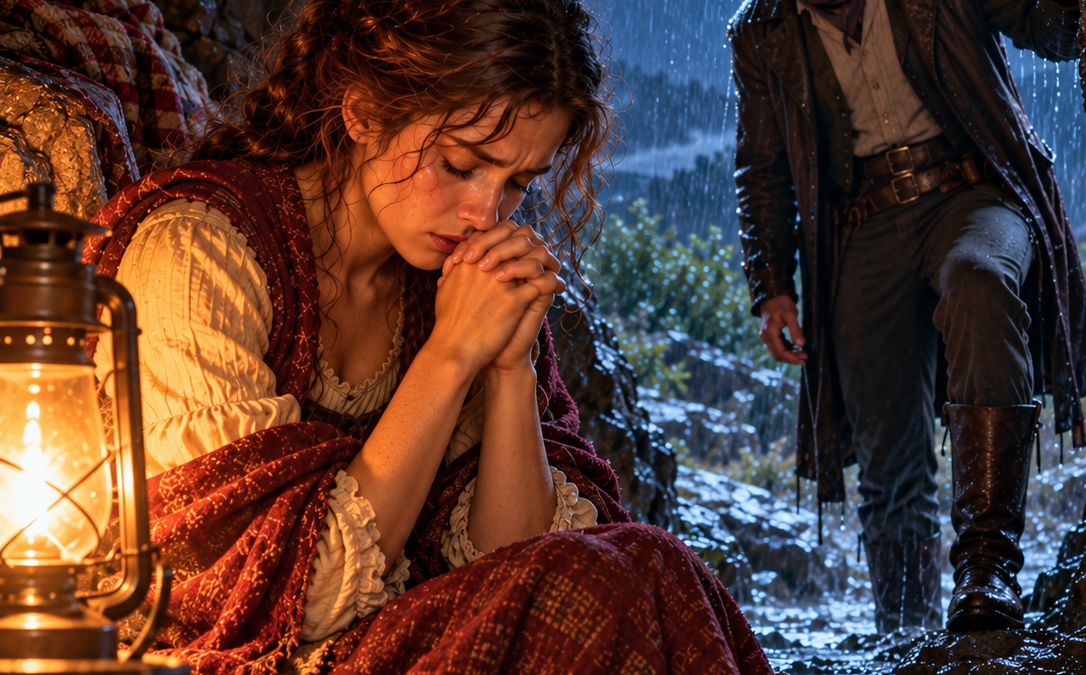
she prayed in a mountain cave because she had nowhere left to go—then a lonely rancher heard her through the storm
Part 1
Montana Territory, 1883.
Caleb Hendricks was less than ten feet from the mouth of the cave when a woman’s voice stopped him in the rain.
“Lord,” she whispered from somewhere inside the darkness, “I have nowhere else to go.”
Caleb stood motionless on the rocky slope, one hand locked around the wet leather bridle of his gelding.
Lightning tore white across the mountains behind him.
Buck jerked hard enough to nearly pull the reins from Caleb’s hand.
“Easy,” Caleb murmured.
The horse’s flanks were trembling.
Caleb could not blame him.
An hour earlier, the afternoon had been clear enough to see three ridgelines toward the west. Then a black wall of cloud had rolled down from the mountains with the speed of a cavalry charge.
Now rain hammered the rocks so hard that droplets bounced knee-high from the trail.
Water poured from the brim of Caleb’s hat. His wool coat had soaked through fifteen minutes earlier, and every step uphill felt as if somebody had hung a sack of grain across his shoulders.
He had been riding home from Helena after settling fall accounts, collecting two debts, paying three others, and listening to a cattle buyer explain why beef was suddenly worth less than it had been when Caleb had driven it north.
The season had not ruined him.
It had come close enough that he could smell ruin.
He had eighty-three head going into winter, a leaking corner on the north barn, twelve rolls of fencing wire he still needed to buy, and more worry than money.
Under ordinary circumstances, that would have occupied his entire mind.
Then he heard the woman pray again.
“I don’t know what else to do.”
The words were not loud.
That was what unsettled him.
Caleb had heard frightened men shout.
He had heard cowboys curse when horses went down in rivers. He had heard farmers plead during prairie fires. He had once listened to his own father scream at God after Caleb’s mother died.
This was different.
This was a voice that had gone beyond shouting.
It sounded tired.
Used up.
Like somebody who had spent the last of her fear and had nothing left but the truth.
Caleb stayed outside the cave.
“Hello in there.”
The prayer stopped.
Something moved in the shadows.
Caleb raised his voice just enough to carry over the rain.
“Storm drove me up here. I’m not trying to surprise you. Name’s Caleb Hendricks. I ranch south of here.”
No answer.
He waited.
Water ran off his hat and down his face.
Buck stamped behind him.
“I won’t come inside unless you say I can.”
Thunder rolled across the canyon.
Then the woman answered.
“Stay where you are.”
Caleb did.
“Are you armed?”
“Yes, ma’am.”
A pause.
“So am I.”
Despite the cold, a faint smile touched the corner of his mouth.
“Then I reckon we understand each other.”
Another silence followed.
Finally she said, “There’s room near the entrance. Bring your horse under the rock before he catches his death.”
Caleb led Buck beneath the overhang.
The cave was not deep. More a broad split in the mountain than a true cavern. Enough shelter to stop the rain, though cold air still moved through it.
A small lantern burned near the back wall.
That was where he saw her.
She was younger than he had expected.
Twenty-eight, maybe thirty.
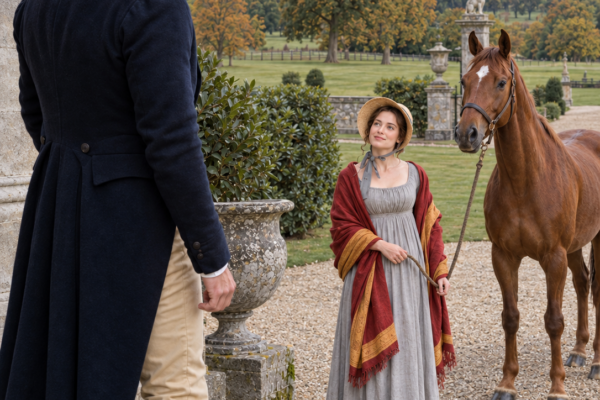
Dark hair had escaped from a loose knot and hung around her face in damp strands. Her dress had once been brown but had faded nearly gray in places, and mud covered the hem to her knees. A worn shaw was wrapped around her shoulders.
She held one hand beneath the folds of the shaw.
The other rested near an old revolver beside her.
Caleb noticed it.
She noticed him noticing it.
He took off his hat slowly.
“Sorry I heard what you were saying.”
Her eyes narrowed.
“I wasn’t listening on purpose. Wind carried your voice.”
She studied him for several seconds.
Then she said, “A prayer isn’t exactly private once you speak it loud enough for the mountains.”
“Suppose not.”
“My name is Abigail Sutton.”
“Caleb Hendricks.”
“I heard you the first time.”
He nodded.
“Mrs. Sutton?”
“Missus once.”
Something in the answer warned him against asking the next question.
He turned instead to Buck.
He loosened the saddle, checked the gelding’s legs, then opened one saddlebag.
“I have hardtack, dried beef, coffee, maybe half a handful of sugar if it hasn’t turned into a brick.”
Abigail’s gaze moved to the food before she could stop herself.
Caleb saw it.
“When did you eat?”
“I ate.”
“When?”
She looked at him.
“Yesterday.”
“Yesterday morning?”
A pause.
“Yes.”
“That isn’t yesterday. That’s nearly two days.”
“I’m aware.”
Caleb broke the hardtack and wrapped some dried beef in a clean cloth.
He held it toward her.
She hesitated.
“You expecting payment?” she asked.
“No.”
“People usually expect something.”
“Then you’ve met better businessmen than me.”
She did not smile.
Caleb placed the food on a flat stone halfway between them and stepped back.
“There.”
Abigail stared at it.
Then hunger defeated pride.
She crossed the few feet, picked up the food, returned to the wall, and began eating slowly.
Too slowly.
Caleb had seen starving men do that. Your body wanted to swallow everything at once, but sense told you not to.
He looked away.
That was when he heard the sound.
A small whimper.
It came from beside Abigail.
At first Caleb thought it was wind catching in a crack in the rocks.
Then something beneath a folded blanket moved.
Abigail reacted instantly.
She pulled the bundle against her chest.
The revolver came into her free hand.
Caleb froze.
“There’s a child,” he said.
“My daughter.”
She kept the pistol down, but her grip was firm.
Caleb slowly lowered himself onto one knee.
“I’m not coming closer.”
Abigail watched him.
Then she pulled back one corner of the blanket.
A baby slept there.
Maybe nine months old.
Her cheeks were flushed from warmth. Damp curls lay against her forehead. One small fist was tucked near her mouth.
“Her name is Hope,” Abigail said.
Caleb looked at the child.
Something about the name struck him harder than it should have.
Hope.
In a cave.
In a thunderstorm.
In the arms of a woman who had just told God she had nowhere left to go.
Abigail saw something change in his face.
“If you mean us harm,” she said quietly, “tell me now.”
Caleb looked at her.
“I don’t.”
“I have no husband. No brother. No family waiting down this trail. Nobody knows exactly where we are.”
“That sounds like information you shouldn’t give a strange man.”
“I’m tired of pretending I have protection I don’t have.”
Her voice had sharpened.
“If you’re a bad man, Mr. Hendricks, I’d rather learn it while I still have one bullet left.”
Caleb slowly sat on a flat rock near the entrance.
He left six feet between them.
“I mean you no harm. Not you. Not Hope.”
He pointed toward the food.
“You can eat what I have. I’ll keep to my side. When the storm breaks, if you want help getting somewhere safe, I’ll help.”
Abigail searched his face.
“That’s all?”
“That’s all I can honestly promise tonight.”
The pistol lowered.
For the first time, some of the rigidness went out of her shoulders.
“That may be more than I had an hour ago.”
By darkness the rain had grown even harder.
Caleb managed to build a small fire using pine shavings from his saddle kit and dead branches he found deep beneath the overhang.
Smoke curled toward the cave entrance.
He boiled coffee until it was strong enough to strip paint.
Abigail drank hers anyway.
Hope woke hungry and began to cry.
Abigail turned slightly away as she fed the child beneath her shaw.
Caleb faced the storm.
He stared into the black canyon until the baby quieted.
Only then did Abigail speak again.
“Hope’s father was my husband.”
Caleb did not turn immediately.
After a moment he glanced back.
“His name was Edwin.”
He waited.
“He died before she was born.”
“I’m sorry.”
“So was I.”
Her voice sounded almost matter-of-fact.
“Then she came, and being sorry had to fit between feeding her, washing clothes, keeping a fire going, and arguing with men who assumed a widow couldn’t understand numbers.”
Caleb looked toward the flames.
“What happened to your place?”
Abigail rubbed Hope’s back.
“Edwin took fever just before Christmas. He was dead in four days.”
Caleb’s expression changed.
That was fast even by frontier standards.
“I buried him two days after Christmas.”
The rain continued beyond the cave.
“Hope came in January.”
Abigail looked down at the baby.
“I thought having her would keep me too busy to grieve.”
“Did it?”
“For a while.”
The answer came with a sad smile.
“In spring, I planted a garden. Hired a neighbor boy to help with the field. Sold eggs. Milked two cows. I thought maybe if I just kept working, I could hold the place together.”
She went quiet.
“Then Wesley Rourke came to my door.”
Caleb knew the name.
His face hardened before he could hide it.
“You know him.”
“Know of him.”
“What have you heard?”
“Enough.”
Rourke lent money.
Sometimes fairly.
Sometimes not.
He had a reputation for finding weakness in paper the way wolves found weakness in a herd.
Abigail continued.
“He brought a mortgage signed by Edwin.”
“You knew nothing about it?”
“Nothing.”
“Was the signature his?”
“I think so.”
The answer cost her.
“I knew the shape of his hand. I knew how he made an E. But I couldn’t tell if everything on that paper had been there when he signed it.”
“What was the debt?”
“Two hundred and sixty dollars originally. More by the time Rourke came.”
“That much?”
“He said interest. Filing fees. Late penalties.”
Caleb shook his head.
“I sold two milk cows to hire a lawyer in Bozeman.”
“What did he say?”
“That the mortgage was properly filed.”
Abigail stared at the lantern flame.
“I still don’t know why Edwin hid it from me. Maybe he thought he could repay it before I found out. Maybe he was ashamed.”
Her jaw tightened.
“Maybe he knew I would tell him not to sign.”
A gust threw rain against the cave mouth.
Caleb moved his bedroll to block some of the spray from reaching Abigail and Hope.
“When did you lose the farm?”
“Thirteen days ago.”
“Rourke came himself?”
“With the sheriff.”
Caleb’s mouth hardened.
“I had until sundown.”
“What could you take?”
“One trunk. Some clothes. Edwin’s Bible. Hope’s blankets. The rest I sold for almost nothing or left behind.”
She swallowed.
“I watched another man put a lock on my door.”
The baby stirred.
Abigail rocked her gently.
“I headed for Bozeman.”
“For family?”
“My older sister, Martha.”
Caleb nodded.
“I hadn’t seen her in three years. We wrote. She kept telling me if things ever got bad, I could come.”
Abigail’s eyes lifted toward him.
“I spent nearly two weeks telling myself I had one place left.”
The fire cracked.
“I reached Bozeman four days ago.”
Caleb waited.
“Martha died in July.”
His hand stopped over the coffee pot.
“Fever.”
“I’m sorry.”
“I stood at her grave with Hope in my arms.”
Her voice thinned.
“And I realized I had spent thirteen days walking toward a place that did not exist anymore.”
Caleb had no useful words.
Some grief was too big to answer.
“What did you do?” he asked.
Abigail gave a small, hollow laugh.
“I left.”
“To where?”
“That was the problem.”
For the first time, tears filled her eyes.
“I slept in a church shed one night. A widow gave us her kitchen floor the next. A freight wagon carried us six miles. I walked ten after that.”
She pressed a hand against Hope’s back.
“Then the rain came.”
Caleb looked toward the darkness outside.
Now he understood the prayer.
It had not been exaggeration.
The woman truly had no destination.
No key in her pocket.
No relative expecting her.
No employer.
No home.
No plan beyond keeping a baby alive until morning.
“You’re not out of road tonight,” he said.
Abigail looked at him.
“No.”
“And tomorrow?”
“What about tomorrow?”
“Tomorrow we find the next mile.”
That was all.
Caleb did not promise to solve her life.
He did not offer marriage, money, land, or salvation.
He promised one mile.
For some reason, that was what broke her.
Abigail turned her face away and covered her mouth.
Her shoulders shook once.
Then again.
Caleb turned toward the rain.
He pretended he did not see her crying.
Near midnight, the storm weakened.
The roar of rain faded to a steady dripping from the rocks.
Caleb remained awake by the entrance, his revolver beneath his coat.
Not because he feared Abigail.
Because he knew wild country, desperate weather, and human beings well enough not to trust any quiet too quickly.
Behind him, the baby breathed softly.
Hours later Caleb heard Abigail whisper.
“Mr. Hendricks?”
“Yes?”
“Why are you helping me?”
He looked out at the wet darkness.
He could have told her about his mother.
About being nine years old and hungry.
About Dorothy Vance bringing biscuits wrapped in cloth because his father was too drunk to cook.
But those stories belonged to another day.
So Caleb answered simply.
“Because you need help.”
Abigail was silent.
Then she said, “People always make that sound more complicated.”
“People complicate most useful things.”
For the first time, he heard the faintest hint of amusement in her voice.
“That coffee of yours is terrible.”
Caleb smiled into the darkness.
“That is an ungrateful thing to say to a man guarding the cave.”
“It’s still terrible.”
And for the first time since he had heard her praying, Caleb believed Abigail Sutton might have enough strength left to see another morning.
Part 2
Dawn came cold and silver.
Mist clung between the pines.
Every rock beyond the cave glistened black with rain, and far below them the creek had risen into a brown, angry river.
Caleb stepped outside first.
The air smelled of wet earth, pine resin, and mud.
He studied the sky.
“Storm’s moved east.”
Abigail stood at the cave entrance with Hope bundled against her chest.
“How long until the trail is safe?”
“Depends what you mean by safe.”
“That isn’t encouraging.”
“It’s honest.”
She looked tired again.
In morning light, Caleb could see just how thin she had become. Her cheeks were hollow. Her boots were worn nearly smooth at the heels.
He saddled Buck.
Then he turned toward her.
“My ranch is about two days south if we go easy.”
Abigail’s eyes sharpened.
“Your ranch.”
“Yes.”
“You’re inviting us there.”
“I have a spare room.”
“For how long?”
“As long as it takes you to decide what comes next.”
Her face closed.
“I won’t be kept.”
“I didn’t ask to keep you.”
His answer came too quickly.
Both of them noticed.
Caleb softened his voice.
“You can leave the day you want. I’m only saying there’s no wisdom in making a permanent decision while you’re hungry, wet, and carrying a baby through mountain country.”
Abigail looked toward the trail.
“What will people think?”
Caleb gave a short laugh.
“People around my place have been discussing my shortcomings for years. I doubt one more subject will hurt them.”
“I’m serious.”
“So am I.”
He tightened Buck’s cinch.
“My housekeeper is a widow named Margaret Pruitt. She sleeps in a small room off the kitchen because she says riding three miles home after dark is foolish at her age.”
“How old is she?”
“Fifty-eight.”
“That doesn’t sound ancient.”
“Tell her that and see what happens.”
Abigail almost smiled.
“She is respectable?”
“Painfully.”
“Will she mind?”
“She’ll mind plenty. She minds everything. But she won’t mind you.”
Caleb held out a hand.
“You ride.”
Abigail stared at Buck.
“And you?”
“I walk.”
“For two days?”
“I own boots.”
“You own a horse.”
“You have a baby.”
She looked at his hand.
Then she took it.
The trail south was worse than Caleb expected.
Mud pulled at his boots. Small slides had covered sections of the lower path, and twice he had to lead Buck through shallow water where runoff crossed the road.
Abigail sat carefully in the saddle with Hope wrapped against her.
They spoke little in the morning.
Caleb could feel her watching him.
Not romantically.
Not yet.
She watched the way a woman watched a bridge she was not sure would bear her weight.
By noon they reached a creek swollen nearly twice its normal width.
Caleb dismounted Buck from the trail and walked upstream.
Abigail frowned.
“What are you looking for?”
“A better crossing.”
“You know one?”
“I know three.”
“How?”
“I’ve been lost enough times to learn the country.”
He found a wide section where the water spread shallow over stone.
“Here.”
Abigail looked skeptical.
“That still looks fast.”
“It is.”
Caleb took the saddlebag and crossed on foot first.
Water rose nearly to his knees.
When he reached the other side, he turned.
“Buck knows water. Keep your feet high. If he slips, let him find his balance. Don’t pull hard on the reins.”
“You make that sound simple.”
“It isn’t.”
She tightened her grip around Hope.
Caleb saw her fear.
“We can wait.”
“How long?”
“Could be tomorrow.”
She looked at the sky.
Then at the road behind them.
Then at the baby.
“No. We cross.”
Buck entered the water.
Halfway through, his front hoof slid.
Abigail gasped.
The horse lurched.
Caleb splashed forward.
“Easy! Give him his head!”
Abigail obeyed.
Buck found stone beneath the current and pushed forward.
Seconds later they were across.
Abigail sat rigid in the saddle.
Caleb touched Buck’s neck.
“Good boy.”
Then he looked at her.
“You all right?”
“I would like to never do that again.”
“That makes two of us.”
She laughed once, breathlessly.
That sound stayed with him all afternoon.
They camped that night beneath a stand of pine where the ground was comparatively dry.
Caleb made a fire.
He boiled potatoes from his saddlebag and fried strips of salt pork in a skillet blackened from years of use.
Abigail fed Hope mashed potato from the end of a wooden spoon.
“Does your housekeeper know you travel with this much food?” she asked.
“Mrs. Pruitt packs as if I’m crossing the continent.”
“She sounds sensible.”
“She says I have the survival instincts of an unsupervised boy.”
“Does she exaggerate?”
“No.”
The firelight softened Abigail’s face.
For the first time, Caleb could imagine how she had looked before grief had hollowed her out.
Perhaps she had once laughed easily.
Perhaps Edwin Sutton had known that version of her.
The thought brought an emotion Caleb did not like.
Jealousy.
He dismissed it immediately.
A dead husband was not a rival.
And Abigail was not his to want.
Hope fell asleep wrapped in Caleb’s spare coat.
Abigail watched the baby.
“Thank you.”
“For what?”
“The coat.”
“Hope looks better in it.”
“She drooled on the sleeve.”
“So do I sometimes.”
Abigail shook her head.
The quiet grew comfortable.
Eventually Caleb said, “My mother died when I was nine.”
Abigail looked across the fire.
He had not planned to tell her.
But somehow the words had come.
“Pneumonia. One week she was making bread. The next week we buried her.”
“I’m sorry.”
“My father took it badly.”
“Drink?”
Caleb nodded.
“He was never violent with me. Sometimes I almost wished he had been. Would’ve been easier to understand than him sitting at the table staring at nothing.”
He poked the fire.
“There was a woman two homesteads over. Dorothy Vance. Widow.”
“What did she do?”
“Fed me.”
Abigail waited.
“That’s all?”
“At the time, it felt like everything.”
Caleb smiled faintly.
“She’d make more biscuits than she needed and pretend it was an accident. Sent me home with stew because she said her pot was too full. Found work for me around her place, paid me enough that I could buy schoolbooks.”
“Did your father know?”
“Probably.”
“And she never asked him for money?”
“Not once.”
“Why?”
“I asked her when I was fifteen.”
“What did she say?”
Caleb looked at Hope asleep beside the fire.
“She said a hungry child was reason enough.”
Abigail’s face softened.
Caleb continued.
“I spent years thinking there must’ve been more to it. Maybe she loved my mother. Maybe she was lonely. Maybe she thought helping me would put credit in heaven.”
“And now?”
“Now I think a hungry child was reason enough.”
They sat in silence.
Something settled between them.
Not trust exactly.
Trust was too large.
But the beginning of it.
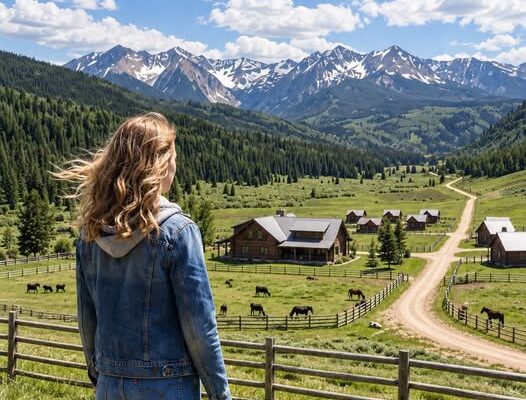
The Hendricks ranch appeared late the following afternoon.
Abigail first saw smoke rising from a stone chimney.
Then a barn.
Then the weathered gray farmhouse standing behind a line of cottonwoods.
Cattle moved in the pasture beyond it.
A windmill turned slowly near the well.
The place was not rich.
But it was alive.
Caleb felt her straighten in the saddle.
“Is that it?”
“That’s it.”
Before they reached the porch, the kitchen door opened.
Margaret Pruitt came outside wiping her hands on an apron.
She was broad-shouldered, gray-haired, and carried herself with the authority of a county judge.
Her eyes moved from Caleb to Abigail.
Then to Hope.
Then back to Caleb.
“Explain.”
Caleb dismounted.
“I found them in a cave.”
Mrs. Pruitt stared at him.
“That sentence raises more questions than it answers.”
He told her enough.
The storm.
The farm.
The dead husband.
The dead sister.
The road.
Margaret listened without interrupting.
Then she walked past Caleb, climbed one porch step, and held out her arms to Abigail.
“Give me that baby.”
Abigail blinked.
“I—”
“You look ready to fall off that horse.”
Mrs. Pruitt’s voice softened.
“Give me the child.”
Abigail slowly handed Hope down.
Margaret tucked the baby against her shoulder with the ease of someone who had done it a thousand times.
Then she looked back at Abigail.
“There’s beef stew.”
Abigail’s eyes filled.
Margaret frowned.
“No crying outside. You’ll freeze your face.”
Caleb hid a smile.
Margaret glanced at him.
“You too. Barn first. Then bring in firewood. You’ve been gone long enough for that stack to develop ambitions.”
“Yes, ma’am.”
Abigail spent her first night at the Hendricks ranch in a spare bedroom near the kitchen.
The room had a narrow bed, a washstand, a chest of drawers, and faded blue curtains.
There was a lock on the door.
Caleb made certain she saw it.
“This is yours.”
“For how long?”
“As long as you’re here.”
He placed her small travel case beside the bed.
“If you need anything, Mrs. Pruitt’s across the hall.”
“And you?”
“Upstairs.”
She nodded.
He left.
Abigail stood alone in the room.
For several minutes she did not move.
Then she crossed to the door.
Turned the key.
Checked it.
Once.
Twice.
Only then did she sit on the edge of the bed.
Hope slept beside her.
The mattress creaked.
The lamp burned quietly.
Outside, cattle lowed from the pasture.
Somewhere downstairs Margaret moved pans in the kitchen.
And Abigail realized this was the first locked door she had slept behind since losing her farm.
She put both hands over her face.
And cried without making a sound.
Part 3
Abigail slept eleven hours.
When she woke, sunlight filled the room.
For one terrified second, she did not know where Hope was.
Then she heard laughter from the kitchen.
She rushed down the hallway barefoot.
Hope sat on a quilt on the floor, waving a wooden spoon.
Mrs. Pruitt sat beside her peeling potatoes.
“You’re awake.”
Abigail stopped.
“How long have you had her?”
“Two hours.”
“I’m sorry.”
Margaret snorted.
“For what?”
“I should have—”
“You should have slept.”
Hope slapped the spoon against the floor.
Margaret took it away.
Hope shouted.
Margaret gave it back.
“I haven’t had anybody this interested in my kitchen equipment since my husband died.”
Abigail looked around.
“Where’s Mr. Hendricks?”
“West fence.”
“How long ago did he leave?”
“Before dawn.”
A familiar discomfort tightened Abigail’s chest.
Debt.
She had been there one night, and already Caleb and Margaret were feeding her, sheltering her, caring for her child.
“I need work.”
Margaret looked up.
“You need breakfast.”
“I need both.”
That afternoon Abigail found the household ledger.
It was sitting open on the kitchen table.
She frowned at it for ten seconds.
Then twenty.
Then she called toward the back door.
“Mrs. Pruitt?”
“Yes?”
“Why did Mr. Hendricks buy lamp oil three times in August?”
Margaret appeared holding a basket.
“Because he has the financial discipline of a raccoon.”
“I heard that.”
Caleb entered through the mudroom.
His sleeves were rolled above his forearms.
There was blood on one knuckle from wire.
Abigail pointed at the book.
“You bought lamp oil on the fourth, seventeenth, and twenty-sixth.”
“That sounds unlikely.”
“It’s written in your hand.”
“Then my hand has betrayed me.”
Margaret put the basket down.
“He bought it three times.”
Caleb looked wounded.
“I was running a ranch.”
“You were forgetting what you bought.”
Abigail looked at the crooked figures.
“Who keeps these accounts?”
Both Caleb and Margaret answered at once.
“He does.”
Abigail stared.
“That explains a great deal.”
A smile tugged at Margaret’s mouth.
Caleb crossed his arms.
“What are you suggesting?”
“That you let me fix them.”
And that was how Abigail Sutton found her first place at the ranch.
Not charity.
Work.
She reorganized the household accounts.
Then the ranch expenses.
Within three weeks she discovered a feed supplier in town had charged Caleb twice for the same delivery.
She found two uncollected payments for hay.
She wrote letters in a clear hand Caleb said made his own look like scratches from an injured chicken.
Then, one Saturday morning, Caleb placed five dollars beside her ledger.
She stared at it.
“What is this?”
“Your wages.”
“I don’t need wages.”
“You work.”
“I’m living here.”
“So is Mrs. Pruitt. I pay her.”
“That’s different.”
“Why?”
Abigail opened her mouth.
Nothing came.
Caleb pushed the money toward her.
“You work, you’re paid.”
“I’m using your room.”
“You’ve saved me more than five dollars this week.”
“That’s not the point.”
“What is the point?”
She looked at him.
“I don’t want to owe you.”
Caleb’s expression changed.
“You don’t.”
“Food costs money. Coal costs money. A room—”
“You’re keeping my accounts. You help Margaret. You mend linens. You’ve done enough preserving in three weeks to keep us alive through two winters.”
“That isn’t equal.”
“Then consider me a poor negotiator.”
“Caleb—”
It was the first time she had used his given name.
They both noticed.
He leaned a hand against the table.
“Abigail, take the money.”
“Why?”
“Because if you decide to leave tomorrow, I want you to have money in your pocket.”
That silenced her.
Caleb’s voice softened.
“I meant what I said in the cave.”
You can leave the day you choose.
Abigail picked up the five dollars.
She folded it carefully.
“Thank you.”
“No.”
He nodded toward the ledger.
“You earned it.”
The weeks began to change them.
Not suddenly.
Healing rarely announced itself.
It came through ordinary mornings.
Hope learned to crawl from one end of the kitchen to the other.
Margaret began leaving a wooden spoon on the floor before breakfast because pretending it was accidental had become pointless.
Abigail mended curtains.
Caleb repaired the loose board beneath the bedroom window after she mentioned the draft once.
No grand promises were exchanged.
No declarations.
Still, the ranch grew warmer.
A baby blanket appeared permanently across the back of a kitchen chair.
A small pair of stockings dried beside the stove.
Caleb began coming through the kitchen door every evening instead of using the front entrance.
Abigail noticed things about him.
He never entered her room without knocking.
He never asked what she had owned before losing the farm.
He never reached for Hope until the baby reached toward him first.
When Hope cried at night, Caleb never appeared in the hallway pretending concern entitled him to enter.
The next morning he simply asked, “Rough night?”
And if Abigail said yes, there would be an extra cup of coffee waiting by her ledger.
Caleb noticed things too.
Abigail always checked the doors before bed.
Twice.
Every door.
If an unknown rider approached, her shoulders tightened.
She saved the crispest biscuit for Margaret.
She hated being cold, even though she rarely complained about it.
She touched Edwin’s Bible sometimes but did not read it.
And she still woke before sunrise on certain mornings because hardship had trained her body not to trust sleep.
One November afternoon a wagon came up the road.
Abigail was hanging sheets behind the house.
She heard wheels.
Then men’s voices.
Her hands froze.
Caleb was in the barn.
Margaret was inside with Hope.
The wagon stopped near the porch.
A tall man stepped down.
Wesley Rourke.
Abigail knew him instantly.
He wore a dark coat and polished boots unsuited to farm mud.
His beard had been carefully trimmed.
He looked prosperous.
Respectable.
That had always been the worst part.
He had never looked like a thief.
He looked like the sort of man a bank would trust with keys.
“Mrs. Sutton.”
Abigail’s stomach tightened.
“What are you doing here?”
Rourke glanced toward the house.
“I heard you were staying with Hendricks.”
“Who told you?”
“People talk.”
“I have nothing that belongs to you.”
“I didn’t say you did.”
Caleb stepped out of the barn.
He saw Rourke.
His pace changed.
Not faster.
Harder.
“What do you want?”
Rourke smiled.
“Caleb.”
“You know my name. That doesn’t answer my question.”
Rourke looked back at Abigail.
“There are a few personal effects left from the Sutton property. I thought she might want them before the place changes hands.”
Abigail felt something turn inside her.
“Changes hands?”
“I sold it.”
“To whom?”
“A family from Missouri.”
“When?”
“Yesterday.”
For one breath, Abigail could see the farm.
The kitchen window Edwin had repaired.
The apple sapling near the fence.
The bedroom where Hope had been born.
She had known it was gone.
Still, hearing that strangers would sleep there felt like losing it again.
Rourke removed an envelope.
“These were in a desk drawer.”
Abigail did not take it.
Caleb stepped closer.
“What’s inside?”
“Letters, I imagine.”
“You opened them?”
“No.”
Rourke looked offended.
“I have boundaries.”
Caleb’s jaw tightened.
Rourke held out the envelope.
Abigail took it.
Her hands shook.
Inside were three letters.
Two were old receipts.
The third was from Edwin.
Never mailed.
Her breath caught when she saw his handwriting.
Abigail,
I made a mistake.
If I can sell the north hayfield after harvest, I can clear most of what I owe Rourke before winter. I should have told you before I signed. I thought I was protecting the farm after the cattle loss. Truth is, I was protecting myself from having to see disappointment in your face.
If anything happens to me before this is settled, go to Silas Mercer. He witnessed the agreement. Rourke is not to take the spring pasture. That land was never part of the mortgage.
Abigail read the last lines twice.
“Mr. Rourke.”
He looked at her.
“The spring pasture.”
His expression shifted only slightly.
Caleb saw it.
“What about it?” he asked.
Abigail looked at Rourke.
“Edwin wrote that it was never included.”
Rourke’s smile vanished.
“Your husband was a sick man when he wrote many things.”
“This is dated before he became sick.”
Rourke shrugged.
“The filed mortgage speaks for itself.”
“Where is Silas Mercer?”
“Dead, as far as I know.”
Caleb took the letter when Abigail handed it to him.
He read it.
Then he looked at Rourke.
“You sold the spring pasture?”
“I sold the property described in the mortgage.”
“That wasn’t my question.”
Rourke’s voice cooled.
“You planning to practice law now?”
“No.”
Caleb folded the letter carefully.
“I’m planning to ask questions.”
Something passed between the two men.
Rourke put on his gloves.
“Mrs. Sutton lost a farm because her husband borrowed money he could not repay. It is painful. It is not a conspiracy.”
Abigail flinched at the cruelty of how reasonable he made it sound.
Rourke continued.
“I brought the letter out of courtesy.”
Caleb stepped forward.
“Then your courtesy is finished.”
Rourke looked at him.
“For a man worried about winter debt, you seem eager to make enemies.”
Caleb went still.
Abigail looked at him.
Rourke smiled slightly.
Then he climbed into his wagon.
“Good afternoon.”
He drove away.
For several seconds nobody spoke.
Finally Abigail turned to Caleb.
“What did he mean?”
“Nothing.”
“Caleb.”
He looked toward the road.
“I borrowed against part of next year’s cattle sale.”
“How much?”
“Enough.”
“From him?”
“No.”
“Then why does he know?”
“Because men like Rourke collect information the way barns collect mice.”
Abigail took Edwin’s letter back.
Her eyes settled on one name.
Silas Mercer.
She had never heard it before.
That night she read the letter again.
And again.
At midnight she came downstairs.
Caleb sat at the kitchen table repairing a leather harness strap.
He looked up.
“You should be asleep.”
“So should you.”
“I’m working.”
“So am I.”
She put the letter down.
“I want to find Silas Mercer.”
Caleb set the leather aside.
“Rourke says he’s dead.”
“Rourke says many things.”
That brought the faintest smile.
Abigail sat.
“I lost the house. I know that. Maybe nothing changes it.”
She touched Edwin’s handwriting.
“But I need to know whether he really signed away everything.”
“Why?”
Her eyes lifted.
“Because since he died, I have been angry with him.”
Caleb said nothing.
“I loved him. And I have been angry with him every day.”
Her voice cracked.
“For hiding the mortgage. For leaving me with it. For dying before I could ask why.”
She looked down.
“If he tried to protect even part of the land for Hope, I need to know.”
Caleb nodded slowly.
“Then we find Mercer.”
“How?”
“Courthouse records. Church books. Land filings. Somebody knows where he went.”
“Why are you willing to do this?”
Caleb looked at her for a long moment.
Because I care about you, he thought.
Because your sadness has become something I notice even when you are not in the room.
Because Hope reaches for me now and I am frightened by how much that matters.
Instead he said, “Because not knowing is eating you alive.”
Abigail’s eyes filled.
Caleb picked up the harness leather again.
“We’ll go to town Monday.”
The following morning, snow began to fall.
Lightly at first.
Then steadily.
By noon, the mountains disappeared behind white.
Winter had arrived.
And for Abigail Sutton, the road backward had just opened.
Part 4
Snow buried the lower fields by morning.
Caleb and Abigail could not reach town for four days.
The delay tormented her.
She kept Edwin’s letter in her apron pocket until the paper began to soften along the folds.
On the fifth morning Caleb hitched the sleigh.
Margaret stood in the doorway holding Hope.
“You’ll be back before dark.”
Caleb looked at the sky.
“That’s the intention.”
“That was not what I said.”
“Yes, ma’am.”
Abigail kissed Hope’s forehead.
The baby gripped her collar.
For a moment Abigail hesitated.
Leaving Hope still frightened her.
Margaret saw it.
“I raised four children.”
Abigail looked surprised.
“You never told me that.”
“You never asked.”
“Where are they?”
Margaret’s face softened.
“Two in Oregon. One in Helena. One buried beside his father.”
The words settled quietly.
Margaret adjusted Hope on her hip.
“I know what it costs to worry over a child, Abigail. Go.”
The county courthouse smelled of coal smoke, damp wool, and old paper.
Caleb and Abigail spent three hours searching land books with a clerk named Thomas Baird.
At first they found nothing useful.
Then Abigail saw the name.
Silas Mercer.
Witness to mortgage filing.
Residence listed as Gallatin County.
“Can we find him?”
Baird scratched his cheek.
“That filing is two years old.”
“Rourke says he’s dead.”
Baird snorted.
“Rourke says whatever helps Rourke.”
Caleb looked at him.
“You know Mercer?”
“I know of him.”
The clerk lowered his voice.
“Worked surveys. Did some notary business before his hands got too shaky. Moved west last year.”
“Where?”
“Three Forks maybe. Could be farther.”
Abigail felt hope rise and feared it immediately.
“What about the mortgage?”
Baird pulled the original filing book.
He compared the legal description to a map.
Then frowned.
“What?”
Abigail leaned closer.
Baird traced a line.
“Your husband’s property was divided into two parcels.”
“Yes.”
“Home section here. Spring pasture here.”
He looked at her.
“The mortgage filing lists the home section.”
“And the pasture?”
“Not in this filing.”
Caleb’s eyes hardened.
“Then how did Rourke take it?”
Baird looked uncomfortable.
“There may be another document.”
“Find it.”
“Caleb—”
“Find it.”
Baird searched.
An hour later he returned with a second instrument.
An amended property description.
Filed six weeks after the first mortgage.
It included the spring pasture.
Abigail’s hands went cold.
“Edwin’s signature?”
Baird pointed.
It was there.
But wrong.
Slightly wrong.
The E did not curl back the way Edwin made it.
Abigail stared.
“That isn’t his hand.”
Baird gave her a careful look.
“Can you prove that?”
“I have letters.”
“Letters help. A witness helps more.”
“Silas Mercer.”
Baird nodded.
“If he is alive.”
They left the courthouse near sunset.
Snow had started again.
Caleb drove the sleigh in silence.
Abigail sat beneath a buffalo robe.
After several miles she said, “If Rourke forged it…”
“We don’t know that yet.”
“I know Edwin’s handwriting.”
“I believe you.”
“That isn’t the same as proof.”
“No.”
She turned toward him.
“Suppose we find Mercer and he says Edwin signed it.”
Caleb kept his eyes on the road.
“Then you’ll know.”
“And suppose he says Edwin didn’t?”
“Then Rourke has trouble.”
“How much trouble?”
“That depends on the judge.”
Abigail looked toward the darkening fields.
“I don’t even know if I want the farm back.”
Caleb glanced at her.
She surprised herself by saying it.
“For months it was all I wanted. Then I came here.”
The sleigh bells jingled.
“I don’t know what home means anymore.”
Caleb’s hands tightened slightly on the reins.
He said nothing.
The next week a letter arrived for Margaret.
She read it twice over breakfast.
Abigail noticed.
“Bad news?”
“No.”
Margaret folded it.
“My sister’s family in Helena needs a household manager.”
Caleb looked up.
Margaret continued.
“Two school-aged children. Their last woman married and moved east.”
Then she looked at Abigail.
“They pay twenty dollars a month. Room included.”
The kitchen went very quiet.
Abigail’s hand stopped over Hope’s bowl.
Caleb looked at his coffee.
“In Helena?” Abigail asked.
“Yes.”
“How soon?”
“Before the worst winter weather.”
Caleb spoke before Margaret could.
“You should consider it.”
Abigail looked at him.
Something painful crossed her face.
“You think I should go.”
Caleb’s fingers tightened around the cup.
“I think you said from the beginning you wanted a life that belonged to you.”
“That isn’t what I asked.”
“No.”
Margaret rose.
“I suddenly remember something outside.”
“There’s snow.”
“I will remember it efficiently.”
She left.
Abigail faced Caleb.
“If I take that job, Hope and I would have wages.”
“Yes.”
“A room nobody can take because my husband signed the wrong paper.”
“Yes.”
“A city.”
“Yes.”
“Schools one day.”
“Yes.”
She waited.
“And if I go?”
The question hurt more than Caleb had expected.
He answered anyway.
“I’ll take you to the stage.”
Abigail stared at him.
“That’s all?”
His voice roughened.
“What do you want me to say?”
“I don’t know.”
“That you should stay because I helped you?”
“No.”
“That you owe this place something?”
“No.”
Caleb stood.
“Then I’m not going to say those things.”
He walked outside.
Abigail remained at the table.
That night she cried harder than she had in the cave.
Not because Caleb was sending her away.
Because he was not trying to keep her.
In the weeks that followed, the whole house changed.
Nothing visible.
Caleb still rode fences.
Abigail still balanced the books.
Margaret still complained about the coffee.
Hope still dropped food beneath the table for a ranch dog that had learned exactly where to sit.
But the future had entered every room.
Abigail counted her savings.
She had thirty-seven dollars.
More money of her own than she had ever possessed during her marriage.
She bought two lengths of cloth suitable for dresses.
She repaired her travel case.
One morning she found Caleb replacing its broken hinge.
She stopped in the doorway.
“What are you doing?”
“Latch is loose.”
“You think I’m leaving.”
He kept working.
“I think you might.”
“And that doesn’t make you angry?”
Caleb looked up.
“It makes me miserable.”
The honesty stunned her.
He returned to the hinge.
“But miserable isn’t the same as entitled.”
Abigail stood very still.
Then she walked away before he saw her cry.
Three days later they received word about Silas Mercer.
Alive.
Living near Virginia City with his daughter.
Caleb and Abigail left before daylight the following morning.
The trip took two days.
Mercer was seventy-four, thin as fence wire, with hands trembling badly from age.
He sat near a stove wrapped in a blanket.
When Abigail gave her name, his expression changed.
“Edwin Sutton’s wife.”
“Widow.”
Mercer removed his glasses.
“I heard he died.”
“Yes.”
“I’m sorry.”
Abigail placed the amended mortgage on the table.
“Did you witness this?”
Mercer studied it.
His hands shook.
Then they stopped.
“No.”
Abigail’s heart pounded.
“You’re certain?”
“I witnessed the original.”
He tapped the first paper.
“Edwin borrowed against the home section. Told me he would sell hay and clear it within a year.”
“And the spring pasture?”
“He refused to include it.”
Caleb leaned forward.
“Why?”
Mercer looked at Abigail.
“He said if things went bad, his wife would still have water.”
Abigail covered her mouth.
The old man continued.
“Rourke pushed him hard. Edwin said no. Said that pasture belonged to the child they were expecting.”
Tears filled Abigail’s eyes.
“He knew?”
Mercer smiled sadly.
“He talked about that baby every time I saw him.”
Abigail lowered her head.
For nearly a year she had carried anger toward a dead man because she believed he had risked everything.
Now she understood.
Edwin had made a foolish decision.
But he had not abandoned her.
He had tried, clumsily and secretly, to leave her one piece of ground that could never be taken.
Mercer picked up the amended filing.
“This signature is not Edwin’s.”
“Will you say that before a judge?”
“Yes.”
Caleb sat back.
For the first time, the shadow hanging over Abigail’s old life began to move.
But Rourke learned about Mercer before they could file suit.
Two nights after Caleb and Abigail returned home, the barn caught fire.
Caleb woke to Margaret screaming from the hallway.
“Fire!”
He ran barefoot to the window.
Orange light filled the yard.
The north side of the barn was burning.
“Abigail!”
“I’m up!”
She appeared holding Hope.
Caleb pulled on trousers and boots.
“Stay in the house.”
“No.”
“Yes.”
“There are animals in there.”
“I said stay—”
“And I said no.”
They ran outside.
Snow glowed orange beneath the flames.
The barn roof crackled.
Cattle bellowed in the nearby lot.
Two horses kicked inside their stalls.
Caleb rushed through smoke and opened the first stall.
Abigail followed with a wet blanket over her head.
“Get out!”
“Open the south door!”
She fought with the frozen latch.
Caleb freed Buck.
Smoke rolled black along the rafters.
A burning board crashed behind him.
Abigail screamed his name.
He shoved the second horse toward the door.
Together they got both animals out.
Then the north roof collapsed.
Flames shot into the night.
By dawn half the barn was gone.
Caleb stood in the blackened snow staring at what remained.
Abigail came beside him.
“You think Rourke did this.”
Caleb said nothing.
“You do.”
“I think a lantern doesn’t carry itself fifty feet from the house and tip over in an empty hay stall.”
“What do we do?”
“Sheriff.”
“And if the sheriff says there’s no proof?”
“Then there’s no proof.”
Abigail looked toward the burned barn.
“Caleb.”
He turned.
“If this is happening because of me—”
“No.”
“My claim—”
“No.”
“Your barn is half gone.”
“This is my choice.”
She stared at him.
Caleb stepped closer.
“You don’t become guilty because somebody else behaves badly.”
His face was streaked with soot.
“You hear me?”
Abigail nodded.
The sheriff found boot prints near the back fence.
Then snow covered them.
No arrest followed.
But the fire changed something.
Caleb’s winter became harder.
He needed lumber.
Roofing.
Feed storage.
Money he did not have.
Rourke’s earlier remark returned to Abigail.
For a man worried about winter debt, you seem eager to make enemies.
That evening Abigail sat at the kitchen table with her savings.
Thirty-seven dollars.
She pushed the money toward Caleb.
“No.”
“You need it.”
“No.”
“Caleb.”
“That money is yours.”
“The barn—”
“Is mine.”
“But—”
He pushed the money back.
“You keep your choices.”
She stared at him.
“What?”
“Keep your money. Keep your choices. If you go to Helena, you go with enough to stand on your own feet.”
His voice softened.
“I don’t want one bad winter turning this place into another trap.”
Abigail’s eyes filled.
“When did you become so important to me?”
The question escaped before she could stop it.
Caleb went still.
Hope babbled on the floor.
Margaret quietly picked up the coffee pot and carried it into the pantry.
Caleb sat across from Abigail.
“I don’t know.”
She laughed through tears.
“That’s not very helpful.”
“I think it happened slowly.”
He looked toward Hope.
“Somewhere between that cave and your correcting my arithmetic.”
“You needed correction.”
“I did.”
Their eyes met.
Caleb’s voice dropped.
“I stopped imagining this house without you.”
Abigail’s breath caught.
He continued before courage failed him.
“I love you.”
She covered her mouth.
“I love Hope too.”
Caleb did not reach for her.
He did not touch her hand.
“I’m not saying it because you need somewhere to go.”
Tears spilled down Abigail’s cheeks.
“I’m saying it now because you finally have somewhere else to go.”
He swallowed.
“You have Helena. You have wages. You have savings. You may even have land returned to you when the court finishes with Rourke.”
His voice trembled.
“And now that every door is open, I can tell you the truth without making it a chain.”
Abigail stood.
She crossed the small space between them.
“I prayed for shelter that night.”
“I know.”
“I thought anything more would be greedy.”
Caleb smiled through wet eyes.
“Then be greedy.”
She laughed.
Then she took his hand.
“I don’t want Helena.”
He searched her face.
“Because of me?”
“Because I choose this.”
She looked around the kitchen.
“Hope. Margaret. That ridiculous dog under the table. Your terrible coffee.”
“My coffee is improving.”
“It is not.”
She squeezed his hand.
“This house.”
Then she looked at him.
“You.”
Caleb drew a slow breath.
“Marry me.”
She did not hesitate.
“Yes.”
But Abigail was not finished.
She wiped her eyes.
“Not yet.”
Caleb blinked.
“What?”
“I said yes. I didn’t say tomorrow.”
A smile broke across his face.
“When?”
“When the court case is settled. When I have enough savings that if life ever becomes cruel again, Hope and I can walk away.”
Caleb nodded.
“And you’re not offended?”
“No.”
“You’re not insulted that I need that?”
“No.”
“Why not?”
He lifted her hand.
“Because I don’t want you trapped.”
And for the first time since Edwin died, Abigail understood that being loved and being free did not have to be enemies.
Part 5
The case against Wesley Rourke was heard in May.
By then the snow was gone from the lower fields, the creek was running high with spring melt, and green had begun to return along the pasture fences.
Abigail wore a dark blue dress she had sewn herself.
Caleb sat behind her in the courtroom.
He did not sit beside her.
She had asked him not to.
“This is mine to say,” she had told him.
So he remained close enough for her to know he was there and far enough to let her stand alone.
Silas Mercer testified first.
His voice shook.
His memory did not.
He told the judge Edwin Sutton had refused to mortgage the spring pasture.
He described the meeting.
He remembered Edwin saying, “If everything else goes bad, Abigail will still have water.”
Then the handwriting examples were presented.
Letters.
Receipts.
The note Rourke himself had delivered.
The judge compared Edwin’s signatures.
Rourke’s attorney argued that variations were natural.
Then Thomas Baird, the courthouse clerk, testified about the filing dates.
The amended mortgage had been entered six weeks after the original.
Edwin had supposedly signed it in Bozeman.
But a doctor’s ledger showed Edwin had been ill at home that week with a broken ankle.
The case turned.
Slowly.
Quietly.
The way truth often turned things.
Then another witness appeared.
A former clerk from Rourke’s office.
He had left Montana the previous winter.
When word of the hearing reached him, he returned.
He testified that Rourke had ordered him to copy property descriptions from survey maps onto documents after signatures had already been collected.
Not once.
Several times.
Rourke’s face changed then.
Not dramatically.
He simply stopped looking confident.
By afternoon the judge ruled the amended mortgage fraudulent.
The spring pasture had never legally belonged to Rourke.
Its subsequent sale was void.
The home section was more complicated.
Edwin had genuinely mortgaged it, and the debt had been valid.
That part of the farm was gone.
Abigail listened without collapsing.
A year earlier, losing that house had felt like the end of her life.
Now she understood a house was not the same thing as a future.
But the spring pasture was hers.
Eighty acres.
A creek.
Good grass.
A small stand of cottonwood.
And water.
Land Edwin had tried to save for her and their unborn child.
Outside the courthouse, reporters from a small territorial paper crowded around Rourke.
The sheriff waited to speak with him about criminal charges tied to forged filings.
Caleb found Abigail standing alone beside the hitching rail.
“You all right?”
She nodded.
Then shook her head.
Then laughed.
“I don’t know.”
He waited.
She touched the pocket where Edwin’s letter rested.
“For months I hated him.”
Caleb said nothing.
“I thought he left me nothing but trouble.”
Her eyes filled.
“He made mistakes.”
“Yes.”
“He should have told me.”
“Yes.”
“He should have trusted me enough to face the fear with me.”
“Yes.”
She looked at Caleb.
“But he tried to leave Hope something.”
“He did.”
Abigail wiped her cheek.
“I needed to know that.”
Caleb took her hand.
Not to lead.
Only to hold.
Rourke did not go quietly.
Men like him rarely did.
He appealed.
He claimed the clerk lied.
He claimed Mercer’s memory was unreliable.
He claimed Abigail had invented hardship to gain sympathy.
But the paper trail widened.
Other families came forward.
A widower near Butte.
A ranch woman outside Dillon.
Two brothers who had lost grazing land after signing loans they could barely read.
By autumn, Rourke was no longer a wealthy lender defending one questionable mortgage.
He was a defendant facing multiple fraud charges.
Justice did not arrive like lightning.
It arrived as ledgers.
Testimony.
Old signatures.
County maps.
People finally comparing what had been done to them.
Abigail found greater satisfaction in that than she expected.
Not because Rourke suffered.
Because other people stopped believing they had been foolish alone.
The spring pasture brought another decision.
Caleb assumed Abigail would sell it.
She did not.
Instead she rode there in July with Hope in front of her saddle.
Caleb accompanied them.
The old Sutton house stood in the distance on land that no longer belonged to her.
Smoke rose from its chimney.
Children played near the yard.
Abigail watched for a while.
“Does it hurt?” Caleb asked.
“Yes.”
He waited.
“But not the way it used to.”
They rode toward the creek.
The spring pasture was beautiful.
Grass moved silver-green in the wind.
Cottonwoods shaded the water.
Hope squealed when she saw a meadowlark lift from a fence post.
Abigail dismounted.
She knelt beside the creek.
“This was what Edwin wanted her to have.”
Caleb stood nearby.
“What will you do with it?”
“I’ve been thinking.”
“That is usually dangerous.”
She looked at him.
“You may reconsider marrying me.”
“Too late.”
Abigail smiled.
“I want to lease most of the grazing.”
“That makes sense.”
“And build a small cabin.”
Caleb blinked.
“For us?”
“No.”
She stood.
“For women like me.”
He looked at her.
“Widows. Mothers traveling alone. Families caught between places.”
She glanced across the grass.
“Somewhere they can stay for a few weeks. Work if they can. Sleep behind a locked door.”
Caleb understood.
Abigail continued.
“I know eighty acres won’t save everybody.”
“No.”
“But maybe somebody only needs one mile.”
Caleb’s throat tightened.
“That sounds familiar.”
She smiled.
The cabin was built the following spring.
Nothing grand.
Two rooms.
A woodstove.
A table.
Four beds.
A small pantry.
Margaret insisted on curtains.
Caleb insisted on a roof strong enough to withstand “anything short of judgment day.”
Abigail kept the key.
The first woman who stayed there was fifty-two years old and had left an abusive son who had taken her pension money.
The second was a young mother whose husband died in a mine accident.
The third was an elderly couple whose wagon axle broke five miles from town.
Nobody was asked to pray.
Nobody was asked to be grateful.
Nobody was required to explain more than they wished.
If they could work, Abigail found them work.
If they could not, she fed them anyway.
Sometimes Caleb teased her that she had become Dorothy Vance.
Abigail always answered the same way.
“No.”
Then she would look at him.
“She was yours.”
And Caleb understood.
They married in September.
Almost one year after the storm.
The sky that morning was clear blue.
No thunder.
No rain.
Hope was twenty-one months old and determined to walk the entire distance from Margaret’s pew to the front of the small church.
Margaret had sewn her a white dress.
Halfway down the aisle, Hope stopped.
A flower had fallen from somebody’s bouquet.
She bent to pick it up.
Everyone laughed.
Caleb waited.
He had learned by then that Hope did most things according to her own schedule.
Eventually she reached him.
He knelt.
Hope lifted both arms.
“Papa.”
Caleb’s face changed.
The word had appeared three weeks earlier.
He still looked surprised every time he heard it.
Abigail saw him.
And suddenly she was back in the cave.
Rain pouring outside.
Hope sleeping against her chest.
A stranger standing at the entrance with his hat in his hand.
I won’t step inside without your leave.
That was the beginning.
Not rescue.
Respect.
Not ownership.
Permission.
Caleb stood when Abigail reached him.
He held out his hand.
This time she did not need help mounting a horse.
She did not need food.
She did not need shelter.
She had money in the bank.
Land in her name.
Work she could do.
A cabin she could live in if she chose.
A job offer from Helena still folded inside a wooden box at the ranch.
Every door was open.
Abigail took his hand anyway.
Years passed.
The Hendricks ranch grew louder.
Two more children came.
First Samuel.
Then Grace.
Hope grew tall and stubborn and fearless around horses.
She knew Edwin Sutton’s name.
That mattered to Abigail.
Caleb never tried to erase the man who came before him.
On Hope’s birthdays Abigail sometimes told stories.
“Your father Edwin could not sharpen a kitchen knife to save his life.”
Hope would laugh.
“He sang badly too.”
“How badly?”
“So badly the dog left the porch.”
Caleb would sit nearby smiling.
“And he cried,” Abigail would say, “the first time he felt you move.”
Hope always became quiet at that part.
“Did he love me?”
“Yes.”
“With all his heart.”
Sometimes she looked at Caleb.
“And Papa loves me too?”
Caleb would answer before Abigail could.
“More than is reasonable.”
Love, Abigail learned, did not require deleting the past.
There was room for Edwin.
Room for Caleb.
Room for grief.
Room for gratitude.
Room for anger over mistakes that could never be undone.
Room for forgiveness without pretending those mistakes had not mattered.
Margaret remained at the ranch.
Every winter she announced that she was too old to tolerate another Montana January.
Every spring she planted onions.
At seventy she still complained about Caleb’s coffee.
At seventy-two she taught Grace to make biscuits.
At seventy-four she finally admitted Hope’s fascination with wooden spoons had been “moderately charming.”
Caleb considered the statement historic.
The cabin on the spring pasture became known locally as Sutton House.
Abigail disliked the name at first.
She had wanted something less personal.
But travelers used it anyway.
Eventually she stopped objecting.
Over twenty years, dozens of people slept beneath its roof.
Some stayed one night.
Some stayed months.
A few never wrote after leaving.
Others sent letters.
A widow from Idaho wrote that she had opened a laundry.
A young mother wrote that her son had become a teacher.
An old ranch hand who had broken his leg sent five dollars every Christmas even after Abigail repeatedly told him to keep it.
One winter night, many years after the cave, a storm came down from the mountains.
Hard rain struck the farmhouse roof.
Caleb was gray at the temples by then.
Abigail’s hair had silver in it too.
Hope was seventeen and away helping Margaret’s daughter in Helena.
Samuel and Grace had already gone upstairs.
Abigail stood at the kitchen window.
Lightning flashed.
Caleb came beside her.
“Thinking about it?”
She nodded.
“The cave?”
“Yes.”
He poured two cups of coffee.
She accepted one.
Took a sip.
Made a face.
“Still terrible.”
“You married me knowing that.”
“I was young and emotionally compromised.”
He laughed.
They stood listening to the rain.
After a while Abigail went upstairs.
She opened the top drawer of her dresser.
At the back was a small wooden box.
Inside were several things.
The letter from Helena offering her work.
Her first five-dollar wage from Caleb, long since replaced by another bill after the original was spent.
Edwin’s letter.
A tiny white ribbon from Hope’s wedding-day dress.
And a smooth gray stone.
Abigail had picked it up outside the cave the morning she and Caleb left.
Years later, Hope asked about it.
“Why do you keep a rock?”
Abigail placed it in her daughter’s hand.
“Because once I thought I had reached the end of every road.”
Hope turned the stone over.
“What happened?”
Abigail smiled.
“Someone stopped outside the darkness.”
“And rescued you?”
“No.”
Hope looked confused.
Abigail shook her head.
“He did something better.”
“What?”
“He asked permission to come inside.”
Hope looked at the stone again.
Abigail sat beside her daughter.
“When I met Caleb, I had nothing. No house. No family waiting. Hardly any money. I had you and a revolver with one good bullet.”
Hope smiled.
“That sounds like you.”
“I was frightened.”
“I can’t imagine you frightened.”
“Everybody is frightened sometimes.”
She closed Hope’s fingers around the stone.
“The important thing is what fear makes you believe.”
“What did yours make you believe?”
“That because I needed help, I had no right to choose how it came.”
Hope listened.
“Caleb never asked me to repay him for kindness. He never made shelter into a debt.”
Abigail looked toward the downstairs room where her husband’s laughter drifted faintly through the floorboards.
“And when I finally had enough money to leave, enough land to stand on, and a job waiting in another city, he told me he loved me.”
“Why did he wait?”
“Because he wanted my answer to be free.”
Hope was quiet.
Then she asked, “Would you still choose him?”
Abigail smiled.
“If every road in the world were open?”
“Yes.”
She looked toward the rain outside.
“Especially then.”
Caleb found her upstairs later.
The wooden box was open.
He picked up the stone.
“You still have this thing?”
“Yes.”
“It’s an ugly rock.”
“It has sentimental value.”
“You could have chosen a better rock.”
“I was tired.”
He sat beside her.
For a moment they said nothing.
Outside, rain traveled across the roof in long silver sheets.
Caleb turned the stone in his hand.
“I used to think I found you that night.”
Abigail looked at him.
“What do you think now?”
“That we were both lost.”
She raised an eyebrow.
“You owned a ranch.”
“Didn’t mean I wasn’t lost.”
He looked around the room.
“Before you came, this place was a building where I slept between chores.”
His eyes met hers.
“You made it a home.”
Abigail leaned her head against his shoulder.
“No.”
Caleb waited.
“We did.”
Below them, Grace laughed at something Samuel said.
A door shut.
The wind moved through the cottonwoods.
The ranch house creaked the way old houses do when weather presses against them.
Abigail listened to every sound.
Once, silence had meant abandonment.
An empty road.
A locked farmhouse that no longer belonged to her.
A dead sister’s grave.
A cave in the mountains.
Now silence was different.
It held footsteps upstairs.
A kettle cooling on the stove.
Children asleep.
A husband breathing beside her.
The memory of one man she had loved and lost.
The presence of another she had freely chosen.
Land bearing her first husband’s name.
A home built with her second.
And a small cabin beside the creek where strangers sometimes arrived carrying the same exhausted look Abigail had worn all those years ago.
Whenever that happened, she never began by asking what mistakes they had made.
She never asked why their families had failed them.
She never asked what they could pay.
She opened the door.
She showed them the beds.
She pointed toward the stove.
She gave them food.
Then, when they were ready, she asked one question.
“What is your next mile?”
Because Abigail had learned that people at the end of their strength rarely needed somebody to promise them an entire future.
Sometimes they needed one dry night.
One locked door.
One warm meal.
One person willing to stand outside the darkness and wait to be invited in.
Years after the courtroom, after the wedding, after Rourke’s name had become nothing more than a bitter memory in county records, Abigail rode alone to the old cave.
She was sixty-three.
Caleb’s knees were too stiff for the mountain trail, though he loudly denied this.
Hope had children of her own.
Montana was no longer a territory.
The roads were better.
Towns had grown.
But the cave remained.
Abigail dismounted slowly.
She stood beneath the familiar stone overhang.
The place seemed smaller than she remembered.
She touched the wall where she had once sat holding Hope.
For a moment she could almost see the young woman she had been.
Cold.
Hungry.
Humiliated by dependence.
Angry with a dead husband.
Afraid of every stranger.
Afraid of tomorrow.
Afraid that needing help had made her weak.
Abigail closed her eyes.
“I remember you,” she whispered.
The mountain gave no answer.
She smiled.
“You survived.”
Not because somebody carried her through life.
Because somebody helped her long enough to stand again.
Because Margaret gave her sleep without shame.
Because Caleb paid her for work instead of demanding gratitude.
Because Edwin, flawed and frightened, had tried to leave his daughter water.
Because Silas Mercer had remembered the truth.
Because Abigail herself had chosen not to let betrayal teach her cruelty.
She had been wrong about one thing in the cave.
She had believed she had nowhere else to go.
Looking back, she understood that sometimes a road did not appear until a person had enough strength to see it.
Abigail stepped outside.
Sunlight covered the valley.
Her horse grazed beside the trail.
Far below, the creek shone through the trees.
She picked up one more gray stone.
Not because she needed another reminder.
Because Grace’s youngest daughter had recently asked why Grandmother Abigail kept an ordinary rock in a wooden box.
Abigail smiled.
Some stories deserved to be carried forward.
She mounted carefully and turned the horse toward home.
Toward Caleb.
Toward the kitchen table.
Toward the worn porch where grandchildren now scattered boots in every direction.
Toward the pasture Edwin had tried to save.
Toward the cabin where a lamp was kept burning for strangers.
Toward the life she had once believed was impossible.
The miracle had never been simply that a rancher found a desperate widow in a cave.
The miracle was that when Caleb found a woman with nowhere to go, he did not make himself the price of her rescue.
He gave her room to recover.
Room to work.
Room to leave.
Room to remember the husband she had lost.
Room to own land.
Room to make choices.
And only when Abigail could have walked toward Helena, toward her restored pasture, toward employment, independence, or any road she wanted did Caleb finally place his heart before her.
Not as a debt.
Not as payment.
As a choice.
And Abigail chose him.
Not because the storm had trapped her.
Not because hunger had weakened her.
Not because she owed him for hardtack, coffee, shelter, or two days walking through mud beside a horse.
She chose him when she could stand on her own two feet.
She chose him with money in her pocket.
She chose him with land in her name.
She chose him with every door open.
Years later, when people asked Abigail how she knew Caleb was a good man, she never mentioned the ranch.
She never mentioned his cattle.
She never mentioned the courthouse or the barn fire or the house he shared with her.
She always remembered the first thing.
The mountain.
The rain.
The darkness.
And a stranger’s voice from outside the cave.
I won’t come inside without your leave.
That was when she should have known.
Not that he would save her.
But that he would never confuse love with possession.
And for a woman who had once believed every road in her life had ended, that made all the difference.
Because home, Abigail discovered, was not merely the place where a person had nowhere else to go.
Home was the place a person could leave—
and still freely choose to return.