
PART 3
“Alive?”
“Yes.”
“Wearing your clothes?”
I looked at Tessa in my hoodie.
“That seems unrelated.”
June screamed.
“I knew it!”
Tessa took the phone.
“You knew nothing.”
June arrived forty minutes later carrying coffee and sneakers.
She hugged Tessa.
Then looked at the wedding dress.
Then me.
“No.”
Tessa frowned.
“No what?”
“You are not staying here.”
My stomach dropped.
June continued.
“Not because Grant did anything. Because if you stay, everyone will decide you left Ben for him.”
Tessa looked at me.
“What do you think?”
“I think you should go with June.”
Pain flashed again.
I stepped closer.
“Not because I want you gone.”
“Then say that.”
“I don’t want you gone.”
Her eyes softened.
“But June is right. You need somewhere nobody can claim this decision belonged to me.”
Tessa nodded.
At my door, she turned.
“Last night was real.”
“Yes.”
“Don’t disappear because you’re trying to be respectful.”
“I won’t.”
For the first time, respect and silence were no longer the same thing.
The following week was ugly.
Canceled deposits.
Family anger.
Rumors.
Tessa’s mother blamed stress, cold feet, then me.
Tessa refused to let that stand.
“I left because I couldn’t promise Ben he was my first choice.”
Her sentence.
Her responsibility.
Ben eventually asked to meet.
Tessa told me beforehand.
“You okay?”
“No.”
“Good answer.”
“I’m improving.”
Three hours later, she called.
“Can I see you?”
We met at the abandoned Marlo Theater where we had first met.
Tessa had spent two years trying to secure restoration funding.
I found her sitting in the third row.
“He asked if there was someone else.”
“What did you say?”
“Yes.”
My pulse jumped.
“He asked if it was you.”
“And?”
“Yes.”
I sat beside her.
“What did he say?”
“He knew.”
“What?”
“For almost a year.”
“How?”
“Every time something happened—good or bad—I reached for my phone to tell you.”
I looked down.
Then she said, “He also told me leaving him was right, but running straight to you might have been wrong.”
I hated how sensible that was.
Tessa did too.
“If I date you immediately, I might spend a year wondering whether I chose you or escaped into you.”
“So what do you want?”
“Thirty days.”
I stared.
“No dating.”
“Okay.”
“No kissing.”
“Hostile.”
She laughed.
“No emotional disappearing.”
“Good.”
“We stay friends.”
“We are friends.”
“And after thirty days, if I still want this…”
She looked at my mouth.
I noticed.
“Then we stop pretending.”
“Thirty days.”
We shook hands.
Far longer than a legal agreement required.
The month was torture.
Every accidental touch had context now.
Every look.
“Day twelve,” one of us would say.
“Day nineteen.”
A terrible joke.
The Marlo project helped.
Tessa finally secured a preservation grant, but funding required public support.
I volunteered to record oral histories.
Retired ushers.
Projectionists.
Couples who met there.
One elderly man told us he had proposed to his wife in Row G.
Tessa whispered afterward, “Day twenty-three.”
“My face is private property.”
“Your face was proposing.”
On day twenty-eight, a storm knocked out power while we worked late.
Emergency lights glowed along the aisles.
Tessa sat on the stage.
“I almost married someone because I thought a life that looked correct would eventually feel correct.”
I sat beside her.
“I don’t want to do that with this theater.”
“You aren’t.”
“I don’t want to do it with you either.”
That landed differently.
“What if I still want you on day thirty?”
“Then I take you on a date.”
“What if I want you tonight?”
“Then I remind you that you made the rule.”
“I hate my rule.”
“So do I.”
She moved close.
“Say something that makes me behave.”

I panicked.
“You are an excellent architect.”
Tessa stared.
“That was pathetic.”
She laughed and rested her forehead against my shoulder.
“Can I touch you?” I asked.
“Yes.”
I wrapped one arm around her.
No kiss.
No declaration.
Just the two of us in a dark theater while rain hammered the roof.
It remains one of the most intimate moments of my life.
Day thirty arrived Thursday.
At six, three calm knocks sounded on my apartment door.
Tessa stood outside.
Jeans.
Boots.
Red coat.
No tears.
No crisis.
Two movie tickets in her hand.
“What are those?”
“Proof I can plan a date.”
“So this is a date?”
“If you still want one.”
“Tessa, I’ve been checking the calendar like a prisoner.”
Her smile broke wide.
We went to an independent cinema.
She bought popcorn, then stole mine.
“You have your own.”
“Mine tastes emotionally different.”
Halfway through the movie, her hand rested on the armrest.
She turned her palm upward.
I laced my fingers through hers.
Small movement.
Bigger than any confession.
Afterward, beneath June’s apartment awning, Tessa looked up.
“You’re doing the awkward end-of-date thing.”
“I was promised awkwardness.”
“Do you want to kiss me?”
“Yes.”
“Good.”
She stepped closer.
The first kiss was soft.
Careful.
Seven years of friendship behind it.
Then she kissed me again, less carefully.
When we separated, she kept her forehead against mine.
“That was worth thirty days.”
“I strongly disagree.”
She laughed.
Then said the words that mattered more than the kiss.
“I chose this.”
“I believe you.”
Dating Tessa did not make the complications disappear.
Her mother remained upset.
Ben remained part of the history.
The Marlo presentation approached.
Then I received a six-month documentary offer traveling through the Midwest recording oral histories of closed factories and theaters.
Perfect work.
Better money.
Exactly what I loved.
Naturally, I considered turning it down.
I didn’t tell Tessa.
She found the drafted rejection email.
“You’re turning this down?”
“I haven’t decided.”
“You drafted the email.”
“I can get other work.”
Her expression hardened.
“No.”
“Tessa.”
“You do not get to quietly shrink your life and call it love.”
“That’s not what I’m doing.”
“It is.”
“I don’t want to leave right when we finally—”
“Then say you’re scared.”
I went silent.
She stepped closer.
“Do not make me the reason you stop choosing things you want.”
“You canceled a wedding.”
“Yes. Because I learned what happens when people build lives around what looks safest.”
That stopped me.
“If we’re doing this, I need a partner. Not a martyr.”
The word hurt because it was accurate.
“I’m scared.”
Her face softened.
“Of what?”
“Six months becoming phone calls and missed weekends.”
“Maybe it will.”
“Not helping.”
“I’m not promising easy.”
We talked for hours.
Then I accepted the job.
Two weeks away.
Several days home.
Occasional visits from Tessa.
Occasional weekends missing each other badly and saying so.
No noble silence.
The Marlo presentation succeeded.
The city approved additional funding.
I drove three hours from Wisconsin to attend.
Tessa found me in the lobby.
“You came?”
“I said I would.”
“You complain about driving twelve minutes.”
“Love has expanded me.”
She laughed, put both hands on my face, and kissed me.
Her mother was watching.
Tessa noticed.
For one second, old fear appeared.
Then she took my hand.
Did not let go.
A year after the wedding dress night, the Marlo reopened.
Two years later, Tessa and I married there.
Small ceremony.
June as the only bridesmaid.
No giant ballroom.
No twenty-seven-button dress.
Ben was not there.
But he sent a card.
Glad you both finally stopped choosing safe.
Tessa cried.
Then complained because he had written something good.
Before the ceremony, I stood backstage trying not to throw up.
Three calm knocks.
I opened the door.
Tessa stood there.
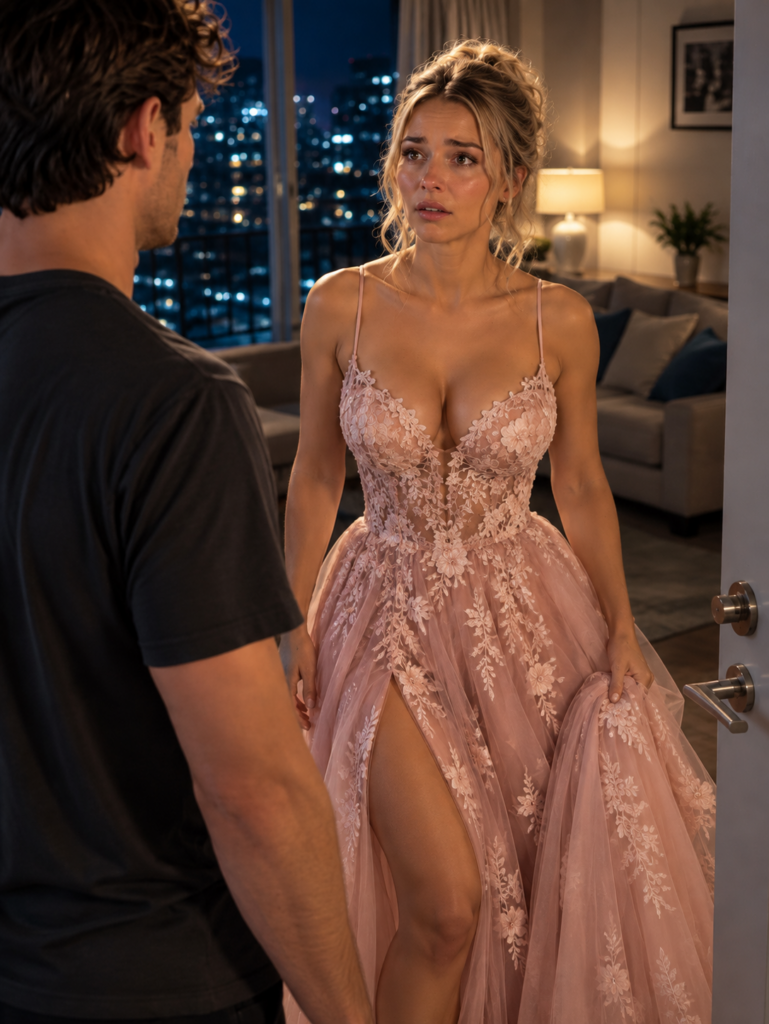
Wedding dress.
Barefoot again.
My nervous system immediately remembered 2:17 a.m.
“No.”
She laughed.
“What?”
“You are no longer allowed to appear at doors dressed like this.”
“I forgot my shoes.”
“Tessa.”
She stepped closer.
“I wanted sixty seconds alone.”
My chest tightened.
“Are you running?”
“No.”
“Certain?”
“Yes.”
She took my hand.
“The first time I came to your door in a wedding dress, I was asking you to help me escape a life I had chosen for the wrong reasons.”
I squeezed her fingers.
“And now?”
“Now I’m here because I chose this one on purpose.”
My eyes burned.
“That was unfairly good.”
“I practiced.”
She kissed me.
Soft.
Familiar.
Then whispered:
“This time I’m doing it.”
Ten minutes later, she walked down the aisle.
She did not look afraid.
Neither did I.
Well.
I was terrified.
But not of her.
Not of us.
For years, I believed loving Tessa meant never interfering with her choices.
Sometimes that was respect.
Sometimes it was fear wearing respectable clothes.
Tessa believed a life could become right if it looked right long enough.
We were both wrong.
The night she left her wedding did not prove we belonged together.
It only forced truth into the room.
Everything important happened afterward.
She took responsibility for leaving Ben.
I refused to turn her crisis into my opportunity.
She asked for space.
I respected it.
We kissed when the decision finally belonged to us.
We kept our ambitions.
We argued.
We apologized.
We repaired things before silence hardened around them.
Love was not rescue.
It was not sacrifice performed quietly so the other person would feel guilty later.
It was telling the truth soon enough that another person could actually choose.
At 2:17 one morning, my best friend appeared at my door in another man’s wedding dress and told me she could not marry him.
Years later, she stood behind another door wearing a wedding dress again.
This time, she smiled.
“This time I’m doing it.”
And she did.
The End.

