
PART 3
She laughed through the first tear.
Then covered her face.
“I need somewhere I can cry.”
Everything inside me softened.
“Okay.”
“Without someone telling me he’d want me to be happy.”
“Okay.”
“Without being told I’m strong.”
“Okay.”
“Without someone handing me a tissue before I’ve actually cried.”
I put both hands on the steering wheel.
Then turned off the movie audio.
“There.”
“What?”
“No advice.”
She lowered her hands.
“No fixing.”
“Correct.”
“What do we do?”
I looked at the rearview mirror.
“We let the movie wait.”
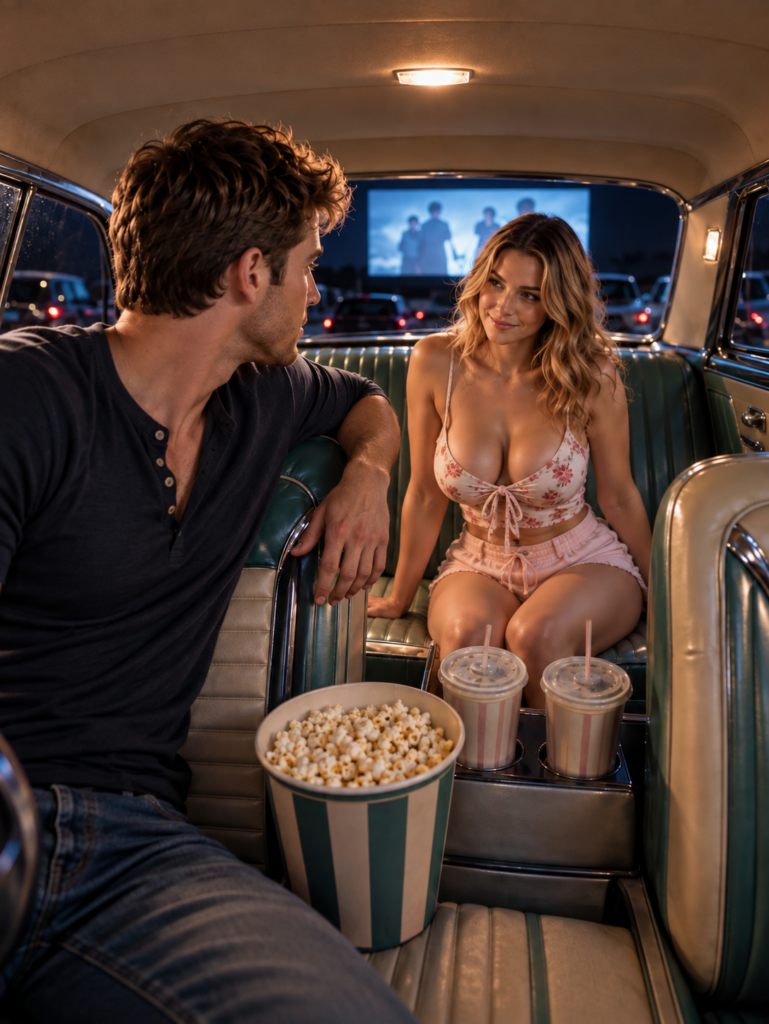
For the next hour, we sat in that car.
Eventually, I climbed into the backseat too, but I stayed on the opposite side.
No touching.
No romance.
Just two people and an unopened letter.
Marin took the envelope from her purse.
The paper inside had been folded enough times that the creases were soft.
“Do you want to read it?”
She nodded.
Then started.
“Dad, I don’t know how to talk to you without becoming sixteen again.”
She stopped.
Breathed.
Continued.
Some sections were angry.
Some loving.
Some funny.
She had written about Sunday calls.
About the first apartment he helped her move into while complaining the entire time.
About the Thanksgiving when he ruined the turkey and blamed the oven.
About being tired of shrinking during arguments.
About wishing he had asked more questions.
About wishing she had answered more honestly.
At one point her voice broke completely.
She lowered the page.
“I should have sent this.”
“Maybe.”
She looked hurt.
I corrected myself.
“Or maybe you did what you knew how to do then.”
“That sounds like an excuse.”
“It might be mercy.”
“For who?”
“You.”
Marin wiped her face.
“He never knew.”
“No.”
“I hate that.”
“I know.”
Then I told her something I had never told Heather.
Or Marcus from work.
Or anyone.
The last clear conversation I had with Dad before the stroke had been an argument.
Nothing important.
That made it worse.
He wanted me to come help clean his garage.
I had plans with Heather.
“I’ll come next weekend.”
Dad said I always had something else lately.
I said something defensive.
He hung up first.
Three days later, the stroke happened.
“I apologized in the hospital,” I said.
“Did he hear you?”
“I don’t know.”
Marin did not say of course he did.
Thank God.
She simply asked, “What would you tell him now?”
I looked at the photograph in the front dashboard.
“That he was right about the garage.”
She laughed.
Then I did too.
And once we started, we couldn’t stop for nearly a minute.
Two people crying in the backseat of a Buick laughing about a garage.
Grief is absurd that way.
Afterward, I told her the rest.
“I’d tell him I’m sorry I made being busy sound like being important.”
Marin nodded.
“I’d tell him I kept the socket set he gave me.”
“Useful.”
“I’d tell him I still hate the way he loaded dishwashers.”
“Critical information.”
“And I’d tell him I loved him even when I didn’t call.”
Marin looked down at her letter.
“He knew that.”
“Maybe.”
“Maybe mine did too.”
“Maybe.”
That was as certain as either of us needed.
By the time we noticed the movie again, credits were rolling.
Cars were leaving.
The afternoon light had softened.
Marin folded the letter.
Placed it back into the envelope.
Then said, “I think I misunderstood goodbye.”
“How?”
“I thought saying goodbye meant closing something.”
She rested the envelope on her knee.
“Maybe it means admitting the relationship has changed shape.”
I listened.
“He’s gone.”
Her eyes filled again.
“I hate that.”
“Yeah.”
“But me living isn’t something I’m doing to him.”
I understood.
“Moving forward isn’t leaving him behind.”
“No.”
We sat another minute.
Then Marin smiled weakly.
“We missed the entire movie.”
“I’ve seen it.”
“Good?”
“Very.”
“Happy ending?”
“Complicated.”
“Maybe someday.”
“Movie can wait.”
She nodded.
The next morning, I woke at six-thirty.
I had no reason to.
Sunday.
Usually I would sleep until nine.
Instead, I opened the curtains.
Sunlight entered a room I had kept dim most mornings for months.
I cleaned.
Not obsessively.
Just enough to notice how neglected the apartment had become.
I threw away takeout containers.
Washed dishes.
Changed sheets.
Then I took Dad’s Buick for a drive.
No destination.
I drove the county roads he used to take when he wanted to avoid highways.
At one point, I pulled into a gas station and bought terrible coffee because Dad always bought terrible coffee on road trips.
I sat on the hood and drank it.
I still missed him.
Nothing had been solved.
But grief felt different.
Not smaller.
Less private.
Marin changed too.
A week later, I found an envelope beneath the Buick’s windshield wiper.
For one second, my stomach tightened.
Then I saw my name.
Inside was a short note.
Calder,
Thank you for letting the movie wait.
I don’t remember a single scene.
I remember everything we said.
I think that mattered more.
Then, underneath:
Sometimes the best part of the story happens after the screen goes dark.
—Marin
I kept the note.
Still have it.
Our friendship grew after that afternoon.
Friendship.
That word matters.
People sometimes hear stories about two lonely adults helping each other and immediately want romance.
As though kindness is somehow unfinished unless it becomes kissing.
Marin and I did not fall dramatically in love.
We became important to each other.
That was enough.
Morning coffee on weekends.
Walks around the neighborhood.
Library events.
Occasional dinners.
When one of us had a difficult anniversary, the other usually knew without needing a calendar reminder.
On the first anniversary of Dad’s death, Marin left a bag outside my door.
Inside:
Coffee.
A blueberry muffin.
A small toy Buick she had found at a flea market.
No note.
I called her.
“That was dangerously sentimental.”
“I know.”
“Are you sick?”
“Probably.”
I kept the toy on my desk.
On Philip’s birthday, I asked whether Marin wanted company.
“No.”
“All right.”
Then:
“Can I change my mind later?”
“Anytime.”
At seven that night, my phone rang.
We sat on her porch for two hours.
She told stories about him.
Not sad stories.
Mostly ridiculous ones.
Philip once tried to fix a washing machine and flooded an entire basement.
He had a lifelong belief that movie popcorn was “financial extortion.”
He called every electronic device “the machine.”
Marin laughed harder than she cried.
Healing did not mean we stopped missing anyone.
It meant memory regained more than one emotion.
Eventually, I told her about Heather.
Not the edited version.
How embarrassed I had been when the engagement ended.
How much of my identity had become someone preparing for marriage.
“I felt like everybody saw me as the guy whose fiancée left.”
Marin shook her head.
“Nobody thinks about us as much as we fear they do.”
“That’s either comforting or insulting.”
“Both.”
“What happened with you?”
“My last relationship?”
“Yes.”
She looked toward the street.
“Nothing dramatic.”
Her boyfriend, Andrew, had wanted her to move to Denver.
She didn’t.
He interpreted that as lack of commitment.
She interpreted his ultimatum as proof he did not understand the life she had already built.
They ended things six months before Philip died.
“I thought losing Andrew was the major grief.”
Marin smiled sadly.
“Then Dad died and suddenly the breakup felt like losing an umbrella during a hurricane.”
“That doesn’t mean it didn’t hurt.”
“No.”
She looked at me.
“You’re annoyingly reasonable sometimes.”
“I save it for neighbors.”
Months passed.
Summer became fall.
I started using my camera again.
Photography had been one of the first things I abandoned after Dad died.
He bought me my first real camera when I was sixteen.
After his death, taking pictures felt wrong.
Like preserving new moments somehow insulted the old ones.
One Saturday, Marin noticed the camera sitting on my kitchen counter.
“You taking that somewhere?”
“I don’t know.”
“Excellent plan.”
We drove to a state park.
I photographed trees.
A covered bridge.
Marin walking ahead on the trail.
When she noticed the camera pointed toward her, she stopped.
“Delete that.”
“Why?”
“I look terrible.”
“You look like a person walking.”
“Exactly.”
I kept it.
Later, I printed the photograph.
Not because it was extraordinary.
Because it wasn’t.
Marin walking beneath orange leaves with her hands in her jacket pockets.
Ordinary life.
Evidence I had started looking at the world again.
In November, I finally sold some of Dad’s things.
Tools I did not need.
Fishing equipment I would never use.
An old television.
The Buick stayed.
Marin never suggested otherwise.
That mattered.
She understood letting go did not need to become a performance.
The letter changed too.
One evening, she came over carrying the envelope.
“I finished it.”
I looked at her.
“Finished?”
“I stopped editing.”
“That seems healthier.”
“Possibly reckless.”
She sat at my kitchen table.
“I’m going to read it once.”
“To me?”
“No.”
She smiled.
“To him.”
Marin drove alone to the cemetery the next morning.
She took the letter.
Read it beside Philip’s grave.

Then brought it home.
She did not bury it.
Did not burn it.
Did not perform some symbolic release.
She put it in a box with photographs.
“I’m keeping it,” she told me.
“Good.”
“You don’t think that defeats the purpose?”
“What purpose?”
“Moving on.”
“I hate that phrase.”
“Why?”
“It makes grief sound like a traffic obstruction.”
Marin laughed.
“So what do you call it?”
“Moving with.”
She went quiet.
“I like that.”
That became language we both used.
Not moving on.
Moving with.
By winter, my apartment looked lived in again.
Books stacked beside the couch.
Actual groceries.
Curtains open.
A framed photograph of Dad above the desk.
Not hidden in a drawer.
I joined coworkers for dinner occasionally.
Called my sister more.
Visited my mother without waiting for holidays.
Marin expanded her life too.
She joined a local community choir.
Started volunteering for a literacy program on Saturday mornings.
Made friends who knew nothing about me.
That was healthy.
Neither of us became the other’s entire support system.
We both understood how dangerous that could be.
Then one evening, Marin asked whether I wanted to try the drive-in again when it reopened in spring.
“Same movie?”
“No.”
“Romance?”
“Absolutely not.”
“Action?”
“Maybe.”
“No crying in the Buick?”
She smiled.
“No promises.”
The Starview reopened in April.
Almost a year after our first trip.
This time, evening show.
Old adventure movie.
We brought blankets.
Popcorn.
Marin sat in front the entire time.
We actually watched.
Halfway through, she whispered, “This is terrible.”
“You chose it.”
“I was misled by the poster.”
At the end, she looked over.
“I made it through a happy ending.”
“Growth.”
“Don’t be dramatic.”
“You started this.”
We drove home laughing.
That was healing too.
Not revelation.
Repetition.
Returning to places that once hurt and discovering they could hold something else.
There were setbacks.
My father’s birthday hit harder the second year than the first.
I expected the opposite.
That made me angry.
Marin found me sitting in the Buick outside my apartment at midnight.
She knocked on the window.
I rolled it down.
“You okay?”
“No.”
“Want company?”
“Yes.”
She climbed into the passenger seat.
No speeches.
We listened to one of Dad’s favorite radio stations.
That was enough.
Another month, Marin’s mother mailed her a box of Philip’s belongings.
His watch.
A pocketknife.
Several handwritten recipes.
Marin disappeared emotionally for almost a week.
I became worried.
Then almost made the mistake of pushing.
Instead, I texted:
Still here. No answer required.
Two days later:
Coffee?
I brought it over.
That was all.
Kindness became less impressive the longer we practiced it.
Which made it more valuable.
At first, every supportive act had felt meaningful.
Eventually, it became life.
Take your time.
Did you eat?
Want company?
No?
Okay.
Call later.
I’m here.
Small sentences.
Years later, when I think about that first summer, I realize neither of us actually changed the other’s life.
Not in the dramatic way stories like to claim.
Marin did not rescue me.
I did not rescue her.
We interrupted each other’s isolation.
That is different.
Important, but different.
She reminded me to open curtains.
I reminded her she could cry without explaining herself.
She listened when I missed Dad.
I listened when she missed Philip.
We gave each other permission to stop pretending healing was something you could complete privately if you were disciplined enough.
People are not built that way.
One evening almost two years after the drive-in afternoon, Marin came over with takeout.
We ate on my small balcony.
She said, “Do you ever think about Heather?”
“Sometimes.”
“Want her back?”
“No.”
“Angry?”
“No.”
“Good.”
“What about Andrew?”
She shrugged.
“I hope Denver worked out.”
“That sounds suspiciously mature.”
“I’ve been practicing.”
We laughed.
Then she asked, “Do you think we would have become friends if our fathers hadn’t died?”
That question stayed between us.
“Maybe.”
“Really?”
“No.”
She smiled sadly.
“Me neither.”
I looked toward the street.
“That’s the awful part.”
“What?”
“I hate what happened.”
“Me too.”
“But I don’t hate that I know you.”
Marin’s eyes filled.
“Yeah.”
We did not try to reconcile the contradiction.
Some good things grow in damaged ground.
That does not make the damage good.
It means life is stubborn.
Three years after Dad died, I finally restored the Buick.
Not fully.
I repaired the air conditioner.
Replaced worn upholstery.
Had the engine rebuilt.
People asked why I spent money on a car worth less than the repairs.
They missed the point.
Dad loved that car.
I loved driving it.
Keeping it no longer felt like refusal to accept his death.
It felt like choosing something that still brought me joy.
That was different.
Marin helped choose the new seat fabric.
She chose wrong.
I ignored her.
She complained for months.
By then, she was dating someone.
His name was Everett.
A teacher she met through the literacy program.
The first time she told me, she looked almost guilty.
“Why are you making that face?” I asked.
“I don’t know.”
“You think I’m going to be jealous?”
“No.”
Pause.
“Maybe.”
I laughed.
“Marin.”
“What?”
“We’re friends.”
“I know.”
“That doesn’t become less true because you date someone.”
Her shoulders dropped.
“I’m scared of changing things.”
“Things change.”
“I hate when you say reasonable things.”
“Professional skill.”
Everett was good.
Quietly good.
He did not try to replace me.
I did not compete.
The three of us eventually had dinner.
He knew about the drive-in story.
Marin had apparently told it badly.
“So you two sat in the backseat of his car for an hour?”
“Yes.”
Everett looked at me.
“And nothing happened?”
“Correct.”
He looked back at Marin.
“You understand how suspicious this sounds.”
She laughed so hard she almost spilled water.
I liked him immediately.
A year later, Marin and Everett moved in together.
Not next door.
She sold the bungalow.
That hurt more than I expected.
On moving day, we stood beside the rental truck.
“You okay?” she asked.
“Absolutely.”
“You’re lying.”
“Moderately.”
Marin hugged me.
Not long.
Not dramatic.
“You know I’m fifteen minutes away.”
“That is basically another state.”
“Calder.”
“I’ll survive.”
She pulled back.
“The movie can still wait.”
I smiled.
“Anytime.”
After she moved, my life did not collapse.
That was proof of how far I had come.
I missed seeing her porch light.
Missed casual conversations across the driveway.
But loneliness did not return in the old form.
My life had expanded.
Friends.
Family.
Photography.
Work I cared about.
Weekends with plans sometimes and no plans other times.
I learned that healing should not depend on one person staying in one house forever.
Marin had reminded me life was still worth participating in.
Eventually, I had to participate without needing her next door.
A few months later, I met someone too.
Her name was Leah.
A friend of a coworker.
We dated slowly.
I told her about Dad.
About Heather.
About Marin.
About the Buick.
Everything.
She listened.
At one point she asked, “Were you ever in love with Marin?”
I thought carefully.
“No.”
“You sure?”
“Yes.”
“What was it?”
I smiled.
“Grief recognized grief.”
Leah nodded.
“That sounds intimate.”
“It was.”
“Just not romantic.”
“Exactly.”
She understood.
That was one reason I loved her eventually.
Years passed.
Marin married Everett.
I stood in the second row.
Not beside her.
Not as some dramatic person from the past.
As a friend.
At the reception, Marin found me near the dessert table.
“You’re staring.”
“I’m eating cake.”
“You’re emotional.”
“Cake-related.”
She smiled.
Then hugged me.
“Thank you.”
“For what?”
“You know.”
I did.
I married Leah two years later.
Marin and Everett came.
At one point during the reception, I saw Marin talking to Leah near the bar.
Both looked toward me.
Then laughed.
Later, I asked Leah.
“What did she say?”
“Classified.”
“Unacceptable.”
“She told me about the television year.”
I groaned.
“And the drive-in.”
“Of course.”
“And that you pretend not to need people.”
“I have improved.”
“That’s what she said.”
My father’s Buick remained in our garage.
Leah loved it.
Mostly because the front seat was absurd.
We drove it on Sunday afternoons sometimes.
Years after the original drive-in afternoon, the Starview announced it was closing.
Land sold.
Apartments planned.
Marin called.
“We have to go.”
“All four of us?”
“Obviously.”
So Marin, Everett, Leah, and I went to the final weekend.
Same Buick.
It technically held all four comfortably enough.
The theater was packed.
Families.
Older couples.
Teenagers.
People taking photographs of the sign.
They played Roman Holiday.
The same movie Marin and I had ignored years earlier.
She noticed immediately.
“You’re kidding.”
“No.”
Everett looked confused.
“This is the movie?”
“The movie,” Marin confirmed.
Leah smiled.
“Oh, this is excellent.”
We watched it this time.
All of it.
Near the end, I glanced toward Marin.
She was crying.
Everett handed her a napkin.
She took it.
Then noticed me looking.
“What?”
“Nothing.”
“Stop staring.”
I smiled.
When the credits rolled, nobody moved immediately.
Around us, car lights began turning on.
The huge screen faded.
Marin said, “We finally watched it.”
“Only took years.”
“Worth waiting.”
I looked at the dark screen.
“Yes.”
Before leaving, we took one photograph.
All four of us standing in front of Dad’s Buick.
The drive-in sign behind us.
That photograph sits framed in my house now.
Beside one of Dad.
Not replacing.
Adding.
That may be the most important thing grief taught me.
Love does not operate by replacement.
New joy does not remove old grief.
New people do not erase the dead.
Moving forward does not require destroying evidence that you once lived somewhere else emotionally.
Your life becomes larger.
If you let it.
Marin eventually stopped carrying Philip’s letter everywhere.
It stayed in a box at home.
My father’s photograph stayed in the Buick until sunlight began fading it.
Then I moved it into a frame.
The car survived.
So did we.
Different.
Not fixed.
I no longer believe people become completely healed from the most important losses.
Healing sounds too clean.
We adapt.
We build around absence.
We learn where it hurts.
We discover which days are harder.
We become capable of laughing without immediately apologizing to memory.
Most importantly, we stop believing pain is proof we should withdraw from life.
That was where I had been wrong.
After Dad and Heather, I had thought I could avoid loss by becoming smaller.
Fewer plans.
Fewer people.
Fewer hopes.
Marin had done something similar behind a brighter smile.
Then one afternoon, two people drove to a movie neither watched.
She climbed into the backseat because she needed somewhere to cry.
I turned off the sound.
That was all.
No miracle.
No grand gesture.
No promise.
Just an hour.
But that hour changed the direction of two lives because both of us stopped performing okay long enough to tell the truth.
Sometimes I think the world overvalues fixing.
Advice.
Solutions.
Strategies.
People hear pain and immediately reach for instructions.
Call someone.
Distract yourself.
Move forward.
Stay strong.
Think positive.
All well-intended.
Sometimes useful.
But there are moments when the person hurting does not need a map.
They need company.
Someone who will not become frightened by tears.
Someone who will not rush grief toward a lesson before grief is ready.
Someone willing to say:
The movie can wait.
Years later, Marin sent me a birthday card.
Inside she wrote only one line.
Still glad you turned the sound off.
I called her.
“Terrible card.”
“You kept it.”
“Obviously.”
We talked for twenty minutes.
Work.
Families.
Everett’s latest home-improvement disaster.
Leah’s garden.
Nothing heavy.
Before hanging up, Marin said, “Calder?”
“Yeah?”
“I’m glad we didn’t make that afternoon into something it wasn’t.”
I knew what she meant.
“Me too.”
“We needed a friend.”
“Yeah.”
“That was enough.”
It still is.
Dad has been gone many years now.
I still think about him almost every day.
Not always sadly.
Sometimes I hear his voice when I load the dishwasher wrong.
Sometimes I see a man in a hardware store arguing with an employee and think Dad would have enjoyed that.
Sometimes I drive the Buick and remember his hands on the wheel.
Philip exists in my life too, strangely.
A man I never met.
Through Marin’s stories, I know he hated onions, distrusted self-checkout machines, and once ruined an entire family vacation because he refused to admit he was lost.
That is another thing people do for each other.
We help keep the dead multidimensional.
Not just loved.
Not just missed.
Human.
Funny.
Difficult.
Specific.
One evening, Leah asked me what I thought my father would say if he saw my life now.
I looked around our house.
Photographs.
Books.
A dinner party planned for Saturday.
Camera equipment by the door.
The Buick in the garage.
“I think he’d ask why I spent so much money repairing his car.”
Leah laughed.
“And then?”
I thought.
“He’d probably be glad I stopped hiding in the apartment.”
That answer felt true.
If I could tell him one thing now, it would be that I finally understood something Marin figured out before I did.
Saying goodbye is not the same as forgetting.
Continuing is not betrayal.
And a second chance does not always arrive disguised as a new love story.
Sometimes it is much smaller.
Opening the curtains.
Cleaning the apartment.
Taking an old car for a drive.
Calling a friend.
Sitting beside someone while they read a letter they never sent.
Turning off a movie nobody was watching anyway.
Sometimes healing is not finding someone who changes your entire life.
Sometimes it is finding someone who looks at the life you still have and quietly reminds you that it is worth returning to.
That was what Marin did for me.
I hope I did something similar for her.
And whenever life becomes too loud, too complicated, or too eager to turn every painful moment into a lesson, I still remember that afternoon.
The giant screen.
The fading sunlight.
An unfinished letter.
Two cold drinks going warm.
A woman in the backseat trying to hold herself together.
And five words that became one of the kindest things anyone ever taught me.
The movie can wait.
The End.

