
PART 2
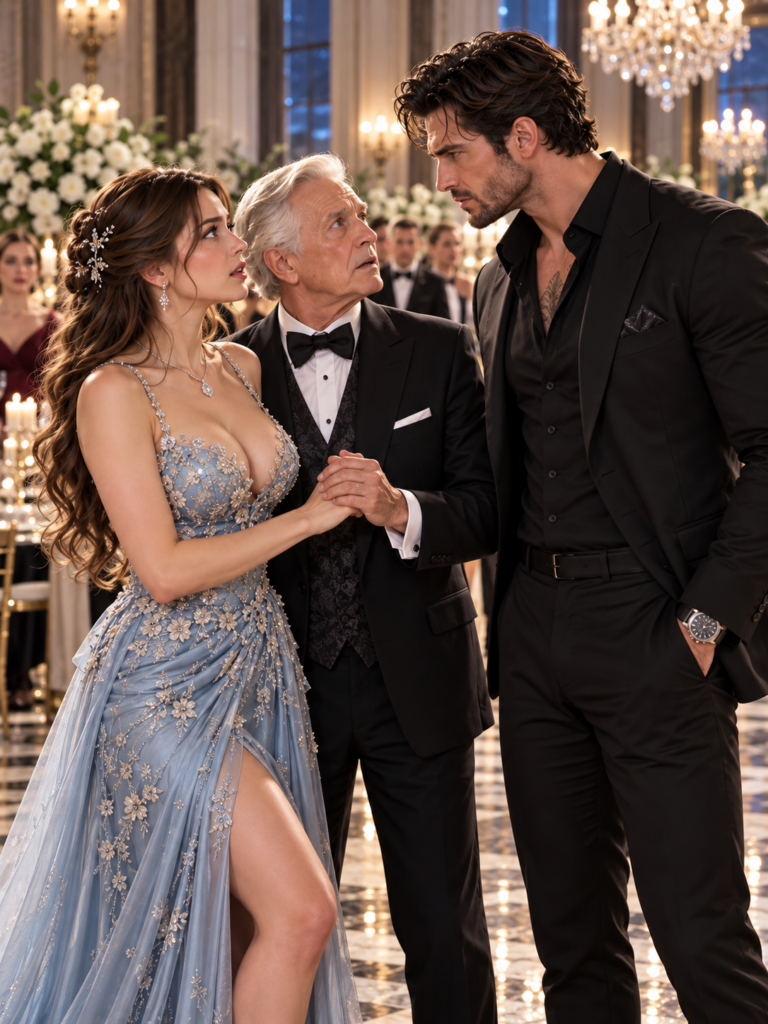
Ethan’s hand tightened around mine as the song changed, not enough to hurt, only enough to remind me that he was paying attention.
“Stop looking at me like that,” he murmured.
“Like what?”
“Like you’ve discovered something.”
“I have.”
His brows lowered. “What?”
“You count.”
“For what?”
“Three steps ahead. Every time.”
For the first time since I had met him, Ethan Caldwell looked genuinely caught off guard.
Behind us, Henry made a pleased sound. “I told you she was observant.”
“You told me she was critical,” Ethan said.
“She is both.”
The pianist shifted into a slower waltz, and Ethan’s posture changed with it. His movements were careful at first, almost too controlled, as if he had approached the dance floor prepared to manage a negotiation rather than follow music.
But after a few measures, his shoulders eased.
He knew how to dance.
Not casually, either. His hand rested at my back with practiced confidence, and his feet guided mine without ever forcing them. He moved like a man who had learned long ago that people followed him whether they wanted to or not—and had made a deliberate effort not to drag them.
“You’ve done this before,” I said.
“My mother insisted.”
“Your mother?”
“Every Sunday when I was growing up.”
Henry’s expression softened behind him. “Your mother insisted. I endured.”
“You loved it,” Ethan replied.
“I loved your mother. The dancing was a condition of the marriage.”
“Did it work?”
Henry lifted his chin. “We were married fifty-two years.”
The answer landed more quietly than either of us expected.
Ethan’s gaze flickered toward his father, and something warm crossed his face before he hid it again. It was only there for a moment, but I saw it. Beneath the tailored suits, the guarded silences, and the reputation that preceded him, Ethan was still a son who remembered his mother’s hands on his shoulders and his father pretending not to enjoy a waltz.
The song ended.
I stepped away, but Ethan didn’t release my hand immediately.
His eyes met mine. “You really don’t know who I am?”
“I know who people say you are.”
“That wasn’t my question.”
“No,” I said. “It wasn’t.”
For a beat, the studio seemed quieter than before. Rain tapped against the tall windows, and somewhere near the reception desk, a radiator clicked.
Ethan finally let go.
Henry moved toward us, using the chair for balance although he clearly didn’t need it. “Well?”
“Well what?” Ethan asked.
“Are you going to admit she’s an excellent teacher?”
“I’m going to admit she has an irritating habit of being right.”
“That’s practically a declaration of affection from him,” Henry told me.
“Dad.”
“What? I’m old. I’m allowed to be embarrassing.”
“You’ve always been embarrassing.”
“And yet you keep coming back.”
The humor faded between them almost as quickly as it appeared.
Ethan reached for his phone. “We need to talk about Saturday.”
Henry’s jaw tightened. “Not here.”
“Then where?”
“Somewhere I’m not being monitored.”
Ethan glanced toward the window, where the two men from the car waited beneath the awning. “You’re not being monitored.”
Henry gave him a look.
Ethan exhaled. “Fine. You’re being monitored a reasonable amount.”
“Reasonable according to whom?”
“According to the cardiologist you ignored.”
The word settled heavily between us.
I looked at Henry. He had gone very still.
“What cardiologist?” I asked.
“None of your concern,” Henry said.
“That’s not what I asked.”
“It’s private.”
“So is using your cane properly,” I replied. “And yet here we are.”
Ethan’s eyes moved between us, his expression unreadable. Then Henry slowly lowered himself into the chair.
The old man who had spent three days correcting my footwork suddenly looked tired.
Not weak. Not helpless.
Just tired of being treated like a problem everyone else had to solve.
“I had a fainting spell last week,” Henry said. “It passed.”
Ethan’s voice sharpened. “You collapsed in your kitchen.”
“I sat down unexpectedly.”
“You were unconscious for nearly a minute.”
“And then I woke up.”
“You could have hit your head.”
“I didn’t.”
“Because Mrs. Bell found you.”
Henry looked at me. “Mrs. Bell is my neighbor. She has a tendency to appear whenever something interesting happens.”
“She called me,” Ethan said. “I was in Norfolk.”
“And you drove three hours to lecture me.”
“I came to make sure you were all right.”
“You came to move me into assisted living.”
“That was not the first thing I suggested.”
“It was the second.”
I had expected the tension between them to feel frightening. Instead, it felt painfully familiar. Not the details, but the shape of it—the way concern became criticism, criticism became anger, and anger became the only language two people used when they were afraid to say, I can’t lose you.
I folded my arms. “What happens Saturday?”
Neither answered.
Henry looked toward the rain-streaked windows. “There’s a dance.”
“That much I know.”
“At the Bellweather.”
I knew the name. The Bellweather Ballroom had been closed for years, its white columns and gold-trimmed windows visible from the interstate as a reminder of another Richmond. My grandmother had once told me that people used to travel from three states away to dance there.
“The building is being sold,” Henry continued. “Saturday is the final evening before the transfer.”
“Who owns it?”
Ethan’s silence answered before Henry did.
“The Caldwell family,” Henry said.
I turned to Ethan. “You’re selling it?”
“Not me.”
“Your company?”
“My company handled the estate after the previous owner died. The property has been vacant for eleven years. It needs more work than it’s worth.”
Henry’s mouth thinned. “That’s one way to describe it.”
“It’s an unsafe building.”
“It’s a beautiful building.”
“It can be both.”
Henry pushed himself upright. “Your mother and I met there.”
The statement changed the atmosphere entirely.
Ethan looked at him, the frustration in his face replaced by something gentler. “I know.”
“No, you know the polished version. You know she was working the coat check and I was twenty-six and too proud to ask her to dance. You know we married the following spring.”
“What else is there?”
Henry’s fingers brushed the yellowed dance card in his jacket pocket.
“Your mother left something there.”
Ethan’s face closed again. “Dad, we’ve talked about this.”
“Have we?”
“Every year.”
“You’ve talked. I’ve listened.”
“And what exactly do you plan to find in a building that has been empty for a decade?”
“I don’t know.”
“That’s the problem.”
Henry’s gaze sharpened. “No. The problem is that you’ve decided not knowing is a reason not to look.”
Ethan’s attention shifted to me. “You’re not going with him.”
Henry made an incredulous sound. “She’s an adult.”
“This isn’t her business.”
“Neither is half of yours.”
“Dad.”
I expected Henry to retreat. Instead, he took the dance card from his pocket and placed it on the chair between them.
“I’m going Saturday,” he said. “With or without you.”
Ethan stared at the card.
“What is it?” I asked.
“A promise,” Henry answered.
“To your wife?”
His fingers rested on the worn edges. “To someone who never got the chance to keep hers.”
Ethan’s expression changed so subtly that I might have missed it if I hadn’t been watching him closely.
He knew.
Not the whole story, perhaps. But enough.
“Who?” I asked.
Henry’s eyes lifted to mine. “That’s what I intend to find out.”
Ethan stepped toward the chair and picked up the card. He didn’t open it. He simply held it, his thumb moving across the faded blue ink.
For the first time, his composure slipped.
“Where did you get this?” he asked.
“You know where I got it.”
“I want to hear you say it.”
“Your mother gave it to me.”
“Why?”
Henry looked down.
The answer, whatever it was, had been waiting between them for years.
Finally, Henry said, “Because she wanted me to find the person who wrote the last name on the back.”
Ethan’s fingers closed around the card. “You told me there was no one else.”
“There was no one else in our marriage.”
“That’s not what I meant.”
“I know what you meant.”
“And you still lied.”
The accusation held no heat. That made it worse.
Henry’s face sagged. “I protected a memory.”
“You protected a secret.”
“There’s a difference.”
“Not to the people left outside it.”
I watched Ethan turn the card over.
The front held several handwritten names, most of them faded beyond recognition. At the bottom, in dark blue ink, someone had written:
*One last dance. Bellweather. Saturday.*
On the back, beneath a water stain, were two initials.
E.M.
My breath caught.
Ethan noticed.
“What?” he asked.
I stepped closer. “May I see it?”
He hesitated, then handed it to me.
The paper trembled slightly between my fingers—not because of Henry’s mysterious promise, but because the handwriting looked familiar.
I had seen those narrow, slanted letters on birthday cards, grocery lists, and the notes my mother used to leave beside the coffee maker before she died.
E.M.
Elaine Morgan.
My mother.
I looked at Henry.
He had gone pale.
“You knew her,” I said.
Ethan’s head turned sharply toward his father. “What did you do?”
“Nothing,” Henry said.
The word came too quickly.
I studied the dance card again. The initials were not proof of anything. Plenty of people could share them. But I knew my mother’s handwriting, and the blue ink at the bottom of the front looked unmistakably like hers.
A strange pressure built behind my ribs.
“My mother never mentioned the Bellweather.”
Henry rose too quickly, and Ethan reached for his arm.
“I’m fine,” Henry said.
“You’re not,” Ethan replied.
Henry ignored him and looked at me. “Your mother worked there.”
“As what?”
“She taught beginner dance classes for a while. This was before you were born.”
I stared at him. “My mother was a bookkeeper.”
“She was many things.”
“That doesn’t answer my question.”
“No,” Henry said quietly. “It doesn’t.”
Ethan stepped between us—not threateningly, but with the reflex of someone accustomed to standing between his father and anything that might hurt him.
“Dad, this ends now.”
Henry looked at his son. “It ended for you years ago. It never ended for me.”
“What are you talking about?”
“The letter.”
Ethan’s expression went blank.
“What letter?” I asked.
Henry’s gaze dropped to the card in my hand. “Your mother wrote one the night she left Richmond.”
“Left?”
“Before she met your father.”
I couldn’t make my thoughts line up. My mother had grown up in Richmond. She had married my father at twenty-three, moved to Maryland, and returned only after his death. She had never spoken about a life before him beyond a few ordinary stories about school and summer jobs.
“She left Richmond?” I repeated.
“For a time.”
“Why?”
Henry’s mouth opened, but no answer came.
Ethan turned toward him. “You said you never heard from her again.”
“I said I never saw her again.”
“That isn’t the same thing.”
“You were a child.”
“I was twenty-six.”
“You were grieving your mother.”
“And you let me believe she had simply disappeared from your life.”
“She had.”
“Then why is her name on that card?”
No one spoke.
Rain slid down the glass in crooked lines. The community center had begun to empty around us, the last instructor switching off lights in the hallway. The ordinary sounds of chairs scraping and doors closing seemed impossibly distant.
I looked at Ethan. “What does your mother have to do with mine?”
His face had lost its usual certainty. He looked less like the man people whispered about and more like someone standing at the edge of a room he had been forbidden to enter.
“I don’t know,” he said.
It was the first honest thing he had given me.
Henry lowered himself back into the chair. “Your mother knew Evelyn.”
“My mother knew your wife?”
“They met at the Bellweather.”
“How?”
Henry rubbed one hand over his face. “Evelyn was already working there when Elaine arrived. They became friends.”
“Friends,” Ethan repeated. “That’s all?”
Henry glanced at him.
That single look carried years of unfinished arguments.
I felt the room tilt—not physically, but emotionally. The story I had been handed about my mother’s life had suddenly developed a locked door, and Henry Caldwell appeared to be the only person with a key.
“What was in the letter?” I asked.
Henry’s eyes met mine.
“Your mother asked Evelyn to keep something safe until you were old enough to receive it.”
My pulse quickened. “What something?”
“I don’t know.”
“That’s impossible.”
“She never told me.”
“Then how do you know there was a letter?”
“Because Evelyn gave it to me.”
Ethan’s voice was barely audible. “Mom gave you a letter from Elaine?”
“On the night she died.”
The studio seemed to contract around us.
I looked at the dance card, at the faded initials that might have belonged to my mother, and then at Henry’s stricken face.
“When did your wife die?” I asked.
“Six months ago,” Ethan said.
Henry closed his eyes.
Ethan continued, “She had been ill for some time. She knew she didn’t have much longer.”
“And the letter?”
“Was never found,” Henry said.
“You’ve been looking for it since then?”
“For six months.”
“Why didn’t you tell me?”
His expression twisted with regret. “Because I wasn’t certain Elaine was your mother. I only had the initials. And because I was afraid that if I found the letter, it would hurt you.”
I laughed once, but there was no humor in it. “You thought not knowing would hurt less?”
“I thought I could spare you a disappointment.”
“What kind of disappointment?”
Henry looked at Ethan, and Ethan looked away.
That was when I understood the secret was not merely about two women who had once been friends.
It was about him.
About Ethan’s family.
About my mother.
“What did my mother write?” I asked.
Henry’s voice dropped. “She said she had made a choice she regretted.”
“What choice?”
“I don’t know.”
“You do know.”
“I know only what Evelyn told me.”
“And what did she tell you?”
Henry reached into the inside pocket of his blazer and removed a small brass key attached to a faded red ribbon.
Ethan went completely still.
“Where did you get that?” he asked.
“Your mother gave it to me with the dance card.”
“What does it open?”
Henry placed the key in my palm.
It was warm from his hand, old and worn smooth along the teeth.
“Something in the Bellweather,” he said.
Ethan’s voice hardened. “Dad, we searched that building.”
“Not the ballroom.”
“We searched every room.”
“Not the one beneath it.”
His words left us silent.
I looked at the key, then at Ethan.
For the first time, the fear in his eyes was not for Henry’s health.
It was fear of what we might find.
Henry folded his hands over the head of his cane. “Saturday night, I’m going to the Bellweather. I intend to open the room your mother kept locked.”
Ethan shook his head slowly. “There is no room beneath the ballroom.”
Henry met his son’s stare.
“There is,” he said. “And your mother told me never to let you find it.”
Then, from somewhere beyond the studio wall, the old building’s heating system groaned—and the brass key in my hand revealed a tiny inscription cut along its edge.
A single word.
Morgan.
PART 3
The word seemed to alter the key’s weight.
Morgan.
I traced the tiny letters with my thumb. They were so shallow I might have missed them if the light had struck the brass at a different angle.
Ethan reached for it, but I closed my fingers around the key.
“Don’t,” he said.
The request was quiet. Not an order. Somehow that made it more serious.
“Why?”
“Because we don’t know what it opens.”
“Neither does my father.”
“My father has been looking for it for six months.”
Henry’s mouth tightened. “I have been trying to understand what your mother wanted me to know.”
“And if the key leads somewhere dangerous?”
Henry gave him a tired look. “It leads to a room in an abandoned ballroom, Ethan. Not a foreign country.”
“That isn’t the point.”
“No,” I said. “The point is that you’re afraid of what’s inside.”
His attention shifted to me.
For a moment, none of us spoke.
The rain had weakened outside, falling in a fine mist that silvered the windows. The studio lights hummed above us, making the old dance card appear more fragile than before. I thought of my mother’s handwriting on grocery lists and birthday cards, of the way she had always paused when anyone mentioned Richmond.
I had assumed she was remembering my father.
Now I wondered if she had been remembering someone else.
“I’m going to the Bellweather on Saturday,” I said.
Ethan’s jaw flexed. “You shouldn’t.”
“That isn’t your decision.”
“It may be my responsibility.”
“Why?”
“Because my family owns the building.”
“Your family owns a property. That doesn’t make my mother’s history yours to manage.”
Henry’s expression softened with something like approval. “She has a point.”
Ethan looked between us. “You both seem determined to turn this into an expedition.”
“No,” I said. “I’m determined to stop being the only person in the room who doesn’t know what’s happening.”
That landed.
Ethan glanced at the key in my hand. “Saturday. Noon.”
Henry frowned. “The dance is Saturday evening.”
“I know.”
“Why noon?”
“Because I want to inspect the building before either of you walks into it at night.”
Henry started to object, but Ethan lifted one hand.
“Dad, if the property has been vacant for eleven years, the flooring may be unstable. The electrical system is disconnected. There could be mold, broken glass, any number of hazards.”
“I survived military service.”
“That doesn’t make you immune to rotten floorboards.”
“I never claimed it did.”
“Then let me arrange proper access.”
I looked at him. “You’re coming?”
His gaze met mine. “I’m not letting either of you go alone.”
Henry sighed. “That sounds less like an invitation than a sentence.”
“It’s both.”
I should have been irritated by the way Ethan spoke as if decisions naturally gathered around him. Instead, I noticed the exhaustion beneath his control. He had spent six months searching for a letter he claimed not to understand, while carrying the fear that his father might collapse again. He was not trying to take the mystery away from me.
He was trying to stand close enough to catch everyone if it fell.
“Fine,” I said. “But I choose what happens once we’re inside.”
“That’s not how safety works.”
“It is how consent works.”
Something changed in his expression.
“Fine,” he said. “You choose.”
Henry lifted his cane. “I’m touched by this display of mutual cooperation.”
“You’re not going to the building,” Ethan told him.
Henry looked offended. “I am the reason we’re going.”
“You’re also the reason I’m arranging a medical appointment for Monday.”
“I have a doctor.”
“You have a cardiologist who has called you three times.”
“Then he’s persistent.”
“Monday, Dad.”
Henry looked at me. “Do you see what I endure?”
“Constant concern?”
“Bullying.”
Ethan’s mouth twitched despite himself. It was gone so quickly I almost questioned whether I had seen it.
I held out the key. “You can keep this until Saturday.”
Henry shook his head. “It was given to me to find the truth. I think you should keep it.”
“That doesn’t make sense.”
“It does to me.”
Ethan studied the brass key. “Why would Evelyn give this to you?”
Henry’s eyes lowered. “Because she knew I would look.”
“And why didn’t she give it to me?”
“Because you would have tried to stop me.”
“You could have told me.”
“I could have told you many things.”
The words held no anger, only regret.
Ethan looked away first.
I slipped the key into the inner pocket of my bag. “Saturday at noon.”
Ethan nodded.
Henry rose slowly. This time, when he reached for his cane, Ethan did not correct him. He simply moved close enough to help if needed.
At the door, Ethan paused.
“Clare.”
I looked up.
“If you find anything that belongs to your mother—anything at all—you don’t have to face it alone.”
The words should have sounded reassuring. Instead, they reached somewhere I had kept carefully closed.
“My mother died eight years ago,” I said. “I’ve been facing her absence alone for a long time.”
His expression softened. “Maybe you shouldn’t have had to.”
Then he opened the door, and the rain-wet night swallowed them both.
*
Saturday arrived beneath a pale, cloudless sky.
The storm had passed, leaving Richmond washed clean and shining. Water clung to the branches along Broad Street, and the city looked almost peaceful enough to believe its old secrets had been carried away with the rain.
The Bellweather Ballroom stood behind a wrought-iron fence at the edge of an older neighborhood, its cream-colored columns streaked with gray. The broad windows were boarded from the inside, but the shape of the building still held a kind of elegance. Even weathered and silent, it looked as though it expected music to begin at any moment.
Ethan’s car stopped beside the curb.
I climbed out with my bag, the brass key tucked into the zippered pocket. Ethan emerged from the driver’s side wearing dark trousers, a white shirt, and a wool coat. He looked less like the intimidating man who had first entered the studio and more like someone who had been awake too long.
Henry was waiting near the gate with a silver-haired woman I recognized from the community center.
“Mrs. Bell,” he called.
She lifted one hand. “I told him I was coming.”
Ethan closed his eyes briefly. “Of course you did.”
Mrs. Bell smiled at me. “He tried to leave without telling me.”
“I told you where I was going.”
“You told me after you had already put on your coat.”
“That’s generally how leaving works.”
She turned to me. “He’s been impossible since Evelyn died.”
Henry sighed. “I am standing right here.”
“Good. Then you can hear me.”
Ethan approached the gate and unlocked it with a key ring. “Mrs. Bell, this may take some time. The building isn’t safe.”
“I’ll stay outside.”
“You don’t have to.”
“I know. I want to.”
There was such simple affection in her answer that Ethan’s resistance faded.
He turned toward the building. “All right. But stay near the entrance.”
Mrs. Bell gave him a pleased nod. “You see? You can be reasonable.”
“I’m learning.”
The admission surprised all of us.
Inside, the Bellweather smelled of dust, old wood, and rain trapped in plaster. Ethan used a flashlight to guide us through the foyer. The once-grand chandelier hung overhead beneath a gray cover of cobwebs. A curved staircase led toward the balcony, its brass railing dulled but intact.
I tried to picture my mother here.
Young, perhaps. Carrying a ledger or a box of programs. Laughing with Evelyn Caldwell beneath the chandelier.
It was difficult to reconcile that image with the woman I had known, who had worn soft cardigans and kept her purse organized by color. But then, I realized, I had always known only the version of her that belonged to me.
Henry stopped in the center of the foyer.
“She stood there,” he said.
I turned. “Who?”
“Evelyn. The first night I saw her.”
His smile was faint. “She was arguing with the manager over a missing coat. She was twenty-two and absolutely certain she was right.”
“She usually was,” Ethan said.
Henry glanced at him. “Your mother could make a person apologize for something they hadn’t done.”
“Did you apologize?”
“I offered to help search for the coat.”
“That’s not an answer.”
“It was the beginning of one.”
For a few seconds, the empty foyer held the warmth of a story told many times. Then Henry’s gaze moved toward the ballroom doors.
“She and Elaine spent hours in there,” he said.
“Doing what?” I asked.
“Talking.”
“About what?”
“Everything, I imagine. Evelyn never believed in small conversations.”
Ethan pushed open one of the doors.
The ballroom stretched before us in shadow. Tall windows lined the far wall, their panes dulled by years of neglect. The floor was covered by a protective sheet in some places, but the original wood showed through in others, still marked with faint geometric patterns.
At the far end stood a raised platform where the musicians had once played.
I walked slowly onto the floor.
The room was colder than the foyer. My footsteps sounded too loud.
“Your mother danced here?” Ethan asked.
“I don’t know.”
Henry touched the edge of the dance card through his jacket. “She helped teach classes.”
“You said beginner classes.”
“She was good with people who were afraid of making mistakes.”
I looked at him. “That sounds like her.”
The words escaped before I could stop them.
My mother had been good at that. She had taught me to ride a bicycle by running behind me long after she could have let go. She had never laughed when I fell. She had simply said, “Try again, sweetheart. The ground isn’t judging you.”
I wondered how many people she had reassured before me.
Ethan walked toward the platform, sweeping his flashlight across the walls. “The plans show a storage area beneath this section.”
Henry moved after him.
“You’re staying near me,” Ethan said.
“I’m walking behind you.”
“That is not the same thing.”
“It’s close.”
I followed them to the platform. Ethan knelt near the edge and brushed away a layer of dust from a narrow metal ring set into the floor.
“There,” he said.
Henry leaned on his cane. “That wasn’t on the plans.”
“Because it isn’t a standard access panel.”
Ethan hooked two fingers through the ring and pulled. The wooden panel lifted with a groan, revealing a short flight of stairs descending into darkness.
A smell of damp earth rose from below.
I stared at the opening.
“That’s the room beneath the ballroom,” I said.
Henry nodded.
Ethan shone his flashlight down the steps. “We’re not going farther until I check the supports.”
“Ethan.”
He looked back.
“We came here to find it.”
“We came here to determine whether it’s safe to enter.”
“Do you always turn every answer into another delay?”
“Only when the answer could involve someone falling through a floor.”
Henry cleared his throat. “I’m beginning to think he has a point.”
I gave Ethan a reluctant nod.
He descended first, testing each step before placing his full weight on it. At the bottom, he moved the flashlight from side to side.
“Dry enough,” he called. “Stay on the center boards.”
Henry started down.
I reached for his arm, but he waved me off. “I can manage stairs.”
“I didn’t say you couldn’t.”
“You were thinking it.”
“I was thinking you could ask for help before you need it.”
He paused, then accepted my hand.
The room below was smaller than I expected. It ran beneath the platform like an old service chamber, its walls made of rough stone. Wooden shelves lined one side, though most were empty. A narrow table stood beneath a covered window, and a rusted filing cabinet leaned against the far wall.
Ethan swept the beam across the floor.
“There’s no sign of recent entry,” he said.
Henry moved toward the table.
On its surface lay a small metal box.
He stopped breathing for a moment.
I felt the same strange pressure build in my chest.
“That wasn’t there when we searched,” Ethan said.
“You searched this room?” I asked.
“Not this room.”
“Then how did you know it existed?”
He did not answer immediately.
Henry reached toward the box, but Ethan caught his wrist.
“Wait.”
“I’m not going to open it.”
“You don’t know that.”
Henry looked at his son. “Evelyn left this for me.”
“Or someone placed it here recently.”
The possibility settled over us.
I examined the box from where I stood. It was narrow and dark with age, no larger than a book. A faded red ribbon was tied around it.
The same color as the ribbon attached to the key.
“Don’t touch it,” Ethan said.
“I’m only looking.”
“Looking is fine.”
Henry’s face had gone pale. “She said there would be a box.”
I turned toward him. “When?”
“The night she gave me the key.”
“What exactly did she say?”
His eyes moved to the covered window. “She told me there was something beneath the ballroom. She said Elaine had trusted her with it. Then she gave me the dance card and asked me to promise that I would bring you here if I ever found the key.”
“Why me?”
“I asked her that.”
“And?”
“She said, ‘Because Clare deserves to know what I couldn’t tell her.’”
My breath caught.
Ethan released his father’s wrist.
“What couldn’t she tell me?” I asked.
Henry’s voice grew quieter. “She didn’t say.”
“Did she mention my mother?”
“She said Elaine had left something for you.”
“Something in this box?”
“I don’t know.”
The uncertainty was unbearable.
I stepped closer. The brass key pressed against the side of my bag.
“Ethan,” I said, “check the ribbon.”
He hesitated.
“If it’s tied in a way that suggests it was placed recently, we leave. If it’s old, we open it.”
“That isn’t exactly a reliable security measure.”
“It’s what we have.”
He crouched beside the box and examined the ribbon without touching it. “The fabric is old. Dust has settled over the knot.”
“Then it’s been here awhile.”
“Probably.”
“Probably isn’t enough,” Henry said.
Ethan looked up at him. “It’s the most certainty any of us have had today.”
That silenced his father.
I took the key from my bag. The tiny inscription caught the flashlight beam.
Morgan.
The lock on the box was no larger than a fingernail.
I knelt beside Ethan.
“Wait,” he said.
I looked at him.
He seemed about to object again, but instead he pulled off his coat and folded it beneath my knees. The gesture was so practical and thoughtful that it unsettled me more than any warning would have.
“What?” I asked.
“The floor is damp.”
“Thank you.”
He nodded, keeping his gaze on the box.
I inserted the key.
For one second, nothing happened.
Then the lock turned with a soft, reluctant click.
Henry let out a breath that sounded almost like a prayer.
I lifted the lid.
Inside lay a bundle of letters tied with blue thread, a small photograph, and a sealed envelope addressed in handwriting I recognized instantly.
My hands began to shake.
The envelope bore only two words.
For Clare.
Ethan went very still beside me.
Henry whispered, “That’s her.”
I reached for the photograph first.
It showed two young women standing in front of the Bellweather’s side entrance. One was Evelyn, unmistakable despite her youth. The other was my mother.
Elaine was smiling at the camera, her dark hair pinned loosely at her neck. One hand rested on Evelyn’s shoulder.
But there was someone else in the photograph.
A young man stood in the shadow behind them, half turned away. I could see only part of his face, but the angle of his jaw and the slight bend in his posture were familiar.
Henry took the photograph from my hand.
His expression changed.
“Who is that?” I asked.
He didn’t answer.
Ethan took the picture next. His face drained of color.
“Dad?”
Henry’s fingers tightened around the edges.
“That’s not possible,” he said.
“What isn’t?”
He stared at the young man in the photograph as if the past had stepped out of the dark room and placed a hand on his shoulder.
“That’s my brother,” he whispered.
Ethan’s eyes snapped toward him. “You never had a brother.”
Henry looked at his son.
“I did.”
The sealed envelope remained in my hand.
Beneath my mother’s name, in smaller writing, she had added a second line.
Before you open this, ask Henry why he told everyone his brother died.
PART 4 (THE END)
I stared at Henry.
“Your brother is alive?”
His eyes remained fixed on the photograph. “He was when this was taken.”
“That wasn’t my question.”
“No,” he said. “It wasn’t.”
Ethan reached for the envelope in my hand, then stopped himself. “Dad, who is he?”
Henry lowered himself onto the edge of the old table. The room seemed suddenly too small for the four of us and all the years he had kept hidden.
“His name is Daniel,” he said. “He was two years younger than me.”
“You told me he died,” Ethan said.
“I know.”
“Why?”
Henry closed his eyes briefly. “Because it was easier than telling the truth.”
The answer settled over us with a quiet heaviness.
I looked down at the envelope. My mother’s handwriting seemed impossibly alive beneath my fingers.
“Was Daniel the reason my mother came here?”
“Partly.”
“Was he the person she wrote about?”
“Not in the way you’re thinking.”
“I don’t know what I’m thinking.”
Henry accepted that with a small nod. “Neither did I, for a long time.”
Ethan took one step toward his father. “Start at the beginning.”
Henry looked at the photograph again.
“Daniel was always different from me. More patient. More artistic. He played piano at the Bellweather and taught ballroom classes on weekends. People loved him because he made them feel unafraid.” His mouth softened. “Your grandmother thought he was wasting his life. Your grandfather thought he was embarrassing the family.”
Ethan’s expression tightened. “Why?”
Henry’s gaze dropped to the floor. “Because Daniel loved men.”
The words were spoken without drama. Still, they altered the room.
“He fell in love with someone named Michael,” Henry continued. “They wanted to leave Richmond together. In those days, it wasn’t safe for them to be honest about what they were. Our father found out and threatened to have Daniel committed if he didn’t end the relationship.”
Ethan’s face changed.
“What did you do?” he asked.
Henry’s hands folded over the head of his cane. “I was twenty-four. I had a new wife, a family business waiting for me, and a great talent for believing that silence was the same as peace.”
“That isn’t an answer.”
“No,” Henry said. “It isn’t.”
The old man drew a slow breath.
“Daniel asked me to help him leave. I promised I would. Then our father confronted me. He said Daniel would destroy the family name, that Evelyn would lose everything if I helped him, that I would be responsible for whatever happened next.” Henry’s voice thinned. “I was afraid. So I told Daniel I couldn’t.”
Ethan looked away.
“Daniel left without me,” Henry said. “He took Michael and went north. A few months later, our father told people Daniel had died in a car accident.”
“But he hadn’t,” Ethan said.
“No.”
“And you let everyone believe it?”
“I did.”
“Why?”
“Because Daniel asked me to.”
That stopped Ethan.
Henry reached into his coat and removed a folded letter, softened by years of handling. He did not open it.
“He wrote once. He said that if people believed he was dead, they would stop looking for him. He had built a new life. Michael had found work in Vermont, and Daniel was teaching music. He didn’t want our father to find them.”
“Then you could have told me,” Ethan said. “You could have told me he was alive.”
“I could have.”
“But you didn’t.”
“I was ashamed.”
The admission was so simple that Ethan seemed to have no immediate response.
Henry looked toward the photograph. “I told myself I was protecting Daniel’s privacy. Then I told myself too much time had passed. Then Evelyn became ill, and I realized I had spent fifty years turning cowardice into a family tradition.”
I glanced at the box. “Where does my mother fit into this?”
Henry’s expression gentled.
“Elaine met Daniel at the Bellweather. She was twenty and newly arrived in Richmond. She worked in the office during the day and helped with the beginner classes at night. Daniel was the first person who made her feel that she belonged here.”
“She never mentioned him.”
“She may not have known how.”
“Did she know he was alive?”
“Yes.”
“How?”
“Evelyn told her. After Daniel left, Evelyn kept in touch with him. She was the only person in the family who did.”
“And my mother?”
“Elaine helped Evelyn write to him. She became part of that small circle of people who refused to let Daniel disappear completely.”
Henry touched the sealed envelope.
“Years later, after your mother had married and moved away, she came back to Richmond for a visit. She and Evelyn spent an entire afternoon in this room. Elaine told her that she had found Daniel’s address and wanted to contact him again.”
“Why didn’t she?”
“Because Daniel asked her not to do it by letter. He was afraid his correspondence could be found. He promised to call Evelyn instead.”
I looked at the photograph. My mother’s smile was open and unguarded, unlike any picture I remembered from my childhood.
“What did she want to tell me?”
Henry’s eyes met mine. “That the people who loved you had not always been brave enough to tell the truth.”
I swallowed.
“That’s all?”
“It may not feel like all.”
“No,” I said quietly. “It doesn’t.”
Ethan moved toward the box and lifted the bundle of letters. “Are these from Daniel?”
“Some. Others are from Evelyn and Elaine.”
“Why put them here?”
“Because Evelyn knew the Bellweather would be sold. She wanted the letters protected until she could decide what to do with them.”
“And then she gave the key to you.”
Henry nodded. “She was too ill to come here herself.”
“Why not tell me sooner?” I asked.
His gaze fell. “Because I didn’t know if Daniel was still alive.”
“You had an address?”
“An old one. We sent a letter. It came back.”
“Then how did you know this mattered?”
“Evelyn told me Daniel had moved again, but she didn’t know where. She said there was a chance Elaine had written something in the box that might lead us to him.”
I broke the seal on the envelope.
Ethan’s hand moved slightly, as if he wanted to stop me, but he did not.
Inside was a single sheet of paper.
My mother’s handwriting filled the page.
*Clare,*
*If you are reading this, then Evelyn found the courage to tell you what I could not.*
*There are people who become family because they share our blood, and people who become family because they recognize the parts of us we are afraid to show. Daniel Caldwell was one of the second kind.*
*He helped me when I was young and uncertain. Not by rescuing me, but by reminding me that my life belonged to me. He taught me to dance when I was convinced I had no grace. He taught me that leaving one place did not mean abandoning everyone in it.*
*I lost touch with him after I married your father. That was my choice, and I have regretted it—not because I did not love your father, but because I allowed fear and busyness to make silence seem harmless.*
*If Daniel is still alive, I hope you find him. Tell him I remembered the waltz. Tell him I was grateful.*
*And tell yourself this: you are allowed to know the whole story of the people who came before you. Their mistakes do not belong to you. Their silences do not have to become yours.*
*Love, Mom*
For a moment, I could not see the page clearly.
I pressed it against my chest.
Ethan stood beside me, close but not touching. Henry sat with his head bowed, his hands trembling faintly against his cane.
“My mother knew him,” I whispered.
“Yes.”
“She remembered him.”
“Yes.”
“She wanted me to find him.”
Henry’s voice broke slightly. “She wanted you to have the choice she never made.”
I looked at him. “What choice?”
“To ask.”
The word stayed with me.
Not to forgive. Not to forget. Not to repair every old wound in a single afternoon.
Only to ask.
Ethan took one of the letters from the box and unfolded it carefully. “There’s an address here.”
He read the page, then looked up.
“Daniel Caldwell. Maple Grove Retirement Community. Charlottesville.”
Henry’s face went white.
“He’s in Charlottesville?”
“According to this letter. It’s dated three years ago.”
“Three years,” Henry repeated.
“Dad.”
Henry rose too quickly. His cane slipped against the stone floor.
Ethan caught him before he fell.
“I’m fine,” Henry said automatically.
“No, you’re shaken.”
“I’ve spent fifty years believing my brother was beyond reach.”
“Then sit down.”
Henry allowed Ethan to guide him to the table. This time, there was no argument.
I folded my mother’s letter and placed it inside the envelope.
“Do you want to call him?” I asked.
Henry looked at me.
“I don’t know what to say.”
“Neither do I.”
“That has never stopped you before,” Ethan said.
I looked at him. There was the faintest trace of a smile in his eyes, but the grief remained.
Henry gave a quiet laugh. “You sound like your mother.”
“Then perhaps she would tell us to stop standing around.”
Ethan reached for his phone.
The call took three attempts. The first went unanswered. The second reached a general office. On the third, a woman transferred us to Daniel’s room.
Henry held the phone but did not speak.
A man answered after four rings.
“Hello?”
The voice was older, thinner than it might once have been, but there was warmth in it.
Henry closed his eyes.
“Daniel,” he said.
Silence filled the room.
Then the voice on the phone changed.
“Henry?”
Ethan turned away, giving his father privacy. I did the same, though the room was too small for any of us to truly escape the moment.
“I found the box,” Henry said.
Another silence.
“Evelyn kept it,” he continued. “She wanted me to give it to Clare.”
My name made Daniel inhale softly.
“She’s here,” Henry said.
I looked at him.
He held out the phone.
For one heartbeat, I considered refusing. The letter had opened something tender inside me, and I wasn’t sure I could survive another unknown.
Then I thought of my mother’s words.
You are allowed to ask.
I took the phone.
“Hello?”
“Clare?”
“Yes.”
“I’m sorry,” he said.
The apology was so immediate that my throat tightened.
“For what?”
“For disappearing before you knew I existed. For not finding your mother again. For all the years that became too long to cross.”
I sat on the edge of the table.
“My mother remembered you.”
“I remembered her every day.”
“She wrote that you taught her to dance.”
Daniel laughed softly. “She was a terrible dancer.”
“She said she had no grace.”
“That part was true.”
A surprised laugh escaped me, and Henry smiled.
Daniel continued, “She had courage, though. More than she realized.”
“What happened after she left Richmond?”
“She married your father. She wrote twice. Then the letters stopped.”
“She loved him.”
“I know.”
“Did that hurt?”
“Yes,” he said. “But love is not a contest. I wanted her to be happy, even when happiness did not include me.”
I looked at Henry.
He was staring at the photograph of Daniel and the two young women.
“My mother wanted me to find you,” I said.
“Then I’m glad you did.”
“Would you want to meet?”
The question seemed to take him by surprise.
“I would.”
“Tomorrow?”
“If you can wait that long.”
“I think I can.”
We exchanged the address and ended the call.
For a while, none of us moved.
Then Ethan leaned against the table beside me. “I owe you an apology.”
I turned toward him. “For what?”
“For telling you what you could and couldn’t do. For assuming that protecting people meant making decisions without them.”
“You were trying to protect your father.”
“I was trying to protect everyone. It’s not the same thing.”
“No,” I said. “It isn’t.”
He glanced toward Henry. “My father kept a secret because he thought silence was mercy. I’ve spent my entire life reacting to that kind of silence by demanding control.”
“And now?”
“Now I’m trying to learn the difference between helping and deciding.”
The honesty in his voice reached me.
“You’re doing better,” I said.
“Is that your professional opinion?”
“I’m very critical.”
“I remember.”
Henry cleared his throat. “If the two of you are finished conducting a private therapy session, I would like to see the ballroom before I leave.”
Ethan straightened. “You’re not dancing tonight.”
“I didn’t say I was dancing.”
Henry looked at me.
I understood.
We carried the box upstairs and returned to the ballroom as evening settled over Richmond. Mrs. Bell was still waiting in the foyer, having spent the afternoon organizing old programs she found in a cabinet.
When she saw the box, she pressed both hands to her heart.
“Evelyn would be pleased,” she said.
Henry nodded. “I hope so.”
The ballroom had changed in the fading light. The tall windows reflected the first lamps coming on outside, and the worn floor seemed less abandoned than asleep.
Ethan found an old portable speaker in a storage closet. It took him several minutes to make it work.
When music finally filled the room, it was a waltz.
Henry extended his hand to me.
Ethan immediately said, “Absolutely not.”
Henry looked offended. “I’m not asking you.”
I placed my hand in Henry’s.
Ethan hovered near us until I said, “You may stand by the wall if you promise not to count my steps.”
“I don’t count your steps.”
“You count everything.”
He had no answer for that.
Henry moved carefully, his cane left near the platform. I followed his lead, and for the first few measures, we barely moved beyond a slow sway.
“She would have liked this,” he said.
“Evelyn?”
“Your mother too.”
The music turned us beneath the dim lights.
At the edge of the floor, Ethan watched with an expression I could not read. Not fear this time. Something quieter.
When the song ended, Henry rested both hands over mine.
“Thank you,” he said.
“For the dance?”
“For not treating my secrets as the only thing that defined me.”
I squeezed his fingers. “You don’t get to keep the rest of them.”
He smiled. “I know.”
Ethan stepped onto the floor.
Henry released my hand and moved toward his son. “Your turn.”
“Dad.”
“One dance.”
“You’re tired.”
“I am old, not dead.”
Mrs. Bell called from the doorway, “That is what you said before the cardiologist.”
Henry pointed his cane at her. “Betrayal.”
Ethan looked at me.
I held out my hand.
He took it.
This time, he did not count.
We moved slowly across the worn floor, beneath the shadows of the windows and the faded gold of the balcony. His hand rested at my back, warm and steady. The old ballroom no longer felt like a place where people had hidden their truths.
It felt like a place where they had finally decided to tell them.
“Tomorrow,” Ethan said, “we’ll visit Daniel.”
“Together?”
“If you want.”
“I do.”
He looked down at me. “And after that?”
“After that, you’ll take your father to the cardiologist.”
His expression fell. “I knew there was a condition.”
“There are always conditions.”
“Then I accept.”
The music carried us through another turn.
I thought of my mother’s letter, the faded photograph, the brother Henry had mourned while he was still alive. I thought of all the lives that could have been different if someone had chosen honesty sooner.
But I also thought of Henry reaching for his son’s arm, Ethan learning to loosen his grip, and Daniel answering the telephone after fifty years of silence.
Some mistakes could not be undone.
Some years could not be returned.
Yet there were still doors to open, letters to read, and dances waiting in rooms everyone had believed were empty.

