
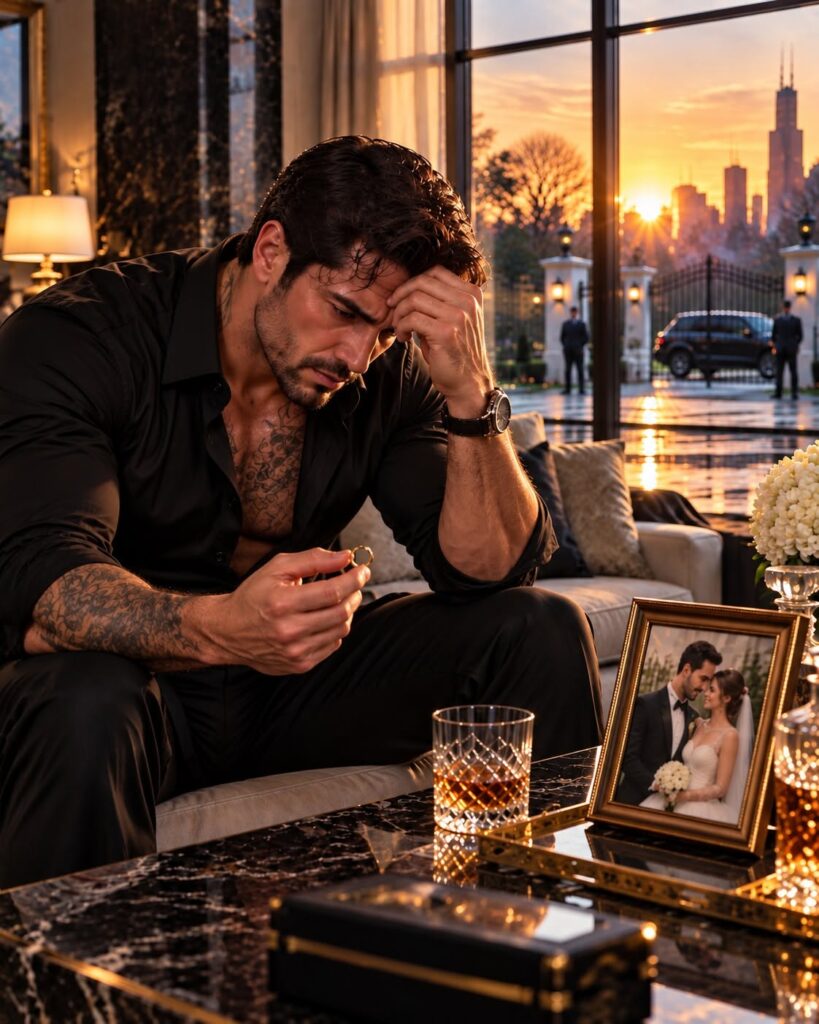
THE FIVE WORDS I LEFT BEHIND
PART 2 — THE HOUSE WITH NO CAMERAS
The bakery truck smelled of flour, cardboard, and cold metal.
For the first twenty minutes after we cleared the Bellandi estate, I stayed curled beneath the rear shelving with my knees pressed to my chest, listening to the soft rattle of trays above me and the dull rhythm of tires against wet pavement.
I had imagined freedom differently.
I had imagined it as air.
As silence.
As some clean dividing line between the life I had lived and whatever came next.
Instead, freedom smelled like yeast and dust, and every turn of the truck made my shoulder strike the wall.
I kept waiting for the driver to stop.
For a guard to shout.
For my husband’s voice to come through the doors.
Claire.
I knew Adrian’s voice in every form.
Cold enough to freeze a room.
Low with private amusement.
Sleep-roughened in the early morning.
Soft when he thought I was already asleep.
I could imagine exactly how he would say my name when he discovered I was gone.
Not loudly.
Adrian never needed volume.
He would say it once.
Then the entire estate would move.
That knowledge should have frightened me.
Instead, the thing that hurt was remembering the study.
Elena’s hand against his face.
His arm around her waist.
Her mouth on his.
And that single, unmistakable second when he had not pulled away.
I closed my eyes.
The truck slowed.
My hand went instinctively to the place where my wedding ring had been for fifteen years.
Bare skin.
A pale line.
Nothing else.
I told myself that was appropriate.
Nothing else.
At 5:08 a.m., the truck stopped behind a bakery in West Town.
I waited until the engine cut off and footsteps moved away.
Then I pushed open the narrow storage panel and climbed out.
Rain had weakened to a mist.
The alley was gray with predawn light, dumpsters lined against one brick wall and a stack of empty flour crates against the other. Somewhere inside the bakery, metal pans clattered and someone laughed.
It was such an ordinary sound that I nearly cried.
Not because it was beautiful.
Because nobody laughing in that kitchen knew that Claire Bellandi had just crawled out of a delivery truck.
For fifteen years, my last name had entered rooms before I did.
People knew Adrian.
Or knew of him.
They adjusted their voices around him. They remembered where he sat at charity dinners. They returned phone calls quickly. They avoided certain questions.
And by extension, they knew me.
Mrs. Bellandi.
The woman beside him.
The calm one.
The one who made people less nervous when Adrian’s name was on the guest list.
Standing in that alley in a borrowed housekeeper’s coat, I had no car, no phone, no luggage, no ring, and nine hundred and forty dollars in cash.
I had never felt more anonymous.
I had never felt less certain what to do with it.
A side door opened.
I froze.
A man in a white apron stepped out holding a bag of trash.
He looked at me.
I looked at him.
His gaze moved from my expensive pajamas beneath the oversized coat to my bare ankles and then to my face.
“You okay, ma’am?”
The question nearly undid me.
I swallowed.
“Yes.”
He clearly did not believe me.
“Need me to call somebody?”
“No.”
“Cab?”
My mind raced.
A cab could be traced if Adrian started looking fast enough.
A rideshare required a phone.
Public transportation would put me around cameras.
Then again, Chicago was covered in cameras. I could not vanish by pretending technology had stopped existing.
What I needed was time.
Just enough to think.
“Is there a twenty-four-hour diner nearby?”
He pointed toward the corner.
“Two blocks. Marcie’s. Coffee’s terrible, eggs are good.”
“Thank you.”
He hesitated.
“You sure you’re okay?”
I managed a smile.
“I’m going to be.”
That was the first promise I made after leaving Adrian.
I had no idea whether I could keep it.
By 5:41 a.m., I was sitting in the back booth of Marcie’s Diner with black coffee cooling between my hands.
At almost the exact moment Adrian would have been discovering my ring.
I could see it too clearly.
He always woke at 5:30.
Even when he worked until two.
Years of habit.
Years of being a man who believed the day was safer if he met it before everyone else.
He would shower.
Dress.
Reach automatically for the phone he charged on the table beside the bed.
Except my phone would be there too.
Then he would see the ring.
And the note.
You made your choice. Goodbye.
Five words.
Cruel words, perhaps.
But I had not written them to injure him.
I had written them because anything longer would have tempted me to stay.
A waitress appeared with a pot.
“More?”
I looked at the cup I had barely touched.
“No, thank you.”
She glanced at the coat.
“You want breakfast?”
“I’m not hungry.”
“Nobody’s hungry at five forty in the morning. That’s why God invented hash browns.”
Despite everything, I almost laughed.
“Toast, then.”
“Toast I can do.”
When she walked away, I turned toward the window.
The city was beginning.
Delivery vans.
Early buses.
A cyclist in a yellow rain jacket.
A woman walking a small white dog beneath a clear umbrella.
People with places to be.
I had spent half my life inside Adrian’s world of contingency plans, private security, carefully controlled schedules and quiet risk.
Yet the question in front of me was painfully simple.
Where did I go?
My parents had died years ago.
My younger brother, Daniel, lived in Evanston with his wife and two children, but going there would be the first thing Adrian expected.
My closest friend, Mara, knew me too well and loved me too openly. Adrian would find me through her within an hour even if she refused to cooperate.
Hotels required identification and cards.
Airports were impossible.
Train stations only slightly less so.
Then I remembered Ruth.
Ruth DeLuca had been my mother’s oldest friend.
She was seventy-two, widowed, stubborn, and entirely unimpressed by the Bellandi name.
Ten years earlier, she had moved to a small house near Lake Geneva after selling the antique shop she had owned in Oak Park.
Adrian knew Ruth existed.
He had met her twice.
He had no reason to believe I would run to her.
More importantly, Ruth had one habit that suddenly seemed like a gift from heaven.
She hated smartphones.
She used a landline.
I paid for my toast and walked seven blocks to a small grocery store that opened at six.
They still had a public phone near the customer service desk.
I bought a prepaid calling card.
Then I dialed the number I had known since I was thirty.
Ruth answered on the seventh ring.
“If this is another person trying to sell me roof repairs, my roof is older than you and has better manners.”
My throat closed.
“Ruth.”
Silence.
Then, softly, “Claire?”
“Yes.”
“You sound terrible.”
“That’s encouraging.”
“You know what I mean.”
I pressed my forehead against the wall beside the phone.
“Can I come to you?”
Another silence.
This one shorter.
“Yes.”
“No questions?”
“I’ll ask them when you’re sitting in my kitchen and I can see your face.”
“I don’t have a car.”
“Where are you?”
I told her.
She sighed.
“You always did choose dramatic neighborhoods for breakfast.”
“Ruth.”
“I’m leaving now.”
“You don’t need to—”
“Claire.”
The firmness in her voice sounded so much like my mother that my eyes burned.
“Stay where people are,” she said. “Drink water. Eat something. I’ll be there.”
I nearly told her not to come.
Not because I didn’t want her.
Because involving anyone made them part of the problem.
But I was beginning to understand that fifteen years of being married to Adrian had taught me to measure everything through risk.
Who could be followed.
Who could be pressured.
Who knew too much.
Who might accidentally reveal something.
I did not want to live that way for the next hour.
I certainly did not want to live that way forever.
“All right,” I whispered.
Then I hung up.
At the Bellandi estate, Adrian found my note at 5:43.
I would learn the exact time later.
I would learn many things later.
At the time, all I knew was that forty miles away from me, my husband was sitting on the edge of our bed holding a wedding ring in his palm.
What I did not know was that Elena was standing in the upstairs hall when Adrian stepped out of the bedroom.
She told me this herself weeks later.
She said she had never seen his face look like that.
Not angry.
Not frightening.
Simply emptied.
“Where is Claire?”
Elena did not answer immediately.
Because she did not know.
Adrian looked at her.
“Where is my wife?”
“I don’t know.”
He held up the note.
Elena read the five words.
Her face changed.
Then she closed her eyes.
“Oh, no.”
Adrian became very still.
“What?”
“Adrian—”
“What happened?”
She should have told him then.
She would later admit that.
Instead, guilt made her cautious.
Fear made her slow.
And sometimes the decisions that change lives are not dramatic decisions.
Sometimes they are three quiet seconds in a hallway when somebody fails to say the necessary thing.
“Nothing,” Elena said.
Adrian stared at her.
“Do not lie to me this morning.”
“I kissed you.”
His hand tightened around the paper.
“You what?”
“Last night.”
“I know what you did.”
“She must have seen us.”
Something in his face shifted.
“She was there?”
“I don’t know. Maybe.”
Adrian looked toward the closed bedroom door.
Then back at Elena.
“You said nobody saw.”
“I said I didn’t think anybody saw.”
“You kissed me.”
“Yes.”
“And Claire may have seen it.”
“Yes.”
His voice dropped.
“Why?”
Elena’s eyes filled.
“Because I was afraid.”
Adrian laughed once without humor.
“That is not an answer.”
“It’s the only one I have.”
He walked away from her.
Not toward the study.
Toward the security room.
By 5:47, every exterior gate had been locked.
By 5:51, they knew I had not left by car.
By 5:56, one of Adrian’s security men discovered that the eastern service camera had stopped recording at 4:36.
By 6:03, Adrian knew I had passed through the kitchen corridor twelve minutes later.
But the image of me entering the delivery corridor was the last clear footage they had.
After that, nothing.
A missing wife.
A dead camera.
A trusted bakery route.
And one question nobody in that house could answer.
Had I escaped?
Or had someone helped me?
Ruth arrived at 7:18 in a faded blue Subaru with a crack across one corner of the windshield.
I had never been so happy to see an unattractive vehicle.
She pulled to the curb, leaned across the passenger seat, and pushed the door open.
“Get in.”
I did.
She looked me over once.
Hair uncombed.
Borrowed coat.
No bag.
No ring.
Then she pulled me toward her.
I stiffened.
Only for a second.
Then I buried my face against her shoulder.
Ruth said nothing.
She held me until the person in the car behind us honked.
Ruth lifted one hand and made a gesture in the mirror that would have horrified my mother.
I laughed into her coat.
“There she is,” Ruth murmured.
“Who?”
“The girl I remember.”
“I’m forty-five.”
“You can be forty-five and still be the girl who used to steal the marshmallows from my pantry.”
“I did not steal them.”
“You were the only twelve-year-old in Oak Park with a key to my back door.”
She pulled into traffic.
For ten minutes, she asked nothing.
Then, “Is Adrian going to come looking for you?”
“Yes.”
“Do you want him to find you?”
“No.”
“Do you want him to stop looking?”
I stared at the passing buildings.
That question hurt more.
“I don’t know.”
Ruth nodded as though that made perfect sense.
Another ten minutes passed.
Then she said, “Did he hurt you?”
“No.”
“Are you afraid of him?”
I thought carefully.
“Not the way you mean.”
Ruth glanced at me.
“How do I mean?”
“Physically. No. Never.”
“But?”
“I’m afraid that if he finds me before I know what I want, I’ll listen.”
“And that would be bad?”
“I don’t know.”
“Then it’s wise to get quiet before you decide.”
That was Ruth.
She could reduce a complicated marriage to one sentence and somehow not make it feel small.
I turned toward the window.
“At midnight, I saw him kiss Elena Russo.”
The car remained steady.
Ruth knew who Elena was.
Everyone close to us did.
Not because Adrian spoke of her.
Because old histories become family stories even when nobody means for them to.
“I see,” Ruth said.
“She kissed him first.”
“But he kissed her.”
“For one second.”
“One second can be a very long time.”
“Yes.”
“Did you ask him?”
“No.”
“Why?”
“Because I knew what I saw.”
“That isn’t what I asked.”
I closed my eyes.
“Because I didn’t want him to explain it into something I could forgive before I decided whether I should.”
Ruth was quiet.
Then she said, “That sounds like something your mother would have understood.”
My voice broke.
“I wish she were here.”
“I know.”
Outside, the city thinned into highways and wet fields.
For the first time since midnight, I slept.
Ruth’s house sat at the end of a narrow road surrounded by maple trees just beginning to turn.
It was small.
White siding.
Green shutters.
A screened porch.
The kind of house that did not need an intercom to know who was at the door.
Inside, it smelled like cinnamon, old books, and lavender furniture polish.
There were no cameras.
No guards.
No staff.
No coded locks.
Ruth pointed upstairs.
“Second room on the left. Sheets are clean. Towels are in the hall closet.”
“I should probably call Daniel.”
“No.”
I looked at her.
“You said no questions.”
“I said I would ask them later. I did not say I would let you make foolish decisions before breakfast.”
“My brother will worry.”
“Your husband will call your brother.”
“He already has.”
“Exactly.”
I stared at her.
She was right.
“If Daniel lies badly,” Ruth continued, “and he does, Adrian will know immediately. So unless you want Adrian here by lunch, leave your brother out of it for a few hours.”
I smiled weakly.
“You met Adrian four times.”
“Twice.”
“You understand him disturbingly well.”
“I spent thirty-eight years married to a trial attorney.”
She handed me a mug.
“Men who are accustomed to finding answers become restless when one chooses not to present itself.”
“Adrian isn’t restless.”
“No?”
“He gets quieter.”
Ruth nodded.
“That’s worse.”
I looked down at the tea.
“You’re not afraid of him?”
“I’m old, Claire. It makes fear less efficient.”
That answer stayed with me.
Upstairs, I showered, changed into jeans and a sweater Ruth left outside the bathroom, and slept until after one.
When I woke, the world felt briefly unfamiliar.
Then memory returned.
Study.
Kiss.
Ring.
Truck.
I sat up too quickly.
On the bedside table was a glass of water and a note in Ruth’s handwriting.
Soup downstairs. You are not allowed to make major life decisions hungry.
I almost smiled.
Then I noticed something else.
The room had an old cordless phone on a desk.
I stared at it.
Adrian’s number rose in my memory automatically.
I could call.
I could hear his voice.
I could demand an explanation.
I could tell him never to find me.
I could ask whether he had loved her all along.
Instead, I went downstairs.
Ruth was in the kitchen chopping carrots.
“Has anyone called?”
“Yes.”
I stopped.
“Who?”
“Daniel. Mara. Your husband.”
My stomach tightened.
“What did you tell them?”
“That you weren’t here.”
I stared at her.
“You lied?”
“No.”
I frowned.
Ruth waved her knife toward the ceiling.
“You were asleep upstairs. I was in the kitchen. At the time I answered, you were not here.”
“That is ridiculous.”
“It was technically true.”
“Adrian hates technical truths.”
“So do judges. Yet attorneys build careers on them.”
I sat at the table.
“How did he sound?”
Ruth resumed chopping.
“Controlled.”
That hurt.
I didn’t know why.
“What did he say?”
“‘Ruth, if Claire contacts you, tell her I need to know she’s safe.’”
“Nothing else?”
“He asked me not to tell you where he was or what he was doing.”
My eyes lifted.
“What?”
“I asked whether he was coming here.”
“What did he say?”
“That if you came to me willingly, he would not follow unless he had reason to believe you were in danger.”
I stared.
Ruth pushed vegetables into the pot.
“I thought you said he’d come looking.”
“He will.”
“He may.”
“No. He will.”
Ruth leaned against the counter.
“Perhaps.”
I hated the small spark of disappointment inside me.
I hated it enough to recognize what it meant.
Some part of me still wanted Adrian to break every rule to find me.
Another part desperately needed him not to.
Marriage was cruel that way.
You could want proof of love and proof of respect, even when one seemed to require the opposite of the other.
At three that afternoon, Adrian learned that the eastern service camera had not failed.
Someone had logged into the estate security system remotely.
The access credentials belonged to a former systems consultant named Simon Vale.
Except Simon had been dead for eleven months.
This fact changed the nature of my disappearance.
Adrian did not believe in ghosts.
He believed in stolen passwords.
He also believed in patterns.
The camera had been disabled at 4:36.
Exactly six minutes before the bakery truck arrived.
Exactly twelve minutes before I entered the corridor.
That timing was too precise.
Someone knew the delivery schedule.
Someone knew the camera system.
Someone either knew I intended to leave or had hoped I would.
And that was the part Adrian could not explain.
Because I had not known I would leave until shortly after midnight.
No one could have planned my escape hours in advance.
Unless the camera had not been disabled for me.
Unless someone had been preparing to use the same blind spot for another purpose.
I spent that afternoon walking around Ruth’s property.
No destination.
No plan.
Just wet grass under my shoes and cold wind off the lake.
By four, anger had replaced shock.
It was cleaner.
Easier.
I replayed the scene a hundred times.
Elena touching Adrian’s cheek.
His arm tightening around her.
The kiss.
I told myself I did not need context.
Then I hated myself for wanting context anyway.
Around five, Ruth joined me on the porch.
She handed me coffee.
“Your husband called again.”
“You’re enjoying this.”
“Not remotely.”
“What did he say?”
“He asked me to give you a message if I heard from you.”
I waited.
Ruth looked at me over her cup.
“He said: ‘Tell Claire I won’t defend what she saw. I only want the chance to tell her what she didn’t.’”
I looked away.
“That sounds exactly like him.”
“Is that good?”
“No.”
“Why?”
“Because Adrian knows language.”
“Most adults do.”
“He knows how to say enough without saying everything.”
Ruth smiled faintly.
“So do you.”
I turned toward her.
She raised one eyebrow.
“You left five words.”
“That was different.”
“Of course.”
I let out a breath.
“You’re supposed to be on my side.”
“I am.”
“It doesn’t feel like it.”
“I’m on your side, Claire. I am not necessarily on every decision you make.”
That sounded so much like my mother that I had to look away.
Ruth sat beside me.
After a moment she asked, “Do you believe he loves you?”
“Yes.”
The answer came immediately.
Too immediately.
Ruth noticed.
“And do you believe he loved her once?”
“Yes.”
“Do you believe people can love more than one person in a lifetime?”
“Obviously.”
“At the same time?”
I looked at her.
“That’s not fair.”
“It isn’t meant to be fair. It is meant to be useful.”
I rubbed my thumb over the pale place where my ring had been.
“I don’t know.”
Ruth nodded.
“Then perhaps that is one of the things you need to decide.”
“I saw him kiss her.”
“Yes.”
“He promised she was the past.”
“Yes.”
“And I opened our home to her.”
“Yes.”
“I feel stupid.”
“No.”
I looked at her.
Ruth’s voice softened.
“Trusting the person you married is not stupidity.”
“What if the trust was misplaced?”
“Then the person who misused it bears responsibility for that. But your willingness to trust was not a defect.”
I stared into my coffee.
“What if he has an explanation?”
“Then you will hear it when you are ready.”
“And if I believe him?”
“Then you decide what belief requires.”
“And if I don’t?”
“Same answer.”
I smiled bitterly.
“You make everything sound simple.”
“No. I make things sound smaller than they feel. Sometimes that helps people carry them.”
We sat in silence until the light changed over the trees.
At six fifteen, someone knocked on Ruth’s front door.
My entire body went cold.
Ruth looked at me.
“Upstairs.”
“No.”
“Claire.”
“If it’s Adrian—”
“It won’t be.”
“How do you know?”
“Because your husband called ten minutes ago.”
I blinked.
“What?”
“He said someone might come.”
“Who?”
“He didn’t know.”
That made no sense.
The knock came again.
Not aggressive.
Three measured taps.
Ruth moved toward the hallway.
I followed despite her glare.
She opened the door.
A woman stood on the porch.
Mid-thirties.
Dark hair tied back.
Navy raincoat.
She held no umbrella even though rain had started again.
I recognized her after a second.
Not personally.
From the estate.
One of Adrian’s newer security analysts.
“Mrs. DeLuca?”
“Yes.”
“My name is Nadia Mercer.”
Ruth did not move aside.
“I know who you are.”
Nadia looked past her and saw me.
Relief crossed her face.
“Mrs. Bellandi.”
“Claire.”
“Claire.”
She nodded.
“I’m glad you’re safe.”
I stiffened.
“How did you find me?”
“I didn’t.”
“What does that mean?”
“Mr. Bellandi guessed you might come here. He told me not to confirm it.”
That sounded like Adrian.
“Then why are you here?”
Nadia looked down the road behind her.
Then back at us.
“Because the camera that went offline this morning was disabled using credentials that should not exist anymore.”
“I know nothing about that.”
“I know.”
“Then why tell me?”
“Because I’m the one who disabled it.”
The porch seemed to tilt.
Ruth’s voice sharpened.
“Come inside.”
Nadia stepped into the hall.
I stared at her.
“You disabled the camera?”
“Yes.”
“Why?”
She took a breath.
“Because I discovered someone had been accessing the estate security archives.”
“Who?”
“I don’t know.”
“What were they looking for?”
“You.”
The word landed quietly.
Which somehow made it worse.
I folded my arms.
“What do you mean, me?”
“Your movements. Your schedule. Which doors you use. Which vehicles you ride in.”
Ruth closed the front door.
Nadia continued.
“I found the unauthorized access yesterday afternoon. I didn’t want whoever was monitoring the system to know I had detected them, so I created a temporary blind spot at the eastern entrance and watched for any attempt to use it.”
“And then I did.”
“Yes.”
“You saw me leave?”
“Not on camera.”
“But you knew?”
Nadia hesitated.
“I suspected.”
“Why didn’t you tell Adrian?”
“I did. This morning.”
“No. Before I left.”
Her eyes lowered.
“Because at 4:32 a.m., someone attempted to reactivate the camera remotely.”
I stared.
“What does that have to do with me?”
“It told me the person watching the system was still active.”
“You still haven’t answered.”
Nadia’s expression tightened.
“I was waiting to identify them.”
“And instead you let me walk through an unsecured corridor?”
“I had a security vehicle two blocks behind the bakery truck.”
Every muscle in my body went still.
“You followed me?”
“Only until you reached the diner.”
Anger flared.
“So Adrian knows exactly where I am.”
“No.”
“Don’t lie to me.”
“I’m not.”
“Then explain.”
“Mr. Bellandi told me if you left voluntarily, I was not to interfere.”
I laughed once.
“Convenient.”
“He didn’t know you had left yet.”
“What?”
“He gave that instruction months ago.”
That silenced me.
Nadia looked uncomfortable.
“After a disagreement you had last winter.”
I remembered.
It had not even been serious.
I had been furious after learning Adrian quietly assigned a driver to follow me when a business dispute made him uneasy.
I told him I was his wife, not property.
We argued for an hour.
Then he apologized.
Apparently, he had done more than apologize.
“He gave standing orders,” Nadia said. “If you ever chose to leave the estate alone, security was to confirm you were safe but never force you back, detain you, or reveal your location unless there was an immediate threat.”
My throat tightened.
Ruth said nothing.
I looked at Nadia.
“Then why are you here?”
“Because this morning, after reviewing the breach, I found something else.”
She reached into her coat slowly.
Not a weapon.
A folded sheet of paper.
She handed it to me.
It was a printout of access logs.
Most of it meant nothing.
Numbers.
Time stamps.
System identifiers.
One line was highlighted.
I read the device label.
Then read it again.
ELENA-R-MOBILE.
My pulse changed.
“Elena accessed the security system?”
“No,” Nadia said. “A device registered under her name connected to the estate network. The unauthorized archive searches began twelve minutes later.”
“When?”
“The night she arrived.”
I looked toward the rain-dark windows.
“So Elena came into our house and someone started watching me.”
“Yes.”
“Do you think it was her?”
“I don’t know.”
“But you came here because you think I’m in danger.”
“No.”
That answer surprised me.
Nadia met my eyes.
“I came because I think someone wants Mr. Bellandi to believe you’re in danger.”
I frowned.
“What does that mean?”
She pointed to the paper.
“The searches were careless enough to be found. The access trail led too neatly to Elena’s device. The disabled camera was noticed too quickly. It all looks intentional.”
“Intentional for what?”
“To make people suspicious of one another.”
The words settled over us.
I thought of midnight.
Elena arriving vulnerable.
Adrian protective.
Me trying not to be jealous.
A kiss witnessed through a half-open door.
A camera going dark.
My silent departure.
Every event had felt personal.
Separate.
But what if they weren’t?
I looked at Nadia.
“Does Adrian know about Elena’s device?”
“Yes.”
“What did he do?”
“Nothing.”
My anger returned.
“Nothing?”
“Not yet.”
“Why?”
“Because Elena’s phone never left her bedroom after eleven last night.”
I stared.
“How do you know?”
“The internal hallway camera confirms it.”
“Then what device connected?”
“That’s what I’m trying to determine.”
The rain strengthened.
Somewhere in the kitchen, Ruth’s old refrigerator clicked on.
Such a small sound.
Such an ordinary room.
And yet the shape of the story I had believed since midnight was changing.
Not disappearing.
Adrian had still kissed Elena.
That fact remained.
But around it, new questions had begun to form.
Questions I did not want.
Questions that made leaving less simple.
I folded the paper.
“Does Adrian know you came here?”
“No.”
“Why not?”
Nadia looked toward the door.
“Because there’s one more thing.”
I waited.
She reached into her coat again and handed me a small photograph printed from security footage.
The image showed the Bellandi study hallway at 12:16 a.m.
Me.
Barefoot.
Standing near the half-open door.
I looked at myself frozen in that moment.
Then I noticed the reflection in the dark glass of a framed painting across the hall.
A figure stood near the far staircase.
Watching me.
Not Adrian.
Not Elena.
Someone else.
My breath caught.
“Who is that?”
“We don’t know,” Nadia said.
I stared at the blurred silhouette.
“But whoever it is was waiting there before you reached the study.”
I looked up.
Nadia’s next words came quietly.
“And they were still there after you walked away.”
PART 3 — WHAT THE MIRROR REMEMBERED
For a long moment, nobody in Ruth’s hallway spoke.
Rain tapped against the front windows.
The old radiator clicked.
I stared at the photograph in my hand until the edges blurred.
There I was.
Barefoot.
Still wearing the pale silk nightgown Adrian had bought me in Florence three years earlier.
One hand slightly lifted, as if I had been about to push the study door farther open.
And beyond me, reflected faintly in glass, a person waited near the far staircase.
Watching.
That was the part that disturbed me.
Not merely that someone had been there.
That they had remained.
There was a difference between passing through a hallway and observing someone’s private collapse.
“Enhance it,” I said.
Nadia Mercer shook her head.
“We already did.”
“And?”
“Not enough resolution.”
“Man or woman?”
“Probably male.”
“Probably?”
“Height suggests it. Nothing more.”
“Staff?”
“We’re comparing access logs.”
“Guests?”
“Elena was the only overnight guest.”
I looked at her.
“Then how did someone stand in my hallway without anyone knowing?”
Nadia’s face tightened.
“That question is why I came.”
Ruth stepped closer.
“Why come to Claire instead of Mr. Bellandi?”
Nadia hesitated.
I noticed.
“So there’s something you’re not telling us.”
“Yes.”
“Nadia.”
She looked at me.
“Mr. Bellandi asked me to keep you out of the security investigation.”
I almost laughed.
“Of course he did.”
“No. Not like that.”
“How else would you describe it?”
“He believes the breach may be designed to pull you into whatever dispute is happening around Elena.”
“And his solution is to keep me ignorant.”
“His solution is to keep attention away from you.”
“That has been his solution for fifteen years.”
Ruth watched me carefully.
I realized I had raised my voice.
Not much.
Enough.
I pressed my lips together.
Nadia said, “He also told me something else.”
“What?”
“That if I discovered evidence suggesting the situation involved you directly, you were entitled to know.”
I studied her.
“That sounds contradictory.”
“He contains risk by default. He respects choice when someone makes him remember to.”
I did not know whether to be irritated by the accuracy.
“What exactly are you asking me to do?”
“Nothing.”
“Then why bring this?”
“Because I think the person in that reflection wanted you to see what happened in the study.”
A chill moved through me.
Ruth crossed her arms.
“Explain.”
Nadia pointed toward the photograph.
“The hallway camera angle changed at 12:05.”
“Changed?”
“Two degrees to the left.”
“Why?”
“We don’t know.”
“Can cameras move by themselves?”
“This one is remotely adjustable.”
“And someone pointed it toward the study?”
“Toward the section of corridor where you would have stood if you stopped at the door.”
I felt cold despite the warm house.
“You’re saying someone knew I’d be there.”
“I’m saying someone may have expected it.”
“That’s impossible.”
“Why?”
“Because I went downstairs for water.”
Nadia nodded.
“That’s what Mr. Bellandi said.”
My eyes narrowed.
“He knows why I was there?”
“He knows your habits.”
That hurt in a way I hadn’t expected.
Of course he knew.
For fifteen years, Adrian had known I went downstairs when I couldn’t sleep.
He knew I preferred cold water from the kitchen rather than the carafe beside the bed.
He knew I walked slowly when I was thinking.
He knew everything ordinary about me.
And somebody else might have learned those ordinary things too.
I folded the photograph and handed it back.
“I need to talk to Elena.”
Nadia blinked.
“Not Adrian?”
“No.”
“Claire.”
“If I speak to Adrian first, everything becomes about the kiss.”
“Isn’t it?”
“Yes.”
I swallowed.
“But not only.”
Ruth’s eyes softened.
That was the first time since leaving that I admitted it aloud.
The kiss mattered.
But something else had happened around it.
And until I understood what, I could not understand what I had actually seen.
Adrian called Ruth’s house at 7:03 that evening.
I answered.
The first ring.
I still don’t know why.
Maybe because after thirteen hours of running from his voice, I needed proof that hearing it would not undo me.
“Hello?”
Silence.
Then a breath.
“Claire.”
My hand tightened around the receiver.
I had imagined fury.
Questions.
Command.
His voice held none of those things.
Only exhaustion.
“You found me,” I said.
“I guessed.”
“That’s not an answer.”
“No.”
“Did Nadia tell you?”
Another silence.
“No.”
I believed him.
That annoyed me.
“How do you know I’m here?”
“I know where you go when you want to remember who you were before me.”
That sentence struck too close.
I looked across Ruth’s kitchen.
She was pretending to organize mail.
“I’m not coming home tonight.”
“I know.”
“You don’t get to say that like you’ve agreed to something.”
“I’m not agreeing. I’m listening.”
I closed my eyes.
“Don’t do that.”
“Do what?”
“Sound reasonable.”
His breathing changed.
Barely.
“I don’t know what tone you want from me.”
“I don’t want anything from you.”
“That isn’t true.”
I almost hung up.
Then I heard myself say, “I want to know if you love her.”
Ruth stopped sorting mail.
I turned toward the window.
Adrian answered quickly.
“No.”
“Did you?”
“Yes.”
The directness hurt.
“When did you stop?”
“A long time ago.”
“That’s not a date.”
“Claire.”
“Was it before me?”
“Yes.”
“How long before me?”
“Almost three years.”
I stared at the dark glass.
“And last night?”
His silence stretched.
“You kissed her.”
“Yes.”
No denial.
No excuse.
“I saw you.”
“I know that now.”
“You held her.”
“She stumbled when I stepped back.”
“You kissed her back.”
“Yes.”
My eyes closed.
There it was.
Again.
The thing I had fled rather than hear.
I whispered, “Why?”
His answer came after several seconds.
“Because for one second I remembered who I had been with her.”
My chest tightened.
It was not the answer I expected.
It was worse than a denial.
More painful than an excuse.
Because it sounded true.
He continued.
“Not because I wanted her back. Not because I planned it. Not because what we have means less.”
“Then what?”
“Memory.”
I laughed softly, bitterly.
“You expect me to accept that?”
“No.”
“Then why say it?”
“Because it’s true.”
I gripped the counter.
“Truth after betrayal is still late.”
“I know.”
“You should have pushed her away.”
“Yes.”
“Immediately.”
“Yes.”
“You should have told me.”
“Yes.”
I looked down.
“I hate when you do that.”
“Do what?”
“Agree when I’m angry.”
“I’m not going to argue with facts.”
“You always argue with facts.”
“Not yours.”
I almost smiled.
That made me angrier.
“Stop.”
“All right.”
A long silence.
Finally he said, “Are you safe?”
“Yes.”
“Is Nadia there?”
My eyes lifted.
“She was.”
His voice became colder.
Not toward me.
“She came to you?”
“She thought I should see something.”
“I told her—”
“She said you told her I had a right to know if it involved me.”
Another silence.
“She used that broadly.”
“She was right.”
“I know.”
That answer surprised me.
I leaned against the counter.
“I want to talk to Elena.”
“No.”
There he was.
My husband.
Immediate.
Controlled.
Infuriating.
“That was not a request.”
“Then I’m asking you to wait.”
“Why?”
“Because I don’t know whether she’s involved in the security breach.”
“Do you think she is?”
“I don’t know.”
“You brought her into our home.”
“I know.”
“You told me she was safe.”
“I believed she was.”
“You told me she needed protection.”
“She does.”
“From whom?”
“I don’t know.”
I went still.
“Then why exactly is she in danger?”
This time, the silence changed.
Not hesitation.
Calculation.
I knew Adrian too well not to recognize it.
“What aren’t you telling me?”
“Claire.”
“No.”
“I’m trying to keep—”
“If you say ‘keep you safe,’ I will hang up.”
He stopped.
Good.
I waited.
When he spoke again, his voice was quieter.
“Elena contacted me because someone sent her copies of letters we wrote when we were twenty-eight.”
I frowned.
“What?”
“Old letters.”
“You kept them?”
“No.”
“Then how did they get them?”
“I don’t know.”
“Did Elena?”
“She says no.”
“What was in the letters?”
“Personal things. Family details. Names. Places we went. Arguments with our parents. Plans we made.”
“Plans?”
“We were young.”
That hurt more than it should have.
“What kind of plans?”
“Marriage.”
I closed my eyes.
Ruth quietly left the kitchen.
Adrian continued.
“She thought someone was trying to frighten her. Then she received a photograph of you leaving the Art Institute two weeks ago.”
My eyes opened.
“What?”
“She called me.”
“And you didn’t tell me.”
“No.”
“Why?”
“I increased security.”
“I noticed.”
“You complained.”
“I asked why.”
“I lied.”
“Yes.”
He did not argue.
My voice hardened.
“You said it was because of negotiations on the South Side.”
“I know.”
“You let me believe your business was the problem.”
“I wanted you outside it.”
“I was already inside it.”
“Yes.”
The admission came so softly I nearly missed it.
“Who sent the photograph?”
“We don’t know.”
“Do you still have it?”
“Yes.”
“I want to see it.”
“All right.”
“And the letters.”
“All right.”
“And I want to speak to Elena.”
A pause.
“All right.”
That surprised me.
“When?”
“Tomorrow morning.”
“Not at the estate.”
“Fine.”
“Somewhere neutral.”
“Fine.”
“You don’t come.”
Silence.
“Adrian.”
“I heard you.”
“Then say yes.”
“No.”
I almost laughed.
“What?”
“I will not be in the room. But I will be nearby.”
“That is exactly the kind of thing—”
“The photograph means someone was watching you before Elena came to Chicago.”
His voice had changed.
Not threatening.
Not controlling.
Afraid.
Adrian almost never sounded afraid.
That stopped me.
“You think I’m in danger.”
“I think someone is trying to create pressure around my family.”
“Your family.”
“Yes.”
“Elena too?”
“No.”
The answer came immediately.
I held my breath.
“Then why protect her?”
“Because twenty years ago I cared about her. Because she came to me afraid. Because helping someone does not make them family.”
I looked at the empty space on my finger.
“And kissing her?”
His voice dropped.
“That was a failure of loyalty.”
There it was.
No poetry.
No explanation designed to rescue him.
A simple sentence.
I hated how much I needed it.
“Tomorrow,” I said.
“Tomorrow.”
I hung up.
Then stood alone in Ruth’s kitchen, shaking.
Not because I had forgiven him.
I hadn’t.
Because for the first time, I believed forgiveness might one day become a question instead of an impossibility.
And I did not know whether that made me strong or foolish.
The next morning, Ruth drove me to a small lakeside café ten miles away.
It was the kind of place Adrian would never choose for a serious meeting.
Mismatched chairs.
Handwritten specials.
Pumpkin muffins under a glass dome.
Elena sat in the corner when I arrived.
She looked older than I remembered from photographs.
Not old.
Human.
That mattered.
For fifteen years she had been an idea.
The woman before me.
The first love.
The unfinished chapter Adrian insisted had ended.
But ideas do not have tired eyes.
Ideas do not twist paper napkins between nervous fingers.
She stood.
“Claire.”
“Sit.”
She sat.
So did I.
For several seconds, neither of us spoke.
Then Elena said, “I’m sorry.”
I looked at her.
“For which part?”
She flinched.
“That’s fair.”
“I’m not trying to be fair.”
“I know.”
“Why did you kiss my husband?”
Her eyes dropped.
“Because I was frightened.”
“That answer wasn’t good when you gave it to him either.”
She looked up.
“He told you.”
“He didn’t defend it.”
Something moved across her face.
Pain, perhaps.
Or shame.
“I kissed him because the last few weeks made me feel twenty-eight again.”
I stared.
“That is not making this better.”
“I know.”
“Then don’t romanticize it.”
“I’m not.”
Her voice shook.
“I’m trying to explain something ugly without making it prettier than it was.”
That quieted me.
She folded her hands.
“When I received those letters, it felt like somebody had opened a room I had locked twenty years ago. They knew things no one should know. They knew what Adrian and I had said to each other. What we planned. What I was afraid of. Then they sent me pictures of you.”
“Why me?”
“I don’t know.”
“Did you know anyone had been watching me?”
“Not until I got the photograph.”
“And you called Adrian.”
“Yes.”
“Why not the police?”
Her mouth tightened.
“Because the letters included details about people I grew up around who would not appreciate police involvement.”
That was plausible.
Not comforting.
“Why stay at our estate?”
“Adrian insisted.”
“He said it was your idea.”
Elena looked startled.
“No.”
A small silence opened.
I felt irritation rise.
Not at Elena.
At Adrian.
Of course.
Even now, pieces had been framed to make everything easier for me to accept.
“He told me you asked for help.”
“I did. I didn’t ask to stay with you.”
I sat back.
“What happened in the study?”
Elena looked toward the window.
“I couldn’t sleep.”
“Neither could I.”
“I found Adrian working.”
“That part sounds familiar.”
“He was angry.”
“At you?”
“At whoever sent the letters.”
“Then?”
“I asked him whether he ever thought about what our lives would have been if things had gone differently.”
My stomach tightened.
“What did he say?”
“He said no.”
That surprised me.
Elena smiled faintly without humor.
“I did not appreciate the speed of his answer.”
Despite myself, I almost laughed.
“What happened after that?”
“I asked if he had truly stopped loving me before he met you.”
My throat tightened.
“And?”
“He said yes.”
The pain on her face was real.
Not dramatic.
Not fresh.
Old pain unexpectedly touched.
“I was embarrassed,” she continued. “I said something cruel.”
“What?”
“That maybe he had only married you because you were safer than I was.”
I stared at her.
“What did he say?”
“He told me never to speak about you that way again.”
Something inside me shifted.
Small.
Unwanted.
Elena continued.
“I apologized. Then I said I missed who I had been before everything in my family became complicated. Adrian said he understood.”
“And then you touched him.”
“Yes.”
“Why?”
“I don’t know.”
“Yes, you do.”
She looked at me.
Tears stood in her eyes but did not fall.
“Because I wanted one person from my old life to tell me I had mattered.”
There it was.
Not seduction.
Not love.
Not innocence either.
Something messier.
More human.
“And you kissed him.”
“Yes.”
“He kissed you back.”
“Yes.”
“How long?”
“Less than two seconds.”
“One was enough.”
“I know.”
“He told me it was memory.”
Elena looked down.
“That sounds like Adrian.”
“Is it true?”
“Yes.”
“How can you know?”
“Because when he pulled away, he said, ‘That was goodbye twenty years too late.’”
I went very still.
“He said that?”
“Yes.”
“Then what?”
“He told me I had to leave in the morning.”
My eyes narrowed.
“Leave the estate?”
“Yes.”
“That doesn’t match what happened.”
“I know.”
“Why didn’t you leave?”
“Because by morning, you were gone.”
Of course.
Everything changed when I disappeared.
Adrian kept Elena there because of the security breach.
Or because he thought she was connected.
Or both.
I looked at her.
“Did you know I was outside the study?”
“No.”
“Did you know anyone else was?”
“No.”
I pulled the security photograph from my bag.
Nadia had printed me another copy.
Elena studied it.
Her face drained.
“You recognize him.”
It was not a question.
She stared at the reflected figure.
“I might.”
“Who?”
She looked at me.
“My cousin Luca.”
I had heard the name.
Luca Russo.
Not a criminal mastermind.
Not an enemy out of a thriller.
A cousin who had managed logistics and property for Elena’s extended family businesses.
Quiet.
Educated.
Supposedly tired of family disputes.
“Why would Luca be in our house?”
“I don’t know.”
“Was he in Chicago?”
“He said he was in Milwaukee.”
“Did he know you were staying with us?”
“Yes.”
“How?”
“I told my sister.”
“Would she tell him?”
“She might.”
I watched her.
“What aren’t you saying?”
Elena folded the photograph.
Slowly.
“When Adrian and I were together, Luca hated him.”
“Why?”
“He thought Adrian was pulling me away from the family.”
“Twenty years ago.”
“Yes.”
“That is a long time to hold a grudge.”
“This may not be about Adrian.”
“Then what?”
Elena looked at me with an expression I could not read.
“Those letters.”
“What about them?”
“They were never lost.”
I waited.
She swallowed.
“My mother kept them.”
“Why?”
“Because she didn’t trust me to destroy them.”
I frowned.
“That doesn’t make sense.”
“My family was different then.”
“Different how?”
“More controlling. More concerned about who knew what.”
“And Luca had access?”
“To my mother’s house. Yes.”
“When did she die?”
“Eight months ago.”
I sat back.
The letters appearing now was no coincidence.
“Who inherited the house?”
“My sister and me.”
“And the contents?”
“Mostly my sister.”
“Where is Luca living?”
Elena hesitated.
“In the guest apartment behind that house.”
We both went quiet.
A server approached.
Neither of us ordered anything.
After she left, I asked, “Why would Luca send you old letters and photographs of me?”
“I don’t know.”
“Think.”
Elena pressed her hands together.
“Maybe he wanted me to go to Adrian.”
“Why?”
“I don’t know.”
“Why make you afraid enough to run to him?”
Her eyes met mine.
Then something changed.
A realization.
“What?”
“Luca asked me a strange question last month.”
“What question?”
“He asked whether Adrian had ever talked to me about Lake Mercer.”
The name meant nothing.
“What is Lake Mercer?”
“A property.”
“Whose?”
Elena went still.
“Oh, God.”
“What?”
She reached for her bag.
I caught her wrist.
“Do not leave.”
“I’m not.”
“Then tell me.”
She looked at me.
“Lake Mercer was the last property Adrian and my father negotiated over before Adrian and I broke up.”
I frowned.
“What kind of property?”
“Industrial land. Warehouses. Rail access.”
“Why would that matter now?”
“Because my father refused to sell.”
“And?”
“And after he died, Luca spent years trying to convince the family to develop it.”
“Did they?”
“No.”
“Why?”
“Because there was an old ownership restriction.”
I waited.
Elena’s face had become pale.
“What restriction?”
“My father gave someone a minority claim.”
“Who?”
“I never knew.”
“Adrian?”
“No. I would have known.”
“Then why ask him?”
“I don’t know.”
She looked at me.
“Unless Luca thought Adrian did know.”
My phone rang.
It was a temporary phone Ruth had purchased that morning.
Only four people had the number.
Ruth.
Nadia.
Daniel.
And Adrian.
I answered.
“What?”
“Claire.”
Adrian’s voice.
I looked at Elena.
“How do you know I’m here?”
“I don’t.”
I almost smiled despite myself.
“What happened?”
“Nadia found the identity of the man in the reflection.”
I looked at Elena.
“She already has a guess.”
“Luca Russo.”
I exhaled.
“Elena agrees.”
“Do not leave the café yet.”
I stiffened.
“Adrian.”
“I’m not ordering you.”
“You sound exactly like you’re ordering me.”
“Then I’m asking badly.”
Elena covered her mouth to hide a startled laugh.
I glared at her.
Adrian continued.
“We found something in the house archive.”
“What archive?”
“The estate construction files.”
My stomach tightened.
“Why would Luca be in those?”
“He wasn’t.”
“Then what did you find?”
“A copy of the original Lake Mercer ownership agreement.”
I stood without meaning to.
“What?”
Elena looked up.
“Claire?”
Adrian’s voice became softer.
“The minority interest did not belong to me.”
“Then who?”
Silence.
“Adrian.”
“It belonged to your father.”
Everything inside me stopped.
“My father?”
“Yes.”
“That’s impossible.”
“I have the signature page.”
I gripped the phone.
“My father was an architect.”
“I know.”
“He had nothing to do with your business.”
“That’s what we believed.”
“Why would Elena’s father give my father ownership in an industrial property?”
“I don’t know.”
A memory surfaced.
My father at our kitchen table when I was sixteen.
Rolled plans.
Coffee.
A name I had forgotten.
Mercer.
No.
Surely not.
“Claire?”
I looked at Elena.
“Did your father ever work with an architect named Thomas Hale?”
Her face changed.
“That was your maiden name.”
“Yes.”
She whispered, “Thomas designed the first warehouse renovation.”
I sat down again.
The café sounds seemed very far away.
“My father worked for yours.”
“Briefly.”
Adrian spoke through the phone.
“There’s more.”
I closed my eyes.
“Of course there is.”
“The agreement names a successor beneficiary.”
“What does that mean?”
“If your father died before the property was sold, his minority share transferred.”
“To whom?”
I already knew.
Somewhere deep in me, I knew before Adrian answered.
“To you.”
My hand went cold around the phone.
“How much?”
“Twenty percent.”
Elena inhaled sharply.
I stared at nothing.
Twenty percent of a property my father had never mentioned.
A property Luca Russo had apparently spent years trying to develop.
A property tied to Adrian’s old history.
A property I did not know I owned.
“Is it valuable?”
Adrian took a moment.
“Yes.”
“How valuable?”
“Enough that Luca would care.”
“That isn’t a number.”
“Current estimates place the full site between fifty and sixty million depending on zoning.”
I closed my eyes.
Twenty percent.
Ten million dollars.
Maybe more.
I almost laughed.
Not from joy.
From absurdity.
I had left my husband over a kiss and awakened the next morning as the unknown owner of a multimillion-dollar stake in a piece of land I had never seen.
“Elena,” I said slowly, “did Luca know who I was before Adrian married me?”
“I don’t know.”
“Think.”
She stared at the table.
Then her face changed.
“My father attended your wedding.”
I felt the air leave my lungs.
“What?”
“He didn’t stay for the reception. But yes.”
I had no memory of him.
Three hundred guests.
A blur of faces.
Flowers.
Music.
My mother crying.
Adrian’s hand around mine.
Elena’s father had been there.
Why?
Adrian spoke.
“Claire.”
“Yes?”
“I think the letters were bait.”
I looked at Elena.
“To get Elena into our house.”
“Yes.”
“And the photographs of me?”
“To make the threat feel immediate.”
“And the camera?”
“To create a vulnerability.”
“For what?”
“I don’t know yet.”
I looked down at my bare finger.
Then at the rain beyond the café window.
A darker thought formed.
“Adrian.”
“Yes.”
“You said the eastern camera was disabled before I left.”
“Yes.”
“What if whoever did it wasn’t helping me escape?”
Silence.
“What if they expected me to stay?”
He understood before I finished.
The letters brought Elena to our estate.
The photograph made Adrian protective.
The past made me uneasy.
The kiss drove me away.
But perhaps my departure had not been part of the original plan.
Perhaps it had ruined one.
“What would Luca gain,” I whispered, “from having me inside the estate?”
Nobody answered.
Then Elena said something I would remember for the rest of my life.
“My father once told Luca that Claire Hale’s signature was the only one that could release the Lake Mercer restriction.”
I looked at her.
“Release what restriction?”
Elena’s lips parted.
And then she said, “The property cannot be sold without you.”
PART 4 — THE CHOICE THAT WAS FINALLY MINE
I did not return to the Bellandi estate that day.
That surprised everyone.
Especially me.
By noon, I knew three things.
My father had quietly left me a twenty-percent interest in a valuable industrial property.
Elena’s cousin Luca had apparently been trying to unlock the property for years.
And someone had used old love letters, photographs, and the architecture of my own home to place several people exactly where they wanted them.
What I did not know was what I wanted from my marriage.
That question, strangely, felt more important than the money.
Adrian offered to come to Ruth’s house.
I said no.
He accepted the answer.
That mattered.
Not enough.
But it mattered.
Nadia brought copies of the Lake Mercer documents instead.
We spread them across Ruth’s dining table beneath a chandelier that had probably been installed during the Carter administration.
Legal descriptions.
Parcel maps.
Trust language.
Old signatures.
My father’s name.
Thomas Hale.
Seeing it made everything unexpectedly personal.
My father had been dead for nine years.
Until that moment, I had thought I understood the shape of his life.
Architect.
Husband.
Father.
Terrible gardener.
Excellent cook.
A man who believed every problem could be improved by a sharper pencil.
He had never spoken about Lake Mercer.
Not once.
Ruth sat beside me reading a photocopied letter.
“Your father knew,” she said.
“Knew what?”
“That you might inherit this.”
“How?”
She handed me the page.
It was dated seventeen years earlier.
Two years before I married Adrian.
The letter was from my father to a law firm.
If the property remains undeveloped at the time of my death, my interest shall pass to my daughter, Claire Hale, under the original protective covenant. I do not wish her notified unless and until an active sale, transfer, or redevelopment request occurs.
I read it twice.
“Why?”
Nadia pointed to another paragraph.
“There.”
My father had explained.
The ownership was not intended as an investment.
It was leverage.
The land had once housed small manufacturing businesses whose longtime tenants feared being forced out by redevelopment.
My father’s twenty-percent interest gave him veto power over any sale that did not preserve certain employment and lease protections.
He had not taken the share to become wealthy.
He had taken it to prevent faster money from erasing people who had no seat at the table.
That sounded exactly like him.
And suddenly, I understood why he never told me.
He had not wanted me counting imaginary millions.
He had wanted the restriction to remain dormant unless somebody tried to remove it.
Ruth smiled sadly.
“That stubborn man.”
My eyes filled.
“You knew?”
“No.”
“But you’re not surprised.”
“Your father once spent four months redesigning a community center for free because the board said they couldn’t afford proper wheelchair access.”
I laughed softly through tears.
“Yes.”
“That was Thomas.”
I looked at the papers.
For the first time in two days, the mystery felt less like something done to me and more like something entrusted to me.
My father had left me a choice.
He had simply trusted that if the moment came, I would make it.
The truth about Luca was less dramatic than I expected.
And in some ways, more disappointing.
He had not been planning violence.
He had not intended to kidnap anyone.
He had not built some elaborate criminal plot around me.
He wanted a signature.
That was all.
A signature worth millions.
For years, Luca had been negotiating with a development consortium that wanted Lake Mercer cleared and converted into a mixed commercial district.
The plan was not inherently evil.
It promised offices, apartments, retail space, tax revenue.
But it would also remove the old tenant protections my father had insisted on.
Luca knew the project could not move forward without me.
He also knew approaching me directly would raise questions.
So he tried to create circumstances in which I would be motivated to sign quickly.
First, he brought Elena back into Adrian’s orbit.
Then he let Adrian discover that someone was watching me.
The hope, as Nadia reconstructed it, was simple.
Adrian would become protective.
Elena would become dependent on him.
The Bellandi household would become emotionally unsettled.
Then Luca planned to appear as the reasonable family intermediary with a legal solution to the old property problem.
He assumed Adrian, distracted by security concerns, would encourage me to sign anything that seemed to make one complication disappear.
Luca misunderstood two things.
My husband.
And me.
Adrian did not sign my name.
He never had.
And I did not sign documents I did not understand.
The kiss was never part of Luca’s plan.
That belonged entirely to Adrian and Elena.
A painful accident inside a larger manipulation.
I was strangely grateful for that distinction.
Because it meant the mystery did not excuse my husband.
And my husband’s mistake did not explain the mystery.
Both truths could exist.
That was harder than discovering a single villain.
But life often is.
Luca agreed to speak with attorneys present two days later.
Not because Adrian threatened him.
I made certain of that.
Because Elena confronted him first.
She called her cousin and asked one question.
“Did you send the letters?”
He lied.
She asked again.
He lied badly.
Then she said, “I know where they came from.”
Silence.
According to Elena, Luca began explaining before she even finished.
He had debts.
Not gambling.
Not drugs.
Nothing dramatic.
He had invested in two failed property ventures and borrowed heavily against his expected share of the Lake Mercer redevelopment.
The consortium was losing patience.
He believed that if he could make the sale happen, he could repair everything before his family learned how much trouble he was in.
He had convinced himself nobody would truly be harmed.
Old letters were only paper.
Photographs were only photographs.
Security logs were only systems.
Pressure was not force.
Fear was not injury.
He had reduced every person involved to a lever.
Elena ended the call quietly.
“I would have helped you,” she told him.
That was the sentence that broke him.
Not a threat.
Not punishment.
Help.
Because he had spent months manipulating people who might have simply sat beside him if he had admitted he was drowning.
He turned over his devices.
The lawyers took over.
The consortium withdrew from the agreement once it learned how the access had been pursued.
And the matter, though serious, moved into the slow world of civil claims, financial settlements, employment consequences, and family conversations.
No explosions.
No blood.
No dramatic revenge.
Just consequences.
The kind that last longer because people have to live through them.
I stayed with Ruth for eleven days.
Adrian did not visit once.
He called every evening at seven.
Not six fifty-nine.
Not seven oh one.
Seven.
The first night, we spoke for nine minutes.
The second, twelve.
The third, almost forty.
He never asked me to come home.
That irritated me at first.
Then I understood.
He was waiting for me to decide what home meant.
On the fourth night, I asked, “Why didn’t you tell me Elena hadn’t asked to stay at the estate?”
He was quiet.
“I thought you would refuse.”
“So you manipulated the framing.”
“Yes.”
“You said she needed us.”
“She needed protection.”
“She did not need my guest room.”
“No.”
I sat on Ruth’s porch wrapped in a blanket.
“You made the decision easier for me by hiding part of it.”
“Yes.”
“That is not trust.”
“No.”
His willingness to answer plainly made it impossible to fight the version of him I had built in my anger.
So I had to fight the real one instead.
“That’s what I’m more angry about,” I said.
“More than the kiss?”
“Some days.”
He breathed out.
“I understand.”
“No, you don’t.”
“Then tell me.”
So I did.
I told him what it felt like to spend fifteen years beside a man whose instinct was always to absorb danger before anyone else saw it.
How romantic that had seemed when we were younger.
How exhausting it had become.
How every secret kept “for my protection” quietly told me he trusted his judgment more than mine.
“You say I’m your equal,” I said, “but sometimes you only mean after you’ve decided which facts I’m allowed to have.”
He was silent for a long time.
Then he said, “You’re right.”
I closed my eyes.
“Stop doing that.”
“What?”
“Agreeing.”
“I don’t know what else to do when you are.”
Despite everything, I laughed.
He did too.
Softly.
For a few seconds, we sounded married again.
That frightened me more than anger had.
Because love had not vanished when trust cracked.
It remained.
Wounded.
Inconvenient.
Alive.
On the sixth day, Elena came to Ruth’s house.
Not invited by Adrian.
By me.
We sat at the kitchen table while Ruth made enough pasta for a small wedding.
Elena looked tired but calmer.
“Luca is staying with his sister,” she said.
“Is he all right?”
The question surprised her.
“Yes.”
“Good.”
“You’re not angry?”
“I am.”
“But you care if he’s all right.”
“Those things can coexist.”
Elena smiled faintly.
“I’m learning that.”
She twisted her glass between her hands.
“I’m leaving Chicago tomorrow.”
“Where will you go?”
“Boston. My daughter lives there.”
I blinked.
“You have a daughter?”
“Twenty-six.”
That small fact rearranged Elena in my mind again.
Of course she had a life.
A family.
A history that did not orbit Adrian.
“She knows what happened?”
“Enough.”
“Is she angry?”
“At Luca. At me. At Adrian. Briefly at you.”
“At me?”
“She said anyone who crawls out of a fortified estate in a bakery truck clearly has unresolved communication habits.”
I stared.
Then I laughed.
Elena laughed too.
Ruth called from the stove, “I like her already.”
The laughter faded slowly.
Elena looked at me.
“I owe you something.”
“You already apologized.”
“Not that.”
She reached into her bag.
A small envelope.
Inside was a photograph.
Adrian at twenty-eight.
Younger.
Thinner.
Leaning against an old car.
Elena beside him.
Both laughing.
I looked at it.
I expected jealousy.
Instead, I felt tenderness.
Not for their relationship.
For time.
For the fact that people have entire lives before they become ours.
“He was happy,” I said.
“We both were.”
“Do you still love him?”
Elena thought carefully.
“No.”
I looked at her.
“I think I love who I was when I loved him.”
That made sense in a way I wished it didn’t.
She smiled sadly.
“That’s why I kissed him.”
“And that’s why he kissed you back.”
“Yes.”
I handed the photograph back.
She shook her head.
“Keep it.”
“Why?”
“Because I don’t need it anymore.”
Neither did I.
But I took it.
Not as a threat.
As evidence.
The past existed.
That did not mean it owned the present.
Before she left, Elena stopped at the door.
“Claire.”
“Yes?”
“He loves you.”
I stiffened slightly.
She raised one hand.
“I know I’m the last person who gets to say that.”
“Probably.”
“But I’m saying it anyway.”
I looked at her.
“Love wasn’t the problem.”
“No.”
She nodded.
Then left.
That was the last time I saw Elena Russo for almost two years.
When we met again, it was at a charity dinner in Boston.
She introduced me to her daughter.
We spoke for ten minutes.
Adrian stood across the room talking to someone else.
Nothing broke.
Nothing burned.
The world continued.
Sometimes healing is disappointingly ordinary.
That is one of its gifts.
On the eighth day, Daniel came to visit.
My younger brother hugged me so hard my feet nearly left the floor.
“You’re an idiot.”
“Good to see you too.”
“You disappeared.”
“I needed space.”
“You crawled into a bakery truck.”
“That detail has become unnecessarily popular.”
“Mara told me.”
“How does Mara know?”
“Adrian told her.”
“Why?”
“She threatened to call three television stations if he didn’t explain whether you were alive.”
I smiled.
“That sounds like Mara.”
Daniel sat across from me.
His anger softened.
“You scared us.”
“I’m sorry.”
“Are you going back?”
I looked toward the window.
“I don’t know.”
He nodded.
No advice.
No judgment.
Then he asked, “Do you want to?”
That was the correct question.
I thought about it.
“Yes.”
The answer frightened me.
Daniel reached across the table.
“Then figure out what going back would have to mean.”
Not forgiveness.
Not surrender.
Meaning.
I squeezed his hand.
“When did you get wise?”
“I have children. They think I know things. It’s forced me to practice.”
On the eleventh morning, I asked Ruth to drive me home.
She did not smile.
She did not say she had known I would.
She only asked, “Are you going because you miss him?”
“Yes.”
“Because you forgive him?”
“Not completely.”
“Because you’re afraid to start over?”
“No.”
“Because fifteen years feels too expensive to lose?”
I thought.
“No.”
“Then why?”
I looked at the road ahead.
“Because I want to see whether we can build a marriage where neither of us has to disappear to be heard.”
Ruth nodded.
“That sounds worth finding out.”
The estate looked exactly the same.
Stone walls.
Black gates.
Maple trees along the drive.
Security cameras beneath the eaves.
I hated them less than I expected.
Maybe because now I understood cameras could not make people safe from themselves.
Adrian waited inside.
Alone.
No security staff in the foyer.
No Elena.
No lawyer.
No audience.
He wore gray trousers and a dark sweater.
No jacket.
No armor.
For a long moment, we simply looked at each other.
Then his gaze dropped to my left hand.
Still bare.
Something passed across his face.
He accepted it.
That mattered too.
“Hello,” he said.
“Hello.”
“Did you eat?”
I almost laughed.
“That is your first question?”
“I had others.”
“Of course you did.”
“But Ruth told me not to ask serious questions before feeding you.”
“She has become dangerously influential.”
“I noticed.”
I stepped farther into the house.
Everything felt familiar.
Everything felt changed.
“Where’s my ring?”
Adrian’s expression tightened.
“In my desk.”
“You didn’t put it away?”
“I couldn’t.”
I nodded.
“Show me.”
He led me to the study.
I stopped at the threshold.
For one second, I saw it again.
Elena.
His hand.
The kiss.
Adrian noticed.
He did not touch me.
He did not say my name.
He waited.
I entered.
On his desk sat a small wooden box.
Inside was my ring.
And beneath it, folded carefully, my five-word note.
“You kept that too?”
“Yes.”
“Why?”
“Because it was the clearest thing you had said to me in months.”
The words hurt.
Because he was right.
I sat in the chair across from his desk.
He remained standing.
“Sit down, Adrian.”
He did.
For the next three hours, we talked.
Not about Luca.
Not about Lake Mercer.
About us.
I told him I would not live inside edited versions of reality.
He told me he did not know how to stop anticipating danger.
I told him anticipation had become control.
He said he knew.
I told him “I know” was not a plan.
He almost smiled.
Then he gave me one.
We would speak to a marriage counselor.
At first, I laughed.
Adrian Bellandi.
In therapy.
He looked offended.
“I am capable of sitting in a room.”
“With a stranger asking about your feelings?”
His expression darkened.
“Do not make this worse.”
I laughed harder.
And for the first time since midnight outside the study, I felt warmth instead of pain when I looked at him.
Not absolution.
Warmth.
There is a difference.
We agreed to practical changes.
No security decisions involving me without telling me unless disclosure created an immediate, specific danger.
No guests with complicated romantic histories staying in our home without full agreement.
That rule was mine.
Adrian called it “unnecessarily specific.”
I told him specificity was the foundation of good policy.
He did not argue.
I would stop using silence as punishment.
He would stop treating silence as consent.
I would say when I felt crowded.
He would ask before solving.
And if either of us needed physical distance during conflict, we would say where we were going and whether we were safe.
“No more bakery trucks,” he said.
“I make no promises.”
“Claire.”
“Fine.”
I looked at the wooden box.
Then at him.
“Do you regret kissing her?”
“Yes.”
“Because I left?”
“No.”
“Then why?”
He looked at me steadily.
“Because it was disloyal before you ever found out.”
That answer mattered.
I reached into the box.
Held the ring.
Did not put it on.
“I’m not ready.”
“I know.”
“But I want to stay tonight.”
His eyes closed briefly.
When he opened them, he nodded.
“All right.”
I placed the ring back in the box.
Then I stood.
He stood too.
For one awkward second, we faced each other like people meeting after years apart.
“Can I hug you?” he asked.
That was new.
Adrian had never asked.
He had always known.
Or thought he knew.
“Yes.”
He crossed the space between us.
Slowly.
His arms closed around me.
I pressed my face against his chest.
He smelled like cedar soap and coffee.
Home.
Not because the house was home.
Because memory is stubborn.
Because love is not erased by a single failure.
Because pain and tenderness can inhabit the same place.
He did not squeeze too tightly.
Did not whisper promises.
Did not ask whether I forgave him.
He simply held me.
And for that moment, it was enough.
Lake Mercer took another year to resolve.
I refused the original sale.
That surprised several people.
Including Adrian.
He never told me what to do.
That surprised me more.
Instead, I formed a small advisory group with tenant representatives, urban planners, a community attorney, and two developers willing to work with the old protections rather than erase them.
The final agreement allowed mixed redevelopment while preserving affordable commercial leases for several existing businesses and creating a relocation fund for those that chose to move.
My twenty-percent interest became smaller after restructuring.
I did not care.
My father had not left me a lottery ticket.
He had left me a responsibility.
I kept a small framed copy of his original letter in my office.
Under it, one line in his handwriting:
A good building should make room for the lives already inside it.
I thought about that often.
Marriage was not so different.
You could not renovate it by pretending nobody had lived there before.
You had to acknowledge the old rooms.
The bad wiring.
The walls that no longer worked.
Then decide what was worth preserving.
Six months after I returned, I put my wedding ring back on.
There was no ceremony.
No candlelight.
No grand declaration.
We were in the kitchen.
Adrian was making coffee.
Badly.
He still believed espresso required the emotional intensity of a laboratory experiment.
My ring had been sitting in a small dish near the window for weeks.
I had moved it there from the study.
That morning, while he argued with the machine, I slipped it onto my finger.
Adrian turned.
Saw it.
Stopped speaking.
I raised one eyebrow.
“You broke it.”
“What?”
“The coffee machine.”
He stared at my hand.
“Claire.”
“Coffee.”
His eyes lifted to mine.
I smiled.
“Don’t make this dramatic.”
“I wasn’t going to.”
“You absolutely were.”
He walked toward me.
Stopped a foot away.
“May I?”
I knew what he meant.
I held out my hand.
He touched the ring lightly.
Not possessively.
Almost reverently.
Then he kissed my knuckles.
Once.
I let him.
“Are we all right?” he asked.
“No.”
He looked up.
I smiled.
“But we’re better.”
Something in his face softened.
“Yes,” he said.
“We are.”
Two years later, Ruth sold the house near Lake Geneva and moved to a smaller place ten minutes from us.
She claimed the move had nothing to do with age.
“It has to do with your husband finally hiring someone who knows how to make decent tiramisu.”
Adrian took that as a compliment.
Daniel’s children began spending Sunday afternoons at our house.
Mara still insisted the bakery-truck escape was the greatest thing I had ever done.
I disagreed.
Leaving was not the hardest thing.
Coming back differently was.
So was Adrian.
He changed in small ways.
The ways that matter.
He asked more questions.
He explained more.
He occasionally failed.
So did I.
Once, after a tense meeting, he assigned extra security without telling me.
I found out.
We argued.
He apologized.
We went to counseling the next day and argued again in front of a professional.
Marriage did not become perfect.
It became honest.
I discovered honesty was less elegant than trust.
Messier.
Louder.
More repetitive.
But stronger when practiced.
As for Elena, she built a life that had very little to do with us.
Which was exactly as it should have been.
Once each year, usually around Christmas, she sent a card.
The first one said only:
Thank you for allowing the past to remain the past.
I kept it.
Not because I needed a reminder of what happened.
Because I liked what the sentence understood.
The past does not disappear.
It stays where it happened.
What changes is whether we keep living inside it.
On our eighteenth wedding anniversary, Adrian and I returned to the hotel where we had stayed three years before the night I left.
The same hotel whose stationery I had used to write five words.
You made your choice. Goodbye.
At dinner, Adrian handed me an envelope.
I opened it cautiously.
Inside was a single sheet of hotel stationery.
Five words.
My choice is still you.
I stared at him.
“That is dangerously sentimental.”
“I was told marriage requires communication.”
“Who told you that?”
“A very expensive therapist.”
I laughed.
Then I folded the note and placed it in my purse.
“You’re keeping it?”
“Yes.”
“Why?”
“Because someday you’ll annoy me and I may need evidence that you can form emotional sentences.”
He smiled.
Outside, Chicago glittered against the lake.
The same city.
The same man.
The same woman.
And yet none of us were quite the same.
That was the part I had once misunderstood.
I thought trust meant believing someone would never hurt you.
Now I knew better.
Trust was also believing that when hurt came, truth could survive it.
That apologies could become behavior.
That boundaries could coexist with love.
That forgiveness was not forgetting.
That staying could be a choice instead of a surrender.
And leaving could be a boundary instead of an ending.
At 12:17 that night, exactly two years after I had watched my husband kiss another woman, I stood beside the hotel window and looked out over the city.
Adrian came up behind me.
He did not touch me immediately.
“Can I?”
I smiled at our reflection in the glass.
“Yes.”
His arms settled around my waist.
My left hand rested over his.
The ring caught the light.
For once, I did not think of the night I removed it.
I thought of everything that happened afterward.
The bakery truck.
Ruth’s kitchen.
My father’s letter.
Elena’s apology.
Adrian learning to ask before solving.
Me learning that disappearing could create distance but not answers.
A marriage broken open and rebuilt with more windows.
I leaned back against him.
“You know,” I said, “if you ever kiss an ex again, I’m taking the espresso machine.”
He went very still.
“That is excessive.”
“I’m serious.”
“Take the car.”
“No.”
“The Lake House.”
“No.”
“My watches.”
“Adrian.”
He sighed.
“The espresso machine.”
“Good.”
I felt his laughter against my shoulder.
Then he kissed my temple.
And this time, there were no half-open doors.
No hidden witnesses.
No old ghosts.
Only us.
Not because the past had been erased.
Because we had finally stopped allowing it to choose for us.
The night I left, I believed my five words marked the end of my marriage.
You made your choice. Goodbye.
Years later, I understood they had done something else.
They forced both of us to choose again.
And this time, we did it with our eyes open.

