
PART 3
“Estate sale.”
“When?”
“Months ago.”
“Why?”
She stared into her own coffee.
“I liked it.”
That answer was technically possible.
I didn’t believe it.
Neither did she.
I let it go.
Because I had started looking forward to her calls more than I should.
It is difficult to walk away from being noticed after years of feeling invisible.
One evening, I was fixing a squeaky kitchen drawer while Diane stood beside me handing over screws.
Our fingers touched.
Second time that summer.
This time neither hand moved immediately.
One long second.
Then Diane said, “Ryan?”
“Yeah?”
“Do you think this is strange?”
I knew exactly what she meant.
“All of this?”
“Yes.”
I set down the screwdriver.
“I think I look forward to your calls more than I probably should.”
Her smile was small.
A little sad.
“That makes two of us.”
The night everything changed came late in August.
Marcus had been promoted at the hospital and organized a dinner downtown.
Diane came.
So did I.
Afterward, Marcus had one more drink than he should have and asked me to drive his mother home because I lived closer to her side of town.
Neither Diane nor I commented on the irony.
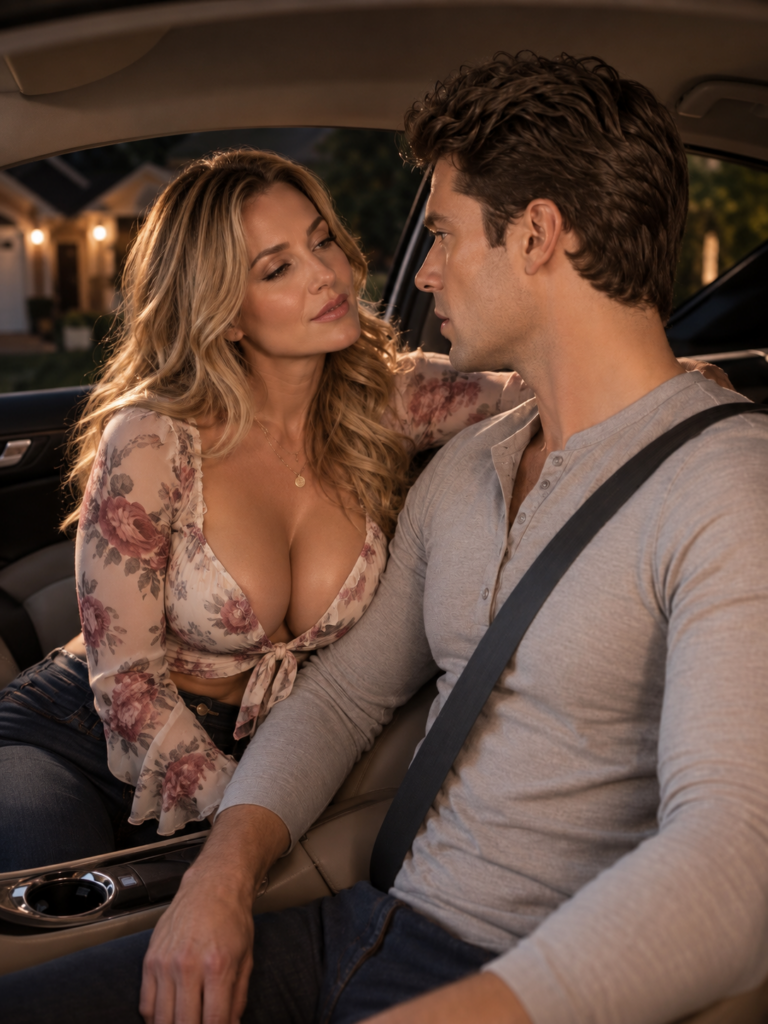
The first ten minutes were quiet.
Old country station low on the radio.
Streetlights moving across the windshield.
Then we turned beyond the old mill toward Route 9.
Diane reached across the console.
Her fingers rested lightly on my forearm.
“Ryan?”
I kept driving.
“Yeah?”
“Can I say something?”
“Of course.”
“You don’t have to say anything back.”
That sentence made my heart begin pounding before I knew why.
She stayed quiet another moment.
Then:
“I think I’m falling for you.”
Three seconds.
No breathing.
Every rational thought arrived at once.
She is twenty-one years older than you.
She is Marcus’s mother.
Marcus has been your best friend since you were fourteen.
This can damage friendships.
Families.
Reputations.
Everything simple about your life.
Underneath all that noise came something quieter.
She wasn’t wrong.
“Diane.”
Her hand began to withdraw.
I caught it briefly with mine before returning my hand to the wheel.
“I don’t know what to do with that sentence.”
She looked down.
“But I’m not going to pretend I haven’t felt something too.”
A breath left her.
Long.
Shaking.
“I have been terrified to say it.”
“I know.”
“I kept telling myself it was foolish.”
Her voice grew rough.
“A woman my age falling for a man young enough to—”
“Don’t.”
She stopped.
“I told myself it would pass.”
“Did it?”
“No.”
She looked at me.
“It got quieter and heavier every week.”
I pulled into her driveway.
Put the truck in park.
Neither of us moved.
Her porch light cast a yellow circle over the hood.
“What do we do?” I asked.
Diane looked toward the house.
“I don’t know.”
Then back at me.
“But I don’t want to pretend anymore that I don’t know what I know.”
I did not kiss her that night.
That matters.
It would be easy to retell the story faster.
Make it more dramatic.
We didn’t.
I walked Diane to her door.
Said good night.
Drove home with shaking hands.
Slept maybe two hours.
For several weeks, we lived inside a careful orbit.
Long phone calls.
Coffee.
Dinner.
No declarations.
No physical line crossed.
We told ourselves we were figuring things out.
Then Marcus called.
Wednesday night.
I knew from his first word.
“Ryan.”
His voice was flat.
Not angry yet.
Worse.
Controlled.
“Have you been seeing my mother?”
I sat down at my kitchen table.
“Marcus, let me explain before you decide what this is.”
“Explain what?”
His voice rose.
“Explain why she’s smiling more than she has in six years?”
I closed my eyes.
“Explain why she blushes when I mention your name?”
“Marcus.”
“Explain why your truck has been in her driveway three nights this month?”
I didn’t lie.
He deserved better.
I told him.
The barbecue.
The Buick.
The porch.
The drives.
The feelings.
I told him neither of us went looking for it.
That it developed slowly.
Like weather changing color before anyone notices the storm system moving.
Silence.
Then Marcus said, coldly, “She is my mother.”
“I know.”
“She raised me.”
“I know.”
“And you are supposed to be my best friend.”
“I am.”
“Do you understand what this looks like?”
“Yes.”
“Do you understand what people will say?”
“I’ve thought about almost nothing else.”
“Then stop.”
The words landed hard.
“Whatever this is, stop it before it becomes something none of us can undo.”
He hung up.
I sat holding the silent phone.
For the first time, I let myself understand what was at risk.
Not only Marcus.
The Bennett family had been a kind of borrowed family to me since I was fourteen.
That kitchen table.
Those sandwiches.
Birthdays Diane remembered when my own father didn’t.
Two days later, Marcus came to my shop.
Still wearing hospital scrubs.
Arms crossed.
I was sanding a walnut tabletop.
“You didn’t stop.”
I turned off the sander.
“I haven’t done anything you need to forgive.”
“That’s not the point.”
“We haven’t crossed the line you’re imagining.”
“The point is you’re telling me you have feelings for my mother and expecting me to treat that as normal.”
“I’m not asking you to call it normal.”
“Do you know what people will say about her?”
I stared.
“What kind of woman goes after her son’s friend?”
“Don’t talk about her like that.”
“I’m telling you what other people will say.”
He stepped closer.
“She rebuilt her whole life after Dad died.”
“I know.”
“She teaches piano. She gardens. She has friends. She has peace.”
His voice cracked with frustration.
“Do you understand what this could cost her?”
Cost.
That word stopped me.
Because he was right about one thing.
The risk was not distributed equally.
I could endure jokes.
Diane might endure judgment.
Questions about her age.
Her widowhood.
Her motives.
Her character.
“I never wanted to cost her anything.”
Marcus’s expression hardened.
“Then walk away.”
He left.
That night I sat on my porch until nearly two.
I tried to find a version where nobody hurt.
There wasn’t one.
Three days later, Diane called.
Her voice told me Marcus had already been there.
“Ryan.”
“Hey.”
“I think we need to slow down.”
I closed my eyes.
“Marcus talked to you.”
“Yes.”
“He came to my shop too.”
A long pause.
“I can’t lose my son over this.”
“I know.”
Her voice cracked.
“I raised him mostly alone for six years after Walter died.”
“Diane.”
“He is the only family I have left in town.”
She inhaled.
“I cannot choose anyone over him.”
“I’m not asking you to.”
“I know.”
“I need distance.”
I gripped the phone.
“For how long?”
“I don’t know.”
Another breath.
“I can’t think clearly with Marcus looking at me like I’ve betrayed him.”
“I understand.”
The words felt like glass.
We did not speak for two weeks.
Two weeks felt longer than the three years after my divorce.
I worked twelve-hour days.
Sanded until my hands hurt.
Stained cabinets.
Built drawers.
Measured.
Cut.
Fit.
I told myself exhaustion explained the pressure in my chest.
It didn’t.
I missed her.
Not abstractly.
Specifically.
I missed the coffee.
Her piano drifting through an open window.
Her voice saying my name.
The way she remembered small things.
My porch stopped feeling peaceful again.
It felt like absence.
What broke the silence wasn’t me.
It wasn’t Diane.
It was Marcus.
Three weeks after our last conversation, he came to the shop.
No crossed arms.
No anger radiating ahead of him.
Just tired.
“I talked to Aunt Pette.”
Diane’s older sister.
I set my tools down.
Marcus stared at a half-finished cabinet.
“She told me something.”
I waited.
“Mom almost left Dad once.”
I stayed silent.
“I was nine.”
His jaw tightened.
“She packed a bag.”
He looked at me.
“Sat in her car in the driveway for two hours trying to decide if she could leave.”
I didn’t know.
“She went back inside because of me.”
“Marcus—”
“Because she thought I needed both parents under one roof.”
He rubbed both hands over his face.
“She stayed thirty-one years.”
His voice lowered.
“Fifteen of those being invisible.”
I could see grief replacing anger.
“She stayed small because of me.”
“You were nine.”
“I know.”
“She made an adult choice.”
“I know.”
He laughed without humor.
“But now I’m standing here telling her she doesn’t get this either.”
I said nothing.
He needed to finish.
“Because it’s weird.”
He nodded.
“Because people will talk.”
Another breath.
“Because I’m uncomfortable.”
He looked at me.
“I watched her at my birthday barbecue.”
I waited.
“She lit up.”
His eyes dropped.
“I hadn’t seen that since before Dad got sick.”
He swallowed.
“I pretended not to notice because noticing meant admitting what it might mean.”
The shop was silent except for an exhaust fan.
“I’m not okay with all of it.”
“I know.”
“I may never be completely okay.”
“I know.”
“You’re my best friend.”
“Yes.”
“She’s my mother.”
“Yes.”
“This is strange.”
“Yes.”
That almost made him smile.
“But I’m not going to stand in the way anymore.”
Something loosened in my chest.
“I’m not saying I’m happy.”
“Understood.”
“I’m saying I’m not going to be another reason she shrinks herself.”
“Marcus—”
He raised one hand.
“Don’t make this a moment.”
I shut my mouth.
“Just don’t hurt her.”
“I won’t.”
“If you do, twenty years of friendship will not help you.”
“I believe you.”
He nodded.
Then left.
I drove to Diane’s house that evening.
My heart pounded hard enough to make me feel seventeen.
She opened the door wearing an old cardigan.
Hair down.
Surprise first.
Then caution.
“Ryan?”
“Marcus talked to me.”
Her face changed.
“He knows about Aunt Pette.”
She went pale.

“He wasn’t supposed to know.”
“He said he spent his whole life thinking you stayed small because of him.”
Her hand pressed against her chest.
“He said he doesn’t want to be the reason you do it again.”
Diane stood in the doorway for a long time.
Then stepped aside.
“Come in.”
We sat at the same oak kitchen table where I had done algebra homework at fourteen.
Diane told me everything.
She told me she had begun listening for my truck months before Marcus’s barbecue.
Before either of us admitted anything.
She admitted she invented a few repair jobs.
“The cabinet hinge wasn’t broken.”
“I knew.”
“You fixed it.”
“I adjusted it.”
“Same thing.”
She told me about the blue mug.
“I bought it because it reminded me of yours.”
“I knew that too.”
“No, you didn’t.”
“Eventually.”
She looked down at our hands.
“I spent thirty-one years being Walter’s wife.”
Her voice was calm.
“And thirty-two being Marcus’s mother.”
She smiled faintly.
“Both were lives I wanted.”
Then:
“But I almost forgot I was Diane.”
I looked at her.
“Until you.”
Her eyes filled.
“Until I started hearing your truck in the driveway and feeling like somebody was coming to see me, not Mrs. Bennett.”
She swallowed.
“Not Marcus’s mother.”
“Diane.”
“Just me.”
I reached across the table.
She took my hand.
“I am fifty-two years old.”
“I know.”
“I have spent most of my adult life making myself smaller so other people would stay comfortable.”
Her voice trembled.
“My husband.”
“My son.”
“My sister sometimes.”
Then she looked directly at me.
“I will not do that anymore.”
“Good.”
“Not even for you.”
“Especially not for me.”
Her fingers tightened.
“I don’t want you smaller.”
“I know.”
“I think I fell for you because you were the first person in years who made me feel like exactly the size I already was.”
For once, I had no clever answer.
I simply held her hand.
We moved slowly after that.
Really slowly.
That part matters more than the dramatic parts.
Friday dinners.
Sunday afternoons.
Coffee after piano lessons.
Walks.
No rush to make an announcement.
No attempt to force Marcus into enthusiasm.
Diane stayed in her house.
I stayed in mine.
She taught piano.
I built cabinets.
Life remained life.
Marcus came around at his own speed.
Six months after the Route 9 confession, we sat together for his birthday at Diane’s house.
She made peach cobbler.
I brought beer.
This time, I remembered charcoal.
Marcus found me alone on the porch while Diane cut dessert inside.
“This is still weird.”
I laughed.
“Hello to you too.”
“I’m serious.”
“I know.”
“I don’t think it’ll ever be completely not weird.”
“Probably not.”
He watched his mother through the kitchen window.
Then said, “She laughs more.”
I looked at him.
“The way she used to before Dad got sick.”
His voice softened.
“I forgot how much I missed hearing that.”
I said nothing.
“I guess what I’m saying is, I’d rather my mother laugh and make me uncomfortable than become careful and small again so I can feel normal.”
That was as close to a blessing as Marcus would ever give us.
It was enough.
A year after Route 9, Diane and I replanted her garden beds.
We were both kneeling in dirt.
She corrected the way I positioned a hydrangea.
“You build furniture for a living.”
“Plants are less predictable.”
“They’re plants.”
“Wood stays where you put it.”
Diane laughed.
There was dirt on her cheek.
Sunlight caught silver in her hair.
She looked beautiful.
Not young.
Not “young for her age.”
Beautiful as herself.
“Do you know what I think about most from that night?” she asked.
“The truck?”
“Yes.”
“What?”
“How terrified I was.”
She sat back on her heels.
“Thirty-one years married to a good man who stopped seeing me.”
She looked toward the flowerbed.
“Six years alone rebuilding something safe.”
Then toward me.
“And one Friday night I finally said the truest thing I had felt in a decade.”
“I think I’m falling for you.”
She nodded.
“I was more afraid of that sentence than almost anything.”
“And now?”
Diane smiled.
“Now I think it was the bravest thing I ever did.”
Then:
“It gave me permission to become my whole size again.”
A few months later, I made her something.
I carve small objects sometimes after work.
Nothing I sell.
A way to use scraps too beautiful to throw away.
I had a piece of cherry I had been saving.
I carved a tiny upright piano.
Palm-sized.
Simple.
Careful.
I gave it to Diane on a Tuesday.
“No occasion?”
“No.”
“Birthday?”
“No.”
“Anniversary?”
“No.”
She looked suspicious.
“Then why?”
“Because it was Tuesday.”
“And?”
“And I love you.”
Her expression changed.
That still happened sometimes.
Like hearing the words surprised her.
She placed the little piano on top of her real one.
It remains there.
One of her younger students asked what it meant.
Diane told me later that she answered:
“It means somebody saw me exactly as I am and thought that was worth keeping.”
Two years after Route 9, our life still confused some people.
Some stopped being subtle about it.
Once at a restaurant, a woman who knew Diane from years earlier looked at me and asked whether I was her nephew.
Diane said, “No, he’s my partner.”
The woman’s face changed.
Diane smiled pleasantly and returned to her menu.
In the parking lot afterward, I asked, “You okay?”
“Yes.”
“You sure?”
She took my hand.
“Ryan, I spent fifty years adjusting myself to other people’s faces.”
She smiled.
“I’m retired.”
I loved her for that answer.
Marcus eventually stopped introducing the situation with disclaimers.
At first:
“This is Ryan. He’s my best friend. He’s also dating my mother. Yes, it’s weird.”
Later:
“This is Ryan.”
That was progress.
My own life changed too.
Claire’s chair comment stopped haunting me.
Diane never asked me to become louder.
She didn’t ask for constant novelty.
She liked my quiet.
But she also challenged the part of me that used quiet as hiding.
One Saturday, I told her I intended to work.
“You worked six days.”
“I have orders.”
“They’ll survive.”
“I like working.”
“I know.”
She stood in my shop doorway.
“Come drive somewhere with me.”
“Where?”
“I don’t know.”
“That is not a plan.”
“Exactly.”
I stared at her.
She smiled.
“Do something unpredictable, chair.”
I laughed so hard I had to set down the clamp.
We drove to Hendersonville with no plan.
Ate lunch.
Walked through antique shops.
Bought nothing except coffee.
It was one of the best Saturdays of my year.
Diane did not turn me into somebody else.
She reminded me I was allowed to surprise myself.
I proposed three years after Route 9.
Not because I needed three years to know.
Because both of us wanted time.
Marcus needed time.
I needed to know I wasn’t reacting against loneliness.
Diane needed to know she wasn’t rebuilding herself by attaching that identity to another man.
We did the work separately and together.
One spring evening, she was at my shop sitting on the edge of a workbench while I finished sanding a walnut cabinet door.
“You’re staring,” she said.
“I’m thinking.”
“Dangerous.”
I switched off the sander.
“Diane.”
Something in my voice made her sit straighter.
“I have a question.”
“You look terrified.”
“I am.”
“That’s encouraging.”
I reached into a drawer.
Took out a small box.
Diane’s hand went to her mouth.
“I’m not asking you to become Mrs. Kesler because I need my life organized around a wife.”
Tears appeared immediately.
“I’m not asking you to leave your house tomorrow.”
I stepped closer.
“I’m asking whether you want to build whatever comes next with me.”
She started laughing and crying at the same time.
“That sounds like a cabinet proposal.”
“I’m a cabinetmaker.”
“You really can’t escape it.”
“No.”
I opened the box.
“Diane Bennett, will you marry me?”
“Yes.”
Then she pointed at me.
“But I’m keeping my house until we decide otherwise.”
“Fine.”
“And my piano.”
“Obviously.”
“And my name for work.”
“Diane.”
“I’m establishing terms.”
“I see that.”
She kissed me before I could stand.
We married the next spring.
Small ceremony.
Garden.
Marcus stood beside me.
That surprised both of us.
The night before, he handed me a beer.
“You know if Dad were here, he’d probably punch you.”
I looked at him.
“Comforting.”
“Then he’d think about it for a few months.”
“And?”
“Probably still be annoyed.”
“Great.”
Marcus smiled.
“But he loved Mom.”
“I know.”
“He’d eventually want her happy.”
I nodded.
“So do I.”
At the wedding, Diane wore a simple ivory dress.
No effort to look younger.
No hiding silver hair.
No apology.
She walked toward me exactly as she was.
Marcus watched.
His eyes were wet.
He denied this later.
During our vows, Diane said something I still remember word for word.
“I spent too many years believing love required disappearing gracefully into what other people needed.”
She took both my hands.
“Ryan never asked me to disappear.”
Her voice shook.
“He asked me to stay visible.”
That was our marriage.
Visibility.
Not perfection.
Not rescue.
Not pretending the age difference didn’t exist.
It existed.
Sometimes it mattered.
I had more physical energy.
Diane had more patience.
I wanted to change plans late.
She wanted notice.
There were cultural gaps.
Music.
Movies.
References.
Once she called something “groovy” without irony.
I nearly left the room.
Once I mentioned a childhood cartoon and she said Marcus watched it too.
That ended the conversation immediately.
We laughed.
We adjusted.
Years passed.
Diane eventually reduced piano lessons from three afternoons to two.
Not because I asked.
Because she wanted more time for herself.
I expanded my shop.
Hired two apprentices.
Stopped confusing long hours with purpose.
Marcus remarried.
His second wife, Rachel, accepted our family arrangement with far less drama than any of us expected.
At Thanksgiving one year, she looked around the table and said, “This is actually not even the strangest family I’ve married into.”
Marcus said, “That is deeply concerning.”
Life became ordinary.
That was the greatest gift.
The relationship that had seemed socially impossible on paper became groceries.
Doctor appointments.
Coffee.
Garden work.
Sawdust.
Piano lessons.
Arguments over thermostat settings.
Sunday dinners with Marcus.
Normal things.
Diane never became “my best friend’s mother” inside our home.
She became Diane.
My wife.
My person.
And Marcus never stopped being Marcus.
My friend.
Her son.
Those relationships did not have to destroy each other to coexist.
They had to change shape.
That was harder.
But possible.
I still think about the Route 9 drive.
The dashboard lights.
Her hand on my arm.
The sentence.
I think about how close I came to laughing.
Not because it was funny.
Because humor had always been one of my favorite exits when something became emotionally dangerous.
I almost changed the subject.
Almost made some joke about age.
Almost protected comfort instead of truth.
If I had, maybe Diane would have smiled.
Pretended she hadn’t meant it.
Gone inside.
And both of us might have spent years wondering whether we had imagined everything.
People do that every day.
We talk ourselves out of honest things because their shape looks inconvenient.
Too old.
Too young.
Too complicated.
Too close to family.
Too unexpected.
Too unlike the story we thought we were supposed to live.
That doesn’t mean every difficult feeling should become a relationship.
Sometimes boundaries matter more than desire.
Sometimes the right answer is to walk away.
But fear of appearances and genuine ethical concern are not always the same thing.
Diane and I were adults.
We moved slowly.
We listened to Marcus.
We respected the cost.
We chose carefully.
Then we stopped apologizing for choosing.
That distinction mattered.
I didn’t go looking for Diane Bennett.
I went looking for a loose stair tread.
A wrench.
A way to help an old friend’s mother.
What I found was the first person in years who looked at my quiet and did not try to make it louder.
She noticed what I liked.
Remembered small things.
Saw steadiness without mistaking it for emptiness.
And Diane found somebody who saw her as more than a widow.
More than Marcus’s mother.
More than the woman who made everyone else comfortable.
She became exactly her whole size.
Years after our wedding, the little cherrywood piano still sits on the corner of her real one.
The finish has darkened with age.
Sometimes I catch her touching it before a lesson.
Once I asked why.
She smiled.
“Reminder.”
“Of me?”
“No.”
I pretended offense.
She laughed.
“Of me.”
That answer pleased me more.
Because loving Diane was never supposed to become the new reason she existed.
It was supposed to be one part of a life she had finally reclaimed.
One evening, well into our marriage, her Buick’s replacement needed service.
I offered to drive her home from the mechanic.
“Route 9?” she asked.
“Long way.”
“Obviously.”
We drove after dark.
Same general stretch.
Different truck.
Same woman beside me.
At mile eight, Diane reached over and put her hand on my forearm.
I laughed.
“What?”
“I remember this.”
“So do I.”
“Still falling for me?”
She looked through the windshield, pretending to consider.
“Some days.”
“Cruel.”
“Most days.”
“That’s better.”
Then she turned toward me.
“All days.”
I smiled.
“Good.”
“Ryan?”
“Yeah?”
“I’m glad you didn’t laugh.”
I knew exactly what she meant.
“So am I.”
The road continued ahead of us.
Dark.
Quiet.
No promise that anything lasts forever.
No guarantee that life will stay simple.
Just headlights illuminating enough pavement to keep going.
Maybe that is what love actually asks.
Not certainty.
Courage for the next visible stretch.
Diane had been brave enough to say the true thing first.
I was lucky enough to hear it.
And brave enough, eventually, to say it back.
The End.

