
Part 1
The day Zora Kovac buried her grandfather, her oldest brother asked the funeral director how soon the family house could be listed for sale.
She heard him.
She was standing beside the church steps, still holding the folded American flag the honor guard had presented after the service. The April wind moved through the bare maple trees, carrying the smell of wet earth and the faint metallic smoke from the foundry down in the valley.
Garrett stood beside his black SUV, speaking into his phone.
“Eleven days would be ideal,” he said. “The buyer wants a clean closing.”
Zora looked down at the flag.
Her grandfather, Emil Kovac, had served his country when he was young. He had buried a wife, raised a son alone, and then raised three grandchildren after that son and his wife died in a car accident.
He had spent nearly sixty years making cast-iron woodstoves with his own hands.
And now, before the ground had even settled over his coffin, his oldest grandson was discussing real estate.
Zora was twenty-one.
Garrett was thirty-three.
Their middle brother, Nolan, was twenty-eight and had already left the cemetery without saying goodbye.
She told herself grief made people strange.
She had been telling herself that about her brothers for years.
The will was read three days later in a law office above the pharmacy on Main Street.
There were nine chairs around a polished conference table, although only five were occupied. A plate of store-bought cookies sat untouched beside a pot of coffee that smelled burned.
Attorney Adele Nunes unfolded the document.
“Your grandfather left the remaining estate to the three of you in equal shares.”
Zora felt something loosen in her chest.
Then Adele removed her glasses.
“Unfortunately, there is almost nothing remaining in the estate.”
Garrett did not react.
His lawyer did.
“The business assets were legally transferred eighteen months ago.”
Zora turned toward her brother.
“Eighteen months?”
Garrett kept his eyes on the table.
That was when their grandfather had suffered his stroke.
The stroke had taken nearly all his speech. He could no longer write a sentence or reliably explain what he wanted.
But he could still recognize Zora.
He could still hold her hand.
And he could still carve wood.
“What assets?” she asked.
“The foundry,” Adele answered quietly. “The equipment, the trademarks, the manufacturing contracts, and the house.”
Zora stared at her.
“Grandpa’s house?”
Garrett finally looked up.
“Zor, we had to restructure. The company was drowning.”
“And you didn’t tell me?”
“You were taking care of Grandpa.”
“I was working at the foundry, too.”
“I know.”
“No. I don’t think you do.”
The attorney cleared her throat.
The family company, Kovac Stove Works, had recently been sold to an investment group for a reported $2.6 million.
The sale had included the brick manufacturing building, machinery, inventory, customer records, and rights to the beloved Zora cast-iron stove.
That stove had been manufactured for generations.
People drove across state lines to purchase one. Families passed them down. A properly maintained Kovac stove could heat a farmhouse through forty winters without complaint.
The waiting list was almost two years long.
And Zora had spent five years helping make them.
Her grandfather had first brought her to the pattern bench when she was sixteen.
She remembered that afternoon more clearly than she remembered her parents.
The foundry had been hot and noisy. Sparks floated above the melting furnace. Men shouted over machinery while the air smelled of charcoal, iron, and damp sand.
Emil had stood at a long wooden workbench, carving a piece of sugar maple.
Without looking at her, he held a carving gouge backward over his shoulder.
“Here.”
She took it.
“What should I do?”
“Push.”
“Where?”
He looked at the wood.
“Where you want it to go.”
That was her first lesson.
The old man was not good at explaining things. He could sit beside someone for an hour without speaking. Sometimes his silence was comforting. Other times it could feel like a locked door.
But he had taught her how to read the grain in wood, how to sharpen a blade until it caught the light, and how to recognize a casting flaw before the iron cooled.
By nineteen, she could make a stove-door pattern nearly indistinguishable from his.
By twenty, she was repairing patterns that had been used for decades.
After his stroke, she became his caregiver.
She fed him.
Washed his clothes.
Helped him dress.
Slept in a chair beside his bed during the bad nights.
Sometimes he grabbed her wrist and whispered the only word he could still pronounce clearly.
“Door.”
She would lean closer.
“What door, Grandpa?”
“Door.”
She never understood.
Now she was sitting in a lawyer’s office discovering that her brothers had used those same eighteen months to transfer the family business out of the estate.
Adele continued reading.
“There is one specific bequest that was not transferred.”
Garrett looked irritated.
“What?”
“Forty acres on Bitter Creek Mountain, including the existing structure, to Zora Kovac.”
For a moment nobody spoke.
Then Nolan laughed.
“The fishing shack?”
Garrett leaned back.
“Forty acres of rocks.”
Adele checked the county assessment.
“Eleven thousand dollars.”
Garrett shook his head.
“No electricity. No proper road. No plumbing. Grandpa wasted every Saturday up there.”
Zora remembered those Saturdays.
Her grandfather used to leave before sunrise in his old pickup truck, carrying a thermos of coffee and sometimes a fishing pole.
He always returned late.
He never brought home a fish.
“Could you at least have it inspected before laughing?” Adele asked.
Garrett shrugged.
“Nobody’s stopping her.”
Then he turned to his sister.
“Look, once everything settles down, we’ll take care of you.”
Zora studied his face.
She had heard him say those words when she was six, standing beside their parents’ graves.
She had believed him then.
“Sure,” she said.
It was the only answer she could manage.
Outside, rain began falling across the courthouse parking lot.
Her green pickup needed a new water pump. She had less than two thousand dollars in savings.
And she had just inherited forty acres of mountain wilderness that neither brother wanted.
Nine days later, she lost her job.
The termination letter was printed on expensive new stationery.
It thanked her for her service and explained that the pattern department was being eliminated as part of a corporate restructuring.
She read it three times.
The pattern department consisted of one workbench.
And her.
That evening she drove to the foundry to collect her tools.
The building was dark.
The old furnace stood cold.
For the first time in her life, the place sounded dead.
Her carving tools lay in a plastic milk crate, thrown together with their sharpened edges knocking against one another.
She picked up the crate and walked toward the door.
Then she saw her grandfather’s apron hanging from its familiar nail.
Brown canvas.
One burned patch across the stomach.
A broken strap he had tied together twenty years earlier.
She reached for it.
“Leave that.”
Garrett stood in the doorway.
Zora turned.
“It’s Grandpa’s.”
“It’s company property.”
She stared at him.
He looked away.
“Don’t make this difficult.”
She lowered her hand.
“What did I do to you?”
Garrett rubbed his forehead.
“Nothing. This is business.”
“No,” she said. “This was family.”
She carried her tools out into the rain.
Eleven days later, the house sold.
Zora packed her belongings into four loads.
She had one dresser, two boxes of clothes, her grandfather’s photograph, and a wooden toolbox.
On the final evening, she stood in her childhood bedroom looking through the window toward the foundry lights.
Her brothers had taken the business.
They had taken the house.
They had taken the only job she had ever wanted.
Then she closed the bedroom door for the last time.
For two nights she slept inside her pickup behind the town laundromat.
On the third morning, shivering beneath an old blanket, she unfolded the deed to Bitter Creek Mountain.
Forty acres.
One cabin.
No road anyone maintained.
She stared at the paper.
It was the only property in the world that still belonged to her.
So she turned the truck toward the mountain.
She had no idea what was waiting there.
Part 2
The road to Bitter Creek disappeared nine miles outside town.
At least, that was what it looked like.
Zora passed the old county bridge, then a deserted logging turnoff, before finding two narrow tire tracks vanishing between pine trees.
She almost drove past them.
The tracks were deep and filled with brown water.
A fallen larch lay partly across the path. She got out, dragged it aside, and returned to the truck with mud on her jeans.
The climb took nearly forty minutes.
Twice the underside of her pickup scraped against rocks.
At one steep turn, the tires spun in wet clay.
She backed down, gathered branches, and packed them beneath the wheels.
Eventually the truck lurched forward.
When she finally reached the clearing, she stopped so abruptly that the engine stalled.
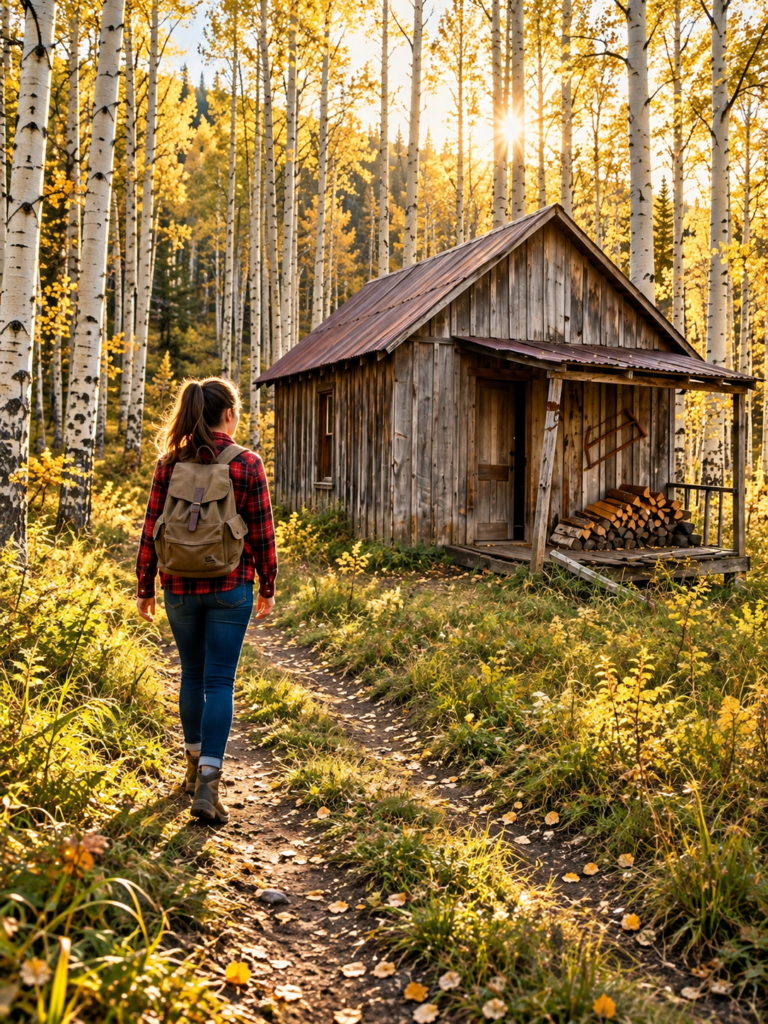
The building before her was nothing like the rotten fishing shack her brothers had described.
It was small, certainly.
One story, constructed from squared logs faded silver by decades of weather.
But the windows were sound.
The foundation was solid.
And the metal roof looked surprisingly new.
Zora climbed out.
Someone had repaired that roof within the last several years.
Her grandfather had been too old to do heavy roofing work by himself.
Who had helped him?
The front door was swollen.
There was no padlock.
She pushed once.
Nothing.
Then she put her shoulder against the oak and shoved.
The door opened with a low wooden groan.
Inside, sunlight fell across a long workbench.
Zora stopped breathing.
The smell struck her first.
Linseed oil.
Maple shavings.
Cold iron.
It was the smell of her grandfather’s hands.
A rack of carving tools hung above the workbench, arranged neatly by shape and size. Shelves held clamps, sharpening stones, and jars of small brass fittings.
There was a hand-cranked lathe in the corner.
Stacks of seasoned maple were stored beneath a canvas cover.
An old cast-iron stove stood beside the wall.
It was not a fishing cabin.
It was a workshop.
“Grandpa?”
The word escaped before she could stop herself.
The room remained silent.
She walked toward the bench.
Thirty-eight carving gouges.
She counted them twice.
They hung in exactly the same arrangement she had created at the foundry when she was seventeen.
She had thought the idea was hers.
Had her grandfather copied it?
Above the door hung an old brass clock.
Tick.
Tick.
Tick.
She looked up.
The clock was running.
Zora took out her phone.
The clock was ninety seconds fast.
She checked the room again.
There was no bed.
No food on the shelves.
No clothes.
Nobody appeared to be living there.
But someone had wound that clock recently.
Someone had sharpened the tools.
Someone had swept the floor.
Her heart began beating harder.
“Hello?”
No answer.
She turned toward the ladder leading to a small loft.
The boards creaked beneath her boots.
As her head rose above the opening, she froze.
Wooden shapes hung from the rafters.
Hundreds of them.
Stove doors.
Side plates.
Legs.
Firebox components.
Ash pans.
Every piece bore a handwritten label.
Zora recognized the handwriting immediately.
Her grandfather crossed his sevens with a short horizontal line.
He had done it all his life.
She climbed into the loft and lifted a stove-door pattern from the nearest peg.
The familiar shape lay heavy in her hands.
But something was different.
There were no repaired corners.
No patches.
No epoxy.
No marks left by years of use.
The edges were sharp and exact.
She ran her thumb along the carefully carved lettering.
Then she understood.
At the foundry, every stove began as a wooden pattern.
Workers pressed the pattern into packed molding sand, removed it, and poured molten iron into the empty shape.
Over the years, patterns wore down.
They warped.
They chipped.
They were repaired.
And every repair introduced tiny imperfections.
But these wooden shapes had never been used on the factory floor.
They were untouched originals.
Master patterns.
Zora sat down.
Her grandfather had spent decades keeping the true dimensions of every Kovac stove hidden inside this mountain workshop.
The patterns at the foundry were copies.
These were the source.
Without them, nobody could accurately replace the worn patterns.
Without accurate replacements, the company would eventually lose the dimensional consistency that made its stoves famous.
The business her brothers had sold depended on something they had never known existed.
And that something was now hers.
She was still sitting in the loft when an engine sounded outside.
Headlights crossed the cabin windows.
Zora climbed down quickly.
She grabbed a heavy splitting maul from beside the door.
A pickup stopped outside.
The driver’s door opened.
“Zora?”
She recognized the voice.
“Reuben?”
“Put down whatever you’re holding, sweetheart. I’m too old to be chased around a mountain.”
Reuben O’Hara stepped into the porch light.
He was sixty-eight, with a gray mustache and shoulders permanently bent from decades of foundry work.
He had worked for her grandfather for thirty-one years.
The new owners had dismissed him shortly before his pension vested.
Zora lowered the maul.
“What are you doing here?”
Reuben looked past her into the workshop.
Then he looked toward the clock.
“Same thing I’ve been doing every Saturday for a year and a half.”
He entered without asking permission.
He knew exactly where the matches were.
He knew which piece of the old stove’s damper needed lifting before it would move.
He built a fire and sat on an overturned wooden crate.
Zora remained standing.
“Tell me everything.”
Reuben stared at the flames.
“After the stroke, Garrett took your granddad’s truck keys.”
“I remember.”
“He was right to do it. Emil couldn’t safely drive anymore.”
Reuben rubbed his hands together.
“But that first Saturday after the hospital, I went to visit him. He was standing by the door wearing his coat and boots.”
“What did he want?”
“He held out his keys.”
Zora swallowed.
“So you brought him here?”
“Every Saturday.”
“For eighteen months?”
“Nearly every one.”
She looked toward the loft.
“He was working?”
Reuben nodded.
“Sometimes four hours straight. Even near the end, when he needed help climbing those rungs.”
“But he couldn’t talk.”
“He didn’t need words to carve.”
Zora sat heavily beside the stove.
She remembered feeding her grandfather applesauce.
Remembered his frustrated eyes.
Remembered how he kept repeating that single word.
Door.
“Why didn’t you tell me?”
Reuben took a long breath.
“Because he asked me not to.”
“How?”
“He put his finger against his lips.”
She looked away.
“That isn’t fair.”
“No,” Reuben said. “It wasn’t.”
For several minutes neither spoke.
Then Reuben pointed toward the ceiling.
“Did you see what’s upstairs?”
“Yes.”
“Then you know.”
“The original patterns.”
“Every last one.”
Zora nodded.
Reuben leaned forward.
“Your brothers sold a foundry with worn-out patterns. They sold the machinery, the customer list, the name, and the building.”
He glanced around the cabin.
“But they forgot the thing that made all the rest work.”
Outside, wind pressed against the walls.
“How long?” Zora asked.
“Until they notice?”
“Until production starts failing.”
Reuben considered the question.
“Maybe six months. Maybe less. They’ve already been running the old patterns past tolerance.”
Zora stared into the fire.
Her grandfather had protected the company’s most important tools on a worthless mountain.
And the brothers who had laughed at her inheritance had unknowingly handed her control of its future.
For the first time since the funeral, she felt something other than grief.
But it wasn’t victory.
It was fear.
Because she understood what Garrett would do when he found out.
And she was twenty-one years old, unemployed, nearly broke, and living in a cabin at the end of a road nobody maintained.
She owned the secret.
She had no idea how to protect it.
That night, after Reuben drove away, Zora slept on the floor beside the stove.
The fire burned low.
Rain struck the metal roof.
And somewhere above her, hundreds of wooden patterns hung quietly in the darkness.
Part 3
For the next three days, Zora did almost nothing.
She drank water from a spring behind the woodshed.
She ate crackers from a box she had bought at the gas station.
She slept beneath an old wool coat and stared at the ceiling.
Somewhere below the mountain, her brothers were living in the houses their share of the sale had purchased.
Somewhere, people were planning vacations and buying trucks and discussing investments.
Zora had forty acres of rocks.
And a workshop full of wooden patterns she did not know how to turn into a future.
On the fourth morning, she found herself standing at the bench with a carving gouge in her hand.
She did not remember deciding to work.
There was a piece of scrap maple clamped in the vise.
She placed the blade against the grain.
Pushed.
A long shaving curled away.
It fell across her boot.
And suddenly she began crying.
Not softly.
Not prettily.
She cried with her shoulders shaking and both hands gripping the tool.
She cried for the house.
For the foundry.
For the parents she barely remembered.
For the grandfather who had raised her and then left without explaining the most important thing he owned.
And she kept carving.
When the tears finally stopped, the piece of maple had become something recognizable.
The beginning of a stove-door handle.
That afternoon she found fifty-one green notebooks stored beneath the workbench.
They were her grandfather’s records.
Every casting.
Every furnace charge.
Every change in sand moisture.
Every adjustment in temperature.
Every failure.
Every correction.
For decades, Emil had recorded details nobody at the foundry knew he was tracking.
On one page he had written about a humid August morning when a casting developed small internal holes.
On another, he had compared two iron mixtures and circled the one that produced a cleaner stove door.
Zora read until the light disappeared.
The next morning she read more.
She discovered that her grandfather’s methods had never been magic.
They were observation.
Patience.
Experience.
And years of small corrections.
She also found evidence of how much pressure he had been under.
One notebook contained calculations about wasted metal.
Another included sketches for a smaller stove that could be manufactured with less fuel and less iron.
He had been trying to keep the business alive.
But he had been doing almost all of the most important thinking alone.
On Saturday, Reuben returned with groceries.
He set two bags on the bench.
“Bread. Eggs. Coffee. Beans. And something green, because I don’t trust anybody who thinks crackers are dinner.”
Zora smiled faintly.
“I’ll pay you back.”
“Didn’t ask.”
“You don’t have to keep coming.”
“I know.”
He unpacked the groceries, folded the paper bags, and sat down with a crossword puzzle.
For two hours he said nothing.
He just stayed.
The following Saturday, another truck arrived.
It belonged to Walter Briggs, the former foundry melter.
Walter had spent twenty-six years operating the furnace.
He had a burn scar on his left forearm and spoke as though every extra word cost money.
He stepped inside, examined the lathe, and frowned.
“Reuben says this thing doesn’t turn.”
“It turns,” Zora answered. “It’s stiff.”
“That’s what I said.”
He went back to his truck and returned with a toolbox.
By sunset, the lathe turned smoothly.
A week later, Linda Mercer came.
Linda had operated the overhead crane at Kovac Stove Works for eighteen years.
She brought a chainsaw and cleared the fallen larch from the access road.
Then she widened a dangerous bend so vehicles could climb without sliding toward the ravine.
“Somebody’s going to break an axle up here,” she said.
Zora watched her work.
“Why are you doing this?”
Linda shrugged.
“Because the road needed fixing.”
That was all.
By July, four or five former foundry workers were coming up the mountain on Saturdays.
They repaired the porch.
Installed a small solar panel for lights.
Patched a leaking section of the woodshed.
They cleared drainage ditches and repaired the old hand pump.
Zora began restoring patterns and studying the notebooks.
Sometimes they worked together.
Sometimes they sat drinking coffee and listening to the wind.
Nobody announced they were building something.
But the mountain no longer felt abandoned.
One Thursday afternoon, Reuben found Zora sharpening a gouge.
She was unusually quiet.
“What is it?” he asked.
She continued working.
“I got accepted into a metal arts program out west.”
Reuben raised an eyebrow.
“When?”
“Three years ago.”
He waited.
“Eleven students,” she continued. “That was the whole class. They offered me a place.”
“Why didn’t you go?”
She turned the tool over.
“The acceptance letter came in August. Grandpa had his stroke in October.”
“And?”
“And somebody had to stay.”
Reuben looked at her for a long moment.
“Did you ever tell him?”
“No.”
“Why not?”
She shrugged.
“Didn’t want him feeling guilty.”
Reuben nodded slowly.
“Well, I won’t tell you whether staying was right or wrong.”
Zora looked up.
“Everybody else has an opinion.”
“I imagine they do.”
He picked up a scrap of maple.
“But that old man made almost a hundred trips up this mountain after he lost his speech. He didn’t do that because he thought you were incapable of leaving.”
“What do you mean?”
“I mean he thought you were capable of something.”
Zora stared at the bench.
Reuben stood.
“What you make of that is your business.”
Then he went outside to split wood.
Later that month, Zora discovered the unfinished stove.
It had been hidden beneath a gray workshop cloth at the far end of the bench.
She had walked past it for weeks.
One evening, while reaching for a fallen chisel, her hand landed on the cloth.
Something beneath it felt curved.
She lifted the covering.
A small wooden stove pattern stood underneath.
It was beautiful.
Eighteen inches across, with delicate legs and a carefully shaped top.
It was designed to heat one room.
Not a whole farmhouse.
Just a room the size of the mountain cabin.
The wood had been cut, sanded, and sealed.
Every part was complete.
Except the door.
Zora searched the bench.
Then the shelves.
Then the loft.
There was no matching door pattern anywhere.
She returned to the little stove and turned it over.
On the underside, written in pencil, were seven words.
For Z, when she has her own place.
Zora sank onto the crate.
At first, she thought the note referred to her grandmother, who had also been named Zora.
But beneath the writing was a date.
Five years earlier.
The year Zora had turned sixteen.
The year her grandfather had handed her that first gouge.
He had started making the little stove for her when she began learning his craft.
He had worked on it secretly for years.
And when the stroke took his speech, he had continued.
Every Saturday.
With Reuben helping him up the ladder.
The door was the only part left unfinished.
Zora remembered his hand gripping her wrist.
“Door.”
Her breath caught.
She pressed her palm against the little wooden stove.
For years, she had thought her grandfather was simply repeating a meaningless word after his stroke.
Now she wondered whether he had been trying to tell her about the one unfinished piece.
She carried the pattern outside.
The evening sun was dropping behind the pines.
For a long time she stood in the clearing, holding it against her chest.
Then she sat down in the dirt and cried again.
This time, the tears were quieter.
Her grandfather had not merely left her a cabin.
He had spent five years making something for the day she finally had a home of her own.
And even after losing his ability to speak, he had kept trying to finish it.
When Reuben arrived later, he found her sitting beside the porch.
“What happened?”
She pointed toward the workshop.
“He was making me a stove.”
Reuben looked inside.
Then he lowered his head.
“Well,” he said softly. “I’ll be.”
“He never finished the door.”
Reuben sat beside her.
“No.”
“Why didn’t he tell me?”
The old man looked toward the mountains.
“Maybe he thought he’d have another Saturday.”
Neither spoke for a while.
Then Reuben placed a rough hand on her shoulder.
“You can finish it.”
Zora shook her head.
“I don’t know if I can.”
“Neither did he, when he started.”
That night, she placed the unfinished stove pattern in the center of the workbench.
For the first time, the cabin felt like a home she might choose rather than a place she had been forced to accept.
But less than two weeks later, a black sedan climbed the mountain road.
And everything changed.
Part 4
The man who stepped from the sedan wore expensive boots that had never been near a foundry.
His name was Colin Reyes.
He represented the investment group that had purchased Kovac Stove Works.
He approached the porch slowly.
“Miss Kovac?”
Zora stood in the doorway holding a carving chisel.
“Who wants to know?”
“Colin Reyes. I’d like to discuss some equipment belonging to your grandfather.”
She did not move.
“What equipment?”
He reached into his jacket.
Then he unfolded a photograph.
Zora felt her stomach tighten.
It showed the cabin loft.
Hundreds of wooden patterns hanging from the rafters.
The original masters.
Her grandfather’s handwritten labels.
Someone had climbed into the loft and photographed everything.
“Where did you get that?”
Reyes glanced at the picture.
“I’m not at liberty to say.”
“Then you’re not coming inside.”
He nodded.
“Fair enough.”
He remained in the yard.
“The foundry has a problem.”
Zora said nothing.
“We’ve discovered dimensional drift in the production patterns. The stove doors are no longer fitting correctly.”
“How badly?”
“We’ve already identified castings that don’t meet our quality requirements.”
She understood.
The worn copies were beginning to fail.
Reyes continued.
“We’ve searched the company’s records. There’s no complete set of engineering drawings. No reliable master specifications.”
He looked toward the loft window.
“Now I know why.”
Zora kept her expression still.
“What do you want?”
“I want to buy the original patterns.”
“No.”
“Four hundred thousand dollars.”
For a moment she heard nothing except wind moving through the trees.
Four hundred thousand dollars.
Her pickup had finally broken down in June.
She had only fourteen hundred dollars left.
Four hundred thousand would change everything.
Reyes watched her face.
“I’d like the patterns, the technical notebooks, and the equipment here. Everything.”
“No,” she repeated.
He folded the photograph.
“I’ll give you time to think.”
Then he drove away.
Nine days later, he returned.
This time he brought a folder.
“Eight hundred thousand dollars,” he said.
Zora gripped the porch railing.
“And a job.”
She looked up.
“Head of the pattern department. Your own workshop. Your own staff. A proper salary.”
He paused.
“You’d be the person responsible for restoring the company to its original standards.”
Zora could picture it.
A real building.
Modern dust collection.
Enough money to repair the old machines.
Reuben back at work.
Walter operating the furnace.
Linda managing equipment.
A chance to return to everything she had lost.
And for one brief moment, she was simply a broke twenty-one-year-old woman who wanted to stop worrying about money.
“Okay,” she said.
Reyes nodded.
“I’ll have the papers prepared.”
He left without celebrating.
That evening, Zora sat alone inside the cabin.
The little unfinished stove rested on the bench.
She pictured selling the patterns.
She imagined handing the keys to another workshop to men who had never known her grandfather.
She imagined returning to the foundry as an employee of the company that had discarded her.
The money would be hers.
But the patterns would not.
The notebooks would not.
And the place where her grandfather had spent fifty years protecting his work would become an empty cabin.
At four in the morning, she got up.
By sunrise, she had driven to the bottom of the mountain where her phone could find a signal.
Reyes answered on the third ring.
“Miss Kovac?”
“I’ve changed my mind.”
There was a pause.
“About which part?”
“All of it. I’m not selling.”
“May I ask why?”
Zora looked at the trees.
She could not find a sentence that explained it.
“No,” she said.
Then she ended the call.
A week later, her brothers arrived.
Garrett drove.
Nolan sat beside him.
They stopped in the clearing and stared at the repaired cabin, the improved road, and the vehicles parked near the workshop.
Garrett stepped out.
“Well. You’ve been busy.”
Zora stood on the porch.
“What do you want?”
“We need to talk.”
“Then talk.”
He glanced toward Reuben and Walter, who were working near the woodshed.
“Privately.”
“No.”
Garrett’s jaw tightened.
“Fine. Those patterns upstairs are company property.”
Zora folded her arms.
“They’re not.”
“Grandpa made them for the business.”
“He made them here.”
“That doesn’t change their legal status.”
“He made them on his own land, using his own tools and materials.”
Garrett took a step forward.
“Don’t pretend you understand company law.”
Zora felt the familiar humiliation.
For years, Garrett had treated her as the little sister who carved wood while he handled the important decisions.
She looked directly at him.
“And don’t pretend you knew those patterns existed before somebody showed you a photograph.”
Nolan looked away.
Garrett continued.
“Do you know how many years I spent keeping that company alive?”
She said nothing.
“Do you know how many weeks I moved money around just to make payroll?”
His voice became rough.
“Grandpa wouldn’t buy modern equipment. He wouldn’t consider automation. He disappeared up this mountain every weekend while I sat in the office figuring out how to pay twenty-two people.”
Zora listened.
She wanted to tell him he was lying.
But she knew some of it was true.
The foundry had struggled.
Her grandfather had been stubborn.
He had refused changes that might have made the work easier.
Garrett had carried financial responsibilities Zora had barely understood.
“You’re right about some of that,” she said.
Garrett stopped.
“He should have talked to you. He should have shown you what he was making. He should have let you help.”
The older brother stared at her.
“But he had a stroke,” she continued. “And while he couldn’t speak, you took control of everything.”
“I saved the company.”
“You sold it.”
“I saved it first.”
His voice cracked.
For a moment, she saw not a greedy businessman but a frightened grandson who had spent years feeling invisible.
Then Nolan spoke.
“You weren’t such a hero either.”
Zora turned.
“You stayed because you were afraid to leave.”
His face was flushed.
“That school out west? You wanted to go, and you got scared. Then Grandpa got sick, and suddenly you had an excuse.”
The words struck harder than any accusation about money.
Because she had asked herself the same question.
On lonely nights.
At the foundry.
While feeding her grandfather.
While staring at the acceptance letter she had hidden in her dresser.
“Maybe,” she answered quietly.
Nolan seemed surprised.
“Maybe I was scared,” she said. “I’ve thought about that.”
She looked toward the workshop.
“But I was here.”
Then she faced him.
“Did you take the photograph?”
Nolan’s expression changed.
“Zora—”
“Did you come into this cabin and photograph Grandpa’s patterns?”
His silence answered.
“When?”
“July.”
Garrett turned sharply.
“You did what?”
Nolan looked down.
“Reyes was asking questions. I remembered seeing some wooden pieces up here when I was a kid.”
“You sent him the photograph?” Garrett demanded.
“I thought it might help us.”
“Help us how?”
Nolan had no answer.
Zora stepped down from the porch.
“I’m not going to destroy either of you.”
Garrett stared at her.
“But I’m not going to give you everything just because you ask for it.”
She took another step.
“You got the money. You got the house. You sold the foundry.”
Her voice remained steady.
“This place is mine.”
Garrett’s lawyer filed suit eleven days later.
The complaint argued that the patterns had been created for Kovac Stove Works and should therefore belong to the company.
The filing also demanded their return.
Adele Nunes called Zora.
“I believe we have a strong case,” the attorney said.
“Then we’ll fight.”
“Zora, listen carefully.”
Adele explained the cost.
Depositions.
Expert witnesses.
Court hearings.
Potential appeals.
The company had a legal budget.
Zora had fourteen hundred dollars and a truck that barely ran.
“It could cost more than a hundred thousand dollars,” Adele said.
Zora sat on the porch in silence.
“How am I supposed to pay that?”
“That’s the pressure they’re putting on you.”
“So being right doesn’t matter?”
“It matters,” Adele answered. “But being right can be very expensive.”
Zora stared at the forest.
“Is there anything that could help?”
“Anything your grandfather wrote about ownership. A deed, agreement, letter, or recorded document. Anything showing he intended those patterns to remain with the land.”
Zora thought of the green notebooks.
“He wrote everything down.”
“Then look.”
She climbed the ladder and searched the loft.
Nothing.
She opened cabinets.
Nothing.
Then she pulled the fifty-one notebooks from beneath the bench.
Behind them sat a rusty cookie tin.
There was a faded Scottish terrier painted on the lid.
Her grandfather had owned that tin for as long as she could remember.
She opened it.
Inside were thirty letters.
Every one had been sent by Adele Nunes.
Zora began reading.
Seven years earlier, her grandfather had quietly started planning to transfer ownership of the foundry to the people who worked there.
Not to Garrett.
Not to Nolan.
Not even to Zora alone.
To the workers.
There were payment plans and legal drafts explaining how employees might gradually acquire shares without borrowing more than they could repay.
The final agreement was almost complete.
But the signature line was blank.
Her grandfather had suffered his stroke before signing.
Zora sat on the floor, holding the papers.
For years, he had been trying to build something that would outlive him.
Something no single person could sell out from under everyone else.
And he had never finished.
Beneath the letters lay one final document.
It bore a county recording stamp.
Zora unfolded it.
The document identified the mountain building as a pattern workshop.
It described the patterns, tools, benches, and technical records as property associated with the mountain parcel.
It declared that those items were intended to pass with the land, rather than with the foundry business.
The document had been signed and witnessed.
And recorded five years earlier.
Zora stared at the date.
It was the same week her grandfather had started carving the little stove for her.
Her hands began trembling.
She called Adele from the bottom of the mountain.
“I found something.”
“What?”
“A recorded document.”
“Read it to me.”
Zora did.
There was a long silence.
Then Adele said, very carefully, “Bring me the original.”
Part 5
Adele studied the document for nearly an hour.
She checked the county recording information.
Compared it with the deed.
Read the language repeatedly.
Then she leaned back in her chair.
“This changes things.”
Zora sat opposite her, hands folded.
“Does it mean they can’t take the patterns?”
“It substantially strengthens your position. It is evidence that your grandfather expressly intended the workshop and its contents to pass with the land.”
“Will that be enough?”
“The court will still have to consider the company’s claims. But now we have something they can’t dismiss as a family misunderstanding.”
Adele copied the document and prepared a response.
The attorneys argued.
There were letters.
Telephone calls.
Requests for more information.
But the recorded declaration had changed the dispute.
Eventually the company withdrew its claim as part of a settlement confirming Zora’s ownership of the mountain workshop and its documented contents.
The legal papers arrived on a cold morning.
Reuben drove up with the news.
He found Zora carving at the bench.
“It’s over,” he said.
She did not immediately look up.
“What is?”
“The lawsuit. Adele called. They signed.”
Zora set down the gouge.
For several seconds she sat completely still.
Then she stood, walked outside, and looked toward the mountains.
The trees were turning gold.
The morning air smelled of wet leaves and woodsmoke.
And suddenly she remembered her grandfather lying in bed.
His hand gripping hers.
His eyes clear and desperate.
“Door.”
Again.
And again.
She looked back toward the cabin.
The unfinished stove.
The hidden workshop.
The patterns.
The recorded document.
The place he had wanted her to find.
She covered her mouth.
“Oh, Grandpa.”
He had been trying to tell her.
Perhaps not every detail.
Perhaps he could not even have explained it all before the stroke.
But he had known there was something unfinished in that cabin.
And the one word he could still say was the word attached to it.
Door.
Zora sank onto the porch steps.
She cried quietly while Reuben stood nearby.
He did not interrupt.
He did not try to explain the grief away.
When she finally raised her head, she looked at him.
“He kept saying it.”
Reuben nodded.
“I know.”
“I thought he was confused.”
“He was trying, sweetheart.”
She looked toward the workshop.
“For a year and a half.”
Reuben lowered himself beside her.
“That sounds like Emil.”
The business her brothers had sold did not recover.
Without reliable original patterns and the old manufacturing knowledge, quality problems continued.
Customers complained about poorly fitting stove doors and defective castings.
Warranty claims increased.
The investment group eventually shut down the operation.
Under the original sale agreement, part of the purchase price had been contingent on future performance.
Garrett and Nolan lost that additional payment.
Zora heard about it from someone at the diner.
She did not celebrate.
She thought of the families who had depended on the foundry.
Of people with mortgages.
Of men and women who had given decades of their lives to a company that suddenly existed only on paper.
She thought of Reuben, who had lost his pension just before retirement.
There was nothing satisfying about that.
In March, Nolan came up the mountain alone.
He walked the last stretch because the road was still muddy.
Zora saw him approaching through the trees.
She met him in the yard.
“I took the picture,” he said.
“I know.”
“I wanted to tell you myself.”
“You already did.”
He looked at his boots.
“Garrett didn’t know. It wasn’t his idea.”
“All right.”
Nolan swallowed.
“I thought if I found something valuable, maybe somebody would finally notice me.”
Zora watched him.
For the first time, he looked less like the brother who had betrayed her and more like the thirteen-year-old boy who had stood at their parents’ funeral, furious at everyone because he could not understand why the world had taken them away.
“I don’t know what to say,” he admitted.
Neither did she.
Behind them, Reuben’s truck sat near the woodshed.
Four hundred pounds of foundry sand were stacked in bags in its bed.
Zora glanced toward it.
“Those bags need carrying inside before the rain starts.”
Nolan looked confused.
“What?”
“The sand.”
He stared at her.
“Are you asking me to help?”
“Yes.”
“Does that mean you’re forgiving me?”
“No.”
She held his gaze.
“It means there’s sand, and it’s going to rain.”
He worked until dark.
He returned the following Saturday.
And the Saturday after that.
Some days they spoke only a few words.
Some days Zora gave him a task and he completed it without argument.
Their relationship did not heal overnight.
But it stopped getting worse.
Garrett came once.
Nearly a year after the funeral, his car appeared in the clearing.
Zora stepped onto the porch.
He stood beside the vehicle, looking older.
For a moment they studied each other across thirty feet of mud.
He did not apologize.
He did not ask to come inside.
He walked toward the porch and placed a folded piece of brown canvas on the railing.
Then he returned to his car.
It was their grandfather’s apron.
The burn scar was still across the stomach.
The broken strap was still tied.
Zora picked it up after he left.
She carried it into the workshop and hung it on the original nail beside the door.
She never wore it.
It belonged to her grandfather.
But she liked knowing it was home.
By the following summer, the mountain workshop had changed.
A small pole barn stood behind the cabin.
It held a modest furnace, a sand floor, and enough equipment for a handful of skilled workers to produce cast-iron stoves.
Reuben supervised production.
Walter handled melting.
Linda managed the books.
Nolan helped with deliveries and heavy work.
They could produce only six or seven stoves in a good month.
There were no investors.
No executive offices.
No polished conference rooms.
Just a group of workers who understood how to make something that lasted.
They named the new business Bitter Creek Ironworks.
Zora took the unsigned employee-ownership proposal from the cookie tin back to Adele.
“Can we use this?”
Adele read it.
“Some of it.”
“I want everyone working here to have a chance to own part of the business.”
“That can be arranged.”
“And I don’t want one person to be able to sell it without everybody else having a say.”
Adele smiled.
“Your grandfather would have liked that.”
Zora looked down at the papers.
“He almost finished it.”
“Then maybe you should.”
They created a smaller agreement with clear ownership rules, worker shares, and restrictions on selling the company without collective approval.
After one year of employment, eligible workers could begin earning a stake.
No single person could simply sell the entire business out from under everyone else.
It was not a perfect system.
It would require careful management.
But it was a beginning.
And for the workers who had lost everything when the original foundry closed, it meant something extraordinary.
They were no longer disposable employees.
They were building something that belonged to them.
The first orders came from people who had bought Kovac stoves decades earlier.
A retired farmer in Pennsylvania.
A widow in West Virginia.
A couple restoring an old farmhouse.
Word spread.
The former shipping clerk brought up the old spiral notebook containing names of customers who had waited years for their stoves.
She handed it to Zora.
“Thought you might want this.”
Zora opened the notebook.
Hundreds of names.
Addresses.
Telephone numbers.
Notes written in the margins.
Needs stove before winter.
Replacing father’s old unit.
Call after harvest.
Her grandfather’s handwriting appeared on some of the oldest pages.
Zora traced a name with her finger.
“Thank you.”
The woman shook her head.
“Those people didn’t stop needing stoves just because somebody shut the doors.”
Zora closed the notebook.
“Then we’ll start calling.”
The following autumn, a sixteen-year-old girl named Marisol appeared at the workshop.
She had walked almost three miles up the mountain carrying a cracked stove door wrapped in a black garbage bag.
Her mother had worked at the old foundry.
After the closure, money had become tight.
Marisol placed the broken casting on the bench.
“They told me you’re the one who fixes these now.”
Zora examined the piece.
“Who told you?”
“Everybody.”
Zora almost laughed.
The girl looked exhausted, cold, and angry.
It reminded Zora painfully of herself.
“Come inside,” she said. “It’s too cold to stand out here.”
Marisol began visiting after school.
At first she swept the floor.
Then she learned to sharpen tools.
Eventually Zora placed a carving gouge in her hand.
“Push,” she said.
Marisol frowned.
“Where?”
Zora looked at the wood.
“Where you want it to go.”
She heard her grandfather’s voice in her own.
And for a moment, she had to turn away.
There was still one project Zora had not completed.
The little stove.
It stood on the original workbench, its wooden pattern finished except for the door.
For months she had tried to carve the missing piece.
She ruined the first attempt.
The second warped during shaping.
The third split along the grain.
One evening she threw a ruined piece across the workshop so hard it struck the wall.
Reuben picked it up.
“Trouble?”
“I can make every other part.”
He waited.
“I’ve repaired hundreds of doors. I’ve carved copies. I’ve made handles, frames, and firebox patterns.”
She wiped her eyes angrily.
“But I can’t make this one.”
Reuben studied the unfinished stove.
“Maybe that’s why he left it for you.”
Zora shook her head.
“I don’t think he meant to.”
“No,” Reuben agreed. “Probably not.”
He set the damaged wood aside.
“But he left you everything you need to try.”
That winter, Zora worked on the door whenever production allowed.
She studied the draft angles.
Measured the frame.
Read her grandfather’s notebooks.
She tried to imagine how he would have positioned the wood in the vise.
Sometimes she sat for an hour simply looking at the pattern.
It was not merely a technical problem.
Every cut felt like a conversation she could no longer have.
She wanted to ask him whether the curve was right.
Whether the hinge boss needed another fraction of an inch.
Whether he would have approved.
But there was nobody left to answer.
One April morning, just over two years after his death, she returned to the bench before sunrise.
Rain tapped against the roof.
The workshop was empty.
She selected a piece of sugar maple.
Clamped it.
Sharpened her favorite gouge.
Then she began.
The first shaving came away cleanly.
Then another.
Hours passed.
Light moved across the bench.
By noon, her shoulders ached.
By midafternoon, she could see the shape.
She worked until the sun lowered behind the trees.
When she finally stepped back, the door pattern sat in front of her.
Complete.
She lifted it carefully and fitted it against the stove pattern her grandfather had made.
The edges met.
The draft was correct.
The proportions matched.
There was no need to force anything.
It fit.
Perfectly.
Zora stood motionless.
Then she placed her palm on the door and whispered, “I got it, Grandpa.”
Reuben found her there an hour later.
She did not say a word.
She only stepped aside and let him look.
He inspected the piece.
Ran his thumb along the edge.
Then he nodded once.
“That’ll do.”
It was exactly what Emil would have said.
They poured the little stove the following Tuesday.
Reuben prepared the sand mold himself.
Walter handled the iron.
Linda recorded the temperatures.
Zora watched every step.
When the casting cooled, they cleaned it, fitted the pieces, and assembled the smallest stove the workshop had ever produced.
It was not intended for sale.
It was too small to heat a farmhouse.
Too small for a commercial showroom.
It could warm only one room.
But that was enough.
They installed it inside the original mountain cabin.
On the first cold night of autumn, Zora lit a fire.
The stove drew beautifully.
Warmth spread across the floorboards.
Outside, wind moved through the dark pines.
The little cabin smelled of woodsmoke, coffee, and maple shavings.
Zora sat in the chair beside the stove.
Her grandfather’s apron hung near the door.
His brass clock ticked on the wall.
The fifty-one notebooks rested on the shelf.
And above her, the original patterns remained safe in the loft.
Her grandfather had never been a wealthy man.
He had spent his life working too hard, speaking too little, and trying to protect things he could not bear to lose.
He had made mistakes.
He had hurt Garrett through silence.
He had waited too long to sign the worker-ownership agreement.
He had died without finishing the little stove.
But he had left Zora something larger than money.
He had left her a place where her hands knew what to do.
A place where abandoned workers could find belonging again.
A place where a frightened sixteen-year-old girl could learn a trade and discover she mattered.
A place where family could return slowly, imperfectly, through work and patience.
And a home nobody could sell out from under her.
People in town still told the old story about Emil Kovac driving to Bitter Creek Mountain every Saturday to fish.
They said he loved the peace and quiet.
They said he never caught anything.
Zora never corrected them.
Some stories were harmless enough to leave alone.
But whenever winter settled over the valley and snow gathered against the cabin windows, she lit the little stove and watched the fire through the door she had carved herself.
Her brothers had taken the money.
They had taken the house.
They had sold the family name and the business their grandfather had spent his life building.
They had laughed at the forty acres of rocks.
But they had overlooked the one place where his life’s work was still waiting.
And in the end, that forgotten mountain gave Zora something the $2.6 million could never have purchased.
A future she could build with her own hands.
And a home where she finally belonged.

