
PART 2
Toronto did not feel like freedom at first.
It felt like silence.
The apartment my company had arranged for me sat twenty-three floors above a street lined with maples and coffee shops. From the living room windows, I could see the silver line of Lake Ontario on clear mornings. Streetcars rattled below. People hurried to work carrying paper cups and umbrellas.
Nobody knew who I was.
Nobody lowered their voice when they heard the name Hayes.
Nobody watched me carefully, wondering what it was like to be married to Alexander.
For the first time in five years, I was simply Emily.
And I had no idea how to be her.
On my third morning in Toronto, I unpacked Grace’s stuffed rabbit.
I placed it on the empty chair beside my bed and stood there for a long time.
The apartment had two bedrooms because the relocation coordinator had assumed I was bringing my daughter.
I had been unable to correct her.
So one room remained untouched.
White walls.
A small desk.
A window facing east.
I kept the door closed.
At work, I became useful because usefulness required concentration.
My company had transferred me to oversee a difficult restructuring project. There were contracts to review, managers to interview, deadlines to meet. Every hour contained a problem that could actually be solved.
Numbers balanced.
Schedules could be rearranged.
Mistakes could be corrected.
That was comforting.
On my sixth day, my new director, Margaret Chen, stopped beside my desk.
She was in her early fifties, composed without being distant, the kind of woman who could silence a conference room merely by removing her glasses.
“You’re still here,” she said.
I looked at the clock.
It was almost nine.
“I didn’t notice.”
“I did.”
She set a takeaway container in front of me.
“Soup.”
I stared at it.
Margaret shrugged. “You don’t have to tell me anything you don’t want to tell me. But I know what grief looks like when it starts pretending to be productivity.”
My fingers tightened around my pen.
For a moment, I couldn’t answer.
Then I whispered, “If I go home, it’s quiet.”
“I know.”
There was no pity in her voice.
That saved me.
She pulled out the chair across from mine.
“Then eat before you go home to the quiet.”
So I did.
It was the first meal I had finished since leaving Chicago.
Alexander called every day for the first week.
I never answered.
Then the calls stopped.
A part of me was relieved.
Another part noticed.
On the ninth day, an email arrived from his attorney.
There were no dramatic declarations.
No demand that I return.
No reminder that I was still his wife.
The message contained only three things.
Alexander had signed temporary separation documents giving me unrestricted access to all personal accounts held jointly in our names.
He had instructed his security staff never to approach me unless I requested assistance.
And he wished to know where Grace’s ashes would eventually be laid to rest, but would accept whatever decision I made.
I read that last sentence four times.
Then I closed the computer.
That evening, I finally called my attorney in Chicago.
“Prepare divorce papers,” I said.
There was a short pause.
“Are you certain?”
“Yes.”
“Alexander has considerable assets. This may become complicated.”
“It doesn’t have to.”
“Emily—”
“I don’t want his casinos. I don’t want his hotels. I don’t want his shipping companies.”
I looked toward the closed second bedroom.
“I want my own life.”
My attorney became quiet.
Then she said, “I’ll begin.”
Alexander received the papers three days later.
I expected resistance.
Instead, the signed acknowledgment came back the following morning.
No amendments.
No objections.
Only one handwritten sentence beside his signature.
I will not make leaving me harder than losing Grace already was.
I hated that sentence.
Because it sounded like the man I had spent years waiting for.
Not the man who had actually been there.
For five years, Alexander had always been almost ready to choose us.
After this meeting.
After this dinner.
After this crisis.
After Olivia needed something.
After his mother called.
After Madison created another family emergency.
There was always an after.
Grace had lived her entire short life inside her father’s promises about later.
I no longer wanted later.
Two weeks after I arrived, Madison called.
I nearly declined.
Then something made me answer.
Neither of us spoke at first.
Finally she said, “Emily.”
Her voice sounded smaller than I remembered.
“What do you want?”
“I owe you an apology.”
I almost laughed.
“That’s a very crowded list, Madison.”
“I know.”
Rain struck my windows in thin silver lines.
She continued.
“The birthday post.”
My stomach tightened.
“I deleted it because Alexander told me to. Not because I suddenly realized how cruel it was.”
I said nothing.
Madison drew a shaky breath.
“I spent years wanting him and Olivia back together.”
“I noticed.”
“I thought she was the version of his life that existed before everything became so serious.”
“Before me?”
“No. Before Dad died. Before Alexander took over everything. Before he stopped being my brother and became…”
She hesitated.
“Everyone’s solution.”
For the first time, I heard something other than arrogance in Madison’s voice.
Regret.
“I romanticized them,” she said. “Olivia and Alexander. I treated you like you had interrupted some great love story.”
“You did more than treat me that way.”
“I know.”
Outside, headlights smeared across the wet street below.
“Was he having an affair with her?” I asked.
“No.”
The answer came immediately.
I closed my eyes.
“Don’t lie to protect him.”
“I’m not. Olivia wouldn’t.”
“What about Alexander?”
Madison was silent long enough to hurt.
“He never slept with her while you were married.”
That wasn’t the same answer.
I waited.
“He liked being important to her,” Madison admitted. “And Mom encouraged it. Olivia’s family has known ours forever. Everyone kept telling him she understood his world better than you did.”
“And he enjoyed hearing it.”
“Yes.”
There it was.
Not adultery.
Something harder to name.
The slow betrayal of being made secondary.
“He gave her my necklace.”
“He didn’t.”
I laughed bitterly.
“She was wearing it.”
“I know, but Alexander really did buy it for you. Olivia found the box in his car. She thought—”
“Why would Olivia assume jewelry in my husband’s car belonged to her?”
Madison went silent.
Exactly.
“Emily…”
“I don’t care anymore.”
But that wasn’t true.
I cared enough for it to hurt.
Before hanging up, Madison said, “There is something else.”
My grip tightened around the phone.
“The day Grace died, Olivia told Alexander to leave her party.”
I couldn’t breathe for a second.
“What?”
“She knew he had to pick Grace up.”
The room became very still.
“How?”
“He mentioned it earlier.”
My voice came out almost inaudibly.
“He remembered?”
“At first.”
Those two words entered the room like winter.
Madison hurried on.
“Emily, I don’t know exactly what happened afterward. There were people arriving. Mom asked Alexander to meet someone. He put his phone down. He—”
“He forgot.”
“Yes.”
I closed my eyes.
That was somehow worse.
For weeks, I had pictured him never remembering the promise at all.
Now I understood that there had been a moment—a perfectly ordinary moment—when he had known his daughter was waiting.
Then something else had seemed more important.
“Don’t call me again for a while,” I said.
Madison began crying softly.
“I understand.”
I ended the call.
Three days later, an envelope arrived at my office.
It came from Grace’s preschool.
I almost sent it back.
Instead, I carried it home unopened.
At midnight, I finally sat at my kitchen table and broke the seal.
Inside was a note from Grace’s teacher, Mrs. Patel.
She wrote that the school had reviewed its dismissal procedures after the accident. No child would ever again be released into the outdoor waiting area without a confirmed adult present. Parents would be required to designate backup contacts. Staff members had undergone new training.
Then came the line that made me stop.
Mr. Hayes has offered to fund these changes anonymously for every preschool in our district. I told him I could not accept anything connected to Grace without asking you first.
Beneath the letter was a proposed grant.
Not from Hayes Holdings.
Not from Alexander personally.
The working title was the Grace Bennett Safe Arrival Program.
I stared at my daughter’s name.
Then I cried for the first time since coming to Toronto.
Not the desperate tears from the hospital.
Not the numb tears from the funeral.
These were quieter.
They came because Grace’s name was still capable of meaning something beyond the worst day of my life.
The next morning, I wrote Mrs. Patel back.
The program may use Grace’s name if the school believes it can help families. I do not want publicity. Neither does Alexander’s name need to appear.
I hesitated.
Then added:
Please make the program about the children, not about us.
Winter arrived early.
By November, Toronto had become a city of scarves, gray skies, and warm windows.
I began seeing a grief counselor named Dr. Naomi Foster.
At first, I told her only the facts.
I was married.
My daughter died.
My husband had forgotten to collect her.
I left.
It took three sessions before I said Grace’s name.
It took six before I admitted that sometimes I missed Alexander.
Naomi did not look surprised.
“You can miss someone and still know they were wrong for you.”
“I don’t want to miss him.”
“That’s different from not missing him.”
“I keep remembering the good things.”
“Of course.”
I stared at the tissue folded between my fingers.
“He taught Grace to ride her little scooter. He used to make pancakes shaped like animals on Sundays. She thought he could fix anything.”
Naomi’s voice remained gentle.
“And can those memories be true at the same time as the painful ones?”
I looked at her.
That question stayed with me.
For months, I had wanted Alexander to become one thing.
Monster or husband.
Careless father or loving one.
Faithless man or grieving parent.
But people did not become simpler because they hurt us.
Sometimes that was the hardest part.
In Chicago, Alexander stopped going to Olivia’s family dinners.
I learned that from Madison, though I had not invited her calls to resume.
She sent occasional messages instead.
No need to reply. Just letting you know Mom asked about you.
Or:
The school approved Grace’s program.
I rarely answered.
But I stopped deleting them.
One afternoon in December, my attorney called.
“Alexander has submitted his financial disclosures.”
“Fine.”
“There’s something unusual.”
I pushed away from my desk.
“What?”
“He has stepped down from day-to-day management of several businesses.”
I frowned.
“Why?”
“He says he wants professional managers overseeing the legitimate holdings while he restructures his role.”
“That sounds like Alexander’s problem.”
“It is. But he’s also proposed establishing a permanent trust for Grace’s school-safety program.”
I closed my eyes.
“How much?”
She told me.
The number was enormous.
“No.”
“Emily—”
“I don’t want him buying absolution.”
“That isn’t how the proposal is written.”
“Then how is it written?”
“You would appoint the independent trustees. Alexander would have no authority over the money after the transfer.”
That stopped me.
“He agreed to that?”
“He suggested it.”
I looked out at the snow falling beyond my office window.
“Why?”
“I think you should read his statement.”
She emailed the documents.
I opened them reluctantly.
Alexander’s statement was only half a page.
There is no amount of money capable of correcting what I failed to do. This fund is not an apology and should not be treated as one. Emily owes me no forgiveness. I am asking only that something useful continue under Grace’s name.
I leaned back.
For the first time since leaving Chicago, anger was not the only thing I felt.
It frightened me.
The divorce entered mediation in January.
Alexander did not attend in person.
Neither did I.
Our attorneys handled almost everything.
Then, during a routine review of communications related to the marital timeline, my attorney forwarded several records Alexander had voluntarily released.
“Most of this is irrelevant,” she said. “But there’s one message I think you should see before deciding whether we include it.”
The message had been sent the afternoon Grace died.
2:14 p.m.
From Olivia.
Didn’t you say you’re picking Grace up today? You should probably leave soon.
My heart began pounding.
Alexander had replied at 2:16.
I know. I have time.
There was another message from Olivia at 2:42.
Alex, seriously. Go.
No reply.
Then at 3:07:
Did you leave?
No reply.
I stared at the screen until the words blurred.
He had not merely remembered in the morning.
He had remembered less than an hour before Grace was supposed to be collected.
He had been warned.
Twice.
I called my attorney.
“Why would Alexander release these?”
“He was required to disclose relevant records if requested.”
“But his lawyers could have argued these weren’t relevant to the divorce.”
“Yes.”
“Did they?”
“No.”
I looked again at the messages.
“He gave them to you knowing I’d see them.”
“Yes.”
“Why?”
My attorney hesitated.
“Maybe because he’s finally stopped trying to control which version of the truth you receive.”
That night, I sat at my kitchen table with Grace’s rabbit in the chair beside me.
Outside, Toronto was disappearing beneath fresh snow.
I had thought leaving Chicago meant I was finished discovering things about my marriage.
I had been wrong.
Because hidden in those simple messages was something I had not expected.
Olivia had not distracted Alexander from his daughter.
She had tried to send him to her.
And Alexander had chosen to stay.
That truth hurt.
But it also changed the question I had been asking for months.
The question was no longer whether Olivia had taken my husband away from his family.
The question was why Alexander had spent years allowing everyone—including me—to believe she had such power over him.
And why, at last, he had decided to stop hiding from the answer.
PART 3
I did not contact Alexander after reading the messages.
Instead, I contacted Olivia.
For several minutes I stared at her name on my phone, wondering whether I was making a mistake.
Then I typed:
I’d like to speak with you. Not about Alexander’s version. Yours.
Her reply came an hour later.
Whenever you’re ready.
We arranged a video call for Sunday afternoon.
I expected Olivia to appear perfectly composed.
She always had.
At family events, Olivia Carter was the woman who never seemed to wrinkle a dress or forget a name. She was elegant in a way that made effort invisible.
The woman who appeared on my laptop looked different.
Her hair was tied back. She wore no jewelry.
Including my necklace.
“Emily,” she said.
“Where is the necklace?”
She blinked.
Then glanced away.
“I returned it.”
“When?”
“The day after your anniversary dinner.”
I folded my arms.
“Why did you wear it at all?”
Olivia inhaled slowly.
“Because I’m embarrassed to say I wanted to believe it was mine.”
At least she did not insult me with an excuse.
“Why?”
She looked directly into the camera.
“Because your husband had spent years behaving as though some unfinished story existed between us.”
The words were careful.
Not cruel.
“He never kissed me,” she continued. “He never asked me to leave anyone for him. He never told me he loved me.”
“But?”
“But he made space for me that should have belonged to you.”
My throat tightened.
Olivia’s eyes lowered.
“Private dinners. Family events. Calls when he was frustrated. He would ask what I thought about business decisions, people, investments. Sometimes things he said he couldn’t discuss with you.”
I almost laughed.
“He said those meetings were dangerous.”
“I know.”
“How?”
“Madison told me.”
Of course.
Olivia rubbed her hands together.
“Emily, I should have drawn boundaries. I didn’t because I liked being important.”
The honesty surprised me.
“I told myself nothing improper was happening. Technically, that was true.”
“Technically.”
“Yes.”
For a moment, we simply looked at each other through the screen.
Then Olivia said, “There is something else you deserve to know.”
I waited.
“Alexander and I were never the great love story his family imagined.”
I frowned.
“You were his first love.”
“I was nineteen.”
“So was he.”
“We dated for eleven months.”
That was not the legend I had married into.
According to Madison, Alexander and Olivia had been separated by circumstance, family duty and terrible timing. A love too powerful to disappear.
Olivia gave a sad smile.
“Alexander’s father hated that we were together. My mother thought Alexander was too reckless. We fought constantly. Then I went to university in New York.”
“You broke up.”
“We broke up three times before that.”
I stared at her.
“Madison always said—”
“Madison was thirteen when I left. She remembered the romantic version.”
“And Alexander?”
Olivia became quiet.
“He remembered who he had been.”
That answer stayed with me.
Not who Olivia was.
Who he had been.
Before power.
Before responsibility.
Before becoming the man everyone feared.
Perhaps Olivia had represented a door into a life Alexander believed had been stolen from him.
And instead of admitting that, he had turned her into an excuse.
“At your birthday,” I said, “you told him to pick Grace up.”
Olivia’s face changed.
“Yes.”
“Twice.”
“Yes.”
“What happened?”
She looked down.
“His mother introduced him to two investors. Then someone from one of the hotels arrived unexpectedly. Alexander said he’d only be five minutes.”
My hands went cold.
“I told him it was already late.”
“Did he say anything?”
“He looked at his watch.”
She swallowed.
“He said, ‘Emily is usually early. Grace probably isn’t even waiting yet.'”
I closed my eyes.
There it was.
Not malice.
Not some hidden conspiracy.
Habit.
He had relied on me even on the one afternoon I had explicitly told him I could not be there.
Some part of him had believed that if he failed, I would somehow appear and fix it.
As I had fixed everything else.
Olivia whispered, “I’m sorry.”
I opened my eyes.
“For what?”
“For enjoying being chosen when I knew someone else was being overlooked.”
It was the first apology from her that mattered.
I nodded once.
“Thank you for telling me the truth.”
Before we ended the call, Olivia added, “I’m leaving Chicago.”
“Because of Alexander?”
“No.”
She smiled faintly.
“That’s another habit I’m trying to break. Making my choices about Alexander.”
For the first time, I almost smiled back.
Spring came slowly to Toronto.
Ice retreated from sidewalks.
Patio tables appeared outside cafés despite air still cold enough for coats.
I began leaving work before dark.
Margaret noticed.
“Progress,” she said one evening when I closed my laptop at six.
“Don’t sound too shocked.”
“I’m trying to remain professional.”
I laughed.
The sound startled me.
I had not realized how long it had been since laughing felt natural.
At Naomi’s suggestion, I also began volunteering twice a month with a family literacy center near my apartment.
I avoided programs involving very young children at first.
Instead, I helped newcomers practice English and assisted parents with job applications.
There I met Daniel Mercer.
Daniel was thirty-eight, divorced, and worked as an urban planner for the city. He volunteered because, as he explained, his grandmother had immigrated to Canada from Jamaica and spent years pretending she understood official paperwork when she did not.
He had a quiet sense of humor.
Most importantly, he did not ask why I sometimes became distant.
One evening, after we had helped an older woman prepare for a citizenship interview, Daniel walked beside me toward the streetcar stop.
“You always look at that bakery,” he said.
“What?”
“The one across the road.”
“I do not.”
“You’ve looked at it four times.”
“I was checking traffic.”
“Through a bakery window?”
I smiled despite myself.
Ten minutes later, we were sharing a pastry at a tiny table by the glass.
Daniel did not ask me out.
I was grateful.
Friendship was all I had room for.
And somehow he seemed to understand that without being told.
The divorce was finalized in May.
My marriage ended on paper with surprisingly little ceremony.
I received an email at 10:18 on a Tuesday morning.
Final order entered.
Five years reduced to three words.
I went into the restroom at work and stood in a locked stall for several minutes.
I did not cry because I wanted Alexander back.
I cried because once, I had believed we would grow old together.
There should be room to grieve a future even after you stop wanting it.
That evening, a single message arrived from Alexander.
I received the final order. I will respect it. Thank you for the years when you tried harder than I did. I am sorry it took losing everything for me to understand that.
No request.
No “come home.”
No promise that he had changed.
I answered.
It was the first direct message I had sent him since Chicago.
Please keep your promise about Grace’s program.
His response arrived a minute later.
For the rest of my life.
I set the phone down.
Something inside me loosened.
Not healed.
But loosened.
In June, Mrs. Patel invited me to attend the first annual meeting of the Grace Bennett Safe Arrival Program by video.
Seven schools had adopted the system.
Parents registered two backup adults.
If a child had not been collected within fifteen minutes, staff followed a required escalation process.
Nothing revolutionary.
Just simple procedures.
The kind of ordinary safeguards people only noticed when they failed.
Alexander did not attend.
At the end of the meeting, Mrs. Patel said, “Mr. Hayes declined a board position.”
I looked up.
“Why?”
“He said the program should never depend on the person whose failure inspired its creation.”
I swallowed.
“Who is on the board?”
“Teachers, two parents, a child-development specialist, and whoever you appoint.”
That night, I appointed Margaret.
When I told her, she stared at me.
“You’re asking me to supervise millions of dollars because I bought you soup?”
“It was very good soup.”
She smiled.
Then hugged me.
I froze for half a second before hugging her back.
Madison came to Toronto in August.
She asked first.
That mattered.
We met in a public garden near the waterfront.
She looked older than she had eight months earlier, though she was only twenty-seven.
We sat on a bench beneath trees heavy with late-summer leaves.
“I started therapy,” she announced.
“That sounds suspiciously responsible.”
She laughed weakly.
“Terrifying, honestly.”
We watched cyclists pass.
Then she said, “I owe you more than one apology.”
“You already apologized.”
“Not for everything.”
I looked at her.
Madison twisted a ring around her finger.
“I encouraged Mom to treat you like an outsider.”
“I know.”
“I told Olivia whenever you and Alexander argued.”
I hadn’t known that.
My expression must have changed because she quickly said, “Not details. Just… I would say things like, ‘They’re fighting again,’ or ‘Emily doesn’t understand him.'”
“Why?”
She looked ashamed.
“Because if you were wrong for him, then maybe our family hadn’t changed.”
I waited.
“After Dad died, Alexander became different. Mom became different. Everything became business and security and people whispering behind closed doors. Olivia reminded me of when we were normal.”
“So did you want Olivia back, or your childhood?”
Madison stared at me.
Then her eyes filled with tears.
“I think my childhood.”
For once, I did not feel angry.
Only tired.
“Madison, you made my marriage lonelier.”
“I know.”
“I can forgive you eventually. But forgiveness isn’t the same thing as pretending it didn’t matter.”
She nodded.
“I understand.”
And I believed she did.
Before leaving, Madison handed me a folder.
“Alexander doesn’t know I brought this.”
“What is it?”
“Something I found while helping Mom clear Dad’s old study.”
Inside were copies of letters.
Most were decades old.
One had been written by Alexander’s father when Alexander was twenty-four.
I read only a portion.
You will learn that family understands duty better than outsiders do. Women like Olivia know what our name requires. One day you’ll see that sentiment must come second to responsibility.
I stopped.
“Alexander kept this?”
“No. Dad did.”
I looked through the remaining letters.
There was a pattern.
Alexander’s father had spent years teaching him that love and responsibility were separate things.
Responsibility belonged to business.
Love was a luxury to be attended to afterward.
Alexander had not invented his priorities.
But he had chosen to keep them.
Understanding was not absolution.
Naomi had taught me that.
Still, for the first time, I could see the architecture behind the man I had married.
In September, my company entered negotiations to acquire a waterfront hotel.
I was assigned to the financial review.
The property was elegant, profitable and badly managed.
I was halfway through the ownership documents when I saw a familiar name buried beneath two holding companies.
Hayes Continental Hospitality.
I stopped breathing.
Alexander.
For months, he had respected my distance.
Had he found another way into my life?
I marched into Margaret’s office.
“Did you know?”
She looked at the file.
Then frowned.
“No.”
“This hotel belongs to my ex-husband’s company.”
Her expression sharpened.
“I’ll have legal review the conflict.”
“I don’t want special treatment.”
“You won’t receive it.”
“And I don’t want him steering business toward me.”
“You won’t receive that either.”
Within twenty-four hours, our legal department obtained the transaction history.
The hotel had been marked for sale eleven months before Grace died.
My company had first expressed interest nine months earlier.
Long before I moved to Canada.
Alexander had not engineered anything.
But there was something else.
A memorandum dated three months after my arrival in Toronto.
From Alexander to the executive board.
Because Emily Bennett Hayes is employed by a potential purchaser, I am recusing myself from all negotiations concerning the Toronto property. No employee or representative of Hayes Holdings is to contact her, directly or indirectly, regarding this transaction. Her professional position must remain entirely separate from our personal history.
Below it was his signature.
For years, I had begged Alexander to create boundaries.
Now he had created one without being asked.
Margaret studied my face.
“Are you all right?”
I looked through the office window toward the lake.
“I don’t know.”
That evening, I walked home instead of taking the streetcar.
The city was cooling toward autumn.
For the first time, I admitted something I had resisted for months.
Alexander was changing.
Not quickly.
Not dramatically.
Not in ways designed to impress me.
He was changing in rooms where he did not expect me to be watching.
And that was precisely what made it believable.
Yet the discovery left me with a question I did not know how to answer.
If the man who had broken my trust finally became capable of respecting it…
what place, if any, should he have in the life I was building without him?
PART 4 (The End)
The answer did not come all at once.
It came in small decisions.
I approved the hotel acquisition without speaking to Alexander.
He accepted the final contract without contacting me.
At Christmas, Madison sent a card instead of appearing uninvited.
Alexander’s mother, Eleanor, wrote me a letter that contained no excuses.
Olivia moved to Boston to join a cultural foundation and, according to Madison, began dating an architect who had never heard the phrase Hayes family legacy and seemed happy to keep it that way.
Life moved forward.
Not cleanly.
But steadily.
Then, fourteen months after I left Chicago, Alexander asked to see me.
His message was brief.
The Grace Bennett program is expanding into Canada. The board has invited me to the Toronto meeting as the original donor. I will decline if my presence makes it difficult for you. If you are willing, I would also like ten minutes to speak privately. If not, I understand.
I read the message twice.
Then sent it to Naomi.
Her response made me laugh.
I’m your therapist, Emily, not your decision-making department.
At our next session she asked, “What are you afraid will happen if you see him?”
“That I’ll feel something.”
“You already feel something.”
“That’s inconvenient.”
“Most feelings are.”
I looked down.
“What if forgiving him makes everything he did seem acceptable?”
“It doesn’t.”
“What if not hating him feels like betraying Grace?”
Naomi leaned forward slightly.
“Your love for Grace doesn’t need an enemy in order to remain real.”
I went still.
That sentence followed me home.
Two days later, I answered Alexander.
You may attend the meeting. We can speak afterward.
He looked different.
Not dramatically.
His hair was slightly longer. There were lines around his eyes I did not remember. He wore a charcoal suit without the usual entourage.
No bodyguards waited by the meeting-room door.
No assistants whispered into phones.
For most of the two-hour meeting, Alexander sat near the end of the table and said very little.
The Grace Bennett Safe Arrival Program had grown to thirty-eight schools.
Toronto was introducing a pilot version in twelve more.
A pediatric social worker presented the results.
Late pickups had decreased.
Communication between schools and families had improved.
Children with separated parents had clearer authorized-contact plans.
I listened without crying.
That felt important.
Grace’s name no longer belonged only to the worst thing that had happened.
Afterward, people shook hands and collected folders.
Eventually, only Alexander and I remained.
“Hello, Emily,” he said.
“Hello, Alexander.”
For several seconds we stood facing each other.
Once, he had filled every room he entered.
Now he seemed careful not to occupy more space than necessary.
“You look well,” he said.
“So do you.”
“I almost didn’t come.”
“Why did you?”
He glanced toward the presentation screen, where Grace’s name still appeared beside the program logo.
“Because I’m trying to learn the difference between avoiding pain and respecting boundaries.”
That sounded like something a therapist had told him.
Apparently my face revealed the thought.
His mouth curved faintly.
“Dr. Rosen would be pleased you noticed.”
“You’re in therapy?”
“Every Thursday.”
I couldn’t help it.
I smiled.
Alexander looked almost offended.
“I realize that’s difficult to imagine.”
“Extremely.”
His smile disappeared after a moment.
“I owe you an answer.”
“To what?”
“Something I should have answered years ago.”
He sat, but only after I did.
“Why Olivia?”
I said nothing.
He folded his hands.
“Because she knew me before people were afraid of disappointing me.”
That was not what I expected.
“My father approved of her eventually because her family understood ours. My mother loved her. Madison worshipped her. Everything about Olivia felt…”
“Easy?”
“Familiar.”
He looked toward the window.
“With you, I had to become someone new.”
My chest tightened.
“You made that sound like my fault.”
“I know.”
“You told me I didn’t understand your responsibilities.”
“I know.”
“You excluded me from your life and then resented me for being outside it.”
“I know.”
There was no defense in his voice.
That mattered more than any apology.
Alexander continued.
“When Grace was born, I thought providing everything was the same as being present.”
I looked at him.
He swallowed.
“I was wrong.”
The room became very quiet.
“I have replayed that afternoon more times than I can count,” he said. “For a long time, I kept looking for the exact minute when everything went wrong.”
His voice became rough.
“Eventually I understood there wasn’t one minute.”
I waited.
“It was years.”
Something inside me ached.
“Years of teaching you that if I forgot something, you would remember it. If I missed something, you would attend. If I failed at home, you would cover the failure so completely that I never had to face what it cost you.”
He looked at me.
“That afternoon was not one terrible mistake. It was the end of a pattern I refused to see.”
For the first time, Alexander had described our marriage the way I had lived it.
Not as one catastrophic day.
As thousands of smaller absences.
I lowered my eyes.
“Why didn’t you tell me all this sooner?”
“Because at first I wanted to say it so you would come back.”
“And now?”
“Now I know saying the right thing doesn’t create an obligation for you.”
I looked up.
Alexander’s expression was calm.
Sad, but calm.
“I don’t expect another chance, Emily.”
The words hurt.
And somehow relieved me.
“I wanted one for months,” he admitted. “Then I realized that wanting you back was still making your life about what I wanted.”
He stood.
“I said ten minutes.”
I glanced at the clock.
It had been twelve.
That almost made me smile.
He extended no hand.
He simply said, “I’m glad you’re building something here.”
Then he turned toward the door.
“Alexander.”
He stopped.
I had imagined this moment in countless forms.
Angry.
Cold.
Triumphant.
Instead, I felt none of those things.
Only tired tenderness for two people who had once loved each other badly.
“I forgive you,” I said.
Alexander closed his eyes.
For one second, his shoulders trembled.
Then he faced me.
“You don’t have to.”
“I know.”
That was why I could say it.
“I forgive you for what I can forgive today,” I continued. “Tomorrow might be different.”
He nodded.
“That’s more than I deserve.”
“Don’t make it about deserving.”
A faint smile touched his face.
“Dr. Rosen says that too.”
“Your therapist sounds exhausting.”
“He is.”
Alexander opened the door.
Before leaving, he said, “Goodbye, Emily.”
This time, goodbye did not feel like abandonment.
It felt like permission.
My life became larger after that.
Not suddenly.
But deliberately.
I accepted a promotion the following spring.
Margaret became regional vice president and celebrated by declaring that she now had enough authority to force people to take lunch breaks.
Daniel and I remained friends.
Then one rainy Thursday, almost two years after I arrived in Toronto, friendship quietly became something else.
We had spent the evening helping repaint the literacy center.
Afterward, we stood beneath the awning waiting for the rain to ease.
Daniel looked at me.
“I’d like to take you to dinner.”
“We’ve had dinner dozens of times.”
“A different kind.”
I knew exactly what he meant.
My first instinct was fear.
Not because Daniel frightened me.
Because hope did.
“I don’t know if I’m ready,” I said.
He nodded.
“Then I’m glad I asked instead of assuming.”
That answer stayed with me.
Six weeks later, I asked him.
Our first real date was at the same bakery he had once accused me of staring at through traffic.
It was imperfect.
I talked too much because I was nervous.
Daniel spilled coffee.
We argued about whether a particular movie was brilliant or unbearably boring.
At the end of the evening, he walked me home.
He did not ask to come upstairs.
He only said, “I’d like to do this again.”
“So would I.”
And I meant it.
Alexander never remarried.
At least, not during the next several years.
But he did not become a tragic ghost wandering through our old life either.
He sold the house where Grace had grown up.
He moved into a smaller apartment near the lake.
He stepped away from several family businesses and brought outside executives into others.
People in Chicago still respected his name, but he seemed increasingly uninterested in being feared.
Madison once told me, “He’s boring now.”
I laughed.
“That’s probably healthy.”
She laughed too.
Our relationship repaired slowly.
She visited Toronto twice a year.
Eventually, she stopped talking about Alexander unless I asked.
Eleanor took longer.
The first time she came to Toronto, she cried before dessert and apologized for spending years teaching her son that family loyalty meant protecting old relationships instead of nurturing the one he had chosen.
“I treated you like a guest,” she said.
“You did.”
“I wish I could change it.”
“I know.”
I did not call her Mom again.
But eventually I called her Eleanor without resentment.
That was enough.
Olivia and I exchanged Christmas cards.
Nothing more was necessary.
Three years after Grace died, the program bearing her name reached one hundred schools.
The board organized a small event in Chicago.
I debated attending for weeks.
In the end, Daniel came with me.
It was my first time returning to the city since the night I left.
Chicago looked exactly as it always had.
That surprised me.
I suppose some childish part of grief expects the world to bear visible evidence of what happened inside us.
But Lake Michigan remained blue-gray beneath the autumn sky.
Traffic still crowded Michigan Avenue.
People still complained about parking.
Life had not frozen.
Neither had I.
The event took place in a community education center rather than one of Alexander’s hotels.
That had been my request.
Alexander was already there when Daniel and I arrived.
His gaze moved briefly to Daniel.
Then back to me.
“Emily.”
“Alexander.”
I introduced them.
Daniel extended his hand.
“Nice to meet you.”
Alexander shook it.
“You too.”
There was no territorial silence.
No measuring stare.
Just two adults meeting because their lives happened to intersect through mine.
Later, Madison whispered, “That was disappointingly normal.”
“Good.”
“I expected at least one dramatic pause.”
“Stop watching television.”
She grinned.
Near the end of the event, Mrs. Patel approached me carrying a small box.
“I’ve kept something for you,” she said.
My breath caught.
She noticed and immediately added, “Nothing upsetting.”
I nodded.
Inside was a ceramic tile.
Years earlier, Grace’s preschool class had painted tiles for a garden wall that was never completed after the school renovated its playground.
Grace’s tile contained a crooked yellow sun, three blue flowers and four figures holding hands.
One was small.
Two were tall.
The fourth was a rabbit.
I laughed through my tears.
“She counted Mr. Bunny as a person.”
“Very firmly,” Mrs. Patel said.
There were words beneath the figures in Grace’s uneven handwriting.
MY FAMILY.
I touched the edge of the tile.
For years, I had avoided artifacts that threatened to pull me backward.
This one did not.
It reminded me that Grace’s life contained ordinary mornings, pancakes, drawings, scooters, bedtime stories and arguments about vegetables.
Her life had been more than its ending.
That realization felt like sunlight entering a room I had kept closed.
Across the hall, Alexander stood alone.
I walked toward him.
When he saw the tile, his face softened.
“She made that?”
“Apparently.”
He stared at it.
“The rabbit.”
“I know.”
We both laughed quietly.
Then Alexander said, “May I?”
I handed him the tile.
He held it carefully.
After a moment, he returned it.
“Thank you.”
I knew he wasn’t thanking me for the tile.
I nodded.
Daniel waited nearby without intruding.
I looked between the two men and felt something settle into place.
My past did not threaten my future.
My future did not erase my past.
There was room for both.
A year later, Daniel asked me to marry him.
He did not choose a restaurant.
He did not hide a ring in dessert.
He asked me on an ordinary Sunday morning while we were assembling shelves in the apartment we had recently bought together.
I was sitting on the floor surrounded by screws.
Daniel looked at me and said, “I think I’d like ordinary Sundays with you for the rest of my life.”
I stared at him.
“Is this a proposal?”
“I had a better speech.”
“What happened?”
“I forgot it.”
I laughed so hard I began crying.
Then I said yes.
We married the following September in a small garden outside Toronto.
Margaret attended.
Madison came with Eleanor.
Olivia sent flowers.
Mrs. Patel mailed us a handwritten note.
And Alexander sent nothing until the morning of the wedding.
One envelope arrived.
Inside was a card.
Emily,
You once believed loving me meant making yourself smaller so our life could continue. I am glad you learned otherwise.
I hope the life you choose now always has room for all of you.
—Alexander
No flowers.
No expensive gift.
No memory designed to pull me backward.
Just permission to be happy.
I folded the card and placed it in a drawer.
Then I went downstairs and married Daniel.
Years later, people sometimes asked why I kept the name Grace Bennett attached to the school program.
The answer was simple.
Because Grace had been here.
Because she had been loved.
Because even terrible failures could teach people to build better systems without turning tragedy into spectacle.
Because a name could become more than a wound.
On the tenth anniversary of the program, I stood in a school courtyard in Toronto beneath a young maple tree.
Teachers chatted nearby.
Parents arrived one by one to collect their children.
Phones chimed.
Names were checked.
Backup contacts were confirmed.
Ordinary routines.
Beautifully ordinary.
Alexander stood several feet away.
His hair had begun to gray at the temples.
Daniel was beside me.
Madison was arguing cheerfully with Eleanor about where to have dinner.
There were no enemies.
No dramatic reckonings.
No one had won.
That surprised me most.
For so long, I had believed healing required a winner.
Someone had to suffer enough.
Someone had to regret enough.
Someone had to pay enough.
But grief had never been a debt.
And forgiveness was never a receipt proving that payment had been completed.
It was simply the moment I stopped allowing the worst day of my life to decide every day afterward.
I looked up through the maple leaves.
For a moment, sunlight flickered between them.
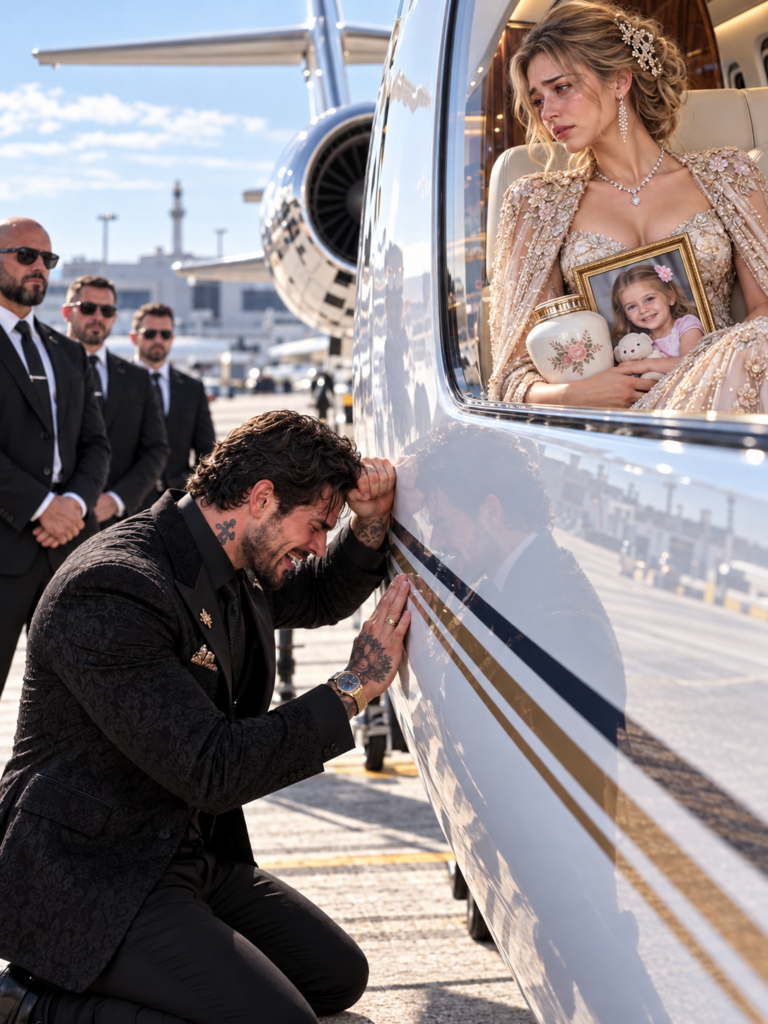
I thought about the woman who had boarded a plane from Chicago carrying an urn, a stuffed rabbit and more anger than she knew how to survive.
I wished I could speak to her.
I would not tell her everything would be fine.
That would have been too simple.
I would tell her something better.
You will laugh again.
You will sleep through the night again.
You will say Grace’s name without always falling apart.
You will forgive people without inviting them back into the places where they once hurt you.
You will learn that love can end without becoming meaningless.
You will build a home where no one has to beg to be chosen.
And one day, when you look behind you, you will realize leaving was never the end of your story.
It was the first decision you made in a long time that belonged entirely to you.
Daniel slipped his hand into mine.
“Ready?” he asked.
I looked once more at Alexander.
He gave me a small nod.
Not possessive.
Not regretful.
Simply grateful.
I nodded back.
Then I turned toward the people waiting for me.
Toward dinner.
Toward home.
Toward the ordinary evening ahead.
“Yes,” I said.
And this time, when I walked away from Alexander Hayes, neither of us mistook it for tragedy.
We both finally understood.
Some people are meant to remain part of your heart without remaining part of your life.
And sometimes the happiest ending is not getting back what you lost.
It is discovering that after loss, there is still a life worth choosing.

