
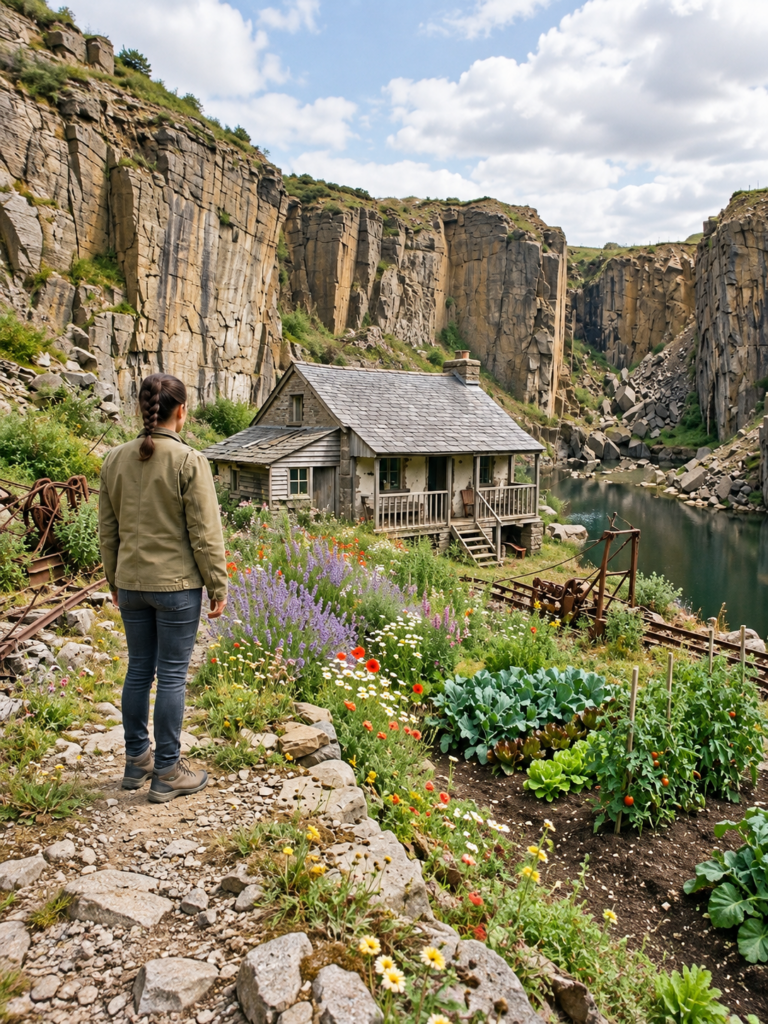
her husband took the house and the girl then left her a worthless quarry and she buried him with the dirt he threw on her
Part 1
The bank took the house on a Tuesday. Audrey stood on the sidewalk with the duffel bag at her feet and watched the locksmith change the locks while David’s lawyer checked his phone. The wraparound porch she had sanded and stained herself two summers ago looked the same as it always had. The boxwoods she had kept trimmed still lined the walk. Nothing about the place announced that it no longer belonged to her.
David had left for Aspen the night before. He had not said goodbye. The emails she had found on his laptop three months earlier had already told her everything she needed to know: the twenty-four-year-old assistant, the hotel reservations, the spreadsheet named “project restructure” that listed every joint account and the offshore shells he had been feeding for two years. By the time the divorce decree was signed, half of nothing was still nothing. The only asset his lawyers had not contested was the paper deed to an abandoned limestone quarry her grandfather had bought in 1974 for the tax write-off. David had laughed about it for a decade.
She drove the 2008 Honda Civic through October rain. The only sound was the wipers and the soft thump of the defroster that had never worked right. When the road turned to gravel she cut the engine and sat. The quarry opened below her like a scar. Jagged limestone walls dropped a hundred feet to a pool of green water. On a narrow ledge at the far rim sat the cabin. Calling it a cabin was generous. It was a box of weathered boards that had not been painted since before she was born.
Audrey got out. The wind cut through her coat. She did not shiver. She carried the duffel to the rusted gate, set it down, and went back for the tire iron. The padlock was a solid lump of orange. She swung. The sound cracked off the cliffs. She swung again. The chain gave. She pushed the gate open and walked the path through dead thistles that caught at her jeans.
The porch steps groaned. The door hung on one hinge. Inside, the smell of damp earth and mouse droppings met her. Rain dripped through a hole in the roof onto the warped floor. A rusted wood stove stood in the corner. An iron bed frame held no mattress. She walked to the hand-pump sink and worked the handle. Air. Then a trickle of brown water that smelled like iron and rot.
She had not cried during the depositions. She had not cried when she handed over the keys. She had not cried when David’s lawyer offered her the patronizing smile. Standing over the muddy basin, her chest seized. She slid down the cabinets to the floor, pulled her knees up, and let the sound come out of her. It was not quiet. It bounced off the empty walls for twelve minutes. When she checked her watch it was 4:12. The light was already failing. If she stayed on the floor she would freeze.
She stood. Her eyes were swollen and her throat raw, but the pressure in her chest had shifted. It was still there. It had simply become something she could use. She went outside and began gathering wood. Fallen branches. Splintered support beams left from the old mining days. She dragged them back until her hands were raw. By six she had a pile beside the stove. She used a crumpled gas receipt for kindling. The match caught. The flame climbed the dry pine.
She unrolled the twenty-dollar sleeping bag she had bought at a pawn shop and laid it in front of the stove. The cold came up through the nylon and settled into her hips. Every time the wind shifted the cabin groaned on its stone foundation. She listened to the drip of the leak and the skitter of something small in the far wall. In the old house a mouse would have meant a call to the exterminator at two in the morning. Here she only hoped it stayed on its side of the room.
She thought of the master bedroom with the heated floors and the linen sheets David had insisted on. It felt like a movie she had watched a long time ago about a softer, stupider woman. Audrey turned toward the orange glow of the stove and let the anger settle. She did not sleep. She woke each time the fire burned low and fed it another piece of salvaged wood. When the sky turned the color of a bruise she was already sitting up. Her breath showed white. She walked to the window, wiped the condensation with her sleeve, and looked down at the quarry filled with morning mist.
“Perfect,” she said.
The first month taught her what her body could stand. Her hands blistered, then bled, then grew a thick yellow callus. The soft curves she had carried from the suburban kitchen melted away. She lost fifteen pounds. When she looked in the cracked mirror above the sink she barely recognized the face. The eyes were harder. The jaw was sharper. She liked the woman looking back. That woman could not be conned.
She patched the roof with discarded tin and roofing tar she bartered for two towns over, paying with the last of the cash from a pawned necklace. She learned that mice would not cross a line of crushed peppermint leaves. She took the hand pump apart, scrubbed the check valve with steel wool, and got it drawing clear cold water again. By late November the cabin was watertight. She had stacked a cord of wood against the south wall and insulated the floor with wool rugs from a thrift store. It was survival. It was not yet a life.
The silence of the quarry was total except for the caw of crows and the occasional crack of rock shifting in the freeze. She needed a root cellar. The canned beans and potatoes she had stockpiled would freeze solid if she left them above ground. The soil around the cabin was dense clay and limestone gravel. She picked a spot on the north side against the stone foundation and began to dig. Swing the pickaxe. Loosen the dirt. Shovel it out. Repeat. Her rhythm became a meditation. On the downswing she thought of David’s white teeth. On the heave she thought of the spreadsheet.
It was a Tuesday, exactly two months after she arrived, when the rhythm broke. Swing. Clang. The shock traveled up the wooden handle into her shoulder. She dropped the pickaxe and rubbed her collarbone. She looked down into the three-foot hole. She had not hit a rock. A rock gave a dull thud. This was a sharp metallic ring.
Audrey dropped to her knees. The damp clay soaked through her jeans. She scraped with a hand trowel. Ten inches down the blade hit something flat and rusted. Too wide for a pipe. She dug with her bare hands until she uncovered a heavy iron plate, two feet square, set horizontally into the earth right beneath the cabin’s foundation line. In the center was a thick iron ring.
She sat back on her heels and wiped her forehead with a dirty wrist. The quarry had shut down in the late 1960s. Her grandfather had bought the deed for pennies and never come out here. No one had. Audrey grabbed the ring. It was freezing. She braced her boots and pulled. Nothing moved. Decades of rust and packed earth held it.
She did not get frustrated. The old Audrey would have called a contractor or walked away. The new Audrey fetched a can of penetrating oil, soaked the edges, and went inside to make black tea. She sat on the porch with the mug and watched the gray sky bruise with snow. After an hour she went back with the crowbar. She wedged the tip into the hairline seam and leaned her full weight on the steel.
For a long moment the earth held its breath. Then a sickening crack rose from the dirt. A puff of stale, impossibly dry air hissed out, smelling of dust and old metal. Audrey threw the crowbar aside, grabbed the ring with both hands, and pulled until the veins stood out in her neck. The lid lifted an inch, then flipped backward onto the dirt with a heavy thud that vibrated through her knees. Dust billowed. She scrambled back, coughing.
When it settled she expected black water or a collapsed pipe. Instead she saw a wooden ladder, perfectly preserved in the sealed air, leading down into absolute darkness.
Part 2
She ran into the cabin and found the tactical flashlight. Back at the hole she aimed the beam downward. The shaft dropped about twelve feet. At the bottom the light hit smooth poured concrete. Reinforced steel beams lined the walls. It was a bunker.
Audrey swallowed. She swung her legs over the edge, tested her weight on the first rung, and climbed. The air grew colder. Ancient dust coated the back of her throat. When her boots hit the concrete she swept the light around a chamber roughly ten by ten. In the center sat a massive olive-green metal trunk secured with a heavy brass padlock. Against the far wall, stacked on wooden pallets, were rows of heavy canvas bags of the kind banks once used. One bag had rotted at the corner. Thick fabric had been eaten away by time.
Audrey walked toward it. Her boots echoed. She crouched. Poking from the torn canvas, caught in the white beam, were neatly banded stacks of paper. The color was unmistakable. She pulled one free. The paper was stiff and thick and smelled of old wealth. She wiped the dust from the top band. Series 1934. Bearer bonds. Hundreds of them. Maybe thousands.
She thought of David in the Aspen time-share. She thought of the spreadsheet that said she was worth nothing. A slow smile stretched across her dirt-smudged face.
“Project restructure,” she whispered to the vault. “Let’s see how you like this one.”
The first bag weighed forty pounds. She dragged it up the ladder, shoulders screaming. Halfway up the canvas tore and gray dust rained into her eyes. She did not let go. She hauled it over the edge, collapsed onto the damp earth, then dragged it the rest of the way inside. She barred the door. She had not barred it in two months. Suddenly the isolation did not feel like a shield. It felt like a liability.
She fed the stove until the iron glowed dull red. Sitting cross-legged on the wool rug she sliced the canvas open with her pocket knife. Stacks spilled out. She spent the next eight hours counting. Her fingers turned black from old ink and grime. The bonds came in denominations of one thousand, five thousand, and ten thousand dollars. Municipal and federal paper issued between 1934 and 1938. Bearer bonds. Whoever held the paper owned the debt. No name. No digital trail.
By four in the morning she had sorted one bag. The tally on a torn piece of cardboard, written in charcoal, read 4.2 million. Down in the bunker there were at least twelve more bags like it.
Audrey stared at the number. She did not cry. She did not laugh. A cold pragmatism settled over her. Finding the money was an accident. Keeping it was going to be a war. If she walked into a Chase branch tomorrow and tried to deposit a 1934 bearer bond, alarms would ring from the local sheriff to the IRS. The first person to receive notice of any sudden windfall would be David’s legal team, eager to drag her back into court for half of her undisclosed assets.
She could not use the regular system. The system was built to protect men like David. She would have to build her own.
At dawn she washed her face in the freezing basin, tied her hair back, and drove into town. The public library in Oak Haven was a brick building between a closed auto-parts store and a discount pharmacy. She smelled of woodsmoke and damp earth. The librarian reading a paperback behind the counter did not look up. Audrey logged onto a public computer and spent four hours reading tax law, banking regulations, and the history of bearer-bond redemptions. The internet confirmed her fears. Banks hated them. The government tracked them. They were still legally binding debts, but cashing them quietly required a corporate entity that did not immediately trace back to a destitute divorcee living in a rotting cabin.
She needed a lawyer who understood gray areas and cared more about a flat cash fee than ethics. She leaned back in the plastic chair and rubbed her eyes. She had four million dollars in paper ghosts on her floor and she could not buy a hot meal with any of it. She was wealthy and starving at the same time.
She drove back to the quarry in silence. Freezing drizzle had turned the dirt road to slick mud. The Civic spun out twice before she muscled it up the final incline. Inside the cabin the fire was dead. Audrey stood in the center of the room looking at the trap door she had concealed under a heavy rug. The bonds were the long game. She needed capital now. Walking money. Money to pay a lawyer and set up a corporation. She could not do that with lint and a rusted Honda.
She threw the rug aside, opened the trap door, and climbed down with the flashlight. The olive-green trunk sat in the center of the room. She had ignored it the night before. Whoever buried a small fortune in municipal debt did not put a heavy brass padlock on a steel trunk just to store old winter coats.
Audrey fetched the hacksaw. She knelt in front of the trunk and pressed the blade against the lock. Screech. Screech. Screech. The sound echoed off the concrete. Her arm burned. Sweat cut clean tracks through the dust on her face. Ten minutes. Twenty. With a final thrust the brass gave. The lock snapped. She tossed it onto the floor, unlatched the stiff clasps with the heel of her boot, and heaved the lid upward. The hinges screamed.
She aimed the flashlight inside and stopped breathing. No paper. Neatly stacked in the bottom third of the trunk were rows of dull yellow bricks. They were not shiny. Rough cast, slightly porous, lacking luster. She reached in and grabbed one. Her wrist buckled under the density. She needed both hands. Roughly the size of a modern phone, a bit thicker, it weighed at least two pounds. Stamped into the metal was a crude assayer’s mark and the weight: 1 kilo .999 fine gold.
Audrey sat back on her heels with the brick in her lap. Cold. Heavy. Real. Unlike the bonds, gold did not need a corporate structure. Gold did not carry a serial number a bank would flag. Gold was the oldest language on earth.
She counted the top row. Ten bricks. At least five layers. Fifty kilos of untraceable gold. A harsh laugh scraped out of her throat. David had spent two years hiding money in Cayman accounts and paying sleazy accountants, thinking he was a genius. He had left her a dirt hole to die in and accidentally given her the keys to a kingdom.
“Checkmate, you son of a bitch,” she whispered.
She took one brick. She wrapped it in a thick wool sock, shoved it into the bottom of her duffel, and climbed out.
Part 3
The next morning she drove three hundred miles. She crossed two state lines, avoided major highways, and reached a bleak industrial stretch of Pittsburgh. She parked the Civic three blocks from a storefront with a barred window and a faded neon sign that read Apex Coins and Metals. Inside, the shop smelled of stale cigar smoke and Windex. A heavyset man with a thick beard sat behind bulletproof glass. He did not look at her face. He looked at the bulge in her canvas bag.
“I need to liquidate,” Audrey said. Her voice was flat. She slid the wool sock through the transaction slot. The man picked up the brick. His eyes widened at the weight. He used a jeweler’s loop on the stamp, then applied a drop of acid to the corner. It did not fizz. It did not discolor.
“Rough cast,” he grunted. “Old. Where’d you get it?”
“An inheritance.” She held his gaze. “Do you want it or should I walk down the street?”
He set it on a digital scale and tapped a greasy calculator. “Spot’s hovering around sixty-four thousand for a kilo. I can’t give you spot. No paperwork, rough cast. I take a risk. I’ll give you fifty-five cash.”
It was a robbery. Audrey knew it. She did not care. Fifty-five thousand was enough to start the machine.
“Fine.”
Ten minutes later she walked out with a thick manila envelope inside her coat. The weight against her ribs felt like armor. She did not go back to the quarry. She checked into a cheap motel, took the first hot shower in two months, and bought a burner phone. Sitting on the sagging bed with a notebook in her lap she began making calls.
It took three days to find Hollis. He was a disbarred corporate attorney who now operated out of a strip-mall office in Cleveland, handling entity formations for people who preferred not to exist on paper. Audrey met him in a diner booth. He smelled of cheap cologne and desperation. He shredded paper napkins while he talked.
“You want an LLC,” he said, glancing at the door. “Registered in Delaware. Nominee director. Blind trust ownership. Fully insulated.”
“I want three,” Audrey said. She slid a stack of hundreds across the table. “Nested. The parent owns the second. The second owns the third. The third is the operating entity. Ultimate beneficial owner hidden behind attorney-client privilege.”
Hollis stopped shredding. He looked at the cash, then at the cracked skin on her knuckles and the cold, dead-eyed stare. “What’s the operating entity called?”
“Limestone Holdings,” she said.
The foundation was poured. It was time to start building the house.
She stayed in the motel another week. She bought prepaid debit cards, a rugged laptop, and a secondary safe. When she finally drove back up the muddy incline the isolation no longer felt threatening. It felt like a perimeter.
She spent the next three days moving the gold. She could not leave fifty kilos of bullion in a rusted trunk any trespasser with a crowbar could open. She dug a new cavity inside the cabin beneath the cast-iron wood stove. It took hours of chipping through the original limestone foundation. Her hands bled through the leather work gloves. She lined the cavity with concrete mix she hauled up in fifty-pound bags, let it cure, and transferred the bricks one by one. When she finished she bolted the heavy stove back into place. Unless someone planned to dismantle a four-hundred-pound iron heater, the gold was invisible.
Gold in a hole was still useless. She needed a machine to clean it.
Hollis called the burner a week later. The Delaware LLCs were active. Limestone Holdings had a commercial bank account.
“You’re incorporated,” he said. “But a company with a bank account and no revenue looks like exactly what it is. A shell. If you want to move real capital you need a front. Something cashy. Something dirty.”
Audrey already had a target.
Oak Haven was dying, hollowed out by a closed paper mill. On the outskirts, on four acres of contaminated soil, sat Oak Haven Salvage and Towing. The yard was a graveyard of rusted sedans and oil-stained gravel. The owner, a sixty-year-old man named Miller, sat in a prefabricated trailer that smelled of stale coffee and dog hair. He looked up from a portable television when Audrey walked in. He saw a thin woman in a cheap coat and muddy boots. He was not impressed.
“We don’t sell parts to the public,” he grunted. “Scrap drop-off is around back.”
“I’m not here to drop off,” Audrey said. She stood in the doorway and let the cold wind blow in. “I’m here to buy the yard.”
Miller laughed. A wet, congested sound. “Yard’s not for sale, lady.”
“The county tax registry says you’re three years behind on property taxes. You have two tow trucks. One has a cracked engine block. Your liability insurance lapsed in March. The state EPA is threatening to fine you for groundwater contamination from that leaking diesel tank out back. You are going under.”
Miller stopped laughing. Audrey walked to the counter and dropped a rubber-banded stack of hundreds onto the greasy linoleum.
“There’s twenty thousand there,” she said. “That pays your back taxes and buys you a plane ticket to Florida. I assume the mortgage to the bank. Limestone Holdings takes full ownership of the deed, the inventory, and the liabilities. Effective today. Take it or wait for the county to padlock the gate next month.”
Miller looked at the cash. He looked at her dead, unblinking eyes. He did not see a suburban housewife. He saw a shark. He took the money.
Within two weeks Audrey owned a business. People brought in scrap. She paid them cash. She sold the scrap to larger refineries. They paid the LLC by wire. It was easy to inflate the numbers. Every time she melted one of the gold bricks in the industrial smelting kiln she installed in a locked shed at the back of the yard, she logged the newly cast unmarked ingots as salvaged industrial copper and brass. She drove the metal to a specialized buyer in Philadelphia who did not ask questions. The buyer wired funds to Limestone Holdings. The gold was turning into clean, taxable digital revenue.
Audrey did not buy a mansion. She did not buy designer clothes. She funneled the clean money straight back into the quarry. She hired a private contracting crew from three counties over. They did not ask why a woman living in a shack wanted three-inch bulletproof glass in her windows. They did not ask why she wanted a reinforced steel door framed into the rotting wood, or why she paid them triple their rate to run a buried fiber-optic cable and a high-capacity solar array behind the tree line.
She kept the exterior exactly as it was: weathered, sagging, pathetic. Inside it was becoming a fortress. Rotting floorboards were replaced with heavy oak. The leaky roof was sealed and insulated. A satellite terminal sat on a sleek desk beside a bank of monitors that displayed live feeds from six hidden thermal cameras scattered around the quarry rim.
Six months to the day after David had locked her out of their house, Audrey sat in an ergonomic leather chair and watched snow fall on the limestone cliffs through ballistic glass. She pulled up the Limestone Holdings ledger. The balance was eight hundred forty thousand dollars. She had not yet touched the bearer bonds.
She took a sip of pour-over coffee. The heat bloomed in her chest. For the first time in half a year she did not feel the phantom pain of the bruised rib she had walked into a door frame with on the day she left the old house. She did not feel the hollow ache of betrayal. She felt solid. She felt dangerous.
Then one of the monitors flashed red. A heat signature was moving up the restricted access road. It was not a lost hiker. It was not a county utility truck. It was a 2026 BMW X7, metallic black against the gray winter woods. The car stopped at the main gate she had replaced three months earlier with heavy-gauge steel tubing and an electronic magnetic lock.
The driver’s door opened. A man stepped out into the freezing mud wearing a tailored wool overcoat and Italian leather shoes that sank an inch into the muck. Audrey stared at the high-definition feed. Her breath caught, not from fear, but from a sudden violent surge of adrenaline.
David.
He looked thinner. The smug confidence was gone. His shoulders were hunched against the wind. He kicked the lower bar of the gate with his ruined shoe and left a streak of mud. He pulled a cell phone from his pocket. A second later her burner buzzed on the desk. She did not answer. She watched him.
Why was he here? The divorce was final. He had won. He had taken the house, the cars, the joint accounts, and left her with a piece of worthless paper. He was supposed to be in Aspen or on a yacht. She tapped keys, bypassed the local feed, and pulled a background check on his primary LLC. It took three minutes to find the cracks. A month ago the SEC had opened a preliminary inquiry into one of his offshore partners. A week later two of his major real-estate developments had filed for Chapter 11. His liquid capital was frozen. The twenty-four-year-old assistant was nowhere on his recent social-media footprint.
David was not here to gloat. David was bleeding out and looking for a tourniquet.
He approached the call box and pressed the button. Inside the cabin a chime sounded. Audrey pressed the intercom key and let the dead air hang.
“Audrey, I know you’re in there.” His voice crackled, stripped of its old resonance. “Open the gate.”
She leaned back and let him wait thirty seconds in the freezing wind.
“You’re trespassing, David,” she said. Her voice was calm. It did not shake. “Get off my property.”
“Don’t give me that. I just drove three hours to find this godforsaken dirt hole. Open the damn gate. We need to talk.”
“We have nothing to talk about. The court split our assets. You got the gold mine. I got the shaft. Remember?”
“Drop the act.” His voice rose. “My lawyers did a routine asset sweep. You bought Oak Haven Salvage. You paid cash. You bought the two hundred acres surrounding this quarry. Cash. You formed a corporate trust in Delaware. Where did the money come from, Audrey?”
There it was. The arrogance. He could not fathom that she had survived him, let alone surpassed him. He assumed she had stolen from him.
“I don’t know what you’re talking about,” she said.
“You hid assets during discovery. That’s perjury. That’s fraud. You siphoned my money into a slush fund before the divorce, didn’t you? You played the victim while you were robbing me blind.”
Audrey smiled. It was cold and sharp and did not reach her eyes. The projection was staggering. He was accusing her of the exact crime he had committed against her.
“If you have proof of hidden assets, file a motion with the court,” she said. “Until then, get off my property before I call the sheriff.”
“I’m not leaving until I see what you’re hiding up there.” He grabbed the steel bars and shook them. They did not move.
Audrey stood. She unlocked the heavy oak cabinet beside the door and took out the matte-black twelve-gauge she had bought a month earlier, registered to Limestone Holdings as site security. She racked the slide. The metallic clack carried. She walked to the reinforced steel door, unbolted it, and stepped onto the porch. The wind whipped her hair. She held the shotgun casually, pointed at the ground, and walked to the edge of the quarry rim. She looked down at the gate a hundred yards below.
David stopped shaking the bars. He looked up. Even through the falling snow he could see the weapon and the woman holding it. She was not the soft crying wife he had left behind. She was something forged in the dirt and the cold.
Audrey did not yell. She reached into her coat, pulled out the remote for the magnetic lock, and held it up. David took a step back. The certainty that she would use the gun radiated from her posture. He did not say another word. He turned, got into the leased BMW, and threw it into reverse. The tires spun in the mud before finding traction. The car sped away, fishtailing down the access road.
Audrey watched until the snow buried his tracks. She walked back inside, locked the steel door, set the shotgun against the desk, and sat down. She looked at the bank balance. Eight hundred forty thousand. She looked at the trap door under the rug where four million in bearer bonds still slept in the dark.
David had tried to bury her in this quarry. He had not realized she was a seed.
Part 4
David’s desperation was a ticking clock. Audrey had no intention of letting it detonate on her property. Desperate men hired cheap private investigators. They trespassed in the dead of night. He had taught her a valuable lesson about warfare. You do not fight with your fists. You fight with paper.
She packed exactly one million dollars’ worth of the 1934 bearer bonds into a leather briefcase. The thick green paper smelled of dust and old promises. The drive to Cleveland felt different. The heater in the Civic was dying, but she did not notice the cold. Her mind was already moving pieces miles ahead of the man who thought he had won.
Hollis was eating a pastrami sandwich at his desk when she walked in. He stopped chewing when she set the briefcase down and flipped the lid toward him. He wiped his hands, reached out with trembling fingers, and lifted a ten-thousand-dollar certificate to the fluorescent light.
“These belong in a museum,” he whispered. “Or an evidence locker. Where did you get this volume of unregistered paper?”
“That falls under attorney-client privilege,” Audrey said. “Your job isn’t to ask questions. Your job is to process them.”
Hollis dropped the bond back into the case. “I can’t deposit these. No domestic bank will touch this volume without flagging the FBI. It’s ghost money.”
“I don’t need a domestic bank,” she said. She sat in the cracked leather chair. “You have contacts in Geneva. Private asset managers who handle legacy wealth. Men who take a flat twenty-percent fee to digitize paper ghosts and wire the remaining balance into corporate trusts.”
Hollis looked at the briefcase, then at the woman across from him. The greed finally overpowered the fear. “It will take three weeks,” he said. “And my fee just doubled.”
“Take it out of the twenty percent,” Audrey said. She stood and walked out before he could argue.
For twenty-one days she lived in the quiet rhythm of the quarry. She chopped wood. She watched the thermal cameras. She fed the stove. Snow fell in heavy silent sheets and buried the rusted wreckage of her grandfather’s old mining equipment under a white blanket. On the twenty-second day the encrypted laptop chimed. An offshore wire had cleared into the Limestone Holdings account. Eight hundred thousand dollars of clean capital. The ghost money was real.
Audrey picked up the burner and called Hollis. “The funds are secure. Initiate phase two.”
Phase two was not about building her wealth. It was about weaponizing it. David’s entire financial structure was bleeding out on the floor of a federal bankruptcy court in Chicago. His real-estate LLCs were defaulting on millions in loans. When a developer goes under, the debt gets packaged and sold at auction to predatory collection firms for pennies on the dollar.
Audrey did not want to buy a new house. She wanted to buy David.
Hollis attended the closed-door debt auction as the registered proxy for Limestone Holdings. The major banks were eager to purge David’s toxic portfolio. For exactly 1.6 million dollars, combining salvage-yard revenue with the newly digitized bond money, Audrey purchased the entirety of his defaulted corporate debt. She owned the mortgage on his Aspen time-share. She owned the liens on his leased luxury vehicles. She owned the primary claim on his frozen assets. The trap did not simply snap shut. It locked.
Part 5
The final blow came on a bleak Tuesday in November. Audrey drove to Chicago. She did not wear a cheap coat or muddy boots. She wore a tailored charcoal suit she had bought with salvage-yard money. She did not wear gloves. She wanted her heavily calloused hands visible.
The arbitration room in the federal courthouse smelled of floor wax and stale coffee. David sat on one side of a long mahogany table flanked by two exhausted cheap lawyers. He looked awful. His skin was gray. His designer suit hung loosely on his shrinking frame. He was chewing aggressively on a thumbnail.
The door opened. David did not look up at first. He stared at his legal pad, waiting for the bank representative to deliver the final terms of his financial execution. Audrey walked in. Her heels clicked against the polished hardwood. She took the seat directly across from him.
David stopped chewing. His head snapped up. For a long silent moment his brain failed to process the image in front of him.
“What are you doing here?” he rasped. He looked around the room, frantic. “Who let her in here? She’s my ex-wife. This is a closed proceeding.”
The court-appointed mediator adjusted his glasses. “Mr. Vance, this is the primary shareholder of Limestone Holdings. They are the sole purchaser of your consolidated debt portfolio. They requested to present the restructuring terms in person.”
All the blood drained from David’s face. He looked at Audrey. He looked at the tailored suit. He looked at her rough, bruised knuckles resting on the mahogany table.
“Project restructure,” Audrey said softly. Only he could hear it.
He lunged across the table. His lawyers grabbed his arms and pulled him back into his chair as he thrashed, face contorted in primal fury.
“You stole from me!” he screamed. Spit flew. “You set me up. I’ll kill you, Audrey. I’ll take it all back.”
Audrey did not flinch. She watched him unravel. It was exactly like watching a spreadsheet delete itself line by line. She opened her leather folder and slid a single sheet of paper across the table. A complete asset-seizure demand. Everything he had left—the watches, the cars, the remaining cash in his personal accounts—belonged to her now.
“Sign it, David,” she said. Her voice was perfectly level. “Or go to federal prison for bankruptcy fraud. You have thirty seconds.”
He stared at the paper. He began to weep. It was not a pretty cry. It was a pathetic, broken sound. With a shaking hand he picked up a pen and signed his own ruin.
Audrey did not gloat. She did not smile. She picked up the paper, placed it in her folder, and walked out of the room.
That night she sat on the porch of her cabin. The wind howled through the limestone cliffs, a lonely brutal sound. Inside her chest the hollow space was gone. The fire in the wood stove crackled warmly behind her. She poured a glass of expensive bourbon, raised it to the dark empty quarry, and took a long quiet drink.
She was exactly where he left her. And she owned the world.
Audrey took the dirt they threw on her and used it to bury them. Her journey from a freezing, betrayed outcast to the undisputed owner of a hidden empire proved that sometimes the deepest cuts forge the sharpest weapons. The quarry that was supposed to be her grave had become her fortress, and the man who tried to erase her had signed his name to the paper that finished him.

