
PART 2
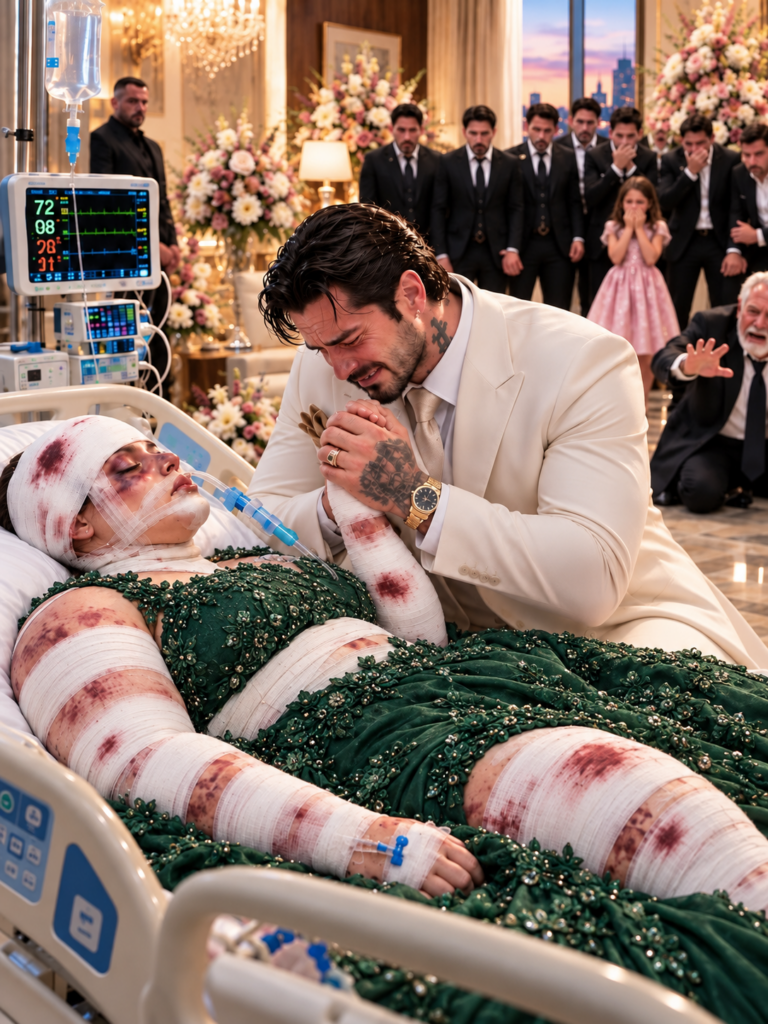
The surgeon was ten steps from Clara’s door when I moved into his path.
I did not raise my voice.
I did not call the men waiting downstairs.
I simply held up my phone.
On the screen, the security footage remained frozen on the image of Dr. Samuel Mercer accepting an envelope from Clara’s brother, Daniel.
The surgeon stopped.
For one brief second, the practiced calm left his face.
“Mr. Vale,” he said.
“What’s in the envelope?”
His eyes shifted toward the ICU door.
“Not here.”
“That’s my wife in there.”
“I know.”
“Then here is exactly where we talk.”
Behind me, Clara’s father and brothers had gone quiet. The ringing phones had stopped one by one. The hallway that had been filled with smug laughter only minutes earlier now carried nothing but the distant sounds of carts, monitors, and nurses speaking softly at their station.
Dr. Mercer looked at Daniel.
Daniel looked away.
That told me almost as much as the video had.
I pressed the call button on my phone.
“Cancel Protocol Black.”
My chief of operations answered immediately.
“Everything?”
“Everything that has not already become a lawful process. No pressure. No interference. No calls to employers, banks, partners, or anyone else.”
There was a pause.
“And the standing orders?”
“Withdraw them.”
“Understood.”
I ended the call.
Clara’s father stared at me as though I had just become even more difficult to understand.
Perhaps I had.
For years, I had built my life around the belief that power meant preventing other people from having choices.
That night, outside Clara’s room, I understood something different.
The only choice that mattered was hers.
I turned to hospital security.
“I want the hospital administrator here. I want legal counsel notified. And I want Dr. Mercer kept away from my wife until someone explains that envelope.”
The surgeon exhaled.
“That’s fair.”
Daniel suddenly stepped forward.
“It isn’t what you think.”
I faced him.
“What do I think?”
His mouth opened.
Nothing came out.
Dr. Mercer glanced at the security officers.
Then he reached into the inside pocket of his coat and slowly removed a cream-colored envelope.
“I haven’t opened it.”
Daniel looked sharply at him.
“You said—”
“I said I would speak with you,” Mercer replied. “I did not say I would do what you asked.”
One of the security officers accepted the envelope without opening it.
Twenty minutes later, we sat in a small consultation room normally used for difficult conversations with families.
There were too many chairs.
Too much beige paint.
A box of tissues sat on the table.
I hated that box more than I could explain.
The hospital administrator, a silver-haired woman named Margaret Ellis, entered with the head of security and the hospital’s overnight legal representative.
Dr. Mercer sat opposite them.
Daniel sat alone at the far end.
Clara’s father and the other brothers had been asked to remain outside.
I had insisted on one additional condition.
The police had to be notified.
Not my people.
Not favors.
Not men who owed me anything.
The police.
Margaret Ellis put on gloves and opened the envelope.
Inside were several sheets of paper and a cashier’s check.
The amount printed on it was fifty thousand dollars.
Daniel closed his eyes.
Margaret unfolded the first page.
Her expression changed.
“What is it?” I asked.
She looked toward Dr. Mercer.
“It appears to be a request that certain details be omitted from Mrs. Vale’s medical record.”
My hands tightened beneath the table.
“What details?”
“The reported cause of her injuries.”
Daniel leaned forward.
“That isn’t what I meant.”
Margaret continued reading.
The letter asked that the chart describe Clara’s injuries as resulting from “an accidental fall during a private family gathering.”
There was also a request that hospital staff limit discussions with law enforcement until Clara was “mentally prepared.”
Dr. Mercer stared at Daniel.
“You told me the envelope contained insurance documents.”
Daniel’s voice dropped.
“My father told me what to say.”
For the first time that night, I saw something in one of Clara’s brothers that I had never seen before.
Fear.
Not fear of me.
Fear of the man waiting outside.
Their father.
I had spent years thinking of Clara’s brothers as extensions of him—eight identical shadows orbiting the same cold center.
But shadows were not identical.
Some chose where they stood.
Others never learned they could move.
“Why you?” I asked Daniel.
He rubbed both hands over his face.
“Because I knew Dr. Mercer in college. We were roommates for one semester.”
“And the check?”
“My father gave it to me.”
Dr. Mercer stood.
“I want it entered into evidence.”
Margaret nodded.
“It will be.”
He looked at me.
“I was walking toward your wife’s room because I intended to check her vitals and then report the envelope to administration. I should have reported it immediately. I didn’t.”
“Why not?”
“Because I recognized Daniel.”
Mercer’s expression carried no pride in the admission.
“I told myself I needed to understand what was happening before I destroyed the career and reputation of someone I once knew.”
Daniel laughed once, bitterly.
“Career.”
Nobody answered.
He looked around the room.
“I don’t have much of one anymore.”
I studied him.
Of Clara’s brothers, Daniel had always been the quietest.
At family dinners he rarely challenged his father, but he also rarely joined the others when they mocked Clara.
I remembered something she had once said.
Daniel used to leave books outside my bedroom door when Dad grounded me.
At the time, I had barely listened.
Now the memory returned with uncomfortable clarity.
“Tell the police everything,” I said.
Daniel stared at me.
“My father will never forgive me.”
“That is between you and him.”
He looked surprised.
Perhaps he had expected a threat.
Perhaps I would once have given him one.
Instead, I stood.
“My concern is Clara.”
When I returned to her room, dawn had begun to soften the darkness beyond the windows.
Clara was awake.
Her eyes opened slowly as I approached.
“Adrian?”
I crossed the room immediately.
“I’m here.”
Her fingers moved beneath mine.
She looked exhausted, but there was recognition in her gaze.
Then memory reached her.
Her hand went toward her stomach.
I saw the question before she could ask it.
The doctor had warned me this moment would come.
There are sentences a person imagines preparing for.
There are others no preparation can make possible.
I sat beside her.
“Clara…”
Her eyes filled.
“No.”
I could not lie.
I lowered my forehead to her hand.
For a long time, neither of us spoke.
The grief between us was too large for language.
Eventually Clara whispered, “I remember the living room.”
I lifted my head.
“You don’t have to talk about anything tonight.”
“I remember enough.”
Her breathing trembled.
“My father called me over because he said Mom had left something for me.”
I frowned.
“Your mother?”
Clara’s mother, Elena, had died four years before our wedding.
Clara rarely spoke about her death.
Not because she had forgotten her mother, but because remembering Elena always seemed to bring another memory with it—the years she had spent trying and failing to soften her husband.
“What did he say she left?”
“I don’t know.”
Clara swallowed carefully.
“He told me there were papers she wanted me to have. He said I needed to come alone.”
“Why didn’t you tell me?”
“Because every time I mentioned my family, you looked like you wanted to build a wall around the entire house.”
Despite everything, I almost smiled.
“You noticed.”
“I married you.”
Her eyes closed briefly.
“When I arrived, Dad said there were no papers. He said the real reason he called me there was because he had heard I was planning to sell Mom’s old cottage.”
“You don’t own her cottage.”
“That’s what I told him.”
Clara’s eyes opened again.
“He said I did.”
I stared at her.
“What?”
“He said Mom changed her will before she died.”
A soft knock interrupted us.
A nurse entered and adjusted Clara’s medication.
I waited until she left.
“What exactly did your father say?”
Clara searched her memory.
“He said Mom had embarrassed him by leaving me something that should have stayed in the family.”
“You are family.”
“You know what he means by family.”
Her voice carried years in those words.
Sons.
Legacy.
The family name.
Obedience.
Not Clara.
Never Clara.
“He wanted me to sign something,” she continued. “I refused because I didn’t understand it.”
“What kind of document?”
“I only saw the last page. There was a signature line.”
She frowned.
“And a name.”
“What name?”
“Eleanor Price.”
I did not recognize it.
Clara did.
At least, something about the name disturbed her.
“My mother had a friend named Eleanor when I was little.”
I leaned closer.
“Do you know where she lives?”
“No. Dad said she moved away years ago.”
Clara looked toward the window.
“He hated her.”
“Why?”
“I never knew.”
Her eyes moved back to mine.
Then something changed in her expression.
She studied my face carefully.
The hallway.
The security officers.
The men in suits beyond the glass doors.
The way nurses had begun looking at me.
The pieces were joining.
“Adrian.”
I said nothing.
“Who are those men?”
My chest tightened.
“People who work for me.”
“At midnight?”
“Yes.”
“Why did Dad look terrified when you walked back in?”
I had imagined telling Clara the truth a thousand times.
Never here.
Never with her lying in a hospital bed.
Never after she had already lost so much.
But postponing the truth had become another form of lying.
“I haven’t been honest with you about all of my business.”
Her face went still.
“What does that mean?”
I pulled my chair closer.
“The companies you know about are real. The property firm, the shipping interests, the restaurants. But they are only part of what I built.”
“What else is there?”
I looked at the woman I loved.
Then I gave her the truth without dressing it up.
“When I was young, I inherited connections from my uncle. Some were legitimate. Some were not. Over time, I became responsible for an organization that operated on both sides of that line.”
Clara watched me.
“You mean organized crime.”
“Yes.”
The word settled between us.
She slowly withdrew her hand.
That movement hurt more than anything said in the hallway.
“You told me you were a businessman.”
“I am.”
“That was not my question.”
“No.”
She looked toward the machines beside her.
“How much of our life is real?”
“All of it.”
“How do I know?”
I had no answer good enough.
Clara closed her eyes.
“I need you to leave for a while.”
I stood immediately.
“Of course.”
“Adrian.”
I stopped at the door.
“When I wake up again, I want the truth.”
“You’ll have it.”
“All of it.”
“Yes.”
“And no one from my family is to be hurt because of me.”
I understood what she was asking.
More importantly, I understood what she feared.
“No one will be.”
I left the room.
For the first time in years, I had no plan.
No order.
No strategy.
Only a promise.
At seven thirty that morning, Detective Nora Bennett arrived.
She was not impressed by my name.
I liked her immediately.
She spoke with hospital security, collected the envelope, took Daniel’s initial statement, and informed me that Clara’s father and brothers would be questioned separately.
“What happens next?” I asked.
“That depends on evidence and witness statements.”
She watched me carefully.
“And on everyone allowing us to do our jobs.”
“I will.”
She raised one eyebrow.
“Will you?”
“Yes.”
After she left, Daniel approached me near the elevators.
His father was nowhere nearby.
“I have something,” he said.
He looked as though he had aged ten years overnight.
“What?”
“Mom gave it to me before she died.”
He removed a small brass key from his wallet.
“She made me promise not to give it to Dad.”
“Why didn’t you give it to Clara?”
Daniel looked toward the ICU.
“Because I was a coward.”
The answer was so simple I believed it.
“What does it open?”
“A deposit box.”
“Where?”
“Hudson Heritage Bank.”
My mind moved quickly.
“What’s inside?”
“I don’t know. Mom told me only Clara and Eleanor Price were supposed to see it.”
I stared at the key.
Then Daniel said something that changed the shape of everything we thought we knew.
“Dad has been looking for this key for four years.”
He placed it in my palm.
“And yesterday morning, he finally found out I still had it.”
I looked at him.
“Is that why he called Clara home?”
Daniel nodded.
But his next words were quieter.
“No. That’s why he called all of us home.”
I waited.
Daniel swallowed.
“He told us Clara had been stealing from the family for years.”
I stared at him.
“He said Mom discovered it before she died.”
“That isn’t true.”
“I know that now.”
“How?”
Daniel’s eyes filled with shame.
“Because after Clara was taken away, I went into Dad’s study.”
He reached into his coat and removed a folded photocopy.
Across the top was the letterhead of an old Manhattan law firm.
At the bottom was Elena’s signature.
I read the first paragraph.
Then the second.
By the third, I understood why Clara’s father had spent four years searching for a key.
Elena had not merely left Clara a cottage.
She had created a trust.
A substantial one.
And in the final paragraph, Elena had written one extraordinary condition:
If anyone attempted to pressure Clara into surrendering her inheritance, the full contents of a sealed statement were to be released to her.
That statement was inside the deposit box.
Along with documents Elena described only as:
A complete record of what happened to our family, and the truth Clara deserves to know.
I read the line twice.
Then I looked through the glass toward my sleeping wife.
For years, Clara had believed her mother had died leaving nothing behind but memories.
Now we knew Elena had left her something else.
A truth.
And someone had spent four years making sure she never found it.
PART 3
Clara remained in the hospital for five more days.
During that time, I learned something about silence.
There was the silence I had always used—the kind that concealed plans, protected operations, and kept dangerous knowledge divided between people who needed to know.
Then there was Clara’s silence.
Hers did not conceal.
It measured.
She asked me questions.
I answered every one.
Some answers made her stare out the window for a long time.
Some made her angry.
A few seemed to make her sadder than angry, which was harder to endure.
“Have you ever lied to me about where you were going?”
“Yes.”
“How often?”
“More than I should have.”
“Have you broken the law since we’ve been married?”
I hesitated.
Her expression changed immediately.
“That was hesitation.”
“Yes.”
She turned toward the window.
“I said I would tell you the truth.”
“Then tell me.”
So I did.
Not details that would compromise other people or active legal matters, but enough.
More than enough.
I told her about my uncle.
About the organization I inherited at twenty-eight.
About the businesses used to turn illegal operations into legitimate ones.
About the years I had spent pushing those operations toward legal industries because I had grown tired of living in rooms where trust always carried a price.
“Why didn’t you leave completely?” she asked.
“Fear.”
That surprised her.
“Of what?”
“Losing control.”
She studied me.
I gave a tired smile.
“I know how that sounds.”
“Yes,” she said. “You sound like my father.”
I looked down.
That sentence landed exactly where she intended.
Clara immediately seemed to regret it.
“I didn’t mean—”
“You did.”
“No.”
“You should have.”
She looked at me.
I had spent years defining myself as the opposite of Arthur Marlowe.
He used fear inside his family.
I used it outside mine.
He hid information to control Clara.
I hid information, I told myself, to protect her.
Different reasons.
Same assumption.
That we had the right to decide what she could handle.
“I’m changing it,” I said.
“What?”
“My organization.”
“Because I found out?”
“Because I finally understood why I should have done it years ago.”
She did not forgive me then.
I did not expect her to.
But when I reached the door that evening, she said, “Adrian?”
I turned.
“Come back tomorrow.”
It was the smallest gift she could have given me.
It felt enormous.
Daniel visited on the fourth day.
He stood awkwardly inside Clara’s room holding a bunch of supermarket flowers that looked as though he had selected them in a panic.
Clara stared at him.
He placed them on the counter.
“I know flowers are stupid.”
“They’re not stupid.”
“I almost bought balloons.”
“Those would have been stupid.”
For a moment, they almost smiled.
Then the weight of the room returned.
Daniel sat.
“I gave Adrian the key.”
“I know.”
“I should have given it to you years ago.”
“Yes.”
He nodded.
No excuses.
That helped.
Clara looked at him for a long time.
“Why did you believe Dad?”
Daniel’s eyes dropped.
“Because believing him was easier than challenging him.”
“He told you I stole from Mom.”
“Yes.”
“And none of you called me?”
His face tightened.
“I did once.”
“When?”
“Last year.”
Clara frowned.
“I never received a call.”
“I hung up before it connected.”
A sad laugh escaped her.
“That sounds like you.”
“I know.”
He rubbed his palms together.
“You always thought I was the better one.”
“I thought you were quieter.”
“There’s a difference.”
“Yes.”
He looked at her.
“I’m sorry.”
Clara’s eyes filled.
She did not say that it was all right.
It was not.
Instead she said, “I believe you’re sorry.”
Sometimes that is the beginning of forgiveness.
Not forgiveness itself.
Two days after Clara came home, Detective Bennett called.
The criminal investigation was continuing. Statements from hospital staff, family members, and neighbors were being reviewed. Several of Clara’s brothers had retained attorneys.
Arthur had denied ordering anyone to harm Clara.
Daniel’s statement contradicted parts of his account.
Nobody asked us to solve the case ourselves.
For once in my life, I did not try.
That was harder than I expected.
The bank appointment was scheduled for the following Thursday.
Clara nearly canceled twice.
On Thursday morning she stood in our bedroom wearing a soft blue coat and holding the brass key.
“I don’t know if I want to know,” she said.
I remained near the doorway.
“Then we don’t go.”
“What if Mom wanted me to?”
“She wanted you to have the choice.”
Clara looked at the key.
“That sounds like something you’ve been practicing.”
“I have.”
That made her smile faintly.
“I can tell.”
We went.
Hudson Heritage Bank occupied an old stone building downtown, the sort of place designed to make money appear dignified.
An assistant led us upstairs.
We expected lawyers.
Instead, an elderly woman was waiting in a private conference room.
She rose when Clara entered.
Her silver hair was pulled into a loose knot.
For several seconds she simply stared.
Then her eyes filled with tears.
“You have Elena’s eyes.”
Clara stopped.
“Eleanor?”
The woman nodded.
Clara crossed the room.
They did not embrace immediately.
Too many years stood between them.
Eleanor extended one trembling hand.
Clara took it.
“I thought you were gone,” Clara whispered.
“I was.”
“Why?”
Eleanor looked toward me.
Clara noticed.
“He stays.”
Eleanor nodded.
We sat.
She had been Elena’s closest friend since university.
Arthur disliked her from the beginning.
“He thought friendship made your mother independent,” Eleanor said. “Arthur preferred people who reinforced what he already believed.”
“Why did Mom stop seeing you?”
“She didn’t.”
Clara frowned.
“We wrote.”
Eleanor opened her handbag and removed a bundle of envelopes held together by a faded ribbon.
“Until three months before she died.”
Clara touched the top envelope.
“My father told me you had an argument.”
“We did. Many.”
A small smile appeared.
“But none that ended our friendship.”
Eleanor explained that Elena had quietly visited a lawyer after learning that several properties inherited from her parents had been transferred into businesses managed by Arthur and their sons.
At first Elena believed they were routine arrangements.
Eventually she discovered documents carrying her signature that she did not remember signing.
“She wanted to know what belonged to her,” Eleanor said, “and what would someday belong to you.”
Clara stared at her.
“Why me?”
“Because your brothers had already been given opportunities. Businesses. Homes. Investments.”
Eleanor reached across the table.
“You were the child Elena worried would be told she deserved less because you asked for less.”
Clara looked away quickly.
I knew that expression.
It was the face she made when something hurt too much to acknowledge in front of another person.
Eleanor did not press.
Instead she handed Clara a letter.
The envelope bore Clara’s name.
The handwriting was unmistakably her mother’s.
“You should read this before we open the box.”
Clara looked at me.
I stood.
“I’ll wait outside.”
She reached for my wrist.
“No.”
One word.
But it meant more than she knew.
Stay.
I sat again.
Clara opened the letter.
She read silently.
Her face changed several times—confusion, sadness, then something gentler.
Finally she handed the page to me.
Elena had not written accusations.
She had written about regret.
She regretted staying silent when family decisions were made without Clara.
She regretted teaching her daughter that keeping peace was more important than speaking honestly.
She regretted allowing Arthur to convince all of them that disagreement meant disloyalty.
Most of all, she apologized for not leaving sooner when she realized how isolated she had become.
At the end she wrote:
I cannot choose the family you will have as an adult, Clara. I can only hope you choose people who let you remain yourself.
Clara pressed her fingers to her lips.
Eleanor waited.
Eventually Clara whispered, “Open the box.”
A bank officer brought it in.
Inside were property deeds, account records, family correspondence, and a sealed legal statement.
There was also a small velvet pouch.
Clara opened it.
Inside was Elena’s wedding locket.
Clara laughed through her tears.
“I thought Dad buried her with this.”
Eleanor smiled sadly.
“She gave it to me the week before she died.”
Clara held it for a long time.
The legal records took hours to understand.
They did not reveal a dramatic hidden fortune.
The truth was more ordinary.
And perhaps more painful.
Elena had inherited several properties from her parents. Over the years Arthur had gradually moved control of them into family companies. Some transfers had been authorized.
Others were disputed.
Elena had begun challenging them shortly before her death.
The trust represented the portion she had successfully recovered.
It was valuable, but its real significance was not money.
It was proof that Elena had tried to reclaim her choices.
One document interested Eleanor most.
“This.”
She slid it across the table.
It was an amendment to a company agreement dated six weeks before Elena died.
Arthur’s signature appeared beneath hers.
So did Daniel’s.
Clara stared.
“Daniel signed this?”
“He was twenty-three,” Eleanor said.
“What is it?”
“Acknowledgment that one of the properties would be restored to Elena personally.”
“Which property?”
Eleanor pointed to the address.
The cottage.
The same cottage Arthur had accused Clara of secretly planning to sell.
Clara leaned back.
“So he knew.”
“Yes.”
“He knew Mom owned it.”
“Yes.”
“And he told my brothers I stole it.”
“That appears to be what happened.”
Clara sat in silence.
The lie had not been complicated.
It had merely been repeated often enough.
On the drive home, she barely spoke.
I did not fill the quiet.
Halfway across the bridge she said, “I always thought if I could just explain myself properly, Dad would understand me.”
I kept my eyes on the road.
“Maybe he understood you perfectly.”
She looked at me.
I continued carefully.
“Maybe understanding someone and respecting their choices are different things.”
She absorbed that.
Then she asked, “Do you respect mine?”
“I’m learning to.”
It was not the romantic answer.
It was the true one.
That evening, Daniel came to the house.
Clara showed him the company agreement.
He turned pale.
“I remember this.”
“Then why didn’t you tell me?”
“I didn’t know what it meant.”
“You signed it.”
“Dad said it was an administrative transfer.”
Daniel sat at the kitchen table.
“I was twenty-three. He put papers in front of me every week.”
Clara folded her arms.
“You keep saying Dad made you do things.”
“I know.”
“When do they become things you did?”
Daniel looked at her.
The question seemed to settle somewhere deep.
“Now.”
Clara’s expression softened slightly.
He continued.
“I signed it. I believed him. I helped him. Whatever the reason, I did those things.”
For the first time, Clara moved closer.
Not to comfort him.
To listen.
Daniel removed his phone.
“There’s something else.”
He opened an old voicemail archive.
“After we left the hospital, I started going through everything Mom ever sent me.”
He played one recording.
Elena’s voice filled our kitchen.
Warm.
Faintly amused.
Alive in the strange way voices become alive when the person is gone.
Daniel, sweetheart, please remind your father that Eleanor has the revised trust documents. He keeps insisting they disappeared. I know he’s angry, but I won’t argue about this anymore. Clara’s share is Clara’s. The boys have theirs. This is mine to give.
The message ended.
Clara closed her eyes.
Daniel whispered, “He knew everything.”
“Yes,” she said.
But then he swiped to another recording.
“This is the one I don’t understand.”
The date was three days before Elena died.
Her voice sounded different.
Tired.
Daniel, if you get this, don’t mention the papers at dinner. I’ve decided not to confront your father yet. Eleanor found something in the company files that may explain why he’s been so desperate to keep Clara away from them. I want to verify it first. If I’m right, this isn’t only about money.
The recording stopped.
Clara looked at Eleanor’s copied inventory.
“What company files?”
Daniel shook his head.
“I don’t know.”
I thought of the contents of the deposit box.
Hundreds of pages.
Transfers.
Agreements.
Old financial statements.
Then Clara suddenly reached for one folder.
On the inside cover was a handwritten list Elena had made.
Property deeds.
Trust agreement.
Correspondence.
Insurance policies.
And one final entry.
Marlowe Family Holdings — original partnership ledger.
Beside it, Elena had written:
NOT IN BOX. E.P. HAS COPY.
Clara looked at me.
“Eleanor Price.”
The next morning, we called her.
There was a long silence after Clara read the note aloud.
Then Eleanor said, “I was hoping you wouldn’t need that.”
Clara tightened her grip on the phone.
“Why?”
“Because it has nothing to do with your inheritance.”
“What does it have to do with?”
Eleanor sighed.
“Your father.”
Clara glanced at me.
“Tell me.”
Another pause.
Then Eleanor said quietly, “Clara, Arthur Marlowe did not build the family company.”
Clara frowned.
“We know. Grandpa started it.”
“No.”
“What do you mean?”
“Your mother did.”
The room went completely still.
Eleanor continued.
“The company existed on paper before Arthur married her. The first capital came from Elena’s inheritance. The first clients were hers. The first warehouse belonged to her parents.”
Clara sat down slowly.
“Then why is Dad’s name everywhere?”
“Because, over the years, Elena let him put it there.”
“Why?”
Eleanor’s answer carried no accusation.
Only sadness.
“Because she loved him. Because she trusted him. And because by the time she understood the difference between sharing a life and surrendering control of it, everyone in the family had already forgotten whose dream it had been.”
Clara looked at her mother’s locket resting on the table.
For her entire life, she had believed Elena was the quiet woman standing beside the man who built everything.
Now, suddenly, we understood.
Elena had not spent her final years trying to claim part of Arthur’s legacy.
She had been trying to preserve her own.
And somewhere inside Eleanor Price’s files was the record proving it.
PART 4 (The End)
Eleanor arrived at our house two days later carrying a battered leather briefcase.
Clara opened the door herself.
She was still healing, moving carefully, but every day she seemed a little steadier.
Eleanor lifted the briefcase.
“Forty years of poor filing decisions.”
Clara smiled.
“My mother?”
“Your mother.”
They sat together at the dining table while I made coffee.
I had learned something else during those weeks.
Sometimes loving someone meant entering the room.
Sometimes it meant knowing when not to dominate it.
So I placed the cups down and took the chair beside Clara.
Not at the head of the table.
Eleanor opened the case.
The ledger inside was disappointingly ordinary.
Brown cover.
Cracked spine.
Faded pages.
No secret code.
No hidden compartment.
Just handwriting.
Elena’s.
The first entry had been made when she was twenty-six.
Warehouse deposit.
The next listed a delivery contract.
Then payroll.
Insurance.
Equipment.
Loan payments.
Names of early customers.
Arthur’s name appeared for the first time eighteen months later.
Clara ran her finger across the page.
“He joined her.”
“Yes,” Eleanor said.
“He didn’t start it.”
“No.”
Clara turned another page.
“When did everyone start saying he did?”
Eleanor smiled sadly.
“I couldn’t tell you. Stories change slowly in families. One Thanksgiving, someone says Arthur expanded Elena’s warehouse business. Five years later, someone says they built it together. Ten years later, Arthur built the company.”
“And Mom?”
“She stopped correcting people.”
“Why?”
Eleanor looked at Clara.
“You would have to ask her.”
Clara lowered her eyes.
“I can’t.”
“No.”
Eleanor touched her hand.
“But you can decide what you do with what she left you.”
That sentence became the center of everything that followed.
The legal situation moved slowly.
As legal situations usually do.
Detective Bennett never promised quick answers.
The hospital provided surveillance records and staff testimony. Daniel cooperated. Two other brothers eventually gave statements acknowledging that Arthur had summoned the family and accused Clara of attempting to take property he insisted belonged to them collectively.
Accounts differed over what happened afterward.
Lawyers became involved.
Investigators asked questions.
I stayed out of their way.
That choice confused some people around me.
One evening, my oldest associate, Vincent Moretti, came to my office.
He had known me since before Clara.
Before the legitimate companies.
Before I understood that fear and loyalty were not the same thing.
“You could end Arthur Marlowe with three phone calls,” he said.
I looked up from the documents on my desk.
“I know.”
Vincent waited.
“So?”
“So I’m not making them.”
He studied me.
“He hurt your family.”
“Yes.”
“And you’re doing nothing?”
“No.”
I closed the folder.
“I’m allowing the law to do what it is supposed to do.”
Vincent almost smiled.
“You hate that.”
“More than I can describe.”
“Then why?”
I looked through the office windows at Manhattan spread below us.
“Because Clara asked me not to turn her life into another man’s demonstration of power.”
Vincent became quiet.
Then he nodded once.
“All right.”
Before leaving, he paused at the door.
“For what it’s worth, Adrian, most people spend their lives becoming more like themselves.”
“What does that mean?”
“You might be the first man I know trying to become less like himself.”
“I’m not sure that was a compliment.”
“It wasn’t.”
Then he left.
I laughed for the first time in days.
My own transition was less simple.
There is no switch that transforms an organization overnight.
There are employees.
Contracts.
Obligations.
Old alliances.
Old habits.
Some businesses could be closed.
Others could be sold.
Several were already legitimate and remained that way.
I hired attorneys whose job was not to shield me, but to unwind anything that should never have existed.
The process cost me money.
Relationships.
Influence.
I discovered I did not miss most of them.
Clara never asked me to become poor.
She never asked me to become harmless.
She asked for honesty.
That was harder.
One night, three weeks after she returned home, she found me in the kitchen at two in the morning.
I was reading legal reports.
She took the chair opposite me.
“You’re avoiding bed.”
“I’m working.”
“You’re avoiding bed while working.”
I closed the file.
“Possibly.”
She studied me.
“Do you think I’m leaving?”
There it was.
The question I had refused to ask.
“I think you have the right to.”
“That wasn’t my question.”
I smiled faintly.
She was getting very good at using my own answers against me.
“Yes.”
She reached across the table.
Her fingers rested near mine but did not touch them.
“I thought about it.”
“I know.”
“I’m still thinking about it.”
“I know.”
“I love you.”
That hurt almost more.
“I love you too.”
“But loving you doesn’t erase the fact that you lied.”
“No.”
“And being angry with you doesn’t erase the fact that I understand why you were afraid.”
I finally looked at her.
Clara moved her hand the last few inches and covered mine.
“I don’t want the marriage we had.”
My chest tightened.
Then she continued.
“I want one where I know who I’m married to.”
I turned my hand beneath hers.
“So do I.”
“We don’t get there by pretending this never happened.”
“No.”
“And I’m going back to therapy.”
“Good.”
“You’re coming too.”
I blinked.
“To your therapy?”
“Our therapy.”
That sounded far more intimidating than any meeting I had attended in twenty years.
Clara saw my expression.
“Oh, don’t look like that.”
“Like what?”
“Like I just sentenced you to prison.”
“I would know what to say in prison.”
She laughed.
It was the first full laugh I had heard from her since the hospital.
I would have attended therapy every morning for the rest of my life to hear it again.
So we went.
The first session was terrible.
The second was worse.
By the fourth, I realized our therapist, Dr. Miriam Lowe, possessed a remarkable ability to ask six-word questions that ruined my entire week.
“What are you afraid will happen?”
“What did silence protect you from?”
“Why must love make you necessary?”
I disliked her immensely.
Clara adored her.
By the tenth session, I understood why.
Healing did not move in a straight line.
Neither did Clara’s relationship with her brothers.
Three never contacted her.
Two sent formal apologies drafted so carefully that they sounded like legal documents.
One wrote a handwritten letter and left it unanswered.
Daniel showed up differently.
He stopped asking Clara to forgive him.
Instead, he began behaving like someone worthy of being forgiven someday.
He cooperated with investigators.
He resigned from the family company.
He found work at a small architecture firm in Queens.
The first time he told Clara, she stared at him.
“You got a job?”
“Yes.”
“By yourself?”
“Yes.”
“Did Dad call them?”
“No.”
“Did Adrian?”
From the sofa, I said, “Absolutely not.”
Daniel rolled his eyes.
“Can we celebrate one humiliating adult milestone without interrogating everyone?”
Clara smiled.
“Congratulations.”
His face softened.
“Thanks.”
Several months later, Eleanor helped Clara establish the Elena Marlowe Foundation.
The name sounded grander than it was.
Clara deliberately kept it small.
Its first project provided legal and financial education grants for women returning to work after long periods spent caring for family members.
When I offered to fund the entire program, Clara shook her head.
“No.”
“Why?”
“Because then it becomes yours.”
“I don’t need it to be mine.”
“Exactly.”
She used only money from Elena’s trust.
Her mother’s inheritance.
Her mother’s name.
Her mother’s work continuing into lives she would never see.
The old cottage became the foundation’s office.
The first time Clara unlocked the front door, dust floated through afternoon sunlight.
Eleanor stood behind her.
Daniel carried boxes.
I carried a desk lamp because Clara had forbidden me from hiring movers for what she described as “six boxes and one chair.”
The cottage smelled of old wood and lavender.
Clara stopped in the small kitchen.
On the windowsill sat a ceramic bird.
Blue.
One wing chipped.
She picked it up.
“My mom painted this.”
Eleanor smiled.
“At a terrible pottery class.”
“She told me Dad broke it.”
“He did.”
Clara looked surprised.
Eleanor added, “By dropping a serving tray on it. Accidentally.”
Clara laughed.
“Even the normal stories in this family got rewritten.”
“Most families do that,” Eleanor said. “Not always maliciously.”
She looked around the room.
“Memory is a poor historian.”
Clara placed the bird back on the windowsill.
“Then maybe we stop trying to make everything simple.”
That became another lesson.
Arthur was not simple either.
Nearly a year after the hospital, Clara received a letter from him.
She carried it around unopened for three days.
Finally, one Sunday morning, she sat with me on the porch of the cottage.
“You want me to open it?”
“No.”
“Do you want me to leave?”
“No.”
She broke the seal.
The letter was four pages long.
Arthur did not become a different person on paper.
He defended himself.
He insisted he had spent his life protecting a family business.
He described Elena as idealistic.
He described Clara as stubborn.
He said her brothers had misunderstood him.
Then, near the end, his tone changed.
I have had months to think about your mother.
That was the first sentence Clara read twice.
I spent years believing that because I kept the company alive, I had earned the right to define how it began.
I was wrong about that.
Clara stopped.
I said nothing.
She continued.
Your mother created something before she met me. I helped it grow. Eventually I began speaking as though helping meant owning the entire story.
I did the same thing with this family.
Clara’s eyes filled.
The letter did not ask forgiveness.
Perhaps that was why she finished it.
Arthur wrote that he had begun cooperating with attorneys handling Elena’s estate and the company records. He had agreed not to challenge Clara’s ownership of the cottage or trust.
His final paragraph was the simplest.
If you never wish to see me again, I will accept that.
If there ever comes a day when you would agree to speak to me, I will come without your brothers and without lawyers.
I have spent my life expecting everyone else to come to me.
I suppose it is late to learn that lesson.
But late is not the same as never.
Clara folded the letter.
“What do you think?” she asked.
“It doesn’t matter what I think.”
She looked at me sideways.
“That is such a therapist answer.”
“I’ve suffered greatly.”
She smiled.
Then she became serious.
“I’m not ready.”
“Then you’re not ready.”
“Maybe someday.”
“Maybe.”
She looked toward the river beyond the trees.
“For a long time I thought forgiveness meant saying what someone did didn’t matter.”
“What do you think now?”
“I think it means deciding whether I still want to carry it every day.”
I squeezed her hand.
She rested her head on my shoulder.
Two years after the night at the hospital, the cottage garden was full of people.
Not many.
Clara preferred small gatherings now.
Eleanor sat beneath an umbrella arguing cheerfully with Vincent about whether tomatoes should ever be refrigerated.
Daniel arrived late with his wife, Maya, whom none of us had expected him to have the courage to ask out.
Two of Clara’s brothers came separately.
Their relationship with her remained cautious.
Imperfect.
Real.
Nobody pretended the past had disappeared.
They simply stopped making the past the only thing they were allowed to become.
Inside the cottage, photographs lined one wall.
Elena at twenty-six beside the first warehouse.
Elena laughing beside Eleanor.
Elena holding infant Clara.
One final picture showed Clara standing beneath the newly restored sign above the cottage door:
THE ELENA FOUNDATION
Underneath, in smaller letters:
Your life belongs to you.
I had asked Clara once whether the sentence came from her mother.
“No,” she said.
“Then who said it?”
“I did.”
That afternoon I found her alone near the garden gate.
She wore a yellow summer dress.
The scar near her collarbone had faded.
Some scars had not.
Not every loss becomes a lesson.
Not every grief needs to become meaningful.
There were days when we still grieved the child we had imagined.
We spoke about that child privately.
Tenderly.
Without trying to turn sorrow into something beautiful.
Some things were simply sad.
And we were allowed to say so.
Clara slipped her hand into mine.
“You’re brooding.”
“I’m observing.”
“You’re always observing when you’re brooding.”
“I thought therapy was supposed to make you less critical.”
“It made me more accurate.”
I smiled.
Across the lawn, Daniel was attempting to unfold a picnic table and losing badly.
Vincent watched without helping.
Eleanor shouted instructions no one followed.
Clara laughed.
“What?” I asked.
“Nothing.”
“That was definitely something.”
She looked around the garden.
“I used to think family was something you either escaped or surrendered to.”
“And now?”
“Now I think family is partly inheritance.”
She looked at Daniel.
At Eleanor.
At the brothers who were slowly learning how to speak to one another without their father determining the rules.
Then she looked at me.
“And partly choice.”
A little later, a car stopped near the gate.
Clara became still.
Arthur stepped out.
He looked older.
Smaller somehow.
Not diminished.
Simply human.
He did not enter.
He stood beside the road holding nothing.
No gift.
No documents.
No explanation prepared in his hands.
Months earlier, Clara had written him three sentences.
You may come to the foundation anniversary.
Do not bring anyone.
I cannot promise more than a conversation.
Arthur looked toward her.
Clara held my hand for another second.
Then she released it.
“I’m going to talk to him.”
I nodded.
She took three steps.
Then turned.
“You’re not following me?”
“No.”
A smile touched her mouth.
“Good.”
She walked toward her father alone.
I remained where I was.
They stood near the gate.
I could not hear what they said.
I did not need to.
Arthur spoke first.
Clara listened.
Then Clara spoke.
Arthur listened.
For perhaps twenty minutes, that was all that happened.
Two people who had spent years trying to make the other understand finally taking turns doing exactly that.
Arthur did not stay for dinner.
He did not join the family photograph.
Before leaving, he paused at his car.
Clara said something.
He nodded.
Then he drove away.
When she returned, Eleanor asked the question everyone was trying not to ask.
“Well?”
Clara sat beside her.
“We talked.”
“That’s all?”
“That’s enough for today.”
Eleanor smiled.
“Yes.”
Enough for today.
It became the phrase we used often.
When Clara asked whether she would ever fully forgive her father.
Enough for today.
When I wondered whether I could ever completely separate myself from the reputation of the man I had once been.
Enough for today.
When Daniel worried that his worst decision had permanently defined him.
Enough for today.
Life did not require us to solve every year in a single afternoon.
That evening, after everyone had gone, Clara and I stayed outside.
The garden lights glowed beneath the trees.
The cottage windows were warm behind us.
She rested her head against my shoulder.
“Do you remember the first apartment we had?”
“The one where the radiator screamed?”
“It did not scream.”
“It absolutely screamed.”
“You told me it was charming.”
“I was in love.”
“You were lying.”
“Both can be true.”
She laughed.
Then she turned toward me.
“Are you happy?”
The question surprised me.
I looked around.
Years earlier, if someone had asked what power looked like, I would have imagined men waiting for my instructions.
Phones answered on the first ring.
Doors opening before I reached them.
People afraid to disappoint me.
Now I thought of something else.
A woman who knew everything about me and still had the freedom to decide whether to stay.
A brother learning to apologize without demanding absolution.
An old friend keeping a promise for decades.
A father discovering, late in life, that authority could not replace relationship.
A daughter reclaiming the history her mother had lost.
And a quiet garden where nobody needed to be afraid.
“Yes,” I said.
Clara smiled.
“Me too.”
We stood there until the last light disappeared.
The world I had once controlled had grown smaller.
My life had grown larger.
Months later, Clara framed her mother’s first ledger page and hung it in the foundation office.
Beneath it she placed Elena’s final letter.
Not the legal documents.
Not the records proving who owned what.
Just the letter.
I asked her why.
“Because those papers tell people what Mom had.”
She touched the frame.
“This tells them who she was.”
On our anniversary, Clara gave me a small wooden box.
Inside was the brass deposit-box key.
I looked at her.
“I thought this belonged in the foundation.”
“No.”
“Why give it to me?”
“I’m not giving you the key.”
She took it from the box and placed it in my palm.
“I’m giving you the reminder.”
“Of what?”
Her fingers closed mine around it.
“That protecting someone and controlling the truth for them are not the same thing.”
I nodded.
“I’ll remember.”
“You’d better.”
Then she kissed me.
Two years earlier, I had stood in a hospital hallway believing power meant making nine phones ring.
I had been wrong.
Power was not the ability to frighten everyone in the room.
It was having that ability and choosing restraint.
It was telling the truth when a lie would be easier.
It was allowing someone you loved to make choices that frightened you.
It was admitting what you had done.
Changing what you still could.
Accepting what you could not repair.
And leaving the door open without forcing anyone to walk through it.
Clara’s family never returned to what it had been.
That was not the tragedy I once thought it would be.
Some things are not meant to be restored.
They are meant to be rebuilt differently.
And ours was.
Slowly.
Imperfectly.
Honestly.
One conversation at a time.
One boundary at a time.
One choice at a time.
And for the first time in either of our lives, nobody else was choosing for us.

