
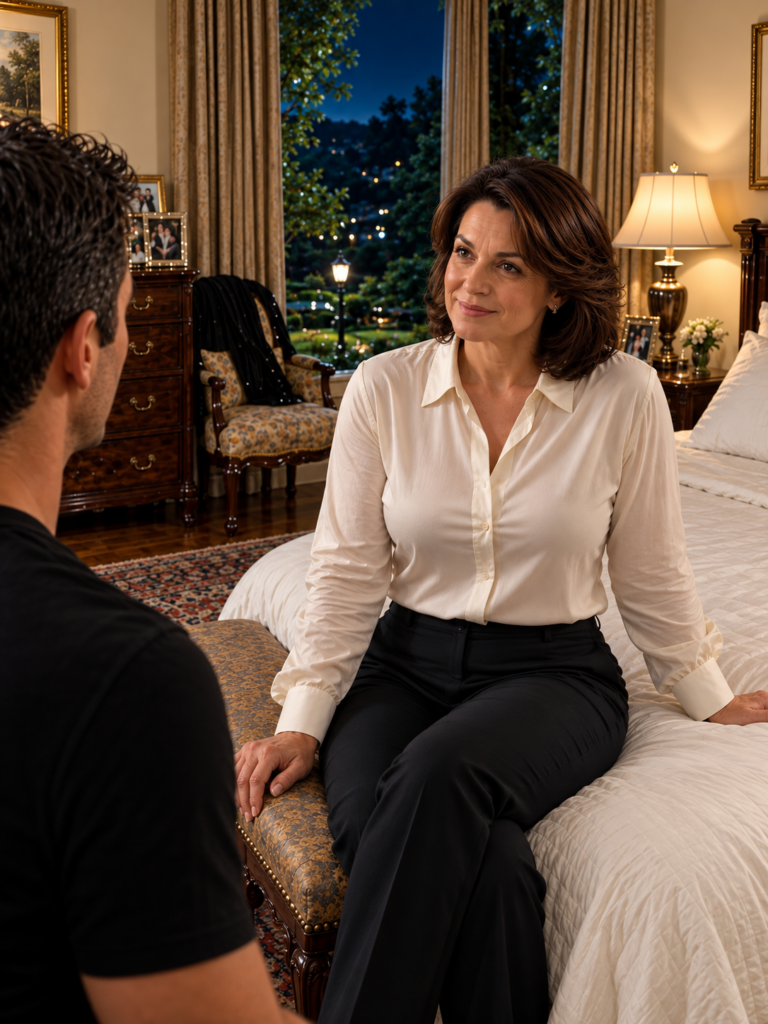
When my ex-girlfriend’s mother called me into her office and slid a contract across her desk, the first thing I noticed was my own name printed near the top.
The second thing I noticed was that Victoria Hale wanted me to become her husband.
For 12 months.
My name is Owen Merritt. I was 29 years old, 4 years removed from the little Georgia town where I grew up, and still far enough from success that I measured certain purchases by how many dinners they represented.
My father repaired engines for most of his life. Cars, lawn tractors, generators, anything with enough metal and noise to convince someone else it was beyond saving.
My mother taught Sunday school and made biscuits so good that people who claimed they were avoiding carbohydrates somehow forgot their convictions whenever she opened the oven.
We were never wealthy.
But we were steady.
The mortgage got paid.
There was food in the refrigerator.
My parents argued sometimes and laughed more often.
Nothing about our life seemed remarkable until I left it and discovered how valuable predictability really was.
Chicago taught me the opposite.
I moved there at 25 after accepting a junior content-writing position with Callaway Creative, a mid-sized agency owned by a much larger corporate parent called Hale Group.
The title sounded better when I told people back home.
In practice, I sat in a beige cubicle on the third floor rewriting product descriptions and social-media copy that most consumers would scroll past without consciously noticing.
I wrote about hardware.
Insurance.
Bottled water.
Home appliances.
Once I spent 2 full days trying to find 17 different ways to describe an adjustable wrench.
It was not what I had imagined doing with my life.
But it was a beginning.
Or at least that was what I told myself every morning on the train while pulling my coat tighter against the Chicago wind.
About a year after I arrived, I met Chloe Hale at a company mixer.
She was smart, quick, and funny without working for it. She could move through a room full of executives and interns with the same ease, and she had a way of making whoever she was speaking with feel as if the rest of the room had become temporarily irrelevant.
We started dating.
For nearly a year, things were good.
Not dramatic.
Not consuming.
Good.
We ate takeout in my apartment.
Went to movies.
Took long walks when the weather allowed it.
Met each other’s friends.
Talked about trips we might take.
Eventually, somewhere around month 9, we both began feeling something neither of us wanted to say.
We liked each other.
We simply were not building toward the same place.
The relationship ended over coffee on a Tuesday evening.
No shouting.
No betrayal.
No accusations.
Just 2 people sitting across from one another and admitting that affection did not automatically mean permanence.
“I don’t want to start resenting you because this isn’t becoming something it was never meant to be,” Chloe told me.
“Neither do I.”
She reached across the table.
“You’re a good man, Owen.”
“That sounds like something people say before leaving.”
She smiled.
“I am leaving.”
I laughed.
Then somehow, because it was Chloe, we both did.
What I did not fully consider at the time was that Chloe was not simply Chloe.
She was Chloe Hale.
Her mother was Victoria Hale.
And Victoria Hale was one of those people whose surname appeared on buildings.
Her late husband had been part of the Hale family business empire. After his death, Victoria became one of the central figures in Hale Group, the parent company that controlled Callaway Creative and several other agencies around the city.
I had met Victoria exactly 3 times while dating her daughter.
The first time was at dinner.
I shook her hand and nearly forgot my own surname.
The second time was at a company function where she acknowledged me from across the room with a single nod.
The third time, she stopped at Chloe’s apartment for exactly 9 minutes, discussed something involving a board meeting, checked the time twice, and disappeared again.
Victoria was composed in a way that made other people become more aware of their own movements.
She rarely wasted a word.
She dressed precisely.
She listened before answering.
Even when she was not looking directly at you, you had the uncomfortable sense that something about you was being catalogued.
After Chloe and I broke up, I assumed Victoria Hale would become nothing more than a name I occasionally saw in company emails.
Then my father got sick.
Heart failure first.
Then complications.
Then hospital stays that started at 3 days and became 2 weeks.
My mother called every few evenings with updates.
At first she tried to make them sound manageable.
“They’re just adjusting his medication.”
Then:
“They want to keep him another night.”
Then:
“Insurance says they need more documentation.”
Then eventually:
“Owen, I don’t know how we’re going to pay this.”
I flew home twice.
I sent money every month.
I emptied what little savings I had.
Then I took out a personal loan.
When another hospital bill followed the first, I took another.
My father apologized every time the subject came up.
That may have been the worst part.
He had worked his whole life.
Fixed other people’s broken machines.
Paid his taxes.
Raised a family.
And near the end, he lay in a hospital bed worrying that dying would be too expensive.
He passed away in October.
Quietly.
In his sleep.
My mother called just after 5:00 in the morning.
I remember sitting on the edge of my bed holding the phone long after there was nothing more either of us could say.
I went home.
We buried him.
I returned to Chicago because grief did not pause rent.
The medical bills continued.
Then came the loan payments.
Credit-card balances.
A landlord notice.
My checking account stayed below zero long enough that I stopped feeling shocked by it.
A few weeks later, an email appeared in my work inbox.
The sender was Victoria Hale.
No greeting.
No explanation.
Owen,
Please come to my office at 10:00 tomorrow morning.
V. Hale
I read it 3 times.
Victoria’s office was in the Hale Group headquarters 3 blocks from Callaway.
She had no reason to contact someone at my level directly.
My first thought was that I was being fired.
Maybe a reorganization.
Maybe Chloe had said something, though that seemed unlikely.
Maybe someone in senior management had flagged my recent distracted work.
The following morning, I rode the elevator upward rehearsing calm responses.
I told myself I would not beg.
Would not mention my debts.
Would not tell her how badly I needed my salary.
Victoria’s office was exactly how I remembered her.
Clean.
Minimal.
One photograph on a credenza.
One healthy plant.
Nothing on her desk except a laptop, a folder, and a pen.
She did not smile when I entered.
“Owen.”
“Ms. Hale.”
“Sit.”
I sat.
She closed her laptop.
Then she pushed the folder toward me.
“Read it.”
The first page made my stomach drop.
It was a copy of my father’s largest medical bill.
The amount had been circled in red.
Behind it was a copy of my bank statement.
Negative balance.
Then my credit report.
Then copies of loan records.
At the back was a photograph of the yellow notice my landlord had taped to my apartment door.
I looked up.
“How did you get this?”
“I had research done.”
“On me?”
“Yes.”
“That doesn’t bother you?”
“It was necessary.”
“For what?”
Victoria folded her hands.
Then she told me.
Her late husband had established a trust governing a significant portion of the Hale family holdings.
The conditions were unusually specific.
To retain full control of her shares and continue holding her seat with the authority she currently possessed, Victoria had to be legally married before the end of that calendar year.
The marriage had to remain intact for at least 12 months.
If she failed either condition, control of a critical block of shares would automatically transfer to her brother-in-law.
Carter Hale.
I knew the name.
I had seen him once at a company reception.
Expensive suit.
Easy smile.
The kind of man who could make a conversation feel friendly while quietly establishing your position beneath his.
“He wants control,” Victoria said.
“That sounds like a family problem.”
“It is.”
“And you want me involved because?”
She opened a second folder.
A contract.
My name.
Her name.
12 months.
Legal marriage.
Shared residence.
Public appearances.
Clear financial separation.
No claims on her personal assets beyond the agreed compensation.
No claims on mine.
At the conclusion of the term, the arrangement could be dissolved cleanly.
In exchange, every debt I was carrying would be paid.
Medical debt.
Personal loans.
Credit cards.
Back rent.
Everything.
And at the end of the year, I would receive an additional payment large enough to give my mother security and allow me to start again without financial pressure.
I stared at her.
“This is insane.”
“Perhaps.”
“You want to pay me to marry you.”
“Yes.”
“For a year.”
“Yes.”
“And live with you.”
“Yes.”
“And attend company events pretending we’re actually married.”
“We would be actually married.”
“You know what I mean.”
“I do.”
I pushed the contract away.
“You barely know me.”
“I know enough.”
I laughed once.
It came out sharper than I intended.
“Why me?”
Victoria did not answer immediately.
“You could choose anyone,” I continued. “You know executives, attorneys, people in whatever circles this makes sense in. Why the man who used to date your daughter and currently owes money to 3 separate lenders?”
She leaned back.
“I watched how you treated Chloe.”
“That was between Chloe and me.”
“Yes.”
“You were investigating me then too?”
“No.”
For the first time, something resembling irritation entered her voice.
“I pay attention.”
That sounded more believable.
“You dated my daughter for almost a year,” she said. “You had access to her. Through her, you had potential access to me. To Hale Group. To people who could have accelerated your career.”
“I never wanted that.”
“Exactly.”
She continued.
“You never asked Chloe for an introduction. Never requested a favor. Never attempted to move from Callaway into Hale Group through her. When the relationship ended, you left without turning it into leverage.”
“That is an unusually low standard for decency.”
“In my world, Mr. Merritt, it is less common than you think.”
She glanced at the contract.
“Men around me often want something attached to my surname. Access. Capital. Influence. A foothold.”
“And you think I don’t?”
“I think you had opportunities to reach for those things and didn’t.”
She paused.
“You also have no alliances within Hale Group. No relationship with Carter. No internal political agenda.”
Then her voice changed slightly.
Quieter.
Almost reluctant.
“And you are one of the few men I have encountered who still seems to understand how to behave decently when there is nothing to be gained from it.”
Something tightened inside my chest.
I looked away.
“This is still insane.”
“Possibly.”
Victoria moved the pen so it rested horizontally across the contract.
“You do not need to decide now.”
I went home.
I never returned to Callaway that afternoon.
I rode the train back to my apartment and paced until night became morning.
I thought about dignity.
Pride.
How furious my father would have been if he knew someone had placed a dollar value on my desperation.
Then I thought about his medical bills.
My mother checking her bank balance before buying groceries.
The notice on my door.
The fact that pride did not pay interest.
By dawn, I knew.
The following morning at exactly 10:00, I returned.
Victoria was waiting.
I read the contract one more time.
Then I signed.
PART 2
I went back to work after signing the contract.
That may sound strange.
But it was 10:15 on a Wednesday morning, and I had no idea what else to do with myself.
So I rode the elevator down from Hale Group, walked 3 blocks to Callaway Creative, sat in my beige cubicle, and spent the rest of the day writing promotional copy for a regional hardware chain while my entire life rearranged itself quietly in the background.
Victoria told me a car would arrive at 6:00.
Packing took less than an hour.
That unsettled me.
At 29, the part of my life I considered important fit into 2 bags.
Some shirts.
Jeans.
Shoes.
Three unfinished books.
A laptop with a charger held together near the connector with electrical tape.
Toiletries.
And a framed photograph of my parents on their wedding day.
They were standing outside a church, both caught mid-laugh at something beyond the camera.
I wrapped the frame in a shirt.
Then I looked around the apartment.
Water stain on the ceiling.
Kitchen cabinet that never closed properly.
Window latch I had repaired twice with tape.
The place had never felt permanent, but it had become mine through repetition.
Sometimes that is enough.
The car arrived at exactly 6:00.
Of course it did.
Victoria lived in a glass tower near the river.
The lobby had polished marble floors and a front-desk attendant who greeted me before I gave my name.
The elevator required a key card.
When the doors opened onto Victoria’s floor, the first thing I noticed was the silence.
Not emptiness.
Control.
Floor-to-ceiling windows revealed the city from 2 directions.
Pale stone.
White walls.
Furniture expensive enough that none of it needed to advertise itself.
Victoria stood at the kitchen island.
No blazer.
Same posture.
A thick binder lay open in front of her.
“Your room is second door on the left.”
“My room.”
“Yes.”
“The contract is very romantic so far.”
She ignored that.
“The bathroom attached to it is yours. Closet is empty.”
She handed me the binder.
“Read this tonight.”
On the first page:
PUBLIC BEHAVIOR GUIDELINES.
I stared at her.
“You made a marriage manual.”
“I made a preparation document.”
“It says where I should put my hand for photographs.”
“People notice physical distance.”
There were sections on our cover story.
How we met.
When.
Why the relationship had remained private.
How long to hold eye contact.
What married couples tended to know about each other.
Habits.
Preferences.
The version presented publicly was simple.
We had met through professional connections 8 months earlier.
Victoria kept her personal life private.
The relationship became serious quietly.
We married in a small ceremony.
Only close family attended.
I looked up.
“Who knows?”
“A few people know I have been seeing someone.”
“Your family?”
“My mother-in-law Margaret knows there is someone.”
“Chloe?”
The brief pause before Victoria answered told me enough.
“She knows I am moving forward.”
“That is not what I asked.”
“She will understand.”
Two weeks later, Chloe texted.
I heard.
Nothing else.
I sat with the message for 10 minutes before answering.
I know this is strange. You have every right to need space. I’m sorry for the position it puts you in.
She replied almost an hour later.
I just need time.
I told her I understood.
Some doors should not be forced simply because leaving them closed feels uncomfortable.
That first evening in Victoria’s apartment, we ate dinner at opposite ends of a table large enough to make conversation feel inefficient.
She answered emails.
I tried to remember which fork seemed appropriate.
At 10:00, she said good night.
I went to a bedroom larger than my old apartment’s living room.
The sheets were cold.
No pipes rattled.
No neighbors shouted through walls.
I stared at the ceiling and wondered what kind of man signs a contract to marry his ex-girlfriend’s mother.
The answer, apparently, was me.
The first few weeks settled into routine.
In the apartment, we lived mostly separate lives.
At public appearances, the distance disappeared.
Victoria taught me subtle things.
Where to stand.
When to touch her elbow.
How couples move through doorways without obviously coordinating.
Every morning, when we crossed the building lobby together, she stepped closer.
Her fingers occasionally rested against my arm.
The moment we separated for work, we returned to being 2 people with independent schedules.
The first major test arrived about 6 weeks into the arrangement.
A charity gala hosted by one of Hale Group’s partners.
Three days before the event, a suit appeared in my room.
I checked the label.
Then the price online.
Then immediately regretted checking the price.
It cost more than 3 months of my old rent.
The night of the gala, I stood in front of the mirror adjusting the tie.
Then Victoria walked out.
Deep navy gown.
Hair swept back.
Simple jewelry.
For several seconds, I forgot what I had been about to say.
She noticed.
“Problem?”
“No.”
One eyebrow rose.
“You stopped breathing.”
“I did not.”
“Ready?”
“I believe so.”
At the ballroom entrance, Victoria slipped her arm through mine.
“This is where you smile.”
“I was planning to look miserable.”
“I assumed.”
We entered.
People watched.
Not openly.
That would have been impolite.
But carefully.
We told the cover story.
I shook hands.
Answered questions.
Smiled.
Then Carter found me.
He approached with a drink in one hand.
“Owen.”
“Carter.”
His handshake lasted slightly too long.
“I imagine this has been quite a shift in circumstances.”
He smiled.
“For someone from your background.”
The insult was hidden carefully enough that responding angrily would make me look insecure.
I smiled back.
“My circumstances are exactly what I want them to be.”
The couple beside us glanced over.
Carter’s expression never changed.
But something behind it did.
He had expected embarrassment.
Instead, he got resistance.
On the drive home, Victoria stared through the window.
“He doesn’t believe us.”
“He didn’t before tonight.”
“He’s patient.”
“So?”
“He doesn’t need certainty. He only needs enough inconsistency to make the board ask questions.”
I looked at her.
“Then we give him none.”
Victoria turned toward me.
“You handled tonight well.”
The professional edge was gone from her voice.
It should not have mattered.
It did.
By the time I had lived in the apartment nearly 3 months, some parts of our performance required less effort.
I knew how Victoria took coffee.
Black.
One small splash of milk only if she had slept badly.
She hated the apartment above 68 degrees.
She read financial news at breakfast but avoided headlines before coffee.
When anxious, she pressed her tongue lightly against the inside of her cheek.
She knew I called my mother every Thursday.
Knew I disliked olives.
Knew I woke early even on weekends.
Somewhere along the way, the binder became unnecessary.
Then one night, around 2:00 in the morning, I found Victoria sitting alone in the dark.
A lamp illuminated one end of the couch.
Her laptop displayed a spreadsheet.
She wore the same clothes she had worn to work.
One hand pressed against her temple.
I went to the kitchen, filled a glass with water, and placed it in front of her.
She looked up.
For a moment, her face held none of its usual control.
She simply looked exhausted.
“You have the expression of someone who has been staring at that spreadsheet since dinner.”
“That is because I have.”
“Drink.”
“I wasn’t aware the contract made you my physician.”
“It doesn’t.”
She drank anyway.
Half the glass.
Then she leaned back.
After a moment, she asked, “How is your mother?”
The question surprised me.
I had mentioned my mother only briefly weeks earlier.
“She says she’s fine.”
“Meaning?”
“She’s not.”
Victoria nodded.
“I know that kind of fine.”
“You?”
“People who want help without asking for it.”
We sat quietly.
I moved to the other end of the couch.
“Are you all right?”
Victoria looked at the laptop.
“There is a great deal in motion.”
“Board?”
“Board. Carter. Trust review. This arrangement.”
She gestured vaguely between us.
“Everything has to hold.”
“Do you ever tell anyone when it gets too heavy?”
The question seemed to surprise her.
“No.”
“Why?”
“I learned a long time ago that if people know where the weight is, they know where to press.”
“That sounds exhausting.”
“Yes.”
She said it simply.
No defense.
We sat without speaking.
Eventually, she closed the laptop.
“Go to sleep,” I said.
“You’re giving orders now?”
“Suggestion.”
“The numbers will still be there tomorrow.”
“They usually are.”
“You’ll understand them better after sleeping.”
She made a quiet sound halfway between agreement and amusement.
When I returned to my room, I stayed awake longer than I wanted.
Not thinking about the contract.
Thinking about the few seconds before Victoria’s expression rebuilt itself.
Three weeks later, a family retreat was announced.
Hale Estate.
Weekend after next.
Margaret.
Relatives.
Board members tied to the family.
And Carter.
Victoria read the email from the kitchen island.
Then she looked at me.
“One room.”
“What?”
“One bedroom.”
I understood.
“Oh.”
“One bed.”
“Of course.”
“The estate is a family home. Asking for separate rooms would raise questions.”
“So we share.”
“Yes.”
I expected awkwardness.
Instead, what bothered me most was how little I disliked the idea.
We spent the following days reviewing details.
Some were fabricated.
Some were now true.
Her favorite restaurant.
Coffee.
Temperature.
Books.
My habits.
Her habits.
The boundary between cover story and actual knowledge had blurred.
Friday afternoon, Victoria drove us north.
Chicago thinned into suburbs.
Then two-lane roads.
Bare trees.
Hills.
The Hale Estate appeared behind stone walls and hedges.
Large without being gaudy.
Several expensive vehicles stood outside.
As we approached, Victoria straightened.
“We are married.”
I looked at her.
“We are certain.”
I smiled slightly.
“We belong here.”
I repeated it.
“We are married. We are certain. We belong here.”
The third sentence felt unexpectedly true.
Margaret opened the front door.
She was smaller than I expected.
Silver hair.
Dark cardigan.
Alert eyes.
She greeted Victoria warmly.
Then looked directly at me.
“Owen.”
“Mrs. Hale.”
“Margaret.”
The house surprised me.
Books were stacked sideways because shelves were full.
Family photographs crowded walls.
A hallway rug had been worn pale through years of footsteps.
Something smelled good from the kitchen.
It felt like a home.
Carter approached before we had set down our bags.
“I’m glad we finally get to meet properly.”
His smile was already prepared.
“Victoria has kept you quite a secret.”
“Some things are worth keeping private until they’re ready to be seen.”
Nearby relatives looked over.
Carter smiled.
His eyes did not.
Dinner seated 14 people.
Margaret at the head.
Carter at her left.
Victoria and I opposite him.
Questions moved around the table.
How did we meet?
What did I think of Chicago?
Did I miss Georgia?
How was married life?
Carter waited until the second course.
Then he said, “It must be quite a transition for you, Owen.”
He gestured lightly.
“This family. This house. Everything the Hale name comes with.”
The table quieted enough that I knew the question had been designed to land publicly.
I set down my fork.
“When I think about how my life changed, none of that is what I think about.”
Carter tilted his head.
“No?”
“No.”
I looked toward Victoria.
“The important part is sitting beside me.”
Victoria went still.
“She’s the most disciplined person I’ve ever known. The way she builds things, the way she pays attention, the amount she carries without asking anyone to notice—it makes you want to be worth the effort she puts into everything around her.”
Nobody moved.
“So no,” I continued. “I don’t think much about addresses or surnames.”
Margaret slowly set down her glass.
Carter’s smile remained.
The ease disappeared.
Later, Margaret found me near a bookshelf.
“You pay attention to her.”
“I try.”
“She has spent many years around people who pay attention to what she controls.”
I waited.
“It is good to see someone paying attention to her.”
Then Margaret walked away.
That night, Victoria and I entered the bedroom at the end of the hall.
One bed.
The door clicked shut.
The performance ended.
Victoria sat on the edge.
She looked at her hands.
“Carter isn’t finished.”
“He never started with anything concrete.”
“He will find something.”
I sat beside her.
“Patience doesn’t become evidence just because he waits long enough.”
“You don’t know Carter.”
“No.”
I turned toward her.
“But you also don’t have to carry this alone anymore.”
She looked at me.
“I understand how this started. My name at the bottom of a contract. A financial solution.”
Her eyes stayed on mine.
“But that isn’t why I’m sitting here now.”
The room became very still.
Victoria spoke barely above a whisper.
“If there were no contract…”
I waited.
“No trust clause. No debt. No deadline.”
She swallowed.
“Would you still choose to be sitting here with me?”
I did not need time.
“Yes.”
Something in her face broke open.
Not sadness.
Relief.
She leaned toward me.
I met her halfway.
For months, every touch had been measured.
Designed for cameras.
Timed for rooms full of people.
This was not.
What happened after that belonged only to us.
No audience.
No performance.
No terms.
When morning came, gray light filled the room.
For one brief moment, waking beside Victoria felt so natural that I forgot how impossible the entire situation had once seemed.
Then she went still.
Her eyes moved toward the bedside lamp.
I followed them.
A tiny dark object had been pressed where the lamp met its frame.
A red light blinked.
Once.
Twice.
Camera.
Victoria got out of bed.
She picked it up with 2 fingers.
Turned it over.
Switched it off.
Then placed it inside a zip pouch from her bag.
Her hands were steady.
That scared me more than if she had been shouting.
Neither of us needed to say Carter’s name.
PART 3
We barely spoke during the drive back to Chicago.
The camera sat sealed inside the pouch in the center console.
Every time I glanced at it, anger settled deeper inside me.
Not the hot kind.
The quiet kind.
Someone had invaded a private bedroom.
Not because he cared what happened there.
Because he wanted evidence.
Something real between 2 people had become a tool.
Victoria drove with both hands on the wheel.
Her face was calm.
I had learned by then that calm did not mean she felt nothing.
It meant she had moved beyond reaction and into planning.
Three days later, Carter made his move.
Victoria’s assistant forwarded an email sent to 4 board members.
Attached were copies of our original contract.
Key financial terms highlighted.
My debt history.
Medical obligations.
Credit reports.
And still photographs from the hidden camera.
Carefully selected.
Not explicit.
Enough to show intimacy.
Enough to create a narrative.
Carter called it “a matter of integrity.”
Victoria read the email.
Then stood by the window with her arms crossed.
“We address it directly,” I said.
“You don’t understand boards.”
“Then explain.”
“Carter does not need everyone to believe him.”
She looked at me.
“He needs enough people to doubt me.”
“So we tell them the truth.”
“The truth is that I paid you to marry me.”
“Yes.”
“And now?”
Her eyes stayed on mine.
“Now we tell them the rest.”
Victoria turned back toward the window.
“What do you need from me?” I asked.
She answered without looking at me.
“Don’t disappear.”
That hurt more than it should have.
“Is that what you think I’ll do?”
“No.”
She paused.
“It’s what people usually do when standing beside me stops being advantageous.”
I crossed the room.
“I’m still here.”
She nodded once.
The months that followed were the hardest of the year.
Carter spoke privately with board members.
Never attacking openly.
Always concerned.
Always professional.
That was his skill.
He could make ambition look like responsibility.
The story leaked beyond the board.
Some people at Callaway stopped making eye contact with me.
Others became excessively friendly.
Both responses told me they knew.
Victoria worked harder.
Slept less.
I learned how to stay close without treating her like someone fragile.
She hated being hovered over.
So I did small things.
Food appearing near her laptop.
Coffee before meetings.
Silence when she needed it.
Conversation when she didn’t know how to ask.
Two nights before the trust review, I found her standing in the kitchen around midnight.
Not working.
Not eating.
Just standing.
The exhausted posture of someone who had reached the point where even choosing what to do next required energy she no longer possessed.
I made tea.
Neither of us wanted tea.
It gave us something warm to hold.
Victoria sat.
After a long silence, she said, “I’m not only afraid of losing the company.”
I waited.
Her eyes dropped to the mug.
“I’m afraid of losing you.”
I moved my chair closer.
“You’re not.”
“You cannot promise that.”
“Yes, I can.”
“Carter can make your life miserable.”
“He already has.”
“The story about you will follow you.”
“Then it follows me.”
Victoria looked up.
“This started because you needed money.”
“I know.”
“You signed because you were desperate.”
“I know.”
“And if the arrangement becomes the reason your career—”
“Victoria.”
She stopped.
“I signed a contract 8 months ago.”
I reached across the table.
“What exists between us now has nothing to do with what I signed.”
Her eyes filled.
“Nothing Carter has in a folder changes that.”
Victoria leaned forward.
Slowly.
Then rested her head against my shoulder.
I stayed still.
Let her.
A few weeks earlier, without telling anyone, I had visited a small jewelry shop 3 blocks from Callaway.
No luxury showroom.
No private appointment.
Just an older man behind a counter and rows of rings beneath glass.
I chose a simple one.
Single stone.
Low setting.
Nothing theatrical.
I had been carrying it in the inside pocket of my jacket ever since.
Not because I had selected a proposal date.
Because by then I understood that the most important moments of my life rarely announced themselves in advance.
Thursday morning was gray and bitterly cold.
Victoria wore a dark blazer.
White shirt.
I wore the suit from the gala.
We rode the elevator in silence.
Just before the executive-floor doors opened, Victoria reached for my hand.
“Whatever happens in there…”
I turned.
“We don’t turn on each other.”
“I promise.”
The boardroom stretched nearly the length of the floor.
Polished table.
High windows.
Flat winter light.
Members already seated.
Papers arranged.
Carter stood near a laptop at the far end.
He looked prepared.
That was almost comforting.
At least the waiting was over.
The meeting began with ordinary business.
Quarterly reports.
Budget.
Projections.
People discussed numbers as though everyone in the room had not come waiting for the real subject.
Eventually, Carter cleared his throat.
“One final item.”
He used the same phrase again.
“A matter of integrity.”
The room dimmed.
The screen illuminated.
Our contract appeared.
Highlighted.
Annotated.
The amount paid to me.
The debt settlement.
The 12-month requirement.
Carter walked the board through it.
Then came my financial history.
Loans.
Hospital bills.
Negative balances.
Then the camera footage.
Grainy still frames.
Victoria and me in the bedroom.
A board member near the center leaned forward.
He looked at Carter.
“How did you acquire footage from inside a private bedroom?”
Carter paused.
“A source provided it.”
“What source?”
“I would prefer to protect that individual’s identity.”
The board member’s expression hardened.
“That is not an answer.”
Carter attempted to redirect.
“The relevant question is whether the marriage presented to this board was fraudulent.”
“The method by which private surveillance was obtained is also relevant.”
Another member nodded.
The room changed.
Subtly.
But enough.
Carter had expected disgust aimed at us.
Now some of it was moving toward him.
Victoria stood.
She did not rush.
She looked around the table.
“The marriage began as an arrangement.”
Silence.
Carter’s expression shifted.
Victoria continued.
“I will not insult anyone here by pretending otherwise.”
She explained the trust.
The deadline.
Carter’s maneuvering.
Her decision.
My debts.
The contract.
No excuses.
No softening.
“I chose a man I believed I could trust.”
Her gaze moved toward me.
“I believed he would honor an agreement without trying to turn proximity to me into personal advantage.”
She paused.
“I was correct.”
Nobody interrupted.
“Somewhere during the year, the arrangement stopped being one.”
Victoria’s voice changed.
Not weaker.
More personal.
“I brought Owen into my home because I needed a husband on paper.”
She looked at me.
“What I found was someone who never once asked what my name could give him.”
My throat tightened.
“He did his work. Called his mother. Showed up when he said he would. Sat beside me at 2:00 in the morning when there was nobody watching.”
Carter shifted.
Victoria continued.
“He saw me.”
She looked back toward the board.
“Not my title. Not Hale Group. Not the trust. Me.”
Her voice remained steady.
“I fell in love with my husband.”
Carter spoke.
“That does not alter the original fraud.”
I stood.
He turned toward me.
I did not care.
“Carter is right about one thing.”
The room went quiet again.
“I signed the contract because I was desperate.”
I looked around at the faces.
“My father was dying, and then he died. I had medical debt. Personal loans. A landlord notice. My checking account was below zero.”
No reason to hide any of it.
“I knew exactly what Victoria was offering.”
I glanced toward her.
“And I took it.”
Carter leaned back slightly.
Then I continued.
“That is not why I’m standing now.”
I thought about my father.
My mother.
The apartment.
The first night in Victoria’s house.
The couch at 2:00 in the morning.
The estate.
Her asking whether I would stay without a contract.
“Living beside Victoria changed me.”
Victoria’s eyes filled.
“She did not buy a partner.”
I swallowed.
“She gave a man who had spent a long time feeling like he was barely holding his life together a reason to stand straight again.”
Nobody moved.
“I love her.”
The words came more easily than I expected.
“I love her without the contract.”
I looked at Carter.
“Without her shares.”
Then back at the board.
“Without Hale Group.”
I sat.
Carter opened his mouth.
Margaret stood.
She had not spoken once.
Until then.
Every person in the room looked toward her.
“I knew.”
Victoria stared at her.
Margaret folded her hands on the table.
“Victoria came to me before the arrangement was signed.”
Carter’s face changed.
“She told me what the trust required and what she intended to do.”
Victoria looked stunned.
Margaret continued.
“I did not stop her because Victoria has spent most of her life navigating difficulty on her own terms.”
Then Margaret turned toward Carter.
“And because I suspected someone would eventually reveal what kind of game was actually being played.”
Carter’s jaw tightened.
“You cannot seriously endorse this.”
“I endorse very little about how this family handles emotion.”
A few people almost smiled.
Margaret did not.
“But placing a camera in a private bedroom is not strategy.”
Carter said nothing.
“Distributing intimate footage to board members in pursuit of corporate control is not leadership.”
Her voice remained calm.
“It has a simpler name.”
No one asked what name.
Everyone knew.
Margaret looked around the room.
“You have been shown an unusual marriage.”
Then toward Carter.
“And you have been shown a man willing to violate basic boundaries in order to obtain power.”
She sat.
“The board should decide which fact concerns it more.”
The vote took minutes.
Carter’s motion failed.
Then came another vote.
His committee authority was suspended.
Several roles were stripped immediately pending further review of his conduct.
Carter gathered his papers.
For the first time since I had known him, he did not look confident.
He looked furious.
That was less impressive.
The boardroom emptied slowly.
Victoria and I stepped into the hallway.
The door closed behind us.
For several seconds, neither of us spoke.
Then Victoria laughed.
A short, exhausted sound.
She covered her face with one hand.
“We made it.”
“We did.”
“The contract ends soon.”
“Yes.”
She lowered her hand.
“We can close it cleanly.”
Something in the way she said it made me look at her carefully.
“If we want.”
“Yes.”
I stepped closer.
“Is that what you want?”
Victoria shook her head.
“No.”
I smiled.
Then reached into my jacket.
Her eyes widened.
“Owen.”
I went down on one knee.
Right there.
Empty corporate hallway.
Fluorescent lights.
Board members still murmuring behind a closed door.
Nothing romantic about the location.
Everything romantic about the reason.
“This time there’s no trust clause.”
Victoria put one hand over her mouth.
“No deadline.”
Her eyes filled.
“No debt.”
I opened the box.
“No agreement.”
She was already laughing through tears.
“Victoria Hale, will you marry me because I love you and because I am finished imagining any version of my future that doesn’t have you in it?”
“Yes.”
“You didn’t let me finish.”
“Yes.”
“Victoria.”
“Yes.”
I laughed.
She pulled me up before I could say anything else.
Months later, we moved.
Not because the apartment was wrong.
Because both of us wanted somewhere that belonged to what came after.
A quiet street.
A front porch wide enough for 2 chairs.
Small backyard.
Narrow garden.
On weekends, Victoria wore old clothes and worked in the soil with bare hands.
The first time I saw her kneeling beside tomato plants with dirt on her cheek, I stood at the door staring.
She looked up.
“What?”
“Nothing.”
“You are staring.”
“You look different.”
“From what?”
“The woman who gave me a marriage contract in a glass office.”
She smiled.
“Good.”
My debts were gone.
I left Callaway eventually and accepted a position at a smaller firm.
Less prestigious.
Better work.
People learned my name within the first week.
My mother came to visit.
She loved Victoria.
Which surprised nobody except Victoria.
“You make him stand up straighter,” my mother told her over breakfast.
Victoria looked at me.
“He told the board something similar.”
“Please stop discussing me while I’m sitting here.”
They ignored me.
Victoria kept her seat at Hale Group.
She ran the company without Carter waiting behind every decision.
The trust review became history.
The scandal became another story corporate people eventually replaced with newer stories.
Life settled.
One evening, we sat on the front steps.
The sky moved from orange to pink, then slowly toward blue.
Two mugs of coffee sat between us.
Victoria leaned against the railing.
“Can I ask you something?”
“You usually do.”
“If you could go back…”
I waited.
“To that morning in my office.”
I knew the question before she finished.
“Knowing what happened after. Carter. The camera. The board. Everything.”
She looked at me.
“Would you sign again?”
I thought about my father’s name on a medical bill.
The yellow notice on my apartment door.
My mother pretending she did not need help.
A contract placed in front of me by the last woman I expected to change my life.
I thought about cold sheets in an unfamiliar bedroom.
Public handholding that turned into private understanding.
The dark living room at 2:00 a.m.
A family table with Carter smiling across from me.
A hidden camera.
A boardroom.
A hallway.
A ring.
I looked at Victoria.
“I’d sign faster.”
She laughed.
“Why?”
“Because it turned out to be the first true thing I ever put my name on.”
Victoria shook her head.
“It was literally a fake marriage contract.”
“I know.”
“That sentence makes no sense.”
“It does to me.”
She leaned her head against my shoulder.
I took her hand.
For a while, neither of us spoke.
Nothing needed to be said.
The contract had begun as a transaction.
A solution.
Her problem.
My problem.
Two people trying to use paper to survive circumstances neither of them had chosen.
But paper had never explained what happened afterward.
It could describe payment.
Duration.
Residence.
Public appearances.
Termination.
It could not describe the night Victoria finally let someone see she was tired.
It could not describe the way I learned her coffee without consulting the binder.
It could not explain why hearing her say she was afraid of losing me hurt more than the possibility of losing every dollar.
It could not explain the moment she asked whether I would remain if no agreement existed.
And it certainly could not explain why, once the agreement finally stopped mattering, neither of us wanted to leave.
The first time I walked into Victoria Hale’s office, I thought people like her belonged to a different world.
People with glass towers.
Board seats.
Drivers.
Family trusts.
People whose money insulated them from ordinary fear.
I was wrong.
Money had solved problems I understood.
It had never solved the ones Victoria carried.
She had spent years surrounded by people who wanted something.
Influence.
Access.
Control.
I had spent years believing the most valuable thing I could offer anyone was usefulness.
Work.
Reliability.
Showing up.
Somewhere during that strange year, we gave each other the thing neither of us knew how to ask for.
She gave me stability without making me feel small for needing it.
I gave her presence without demanding anything attached to her name.
The rest happened slowly.
So slowly that neither of us recognized love until it had already altered the shape of our lives.
Years later, the original contract remained locked in a file.
Victoria once suggested destroying it.
I told her no.
“Why?”
“Because one day we’ll be old and need proof that both of us were once stupid enough to think this arrangement would stay simple.”
She smiled.
“I never thought it would be simple.”
“You wrote a 42-page contract.”
“That was specifically because I knew it would not be simple.”
“Fair.”
She looked at the signature page.
My name.
Her name.
The date.
Twelve months.
She traced one finger along the bottom.
“It’s strange.”
“What?”
“That something created entirely because neither of us trusted life to work out became the reason it did.”
I looked at her.
“Maybe that’s not what happened.”
“What happened?”
“We signed because we were both trying to control the outcome.”
“And?”
“We fell in love because eventually we stopped.”
Victoria considered that.
Then smiled.
“Keep the contract.”
So I did.
Not as evidence of the arrangement.
As evidence of how wrong 2 intelligent adults can be about what they think they are agreeing to.
On paper, I was paid to be Victoria Hale’s husband for 1 year.
That was true.
It was simply not the whole truth.
The whole truth was that somewhere between the first signature and the last deadline, I stopped performing the role.
And somewhere along the way, so did she.
By the time the contract expired, neither of us needed to pretend anymore.

